Plan your trip
Is Bhutan safe? Altitude, insurance, vaccines and road rules
Most of what goes wrong on a trip to Bhutan has to do with height, distance and weather rather than crime: a headache at a pass above 3,000 m, a monsoon landslide across a mountain road, a helicopter that cannot fly in cloud. Crime is low, and every visitor travels with a licensed guide. This guide covers what the UK, German and French governments advise and where they draw a line, altitude and trekking rules, the insurance to buy, emergency numbers, hospitals and pharmacies, vaccines, mosquitoes, rabies and water, road and weather risks, and the laws that catch visitors out.
In this guide
Find the location ↗ — opens in a new tabThe short answer
Buy insurance that covers medical treatment, emergency helicopter evacuation and repatriation: it has not been a visa condition since 23 April 2024, complex cases are evacuated to India or Thailand, and helicopters fly only in clear, calm weather. On the classic week of Paro, Thimphu and Punakha, Dochula (above 3,000 m) and the Tiger's Nest (about 3,120 m) are day visits, so hike the Tiger's Nest late in the trip; the 500 m-a-day limit on sleeping height is for treks such as the Druk Path (highest point 4,200 m). Check your vaccines at least 8 weeks before you fly: hepatitis A, tetanus and typhoid are recommended for most travellers, and rabies is worth having before you go because post-bite treatment is not always available in Bhutan. Paro and Thimphu are malaria-free, and Punakha and Wangdue Phodrang are not among the southern districts where TravelHealthPro places its low malaria risk; save 113 (police), 112 (ambulance) and 110 (fire). None of the three governments advises against travel to any part of Bhutan, and France strongly advises against road travel at night, even with a driver.
- Key point
- Start at least eight weeks before you fly: vaccines, insurance and an altitude check with a doctor
- Where it applies
- No base is needed; the advice applies in Paro and Thimphu, on the passes and treks, and in the warmer south
- Timing
- The monsoon usually runs from June to September and landslides disrupt roads from June to October; from late November to March snowfall is common above 3,000 m; dengue peaks from July to September in the south
Travel advice, and where the governments draw a line
None of the three governments these guides follow, the UK, Germany and France, advises against travel to Bhutan or to any part of it. The UK Foreign Office's summary carries only its general line that no travel can be guaranteed safe. Germany's Federal Foreign Office gives ordinary travel and safety advice with no travel warning, and calls the domestic political situation calm. France's map puts the whole country in yellow, "vigilance renforcée" (heightened vigilance), with no orange or red zone.
France adds three lines with a clear scope. In the south-east, the districts of Pemagatshel and Samdrup Jongkhar, which border Assam, still cannot be reached through Assam. If you will cross into Bhutan from India's north-eastern states, read the advice on India first, because those states go through periods of instability that can affect travel. And the border with China is closed and disputed: do not go near it, and there is no way in from China. Other governments may draw a wider line, so read your own government's advice before you book and again before you fly.
Violent clashes cannot be ruled out at the occasional demonstration, Germany notes; keep away from any you see and follow the instructions of the local security forces. There is no recent history of terrorism in Bhutan, but attacks cannot be ruled out.
Prices and times checked 8 November 2026
Altitude: how high you sleep and when to go down
Altitude sickness is a risk in parts of Bhutan, and the height starts on arrival: Thimphu and Paro airport lie at about 2,400 m, by France's figure. On the classic week of Paro, Thimphu and Punakha, the two high points, the road over the Dochula pass, above 3,000 m, and the climb to the Tiger's Nest at about 3,120 m, are day visits rather than places you sleep. Spend a few days below 3,000 m first and keep the Tiger's Nest for the end of the week, as our first-trip guide does. Both points are above 2,300 m, the height from which Germany advises seeing a doctor experienced in altitude medicine before final planning, so that advice covers this week too.
High altitude may be advised against for children, especially those under one, and for vulnerable people, and pregnancy and a history of heart, lung, neurological or kidney illness are reasons not to go high.
The ascent rules are for treks, which run across the country at a wide range of altitudes. The Department of Tourism grades each trek easy, medium or hard and lists its highest point and season: the easy Punakha Winter Trek reaches 3,400 m in 3 days (March to May and September to November); the Druk Path Trek, medium, runs 7 days between 2,400 m and 4,200 m (March to June and September to November); the Jomolhari trek, medium, runs 10 days between 2,500 m and 5,000 m (September to November); and the toughest, the Snowman Trek, takes more than 20 days, crosses 13 passes and climbs higher than 5,000 m.
All four go above 3,000 m, and the rules start at the first night you sleep above that height; the classic week has no such night. Above 3,000 m, TravelHealthPro, the UK's travel health service, advises raising your sleeping height by no more than 500 m a day, with a rest day at the same height every three or four days, and, where possible, not going from below 1,200 m to above 3,500 m in a single day. France's figure is stricter: no more than 400 m of gain between two consecutive nights from 2,500 m. Acetazolamide can help acclimatisation but should not replace a gradual ascent.
Headache, fatigue, loss of appetite, nausea and disturbed sleep are signs of acute mountain sickness. If they appear, climb no higher; if they do not improve, or get worse, go down as fast as possible, at least to below 4,000 m, with a companion, and see a doctor. High-altitude cerebral or pulmonary oedema (HACE or HAPE) needs immediate descent and emergency treatment, and in some circumstances altitude can kill.
Height brings other hazards too: intense sun, glare from snow and ice, strong wind, extreme cold and rough terrain, so dress for them even on a day hike over a pass.
Treks and guides: the rules that keep you safe
Mountaineering is banned in Bhutan, and all treks must be undertaken with an accredited tour operator or guide; France asks that all activities, long treks in particular, be organised by a tour operator accredited in Bhutan. The licensed guide who must be with you at all times is there partly to keep you safe on unfamiliar terrain and at altitude, and at places of interest you may be refused entry without one.
A sound trek plan has four parts. The itinerary keeps to the ascent rules above, with rest days counted into the trip, because trekkers often lack the time to adjust in stages. The group carries a first-aid kit. You have asked your guide to arrange a doctor or nurse who can be contacted if needed, because local emergency medical transport is limited. And your insurance covers mountain risk, including a helicopter evacuation.
Insurance and evacuation: what the policy must cover
Travel insurance has not been a visa condition since 23 April 2024, but the Department of Tourism strongly recommends it for every visitor, and all three governments say to take it. Choose cover for medical treatment abroad, emergency helicopter evacuation and repatriation for the whole stay; Germany asks specifically for a policy that covers mountain risk, such as a helicopter evacuation, and France calls cover for all medical costs, surgery and hospital stays included, imperative, adding that its embassy will not pay these costs.
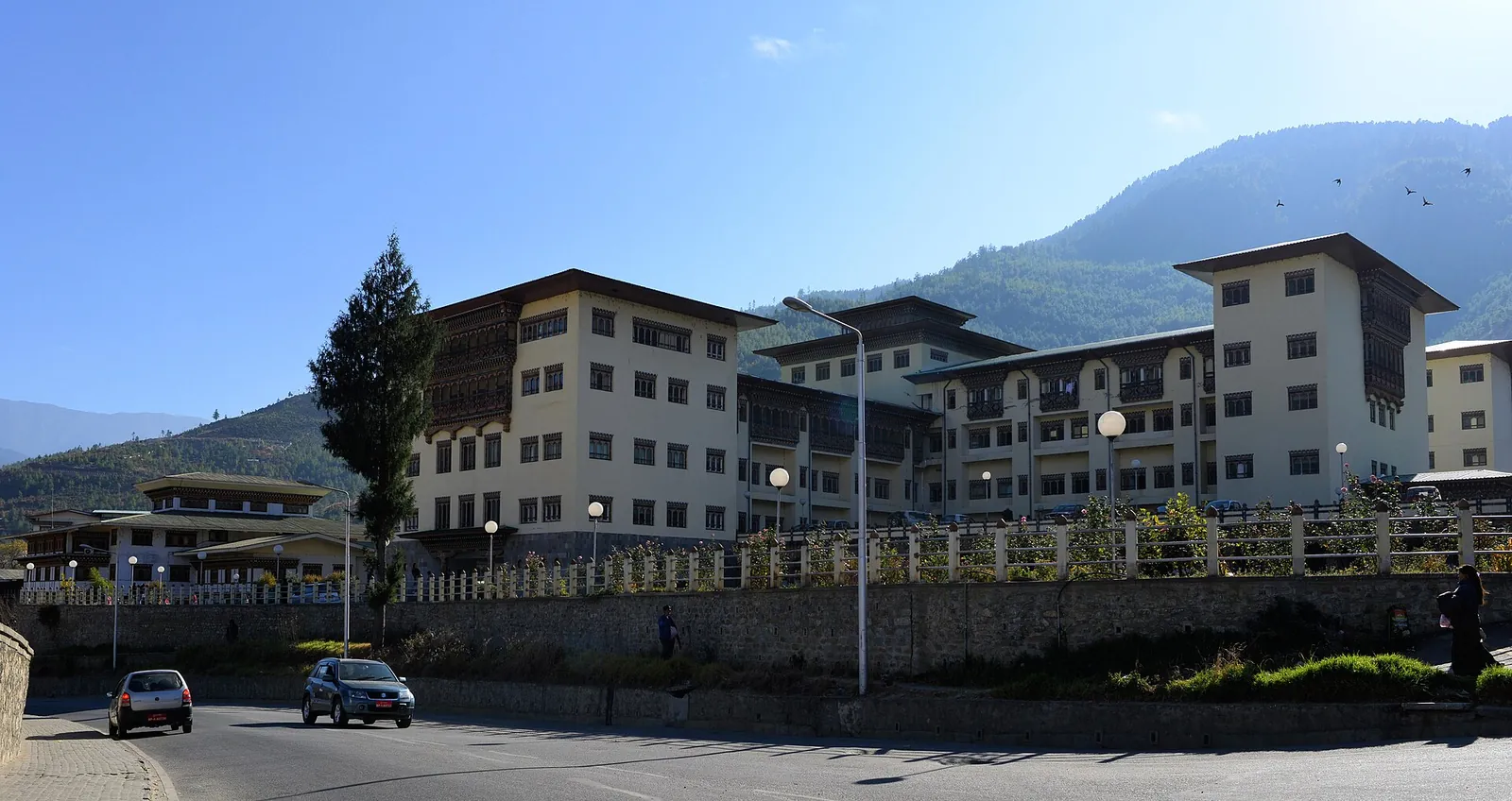
The reason is what lies behind the policy. One hospital, the Jigme Dorji Wangchuck National Referral Hospital in Thimphu, can provide surgery and emergency treatment. Outside Thimphu, care is generally basic, and in large parts of the country it is inadequate and mostly below European standards. Treatment for more complex problems is not available in Bhutan, so you would need evacuation to India or Thailand; for serious illness, an evacuation, for example to New Delhi, Kolkata or Bangkok, has to be considered. No official source publishes a price for treatment or an evacuation, so compare policies on their evacuation limit.
Royal Bhutan Helicopter Services was first founded for emergency medical evacuations, but helicopters fly only in clear and calm weather, and the helicopter in Thimphu also depends on availability. By road, emergency transport is weak: apart from the Paro–Thimphu road, which is in very good condition, speeds are about 30 km/h on other roads.
Prices and times checked 8 November 2026
Emergency numbers, hospitals and pharmacies
Save these numbers before you land; all but the last row are Royal Bhutan Police numbers, which it lists as toll-free:
| Service | Number |
|---|---|
| Police (general emergency) | 113 |
| Ambulance and medical emergencies | 112 |
| Fire and rescue | 110 |
| Traffic | 111 |
| Disaster helpline | 999 |
| Traffic, fire or police, in Thimphu only | 1010 |
| Department of Tourism (problems with your trip) | +975 17661974 (2300 within Bhutan) |
For theft, robbery or assault, call 113; for something that is not an emergency, such as lost documents, go to the nearest police station. Keep a copy of your passport's photo page, your visa and your flight ticket apart from the originals. In a medical emergency, call 112 and ask for an ambulance, and contact your insurer quickly if you are referred to a hospital or clinic.
Thimphu's hospital has a fairly good emergency department, and basic care in the capital is adequate. The Department of Tourism lists primary health care in all 205 gewogs (counties) and hospitals in all 20 dzongkhags (districts), including one national and two regional specialist hospitals. English is widely spoken and doctors are likely to speak some English, although language barriers can make communication much harder in the countryside.
Thimphu has good pharmacies, but know the generic name of anything you take. Bring your own medicines in their original packaging and labels, with a prescription that names them by their generic (international) names, and never take medicines bought in the street, which may be counterfeit. Pack a personal medical kit and keep it out of high temperatures. UK travellers carrying a large amount of a medicine, or medicine that is not for their own use, are told by the Foreign Office to check with the Bhutanese Embassy in Brussels. Medicines that contain controlled drugs need a permit, which our guide to entering Bhutan explains.
Prices and times checked 8 November 2026
Vaccines, mosquitoes, rabies and water
Check your vaccines at least eight weeks before the trip. If you arrive from an area where yellow fever is endemic, France's advice is that the yellow fever vaccine is mandatory; otherwise no vaccination certificate is required under the International Health Regulations, and the US CDC neither recommends nor requires it for Bhutan. Be up to date with routine vaccines, measles in particular: all international travellers should be fully vaccinated against it.
TravelHealthPro recommends three vaccines for most travellers: hepatitis A for anyone not already vaccinated; a tetanus booster if your last dose was more than ten years ago, since medical facilities may be limited; and typhoid, particularly for those visiting friends and relatives, young children and frequent or long-stay travellers in areas with poor sanitation. Cholera, hepatitis B, Japanese encephalitis, rabies and tuberculosis (BCG) are for some travellers, and dengue and chikungunya vaccines for limited cases.
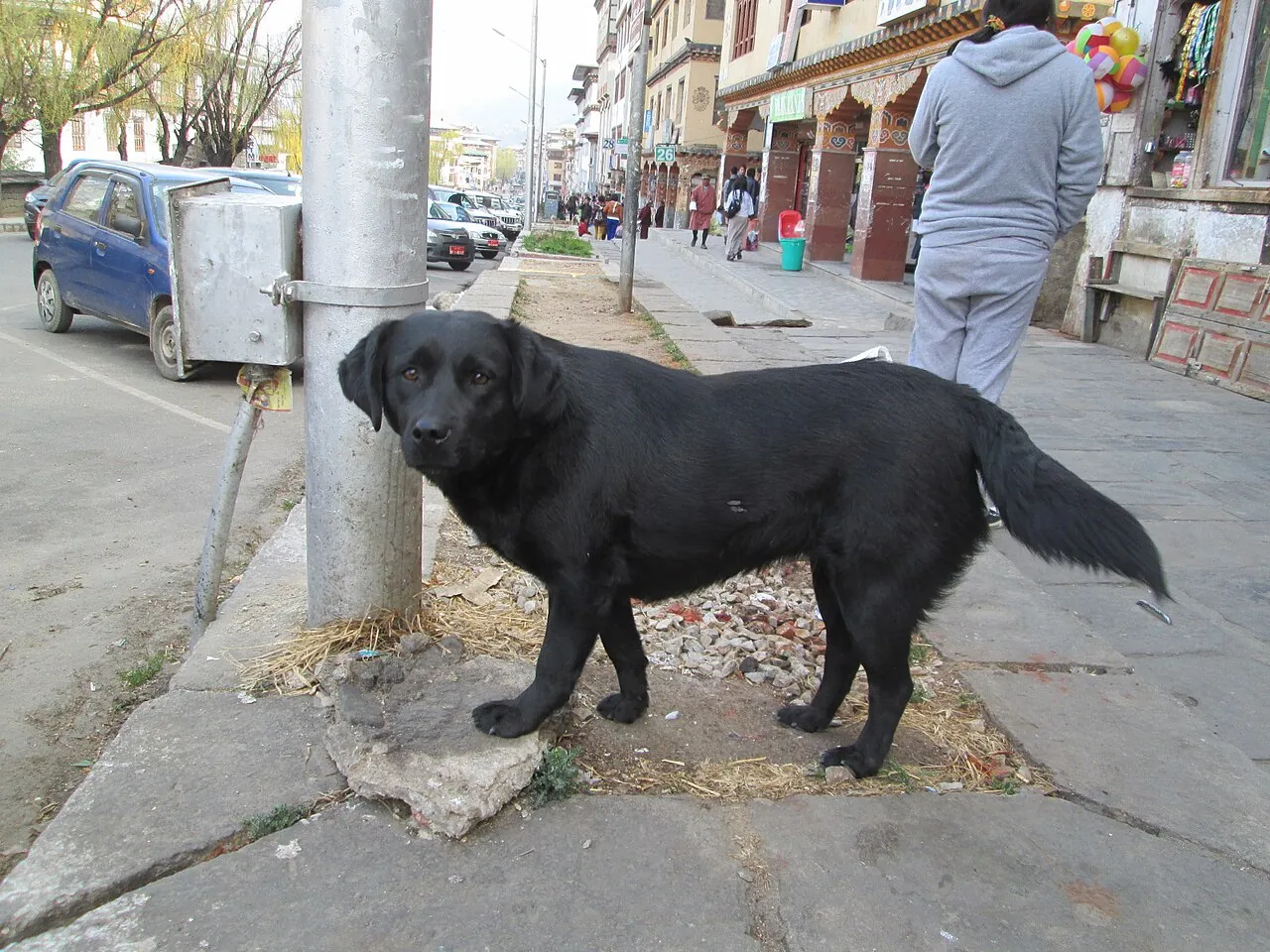
Get the rabies vaccine before you go: the treatment an unvaccinated person needs after a bite is not always available in Bhutan, and rabies vaccine may be available only in larger medical facilities in towns and cities. Stray dogs live in some areas; they normally keep their distance, but stay away from them, especially with children, and never feed or pat them. In packs they can be aggressive in the evening or early morning, and the risk of dog bites and rabies runs across the country, especially near the Indian border. After any bite or scratch, clean the wound thoroughly and go straight to the nearest hospital, even if the wound looks trivial.
Paro, Thimphu and everywhere above 2,500 m are malaria-free, so the classic week needs no malaria tablets there; use bite avoidance everywhere. TravelHealthPro and Germany describe a low risk in the south, in the districts along the Indian border. Punakha and Wangdue Phodrang are not on TravelHealthPro's list of those southern-belt districts, and it puts no risk in the rest of Bhutan, so by its advice they need bite avoidance only. TravelHealthPro keeps tablets for higher-risk travellers in exceptional circumstances. Before a trip into the south, see a travel clinic and take France's wider map as the cautious one: transmission possible all year in Chukha, Dagana, Pemagatshel, Samdrup Jongkhar, Samtse, Sarpang and Zhemgang, and in seasonal foci elsewhere in the rainy summer months.
Dengue is a risk below 2,300 m near the Indian border, which the classic week of Paro, Thimphu and Punakha does not reach, mainly from July to September, while the higher tourist areas are dengue-free. Japanese encephalitis occurs in non-mountainous areas, with the highest risk from June to October, and chikungunya is present too; avoid mosquito bites, by day as well as at night.
Do not drink tap water: drink bottled or sealed drinks, or water that has been filtered, boiled or disinfected. Cook or peel food, wash your hands often with soap, and avoid raw or undercooked fish, meat, poultry and milk. Cholera has been reported in the past, though the risk for most travellers is low, and tuberculosis is much more common than in central Europe, at well over 100 cases per 100,000 people.
Prices and times checked 8 November 2026
Roads, the monsoon, flights and natural hazards
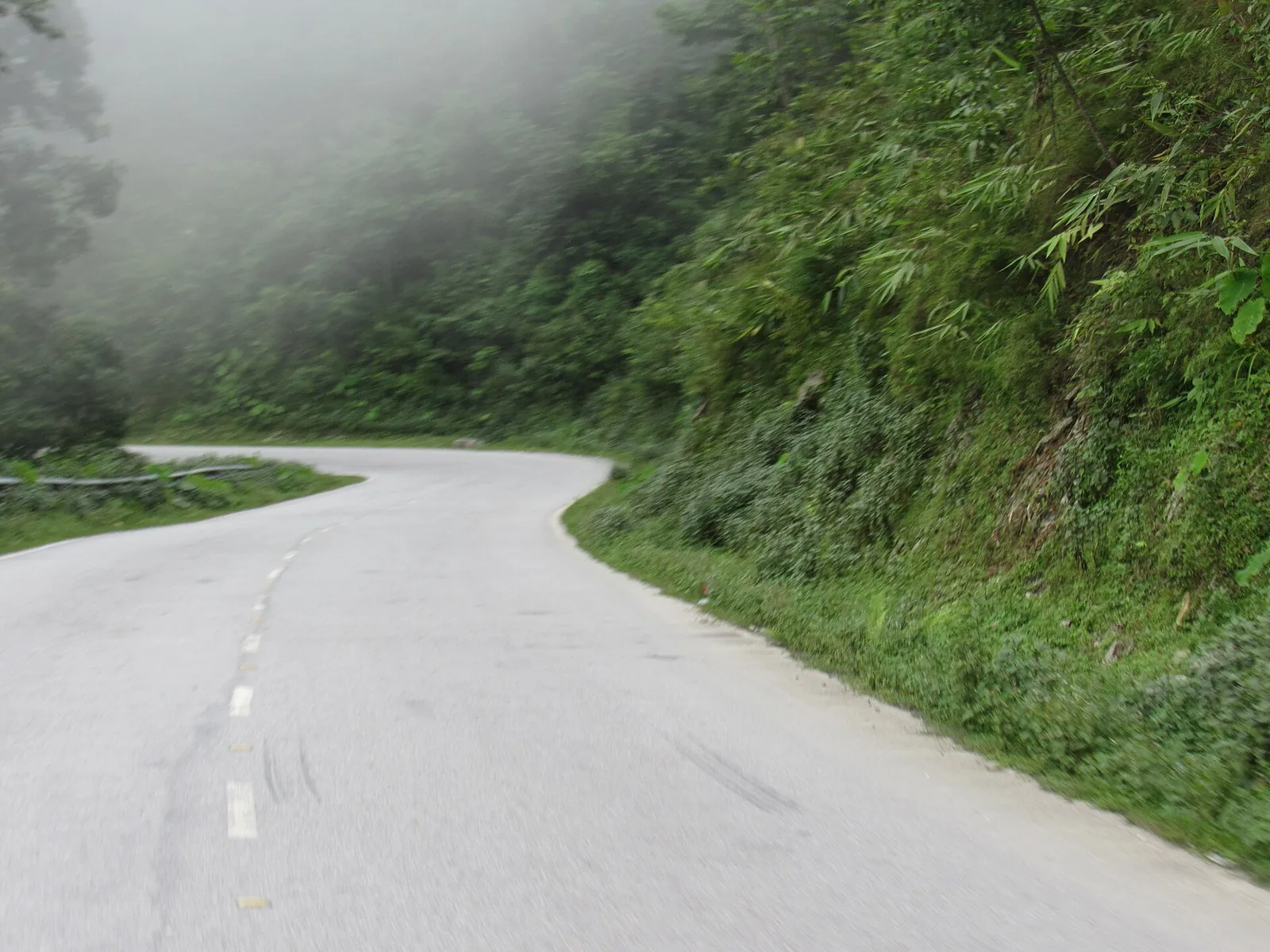
Car and motorbike accidents are one of the biggest causes of injury and death in Bhutan. Roads can be dangerous, particularly in the monsoon, and there are no traffic lights. You cannot hire a self-drive vehicle, so a hired car comes with a driver; vehicles are not regularly inspected as they are in central Europe, so travel in a well-maintained vehicle with seatbelts. The UK advises avoiding night travel if possible; France goes further and strongly advises against travelling at night, even with a driver, on winding roads in fairly poor condition where rockfalls are frequent in the monsoon. Plan every road day to end before dark.
The monsoon usually runs from June to September, and floods and landslides can then make roads impassable; landslides regularly disrupt traffic from June to October and can cut off some roads for days. In winter, from late November to March, the Department of Tourism says snowfall is common above 3,000 m, the height of passes such as Dochula. In those months, your guide or tour operator is the one to confirm the route before each road day; our guide to the best time to visit Bhutan gives the seasons.
Weather regularly affects domestic and international flights. There are few domestic flights from Paro, to Jakar and Trashigang, and the climate and the mountains make air links difficult and uncertain; our Bhutan transport guide gives the flights and drives.
Several parts of Bhutan lie on active fault zones, and the limited number of emergency vehicles, equipment and medical facilities is likely to increase the impact of an earthquake. Flooding, including flash floods, can follow monsoon rain or an earthquake. Wildfire risk is high, particularly in central and southern areas, and you will be fined if you cause a wildfire, even by accident, with a higher fine if it was started on purpose. In a disaster, the helpline is 999.
Prices and times checked 8 November 2026
Crime, scams and the laws that catch visitors out
Crime is low across Bhutan, and the Department of Tourism calls it a very safe place to visit, even if you travel alone; still take the precautions you would at home. Pickpocketing happens, especially at places that are very popular with tourists, so be alert in crowds, pay by card where you can and carry only the cash you need for the day. Be sceptical of unusual emails, phone calls, prize notices, offers and requests for help from supposed acquaintances: share no personal data, and check with the person by another route or contact the police.
Drug laws are strict: sentences run from a minimum of 3 years to life, depending on the type and quantity; even small amounts, hashish included, bring harsh prison terms. Tobacco was illegal to sell or buy until 2020; it is legal now, but smoking is still frowned on and is banned in most public places and at festivals; in public, smoke only in designated areas, and remember that smoking near religious sites may cause offence. Tourists are generally not permitted to bring drones into Bhutan, and flying one needs a permit in advance. Weapons, ammunition, explosives, drugs, and products of protected species and plants may not be imported or exported.
Bhutanese people take their customs seriously: above all, avoid criticising the King. Dress respectfully across the country, especially at temples, monasteries, dzongs and official buildings, take off your shoes and hat in temples, and do not photograph inside temples, monasteries or official buildings. Littering is illegal anywhere in Bhutan, and harming a protected species can bring prison. Same-sex sexual activity was decriminalised in 2020, but same-sex marriages are not recognised and there is no legal recognition of transgender people.
Practical questions
Is Bhutan safe for tourists?
Yes, for most visitors. Crime is low, the UK, German and French governments do not advise against travel to any part of Bhutan, and France asks for heightened vigilance across the country. The real risks are altitude, mountain roads, the monsoon and the distance to serious medical care.
Do I need travel insurance for Bhutan?
It has not been a visa condition since 23 April 2024, but the Department of Tourism strongly recommends it. Take cover for medical treatment, emergency helicopter evacuation and repatriation: complex cases are evacuated to India or Thailand, and helicopters fly only in clear, calm weather.
Will I get altitude sickness in Bhutan?
It is a risk in parts of the country. On the classic week the high points, Dochula, above 3,000 m, and the Tiger's Nest at about 3,120 m, are day visits; hike the Tiger's Nest late in the trip. Both are above 2,300 m, the height from which Germany advises seeing a doctor experienced in altitude medicine before final planning. On a trek above 3,000 m, raise your sleeping height by no more than 500 m a day, and go down if symptoms do not improve.
What vaccinations do I need for Bhutan?
No certificate is required under the International Health Regulations. Hepatitis A, tetanus and typhoid are recommended for most travellers, besides routine vaccines such as measles; check them at least eight weeks before you fly. Get the rabies vaccine before you go, because post-bite treatment is not always available in Bhutan; Japanese encephalitis, hepatitis B and others depend on your trip.
Do I need malaria tablets for Bhutan?
Not for Paro and Thimphu, which are malaria-free, as is everywhere above 2,500 m. Punakha and Wangdue Phodrang are not on TravelHealthPro's list of southern-belt districts. For the rest of Bhutan outside the southern belt, TravelHealthPro advises bite avoidance only; if you are going into the southern districts along the Indian border, see a travel clinic first.
What is the emergency number in Bhutan?
Police 113, ambulance 112, fire 110, traffic 111 and the disaster helpline 999; in Thimphu, 1010 reaches traffic, fire or police. For problems with your trip, the Department of Tourism answers on +975 17661974 (2300 within Bhutan).
Can I drink the tap water in Bhutan?
No: drink bottled or sealed drinks, or water that has been filtered, boiled or disinfected.
Keep planning your trip
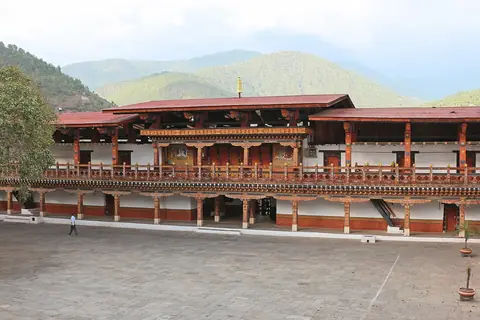
First trip to Bhutan
A first week in Bhutan: the visa and nightly fee, why a certified guide comes along, the Paro, Thimphu and Punakha loop, money, SIMs, etiquette and daily costs.
Read the guide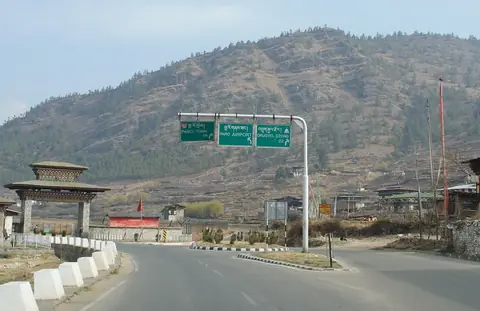
Entering Bhutan
Bhutan visa, the standard USD 100 nightly SDF to August 2027, certified guides and customs for UK and EU visitors.
Read the guide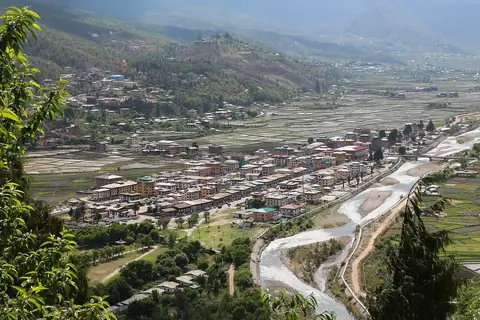
Bhutan trip cost
A Bhutan week for two: about USD 1,880 per person on a budget, USD 2,080 mid-range or USD 2,520 in four-star rooms, plus international flights.
Read the guide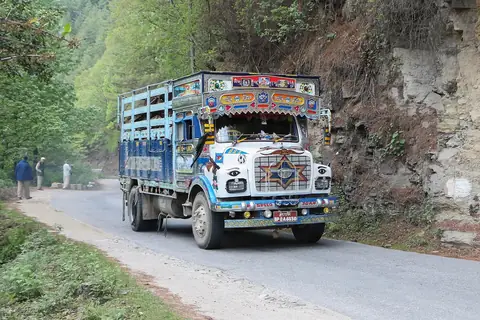
Getting around Bhutan
Who flies to Paro from where, the land crossings from India, the guide's car, drive times between the valleys and domestic flights to Bumthang, Yonphula and Gelephu.
Read the guide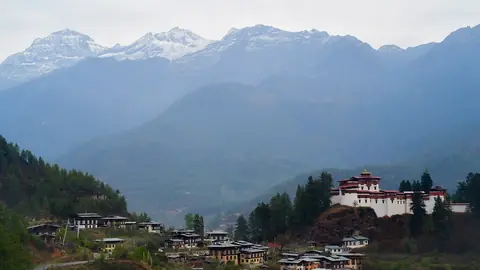
Best time to visit Bhutan
When to visit Bhutan: dry spring and autumn, the June-September monsoon, clear winters, 2027 festival months and Paro and Thimphu weather by month.
Read the guide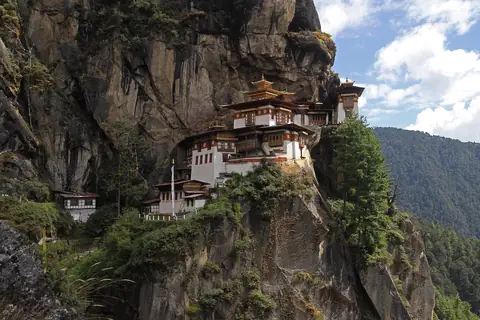
Paro and Tiger's Nest
Two nights in Paro: the Tiger's Nest hike with its fee, ponies and timings, Rinpung Dzong, the National Museum, Kyichu Lhakhang, Chele La, hotels and costs.
Read the guideSources and checks before you travel
(19)
- UK Foreign Office (GOV.UK): Bhutan travel advice ↗ — opens in a new tab
- UK Foreign Office (GOV.UK): Bhutan safety and security ↗ — opens in a new tab
- UK Foreign Office (GOV.UK): Bhutan health ↗ — opens in a new tab
- UK Foreign Office (GOV.UK): Bhutan getting help ↗ — opens in a new tab
- Germany's Federal Foreign Office (Auswärtiges Amt): Bhutan, Reise- und Sicherheitshinweise ↗ — opens in a new tab
- French foreign ministry (France Diplomatie): Bhoutan, sécurité ↗ — opens in a new tab
- French foreign ministry (France Diplomatie): Bhoutan, santé ↗ — opens in a new tab
- French foreign ministry (France Diplomatie): Bhoutan, informations utiles ↗ — opens in a new tab
- TravelHealthPro (NaTHNaC): Bhutan ↗ — opens in a new tab
- US CDC Travelers' Health: Bhutan ↗ — opens in a new tab
- Department of Tourism, Bhutan: FAQs ↗ — opens in a new tab
- Department of Tourism, Bhutan: announcements ↗ — opens in a new tab
- Department of Tourism, Bhutan: health and safety (last updated 16 September 2022) ↗ — opens in a new tab
- Department of Tourism, Bhutan: visit Bhutan ↗ — opens in a new tab
- Department of Tourism, Bhutan: adventure experiences (trekking) ↗ — opens in a new tab
- Royal Bhutan Police: emergency contacts and helpline services ↗ — opens in a new tab
- Royal Bhutan Police: reporting and witnessing crimes ↗ — opens in a new tab
- Department of Culture and Dzongkhag Development: Paro Taktshang ↗ — opens in a new tab
- Department of Tourism (bhutan.travel): Bhutan is family friendly ↗ — opens in a new tab
Reference sources for the version dated 8 November 2026. Confirm opening times, access, transport and conditions for your travel dates.
Photo credits
(5)
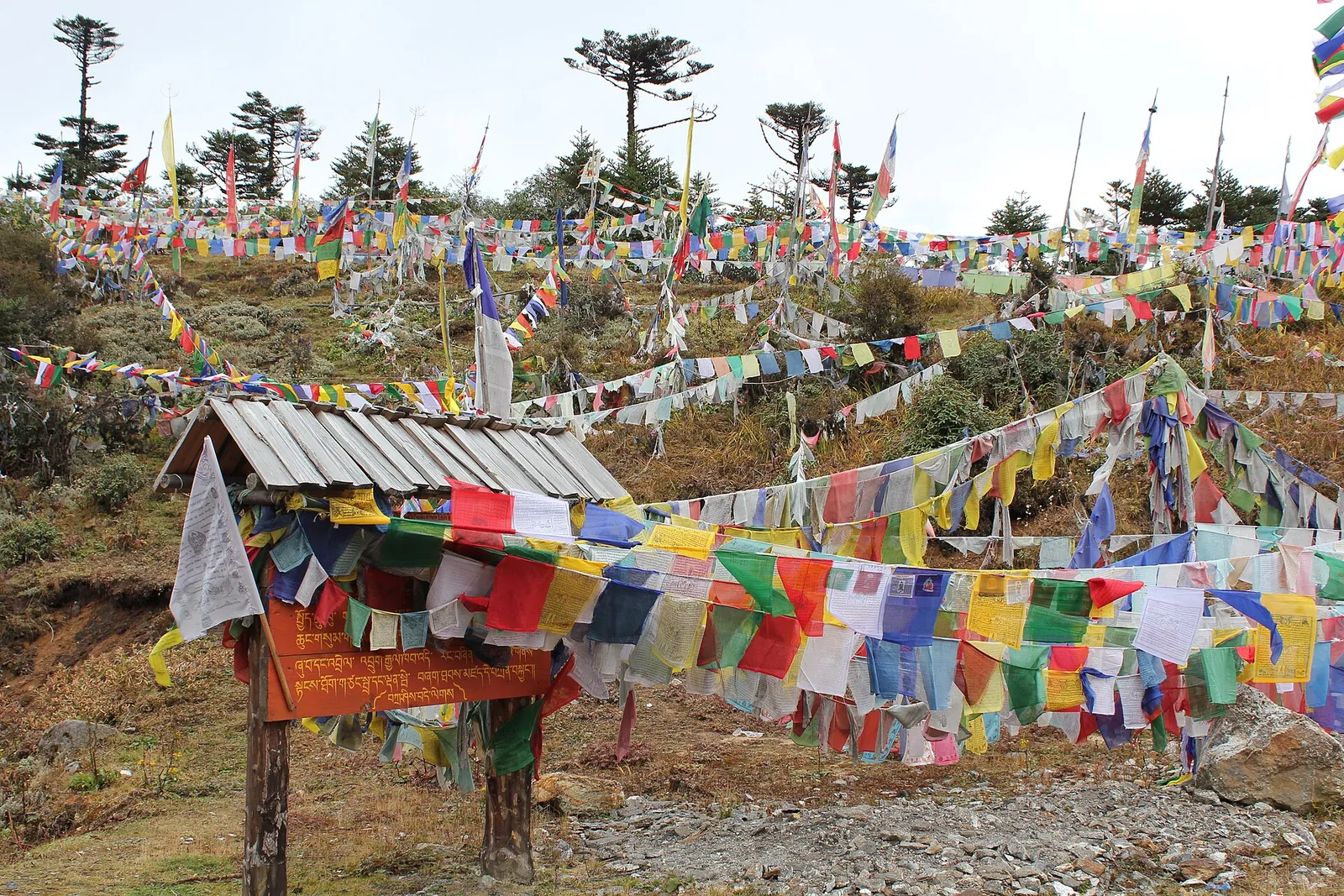
Prayer flags at Thrumshing La, the high pass between central and eastern Bhutan
Photograph: Arian Zwegers from Brussels, Belgium — opens in a new tab · CC BY 2.0 — opens in a new tab
Changes: Resized and converted to WebP; displayed with responsive crops. · Original photograph and licence details ↗ — opens in a new tab
Jigme Dorji Wangchuck National Referral Hospital, Thimphu
Photograph: Christopher J. Fynn — opens in a new tab · CC BY-SA 4.0 — opens in a new tab
Changes: Resized and converted to WebP; displayed with responsive crops. · Original photograph and licence details ↗ — opens in a new tab
A Bhutanese mountain highway in low cloud
Photograph: Afifa Afrin — opens in a new tab · CC BY-SA 3.0 — opens in a new tab
Changes: Resized and converted to WebP; displayed with responsive crops. · Original photograph and licence details ↗ — opens in a new tab
A stray dog on a street in Thimphu
Photograph: Rudolph.A.furtado — opens in a new tab · CC0 — opens in a new tab
Changes: Resized and converted to WebP; displayed with responsive crops. · Original photograph and licence details ↗ — opens in a new tab
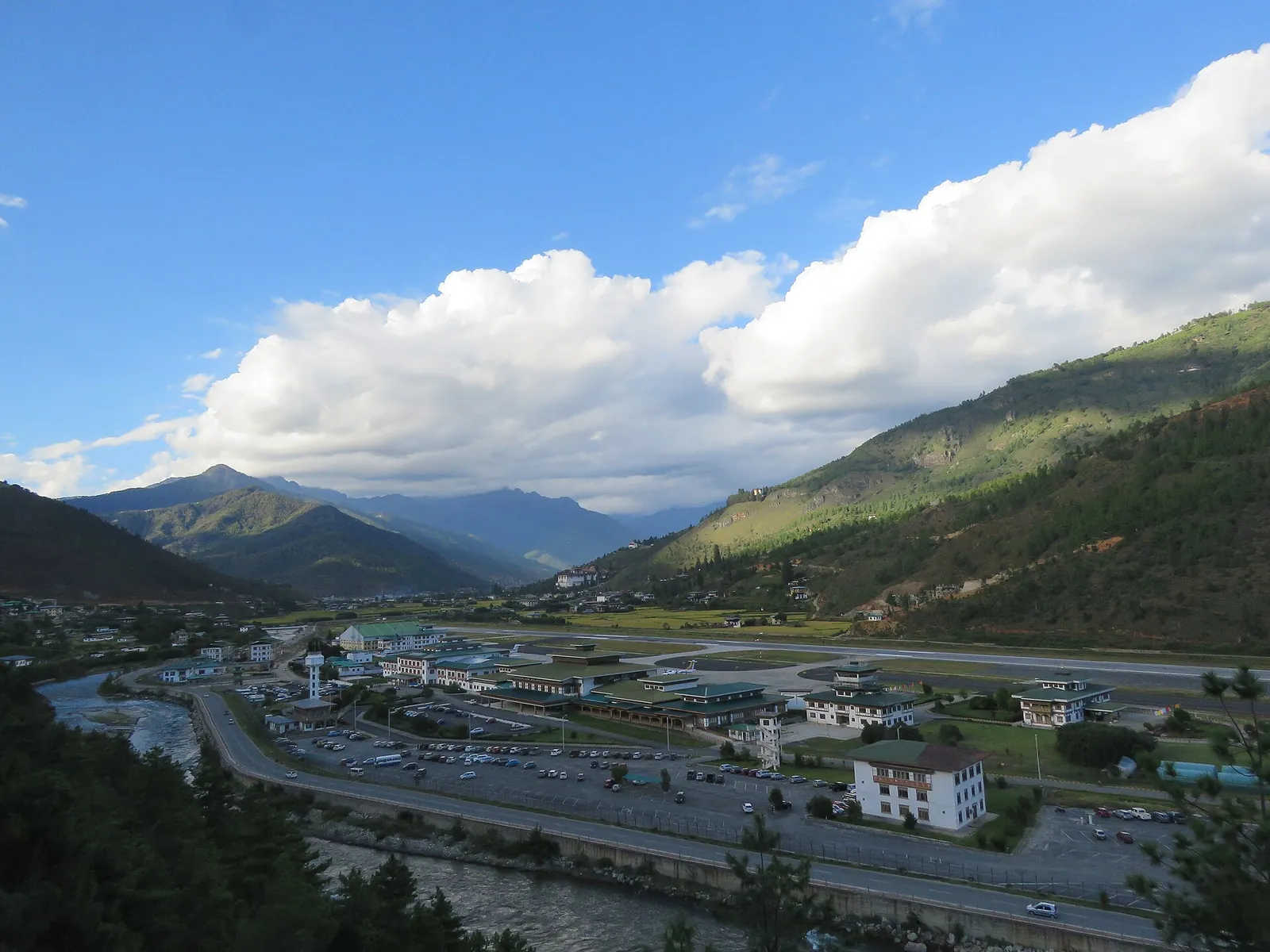
Paro valley and its airport, seen from the road to Chele La
Photograph: Vinayaraj — opens in a new tab · CC BY-SA 4.0 — opens in a new tab
Changes: Resized and converted to WebP; displayed with responsive crops. · Original photograph and licence details ↗ — opens in a new tab