Plan your trip
Best time to visit Bhutan: month by month, Paro to Punakha
Bhutan is open all year, and its western valleys, the focus of this guide, have a moderate climate on average: Paro and Thimphu have warm summers and winter nights below freezing, and Punakha, far lower, stays mild. What changes through the year is the rain, the clarity of the Himalayan views, the crowds at the festivals and, from September 2027, perhaps the Sustainable Development Fee (SDF). Here is the year month by month, with the averages measured in Paro and Thimphu, what each season means for roads, flights and the Tiger's Nest hike, and when the big festivals fall in 2027.
In this guide
Find the location ↗ — opens in a new tabThe short answer
Go from March to May or in October and November. Both seasons are mostly dry, with the clearest mountain views in autumn and rhododendrons in spring, and the tentative 2027 festival dates are 18-22 March for Paro and 10-12 October for Thimphu. December to February is cold at night but sunny and quiet. June to September is the monsoon: Bhutan's weather service says it brings about 72% of the year's rain, peaking in July, and landslides can close roads. The visa costs USD 40, and the SDF is USD 100 per adult per night until 31 August 2027, so budget an autumn 2027 trip at USD 200 a night unless the discount is extended. Book the operator and Paro flights first, 4 to 6 months ahead for spring, autumn and festival weeks.
- Key point
- A seven-day trip through Paro, Thimphu and Punakha, in any month
- Where it applies
- Paro and Thimphu, the two high western valleys, and Punakha, about 1,250 m and much milder in winter
- Timing
- Spring (March to May) and autumn (October and November) are the main seasons; winter (December to February) is cold and clear; summer (June to September) is the monsoon.
The four seasons, in short
Bhutan's National Center for Hydrology and Meteorology (NCHM) divides the year into four seasons: winter from December to February, spring from March to May, summer from June to September and autumn in October and November. The summer monsoon brings about 72% of the country's rain, most in July and then August; spring and autumn together bring about 22%, which leaves winter almost dry.
The Department of Tourism describes the year in the same shape: a generally dry spring from early March to mid-April, summer showers from mid-April, the Indian monsoon from late June or July to late September (heaviest in the south), a bright autumn of feasts and festivals from late September or early October to late November, and a crisp, sunny winter from late November to March, with frost through much of the country and snow common above 3,000 metres.
| Season | Months | What it means for a trip |
|---|---|---|
| Spring | March-May | Mostly dry, mild days, rhododendrons and Paro Tshechu; showers from mid-April; busy |
| Summer (monsoon) | June-September | Green valleys and few visitors; heavy rain in July and August, landslides on roads, clouded views |
| Autumn | October-November | Clearest views, dry days, Thimphu Tshechu and the crane festival; the busiest season |
| Winter | December-February | Sunny, dry and quiet; nights below freezing in Paro and Thimphu, snow on high passes; Punakha mild |
Month by month in Paro and Thimphu
The World Meteorological Organization publishes NCHM's averages for Paro and Thimphu from 1996 to 2018: the mean daily high and low and the mean rain for each month. They are averages over 23 years, not a forecast, but they show the year better than any description.
| Month | Paro high / low | Paro rain | Thimphu high / low | Thimphu rain |
|---|---|---|---|---|
| January | 12.8 / -1.4°C | 8 mm | 15.1 / -2.1°C | 6 mm |
| February | 14.2 / 0.6°C | 13 mm | 16.7 / 0.5°C | 9 mm |
| March | 17.2 / 4.0°C | 21 mm | 19.4 / 4.0°C | 20 mm |
| April | 19.9 / 7.2°C | 29 mm | 22.4 / 7.8°C | 29 mm |
| May | 22.0 / 10.7°C | 58 mm | 24.7 / 11.5°C | 48 mm |
| June | 24.5 / 14.1°C | 71 mm | 26.7 / 15.2°C | 92 mm |
| July | 24.3 / 15.4°C | 120 mm | 27.1 / 16.4°C | 147 mm |
| August | 24.3 / 15.1°C | 111 mm | 27.2 / 16.1°C | 121 mm |
| September | 23.1 / 13.9°C | 82 mm | 26.1 / 14.6°C | 72 mm |
| October | 20.5 / 8.7°C | 47 mm | 23.5 / 9.0°C | 42 mm |
| November | 16.9 / 3.9°C | 1 mm | 19.7 / 3.2°C | 1 mm |
| December | 14.5 / 0.5°C | 3 mm | 16.5 / -0.8°C | 4 mm |
Two things stand out. Summer averages are moderate: even in July the average high in Thimphu is about 27°C. And the difference between day and night is large all year, about 13 to 17 degrees from November to February, so pack layers in every season. November is the driest month in both towns, with barely a millimetre of rain on average.
Punakha lies far lower, at about 1,250 m, and Little Bhutan, a licensed Thimphu operator, notes that it stays mild all year. NCHM's averages for Wangdue Phodrang, the next district, 13 km from Punakha, show what mild means: about 19°C by day and 5°C at night in January, 29°C and 21°C in July, with about 144 mm of rain that month. Bumthang, the high valley of central Bhutan, is colder than Paro: about 11°C by day and -4°C at night in January, and about 153 mm of rain in July. Dochula, the pass on the way, is about 3,100 m and much colder than either valley.
What each month brings
Here is the year at a glance: the weather and what you see, the festivals near Paro, Thimphu and Punakha on the Department of Tourism's tentative 2027 list, and the season hotels price by. High season, March to May and September to November, is also when Paro and Thimphu hotels fill early.
| Month | Weather and what you see | Festivals near the western valleys, 2027 | Hotel season |
|---|---|---|---|
| January | Crisp, sunny and dry; frost in much of the country, snow common above 3,000 m; black-necked cranes winter in Phobjikha | – | Low |
| February | Clear winter days; the first cranes leave Phobjikha at the end of the month | Punakha Drubchen 13-15, Punakha Tshechu 16-18 | Low |
| March | Generally dry spring from early March; most cranes gone by mid-March | Talo Tshechu (Punakha) 16-18, Paro Tshechu 18-22 | High |
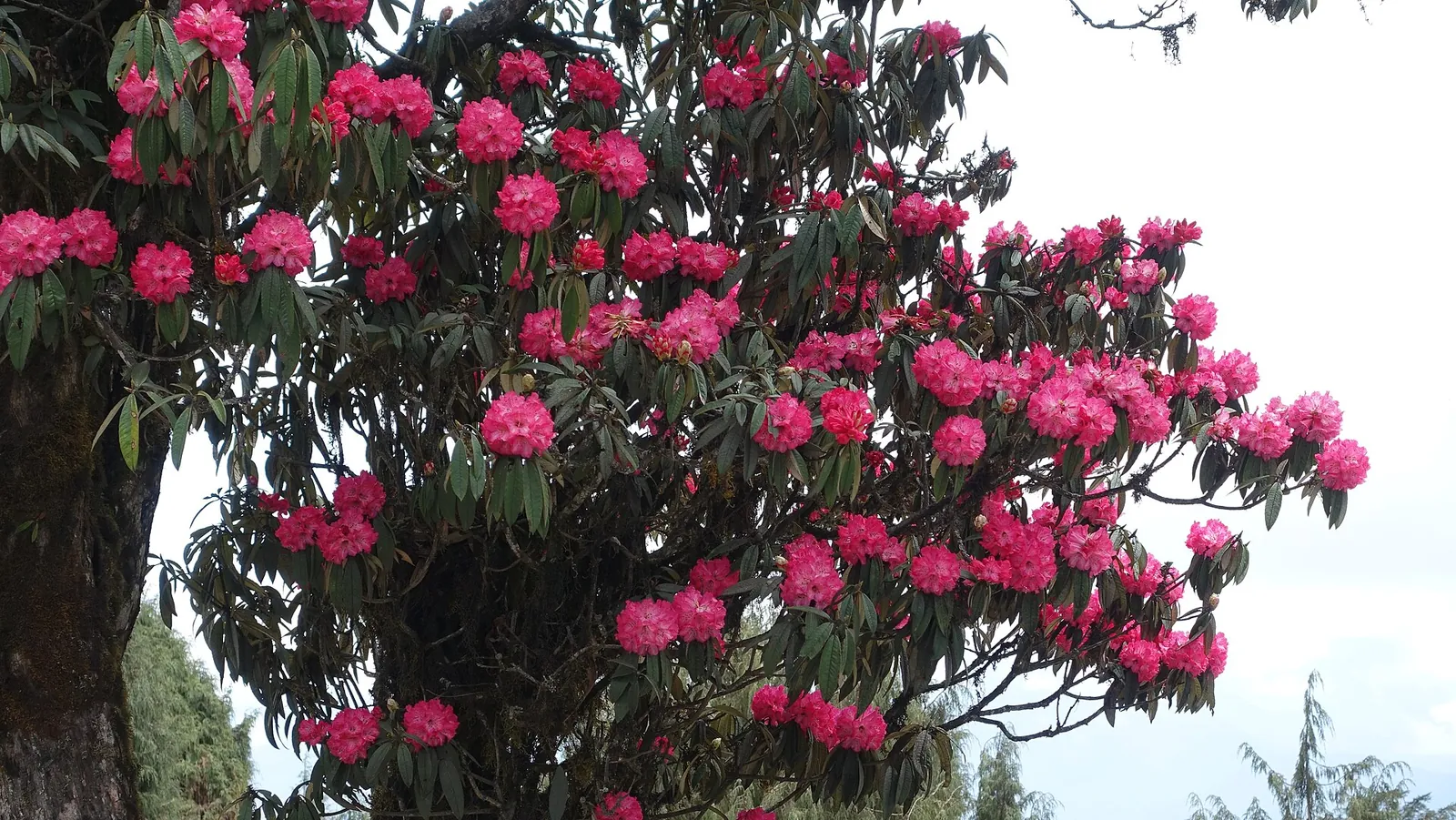
| April | Nature in full bloom, rhododendrons included; showers from mid-April | Rhododendron Festival, Lamperi, 22-23 | High |
| May | Warm days, about twice April's rain | – | High |
| June | The monsoon begins; it can affect transport and services | – | Low |
| July | The wettest month; green valleys and the main farming season | – | Low |
| August | Monsoon rain and lush farmland; landslides can close roads | – | Low |
| September | The monsoon's last month; autumn from late September | Tour of the Dragon bike race, Bumthang to Thimphu, 5 | High |
| October | Bright, sunny days, some early snow on the peaks; the first cranes arrive late in the month | Thimphu Drubchen 5, Wangdue 8-10, Thimphu 10-12, Gangtey 13-15 | High |
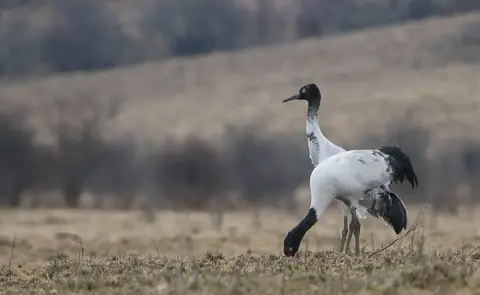
| November | The driest month, clear autumn days; cranes in Phobjikha | Haa 6-8, Dechenphu (Thimphu) 8, Black-necked Crane Festival 11 | High |
| December | Crisp, clear and sunny; most cranes have arrived in Phobjikha | Druk Wangyel Tshechu, Dochula, 13 | Low |
Our festivals guide describes each festival and prices a festival week.
Spring: March to May
Spring is the first of the two main seasons. Days warm from about 17°C in March to 22°C in May in Paro, nights rise above freezing, and the Department of Tourism calls it a botanist's delight, with nature in full bloom. Trans Bhutan Trail, which runs the restored cross-country trail, names rhododendron forests in bloom and lists March to May as its peak booking period. Rain builds slowly: from mid-April showers become more frequent, and May has about twice April's rain.
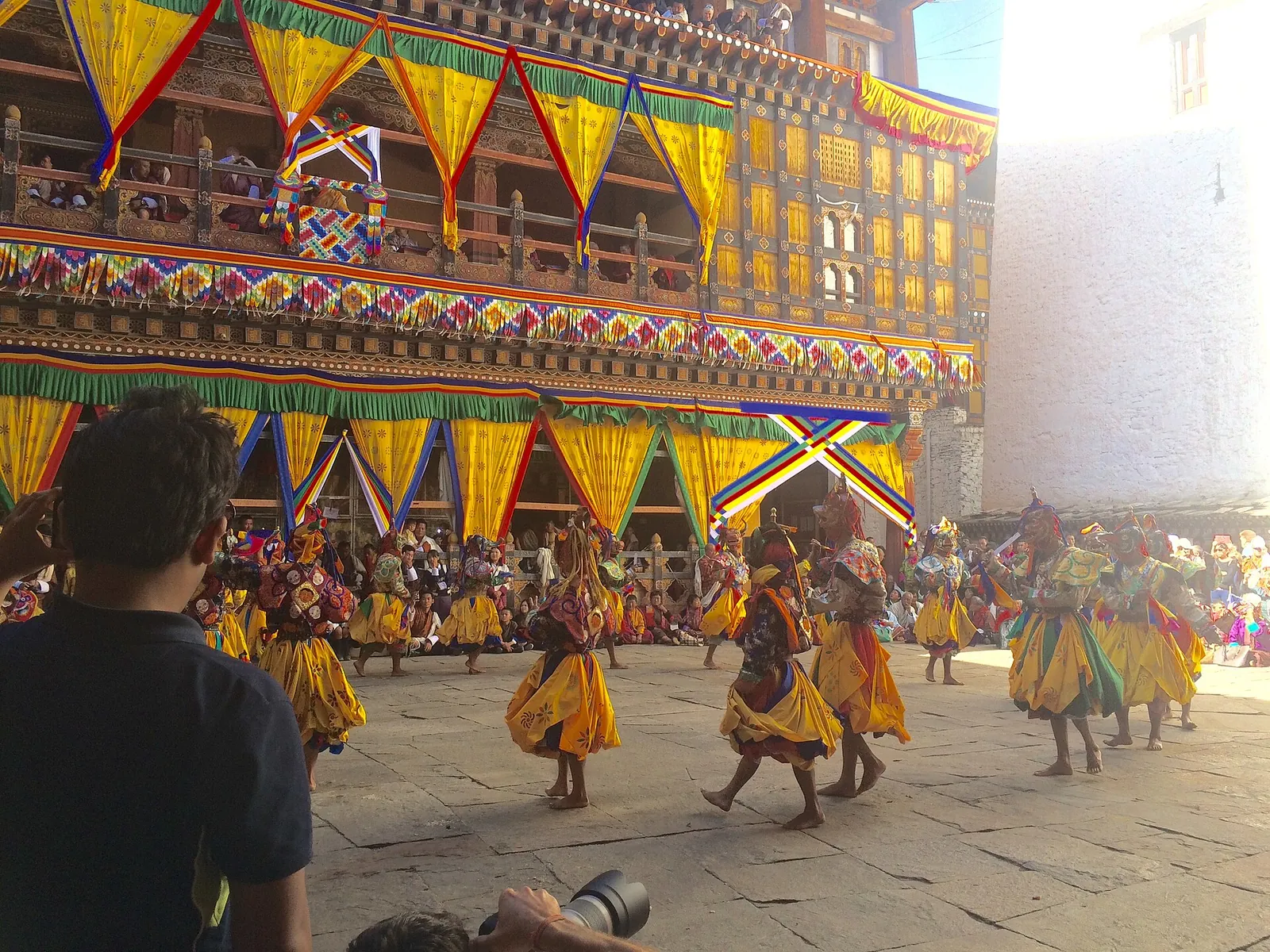
Spring also brings Paro Tshechu, the festival most first trips are built around: the Department of Tourism's tentative dates for 2027 are 18-22 March at Rinpung Dzong. Hotels and flights fill around them, so book early; our festivals guide has the full list and a festival week priced.
For the Tiger's Nest, about 3,120 m, spring and autumn offer the best chances of a dry path and open views.
Summer monsoon: June to September
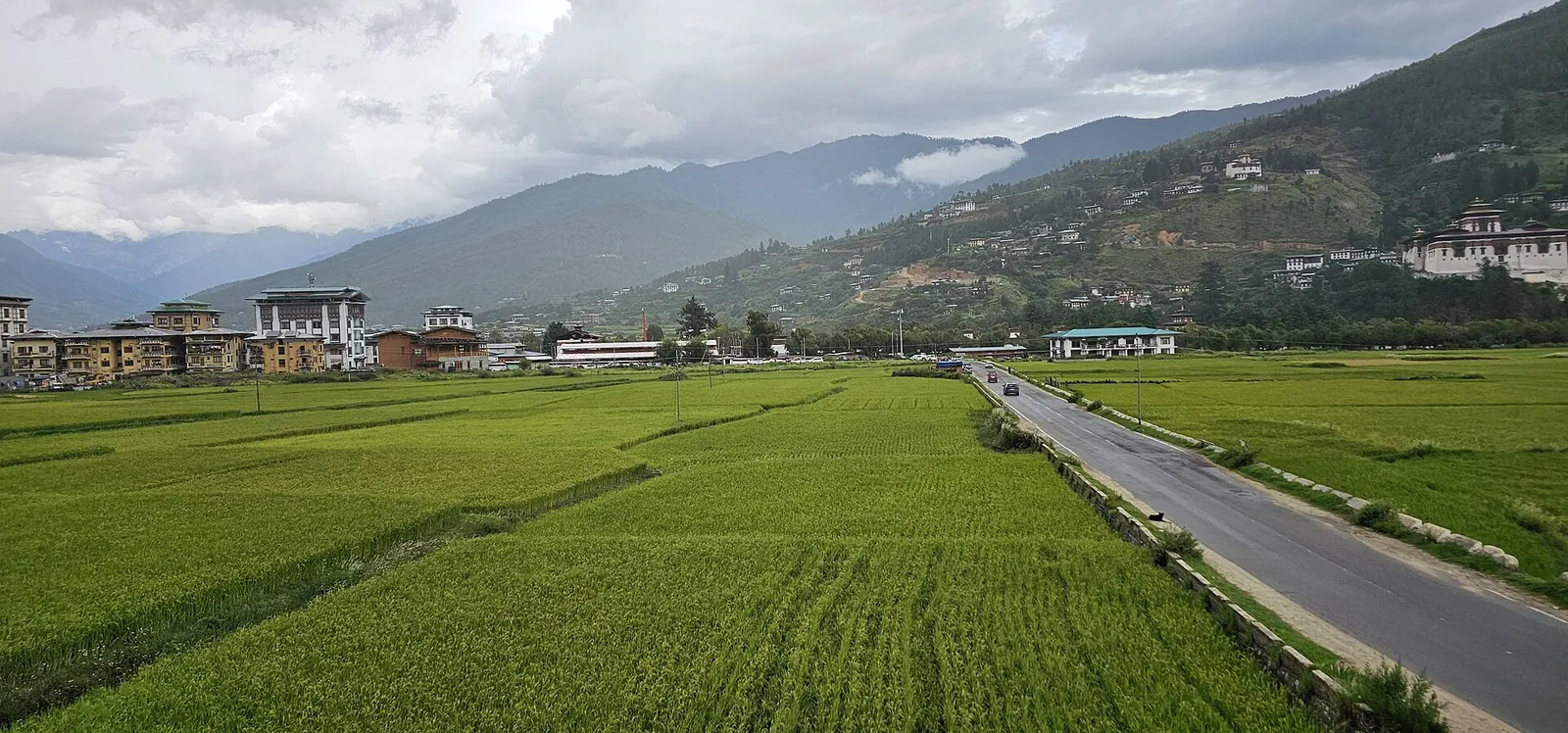
The monsoon is the season to plan around rather than to avoid at all costs. In Paro, July averages about 120 mm of rain and Thimphu about 147 mm; the Department of Tourism notes that the monsoon mostly affects the south. Trans Bhutan Trail says the rain typically comes in the afternoons, the valleys are green and lush, and temperatures rarely pass 30°C even lower down; take shoes with good grip for wet trails such as the Tiger’s Nest.
The roads are the issue. NCHM calls landslides during the summer monsoon a major problem for the roads sector, and the Department of Tourism warns that from June to September the monsoons can affect transport and services. Drive only by daylight, and allow a spare day: landslides can close roads for days. The UK notes that weather regularly affects domestic and international flights, so keep a spare day before a long-haul connection.
If you travel in the monsoon, keep to a Paro–Thimphu–Punakha loop with short drives.
Autumn: October and November
Autumn is the classic season. The monsoon fades in late September, the air is washed clear, and the Department of Tourism describes bright, sunny days with some early snow on the high peaks. October in Paro averages about 21°C by day and 9°C at night; November is cooler, at about 17°C and 4°C, and almost completely dry.
It is also festival season and the busiest time of the year. Thimphu Tshechu, the country's biggest festival, falls on 10-12 October 2027 at Tashichho Dzong, with Wangdue on 8-10 October and Gangtey on 13-15 October; in November come Haa on 6-8, Jakar in Bumthang on 6-9 and the Black-necked Crane Festival at Gangtey Gonpa in Phobjikha on 11 November. All are the Department of Tourism's tentative dates.
Mind the fee. The USD 100 rate is a 50% discount on the full SDF of USD 200 and runs until 31 August 2027; the government may end the discount after that date, so budget nights from 1 September 2027 at USD 200 per adult unless an extension is announced. Our Bhutan trip cost guide prices a week before that date.
Trekking seasons
Treks follow the same two seasons, with narrower windows the higher you go. Guided Bhutan, a licensed operator, gives March to June and September to November as the main windows for the Druk Path, five days on foot from the Paro valley over a ridge of lakes to Thimphu, topping out at about 4,200 m: spring brings rhododendrons, and autumn often clearer mountain views. For the Jomolhari trek, eight days on foot to the base camp at Jangothang and over two passes near 4,900 m, it gives April to May and September to November; summer brings monsoon rain and muddy trails, and from December snow can close the high passes.
The Snowman Trek, around 25 days across the far north and eleven high passes, several above 5,000 m, has the shortest window: late September to mid-October usually gives the best chance. From November snow can close the highest passes for the season, and even in October an early snowfall can block a pass and turn a group back, so build in spare days.
Winter: December to February
Winter is the best-kept secret of the western valleys. The days are dry and mostly sunny, about 13-15°C in Paro and Thimphu in January, but nights fall below freezing, to about -1 to -2°C on average. Snow is common above 3,000 metres, so Dochula can be white.
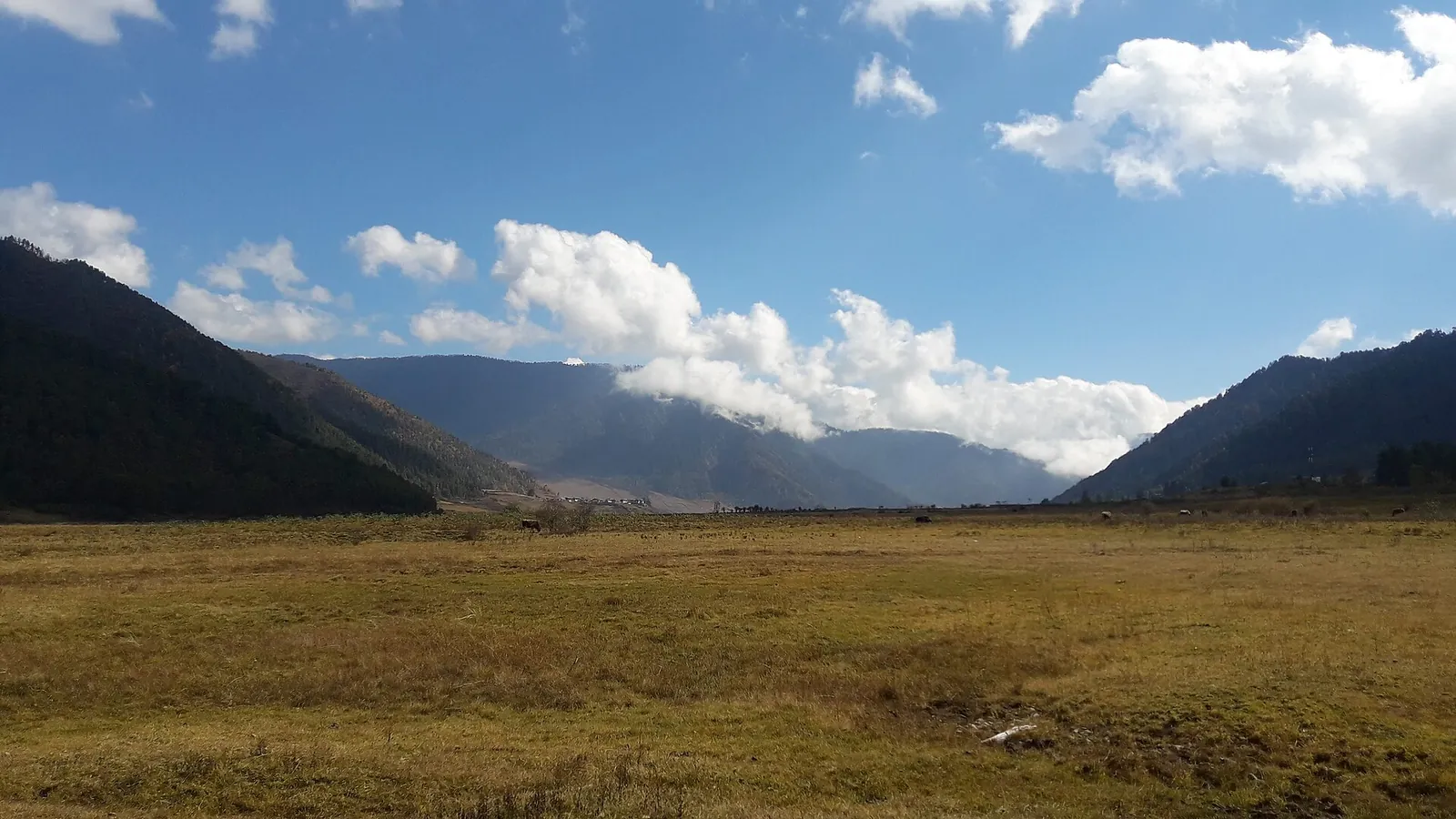
Punakha is the warm refuge: far lower, at about 1,250 m, it stays mild, and its two festivals are tentatively listed for 13-15 and 16-18 February 2027. Druk Wangyel Tshechu, the festival of the Royal Bhutan Army at Dochula, is tentatively listed for 13 December 2027. In Phobjikha, about 3,000 m, the black-necked cranes spend the winter, arriving from late October and leaving by mid-March.
Winter is low season: fewer visitors, quieter dzongs and, at many hotels, lower rates.
Crowds, prices and when to book
Hotels price by season. The Thimphu and Paro hotel tariffs we checked on 3 November 2026 count March to May and September to November as high season and the other months as low season, when rooms cost about 6-10% less. The visa and the SDF cost the same all year, and guide and driver prices depend on your operator’s quote, so a room discount does not mean the same saving on the whole trip.
Book the operator and Paro flights first, 4 to 6 months ahead for spring, autumn and festival weeks, when Paro and Thimphu hotels fill early. Our first trip guide explains how to book it, and the 7-day itinerary works in every season.
Practical questions
What is the best month to visit Bhutan?
October or November for the clearest views and driest days, or March and April for spring flowers and Paro Tshechu (18-22 March 2027, tentative). November is the driest month in Paro and Thimphu, with about 1 mm of rain on average.
Is it worth visiting Bhutan during the monsoon?
For a short cultural loop, yes: the valleys are green, quiet and warm. But July and August are the wettest months, cloud often hides the peaks, and landslides can close roads for days, so keep the route short, drive by daylight and keep a spare day before your flight home.
How cold is Bhutan in winter?
In January, Paro and Thimphu average about 13-15°C by day and about -1 to -2°C at night, with dry, sunny weather. Snow is common above 3,000 metres, on passes such as Dochula. Punakha, about 1,250 m, stays mild.
When is Paro Tshechu in 2027?
The Department of Tourism's tentative list gives 18-22 March 2027 at Rinpung Dzong. Festival dates follow the lunar calendar and can still move.
Is Bhutan cheaper in the low season?
A little. Hotel rooms in Thimphu and Paro cost about 6-10% less from December to February and June to August, but the visa and the SDF cost the same all year, and guide and car prices depend on the operator’s quote.
Keep planning your trip
Bhutan festivals and events 2027
Tentative 2027 Bhutan festival dates: Punakha in February, Paro in March, Thimphu in October and the crane festival in November.
Read the guide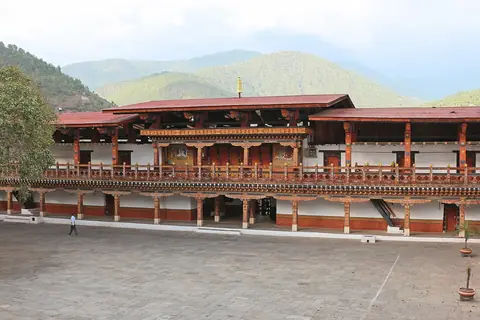
First trip to Bhutan
A first week in Bhutan: the visa and nightly fee, why a certified guide comes along, the Paro, Thimphu and Punakha loop, money, SIMs, etiquette and daily costs.
Read the guide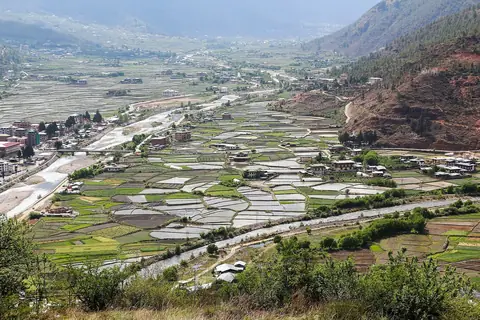
Bhutan in seven days
Two nights each in Thimphu, Punakha and Paro, with Dochula on day 3 and the Tiger's Nest hike on day 6: drive times, hotels, the fees and an all-in budget.
Read the guide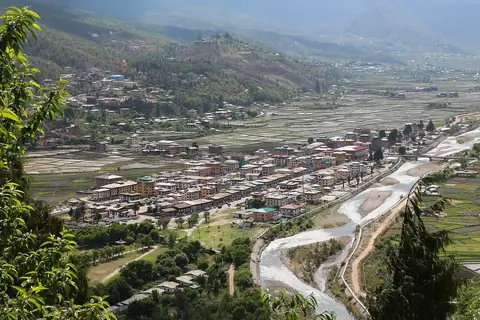
Bhutan trip cost
A Bhutan week for two: about USD 1,880 per person on a budget, USD 2,080 mid-range or USD 2,520 in four-star rooms, plus international flights.
Read the guide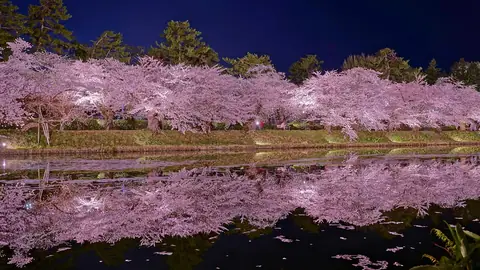
Where to go in Asia in April
April is spring in Japan, Korea, northern Vietnam and the Silk Road, and new year in Thailand. Six trips with daily costs, festivals and places to skip.
Read the guide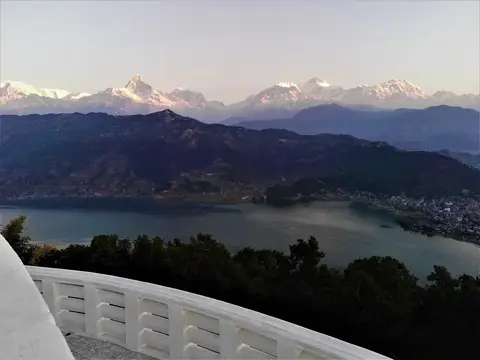
Where to go in Asia in October
October is Asia's best month for the Himalaya, Japan, Korea and north India. Six trips with daily costs, the festivals to plan around and places to skip.
Read the guideSources and checks before you travel
(25)
- National Center for Hydrology and Meteorology: climate of Bhutan ↗ — opens in a new tab
- World Meteorological Organization: Paro climatological information (NCHM) ↗ — opens in a new tab
- World Meteorological Organization: Thimphu climatological information (NCHM) ↗ — opens in a new tab
- Department of Tourism: FAQs ↗ — opens in a new tab
- Department of Tourism: tentative festival dates for the year 2027 (PDF) ↗ — opens in a new tab
- Department of Tourism: announcements ↗ — opens in a new tab
- Trans Bhutan Trail: best time to visit Bhutan ↗ — opens in a new tab
- Little Bhutan: Bhutan 7-day itinerary ↗ — opens in a new tab
- Jambayang Resort, Thimphu: tariff ↗ — opens in a new tab
- Royal Society for Protection of Nature: Phobjikha bids adieu to the black-necked cranes ↗ — opens in a new tab
- UK Foreign Office: Bhutan safety and security ↗ — opens in a new tab
- Auswärtiges Amt (Germany): Bhutan travel and safety advice (German) ↗ — opens in a new tab
- France Diplomatie: Bhutan, useful information (French) ↗ — opens in a new tab
- Guided Bhutan Tours: Essential Bhutan Journey ↗ — opens in a new tab
- Department of Culture and Dzongkha Development: Paro Taktshang ↗ — opens in a new tab
- Department of Tourism register: Little Bhutan ↗ — opens in a new tab
- Udumwara Resort, Paro: deluxe rooms at villas ↗ — opens in a new tab
- World Meteorological Organization: Wangdue Phodrang climatological information (NCHM) ↗ — opens in a new tab
- World Meteorological Organization: Bumthang climatological information (NCHM) ↗ — opens in a new tab
- Bhutan Travel Bureau (tour operator): driving distances ↗ — opens in a new tab
- Guided Bhutan Tours: Druk Path trek ↗ — opens in a new tab
- Guided Bhutan Tours: Jomolhari trek ↗ — opens in a new tab
- Guided Bhutan Tours: trekking tours ↗ — opens in a new tab
- Guided Bhutan Tours: the Snowman Trek ↗ — opens in a new tab
- Department of Tourism register: Guided Bhutan Tours ↗ — opens in a new tab
Reference sources for the version dated 3 November 2026. Confirm opening times, access, transport and conditions for your travel dates.
Photo credits
(5)
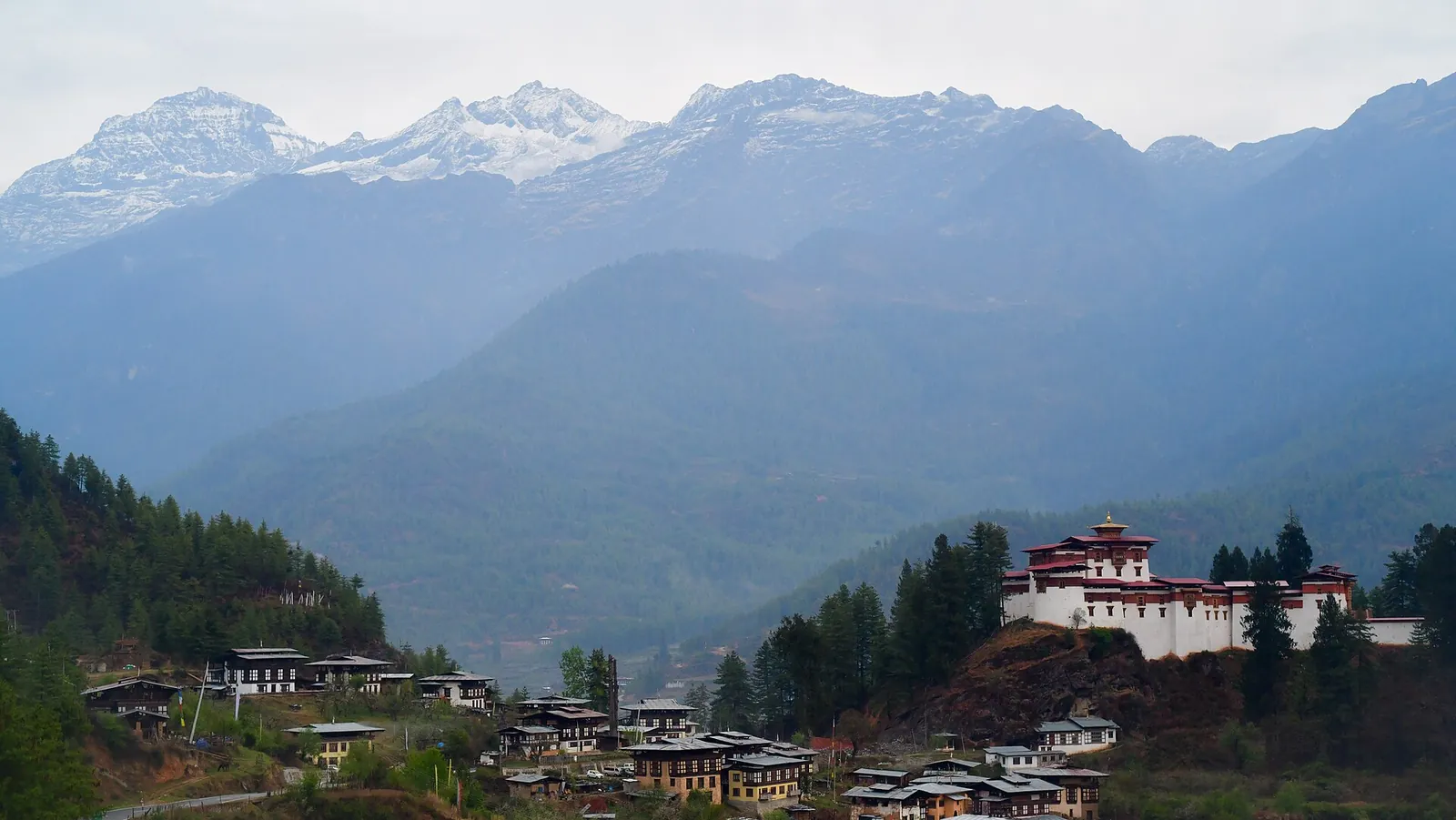
Drukgyal Dzong in the upper Paro valley at the end of April, with snow still on the peaks
Photograph: Christopher J. Fynn — opens in a new tab · CC BY-SA 4.0 — opens in a new tab
Changes: Resized and converted to WebP; displayed with responsive crops. · Original photograph and licence details ↗ — opens in a new tab
Wild rhododendron in flower at Dochula, about 3,050 m, in April
Photograph: Franzfoto — opens in a new tab · CC BY-SA 3.0 — opens in a new tab
Changes: Resized and converted to WebP; displayed with responsive crops. · Original photograph and licence details ↗ — opens in a new tab
Mask dances at Paro Tshechu in early April
Photograph: Nimlham — opens in a new tab · CC BY-SA 4.0 — opens in a new tab
Changes: Resized and converted to WebP; displayed with responsive crops. · Original photograph and licence details ↗ — opens in a new tab
Rice fields in the Paro valley in early September, at the end of the monsoon
Photograph: Nabin K. Sapkota — opens in a new tab · CC BY-SA 4.0 — opens in a new tab
Changes: Resized and converted to WebP; displayed with responsive crops. · Original photograph and licence details ↗ — opens in a new tab
Phobjikha valley in early November, as the cranes arrive for the winter
Photograph: Kheng Singye Dorji (KSD) — opens in a new tab · CC BY-SA 4.0 — opens in a new tab
Changes: Resized and converted to WebP; displayed with responsive crops. · Original photograph and licence details ↗ — opens in a new tab