Plan your trip
Bhutan entry: visa, SDF, certified guides and customs
For most international visitors flying to Paro, arrange your visa, Sustainable Development Fee and certified guide before travel. Customs, altitude and local conduct follow once you land.
In this guide
Find the location ↗ — opens in a new tabThe short answer
Every visitor except Indian nationals needs a visa, and ordinary UK, EU, US and Australian passports must have it approved online before travel: USD 40, reviewed within five working days. Fix your dates, arrange a certified guide or operator and plan your Paro flights; then apply online and pay the visa with the Sustainable Development Fee (SDF) at the standard rate of USD 100 per adult per night for US-dollar-paying tourists, set until 31 August 2027. A certified guide stays with you throughout, and you sleep only in certified hotels, homestays or campsites. Carry a passport valid six months beyond departure.
- Key point
- Entry planning before you book; the visa allows up to 90 days from the date of entry
- Where it applies
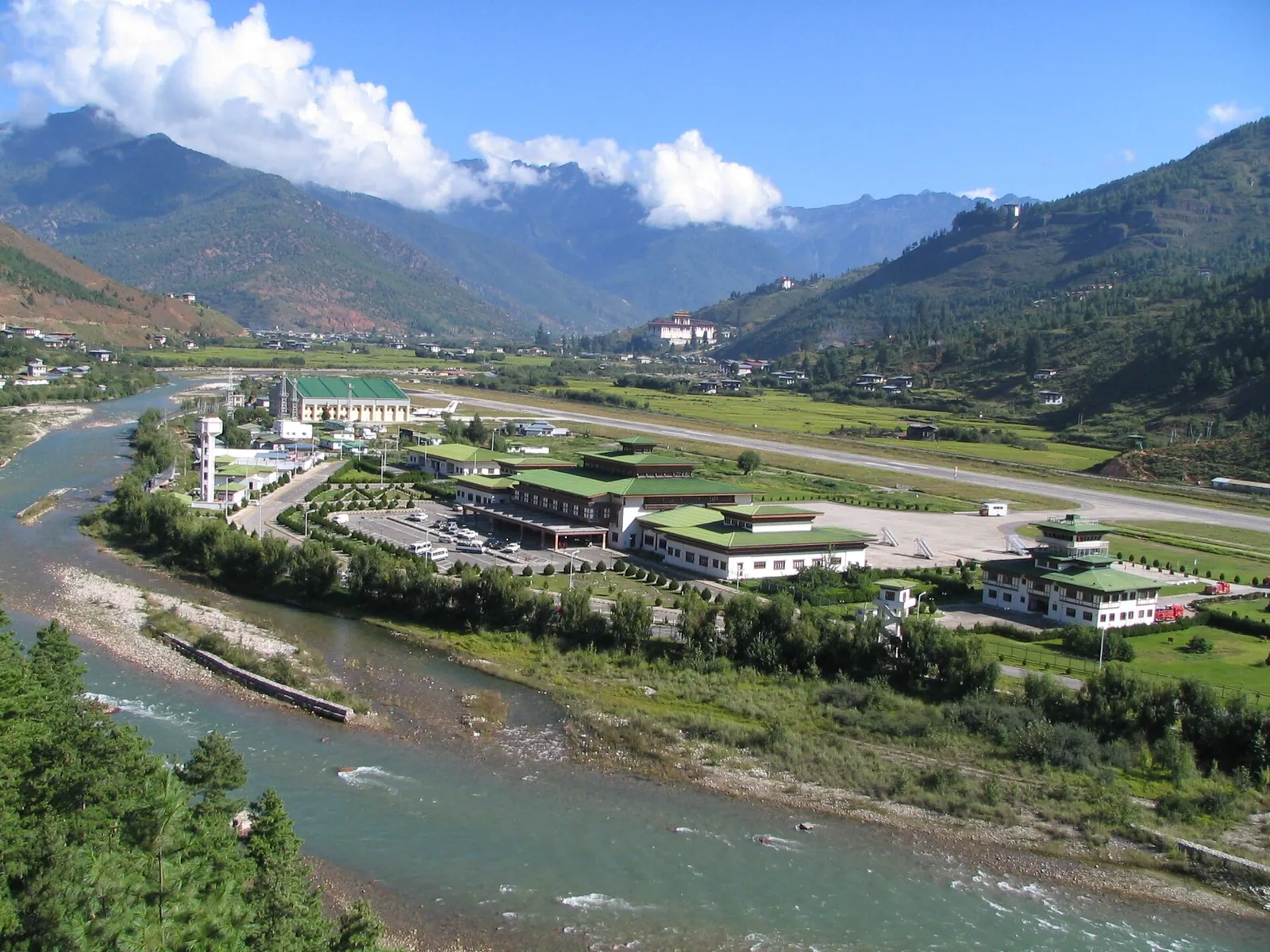
- For most international visitors arriving at Paro International Airport (PBH), have your visa approved and the SDF for your planned stay paid before travel
- Timing
- The standard US-dollar SDF rate of USD 100 per adult per night runs until 31 August 2027
Compare all 24 countries: Asia entry requirements at a glance →
Who needs a visa, and your passport
Indian nationals need no visa: they travel on a permit, with an Indian passport or voter ID card. Indian under-18s may use a passport or birth certificate and must be accompanied by a legal guardian. Their standard SDF is Nu 1,200 per adult per night. Citizens of Bangladesh and the Maldives need a visa but may apply either in advance or on arrival in Bhutan. Other visitors normally apply online and must have the visa approved before travelling, including holders of ordinary British, Irish, EU, Swiss, Norwegian, US, Canadian, Australian, New Zealand and Brazilian passports. Swiss and Thai diplomatic or government-official passport holders may obtain a visa at the port of entry. No nationality is barred, and the visa allows a stay of up to 90 days from the date of entry.
Passport validity advice differs by country: the UK and Germany advise that your passport must be valid for at least six months after the date you plan to leave Bhutan, while France asks for six months from the date of entry; other EU/EEA travellers should check their own government's advice.
What to arrange first, and when
Book in this order. First fix your dates and a certified guide or tour operator, and plan your flights to and from Paro; the visa application asks for your arrival and departure dates and the SDF for your planned stay. Guided Bhutan, a DoT-listed operator, advises booking four to six months ahead for March to May, September to November and festival weeks, when hotels in Paro and Thimphu fill early, and two to three months ahead otherwise.
For a guide and car, ask operators for a quote for your dates, group size and route; Guided Bhutan quotes guide-only prices and adds a vehicle and driver on request, and our trip cost guide prices the whole week, all in, at three levels.
Then apply yourself, through the online application linked from the Department of Tourism's (DoT) visa page, or through your tour operator or hotel. One person can apply for the whole party, given each traveller's details. You need a digital copy of a valid passport, a recent digital passport photo, your arrival and departure dates and a payment card. Sign Bhutan's Pledge of Friendship, create an account, add your travel details, then pay the visa fee and the SDF for your planned stay. An application can be saved and finished later; once submitted, it is reviewed within five working days. The visa fee is a one-off, non-refundable USD 40 per applicant. International credit cards are accepted, but some banks block online payments to Bhutan, so tell your bank before you pay.
The Sustainable Development Fee, night by night
For US-dollar-paying tourists, the Sustainable Development Fee (SDF) is USD 100 per adult per night until 31 August 2027, USD 50 for children from 6 to under 12, and nothing under 6. Indian nationals normally pay Nu 1,200 per adult per night, with a half rate for children aged 6 to under 12 and no fee under 6; DoT also lists a reduced rate for the first 15,000 Bangladeshi guests. It is paid within the visa application, also when a tour operator or hotel applies for you. At the standard US-dollar rate, a seven-day trip with six nights costs USD 600 per adult. It goes to the national exchequer, which allocates funds to free healthcare and education, conservation, cultural preservation and infrastructure, and it is separate from your rooms, meals, guide and car. The government set this rate for four years from 1 September 2023 and may review it after 31 August 2027.
For two US-dollar-paying adults on a six-night trip, the government charges come to USD 1,280: USD 1,200 in SDF and USD 80 in visa fees. A child aged eight adds USD 340: USD 300 of SDF over the same six nights and USD 40 for the child's visa.
If you cancel or cut the trip short, the SDF for nights not spent in Bhutan is refunded, less bank charges: request it through the visa portal, and it is paid after you leave. To stay longer, apply before your visa expires. DoT says to request the extension and pay its processing fee and SDF through the same online visa portal; the UK advises asking the Department of Immigration in Thimphu.
One exception rarely affects a western-valleys trip: tourists who stay within the designated zones of the border towns of Phuentsholing, Samtse, Gelephu and Samdrup Jongkhar for up to 24 hours pay no SDF, a waiver that runs until August 2027. Travel beyond the zone, past the Rinchending checkpost above Phuentsholing for example, and the applicable SDF is charged.
Guides, drivers and certified hotels
You can book every part of the trip yourself, but a guide certified by the Department of Tourism must be with you at all times, and you may stay only in DoT-certified hotels, homestays or campsites. A guide is also needed to enter dzongs and monuments. Self-drive cars cannot be hired in Bhutan. You may bring your own vehicle, subject to requirements and a daily charge, but a guide must accompany you; otherwise hire a vehicle and driver. DoT's Tourism Services Portal (services.bhutan.travel) lists the certified tour operators, guides and hotels, so you can hire a guide and a car with driver yourself, or have an operator bundle them with rooms and meals.
With a certified guide no route permit is needed for most of Bhutan; DoT lists some areas as restricted or prohibited. National parks still need permits, applied for through DoT's online form; check the current permit conditions with DoT or your guide. All treks must be made with an accredited tour operator or guide.
Certification depends on DoT's approval, not on a star rating: one- and two-star hotels and certified village homestays qualify alongside three- to five-star hotels, and DoT says accommodation providers, including village homestays, must obtain certification before catering to tourists. Look a hotel up on the portal before you book it. Some dzongs and temples charge an entry fee, paid in cash or with the Bank of Bhutan's goBoB app; our Thimphu and Punakha guide gives the fees for the sights on the route.
Arriving at Paro, or overland from India
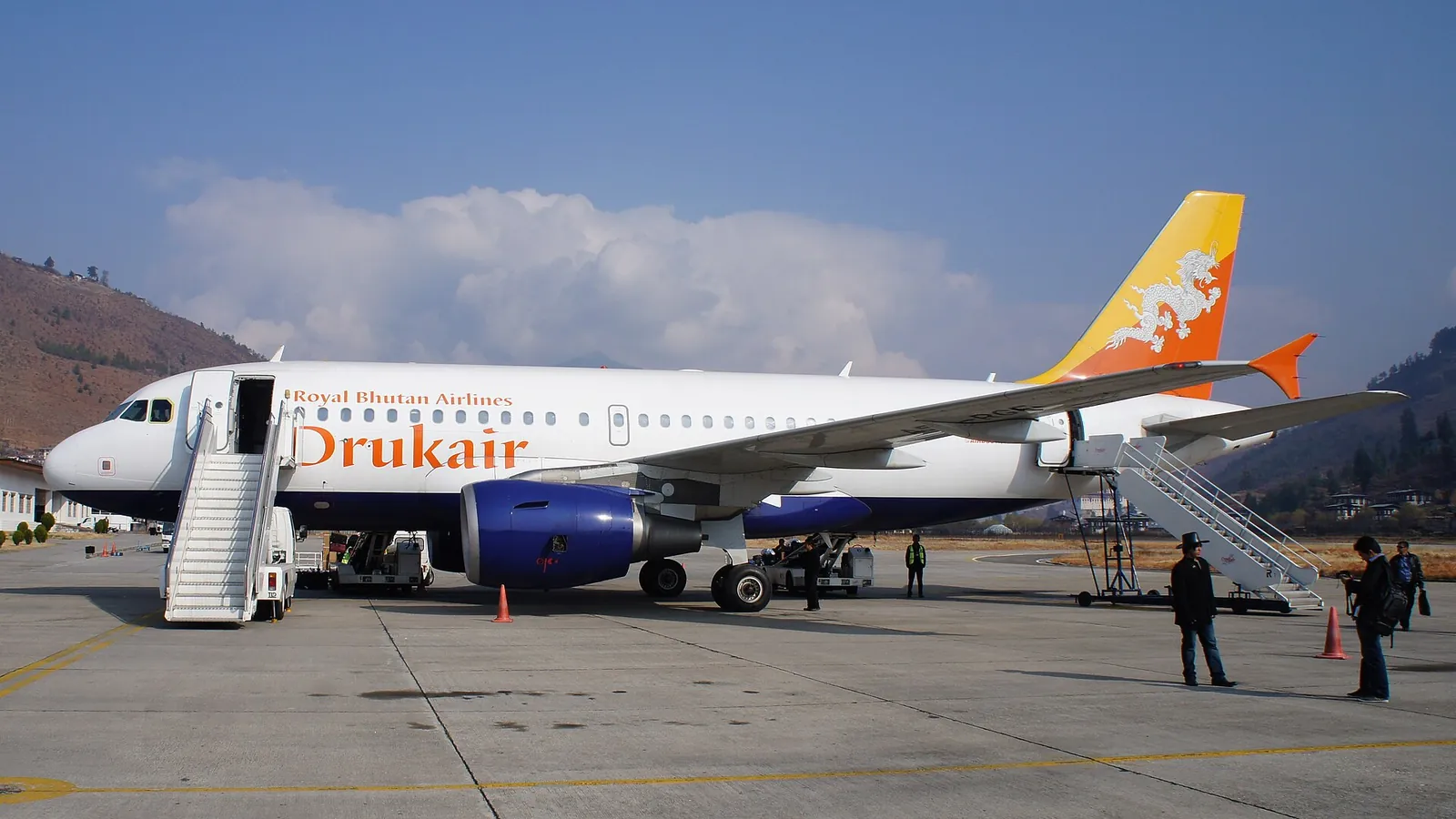
Paro International Airport (PBH) is the gateway for the western valleys; Gelephu, in the south, is Bhutan's other international airport, and Drukair's November 2026 schedule shows a Paro-Gelephu-Kolkata flight on Mondays and Fridays. Drukair and Bhutan Airlines fly into Bhutan from cities including Bangkok, Delhi, Kolkata, Bagdogra, Kathmandu, Dhaka, Guwahati, Dubai and Singapore. For a Delhi connection, India's embassy says no transit visa is needed if you remain airside, have confirmed onward travel on one PNR, and the airline handles your bags through to the next flight. If you must clear immigration to collect and re-check bags or change terminals, you need an appropriate Indian visa. In Kathmandu, UK and EU/EEA passport holders who must enter Nepal can obtain a visa on arrival at the airport or a visa in advance from a Nepalese embassy, and the UK advises applying for the visa on arrival online up to 15 days ahead or at the airport; check the rules for your passport. Flights in and out of Paro depend on the weather and can be delayed or cancelled, so leave a spare day before an onward long-haul flight.
At Paro immigration the pre-approved visa is issued and stamped into your passport; make sure the officer stamps it before you leave the desk. Carry a printed copy of the visa approval with the passport you applied with, for airline check-in and the immigration desk. After baggage claim you hand in the customs declaration, described below.
At Paro airport, DoT's visitor information centre sells tourist SIM cards and you can change money into ngultrum on arrival. Outside there is a taxi rank but no other public transport, so arrange to be met by your guide and driver, or book a transfer with the hotel or tour operator. Thimphu is 47 km from Paro, one to one and a half hours by road. France strongly discourages travel by road at night, even with a driver; and in the monsoon, June to September, allow for landslides that can close roads for days. Our Paro and Tiger's Nest guide covers the valley, its dzong and the Tiger's Nest hike.
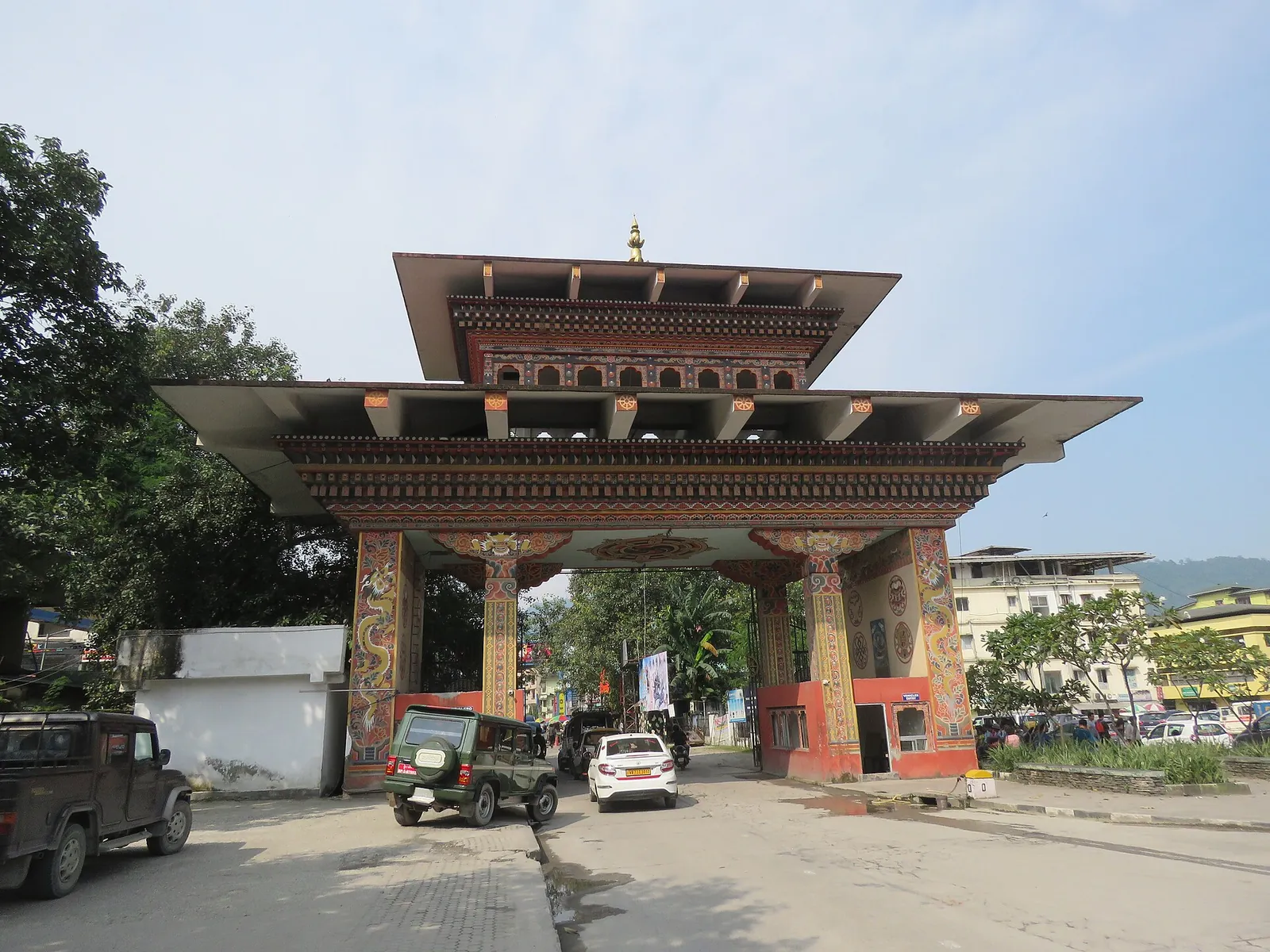
By land, tourists enter at the designated ports of Phuentsholing, Gelephu, Samdrup Jongkhar and Samtse. Phuentsholing is the usual crossing from West Bengal, four to five hours by road from Bagdogra airport, and Thimphu is 165 km and five to five and a half hours beyond it. A guide is required as soon as you travel beyond the border town, so book yours to meet you at the Phuentsholing border gate. Check Indian entry requirements for your passport: France advises that its nationals need an Indian visa to reach the crossing, and a double-entry visa if they also leave Bhutan through India.
Customs: allowances, tobacco, cash and medicines
Arriving passengers fill in a customs declaration and take the green channel with nothing to declare, or the red channel with goods to declare. Under Bhutan's Customs Rules and Regulations of 2017, a foreign tourist may bring in used personal effects for the visit, to be re-exported on departure, plus goods worth up to Nu 10,000 duty-free for personal use or as gifts, carried on the person or in accompanied baggage, including no more than two litres of spirits and 100 ml of perfume. Professional, sound-recording and video equipment can be brought in temporarily against a written list handed to airport customs, which checks it again when you leave.
Tobacco is legal to buy in Bhutan. UK advice is that British visitors may bring a small supply for personal use, but must pay tax and duty and be able to show proof of payment whenever the authorities ask during the visit; EU/EEA visitors should check their own government's advice before packing tobacco. Smoking is banned in public places, including temples and monasteries, shops, public transport and inside private vehicles.
UK advice for British visitors is that foreign currency worth USD 10,000 or more, coming in or going out, must be declared to customs and cleared with the Royal Monetary Authority of Bhutan; Bhutan's own customs rules list currency above the prescribed limit among restricted goods for every passenger, EU/EEA visitors included. Medicines that contain internationally controlled drugs need a permit from the Bhutan Food and Drug Authority, and illegal drugs carry sentences of three years to life. Tourists are generally not permitted to bring drones, and flying one needs a permit obtained in advance.
Antiques may not be taken out of Bhutan, and customs officials may inspect anything that looks old. Handicrafts and other non-antique artefacts need an Export Permit for Non-Antique Artefacts; handicraft shops usually seal goods that may be exported.
Insurance, hospitals and altitude
Travel insurance has not been a visa condition since 23 April 2024, but DoT strongly recommends it; take cover for medical treatment, emergency helicopter evacuation and repatriation. In Thimphu, the national referral hospital can provide surgery and emergency treatment, while hospitals elsewhere generally offer basic care, and more complex cases need evacuation to India or Thailand.
Tiger's Nest lies at about 3,120 m; consider keeping the climb for later in your trip to allow time to adjust. Germany advises anyone travelling above 2,300 m to see a doctor experienced in altitude medicine before final planning, and France lists pregnancy and a history of heart, lung, kidney or neurological illness as reasons against high altitude.
Conduct and everyday safety
Bhutanese people take their customs and traditions very seriously: above all, avoid criticising the King. At religious sites, wear clothing that covers you from shoulders to knees, with long sleeves and covered legs in temples; photography inside temples, monasteries and official buildings is forbidden. Our first-trip guide covers money, SIM cards and how a guided week fits together.
Crime is low. Keep copies of your passport photo page, visa and flight ticket apart from the originals, avoid demonstrations, keep away from the closed, disputed border with China, and be wary of stray dogs, going straight to hospital for rabies treatment after a bite.
Practical questions
Do I need a visa for Bhutan on an ordinary British or EU passport?
Yes, approved online before you travel; it allows up to 90 days from entry.
Is the SDF charged per day or per night?
Per night, not per day: a seven-day trip with six nights is charged for six nights.
Can I visit Bhutan without a tour operator?
Yes. You can book everything yourself; you still travel with a certified guide and stay in certified accommodation. Hire a vehicle with a driver, or bring your own vehicle subject to the entry requirements and a daily charge.
Is travel insurance compulsory?
No. The requirement was lifted on 23 April 2024, but DoT strongly recommends insurance; choose cover that includes emergency helicopter evacuation and repatriation.
How much alcohol can I bring into Bhutan?
A foreign tourist may bring up to two litres of spirits duty-free, within an allowance of goods worth Nu 10,000 carried on the person or in accompanied baggage, under Bhutan's Customs Rules and Regulations of 2017.
Do I get the SDF back if I leave early?
Yes. The SDF for nights not spent in Bhutan is refunded, less bank charges, through the visa portal, and the refund is paid after you leave. The visa fee is not refundable.
How long must my passport be valid?
It depends on your passport: the UK and Germany advise at least six months after the date you plan to leave Bhutan, and France six months from the date of entry; other EU/EEA travellers should check their own government's advice.
Keep planning your trip
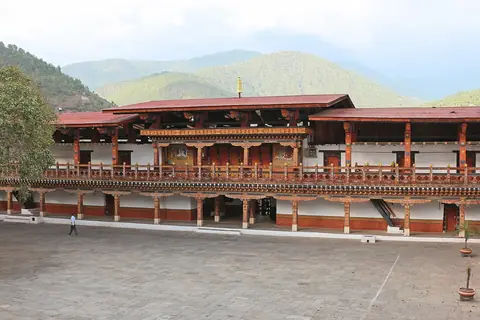
First trip to Bhutan
A first week in Bhutan: the visa and nightly fee, why a certified guide comes along, the Paro, Thimphu and Punakha loop, money, SIMs, etiquette and daily costs.
Read the guide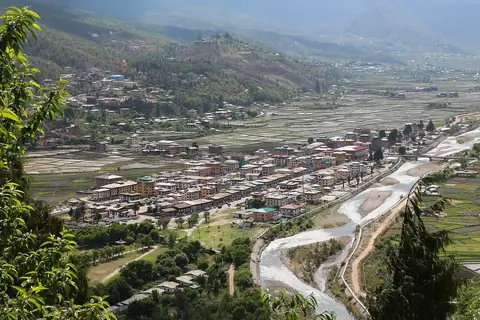
Bhutan trip cost
A Bhutan week for two: about USD 1,880 per person on a budget, USD 2,080 mid-range or USD 2,520 in four-star rooms, plus international flights.
Read the guide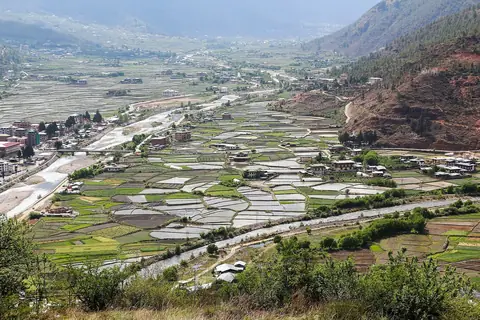
Bhutan in seven days
Two nights each in Thimphu, Punakha and Paro, with Dochula on day 3 and the Tiger's Nest hike on day 6: drive times, hotels, the fees and an all-in budget.
Read the guide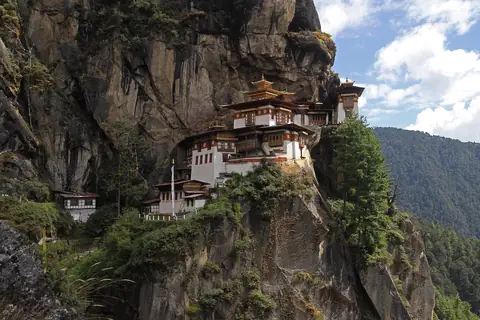
Paro and Tiger's Nest
Two nights in Paro: the Tiger's Nest hike with its fee, ponies and timings, Rinpung Dzong, the National Museum, Kyichu Lhakhang, Chele La, hotels and costs.
Read the guide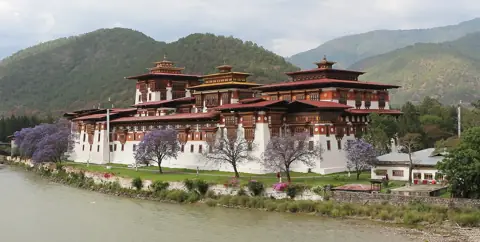
Thimphu and Punakha
Two nights in Thimphu and two in Punakha: Buddha Dordenma, Tashichho Dzong at dusk, the drive over Dochula, Punakha Dzong and Chimi Lhakhang, with fees, hotels and costs.
Read the guide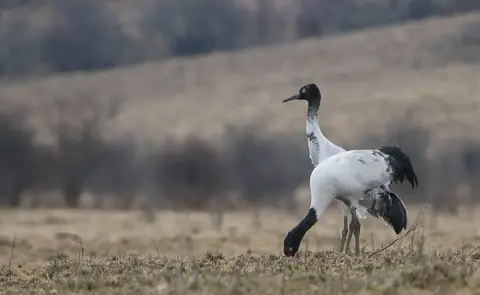
Bhutan festivals and events 2027
Tentative 2027 Bhutan festival dates: Punakha in February, Paro in March, Thimphu in October and the crane festival in November.
Read the guideSources and checks before you travel
(28)
- Department of Tourism Bhutan: Visa ↗ — opens in a new tab
- Department of Tourism Bhutan: FAQs ↗ — opens in a new tab
- Department of Tourism Bhutan: Announcements ↗ — opens in a new tab
- Department of Tourism Bhutan: Tourism Services Portal ↗ — opens in a new tab
- Ministry of Finance, Bhutan: Customs Rules and Regulations of Bhutan, 2017 (PDF) ↗ — opens in a new tab
- Bank of Bhutan: Current rate of exchange ↗ — opens in a new tab
- Bhutan Food and Drug Authority: Controlled Substances Division FAQs ↗ — opens in a new tab
- UK FCDO: Bhutan entry requirements ↗ — opens in a new tab
- UK FCDO: Bhutan safety and security ↗ — opens in a new tab
- UK FCDO: Bhutan health ↗ — opens in a new tab
- German Foreign Office: Bhutan travel and safety advice ↗ — opens in a new tab
- France Diplomatie: Bhutan, entry and stay ↗ — opens in a new tab
- France Diplomatie: Bhutan, security ↗ — opens in a new tab
- France Diplomatie: Bhutan, useful information ↗ — opens in a new tab
- Drukair: Conditions of carriage ↗ — opens in a new tab
- Guided Bhutan Tours: Essential Bhutan Journey ↗ — opens in a new tab
- Guided Bhutan Tours: Bhutan tour guide ↗ — opens in a new tab
- Department of Tourism Bhutan: Tourism Services Portal, Guided Bhutan Tours ↗ — opens in a new tab
- Little Bhutan: Bhutan 7-day itinerary ↗ — opens in a new tab
- Little Bhutan: Getting to Bhutan ↗ — opens in a new tab
- Department of Tourism Bhutan: Restricted areas (6 March 2023, PDF) ↗ — opens in a new tab
- Department of Tourism Bhutan: Prohibited areas (6 March 2023, PDF) ↗ — opens in a new tab
- France Diplomatie: Bhutan, health ↗ — opens in a new tab
- Department of Tourism Bhutan: Visit (getting around and etiquette) ↗ — opens in a new tab
- Embassy of India, Prague: Transit visa rules ↗ — opens in a new tab
- UK FCDO: Nepal entry requirements ↗ — opens in a new tab
- Drukair: flight schedule, November 2026 ↗ — opens in a new tab
- Embassy of Nepal, Berlin: Visa ↗ — opens in a new tab
Reference sources for the version dated 3 November 2026. Confirm opening times, access, transport and conditions for your travel dates.
Photo credits
(4)
Paro International Airport (PBH) in the Paro valley, the gateway for most visitors
Photograph: Douglas J. McLaughlin — opens in a new tab · CC BY 2.5 — opens in a new tab
Changes: Resized and converted to WebP; displayed with responsive crops. · Original photograph and licence details ↗ — opens in a new tab
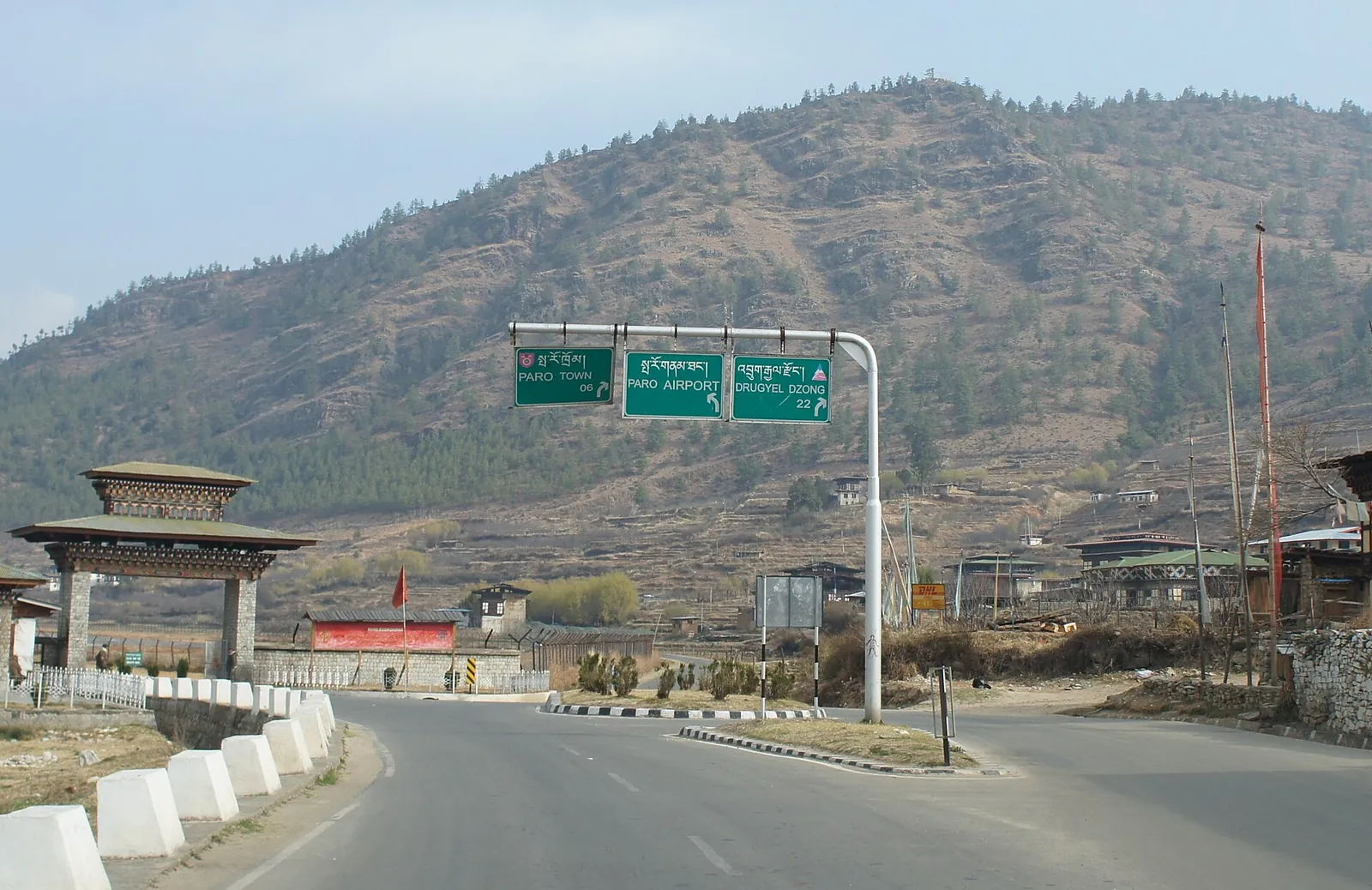
The road junction by Paro airport, signposted to Paro town and the airport
Photograph: Wiki.cullin — opens in a new tab · CC BY-SA 4.0 — opens in a new tab
Changes: Resized and converted to WebP; displayed with responsive crops. · Original photograph and licence details ↗ — opens in a new tab
A Drukair Airbus A319 on the apron at Paro airport
Photograph: Wiki.cullin — opens in a new tab · CC0 — opens in a new tab
Changes: Resized and converted to WebP; displayed with responsive crops. · Original photograph and licence details ↗ — opens in a new tab
The Bhutan Gate at Phuentsholing, the land entry from India used by tourists arriving by road
Photograph: Vinayaraj — opens in a new tab · CC BY-SA 4.0 — opens in a new tab
Changes: Resized and converted to WebP; displayed with responsive crops. · Original photograph and licence details ↗ — opens in a new tab