Itineraries
Bhutan in 7 days: Thimphu, Punakha and Paro in 6 nights
A first week in Bhutan fits the western valleys without hurry. Land at Paro, drive one to one and a half hours up the river to the capital, Thimphu, cross the Dochula pass to the warm rice country around Punakha Dzong, and come back to Paro for the climb to Paro Taktsang (Tiger's Nest), the monastery on a cliff above the valley, on your last full day. No drive is longer than four hours, and a guide and driver are with you from the airport to the departure gate.
In this guide
Find the location ↗ — opens in a new tabThe short answer
Book six nights: two in Thimphu, two in Punakha and two in Paro, flying in and out of Paro International Airport (PBH) and hiking to Tiger's Nest on day 6. For most non-Indian adults, the USD 40 visa and USD 100 Sustainable Development Fee per night until 31 August 2027 come to USD 640 for six nights. The package includes a certified guide and driver. A private package with three-star hotels and all meals comes to about USD 2,080 per person, USD 4,170 for two, all in on the ground with tips, before flights. Book the operator and Paro flights first.
- Suggested time
- 7 days / 6 nights: Thimphu 2, Punakha 2, Paro 2
- Route
- Thimphu 2 nights
- Punakha 2 nights
- Paro 2 nights
- All-in budget on the ground
- About USD 2,080 per person, USD 4,170 for two Full breakdown ↓
- Season and timing
- Bhutan's Department of Tourism calls autumn, from late September or early October to late November, the season of bright, sunny days; from late November to March winters are crisp and clear, with snow common above 3,000 metres, and from June to September the monsoon can affect transport and services.
- Day by day
- The seven days at a glance ↓
The seven days at a glance
One line per day, with where you sleep each night. Times, prices and bookings are in the day sections below.
- Day 1
Paro to Thimphu
land at Paro, meet your guide and driver, drive up the river to Thimphu and walk to the National Memorial Chorten. Night: Thimphu.
- Day 2
Thimphu
Buddha Dordenma, the Motithang Takin Preserve, the Centenary Farmers' Market and Tashichho Dzong. Night: Thimphu.
- Day 3
Over Dochula to Punakha
the pass and its 108 chortens, then Punakha Dzong at the meeting of two rivers. Night: Punakha.
- Day 4
Punakha valley
Chimi Lhakhang through the rice terraces, the suspension bridge and Khamsum Yulley Namgyal Chorten. Night: Punakha.
- Day 5
Back to Paro
the longest drive of the week, then Rinpung Dzong and the National Museum. Night: Paro.
- Day 6
Tiger's Nest
the climb to Paro Taktsang, with a break at the Taktsang Cafeteria, and Kyichu Lhakhang. Night: Paro.
- Day 7
Fly home
from Paro airport.
Six nights in three valleys, and who arranges them
The route is a loop with two moves, on day 3 and day 5. Book Thimphu for nights 1–2, Punakha for nights 3–4 and Paro for nights 5–6, and fly home from Paro on day 7. Little Bhutan, a licensed Thimphu operator that drives this loop, gives 47 km and 1 to 1.5 hours from Paro to Thimphu, 74 km and 2 to 2.5 hours from Thimphu to Punakha over the Dochula pass, and 115 km and 3.5 to 4 hours from Punakha back to Paro, again over Dochula. Punakha lies far lower than Paro and Thimphu, at about 1,250 m, and the Tiger's Nest hike comes last, after five nights in the valleys.
Most non-Indian visitors apply for a USD 40 tourist visa before travel and pay the Sustainable Development Fee (SDF): USD 100 per adult per night until 31 August 2027, USD 50 for children from 6 to under 12, nothing under 6. Indian nationals and eligible visitors from Bangladesh have different rates. For this trip that is six nights, USD 600 of SDF plus the visa, USD 640 per adult. You pay both in the visa application, which the Department of Tourism reviews within five working days; an operator or hotel can apply for you. Our Bhutan entry guide covers passports and the other cases.
You can book every part of the trip yourself, but a guide certified by the Department of Tourism must be with you at all times, and you may stay only in DoT-certified hotels, homestays or campsites. A guide is also needed to enter dzongs and monuments. Self-drive cars cannot be hired; travellers who bring their own cars still need a guide. With a certified guide no route permit is needed for these western valleys. A licensed operator can arrange the guide, car, hotels and meals together. Guided Bhutan Tours sells a private seven-day, six-night trip with two nights in each of these towns at USD 1,740 per adult for two sharing standard three-star hotels, with meals, guide, driver and car, entry fees, SDF and visa. Its published route follows this order, with Tiger's Nest on day 6; the starting price can change before booking. Little Bhutan proposes this same order as a private trip and puts it at USD 250–450 per person a day all in, depending on hotels and group size; the budget below is built on Guided Bhutan's published starting price. Guided Bhutan advises booking four to six months ahead for March to May, September to November and festival weeks, and two to three months ahead otherwise.
These three DoT-certified three-star hotels are options along the route; a package quote identifies the hotels included. Their own rates include taxes. In Thimphu, Hotel Phuntsho Pelri on Dondrup Lam in the town centre has 47 rooms and a Deluxe Double at Nu 5,940 a night. In Punakha, Khuru Punakha looks over the river at Khuruthang, with a Deluxe Twin at Nu 5,775. In Paro, Hotel Olathang, Bhutan's first hotel, opened in 1974 for guests at the coronation of the fourth king, stands among pine trees 5 km from the airport, with a Standard Double at Nu 5,280. None of the three lists breakfast in that rate. A package already pays for its rooms, so these prices matter only if you book the hotels yourself.
Days 1–2: Paro airport to Thimphu, and a day in the capital
Day 1 — land at Paro and drive to Thimphu: Drukair and Bhutan Airlines serve Paro from Delhi, Kathmandu, Bangkok and Kolkata; some flights have stops. Your guide and driver meet you outside; the airport has a taxi rank and no other public transport. Pick up a Bhutan Telecom tourist SIM at a BT counter, or book it online before you fly: Nu 200 buys 1 GB of data and Nu 100 of calls and texts for seven days, against a copy of your passport. The drive follows the river up to Thimphu. In the afternoon walk to the National Memorial Chorten, a whitewashed, gold-tipped stupa about 33 m tall, built in 1974 for the Third King, with big red prayer wheels along its walls. From before dawn until after dark, elderly Thimphu residents walk clockwise around it, telling their beads and turning the wheels; walk with them, then on through the town. Sleep in Thimphu: night 1.
Day 2 — Buddha Dordenma, the takin and Tashichho Dzong: Start at Buddha Dordenma, a 51.5-metre statue on a hilltop above the valley, one of the largest Buddha statues in the world; its body holds about 125,000 smaller Buddhas. The Motithang Takin Preserve, 15 minutes' drive from the centre, keeps Bhutan's national animal. Fill the middle of the day with the Centenary Farmers' Market, open Friday to Sunday, and the school of the thirteen traditional arts, where students learn painting, weaving and woodcarving. End at Tashichho Dzong, the whitewashed fortress on the Wang Chhu that houses the government, the King's throne room and, in summer, the Central Monastic Body. The government wing is closed to visitors. Visitors may enter from 17:00 to 18:00, and from 09:00 to 17:00 on public holidays, so it closes the day. Adult entry costs Nu 500 each at the Memorial Chorten, Tashichho Dzong, Punakha Dzong, Chimi Lhakhang and Kyichu Lhakhang, Nu 300 at the Takin Preserve and Nu 100 at Khamsum Yulley Namgyal Chorten, while Buddha Dordenma and Rinpung Dzong are free, according to the Department of Tourism's monument table; a package like the one budgeted below pays them, and otherwise they are paid in cash or through the goBoB app. Our Thimphu and Punakha guide has more on both towns. Sleep in Thimphu: night 2.
Days 3–4: over Dochula to Punakha
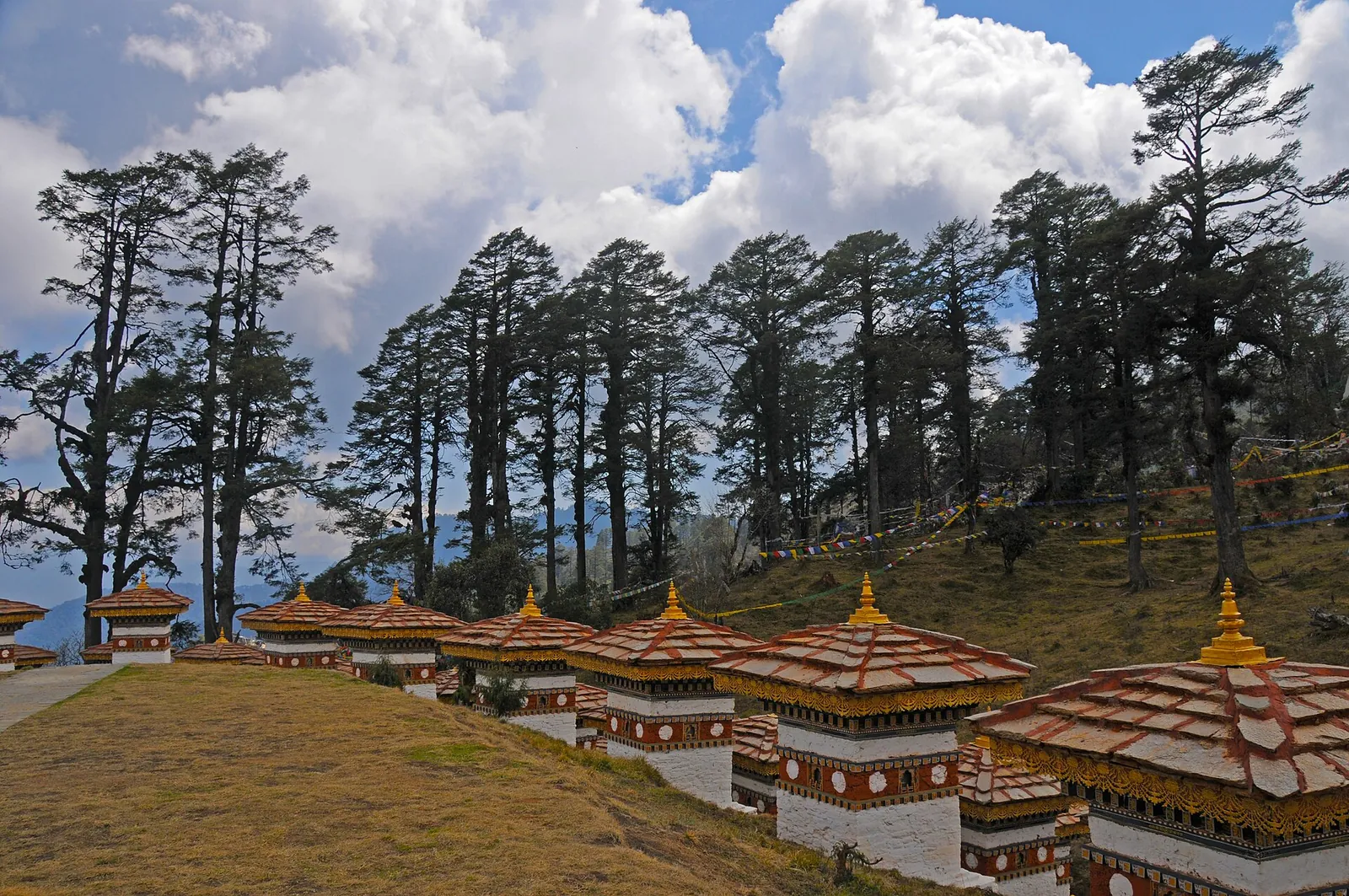
Day 3 — the pass and Punakha Dzong: Leave Thimphu early for Dochula, a pass at about 3,100 m where 108 memorial chortens and strings of prayer flags stand against the eastern Himalaya; the snow peaks show only in clear weather, and a cafeteria at the pass serves coffee. From the pass the road drops through pine forest to rice paddies and banana trees. In the afternoon visit Punakha Dzong, which stands where the Pho Chhu and Mo Chhu rivers meet. It is the second-oldest dzong in Bhutan, every king has been crowned there, and it was the seat of government until 1955; today it is the winter home of the Je Khenpo, the head abbot, and about 1,000 monks, and murals inside show the life of the Buddha. Sleep in Punakha: night 3.
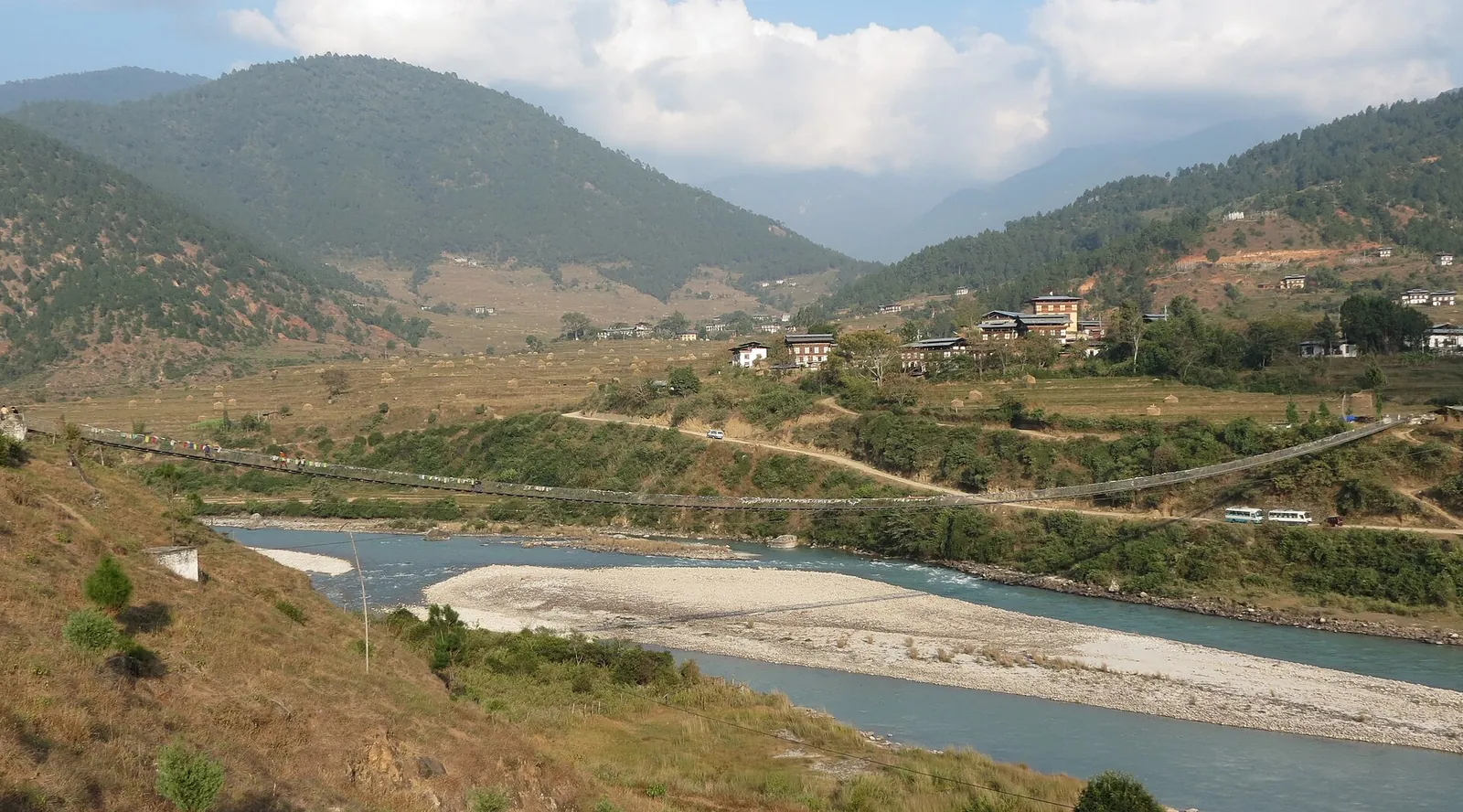
Day 4 — Chimi Lhakhang, the bridge and Khamsum Yulley Namgyal Chorten: Walk through rice terraces to Chimi Lhakhang, the fertility temple of Drukpa Kunley, the 'Divine Madman', whose stories your guide will tell. Then cross the 160-metre suspension bridge over the Pho Chhu near the dzong, one of the longest footbridges in Bhutan. In the afternoon drive 25 minutes up the valley, cross a shorter bridge over the Mo Chhu and climb past terraced paddies to Khamsum Yulley Namgyal Chorten, an hour or less on foot. Rafting on the rivers past the dzong is the other way to fill the afternoon. Sleep in Punakha: night 4.
Days 5–7: Paro, Tiger's Nest and the flight home
Day 5 — back over Dochula to Paro: The longest drive of the week, 3.5 to 4 hours, brings you into the broad Paro valley by lunchtime. Cross the roofed cantilever bridge to Rinpung Dzong, which has run the Paro valley since 1646 and still houses the district administration and the monk body; its walls lean inward as they rise, and courtyards on several levels are linked by steep stairways under timber galleries built without nails. The Paro Tshechu festival is danced here each spring. Then climb to the National Museum in the Ta Dzong above it, built in 1649 as the dzong's watchtower and a museum since 1968. Its galleries, floor by floor, run from Stone Age tools and 8th-century Buddhist objects to a 10th-century Kadam stupa and thangka paintings, with a three-dimensional tree mandala of Bhutan's Buddhist masters at the top; the collection holds more than 3,000 items. The museum opens from 9:00 to 17:00 with last admission at 16:00, is closed on government and local holidays, and charges international visitors Nu 500. End on Paro's main street of wooden shopfronts, and go to bed early. Sleep in Paro: night 5.
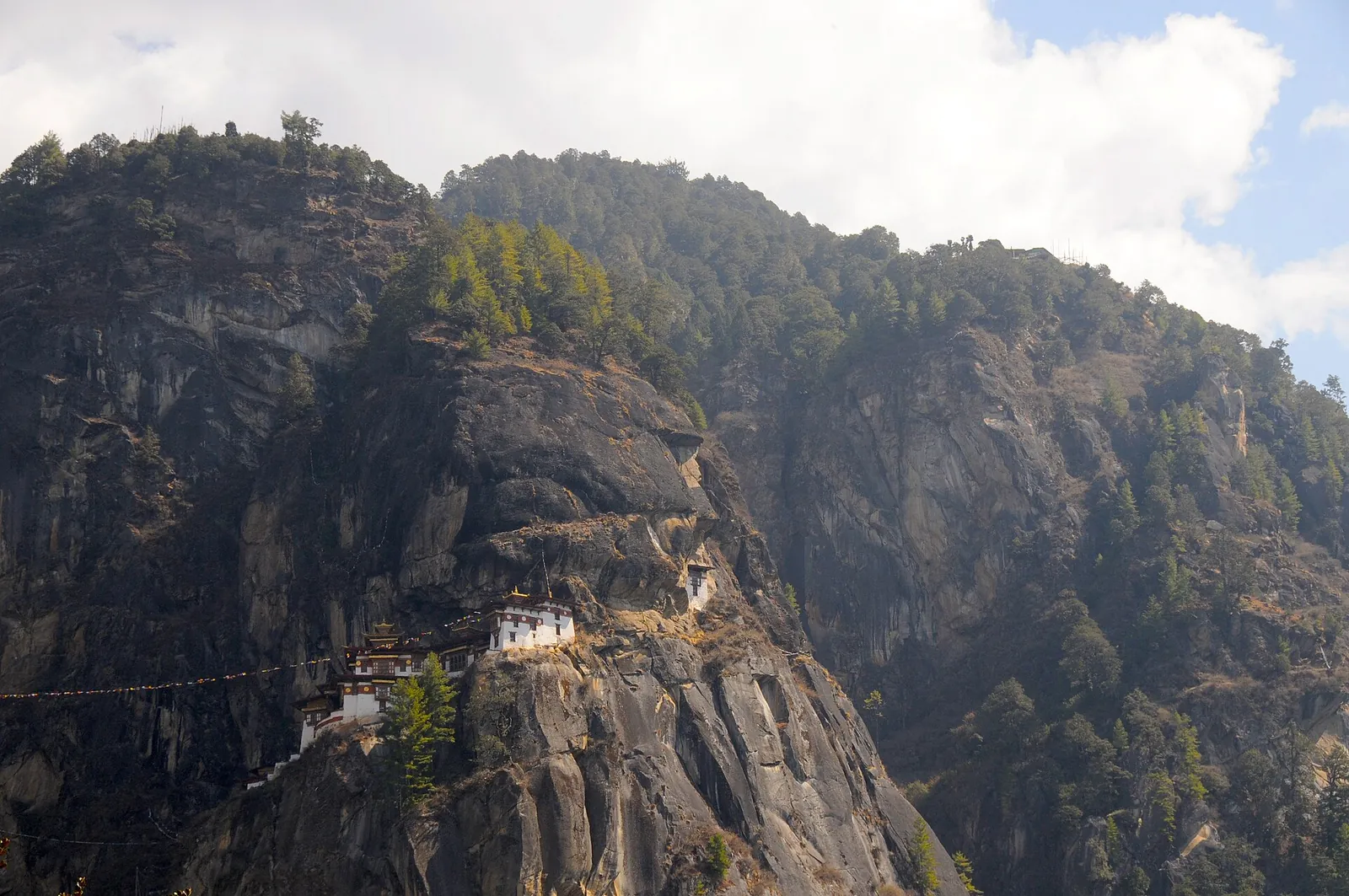
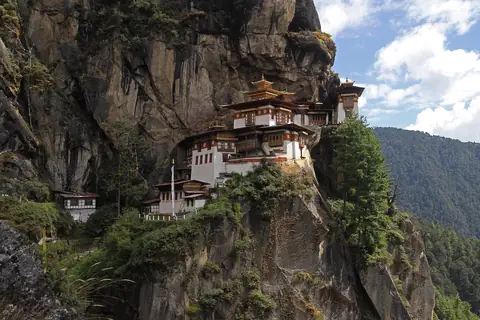
Day 6 — Paro Taktsang (Tiger's Nest): The monastery clings to a cliff about 900 m above the valley floor, at about 3,120 m. Legend says Guru Rinpoche, who brought Vajrayana Buddhism to Bhutan, flew here on the back of a tigress and meditated in a cave; the first temple was built in 1692. The Department of Tourism gives the hike as 5 to 6 hours. The trail is roughly 6 km there and back, through blue-pine forest to the Taktsang Cafeteria about halfway, with the classic view across the gorge, then down and up stone steps to the entrance. The Department of Tourism’s monument table lists entry at Nu 1,000, which this package includes. Set off early and stop at the cafeteria for its vegetarian lunch, served from 11:00 to 15:00. The published temple hours are contradictory, so your guide can arrange the visit. Ponies carry riders uphill to the cafeteria only, not beyond it and not downhill. Since 2 April 2023 they must be booked in advance through the Taktsang services management; without a booking you wait for a turn on the spot. Your guide can arrange a pony; the service costs extra. Back in the valley, visit Kyichu Lhakhang, one of Bhutan's oldest temples. If you would rather not climb, give the day to Kyichu Lhakhang and Paro town. Our Paro and Tiger's Nest guide describes the trail in detail. Sleep in Paro: night 6.
Day 7 — fly home: Hotel Olathang is 5 km from the airport. Drukair asks you to reconfirm 72 hours before departure; its counters open three hours before the flight and close one hour before, and it advises arriving at least two hours early. Flights in and out of Paro depend on the weather and can be delayed or cancelled, so leave a spare day before an onward long-haul flight; Drukair also asks for at least three hours between connecting flights.
What to eat and where to look
Ema datshi
Bhutan's national dish: green chillies stewed with melting cheese, eaten with rice; Pelbu Suites lists it at Nu 120 plus GST.
- Where to look
- The restaurant at Pelbu Suites in Olakha, Thimphu, which also serves it on red rice.
- Fit it into your day
- Dinner on day 1, after the Memorial Chorten.
Bhutanese cooking leans on chilli and cheese; ask for it milder, and say so if you avoid dairy.
Suja
Churned tea made with butter and salt; a Bhutanese host rarely lets a guest leave without a drink. Pelbu Suites serves it at Nu 100 plus GST, or with khabzay biscuits.
- Where to look
- Pelbu Suites' café in Olakha, Thimphu.
- Fit it into your day
- Afternoon tea on day 2, between Buddha Dordenma and the takin.
Momos
Steamed dumplings with a beef or vegetable filling, a Tibetan-influenced snack widely found in western Bhutan; Sonam Trophel, in Paro since 1991, is known for both kinds.
- Where to look
- Sonam Trophel Restaurant in Hotel Sonam Trophel, in the centre of Paro town.
- Fit it into your day
- Lunch on day 5, on arrival in Paro.
Jasha maru
A spicy chicken stew with ginger, garlic, chilli and herbs, served with red rice.
- Where to look
- Paro Grand Restaurant at Hotel Paro Grand, Bondey, Paro.
- Fit it into your day
- Dinner on day 5, before the early start for Tiger's Nest.
Phaksha paa
Pork cooked with radish and dried chillies until tender, eaten with red rice.
- Where to look
- Paro Grand Restaurant at Hotel Paro Grand, Bondey, Paro.
- Fit it into your day
- Dinner on day 6, after the hike.
Altitude, roads, dress and photographs
Travel by road in daylight only, even with a driver, and in the monsoon, June to September, allow for landslides that can close roads for days. All three drives on this route are short enough to finish in daylight.
Dochula (about 3,100 m) and Tiger's Nest (about 3,120 m) are high. Germany advises seeing a doctor experienced in altitude medicine before final planning for travel above 2,300 m, and the UK advises insurance that covers medical treatment, helicopter evacuation and repatriation. Travel insurance is no longer a visa requirement, but the Department of Tourism strongly recommends it.
In dzongs and temples, wear clothing that covers you from shoulders to knees, with long sleeves and covered legs in temples. Photography is not allowed inside temples, monasteries and official buildings (France), though you may visit them with your guide. Take off hats and sunglasses inside dzong precincts, and walk clockwise around chortens. Check your own government's travel advice too.
When to go, and two ways to change the week
The Department of Tourism describes spring, from early March to mid-April, as generally dry, and autumn, from late September or early October to late November, as a season of bright, sunny days; both bring the big festivals. The Department of Tourism's tentative dates for 2027 put the Punakha Tshechu at Punakha Dzong on 16–18 February, the Paro Tshechu at Rinpung Dzong on 18–22 March, the Thimphu Tshechu at Tashichho Dzong on 10–12 October and the Druk Wangyel Tshechu at Dochula on 13 December; our festivals guide lists the rest. Hotels in Paro and Thimphu fill early in festival weeks. In winter, Punakha stays mild, but snow can fall on Dochula.
Phobjikha for the cranes. The glacial valley of Phobjikha at Gangtey is the winter home of black-necked cranes, which arrive from late October; most leave by mid-March. Bhutan Travel Bureau gives 78 km and about 3 hours from Punakha. Add a night or two there after Punakha rather than squeezing it into these six; each extra night adds USD 100 of SDF per adult at the standard non-Indian rate until 31 August 2027 as well as the room, meals and car.
Leave by road through India. If your trip continues in India, the operator can end it at Phuentsholing instead of Paro airport: Little Bhutan gives 165 km and 5 to 5.5 hours from Thimphu, and Phuentsholing is four to five hours from Bagdogra airport in West Bengal. This changes the nights and the quote, and check your Indian entry permission and whether it permits entry at that land border.
What seven days cost, all in
About USD 2,080 per person, USD 4,170 for two, for seven days and six nights on the ground in a private package with three-star rooms, every meal, the guide, driver and car, entry fees, the SDF and visas, two SIMs, drinks and snacks between meals, tips for the guide and driver and a 10% buffer. International flights and travel insurance are extra.
| Level | Per person | For two |
|---|---|---|
| Mid-range, on the ground | USD 2,080 | USD 4,170 |
The model is two adults sharing a room, six nights at the published starting price, read on 2 November 2026; dates, hotel availability and changes affect the quote. Ngultrum prices are converted at the Bank of Bhutan's buying rate of USD 1 = Nu 94.72, valid from 31 October to 2 November 2026. The package appears as one line because this operator does not break out separate prices for the rooms, meals, guide, car and entry fees inside it.
| For two | USD |
|---|---|
| SDF, six nights | 1,200 |
| Visas | 80 |
| Rooms, all meals, guide, driver and car, entry fees | 2,200 |
| Drinks, snacks and SIMs | 30 |
| Tips for guide and driver | 280 |
| 10% buffer | 380 |
| Total | 4,170 |
Package: Guided Bhutan Tours' seven-day price of USD 1,740 per adult, USD 3,480 for two, which its own calculator splits into USD 1,280 of SDF and visas and USD 2,200 of tour services; tips are extra. Drinks and snacks: the budget allows about Nu 2,160 for two between meals; spending varies with your choices. SIMs: two Bhutan Telecom tourist SIMs at Nu 200. Tips: Guided Bhutan calls USD 10–15 a day from each traveller typical for the guide and USD 5–10 for the driver, paid in cash at the end; the budget takes USD 20 per person a day for seven days. Byways Tours and Travels sells a cheaper private week at USD 1,560 per adult for two, but it splits the Thimphu nights and adds a day trip to Phobjikha; our Bhutan trip-cost guide compares the price levels.
Practical questions
How many nights does each town get?
Two each: Thimphu nights 1–2, Punakha nights 3–4 and Paro nights 5–6, with the flight home from Paro on day 7. That is six nights, so six nights of SDF.
Why is Tiger's Nest on day 6 rather than day 1 or 2?
The monastery stands at about 3,120 m and the hike takes 5 to 6 hours. By day 6 you have spent five nights in the valleys, and the climb sits on a full day with no drive or flight after it.
Do I have to book a package?
No. You can book every part yourself, but a DoT-certified guide must be with you at all times, you may stay only in certified hotels, and you cannot hire a self-drive car. A licensed operator can arrange the guide, driver, car, hotels and meals together.
How long are the drives?
Little Bhutan gives 1 to 1.5 hours from Paro to Thimphu, 2 to 2.5 hours from Thimphu to Punakha over Dochula, and 3.5 to 4 hours from Punakha back to Paro. All are done by daylight.
What happens if my flight out of Paro is cancelled?
Drukair's terms say it may carry you on another scheduled flight with a free seat, among other options. That is why this route leaves a spare day before any onward long-haul flight.
How much does the week cost?
About USD 2,080 per person, USD 4,170 for two, on the ground with three-star rooms, all meals, guide, driver and car, entry fees, SDF, visas, SIMs, tips and a 10% buffer. International flights and travel insurance are extra.
Keep planning your trip
Paro and Tiger's Nest
Two nights in Paro: the Tiger's Nest hike with its fee, ponies and timings, Rinpung Dzong, the National Museum, Kyichu Lhakhang, Chele La, hotels and costs.
Read the guide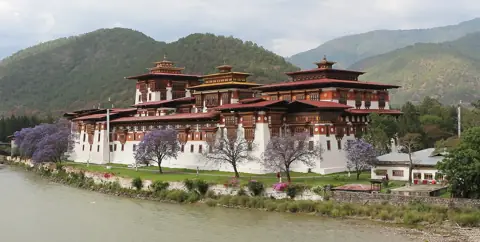
Thimphu and Punakha
Two nights in Thimphu and two in Punakha: Buddha Dordenma, Tashichho Dzong at dusk, the drive over Dochula, Punakha Dzong and Chimi Lhakhang, with fees, hotels and costs.
Read the guide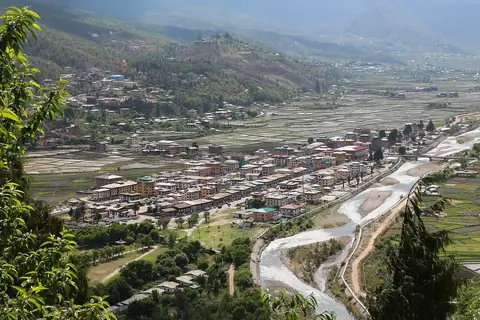
Bhutan trip cost
A Bhutan week for two: about USD 1,880 per person on a budget, USD 2,080 mid-range or USD 2,520 in four-star rooms, plus international flights.
Read the guide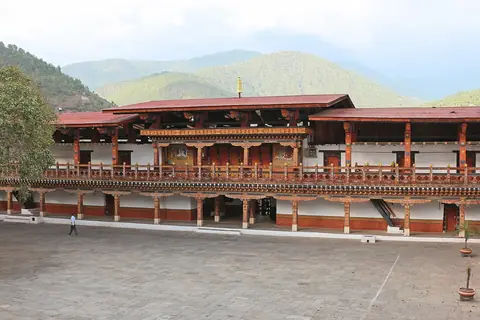
First trip to Bhutan
A first week in Bhutan: the visa and nightly fee, why a certified guide comes along, the Paro, Thimphu and Punakha loop, money, SIMs, etiquette and daily costs.
Read the guide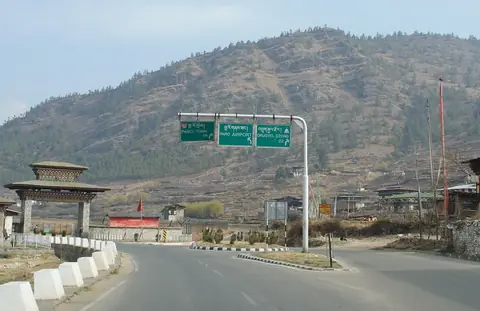
Entering Bhutan
Bhutan visa, the standard USD 100 nightly SDF to August 2027, certified guides and customs for UK and EU visitors.
Read the guide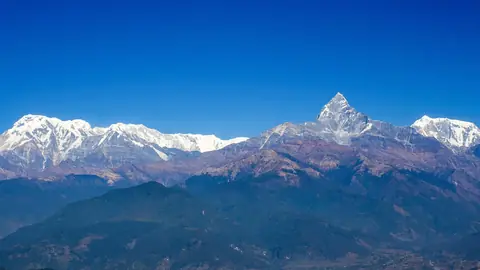
Nepal in seven days
A seven-day Nepal plan: two nights in Thamel, two in Pokhara, two back in Thamel, with both flights, site fees and an all-in budget for two.
Read the guideSources and checks before you travel
(46)
- Department of Tourism: visa ↗ — opens in a new tab
- Department of Tourism: FAQs ↗ — opens in a new tab
- Department of Tourism: announcements ↗ — opens in a new tab
- Department of Tourism: adventure experiences ↗ — opens in a new tab
- Department of Tourism: Bhutan is family-friendly ↗ — opens in a new tab
- Department of Tourism: tentative festival dates 2027 ↗ — opens in a new tab
- Department of Tourism: service provider portal, Guided Bhutan Tours ↗ — opens in a new tab
- Department of Tourism: service provider portal, Little Bhutan ↗ — opens in a new tab
- Department of Tourism: Hotel Phuntsho Pelri ↗ — opens in a new tab
- Department of Tourism: Khuru Punakha ↗ — opens in a new tab
- Department of Tourism: Hotel Olathang ↗ — opens in a new tab
- Hotel Phuntsho Pelri: rooms and rates ↗ — opens in a new tab
- Khuru Punakha: rooms and rates ↗ — opens in a new tab
- Hotel Olathang: rooms and rates ↗ — opens in a new tab
- Taktsang Cafeteria ↗ — opens in a new tab
- Guided Bhutan Tours: trip cost ↗ — opens in a new tab
- Guided Bhutan Tours: Essential Bhutan Journey ↗ — opens in a new tab
- Byways Tours and Travels: 7-day Bhutan tour ↗ — opens in a new tab
- Little Bhutan: Bhutan 7-day itinerary ↗ — opens in a new tab
- Little Bhutan: getting to Bhutan ↗ — opens in a new tab
- Bhutan Travel Bureau: driving distances ↗ — opens in a new tab
- Department of Culture and Dzongkhag Development: Paro Taktshang ↗ — opens in a new tab
- National Museum of Bhutan ↗ — opens in a new tab
- Drukair: destinations ↗ — opens in a new tab
- Drukair: help and FAQs ↗ — opens in a new tab
- Drukair: conditions of carriage ↗ — opens in a new tab
- Bhutan Airlines: home page fares ↗ — opens in a new tab
- Bhutan Telecom: tourist SIM ↗ — opens in a new tab
- Bank of Bhutan: exchange rates ↗ — opens in a new tab
- Pelbu Suites: menu ↗ — opens in a new tab
- Tashi Tagye Hotel: rooms and meals ↗ — opens in a new tab
- Department of Tourism: museums and monuments fees (table linked from the FAQs, March 2023) ↗ — opens in a new tab
- Little Bhutan: Tashichho Dzong ↗ — opens in a new tab
- Little Bhutan: National Memorial Chorten ↗ — opens in a new tab
- Little Bhutan: Paro Rinpung Dzong ↗ — opens in a new tab
- Hotel Paro Grand: standard deluxe and meal rates ↗ — opens in a new tab
- Hotel Paro Grand: Bhutanese cuisine guide ↗ — opens in a new tab
- Guided Bhutan Tours: hiring a guide ↗ — opens in a new tab
- MyBhutan: Sonam Trophel Restaurant ↗ — opens in a new tab
- Department of Tourism: food and drink ↗ — opens in a new tab
- UK FCDO: Bhutan safety and security ↗ — opens in a new tab
- UK FCDO: Bhutan health ↗ — opens in a new tab
- German Federal Foreign Office: Bhutan travel and safety advice ↗ — opens in a new tab
- France Diplomatie: Bhutan useful information ↗ — opens in a new tab
- Department of Tourism: visit and travel etiquette ↗ — opens in a new tab
- Royal Society for Protection of Nature: Phobjikha bids adieu to the black-necked cranes ↗ — opens in a new tab
Reference sources for the version dated 9 November 2026. Confirm opening times, access, transport and conditions for your travel dates.
Photo credits
(5)
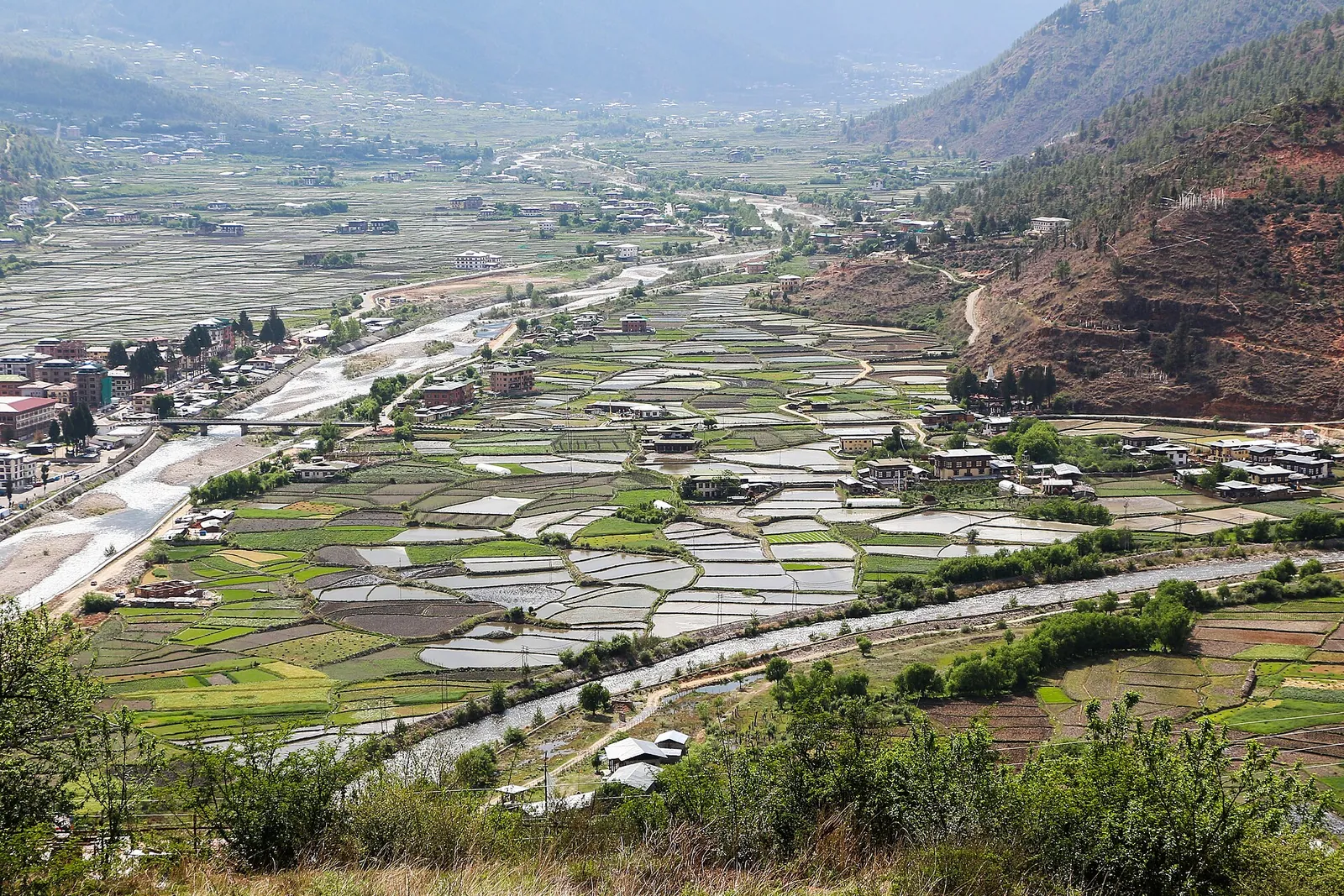
Rice fields in the Paro valley, where the route begins and ends
Photograph: Bernard Gagnon — opens in a new tab · CC BY-SA 4.0 — opens in a new tab
Changes: Resized and converted to WebP; displayed with responsive crops. · Original photograph and licence details ↗ — opens in a new tab
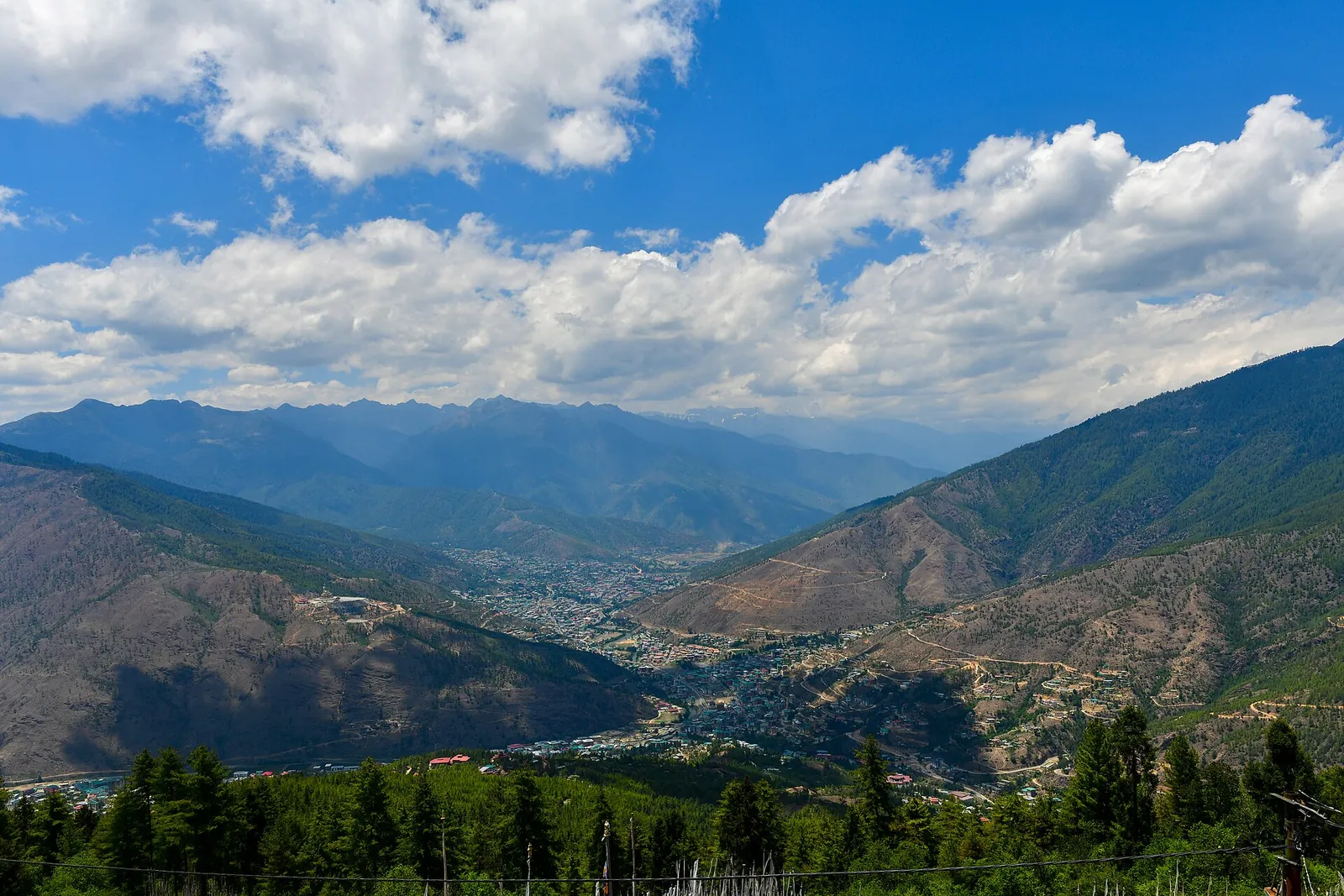
Thimphu from the hills above the city, the base for nights 1–2
Photograph: Christopher J. Fynn — opens in a new tab · CC BY-SA 4.0 — opens in a new tab
Changes: Resized and converted to WebP; displayed with responsive crops. · Original photograph and licence details ↗ — opens in a new tab
Some of the 108 memorial chortens at Dochula, crossed on day 3 and day 5
Photograph: David Broad — opens in a new tab · CC BY 3.0 — opens in a new tab
Changes: Resized and converted to WebP; displayed with responsive crops. · Original photograph and licence details ↗ — opens in a new tab
The suspension bridge over the Pho Chhu near Punakha Dzong, crossed on day 4
Photograph: Doug Knuth — opens in a new tab · CC BY-SA 2.0 — opens in a new tab
Changes: Resized and converted to WebP; displayed with responsive crops. · Original photograph and licence details ↗ — opens in a new tab
Paro Taktsang (Tiger's Nest) on its cliff, the goal of the day-6 hike
Photograph: David Broad — opens in a new tab · CC BY 3.0 — opens in a new tab
Changes: Resized and converted to WebP; displayed with responsive crops. · Original photograph and licence details ↗ — opens in a new tab