Plan your trip
Where to stay in Osaka: Namba, Umeda and four more areas compared
Osaka has two centres, Kita around Umeda and Minami around Namba, and the one you sleep in decides whether your evenings begin on Dotonbori's canal or your mornings on a fast train to Kyoto. One subway line, the Midosuji, runs north to south through both and on to the shinkansen at Shin-Osaka and to Tennoji, so no central area is a bad choice; what changes is the noise after dark, the trains outside your door and the kind of hotel on offer. This guide compares six areas by who they suit, how you get around, what the nights are like and the hotels each has, then covers the airport, the accommodation tax and whether to base yourself in Osaka or Kyoto. For what to see and eat once you are there, use our Osaka guide.
In this guide
Find the location ↗ — opens in a new tabThe short answer
For a first trip of two or three nights, stay in Namba or Shinsaibashi for the food streets, or in Umeda if most of your days are trips to Kyoto and Himeji. The Midosuji subway line links the two. Choose Shin-Osaka for an early shinkansen, Tennoji for the Haruka and trains to Nara, Kitahama or Yodoyabashi for calmer streets and Keihan trains to Kyoto, and Universal City only for Universal Studios Japan. From Kansai Airport, Nankai's rapi:t reaches Namba in as little as 34 minutes for ¥1,410. A double room in a Namba business hotel costs about ¥20,000 a night for two (our estimate for April 2027), plus Osaka's accommodation tax of ¥200 each.
- Key point
- One base for the whole stay: 2 nights on a first trip, 3 with Universal Studios Japan
- Where it applies
- Namba or Shinsaibashi for food and nightlife; Umeda for Kyoto and Himeji day trips; Kitahama and Yodoyabashi for calmer nights; Shin-Osaka for early shinkansen; Tennoji for the airport and Nara; Universal City for the theme park
- Timing
- Any time of year. Osaka's tourism bureau warns that summers are very humid and often hotter than Tokyo's, with the rainy season usually from early June to late July, when a hotel close to its station counts for more.
Namba or Umeda: decide this first
For most first trips, stay in Namba or Shinsaibashi. Osaka's tourism bureau divides the city into Kita, centred on Umeda, and Minami, centred on Namba and Tennoji, and Minami is where the eating is: Dotonbori is about five minutes' walk from Namba Station, the covered Shinsaibashi-suji arcade runs north from it, and Amerikamura's clubs and live music venues are a few streets west. Namba also has the trains you want for arriving and for day trips south and east: Nankai's rapi:t from Kansai Airport, Kintetsu to Nara in about 34 minutes and Nankai's line towards Koyasan. The price is crowds and noise late into the evening.
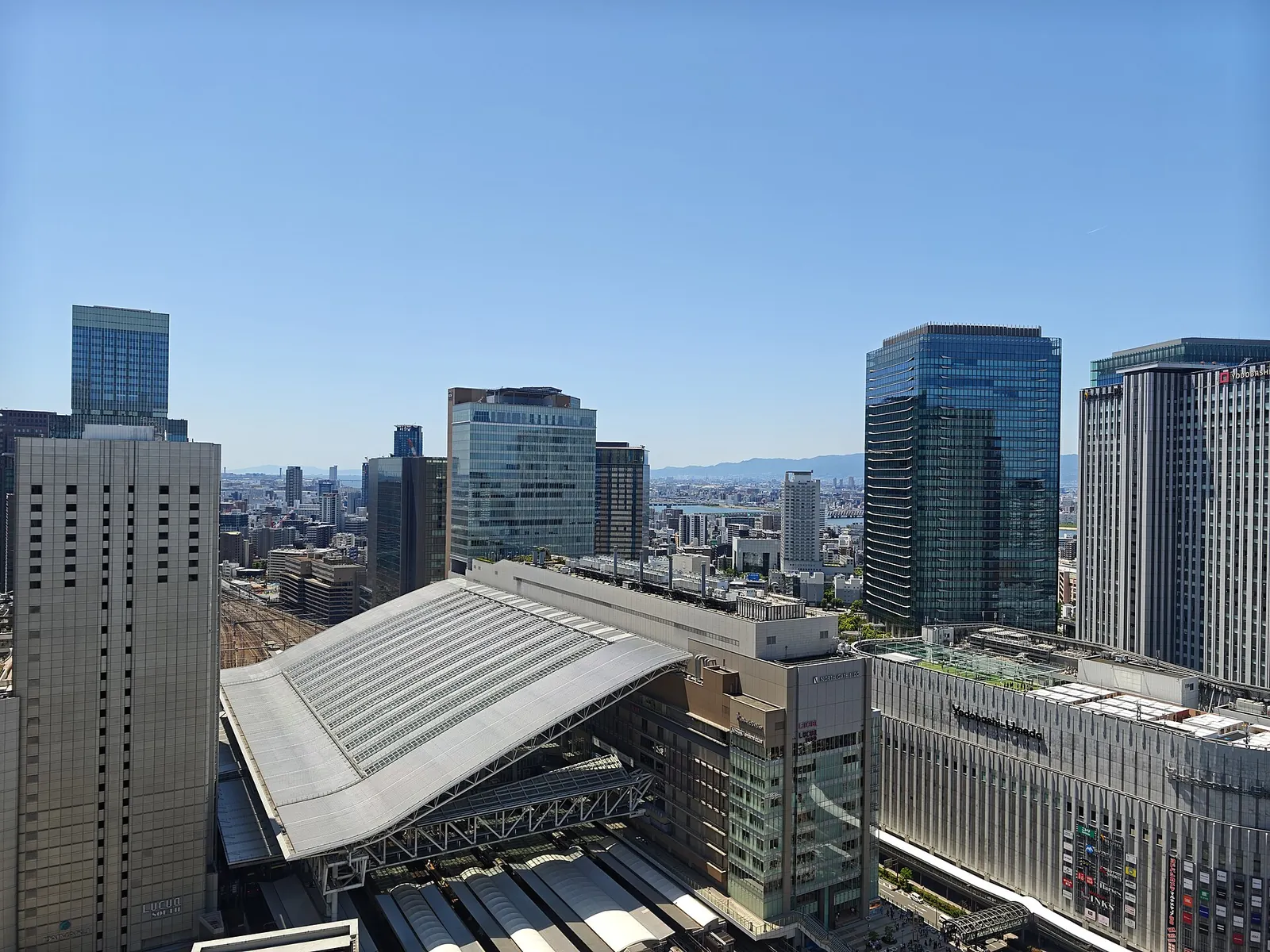
Choose Umeda instead if most of your days are trips out of the city. From Osaka Station, JR Special Rapid trains run to Kyoto and reach Himeji in about an hour, Hankyu trains leave Osaka-umeda for downtown Kyoto, and the Haruka airport express stops here too. Umeda has The Ritz-Carlton and the InterContinental among its hotels, and the upmarket bars of Kitashinchi and the restaurant streets of Tenma are close by, but an evening in Dotonbori ends with a subway ride back.
Wherever you stay, sleep near the Midosuji Line. It runs beneath Midosuji, the 4 km boulevard between Umeda and Namba, and links Shin-Osaka, Umeda, Yodoyabashi, Hommachi, Shinsaibashi, Namba and Tennoji, so Namba is four stops from Umeda and Tennoji three stops beyond Namba. Keep one hotel for a two- or three-night stay: Kyoto, Nara and Himeji all work as day trips, and moving hotels inside the city rarely saves time.
The six areas visitors choose between compare like this:
| Area | Character and evenings | Trains | Hotels | Best for |
|---|---|---|---|---|
| Namba and Shinsaibashi | Dotonbori's neon, Ura Namba's izakaya alleys and Amerikamura's clubs; crowded and loud late | Midosuji Line; Nankai rapi:t to Kansai Airport; Kintetsu to Nara in about 34 minutes | Luxury (W Osaka) to business and capsule hotels, plus a few traditional inns | A first trip, food and nightlife |
| Umeda (Kita) | Station towers, department stores and a maze of stations; Kitashinchi bars and Tenma restaurants nearby | JR Special Rapid to Kyoto and Himeji (about an hour); Hankyu to Kyoto; Haruka; Midosuji Line | Luxury (The Ritz-Carlton, InterContinental), city hotels and many business hotels | Day trips, Kyoto and luxury |
| Kitahama and Yodoyabashi | The old merchant district: 1920s and 1930s office buildings, Nakanoshima's riverside museums; a business district, not a nightlife one | Midosuji Line; Keihan from Yodoyabashi to Gion-Shijo in Kyoto; Sakaisuji Line | Luxury (The St. Regis) and city hotels, plus business hotels | Calmer nights between Kita and Minami, Keihan to Kyoto |
| Shin-Osaka | Hotels around the shinkansen station, 4 km north of Osaka Station | Shinkansen (Himeji in about 30 minutes); JR to Osaka Station in about 4 minutes; Haruka; Midosuji Line | Mostly business hotels, a few city hotels and a youth hostel | An early shinkansen or one night between trains |
| Tennoji | Abeno Harukas and Tennoji Park; Shinsekai's neon, standing bars and grittier 'deep' backstreets | Haruka to Kansai Airport in about 31 minutes; JR to Nara in about 36 minutes; Midosuji Line | The Osaka Marriott Miyako in Abeno Harukas, business hotels and a youth hostel | Kansai Airport, Nara and Shinsekai |
| Bay Area (Universal City) | Theme-park hotels at the gates of Universal Studios Japan; the rest of the city is a train ride away | JR Yumesaki Line, about 20 minutes from Osaka Station; airport bus about 1 hour 10 minutes | City and luxury hotels built around the park | A day or two at Universal Studios Japan |
Namba and Shinsaibashi: Minami for food and late nights
Dotonbori is the reason most people stay in Minami: a canal street of restaurants under giant three-dimensional signs, crowded all year and busiest after dark. Behind the shopping centres on the main road, Ura Namba is a labyrinth of alleys lined with small izakaya where locals eat and drink, and Hozenji Yokocho, the lane beside Hozenji Temple, is what JNTO calls a reminder of Osaka before modernisation. Staying here means dinner and a late drink are a short walk from your bed.
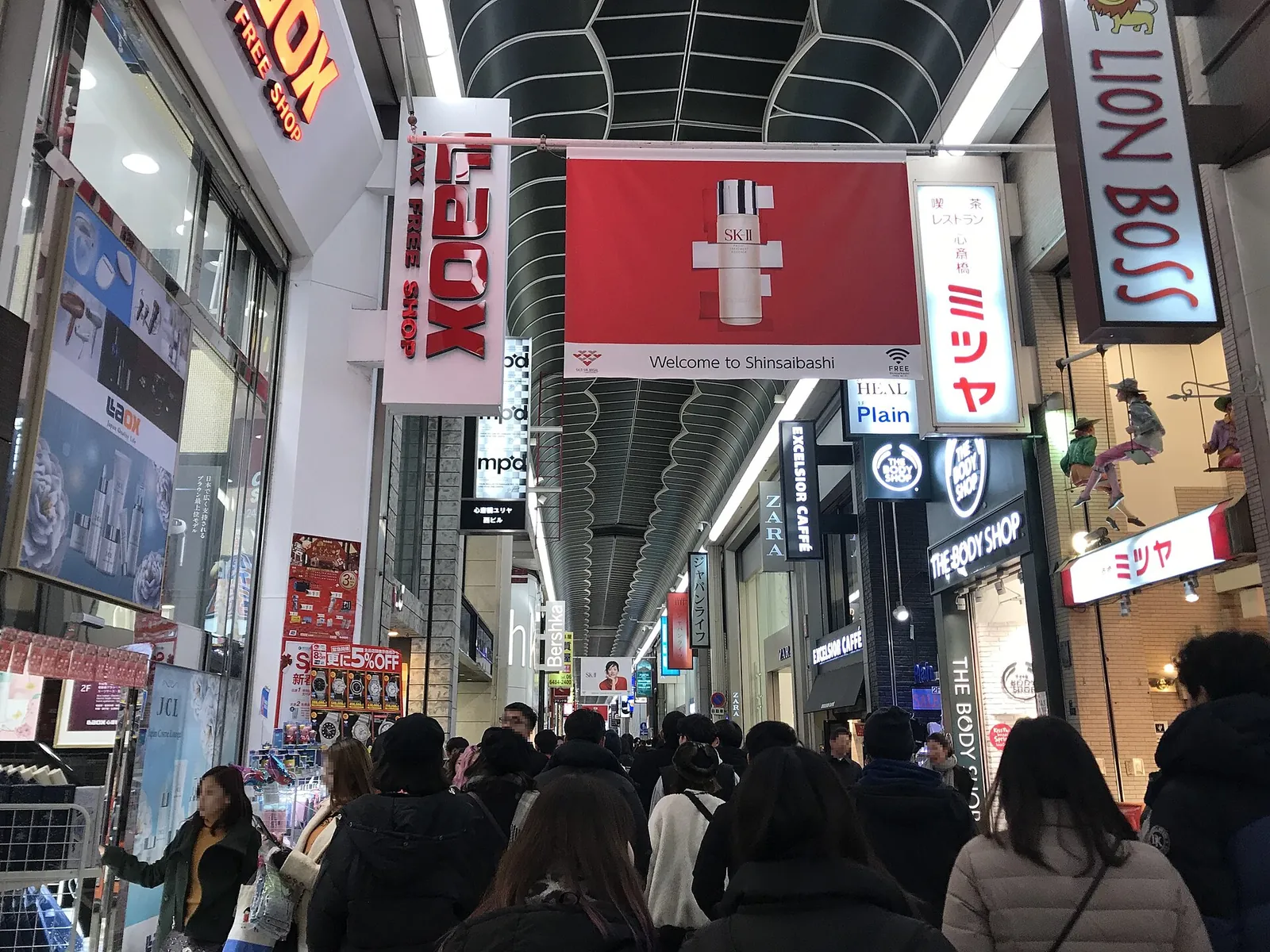
Shinsaibashi is Minami's northern half. The Shinsaibashi-suji arcade runs about 580 metres north to south, with about 180 shops including the Daimaru Shinsaibashi department store, and draws about 60,000 shoppers on weekdays and 120,000 on Sundays and holidays. West of it, Amerikamura, which grew from vintage-clothing and record shops around 1970, has the clubs and live music venues for late nights. Shinsaibashi Station is on the Midosuji and Nagahori Tsurumi-ryokuchi lines, one stop north of Namba. If you sleep lightly, choose a hotel a few streets away from the canal rather than on it.
Namba's hotels cover every price range: the W Osaka at the top, city hotels such as Swissotel Nankai Osaka, many business hotels, capsule hotels and long-established inns such as Kaneyoshi Ryokan on the bank of the Dotonbori River. Namba is also where Nankai's airport trains and the airport limousine bus to OCAT arrive.
Umeda and Kitahama: Kita for trains and calmer streets
Umeda is Osaka's transport hub. JNTO calls it a never-ending maze of shopping centres and stations: JR Osaka Station stands right beside Umeda Station, where the Hankyu, Hanshin and subway lines stop, so allow time to find your exit the first time. A tourist information centre at JR Osaka Station has English-speaking staff. For the evening, Umeda and Kitashinchi have many high-end restaurants and bars, and Tenma, known as 'the kitchen of Osaka', is packed with restaurants and izakaya.
Kita's luxury hotels include The Ritz-Carlton Osaka and the InterContinental, and its city hotels include The Westin, the Hilton and Hotel Granvia Osaka, which is connected directly to JR Osaka Station. Kita also has many business hotels, so Umeda suits most budgets. What you give up is Minami on the doorstep: Dotonbori is four stops away on the Midosuji Line.
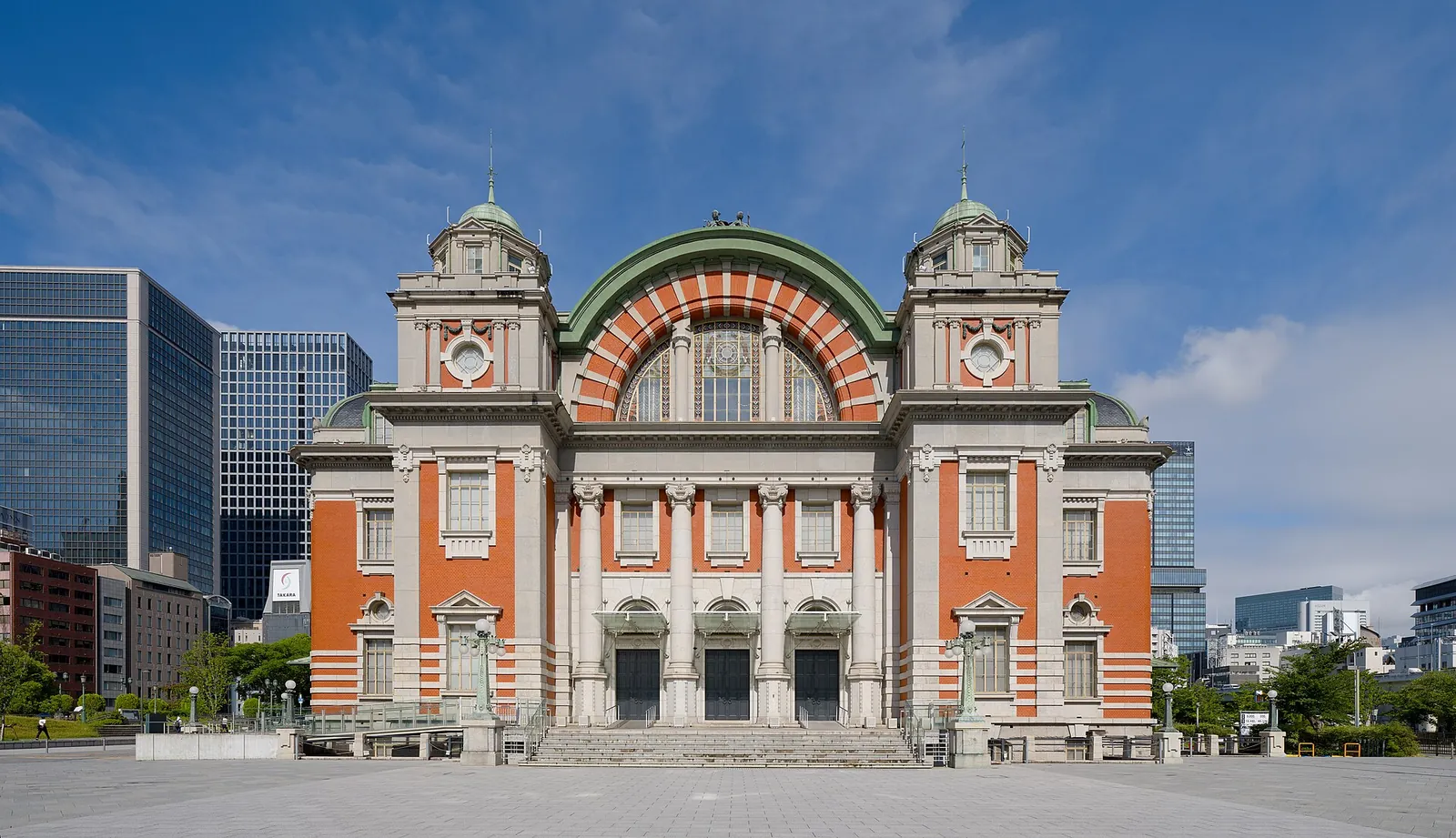
Between the two centres, Kitahama and Yodoyabashi are the quiet choice. This is the old heart of commercial Osaka, where Art Deco and earlier office buildings from the Meiji, Taisho and early Showa periods still stand among modern towers, and just north lies Nakanoshima, a 3 km island between the Dojima and Tosabori rivers with the city hall, the Central Public Hall and several museums. Yodoyabashi Station is on the Midosuji Line and the Keihan Main Line, whose limited expresses run to Gion-Shijo in downtown Kyoto, and Kitahama has Keihan trains and the Sakaisuji subway line, which runs south to Ebisucho, three minutes' walk from Tsutenkaku Tower. Hotels range from The St. Regis Osaka, beside Hommachi Station on Midosuji, and the RIHGA Royal Hotel to business hotels. It is a business district rather than a nightlife one: Umeda is one stop north on the Midosuji Line and Namba three stops south.
Shin-Osaka, Tennoji or Universal City: when another area wins
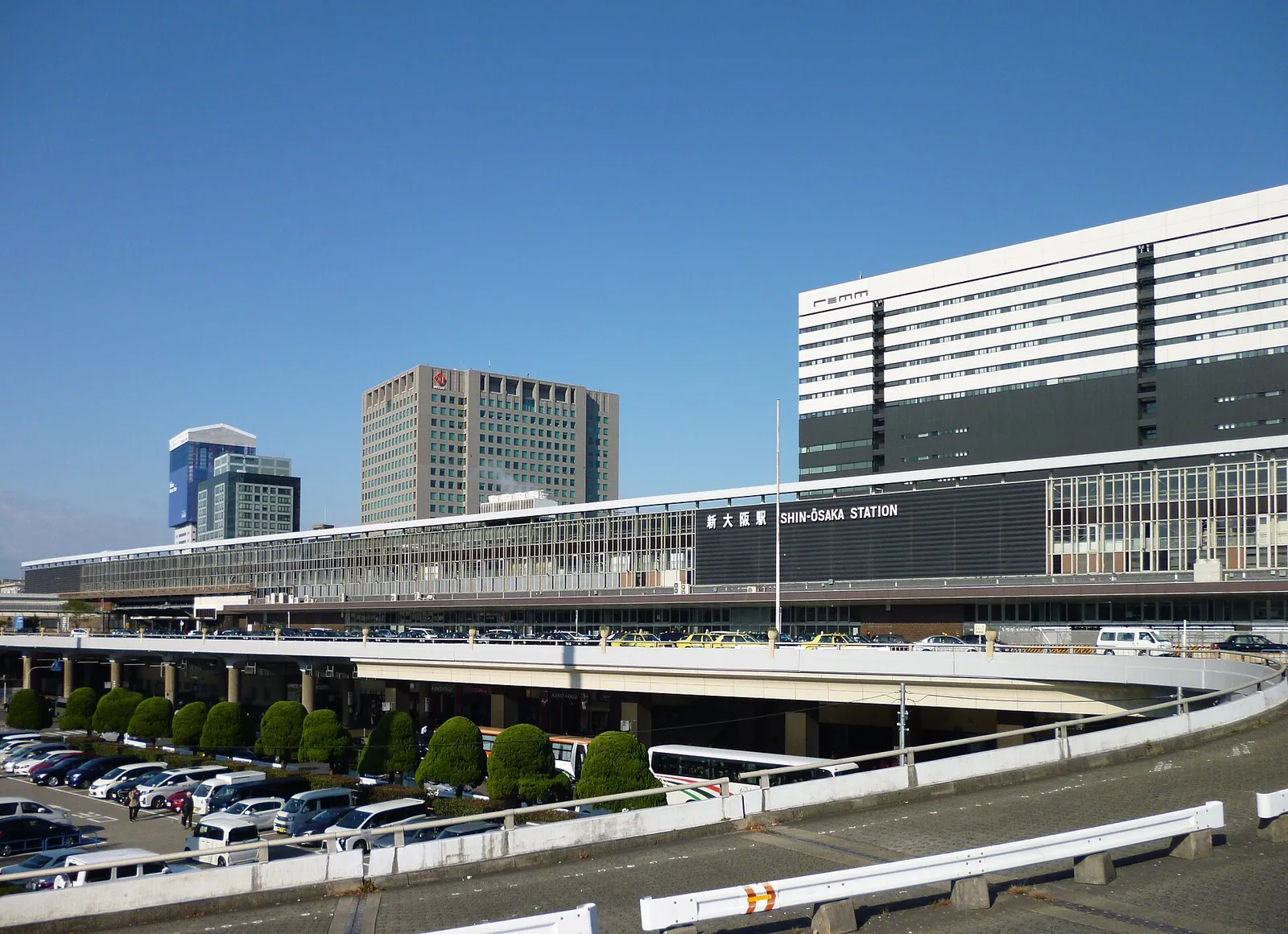
Shin-Osaka is where the shinkansen stops, about 4 km north of Osaka Station and about 4 minutes away by JR. It suits an early bullet train (Himeji is about 30 minutes away) or a single night between trains, and the Haruka also calls here. Most hotels here are business hotels, with a few city hotels; budget beds include the Shin-Osaka Youth Hostel, five minutes' walk from the station's East Exit, which listed dormitory beds from ¥3,900 and twin rooms from ¥5,100 per person when we checked on 26 October 2026. The Midosuji Line runs from here to Umeda in three stops and on to Namba, so every evening out starts with a subway ride.
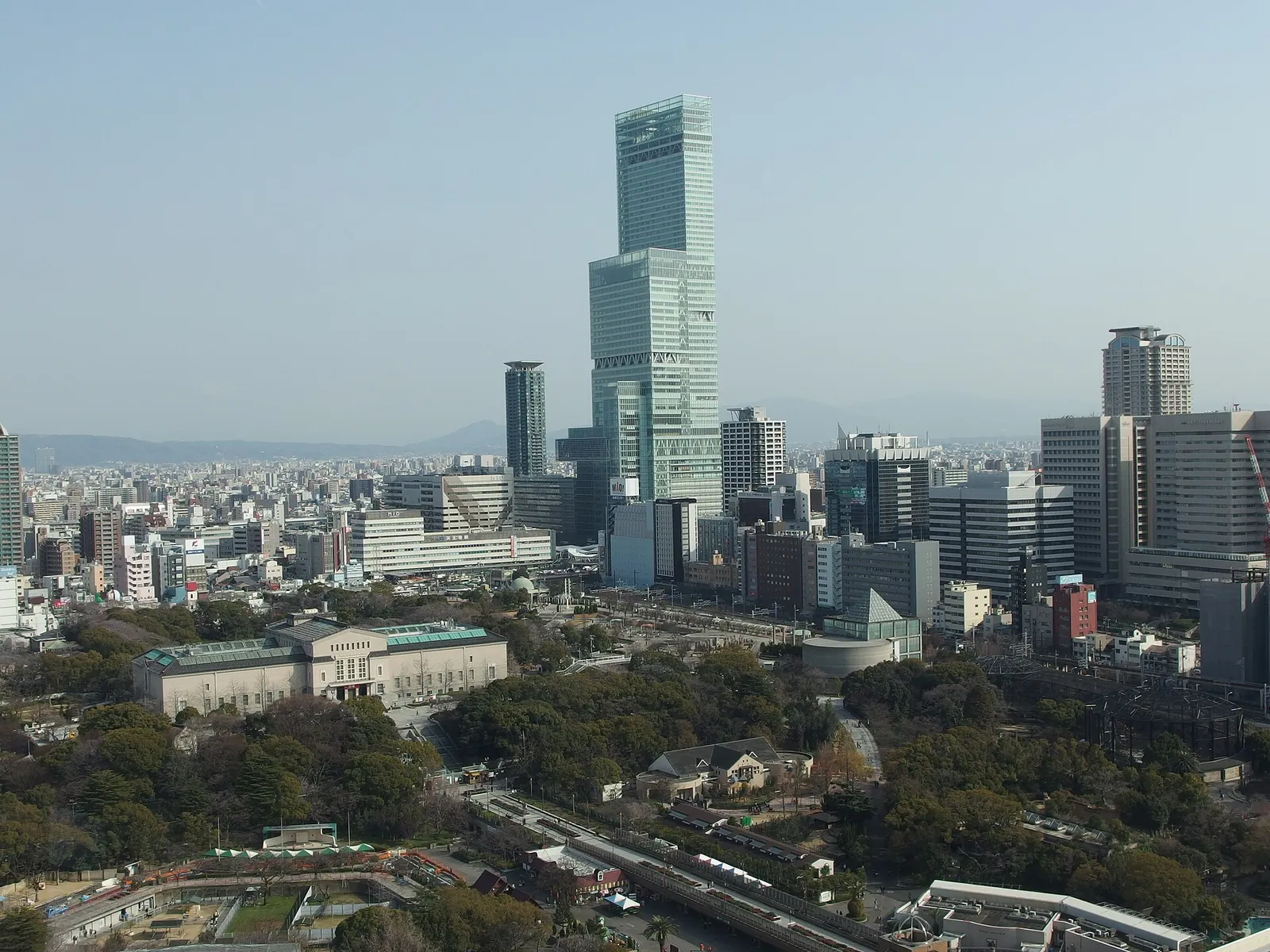
Tennoji, three stops south of Namba, is the best base for Kansai Airport by JR and for Nara: the Haruka reaches Tennoji from the airport in about 31 minutes, and JR rapid trains reach Nara in about 36. Abeno Harukas, 300 metres tall, has a viewpoint over the whole city, an art museum and a hotel, the Osaka Marriott Miyako, on its upper floors and about three minutes' walk from the JR and Midosuji Line stations. A short walk away, Shinsekai keeps the neon and fried skewers of the early 1900s, and JNTO counts its tachinomi standing bars and grittier backstreets, which Osakans call 'deep', as part of the appeal. Hotels range from the Marriott and OMO7 Osaka by Hoshino Resorts, near Shin-Imamiya Station, to business hotels such as City Express by Marriott Osaka Shin-Imamiya and a municipal youth hostel at Nagai, further south.
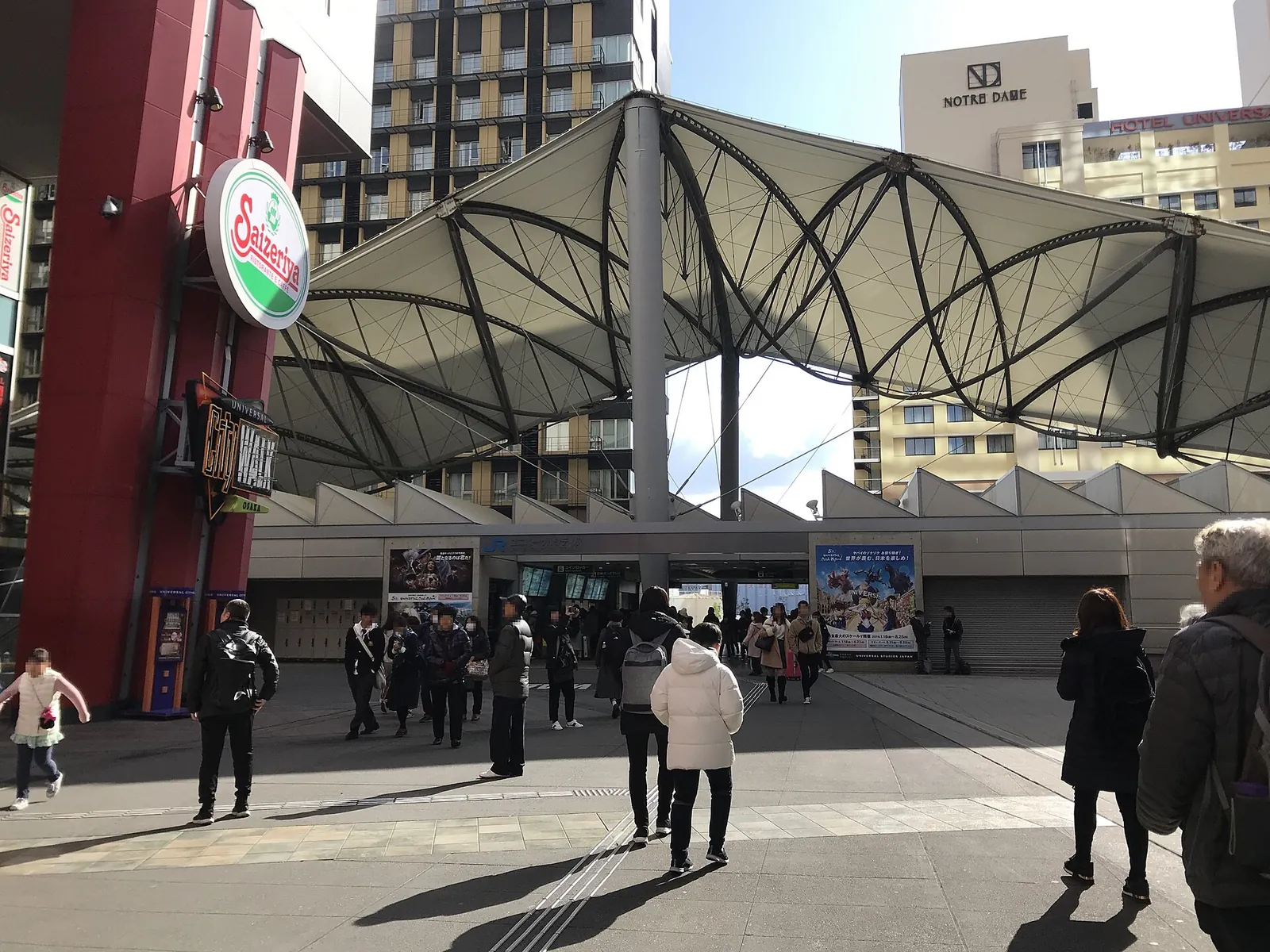
Sleep in the Bay Area only if Universal Studios Japan is the point of the trip. The park is about five minutes' walk from Universal City Station on the JR Yumesaki Line, about 20 minutes from Osaka Station. The hotels by the station are built around the park: Hotel Kintetsu Universal City is an official hotel a minute's walk from the gates, Hotel Universal Port, three minutes from the station, has Minion-themed rooms, and the 32-storey Hotel Keihan Universal Tower has a hot-spring bath on the 31st floor for an extra fee. An airport limousine bus runs from Kansai Airport to the park. Everything else in the city is a train ride away, so for a single park day a hotel in Umeda or Namba works well; the park takes a full day, which is the case for a night at its gates before or after.
From Kansai Airport to each area
Kansai Airport is about 40 to 60 minutes from the city, and the area you choose decides which ticket to buy. For each area, the most direct links compare like this (adult fares, one way; the Haruka's Tennoji time is Nara's official guide's figure; the other JR times are for daytime trains on JR West's timetable for 26 October 2026):
| Area | Most direct link | Journey time | Fare |
|---|---|---|---|
| Namba and Shinsaibashi | Nankai rapi:t to Namba | 34 minutes at fastest | ¥1,410 for fare and Regular Seat together as a Rapi:t Digital Ticket; at the station, the fare plus ¥700 for the seat |
| Namba and Shinsaibashi | Nankai Airport Express to Namba | About 45 minutes | Ordinary fare only; no extra ticket |
| Namba and Shinsaibashi | Airport limousine bus to Namba (OCAT) | About 50 minutes | ¥1,400 |
| Tennoji | JR Haruka | About 31 minutes | Visitors' one-way ticket: ¥1,600 |
| Umeda and Shin-Osaka | JR Haruka | About 47 minutes to Osaka, about 52 to Shin-Osaka | Visitors' one-way ticket: ¥1,900 |
| Tennoji and Umeda | JR Kansai Airport Rapid Service to Tennoji and Osaka | About 53 minutes to Tennoji, about 71 to Osaka | Ordinary fare only; no extra ticket |
| Umeda | Airport limousine bus to Osaka Station | About 60 minutes | ¥1,800 |
| Bay Area | Airport limousine bus to Universal Studios Japan | About 1 hour 10 minutes | ¥1,800 |
For Kitahama and Yodoyabashi, take the rapi:t to Namba and the Midosuji Line three stops north, or the Haruka to Osaka Station and the Midosuji Line one stop south. The Haruka's discounted one-way tickets are sold to foreign visitors. Arriving by shinkansen, you are already at Shin-Osaka; domestic flights also use Osaka International (Itami) Airport, about 30 minutes from the centre by monorail, train or limousine bus.
What rooms cost, the accommodation tax, check-in and luggage
Osaka has lodging for every budget, from five-star hotels to business hotels, Japanese inns and guesthouses. Luxury hotels stand in Umeda, beside Hommachi Station, in Minami and at Universal City, while business hotels are found in every area and make up most of Shin-Osaka's; the tourism bureau's hotel directory also lists city hotels around Osaka Castle, among them the Imperial Hotel Osaka and Hotel New Otani Osaka. For the lowest prices, look at the youth hostels at Shin-Osaka and Nagai and at capsule hotels, which JNTO says are usually cheaper than a regular hotel and tend to be near stations, though large suitcases normally have to be left at reception.
Estimates for two sharing in mid-April 2027, from our Japan trip-cost guide:
| Area | Room for two, a night | Basis |
|---|---|---|
| Namba and Shinsaibashi | About ¥10,000 for a private twin at a hostel; about ¥20,000 at a business hotel such as Hotel Gracery Osaka Namba; about ¥45,000 at Swissotel Nankai Osaka | Trip-cost guide estimates |
| Umeda | About ¥20,000 at a business hotel; more at the luxury hotels | Namba's business-hotel level |
| Kitahama and Yodoyabashi | About ¥20,000 at a business hotel | Namba's business-hotel level |
| Shin-Osaka | From ¥10,200 for a twin at the Shin-Osaka Youth Hostel; about ¥20,000 at a business hotel | The hostel's published rate, read on 26 October 2026; Namba's business-hotel level |
| Tennoji | About ¥20,000 at a business hotel | Namba's business-hotel level |
| Universal City | About ¥45,000 at a park hotel | Swissotel Nankai Osaka's city-hotel level, as the park hotels are city hotels |
Osaka Prefecture adds an accommodation tax per person per night, paid at the hotel, and it applies to licensed hotels and inns as well as private lodgings. The band is set by the accommodation fee per person per night: the room-only fee plus mandatory service and cleaning charges, without meals. When we checked on 26 October 2026, the tourism bureau listed the rates in force since 1 September 2025: nothing under ¥5,000, ¥200 from ¥5,000 to under ¥15,000, ¥400 from ¥15,000 to under ¥20,000 and ¥500 from ¥20,000. A ¥20,000 double shared by two is ¥10,000 each, so each guest pays ¥200 a night.
If you book a private rental, look for the private-lodging sticker that legally operating properties are asked to display. Expect to give your nationality and passport number on the registration form at check-in and to have your passport photocopied, which JNTO says lodging operators are required to do.
Check-in is usually from 15:00: the Granvia, the Marriott Miyako, the St. Regis, OMO7, Hotel Kintetsu Universal City and Kaneyoshi Ryokan all list it, with check-out from 10:00 at the ryokan to 12:00 at the Granvia, Marriott and St. Regis, and the Granvia stores luggage before check-in and after check-out. If your room is not ready, the stations have staffed counters as well as coin lockers at many exits. At Namba, the n・e・s・t counter (09:00–21:00) keeps bags for ¥800 a day and delivers between Namba and its Kansai Airport store for ¥2,500 a piece; at JR Osaka Station, Crosta Osaka (09:00–20:00) keeps bags for ¥1,000 and delivers them for ¥2,000 a piece. Those fees were posted as current on 1 October 2025.
Osaka or Kyoto as a base, and the 30-second choice
Kyoto is close enough to visit from any of these areas: Kyoto's official guide lists about 30 minutes from Osaka Station by JR Special Rapid, about 45 minutes from Osaka-umeda to downtown Kyoto by Hankyu and about 48 minutes from Yodoyabashi to Gion-Shijo by Keihan. If seeing Kyoto's temples at opening time matters most, sleep there and end the trip with two nights in Osaka, closer to Kansai Airport; our Kyoto where-to-stay guide compares its areas. If Osaka's food and nights matter more, base yourself here and choose Umeda or Yodoyabashi for the quickest trains to Kyoto.
Match the trip to the area, then compare rooms there. If more than one line fits, take the first.
- First trip, food and nightlife: Namba or Shinsaibashi, a few streets away from the Dotonbori canal if you sleep lightly.
- Day trips to Kyoto and Himeji, or a luxury hotel: Umeda.
- Calmer nights with both centres on the Midosuji Line, or Keihan trains to Kyoto: Kitahama and Yodoyabashi.
- An early shinkansen or one night between trains: Shin-Osaka.
- Kansai Airport by Haruka, Nara or Shinsekai: Tennoji.
- Universal Studios Japan as the main event: Universal City; for a single park day, Umeda or Namba.
- The lowest prices: a capsule hotel in Namba or a youth hostel at Shin-Osaka or Nagai.
Practical questions
What is the best area to stay in Osaka for first-time visitors?
Namba or Shinsaibashi suits most first trips: Dotonbori, Ura Namba and the Shinsaibashi-suji arcade are on foot, and the rapi:t from Kansai Airport and Kintetsu trains to Nara leave from Namba. Choose Umeda instead if most of your days are trips to Kyoto and Himeji.
Is it better to stay in Umeda or Namba?
Stay in Namba for food and nightlife, and in Umeda for the fastest trains to Kyoto and Himeji and the widest choice of luxury hotels. They are four stops apart on the Midosuji Line, so either works for a two- or three-night stay.
Where should I stay in Osaka for Universal Studios Japan?
For one park day, Umeda or Namba is enough: the park is about 20 minutes from Osaka Station and five minutes' walk from Universal City Station. Stay in the Bay Area, at a hotel such as Hotel Kintetsu Universal City by the gates, if the park is the main reason for the trip.
Is Shin-Osaka a good area to stay in?
Yes, for an early shinkansen or a single night between trains: Himeji is about 30 minutes away and Osaka Station about 4 minutes by JR. For a longer stay it is less convenient: Umeda is three stops away on the Midosuji Line and Namba seven.
Which area of Osaka is best for Kansai Airport?
Namba or Tennoji. Nankai's rapi:t reaches Namba in as little as 34 minutes, and the Haruka reaches Tennoji in about 31 minutes before continuing to Osaka Station and Shin-Osaka.
How much is the hotel tax in Osaka?
Osaka Prefecture charges per person per night, by the accommodation fee per person per night (room-only fee plus mandatory service and cleaning charges, without meals). When we checked on 26 October 2026, it was nothing under ¥5,000, ¥200 from ¥5,000 to under ¥15,000, ¥400 from ¥15,000 to under ¥20,000 and ¥500 from ¥20,000. A ¥20,000 double shared by two is ¥10,000 each, so each guest pays ¥200 a night.
Keep planning your trip
Osaka
How many nights Osaka needs, whether to base here or in Kyoto, Namba vs Umeda vs Shin-Osaka vs Tennoji, what to eat, and trains to Nara, Himeji and Koyasan.
Read the guide
Where to stay in Kyoto
Downtown or Kyoto Station? Six Kyoto areas compared by who they suit and their train lines, plus machiya rentals, ryokan, the hotel tax and Osaka as a base.
Read the guide
Kyoto
How many nights Kyoto needs, where to base yourself, how to group the sights into east, west and south days, and how to beat the crowds and the buses.
Read the guide
Nara
How long to give Nara from Kyoto or Osaka, Kintetsu or JR, a walking loop through Nara Park, the deer rules, and where to stay for a quiet early start.
Read the guide
First trip to Japan
How to shape two weeks in Japan, what to settle before you fly (entry, Visit Japan Web, cash, data, insurance) and which trains, tickets and rooms to book.
Read the guide
Japan in 7 days
A first-trip week in Japan: three nights in Tokyo, a ryokan in Hakone and two in Kyoto with Nara, plus the trains, the tickets and where to sleep.
Read the guideSources and checks before you travel
(67)
- Osaka Convention & Tourism Bureau (OSAKA-INFO): getting around Osaka ↗ — opens in a new tab
- OSAKA-INFO: Midosuji ↗ — opens in a new tab
- Osaka Metro: station guide ↗ — opens in a new tab
- OSAKA-INFO: search for hotels (directory by area and type) ↗ — opens in a new tab
- OSAKA-INFO: hotel listings (Hotel Kintetsu Universal City; also Hotel Universal Port, Hotel Keihan Universal Tower, Hotel Granvia Osaka, Osaka Marriott Miyako Hotel, The St. Regis Osaka, OMO7 and Kaneyoshi Ryokan) ↗ — opens in a new tab
- OSAKA-INFO: Shin-Osaka Youth Hostel ↗ — opens in a new tab
- Shin-Osaka Youth Hostel (official site) ↗ — opens in a new tab
- OSAKA-INFO: accommodation tax and private lodging ↗ — opens in a new tab
- OSAKA-INFO Hands-Free Travel: Namba Station and Osaka/Umeda Station luggage storage and coin lockers ↗ — opens in a new tab
- OSAKA-INFO: frequently asked questions ↗ — opens in a new tab
- OSAKA-INFO: Kita (Umeda) one-day itinerary ↗ — opens in a new tab
- OSAKA-INFO: Minami model course ↗ — opens in a new tab
- OSAKA-INFO: retro architecture walk in Kitahama, Yodoyabashi and Semba ↗ — opens in a new tab
- OSAKA-INFO: Nakanoshima ↗ — opens in a new tab
- OSAKA-INFO: Dotonbori ↗ — opens in a new tab
- OSAKA-INFO: Tsutenkaku ↗ — opens in a new tab
- Discover Osaka (Osaka Convention & Tourism Bureau): Universal Studios Japan ↗ — opens in a new tab
- JNTO: Northern Osaka (Shin-Osaka and Umeda) ↗ — opens in a new tab
- JNTO: Namba ↗ — opens in a new tab
- JNTO: Dotonbori and Shinsaibashi ↗ — opens in a new tab
- JNTO: Tennoji ↗ — opens in a new tab
- Nankai Electric Railway: Limited Express Rapi:t and access from Kansai-Airport Station ↗ — opens in a new tab
- Nankai Electric Railway: Rapi:t Digital Ticket ↗ — opens in a new tab
- JR West: HARUKA one-way ticket ↗ — opens in a new tab
- JR West: usage guide from Kansai International Airport ↗ — opens in a new tab
- JR West (JR Odekake): Kansai-Airport Station timetable, trains towards Tennoji and Osaka ↗ — opens in a new tab
- Kansai Airport Transportation Enterprise (airport limousine bus): Universal Studios Japan ↗ — opens in a new tab
- Visit Nara (official Nara travel guide): travel to Nara ↗ — opens in a new tab
- Kyoto City Tourism Association (kyoto.travel): getting to Kyoto ↗ — opens in a new tab
- Himeji Castle (official): access ↗ — opens in a new tab
- JNTO: accommodation ↗ — opens in a new tab
- JNTO: capsule hotels ↗ — opens in a new tab
- Namba Oriental Hotel (official site) ↗ — opens in a new tab
- Rakuten Travel: Namba Oriental Hotel plan list (rate only) ↗ — opens in a new tab
- Cross Hotel Osaka (official site) ↗ — opens in a new tab
- Rakuten Travel: Cross Hotel Osaka plan list (rate only) ↗ — opens in a new tab
- Swissotel Nankai Osaka (official site) ↗ — opens in a new tab
- Rakuten Travel: Swissotel Nankai Osaka plan list (rate only) ↗ — opens in a new tab
- Osaka Tokyu REI Hotel (official site) ↗ — opens in a new tab
- Rakuten Travel: Osaka Tokyu REI Hotel plan list (rate only) ↗ — opens in a new tab
- Hotel Hankyu RESPIRE OSAKA (official site) ↗ — opens in a new tab
- Rakuten Travel: Hotel Hankyu RESPIRE OSAKA plan list (rate only) ↗ — opens in a new tab
- Hotel Hankyu International (official site) ↗ — opens in a new tab
- Rakuten Travel: Hotel Hankyu International plan list (rate only) ↗ — opens in a new tab
- Daiwa Roynet Hotel Osaka Kitahama (official site) ↗ — opens in a new tab
- Rakuten Travel: Daiwa Roynet Hotel Osaka Kitahama plan list (rate only) ↗ — opens in a new tab
- Dormy Inn Premium Osaka Kitahama (official site) ↗ — opens in a new tab
- Rakuten Travel: Dormy Inn Premium Osaka Kitahama plan list (rate only) ↗ — opens in a new tab
- The Royal Park Hotel Iconic Osaka Midosuji (official site) ↗ — opens in a new tab
- Rakuten Travel: The Royal Park Hotel Iconic Osaka Midosuji plan list (rate only) ↗ — opens in a new tab
- Toyoko Inn Shin-osaka Chuo-guchi Honkan (official site) ↗ — opens in a new tab
- Rakuten Travel: Toyoko Inn Shin-osaka Chuo-guchi Honkan plan list (rate only) ↗ — opens in a new tab
- remm Shin-Osaka (official site) ↗ — opens in a new tab
- Rakuten Travel: remm Shin-Osaka plan list (rate only) ↗ — opens in a new tab
- Toyoko Inn Osaka Abeno Tennoji (official site) ↗ — opens in a new tab
- Rakuten Travel: Toyoko Inn Osaka Abeno Tennoji plan list (rate only) ↗ — opens in a new tab
- Miyako City Osaka Tennoji (official site) ↗ — opens in a new tab
- Rakuten Travel: Miyako City Osaka Tennoji plan list (rate only) ↗ — opens in a new tab
- Osaka Marriott Miyako Hotel (official site) ↗ — opens in a new tab
- Rakuten Travel: Osaka Marriott Miyako Hotel plan list (rate only) ↗ — opens in a new tab
- Oriental Hotel Universal City (official site) ↗ — opens in a new tab
- Rakuten Travel: Oriental Hotel Universal City plan list (rate only) ↗ — opens in a new tab
- The Park Front Hotel at Universal Studios Japan (official site) ↗ — opens in a new tab
- Rakuten Travel: The Park Front Hotel at Universal Studios Japan plan list (rate only) ↗ — opens in a new tab
- Hotel Keihan Universal Tower (Keihan Hotels official booking site) ↗ — opens in a new tab
- Rakuten Travel: Hotel Keihan Universal Tower plan list (rate only) ↗ — opens in a new tab
- Rakuten Travel: Courtyard by Marriott Shin-Osaka Station plan list (address and rate) ↗ — opens in a new tab
Reference sources for the version dated 2 November 2026. Confirm opening times, access, transport and conditions for your travel dates.
Photo credits
(6)
Umeda's towers rise around Osaka Station, the hub for trains to Kyoto, Himeji and the airport
Photograph: Loggieloggie — opens in a new tab · CC0 — opens in a new tab
Changes: Resized and converted to WebP; displayed with responsive crops. · Original photograph and licence details ↗ — opens in a new tab
Shinsaibashi-suji, the covered arcade that runs north from Dotonbori
Photograph: そらみみ — opens in a new tab · CC BY-SA 4.0 — opens in a new tab
Changes: Resized and converted to WebP; displayed with responsive crops. · Original photograph and licence details ↗ — opens in a new tab
The Central Public Hall on Nakanoshima, a short walk from Kitahama and Yodoyabashi stations
Photograph: Daniel Lu ( User:dllu ) — opens in a new tab · CC BY-SA 4.0 — opens in a new tab
Changes: Resized and converted to WebP; displayed with responsive crops. · Original photograph and licence details ↗ — opens in a new tab
Shin-Osaka Station, where the shinkansen stops, about 4 km north of Osaka Station
Photograph: EXECUTOR — opens in a new tab · CC0 — opens in a new tab
Changes: Resized and converted to WebP; displayed with responsive crops. · Original photograph and licence details ↗ — opens in a new tab
Abeno Harukas above Tennoji Park, seen from Tsutenkaku in Shinsekai
Photograph: Guilhem Vellut from Annecy, France — opens in a new tab · CC BY 2.0 — opens in a new tab
Changes: Resized and converted to WebP; displayed with responsive crops. · Original photograph and licence details ↗ — opens in a new tab
Universal City Station, about five minutes' walk from the gates of Universal Studios Japan
Photograph: そらみみ — opens in a new tab · CC BY-SA 4.0 — opens in a new tab
Changes: Resized and converted to WebP; displayed with responsive crops. · Original photograph and licence details ↗ — opens in a new tab