Itineraries · Tokyo, Kyoto, Osaka, Fukuoka, Busan, Gyeongju and Seoul
Japan and South Korea in 2 weeks: Tokyo to Seoul by ferry
Japan and South Korea sit a day's ferry ride apart, and one trip can take in both. This plan crosses Japan west by shinkansen from Tokyo to Kyoto, Osaka and Fukuoka, sails from Hakata to Busan on Camellia Line's daytime ferry, and continues north by KTX through Gyeongju, the old Silla capital, to Seoul. It gives introductions to each city rather than full coverage, at a brisk but unhurried pace, and it flies home from Seoul.
- Suggested time
- 14 days / 13 nights
- Where to stay
- Tokyo for 3 nights; Kyoto for 2; Osaka for 1; Fukuoka for 2; Busan for 2; Gyeongju for 1; Seoul for 2
- Season and timing
- Spring and autumn are the most comfortable months for city walking; check the ferry calendar, Golden Week in Japan and Seollal and Chuseok in Korea before you fix the dates.
The short answer
Plan 14 days and 13 nights: Tokyo 3, Kyoto 2, Osaka 1, Fukuoka 2, Busan 2, Gyeongju 1 and Seoul 2. Take the shinkansen from Tokyo to Kyoto on day 4 and from Osaka to Hakata on day 7, and sail from Hakata to Busan on day 9 on the New Camellia, which in late 2026 left at 12:30 and docked at 18:30 on ordinary days; then the KTX to Gyeongju on day 11 and to Seoul on day 12. Check the ferry calendar first, because special overnight sailings change the plan. All in, with rooms, meals, trains, a two-person ferry cabin, tickets and SIM cards, it costs about USD 2,400 per person for two sharing a room, checked on 23 October 2026.
Seven cities, one ferry
The route runs west across Japan and north up Korea, so it never doubles back. Three nights in Tokyo give two full days; two in Kyoto cover the temples of Higashiyama and Fushimi Inari; one in Osaka is for its food streets; two in Fukuoka put you next to the ferry; two in Busan give its old port a full day; one in Gyeongju is enough for the Silla tombs; and two in Seoul end the trip close to Incheon airport.
The crossing is a daytime sailing, so no night is spent aboard. On some dates Camellia Line runs special overnight sailings instead, which put a night on the ship and move every day after it; choose the sailing on the operator's calendar before you book anything else. For a slower Japanese half, see our Japan in 14 days; for the ferry in detail, our Fukuoka to Busan by ferry.
- Days 1–3: Tokyo: Asakusa and Ueno, Meiji Jingu and Shibuya or Shinjuku.
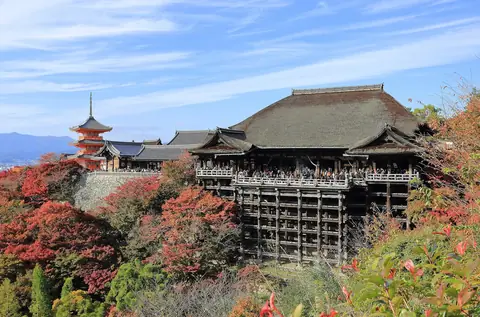
- Days 4–5: shinkansen to Kyoto; Higashiyama, Kiyomizu-dera and Fushimi Inari.
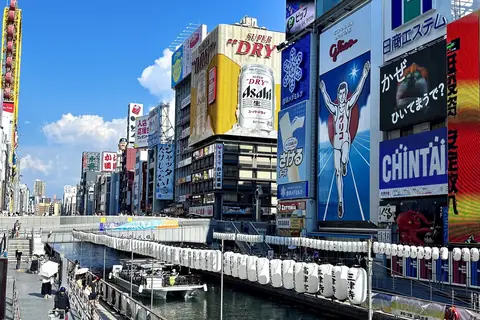
- Day 6: train to Osaka; Dotonbori and Kuromon Market.
- Days 7–8: shinkansen to Hakata; Kushida Shrine, Ohori Park and the yatai.
- Day 9: the ferry from Hakata to Busan.
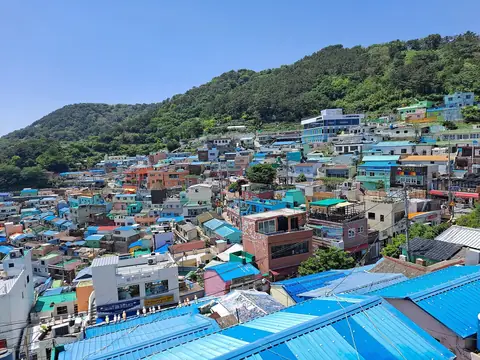
- Day 10: Busan: Gamcheon Culture Village, Jagalchi and Nampo.
- Day 11: KTX to Gyeongju; Daereungwon, Cheomseongdae and Donggung and Wolji.
- Days 12–13: Bulguksa or the museum, KTX to Seoul; a palace and Bukchon.
- Day 14: fly home from Incheon.
Days 1–3: Tokyo
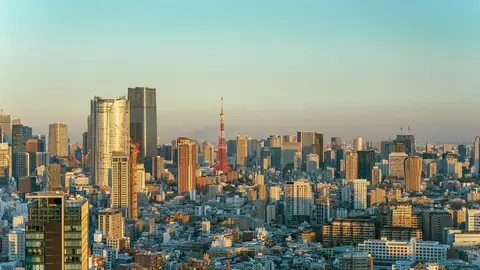
Day 1. From Narita, JR East says the fastest Narita Express reaches Tokyo Station in 53 minutes; check whether your flight lands at Narita or Haneda before you plan the transfer. Sleep in Yanaka or Ueno: the model room is a two-person room with its own bath at Sawanoya, a family-run inn in Yanaka, which has only two such rooms.
Day 2. Start at Senso-ji in Asakusa, whose Main Hall opens at 06:00 (06:30 from October to March), and walk Nakamise to Kaminarimon before the crowds. Spend the afternoon in Ueno Park and one of its museums.
Day 3. Walk the forest approach to Meiji Jingu, which opens at sunrise, then spend the rest of the day in Harajuku, Shibuya or Shinjuku. Our Tokyo guide has more.
Days 4–6: Kyoto and Osaka
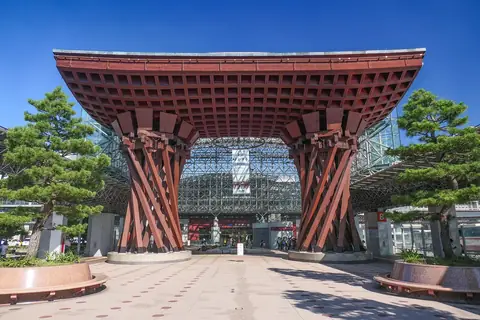
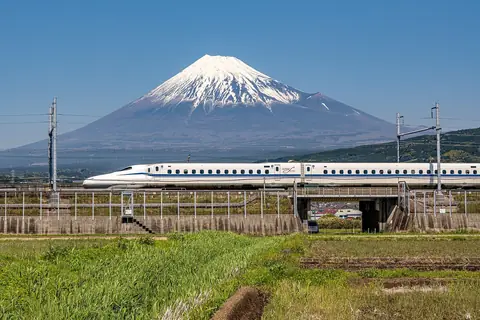
Day 4. Take the Tokaido Shinkansen from Tokyo to Kyoto in a reserved seat. JR Central's smartEX opens bookings at 05:30 one year before travel, on a provisional timetable; the train times are confirmed one month ahead. Leave your bags and walk Gion and Higashiyama in the afternoon.
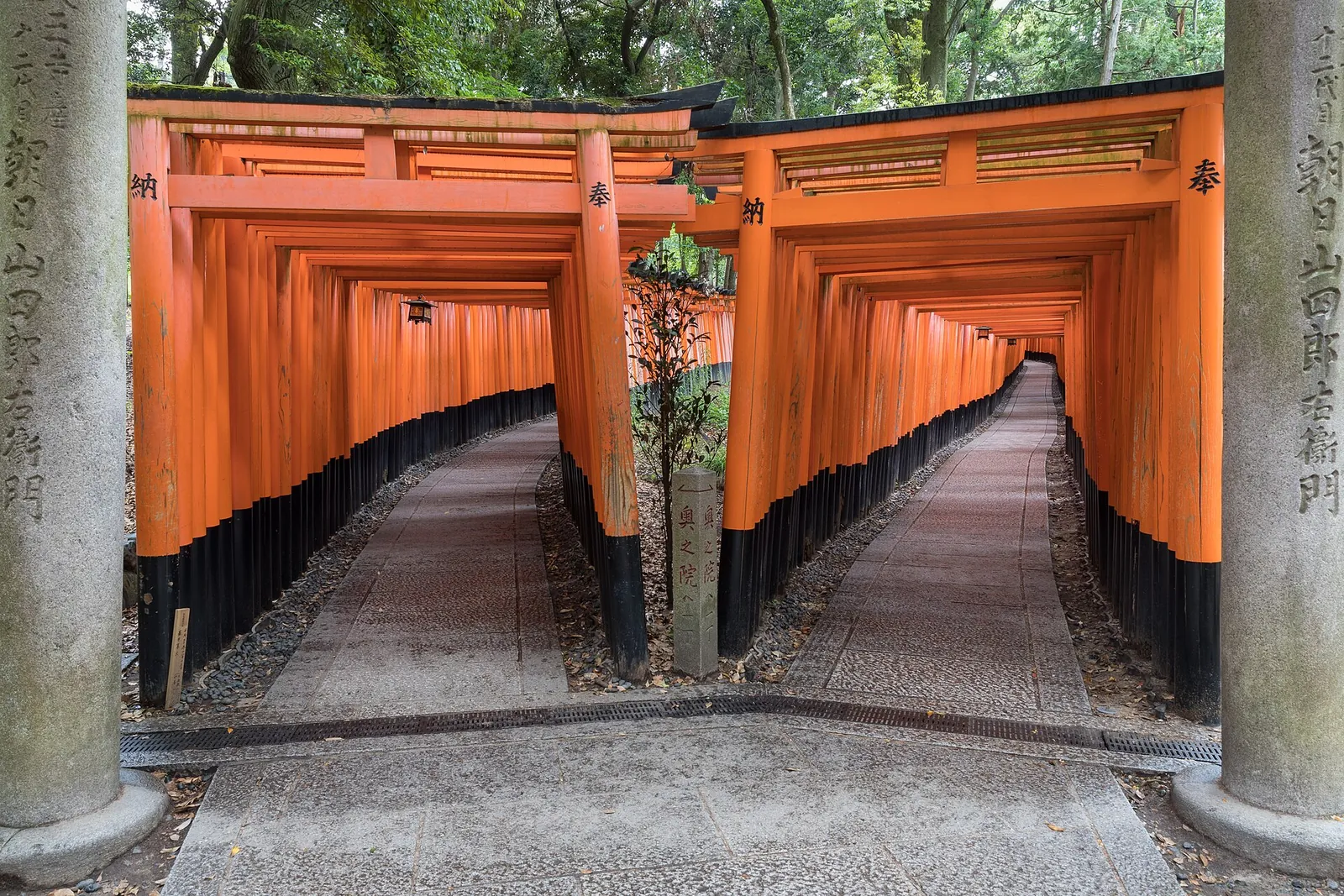
Day 5. Be at Kiyomizu-dera when it opens at 06:00 (adults ¥500), then walk down through the old lanes. In the afternoon, take the JR Nara Line two stops (five minutes) from Kyoto Station to Inari for Fushimi Inari Taisha and its tunnels of torii gates; the shrine is open around the clock. Leave Arashiyama for another trip; our Kyoto guide has it.
Day 6. Take the JR Kyoto Line to Osaka Station, not Shin-Osaka, which is the shinkansen station. Eat your way through Kuromon Market, about 150 shops under a 580-metre arcade, and spend the evening on Dotonbori, the canal dug in 1612, under its giant signs.
Days 7–8: Fukuoka
Day 7. Go from Osaka to Shin-Osaka and take the Sanyo Shinkansen to Hakata, choosing a through train or the connection shown when you book. Walk to Kushida Shrine, by tradition founded in 757, and the Kawabata shopping arcade, then eat Hakata ramen at Canal City.
Day 8. Spend the morning at Ohori Park and the Fukuoka Castle ruins, then Tenjin. After dark, eat at a yatai stall in Nakasu, by the river. Check the next day's sailing before you go to bed: wind and storms can cancel it.
Day 9: the ferry from Hakata to Busan
Take bus 88 or the BRT from Hakata Station to Hakata Port International Terminal, about 20 minutes; it is not the cruise centre or the domestic ferry pier. On the October to December 2026 calendar, ordinary sailings had check-in from 10:30 to 11:30, boarding complete by 12:10, departure at 12:30 and disembarkation in Busan from 18:30. Disembarkation is not the end of immigration, so book nothing for the evening. Japan and Korea share a time zone.
Camellia Line's fare for first class is ¥21,000 per person; the first-class Western B room holds two, with bunks, a washbasin and shared toilets outside. Each passenger leaving Hakata also pays ¥1,400 fuel, the ¥3,000 international tourist departure tax and a ¥500 terminal charge, so the crossing costs ¥25,900 each. Book on Camellia Line's own site, normally from six months ahead; the April 2027 dry-dock dates were still being set. Queen Beetle, the old fast ferry, no longer runs.
You arrive at Busan Port International Passenger Terminal, a 10 to 15-minute walk from Busan Station, according to VisitKorea. Fill in the free Korean e-Arrival Card from three days before arrival. The temporary K-ETA exemption for many European passports ran to 31 December 2026; check the rule for your passport and date, and if you need a K-ETA (KRW 10,000), get it before you board the ship.
Days 10–11: Busan and Gyeongju
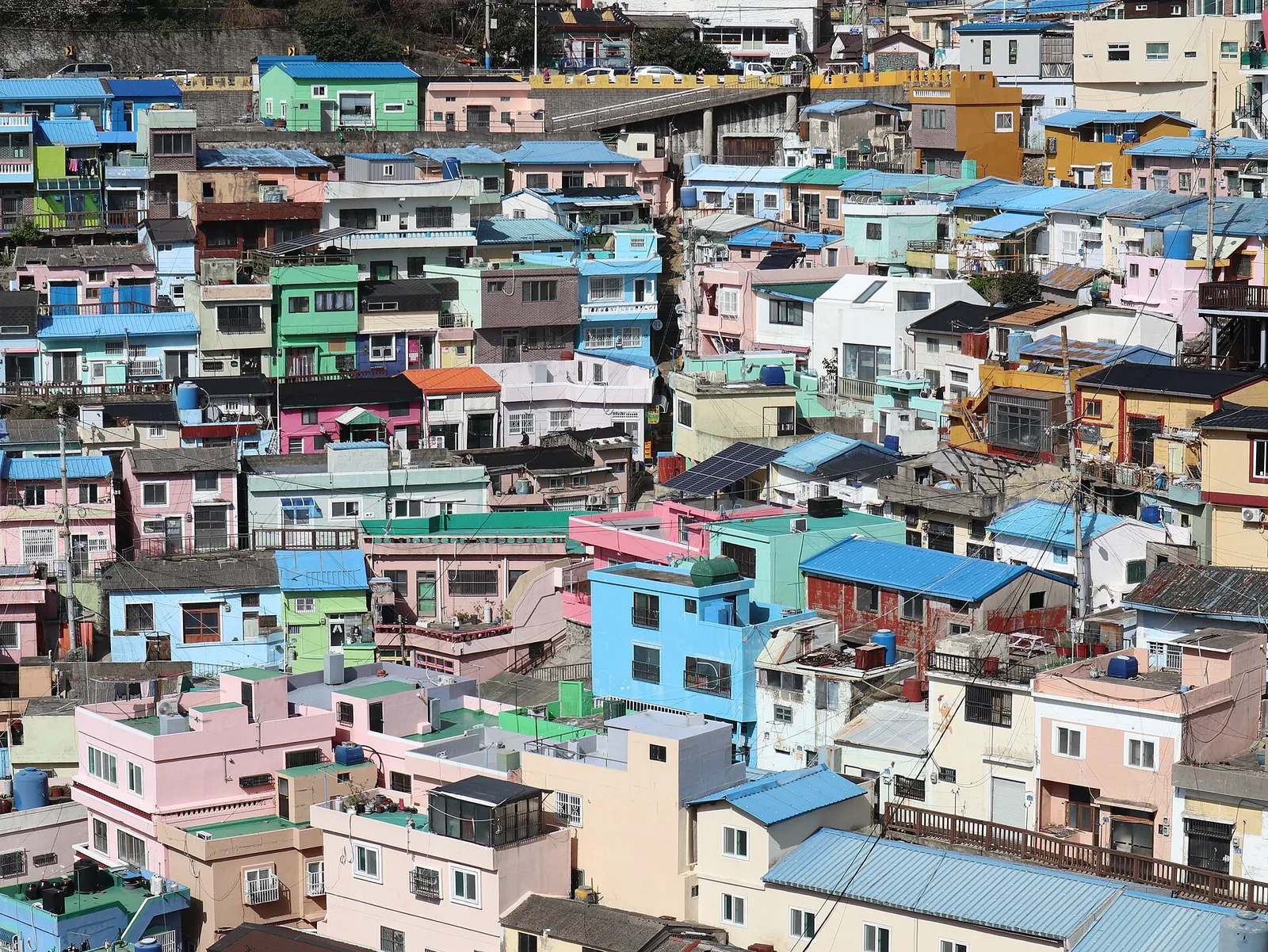
Day 10. Start at Gamcheon Culture Village, the hillside of painted houses that VisitKorea links to wartime refugees; it is a residential area, open to visitors from 09:00 to 18:00, and free. Spend the afternoon at Jagalchi Market, where restaurants upstairs cook the fish you choose (ask the total price first; the market closes on the first and third Tuesdays), and in Gukje Market. Our Busan guide has the beaches if you would rather go there.
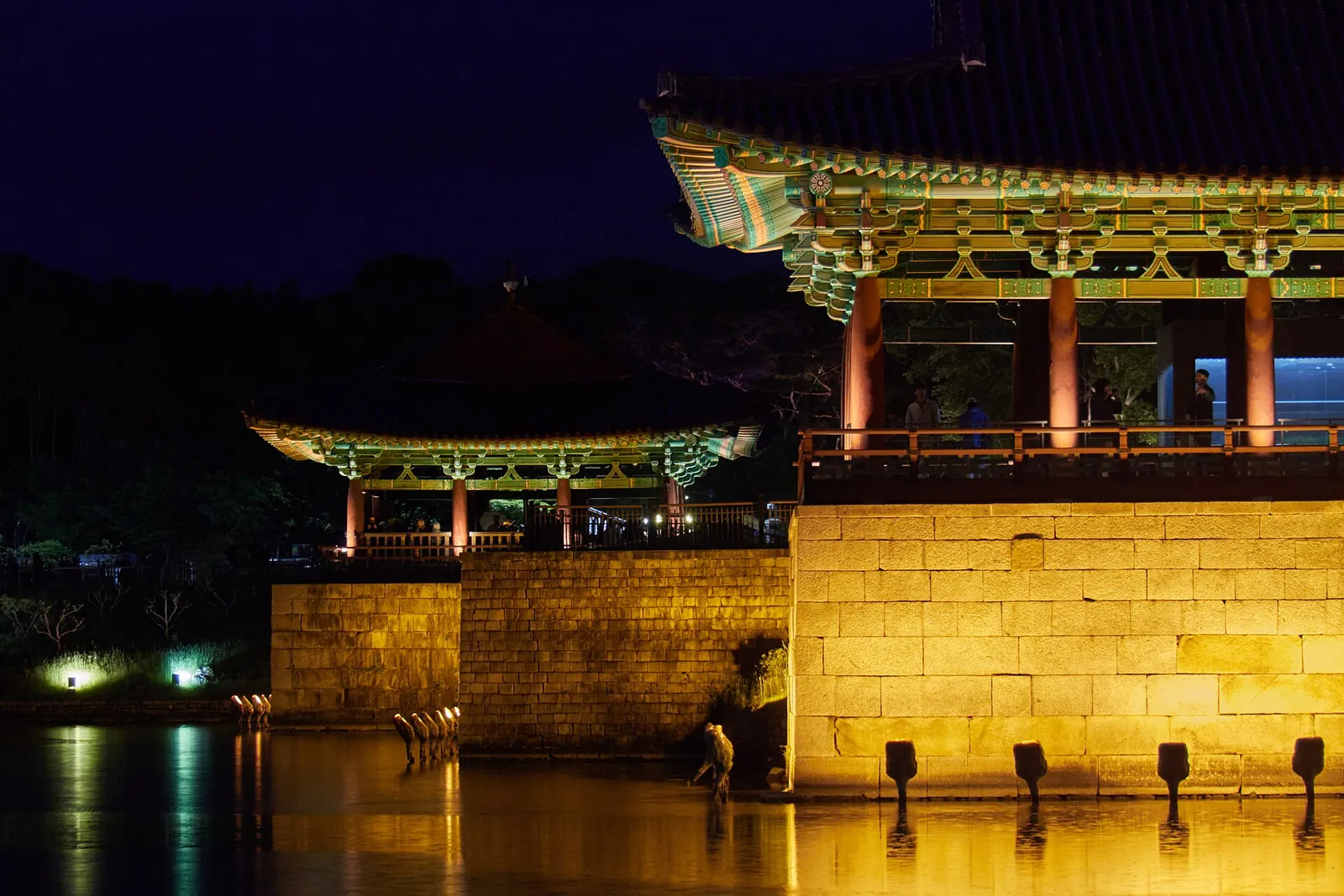
Day 11. Take the KTX from Busan to Gyeongju station, about 30 minutes according to Gyeongju City. Korail sells tickets to foreign passengers two months before departure. The station is outside town: bus 700 takes about 25 minutes to the Donggung and Wolji stop. See Daereungwon, a park of 23 royal Silla tombs, Cheomseongdae, the 7th-century stone observatory (free), and, in the evening, Donggung Palace and Wolji Pond, open until 22:00, when the pavilions are lit.
Days 12–14: Seoul
Day 12. In the morning, see either Bulguksa, the temple first built in 528 and a World Heritage Site with Seokguram (free admission), or the Gyeongju National Museum (free, from 10:00), then take the KTX to Seoul. Spend the evening in your neighbourhood.
Day 13. Choose your palace by the weekday: Gyeongbokgung, built in 1395, closes on Tuesdays, and Changdeokgung on Mondays. Walk on through Bukchon Hanok Village, a lived-in neighbourhood whose core is closed to tourists from 17:00 to 10:00, and eat at Gwangjang Market in the evening. Our Seoul guide has more.
Day 14. Take the AREX express train from Seoul Station to Incheon airport (43 or 51 minutes depending on the terminal, KRW 13,000), and fly home.
What two weeks cost, all in
For two adults sharing a room, the whole trip costs about USD 2,400 per person, everything on the ground included, checked on 23 October 2026 and converted at round planning rates of USD 1 = JPY 150 = KRW 1,350. The trains are estimates, because full 2027 fares were not all published.
- Rooms, about USD 980. Half of a double each night: Sawanoya in Tokyo (¥17,930 a night for two with bath, tax included), about ¥24,000 a night in Kyoto and ¥14,000 in Osaka, a Moderate Twin at Hotel New Otani Hakata (¥40,980, tax and service included), a little for Japan's local accommodation taxes, and about KRW 160,000 a night for a double in Busan, Gyeongju and Seoul, the weekday rate Nokcheon Hotel publishes.
- Trains and the ferry, about USD 450. The shinkansen from Tokyo to Kyoto (about ¥15,500) and Shin-Osaka to Hakata (about ¥17,000), the train to Osaka, the ferry in a first-class room with its charges (¥25,900), and the two KTX trains (about KRW 70,000 together).
- Food, about USD 450. About ¥5,000 a day each in Japan and KRW 40,000 in Korea, for three meals and drinks.
- City transport, about USD 185. Airport trains, metro, buses and taxis in seven cities.
- Tickets, about USD 80. Temples, shrines and museums in Japan, and the Gyeongju sites and a Seoul palace.
- SIM cards, about USD 50. One in each country.
- Buffer, about USD 220. About 10% for price changes and extra rides. Add KRW 10,000 if your passport needs a K-ETA.
Entry rules and the season
Many passports, including the UK's and those of the EU countries, can enter Japan visa-free for up to 90 days as a tourist; Visit Japan Web is an optional online form, not a visa. For Korea, visa-free stays vary by passport; the K-ETA table gives British, German and French passports 90 days. Check the K-ETA rule for 2027 on the official site; travellers aged 17 or under or 65 or over on arrival are permanently exempt from applying.
Spring and autumn are the most comfortable seasons for walking the cities. Avoid Japan's Golden Week at the start of May and Korea's Seollal (7 February 2027) and Chuseok holidays, when trains fill, and check the ferry's calendar for non-operating days and dry-dock dates before you book the flights.
Make time for the local food
What to eat and where to look
Okonomiyaki and takoyaki
Osaka's two hotplate dishes: a savoury pancake of batter, cabbage and toppings, and balls of batter with octopus, both of which OSAKA-INFO calls the city's soul food.
- Where to look
- Dotonbori and the streets around Namba, Osaka.
- Fit it into your day
- Dinner on day 6.
Hakata tonkotsu ramen
Thin, straight noodles in a pork-bone broth, with kaedama, a second portion of noodles, when you want more.
- Where to look
- Ramen Stadium on the fifth floor of Canal City, Fukuoka.
- Fit it into your day
- Lunch or dinner on day 7.
Hoe and seafood
Raw fish and other seafood chosen at the market and prepared by the restaurants upstairs.
- Where to look
- Jagalchi Market, Busan.
- Fit it into your day
- Lunch on day 10; agree the full price, with preparation, before choosing.
Ssambap with freshwater-snail stew
Rice with fresh leaves to wrap it in, many side dishes and a thick soybean stew made with freshwater snails.
- Where to look
- Ureong-gaksi Ssambap, Gyeongju (closed on Mondays).
- Fit it into your day
- Dinner on day 11.
Samgyetang (chicken soup)
A young chicken stuffed with sweet rice, garlic, jujube and ginseng, simmered in broth.
- Where to look
- Tosokchon, near Gyeongbokgung Station Exit 2, Seoul (10:00–22:00 daily).
- Fit it into your day
- Lunch on day 13, after the palace.
Practical questions
Can you take a ferry from Japan to Korea?
Yes. Camellia Line's New Camellia sails from Hakata Port in Fukuoka to Busan. On ordinary days in late 2026 it left at 12:30 and passengers began disembarking at 18:30; some dates have overnight special sailings or no sailing, so check the calendar first. Queen Beetle, the old fast ferry, no longer runs.
How much is the ferry from Fukuoka to Busan?
Camellia Line's one-way fares for bookings from 1 October 2026 run from ¥15,000 in shared second class to ¥33,000 for a suite. First class, in a room for two, costs ¥21,000 per person, plus ¥4,900 in fuel, departure tax and terminal charges from Hakata.
Do I need a K-ETA for South Korea?
It depends on your passport and date. The temporary exemption for many European passports ran to 31 December 2026; check the official K-ETA site for 2027. Travellers aged 17 or under or 65 or over on arrival are exempt. If you need one, get it before you board the ferry; it costs KRW 10,000.
Is two weeks enough for Japan and Korea?
It is enough for a first look at both: Tokyo, Kyoto, Osaka and Fukuoka in Japan, and Busan, Gyeongju and Seoul in Korea. It is an introduction to each city, not full coverage; add days in Kyoto or Seoul if you can.
How much do two weeks in Japan and Korea cost?
About USD 2,400 per person for two sharing a room, all in: 13 nights, meals, the shinkansen and KTX, a two-person ferry cabin with its charges, city transport, tickets, SIM cards and a 10% buffer. Flights into Tokyo and out of Seoul are extra.
Sources and checks before you travel
Reference sources for the version dated 23 October 2026. Confirm opening times, access, transport and conditions for your travel dates.
- JR East: Narita Express ↗ — opens in a new tab
- Sawanoya: rates ↗ — opens in a new tab
- Senso-ji: illumination and Main Hall hours (Japanese) ↗ — opens in a new tab
- GO TOKYO: Asakusa ↗ — opens in a new tab
- Meiji Jingu: opening hours and admission ↗ — opens in a new tab
- smartEX: service ↗ — opens in a new tab
- Kiyomizu-dera and Fushimi Inari Taisha: opening and access ↗ — opens in a new tab
- Kyoto Tourism Federation: Kiyomizu-dera ↗ — opens in a new tab
- Fushimi Inari Taisha: access, FAQ and requests for visitors ↗ — opens in a new tab
- Osaka Convention & Tourism Bureau (OSAKA-INFO): Dotonbori ↗ — opens in a new tab
- OSAKA-INFO: Kuromon Market ↗ — opens in a new tab
- OSAKA-INFO (Osaka Convention & Tourism Bureau): Osaka cuisine and Kuromon Market ↗ — opens in a new tab
- Fukuoka City official tourist guide: Kushida Shrine ↗ — opens in a new tab
- Fukuoka City official tourist guide: Ohori Park Area route ↗ — opens in a new tab
- Fukuoka City official tourist guide: Regular yatai favourites ↗ — opens in a new tab
- Fukuoka Prefecture Tourism Association: Hakata ramen ↗ — opens in a new tab
- JNTO: Fukuoka Ramen Stadium ↗ — opens in a new tab
- Hotel New Otani Hakata: Moderate Twin ↗ — opens in a new tab
- Hakata Port International Terminal: access ↗ — opens in a new tab
- Camellia Line: current sailing calendar (October–December 2026) ↗ — opens in a new tab
- Camellia Line: passenger fares and charges ↗ — opens in a new tab
- Camellia Line: news ↗ — opens in a new tab
- Camellia Line: online booking ↗ — opens in a new tab
- Camellia Line: rooms ↗ — opens in a new tab
- Camellia Line: passenger terminals ↗ — opens in a new tab
- JR Kyushu: withdrawal from vessel operation, 23 December 2024 ↗ — opens in a new tab
- VisitKorea: ferry ↗ — opens in a new tab
- e-Arrival card (Ministry of Justice): guide ↗ — opens in a new tab
- K-ETA (Ministry of Justice): countries that can apply and the permitted stay for each ↗ — opens in a new tab
- K-ETA: application guide ↗ — opens in a new tab
- VisitKorea (Korea Tourism Organization): visa and travel requirements ↗ — opens in a new tab
- Ministry of Foreign Affairs of Japan: visa exemption arrangements ↗ — opens in a new tab
- VisitKorea: Busan Gamcheon Culture Village ↗ — opens in a new tab
- VisitKorea: travel etiquette at Gamcheon Culture Village (August 2026) ↗ — opens in a new tab
- VisitKorea: Jagalchi Market ↗ — opens in a new tab
- Nokcheon Hot Spring Hotel: rooms ↗ — opens in a new tab
- Gyeongju City: directions ↗ — opens in a new tab
- Korail press release, 8 October 2026 (Korean) ↗ — opens in a new tab
- Gyeongju National Museum: directions ↗ — opens in a new tab
- Gyeongju Tourism: Daereungwon ↗ — opens in a new tab
- Gyeongju Tourism: Cheomseongdae ↗ — opens in a new tab
- Gyeongju Tourism: Donggung and Wolji ↗ — opens in a new tab
- Bulguksa: hours and fees (Korean) ↗ — opens in a new tab
- Bulguksa: history ↗ — opens in a new tab
- Gyeongju National Museum: visitor information ↗ — opens in a new tab
- Ureong-gaksi Ssambap (Gyeongju Tourism) ↗ — opens in a new tab
- Korea Heritage Service: palace hours and closing days (Korean) ↗ — opens in a new tab
- Visit Seoul: Gyeongbokgung Palace ↗ — opens in a new tab
- Visit Seoul: Bukchon Hanok Village ↗ — opens in a new tab
- Seoul Metropolitan Government: Bukchon visiting restrictions ↗ — opens in a new tab
- Visit Seoul: Tosokchon Samgyetang ↗ — opens in a new tab
- AREX (Airport Railroad): Express Train ↗ — opens in a new tab
Photo credits
The twin tunnels of torii at Fushimi Inari Taisha in Kyoto, open around the clock.
Photograph: Basile Morin — opens in a new tab · CC BY-SA 4.0 — opens in a new tab
Changes: Resized and converted to WebP; displayed with responsive crops. · Original photograph and licence details ↗ — opens in a new tab
Gamcheon Culture Village, Busan's hillside of painted houses.
Photograph: S h y numis — opens in a new tab · CC BY 4.0 — opens in a new tab
Changes: Resized and converted to WebP; displayed with responsive crops. · Original photograph and licence details ↗ — opens in a new tab
Donggung Palace and Wolji Pond in Gyeongju, lit in the evening.
Photograph: lumoplank — opens in a new tab · CC0 — opens in a new tab
Changes: Resized and converted to WebP; displayed with responsive crops. · Original photograph and licence details ↗ — opens in a new tab
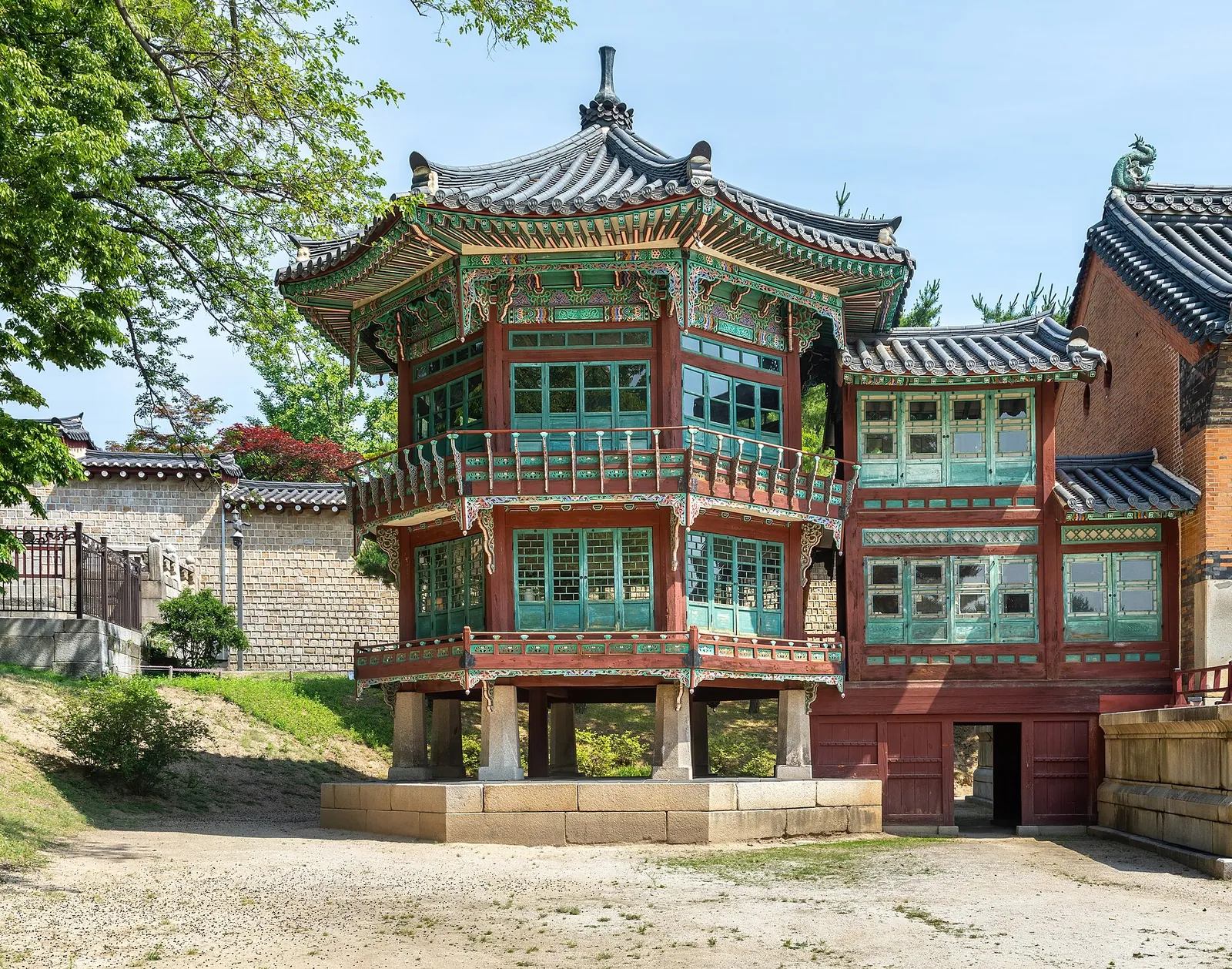
Jibokjae Hall, one of the halls of Gyeongbokgung in Seoul.
Photograph: Basile Morin — opens in a new tab · CC BY-SA 4.0 — opens in a new tab
Changes: Resized and converted to WebP; displayed with responsive crops. · Original photograph and licence details ↗ — opens in a new tab