East Java
Mount Bromo travel guide: tickets, sunrise and the road to Ijen
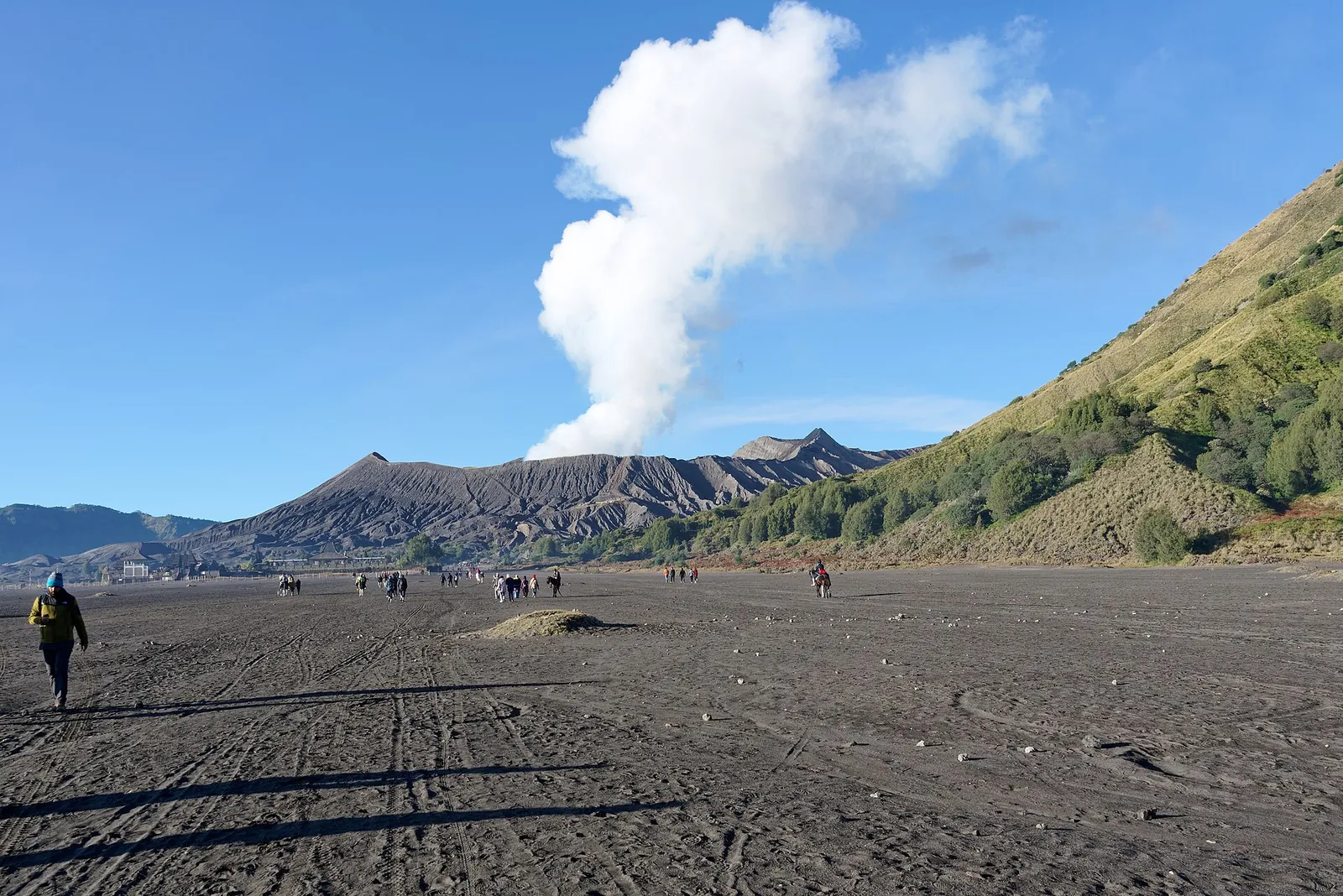
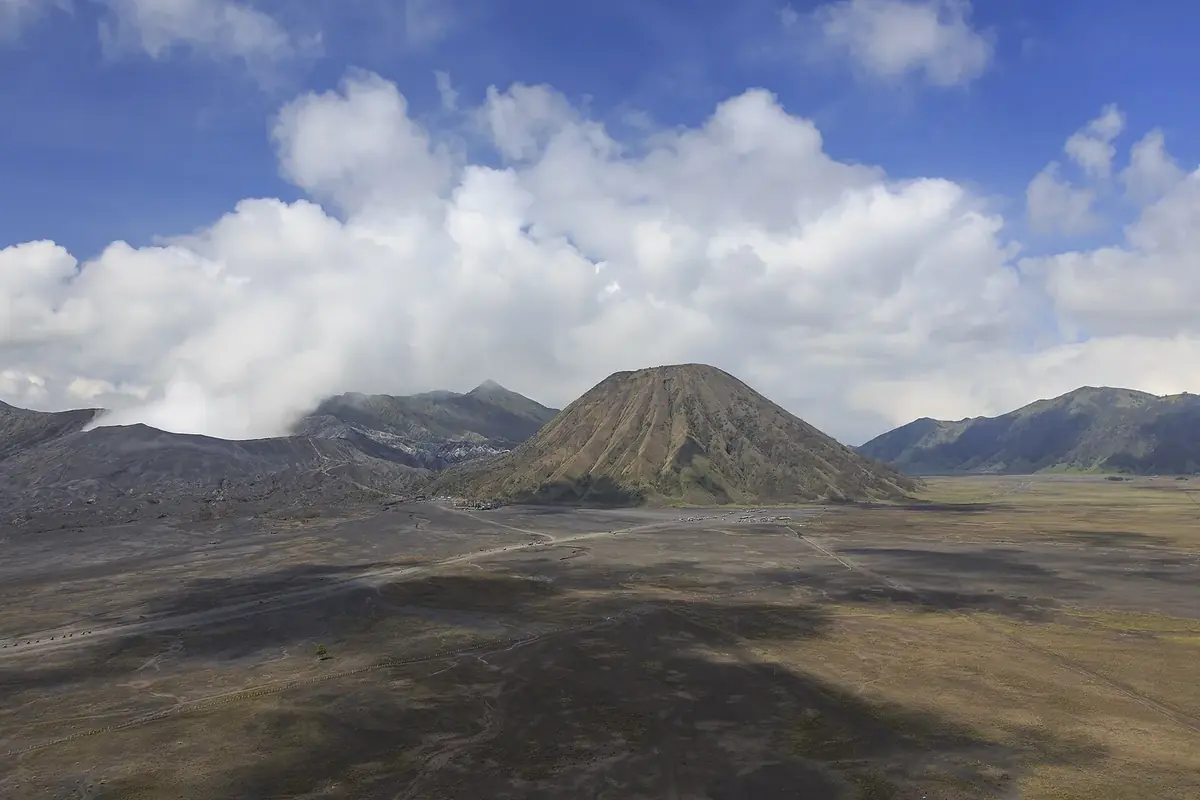
Mount Bromo is a smoking grey cone inside the Tengger caldera in East Java, standing in a flat sea of sand beside the ridged cone of Batok, with Semeru steaming on the horizon. Almost everyone comes for the same two things: sunrise from a viewpoint on the rim, then a walk or jeep ride across the sand. The Tengger people who farm these slopes treat the mountain as sacred. The trip is easy to book badly. Tickets are sold online with a daily quota, the park closed four times in 2026, and the volcano sits at an alert level that keeps visitors off the crater rim. This guide sorts out where to sleep, how to book, what to check the day before and how to continue to Ijen, the sulphur crater on the other side of East Java.
In this guide
Find the location ↗ — opens in a new tabThe short answer
Book one night at Cemoro Lawang on the caldera rim for Bromo, or an overnight jeep tour from Malang if you would rather not change hotels. If you continue to Ijen, add two nights around Banyuwangi, because the Ijen gate opens at 02:00 and the road from Bromo is a day of its own. Buy the park ticket online in advance, check the park's closure notices and the volcano alert level the day before, and do not plan to climb to the crater rim while the agency advises visitors to stay 1 km away.
- Suggested time
- 1 night at Bromo; 3 nights with Ijen
- Where to stay
- Cemoro Lawang on the caldera rim; Banyuwangi for Ijen; Malang for a midnight jeep tour
- Season and timing
- The Ministry of Tourism names July to October as the clearest months at Bromo, and April to October as the dry season for Ijen. Dawn at the rim can fall to about 5°C.
Where to sleep: Cemoro Lawang, Wonokitri, Ngadas or Malang
Bromo lies inside Bromo Tengger Semeru National Park (TNBTS), and the entrance you use decides where you sleep. ANTARA lists the four entrances that tourists use for the Bromo area: Cemoro Lawang in Probolinggo Regency, Wonokitri in Pasuruan, Jemplang in Malang Regency and Senduro in Lumajang.
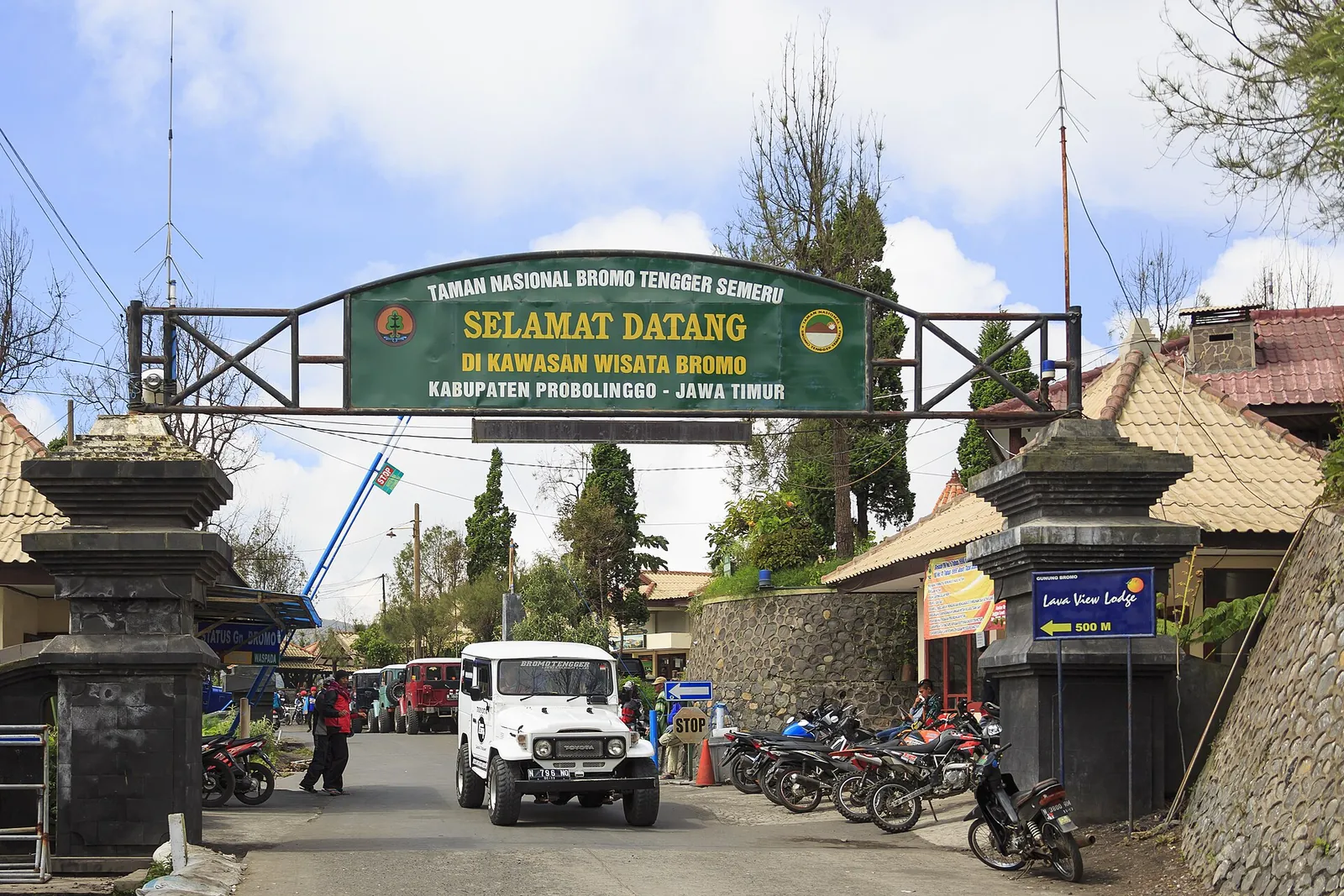
Cemoro Lawang is the base for one night. The Ministry of Tourism calls it the most popular entrance: a village high on the caldera rim, reached through Probolinggo, with direct access to the sea of sand, many inns and jeeps for hire. It gives the shortest pre-dawn journey to the sunrise viewpoints, and you can walk down to the sand after breakfast without a vehicle. The glass Skybridge at Seruni Point is in the same village (see the sunrise section).
Wonokitri and Tosari, on the western side, are described by the ministry as quieter than Cemoro Lawang, with jeeps for hire there as well. For a later start, the ministry suggests sleeping at a hotel in Prigen or Tretes on the way from Surabaya instead of driving through the night (see Getting there).
Ngadas and Malang are the southern alternative. Ngadas is a Tengger village in Malang Regency about 6.5 km from Bromo and about 30 km from central Malang; its village head told the ministry that it has around 50 homestays with water heaters. The ministry warns that the road may need a good off-road vehicle and an experienced driver. Malang itself is about 2.5 hours from Mount Penanjakan, according to the ministry, so a Malang base means a night start (see the Malang section).
For a first visit, book one night at Cemoro Lawang and keep a second in reserve if you cannot spare a morning for cloud or a closure. Base yourself in Malang only if Bromo is one stop among several city days and you would rather not change hotels. If you carry on to Ijen, sleep around Banyuwangi (see the Ijen section).
Mount Bromo entrance fee, tickets and how to book
Bromo entry is sold online only. TNBTS has applied a daily quota of 2,752 visitors since 1 December 2019 and does not sell tickets at the gate. Its own guide to booking lists the steps: choose your dates and entrance, fill in the group leader's and members' details and your vehicle, then pay by virtual account within two hours or the quota place lapses. When the status shows approved you receive a barcode, which you scan at the entrance. The same guide says that after payment a ticket cannot be rescheduled or refunded.
The park has made exceptions when it closed the area itself: when it shut Bromo after a fire in August 2026, the Forestry Ministry said that holders of online tickets for the closure period could ask for a refund or a new date through the park's official channels.
Start from the park's own website, bromotenggersemeru.org, and use its Booking Online link; check there before you go that your date is on sale. Virtual-account payment is an Indonesian bank-transfer method; if it does not suit you, ask your hotel or tour operator to book, and check that the names on the booking match your passports.
When we checked on 12 October 2026, the park's fee notice (in force since 30 October 2024) listed Rp255,000 per foreign visitor per day, the same on weekdays and holidays and including Rp5,000 of visitor insurance. Indonesian citizens pay Rp54,000 on weekdays and Rp79,000 on holidays. Vehicles are charged per day on top: Rp10,000 for a car, Rp5,000 for a motorbike, Rp2,000 for a bicycle and Rp1,500 for a horse. Anyone found without a ticket is fined five times the normal fare. The ministry's Indonesian page repeats the Rp255,000 foreign fee; ask a tour whether its price includes the ticket.
The Skybridge at Seruni Point is a separate attraction with its own ticket on the Ministry of Forestry's AyoKeTamanNasional platform, where we found Rp200,000 for foreign visitors on 12 October 2026. The platform does not say whether the park ticket is also needed, so ask when you book.
Closures and the volcano alert level
Bromo closes at short notice, and 2026 shows how often. The park shut the Bromo area from 06:00 on 6 April to 10:00 on 12 April for ecosystem recovery after the Lebaran holidays, and from 30 May to 2 June for the Yadnya Kasada ceremony, reopening at 01:00 on 3 June. After forest and land fires in the caldera it closed all entrances from 8 August and reopened on 20 August. After a second fire that began on 10 September 2026 and first closed the Jemplang entrance, the Forestry Ministry closed Bromo at every entrance from 12 September until further notice. ANTARA reported that the park reopened at 00:01 on 19 September. Katadata put the August burn at 1,120 hectares.
The dry season is also the fire season. The Ministry of Tourism names July to October as the clearest months for Bromo, and ANTARA reported in September that the dry season had left the grass dry enough to spread the fire; the head of the park office asked visitors not to light fires or throw away cigarette ends. In 2025 the park also closed all of the national park from 28 March to 1 April for Nyepi and Idul Fitri. When we checked on 12 October 2026, the park's news page had not been updated since 2025, so check your date on the park's booking site, through the Booking Online link on bromotenggersemeru.org, before you go, and ask your hotel the day before.
The park also posted a note about Wulan Kapitu, the seventh month of the Tengger calendar, which the community treats as sacred, with elders fasting through it. The note carries the title 'Penutupan Kawasan Bromo di Wulan Kapitu' (closure of the Bromo area during Wulan Kapitu) but gives no dates, so we give none; check the news page before booking a date in that month.
Bromo is an active volcano. When we checked on 12 October 2026, the MAGMA Indonesia list put Bromo at Level II (Waspada). The daily report for 11 October (period 00:00–24:00 WIB), issued by the volcanology agency PVMBG, tells residents, visitors and hikers not to enter within 1 km of the active crater and warns that phreatic eruptions can happen suddenly, without clear warning signs. The crater rim and its stairway are inside that radius, so treat the climb as off limits whatever a guide offers; we found no notice saying whether the stairway is physically closed, so ask the rangers at the gate. The viewpoints and the sea of sand are outside it. Check MAGMA again the day before you go.
Semeru, the high peak that steams behind Bromo at sunrise, is a separate case. MAGMA listed it at Level III (Siaga) on the same day, with no activity advised within 5 km of its crater or along the Besuk Kobokan valley to the south-east up to 13 km from the summit. Climbing Semeru is a different trip, with its own permits, and is not covered here.
Sunrise, the sea of sand and the Tengger people
The classic view is from Penanjakan (2,770 m) on the rim: Bromo smoking in the foreground, Batok beside it and Semeru behind. The ministry names five sunrise sites, Penanjakan 1, Penanjakan 2, Bukit Kedaluh, Bukit Mentigen and Bukit Cinta; the first two have toilets, prayer rooms and food stalls. It gives sunrise as about 05:30 WIB (UTC+7) and says the walk from the jeep park to the viewpoint takes a little over an hour, depending on your fitness. Each site has its own route, and the ministry advises a local guide so you do not get lost in the dark. TNBTS gives narrow viewpoint roads and vehicles cutting across the savannah to avoid queues as reasons for the quota, so expect slow traffic at the viewpoints even with a ticket.
Jeeps are the usual way to reach the viewpoints and to cross the caldera afterwards, stopping at places such as Bukit Cinta, Widodaren, the crater, Pasir Berbisik and the savannah. The ministry's Indonesian page says jeeps typically cost Rp750,000 to Rp1,500,000; it does not say per jeep or per route, so agree the price, the stops and the pick-up time before you pay. Dress for about 5°C at dawn, which the ministry gives as the low: a thick jacket, gloves and a hat, plus a mask and glasses for the dust on the sand.
The Bromo Skybridge at Seruni Point, Cemoro Lawang, is a glass-floored bridge 120 m long over a drop of about 103 m. The AyoKeTamanNasional platform lists opening hours of 08:00–17:30 on weekdays and 07:00–17:00 on weekends, so it opens after the sunrise, and lets visitors wear socks on the glass. The platform names thelawugroup.com as its website.
Below the rim lies the Tengger sea of sand, a nature reserve of 5,250 hectares designated by a Dutch colonial decree of 21 February 1919, according to the park's profile. Marked tracks cross it from Cemoro Lawang to the foot of Bromo. You can walk, rent a jeep or hire a pony, whose owner usually holds the lead rope. The ministry places Pasir Berbisik (Whispering Sand) east of the crater and says the wind is heard most clearly in the dry season. The savannah on the southern side is the grassland that burned in August.
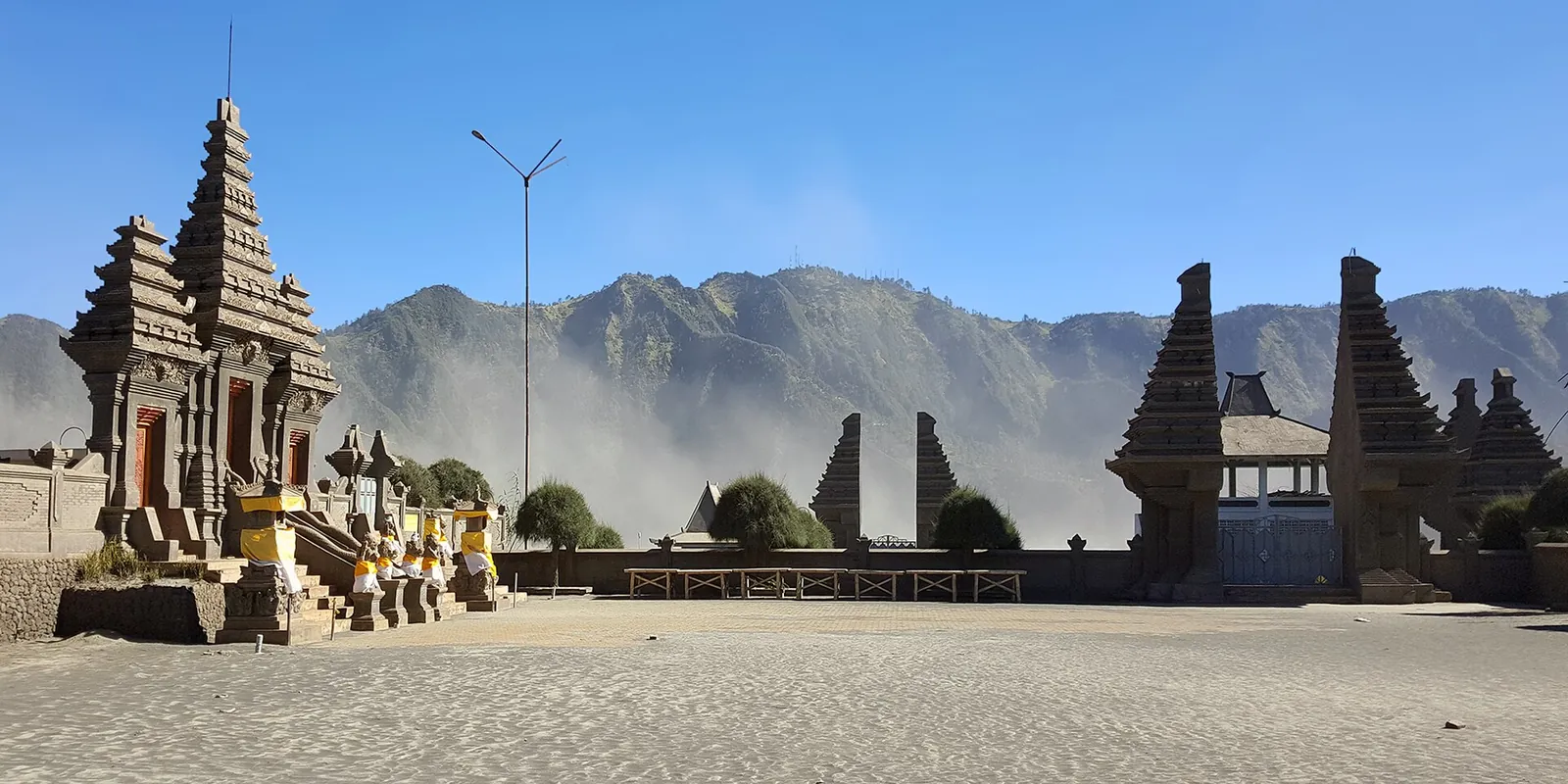
Pura Luhur Poten, at the foot of Bromo, is the Tengger community's temple. The ministry notes that it is built from black volcanic stone, where Balinese temples use red brick. On the 14th day of the month of Kasada the Tengger hold Yadnya Kasada, when crowds climb to the crater and throw in offerings of vegetables, fruit, livestock, flowers and money. In 2026 the park closed Bromo to tourists from 30 May to 2 June for it, at the request of the Tengger priests' council. It is a religious rite, not a show: keep your distance and follow the instructions of officials and community members.
Getting there: Surabaya, Malang or Probolinggo
The ministry points international visitors to Juanda Airport (SUB) in Surabaya, which it lists with direct flights from Singapore, Kuala Lumpur, Hong Kong, Jakarta and Bali, and puts Bromo about four hours' drive away. Its route runs Surabaya, Pasuruan, Wonokitri, and takes 2–3 hours to the rim, which is why it suggests leaving between 23:00 and 24:00 for sunrise. Juanda's website lists DAMRI buses, airport shuttles and taxis under public transport; it gives no fares there.
Malang's airport, Abdul Rachman Saleh (MLG), handles domestic flights. The ministry lists flights to Malang from Jakarta, Surabaya, Balikpapan and Bali, and overland connections by bus, train or car from Jakarta, Bandung, Yogyakarta and Surabaya. Check current routes before you book, because airlines add and drop them.
By public transport to Cemoro Lawang, the ministry's advice is to go to Probolinggo first. From Surabaya or Malang you can take the train to Probolinggo Station, or a bus from Purabaya (Bungurasih) terminal in Surabaya or Arjosari terminal in Malang to Probolinggo's bus terminal. From there the last leg to Cemoro Lawang is by rented vehicle or motorbike taxi, which you arrange locally.
On the rails, ANTARA reported in February 2025 that KAI's subsidised long-distance trains include Probowangi (Surabaya Gubeng–Ketapang), Tawang Alun (Malang Kota Lama–Ketapang, through Bangil) and Sri Tanjung (Surabaya Gubeng–Lempuyangan and Surabaya Gubeng–Ketapang, so Yogyakarta is on the line). Check in the Access by KAI app which service stops at Probolinggo on your date and buy the ticket there. These trains also continue to Ketapang station in Banyuwangi, which matters for the Ijen leg.
A private car and driver is the simplest option from Surabaya or Malang, and the only one that suits a midnight start.
Malang as a base, and what to eat there
Malang is a highland city with its own airport and rail links, a cooler climate than the coast and a good kitchen, so it works if you want city evenings. The ministry puts Bromo and Penanjakan about 2.5 hours from Malang. By our arithmetic, with that drive and a walk of just over an hour before a sunrise at about 05:30, a Malang tour has to pick you up around midnight or soon after; ask the operator for the exact time and whether the park ticket is in the price. Malang's entrance to the Bromo area is Jemplang, which was the first to close in the September fire.
Beyond Bromo, the ministry's Malang page points to Candi Badut, a small Shivaite temple dating to the 8th century, the Singosari temples around the city and the Kebun Wonasari tea estate. Allow an afternoon for them on the day after a midnight tour, when you will be tired.
Malang's food is the reason many people add a night: the ministry's guide to Malang specialities lists a bowl of bakso at Rp10,000 to Rp40,000, depending on the contents and place, and the other three Malang dishes below at Rp8,000 to Rp23,000. Prices are guide figures from 12 October 2026, not menus.
What to eat and where to look
Bakso Malang
Malang's signature meatball soup. The ministry describes it as served with smooth and sinewy meatballs, tofu, siomay, fried and boiled wontons and noodles in a savoury beef broth.
- Where to look
- Pushcarts, small shops and food centres across Malang, which is the usual base for midnight Bromo tours.
- Fit it into your day
- Dinner in Malang before a midnight pick-up. The ministry's guide gives Rp10,000–Rp40,000 a bowl.
Beef-based; the fried pieces and siomay may contain chicken or fish, so ask if you avoid either.
Orem-orem
Fried tempeh in a savoury, not very thick coconut-milk sauce, usually with rice cake (lontong) or ketupat, and sometimes with shredded chicken or salted egg.
- Where to look
- Traditional warungs in Malang; the ministry says it is eaten at breakfast and lunch.
- Fit it into your day
- A late breakfast on the morning after you get back from the mountain. The ministry gives Rp8,000–Rp23,000 a portion.
Coconut milk and tempeh; ask whether chicken is included.
Sego resek
A Malang fried rice cooked over a wood fire with noodles, vegetables, shredded chicken, egg or offal. The ministry says the name means 'rice' and 'rubbish', for the mixed contents, not for poor ingredients.
- Where to look
- Night stalls in Malang, where the ministry says it is a legendary late-night dish.
- Fit it into your day
- A light dinner before an early night. The ministry gives Rp10,000–Rp15,000 a portion.
May contain offal or chicken; ask if you avoid either.
Angsle
A warm Malang drink-dessert of coconut milk cooked with pandan leaf and vanilla, with glutinous rice, mung beans, tapioca pearls, bread and palm fruit.
- Where to look
- Dessert stalls and warungs in Malang.
- Fit it into your day
- A warming late-evening drink on a cold night. The ministry gives Rp9,000–Rp15,000 a portion.
Sweet, with coconut milk and gluten from the bread.
Sego tempong
Banyuwangi's best-known plate: warm rice with fried fish, tofu, tempeh and boiled vegetables such as spinach and long beans, served with a sambal so hot that the name refers to it 'slapping' you.
- Where to look
- Local eateries in Banyuwangi, the base for Ijen.
- Fit it into your day
- A late lunch after the Ijen night hike.
Very hot chilli; ask for the sambal on the side.
The next stop: Ijen and the blue fire
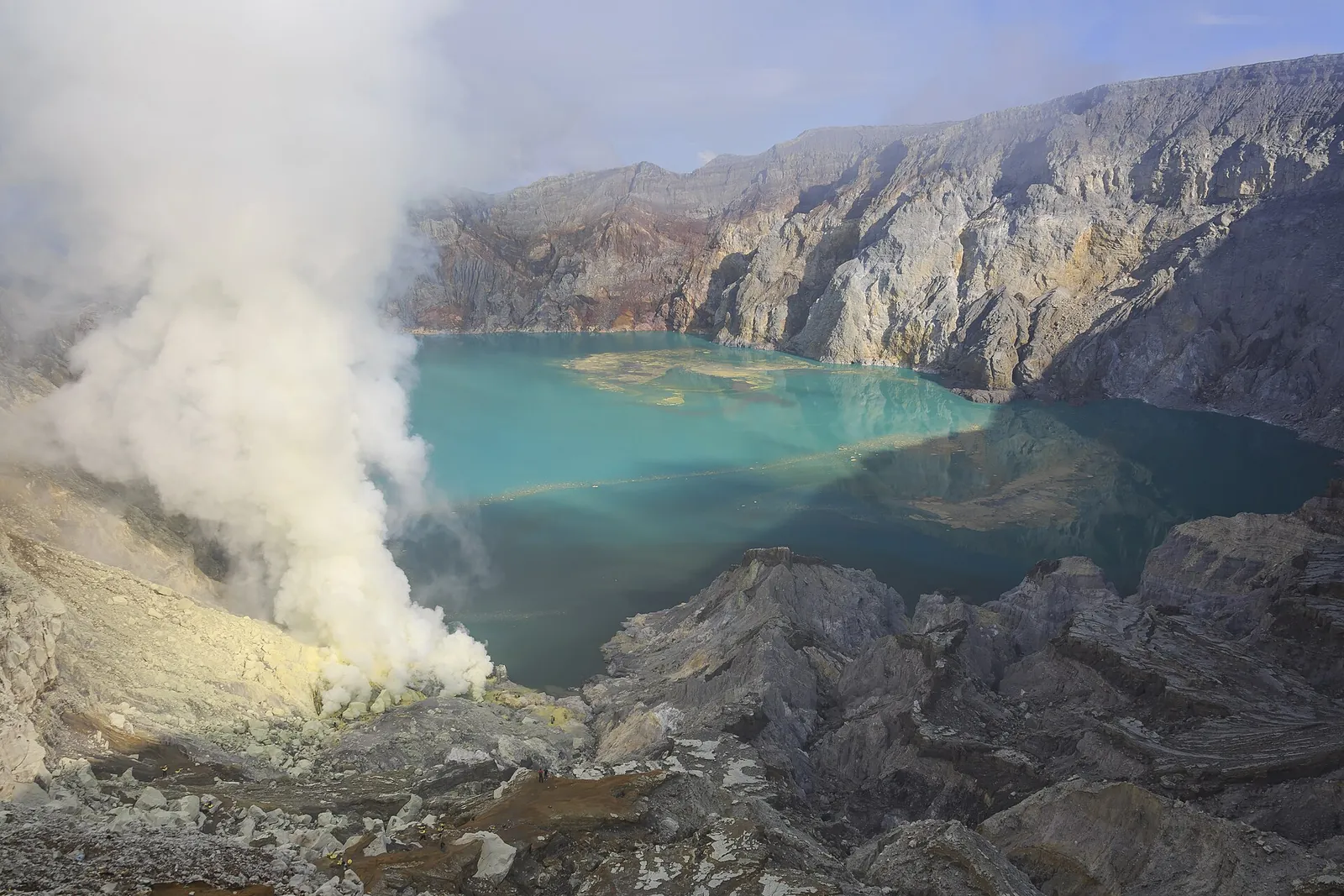
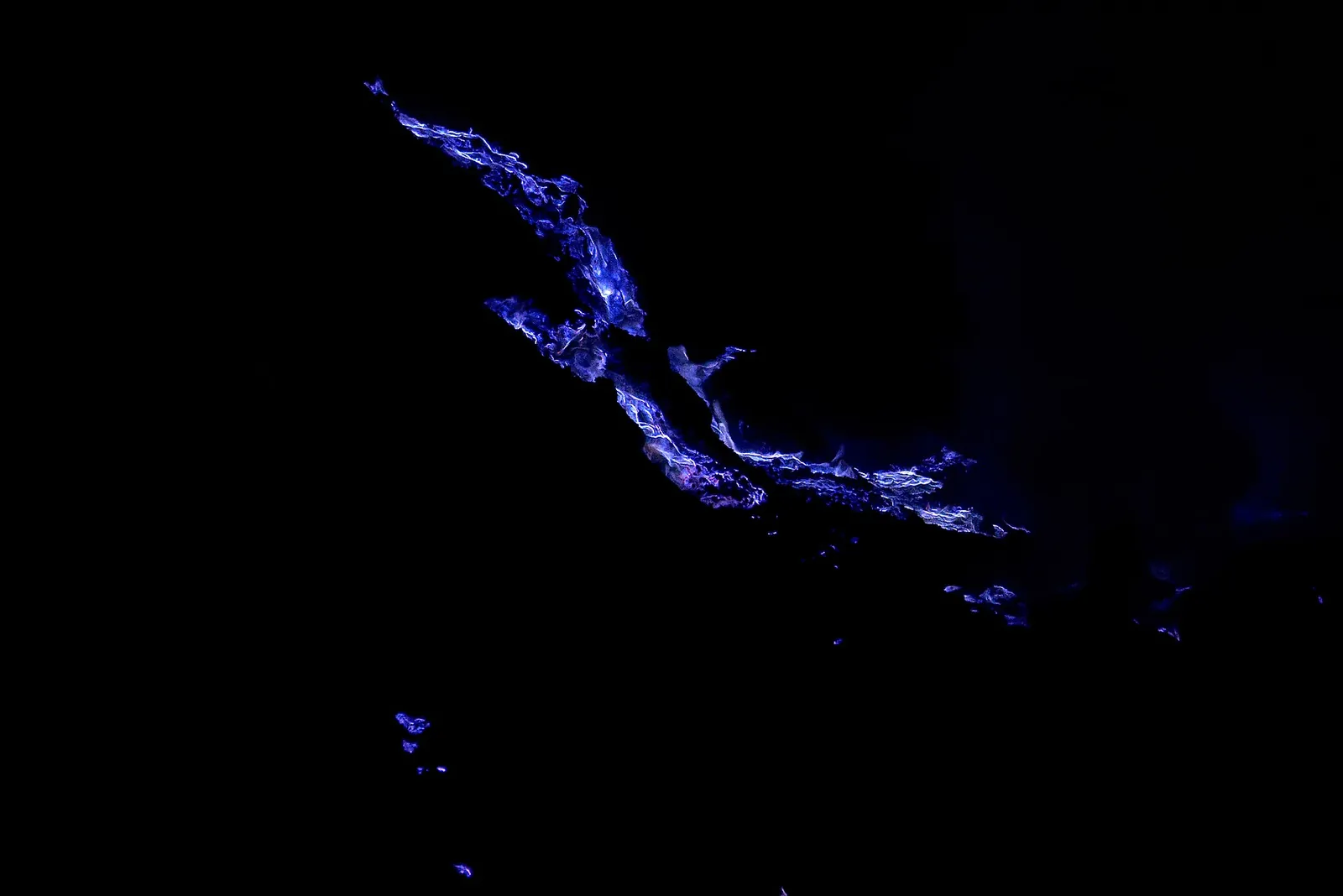
Ijen is a separate park with its own rules. It is a nature tourism park (Taman Wisata Alam) managed by the East Java conservation agency BBKSDA, not by TNBTS, so its tickets, closures and alert level are separate from Bromo's. The volcano is 2,386 m high, according to MAGMA, and lies on the border of Banyuwangi and Bondowoso. The blue fire is sulphur gas that ignites as it escapes the vents; UNESCO's Ijen Geopark profile gives the temperature as above 360°C and says the flames can only be seen at night.
Tickets and rules. Tickets are sold on the Ministry of Forestry's AyoKeTamanNasional platform. When we checked on 12 October 2026, its Paltuding ticket counter listed Rp150,000 per foreign visitor per day, weekdays and holidays alike (Indonesian citizens pay Rp20,000 on weekdays and Rp30,000 on holidays), and vehicle tickets of Rp10,000 for a car and Rp5,000 for a motorbike. The page also states four conditions that change a booking. First, paid tickets cannot be cancelled, rescheduled or refunded for any reason. Second, you must carry a doctor's health certificate dated no more than three days before the visit, and people with heart disease, asthma, respiratory infections or breathing problems are advised not to climb. Third, the booking must match your passport. Fourth, you must wear non-slip shoes, a warm jacket and a mask. It lists the climbing gate as open 02:00–12:00 WIB; plan on that and confirm the time with your guide. The platform describes its Ijen booking as a trial for visits from 18 May 2026 and says the previous booking app can still be used until the platform becomes permanent; ask your guide which applies on your date. ANTARA reported that payment at the Ijen counter became cashless, by QRIS, from 31 January 2025.
Closures. BBKSDA closed the park on 4 September 2026 for the fires and, JawaPos reported, reopened it on 28 September by circular. The platform also lists monthly cleaning closures ('Ijen Rijik') on the first Friday of the month; the next are 6 November and 4 December 2026. It does not say whether the climb on the night before is affected, so ask your guide. It adds that closures can be made at any time for weather, volcanic activity or field conditions.
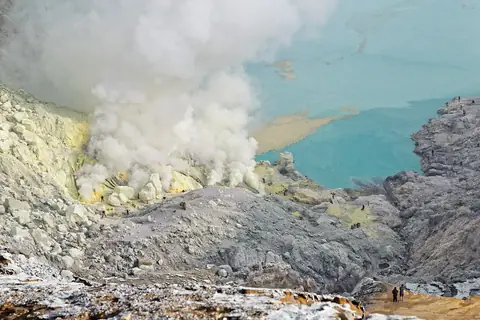
Gas and the crater floor. MAGMA listed Ijen at Level I (Normal) on 12 October 2026, but its daily report for 11 October advises visitors not to go down to or approach the floor of the crater, not to camp or stay overnight within 500 m of the crater, and to beware of toxic gas around the crater, carbon dioxide along the Banyupait–Banyuputih river and collapse of the crater walls. The flames burn at vents inside the crater near the lake, where the miners work, and to see them up close you normally have to go down into it, which is what the agency advises against. Decide before you start, and ask your guide exactly where they will take you. The ministry strongly recommends a guide because of toxic gas, and recommends a mask, a headlamp, warm clothing and water. It says the air is about 10°C and sometimes as low as 2°C, and warns that sulphur tarnishes silver jewellery.
The climb. The ministry gives the route from the Paltuding trailhead to the rim as 3 km on its destination page and as about 3.8–4 km, taking two to three hours, in a newer article; plan on the longer figure if you are unfit. It names 02:00–04:00, before first light, as the best time for the flames, so go through the gate when it opens. The miners carry sulphur out by hand: give way to them on the narrow paths and ask before photographing them.
From Bromo to Ijen in four days, with Banyuwangi as the base
Plan the transfer as a day of its own. BBKSDA's route notes, reproduced by Detik, give these legs to the Paltuding trailhead: Banyuwangi to Licin 15 km (30 minutes) and Licin to Paltuding 18 km (60 minutes); Situbondo to Wonosari 28 km (25 minutes), Wonosari to Sempol 55 km (90 minutes) and Sempol to Paltuding 13 km (30 minutes); and Bondowoso to Sempol 67 km (120 minutes). The ministry says Banyuwangi is about 239 km east of Surabaya by road or rail, and warns that the last road up to Ijen can be steep and badly deteriorated, so hire a car and driver or book a tour with pick-up.
Banyuwangi is the practical base: it has an airport (Blimbingsari) with flights from Surabaya and Bali, trains from Surabaya, and the ferry from Bali. The Osing village of Kemiren, on the road up to Ijen and about 40 minutes' drive from the airport, has homestays that the ministry advises you to arrange and confirm in advance, and is known for its traditionally processed coffee.
To Bali, the ferry runs between Ketapang (Banyuwangi) and Gilimanuk, where ASDP Indonesia Ferry asks passengers to buy tickets through its Ferizy platform and arrive for the departure on the ticket. Ferizy's terms say you check in at the port within the check-in time printed on the e-ticket, the ticket lapses if you miss it, and you show the identity document used for the booking. The crossing also stops for Nyepi, Bali's day of silence: for Nyepi 2026, ASDP stopped it at Ketapang from 17:00 WIB on the day before until 06:00 on the day after, so do not plan to cross on the eve of Nyepi (Monday 8 March 2027, according to the government's holiday decree) or on the day itself. Ferries can be delayed or cancelled by weather and holiday queues, so keep a spare buffer if you have a flight in Bali; we give no timetable. This plan is an editorial outline, not a timetable. Confirm every pick-up time with your hotel, driver or tour.
- Day 1, to Cemoro Lawang: arrive via Probolinggo or by car from Surabaya or Malang, check in, rest. Buy the Bromo ticket for day 2 in advance.
- Day 2, Bromo sunrise: jeep to the viewpoint before dawn, sunrise at about 05:30, sea of sand and Pura Luhur Poten if you have energy, breakfast, then transfer towards Banyuwangi (night 2 around Banyuwangi or Licin). Go to bed early, because the Ijen gate opens at 02:00.
- Day 3, Ijen: from Banyuwangi town allow about 90 minutes to Paltuding by BBKSDA's figures, so leave around 00:30 for the 02:00 gate; climb for the flames, return in the morning, sleep, then spend the afternoon in Kemiren or Banyuwangi (night 3 in the same area).
- Day 4, onward: depart from Blimbingsari airport or take the Ketapang–Gilimanuk ferry or a train from Ketapang.
Practical questions
How many nights do I need at Bromo?
One night at Cemoro Lawang is enough for the sunrise, the sea of sand and Pura Luhur Poten. Keep a spare morning if you can, because the park closed several times in 2026 and cloud can hide the view. With Ijen, book three nights: one at Cemoro Lawang and two around Banyuwangi.
What is the Mount Bromo entrance fee, and do I have to buy the ticket in advance?
Yes. Tickets are online only, with a quota of 2,752 visitors a day and none sold at the gate. When we checked on 12 October 2026, the park's notice listed Rp255,000 per foreign visitor per day, plus vehicle fees. Paid tickets are normally neither refundable nor changeable.
Can I climb the stairs to the Bromo crater?
The volcanology agency's report for 11 October 2026 (Level II, Waspada) advises against entering within 1 km of the active crater, and the rim is inside that radius. We found no notice about the stairway itself, so ask the rangers at the gate, and check the alert level the day before.
How do I find out whether Bromo is open on my dates?
The park's website, bromotenggersemeru.org, posts closure notices, but its news page had not been updated since 2025 when we checked, so check your date on the park's booking site, through the site's Booking Online link, before you go, and ask your hotel. In 2026 the area closed in April, from 30 May to 2 June, in August and again in September.
Can I climb Ijen straight after the Bromo sunrise?
Not comfortably. The Ijen gate opens at 02:00 on the platform's schedule, and the transfer from Bromo to the Banyuwangi side is a long road journey, so sleep around Banyuwangi on the night of the transfer and climb Ijen the next night. Remember the doctor's certificate: Ijen asks for one dated within three days of the visit.
Is a sunrise tour from Malang better than sleeping at Cemoro Lawang?
Cemoro Lawang is shorter and calmer: you sleep near the rim and avoid a drive of about 2.5 hours in the dark. A Malang tour keeps you in a city hotel with good food but starts around midnight. Choose Malang if you do not want to change hotels.
Keep planning your trip
East Java volcanoes in 5 days
Five days and four nights from Surabaya: Bromo at sunrise, a rest day, Ijen at dawn, then the Ketapang ferry to Bali, with tickets, nights and transfers.
Read the guide
Indonesia in 2 weeks
A 14-day, 13-night route from Yogyakarta by train to Bromo and Ijen, then the Bali ferry, Ubud and the south coast, with what to book first.
Read the guide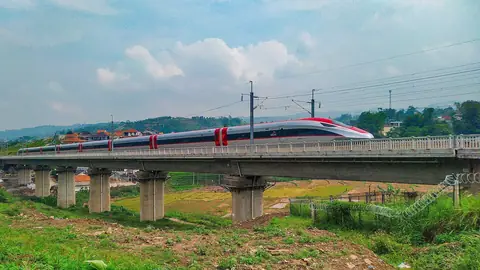
Getting around Indonesia
How to combine domestic flights, KAI trains and Whoosh on Java, car ferries and fast boats from Bali, ride-hailing, drivers and scooter licences.
Read the guide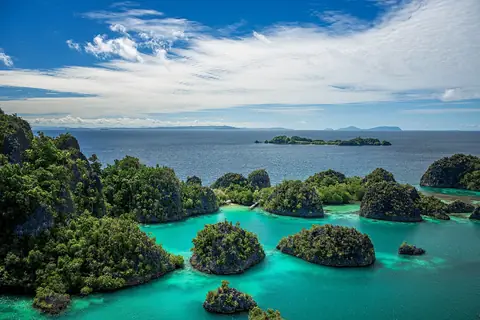
Best time to visit Indonesia
Which months suit Bali, Java, Komodo, Sumatra and Raja Ampat, how sea and fire change plans, and the 2027 Nyepi and Lebaran dates, and what Ramadan changes.
Read the guide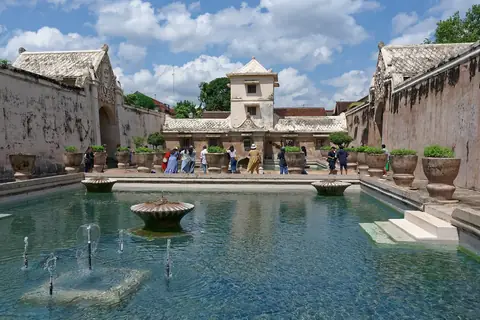
Yogyakarta
How many nights Yogyakarta needs, where to sleep, the palace and Taman Sari hours, Prambanan and the Ramayana ballet, Merapi alert levels and the airport train.
Read the guideSources and checks before you travel
(46)
- TNBTS: fee notice under PP 36/2024 (24 October 2024) ↗ — opens in a new tab
- TNBTS: online registration is required for Bromo (16 October 2024) ↗ — opens in a new tab
- TNBTS: news page ↗ — opens in a new tab
- TNBTS: closure for Nyepi and Idul Fitri 2025 ↗ — opens in a new tab
- TNBTS: closure of the Bromo area in Wulan Kapitu ↗ — opens in a new tab
- TNBTS: profile ↗ — opens in a new tab
- MAGMA Indonesia (PVMBG): volcano activity levels ↗ — opens in a new tab
- MAGMA Indonesia (PVMBG): Bromo activity report, 11 October 2026 ↗ — opens in a new tab
- MAGMA Indonesia (PVMBG): Ijen activity report, 11 October 2026 ↗ — opens in a new tab
- MAGMA Indonesia (PVMBG): Semeru activity report, 12 October 2026 ↗ — opens in a new tab
- Indonesia Travel (Ministry of Tourism): Mount Bromo ↗ — opens in a new tab
- Indonesia Travel: Mount Bromo travel idea ↗ — opens in a new tab
- Indonesia Travel: Bromo Huge Adventures ↗ — opens in a new tab
- Indonesia Travel: activity ideas in Bromo Tengger Semeru (Indonesian) ↗ — opens in a new tab
- Indonesia Travel: reasons travellers never skip Bromo Tengger Semeru ↗ — opens in a new tab
- Indonesia Travel: Yadnya Kasada ceremony ↗ — opens in a new tab
- Indonesia Travel: Ngadas village ↗ — opens in a new tab
- Indonesia Travel: Malang ↗ — opens in a new tab
- Indonesia Travel: 11 Malang specialities (Indonesian) ↗ — opens in a new tab
- Juanda International Airport: public transport ↗ — opens in a new tab
- ANTARA: KAI and the Ministry of Transport run PSO trains (12 February 2025) ↗ — opens in a new tab
- ANTARA: Daop 8 Surabaya on PSO trains ↗ — opens in a new tab
- ANTARA: TNBTS closes all Bromo tourism (12 September 2026) ↗ — opens in a new tab
- ANTARA: TNBTS reopens Bromo after the fires (18 September 2026) ↗ — opens in a new tab
- ANTARA: TNBTS says the April closure is for ecosystem recovery (6 April 2026) ↗ — opens in a new tab
- ANTARA: Bromo closure news tag ↗ — opens in a new tab
- Investortrust (citing ANTARA): Bromo tourism closed 30 May to 2 June 2026 ↗ — opens in a new tab
- Katadata: Bromo fire out, park to reopen on 20 August (18 August 2026) ↗ — opens in a new tab
- AyoKeTamanNasional (Ministry of Forestry): Kawah Ijen ↗ — opens in a new tab
- AyoKeTamanNasional (Ministry of Forestry): Bromo Skybridge ↗ — opens in a new tab
- Indonesia Travel: Ijen Crater ↗ — opens in a new tab
- Indonesia Travel: the magic of Kawah Ijen ↗ — opens in a new tab
- UNESCO: Ijen UNESCO Global Geopark ↗ — opens in a new tab
- Indonesia Travel: Banyuwangi ↗ — opens in a new tab
- Indonesia Travel: Kemiren village ↗ — opens in a new tab
- Indonesia Travel: 13 Banyuwangi foods ↗ — opens in a new tab
- Detik: Kawah Ijen ticket prices and routes (28 October 2024) ↗ — opens in a new tab
- JawaPos (citing ANTARA): TWA Kawah Ijen reopens (28 September 2026) ↗ — opens in a new tab
- ANTARA: Kawah Ijen starts cashless ticket payment (1 February 2025) ↗ — opens in a new tab
- ANTARA: ASDP strengthens Java-Bali crossing (27 May 2026) ↗ — opens in a new tab
- Ferizy (ASDP Indonesia Ferry): ferry tickets and port check-in terms ↗ — opens in a new tab
- Government Regulation PP 36/2024 on Ministry of Forestry non-tax tariffs ↗ — opens in a new tab
- Forestry Ministry press release SP.522/HKLN/09/2026: fire at Bromo (13 September 2026, Indonesian) ↗ — opens in a new tab
- Forestry Ministry press release SP.406/HKLN/08/2026: Bromo fire out (14 August 2026, Indonesian) ↗ — opens in a new tab
- ASDP Indonesia Ferry: Nyepi suspension of Java-Bali-Lombok crossings, 4 March 2026 ↗ — opens in a new tab
- State Secretariat: joint decree on 2027 public holidays ↗ — opens in a new tab
Reference sources for the version dated 24 October 2026. Confirm opening times, access, transport and conditions for your travel dates.
Photo credits
(6)
Crossing the Tengger sea of sand on foot towards Mount Bromo in the morning
Photograph: Jakub Hałun — opens in a new tab · CC BY-SA 4.0 — opens in a new tab
Changes: Resized and converted to WebP; displayed with responsive crops. · Original photograph and licence details ↗ — opens in a new tab
The Tengger caldera on a clear day, with Mount Batok rising from the sea of sand
Photograph: CEphoto, Uwe Aranas — opens in a new tab · CC BY-SA 3.0 — opens in a new tab
Changes: Resized and converted to WebP; displayed with responsive crops. · Original photograph and licence details ↗ — opens in a new tab
Pura Luhur Poten, the Tengger Hindu temple on the sea of sand below Mount Bromo
Photograph: Stegop — opens in a new tab · CC BY-SA 4.0 — opens in a new tab
Changes: Resized and converted to WebP; displayed with responsive crops. · Original photograph and licence details ↗ — opens in a new tab
The national park gate at Cemoro Lawang, the village on the caldera rim
Photograph: CEphoto, Uwe Aranas — opens in a new tab · CC BY-SA 3.0 — opens in a new tab
Changes: Resized and converted to WebP; displayed with responsive crops. · Original photograph and licence details ↗ — opens in a new tab
The acid lake on the floor of the Ijen crater, with steam from the sulphur vents on the left
Photograph: CEphoto, Uwe Aranas — opens in a new tab · CC BY-SA 3.0 — opens in a new tab
Changes: Resized and converted to WebP; displayed with responsive crops. · Original photograph and licence details ↗ — opens in a new tab
The blue fire of Ijen: burning sulphur gas, visible only before dawn
Photograph: Jakub Hałun — opens in a new tab · CC BY-SA 4.0 — opens in a new tab
Changes: Resized and converted to WebP; displayed with responsive crops. · Original photograph and licence details ↗ — opens in a new tab