Plan your trip · South Korea
Hanok stays in South Korea: ondol rooms, floor beds and the best towns
A hanok is a traditional Korean house: a wooden frame under a tiled or thatched roof, rooms arranged around a yard, and floors that were heated from below. Sleeping in one is the closest most visitors get to Korean domestic life before apartments, and the experience ranges widely. One night can mean a quilt on a heated floor in a clan house that has stood for centuries, another a renovated house with a bed, a private bathroom and a jacuzzi. Knowing which kind you are booking matters more than the photographs.
- Suggested time
- One or two nights within a longer trip
- Where to stay
- Jeonju Hanok Village, Hahoe Village (Andong), Bukchon (Seoul) or Hwangnam-dong (Gyeongju)
- Season and timing
- All year: ondol rooms have heated floors for the cold months. Book weekends, public holidays and festival dates early, when trains and small houses fill up.
The short answer
Book one or two hanok nights within a longer trip rather than a whole week: the experience is the evening and the morning, not the room itself. For the classic version, sleep in Hahoe Village in Andong, where clan houses take guests inside a UNESCO-listed village; for the easiest one, choose Jeonju Hanok Village, about 1 hour 40 minutes from Seoul by KTX, with many hanok stays and restaurants on the doorstep. Bukchon in Seoul and the streets around Hwangnidan in Gyeongju are good if you want a hanok night without changing city. Before you pay, check four things in the listing: floor bedding or a bed, a private or shared bathroom, whether breakfast is served, and the check-in time.
What you are actually booking: ondol, maru and the yard
Seoul's hanok portal, run by the city's hanok preservation office, quotes the Korean Association of Architectural History's definition of a hanok as a building on the traditional wooden framework with ondol (the traditional heating system), a wood-floored hall called maru, a kitchen and a yard. VisitKorea, the Korea Tourism Organization's site, points out that a typical hanok has a yard in front and that every door or window looks onto it, which is why a hanok night is as much about sitting by the yard as about the room.
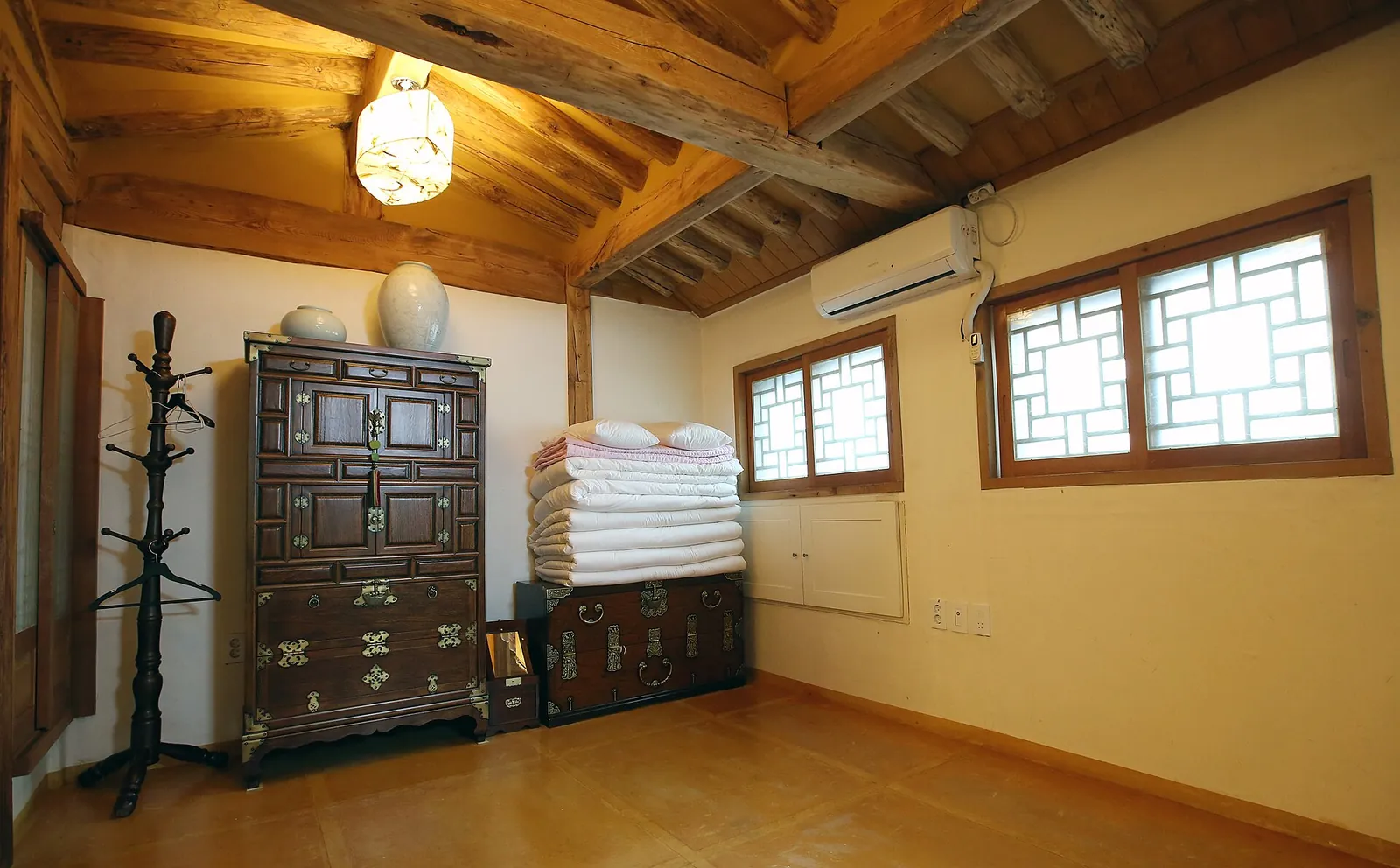
An ondol room is the room type you will see most often in listings. VisitKorea's Jeonju accommodation feature explains it plainly: the floor is heated and the room is designed for bedding laid on the floor, rather than a bed. VisitKorea's general hanok guide adds that many hanok use mats and blankets on the floor for sleeping instead of beds.
Not every hanok stay works that way. VisitKorea notes that hanok were built for a floor-sitting lifestyle but that many modern hanok stays now offer beds and other amenities, and the city portal describes a newer generation of houses that keep the timber frame and roof but have modern interiors. In practice, listings fall into three groups: historic houses such as Hahoe's clan homes; renovated village guesthouses with a few rooms around a shared yard; and whole houses rented out to one group, sometimes with a kitchen.
Floor bedding, bathrooms and breakfast: read the listing closely
The biggest variable is the bathroom. Seoul's hanok portal warns that a traditional hanok may lack modern toilets or showers in order to preserve its original state, and VisitKorea advises checking the facilities before you book. At the other end, VisitKorea's listing for Rakkojae in Hahoe Village says every room has a private bathroom, and Bulguksa Hanok Dongodang in Gyeongju lists three rooms, each with a bedroom, living area, bathroom and small patio. If you need an en-suite, search for it explicitly.
Breakfast is just as uneven. When we checked on 2026-10-03, VisitKorea's listing for Yangjindang in Hahoe said breakfast was not available, the listing for Bukchondaek in the same village said it was, and Dongodang offered it as a paid extra. Many houses do offer something else instead: VisitKorea mentions tea ceremonies and cooking classes at some hanok stays, and Yangjindang's listing describes folk games and programmes such as making home-brewed rice wine and rice cakes.
Timings are stricter than at a hotel. The houses VisitKorea lists in Jeonju, Hahoe and Gyeongju gave check-in at 15:00 and check-out at 11:00 when we checked. Tell the house when you will arrive, and do not plan to drop off luggage at dawn unless they confirm it.
- Bed or floor: if a listing says 'ondol room', expect bedding on a heated floor; look for a room described with a bed if you need one.
- Bathroom: private, shared, or across the yard; ask if the listing does not say.
- Breakfast: included, paid, or not available; in a village with few restaurants this decides where you eat.
- Heating and cooling: many listings name air conditioning; ask how the floor heating is controlled in winter.
- Booking channel: VisitKorea's own features show many small hanok stays taking bookings through Naver Booking and Airbnb rather than large hotel sites.
Make time for the local food
What to eat and where to look
Jeonju bibimbap
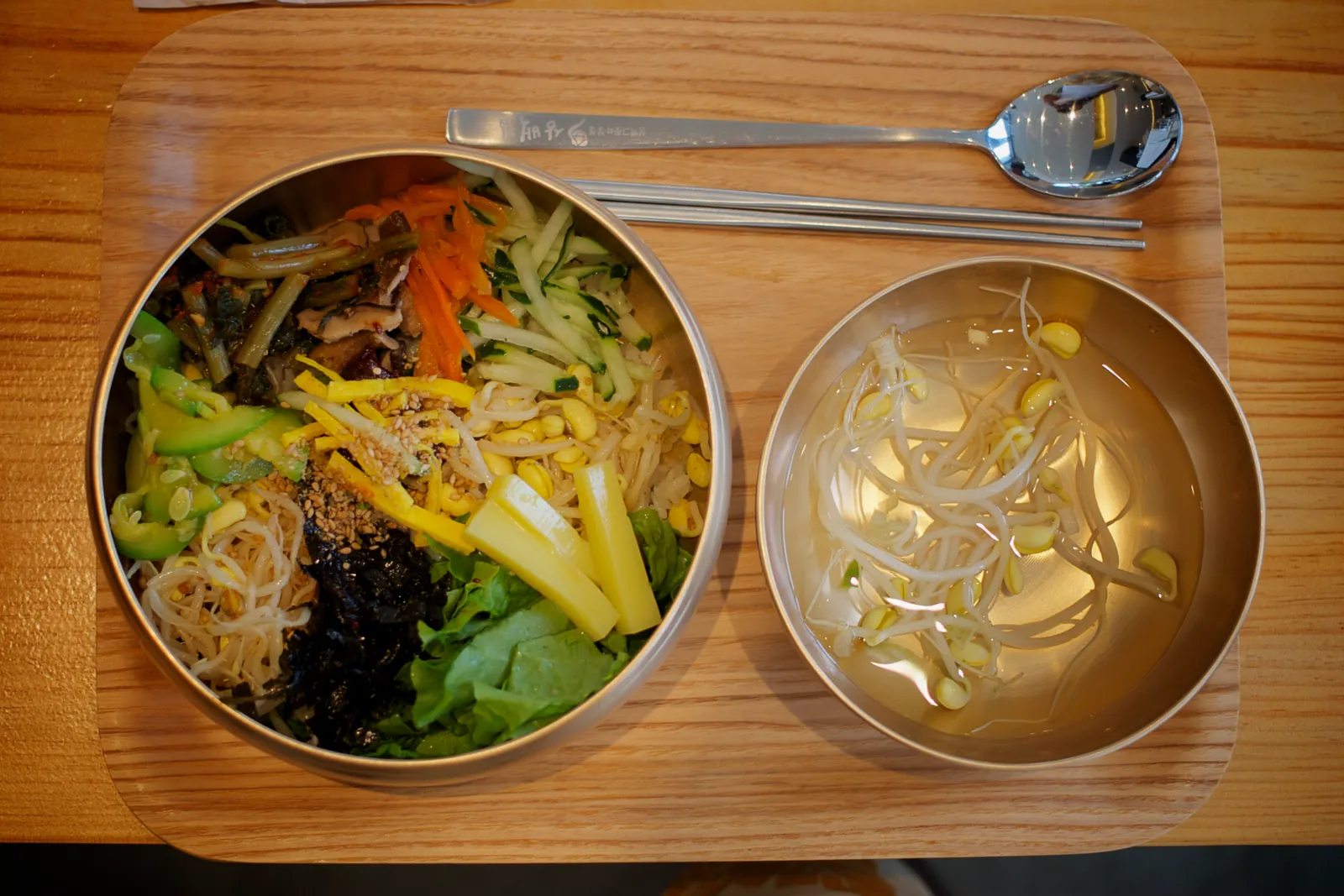
Warm rice topped with individually seasoned vegetables such as bean sprouts, bracken and spinach, beef and yellow mung bean jelly, arranged in a circle and mixed with red chilli paste. VisitKorea describes it as Jeonju's representative dish.
- Where to look
- Bibimbap restaurants in and around Jeonju Hanok Village, a short walk from most hanok stays.
- Fit it into your day
- Lunch on arrival in Jeonju, after leaving your bags at the house.
Contains beef; ask for a version without meat if you need one.
Jeonju bean sprout and rice soup (kongnamul gukbap)
A hot soup of soybean sprouts and rice that VisitKorea lists alongside bibimbap as one of Jeonju's local specialities. It is the natural answer to a hanok stay that does not serve breakfast.
- Where to look
- Soup restaurants near the hanok village and downtown Jeonju that open early.
- Fit it into your day
- Breakfast after your hanok night, before the day crowds arrive.
Ask what the broth is made with if you avoid fish, seafood or meat.
Heotjesabap (Andong 'ritual' bibimbap)
Rice with vegetables and savoury pancakes, served with a spread of side dishes. VisitKorea describes it as a flavourful Andong-style bibimbap with muted colours, served at restaurants styled on aristocratic table settings.
- Where to look
- Heotjesabap restaurants in Andong city, which you pass on the way to or from Hahoe.
- Fit it into your day
- Lunch in Andong city before you head out to Hahoe for the night.
Side dishes and the accompanying soup vary by restaurant; ask about fish and meat if you avoid them.
Gyeongju ssambap
Rice wrapped in fresh leaves with a spread of side dishes such as fish, meat and a stew made with homemade soybean paste. VisitKorea's listing places Gyeongju's ssambap street around the Daereungwon tombs.
- Where to look
- The ssambap street by Daereungwon, a short walk from the hanok stays around Hwangnidan Street.
- Fit it into your day
- Dinner after the evening walk to Cheomseongdae, close to your hanok bed.
Side dishes vary from table to table and often include fish or fermented seafood.
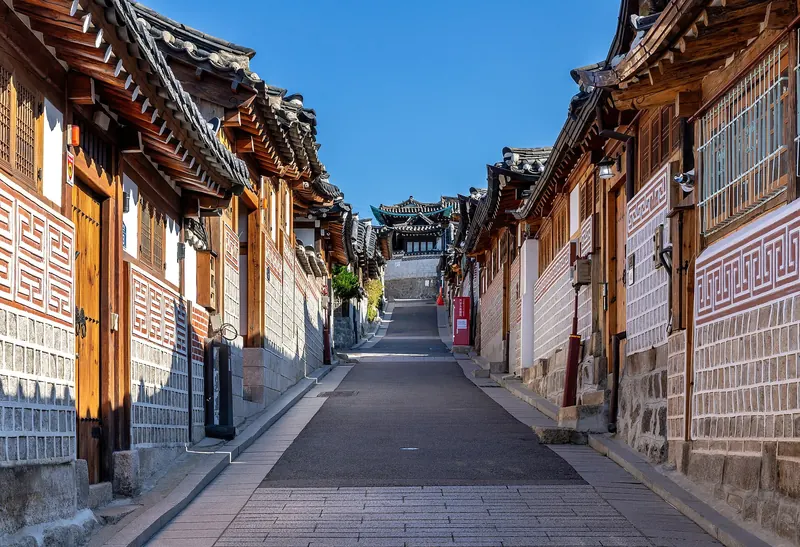
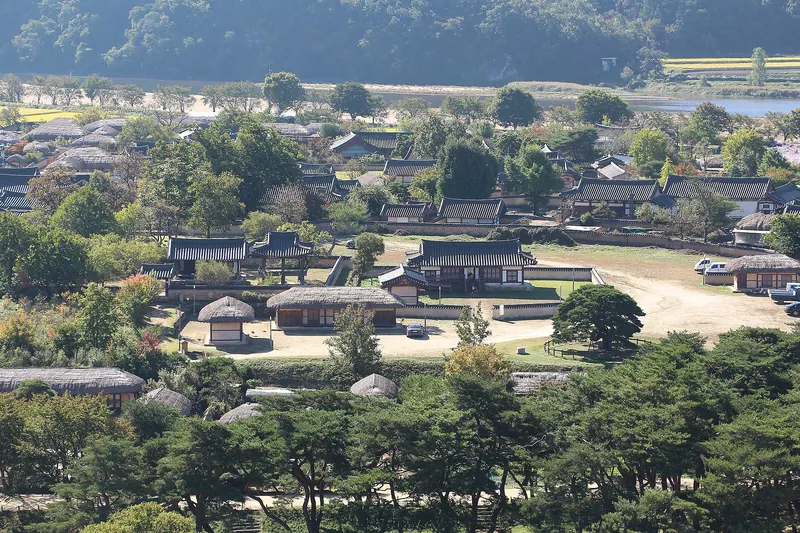
Hahoe Village, Andong: a night in a clan house
Hahoe is the most traditional option. VisitKorea describes a village wrapped by the Nakdong River where descendants of the Pungsan Ryu clan still make up about 70 percent of residents, designated a National Folklore Cultural Heritage in 1984, and it lists hanok stays among the village's facilities. Its day-visitor hours (when we checked on 2026-10-03, 09:00 to 18:00 from April to September and 09:00 to 17:00 from October to March) are the reason to stay: guests have the lanes in the evening and early morning.
The houses are historic, not themed. VisitKorea describes Yangjindang as the main ancestral home of the Pungsan Ryu clan, designated a national treasure, with guest rooms among chests and ceramics like a small folk museum. Bukchondaek, which VisitKorea calls the largest house in Hahoe, was first built by a Joseon official in the reign of King Jeongjo and has a 300-year-old pine in the yard. Rakkojae, by the ferry across the Nakdong, has four buildings with one or two guest rooms each, a private bathroom in every room and, according to its listing, TVs and a laundry room.
Since breakfast is not offered at every house, settle meals with the house when you book. Andong Station is about 1 hour 50 minutes from Seoul Station or Cheongnyangni by KTX-Eum, according to VisitKorea, and the same guide lists buses from Andong to the village, including the Hahoe shuttle bus. Our Andong guide covers the connections and the rest of the area.
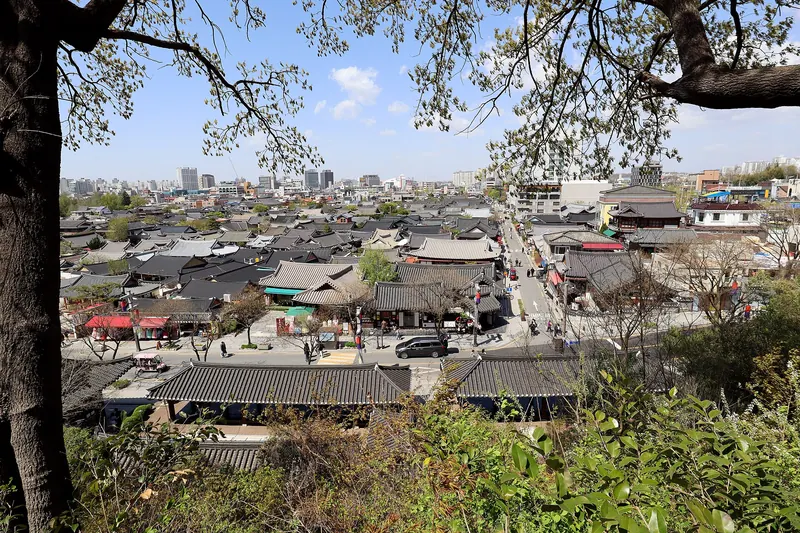
Jeonju Hanok Village: the easiest first hanok night
VisitKorea describes Jeonju Hanok Village as about 700 hanok buildings, the country's largest traditional hanok village and its only urban one, which grew from the early 1900s around Gyeonggijeon Shrine, Omokdae and the Confucian academy. That density is the advantage: VisitKorea's feature ranges from budget-friendly hanok stays to whole-house rentals, and you can still walk to dinner and have the morning streets before the day visitors arrive.
VisitKorea's Jeonju accommodation feature shows the range. Pungnamheon, near Gyeonggijeon, is a 1933 building renovated with both bedrooms and ondol rooms and a whole wing for groups of four to six; Sunshine Full has studio units that are all ondol rooms for two to six guests, plus houses with jacuzzis; Hanok Moryeon rents out whole buildings with up to five rooms for up to ten people. Those examples were listed with check-in at 15:00 and check-out at 11:00.
Jeonju is also the simplest to reach. Visit Jeonju, the city's tourism site, gives about 1 hour 40 minutes by KTX from Seoul and advises searching from Yongsan Station, which has more departures; it also warns that seats sell out at weekends, on holidays and during festivals. Our Jeonju guide has the sights and the food.
Seoul and Gyeongju: a hanok night without changing city
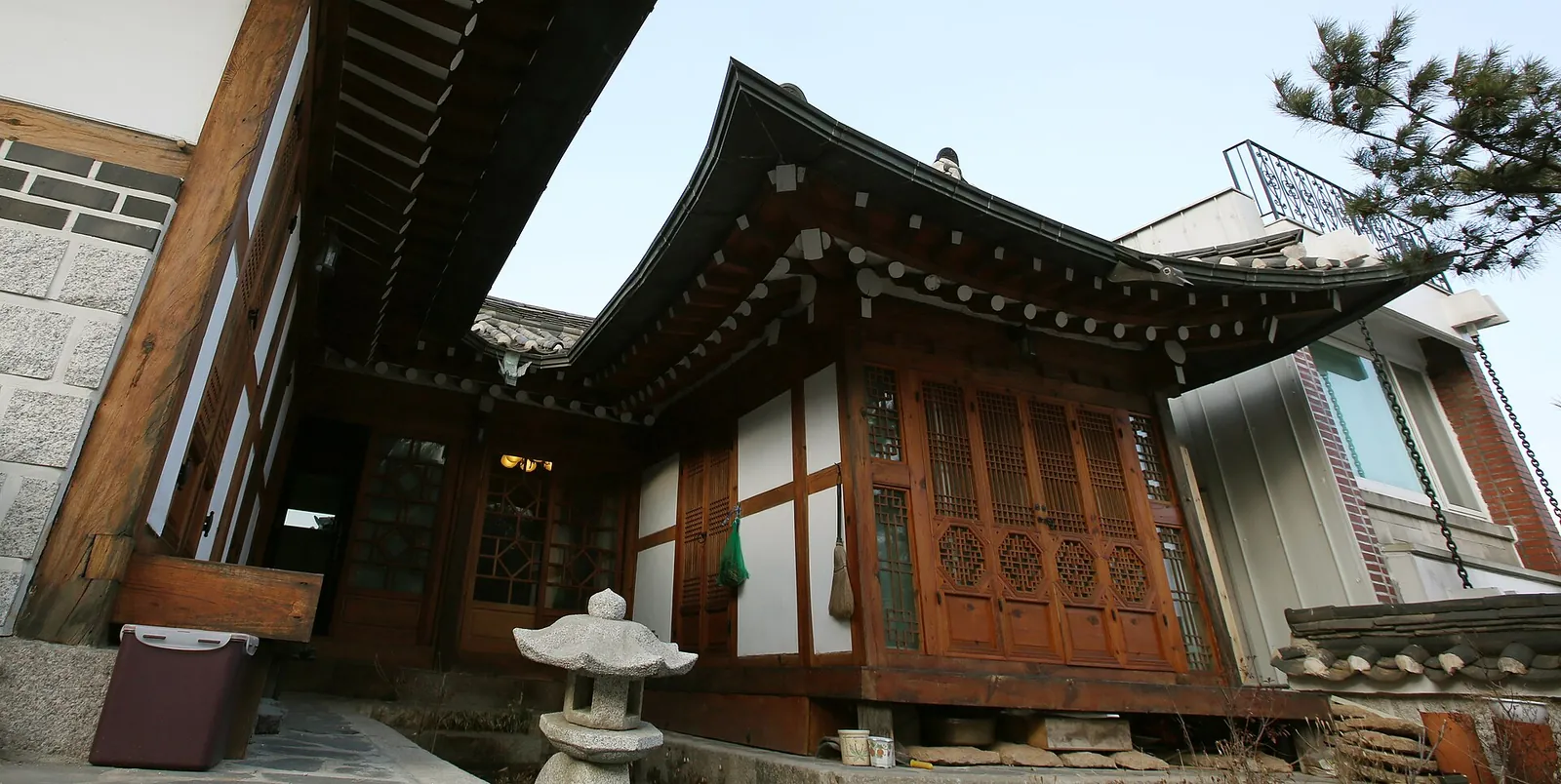
In Seoul, VisitKorea notes that many of Bukchon's hanok now work as guesthouses, cultural centres and teahouses, and it names Bukchon Binkwan and the hanok hotel Rakkojae as places to stay. Remember that this is a residential neighbourhood first. When we checked on 2026-10-03, Visit Seoul said that part of Bukchon has been a Special Management Area since November 2024, with tourist access to the restricted lanes limited to 10:00 to 17:00, and it asks visitors to keep noise down, especially around Gahoe-dong. It does not say how this applies to overnight guests, so ask your house how arrival after 17:00 works. The Seoul Tourism Organization's Seoul Stay site lists hanok registered with the district offices under its 'Hanok Stay' category.
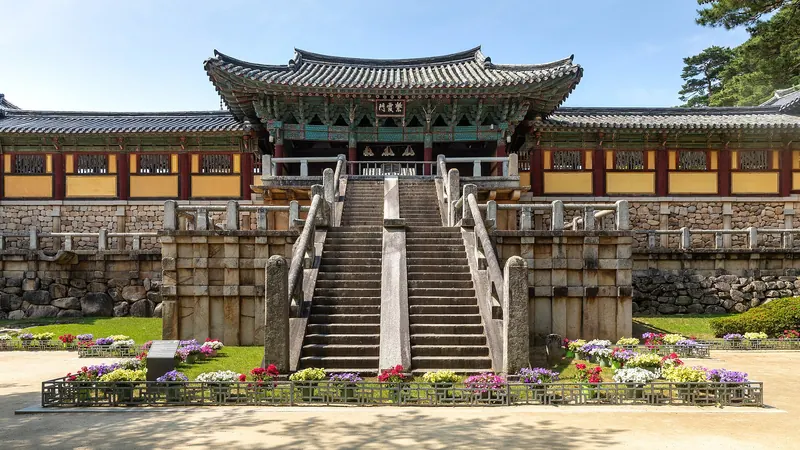
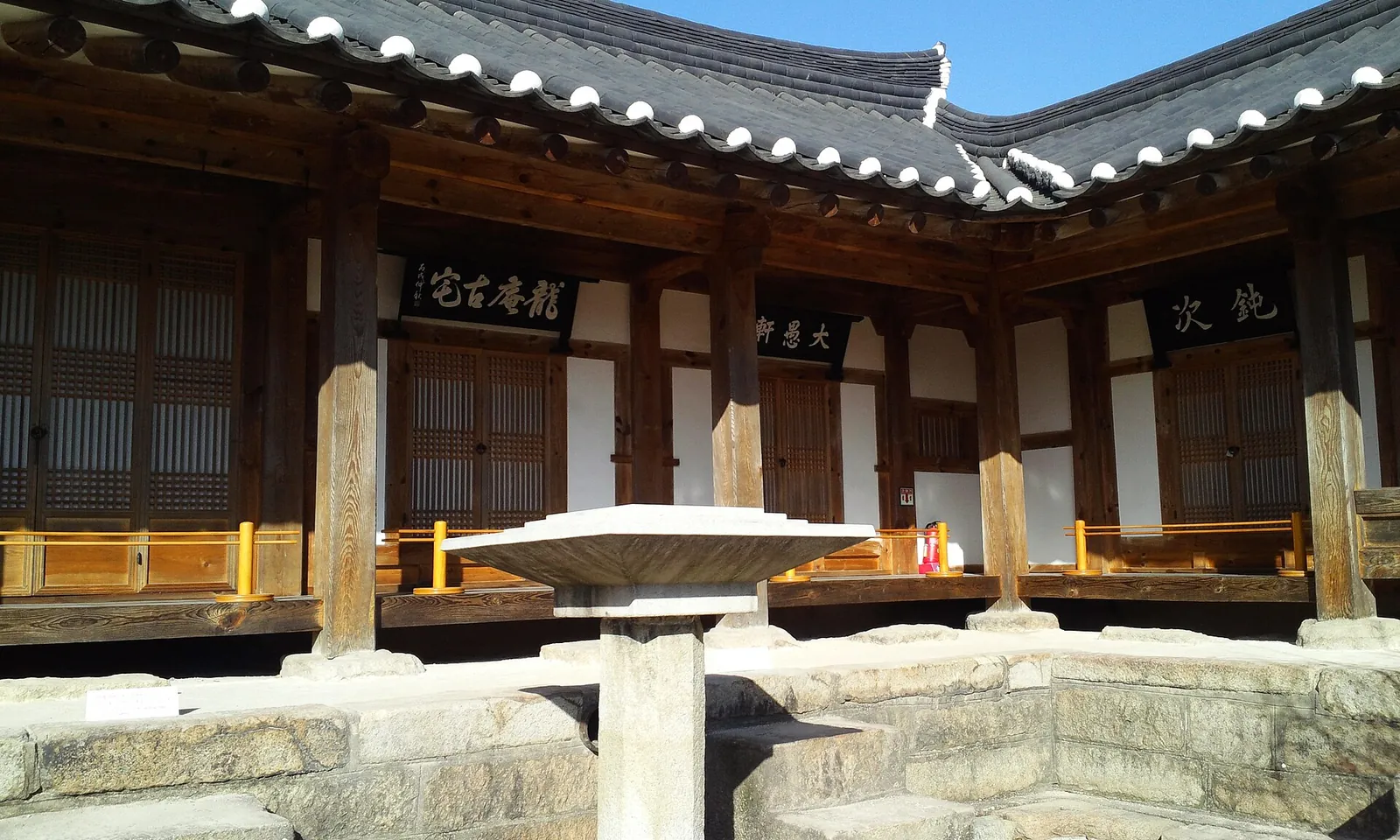
In Gyeongju, VisitKorea names Hwangnidan Street, the hanok café strip by the Daereungwon tombs and Cheomseongdae, as an area with many hanok stays, which puts the tombs and Cheomseongdae within walking distance. For an early start at the temple, VisitKorea lists Bulguksa Hanok Dongodang, a five-minute walk from Bulguksa. Gyeongju Station is about 2 hours 10 minutes from Seoul Station by KTX, according to VisitKorea. Gyeongju's Yangdong Village is the other UNESCO-listed traditional village, with about 160 old houses, but VisitKorea's listing notes that visitors may not enter the houses without permission; treat it as a day visit unless a house confirms a booking.
VisitKorea's guesthouse features also list hanok stays well beyond these four towns, such as a 200-year-old scholar's house in Miryang and a remodelled 1950 hanok in Suncheon, both booked through Naver Booking or Airbnb. They make good single nights on a longer route.
House rules: fire, noise and old buildings
A hanok is a wooden building, and both VisitKorea and Seoul's hanok portal warn about fire. The portal asks guests not to cook or smoke without the owner's consent and says that bringing food that needs cooking may be prohibited. Some houses are designated cultural heritage, so treat doors, paper screens and furniture with care; the portal also says that pets are not allowed, except guide dogs.
Sound travels easily in narrow lanes, as the portal points out. It asks guests to avoid loud noise that disturbs neighbours or other visitors, and it suggests preparing children in advance, because a traditional house may feel unfamiliar and lack some modern conveniences. Book ahead if you want meals or a cultural programme, which the portal recommends.
Practical questions
Do you sleep on the floor in a hanok?
Often, yes. In an ondol room the floor is heated and the bedding is laid on it, and VisitKorea notes that many hanok use mats and quilts instead of beds. Many modern hanok stays also offer rooms with beds, so look for one described with a bed if you need it.
Do hanok stays have private bathrooms?
Some do and some do not. Seoul's hanok portal warns that traditional houses may lack modern toilets or showers, while some VisitKorea listings, such as Rakkojae in Hahoe, say every room has a private bathroom. Check the listing, and ask the house if it is unclear.
Where is the best place to stay in a hanok?
For a historic house in a living clan village, Hahoe in Andong. For the most choice and the easiest trip from Seoul, Jeonju Hanok Village, the country's largest. For a night without changing city, Bukchon in Seoul or the Hwangnidan area in Gyeongju.
Is a hanok warm in winter?
An ondol room is heated through the floor; ondol is the traditional Korean heating system. Ask the house how the heating is controlled, and check whether the bathroom is inside the building or across the yard if you travel in the cold months.
Can I cook or bring a pet to a hanok stay?
Usually not without permission. Seoul's hanok portal asks guests not to cook or smoke without the owner's consent, because the houses are wooden, says bringing food that needs cooking may be prohibited, and says pets are not allowed except guide dogs.
Can I stay overnight in Bukchon with the visiting-hour restrictions?
VisitKorea lists hanok stays in Bukchon, and Visit Seoul's page on the Special Management Area gives tourist hours of 10:00 to 17:00 for the restricted lanes without saying how they apply to overnight guests. Ask your house how arrival in the evening works, and keep quiet in the lanes.
Sources and checks before you travel
Reference sources for the version dated 3 October 2026. Confirm opening times, access, transport and conditions for your travel dates.
- VisitKorea: Hanok accommodations ↗ — opens in a new tab
- Seoul Hanok Portal (Seoul Metropolitan Government): Hanok experience tips ↗ — opens in a new tab
- Seoul Hanok Portal: What is hanok ↗ — opens in a new tab
- VisitKorea: A fall trip to Jeonju (hanok accommodations) ↗ — opens in a new tab
- VisitKorea: Jeonju Hanok Village ↗ — opens in a new tab
- VisitKorea: Andong Hahoe Village ↗ — opens in a new tab
- VisitKorea: Yangjindang (Hahoe) ↗ — opens in a new tab
- VisitKorea: Bukchondaek (Hahoe) ↗ — opens in a new tab
- VisitKorea: Rakkojae Andong (Hahoe) ↗ — opens in a new tab
- VisitKorea: Bulguksa Hanok Dongodang ↗ — opens in a new tab
- VisitKorea: Gyeongju Hwangnidan Street ↗ — opens in a new tab
- VisitKorea: Gyeongju Yangdong Village ↗ — opens in a new tab
- VisitKorea: Bukchon Hanok Village ↗ — opens in a new tab
- Visit Seoul: Bukchon Hanok Village ↗ — opens in a new tab
- Seoul Stay (Seoul Tourism Organization) ↗ — opens in a new tab
- VisitKorea: Excellent Korean guesthouse accommodations, part 2 ↗ — opens in a new tab
- Visit Jeonju: Getting to Jeonju ↗ — opens in a new tab
- VisitKorea: Andong travel guide (transport) ↗ — opens in a new tab
- VisitKorea: Gyeongju transport feature ↗ — opens in a new tab
- VisitKorea: Airport transportation ↗ — opens in a new tab
- VisitKorea: Jeonju bibimbap ↗ — opens in a new tab
- VisitKorea: Food trip through hidden alleys (Jeonju) ↗ — opens in a new tab
- VisitKorea: Heotjesabap Kkachi Gumeongjip (Andong) ↗ — opens in a new tab
- VisitKorea: Gyeongju Ssambap Street ↗ — opens in a new tab
Photo credits
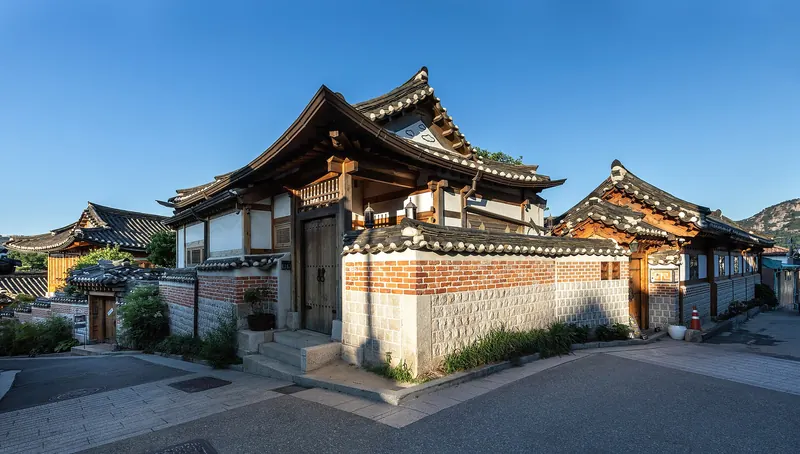
A tiled-roof house in Hahoe Village, Andong, where historic clan houses take overnight guests
Photograph: Bernard Gagnon — opens in a new tab · CC0 — opens in a new tab
Changes: Resized and converted to WebP; displayed with responsive crops. · Original photograph and licence details ↗ — opens in a new tab
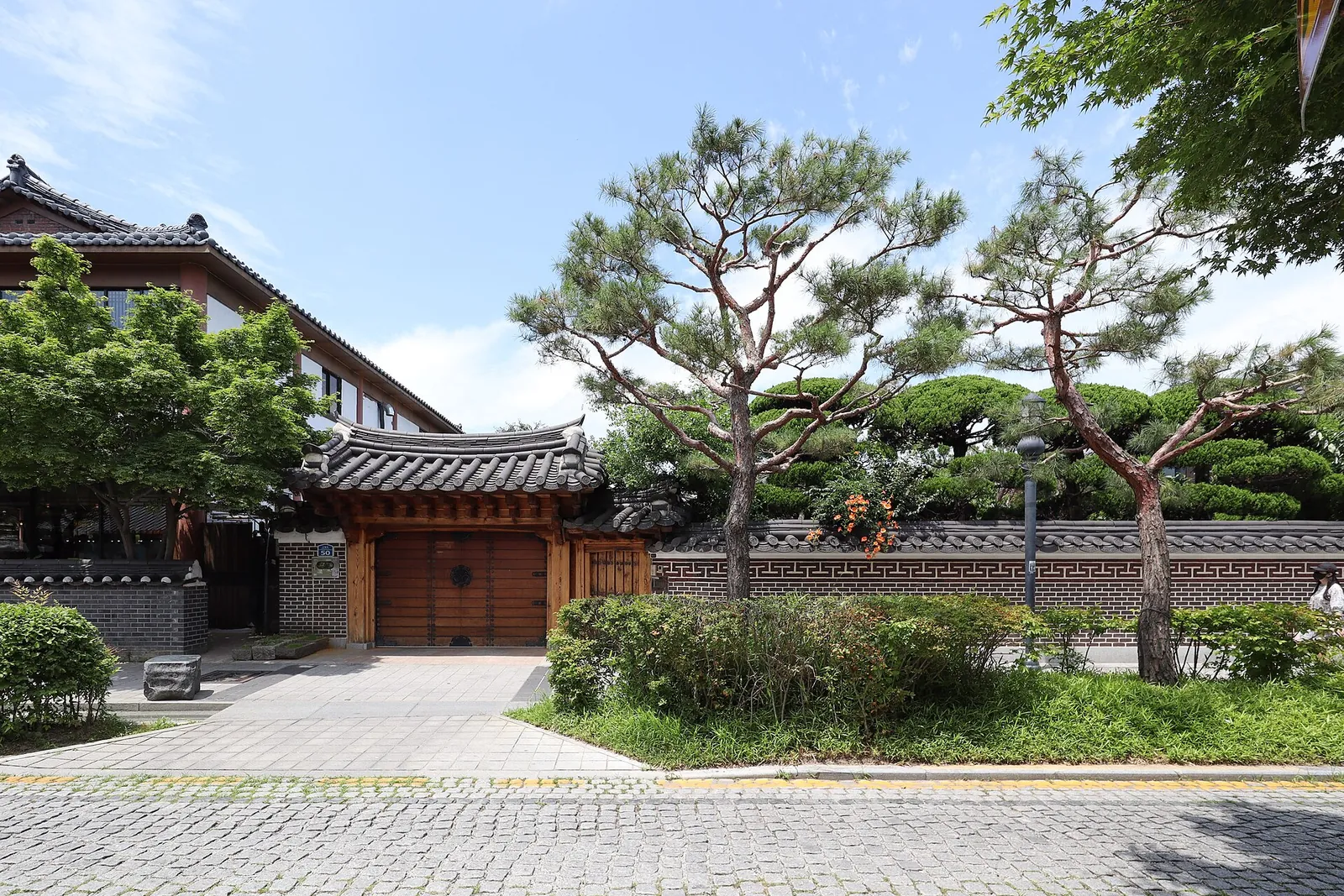
A gate and garden pines in Jeonju Hanok Village, the country's largest hanok village
Photograph: Mobius6 — opens in a new tab · CC BY-SA 4.0 — opens in a new tab
Changes: Resized and converted to WebP; displayed with responsive crops. · Original photograph and licence details ↗ — opens in a new tab
A guest room at the Tteuranchae hanok stay in Bukchon, Seoul, with bedding folded ready to lay on the floor
Photograph: Republic of Korea from Seoul, Republic of Korea — opens in a new tab · CC BY-SA 2.0 — opens in a new tab
Changes: Resized and converted to WebP; displayed with responsive crops. · Original photograph and licence details ↗ — opens in a new tab
The courtyard of the Tteuranchae hanok stay in Bukchon Hanok Village, Seoul
Photograph: Republic of Korea from Seoul, Republic of Korea — opens in a new tab · CC BY-SA 2.0 — opens in a new tab
Changes: Resized and converted to WebP; displayed with responsive crops. · Original photograph and licence details ↗ — opens in a new tab
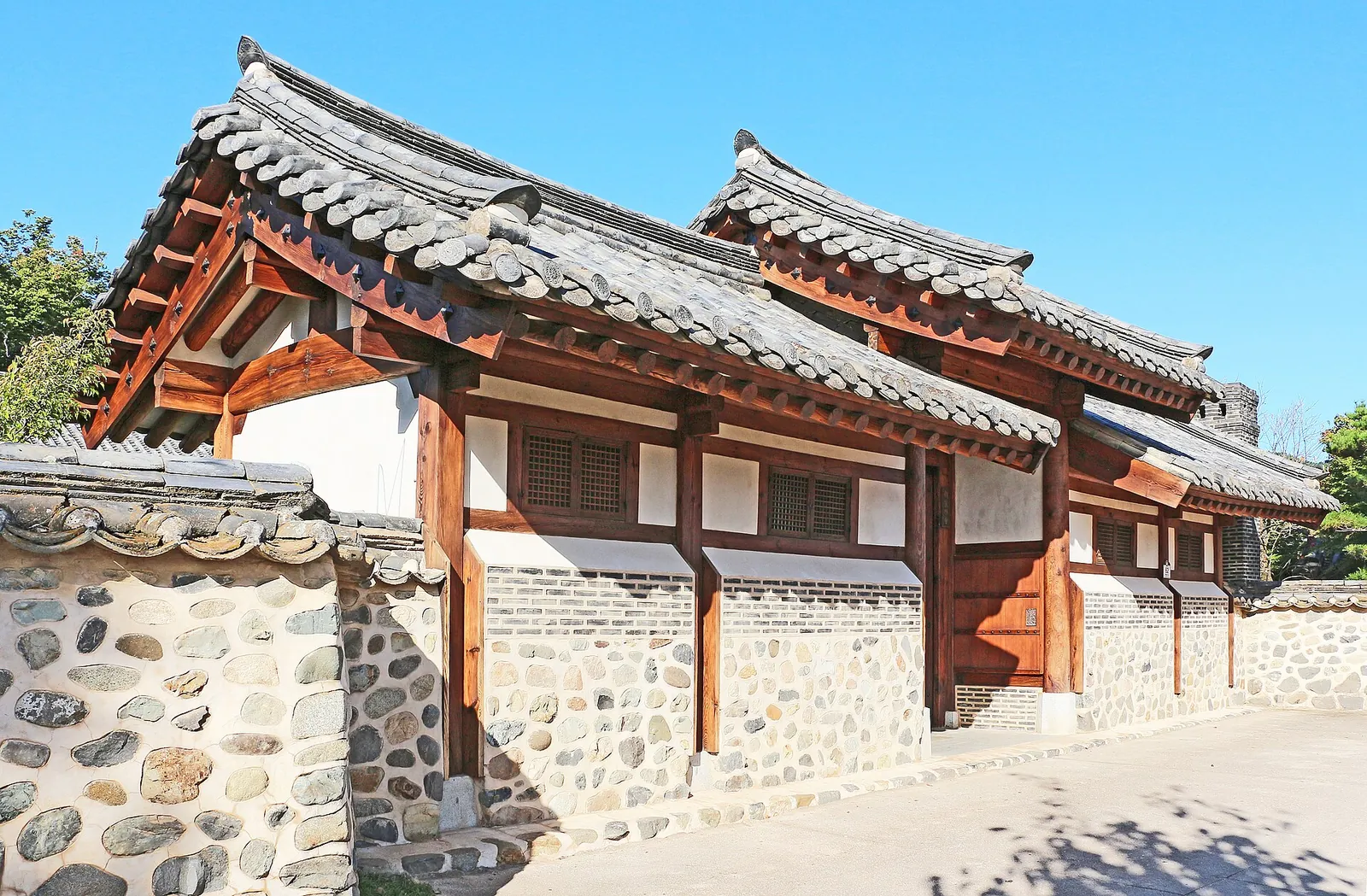
A traditional house around a courtyard in Gyochon Village, Gyeongju
Photograph: Choi2451 — opens in a new tab · CC BY-SA 3.0 — opens in a new tab
Changes: Resized and converted to WebP; displayed with responsive crops. · Original photograph and licence details ↗ — opens in a new tab
Jeonju bibimbap with kongnamul-guk, a soybean sprout soup
Photograph: ecodallaluna — opens in a new tab · CC BY-SA 2.0 — opens in a new tab
Changes: Resized and converted to WebP; displayed with responsive crops. · Original photograph and licence details ↗ — opens in a new tab