Plan your trip · India
Health and safety in India: vaccines, smog, heat, roads and scams
Most trips to India go wrong in small, predictable ways: a stomach upset, a week of smog, a taxi driver who says your hotel has closed. The serious risks are fewer and well documented: road accidents, heat before the monsoon, dog bites, spiked drinks and a handful of regions near India's borders. This guide takes them in the order you meet them: the clinic visit before you fly, water, food and animals, the air and the seasons, getting around, the scams, travelling as a woman or in a festival crowd, and what to do when something happens. Where governments' health or travel advice differs, as it does on malaria, the guide says who says what.
- Suggested time
- The advice covers the whole trip, from the clinic visit before you fly to the journey home
- Where to stay
- Applies to every route in our India guides: Delhi, Agra, Jaipur and Rajasthan, Varanasi and Khajuraho, Rishikesh, Mumbai and Goa, Kerala
- Season and timing
- Smog in the north from October to February; heat waves mainly from March to June; the southwest monsoon rains from June to September, with flood and landslide risk lasting into November
The short answer
Book a travel-health appointment first, at least 8 weeks before the trip: most travellers are advised hepatitis A, typhoid and an up-to-date tetanus, and your clinic decides on malaria tablets, on which national advice differs for the Golden Triangle. Then buy travel insurance that covers treatment and medical evacuation. Book trains yourself on IRCTC, which does not allow agents to book its Foreign Tourist quota: registration costs INR 100 plus GST, and each ticket costs 1.5 times the normal fare plus INR 200 plus GST (IRCTC's terms, checked on 17 October 2026). On the ground, the emergency number is 112 and the women's helpline is 1091. From October to February, check the air quality index before outdoor days in the north; from March to June, sightsee early and late.
Vaccines, malaria and mosquitoes: the clinic visit before you fly
India has no vaccination that every visitor must show at the border. The main exception is yellow fever: if you arrive within six days of being in a country where it is endemic, you need the yellow fever certificate, and the Bureau of Immigration says travellers without one may be kept in quarantine for up to 6 days. The UK FCDO also lists a polio certificate for arrivals from polio-affected countries; our India entry guide has the rules in full. Everything else is advice, and the time to take it is at a travel clinic at least 8 weeks before the trip.
Most travellers are advised hepatitis A and typhoid, a completed tetanus course (a booster if the last dose was more than ten years ago and medical care may be limited where you are going) and routine vaccines such as measles, mumps and rubella brought up to date. Depending on the length of the stay and what you will do, your clinic may add hepatitis B, rabies, Japanese encephalitis, cholera, chikungunya or dengue; the US CDC advises hepatitis B for all unvaccinated travellers younger than 60. Japanese encephalitis matters mainly on long or rural stays: the risk is countrywide and year-round, peaking during and just after the monsoon, and the US CDC does not recommend the vaccine for short trips to cities.
Malaria is where official advice differs, so take this paragraph to your clinic. TravelHealthPro, the UK's travel-health service, rates the risk as low in most of India, Goa included, and advises tablets only for the states of Mizoram, Odisha and Tripura, none of which is on our routes. Germany's Foreign Office also rates New Delhi, Mumbai and Rajasthan as low risk. The US CDC, by contrast, recommends prescription antimalarials for travellers to certain areas of India and lists transmission throughout the country, including Mumbai and New Delhi, except above 2,000 m. Whichever line your own country follows, a fever of 38°C or higher that starts more than a week after you were in a malaria-risk area, or any symptom that could be malaria within a year of your return, needs immediate medical care.
Mosquitoes carry more than malaria. Dengue is spread by mosquitoes that bite mainly in the daytime and is more common in towns and cities, and chikungunya is transmitted especially during and just after the rainy season in coastal areas and big cities. Bite avoidance is the defence everywhere: long sleeves and trousers, a repellent with 20% or more DEET, and air-conditioned or screened rooms, with a bed net where the room is open to the outside.
Pack this: the repellent; any prescription medicines in their original packaging, with the prescription; oral rehydration salts for the heat and for a stomach upset; sunscreen and a hat, because the sun is strong, especially in the south, and sunburn is common; and the record of your vaccinations.
Water, food, stray dogs and monkeys
Travellers' diarrhoea is common: illnesses caused by poor drinking-water, food and hand hygiene are frequent, and hepatitis A and E, and rarely typhoid, also affect travellers. Drink treated or sealed bottled water, eat food served hot, peel your own fruit and wash your hands often. Rehydrate with oral rehydration salts if a stomach upset strikes, and see a doctor if it comes with a high fever or does not settle.
Rabies is a high risk across India. Stray dogs carry it across the country, and cats and, more rarely, monkeys can too. Keep away from street dogs and temple monkeys, and do not feed them. After any bite, scratch or lick on broken skin, wash the wound thoroughly and get urgent medical assessment, even if the wound looks trivial: rabies is preventable with prompt treatment but almost always fatal once symptoms appear. A pre-exposure course, recommended for stays of more than a month, for runners and cyclists, and for travellers going where treatment after a bite is hard to reach, does not remove the need for that treatment; it shortens it and removes the need for immunoglobulin.
How easy that treatment is to find is where the advice differs. Germany's Foreign Office says that outside the big cities, including on the northern trekking routes, the treatment needed after a bite is not assured for unvaccinated people, and that rabies vaccines and immunoglobulin may be unavailable or available only in very limited amounts; the CDC says rabies vaccines are typically available throughout most of the country. The CDC also notes that the Delhi Drugs Control Department has reported counterfeit ABHAYRAB human rabies vaccine in circulation. After a bite, get the urgent medical assessment described above at the nearest hospital and, if it cannot give the full treatment, go on to a well-equipped hospital in the nearest large city (in Goa, Goa Tourism names those in Panaji, Mapusa, Margao and Vasco da Gama); take the record of any rabies doses you have had, and call your insurer's assistance line.
Fresh water is a separate risk: do not swim or bathe in it, because of leptospirosis from water contaminated by rodents and the rare but usually fatal amoebic meningitis. In Varanasi, watching the ghats from a boat is the way to enjoy the Ganges; our Varanasi guide covers the boats and the etiquette at the cremation ghats. In Rishikesh the Ganga runs fast, rivers have strong currents and people drown every year: get into the water only on a raft trip, in a life jacket, as our Rishikesh guide explains.
October to February: the smog in the north
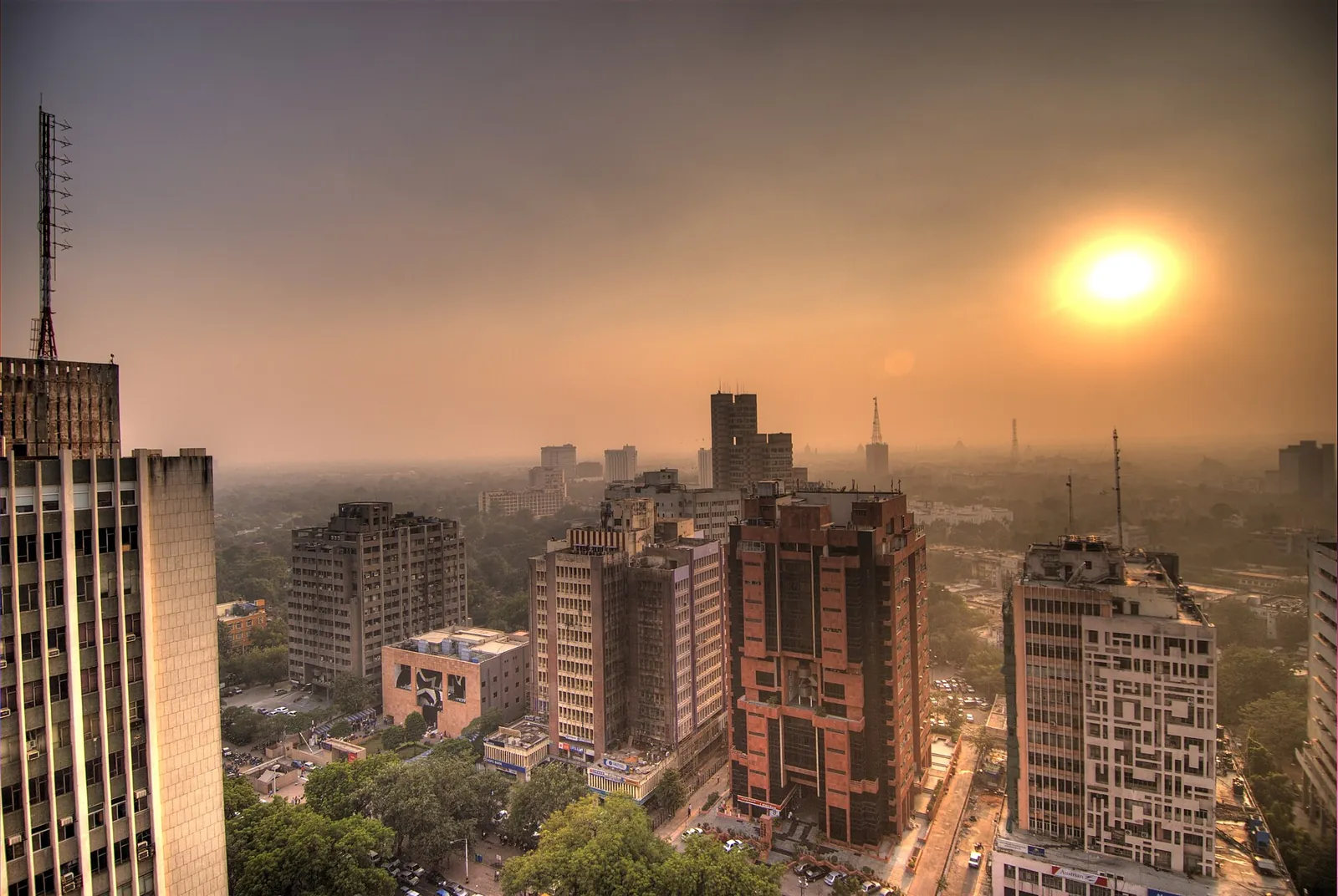
The UK FCDO puts it plainly: "Severe air pollution is a major health hazard, especially during the winter months from October to February. North Indian cities and metros across the country are most affected". Children, the elderly and people with pre-existing medical conditions may be especially affected, and asthma or COPD can worsen markedly; pregnant travellers and anyone with a respiratory or heart condition should talk to a doctor before they travel.
Daily readings come from the Central Pollution Control Board (CPCB), whose National Air Quality Index sorts each day into six categories: Good (0-50), Satisfactory (51-100), Moderately polluted (101-200), Poor (201-300), Very Poor (301-400) and Severe (401-500). CPCB's Sameer app gives hourly updates of the index. CPCB's guidance for Very Poor and Severe days is to minimise travel and use public transport. On such a day in Delhi, Agra or Varanasi, keep outdoor sightseeing short, move between sights by metro or train rather than hours in road traffic, and plan museums and indoor monuments for the worst afternoons.
Masks are a choice, not a fix: it is unclear whether face masks reduce exposure, and they may make breathing harder for people with lung conditions, so if you wear one, bring one that fits well. If you have asthma, COPD or a heart condition, bring enough of your regular medication. The months themselves are compared region by region in our best time to visit India guide.
Heat before the monsoon, and floods during it
Heat waves come mainly from March to June, when maximum temperatures climb very high, especially in the north, according to the India Meteorological Department (IMD); on the plains of the Golden Triangle, Rajasthan, Varanasi and Khajuraho, these are the months to sightsee early and late. On hot days, carry water and drink plenty of fluids, wear light, loose clothes, a wide-brimmed hat and sunglasses, keep out of the sun at the hottest part of the day, typically between 11:00 and 15:00, and save strenuous walks for the early morning. Older people, babies and young children, pregnant travellers and anyone with a heart, breathing or kidney problem or diabetes feel the heat more, and anyone with an underlying health condition should ask their doctor or hospital specialist for advice, ideally 4 to 6 weeks before the trip.
Know the warning signs of heat exhaustion and heat stroke: tiredness, weakness, feeling faint, headache, dizziness, nausea or vomiting, and intense thirst. Anyone who feels unwell should rest somewhere cool or shaded, spray or sponge their skin with water and drink plenty of non-alcoholic fluids. Get medical help promptly, on 112 if necessary, for confusion, shortness of breath or a fast heartbeat, or if the symptoms do not settle.
The monsoon brings a different set of risks. The southwest monsoon rains fall from June to September, and the risk of flooding and landslides lasts into November. The rains can cause flash flooding and landslides, often with limited warning and particularly in mountainous areas; towns and villages cut off; road closures; flooding in big cities; and cuts to telephone lines, internet and electricity. Heavy rain from July to September regularly disrupts transport, flights included, and Mumbai and rural areas see major floods. If your route takes in Rishikesh or the Kerala hills in these months, keep a spare day, check the road before a long transfer, and follow IMD's warnings.
On the coast, there are strong currents off many beaches, people drown every year, and most beaches have no warning signs, flags or lifesaving equipment. Do not swim off Goa and the Karnataka coast in the monsoon; Miramar beach in Panaji is particularly dangerous. Tourist boats and other small craft rarely carry life-saving equipment. Cyclones are most likely on the east coast from September to December, and in south India from June to November; our seasons guide covers the cyclone months.
Roads, taxis and trains
Road accidents are one of the most serious risks on an Indian trip: India has a high death rate on its roads, and serious accidents are frequent on long overland drives, where roads are often poor and vehicles are not inspected as in Europe. Traffic drives on the left. Avoid travelling by road at night, take extra care in fog, when accidents are common because of low visibility, and remember that buses are often driven fast and recklessly. Seat belts in cars and helmets on two-wheelers are compulsory; three-wheel autos and the back seats of many taxis have no belts, so choose a taxi that does.
Hire a car with a driver rather than driving yourself; if you do drive, you need an international driving permit with your national licence. A collision can draw a crowd quickly: an accident involving a cow can lead to violence, and if the police are not at the scene it may be unsafe to stay, so go to the nearest police station if it is safe to do so. Pavements are often missing or hazardous and vehicles sometimes drive on the wrong side of the road, so cross carefully, especially at night.
For taxis from the airport, use an app cab (Uber and Ola are available in all airport terminal buildings), a prepaid taxi or a hotel transfer, agree the fare before you set off if there is no meter or app, and share your trip details from the app. Avoid hailing taxis on the street, especially alone at night. The government prepaid taxis at airport exits are painted black and green. Our guide to transport in India has the airport links and the trains for each route.
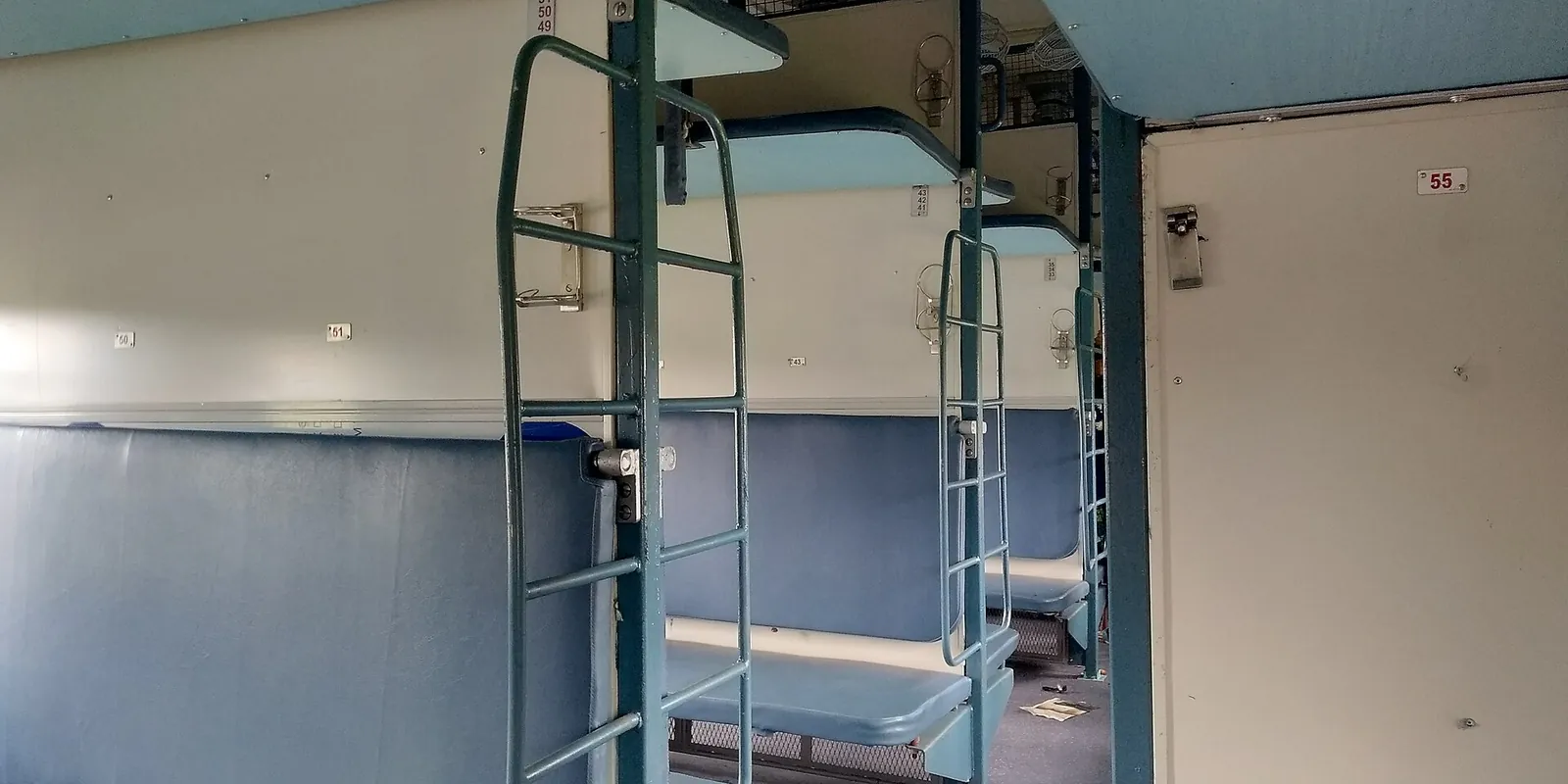
The UK FCDO calls train travel generally safe, though accidents happen and thefts are common. France Diplomatie says 60 to 70% of the thefts reported to its embassy involve train passengers, and names the Delhi-Agra, Delhi-Varanasi, Kolkata-Varanasi and Kolkata-Puri lines as those where thefts are very frequent; keep documents and money on you and padlock bags to the racks in the compartment, especially in sleeper berths. Food and drink offered by strangers on trains has been laced with strong sleeping drugs, after which passengers wake up robbed, so accept none.
Scams and touts: the ones the advisories name
The best-documented scam starts at Delhi airport or New Delhi railway station. Travel-agency touts working with taxi or rickshaw drivers tell new arrivals that their booked hotel is closed or cannot be reached, then take them to an agency of their choice, often in central New Delhi, that presents itself as "government approved" or as an official tourist office and sells over-priced tours. Some sell trips to Kashmir by claiming the region has calmed down, and every year tourists who accept are intimidated and extorted. Decline firmly, keep to your own booking, and call the police if you are pressed.
Train tickets are the second favourite. Agents may raise the price, claim the train is full to push you into a private taxi, or tell travellers with a ticket that their train has been cancelled, another way of selling a car. Avoid people at stations offering tickets and tours. IRCTC does not allow agents to book its Foreign Tourist quota; booked yourself on IRCTC, a quota ticket costs 1.5 times the normal fare plus INR 200 plus GST per ticket; our transport guide explains the booking.
Gems are the third. Dishonest sellers, mainly in Rajasthan and Goa and also in Dharamsala, offer lucrative jewellery deals or to ship stones home for you, then make fraudulent charges on your card or raise the price without your consent; some visitors have been held and forced to buy. Buy only what you can carry away with you; our Jaipur guide covers the city's bazaars.
Drinks are the risk at night. Spiked drinks and food have led to robbery and assault, and in Goa's night bars many foreign women have been offered drinks by new acquaintances that contained a substance causing loss of consciousness, so watch your glass. Methanol in alcoholic drinks cannot be detected by taste or smell. Card skimming, internet and confidence scams are common too; India's national cybercrime helpline is 1930.
France Diplomatie also advises against booking rooms in the small hotels, registered or not, of Paharganj and Nabi Karim, two central New Delhi districts it describes as having become dangerous because of crime. Our Delhi guide compares the areas to stay in.
Women travellers, festival crowds and protests
Female travellers often experience verbal and physical harassment by individuals or groups of men, and there is a risk of sexual assault, including attacks on foreign women in tourist areas and cities, sometimes after drugs were put into drinks. Avoid isolated or quiet places when alone, particularly after dark: empty streets, including in Delhi, village lanes, parks, beaches and forests. Wear long clothing that covers the shoulders.
The arrangements that help are the ones you make in advance: arrive in daylight, have a pickup or app cab booked from the airport, choose rooms on busy streets. On the Delhi Metro, the Delhi Metro Rail Corporation's annual report for 2023-24 says that seats are reserved for women in each coach and that a separate ladies' coach runs. On Indian Railways, a Ministry of Railways release of December 2021 says six berths in sleeper class on long-distance Mail and Express trains, and six berths in 3AC on Garib Rath, Rajdhani, Duronto and fully air-conditioned Express trains, are earmarked for female passengers, and lower berths are earmarked for women aged 45 and over and pregnant women; it does not say whether a Foreign Tourist quota ticket can use them, so ask an International Tourist Bureau if you want one of these berths. Same-sex relationships are legal in India, but society is conservative, with a risk of harassment outside big cities, and public affection may attract unwanted attention.
Big festivals and holidays bring crowds and tighter security. Take particular care during periods of national or religious significance, such as Republic Day (26 January), Independence Day (15 August), Diwali and Eid; stampedes have occurred at large religious gatherings, parades and sporting events. Alcohol sales are often banned during major religious festivals, national holidays and elections. At a crowded aarti or a festival procession, stay at the edge of the crowd, agree a meeting point, and keep your phone and wallet in a front pocket.
Strikes, called bandh or hartal, political rallies and demonstrations happen frequently and can turn violent, and authorities may impose curfews or cut mobile networks and the internet; central New Delhi has seen large demonstrations with temporary restrictions on mobile internet and traffic. Keep away from rallies, follow local news, and allow slack on travel days.
Emergency numbers, hospitals, and the regions these guides leave out
The number to remember is 112 (ambulance, fire, police), which answers in English, Hindi and other languages; the 112 India mobile app can share your location. The police helpline is 100 and the women's helpline 1091, and the Ministry of Tourism's tourist helpline, 1800 11 1363, advises on reputable services and takes complaints about companies. New Delhi has a 24-hour Tourist Police. Keep copies of your passport, visa and flight ticket apart from the originals; if the passport is lost or stolen, report it to the police at once, because you will need the report for the exit permit described in our entry guide.
Private hospitals in the big cities offer a high standard of care, but they usually ask for a substantial deposit before treatment, emergency care outside the cities may be inadequate, and resistance to common antibiotics is widespread. Hospitals usually expect a relative or attendant to stay with the patient, and pharmacies are widely available, but most prescription medicines still need a prescription. That deposit is the reason to buy travel insurance that covers treatment and medical evacuation before you go.
Some items can get you arrested at the airport. Satellite phones and GPS devices are illegal without a licence, even in transit, and visitors have been arrested or detained for bringing them in; e-cigarettes are banned too. Our entry guide lists these and the other banned items, drones included.
Some regions are off our routes because of the governments' advice. The FCDO advises against all travel to the Union Territory of Jammu and Kashmir, except within, and by air to and from, Jammu city; against all travel within 10 km of the India-Pakistan border; and against all but essential travel to Manipur. German and French advice covers the same ground, and France adds the immediate surroundings of the Line of Control, the Wagah-Attari crossing and, strongly, the India-Myanmar border. AsiaVela's India guides therefore send no reader to Jammu and Kashmir or Manipur, and the Attari-Wagah ceremony is not included. This edition keeps its guides at least 50 km from the border, a wider margin than the FCDO's warning against all travel within 10 km. This edition also has no guides for Ladakh or the north-eastern states. French advice also names Maoist (Naxalite) activity in remote areas of Bihar, Jharkhand, Chhattisgarh, Odisha, Andhra Pradesh, eastern Maharashtra and West Bengal, which our routes do not cross. Other governments may draw these lines differently; read your own country's advice before you book, and register with your embassy's alert service if it has one.
Practical questions
Which vaccinations do I need for India?
None is required for entry unless you arrive from a yellow fever country, when the certificate is compulsory and travellers without it may be kept in quarantine for up to 6 days, or from a polio-affected country, for which the UK FCDO lists a polio certificate. Most travellers are advised hepatitis A, typhoid and an up-to-date tetanus, plus routine vaccines such as measles; hepatitis B, rabies and Japanese encephalitis are advised for some, depending on the length and style of the trip. A travel clinic decides which apply to you.
Do I need malaria tablets for Delhi, Agra and Jaipur?
Official advice differs. The UK's TravelHealthPro and Germany's Foreign Office rate most of India, including Delhi, Mumbai, Rajasthan and Goa, as low risk, while the US CDC recommends prescription antimalarials for parts of India and lists transmission throughout the country, including Mumbai and New Delhi. A travel clinic decides with you.
Is the tap water safe to drink in India?
Treat it as unsafe. Poor drinking-water and food hygiene often cause diarrhoea in travellers. Drink sealed bottled or treated water, eat food served hot, and peel your own fruit.
What is the emergency number in India?
Dial 112 for ambulance, fire and police; it answers in English and Hindi among other languages. The police helpline is 100, the women's helpline 1091, the cybercrime helpline 1930, and the Ministry of Tourism's tourist helpline 1800 11 1363.
Is India safe for women travelling alone?
Harassment and the risk of sexual assault are real, including in tourist areas. Avoid isolated places alone, especially after dark, watch your drink, wear clothes that cover the shoulders and legs, and book airport transfers or app cabs rather than hailing taxis at night.
Which parts of India should tourists avoid?
The UK and German governments advise against travel to Jammu and Kashmir. For Manipur the UK advises against all but essential travel and Germany strongly advises against travel. The UK, German and French governments all warn against the area along the Pakistan border, and France also warns against the Myanmar border. AsiaVela's India guides route nowhere into those areas, the north-east or Ladakh. This edition keeps its guides at least 50 km from the border, a wider margin than the FCDO's warning against all travel within 10 km. Check your own government's advice, which may draw wider lines.
Sources and checks before you travel
Reference sources for the version dated 17 October 2026. Confirm opening times, access, transport and conditions for your travel dates.
- UK FCDO: India travel advice, health ↗ — opens in a new tab
- UK FCDO: India travel advice, safety and security ↗ — opens in a new tab
- UK FCDO: India travel advice, getting help ↗ — opens in a new tab
- UK FCDO: India travel advice, warnings and insurance ↗ — opens in a new tab
- Germany's Foreign Office (Auswärtiges Amt): India travel and safety advice ↗ — opens in a new tab
- France Diplomatie: India security advice ↗ — opens in a new tab
- TravelHealthPro (NaTHNaC, UK): India ↗ — opens in a new tab
- US CDC Travelers' Health: India, traveller view ↗ — opens in a new tab
- India Meteorological Department: heat-wave climatology and long-term trends (chapter 4) ↗ — opens in a new tab
- Central Pollution Control Board: About the National Air Quality Index ↗ — opens in a new tab
- Central Pollution Control Board: broad guidelines for the public on the AQI ↗ — opens in a new tab
- Bureau of Immigration: health regulation ↗ — opens in a new tab
- TravelHealthPro (NaTHNaC, UK): extreme heat factsheet (last updated 9 May 2025) ↗ — opens in a new tab
- Delhi Airport (DIAL): taxis and cabs ↗ — opens in a new tab
- IRCTC: Foreign Tourist Quota booking (PDF) ↗ — opens in a new tab
- IRCTC: Foreign Tourist quota general terms and conditions (PDF) ↗ — opens in a new tab
- Central Pollution Control Board: apps by CPCB (PDF) ↗ — opens in a new tab
- Goa Tourism: medical help ↗ — opens in a new tab
- Delhi Metro Rail Corporation: Annual Report 2023-24 ↗ — opens in a new tab
- India Meteorological Department: Monsoon FAQ ↗ — opens in a new tab
- PIB (Ministry of Railways): berths earmarked for women passengers ↗ — opens in a new tab
Photo credits
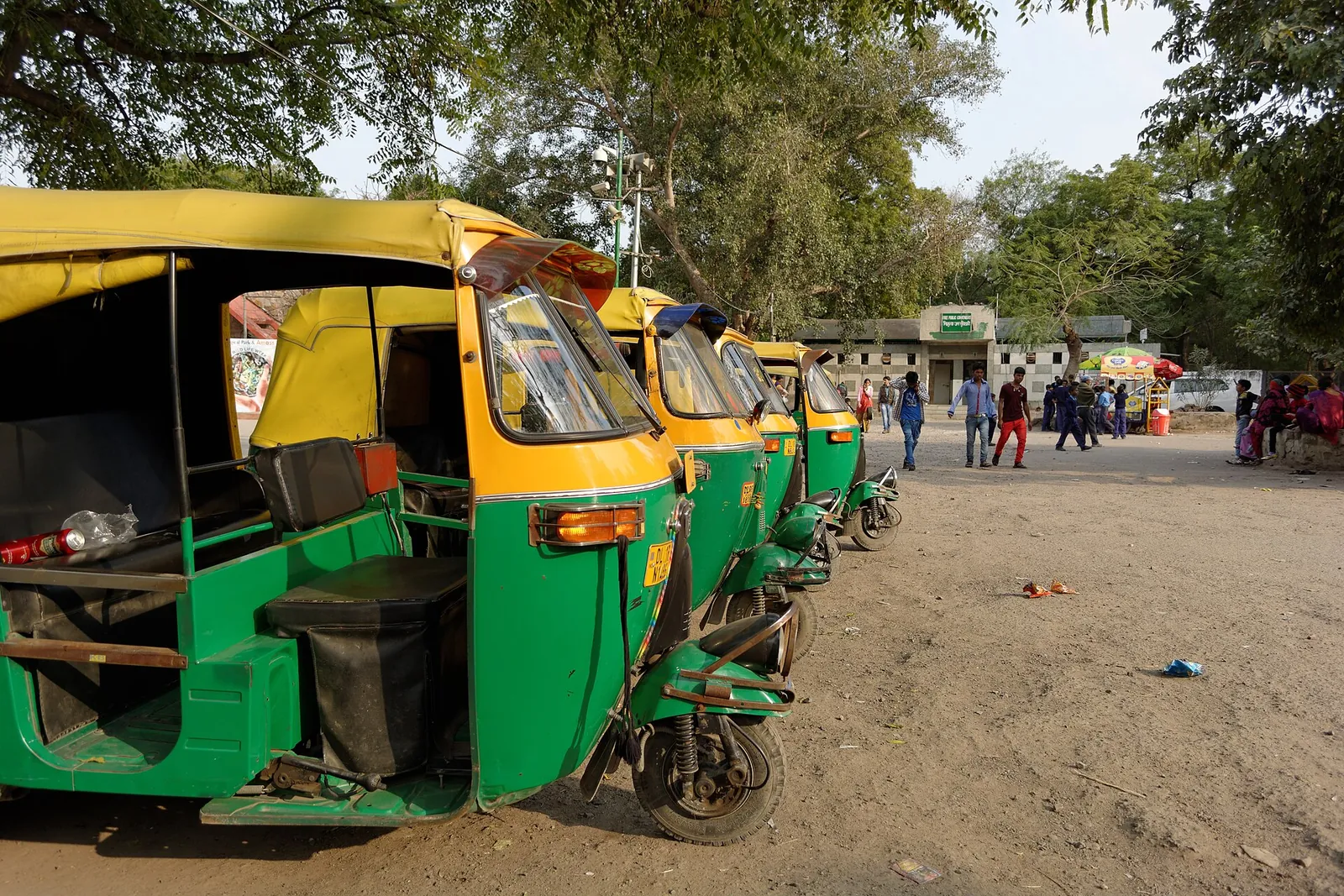
Auto-rickshaws waiting for passengers outside Purana Qila, Delhi
Photograph: Slyronit — opens in a new tab · CC BY-SA 4.0 — opens in a new tab
Changes: Resized and converted to WebP; displayed with responsive crops. · Original photograph and licence details ↗ — opens in a new tab
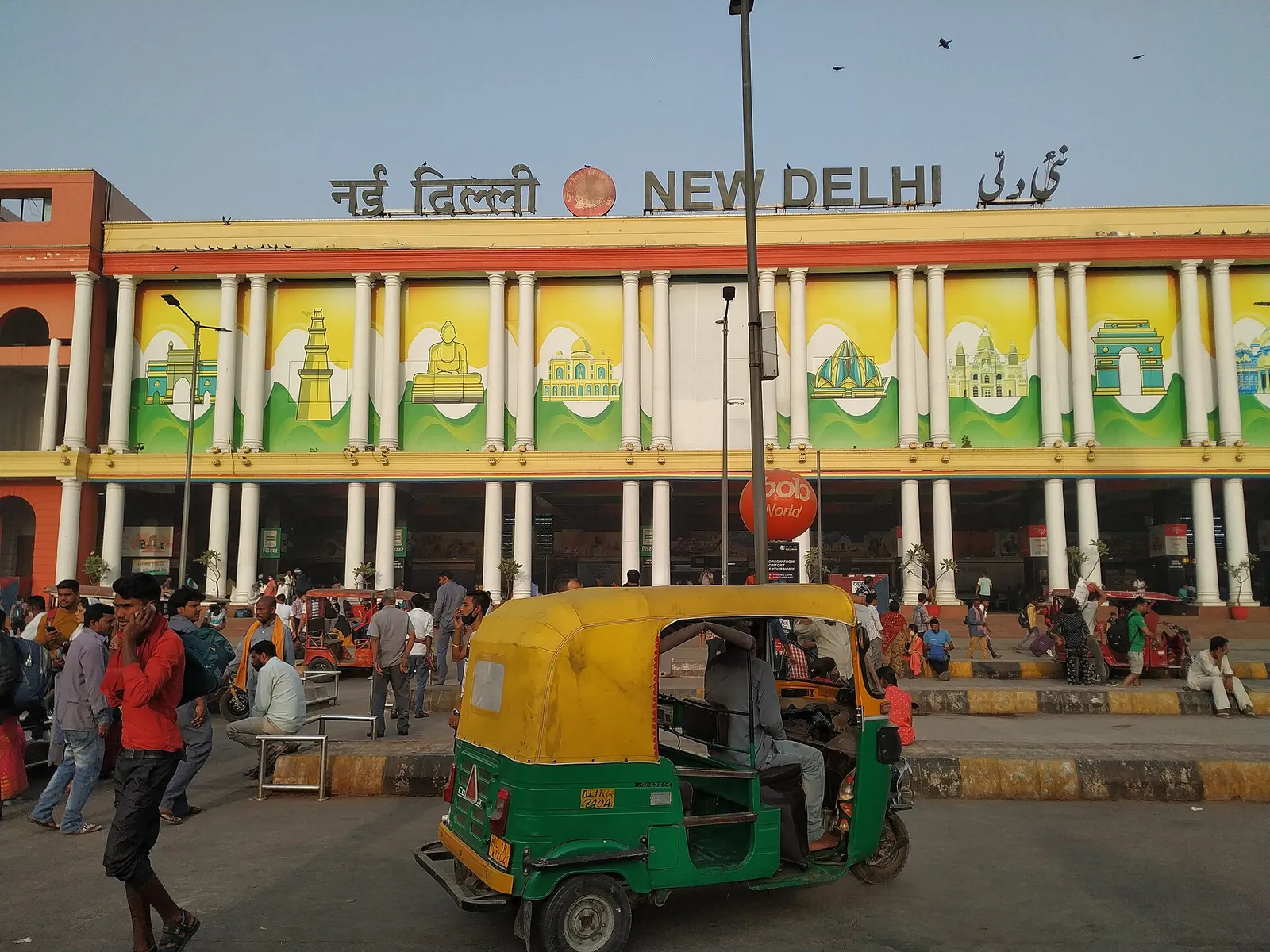
New Delhi railway station from the Ajmeri Gate side
Photograph: Ravi Dwivedi — opens in a new tab · CC BY-SA 4.0 — opens in a new tab
Changes: Resized and converted to WebP; displayed with responsive crops. · Original photograph and licence details ↗ — opens in a new tab
A smoggy sunset over Connaught Place, New Delhi
Photograph: Ville Miettinen from Helsinki, Finland — opens in a new tab · CC BY 2.0 — opens in a new tab
Changes: Resized and converted to WebP; displayed with responsive crops. · Original photograph and licence details ↗ — opens in a new tab
Berths inside an Indian Railways sleeper coach
Photograph: Vikramaditya V. V. — opens in a new tab · CC BY-SA 4.0 — opens in a new tab
Changes: Resized and converted to WebP; displayed with responsive crops. · Original photograph and licence details ↗ — opens in a new tab
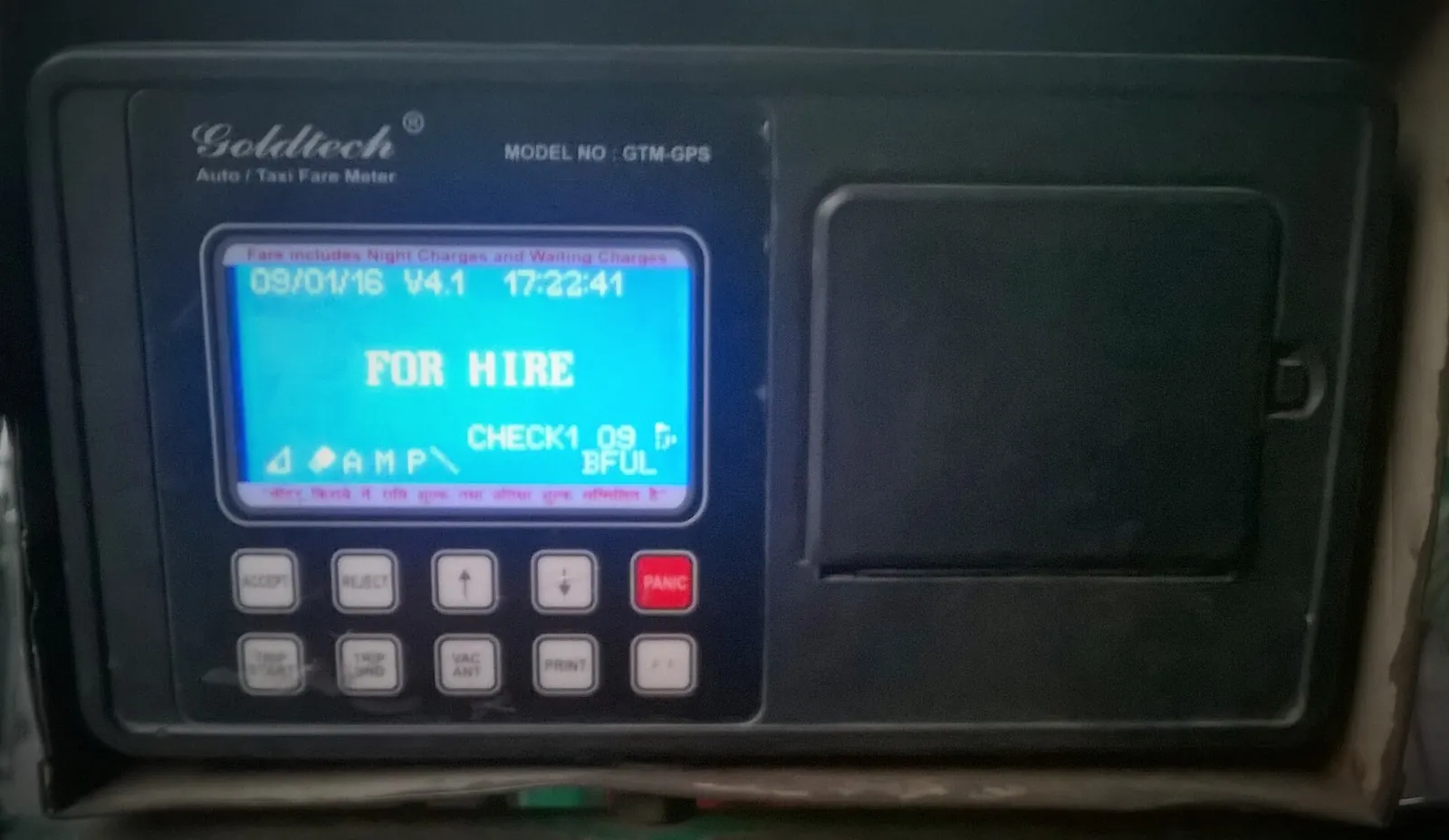
The fare meter of a Delhi auto-rickshaw
Photograph: Rsrikanth05 — opens in a new tab · CC BY-SA 4.0 — opens in a new tab
Changes: Resized and converted to WebP; displayed with responsive crops. · Original photograph and licence details ↗ — opens in a new tab