Plan your trip · India
Where to stay in India: city bases, havelis, houseboats and check-in
In India the neighbourhood you sleep in decides more of the day than the room does. In Agra and Varanasi it is the difference between walking to the Taj gate or the river at dawn and sitting in traffic; in Jaipur, Jodhpur and Udaipur it decides whether the palace and the bazaars are a stroll away. This guide gives one base for each stop in our India guides, with an alternative where the choice really matters, explains the kinds of stay you will meet, from courtyard havelis to Kerala houseboats, and tells you what happens with your passport at check-in. Most place guides then price a real room for their own city.
- Suggested time
- One base per stop: usually 2-3 nights in each city, one night on a houseboat
- Where to stay
- Connaught Place in Delhi, Taj Ganj in Agra, the old cities of Varanasi, Jaipur, Jodhpur and Udaipur, Colaba in Mumbai, Panaji in Goa, Bolgatty Island or Fort Kochi in Kochi, Alappuzha in Kerala, Kamalapura at Hampi
- Season and timing
- Delhi Tourism and UP Tourism give October to March as the best time for Delhi and Agra, so book rooms in the north early for those months. Goa's peak season is December and January, when rooms are hard to find unless booked well ahead, and from Christmas to the New Year accommodation there is at a premium; in Kerala, the houseboat and hotel priced in our backwaters guide both charge more from late December to early January, and the houseboat date fixes the rest of the trip.
The short answer
Choose the area first: sleep within walking distance of what you will do at dawn or in the evening. That means Connaught Place in Delhi, Taj Ganj in Agra, the old city behind Dashashwamedh Ghat in Varanasi, inside the walls or the old city in Jaipur, Jodhpur and Udaipur, Colaba in Mumbai, the Panaji side of the Mandovi in Goa, and Bolgatty Island or Fort Kochi in Kochi. Plan two or three nights in each city and one night on a houseboat. Book first the night that fixes your dates: a houseboat in Alappuzha, the night before a sunrise at the Taj, or Goa in December and January, its peak season. Two key prices, checked on 17 October 2026: the double room our Delhi guide prices costs INR 6,245 a night with breakfast and taxes, and the one in our Agra guide INR 4,555 a night with breakfast, plus taxes. Every hotel, guest house, hostel, homestay and ashram registers foreign guests with Form III, so keep your passport and visa page to hand at check-in.
Choosing a base: sleep where your day starts
India's sights start early and its traffic is slow, so the best base is the one that puts the start and the end of each day on foot. The Taj Mahal opens 30 minutes before sunrise, the boats on the Ganges at Varanasi go out at dawn, and the evening aarti on the ghats begins just after sunset. In the old cities of Rajasthan, the palace, the bazaar and the rooftop restaurants are all inside a few hundred metres of lanes. Pick the area first, then the room.
Plan on one base per stop, usually two or three nights. A move every night costs half a day each time in check-outs, stations and taxis. Where an early train or flight leaves the next morning, a night near the station is worth more than a view: our India transport guide names the stations for each route.
The bases below are the ones each place guide recommends, and the hotel search on this page uses the same areas. Most place guides also price one room for their own city, with its rate and the date we checked it, so open the guide before you book.
Delhi, Agra, Varanasi, Khajuraho and Rishikesh
In Delhi, stay around Connaught Place and Janpath, the centre of New Delhi, a short taxi ride from New Delhi Railway Station, where the Airport Express Line from the airport ends. Aerocity, the hotel district beside the airport, suits a late arrival or an early flight, with Delhi Aerocity station on the Orange Line, the Airport Express. Old Delhi, around Chandni Chowk and Jama Masjid, puts you inside the bazaars, but its lanes are loud from morning to late evening. France Diplomatie advises against booking rooms in the small hotels, registered or not, of Paharganj and Nabi Karim, two central New Delhi districts, because of crime. Other governments draw their own lines, so read your own government's advice too; our health and safety guide covers this and other risks. The Delhi guide compares the two areas.
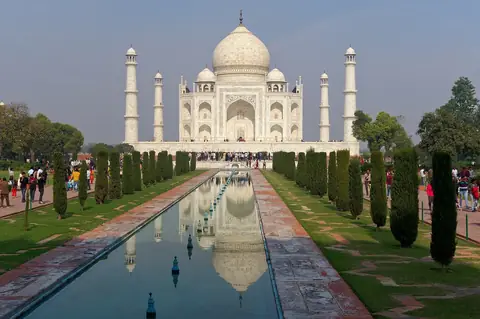
In Agra, sleep in Taj Ganj or on Taj East Gate Road, close to the walls. No polluting vehicles may go within 500 m of the Taj Mahal, and battery buses run from the Shilpgram parking area to the east gate, so a room a walk from the gate is the simplest way to be there before sunrise. Fatehabad Road, further south, has the larger hotels. Our Agra guide explains the gates and the Friday closure.
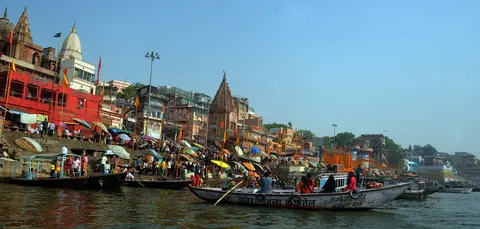
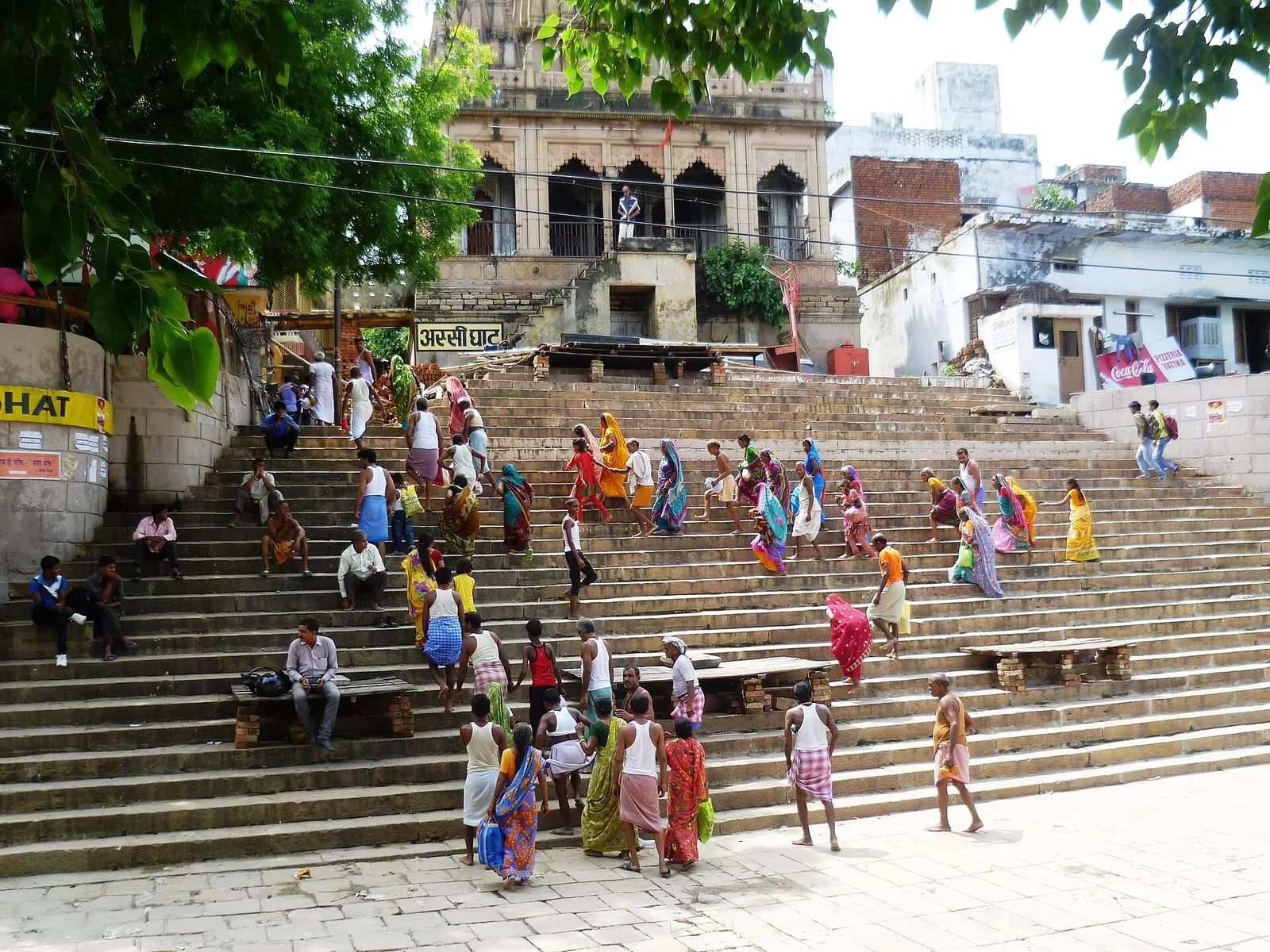
In Varanasi, stay by the river. The old city behind Dashashwamedh Ghat puts the evening aarti, the dawn boats and Kashi Vishwanath within a walk; the last stretch to most guest houses is on foot through narrow lanes. Assi Ghat, at the southern end of the ghats near Banaras Hindu University, is calmer, with cafés, ashrams and guesthouses, and the Subah-e-Banaras ceremony at sunrise. The Cantonment, by Varanasi Junction station, is handy after a late train but a long ride from the river. See our Varanasi guide for the ghats.
Khajuraho is small: the town around the Western Group of Temples has the main temples, the bazaar and the evening light and sound show on foot, while family-run homestays near the Eastern Group and the old village are quieter. Our Khajuraho guide covers both.
Rishikesh runs along both banks of the Ganga. Tapovan, at the Lakshman Jhula end of town, has the cafes, yoga studios and most rafting pick-ups; Swarg Ashram, across Ram Jhula on the east bank, is a cluster of ashrams where cars cannot cross the footbridges. Our Rishikesh guide explains which side suits which trip.
Rajasthan: inside the old walls of Jaipur, Jodhpur and Udaipur
In all three cities, the old town is the reason to come, and many of its old houses are now hotels. The trade-off is similar in each city: narrow, busy lanes, a last stretch on foot from the taxi, and old buildings that may have no lift. A newer district outside the walls gives you wider streets and larger hotels, at the price of a ride to every sight.
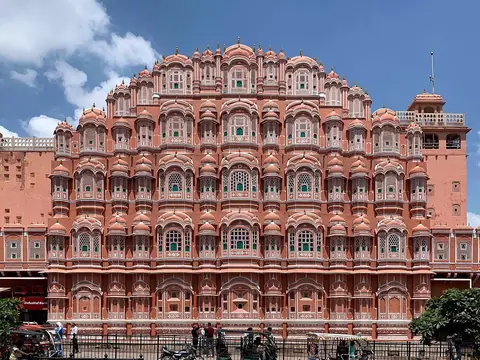
In Jaipur, stay inside the walled Pink City to walk to the City Palace, Jantar Mantar, Hawa Mahal and the bazaars; some of the hotels there are converted havelis. MI Road, along the southern edge of the walls, and C-Scheme, south of it, are quieter, an auto-rickshaw ride from the palace. See our Jaipur guide.
In Jodhpur, sleep in the old city around the clock tower, Sardar Market and the Gulab Sagar tank, at the foot of the fort rock, so you can walk up to Mehrangarh for the morning opening and eat on a roof below its walls. Ratanada and Circuit House Road, towards Umaid Bhawan and the airport, have the garden hotels. Our Jodhpur guide has the details.
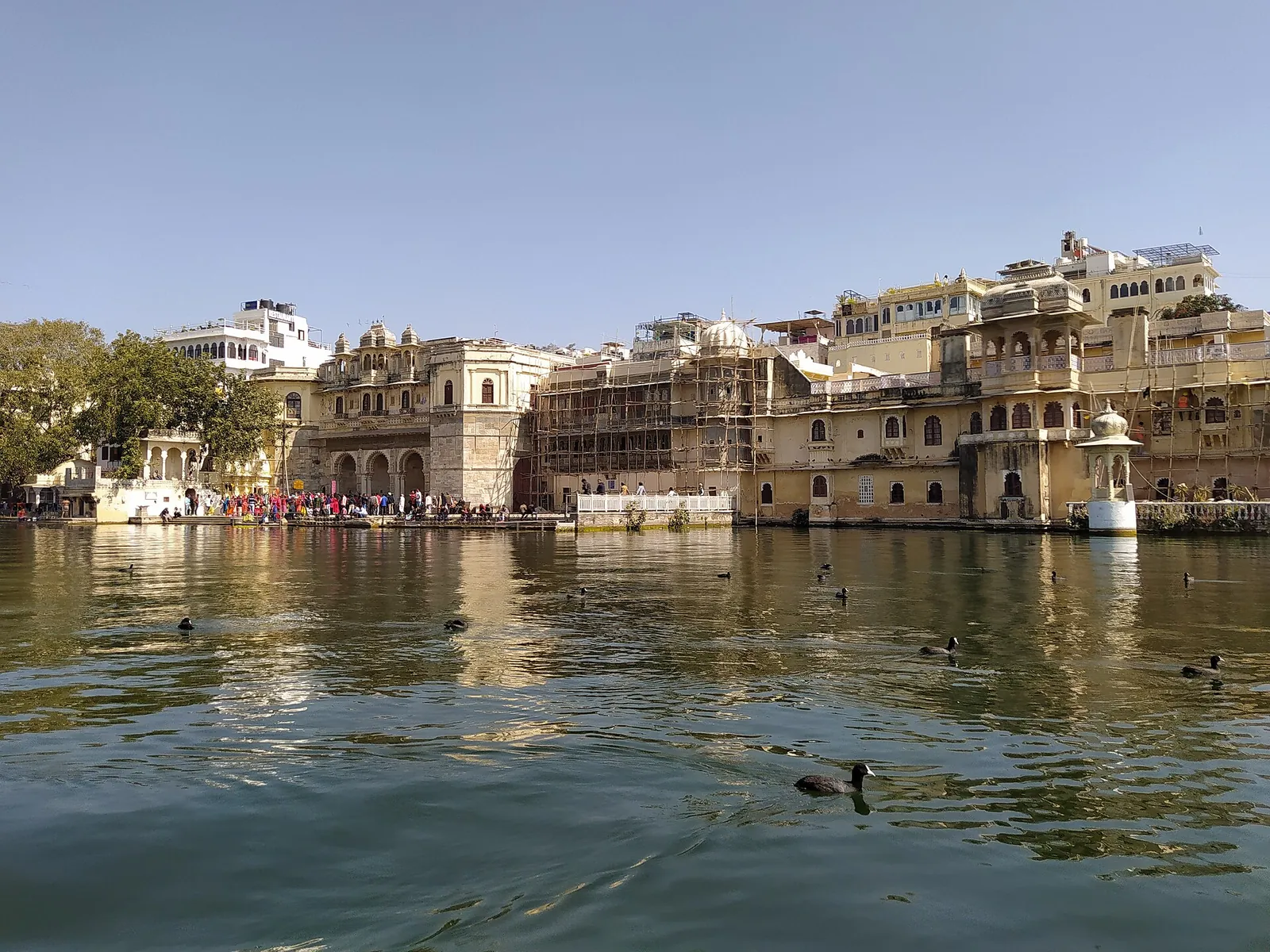
In Udaipur, the old city around Jagdish Temple and Gangaur Ghat puts the City Palace and Bagore ki Haveli a short walk away. Ambrai Ghat, across the water, is where you go for the view of the City Palace and the Lake Palace, and Gulab Bagh Road is a calmer street outside the busiest lanes. See our Udaipur guide.
Mumbai and Goa: the harbour end, then the right stretch of coast
In Mumbai, sleep at the south end of the city, close to the harbour. Colaba puts the Gateway of India and the Elephanta launches a short walk away; Fort, just north, is the Victorian district around Chhatrapati Shivaji Maharaj Terminus (CSMT) and the base for early trains, including the morning Vande Bharat to Goa; Churchgate and Marine Drive face the sea across Back Bay. Mumbai's main airport, Chhatrapati Shivaji Maharaj International (BOM), lies 14 km from Mumbai Central, with Colaba further south; app taxis such as Uber and Ola wait in every terminal building, and prepaid taxis run too, so a late landing can still end in Colaba. Some flights use Navi Mumbai International Airport (NMI) instead, so check which one your ticket names. Our Mumbai guide compares the three areas.
Goa is small enough to see from one base, but the coast changes from north to south. Panaji and Porvorim, on either bank of the Mandovi, put Old Goa, Fontainhas and the northern beaches each a short drive away, and suit a first visit with sightseeing. Calangute and Baga are the busy beaches of the north, with shacks, water sports and the liveliest evenings, Candolim just south of them is comparatively less crowded, and Palolem, about 38 km from Madgaon in the far south, is a calm beach. December and January are Goa's peak season, when rooms are hard to find unless you book well ahead. Our Goa guide covers the beaches and the two airports.
Kerala and Hampi: the old port, a night on the water, the hills and the ruins
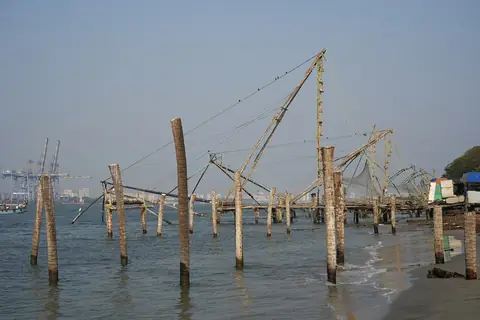
Kochi spreads over the mainland and a group of islands, so choose your side of the water first. Bolgatty Island, off Marine Drive in Ernakulam, where KTDC runs a state hotel in a Dutch mansion of 1744, is the base our Kochi guide prices. It is the base there because it is a heritage palace on an island just off Marine Drive, about 6 km from Ernakulam Junction by KTDC's figure, and still only two Water Metro hops from Fort Kochi. Fort Kochi is the place to sleep if you want the old town on foot: many of its colonial-era buildings are now hotels and homestays. Ernakulam, the commercial city around Marine Drive, suits an early train south. Our Kochi guide explains the Water Metro between the three.
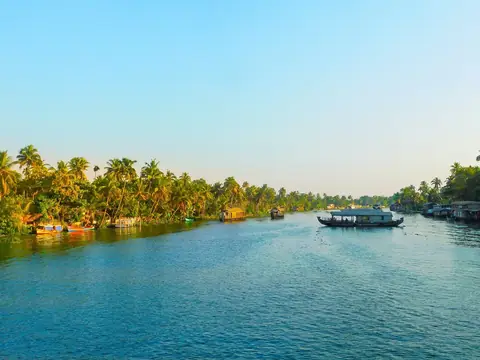
On the backwaters, most visitors split two nights: one on a houseboat from Alappuzha, which you board around midday and leave after breakfast, and one on land in Alappuzha town, near the beach, the railway station and the jetties, or at Kumarakom, on Vembanad Lake. The Kerala backwaters guide explains how to choose the boat.
In the hills, Munnar town is the base for an early start to Eravikulam National Park, 13 km up the road, while Chithirapuram, a few kilometres down the valley, has old bungalows among the tea. The park closes each year for the Nilgiri tahr's calving season, from 1 February to 1 April, so in February and March a night in Munnar is for the tea estates alone. See our Munnar guide.
At Hampi, sleep close to the ruins if you can. Kamalapura, a village beside them, suits early starts at the monuments. Hampi village, around the Virupaksha Temple and the bazaar, puts the river ghat at the door, and many travellers prefer to stay there, within Hampi itself. Hosapete, about 13 km away, has the nearest railway station, Hosapete Junction, and is the base to choose if you arrive late by train. Virupapur Gadde, across the Tungabhadra, is known for its cafés, but a room there ties every evening to the river crossing. Our Hampi guide compares Kamalapura, Hampi village and Hosapete.
Havelis, houseboats, homestays, ashrams and state-run hotels
Heritage havelis. In Rajasthan's old cities, many hotels and guesthouses are havelis, the town houses of merchant and noble families built around an inner courtyard, restored as small hotels. Expect painted rooms, carved windows and a roof terrace, but also steep stairs, thick walls and rooms of very different sizes in the same house, so read the description of the room type, not only the hotel.
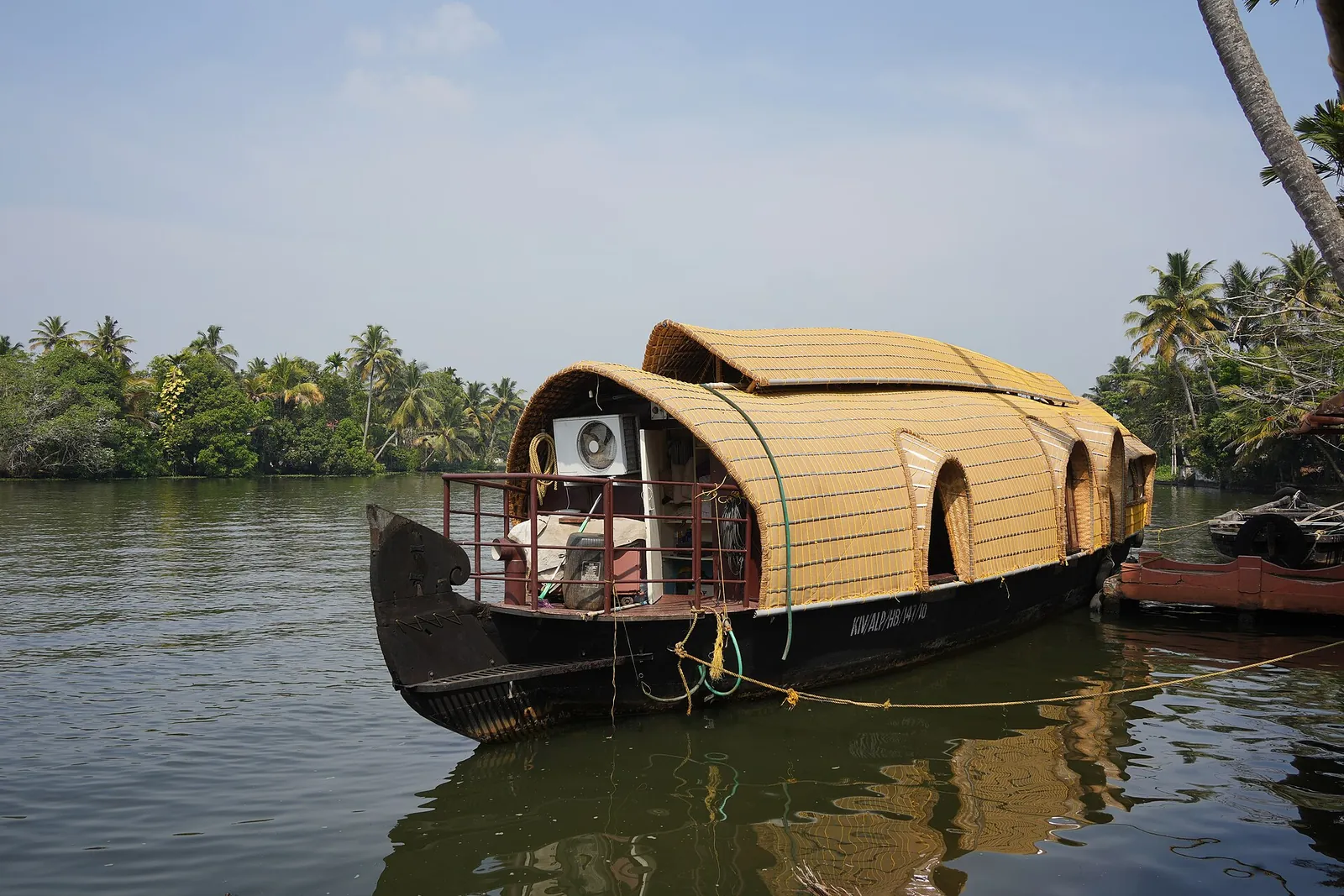
Houseboats. A Kerala houseboat is a converted kettuvallam, a rice barge with bedrooms, bathrooms, a lounge and a kitchen added under its curved roof, and its crew cooks your meals on board. Kerala's Department of Tourism classifies houseboats in three grades, Silver Vessel, Gold Vessel and Diamond Vessel, the highest. In Alappuzha, the District Tourism Promotion Council (DTPC) runs a houseboat pre-paid counter, and you can book ahead by paying the DTPC an advance of INR 2,500. The DTPC's own overnight package runs from 12:00 to 9:00 the next morning, 21 hours with lunch, evening snacks, dinner and breakfast. An overnight boat cruises in the afternoon and anchors for the night, so the evening is spent moored on the water. The luxury boat priced in our Kerala backwaters guide is in the room prices below.
Homestays. A homestay is a room in a family's house, often with home-cooked meals. Kerala's Department of Tourism grades homestays Silver, Gold or Diamond: in every grade each room has its own toilet and hot water around the clock, and only Diamond must have air conditioning. In Khajuraho, MP Tourism lists family homestays near the Eastern Group of temples.
Ashrams. In Rishikesh and at Assi Ghat in Varanasi, some ashrams take guests who come for yoga or study. An ashram is not a hotel, and each sets its own rules. In Rishikesh, Parmarth Niketan's guidelines say it expects guests to join the evening aarti and forbids smoking, intoxicants, drugs and non-vegetarian food, eggs included, and the Ministry of Tourism describes Rishikesh itself as a vegetarian-only and alcohol-free city. The Rishikesh guide gives the full rules of that ashram.
Palace hotels and hostels. In Rajasthan, parts of the former rulers' palaces now run as luxury heritage hotels, as in Jodhpur. At the other end of the scale, hostel chains rent private rooms with their own bathroom as well as dorm beds; the room our Rishikesh guide prices is one of them.
State-run hotels. Several state tourism corporations run their own hotels, often in well-placed old buildings, among them the Kerala Tourism Development Corporation (KTDC), MP Tourism, the Karnataka State Tourism Development Corporation (KSTDC) and the Uttar Pradesh State Tourism Development Corporation (UPSTDC), which runs tourist bungalows in Varanasi and other cities. Each sells its rooms on its own website, and our Kochi, Khajuraho and Hampi guides price a room in one of them.
At check-in: passports, Form III and the room bill
Every hotel, guest house, hostel or homestay records your stay. The owner must submit Form III (earlier known as Form C) online within 24 hours of your arrival, and again within 24 hours of your departure, so check-in always involves your passport and visa page. The Bureau of Immigration's rule counts home stays, paying guest houses, rented accommodation, tents and the premises of religious institutions as accommodation, so a family homestay, a hostel and an ashram fill in the same form as a hotel. Ask when you book whether the place accepts foreign guests, and bring your passport and visa page to check-in. Our India entry guide explains who must also register with the FRRO. Check-in times are each hotel's own: the room priced in our Agra guide checks in and out at noon, and the Hampi one checks in at 13:00. If someone at the airport or a station tells you that your hotel is closed or full, keep to your booking and call the hotel yourself; our health and safety guide covers this and other scams.
When you compare prices, look at whether tax is included. Since 22 September 2025, rooms of up to INR 7,500 a night carry 5% GST. Rooms above INR 7,500 a night carry 18% GST, the rate the GST Council set in 2019 for that band and left unchanged in 2025; the houseboat operator priced in our Kerala backwaters guide quotes 5% GST on its INR 50,000 boat, so ask what rate applies to your own booking. Hotels' own tariffs quote rates either with taxes included or with GST extra, so compare the totals.
What a room costs. Most place guides price one real room for two, checked on 17 October 2026. Under INR 4,000 a night: Khajuraho INR 2,290 at a state-run hotel, Hampi INR 3,119 plus GST on a weekday at another, Goa INR 3,750 with taxes, room only, and Rishikesh INR 3,791.59 plus INR 189.58 tax for a private room in a hostel. From INR 4,000 to INR 6,500: Kochi INR 4,500 plus GST with breakfast, on Bolgatty Island, Agra INR 4,555 plus taxes with breakfast, Mumbai from INR 5,250 plus 5% tax with breakfast, and Delhi INR 6,245 with breakfast and taxes. Above that come the heritage rooms and resorts: Jodhpur INR 7,500 plus GST in an old haveli, Munnar INR 8,499 with breakfast and taxes at Chithirapuram, 7 km from town, and Udaipur INR 11,000 plus 18% GST, on Gulab Bagh Road. The one-bedroom luxury houseboat priced in our Kerala backwaters guide costs INR 50,000 plus 5% GST for the night, with all meals on board. Our Varanasi guide prices a two-night package for two at a guest house inside the Kashi Vishwanath corridor, INR 14,742 plus 12% GST with airport transfers. The guest house prints 12% GST on that package, but rooms are taxed at 5% up to INR 7,500 a night and 18% above (see above), so ask the guest house which rate applies. Our Jaipur guide prices no room; it compares the Pink City, MI Road and C-Scheme.
Book the night that fixes your dates first: the houseboat, the room by the Taj for a sunrise visit, and anything in Goa in December and January. Rooms in Delhi, Jaipur or Mumbai can wait until your train dates are settled.
Practical questions
Which area of Delhi is best for a first stay?
Connaught Place and Janpath, the centre of New Delhi, a short taxi ride from New Delhi Railway Station, where the Airport Express Line ends. Old Delhi suits travellers who come for the bazaars.
Should I stay inside the old city in Rajasthan?
Yes, for a first visit: in Jaipur's Pink City, Jodhpur's old city by the clock tower and Udaipur's lanes around Jagdish Temple, the palace, the bazaars and the rooftop restaurants are a walk away. Choose a hotel outside the walls if you want wider streets, a lift or a garden.
Why does my hotel or homestay ask for my passport?
Indian law requires every place that lodges a foreigner, including homestays, hostels and ashrams, to send Form III (earlier Form C) to the Bureau of Immigration within 24 hours of your arrival and again when you leave, with your passport and visa details.
How do I book a Kerala houseboat?
In Alappuzha the DTPC runs a pre-paid houseboat counter, and you can book ahead by paying it an advance of INR 2,500; operators also sell their own boats. Kerala classifies boats as Silver, Gold or Diamond Vessel. Our Kerala backwaters guide compares boats and prices.
Are taxes included in Indian hotel prices?
Not always. Since 22 September 2025, rooms of up to INR 7,500 a night carry 5% GST, and hotels' tariffs quote rates either with taxes included or with GST extra, so compare the totals. Rooms above INR 7,500 a night carry 18% GST.
Where should I stay in Goa?
On the Panaji side of the Mandovi for a first visit with sightseeing, Candolim or Calangute if the beach and nightlife are the point, and Palolem in the south for quiet. December and January are the peak season, so book those dates well ahead.
Sources and checks before you travel
Reference sources for the version dated 17 October 2026. Confirm opening times, access, transport and conditions for your travel dates.
- Bureau of Immigration: obligation of hotels, hospitals and educational institutes ↗ — opens in a new tab
- GST Council: recommendations of the 56th meeting (PIB release of 3 September 2025) ↗ — opens in a new tab
- France Diplomatie: India security advice ↗ — opens in a new tab
- Goa Tourism (Department of Tourism, Government of Goa): staying in Goa ↗ — opens in a new tab
- Kerala Tourism: Cruise through Kerala in a houseboat ↗ — opens in a new tab
- Kerala Tourism: houseboats classification scheme ↗ — opens in a new tab
- Kerala Tourism: checklist for classification of homestays ↗ — opens in a new tab
- Madhya Pradesh Tourism (MP Tourism): homestays in Khajuraho ↗ — opens in a new tab
- Madhya Pradesh Tourism (MP Tourism): accommodation ↗ — opens in a new tab
- Uttar Pradesh State Tourism Development Corporation (UPSTDC) ↗ — opens in a new tab
- Karnataka Tourism: Hampi ↗ — opens in a new tab
- Ministry of Tourism (Incredible India): Delhi ↗ — opens in a new tab
- Delhi Airport: to and from the airport by metro ↗ — opens in a new tab
- UP Tourism, Taj Mahal site: do's and don'ts ↗ — opens in a new tab
- UP Tourism, Taj Mahal site: visiting hours ↗ — opens in a new tab
- Kashi portal (Varanasi Smart City): Assi Ghat ↗ — opens in a new tab
- Kashi portal (Varanasi Smart City): Ganga Aarti ↗ — opens in a new tab
- Uttarakhand Tourism: Rishikesh ↗ — opens in a new tab
- Ministry of Tourism (Incredible India): Ram Jhula ↗ — opens in a new tab
- Ministry of Tourism (Incredible India): Rishikesh ↗ — opens in a new tab
- Incredible India (Ministry of Tourism): Jaipur ↗ — opens in a new tab
- Ministry of Tourism (Incredible India): Udaipur ↗ — opens in a new tab
- Ministry of Tourism (Incredible India): Jagdish Temple ↗ — opens in a new tab
- Ministry of Tourism (Incredible India): Goa's coastline ↗ — opens in a new tab
- Ministry of Tourism (Incredible India): Calangute Beach ↗ — opens in a new tab
- Ministry of Tourism (Incredible India): Fort Kochi ↗ — opens in a new tab
- Kerala Tourism: Kumarakom ↗ — opens in a new tab
- Kerala Tourism: Chithirapuram ↗ — opens in a new tab
- Kerala Tourism: Eravikulam National Park ↗ — opens in a new tab
- Eravikulam National Park (Anaimudi Forest Development Agency): ticket booking ↗ — opens in a new tab
- Ministry of Tourism (Incredible India): Jodhpur ↗ — opens in a new tab
- Delhi Tourism: hotel listing in Aerocity ↗ — opens in a new tab
- UK Foreign Office (FCDO): India safety and security ↗ — opens in a new tab
- Airports Authority of India: eAIP, AD 2.1 Mumbai (VABB) ↗ — opens in a new tab
- Alappuzha district (DTPC): tourist packages ↗ — opens in a new tab
- Parmarth Niketan: ashram guidelines ↗ — opens in a new tab
- Delhi Tourism: best time to visit ↗ — opens in a new tab
- UP Tourism, Taj Mahal site: FAQs ↗ — opens in a new tab
- PIB: GST rates on services recommended by the 37th GST Council meeting (2019) ↗ — opens in a new tab
Photo credits
A houseboat on the backwaters near Nedumudy, in Alappuzha district: Kerala's converted rice barges are a night's stay in themselves.
Photograph: Ingo Mehling — opens in a new tab · CC BY-SA 4.0 — opens in a new tab
Changes: Resized and converted to WebP; displayed with responsive crops. · Original photograph and licence details ↗ — opens in a new tab
Udaipur's old city meets Lake Pichola at Gangaur Ghat, the area to sleep in for the City Palace and the ghats.
Photograph: Akbarzoda — opens in a new tab · CC BY-SA 4.0 — opens in a new tab
Changes: Resized and converted to WebP; displayed with responsive crops. · Original photograph and licence details ↗ — opens in a new tab
Assi Ghat, at the southern end of Varanasi's ghats, is the calmer base, with cafés, ashrams and guesthouses nearby.
Photograph: Radosław Botev — opens in a new tab · CC BY 3.0 pl — opens in a new tab
Changes: Resized and converted to WebP; displayed with responsive crops. · Original photograph and licence details ↗ — opens in a new tab
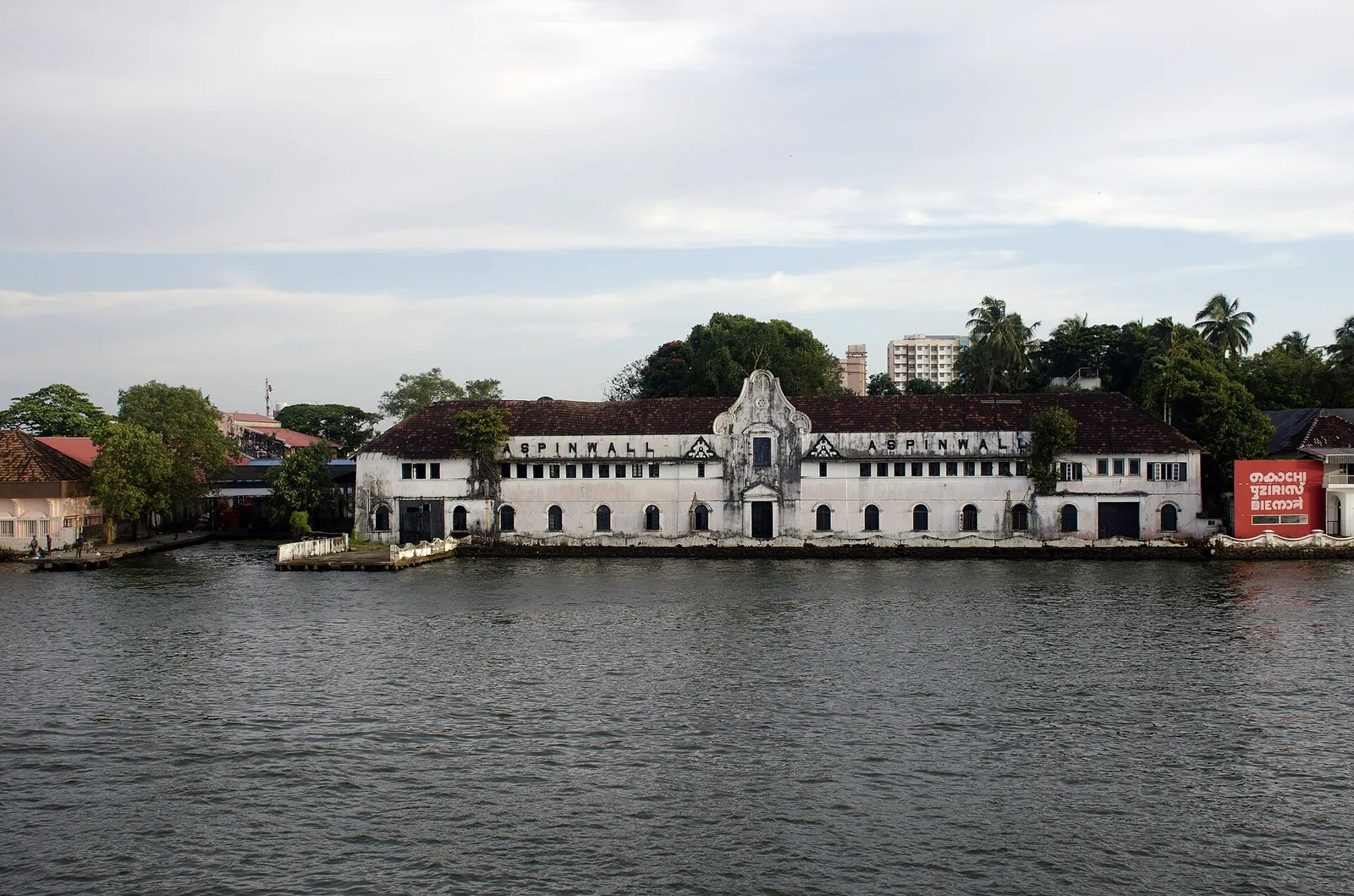
Aspinwall House, a former spice-trading building and Biennale venue, on the Fort Kochi waterfront
Photograph: Rangan Datta Wiki — opens in a new tab · CC BY-SA 4.0 — opens in a new tab
Changes: Resized and converted to WebP; displayed with responsive crops. · Original photograph and licence details ↗ — opens in a new tab