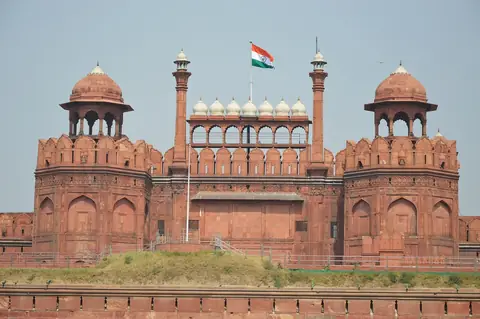
Plan your trip · India
First trip to India: how many days, which route and which season
India rewards a first trip that does less, better. The distances are continental, the trains between the great cities fill weeks ahead, and the right month in Rajasthan is the wrong one in Kerala, so the decisions you make at home matter more than anywhere else in Asia. This guide helps you make them in order: how many days to give the trip, which of our five routes fits them, which season suits which region, and what to leave for another visit. Then come the practical choices for the first days: where to land, how to pay, how to get a phone connection, when to take the train and when to fly, what to wear at a temple, and the scams and no-go areas that the European foreign ministries name.
- Suggested time
- One week for the Golden Triangle; 11 to 13 days with Varanasi and Khajuraho or Rajasthan; two weeks or more with the south
- Where to stay
- Fly into Delhi (DEL) for the north; Cochin (COK) for Kerala; Mumbai (BOM) for Mumbai, Goa and Hampi
- Season and timing
- November to February for the north and Rajasthan; January for Kerala with Munnar, January or February for the backwaters alone; November to February for Mumbai and Goa; avoid April to June on the northern plains
The short answer
Give a first trip at least seven days and start in Delhi: six nights on the Golden Triangle, three in Delhi, one in Agra and two in Jaipur, is the classic first week. With 11 to 13 days, add Varanasi and Khajuraho or Rajasthan; with two weeks or more, take a domestic flight south to Kerala or to Mumbai and Goa. Book the e-Visa first, at least 4 days before you arrive (the official e-Visa site accepts applications up to 120 days ahead; if the form rejects your arrival date, apply closer to the trip), then the train legs on IRCTC under the Foreign Tourist quota, which opens up to 365 days ahead, then the rooms. Two key prices, checked on 17 October 2026: the 30-day e-Tourist visa costs most European, US, Canadian and Australian passports USD 25 from July to March (USD 10 from April to June), and the Taj Mahal costs a foreign visitor INR 1,100, plus INR 200 for the main mausoleum. Go between November and February; if the trip includes Kerala, go in January.
One week, two weeks or three: how much India a first trip can hold
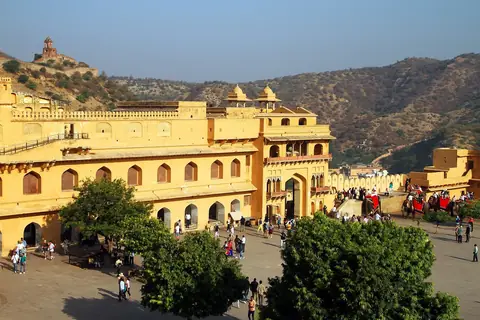
One week: the Golden Triangle. Seven days and six nights fit Delhi, Agra and Jaipur at a pace that leaves room to look: three nights in Delhi for the Mughal tombs and the lanes of Old Delhi, one in Agra for the Taj Mahal at sunrise and two in Jaipur for Amber Fort and the walled Pink City. You go by train from Delhi to Agra, by car with a driver from Agra to Jaipur by way of Fatehpur Sikri, and back to Delhi by train or a domestic flight. The Taj Mahal is closed on Fridays, so arrive in Agra on any evening but a Thursday if you want the sunrise visit the next morning. Our Golden Triangle itinerary has the day plan, the other weekday closures that decide the order and a five-day version with four nights. A week is not enough for anything more: the south is a flight away, and squeezing it in turns the trip into airports.
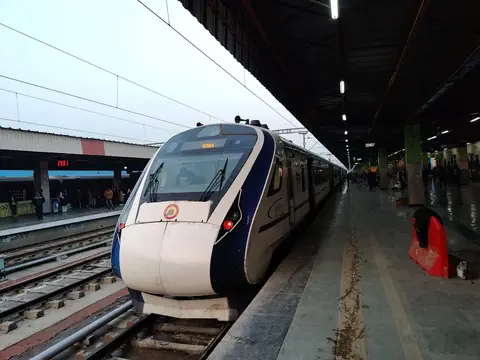
Eleven to thirteen days: the Golden Triangle plus one more region. For temples and river life, add our Varanasi and Khajuraho route: two nights in Varanasi, where pilgrims bathe and pray on the river steps of the Ganges at dawn, and two in Khajuraho, where the Chandela kings left sandstone temples carved from plinth to spire with gods, dancers, musicians and lovers. The Khajuraho-Banaras Vande Bharat Express joins the two. From Delhi, the New Delhi-Varanasi Vande Bharat Express is scheduled at approximately eight hours, or you can fly. At the end, return to Delhi from Khajuraho Airport, 2 km from the temples, or on the Khajuraho-Hazrat Nizamuddin Vande Bharat. For forts and palaces, carry on west with our Rajasthan itinerary: the Rathore fort of Mehrangarh on its cliff above the blue lanes of Jodhpur, the white marble Jain temple at Ranakpur on the road south, and Udaipur, the lake city of the Mewar rulers. Its two Jaipur nights are the last two of the Golden Triangle, so you take the train on to Jodhpur instead of going back to Delhi.
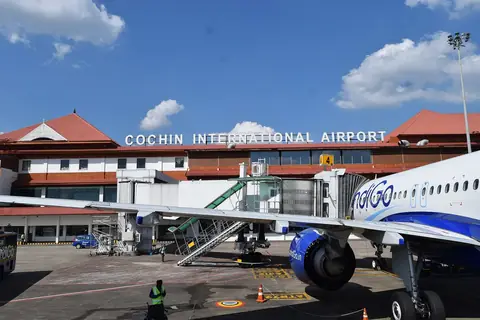
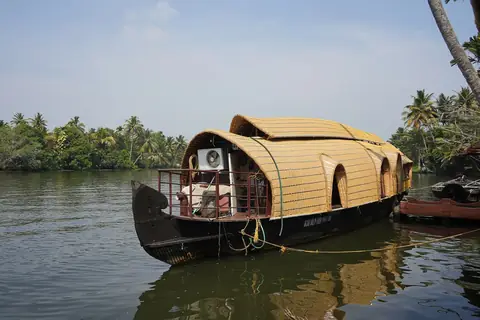
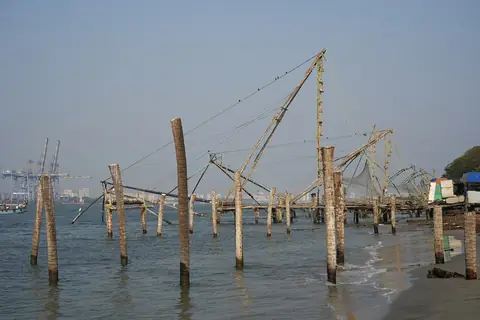
Two weeks or more: the north and the south. The south is a different India, greener and slower, and it needs a flight. Fly from Delhi to Cochin International Airport for our South India itinerary: the Chinese fishing nets and spice lanes of Kochi, the tea that covers the hills around Munnar, and a night on a houseboat on the Alappuzha backwaters. Or fly to Mumbai for our Mumbai, Goa and Hampi itinerary, from the Victorian stations and harbour caves of Mumbai down the Konkan coast by day train to the Portuguese churches of Goa, then over the Western Ghats by road to Hampi, where the ruins of the Vijayanagara capital lie among piles of granite boulders. Book the domestic flight between the north and the south once the train days are fixed; each airline's booking page shows the fares and times for your date, and the transport guide linked under "Where to land" names the main airlines.
For anything longer than the Golden Triangle, book an open-jaw ticket, into one city and out of another, rather than a return to Delhi: the south and Rajasthan routes end far from where they start, and each itinerary names the airport it ends at.
- Golden Triangle alone: six nights and seven days, flying home from Delhi.
- With Varanasi and Khajuraho: ten nights and 11 days if you fly on to Varanasi on the Golden Triangle's last day, or 12 days with a night in Delhi before the train, flying home from Delhi.
- With Rajasthan: 11 nights and 12 days with three Udaipur nights, or 12 nights and 13 days with four, leaving by a domestic flight from Udaipur that connects to your flight home.
- With South India: 13 nights and 14 days if you fly south on the Golden Triangle's last day, or 15 days with a night in Delhi in between, flying home from Cochin.
- With Mumbai, Goa and Hampi: 15 nights and 16 days, or 17 days with a night in Delhi in between, flying home from Goa.
Choosing the month: the north in winter, Kerala between its two monsoons
The India Meteorological Department (IMD) divides the year into four seasons: winter in January and February, the pre-monsoon season from March to May, the southwest monsoon from June to September, which IMD calls "the principal rainy season of the country", and the northeast or post-monsoon season from October to December. They reach the regions at different times, so the month and the route have to be chosen together.
Delhi, Agra, Jaipur, Rajasthan, Varanasi and Khajuraho are at their best from November to February, dry and cool by day, with cold nights and foggy mornings; October and March are warmer. Severe air pollution is a major health hazard in the winter months from October to February, with north Indian cities most affected; March comes after that season, warmer, with the heat building. Avoid April to June on the northern plains if you can: heat waves come mainly from March to June, peaking in May, and Delhi, Uttar Pradesh, Rajasthan and Madhya Pradesh are among the states most prone to them.
Kerala has two wet seasons: the southwest monsoon from June to September and the northeast monsoon from October to December. January and February fall between them, which makes them the months for the backwaters and the tea hills; Eravikulam National Park near Munnar closes each year for the Nilgiri tahr's calving season, from 1 February to 1 April. Mumbai, Goa and Hampi suit November to February, after the monsoon and before the heat; Konkan Railway runs a monsoon timetable with speed restrictions along the route, in 2026 from 15 June to 20 October, so check IRCTC for your date. A trip that combines the north and the south therefore works best in January, or in February if Eravikulam is not on your list.
Most Hindu festivals follow a lunisolar calendar, so their dates change each year; the Ministry of Tourism's Incredible India festival pages announce them. Diwali falls in October or November and Holi usually in March. If your dates include one, book the trains as soon as you know them. The month-by-month detail, the smog index and the festivals are in our guide to the best time to visit India.
What a first trip can leave out
The south in a single week. The Golden Triangle and Kerala are two trips joined by a flight; in seven days, choose one of them. If you land in Kochi, our South India route fills the week on its own.
One-night stops. One night in Agra works because the Taj Mahal opens 30 minutes before sunrise and the town is small, but most places need two. Varanasi needs an evening for the aarti, a dawn on the river and half a day at Sarnath, and Khajuraho a first evening at the light and sound show and a sunrise at the Western Group. Two nights in fewer places beat one night in many, because each move by train or road costs most of a day.
Long drives at night. India has a high death rate from road accidents, and they are most common at night and in fog. Keep long transfers for daylight and use the trains for the long legs; our itineraries are planned that way.
Side trips. Rishikesh, on the Ganges north of Delhi, makes a fine three-night add-on for yoga and the evening aarti, but it is a detour from every route above. The same goes for the side trips in each itinerary: they suit a longer trip or a second visit better than a first week.
Where to land, and when to take the train or fly
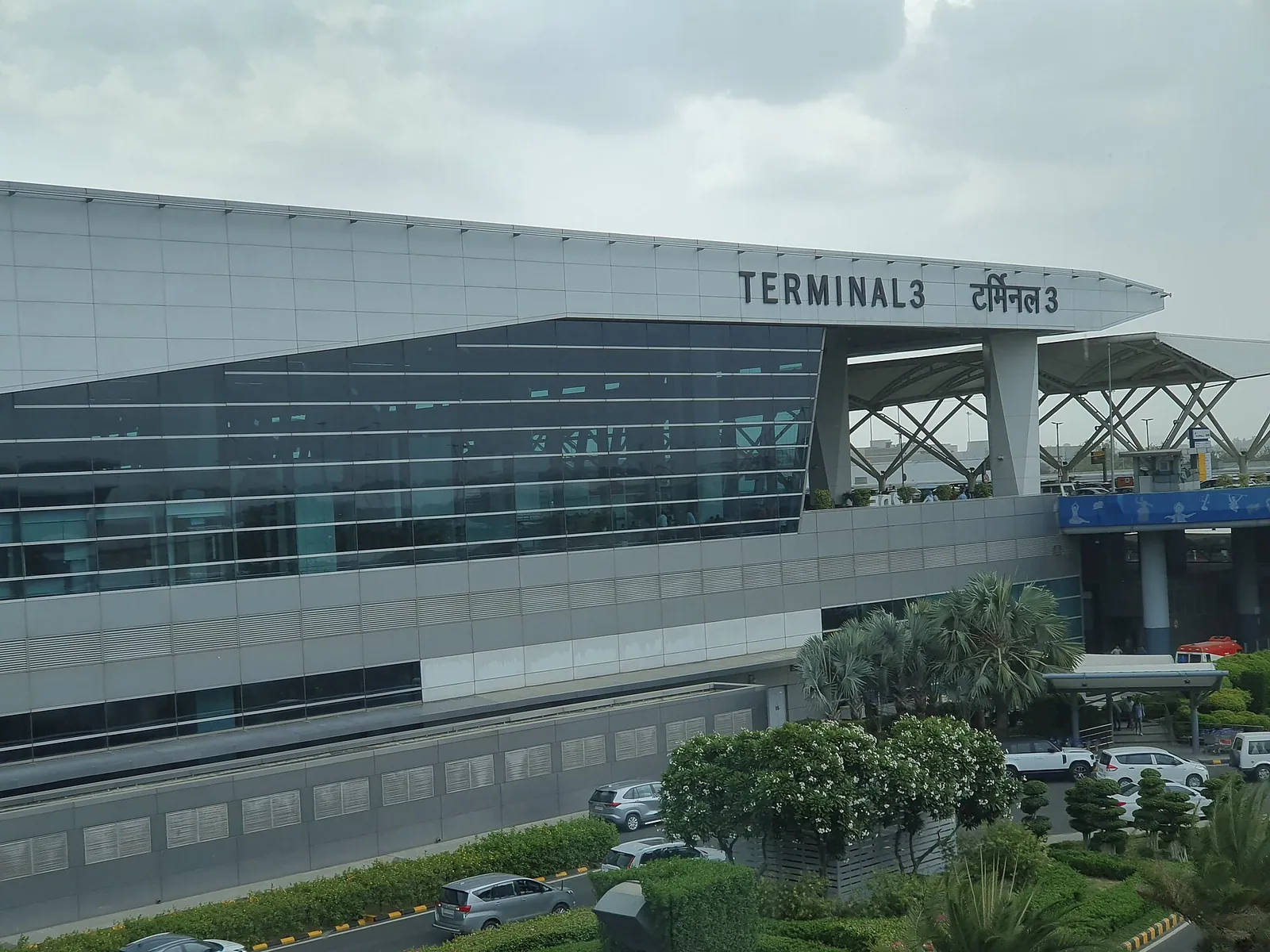
Most first trips start at Delhi (DEL), and every gateway on our routes accepts the e-Visa: the official list of designated airports includes Delhi, Mumbai, Cochin (Kochi), Goa (Dabolim), Goa (Mopa), Jaipur and Varanasi. The e-Visa needs a passport with at least six months' validity at the time of application and at least two blank pages for the immigration stamp; to be safe, count the six months from your arrival. Within 72 hours before you land, fill in the e-Arrival card online or in the Indian Visa Su-Swagatam app; it is arrival information, not a visa, and our India entry guide covers both. The Airport Express Line (Orange Line) runs from Terminal 3 to New Delhi Railway Station in around 25 minutes; first trains leave at 04:45, last trains at 23:15 (Dwarka Sector 21) and 23:30 (New Delhi), and ticket machines are in the Terminal 3 and Terminal 2 arrival halls. Terminal 1 has its own Magenta Line station. App taxis such as Uber and Ola wait in every terminal building, and prepaid taxis are offered too.
Mumbai has two airports, Chhatrapati Shivaji Maharaj International (BOM) and Navi Mumbai International (NMI), which was inaugurated in October 2025, and Goa has two, Dabolim and Mopa, so check the airport on every ticket. Cochin International Airport (COK) is the gateway for Kerala: Munnar is about 119 km away by road and Alappuzha about 85 km.
Trains within a region, flights between regions. From Delhi to Agra, the fast train is the Gatimaan. The Gatimaan Express launched in 2016 with an 08:10 departure from Hazrat Nizamuddin and a 09:50 arrival at Agra Cantt; it does not run on Fridays. Agra and Jaipur are 232 km apart by road, and a car with a driver lets you stop at Fatehpur Sikri on the way, which makes it most of a day. Varanasi and Khajuraho have Vande Bharat services, and the Konkan Railway runs from Mumbai to Goa in daylight; between the north and Kerala or Goa, fly. Indian Railways publishes current departure times and fares only in its journey search, so check IRCTC for your date. Visitors book trains on IRCTC with a foreign mobile number: the account costs INR 100 plus GST, and IRCTC's foreign-tourist terms charge 1.5 times the normal fare plus INR 200 plus GST per ticket under the Foreign Tourist quota, open up to 365 days ahead. Book as soon as your dates are fixed, because Vande Bharat trains ran above 100 percent occupancy in 2024-25 and in the first quarter of 2025-26, and carry your original passport and visa on every train. Our guide to transport in India covers the classes, the waiting lists and each route's trains.
Money, cards, a phone connection and what a day costs
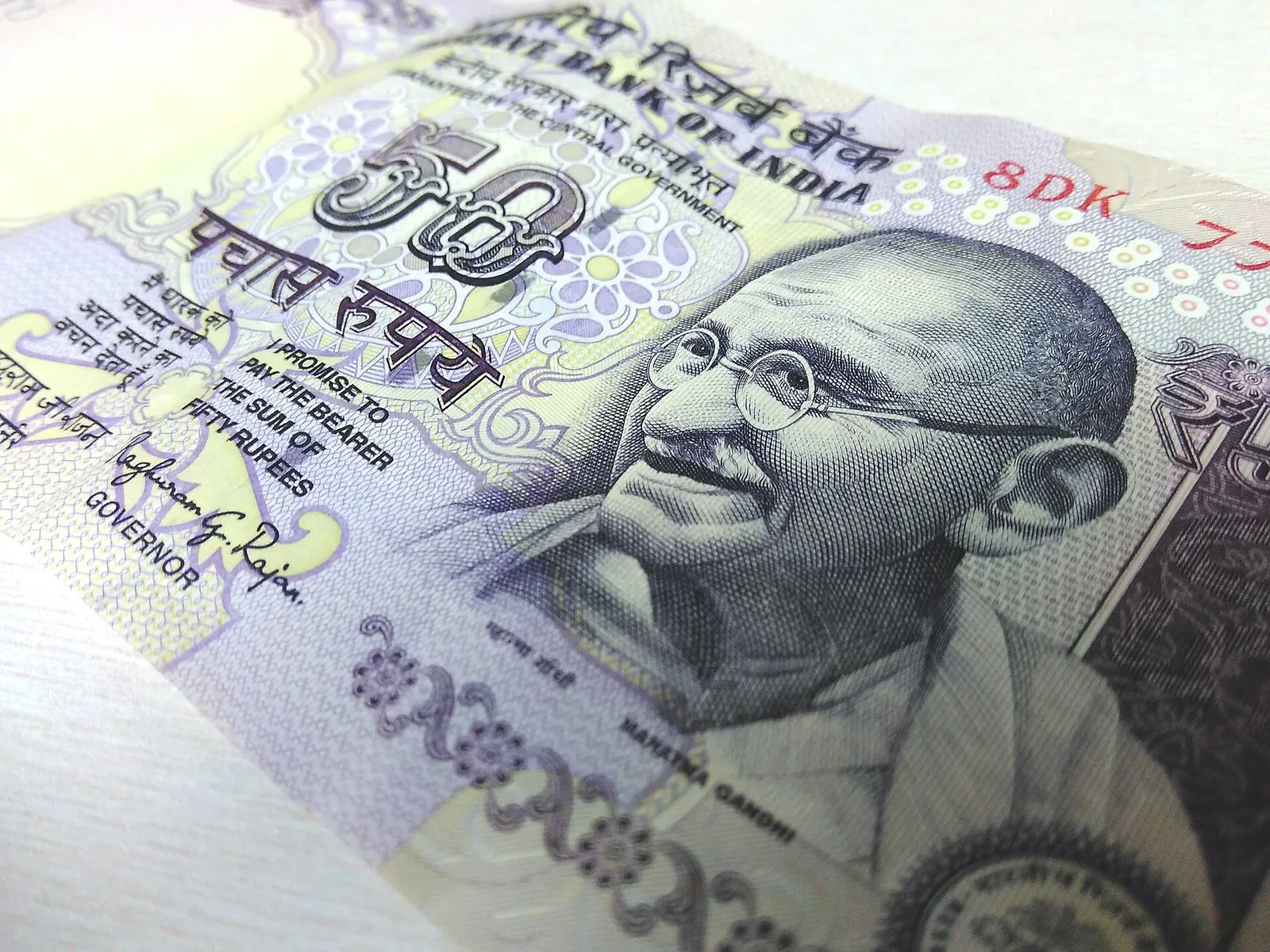
India's currency is the rupee (INR). The Reserve Bank of India lets you bring in foreign currency without any limit, but you declare it to Customs on arrival if notes and travellers cheques together exceed USD 10,000, or notes alone exceed USD 5,000; a visitor may bring rupee notes up to INR 25,000, and only when entering through an airport; our India entry guide has the full customs rules. Cards are accepted by larger banks and in upmarket hotels, restaurants and shopping centres (Germany's Foreign Office), and a credit card helps where cash is hard to get, especially in rural areas; carry cash for markets, auto-rickshaws and small sights.
RBI lets foreign visitors pay by UPI, India's Unified Payments Interface, through a prepaid wallet that licensed issuers sell; before you fly, open the wallet issuer's own sign-up page to see which passports and airports it covers, and do not count on UPI alone. Online tickets save money at the monuments: the Archaeological Survey of India (ASI) charges foreign visitors INR 600 in cash or INR 550 online, on ASI's booking site, asi.paygov.org.in, at the Red Fort, Humayun's Tomb and several other monuments, and IRCTC accepts only international debit or credit cards for Foreign Tourist quota tickets.
For a phone connection, Delhi Airport's own app, Hoi, offers eSIM booking among its services. For a physical SIM, take your passport and visa page to the operator's counter; Airtel says a foreign national's number stays valid until the visa's validity date. Keep your home number working as well: IRCTC's foreign-user registration sends a one-time code to a mobile number with a country code other than 91. Leave satellite phones and satellite-enabled GPS devices at home: it is illegal to possess or operate them in India without a licence, and GPS trackers may not be carried on flights in India. During protests and curfews, authorities may cut mobile networks and the internet.
What a day costs for two. A sightseeing day in Delhi, at the prices in our Delhi guide checked on 17 October 2026, costs INR 6,245 for an executive double room with breakfast, taxes included, and INR 2,200 for two at the Red Fort and Humayun's Tomb booked online: INR 8,445 before meals, the metro and taxis. Each itinerary prices its own route in full, and our where-to-stay guide names the area to sleep in at each stop.
Dress, shoes and cameras at temples, mosques and churches
At temples, mosques, gurdwaras and churches, cover your shoulders and knees, take your shoes off before a shrine, and ask before you photograph people at prayer.
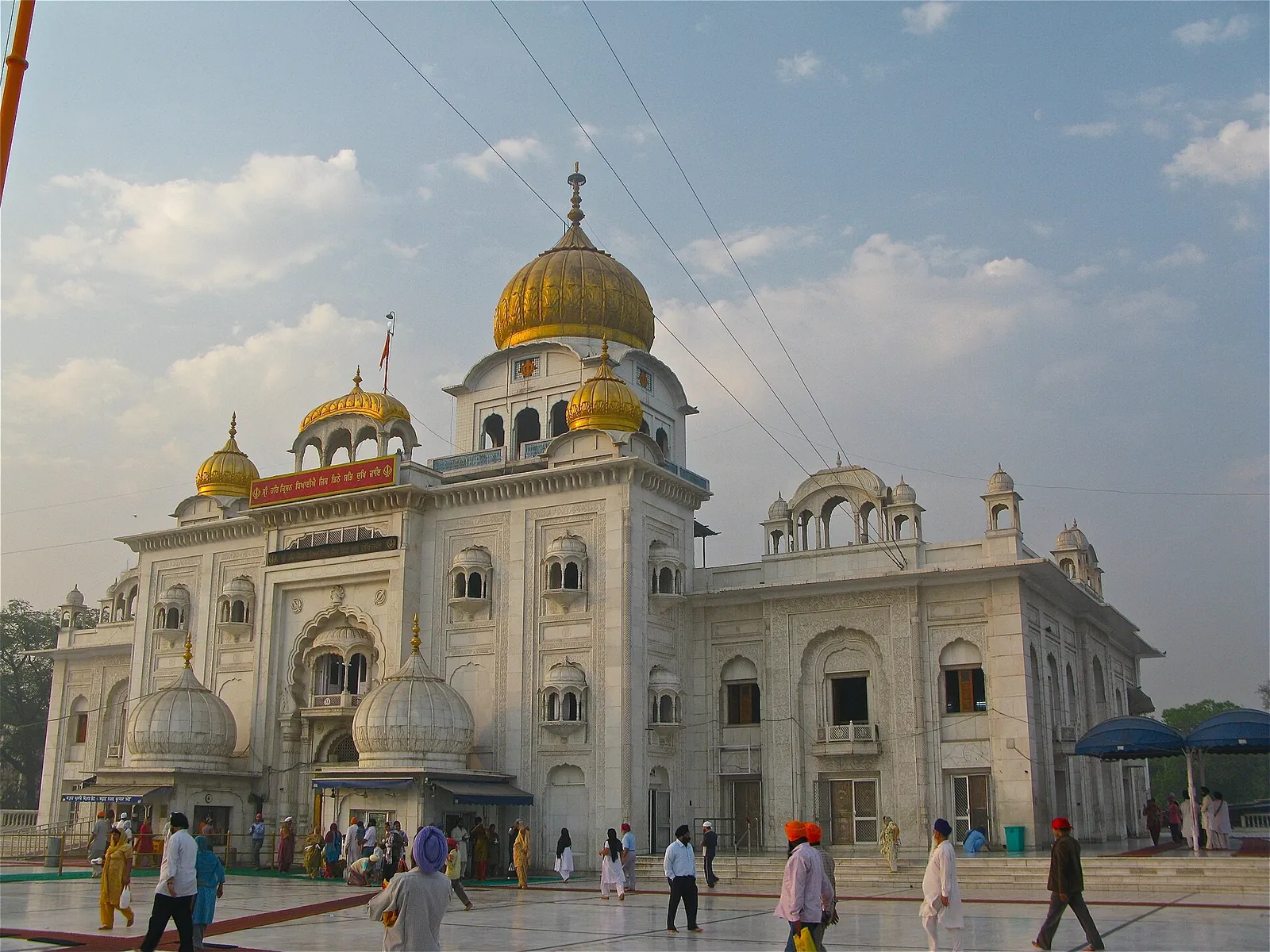
Each place adds its own rules. At Gurudwara Bangla Sahib in Delhi, the Ministry of Tourism asks visitors to dress modestly and cover their head and shoulders. In Goa, the state's Department of Tourism asks visitors to observe decency and decorum in dress at religious places, and that includes the churches of Old Goa. At Shri Kashi Vishwanath in Varanasi, the temple trust allows no phones, other gadgets or even pens inside, provides free lockers and asks visitors to wear decent clothes, and at the Paradesi Synagogue in Kochi, Kerala Tourism says visitors are expected to enter barefoot. At the Taj Mahal, the foreigner's ticket includes shoe covers, and photography is not allowed inside the main mausoleum.
Varanasi's cremation ghats are working grounds where families say goodbye to their dead: pass at a distance, quietly, and leave the camera away. Photography near military sites, government buildings, airports and railway stations may be misunderstood.
Scams to recognise, and the areas our routes leave out
Four scams come up again and again. At Delhi airport and New Delhi railway station, touts tell new arrivals that their hotel is closed and steer them to an agency selling over-priced tours; keep to your own booking. Agents claim that a train is full or cancelled in order to sell a private car, so book on IRCTC yourself. Gem and jewellery fraud is common, especially in Rajasthan and Goa, often with an offer to ship the stones home; buy only what you can carry away. And drinks are spiked in some of Goa's night bars, so keep your glass in sight. The emergency number is 112, and the Ministry of Tourism's tourist helpline is 1800 11 1363. Our health and safety guide has the full advice, from vaccines to women travellers.
The UK FCDO advises against all travel to the Union Territory of Jammu and Kashmir, except within, and by air to and from, Jammu city; against all travel within 10 km of the India-Pakistan border; and against all but essential travel to Manipur. AsiaVela's India guides therefore send no reader to Jammu and Kashmir, Manipur or anywhere within 50 km of the Pakistan border, so the Attari-Wagah ceremony is not covered, and neither is Jaisalmer, which lies further west towards the border, and this edition has no guides for Ladakh or the north-eastern states. Germany's Foreign Office also advises against the immediate border area with Pakistan. France Diplomatie formally advises against the Kashmir valley and the surroundings of the border, including the Wagah-Attari crossing, and tells visitors to avoid booking rooms in the small hotels of Paharganj and Nabi Karim, two central New Delhi districts, because of crime. Other governments may draw these lines differently; read your own country's advice before you book.
Practical questions
How many days do I need for a first trip to India?
Seven days and six nights cover the Golden Triangle of Delhi, Agra and Jaipur. With 11 to 13 days, add Varanasi and Khajuraho or Jodhpur and Udaipur; with two weeks or more, fly south after the Golden Triangle to Kerala or to Mumbai and Goa.
Can I see the north and Kerala in one trip?
Yes, in about two weeks: six nights on the Golden Triangle, then a domestic flight to Cochin International Airport and seven nights in Kochi, Munnar and the backwaters. Go in January, when both regions are dry and Eravikulam National Park near Munnar is open.
What is the best month for a first trip to India?
November to February for Delhi, Agra, Jaipur and Rajasthan, with cold nights, fog and the worst air of the year as the trade-offs; January for Kerala, between its two monsoons. Avoid April to June on the northern plains, where May is IMD's peak month for heat waves.
Which airport should I fly into?
Delhi (DEL) for the Golden Triangle, Varanasi and Rajasthan; Cochin (COK) for Kerala; Mumbai (BOM) for Mumbai, Goa and Hampi. All three accept the e-Visa, as do Jaipur, Varanasi and both Goa airports, so you can fly in to one city and out of another.
Can I get a SIM card or eSIM in India as a tourist?
Yes. Delhi Airport's Hoi app offers eSIM booking; for a physical SIM card, take your passport and visa page to an operator's counter. Keep your home number working too, because IRCTC sends its registration code to a foreign mobile number.
How much does a day in India cost for two?
A sightseeing day in Delhi costs two people about INR 8,445 at the prices in our Delhi guide, checked on 17 October 2026: INR 6,245 for a double room with breakfast, taxes included, and INR 2,200 for the Red Fort and Humayun's Tomb booked online. Meals, trains, flights and taxis come on top.
Sources and checks before you travel
Reference sources for the version dated 17 October 2026. Confirm opening times, access, transport and conditions for your travel dates.
- Government of India e-Visa site (Ministry of Home Affairs): e-Visa main page ↗ — opens in a new tab
- Government of India e-Visa site: e-Tourist visa fee by country (8 September 2026) ↗ — opens in a new tab
- UP Tourism, Taj Mahal site: how to reach the Taj Mahal ↗ — opens in a new tab
- UP Tourism, Taj Mahal site: Fatehpur Sikri ↗ — opens in a new tab
- PIB (Ministry of Railways): Gatimaan Express to be flagged off, 4 April 2016 ↗ — opens in a new tab
- UP Tourism, Taj Mahal site: entry fees and visiting hours ↗ — opens in a new tab
- Archaeological Survey of India: Red Fort ↗ — opens in a new tab
- Archaeological Survey of India: Humayun's Tomb ↗ — opens in a new tab
- IRCTC: Foreign Tourist quota booking (PDF) ↗ — opens in a new tab
- IRCTC: Foreign Tourist quota terms and conditions (PDF) ↗ — opens in a new tab
- IRCTC: foreign user registration guide (PDF) ↗ — opens in a new tab
- PIB (Ministry of Railways): Vande Bharat Express backgrounder, 16 January 2026 ↗ — opens in a new tab
- PIB (Ministry of Railways): Vande Bharat trains in Maharashtra and Madhya Pradesh, 11 February 2026 ↗ — opens in a new tab
- Konkan Railway: monsoon 2026 ↗ — opens in a new tab
- Press Information Bureau (PIB): Navi Mumbai International Airport, 8 October 2025 ↗ — opens in a new tab
- Delhi Airport: to and from the airport by metro ↗ — opens in a new tab
- Delhi Airport: home page ↗ — opens in a new tab
- Kerala Tourism: Munnar ↗ — opens in a new tab
- Kerala Tourism: Kuttanad ↗ — opens in a new tab
- Eravikulam National Park (Anaimudi Forest Development Agency): ticket booking ↗ — opens in a new tab
- India Meteorological Department: Statement on the climate of India during 2025 (1 January 2026) ↗ — opens in a new tab
- India Meteorological Department, New Delhi: Safdarjung climatological table 1991-2020 ↗ — opens in a new tab
- India Meteorological Department: FAQ on Heat Wave ↗ — opens in a new tab
- India Meteorological Department, Chennai: Northeast Monsoon 2024 report ↗ — opens in a new tab
- Ministry of Tourism, Incredible India: Holi ↗ — opens in a new tab
- Reserve Bank of India: miscellaneous forex facilities (FAQ, updated 28 November 2025) ↗ — opens in a new tab
- Reserve Bank of India: UPI for foreign nationals and NRIs visiting India (circular, 10 February 2023) ↗ — opens in a new tab
- UK FCDO: India entry requirements ↗ — opens in a new tab
- UK FCDO: India safety and security ↗ — opens in a new tab
- UK FCDO: India health ↗ — opens in a new tab
- UK FCDO: India travel advice, warnings and insurance ↗ — opens in a new tab
- UK FCDO: India travel advice, getting help ↗ — opens in a new tab
- Germany's Foreign Office (Auswärtiges Amt): India travel and safety advice ↗ — opens in a new tab
- France Diplomatie: India security advice ↗ — opens in a new tab
- Ministry of Tourism (Incredible India): Gurudwara Bangla Sahib ↗ — opens in a new tab
- Goa Tourism (Department of Tourism, Government of Goa): Do's and Don'ts advice to tourists ↗ — opens in a new tab
- Shri Kashi Vishwanath Temple Trust: FAQ (PDF) ↗ — opens in a new tab
- Kerala Tourism: Paradesi Synagogue ↗ — opens in a new tab
- Madhya Pradesh Tourism: Khajuraho ↗ — opens in a new tab
- Archaeological Survey of India: online ticket booking ↗ — opens in a new tab
- Airtel: mobile connection for foreign nationals and tourists ↗ — opens in a new tab
Photo credits
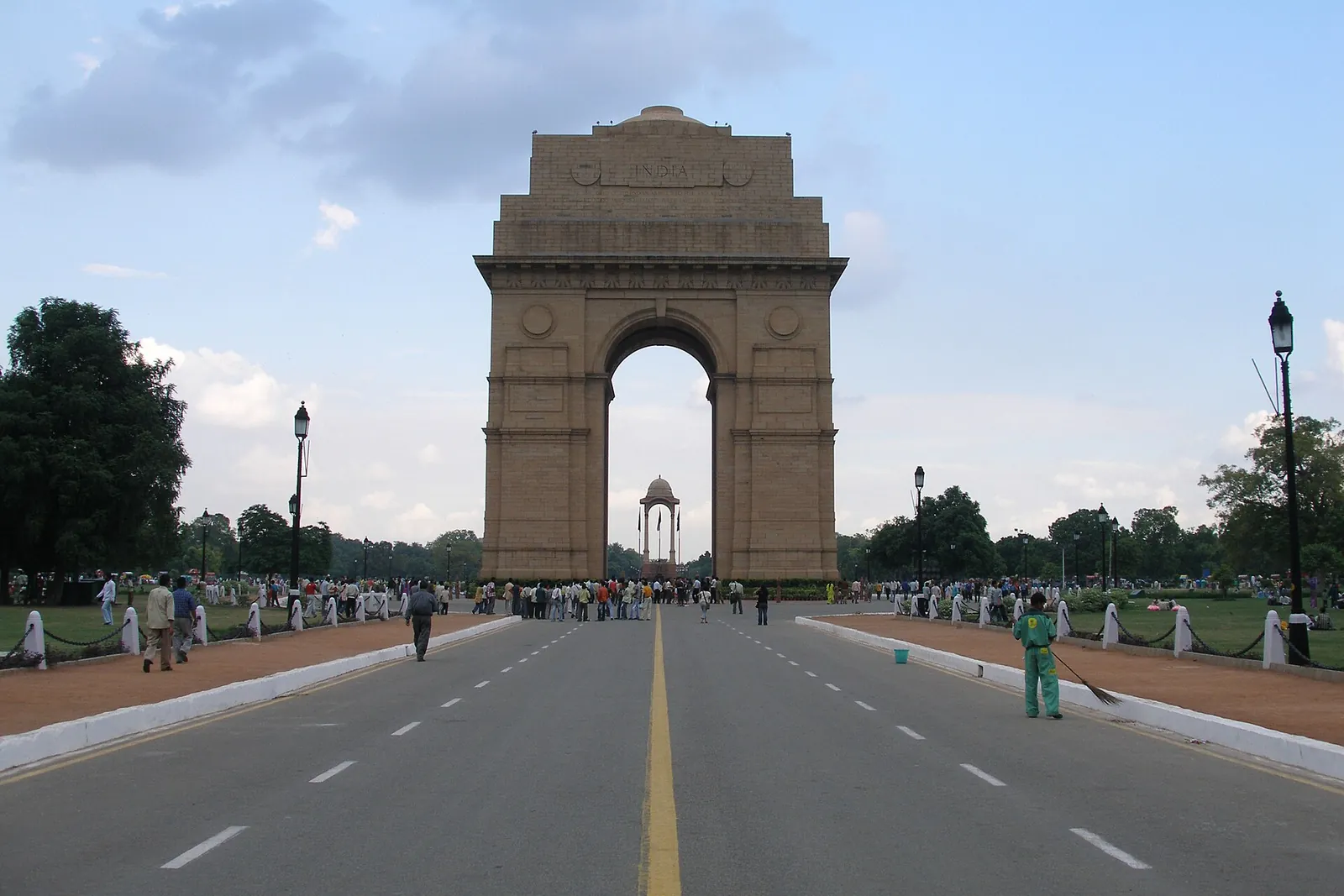
India Gate in New Delhi, where most first trips begin
Photograph: Vyacheslav Argenberg — opens in a new tab · CC BY 4.0 — opens in a new tab
Changes: Resized and converted to WebP; displayed with responsive crops. · Original photograph and licence details ↗ — opens in a new tab
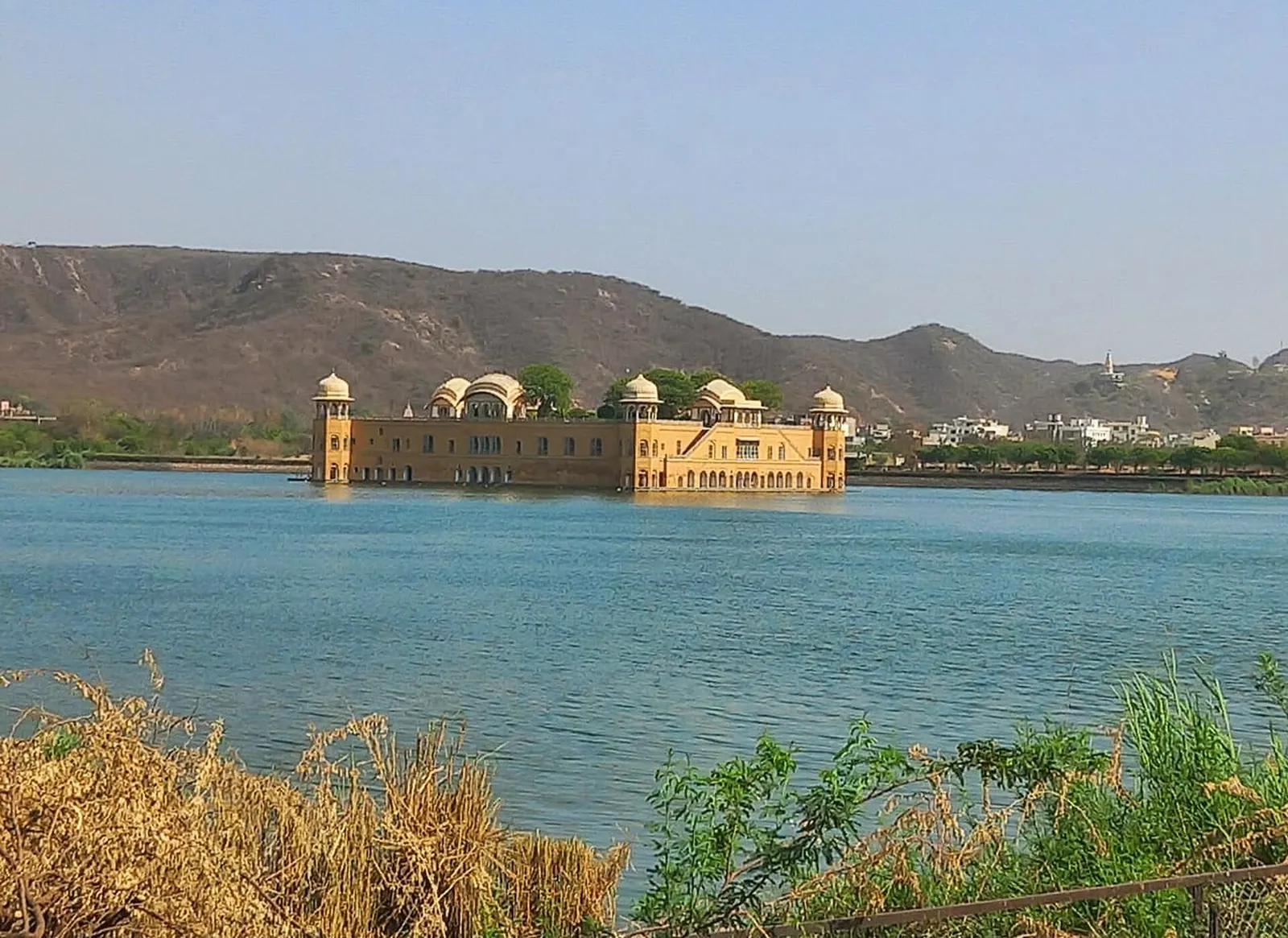
Jal Mahal on Man Sagar Lake, on the road from Jaipur to Amber
Photograph: Nhideath — opens in a new tab · CC0 — opens in a new tab
Changes: Resized and converted to WebP; displayed with responsive crops. · Original photograph and licence details ↗ — opens in a new tab
Gurudwara Bangla Sahib in New Delhi, where visitors cover their head and shoulders
Photograph: Ken Wieland from Philadelphia, USA — opens in a new tab · CC BY-SA 2.0 — opens in a new tab
Changes: Resized and converted to WebP; displayed with responsive crops. · Original photograph and licence details ↗ — opens in a new tab
Terminal 3 at Delhi's Indira Gandhi International Airport, the start of the Airport Express Line
Photograph: Ravi Dwivedi — opens in a new tab · CC BY-SA 4.0 — opens in a new tab
Changes: Resized and converted to WebP; displayed with responsive crops. · Original photograph and licence details ↗ — opens in a new tab
An Indian 50-rupee note: carry small notes for markets and auto-rickshaws
Photograph: Sohel Patel — opens in a new tab · CC0 — opens in a new tab
Changes: Resized and converted to WebP; displayed with responsive crops. · Original photograph and licence details ↗ — opens in a new tab