Delhi and the north · Uttarakhand
Rishikesh travel guide: 3 nights for the aarti, ashrams and rafting
Rishikesh sits where the Ganga leaves the Himalayan foothills, a town of ashrams, temples and footbridges strung along a fast green river. Uttarakhand Tourism calls it the world capital of yoga and meditation, and in February 1968 the Beatles came to Maharishi Mahesh Yogi's ashram here to learn transcendental meditation. Every evening the lamps of the Ganga aarti are lit at Parmarth Niketan and Triveni Ghat; by day the same river carries rafts through the rapids above town. Three nights give you one day for the ashrams on the east bank, one on the river and a last day for Haridwar, the pilgrim city downstream, on your way out.
- Suggested time
- 3 nights (4 days)
- Where to stay
- Tapovan (Lakshman Jhula) for cafes and the rafting pick-ups, or Swarg Ashram and Ram Jhula on the east bank for the ashrams and the evening aarti
- Season and timing
- The Ministry of Tourism suggests September to November and February to April as the best months for Rishikesh. The monsoon brings landslides and road closures to the hills; Parmarth Niketan's International Yoga Festival changes dates each year, and the ashram announces them.
The short answer
Book three nights (four days) in Tapovan, near the Lakshman Jhula end of town, or on the east bank around Ram Jhula and Swarg Ashram. Book the room and your train to Haridwar first, then a raft for a morning in the rafting season. Two key prices, checked 17 October 2026: goSTOPS's own site lists a Deluxe Private AC Room for two at goSTOPS Rishikesh, Lakshman Jhula, at INR 3,791.59 plus INR 189.58 taxes a night, room only, and River & Rock Adventure, a Muni ki Reti operator, lists the 16 km rafting run from Shivpuri at INR 1,200 a person. The model stay below comes to about INR 14,344 for two, before meals, trains and taxis.
Where to sleep: Tapovan, Swarg Ashram or Muni ki Reti
Rishikesh is a long, narrow town on both banks of the Ganga, and the area you choose decides whether you walk to the aarti or take a taxi to it. Tapovan, at the Lakshman Jhula end of town, is where most travellers stay: the Ministry of Tourism's Incredible India page calls the Laxman Jhula area a hub of cafes and restaurants serving Indian and international food, and Tapovan a mix of budget eateries and upscale restaurants. goSTOPS Rishikesh, Lakshman Jhula, whose Deluxe Private AC Room with an ensuite bathroom is the room priced in this guide's budget, is in this area.
Swarg Ashram, on the east bank across Ram Jhula, is the quiet side: Uttarakhand Tourism describes it as a cluster of ashrams, most of them offering courses in yoga and spiritual studies, and Parmarth Niketan, one of the ashrams the Ministry of Tourism names around Ram Jhula, holds its evening aarti here. Cars cannot cross the footbridges, so arrive by taxi at the Muni ki Reti parking lot near Ram Jhula and walk or take the motor boat across, as Parmarth Niketan's directions explain.
Muni ki Reti, across the river from Swarg Ashram at Ram Jhula, has the parking lot where taxis stop and, Uttarakhand Tourism notes, taxis and buses run there from Rishikesh railway station. The Ministry of Tourism describes Rishikesh as a vegetarian-only and alcohol-free city, so expect no meat or bar on any menu in these areas.
The evening aarti: Parmarth Niketan and Triveni Ghat
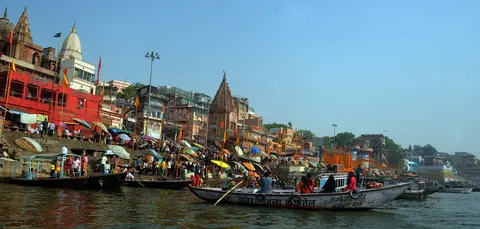
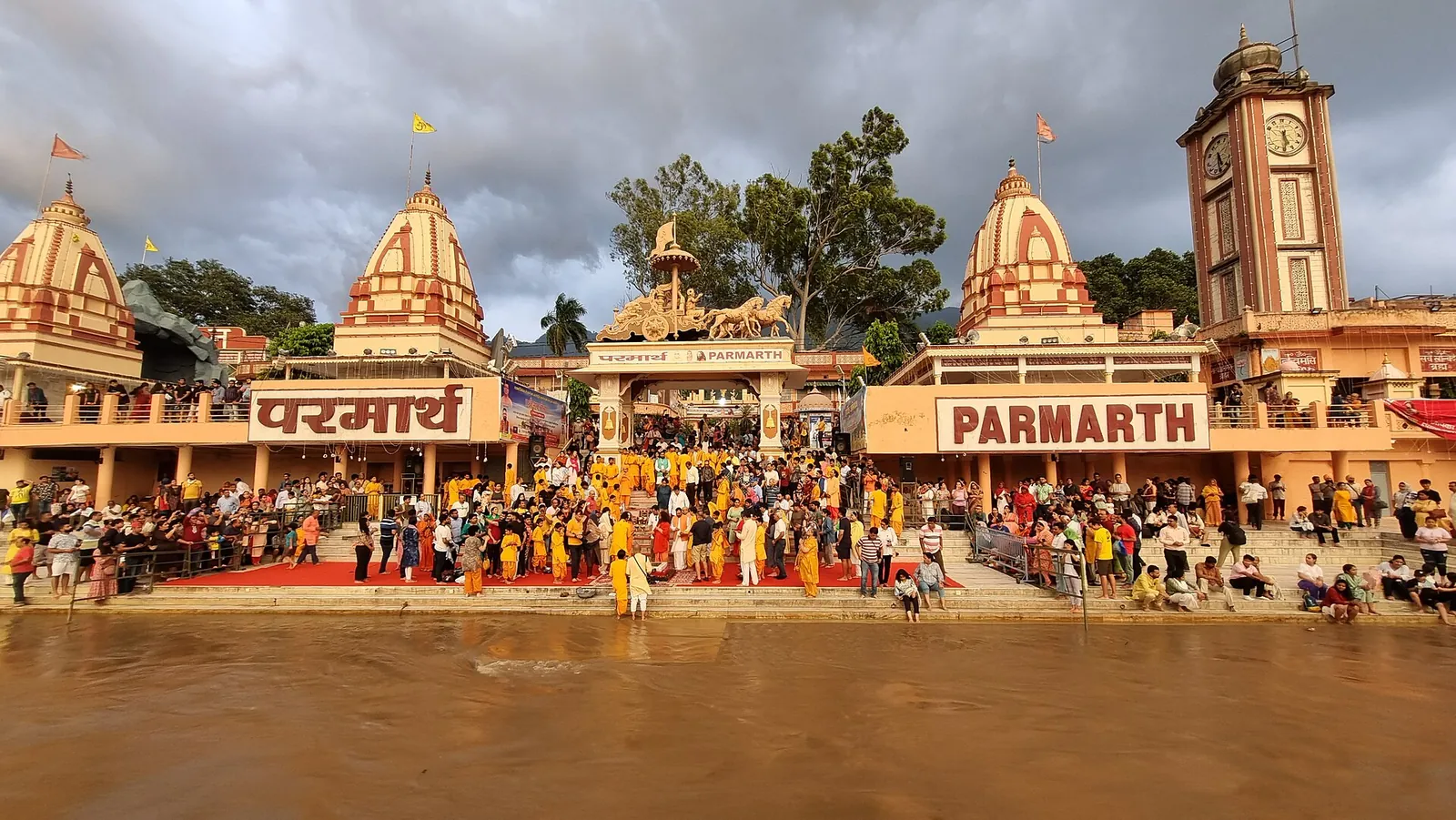
Parmarth Niketan is the largest ashram in Rishikesh, by its own account, founded in the early 1940s by Swami Shukdevanand on the east bank beside Ram Jhula; Uttarakhand Tourism dates it to 1942. Its sunset Ganga Aarti, on the ashram's own ghat, draws between hundreds and thousands of people a day: lamps are offered to the river with devotional songs and prayers, and the ashram stresses that you need neither Hindi nor Sanskrit to follow it. The aarti begins every day at sunset, and the yagna, a fire ritual, starts at the ghat half an hour before; the time changes with the season, so ask at the reception, which is open from 8 am to 8 pm.
Triveni Ghat, in the heart of town, is the bathing ghat where most pilgrims take a dip before visiting the temples, as Uttarakhand Tourism puts it, and where tradition places the meeting of the Ganga, Yamuna and Saraswati. The Ministry of Tourism describes its evening aarti as priests lighting lamps and offering prayers, with diyas floating on the water to the sound of bells and drums; it takes place every evening at dusk and lasts about 45 minutes. Nearby is Bharat Mandir, one of the oldest shrines in Rishikesh, a Vishnu temple whose image is carved from a single black stone.
Go to one aarti on your first evening and the other on the second: Parmarth's is held at the ashram's own ghat on the east bank, Triveni Ghat's on the town's main bathing ghat among pilgrims. At Parmarth, dress as the ashram asks its guests to, with shoulders and calves covered.
Across Ram Jhula: Swarg Ashram, Gita Bhawan and the Beatles Ashram
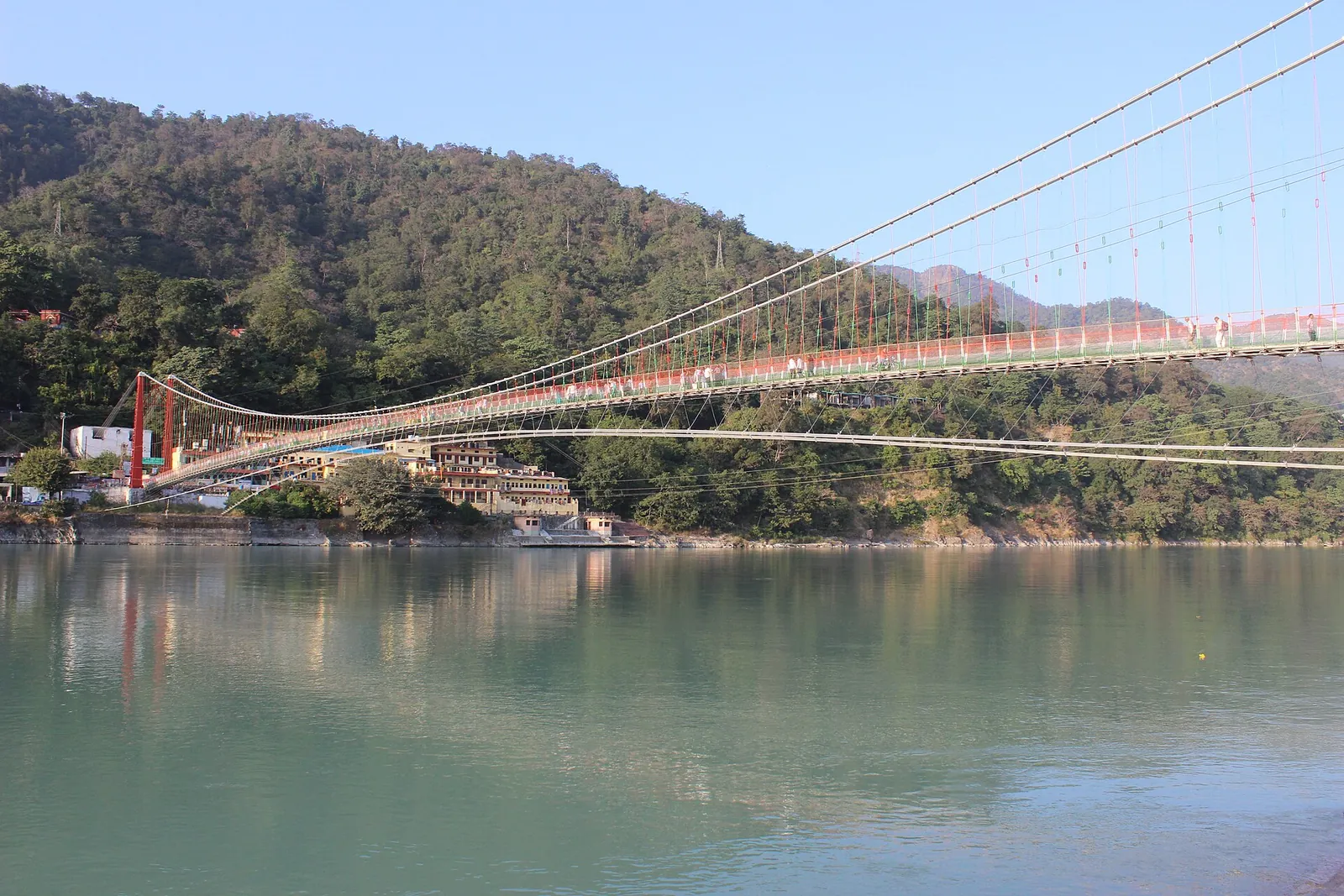
Ram Jhula is the suspension bridge in the middle of town, open to pedestrians, cycles and two-wheelers but not cars, as the Ministry of Tourism describes it, and it sways a little as you cross. Upstream, Lakshman Jhula, a 137 m suspension bridge built in 1939 at 21 m above the river, is in Uttarakhand Tourism's words the most iconic structure in Rishikesh, on the spot where Lakshmana is said to have crossed the Ganga on jute ropes. Check on the spot whether it is open to walkers; this guide sends you across at Ram Jhula: Uttarakhand Tourism describes a 3 km walk from Lakshman Jhula to Ram Jhula along a road of small shops, and Parmarth Niketan's directions add a motor boat across from the Muni ki Reti parking lot. The markets along the ghats sell carved idols, incense sticks and kurtas.
Gita Bhawan, near Lakshman Jhula, has walls painted with scenes from the Ramayana and the Mahabharata, runs a free Ayurvedic dispensary and has a branch of the Gita Press, Uttarakhand Tourism notes. Sivananda Ashram is the other ashram the Ministry of Tourism names there, with Parmarth Niketan.
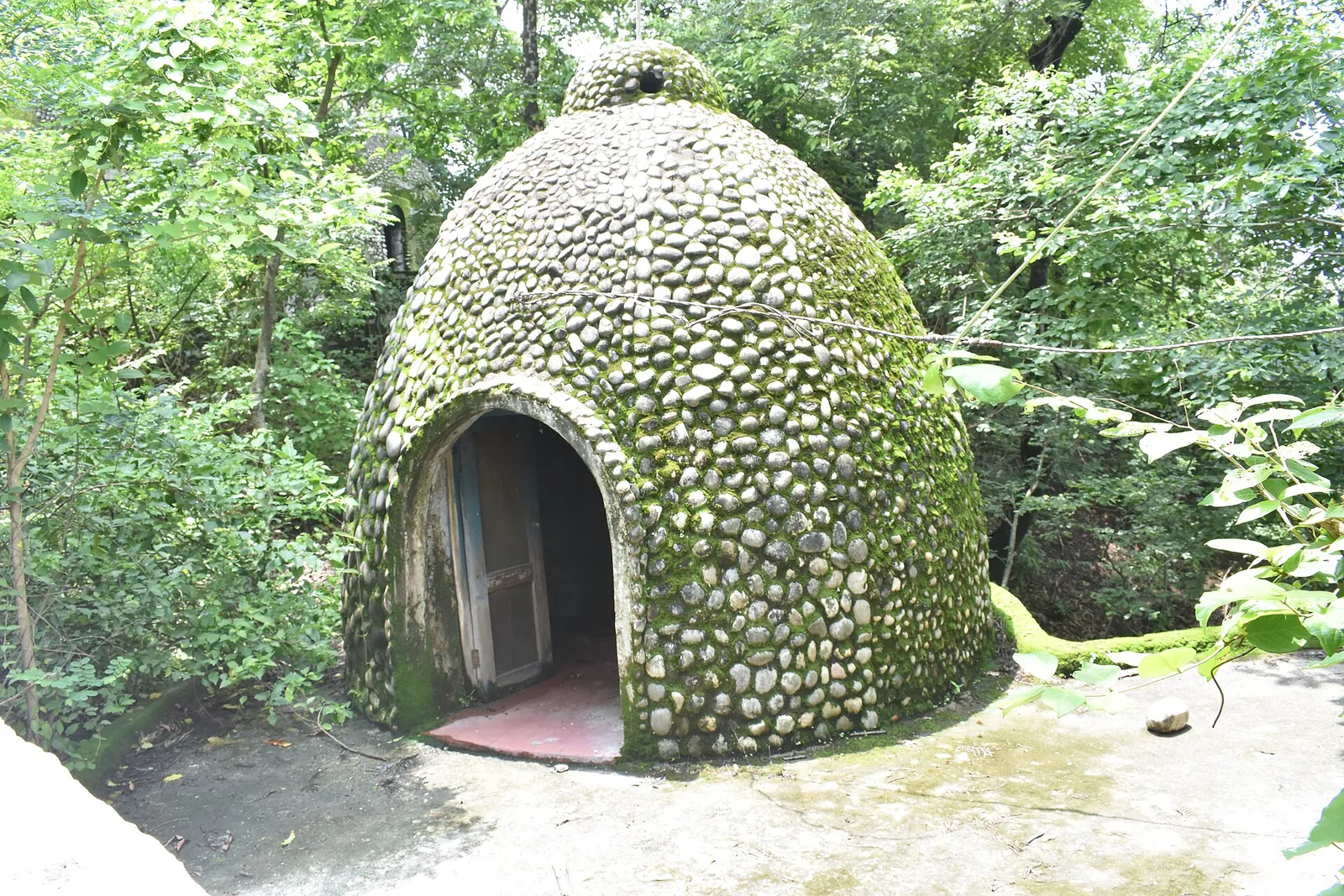
The Beatles Ashram, Maharishi Mahesh Yogi's former ashram, also called Chaurasi Kutia (the sanctuary of 84 cottages), stands in a forest patch in the Swarg Ashram area. The Beatles stayed from February to April 1968, and the Ministry of Tourism says they wrote most of the songs of the White Album here; Uttarakhand Tourism puts the number of songs composed during the stay at nearly 48. The ashram was abandoned in the 1990s. Today you climb a steep path to the beehive-shaped meditation huts and the old lecture hall, the 'Beatles Cathedral', both covered in murals and lyrics. The Ministry of Tourism's Incredible India page lists it as open from 10:00 to 16:00; ask at the gate for the entry fee.
Yoga and ashram stays
Rishikesh has yoga at every level, from drop-in classes in Tapovan studios to residential courses in the ashrams; Uttarakhand Tourism notes that both ashrams and resorts run sessions and courses. Parmarth Niketan has several hundred simple rooms, many with Western-style bathrooms and hot water, and its Parmarth School of Yoga runs residential courses and retreats that include the room, vegetarian sattvic meals, daily yoga and the evening aarti. Its calendar lists week-long courses and retreats through the year, with dates on the school's website. Parmarth does not publish prices for its rooms or courses; reserve through the forms on its website, and if no reply comes within three days, send a reminder, as the ashram asks.
An ashram is not a hotel. Parmarth's guidelines say it accepts guests who come for sadhana, meditation and satsang, expects them to join the evening aarti, asks for clothing that covers the shoulders, midriff and calves (white for yoga students), keeps silence from 10:00 pm to 6:00 am, and forbids smoking, alcohol, drugs, eggs and other non-vegetarian food. Arrive between 8 am and 9 pm, when someone is at reception, and check out before 11 am.
The International Yoga Festival is, in Parmarth Niketan's own words, organised by the ashram each year: a week of more than 60 hours of classes in styles from Kundalini and Iyengar to Kriya yoga, with talks by spiritual teachers. Dates change each year; Parmarth Niketan announces them on its school's website.
Rafting the Ganga: season, rules and prices
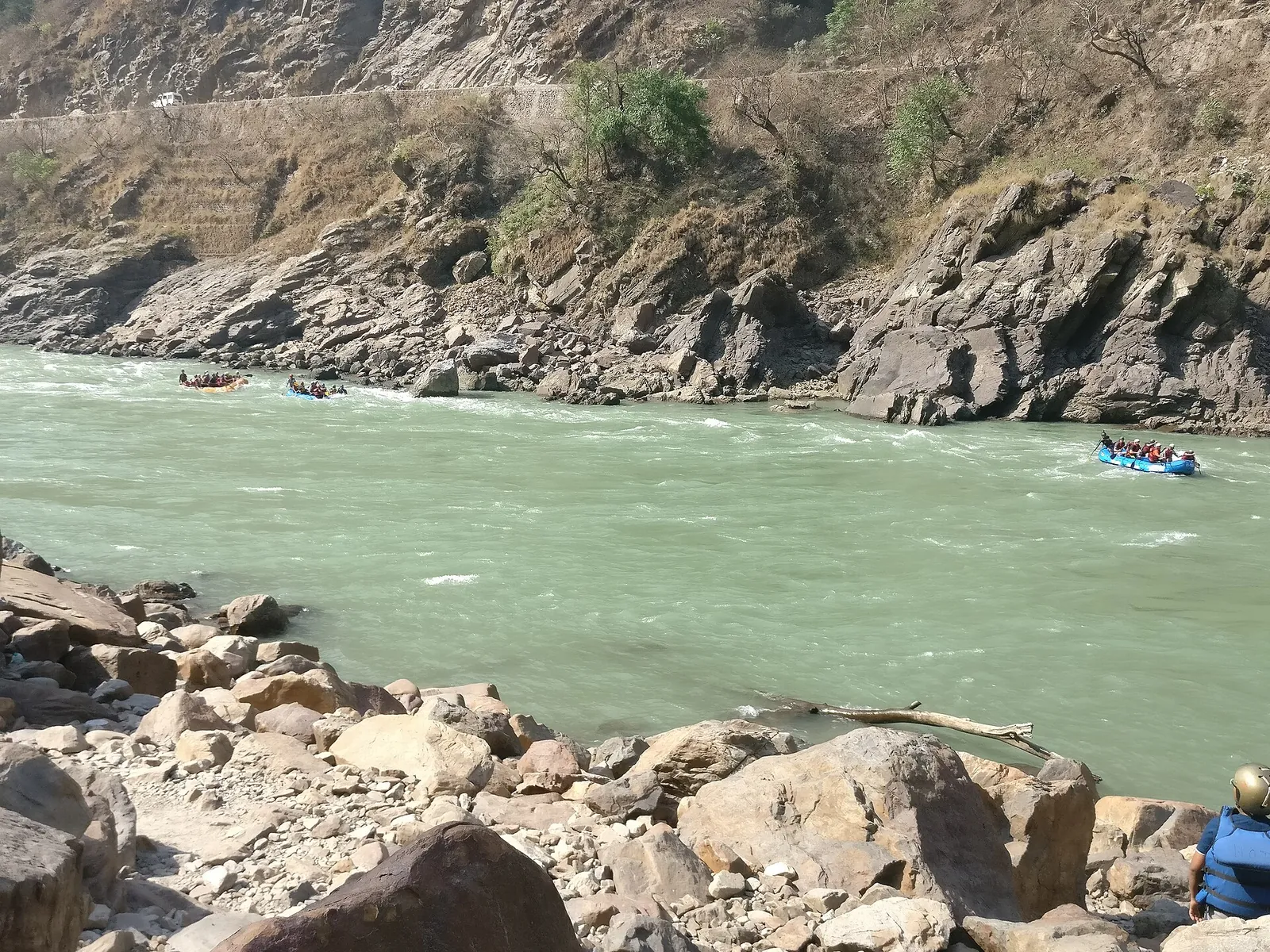
The rapids upstream of Rishikesh are the reason many people come. Uttarakhand Tourism describes Shivpuri, 19 km from town, as a popular destination for white-water rafting and the Shivpuri to Lakshman Jhula stretch, around 11 km, as the commonest rafting run; the operator priced below also starts longer runs at Marine Drive and Kaudiyala. Byasi, 30 km upstream, is another hub for rafting and water sports.
Rafting in Uttarakhand is licensed by the Uttarakhand Tourism Development Board. Under the state's rafting rules, the season on the Ganga runs from 1 September to 30 June, or as the board directs according to the water in the river. Rafts may carry at most eight passengers with a guide and a trainee guide (six in the smaller 14-foot rafts), helmets are compulsory, and alcohol and smoking are prohibited; a guide must refuse anyone who is intoxicated. Rafters must be between 14 and 65 years old, and kayakers between 18 and 50. Each licensed operator must display its minimum and maximum rafting charges in its office and on its website.
Prices are the operators' own. River & Rock Adventure, a Muni ki Reti operator registered on Uttarakhand Tourism's travel-trade list, lists these runs per person (checked 17 October 2026): 9 km from Club House to NIM Beach INR 600, 12 km from Brahmpuri to Ram Jhula INR 800, 16 km from Shivpuri to NIM Beach INR 1,200, and 25 km from Marine Drive to NIM Beach INR 2,200, with life jackets and safety gear included. Its Brahmpuri run ends at Ram Jhula and the others at NIM Beach, while Uttarakhand Tourism's 11 km stretch from Shivpuri ends at Lakshman Jhula. No official map places Club House, Brahmpuri or NIM Beach, so when you book at the operator's office at Kailash Gate in Muni ki Reti, choose a price that includes the drive to the start and the pick-up at the finish. The operator's own page sets a minimum age of 12, a maximum of 60 and a weight range of 40 to 110 kg, which differs from the state rule above, so check which limits apply to you before you book. The same operator sells riverside camps and cottages: an AC luxury cottage for two costs INR 4,000 a person, with all meals from a buffet. The 16 km run from Shivpuri fits into a morning, with time to dry off before the evening aarti.
Book rafting for a dry-season morning and keep a spare day. Do not swim off the ghats or the river beaches; get into the water only on a raft trip, in the life jacket the operator provides: the UK government says there are strong currents in rivers and that people drown every year. It also says the monsoon in India usually runs from June to November and can cause flash flooding and landslides, particularly in mountainous areas, as well as road closures; the health and safety guide covers the monsoon in full, and the best time to visit India compares the regions month by month.
Off the river, Uttarakhand Tourism lists a waterfall trek on well-marked paths, and the Ministry of Tourism names the Neer Gaddu waterfall, with cafes in Jonk Village for afterwards. Uttarakhand Tourism also lists the Kunjapuri trek for views of the snow peaks, a zipline over the Ganga, and bungee jumping at Mohanchatti from up to 83 m, with a flying fox and swings at the same site. Shri Neelkanth Mahadev Mandir, a Shiva temple the Ministry of Tourism names among Rishikesh's temples, is not part of this plan; ask your hotel about the road before you go.
Haridwar and getting there: Har Ki Pauri, trains, the airport and the bus
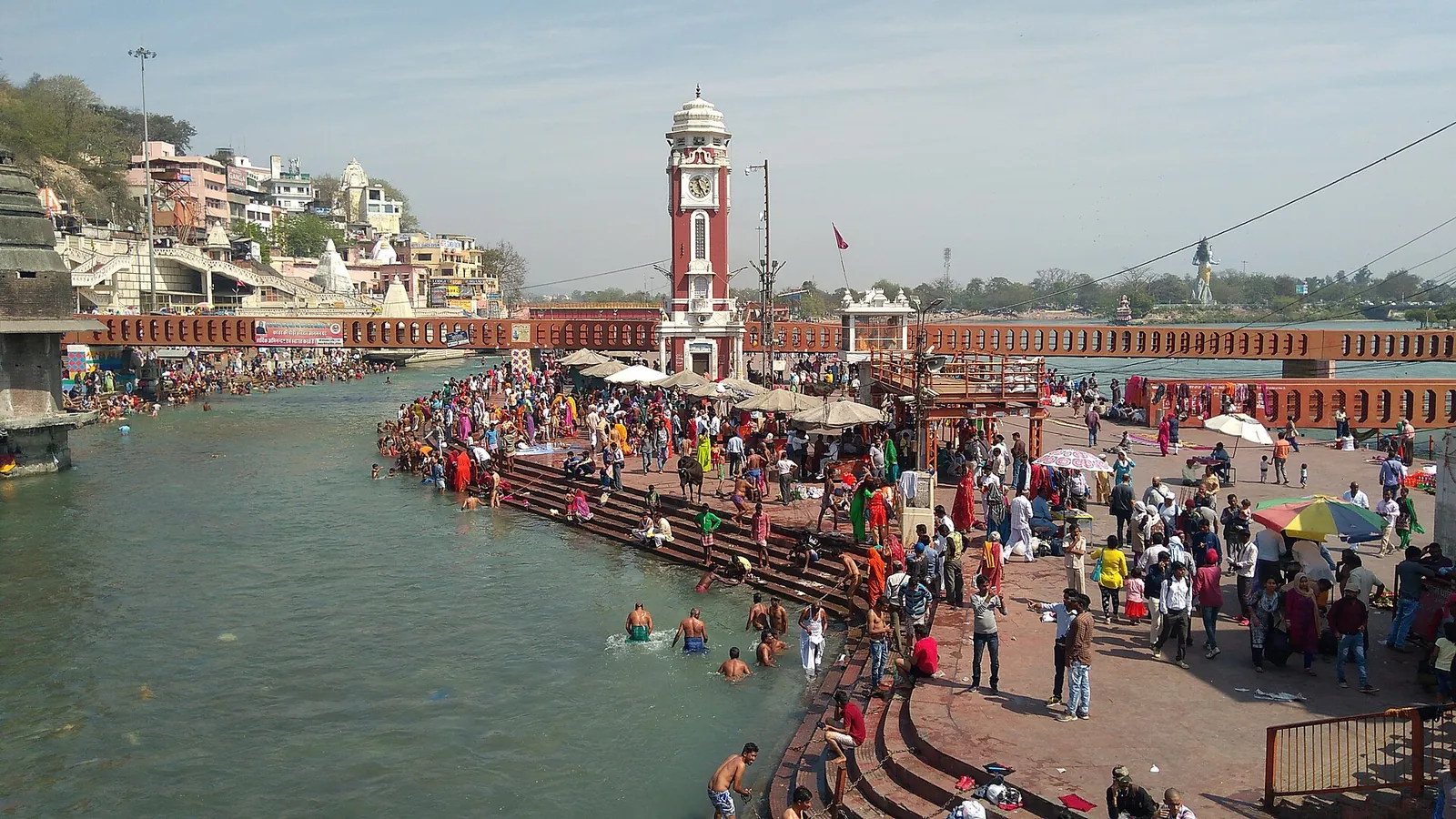
Haridwar, downstream where the Ganga reaches the plains, is the pilgrim city to Rishikesh's ashram town, and its railway station, Haridwar Junction, is the main railhead for both. Har Ki Pauri, 'the footsteps of the gods', is its most sacred ghat: the Ministry of Tourism places Brahma Kund, where drops of amrita are believed to have fallen, beside it. Uttarakhand Tourism describes the aarti held there at dusk every day with towering lamps, temple bells, conch shells and hundreds of diyas and flowers floating on the river; the evening ritual is the one most visitors come for.
Above the city, the Mansa Devi temple on the Shivalik hills forms a pilgrimage circuit with Chandi Devi and Maya Devi. Usha Breco's ropeway climbs to it in four-seat cabins, 576 m one way with a rise of 171 m, and a second ropeway serves Chandi Devi on Neel Parvat. In town, the Ministry of Tourism names Moti Bazaar, the old market north of the canal, for bangles, sweets and Ayurvedic medicine.
Haridwar is easy to add on your last day: buses and taxis run between the two towns, as Uttarakhand Tourism notes. See Har Ki Pauri and the ropeway in the afternoon, stay for the aarti, and take an evening train from Haridwar, or spend a night there if your train leaves early the next day.
By train. Haridwar Junction (HW) is the main railhead for Rishikesh, with trains from Delhi and further afield, as Uttarakhand Tourism and the Ministry of Tourism list. Rishikesh has stations of its own, Rishikesh (RKSH) and Yog Nagari Rishikesh, where some long-distance trains start. Indian Railways publishes current departure times and fares only in its journey search, so check IRCTC for your date.
Book trains as early as you can: foreign visitors can book on IRCTC under the foreign tourist quota, and our transport guide explains the account, the classes and when bookings open. From Haridwar station, buses and taxis run on to Rishikesh. Ask your hotel or the driver for the road distance and drive time from Delhi to Haridwar and from Haridwar to Rishikesh; no official taxi fare is published for this ride, the airport or Shivpuri, so agree the price before you set off.
By air. Jolly Grant Airport (DED) at Dehradun is the nearest airport, 21 km from Rishikesh according to Uttarakhand Tourism, with daily flights from Delhi; taxis wait at the airport. It is not an e-Visa entry point, so fly into Delhi first; the entry guide lists the airports that accept the e-Visa, and our Delhi guide covers the arrival there.
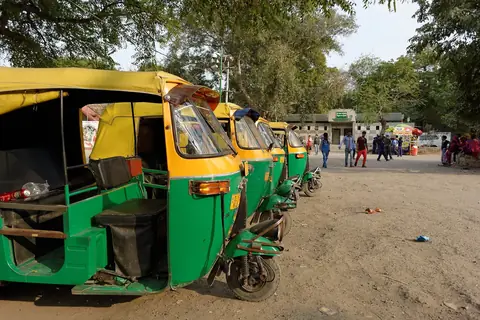
By road. Uttarakhand Tourism says ordinary and luxury buses leave for Rishikesh from Delhi's ISBT Kashmiri Gate, and that Rishikesh lies on the national highway to Badrinath. In town, walk between the ghats, take the boat across at Ram Jhula, and use taxis for Shivpuri and the stations.
Three nights in Rishikesh, day by day
This plan puts the river on a dry-season morning, the aarti on two evenings and Haridwar on the way out.
- Day 1: arrive at Haridwar by train and take a taxi to Tapovan. In the late afternoon walk to Ram Jhula, cross to Swarg Ashram and stay for the sunset aarti at Parmarth Niketan; dinner at Chotiwala.
- Day 2: a morning yoga class, then Gita Bhawan, the lanes of Swarg Ashram and the Beatles Ashram; lunch at Parmarth's cafeteria; the evening aarti at Triveni Ghat and street food in the main market.
- Day 3: rafting from Shivpuri in the morning, back in town by lunch; a quiet afternoon by the river.
- Day 4: check out and take a taxi or bus to Haridwar; Mansa Devi by ropeway, Moti Bazaar, and the aarti at Har Ki Pauri before an evening train.
Make time for the local food
What to eat and where to look

Thali
A platter of several dishes served together on a large plate or a banana leaf, as the Ministry of Tourism describes it; in a vegetarian-only town it is the everyday meal, and the ashram version is sattvic, made with fresh, seasonal and locally sourced ingredients.
- Where to look
- Chotiwala, in the Ram Jhula area, whose thalis the Ministry of Tourism names as a meal not to miss; for the sattvic version, the cafeteria at Parmarth Niketan.
- Fit it into your day
- Dinner at Chotiwala on the first evening, after the aarti; lunch at Parmarth's cafeteria on the ashram day.
Aloo tikki
Spiced potato patties fried crisp and served under chutneys, the first of the street snacks the Ministry of Tourism lists for Rishikesh.
- Where to look
- The street vendors of Rishikesh Main Market, near Triveni Ghat.
- Fit it into your day
- A snack before or after the evening aarti at Triveni Ghat.
Street food here is fried and often hot with chilli; eat where the turnover is high and the food is cooked in front of you, and say so if you avoid dairy, gluten or nuts.
Golgappa
Also called pani puri: hollow, crisp puris filled with spiced water and eaten in one bite.
- Where to look
- The same street vendors of Rishikesh Main Market, which the Ministry of Tourism names for golgappa.
- Fit it into your day
- With the aloo tikki after the Triveni Ghat aarti.
Jalebi
Spirals of batter fried crisp and soaked in syrup, sold hot from the pan, often next to samosas stuffed with spiced potato.
- Where to look
- The sweet shops and stalls of Rishikesh Main Market, which the Ministry of Tourism names for samosas and jalebis.
- Fit it into your day
- Breakfast on the rafting day, or a sweet after the market.
Pakodas
Fritters of potato, spinach, paneer or onion, which the Ministry of Tourism lists with chaat among Haridwar's foods; it says the city's food also includes local Garhwali specialties but names no dish or restaurant for them.
- Where to look
- The food stalls of Jwalapur market and the sweet shops of Moti Bazaar in Haridwar, both of which the Ministry of Tourism names.
- Fit it into your day
- An early dinner on the last day, before the aarti at Har Ki Pauri and the train.
A priced three-night stay for two
The model follows the plan above for two adults sharing a room, with prices checked on 17 October 2026.
- Room, goSTOPS Rishikesh, Lakshman Jhula, Deluxe Private AC Room, room only, 3 nights at INR 3,791.59 plus INR 189.58 taxes a night on goSTOPS's own site (a rate for 17 October 2026; rates change with the date): INR 11,943.51.
- Rafting, River & Rock Adventure, 16 km from Shivpuri to NIM Beach, INR 1,200 a person: INR 2,400.
- Total: about INR 14,344 for two.
- Not included: meals; the trains to and from Haridwar; taxis and buses between Haridwar, Rishikesh and Shivpuri; the Beatles Ashram entry fee; the Mansa Devi ropeway fare; yoga classes.
Practical questions
How many nights do I need in Rishikesh?
Three nights: one day for Ram Jhula, the east-bank ashrams and the Beatles Ashram, one for rafting, and a last day for Haridwar on your way out. With two nights, keep the aarti at Parmarth Niketan and either the rafting or the ashrams.
When is the rafting season in Rishikesh?
Uttarakhand's rafting rules set the season on the Ganga from 1 September to 30 June, or as the Uttarakhand Tourism Development Board directs according to the water in the river. Rafters must be between 14 and 65 years old, and helmets are compulsory.
What time is the Ganga aarti at Parmarth Niketan?
It begins every day at sunset on the ashram's ghat, with the yagna half an hour before, so the clock time moves with the season. The aarti at Triveni Ghat is held every evening at dusk and lasts about 45 minutes.
Can I drink alcohol or eat meat in Rishikesh?
No. The Ministry of Tourism describes Rishikesh as a vegetarian-only and alcohol-free city, and ashrams such as Parmarth Niketan also forbid eggs, smoking and drugs on their grounds.
Which station and airport are nearest to Rishikesh?
Haridwar Junction is the main railhead, and Rishikesh has its own stations, Rishikesh and Yog Nagari Rishikesh. Jolly Grant Airport at Dehradun, 21 km away, has daily flights from Delhi.
Is Haridwar worth a separate stop?
Give it an afternoon and an evening rather than a full stay: the aarti at Har Ki Pauri at dusk and the ropeway to Mansa Devi fit into the day you leave, and Haridwar Junction is the main station for the train back to Delhi.
Sources and checks before you travel
Reference sources for the version dated 17 October 2026. Confirm opening times, access, transport and conditions for your travel dates.
- Uttarakhand Tourism: Rishikesh ↗ — opens in a new tab
- Uttarakhand Tourism: Haridwar ↗ — opens in a new tab
- Government of Uttarakhand: River Rafting/Kayaking (Amendment) Rules, 2015 ↗ — opens in a new tab
- Government of Uttarakhand: River Rafting/Kayaking (Amendment) Rules, 2018 ↗ — opens in a new tab
- Uttarakhand Tourism: registered travel trade, Tehri Garhwal ↗ — opens in a new tab
- Ministry of Tourism (Incredible India): Rishikesh ↗ — opens in a new tab
- Ministry of Tourism (Incredible India): Ram Jhula ↗ — opens in a new tab
- Ministry of Tourism (Incredible India): Triveni Ghat ↗ — opens in a new tab
- Ministry of Tourism (Incredible India): Beatles Ashram ↗ — opens in a new tab
- Ministry of Tourism (Incredible India): Savour the flavours of Rishikesh ↗ — opens in a new tab
- Ministry of Tourism (Incredible India): Haridwar ↗ — opens in a new tab
- Parmarth Niketan: Divine Ganga Aarti and Yagna ↗ — opens in a new tab
- Parmarth Niketan: history of the ashram ↗ — opens in a new tab
- Parmarth Niketan: ashram guidelines ↗ — opens in a new tab
- Parmarth Niketan: facilities ↗ — opens in a new tab
- Parmarth Niketan: reservations ↗ — opens in a new tab
- Parmarth Niketan: getting to the ashram ↗ — opens in a new tab
- Parmarth School of Yoga: courses and retreats ↗ — opens in a new tab
- Parmarth School of Yoga: International Yoga Festival ↗ — opens in a new tab
- Usha Breco: Maa Mansa Devi Ropeway ↗ — opens in a new tab
- goSTOPS: goSTOPS Rishikesh, Lakshman Jhula ↗ — opens in a new tab
- River & Rock Adventure: river rafting packages ↗ — opens in a new tab
- Press Information Bureau: Holi special trains, 2026 ↗ — opens in a new tab
- Airports Authority of India: eAIP, Dehradun (VIDN) ↗ — opens in a new tab
- e-Visa: Government of India ↗ — opens in a new tab
- IRCTC: Foreign Tourist Quota booking ↗ — opens in a new tab
- UK FCDO: India safety and security ↗ — opens in a new tab
Does this experience fit your route?
Book a room in Tapovan or Swarg Ashram and your train to Haridwar first, plan the river for a dry-season morning, and keep two evenings for the aarti.
Check dates and details on Viator ↗ — opens in a new tabAffiliate link · Book with ViatorPhoto credits
Lakshman Jhula, the 1939 suspension bridge over the Ganga at the Tapovan end of Rishikesh
Photograph: Snehrashmi — opens in a new tab · CC BY-SA 4.0 — opens in a new tab
Changes: Resized and converted to WebP; displayed with responsive crops. · Original photograph and licence details ↗ — opens in a new tab
The river ghat at Parmarth Niketan, where the sunset Ganga Aarti is held
Photograph: Billjones94 — opens in a new tab · CC BY-SA 4.0 — opens in a new tab
Changes: Resized and converted to WebP; displayed with responsive crops. · Original photograph and licence details ↗ — opens in a new tab
A beehive-shaped meditation hut at the Beatles Ashram (Chaurasi Kutia)
Photograph: SnehaShrivastava — opens in a new tab · CC BY-SA 4.0 — opens in a new tab
Changes: Resized and converted to WebP; displayed with responsive crops. · Original photograph and licence details ↗ — opens in a new tab
Har Ki Pauri, Haridwar's most sacred ghat, by day
Photograph: आशीष_भटनागर — opens in a new tab · CC BY-SA 3.0 — opens in a new tab
Changes: Resized and converted to WebP; displayed with responsive crops. · Original photograph and licence details ↗ — opens in a new tab
Rafts on a rapid of the Ganga upstream of Rishikesh
Photograph: Ritikamaheshwari58 — opens in a new tab · CC BY-SA 4.0 — opens in a new tab
Changes: Resized and converted to WebP; displayed with responsive crops. · Original photograph and licence details ↗ — opens in a new tab
Hot jalebis at a stall by Har Ki Pauri in Haridwar
Photograph: Pratimwiki — opens in a new tab · CC BY-SA 3.0 — opens in a new tab
Changes: Resized and converted to WebP; displayed with responsive crops. · Original photograph and licence details ↗ — opens in a new tab