Plan your trip · India
India entry rules: e-Visa, e-Arrival card, customs and registration
Almost every visitor to India needs a visa before boarding, and for a holiday that usually means the e-Tourist visa, bought on the Government of India's own e-Visa site. The choice that matters is its length: a 30-day visa for one trip, or a one- or five-year visa if you will come back. This guide takes you through the decisions in the order you meet them: which visa, what it costs for your passport, how far ahead to apply, the passport and photo rules, the e-Arrival card in the last 72 hours, what happens at immigration and at your hotel, the customs allowance, and the few things that are banned or need a permit.
- Suggested time
- 30-day e-Tourist visa (from the first arrival, multiple entry); one-year and five-year e-Tourist visas allow at most 180 days in India per calendar year
- Where to stay
- Arrive at one of the e-Visa airports: Delhi (DEL), Mumbai (BOM), Kochi (COK), Goa, Jaipur and Varanasi are among them
- Season and timing
- Apply 4 to 120 days before arrival. The 30-day e-Tourist visa costs less from April to June than from July to March for most passports
The short answer
Book the visa before anything you cannot cancel. For a trip of up to 30 days, the 30-day e-Tourist visa is enough; it runs from your first arrival, and the e-Visa site lists it as multiple-entry. Apply on indianvisaonline.gov.in at least 4 days and at most 120 days before you arrive. Two key prices from the official fee table (dated 8 September 2026, checked on 17 October 2026): for most European, US, Canadian and Australian passports, the 30-day visa costs USD 25 from July to March (USD 10 from April to June) and the one-year visa USD 40, plus a 3% bank charge. Within 72 hours before you land, fill in the e-Arrival card online or in the Indian Visa Su-Swagatam app; it is arrival information, not a visa. Delhi, Mumbai and Kochi are all on the e-Visa airport list.
Which e-Tourist visa fits your trip
India's e-Tourist visa comes in three lengths. The 30-day visa is valid for 30 days from your first arrival in India, allows multiple entries within that period, and is "non-extendable and non-convertible"; your first arrival must fall between the issue and expiry dates of the electronic travel authorisation (ETA). The ETA shows that expiry date, so check it as soon as the ETA arrives. The one-year visa runs for 365 days from the date the ETA is granted, and the five-year visa for five years from the date of grant, both with multiple entries. On both longer visas you may spend at most 180 days in India in one calendar year. No separate limit for a single stay is published for these visas; the stamp the officer puts in your passport shows the stay you are given and can differ from the stay you applied for, so check it before you leave the desk.
The 30-day visa suits a single trip of up to four weeks; if you are still deciding how long to stay, our first-trip guide to India compares one, two and three weeks. The one-year visa covers a second trip as well, for example a return the following winter. A side trip to Kathmandu means entering India a second time. The e-Visa site lists all three e-Tourist visas as multiple-entry, but a 30-day visa may be issued for only one or two entries, so read the entries on your ETA before you book the onward flight, and re-enter India through an entry point on the e-Visa site's list. No e-Tourist visa can be extended once you are in India.
The e-Visa is for recreation, sightseeing, visiting friends or relatives, a short yoga programme or a short course that ends without a formal certificate, and short unpaid voluntary work of up to one month. Journalism and work for non-governmental organisations need a regular visa. The e-Visa is not available to holders of diplomatic or official passports, to anyone with a defence, military, security or police background, or to travellers of Pakistani origin or with a Pakistani passport, who apply for a regular visa at an Indian mission.
Citizens of Nepal, Bhutan and the Maldives need no Indian visa. Nepalis and Bhutanese coming from their own country need only a government photo identity document, but a passport when they arrive from anywhere else, and a visa as well when they come from China, Hong Kong, Macau or Pakistan; Maldivians may stay up to 90 days for tourism, business or medical treatment. Nationals of Japan, South Korea and the United Arab Emirates have a second option: the Bureau of Immigration offers them a visa on arrival, valid for up to 60 days with two entries, at named airports only (Delhi, Mumbai, Chennai, Kolkata, Bengaluru and Hyderabad for Japanese and Korean nationals). UAE nationals qualify only if they have held an Indian e-Visa or regular visa before. Everyone else applies online and waits for the grant before travelling.
What the visa costs for your passport, and when to apply
Fees depend on nationality, and the e-Tourist fee table on the official site, dated 8 September 2026, is the only place to check yours. For most listed nationalities, including Germany, France, Italy, Spain, the Netherlands, the Nordic countries, Poland, Portugal, the Czech Republic, Hungary, Romania, Canada and Australia, the 30-day visa costs USD 10 from April to June and USD 25 from July to March, the one-year visa USD 40 and the five-year visa USD 200. The United Kingdom and the United States pay the same USD 10, USD 25 and USD 40 for the 30-day and one-year visas.
The same table has exceptions: the five-year visa costs USD 484 for the United Kingdom and USD 160 for the United States, and Japan pays USD 25 for the one-year and the five-year visa. A few nationalities, among them Argentina, Indonesia, Mauritius and Uruguay, pay nothing. The site adds bank transaction charges of 3% of the fee for a card payment, its SBIePay help page gives 4% for PayPal, and the payment page shows the exact charge before you pay. The fee is non-refundable, whether the visa is granted or rejected.
Apply at least 4 days before you arrive; the e-Visa site allows applications up to 120 days ahead. If the form will not accept your arrival date, apply closer to the trip or ask the e-Visa support centre. The fee must be paid at least 4 days before you travel or the application is not processed. You need a recent front-facing photograph on a white or plain light background (JPEG, square, 10 KB to 1 MB) and a PDF scan of your passport's photo page (10 KB to 300 KB). The form takes 10 to 15 minutes, and a request to re-upload a document normally arrives by email within 24 hours. No standard processing time is published, so apply a few weeks ahead rather than at the 4-day minimum.
Use only indianvisaonline.gov.in. The e-Visa FAQ says it is the only official website, that no intermediary is needed, and that there is no fee at the airport beyond the one paid online; sites that promise an express visa for an extra charge are not official. Before you fly, check that your status on the site reads "GRANTED" and carry a copy of the ETA.
Passport, children and the airports that accept the e-Visa
The e-Visa needs a passport with "at least six months validity at the time of making application" and at least two blank pages for the immigration stamp, a return or onward ticket, and enough money for your stay. The e-Visa site counts the six months from the day you apply, but other governments' advice counts them from your arrival or from the end of the visa, so to be safe check that your passport is valid for six months beyond the end of your visa, not only beyond the day you apply. Each traveller, including a child, needs a separate passport and a separate e-Visa. If you renew your passport after the ETA is issued, you may enter on the new one as long as you carry the old passport as well.
E-Visa holders may enter only through the entry points on the e-Visa site's list. Its airports include Delhi, Mumbai, Chennai, Kolkata, Bengaluru, Cochin (Kochi), Goa (Dabolim), Goa (Mopa), Jaipur, Varanasi and Navi Mumbai. The arrival airports our India guides use, Delhi, Mumbai (including Navi Mumbai), Kochi, Goa (Dabolim and Mopa), Jaipur and Varanasi, are all on it; smaller airports such as Udaipur, Jodhpur and Khajuraho are not, so land at a listed airport and connect. Cruise passengers can also enter at listed seaports. You may leave India from any immigration checkpoint.
The e-Visa site's entry-points list is the authority: it names airports, seaports and land checkposts, among them Raxaul, Rupaidiha, Jogbani and Darranga, while its FAQ mentions airports and seaports only. If you plan to cross overland, from Nepal for example, use only a crossing on that list and confirm it with the e-Visa support centre before you book, or get a regular visa from an Indian mission instead. For the airport trains and taxis once you land, see our guide to transport in India.
The 72 hours before you land: the e-Arrival card and health forms
Every foreign visitor, OCI card holders included, fills in the e-Arrival card, which replaced the paper landing form. Complete it online at boi.gov.in or indianvisaonline.gov.in, or in the official Indian Visa Su-Swagatam app, within the 72 hours before you arrive. It is arrival information, not a visa, but it is required before entry, and filling it in ahead saves delays at the airport. No exemption for passengers who stay airside in transit is published, so if you only change planes in India, ask your airline whether you need the card.
A second form depends on India's Ebola screening, which began after the World Health Organization declared the Ebola outbreak in the Democratic Republic of the Congo and Uganda a public health emergency of international concern. While the screening is in force, every international arrival must complete a health self-declaration on the Air Suvidha 2.0 portal (airsuvidha.civilaviation.gov.in), launched on 25 June 2026. You can fill it in from 24 hours before landing; the health ministry asks passengers to do so before boarding, at web check-in, and to show the downloaded form at the health desk or the immigration counter. If WHO has ended the emergency by the time you fly, check the portal or ask your airline whether the form is still required.
If you are arriving from, or have spent the previous six days in, a country where yellow fever is endemic, you need a valid yellow fever vaccination certificate. The Bureau of Immigration says travellers without one may be kept in quarantine for up to 6 days. The UK FCDO also lists a polio vaccination certificate for arrivals from polio-affected countries. Other vaccinations are advice rather than entry rules; our health and safety guide covers them.
At immigration, and why your hotel asks for your passport
At the immigration desk your biometrics are taken and the e-Visa is stamped into your passport. The Bureau of Immigration says that a visa does not by itself confer the right of entry, and that it is the traveller's responsibility to make sure the arrival and departure stamps are put in the passport. Look for the stamp before you leave the desk: without it, leaving India means applying for an exit permit, which can take days.
Passing through India by air to a destination abroad, you need no visa if you stay within the specified precincts of the airport for up to 24 hours. A longer layover or leaving the airport needs a visa, so check whether your bags are checked through to your final destination.
Tourists on an e-Tourist visa do not register with the Foreigners Regional Registration Office (FRRO). Under the Bureau of Immigration's rules, registration within 14 days of arrival applies to student, employment, medical and missionary visas valid for more than 180 days, and to any visitor whose stay passes 180 days in a calendar year or on one visit. Children under 12 do not need to register.
Instead, every hotel, guest house, hostel or homestay records your stay. The owner must submit Form III (earlier known as Form C) online within 24 hours of your arrival, and again within 24 hours of your departure, so check-in always involves your passport and visa page. Our where-to-stay guide for India explains what this means when you choose a homestay.
Customs: cash, the duty-free allowance and banned devices
You may bring any amount of foreign currency into India, but you must declare it to Customs on the Currency Declaration Form on arrival if the notes, bank notes and travellers cheques together exceed USD 10,000, or if the foreign currency notes alone exceed USD 5,000. Rupee notes are restricted: the Reserve Bank of India lets a visitor resident outside India (other than a citizen of Pakistan or Bangladesh, or someone travelling from or to those countries) bring in up to INR 25,000, and only when entering through an airport.
The Baggage Rules, 2026, in force since 2 February 2026, give a tourist of foreign origin arriving by air or sea a duty-free allowance of INR 25,000 for goods beyond used personal effects and travel souvenirs. Within it you may bring up to 100 cigarettes, 25 cigars or 125 g of tobacco and up to two litres of alcohol. Larger amounts of tobacco or alcohol, firearms, televisions, and gold or silver other than jewellery are not duty-free. Anyone aged 18 or over may also bring one new laptop duty-free. Arriving by land, only used personal effects are duty-free. Expensive equipment you will take home again can be declared for temporary import.
Four things cause most trouble at the airport. E-cigarettes are banned, and possessing them can bring heavy fines or prison. Satellite phones and GPS devices are illegal without a licence from India's Department of Telecommunications; this can include handheld or cycling GPS units and satellite-enabled devices, even in transit, and visitors have been arrested for carrying them. GPS trackers of any kind may not be carried on flights in India, in hand or checked baggage. India's drone import policy of 9 February 2022 bans the import of foreign drones, so leave a drone at home.
Permits, overstays and a lost passport
Some areas need a Restricted or Protected Area Permit on top of the visa: all of Arunachal Pradesh, Manipur, Mizoram, Nagaland and Sikkim, the Andaman and Nicobar Islands, and parts of Himachal Pradesh, Jammu and Kashmir, Ladakh, Rajasthan and Uttarakhand. The e-Visa is not valid for them. The Bureau's list still names the whole of the Andaman and Nicobar Islands, Nagaland and Mizoram, although Germany's Foreign Office reports that the permit requirement for Nagaland, Mizoram and the Andaman Islands has been lifted, so follow the Bureau's list and check the current permit rules with an Indian mission or the FRRO before you book. The Bureau asks for applications through an Indian mission at least 30 days ahead from abroad, or through the FRRO at least 15 days ahead once you are in India. None of the places in AsiaVela's India guides needs one, and this edition sends no reader to Jammu and Kashmir, Manipur, the north-east or the border with Pakistan; the health and safety guide explains why.
Leave before your visa ends. A tourist visa can be extended by the local FRRO only in justified emergencies, and overstaying can lead to prison and an entry ban of several years. The Bureau of Immigration lists penalties from INR 10,000 to INR 300,000 per offence, as well as imprisonment, for overstaying, failing to register or breaking visa conditions, and an overstayer needs an exit permit to depart.
If your passport is lost or stolen, report it at the nearest police station and to the FRRO, get a new travel document from your embassy, then apply for the exit permit on indianfrro.gov.in. In straightforward cases the exit permit takes 5 to 15 working days, so keep copies of your passport, visa and entry stamp apart from the originals.
Practical questions
Can I get a visa on arrival in India?
Only nationals of Japan, South Korea and the United Arab Emirates (UAE nationals only if they have held an Indian visa before) can get a visa on arrival, at a few named airports. Everyone else, apart from citizens of Nepal, Bhutan and the Maldives, who need no visa, needs an e-Visa granted before travel, or a regular visa from an Indian mission.
How long before my trip should I apply for the e-Tourist visa?
Between 120 days and 4 days before you arrive, with the fee paid at least 4 days before travel. Applying a few weeks ahead leaves time to re-upload a photo or passport scan if the site asks for it.
Is the e-Arrival card the same as the e-Visa?
No. The e-Visa is your permission to enter and must be granted before you fly. The e-Arrival card is an arrival form you complete online or in the Indian Visa Su-Swagatam app within the 72 hours before you land.
Can I extend a 30-day e-Tourist visa in India?
No. The e-Visa is non-extendable and non-convertible. If your plans may run longer than 30 days, buy the one-year e-Tourist visa before you travel; it allows up to 180 days in India in a calendar year.
Do I need to register with the FRRO as a tourist?
Not on an e-Tourist visa for a normal holiday: registration applies when a stay passes 180 days or the visa requires it. Your hotel or homestay registers your stay with Form III within 24 hours, which is why it asks for your passport.
How much cash can I bring into India?
Any amount of foreign currency, but declare it on arrival if notes and travellers cheques exceed USD 10,000, or notes alone exceed USD 5,000. Rupee notes are limited to INR 25,000, and only when you arrive by air.
Sources and checks before you travel
Reference sources for the version dated 17 October 2026. Confirm opening times, access, transport and conditions for your travel dates.
- Government of India e-Visa site (Ministry of Home Affairs): e-Visa and electronic travel authorisation (ETA) main page and FAQ ↗ — opens in a new tab
- Government of India e-Visa site: e-Tourist visa fee by country (8 September 2026) ↗ — opens in a new tab
- Bureau of Immigration: general guidelines for travelling to India ↗ — opens in a new tab
- Bureau of Immigration: tourism in India ↗ — opens in a new tab
- Bureau of Immigration: visa-free regime and visa on arrival ↗ — opens in a new tab
- Bureau of Immigration: transit via India ↗ — opens in a new tab
- Bureau of Immigration: registration requirements ↗ — opens in a new tab
- Bureau of Immigration: obligation of hotels, hospitals and educational institutes ↗ — opens in a new tab
- Bureau of Immigration: entry to restricted, protected and prohibited areas ↗ — opens in a new tab
- Bureau of Immigration: penalties ↗ — opens in a new tab
- Bureau of Immigration: exit permit ↗ — opens in a new tab
- Bureau of Immigration: health regulation ↗ — opens in a new tab
- Reserve Bank of India: miscellaneous forex facilities (FAQ, updated 28 November 2025) ↗ — opens in a new tab
- Ministry of Finance (CBIC): Baggage Rules, 2026, notification 14/2026-Customs (N.T.) ↗ — opens in a new tab
- Press Information Bureau: Government notifies Baggage Rules, 2026 (2 February 2026) ↗ — opens in a new tab
- Press Information Bureau: reforms to promote the Indian drone industry (31 March 2022) ↗ — opens in a new tab
- Press Information Bureau: Air Suvidha 2.0 portal launched for Ebola health screening (25 June 2026) ↗ — opens in a new tab
- UK FCDO: India travel advice, entry requirements ↗ — opens in a new tab
- UK FCDO: India travel advice, safety and security ↗ — opens in a new tab
- Germany's Foreign Office (Auswärtiges Amt): India travel and safety advice ↗ — opens in a new tab
- France Diplomatie: India, entry and stay ↗ — opens in a new tab
- Delhi Airport (DIAL): metro to and from the airport ↗ — opens in a new tab
Photo credits
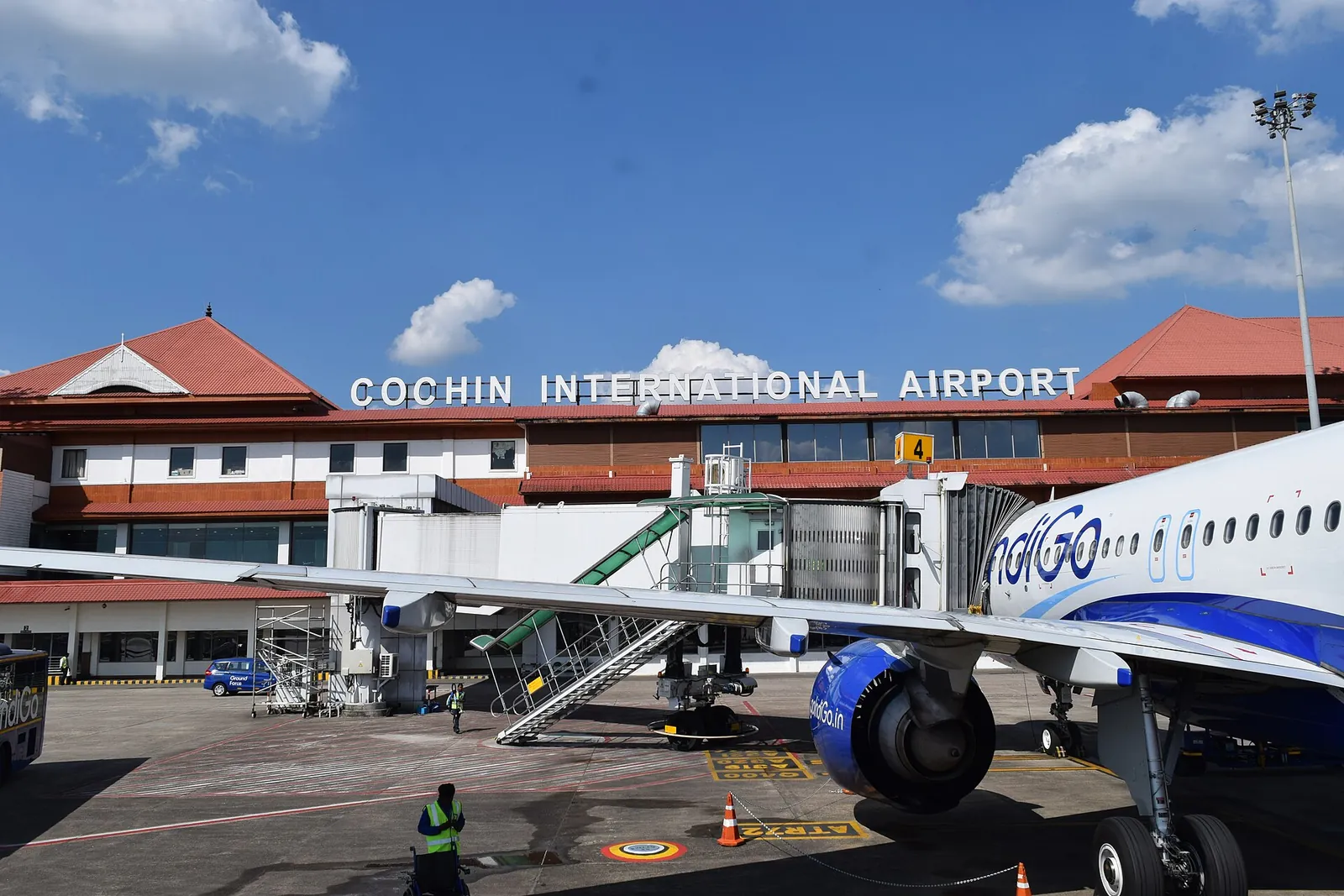
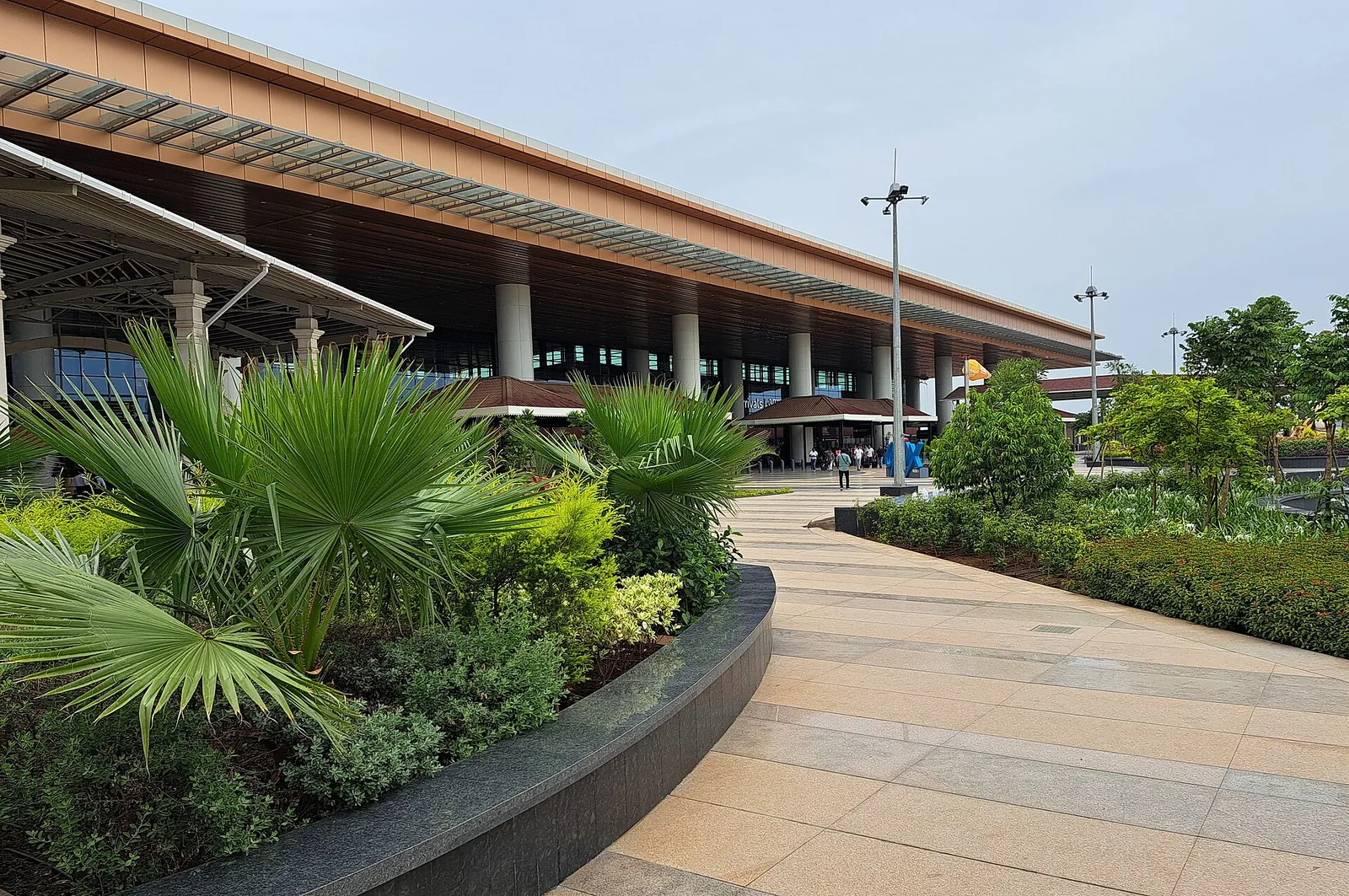
Cochin International Airport, Kochi's gateway and one of the e-Visa airports
Photograph: Ranjithsiji — opens in a new tab · CC BY-SA 4.0 — opens in a new tab
Changes: Resized and converted to WebP; displayed with responsive crops. · Original photograph and licence details ↗ — opens in a new tab
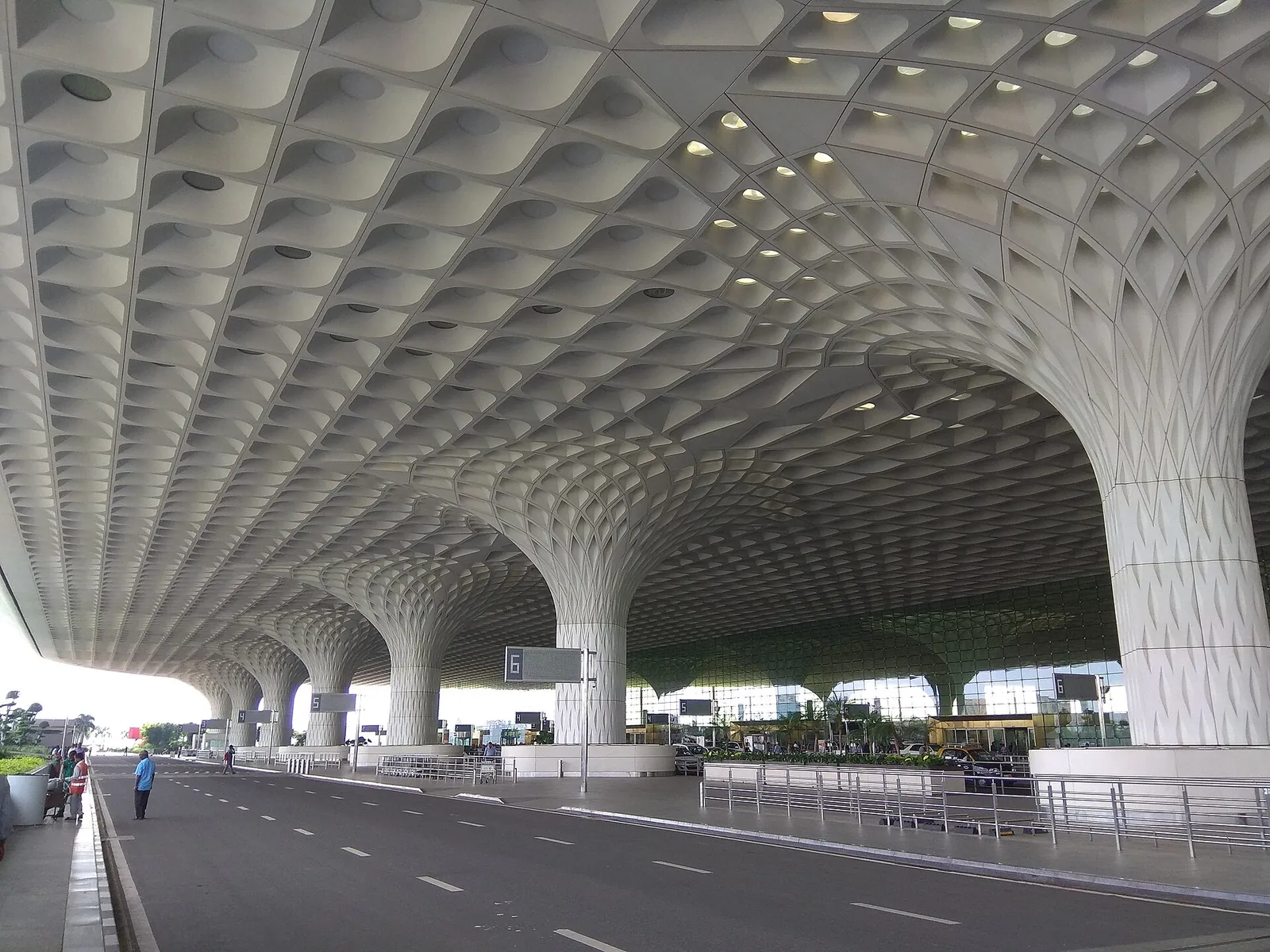
The departures level at Chhatrapati Shivaji Maharaj International Airport, Mumbai
Photograph: PIYUSH P PUJARI — opens in a new tab · CC BY-SA 4.0 — opens in a new tab
Changes: Resized and converted to WebP; displayed with responsive crops. · Original photograph and licence details ↗ — opens in a new tab
Outside the terminal at Mopa, Goa's newer airport, also on the e-Visa list
Photograph: Arunpnair 787 — opens in a new tab · CC BY-SA 4.0 — opens in a new tab
Changes: Resized and converted to WebP; displayed with responsive crops. · Original photograph and licence details ↗ — opens in a new tab
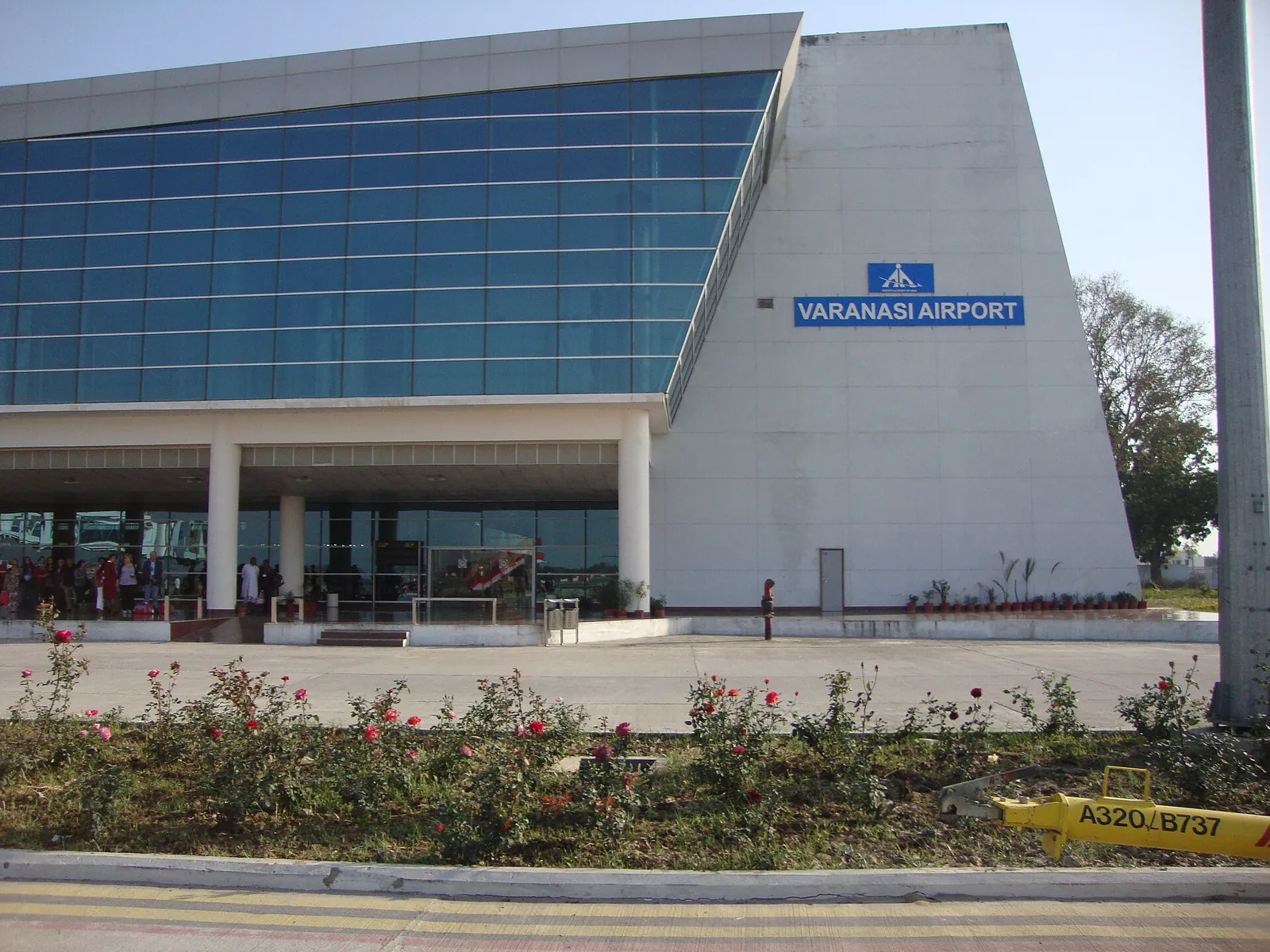
Varanasi's Lal Bahadur Shastri International Airport, an e-Visa entry point
Photograph: VasenkaPhotography — opens in a new tab · CC BY 2.0 — opens in a new tab
Changes: Resized and converted to WebP; displayed with responsive crops. · Original photograph and licence details ↗ — opens in a new tab
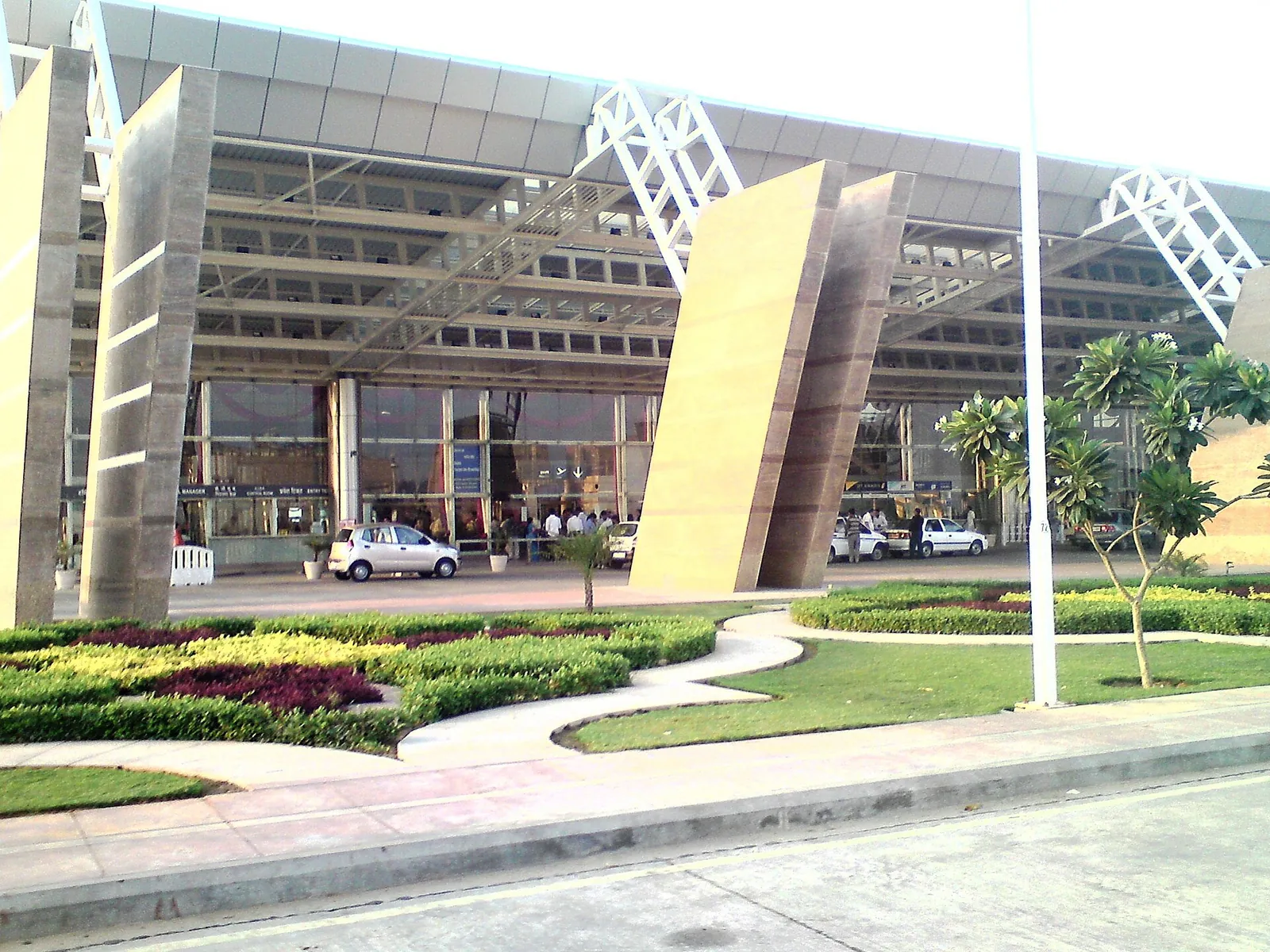
The terminal at Jaipur International Airport
Photograph: Sranjanm2002 — opens in a new tab · CC BY-SA 3.0 — opens in a new tab
Changes: Resized and converted to WebP; displayed with responsive crops. · Original photograph and licence details ↗ — opens in a new tab