Northern Mountains · Thanh Hoa
Pu Luong guide: rice terraces, Thai villages and where to stay
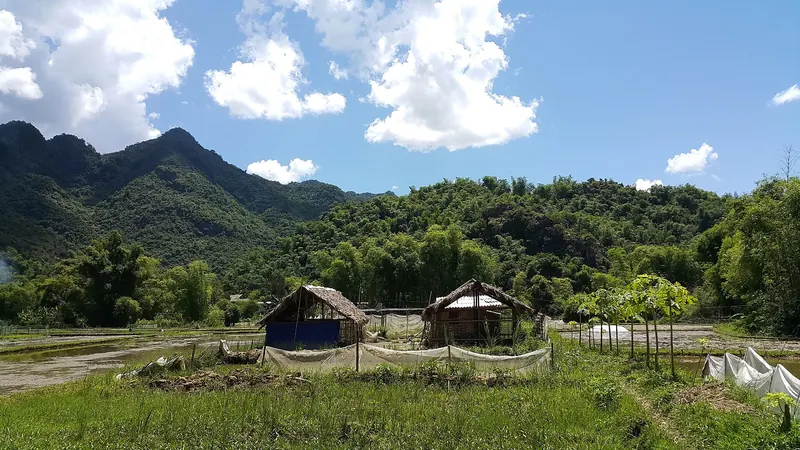
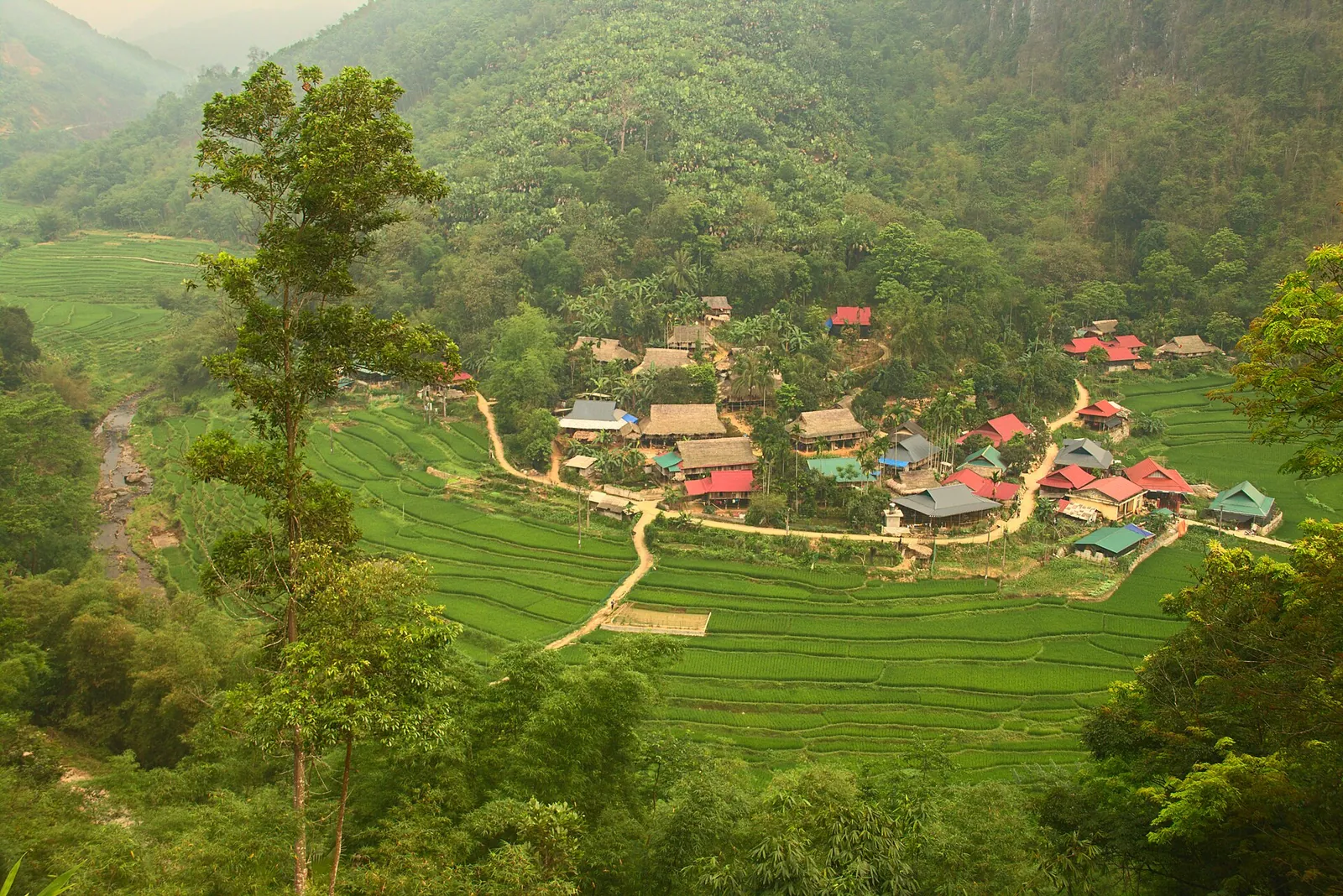
Pu Luong is a forested limestone reserve in the hills of western Thanh Hoa, four to six hours by road from Hanoi, where Thai villages of stilt houses sit above valleys of terraced rice. It has no single sight to tick off. The point is to sleep in a valley, walk between villages and fields, cool off at a waterfall and watch the bamboo water wheels lift stream water onto the terraces. Most visitors stay two or three nights in a homestay or eco-lodge and travel on to Mai Chau or Ninh Binh. The village you sleep in shapes the trip more than anything you plan to see.
- Suggested time
- 2–3 nights
- Where to stay
- Ban Don for the main terraced valley; Ban Hieu for the waterfall; Kho Muong for a remote valley inside the reserve
- Season and timing
- Young green rice in late May and early June; ripening gold in September and October, with early October suggested as the peak. Storms can linger from July to October, and cold spells are common from December to February.
The short answer
Give Pu Luong two nights, or three if you want a full day's trek; the drive from Hanoi takes most of a day, so one night leaves you little time on foot. Sleep in Ban Don, the busiest homestay valley and the easiest base for walks among the terraces, or in Ban Hieu beside the Hieu waterfall if you want a stream and swimming pools on the doorstep. Kho Muong, deeper in the reserve, is the quiet option. Get there by limousine van or private car from Hanoi, ideally breaking the journey in Mai Chau (about an hour away) or Ninh Binh. Once you arrive, walk, borrow a bicycle from your homestay or hire a local guide for the longer routes. Come in late May to early June for young green rice, or September to early October for the gold before the harvest.
What Pu Luong is, and choosing your valley
Pu Luong Nature Reserve was set up in 1999 and covers 17,662 hectares, according to Vietnam's national biodiversity information site; 13,320 hectares of that is strictly protected. In the Thai language the name means the highest peak in the area, and the reserve's forests protect the headwaters of the Ma River. The tourism, though, happens in the valleys. Thai and Muong villages farm terraced rice there between the forested ridges, and that is where the homestays are.
In 2025 Vietnam moved to two-tier local government with no districts, and many communes were merged. The provincial newspaper now places Ban Don in Pu Luong commune, which a 2025 report put at almost 82 square kilometres with 20 villages active in community tourism, and Ban Hieu in Co Lung commune. Older maps, hotel listings and tour descriptions still use Ba Thuoc district and the former communes of Thanh Lam, Thanh Son, Lung Niem and Lung Cao, so expect both sets of names.
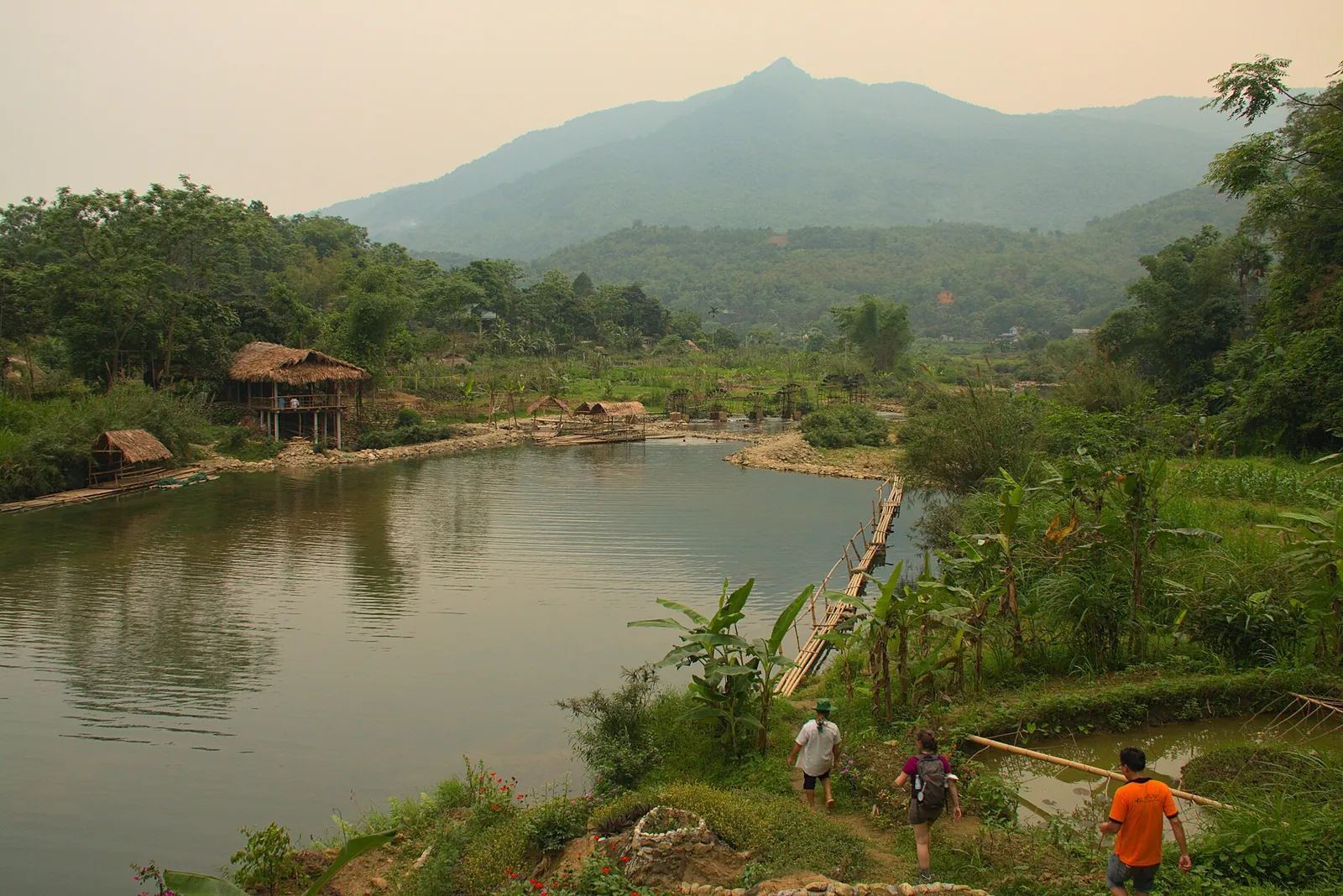
Ban Don is described by the provincial newspaper as the centre of Pu Luong tourism and the valley with the most striking ripe rice. It has the most places to stay, from family stilt houses to resorts on the slopes. Ban Hieu runs along the Hieu stream, with Thai stilt houses on both banks and a chain of waterfalls; it suits travellers who want water rather than views. Kho Muong, in the core of the reserve, is a small Thai village of around 60 households, more cut off than the others, with a cave at the end of the valley. Choose a valley first, then a homestay within it, because moving between valleys means a drive on mountain roads.
Walking, cycling and the bamboo water wheels
Vietnam's national tourism site describes country roads that climb to hilltops through villages and farmland, with the best light at sunrise when the mist lifts from the valleys. Homestays often lend bicycles free of charge, and traffic is light, although some mountain roads are steep. Longer hikes reach remote hamlets and villages, and there are waterfalls and rock pools to cool off in afterwards. Use a local guide for anything beyond the village lanes; your homestay can usually arrange one, and the provincial newspaper notes that residents act as guides through the villages and the reserve.
Pu Luong peak rises to about 1,700 metres, according to the national tourism site, and is a serious climb rather than a stroll; save it for a clear day and go with a guide. Son Ba Muoi, in the former Lung Cao commune, is another viewpoint the provincial newspaper and the national biodiversity site single out.
The water wheels are the image most people take home. The provincial newspaper describes them as built by hand from local bamboo, rattan and other forest materials, with bamboo tubes around the rim that scoop water from a fast stream and tip it into a raised trough, from where it runs to terraces that gravity alone cannot reach. In one village of the former Ban Cong commune it counted dozens of wheels on a single stream, each three to five metres across and repaired before every growing season. They are working farm equipment: look, photograph and do not climb on them.
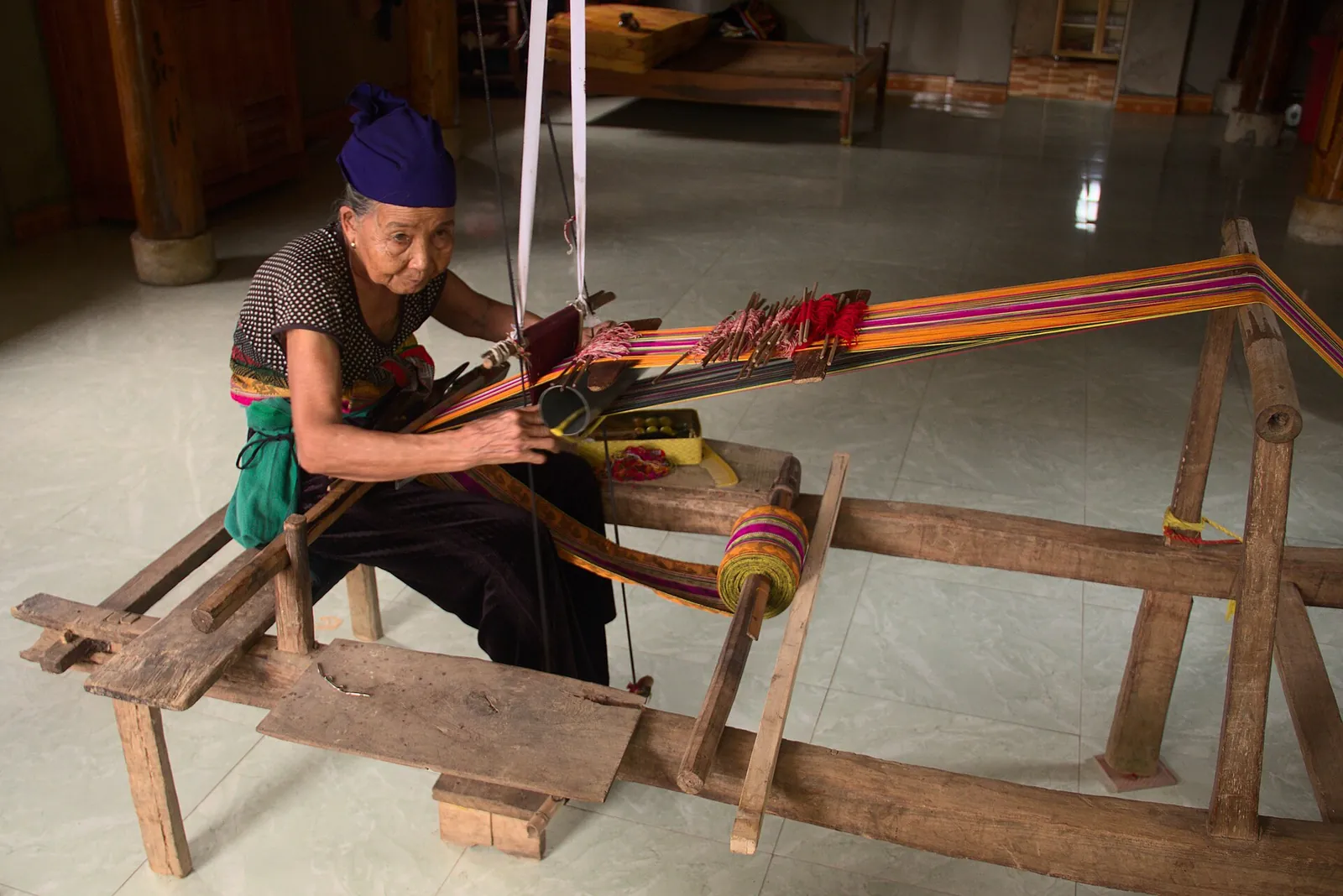
The provincial newspaper also describes the activities homestays offer: harvesting rice in season, gathering bamboo shoots, catching stream fish, bamboo rafting, and brocade weaving. In the evenings there are folk songs and bamboo-pole dancing. In Ban Don, the village head told the paper that the whole village, not only the ten households running homestays, takes part in welcoming guests.
Make time for the local food
What to eat and where to look
Com lam (sticky rice cooked in bamboo)
Glutinous rice cooked over the fire inside a bamboo tube. The provincial newspaper lists it among the specialities served in Ban Don's homestays and at Ban Hieu.
- Where to look
- On the homestay table in Ban Don, Ban Hieu and Kho Muong; some homestays let you help prepare it.
- Fit it into your day
- Eaten with grilled meat or fish at dinner, or carried as a snack on a walk.
It is dense and filling; share a tube rather than order one each.
Ca suoi nuong (grilled stream fish)
Small fish from the mountain streams, grilled over charcoal. The provincial newspaper describes rice-field fish clamped between bamboo sticks and grilled in the harvest season, and stream fish braised on a bed of forest leaves.
- Where to look
- Homestays near streams, especially in Ban Hieu, where the provincial newspaper lists grilled stream fish among the dishes served to visitors.
- Fit it into your day
- Part of the shared dinner tray after a day's walk.
Eaten whole, with small bones; ask for it fried crisp if you prefer.
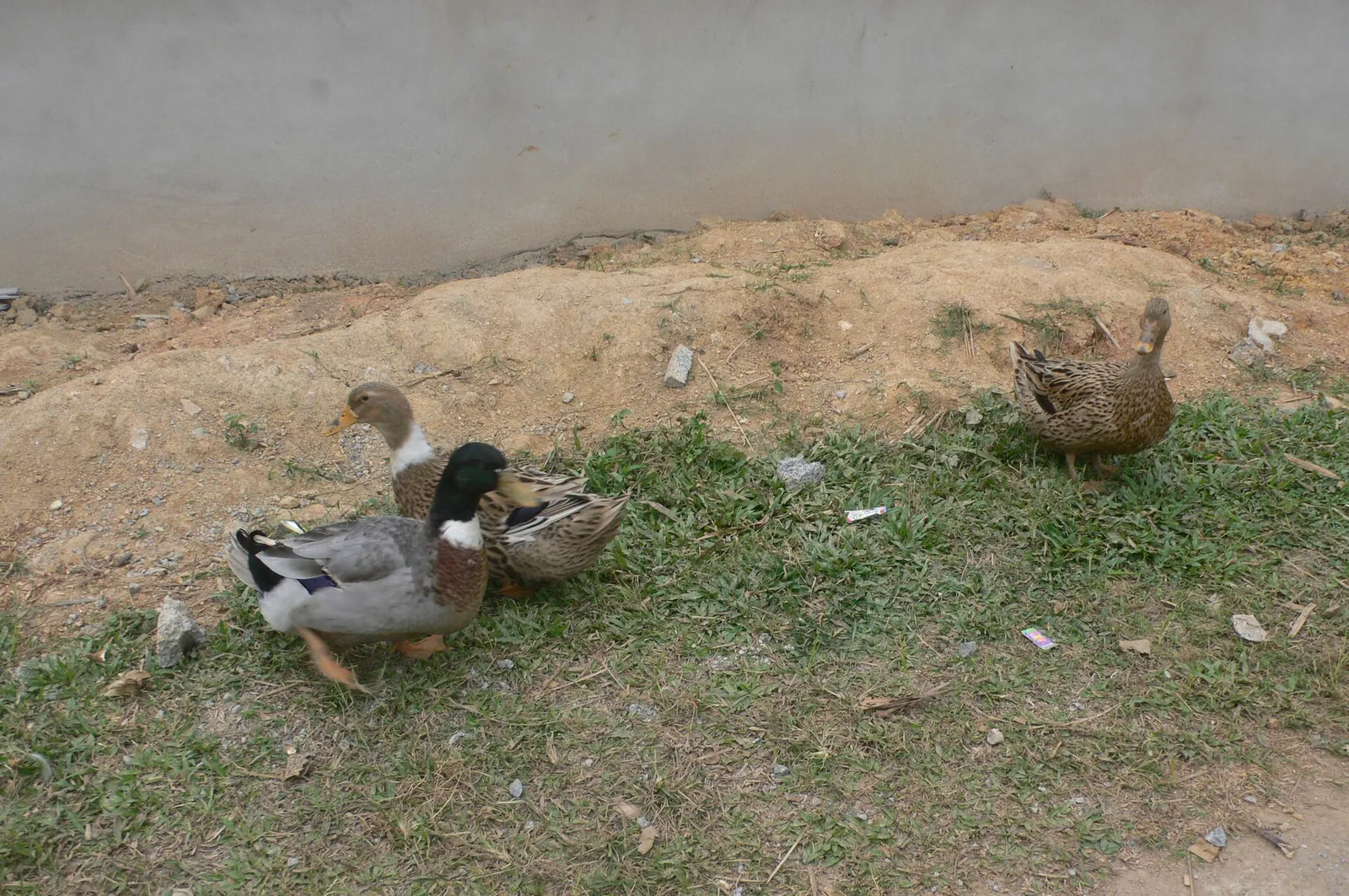
Vit Co Lung (Co Lung duck)
A local duck breed raised free along the Nua stream. The provincial newspaper says its meat is lean and firm with small bones, and lists it among the dishes served at Ban Hieu.
- Where to look
- Homestays in the Co Lung area and around Ban Hieu; order a day ahead if your host needs to prepare a whole bird.
- Fit it into your day
- A shared dinner for a group, ordered from your homestay.
A whole duck is a lot for two; ask what size and price before your host prepares it.
Xoi ngu sac and ga doi (five-colour sticky rice and hill chicken)
Sticky rice coloured in several shades, served alongside free-range hill chicken, often grilled. The provincial newspaper names both among the specialities of Pu Luong's homestays, together with bamboo shoots stuffed with meat and wild greens.
- Where to look
- Homestay dinners across the valleys; they are often part of a set menu for groups.
- Fit it into your day
- The centrepiece of a homestay dinner, usually with rice wine on the side.
Hosts often offer rice wine generously; it is fine to decline or sip slowly.
Hieu waterfall, Kho Muong and Pho Doan market
Hieu waterfall, in Ban Hieu, is a community-run ecotourism site where the stream drops in five small falls with blue-green water, according to the national tourism site; you can sometimes swim. The provincial newspaper puts the whole run at nearly a kilometre, with Thai stilt houses converted into homestays along both banks, and describes visitors sitting on the rocks with their feet in the cold water on early-summer days. Limestone deposits on the rocks can be slippery; wear sandals with grip.
Kho Muong sits deep in the core of the reserve. The provincial newspaper describes some 60 Thai households living among rice fields and maize, with Kho Muong cave at the end of the village; the national biodiversity site lists the cave among the reserve's notable karst features. If you are not sleeping there, arrange a car or motorbike with a local driver through your homestay.
Pho Doan market is the local market of the Kinh, Muong and Thai communities, in the former Lung Niem commune. The national tourism site lists silk costumes, rice wine, mountain vegetables and fruit. The provincial newspaper has described it as held on Thursday and Sunday mornings; confirm the day with your homestay before planning around it.
When to go: green rice, gold rice and the rainy months
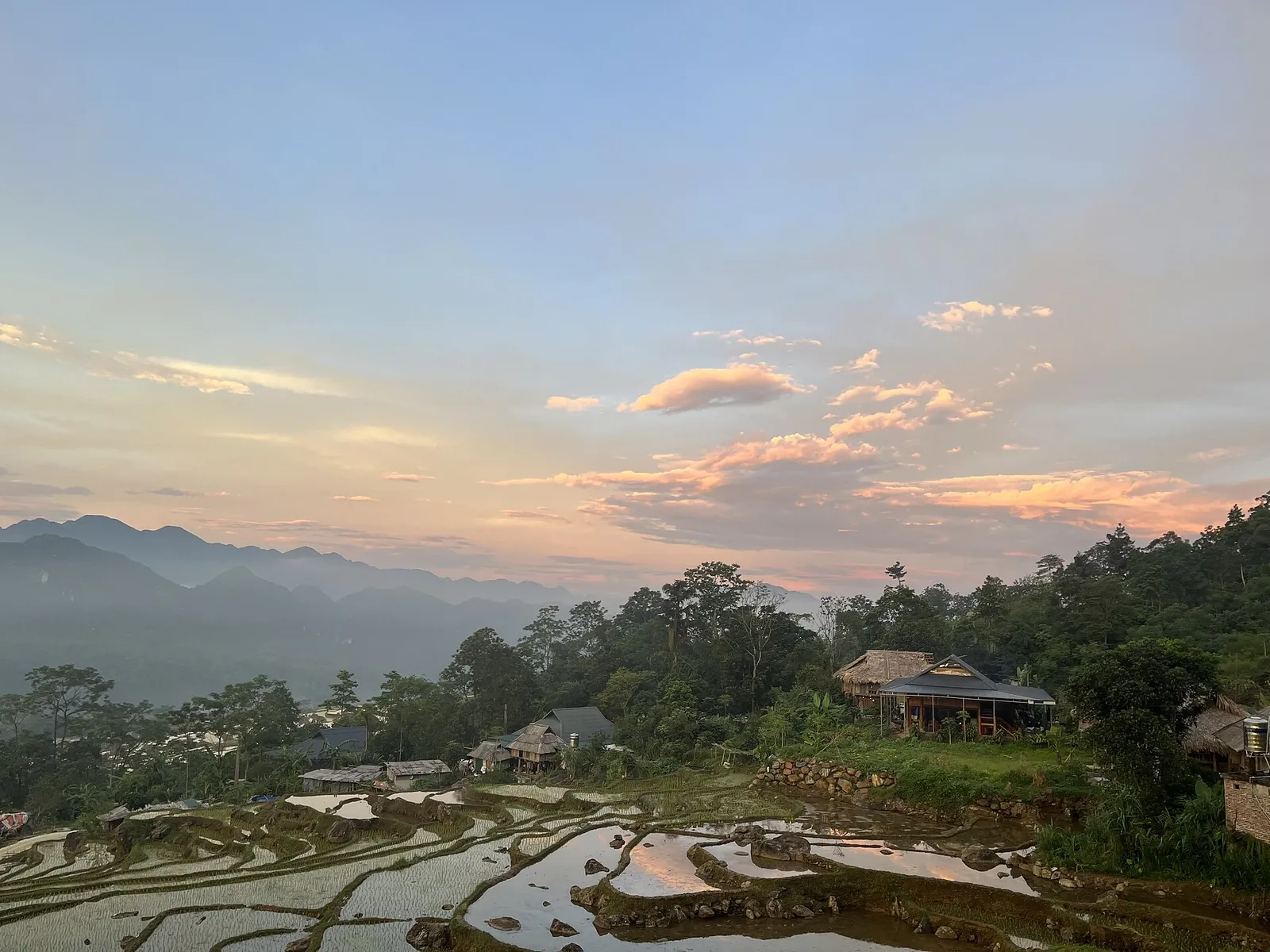
The rice decides how Pu Luong looks. The national tourism site and the national biodiversity site both point to late May and early June for young green rice, and to September and October for ripening rice, when the terraces on the slopes turn yellow. Another national tourism page names early October as the best time, just before the harvest, and says the terraces are green from August. Harvest season is also the busiest time of year, so book well ahead for September and October weekends.
The same national tourism page warns that lingering storms affect Pu Luong from July to October and that cold spells from the north are common from December to February. After heavy rain, village tracks turn muddy: in 2025 the provincial newspaper reported that sections of the road to some homestays at the end of Ban Don were still slippery dirt. Pack shoes that can get wet, and in winter bring a warm layer for the evenings.
Vietnam's national tourism site calls Pu Luong a popular weekend getaway, and visitor numbers are rising. A 2025 report from Pu Luong commune counted around 170,000 visitors in the first ten months of the year, about 52,500 of them from abroad, with 67 places to stay. If you can, arrive on a weekday, and book ahead for public holidays.
Getting there from Hanoi, Mai Chau and Ninh Binh
Pu Luong has no railway station or airport. The national tourism site says most people come by car or motorbike, which can be hired in Hanoi, or by limousine van from Hanoi's Giap Bat and My Dinh bus stations. It puts the journey at about four and a half hours, and another of its pages at four to six hours depending on the season. Ask your homestay whether the van stops near your village or whether you need a pick-up for the last stretch.
The national tourism site suggests breaking the journey in Mai Chau or Ninh Binh, and puts Pu Luong about an hour from Mai Chau. That suggests a loop: Hanoi to Mai Chau, then on to Pu Luong, then out towards Ninh Binh, or the same in reverse. The same site notes that tour operators in Hanoi and Mai Chau can tailor trips, or you can book hotels and transport yourself and arrange activities on arrival.
Once you are there, you will mostly walk or cycle within your valley. For Hieu waterfall, Kho Muong or a viewpoint in another valley, arrange a car or motorbike with a local driver through your homestay rather than riding the mountain roads yourself.
A workable two- or three-night plan
This is an editorial suggestion, not a timetable. Check the weather and the state of the village tracks each morning.
- Day 1 — Arrive: come from Mai Chau (about an hour) or Hanoi, check in at Ban Don or Ban Hieu, and walk the lanes between the terraces in the late afternoon.
- Day 2 — Walk the valley: an early start for the mist on the hills, a guided walk to neighbouring villages and the water wheels, lunch at a homestay, and a swim at Hieu waterfall or bamboo rafting in the afternoon.
- Day 3 — Go deeper or move on: a full-day trek with a local guide, a drive to Kho Muong, or the Pho Doan market if it falls on the right day; otherwise leave for Ninh Binh or Hanoi.
- Extra night: stay a third night if you want both a long trek and a slow day, or to sleep in a second valley.
Staying in a homestay: what to expect
Accommodation ranges from shared floors in a family stilt house to private rooms and resorts with pools. In Pu Luong commune, a 2025 report counted 67 places to stay, 32 of them run by local families. One Ban Don host told the provincial newspaper that his homestay has a communal stilt house and three private rooms. If privacy matters, check whether you are booking a mattress in a shared stilt house or a room with its own bathroom.
Vietnam's national tourism site picks out Pu Luong Retreat as a sustainable stay, built by local carpenters from natural materials, with a chemical-free infinity pool. It is one example of the eco-lodges on the slopes above the valleys. In village homestays, meals are usually cooked by your hosts, so check what is included when you book. Tell your host in advance if you are vegetarian.
Practical questions
How many nights do I need in Pu Luong?
Two nights is the minimum that leaves a full day for walking, since the drive from Hanoi takes four to six hours. Three nights lets you add a long trek, Hieu waterfall or a second valley.
Should I stay in Ban Don or Ban Hieu?
Ban Don is the main terraced valley with the most homestays and lodges and easy walks among the rice. Ban Hieu is beside the Hieu waterfall, with stilt houses along the stream, and suits travellers who want to swim. Kho Muong is quieter and more remote.
How do I get to Pu Luong from Hanoi?
By private car or motorbike, or by limousine van from Hanoi's Giap Bat and My Dinh bus stations; Vietnam's national tourism site puts the trip at four to six hours. Many travellers break it in Mai Chau, about an hour from Pu Luong, or in Ninh Binh.
When are the rice terraces golden?
In September and October, with early October suggested by Vietnam's national tourism site as the best time, just before the harvest. For green young rice, come in late May or early June.
Can I combine Pu Luong with Mai Chau and Ninh Binh?
Yes, and the national tourism site suggests it. A common loop runs Hanoi to Mai Chau, on to Pu Luong, then out to Ninh Binh before returning to Hanoi.
Do I need a guide in Pu Luong?
Not for walks along the village lanes near your homestay. For longer treks, the climb to Pu Luong peak or remote villages, hire a local guide; homestays can usually arrange one.
Sources and checks before you travel
Reference sources for the version dated 3 October 2026. Confirm opening times, access, transport and conditions for your travel dates.
- Vietnam Tourism: Pu Luong, Thanh Hoa – the hidden paradise ↗ — opens in a new tab
- Vietnam Tourism: 7 amazing national parks in Vietnam ↗ — opens in a new tab
- Vietnam Tourism: where to see Vietnam's rice terraces ↗ — opens in a new tab
- Vietnam Tourism: the best sustainable stays in Vietnam ↗ — opens in a new tab
- National nature conservation and biodiversity information site: Pu Luong Nature Reserve ↗ — opens in a new tab
- Bao Thanh Hoa: Pu Luong e-magazine (villages, food and market) ↗ — opens in a new tab
- Bao Thanh Hoa: water wheels, a feature of western Thanh Hoa ↗ — opens in a new tab
- Bao Thanh Hoa: green tourism in Pu Luong commune ↗ — opens in a new tab
- Bao Thanh Hoa: community tourism in Pu Luong (2025) ↗ — opens in a new tab
- Bao Thanh Hoa: community tourism as an open cultural house ↗ — opens in a new tab
- Bao Thanh Hoa (VHDS): escaping the heat at Hieu waterfall ↗ — opens in a new tab
- Vietnam Tourism: a traveller's guide to Vietnam's airports ↗ — opens in a new tab
Does this experience fit your route?
A guided trip from Hanoi takes care of the long drive and the homestay booking. Before you book, check which village you will sleep in, how much walking is involved and how many hours are spent in Pu Luong rather than on the road.
Check dates and details on Viator ↗ — opens in a new tabAffiliate link · Book with ViatorPhoto credits
A valley village surrounded by terraced rice fields in Pu Luong, Thanh Hoa
Photograph: Benjamin Smith — opens in a new tab · CC BY-SA 4.0 — opens in a new tab
Changes: Resized and converted to WebP; displayed with responsive crops. · Original photograph and licence details ↗ — opens in a new tab
Evening light over the terraces and homestays of Pu Luong
Photograph: Wakada111 — opens in a new tab · CC BY-SA 4.0 — opens in a new tab
Changes: Resized and converted to WebP; displayed with responsive crops. · Original photograph and licence details ↗ — opens in a new tab
Pond, stilt house and forested peak in the Pu Luong countryside
Photograph: Benjamin Smith — opens in a new tab · CC BY-SA 4.0 — opens in a new tab
Changes: Resized and converted to WebP; displayed with responsive crops. · Original photograph and licence details ↗ — opens in a new tab
Weaving on a traditional wooden loom in Pu Luong
Photograph: Benjamin Smith — opens in a new tab · CC BY-SA 4.0 — opens in a new tab
Changes: Resized and converted to WebP; displayed with responsive crops. · Original photograph and licence details ↗ — opens in a new tab
Co Lung ducks, the local breed served at homestay dinners around Pu Luong
Photograph: Gió Đông ( thảo luận ) — opens in a new tab · Public domain — opens in a new tab
Changes: Resized and converted to WebP; displayed with responsive crops. · Original photograph and licence details ↗ — opens in a new tab