Sabaragamuwa and Uva
Udawalawe National Park: elephants, ePermit and the road in
Udawalawe is the park to pick when you want wild elephants in open country rather than Yala's leopards, and the decision it asks of you is whether to give it a night of its own. The herds graze on plains and marsh around a reservoir, but the park lies inland and needs a night and a morning rather than a stop on a travel day.
In this guide
Find the location ↗ — opens in a new tabThe short answer
Give Udawalawe one night near the park and a first-light safari the next morning, with a driver for the road in. Book the Department of Wildlife Conservation's Day Visitor ePermit first. Park entry for a foreign adult is US$25 for a daytime visit in the tourist season and US$20 in the rest of the year, plus US$10 per vehicle and government taxes; the jeep is a separate private charge. The ePermit terms say an officer of the Department rides in the vehicle throughout; that is the general condition, not one written for Udawalawe. Under the permit's conditions you may enter between 05:00 and 18:00. Sri Lanka Tourism names the morning and evening as the best hours.
- Suggested time
- 1 night near the park, with a first-light safari the next morning
- Where to stay
- Udawalawe, close to the park entrance
- Season and timing
- Sri Lanka Tourism says the park has no seasonal variation in its elephant herds and names the morning and evening as the best hours. The Uva Provincial Council's tourism site puts the dry season, May to September, as the time of more frequent sightings.
Choosing Udawalawe for elephants in open country
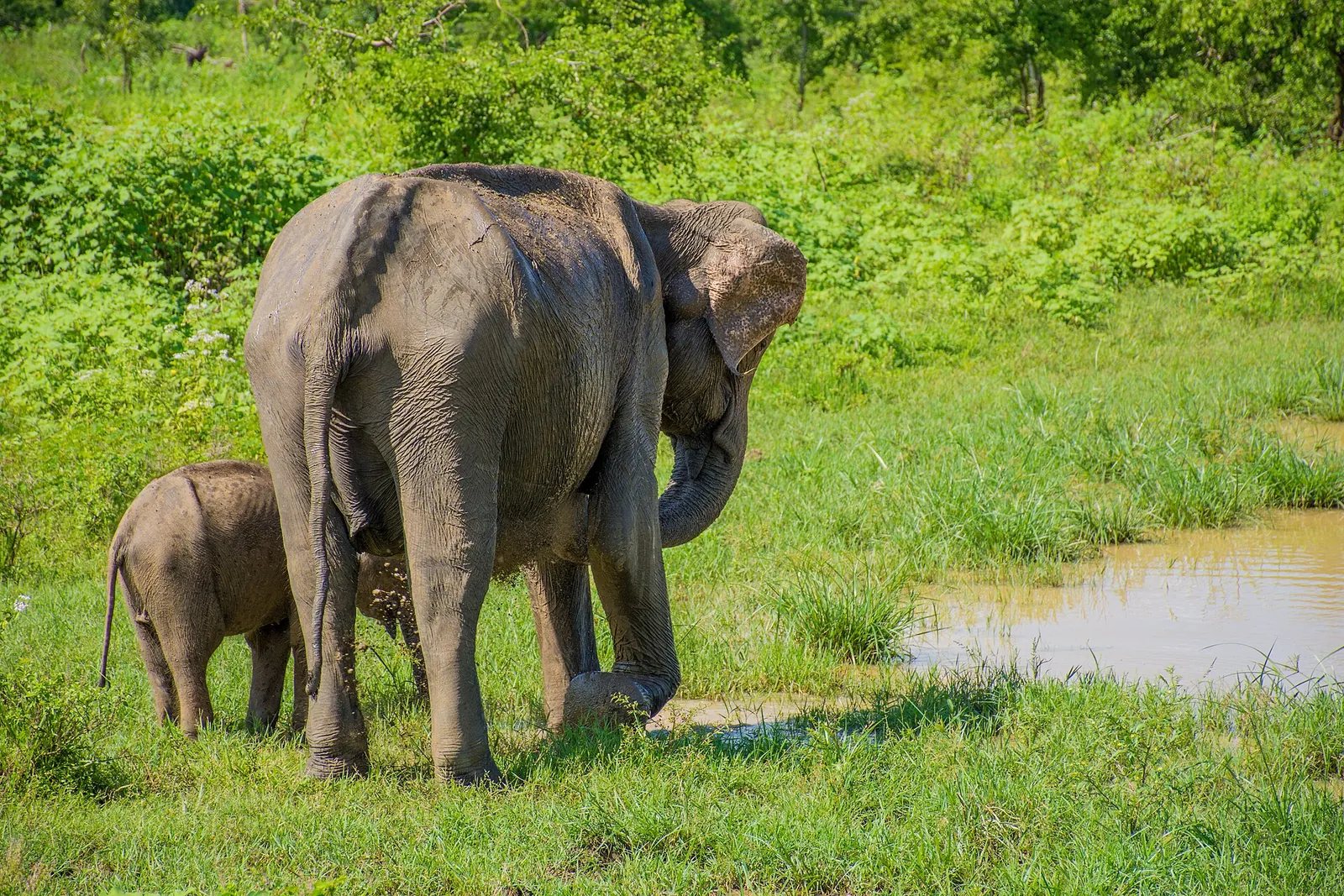
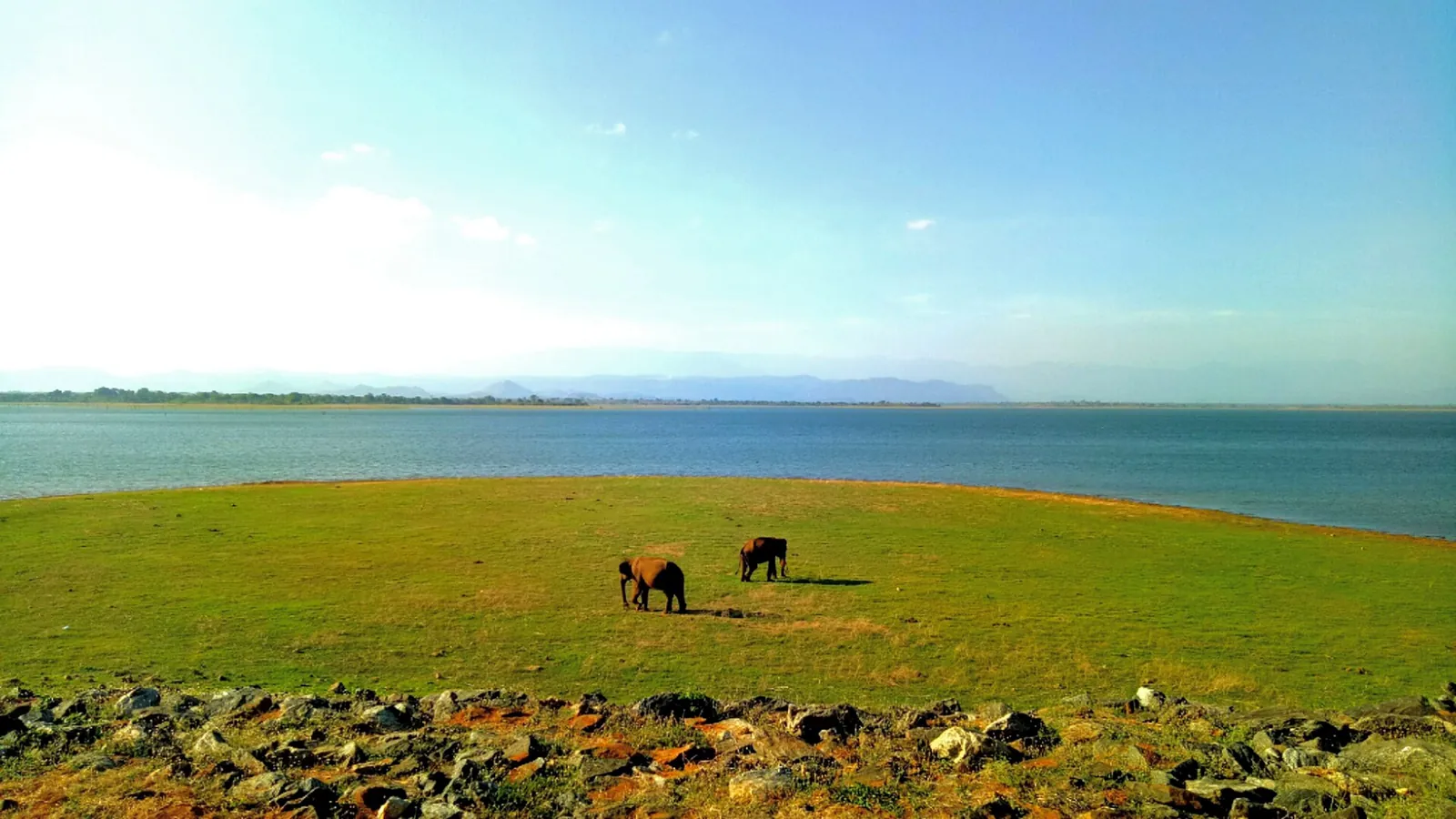
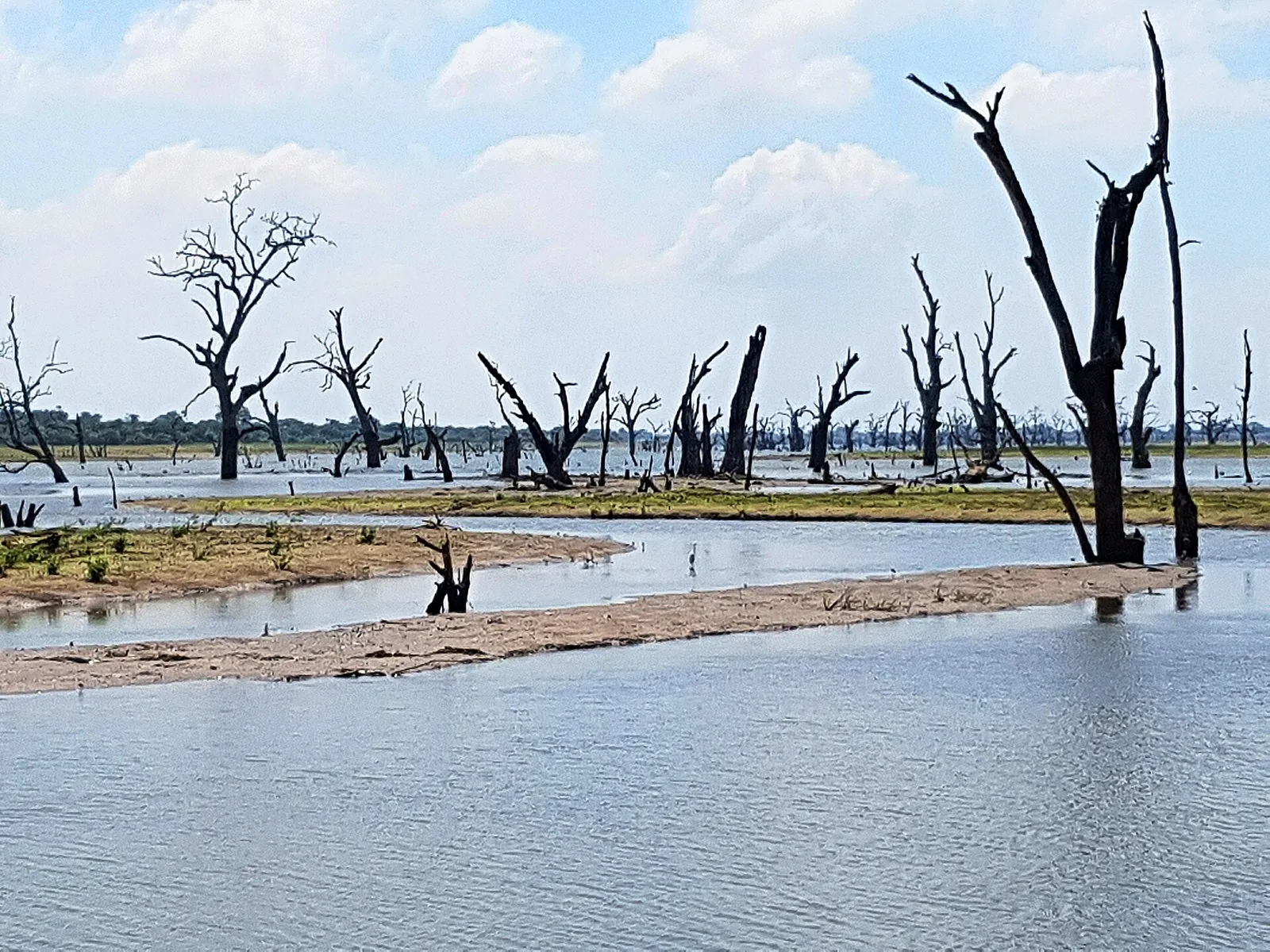
Sri Lanka Tourism calls Udawalawe "undoubtedly the best place in Sri Lanka to see wild Asian Elephants throughout the year", with about 500 elephants that often roam in herds of up to 100. The park lies on the boundary of the wet and dry zones, where plains dominate, with marshes, forest and grassland around the reservoir and the Walawe river. The Kalthota Range and Diyawini Falls lie in the north of the park, and the rocky outcrops of Bambaragala and Reminikotha stand inside it. The Uva Provincial Council's tourism site gives the area as over 30,000 hectares.
Choose Udawalawe when herds in open country are the aim, and Yala when leopards are. Give the park one night and the morning after: the first-trip guide says Yala and Udawalawe each need a day of their own, so it does not fit a travel day between two other stops.
Sleep in the Udawalawe area, which puts you nearer the park than any coastal or hill base and suits a single night before the safari. The where-to-stay guide covers rooms and how the island's other bases compare.
Getting to Udawalawe by road
Udawalawe is reached by road with a driver, from the south coast, from Ella and the hill country, and from Colombo. Our transport guide explains how to check a driver's Sri Lanka Tourism registration number and what the fuel quota means for the car.
The German Foreign Office (checked on 17 October 2026) finds night driving outside towns not advisable, so plan to reach your lodge in daylight, and plan the road leg to Udawalawe as a transfer day.
No official page publishes the road distance or time to Udawalawe from Ella, the south coast or Colombo, a bus timetable, or the distance from the village lodges to the park gate; ask your driver.
Booking the park permit
Gazette 2292/11 of 8 August 2022, which the Department of Wildlife Conservation applies from 2 September 2022, puts Udawalawe in its top fee category: a foreign adult pays US$25 for a daytime visit in the tourist season and US$20 in the rest of the year, a child aged 6 to 12 pays US$15 or US$10, and a child under 6 goes free. A foreign group also pays US$10 per vehicle for tourist services, and government taxes come on top of every charge. The gazette names no months for the tourist season; the Department sets it, so the ePermit shows the amount that applies once you choose the park and the date. The jeep is a separate private charge that no official page publishes. You pay online with Visa or Master cards or eZcash, and the Department adds a convenience fee for online payment. The booking system shows the number of permits remaining once you choose the date and the park.
Book the permit online before you travel. The Department's Day Visitor ePermit guide gives the steps:
- Open the Department's website, go to eServices, then Day Visitor ePermits, and choose to reserve park permits online.
- Read the instructions and continue, then choose the date and the national park from the drop-down list.
- Fill in the reservation details, then the details of your group, which must include drivers, guides and similar staff.
- Enter the vehicle's information, check the details and proceed to payment.
- Pay and save the receipt to show at the park entrance, and take a printout of the permit: the booking page calls the printout mandatory, and the QR code on it is what the entrance checks.
Getting in: the park officer, the vehicle and the hours
The ePermit terms, as listed on the Department's booking page on 17 October 2026, say that an officer of the Department, nominated by the park's game ranger or officer in charge, accompanies you throughout your stay and rides in your vehicle, and that every guide and driver you bring must be named on the permit. You may enter from 05:00 to 18:00 and must be out by 18:30. Permit holders may not travel inside the park between 18:30 and 05:00. These are the Department's general conditions and name no park.
Wrong vehicle details on the ePermit may mean extra payment at the park gate. No official page says how jeeps are hired or what they cost at Udawalawe, whether you may drive your own vehicle in, or which gate hours and safari slots apply to the park; ask your lodge when you book.
The safari and the Elephant Transit Home
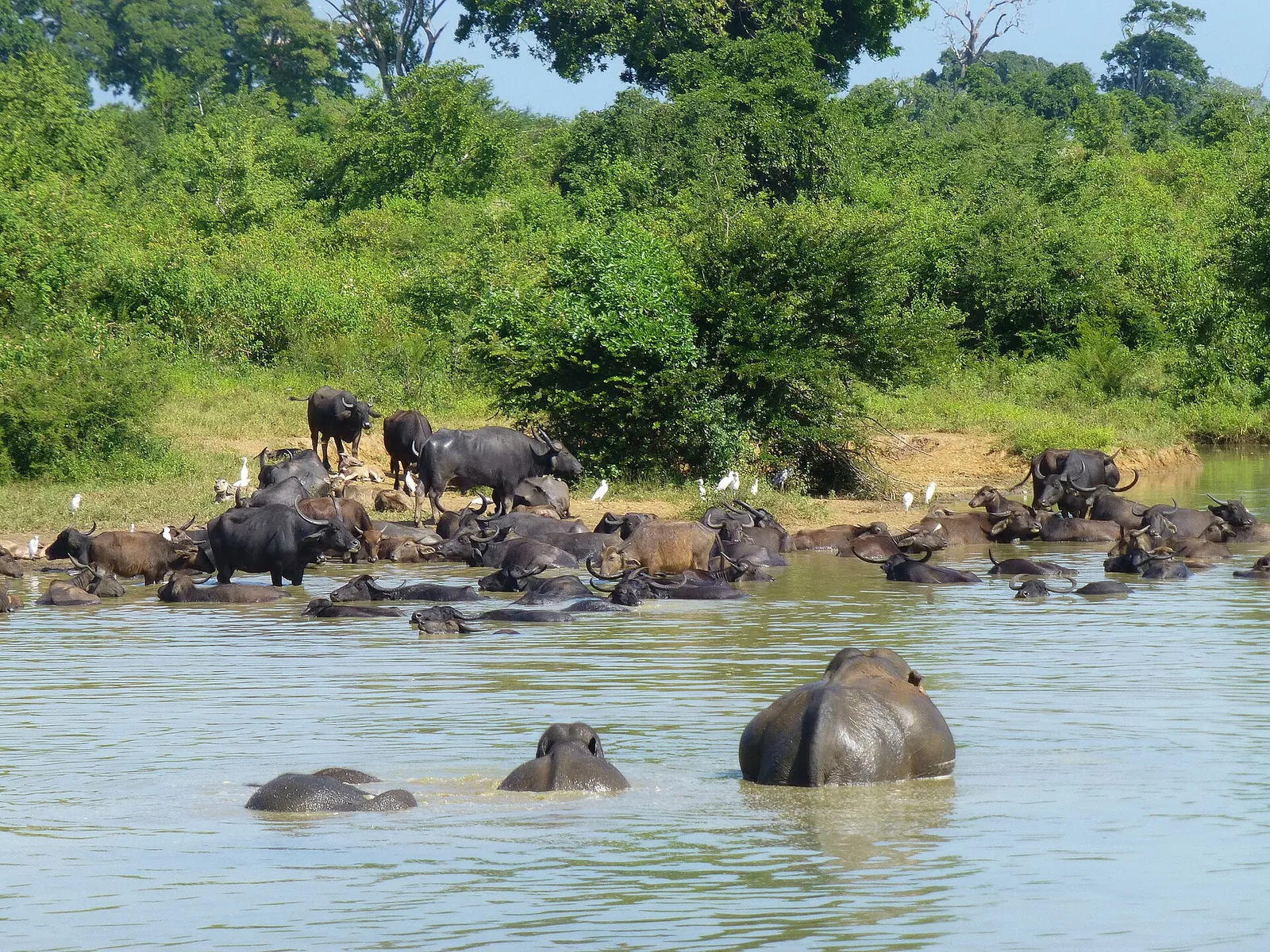
A safari takes you across open plains and marsh around the reservoir. Sri Lanka Tourism names the morning and evening as the best hours and adds that late evening offers photographic opportunities against the sunsets. The Uva council's tourism site says morning and evening drives are the best times to see active wildlife in cooler weather. The park records 184 species of birds, 33 of them migratory, 43 species of mammals and 135 species of butterflies. The Uva site says leopards are occasionally seen, especially on early-morning or late-evening safaris, and lists jackals, spotted deer and crocodiles among the animals.
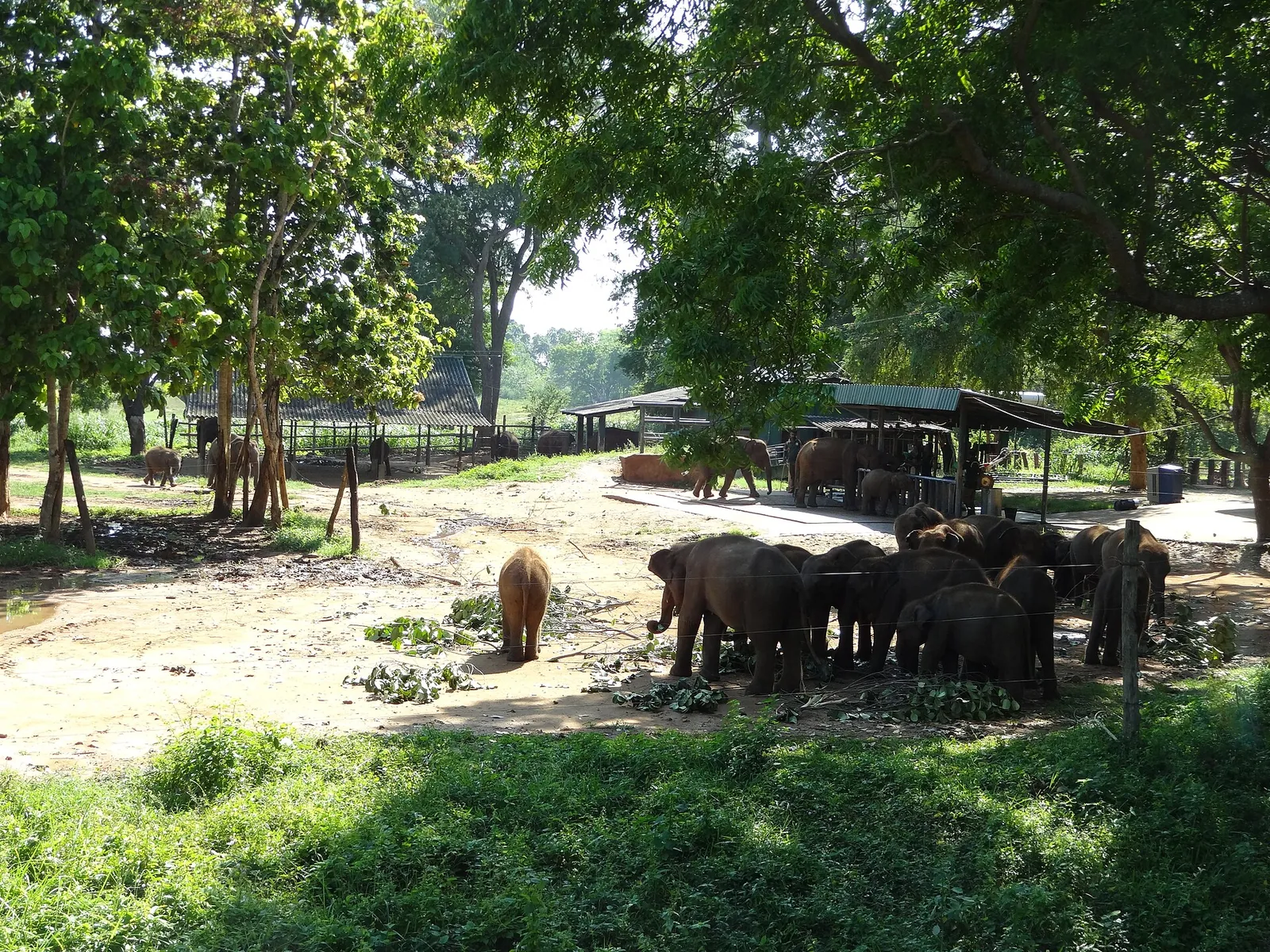
A lodge near the park describes the Elephant Transit Home as a rehabilitation centre for orphaned calves, with the aim of returning them to the wild; it says visitors watch the calves drink from large bottles at feeding time and asks them to keep a respectful distance. No official page lists the feeding times or the fee; ask at your lodge or at the gate.
Elephants, crocodiles and how to behave in the park
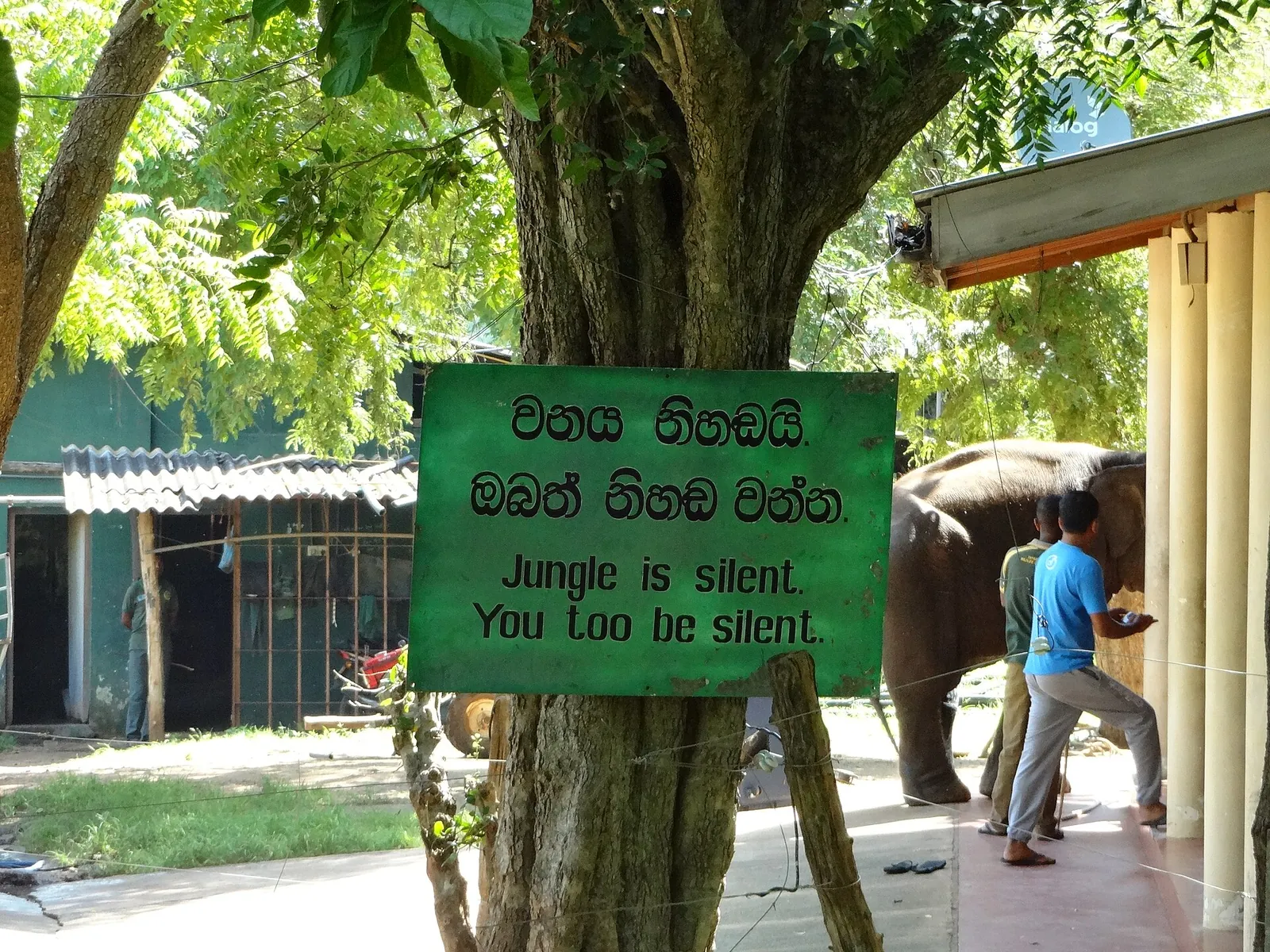
The UK Foreign Office (checked on 16 October 2026) says that some Sri Lankan animals can be dangerous and that wild elephants and crocodiles will attack humans on occasion; its advice is to follow authorised guides or your travel operator when in doubt. The permit's conditions tell you to obey the directions of the Department's officers for visitors' safety. They also forbid shouting, clapping, singing or playing a musical instrument where it may disturb an animal. France Diplomatie (checked on 16 October 2026) says never to give food to animals in parks and near archaeological sites, because monkeys and elephants can become aggressive.
When to go and what to bring
Sri Lanka Tourism says the elephant herds show no seasonal variation, so any month can work. The Uva council's tourism site adds that sightings are more frequent in the dry season, May to September, when animals gather around waterholes. Our best-time guide gives the monsoon calendar for the roads you will travel on the way in. No official page publishes closure dates for Udawalawe.
The Uva council's safari essentials are light, neutral-coloured clothing, sunscreen, a hat, insect repellent, and a camera or binoculars. Add water; a morning drive starts before the heat.
No official page names a restaurant or a local speciality in Udawalawe, so the dishes below are the national ones that Sri Lanka Tourism describes; look for them on lodge menus and in the village.
What to eat and where to look
Kiribath (milk rice)
Rice cooked with coconut milk, a traditional Sri Lankan meal served at auspicious moments and usually eaten with lunumiris, made from onion, chilli, salt and lime, or with seeni sambol, jaggery and bananas, according to Sri Lanka Tourism.
- Where to look
- Breakfast tables at the lodges and small restaurants in Udawalawe.
- Fit it into your day
- Breakfast, or after the drive if you leave at first light.
Lunumiris is hot; ask for the sweet accompaniment if you avoid chilli.
Hoppers
Bowl-shaped pancakes of fermented rice flour and coconut milk, crisp at the edges, with egg hoppers served as a main meal for breakfast and dinner, according to Sri Lanka Tourism.
- Where to look
- Lodge menus and small restaurants in Udawalawe, since hoppers are a breakfast and dinner dish.
- Fit it into your day
- Dinner after the drive, or breakfast the morning after.
Hoppers come with lunumiris and a spicy curry; ask for them on the side.
Buffalo curd with treacle
Thick curd made from filtered and boiled buffalo milk, usually served in clay pots and taken with treacle or sugar, according to Sri Lanka Tourism, which says it can be found across the country.
- Where to look
- As a dessert at the end of a rice and curry meal, or ask your lodge where it is sold nearby.
- Fit it into your day
- After dinner on the night before the safari.
It is a dairy dessert with a high fat content; leave it if you avoid milk.
Rice and curry
Sri Lanka Tourism calls it the main meal of the country: boiled rice with curries of vegetables, meat or fish, with pickles, sambol and papadum alongside.
- Where to look
- Lunch or dinner at your lodge or at a restaurant in the village.
- Fit it into your day
- Dinner on the night before the safari.
Curries vary a great deal in heat; ask for a mild version.
Practical questions
How many nights do I need for Udawalawe?
One night near the park is enough. Arrive the afternoon before, go in at first light and move on later in the morning.
How do I book an Udawalawe permit?
Online, on the Department of Wildlife Conservation's Day Visitor ePermit. Pay with Visa or Master cards or eZcash; the Department adds a convenience fee. Take a printout of the permit with its QR code to the entrance.
How much does an Udawalawe safari cost?
Two parts. Park entry under Gazette 2292/11 is US$25 per foreign adult for a daytime visit in the tourist season and US$20 in the rest of the year, plus US$10 per vehicle and government taxes, paid on the ePermit. The jeep is a separate private charge; ask your lodge for it and compare any safari price against both.
Who goes with me into the park?
The ePermit terms say an officer of the Department rides in the vehicle for the whole visit; this is the general condition for every park. Every guide and driver you bring must be named on the permit.
Are the elephants at Udawalawe dangerous?
Yes, they can be. The section on behaviour in the park gives the UK Foreign Office's warning and the permit's rules; keep quiet near a herd.
May I feed the elephants or monkeys?
No. The section on behaviour in the park gives France Diplomatie's caution on feeding animals.
Keep planning your trip
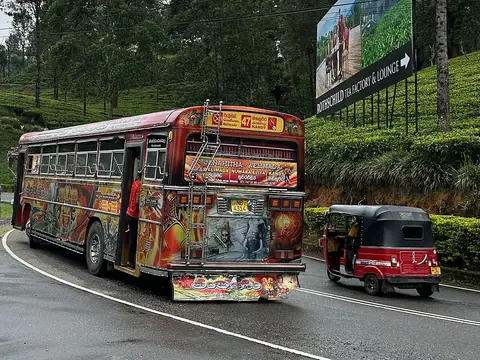
First trip to Sri Lanka
Nine nights through the ancient cities, Kandy, Ella and Galle: all-in costs for two, the ETA, trains, monsoons, dengue, the sea and the roads.
Read the guide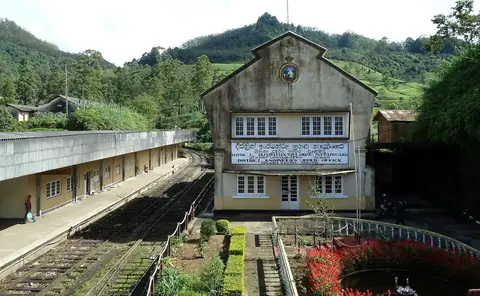
Transport in Sri Lanka
Kandy to Ella while the hill line is partly closed, the Nanu Oya to Ella train, expressway buses, a car with a driver and the airport transfer.
Read the guide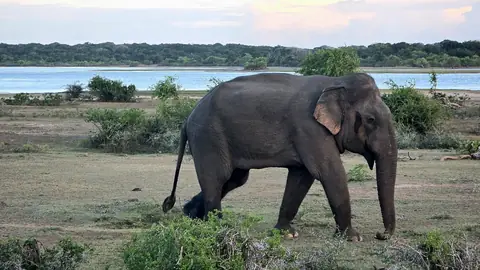
Yala
How long to give Yala, how to book the Day Visitor ePermit, which base suits you, what to see nearby and how to get there.
Read the guide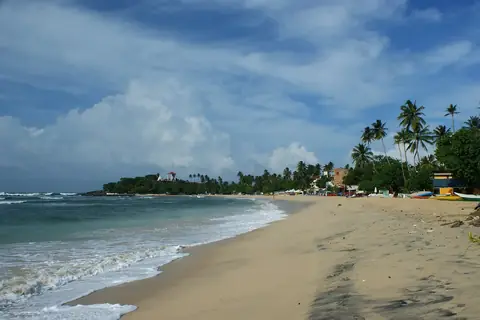
Mirissa, Weligama and Unawatuna
How to split a few nights between Mirissa, Weligama and Unawatuna: the whale boats and their season, a surf lesson, what they cost and the coast train.
Read the guide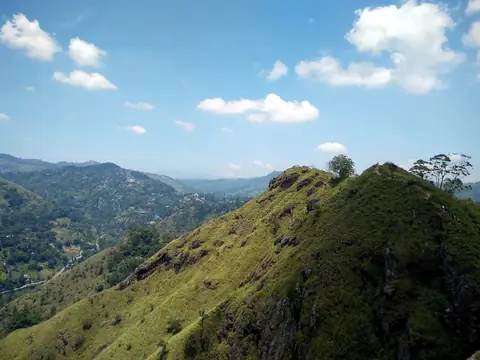
Ella
How many nights Ella needs, how to get there from Kandy while the hill line is partly closed, Nine Arch Bridge, Little Adam's Peak, Ella Rock, Ravana Falls and tea walks.
Read the guide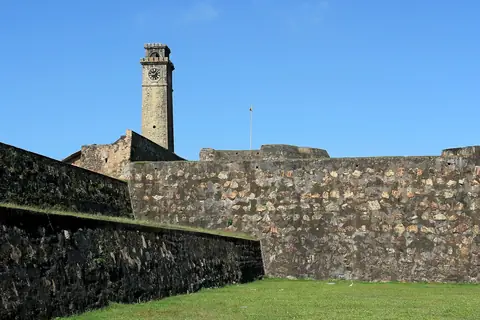
Galle
How long Galle needs, the Fort ramparts at sunset, its Dutch heritage and museums, the train from Colombo, where to eat and where to sleep.
Read the guideSources and checks before you travel
(13)
- Sri Lanka Tourism: Udawalawe National Park ↗ — opens in a new tab
- Department of Wildlife Conservation: revision of fees ↗ — opens in a new tab
- Gazette Extraordinary No. 2292/11 of 8 August 2022: national park fees (PDF) ↗ — opens in a new tab
- Department of Wildlife Conservation: Day Visitor ePermit reservation how-to ↗ — opens in a new tab
- Department of Wildlife Conservation: ePermit terms and instructions ↗ — opens in a new tab
- Department of Wildlife Conservation: Wildlife Park Permits Reservation eService ↗ — opens in a new tab
- Uva Provincial Council tourism: Udawalawe National Park Safari ↗ — opens in a new tab
- A lodge near Udawalawe: Elephant Transit Home page (the lodge's own information) ↗ — opens in a new tab
- Sri Lanka Tourism: food range ↗ — opens in a new tab
- Sri Lanka Tourism: airports ↗ — opens in a new tab
- UK Foreign Office: Sri Lanka safety and security ↗ — opens in a new tab
- France Diplomatie: Sri Lanka, sécurité ↗ — opens in a new tab
- German Foreign Office: Sri Lanka, Reise- und Sicherheitshinweise ↗ — opens in a new tab
Reference sources for the version dated 1 November 2026. Confirm opening times, access, transport and conditions for your travel dates.
Photo credits
(6)
An elephant and her calf beside a pool in Udawalawe National Park
Photograph: M.S Dulan De Silva — opens in a new tab · CC BY-SA 4.0 — opens in a new tab
Changes: Resized and converted to WebP; displayed with responsive crops. · Original photograph and licence details ↗ — opens in a new tab
Elephants on the grassy shore of the reservoir
Photograph: Sanduweragoda — opens in a new tab · CC BY-SA 4.0 — opens in a new tab
Changes: Resized and converted to WebP; displayed with responsive crops. · Original photograph and licence details ↗ — opens in a new tab
Dead trees standing in the reservoir water
Photograph: Peter Addor — opens in a new tab · CC BY-SA 4.0 — opens in a new tab
Changes: Resized and converted to WebP; displayed with responsive crops. · Original photograph and licence details ↗ — opens in a new tab
Water buffalo bathing in a pool in the park
Photograph: Ji-Elle — opens in a new tab · CC BY-SA 3.0 — opens in a new tab
Changes: Resized and converted to WebP; displayed with responsive crops. · Original photograph and licence details ↗ — opens in a new tab
Young elephants in the yard of the Elephant Transit Home
Photograph: Z thomas — opens in a new tab · CC BY-SA 4.0 — opens in a new tab
Changes: Resized and converted to WebP; displayed with responsive crops. · Original photograph and licence details ↗ — opens in a new tab
A sign at the Elephant Transit Home asking visitors to be silent
Photograph: Z thomas — opens in a new tab · CC BY-SA 4.0 — opens in a new tab
Changes: Resized and converted to WebP; displayed with responsive crops. · Original photograph and licence details ↗ — opens in a new tab