Plan your trip
What to eat in Sri Lanka: rice and curry, hoppers and kottu
In Sri Lanka the question is rarely what to eat, because many Sri Lankans eat rice and curry at breakfast, lunch and dinner. The question is how many versions of it to try, and what else sits beside it: bowl-shaped hoppers in the morning, kottu chopped on a hot griddle at night, a glass case of short eats with the afternoon tea. The island's cooking is the work of four communities, Sinhalese, Tamil, Muslim and Burgher, and in the far north Jaffna's Tamil kitchen adds a darker, hotter crab curry of its own. This guide sets out what each dish is and when it is eaten, where to taste it on the usual loop through Colombo, Sigiriya, Kandy, Ella and Galle, how to order and eat it, and what a day of meals costs.
In this guide
Find the location ↗ — opens in a new tabThe short answer
Eat rice and curry at lunch, hoppers or string hoppers at breakfast and kottu at night, and let the route decide the rest: Jaffna cooking in Colombo, Tamil breakfasts in Kandy, tea in the hills around Ella (and Nuwara Eliya, if you add that stop), a hopper breakfast in Galle Fort. Two prices from Cafe Chill in Ella, read on 27 October 2026: rice and curry of the day costs LKR 1,700 and lamprais LKR 1,950, plus a 10% service charge. Reckon on about LKR 3,700 a person a day at local eateries with one cafe meal, LKR 8,000 at cafe prices or LKR 18,000 in hotel restaurants, the same levels as our trip-cost guide.
- Key point
- Rice and curry once a day, hoppers or string hoppers at breakfast, kottu on at least one evening: the loop's nine nights leave room for each dish in this guide
- Where it applies
- Wherever the loop already sleeps: Colombo for Jaffna cooking, the Sigiriya area and Kandy for rice and curry and Tamil breakfasts, Ella for tea, or Nuwara Eliya if you add that stop, Galle Fort for hoppers and seafood
- Timing
- Good all year: rice and curry, hoppers and kottu are everyday dishes rather than seasonal ones.
Rice and curry, and the four kitchens behind it
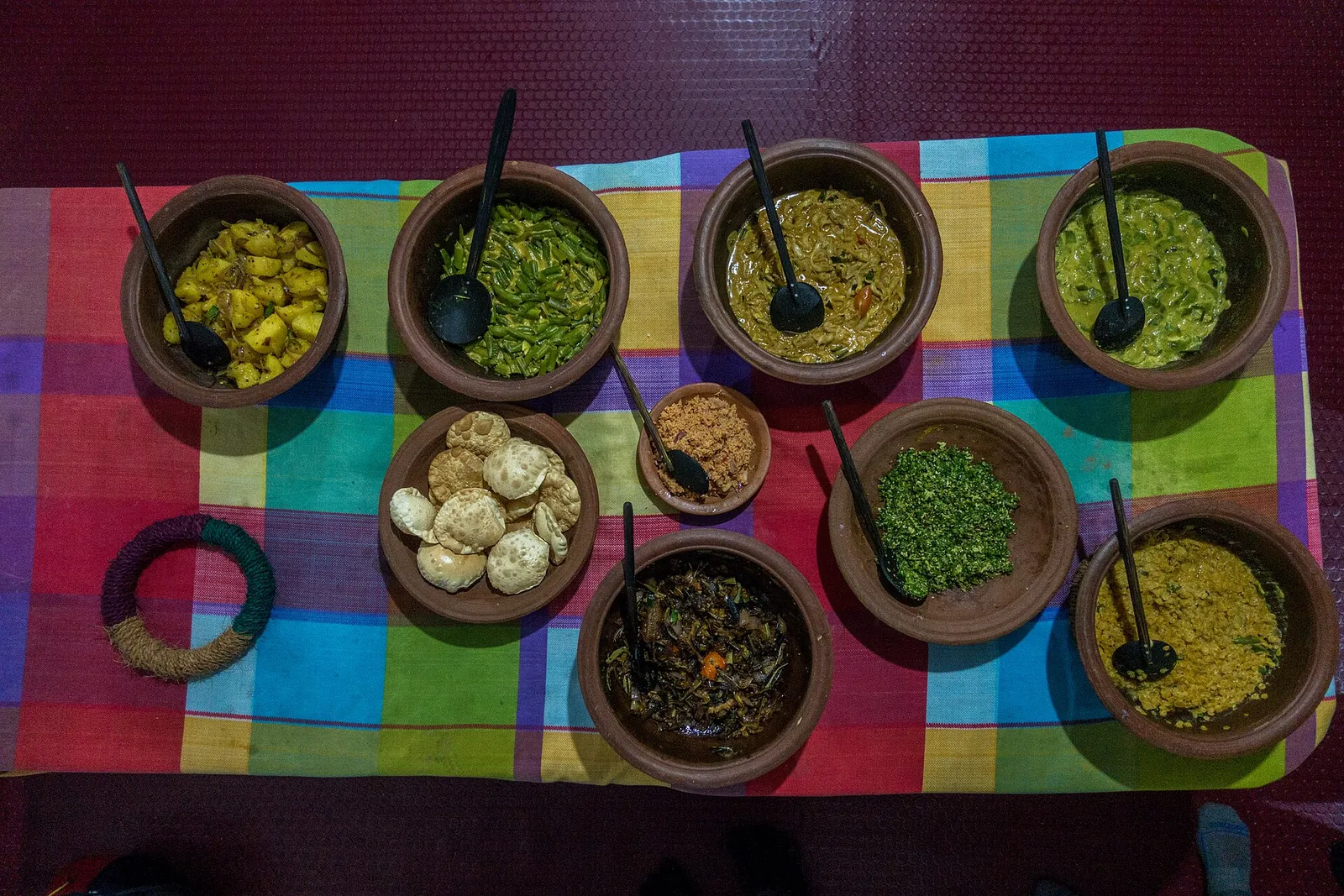
Sri Lanka Tourism calls rice and curry the main meal of the island. A plate usually carries several dishes: rice with a meat or fish curry, dhal, papadum, mallum, a green salad, and a sambol or two, and a full lunch spread can run to eight small curries. The everyday curries run from jackfruit and breadfruit to lotus stem, banana flower and pumpkin, so a vegetarian has plenty to choose from.
The heat lives in the individual dishes, not in the meal as a whole. Kiri hodi, a coconut-milk gravy, is not spicy at all, dhal is mildly spicy and chicken curry very spicy; pumpkin curry is cooked with green rather than red chilli and stays mild. The two sambols that turn up most often are pol sambol, scraped coconut with red onion, chilli, lime and salt, often with Maldive fish, and lunu miris, onion, chilli flakes, salt and lime.
Behind that plate stand four kitchens. The Sinhalese bring kiribath, rice cooked in coconut milk, and festive sweets such as kavum, kokis and aluwa; the Tamil community dosai, idly, wadei and murukku; the Sri Lankan Muslim community biryani, faluda and wattalapam; and the Burgher community lamprais, rice and accompaniments baked in plantain leaves, a legacy of the Dutch.
The usual first trip passes through places where you can taste most of them. Our first-trip guide sets out the ten-day loop and its nights; this guide is about what is on the table at each stop.
- Sinhalese: rice and curry, kiribath with lunu miris, and festive sweets.
- Tamil: dosai, idly and wadei in the morning, and in the north the Jaffna crab curry and odiyal kool.
- Muslim: biryani, faluda and wattalapam.
- Burgher: lamprais in its leaf parcel.
Hoppers, string hoppers and kottu
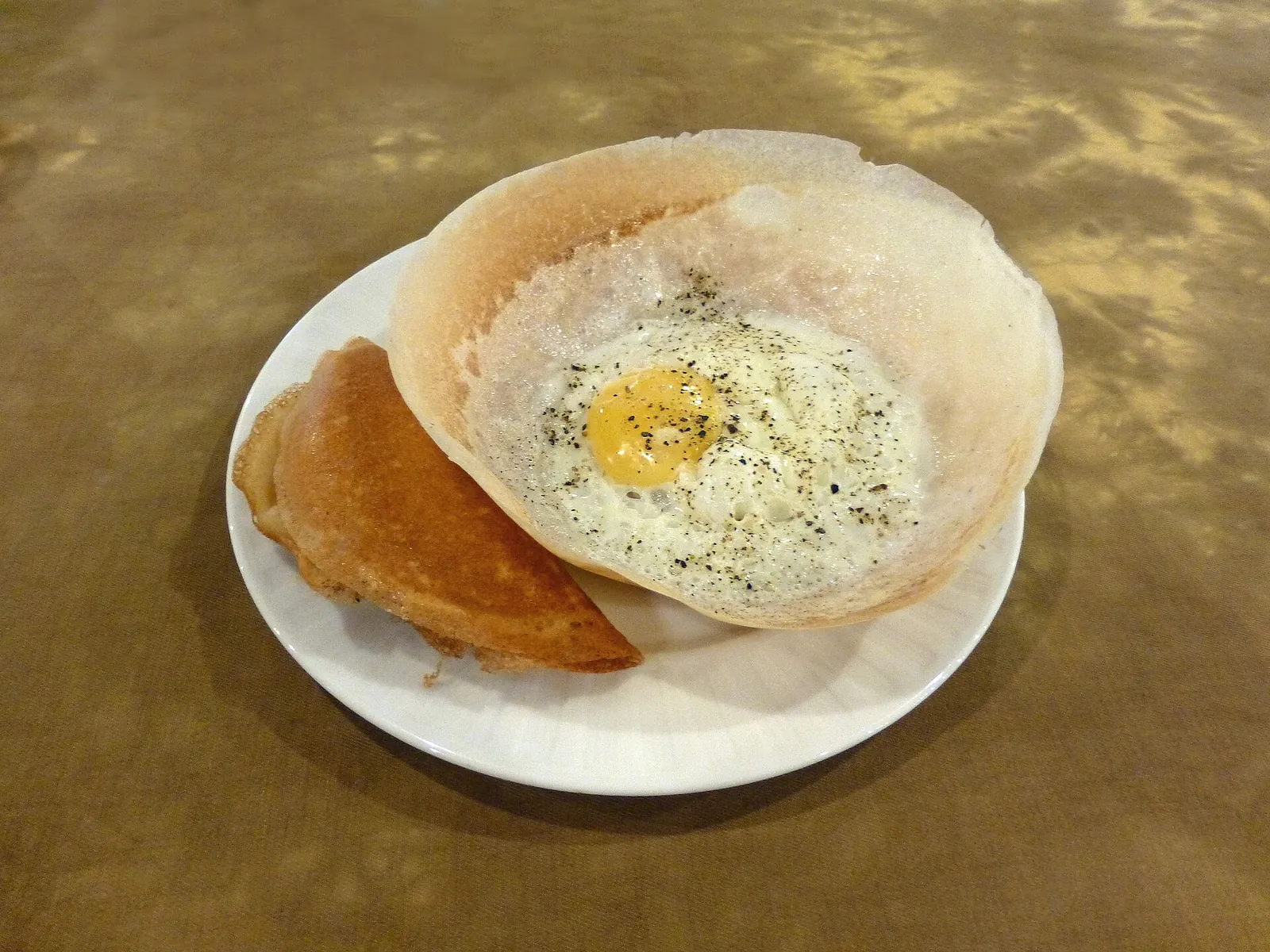
Hoppers, appa, are bowl-shaped pancakes of fermented rice flour and coconut milk, cooked in small round pans so that they come out crisp round the edges and thicker at the bottom. A plain hopper comes with lunu miris and a spicy curry; an egg hopper has an egg cooked into the bowl; a honey hopper is the sweet one. Plain and egg hoppers are eaten as a main meal at breakfast and dinner, and hoppers are also sold as a tea-time street snack.
String hoppers, idiappa, are something else: rice-flour dough pressed into strands and steamed in small flat nests, served with dhal or a fish, meat or potato curry and pol sambol, again at breakfast or dinner. Pittu, rice or kurakkan flour steamed with grated coconut, is the third member of the family and comes with coconut milk in the morning.
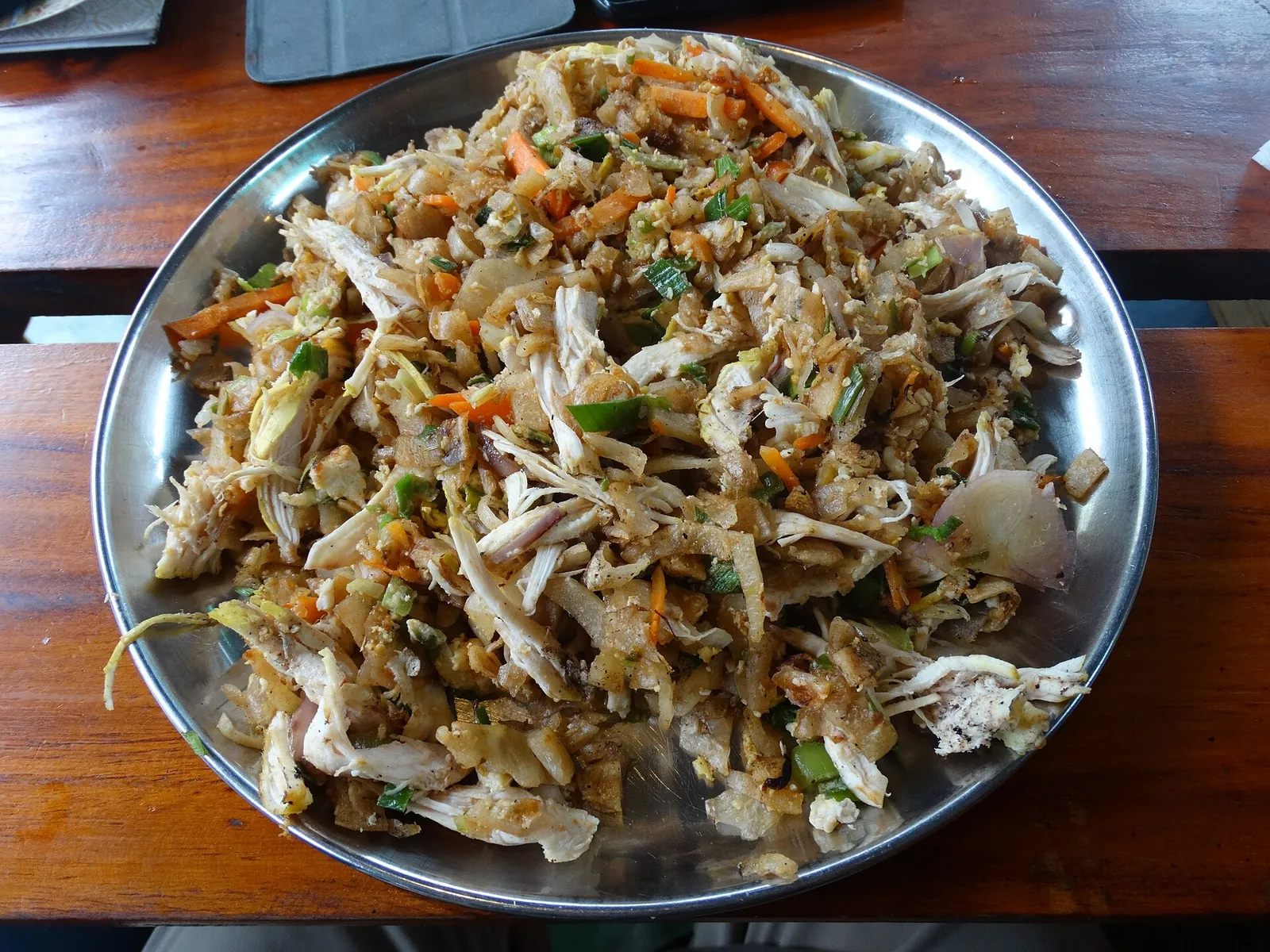
For kottu, a cook chops a godhamba roti on a griddle with two metal spatulas, working in vegetables, egg or meat and spices, with a rhythmic clatter. It is one of the defining dishes of the island's street food, made in vegetable, chicken, cheese, beef, fish, seafood and mutton versions and as a string-hopper kottu, and it is usually a dinner dish. In Colombo, the tourism board's suggestion is the simplest: end the day on Galle Face Green with kottu or wade. Our Colombo guide has the green and the restaurants around it.
In Kandy, Balaji Dosai on D.S. Senanayaka Street, a vegetarian restaurant since 2008, serves dosai, idly and string hoppers, the last in sets of ten, from 7.00 AM to 10.00 PM every day, so it covers breakfast and dinner from one address. Its rice and curry runs only from 11 AM to 3 PM.
- Breakfast: egg hoppers or string hoppers with dhal and pol sambol.
- Dinner: kottu, or hoppers again with a curry.
- Order hoppers by the piece: a few plain ones and an egg hopper make a meal.
Jaffna and the Tamil north
Jaffna, at the northern tip of the island, is the capital of the mainly Tamil-speaking Northern Province, and its cooking differs from the south's. Its signature is Jaffna crab curry. Jaffna cooks make it with sea crab rather than mud crab, and the key is the local curry powder: a household blend of more than a dozen spices, among them fenugreek, cumin, turmeric and dried chilli, known for its heat. Coconut milk and tamarind go in after the powder, and the curry is eaten with rice and string hoppers, shell by shell.
The other dish to look for is odiyal kool, a seafood soup. Around them the Tamil dishes found across the island, dosai, idly and wadei, with sweets such as kesari and laddoo, complete the northern table.
Jaffna lies off the ten-day loop, so most visitors taste its food in Colombo. The Palmyrah restaurant at the Renuka City Hotel, 328 Galle Road in Colombo 3, has cooked Jaffna dishes since 1972: its signature list names Jaffna whole crab curry, odiyal kool, mutton paal poriyal, fried fish pittu and milk hoppers. It serves lunch from 12.00 to 2.30 pm and dinner from 7.00 to 10.30 pm daily, so it fits the first evening in Colombo or a lunch on day 10 before the flight.
One caution belongs here: the German Foreign Office advises against eating sea fish and seafood in Sri Lanka, citing ciguatera, a poisoning caused by fish. If you follow that advice, choose the Palmyrah's mutton paal poriyal over the crab and the soup.
- Crab curry: hotter and darker than the coconut curries of the south.
- Without seafood: mutton paal poriyal, from the same kitchen.
- Tamil breakfast: dosai, idly and wadei, in Jaffna or at a Tamil restaurant on the loop such as Balaji Dosai in Kandy.
How to order: spice, the right hand and the bill
Spice. Much Sri Lankan food is spicy, so say what you want when you order: ask for the food less spicy or mild, and ask which of the day's curries are the gentle ones. Dhal, kiri hodi and pumpkin curry are the usual safe ground, and much of a plate's heat sits in the sambols and in the fried red chilli that often comes with rice and curry, which you can leave aside. If you like heat, say so too.
Eating with your hand. Rice and curry, hoppers and crab curry are traditionally eaten with the fingers: mix a little rice with one curry at a time, gather it with the fingertips and push it into your mouth with the thumb. The Rough Guide to Sri Lanka puts the rule plainly: eat and shake hands with your right hand. Wash your hands before and after; if you would rather use a spoon and fork, ask for them.
How a meal arrives. At a rice-and-curry lunch the small dishes come together around the rice; at a buffet you serve rice first and the curries around it. Hoppers and string hoppers are ordered by number, and short eats come on a mixed plate.
The bill. Cafe and restaurant menus often quote prices before a service charge, so look for it on the bill before adding a tip. Carry small notes for stalls and small eateries.
- Less heat: leave the fried chilli and the sambol aside if a dish is still too hot.
- Cutlery: a spoon and fork are yours for the asking.
- Service charge: check the bill before tipping.
Breakfast, short eats, sweets and tea
Breakfast is where much of the island's rice-flour cooking lives. Besides hoppers and string hoppers, look for kiribath, milk rice usually eaten with lunu miris, which is served at auspicious moments and which some people eat on the first day of each month, and green gram, boiled mung beans with coconut and lunu miris, a popular breakfast. A guesthouse breakfast that offers a Sri Lankan option is often the best meal of the morning.
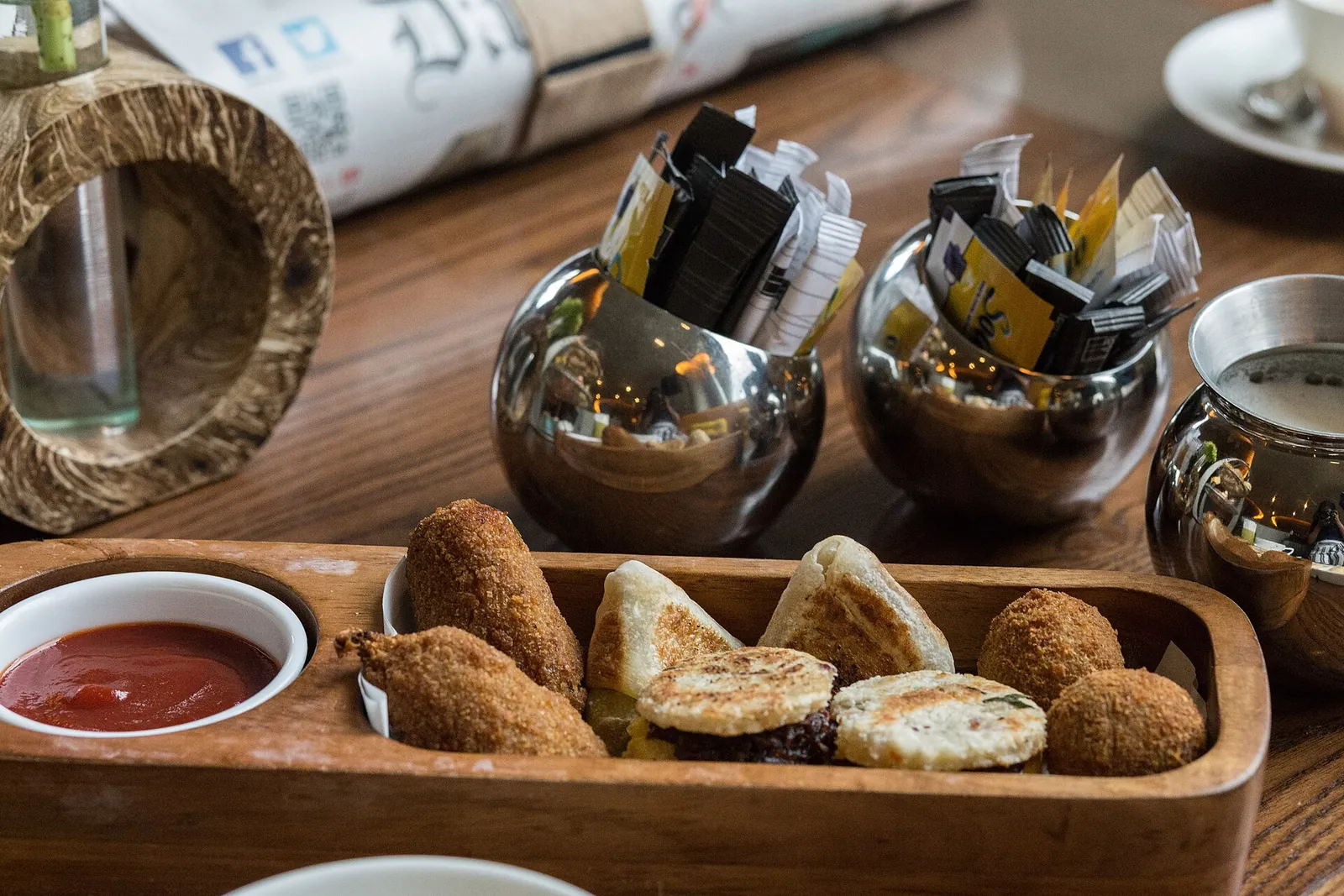
Short eats fill the afternoon. They are patties, cutlets, Chinese rolls, maalu paan (fish buns) and pastries, for evening tea or a quick breakfast and the kimbula bunis, a crocodile-shaped bun. Street carts add isso wadei, samosas, achcharu and manioc chips.
Sweets. The two desserts to look for are buffalo curd eaten with palm honey and the Malay-derived, caramel-like wattalapam. The Sinhalese festive sweets, kavum, kokis and aluwa, belong to celebrations.
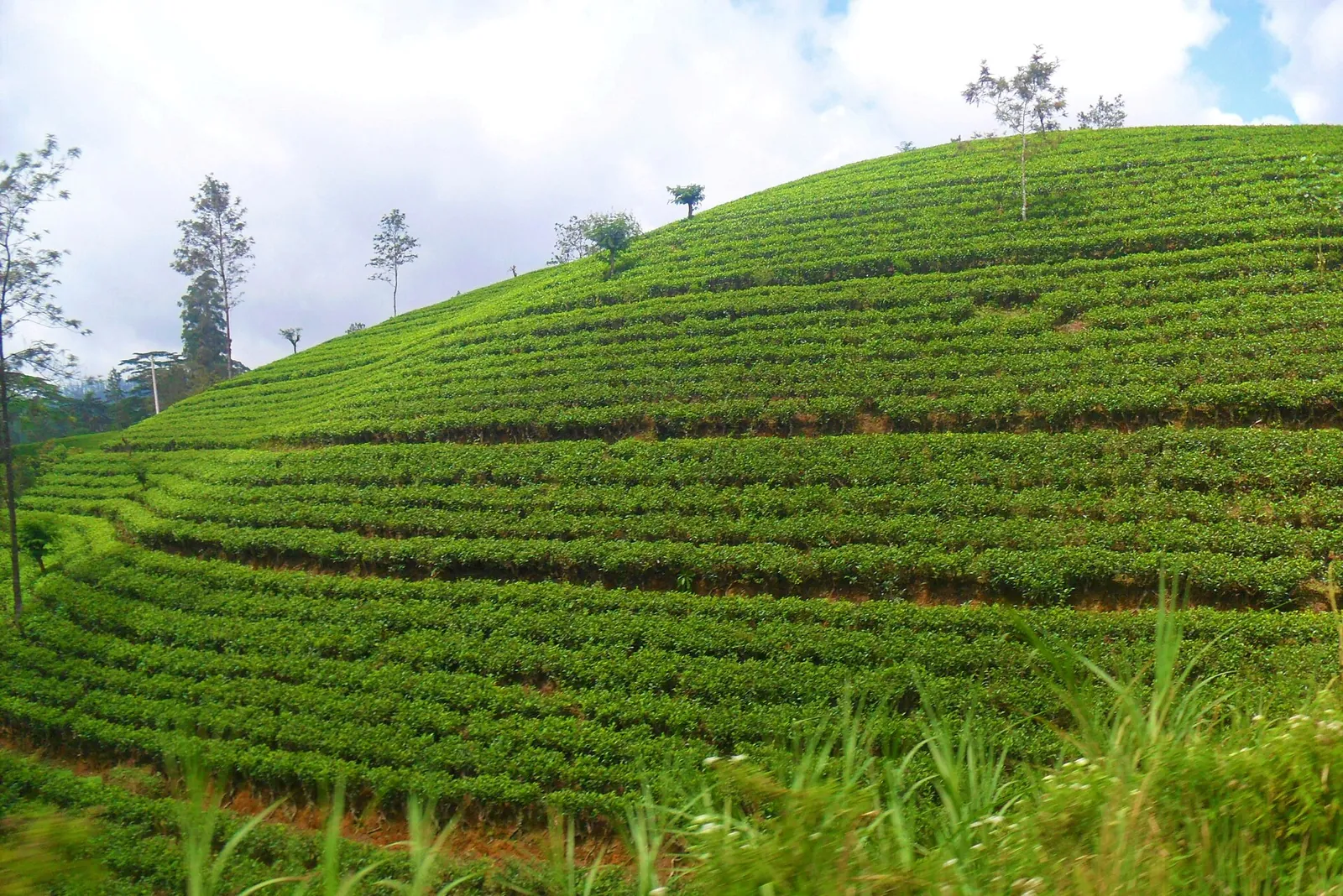
Tea. The Export Development Board divides Sri Lanka's tea country into seven regions, among them Nuwara Eliya, Uva, Dimbula and Kandy, each with its own character in the cup. The tea exporters class them by height: low-grown tea, below 600 m, is dark and malty; high-grown tea, above 1,200 m, is light and golden, and Nuwara Eliya's is the palest of all. Ella is the loop's tea stop, and our Ella guide has the Uva factories; if you add Nuwara Eliya, our Nuwara Eliya guide has a factory tour and a terrace that pours teas from five regions.
Other drinks. A king coconut, thambili, from a roadside seller is a good drink on a hot day. Lion Lager and arrack, distilled from toddy, the fermented sap of the coconut flower, are the local alcohol.
- Breakfast: egg hoppers, string hoppers, kiribath or pittu.
- Afternoon: tea with a fish bun or a cutlet.
- Dessert: buffalo curd with palm honey, or wattalapam.
What a meal costs
Two restaurants on the loop print their prices, read on 27 October 2026. Cafe Chill on Wellawaya Road in Ella lists string hoppers or coconut roti with curry at LKR 1,700 at breakfast, rice and curry of the day with eight curries at LKR 1,700, or LKR 1,500 vegan, lamprais at LKR 1,950, devilled chicken with rice at LKR 1,600 and a pot of black tea at LKR 800, all before its 10% service charge. The Tranquil Trails restaurant at Lenawa, Kimbissa, near Sigiriya, a hotel restaurant whose menu does not say whether non-guests are served, lists egg kottu at LKR 2,000, chicken kottu at LKR 2,500 and a traditional rice and curry with one meat curry and three vegetable dishes at LKR 3,500. Small local eateries charge less than these two menus; the daily levels below are the trip-cost guide's.
| How you eat | About per person a day | What it looks like |
|---|---|---|
| Local eateries with one cafe meal | LKR 3,700 | Hoppers or a dosa at breakfast, rice and curry at a local eatery, one cafe meal such as Cafe Chill's rice and curry, a juice and a snack |
| Cafe prices | LKR 8,000 | String hoppers with curry, rice and curry, devilled chicken, a coffee and a dessert, as on the Cafe Chill menu |
| Hotel restaurants | LKR 18,000 | Hotel breakfast, a cafe lunch, a hotel dinner or buffet |
These daily figures are the ones our trip-cost guide uses for its seven-day trip; it also prices the rooms, cars and tickets.
- Cheapest good meal: rice and curry at a local lunch place, or a plate of hoppers.
- Where the money goes: service charge, air conditioning and hotel dining rooms.
- Cash: small notes for stalls.
Meal by meal on the first-trip loop
This plan follows the ten-day loop: one night in Colombo, two in the Sigiriya area, two in Kandy, two in Ella and two in Galle, then the coast train back to Colombo for the flight on day 10.
- Colombo, the first evening: kottu or wade on Galle Face Green at sunset, or Jaffna cooking at the Palmyrah.
- Sigiriya area: rice and curry or kottu after the climb, at the Tranquil Trails restaurant at Lenawa, Kimbissa if you stay there; hoppers at your guesthouse in the morning.
- Kandy: string hoppers at Balaji Dosai from 7.00 AM; rice and curry at the Queen's Hotel's Main Restaurant beside the lake, lunch 12.00–3.00 pm; buffalo curd for dessert.
- Ella: string hoppers or coconut roti with curry at Cafe Chill, served 8:30–11:45 am, then lamprais or rice and curry for lunch; a pot of tea after the walk; kottu in town at night.
- Galle: a hopper breakfast on the Veranda at Amangalla on Church Street, and black pork curry at Church Street Social; our Galle guide has both.
- Day 10, Colombo: lunch at the Palmyrah, or short eats from a bakery for the road to the airport.
What to eat and where to look
Rice and curry
Rice with a meat or fish curry, dhal, mallum, sambol and papadum, the island's main meal; Cafe Chill's version carries eight curries.
- Where to look
- Cafe Chill on Wellawaya Road, Ella, open daily from 08.30 AM with the kitchen closing at 10.00 PM, with a rice and curry of the day and a vegan version.
- Fit it into your day
- Lunch on an Ella day, after Little Adam's Peak or the Nine Arch Bridge.
Hoppers and string hoppers
Crisp-edged bowls of fermented rice flour and coconut milk, plain or with an egg, and the steamed rice-flour nests of string hoppers, both eaten with dhal, curry and sambol.
- Where to look
- Balaji Dosai, 03 D.S. Senanayaka Street, Kandy, a vegetarian restaurant open 7.00 AM to 10.00 PM every day, with string hoppers in sets of ten.
- Fit it into your day
- Breakfast before the Temple of the Tooth, or dinner in Kandy.
Kottu roti
Godhamba roti chopped on a griddle with vegetables, egg or meat and spices, to the clatter of two metal spatulas: Sri Lanka's defining street food.
- Where to look
- Galle Face Green in Colombo, the city's seafront playground for kottu or wade.
- Fit it into your day
- Dinner on the Colombo evening, after sunset on the green.
Jaffna crab curry and odiyal kool
The north's sea-crab curry with Jaffna curry powder, coconut milk and tamarind, darker and hotter than southern curries, and its seafood soup.
- Where to look
- The Palmyrah, Renuka City Hotel, 328 Galle Road, Colombo 3, open daily for lunch 12.00–2.30 pm and dinner 7.00–10.30 pm.
- Fit it into your day
- Dinner on the first evening in Colombo, or lunch on day 10 before the flight.
Very hot, and a seafood dish: read the note on seafood in the Jaffna section.
Lamprais
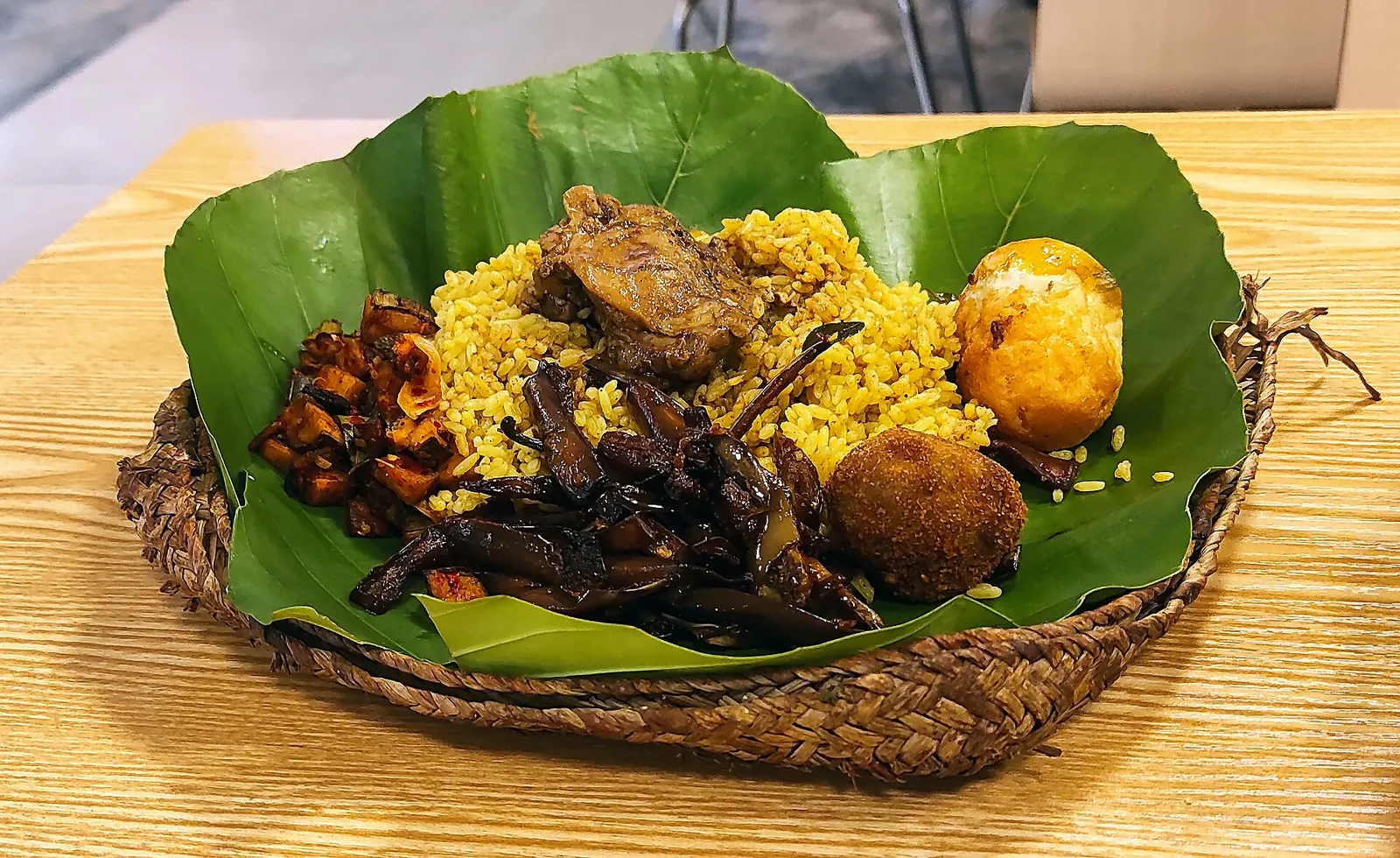
The Burgher rice parcel: Cafe Chill's holds rice, chicken curry, a fried boiled egg and fried brinjal in a banana leaf, opened at the table.
- Where to look
- Cafe Chill on Wellawaya Road, Ella, which also makes a vegan version.
- Fit it into your day
- A long lunch on the Ella day you do not climb.
Poya days, vegetarian food and allergies
Poya days. Sri Lanka Tourism says the sale of alcohol, meat and fish is prohibited on full-moon poya days and some shops and businesses close. The festivals calendar lists the dates.
Vegetarian and vegan. Sri Lanka Tourism says visitors can have vegetarian, vegan or non-vegetarian meals, and the everyday curries include dhal, jackfruit, pumpkin, lotus stem and banana flower. Two things need a word when you order. Maldive fish, dried tuna, is often added to pol sambol, and egg turns up in hoppers, kottu and short eats. Balaji Dosai in Kandy is a vegetarian restaurant, and Cafe Chill marks a vegan version of its rice and curry.
Allergies. Coconut is in curries, sambols, hoppers and sweets; wheat is in kottu, roti and short eats; and prawn, crab and Maldive fish can sit in dishes whose names do not mention them. If you have an allergy, name it before you order.
Water. Do not drink tap water; our first-trip guide has the rest of the health advice.
- Vegetarian: ask for no Maldive fish in the sambol.
- Water: bottled, its seal broken in front of you.
Practical questions
Is Sri Lankan food very spicy?
Some of it is. Chicken curry is very spicy, and Jaffna crab curry is known for its heat, while kiri hodi is not spicy at all and dhal and pumpkin curry are mild.
What is the difference between hoppers and string hoppers?
Hoppers are bowl-shaped pancakes of fermented rice flour and coconut milk, crisp at the edge, plain or with an egg. String hoppers are rice-flour strands steamed in small flat nests. Both are breakfast and dinner dishes, eaten with dhal, curry and pol sambol.
Where can I eat Jaffna food without going to Jaffna?
In Colombo: the Palmyrah at the Renuka City Hotel on Galle Road has served Jaffna dishes since 1972, among them whole crab curry, odiyal kool and milk hoppers, at lunch and dinner every day.
How much does food cost per day in Sri Lanka?
About LKR 3,700 a person at local eateries with one cafe meal, LKR 8,000 at cafe prices and LKR 18,000 in hotel restaurants.
Is it easy to eat vegetarian in Sri Lanka?
Vegetarian and vegan meals are available, and dhal and vegetable curries are usually part of a rice-and-curry spread, and Balaji Dosai in Kandy is a vegetarian restaurant. Ask for no Maldive fish, the dried tuna often added to pol sambol.
Can I get a beer with dinner on a poya day?
No: the sale of alcoholic beverages, meat and fish is prohibited on full-moon poya days, and some shops and businesses close.
Keep planning your trip
First trip to Sri Lanka
Nine nights through the ancient cities, Kandy, Ella and Galle: all-in costs for two, the ETA, trains, monsoons, dengue, the sea and the roads.
Read the guide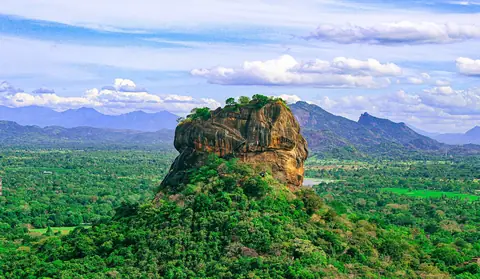
Sri Lanka trip cost 2027
A week from Sigiriya to Kandy, Ella and Colombo in January 2027, all in: about LKR 177,000 per person on a budget, 259,200 mid-range or 557,400 in comfort.
Read the guide
Nuwara Eliya
How many nights Nuwara Eliya needs, Gregory Lake, Hakgala Botanic Gardens, Victoria Park, a tea factory, Horton Plains and World's End, and getting there by road.
Read the guide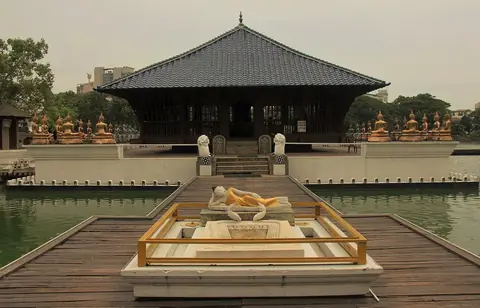
Colombo
How long Colombo needs, the airport and train legs, the National Museum's foreign tickets, Gangaramaya, Pettah, Galle Face Green and where to eat.
Read the guide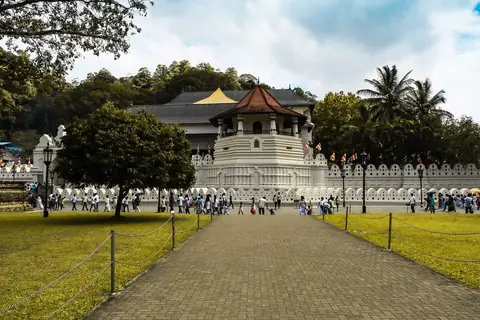
Kandy
How many nights Kandy needs, what the Temple of the Tooth ticket covers, the Peradeniya gardens, a Kandyan dance show and the train to Ella.
Read the guide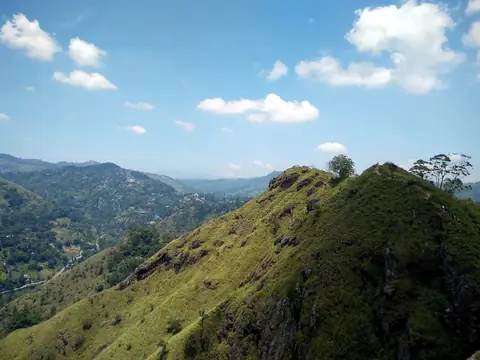
Ella
How many nights Ella needs, how to get there from Kandy while the hill line is partly closed, Nine Arch Bridge, Little Adam's Peak, Ella Rock, Ravana Falls and tea walks.
Read the guideSources and checks before you travel
(21)
- Sri Lanka Tourism: Culinary Tourism ↗ — opens in a new tab
- Sri Lanka Tourism: Culinary Tourism, food range ↗ — opens in a new tab
- Sri Lanka Tourism: Culinary Tourism, history ↗ — opens in a new tab
- Sri Lanka Tourism: Food ↗ — opens in a new tab
- Sri Lanka Tourism: Sri Lankan public holidays ↗ — opens in a new tab
- Sri Lanka Tourism: 12 Things to Do in Colombo ↗ — opens in a new tab
- Rough Guides: Sri Lanka culture and etiquette ↗ — opens in a new tab
- Rough Guides: Sri Lanka eating and drinking ↗ — opens in a new tab
- National Geographic Traveller: Jaffna, Sri Lanka's crab curry capital (published 14 October 2026) ↗ — opens in a new tab
- Renuka City Hotel: Palmyrah restaurant & bar ↗ — opens in a new tab
- Balaji Dosai: menu ↗ — opens in a new tab
- Cafe Chill, Ella: home page ↗ — opens in a new tab
- Cafe Chill, Ella: menu ↗ — opens in a new tab
- Queen's Hotel, Kandy: Main Restaurant ↗ — opens in a new tab
- Sri Lanka Export Development Board: tea growing areas in Sri Lanka ↗ — opens in a new tab
- Tea Exporters Association Sri Lanka: growing regions ↗ — opens in a new tab
- Tranquil Trails Sigiriya: restaurant ↗ — opens in a new tab
- Tranquil Trails Sigiriya: food menu (PDF) ↗ — opens in a new tab
- Amangalla: fact sheet ↗ — opens in a new tab
- Church Street Social at Fort Bazaar ↗ — opens in a new tab
- German Foreign Office (Auswärtiges Amt): Sri Lanka, Reise- und Sicherheitshinweise ↗ — opens in a new tab
Reference sources for the version dated 5 November 2026. Confirm opening times, access, transport and conditions for your travel dates.
Photo credits
(7)
An egg hopper, the bowl-shaped rice-flour pancake with an egg cooked in
Photograph: Ji-Elle — opens in a new tab · CC BY-SA 3.0 — opens in a new tab
Changes: Resized and converted to WebP; displayed with responsive crops. · Original photograph and licence details ↗ — opens in a new tab
A rice-and-curry spread in Sri Lanka: each small clay pot holds a different curry or sambol
Photograph: Weldon Kennedy from London, UK — opens in a new tab · CC BY 2.0 — opens in a new tab
Changes: Resized and converted to WebP; displayed with responsive crops. · Original photograph and licence details ↗ — opens in a new tab
Kottu roti at a roti shop in Ella
Photograph: Adam Jones from Kelowna, BC, Canada — opens in a new tab · CC BY-SA 2.0 — opens in a new tab
Changes: Resized and converted to WebP; displayed with responsive crops. · Original photograph and licence details ↗ — opens in a new tab
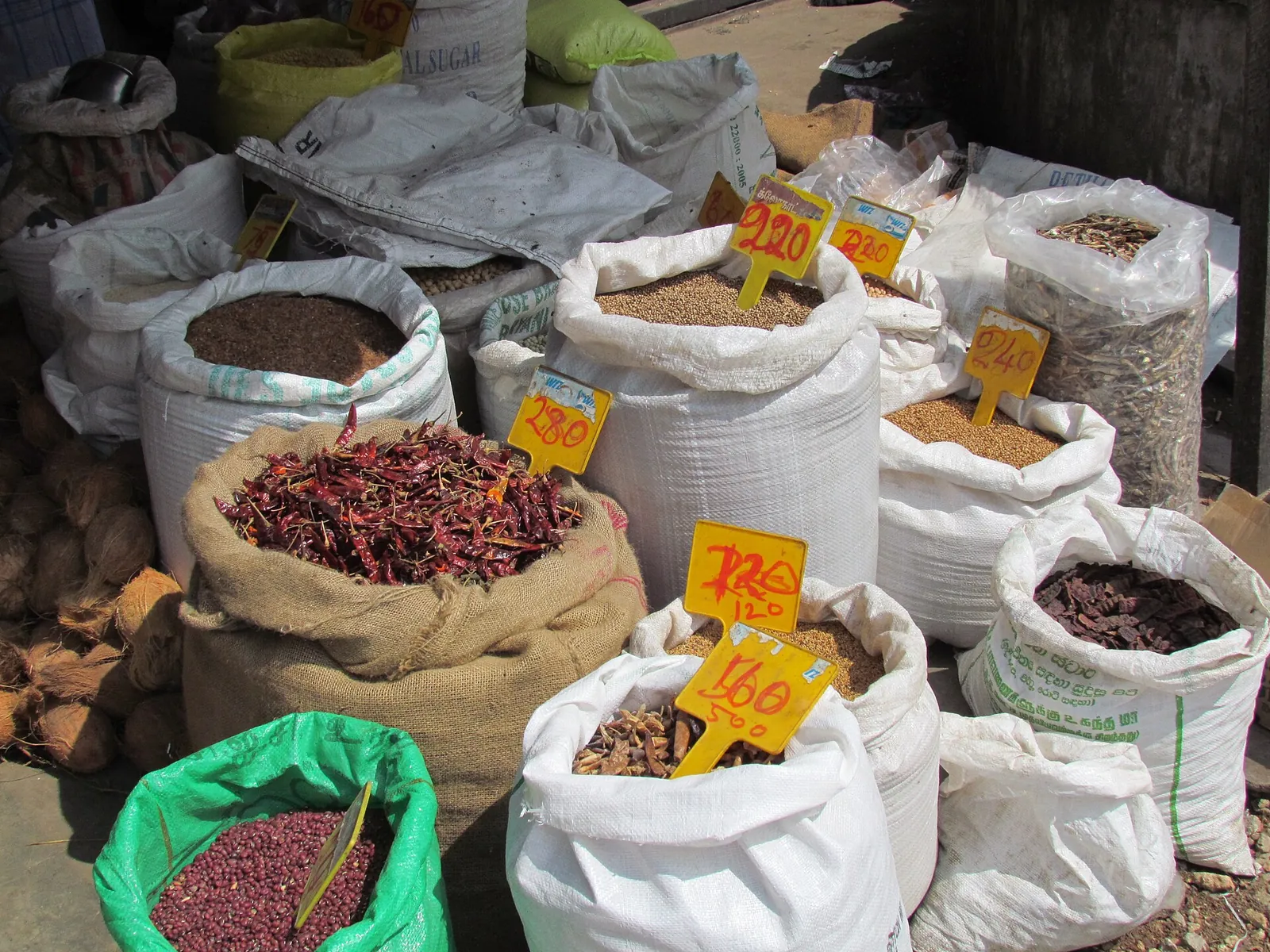
Dried chillies and spices on sale at the market in Jaffna city centre
Photograph: David Brewer — opens in a new tab · CC BY-SA 2.0 — opens in a new tab
Changes: Resized and converted to WebP; displayed with responsive crops. · Original photograph and licence details ↗ — opens in a new tab
Lamprais, the Burgher rice parcel baked in a banana leaf
Photograph: AntanO — opens in a new tab · CC BY-SA 4.0 — opens in a new tab
Changes: Resized and converted to WebP; displayed with responsive crops. · Original photograph and licence details ↗ — opens in a new tab
Short eats: pol roti, egg rolls, vegetable roti and fish cutlets
Photograph: Bawva — opens in a new tab · CC BY-SA 4.0 — opens in a new tab
Changes: Resized and converted to WebP; displayed with responsive crops. · Original photograph and licence details ↗ — opens in a new tab
A tea estate near Nanu Oya in the Nuwara Eliya district
Photograph: Keshani Kaveesha — opens in a new tab · CC BY-SA 4.0 — opens in a new tab
Changes: Resized and converted to WebP; displayed with responsive crops. · Original photograph and licence details ↗ — opens in a new tab