Plan your trip · Sri Lanka
Sri Lanka entry requirements: the ETA, fees, arrival and customs
Before you book anything in Sri Lanka, settle one question: which passport are you travelling on, and does it need to pay for the Electronic Travel Authorization (ETA)? Every foreign visitor needs the ETA, but since 25 May 2026 passport holders of 40 countries get it free, and most other nationalities pay a fee that is higher at the airport than online. This guide takes you from that check through the stay the ETA allows, the passport and ticket rules, the arrival at Bandaranaike International Airport and customs, to the first night on the island.
- Suggested time
- The tourist ETA allows 30 days from first arrival; the first night is at Negombo or in Colombo
- Where to stay
- One night in Negombo or Colombo after landing at Bandaranaike International Airport
- Season and timing
- Apply for the ETA before you book non-refundable hotels; the processing fee is not refunded if the trip changes.
The short answer
Apply for the ETA on the official site, eta.gov.lk, and nowhere else, before you fly. Prices as listed when we checked on 16 October 2026: the tourist ETA for 30 days is free for passport holders of 40 countries, among them Australia, Canada, France, Germany, Japan, the United Kingdom and the United States; most other nationalities pay USD 50 online (USD 20 for South Asian SAARC countries) and USD 60 at the airport (USD 25 for SAARC), while Singapore and Seychelles (30 days), Maldives (90 days) and children under 12 get the ETA free. Your passport must be valid for at least six months after the day you arrive, and you need a confirmed return ticket. Plan one night near the airport or in Colombo before you start the trip: the airport is 35 km north of Colombo and 6 km from Negombo (Sri Lanka Tourism's travel-tips page); its airports page says 30 km.
Everyone needs an ETA, and 40 countries pay nothing
Every foreign national must hold an Electronic Travel Authorization before arriving in Sri Lanka. That includes the nationals of the 40 countries whose tourist ETA is free and the nationals of Maldives, Seychelles and Singapore, who also apply, free of charge, under the Department of Immigration and Emigration's 2026 notice.
Apply only through the ETA site of the Department of Immigration and Emigration, eta.gov.lk: payments made to other websites or agencies do not produce a valid ETA. A travel agent, an airline, a friend or a relative may lodge the application for you.
Since 25 May 2026 the tourist ETA is free for 30 days for holders of diplomatic, official, service or ordinary passports of these countries: Australia, Austria, Bahrain, Belarus, Belgium, Canada, China, Czech Republic, Denmark, Finland, France, Germany, India, Indonesia, Iran, Israel, Italy, Japan, Kazakhstan, Kuwait, Malaysia, Nepal, Netherlands, New Zealand, Norway, Oman, Pakistan, Poland, Qatar, Russia, Saudi Arabia, South Korea, Spain, Sweden, Switzerland, Thailand, Turkey, the United Arab Emirates, the United Kingdom and the United States. Singapore and Seychelles nationals also get 30 days free, and Maldives nationals get 90 days free. Children of any nationality under 12 get a free tourist ETA for up to 30 days, and a transit ETA for up to two days is free for everyone, with documentary proof.
Travellers from Cameroon, Nigeria, Ivory Coast, Ghana and Afghanistan apply through a Sri Lankan sponsor at the Department's head office in Battaramulla; the ETA site's home page lists the other nationalities that use the same route. The tourist ETA covers sightseeing and holidaying, visiting friends and relatives, medical treatment including Ayurvedic and yoga stays, and sporting events and cultural performances.
The fee if your country is not on the free list
These are the Department of Immigration and Emigration's fees for a tourist ETA with double entry and 30 days, as listed when we checked on 16 October 2026. The online amounts apply whether you apply yourself, through a third party or at a Sri Lankan overseas mission.
Online fees are paid by card, and only Visa, Mastercard and American Express are accepted. At the airport counter you can pay by payment card or in US dollar cash. The processing fee is not refundable and not transferable.
- Tourist ETA, 30 days, applied for online: USD 50 for most other nationalities, USD 20 for South Asian (SAARC) countries.
- Tourist ETA, 30 days, bought on arrival at the airport: USD 60 for most other nationalities, USD 25 for SAARC countries.
- Business ETA, 30 days, multiple entry: USD 55 for all other countries, USD 30 for SAARC countries, issued by a Sri Lankan overseas mission or the Department's head office in Colombo.
- Transit ETA for up to two days, and a tourist ETA of up to 30 days for a child under 12: free.
How long you can stay, and extending
A tourist ETA gives you 30 days from the date of first arrival, with double entry allowed inside those 30 days; on a second entry you receive only the balance of the 30 days. Maldives nationals receive 90 days under their bilateral agreement. Enter Sri Lanka within three months of the day the ETA is issued.
A tourist visa does not allow business or trade, meetings, conferences, short-term training, art, music or dance events or festivals, paid or unpaid work, or living in Sri Lanka through frequent or successive visits. The German Foreign Office (checked 17 October 2026) adds that using a tourist visa for business or a conference can end in arrest and deportation.
A stay beyond 30 days has to be extended. Extend online through the Department's e-Visa extension portal for a stay of up to six months in all, or at its head office in Battaramulla for up to 270 days (30 days on entry, then 60, 90 and 90). An extension needs a return air ticket, an accommodation address and telephone number, a photograph and a valid passport, and your intended stay should end at least two months before the passport expires. An extension requested during the first 30 days cancels the double entry. Applications made through other websites are not considered, so use only the Department's own portal.
Extension fees depend on nationality and on the length of the stay. For 31 to 90 days they are USD 100 for passports including the United Kingdom, Germany, France, Italy, Spain, Japan, Australia, Canada and New Zealand, USD 100 for the United States (the same fee covers 91 to 180 days), USD 60 for countries not named separately, and nothing for Singapore, Maldives, Seychelles and the Czech Republic. The bands for 91 to 180 and 181 to 270 days cost more.
Staying beyond the permitted period costs money. Leaving within 7 days of the expiry costs only the applicable visa fee; overstaying by more than 7 and up to 14 days adds a penalty of USD 250, and more than 14 days adds USD 500. The UK Foreign Office (checked 17 October 2026) also warns of detention, deportation and a later travel ban.
Passport, ticket, funds and when to apply
At the port of entry an ETA holder must show a passport valid for not less than six months from the date of arrival, a confirmed return ticket and enough money for the stay. No amount is set for the funds, so keep the booking of your flight out of Sri Lanka on your phone.
An ETA can be obtained even before you book a ticket, and a Sri Lankan overseas mission issues one within three business days. No official page gives a processing time for online applications.
Check every character before you submit. The German Foreign Office (checked 17 October 2026) reports that the Sri Lankan authorities insist on a new ETA even for a small error, such as two transposed digits or the letter O typed instead of a zero in the passport number, and that the purpose of travel must be entered correctly.
An ETA is not a condition for boarding a flight, but it must be in hand on arrival. If an online application is referred, contact the nearest Sri Lankan overseas mission or the Department. A referral notice at the airport ETA counter means you are refused entry and returned to the country you came from.
For questions, the Department's public hotline is 1962, and the ETA site lists a 24-hour ETA call centre on +94 71 99 67 888.
Landing at Bandaranaike International Airport
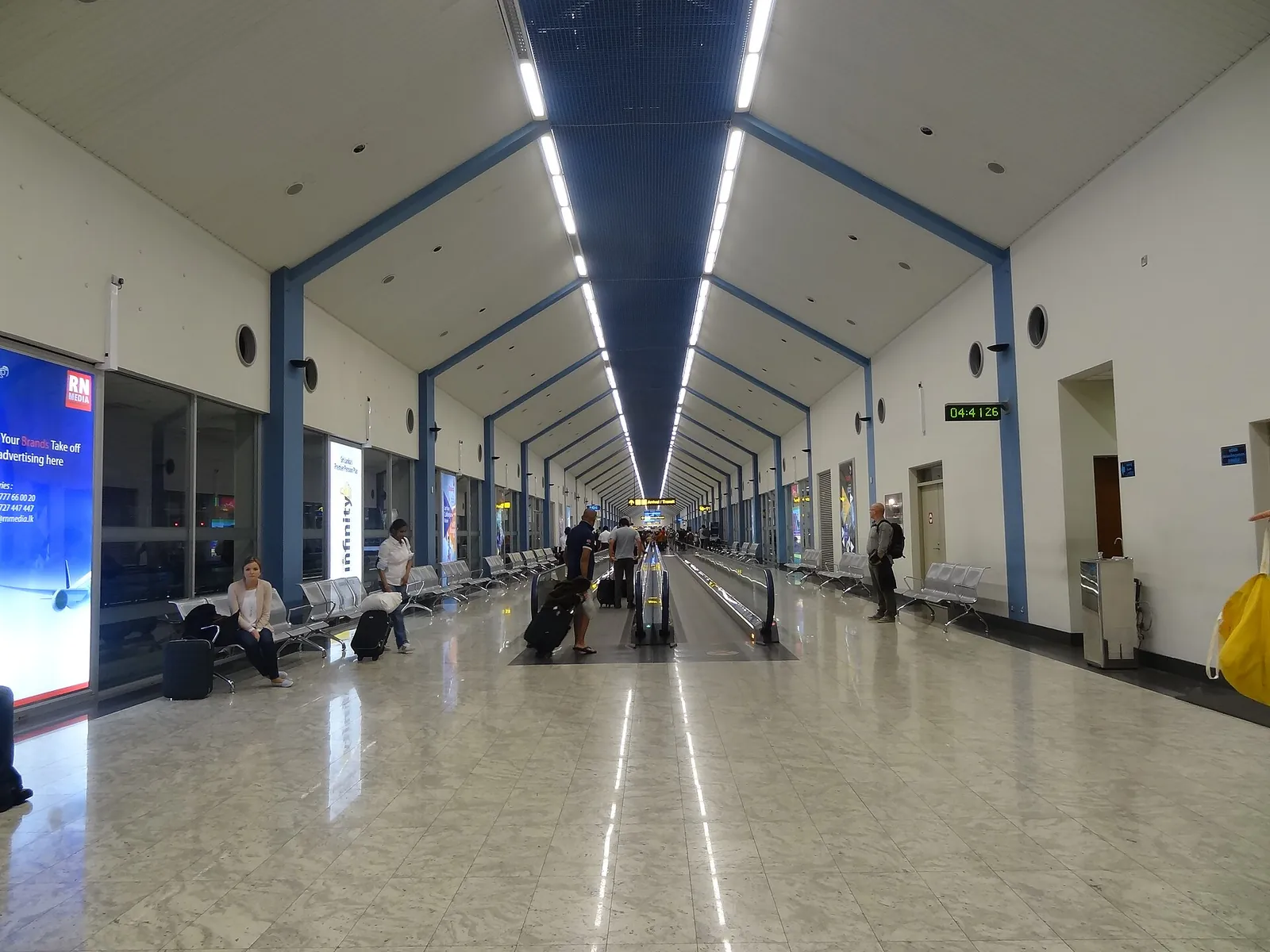
Bandaranaike International Airport (BIA, code CMB) sits at Katunayake, with Negombo as the nearest town. On arrival, show your passport to the immigration officer and bring a copy of your ETA approval notice. A traveller without an ETA reports first to the limited ETA issuing counter, fills in the form and pays the higher airport fee, then goes to the immigration counter with the passport.
No official page asks tourists to complete a digital arrival card; the Department of Immigration and Emigration issues its immigration forms to passengers at the ports. Passengers arriving from the countries on the Department's yellow-fever list, which names countries in Africa and South America, must show a vaccination certificate at the immigration counter or are refused entry.
At Customs, foreign currency, gold jewellery, gems and goods under a carnet are declared to the Customs Arrival No 1 Officer, and anyone with nothing to declare walks through the Green Channel. Customs duty is paid at the Shroff Counter in the arrival terminal, in Sri Lankan rupees only: no cards, cheques or foreign currency. The rules are in the next section.
Flights from Colombo through Gulf hubs may be disrupted. The UK Foreign Office (updated 21 September 2026) says flights from Colombo to the UK via Middle Eastern hubs may be delayed, postponed or re-routed, and the German Foreign Office (unchanged since 17 July 2026) says restricted flying at the Gulf hubs affects connections to and from Sri Lanka; if your route runs through a Gulf hub, confirm it with your airline before you book the first night.
Customs, currency and what to leave at home
Foreign currency must be legally acquired. Sri Lanka Customs requires a declaration for currency you bring in above USD 15,000 or the equivalent and issues a receipt. Previously declared currency you want to take back out must be declared even below USD 15,000, and leaving with more than USD 10,000 needs a declaration too. Sri Lanka Customs lets a passenger bring in or take out Sri Lankan rupees up to LKR 20,000, while the German Foreign Office (checked 17 October 2026) says tourists may not import or export rupees at all, so carry little rupee cash across the border. Tourists may bring in two regular-size bottles of wine and one and a half litres of spirits duty-free.
Cigarettes, cigars, beedies and snuff may not be imported as personal baggage. Fruit in air baggage is refused or sent to plant quarantine; leave it at home. Any part of a plant or animal, including skins, hides, teeth and shells, needs prior approval. Gemstones brought in must be declared and carry a USD 200 service fee. Exporting gemstones needs authentication by the National Gem and Jewelry Authority, an item older than 100 years counts as an antique that needs Department of Archaeology approval to export, and rough or unfinished jewellery, ingots and gold biscuits cannot be carried as baggage in either direction. Customs also restricts drones, and medicines other than for personal use, in passenger baggage; the German Foreign Office (checked 17 October 2026) advises taking more medicine than the days you plan, because supplies can run short. All three governments (UK, German and French pages, checked 17 October 2026) warn that drug offences are punished severely, and the UK Foreign Office adds that visible Buddha tattoos can mean refusal of entry or deportation.
The UK Foreign Office and the German Foreign Office (both checked 17 October 2026) say, respectively, that not every ATM accepts international cards and that foreign debit cards cannot be used in Sri Lanka, so carry a credit card. Unspent rupees converted from foreign currency can be changed back on departure if you keep the encashment receipts. On the same date the German Foreign Office added that cash may be changed only at authorized places such as the airport, banks and hotels, which confirm the exchange on a form. The full money advice, including notes and hotel payment rules, and the drone permissions are in our first-trip guide.
The first night: Negombo or Colombo
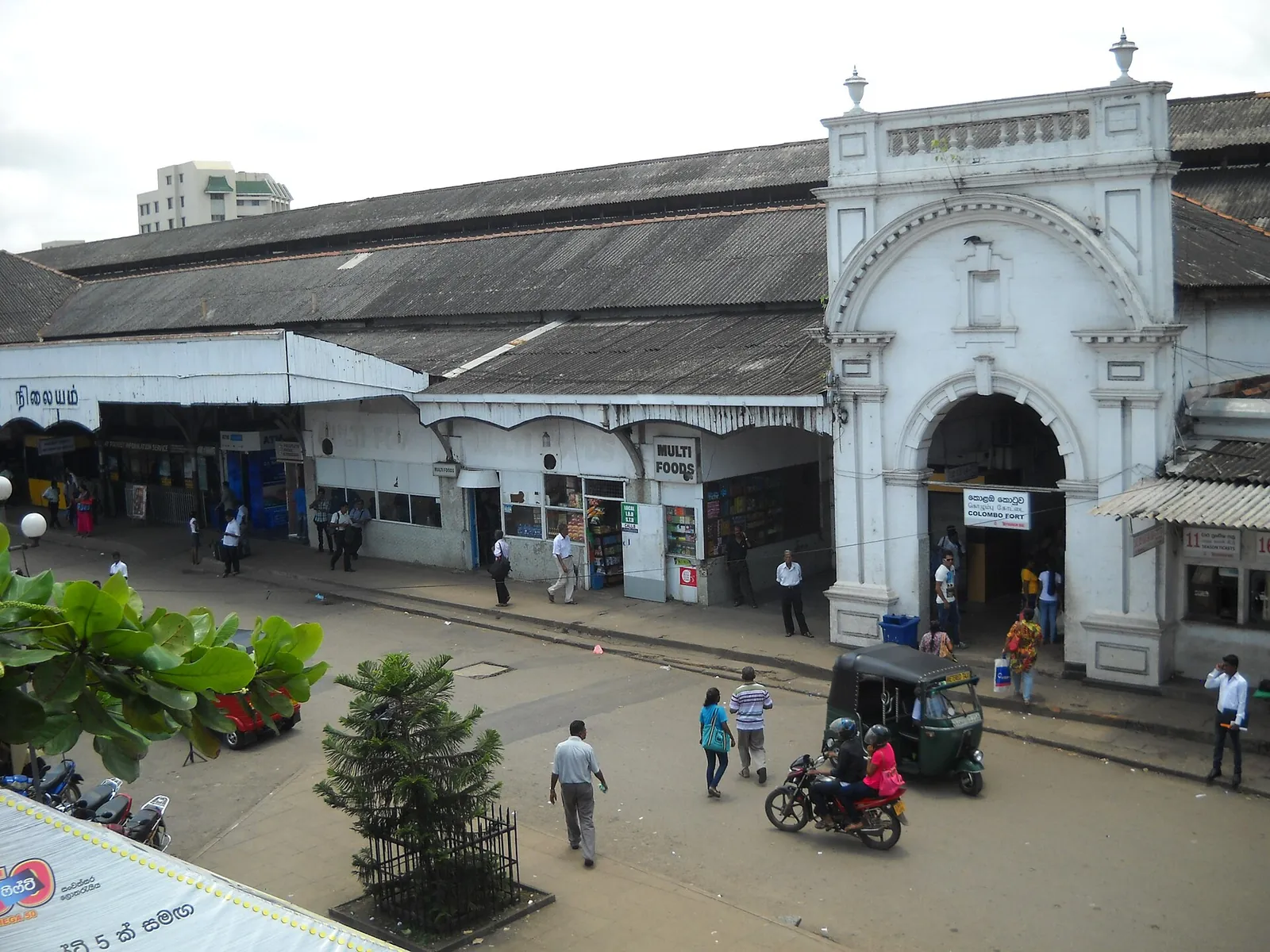
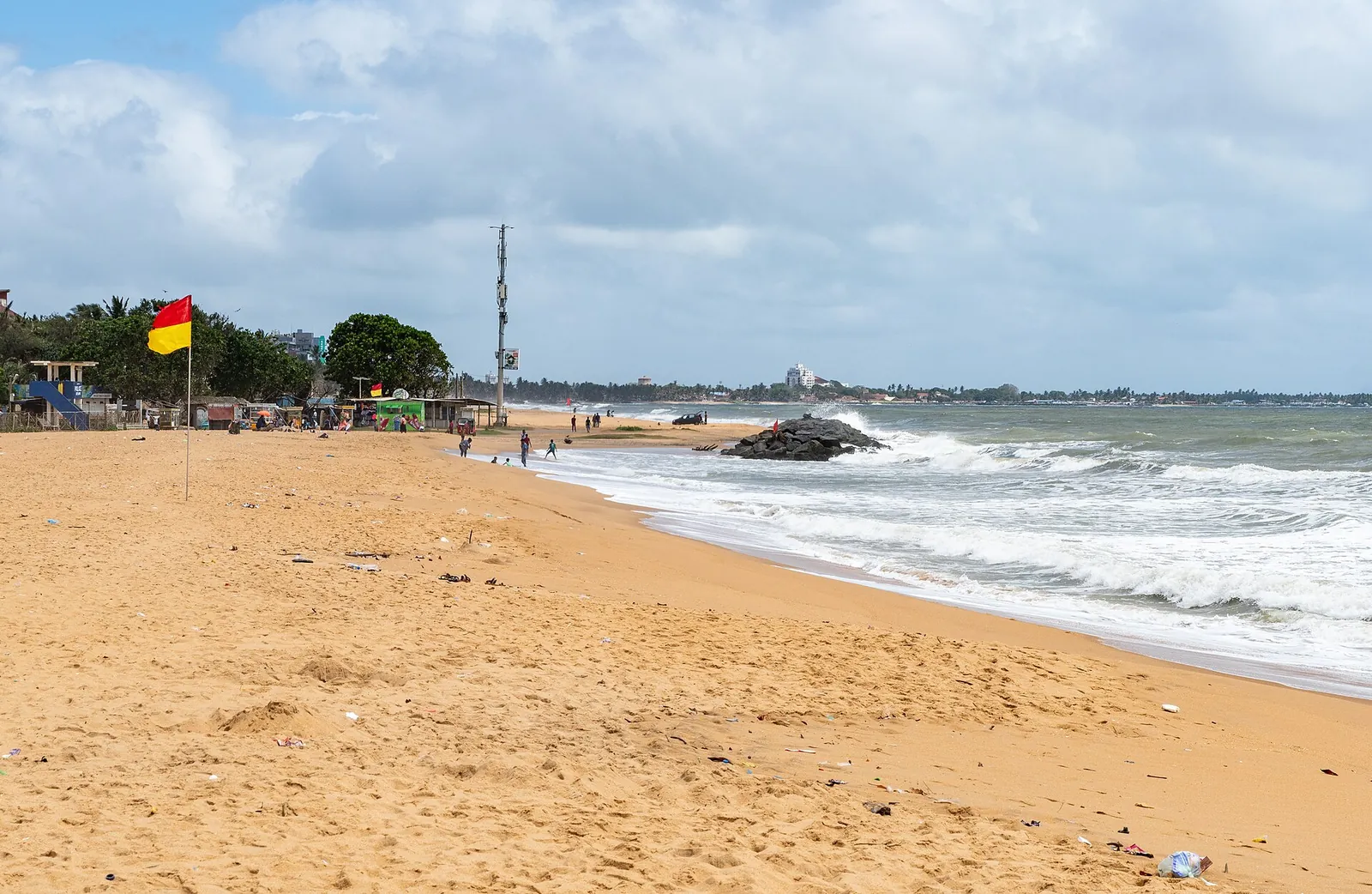
Most flights land at BIA, and the decision after immigration is whether to sleep beside the airport or go on into the capital. Negombo is the beach town nearest the terminal, so a late landing or a long-haul journey keeps the first night short there. Colombo is the choice if you want to start on the trains the next morning, because it puts you at Fort station.
Book a car with a driver in advance for the first night, or take the train. The railway lists a station called Airport - Katunayake, 33.44 km from Colombo Fort, with ordinary fares of LKR 350 in first class, LKR 200 in second and LKR 100 in third on its 2022 list, and no reserved seats. France Diplomatie names the PickMe and Uber apps for ordering a tuk-tuk or car in Colombo. No official page publishes airport taxi or bus fares or says how far the station is from the terminal. Our first-trip guide shows how this night fits into the ten-day loop.
Practical questions
Do I need a visa for Sri Lanka?
Every foreign national needs an Electronic Travel Authorization (ETA) before arriving, applied for on eta.gov.lk. Passport holders of 40 countries, including Australia, Canada, France, Germany, Japan, the United Kingdom and the United States, pay no fee for 30 days since 25 May 2026.
How much does the ETA cost if my country is not on the free list?
When we checked on 16 October 2026, the fee for a 30-day tourist ETA was USD 50 online and USD 60 at the airport for most other nationalities, and USD 20 online and USD 25 at the airport for South Asian (SAARC) countries. Children under 12 and nationals of Singapore, Seychelles and Maldives pay nothing.
How long can I stay on a tourist ETA?
30 days from the date of first arrival, with double entry inside those 30 days. A longer stay has to be extended: online through the Department of Immigration and Emigration's e-Visa portal for up to six months in all, or at its head office in Battaramulla for up to 270 days.
What must my passport and ticket look like?
The passport must be valid for at least six months from the day you arrive, and you need a confirmed return ticket and enough money for your stay.
Can I get the ETA at the airport?
Yes. A limited ETA counter at Bandaranaike International Airport issues it, paid by card or in US dollar cash, at a higher fee than applying online.
Is there an arrival card?
No official page lists a digital arrival card for tourists. The document to hold is the ETA approval notice, and the Department of Immigration and Emigration issues any immigration form to passengers at the airport.
How much cash can I bring into Sri Lanka?
You may bring in any amount of legally acquired foreign currency, but Sri Lanka Customs requires you to declare more than USD 15,000 or the equivalent and issues a receipt. Sri Lankan rupees are limited to LKR 20,000 in or out; carry little rupee cash across the border.
Sources and checks before you travel
Reference sources for the version dated 17 October 2026. Confirm opening times, access, transport and conditions for your travel dates.
- Department of Immigration and Emigration: ETA site, home and notices ↗ — opens in a new tab
- Department of Immigration and Emigration: ETA site, Fees ↗ — opens in a new tab
- Department of Immigration and Emigration: ETA site, How to submit an ETA application ↗ — opens in a new tab
- Department of Immigration and Emigration: ETA site, FAQ ↗ — opens in a new tab
- Department of Immigration and Emigration: ETA site, Short Visit to Sri Lanka ↗ — opens in a new tab
- Department of Immigration and Emigration: ETA site, About ETA ↗ — opens in a new tab
- Department of Immigration and Emigration: ETA site, How to extend a short visit visa ↗ — opens in a new tab
- Department of Immigration and Emigration: ETA site, contact ↗ — opens in a new tab
- Department of Immigration and Emigration: Visa Fees ↗ — opens in a new tab
- Department of Immigration and Emigration: Visit Visa Extension ↗ — opens in a new tab
- Department of Immigration and Emigration: Free Visa ↗ — opens in a new tab
- Department of Immigration and Emigration: Tourist Visa ↗ — opens in a new tab
- Department of Immigration and Emigration: home page ↗ — opens in a new tab
- Sri Lanka Customs: Passenger Services Directorate ↗ — opens in a new tab
- Sri Lanka Customs: Travellers ↗ — opens in a new tab
- Sri Lanka Tourism: Travel Tips ↗ — opens in a new tab
- Sri Lanka Tourism: Airports ↗ — opens in a new tab
- UK Foreign Office (GOV.UK): Sri Lanka travel advice, Entry requirements ↗ — opens in a new tab
- UK Foreign Office (GOV.UK): Sri Lanka travel advice ↗ — opens in a new tab
- German Foreign Office (Auswärtiges Amt): Sri Lanka, Reise- und Sicherheitshinweise ↗ — opens in a new tab
- France Diplomatie: Sri Lanka, Entrée / séjour ↗ — opens in a new tab
- Sri Lanka Customs: Katunayake Passenger Services ↗ — opens in a new tab
- Department of Immigration and Emigration: Yellow fever vaccination certificate ↗ — opens in a new tab
- UK Foreign Office (GOV.UK): Sri Lanka travel advice, Safety and security ↗ — opens in a new tab
- Department of Immigration and Emigration: Border Management ↗ — opens in a new tab
- Sri Lanka Railways: passenger ticket rates, Colombo Fort ↗ — opens in a new tab
- France Diplomatie: Sri Lanka, Informations utiles ↗ — opens in a new tab
Photo credits
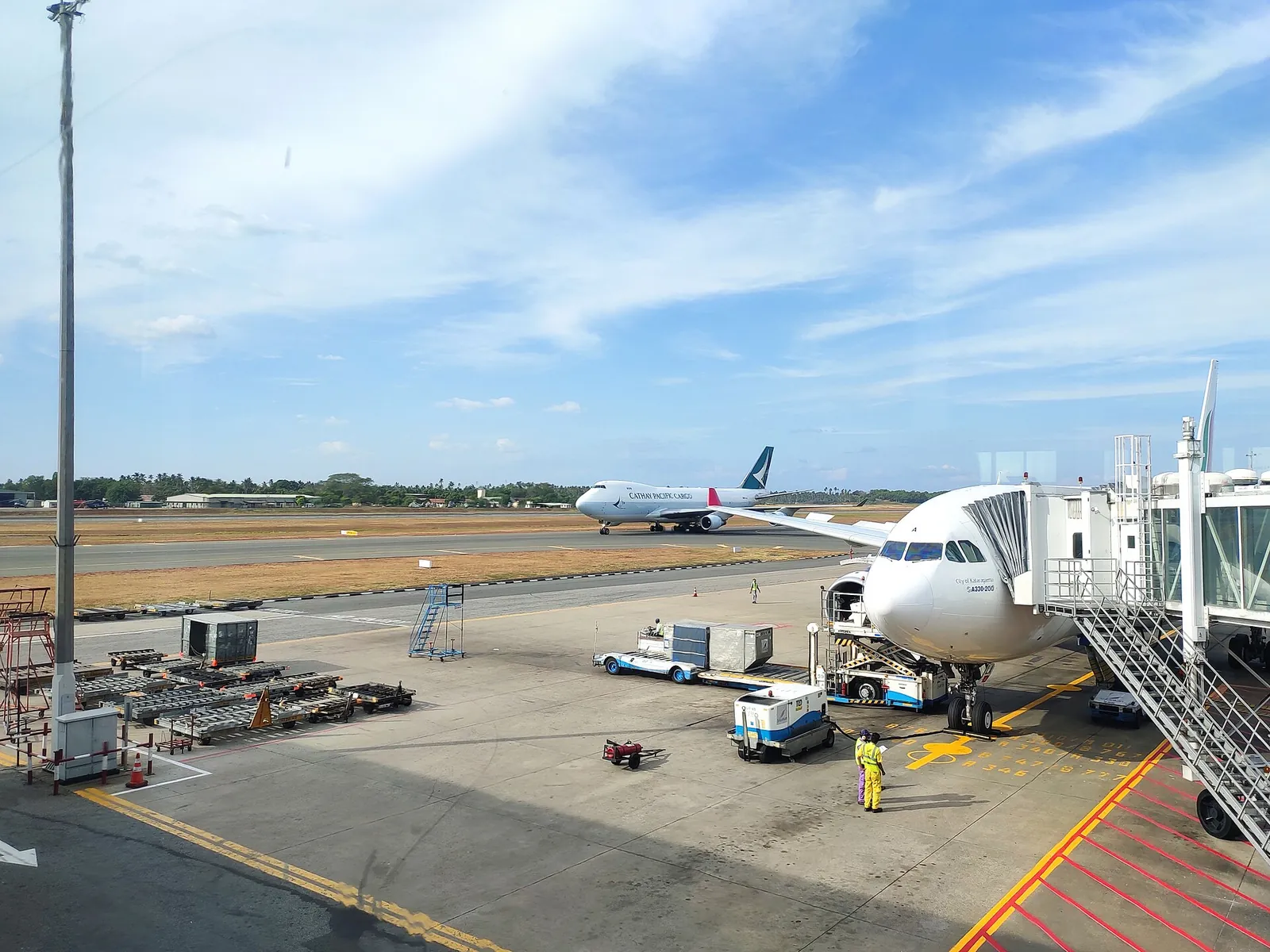
Aircraft at a jet bridge on the apron at Bandaranaike International Airport, the arrival point for most visitors
Photograph: ANKAN — opens in a new tab · CC BY-SA 4.0 — opens in a new tab
Changes: Resized and converted to WebP; displayed with responsive crops. · Original photograph and licence details ↗ — opens in a new tab
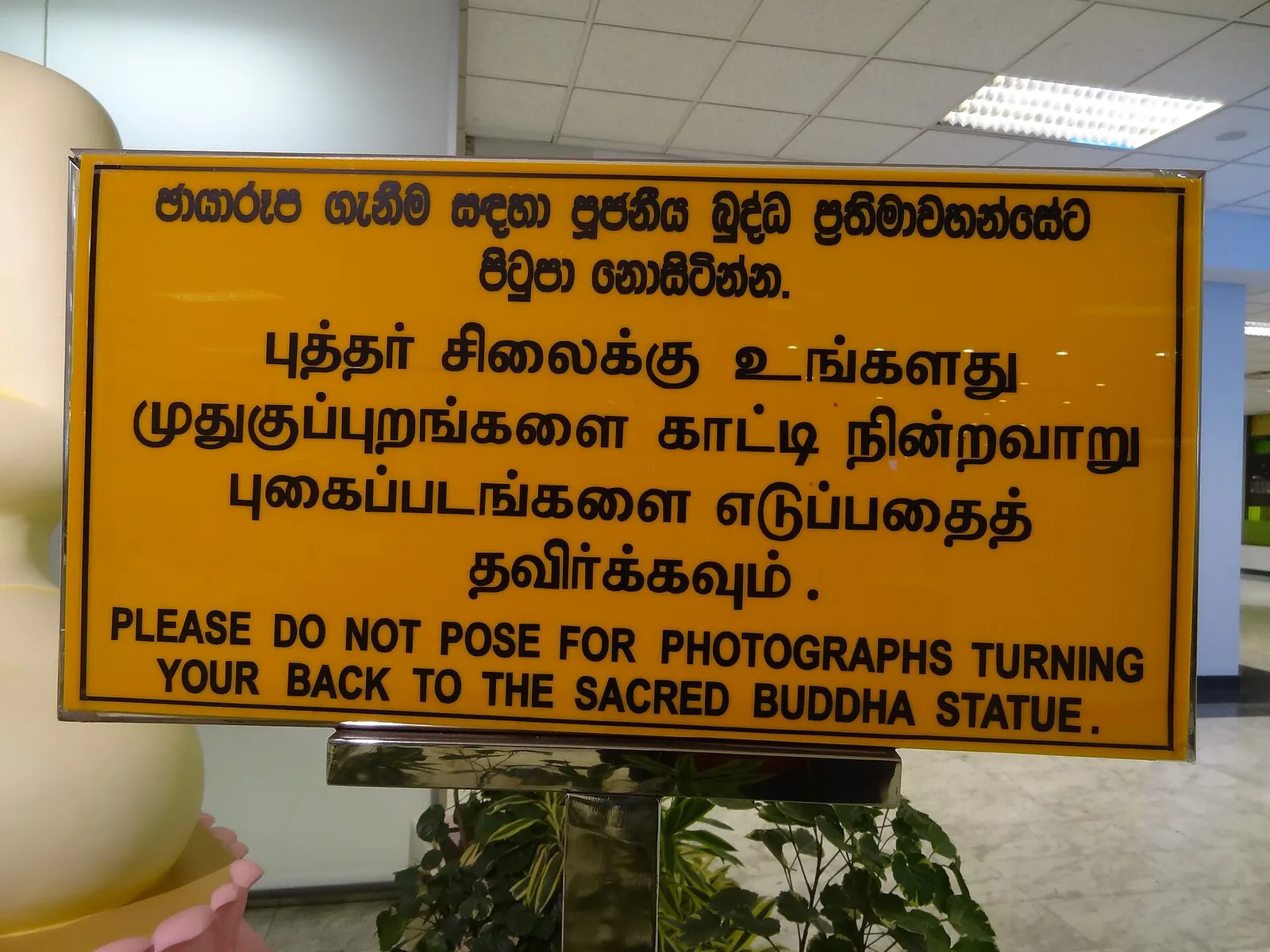
A sign at the airport, in Sinhala, Tamil and English, asking visitors not to turn their back to the Buddha statue for photographs
Photograph: Cherubino — opens in a new tab · CC BY-SA 3.0 — opens in a new tab
Changes: Resized and converted to WebP; displayed with responsive crops. · Original photograph and licence details ↗ — opens in a new tab
The entrance of Colombo Fort railway station, where the coast and hill-country lines begin
Photograph: Gobbler — opens in a new tab · CC BY-SA 3.0 — opens in a new tab
Changes: Resized and converted to WebP; displayed with responsive crops. · Original photograph and licence details ↗ — opens in a new tab
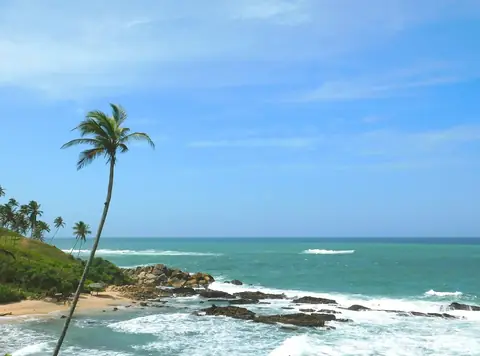
The beach at Negombo, a short drive from the airport
Photograph: Steffen Schmitz ( more photos ) — opens in a new tab · CC BY-SA 4.0 — opens in a new tab
Changes: Resized and converted to WebP; displayed with responsive crops. · Original photograph and licence details ↗ — opens in a new tab
A concourse inside the airport terminal
Photograph: Cherubino — opens in a new tab · CC BY-SA 3.0 — opens in a new tab
Changes: Resized and converted to WebP; displayed with responsive crops. · Original photograph and licence details ↗ — opens in a new tab