Itineraries · Sri Lanka
Sri Lanka 14-day itinerary: ruins, tea hills, elephants, coast
Fourteen days is the length at which Sri Lanka stops being a dash and becomes a route. It is long enough to add a cool hill town, a dawn among wild elephants and a morning with the whales to the classic loop of ancient cities, tea hills and fort town. This itinerary runs once round the south-west of the island, from the dry-zone ruins through the hills by train to the sea, and it ends on the coast line back to Colombo.
- Suggested time
- 14 days / 13 nights
- Where to stay
- Colombo for 1 night; the Sigiriya area for 3; Kandy for 2; Nuwara Eliya for 2; Ella for 2; Udawalawe for 1; Mirissa for 1; Galle for 1 (the hotel is outside the Fort walls)
- Season and timing
- The second half of January and February suit the whole route. The central highlands are cool and relatively dry from January to April. World's End is clearer from January to March.
The short answer
Book thirteen nights in eight bases: one in Colombo, three in the Sigiriya area, two in Kandy, two in Nuwara Eliya, two in Ella, one beside Udawalawe National Park, one in Mirissa and one in Galle, then take the coast train to Colombo Fort on day 14 for the flight home. Book the flights first, then the rooms, then the two hill-line seats: reservations open only 30 days before each date of travel, so the day 7 and day 9 windows open two days apart. Two key prices, checked on 17 October 2026: a full Sigiriya ticket costs USD 35 for a foreign visitor. A reserved second-class seat costs LKR 1,200 on each half of the hill line, Kandy to Nanu Oya and Nanu Oya to Ella, so LKR 2,400 a person for both (the railway's seat-price table of 2022). The budget below prices rooms, tickets, the whale boat and the trains for two and lists what it leaves out. The route suits the second half of January and February, when the Mirissa whale boats are in season.
One loop, eight bases, no doubling back
What do four more nights than the nine-night loop buy? A full day at Polonnaruwa, two nights in the cool tea town of Nuwara Eliya, a night beside Udawalawe National Park for wild elephants, and a morning on the water at Mirissa. The loop of our 10-day itinerary gives one night to Colombo, two each to the Sigiriya area, Kandy, Ella and Galle, and a coast train home; this route keeps that spine and spends the extra nights as follows: one in the Sigiriya area for Polonnaruwa, two in Nuwara Eliya and one at Udawalawe, while Mirissa takes one of the two coast nights that the shorter loop gives to Galle.
The thirteen nights fall as Colombo 1, the Sigiriya area 3, Kandy 2, Nuwara Eliya 2, Ella 2, Udawalawe 1, Mirissa 1 and Galle 1, with departure on day 14. The route never doubles back. Days 1 to 4 belong to the dry-zone ruins, days 5 to 10 to the hills by road and rail, and days 11 to 14 to the elephants, the sea and the coast line home. The hill line is ridden in two halves, Kandy to Nanu Oya and Nanu Oya to Ella, with Nuwara Eliya between them; each half is its own reserved seat at its own table price. Every other move is a car with a driver.
Days 1 to 4: Colombo, the rock, the caves and the second capital
Day 1: Colombo. Bandaranaike International Airport lies at Katunayake, north of Colombo. Take a car with a driver to your hotel for the first night. Colombo Fort suits it because its station is where the trip ends. Every foreign national needs an Electronic Travel Authorization (ETA) before arriving; apply only on eta.gov.lk. Our entry guide has the fees and the countries that pay nothing. If you land in good time, walk the sea wall of Galle Face Green as the light goes and eat a kottu there.
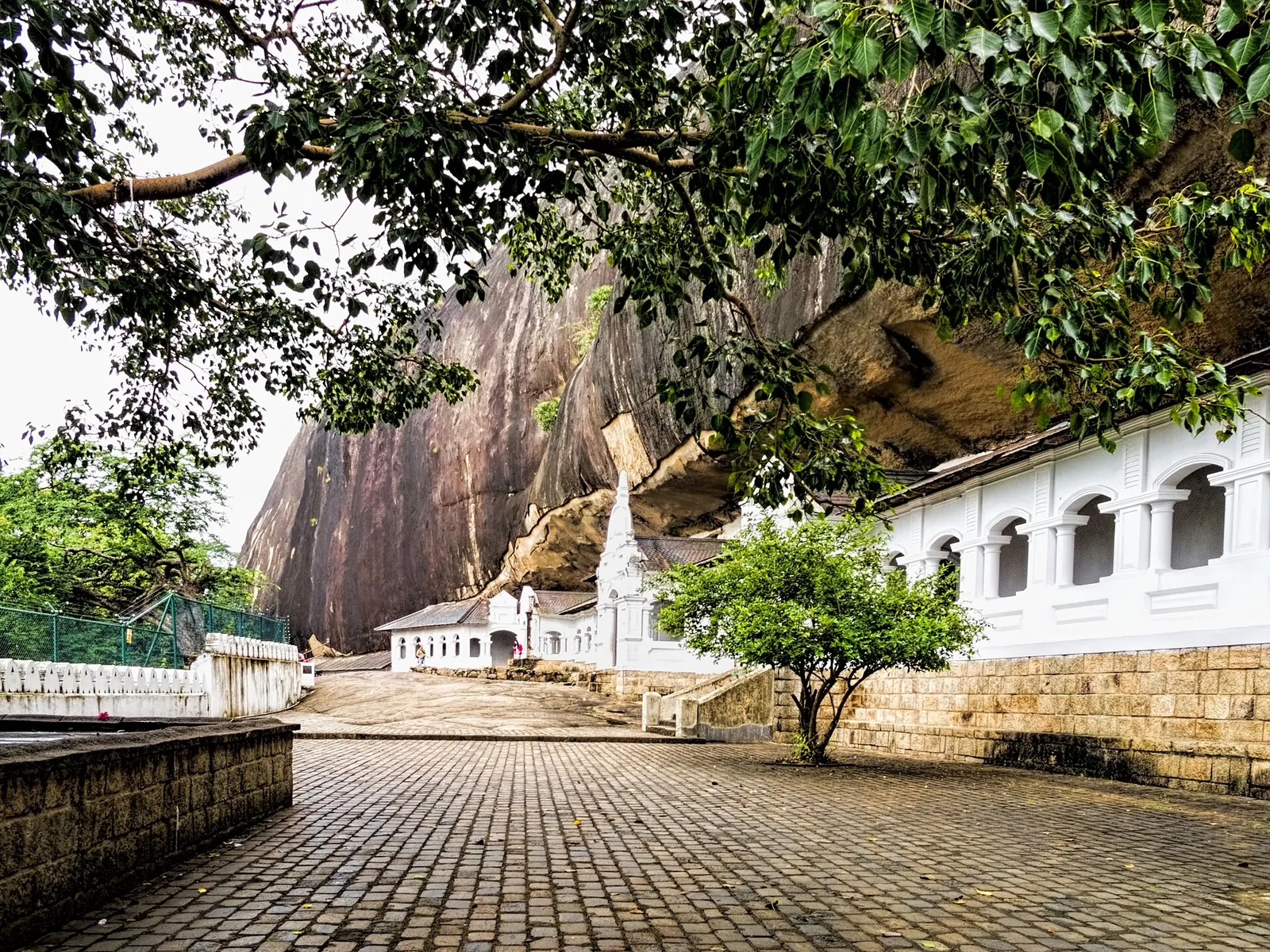
Day 2: north to the Sigiriya area. Sri Lanka Tourism gives the distance from Colombo to Sigiriya as 169 km. No official page gives the drive time, so leave early. Break the drive at the cave temple in Dambulla, about 25 km from Sigiriya by Sri Lanka Tourism's figure. The Central Cultural Fund lists the temple as open from 07:00 to 17:00. Its five caves hold more than 150 Buddha statues and murals dating back 2,000 years. They were built at the base of a rock about 150 m high. Sri Lanka Tourism lists the foreign-visitor ticket at USD 10, sold at the office near the golden temple. Each of the four entrances climbs a long flight of granite steps. For temples, the German Foreign Office asks you to cover your shoulders and wear trousers or a skirt below the knee, and never to pose with your back to a Buddha statue. The UK Foreign Office adds that you should not pose for photographs standing in front of one (both pages checked on 17 October 2026). The Temple of the Tooth, on day 6, admits no shorts, sleeveless or body-revealing clothing.
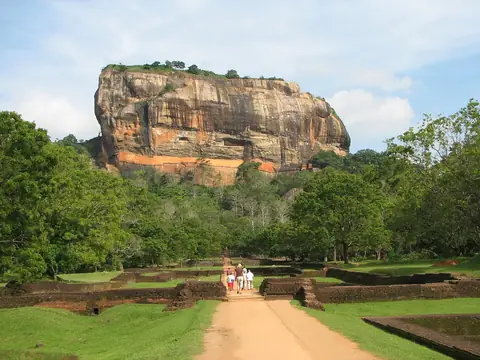
Day 3: Sigiriya. The Central Cultural Fund opens its ticket counters at 07:00. The Department of Archaeology gives the site's own hours as 06:30 to 17:30. Be at the counter when it opens and climb straight away, with water in your bag, because Sri Lanka Tourism says drinks are sold only at the tourist exit. The rock rises about 200 m, and on the way up you pass the frescoes, the Mirror Wall, the lion's paws at the old gateway and the royal palace, with 360-degree views from the summit. The German Foreign Office, checked on 17 October 2026, says photographing the frescoes is forbidden. The museum outside the main entrance takes about an hour and belongs after the climb, in the heat of the day. The Central Cultural Fund's tickets page lists it as included with the Sigiriya ticket, and its price table lists "Sigiriya (Museum)" at USD 6, so confirm at the counter; the budget counts the USD 35 ticket alone.
Day 4: Polonnaruwa. Give the second capital a day of its own with a driver; our Polonnaruwa guide describes the ruins group by group, and the Minneriya elephant Gathering, which this route leaves out; Sri Lanka Tourism says May to October is a popular time to visit Minneriya. Polonnaruwa is a city of the 11th to 13th centuries built largely of brick, and its ticket counters open at 07:00, so leave early enough to be at the gate. Begin at the Sacred Quadrangle with the round Vatadage, walk on to the palace of Parakramabahu the Great, whose brick walls survive to two storeys, and finish at Gal Vihara, where colossal Buddha images are cut into the rock. The museum is included with the ticket.
If you want Pidurangala, the rock beside Sigiriya with the best view of the fortress, climb it at sunrise on the morning of day 5 before the drive to Kandy; no official page publishes its fee or hours.
Days 5 to 8: Kandy, then the cool air of Nuwara Eliya
Day 5: road to Kandy. Treat the day as a transfer with a lake walk at the end. Kandy Lake, also known as Kiri Muhuda, lies south of the Temple of the Tooth. If you arrive by mid-afternoon, the Kandy Lake Club's one-hour dance show runs daily from 17.00 to 18.00, and its programme ends with fire walking.
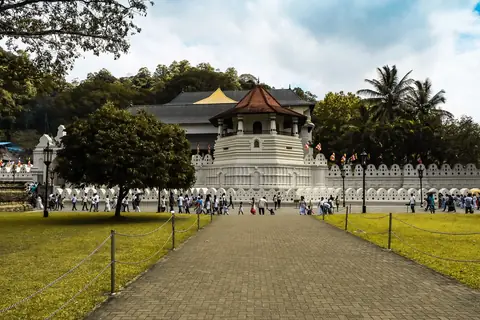
Day 6: the temple and the gardens. The Temple of the Tooth is open daily from 5.30 a.m. to 8.00 p.m. It enshrines the left tooth of Gautama Buddha, became a UNESCO world heritage site in 1988, and its Kandyan-style building is adorned with carvings in gold, silver, bronze and ivory. Machines at the temple issue the tickets, and one ticket also covers the Dalada Museum, the World Buddhist Museum, the Tusker Museum and the Royal Elephant Stable. Sri Lanka Tourism says string hoppers are normally served as a breakfast meal and as a dinner dish, and Balaji Dosai in Kandy lists them on its menu. Give the afternoon to the Royal Botanic Gardens at Peradeniya, less than 5.5 km from Kandy on the Colombo Road, where 147 acres hold more than 4,000 plant species and a well-known orchid collection; ticketing runs until 5.00 PM.
Day 7: the hill line to Nanu Oya. Take your first reserved seat on the hill line from Kandy to Nanu Oya, 98.1 km. The railway's table prices a second-class seat on this stretch at LKR 1,200. In the railway's reserved-seat leaflet (file dated January 2024) second class is reserved on the Podi Manike, the Udarata Manike and the Ella Odyssey, but not on the Tikiri Manike or Intercity 1007. No official page lists the Kandy departure or the Nanu Oya arrival of the through trains. Nanu Oya is the station for Nuwara Eliya, and a car with a driver covers the last stretch into town. Pack warm layers: Hakgala, the gardens 9.5 km south-east of the town, ranges from 3°C to 15°C.
Day 8: World's End, then one afternoon stop. Horton Plains is the day the weather decides. World's End is often hidden by fog unless you arrive early: the best hours are between 6 am and 10 am, and the weather is clearer from January to March. The main hike from the visitor centre is a circular 9 km that takes about 3 hours. The park lies 32 km from Nuwara Eliya by the road through Ambewela and Pattipola, so leave in the dark. The tourism authority names Horton Plains among the parks whose entry permits are issued online, so book the day permit on the wildlife department's Day Visitor ePermit. The Department of Wildlife Conservation sets the fees in Gazette 2292/11, applying from 2 September 2022; that link was dead when we checked on 17 October 2026, and the ePermit shows no amount until you choose a park and date; the charge depends on the park, the group and the vehicle. No official page lists the Horton Plains gate hours. Spend the afternoon at the Hakgala Botanic Gardens, founded in 1861 and open daily from 7.30 AM to 6.00 PM with ticketing until 5.00 PM. Our Nuwara Eliya guide covers the gardens, the tea factories and the town's other sights.
Days 9 to 12: the train to Ella and the dawn with the elephants
Day 9: the hill line to Ella. Go back to Nanu Oya by car with your driver for your second reserved seat, which runs on to Ella, 64.54 km by the railway's Nanu Oya fare table. A second-class seat is LKR 1,200 again. The railway's notice for 20 June 2026 (a Sinhala and Tamil scan) schedules trains between Nanu Oya and Badulla and lists no Colombo or Kandy trains, so check the booking site's train list for your date. It lists the daily 1005, leaving Nanu Oya at 09.00 AM and reaching Ella at 11.27 AM; the 1015 (not on Wednesdays), 02.30 PM to 04.57 PM; and the Ella Odyssey 1043 (Wednesdays only), 01.00 PM to 03.21 PM, each with reserved first-class (air-conditioned) and second-class seats. Riding the line in two halves costs two seat prices in second class, LKR 1,200 each, where a single Kandy to Ella seat costs LKR 1,700, so the stop at Nanu Oya adds LKR 700 per person. Walk to the Nine Arch Bridge in the late afternoon: nine arches built in the 1920s of brick and cement, without steel, 10 to 15 minutes from Ella station through the countryside. It carries a working railway, so keep clear of the track when a train is due.
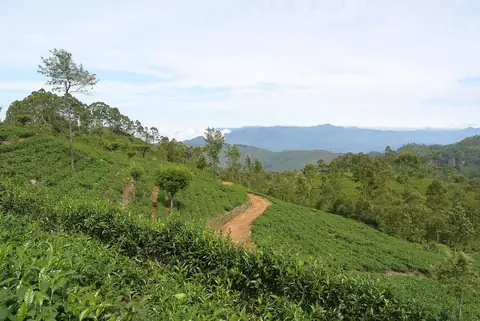
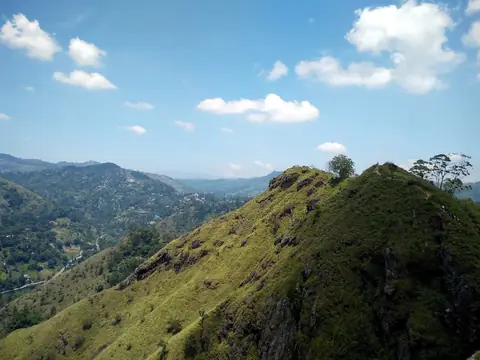
Day 10: Little Adam's Peak and the tea. Climb Little Adam's Peak at dawn for the sunrise, a 360-degree viewpoint 2.5 km from the town. Come back for breakfast, then spend late morning at the Uva Halpewatte Tea Factory, which is best visited in the morning, when it is working, and ends with a tasting of Uva teas.
Day 11: Ella to Udawalawe. A car with a driver collects you at Ella after breakfast. Plan nothing for the evening. Udawalawe needs this night and the following morning to itself: it is the best place in the country to see wild Asian elephants throughout the year, with about 500 in the park, often roaming in herds of up to 100. Sri Lanka Tourism says Yala has one of the highest leopard densities in the world; this route chooses the elephants.
Day 12: the dawn drive. Go into the park at first light, because the morning and the evening are the best hours; the plains, the reservoir and the herds coming to drink are the show. The tourism authority names Udawalawe among the parks with online entry permits. On the Department's website open eServices, then Day Visitor ePermits, and reserve the permit online: you choose the date and the park, enter every person in the group, including the driver and the guide, add the vehicle's details and pay. Print the permit and the receipt, because the permit's terms make a printed permit mandatory for entry. Under the Department's permit conditions you may enter between 05:00 and 18:00 and must leave by 18:30; the conditions are general and name no park. The Udawalawe entry fee is set in the same gazette (see day 8), and no official page prints a rate for the jeep. Wild elephants and crocodiles will attack humans on occasion, the UK Foreign Office says (checked on 17 October 2026), so stay in the vehicle unless your guide says otherwise and never feed an animal. Then the driver takes the road south to Mirissa.
Night 12 to day 14: whales at Mirissa, Galle Fort and the coast line home
Night 12: Mirissa. Mirissa is the largest fishing port on the south coast, and the whale boats leave from its harbour at dawn, so sleep in Mirissa itself. Our south-coast beaches guide has the whole coast between Galle and Mirissa for readers who want to stay longer.
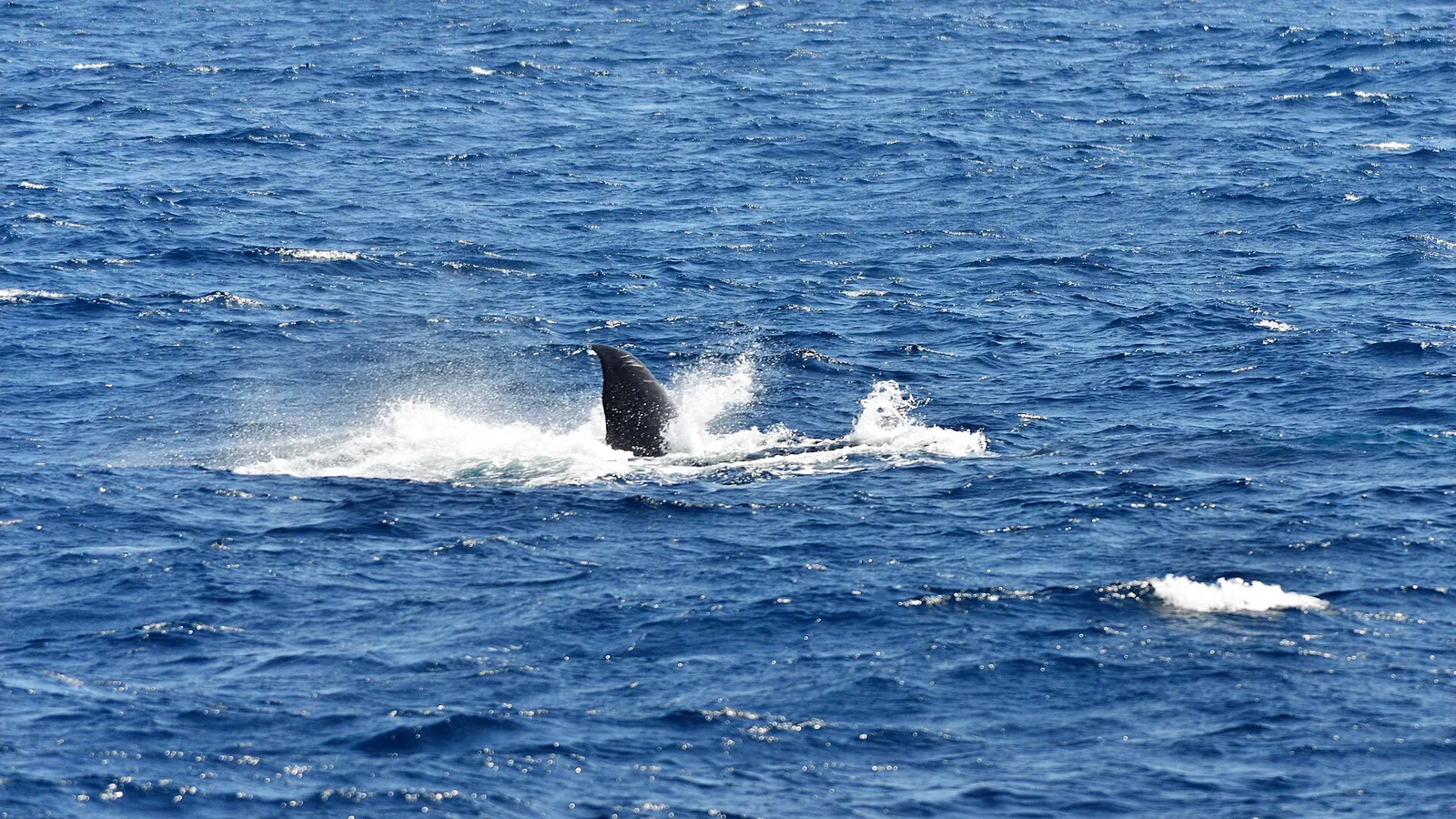
Day 13: the boat, then Galle Fort. Raja & the Whales, an operator that runs whale and dolphin trips from Mirissa, sails only with at least 10 passengers, so book through its online form well in advance. It asks for check-in at 06:00 in its office outside the harbour, for a 06:30 departure. The trip takes between 2 and 8 hours depending on where the whales are, 4 to 5 hours on average, so the boat is back between about 08:30 and 14:30 and nothing else is fixed before the evening. The operator does not turn back early for seasickness, a flight or a hotel check-out, so leave your luggage at the hotel until you return. It puts its own odds at 50% for whales and about 20% for blue whales on any trip, and Sri Lanka Tourism says dolphins are easy to see while a whale may show only a back for a second. Then your driver takes you on to Galle for the evening.
France Diplomatie, in its page dated 27 September 2026 and checked on 17 October 2026, strongly discourages sea swimming on the west coast from April to November. It also says that several tourists drown every year on the tourist beaches of the west and south, naming Mirissa and Tangalle among them, in particular in the monsoon months. The UK Foreign Office, checked on 17 October 2026, says many beaches have dangerous surf or rip tides at certain times of the year and advises you to get advice from your hotel or tour operator before going in the sea. Other governments may draw a different line, so check your own government's advice before you book.
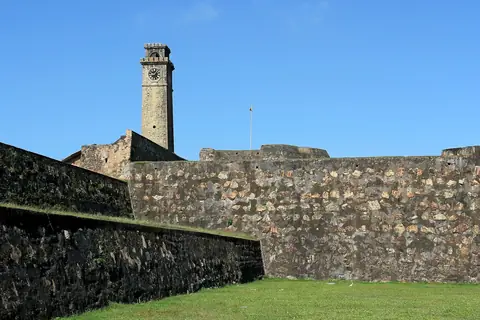
Galle Fort is a walled Dutch-era town on a promontory, and its ramparts, built of coral and granite, run for about 3 kilometres with fourteen bastions. Arrive for sunset, when locals and visitors gather at Flag Rock to watch the sun go down into the Indian Ocean. The Dutch Reformed Church of 1755 and the lanes behind the rampart fill the rest of the evening.
Day 14: the coast train. Take the coast line from Galle to Colombo Fort, 113.89 km, and a car from there to the airport. The railway's January 2024 leaflet shows reserved seats only in air-conditioned first class on the coast trains; the booking site lists first, second and third class. The leaflet lists four coast trains between Maradana station and Matara or Beliatta, 3 hours 12 minutes to 4 hours 22 minutes end to end. The two toward Colombo leave in the morning, Matara at 06.05 AM and Beliatta at 05.25 AM, and reach Maradana at 09.23 AM and 09.47 AM; the leaflet gives no Galle time for them. Galle lies between those starting points and Colombo, so the ride from Galle is shorter. The railway's table prices an air-conditioned first-class seat at LKR 1,100 from Galle to Colombo Fort. The leaflet shows second and third class as ordinary coaches, with ordinary fares from Galle to Colombo Fort of LKR 500 and LKR 240. The railway's fare table puts the Airport - Katunayake station 33.44 km from Colombo Fort. No official page gives the drive time from Colombo to the airport, so book an afternoon or evening flight home and allow extra time at peak hours.
Make time for the local food
What to eat and where to look
Kottu roti
Shredded godhamba roti chopped on a hot plate with vegetables, egg or meat and spices, one of the defining street foods of the island.
- Where to look
- Galle Face in Colombo, which Sri Lanka Tourism calls the city's playground for kottu or wade
- Fit it into your day
- Dinner on day 1, if you land in good time.
String hoppers
Nests of steamed rice-flour strands, normally served at breakfast or dinner with dhal, potato or fish curry.
- Where to look
- Balaji Dosai, 03 D.S. Senanayaka Street in Kandy, whose menu lists string hoppers
- Fit it into your day
- Breakfast or dinner on day 6, around the temple visit.
The restaurant is fully vegetarian.
Rice and curry
The island's everyday meal: boiled rice with several curries of vegetables, fish or meat, dhal, a coconut sambol, papadum and pickles.
- Where to look
- The Main Restaurant at Queen's Hotel in Kandy, whose page lists traditional rice and curry among its Sri Lankan specialties and serves lunch from 12.00 to 3.00 pm
- Fit it into your day
- Lunch on day 6, between the temple and the gardens.
Sri Lankan curries are often hot; ask for them mild.
Uva tea
Tea grown in the hills around Ella, which the Uva Provincial Council describes as floral and crisp, with a tasting at the end of the factory tour.
- Where to look
- The Uva Halpewatte Tea Factory, easy to reach from Ella and Badulla
- Fit it into your day
- A morning on day 10, after the first look at the Nine Arch Bridge.
Black pork curry
Pork cubes cooked with black pepper and island spices, a Sri Lankan curry that the restaurant's own page tells first-time visitors not to miss.
- Where to look
- Church Street Social at Fort Bazaar, 26 Church Street in Galle Fort, which is open to walk-ins as well as hotel guests
- Fit it into your day
- Dinner on day 13, after the ramparts.
Pork.
The hotel for each night
Each night has one recommended hotel, and the budget prices the room named here. In Colombo it is Fairway Colombo, No. 07 Hospital Street, a 181-room hotel in Colombo Fort. In the Sigiriya area it is Tranquil Trails Sigiriya at Kimbissa, about 3 km from the Sigiriya Rock Fortress by the hotel's own page. Its four room types and three nights leave a spare morning if rain disturbs the plan. In Kandy it is The Golden Crown Hotel on Ampitiya Road, in Kandy but away from the city hustle, among paddy fields: the lake and the Temple of the Tooth are a ride away, not a walk. In Nuwara Eliya it is The Golden Ridge, 395 Bambarakelle Road.
In Ella it is Ella Flower Garden Resort, at the 3rd Mile Post on Passara Road, 2 km from the centre of Ella and a 5-minute drive from the station by its own page. The resort offers a free pick-up from the station on request, and the Nine Arch Bridge is 1.5 km away. At Udawalawe it is Grand Udawalawe Safari Resort, No. 912, Thanamalwila Road, about a 20-minute drive from the park entrance by its own page. It lists no room rate. In Mirissa it is Lily Mirissa on 2nd Lane off Harbour Road, 300 m from the harbour where the whale boats leave. In Galle it is the Galle Holiday Inn, 53/28 Gagaaddarawatte, outside the Fort walls and, in the hotel's own text, five minutes from the Fort.
Book in this order, and every leg between
The hill-line seats are booked on the railway's own seat-reservation site, which sells them until 2 hours before departure. The site needs an account and the passport or NIC number of every passenger, and the e-ticket comes by e-mail. Online tickets carry a 5% convenience fee. After the trains, book the Mirissa boat, which Raja & the Whales highly recommends doing in advance through an online form, and the Udawalawe and Horton Plains permits. Our transport guide has the booking steps, buses and drivers.
Rain can interrupt the hill line. If you must cancel, you do so in person at a railway station that offers the mTicketing service, and the railway refunds 75% of the ticket fee more than 168 hours before departure, 50% from 168 hours to more than 48 hours before, and nothing inside 48 hours; the service charge is never refunded.
For the road legs, use a car with a driver. No official page publishes a rate for a car with a driver, so agree the price for the whole trip before you set off. Sri Lanka Tourism's list of Authorized Tourist Drivers can be searched by name, registration number or association. No official page publishes the road distance or time for Sigiriya to Polonnaruwa, Sigiriya to Kandy, Nanu Oya to Nuwara Eliya, Ella to Udawalawe, Udawalawe to Mirissa or Mirissa to Galle, so plan each as a transfer day. The legs are:
- Day 1: airport to Colombo Fort, a car with a driver.
- Day 2: Colombo to the Sigiriya area, 169 km by road with a driver.
- Day 4: the Sigiriya area to Polonnaruwa and back, with a driver.
- Day 5: the Sigiriya area to Kandy, by road with a driver.
- Day 7: Kandy to Nanu Oya on the hill line, 98.1 km, then a car with a driver to Nuwara Eliya.
- Day 9: a car with a driver to Nanu Oya, then the hill line on to Ella, 64.54 km.
- Day 11: Ella to Udawalawe, by road with a driver.
- Day 12: Udawalawe to Mirissa, by road with a driver.
- Day 13: Mirissa to Galle, by road with a driver.
- Day 14: Galle to Colombo Fort on the coast line, 113.89 km, then a car to the airport.
What the rooms, tickets, boat and trains cost for two
Prices as listed when we checked on 17 October 2026 (the Hakgala ticket and the whale boat on 16 October), for two adults sharing one room, with the hotels' own "from" rates for the room named, the foreign-visitor ticket prices, the railway's seat prices and the operator's own rate. Tickets quoted in US dollars are payable in rupees at the day's rate. The hill line is budgeted in second class and the coast line in air-conditioned first class.
The rooms come first, each at the hotel's listed rate per room per night; tickets, the boat and the rail follow.
- Colombo, Fairway Colombo, Superior King Room: USD 55 a night for 1 night, USD 55 in all.
- Sigiriya, Tranquil Trails Sigiriya, Double Room with Garden View, breakfast and taxes included: USD 50 a night for 3 nights, USD 150 in all.
- Kandy, The Golden Crown Hotel, Deluxe Room: LKR 14,500 a night for 2 nights, LKR 29,000 in all.
- Nuwara Eliya, The Golden Ridge, Deluxe room: LKR 15,730 a night for 2 nights, LKR 31,460 in all.
- Ella, Ella Flower Garden Resort, Standard Garden Room: USD 55 a night for 2 nights, USD 110 in all.
- Udawalawe, Grand Udawalawe Safari Resort: Grand Udawalawe lists no room rate, so this night is not in the total; ask the resort for a quote.
- Mirissa, Lily Mirissa, double room with breakfast: USD 90 a night for 1 night, USD 90 in all. This is the page's rate for 11 January to 30 April 2027, which covers the recommended weeks; the same page lists USD 55 in October and USD 105 in the peak from 24 December to 10 January.
- Galle, Galle Holiday Inn, outside the Fort, Deluxe Double Room: LKR 6,500 a night for 1 night, LKR 6,500 in all. This hotel's secure page did not open when we checked, so confirm the rate at booking; the total includes it.
- Tickets for two: Sigiriya USD 70 (USD 35 each), Polonnaruwa USD 60 (USD 30 each, museum included). The Dambulla cave temple is USD 20 (USD 10 each, Sri Lanka Tourism's figure; confirm it at the ticket office). The Temple of the Tooth is LKR 6,000 (LKR 3,000 each, the rate for visitors from countries other than SAARC members, Thailand and Myanmar). Peradeniya is LKR 7,080 (LKR 3,540 each). Hakgala is LKR 7,080 (LKR 3,540 each, for the afternoon of day 8).
- Whale boat: Raja & the Whales, LKR 40,000 (LKR 20,000 per adult aged 12 or over and LKR 10,000 per child from 5 to 11.99 years). This is the operator's own price.
- Rail: seat prices are the railway's 2022 table, and the booking site adds a 5% fee. Hill line, second class: Kandy to Nanu Oya LKR 1,200 and Nanu Oya to Ella LKR 1,200, so LKR 2,400 a person and LKR 4,800 for two. Coast line, air-conditioned first class: Galle to Colombo Fort LKR 1,100, LKR 2,200 for two. The 5% online fee adds LKR 350 on the three bookings.
The total, and what it leaves out
The rooms, tickets, boat and rail above come to USD 555 and LKR 134,470: rooms USD 405 and LKR 66,960, tickets USD 150 and LKR 20,160, the whale boat LKR 40,000 and rail LKR 7,350 with the online fee. At the Central Cultural Fund's rate of LKR 336 per USD (its table of 14 October 2026) the rupee part is about USD 400, so about USD 955 in all. The total includes the Galle night at LKR 6,500.
The figure leaves out flights, the ETA for nationalities that pay it, the car with a driver for the road legs, meals, the Udawalawe room, the Udawalawe and Horton Plains permits and the jeep, Pidurangala, a tea factory visit, the dance show, the Galle museums, local rides, tips and insurance.
The weeks that suit this route
The second half of January and February suit every stage. January to April is pleasantly cool and relatively dry in the central highlands. Sri Lanka Tourism names November to April as the best time for sun and sea on the south coast. Raja & the Whales sails from November to the end of April or early May, usually daily when it has a minimum of 10 passengers. World's End is clearer from January to March. Those weeks also fall between the two peak periods, mid December to mid January and March and April.
The German Foreign Office, checked on 17 October 2026, puts the north-east rain from December to March, so the three nights in the Sigiriya area are the flexible ones, and adds that the pattern can fail and that long heavy rain with floods can fall in any region in any month, so keep a day in the hills movable. The Disaster Management Centre's site, dmc.gov.lk, carries weather reports and a landslide warning page. From April the fog over World's End is more likely. Raja & the Whales runs no trips in May, June or July. From June to October the rain moves to the south-west. The sea is rougher then, so move a trip built around the boat and the beach out of those months.
Practical questions
How many nights does each stop get on the 14-day route?
Thirteen nights in all: Colombo 1, the Sigiriya area 3, Kandy 2, Nuwara Eliya 2, Ella 2, Udawalawe 1, Mirissa 1 and Galle 1, with departure from Colombo on day 14. The extra Sigiriya night is for the Polonnaruwa day.
What does the ETA cost, and where do I apply?
Apply only on the Department of Immigration and Emigration's ETA site, eta.gov.lk. The tourist ETA for 30 days is free for passport holders of 40 countries, among them Australia, Canada, France, Germany, Japan, the United Kingdom and the United States; most other nationalities pay USD 50 online (USD 20 for South Asian SAARC countries) and USD 60 at the airport (USD 25 for SAARC), while Singapore, Seychelles and Maldives passport holders and children under 12 get the ETA free. Our entry guide lists the countries and the rules.
Can I swap Udawalawe for Yala?
Yes, if leopards matter more than elephants: Yala is the park for leopards, with one of the highest leopard densities in the world according to Sri Lanka Tourism, and Udawalawe the park for elephants. The swap changes the night and the road between Ella and Mirissa, and our Udawalawe and Yala guides give each park's booking steps.
When do the Mirissa whale trips run?
Raja & the Whales sails from November to the end of April or early May if it has a minimum of 10 passengers, which is usually daily. From August to October it sails when weather and sea conditions are sufficient and it has that minimum, and it runs no trips in May, June or July. That is why the route is set for the second half of January and February.
What does the budget cover?
Rooms at the hotels' listed rates, the listed tickets, the whale boat and the three rail legs, for two people. Udawalawe's room is not priced, and the Galle night (LKR 6,500) is included in the total. The budget section gives the total and lists what it leaves out, among them the car with a driver.
Sources and checks before you travel
Reference sources for the version dated 18 October 2026. Confirm opening times, access, transport and conditions for your travel dates.
- Central Cultural Fund: ticket prices ↗ — opens in a new tab
- Central Cultural Fund: Tickets ↗ — opens in a new tab
- Central Cultural Fund: Heritage Sites ↗ — opens in a new tab
- Central Cultural Fund: Polonnaruwa ↗ — opens in a new tab
- Central Cultural Fund: Galle Fort, a living monument of colonial heritage ↗ — opens in a new tab
- Central Cultural Fund: Destinations ↗ — opens in a new tab
- Department of Archaeology: Sigiriya ↗ — opens in a new tab
- Sri Lanka Tourism: Sigiriya ↗ — opens in a new tab
- Central Cultural Fund: Sigiriya Rock Fortress ↗ — opens in a new tab
- Sri Lanka Tourism: Dambulla Cave Temple ↗ — opens in a new tab
- Sri Lanka Tourism: Minneriya National Park ↗ — opens in a new tab
- Sri Dalada Maligawa: FAQ ↗ — opens in a new tab
- Sri Dalada Maligawa: history, including its UNESCO world heritage listing ↗ — opens in a new tab
- Kandy Lake Club Cultural Show ↗ — opens in a new tab
- Department of National Botanic Gardens: Royal Botanic Gardens, Peradeniya ↗ — opens in a new tab
- Department of National Botanic Gardens: Hakgala Botanic Gardens ↗ — opens in a new tab
- Sri Lanka Tourism: Horton Plains ↗ — opens in a new tab
- Sri Lanka Tourism Development Authority: important notices ↗ — opens in a new tab
- Department of Wildlife Conservation: Day Visitor ePermit reservation how-to ↗ — opens in a new tab
- Department of Wildlife Conservation: ePermit reservation ↗ — opens in a new tab
- Department of Wildlife Conservation: ePermit terms and conditions ↗ — opens in a new tab
- Department of Wildlife Conservation: eServices ↗ — opens in a new tab
- Uva Provincial Council, Ministry of Tourism: Nine Arches Bridge article ↗ — opens in a new tab
- Uva Provincial Council, Ministry of Tourism: Ella Mini Adam's Peak ↗ — opens in a new tab
- Uva Provincial Council, Ministry of Tourism: Uva Halpewatte Tea Factory tour ↗ — opens in a new tab
- Sri Lanka Tourism: Udawalawe National Park ↗ — opens in a new tab
- Sri Lanka Tourism: Yala National Park ↗ — opens in a new tab
- Sri Lanka Tourism: Mirissa ↗ — opens in a new tab
- Raja & the Whales: our trips ↗ — opens in a new tab
- Sri Lanka Railways: ticket rates from Colombo Fort (PDF) ↗ — opens in a new tab
- Sri Lanka Railways: passenger ticket rates from Kandy (PDF) ↗ — opens in a new tab
- Sri Lanka Railways: passenger ticket rates from Nanu Oya (PDF) ↗ — opens in a new tab
- Sri Lanka Railways: revision of charges for seat reservation (PDF) ↗ — opens in a new tab
- Sri Lanka Railways: seat reservation FAQ ↗ — opens in a new tab
- Sri Lanka Railways: train services with reserved seats (PDF) ↗ — opens in a new tab
- Sri Lanka Railways: notice on Nanu Oya to Badulla train services from 20 June 2026 (Tamil PDF) ↗ — opens in a new tab
- Sri Lanka Tourism: Travel Tips ↗ — opens in a new tab
- Sri Lanka Tourism: Airports ↗ — opens in a new tab
- Sri Lanka Tourism: Authorized Tourist Drivers ↗ — opens in a new tab
- Disaster Management Centre ↗ — opens in a new tab
- German Foreign Office (Auswärtiges Amt): Sri Lanka, Reise- und Sicherheitshinweise ↗ — opens in a new tab
- France Diplomatie: Sri Lanka, Sécurité ↗ — opens in a new tab
- UK Foreign Office: Sri Lanka safety and security ↗ — opens in a new tab
- Fairway Colombo: accommodation ↗ — opens in a new tab
- Tranquil Trails Sigiriya: accommodation ↗ — opens in a new tab
- Tranquil Trails Sigiriya: destinations ↗ — opens in a new tab
- The Golden Crown Hotel, Kandy: home page ↗ — opens in a new tab
- The Golden Ridge, Nuwara Eliya: home page ↗ — opens in a new tab
- Ella Flower Garden Resort: rooms ↗ — opens in a new tab
- Ella Flower Garden Resort: location ↗ — opens in a new tab
- Ella Flower Garden Resort: contact ↗ — opens in a new tab
- Lily Mirissa: home page ↗ — opens in a new tab
- Grand Udawalawe Safari Resort ↗ — opens in a new tab
- Grand Udawalawe Safari Resort: Udawalawe National Park ↗ — opens in a new tab
- Galle Holiday Inn: home page ↗ — opens in a new tab
- Balaji Dosai: menu ↗ — opens in a new tab
- Balaji Dosai: home page ↗ — opens in a new tab
- Queen's Hotel Kandy: Main Restaurant ↗ — opens in a new tab
- Sri Lanka Tourism: Culinary Tourism ↗ — opens in a new tab
- Sri Lanka Tourism: 12 Things to Do in Colombo ↗ — opens in a new tab
- Church Street Social at Fort Bazaar ↗ — opens in a new tab
- Department of Immigration and Emigration: ETA site, home and notices ↗ — opens in a new tab
- Department of Immigration and Emigration: ETA fees ↗ — opens in a new tab
Photo credits
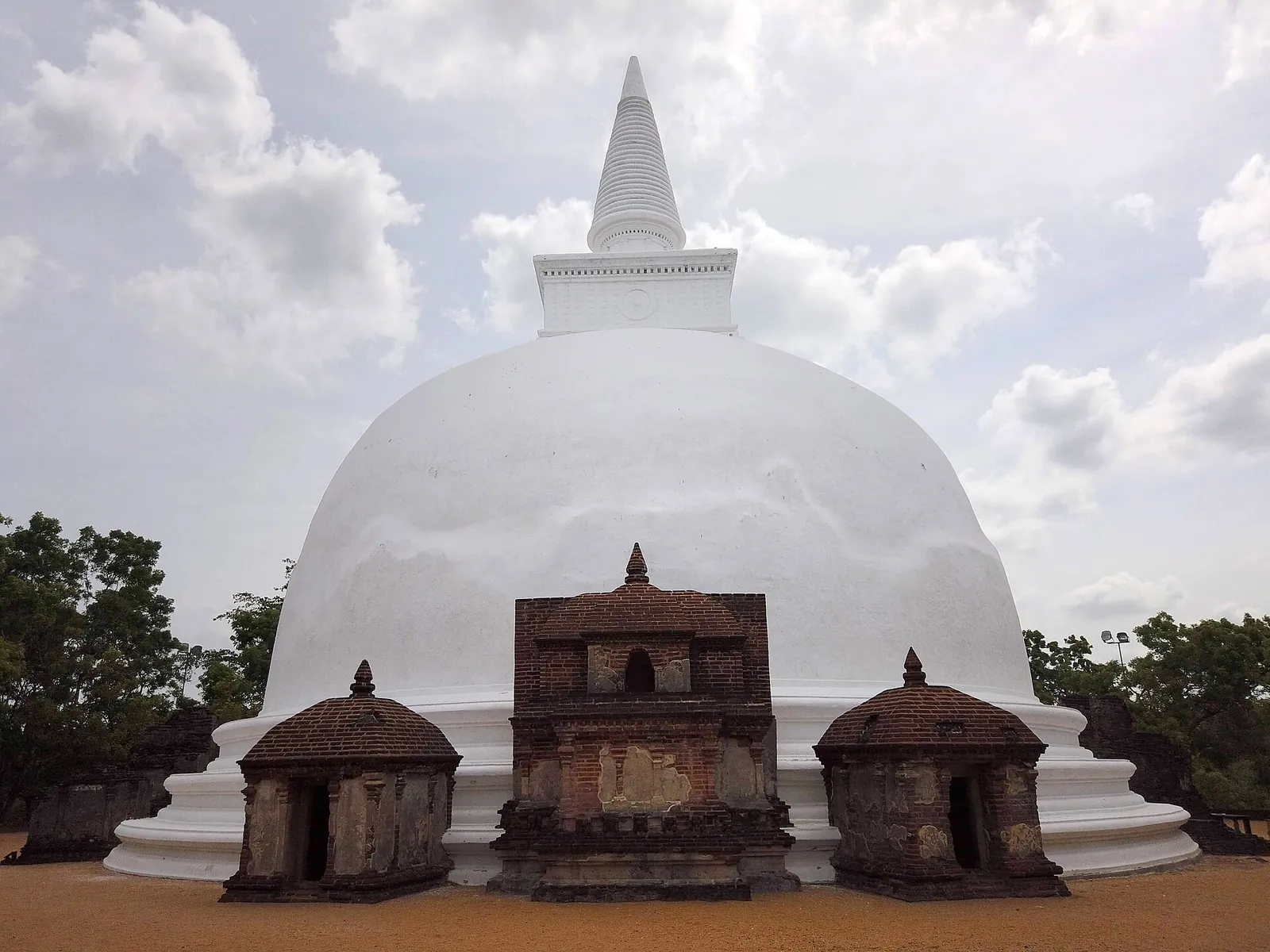
Kiri Vehera, the white stupa north of the Lankatilaka image house at Polonnaruwa
Photograph: MikeWilli — opens in a new tab · CC BY-SA 4.0 — opens in a new tab
Changes: Resized and converted to WebP; displayed with responsive crops. · Original photograph and licence details ↗ — opens in a new tab
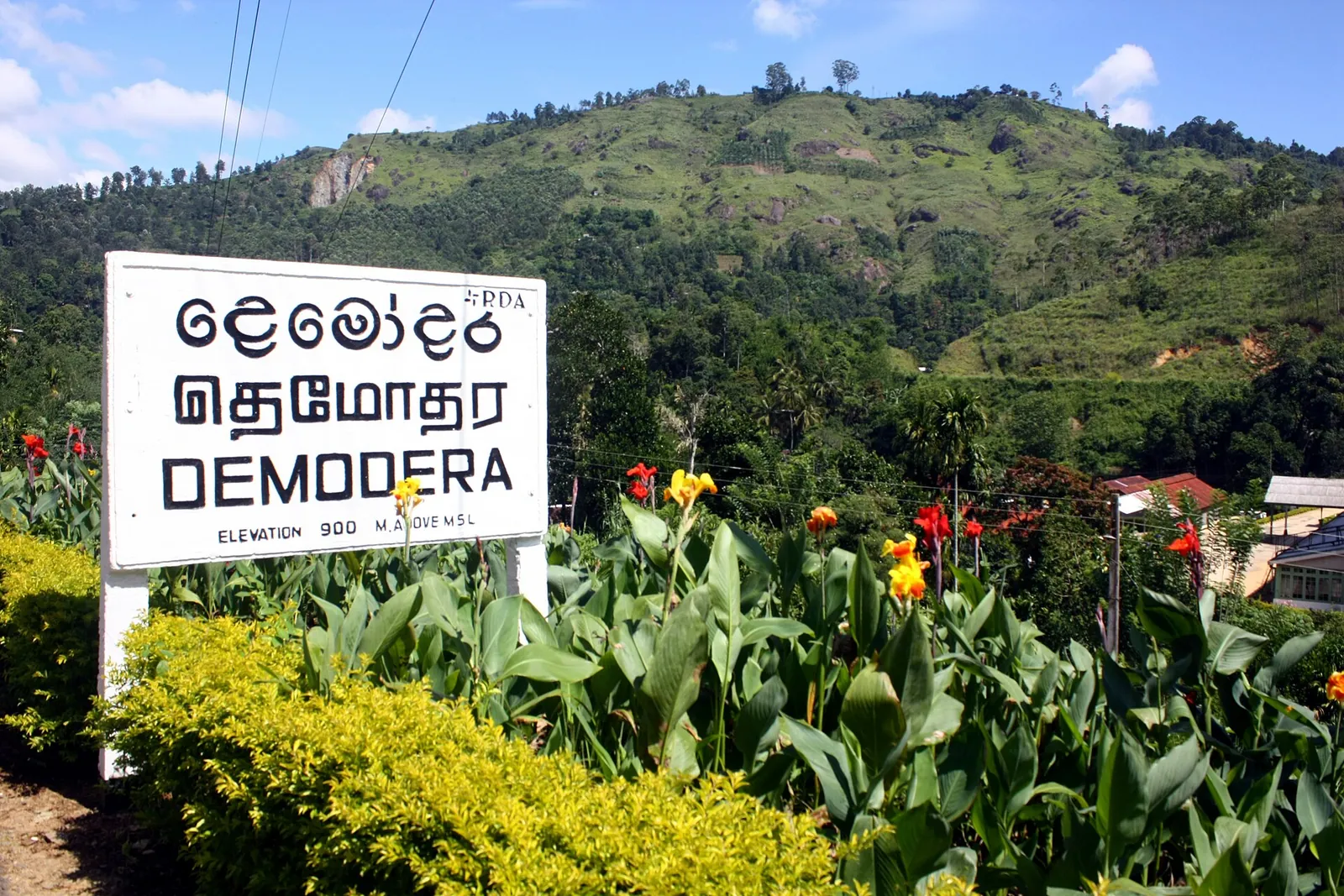
The name board near Demodara railway station on the hill line beyond Ella
Photograph: AntanO — opens in a new tab · CC BY-SA 4.0 — opens in a new tab
Changes: Resized and converted to WebP; displayed with responsive crops. · Original photograph and licence details ↗ — opens in a new tab
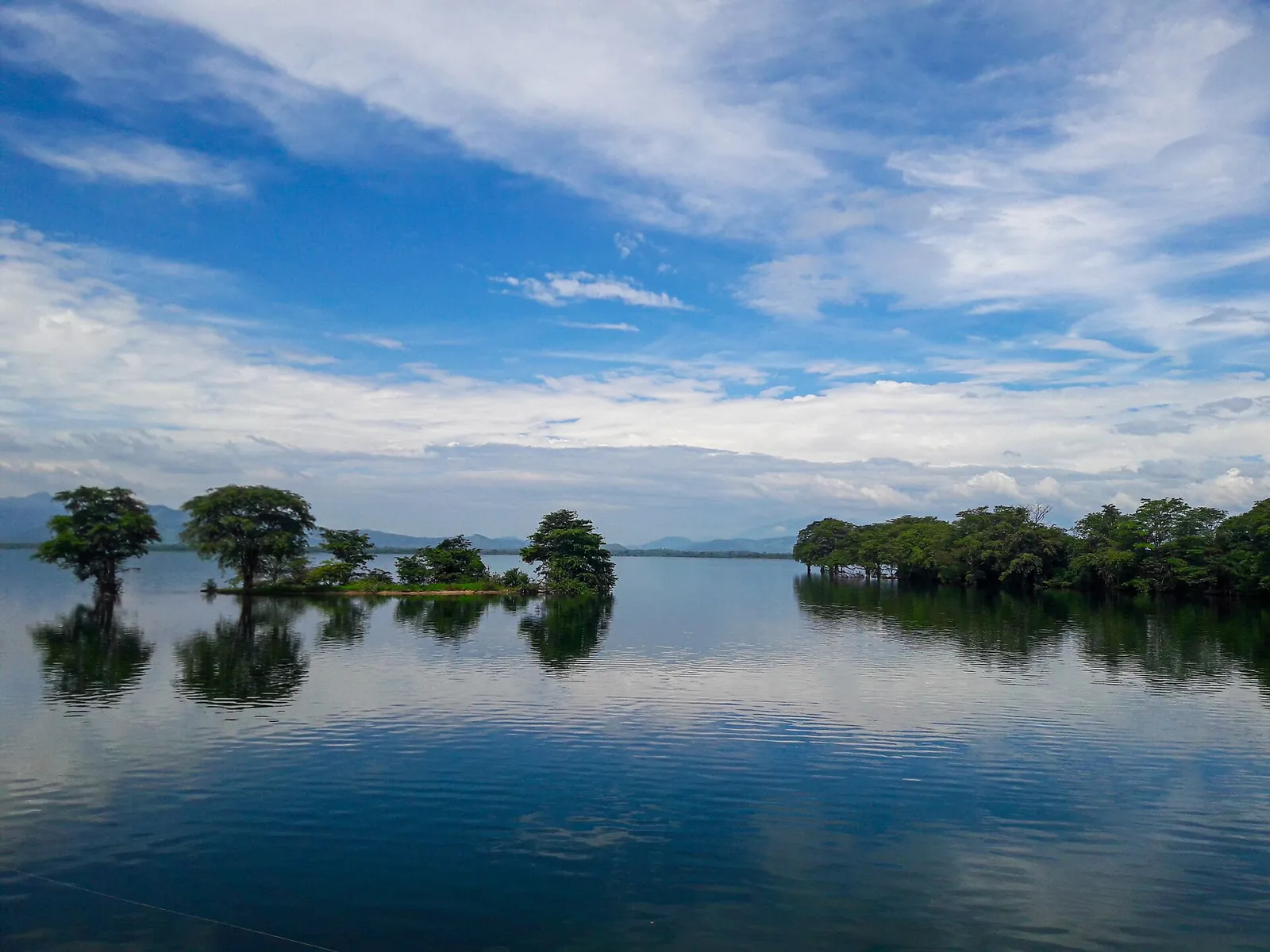
The Udawalawe reservoir in the heart of Udawalawe National Park
Photograph: Satheesha J. — opens in a new tab · CC BY-SA 4.0 — opens in a new tab
Changes: Resized and converted to WebP; displayed with responsive crops. · Original photograph and licence details ↗ — opens in a new tab
A whale breaking the surface of the sea during a whale-watching trip from Mirissa
Photograph: DammikaD — opens in a new tab · CC BY-SA 4.0 — opens in a new tab
Changes: Resized and converted to WebP; displayed with responsive crops. · Original photograph and licence details ↗ — opens in a new tab
The courtyard and whitewashed cave-temple frontage beneath the rock at Dambulla
Photograph: Dan Lundberg — opens in a new tab · CC BY-SA 2.0 — opens in a new tab
Changes: Resized and converted to WebP; displayed with responsive crops. · Original photograph and licence details ↗ — opens in a new tab