The south coast · Southern Province
Galle travel guide: Fort ramparts, Dutch Galle and the coast train
Galle Fort is the part of the south coast where you sleep inside the history. Dutch engineers built the walls that now enclose a lived-in town of narrow lanes, small hotels, churches, a mosque and a working lighthouse, and the Central Cultural Fund calls it the finest example of a fortified city built by Europeans in South and Southeast Asia. This guide helps you decide how long to give it, how to arrive from Colombo or from Ella, what to see on the ramparts and in the museums, and where to eat and sleep in and around the Fort.
- Suggested time
- 2 nights (1 if you arrive by early afternoon)
- Where to stay
- Inside Galle Fort; Unawatuna, 5 km south-east, for a beach stay
- Season and timing
- Sri Lanka Tourism names November to April as the best time for sun and sea, and the German Foreign Office (page of 17 October 2026) puts the rainy season in the south-west from June to October. The Fort's lanes, ramparts and museums work in either season; the sea is the part that depends on the month.
The short answer
Give Galle two nights inside the Fort, or one if you arrive by early afternoon, and be on the ramparts at sunset. From Colombo take the coast train or the Southern Expressway bus; on the ten-day loop a driver brings you from Ella. Book the room first, then the train seat, which goes on sale 30 days before travel. When we checked on 17 October 2026, a reserved seat from Colombo Fort to Galle was LKR 1,100 in air-conditioned first class (the railway's 2022 table), plus a 5% online fee, and the Southern Expressway bus from Makumbura to Galle was LKR 930. The Department of National Museums lists USD 5 for a foreign adult at the Galle National Museum and the Maritime Museum, while the Central Cultural Fund's table lists its Galle museum at USD 6; pay what the counter quotes.
Two nights inside the walls
The Fort stands on a promontory over the Indian Ocean, an inhabited town where colonial buildings now hold homes, boutique hotels, galleries, museums and cafés. That is the reason to sleep here rather than in a beach resort: once the day visitors thin out, the lanes belong to the people who live in them, and the rampart is a few minutes from your door. On the ten-day loop in our ten-day itinerary, these two nights are the last stay of the trip, with the first day taken by the drive from Ella and the last morning by the train.
The old Dutch houses inside the walls now take guests, so a room there puts the lanes, the museums and the sunset walk on your doorstep. Outside the walls, in the rest of Galle, you ride in to the ramparts, and Unawatuna suits a beach stay. Our where-to-stay guide names hotels inside and outside the Fort.
From Colombo by coast train, expressway bus or road
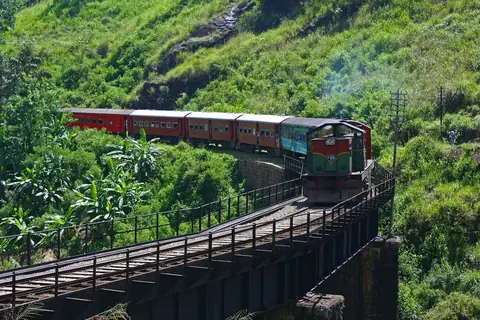
The coast line runs from Colombo through Galle, 113.89 km from Colombo Fort, to Beliatta. The railway's reserved-seat leaflet lists four coast trains between Maradana station in Colombo and Matara or Beliatta, 3 hours 12 minutes to 4 hours 22 minutes end to end; its January 2024 booking example shows Colombo Fort to Galle in 2 hours 20 minutes to 2 hours 25 minutes. Two of the four run toward Colombo in the morning, Matara 06.05 AM to Maradana 09.23 AM and Beliatta 05.25 AM to Maradana 09.47 AM; the two afternoon trains start at Maradana and run away from Colombo.
The railway's January 2024 leaflet shows reserved seats only in air-conditioned first class on the coast trains; the booking site lists first, second and third class. The first-class seat is LKR 1,100 from Colombo Fort to Galle in the railway's 2022 table, and the ordinary fares are LKR 500 in second class and LKR 240 in third. The railway's own booking guide shows the table figure as the full seat price (LKR 1,100 Colombo Fort to Galle in January 2024); the booking site shows the price for your train and adds a 5% online fee to each booking. Reservations close 2 hours before departure, and every passenger's passport or NIC number is entered at booking; the transport guide walks through the steps.
The other way from Colombo is the Southern Expressway. The National Transport Commission's fare list effective 6 July 2026 prices the luxury bus from Makumbura to Galle (route EX 1) at LKR 930, Kaduwela to Galle (EX 1-23) at LKR 1,020 and Kadawatha to Galle (EX 1-21) at LKR 1,070. No official page gives an expressway time.
By road, Sri Lanka Tourism puts Galle Fort 113 km from Colombo by the A2 road, and its journey-time chart gives 3 hours by road. On the ten-day loop the road from Ella takes most of the day with a driver; no official page gives the Ella-to-Galle distance or time, so plan nothing before the evening.
Getting around
Inside the Fort everything is on foot: the lanes, the ramparts, the museums, the Dutch church and the lighthouse stand together on a promontory of 52 hectares. Unawatuna, about 5 km south-east of the city centre, has its own station on the coast line, 119.53 km from Colombo Fort and so about 5.6 km along the line from Galle, and Jungle Beach is about 7.5 km from Galle. Tuk-tuks cover the same roads; Sri Lanka Tourism's Getting Around page says most tuk-tuks are not metered, so agree the fare before you set off.
The ramparts, Flag Rock and the lighthouse
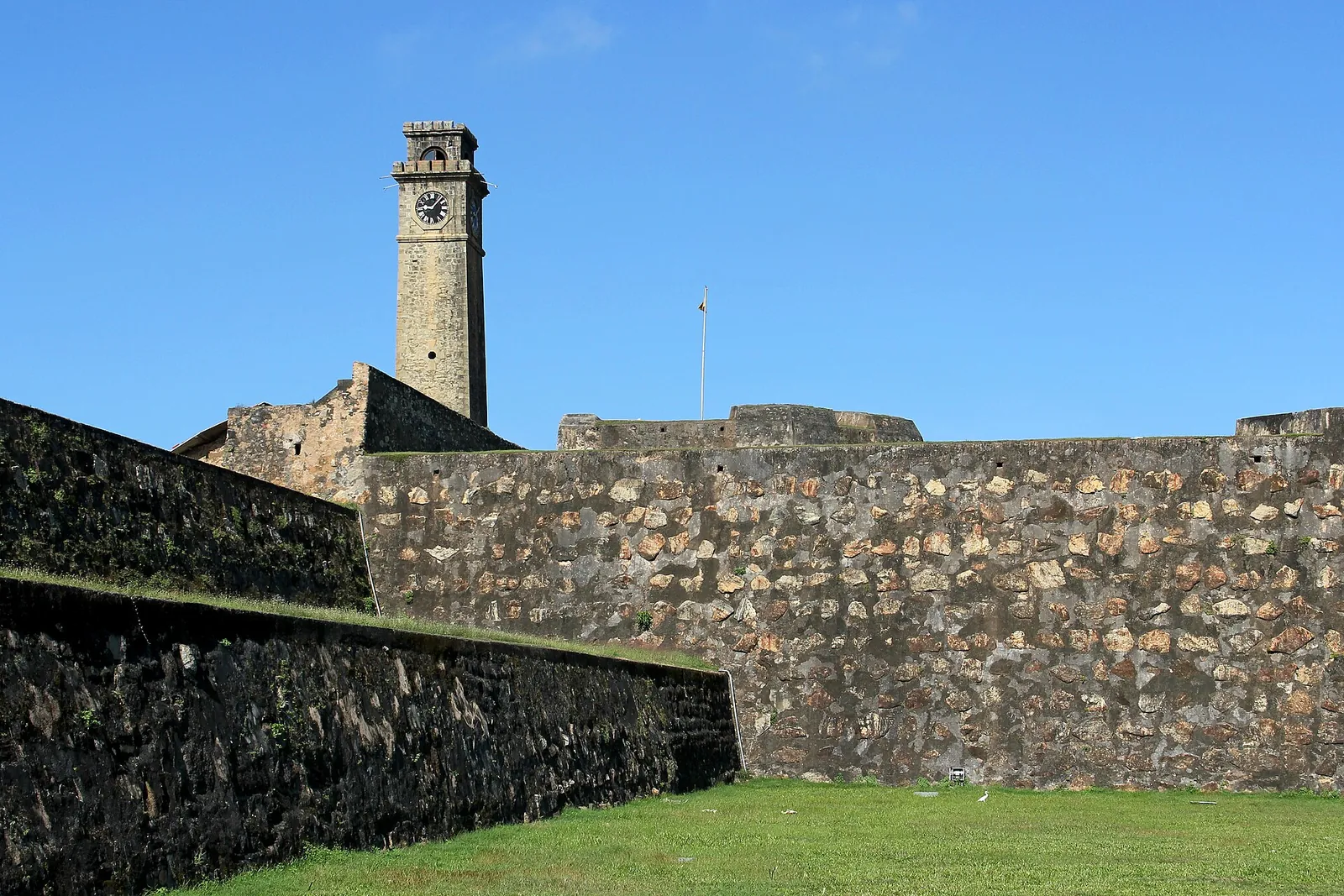
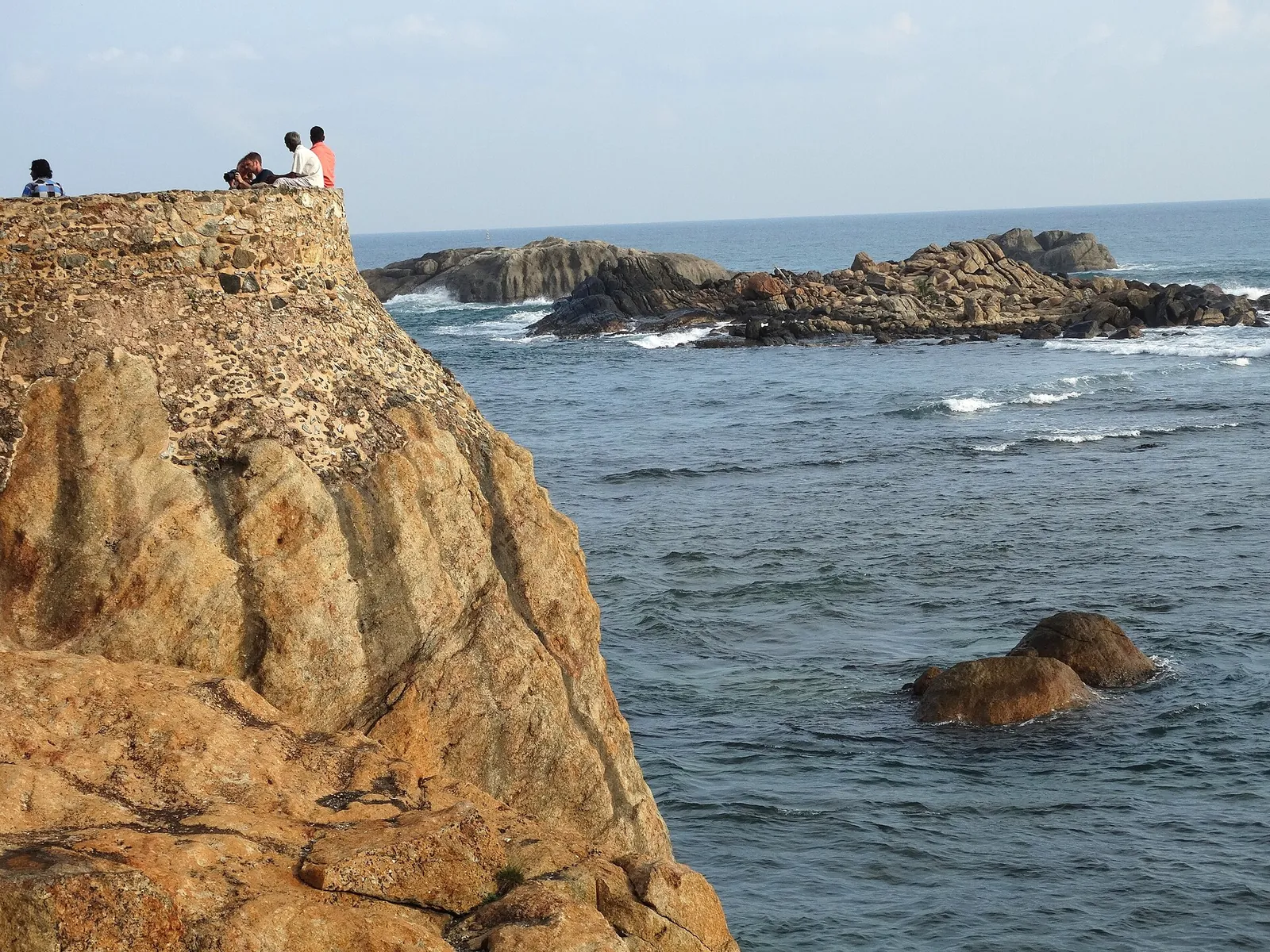
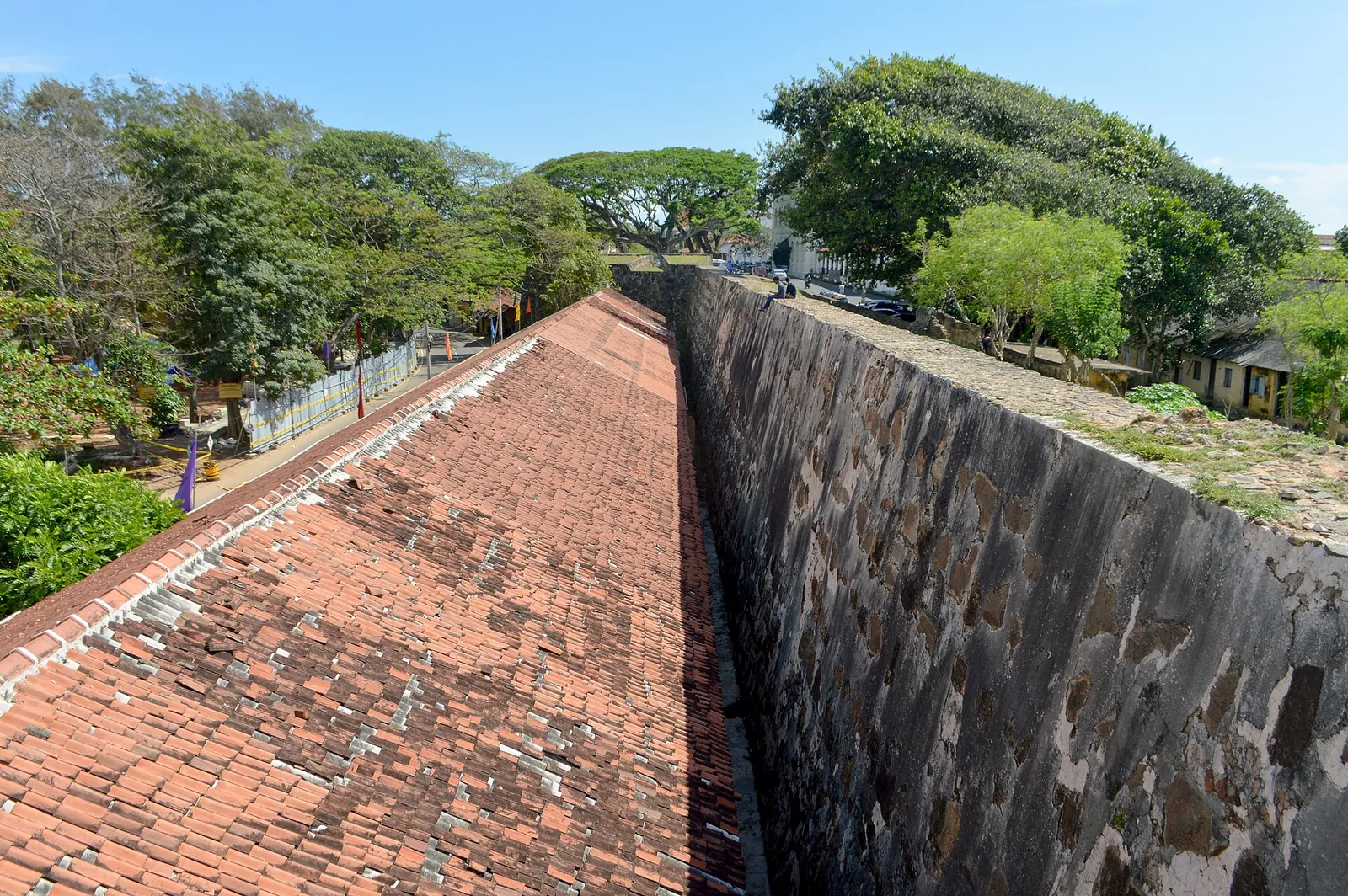
The ramparts are the reason to come. The walls, built of coral and granite, run for approximately 3 kilometres around the 52-hectare promontory, with fourteen bastions projecting from them, among them Flag Rock, Point Utrecht, Triton and Star. The rampart walk along the top gives views over the ocean, the harbour and the Fort's own rooftops, and it passes the cricket ground, the lighthouse and several of the bastions, each with its own angle on the sea.
Go for sunset, when locals and visitors gather at Flag Rock to watch the sun go down into the Indian Ocean; arrive early if you want a place on the rock, and leave the longer walk to the rest of the stay.
The lighthouse was built by the British in 1939 on the site of an earlier Dutch lighthouse and still guides ships into Galle harbour; you pass it on the rampart walk. The Clock Tower, a British addition of 1883, marks the entrance to the historic area.
No official page lists a charge for walking into the Fort or onto the ramparts. The Central Cultural Fund's tickets page lists Galle Fort with counters open 7:00 AM to 5:00 PM and online booking, but no price; pay what the counter asks.
What the Dutch built
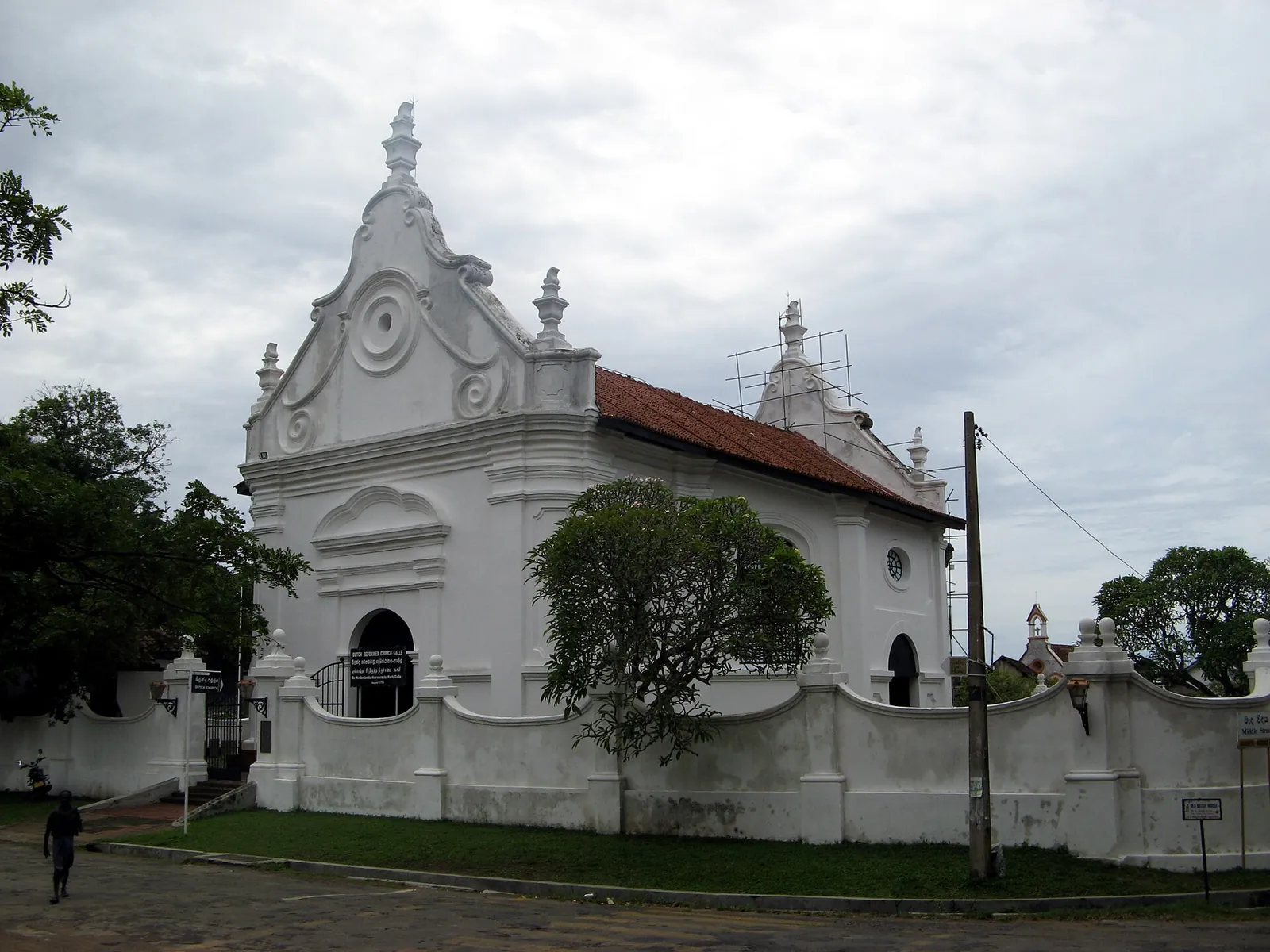
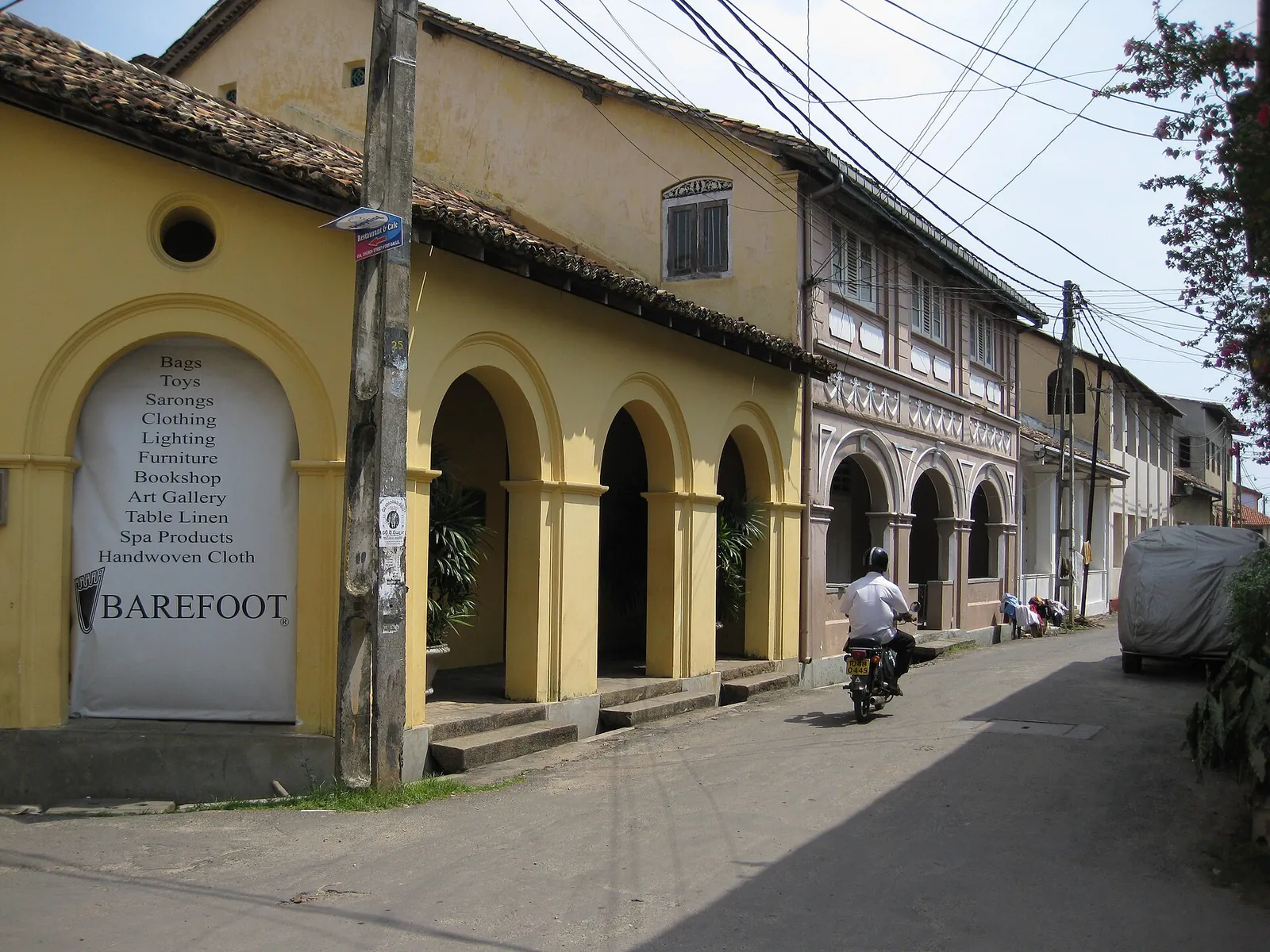
The shape of Galle is Dutch. The Portuguese built a small fortress here in 1588 and called it Santa Cruz; the Dutch captured Galle in 1640 and made it their principal stronghold in Sri Lanka, and between 1663 and 1729 their engineers and architects built the fortification system that survives today, redesigning the whole settlement on European military principles adapted to the tropical climate. Under British rule, from 1796 to 1948, the Fort kept changing. Inside the walls stand the Dutch Reformed Church, built in 1755 and the oldest Protestant church still in use in Sri Lanka, the All Saints Anglican Church, the Old Dutch Government House and the Court House, and the restored Dutch Hospital of the VOC period now holds shops and restaurants.
The lanes themselves are the second sight: a grid of narrow streets lined with gabled roofs, thick walls, columned verandas and spacious courtyards, in Dutch, Portuguese and British styles, with the Meeran Jumma Mosque and its clock tower and the Shiva Subramaniya Hindu temple standing among them. Walk them without a plan; the best doorways are the ones you did not look for. France Diplomatie (page checked 17 October 2026) says suitable dress, legs and shoulders covered, is obligatory when you visit religious sites, which includes the Fort's mosque, churches and Hindu temple.
The museums in the Dutch buildings
Two museums occupy Dutch buildings. The Galle National Museum is in the oldest Dutch building in the Fort, constructed in 1656, and opened to the public on 31 March 1986. It shows the south's traditional ritual masks, ornaments made from turtle shell and old wooden carvings, and, for the Dutch side, equipment from ships that called at Galle harbour, VOC porcelain, and arms used by Dutch soldiers. The Maritime Museum is in the Fort's old Dutch warehouse, built in 1671 above the Old Gate; the 2004 tsunami destroyed it, and with financial help from the Netherlands it was rebuilt. The Central Cultural Fund runs it as the Maritime Archaeology Museum, with finds salvaged from shipwrecks. Its first gallery shows the boats used in passenger transport and trade in southern Sri Lanka and the life of the fishing communities, and its second shows marine ecosystems, with a whale skeleton mounted in the roof. The Fort also holds a Historical Mansion Museum of colonial-era objects.
The Department of National Museums' page gives the Galle National Museum as open Tuesday to Sunday except public holidays, 09:00 to 16:45; Sri Lanka Tourism's page (checked on 17 October 2026) gives 09:00 to 17:00 and closes it on Sundays as well, so check before a Sunday visit. No current official page gives the Maritime Museum's hours; ask at the door. The Department of National Museums lists USD 5 for a foreign adult at the Galle National Museum and the Maritime Museum, while the Central Cultural Fund's table lists its Galle museum at USD 6; pay what the counter quotes.
Unawatuna, Jungle Beach, Koggala and the sea
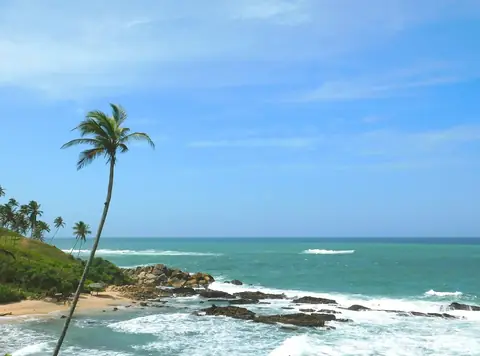
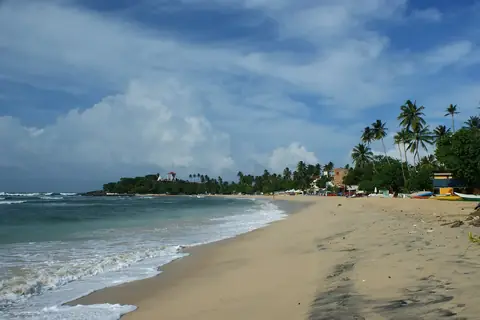
The ramparts look straight onto the sea, but the Fort is for walking rather than swimming. For a half day on the sand, Unawatuna is the bay of Galle's south-east. Rumassala, the wooded headland behind it, leads to Jungle Beach, small and secluded, reached by a climb up Rumassala and a walk down. Our south coast beaches guide compares Unawatuna with Weligama and Mirissa as places to sleep.
Koggala Beach, about 15 km beyond Galle on the coast line (129.11 km from Colombo Fort), is where Sri Lanka Tourism says the stilt fishing may be seen, and turtles nest there in the breeding season, though seeing the laying is very rare. Hikkaduwa, 95.14 km from Colombo Fort on the same line, is the surf and diving stop on the way to Colombo: Sri Lanka Tourism lists waves of 4 to 11 feet, the best surf from November to March, a coral sanctuary and more than four shipwrecks.
Before you swim anywhere on this coast, read the warnings. France Diplomatie's page of 27 September 2026 strongly discourages sea swimming on the west coast from April to November. It also says that several tourists drown every year on the tourist beaches of the west and the south, in particular at Hikkaduwa, Mirissa and Tangalle, especially in the monsoon months, and that even strong swimmers are at risk. It advises great caution when swimming anywhere on the Sri Lankan coast because of the power of the waves and the currents, asks swimmers to stay in a group and to prefer beaches with lifeguards, and notes that some beaches close for a while when jellyfish arrive. The UK Foreign Office (page of 17 October 2026) says many beaches have dangerous surf or rip tides at certain times of the year and tells visitors to get advice from their hotel or tour operator before going in the sea.
On along the coast, or inland to the parks
The railway's distances from Colombo Fort put Weligama at 142.83 km, Mirissa at 147.56 km and Matara at 156.82 km, which is about 29, 34 and 43 km beyond Galle at 113.89 km. For a safari, Yala and Udawalawe are the two parks of the south; no official page gives the road distance or time from Galle to either.
Two nights, day by day
A single night works only if you go straight to the sunset; the rampart circuit and the museums each want their own half day, which is why the loop gives Galle two nights.
- Day 1: arrive, check in, walk the Church Street lanes and be at Flag Rock before sunset.
- Day 2: a hopper breakfast on a veranda, then the National Museum when it opens at 09:00, the Maritime Museum, the Dutch Reformed Church and the lanes around it, and the rampart walk towards the lighthouse in the late afternoon. The National Museum is closed on Mondays and may also be closed on Sundays, so check the days before a Sunday or Monday visit; on a Monday, give the museum time to the ramparts and the Clock Tower, or to Unawatuna.
- Day 3: an early breakfast, then a morning coast train to Colombo; the booking site's train list for your date shows the Galle departure.
Make time for the local food
What to eat and where to look
Hoppers
Bowl-shaped pancakes of fermented rice flour and coconut milk, crisp at the edges and thicker at the base, served with lunumiris and a spicy curry.
- Where to look
- The Veranda at Amangalla, 10 Church Street, which its fact sheet calls an ideal spot for a traditional hopper breakfast while watching the Fort awaken.
- Fit it into your day
- Breakfast on day 2.
Egg hoppers contain egg; plain hoppers do not.
Black pork curry
A Sri Lankan curry of tender pork cubes with black pepper and island spices, which the restaurant calls a local favourite.
- Where to look
- Church Street Social at Fort Bazaar, 26 Church Street, whose page tells first-time visitors not to miss it.
- Fit it into your day
- Dinner on day 1 or day 2.
Pork.
Fish and seafood
Fish and shellfish from the waters around the Fort, which the same restaurant's page puts at the centre of its menus.
- Where to look
- Church Street Social at Fort Bazaar, whose page highlights the freshest seafood sourced from the waters surrounding the Fort.
- Fit it into your day
- Lunch on day 2.
Shellfish; the German Foreign Office advises against eating sea fish and seafood (ciguatera) (checked 17 October 2026).
Lamprais
Rice and accompaniments baked in a plantain leaf, a legacy of the Dutch according to Sri Lanka Tourism.
- Where to look
- No official page names a Galle place for lamprais; look for it on the menus of the Fort's restaurants.
- Fit it into your day
- Dinner on day 1 or day 2.
Ask which accompaniments it comes with.
Practical questions
How many nights does Galle need?
Two. The ramparts at sunset, the museums, the Dutch church and the lanes fill a full day and two half days. A single night works only if you arrive early enough for sunset and skip the museums.
How do I get from Colombo to Galle?
By the coast train or by Southern Expressway bus; both start in Colombo. The section on getting there has the details.
When are the Galle museums open?
The Galle National Museum is open Tuesday to Sunday except public holidays; check the days before a Sunday or Monday visit. See the museums section for the rest.
Can I visit Unawatuna from Galle?
Yes: it is a short ride south-east of the Fort, with its own station on the coast line, and Jungle Beach lies beyond it over Rumassala. Read the swimming warnings under Unawatuna, Jungle Beach, Koggala and the sea before you go in the water.
Does it cost anything to walk the Fort?
No official page lists a charge for walking into the Fort or onto the ramparts. See the ramparts section.
Can I visit the Galle lighthouse?
You see it from the rampart walk. It is a working lighthouse, built by the British in 1939 on the site of an earlier Dutch lighthouse, and it still guides ships into Galle harbour.
Sources and checks before you travel
Reference sources for the version dated 18 October 2026. Confirm opening times, access, transport and conditions for your travel dates.
- Central Cultural Fund: Galle Fort, a living monument of colonial heritage ↗ — opens in a new tab
- Central Cultural Fund: Tickets, Visit Sri Lanka ↗ — opens in a new tab
- Central Cultural Fund: ticket prices for foreign visitors ↗ — opens in a new tab
- Central Cultural Fund: museums, Visit Sri Lanka ↗ — opens in a new tab
- Department of National Museums: Ticket Pricing ↗ — opens in a new tab
- Sri Lanka Tourism: National Museum ↗ — opens in a new tab
- Sri Lanka Railways: passenger ticket rates, Colombo Fort ↗ — opens in a new tab
- Sri Lanka Railways: List of Ticket Fare and Charges 2022 ↗ — opens in a new tab
- Sri Lanka Railways: revision of charges for seat reservation, 1 August 2022 ↗ — opens in a new tab
- Sri Lanka Railways: online seat booking, home page ↗ — opens in a new tab
- Sri Lanka Railways: seat reservation FAQ ↗ — opens in a new tab
- National Transport Commission: expressway fares, Southern Expressway ↗ — opens in a new tab
- Sri Lanka Tourism: Galle Fort ↗ — opens in a new tab
- Sri Lanka Tourism: Unawatuna ↗ — opens in a new tab
- Sri Lanka Tourism: Jungle Beach ↗ — opens in a new tab
- Amangalla: fact sheet ↗ — opens in a new tab
- Church Street Social at Fort Bazaar ↗ — opens in a new tab
- Sri Lanka Tourism: Culinary Tourism, food range ↗ — opens in a new tab
- France Diplomatie: Sri Lanka, Securite ↗ — opens in a new tab
- UK Foreign Office (GOV.UK): Sri Lanka travel advice, Safety and security ↗ — opens in a new tab
- German Foreign Office (Auswaertiges Amt): Sri Lanka, Reise- und Sicherheitshinweise ↗ — opens in a new tab
- Sri Lanka Tourism: Travel Tips ↗ — opens in a new tab
- Sri Lanka Railways: instructions for reservation of train seats ↗ — opens in a new tab
- National Transport Commission: full fares of inter-provincial bus services ↗ — opens in a new tab
- Sri Lanka Tourism: Getting Around ↗ — opens in a new tab
- Department of National Museums: Galle National Museum ↗ — opens in a new tab
- Central Cultural Fund: Galle Museum ↗ — opens in a new tab
- Sri Lanka Tourism: Koggala Beach ↗ — opens in a new tab
- Sri Lanka Tourism: Hikkaduwa Beach ↗ — opens in a new tab
- Sri Lanka Tourism: Food ↗ — opens in a new tab
- France Diplomatie: Sri Lanka, Informations utiles ↗ — opens in a new tab
Photo credits
The clock tower and a rampart wall of Galle Fort
Photograph: Sylvia Berger — opens in a new tab · CC BY-SA 4.0 — opens in a new tab
Changes: Resized and converted to WebP; displayed with responsive crops. · Original photograph and licence details ↗ — opens in a new tab
The Groote Kerk, the Dutch Reformed church inside Galle Fort
Photograph: Michael Gunther — opens in a new tab · CC BY-SA 4.0 — opens in a new tab
Changes: Resized and converted to WebP; displayed with responsive crops. · Original photograph and licence details ↗ — opens in a new tab
Dutch-era buildings on a street in the Fort
Photograph: shankar s. from Dubai, united arab emirates — opens in a new tab · CC BY 2.0 — opens in a new tab
Changes: Resized and converted to WebP; displayed with responsive crops. · Original photograph and licence details ↗ — opens in a new tab
Rock and rampart at the sea edge of the Fort
Photograph: Adam Jones from Kelowna, BC, Canada — opens in a new tab · CC BY-SA 2.0 — opens in a new tab
Changes: Resized and converted to WebP; displayed with responsive crops. · Original photograph and licence details ↗ — opens in a new tab
A tiled roof beside a rampart wall in the Fort
Photograph: Francisco Anzola from United States — opens in a new tab · CC BY 2.0 — opens in a new tab
Changes: Resized and converted to WebP; displayed with responsive crops. · Original photograph and licence details ↗ — opens in a new tab