Southern Province
Yala National Park travel guide: permits, safari and where to stay
Yala is the wildlife stop that a south-coast trip tends to add last, and the decision is how many nights it deserves and which town to go in from. The park lies in the far south-east, a long road beyond the beaches of Mirissa and Weligama. Its permit comes from the Department of Wildlife Conservation, and only Department-licensed jeep drivers may take guests in.
In this guide
Find the location ↗ — opens in a new tabThe short answer
Give Yala two nights near the park, in Tissamaharama, so that the safari does not sit between two long drives; Sri Lanka Tourism puts the park about 300 km from Colombo. Book the entry permit first, on the Department of Wildlife Conservation's Day Visitor ePermit: choose the date and the park, list every person in the group including the driver and guide, enter the vehicle's details, pay, and show the printed permit with its QR code at the entrance. Park entry for a foreign adult is US$25 for a daytime visit in the tourist season and US$20 in the rest of the year, plus US$10 per vehicle and government taxes; the jeep is a separate private charge.
- Suggested time
- 2 nights near the park
- Where to stay
- Tissamaharama, with Palatupana and Kirinda as the other bases
- Season and timing
- The German Foreign Office (page of 17 October 2026) puts the south-west monsoon rains from June to October and adds that long, heavy rain is possible anywhere in any month. The best-time guide has the rest of the island.
What Yala is, and how long to give it
Yala covers 979 square kilometres of the island's dry south-east, across the Southern and Uva provinces, about 300 kilometres from Colombo. It was declared a wildlife sanctuary in 1900 and, with Wilpattu, became one of Sri Lanka's first two national parks in 1938. The Department of Wildlife Conservation counts it among the four most visited national parks in the country, with Wilpattu, Horton Plains and Udawalawe. The climate is dry and semi-arid, and the ecosystems run from moist monsoon forest to freshwater and marine wetlands.
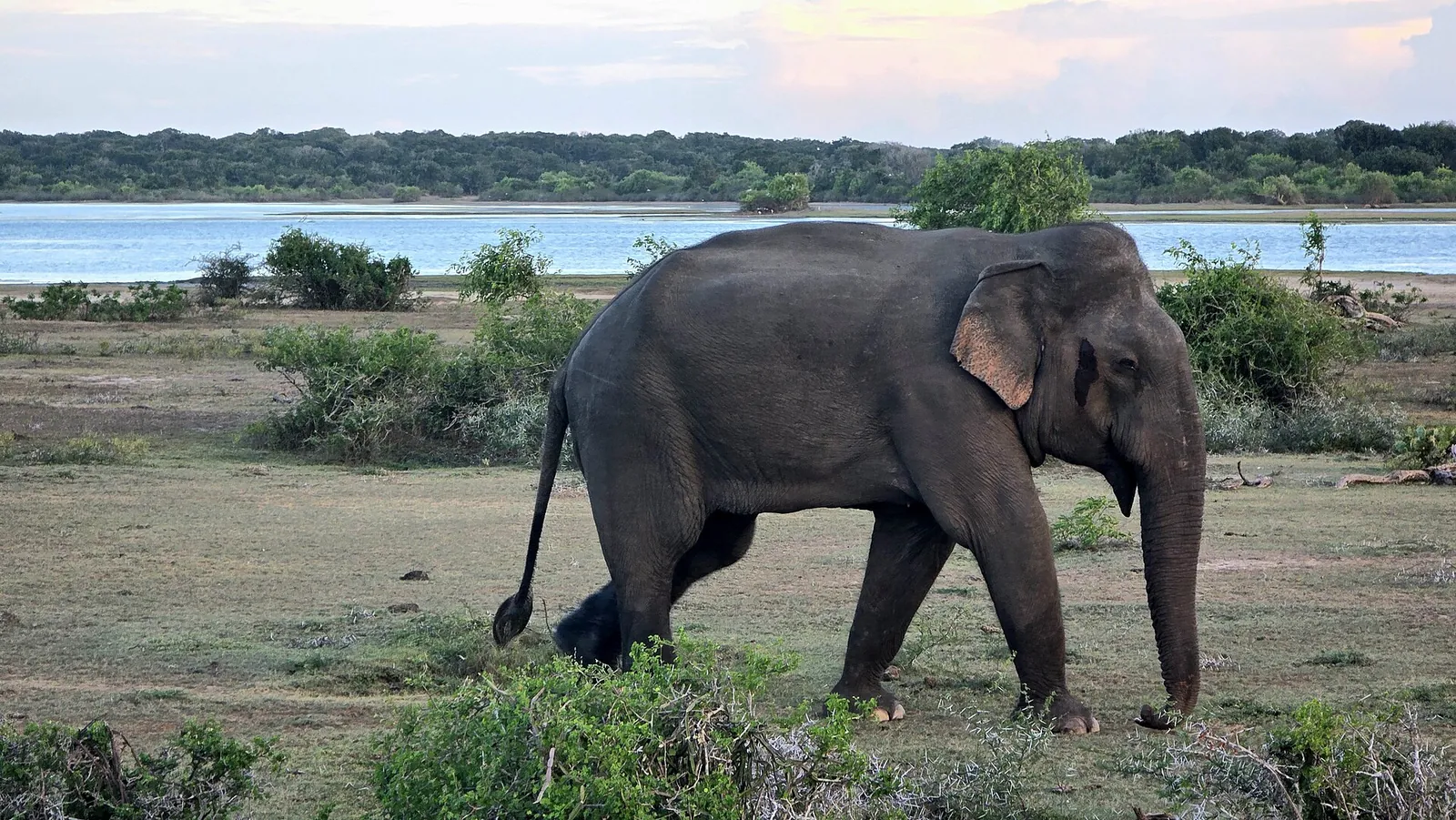
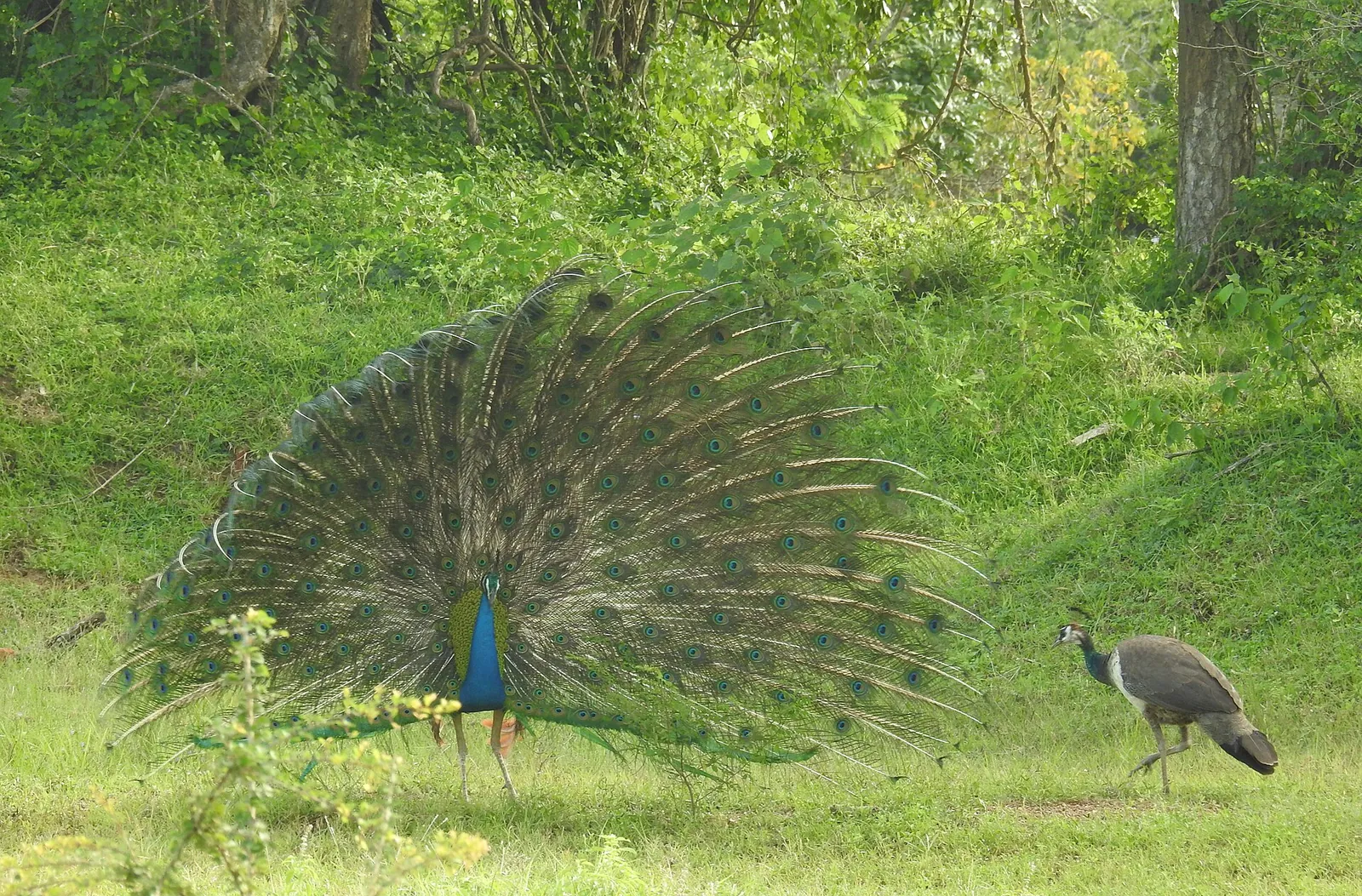
The park is best known for its variety of wild animals, and Sri Lanka Tourism calls it important for the conservation of Sri Lankan elephants, Sri Lankan leopards and aquatic birds. The park counts 215 bird species, six of them endemic to Sri Lanka, and 44 mammals, and it has one of the highest leopard densities in the world; Sri Lankan elephants and water birds are the other draw. Two pilgrim sites, Sithulpahuwa and Magul Vihara, stand inside it, and six other national parks and three wildlife sanctuaries lie nearby, Lunugamvehera among the largest.
Two nights suit the distance. Our first-trip guide says Yala needs a day of its own, so one night would put the safari between a long arrival and a long departure, and two leave a whole day for the park. For the monsoon pattern on the coast you pass through, use the best-time guide.
Booking the permit step by step
Entry is by permit from the Department of Wildlife Conservation, and its Day Visitor ePermit page gives the online route. Each park has a set number of permits a day, and reservations close once it is reached. The steps are:
- On the Department's website, open eServices, then Day Visitor ePermits, and choose Reserve Park Permits Online.
- Read the instructions and continue, then choose the date and the national park from the drop-down list.
- Fill in the reservation details, then the details of your group, which must include drivers, guides and similar staff.
- Enter the vehicle's information, check the details and proceed to payment.
- Pay and save the receipt; the Department's terms call a printed permit mandatory for entry, so print it with its QR code and show it at the entrance.
- The booking service takes Visa, Mastercard or eZcash and adds a convenience fee. Wrong vehicle details can mean extra payment at the gate; questions go to 1919.
Jeeps, entrances, hours and closures
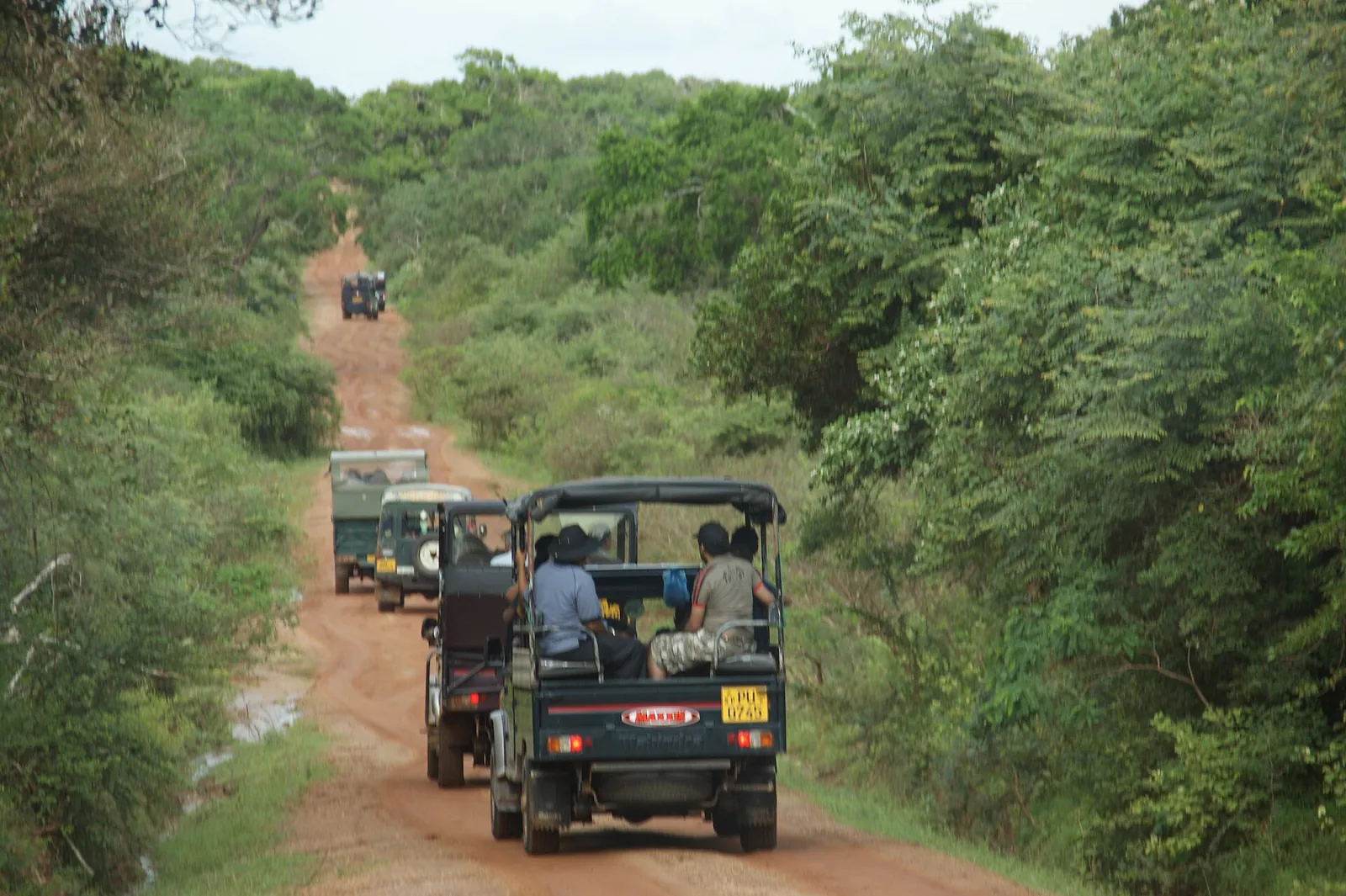
Safaris run in jeeps. A notice on the Sri Lanka Tourism Development Authority's website, signed by the chairman of the committee on Yala wildlife tourism, says that from 1 January 2024 only guests with Department-licensed jeep drivers may enter Yala. The jeep must carry the park's registration sticker and the driver a training ID card; if either is missing, the jeep goes in only with a Department guide on board, and the park has a limited number of guides. In January 2024 the notice counted 475 registered safari vehicles and about 750 certified drivers.
The Department's permit conditions, as listed on its booking page on 17 October 2026, are general conditions for national parks and name no park. The ePermit terms say an officer of the Department rides in the vehicle; the Yala notice says registered jeeps with a trained driver enter without one, so ask which applies when you book. They also say that every guide and driver you bring must be named on the permit. They let you enter between 05:00 and 18:00 and require you to leave by 18:30. They forbid singing, shouting, clapping or any noise likely to disturb an animal, and they bar entry to any part of a park that the warden has closed.
When we checked on 17 October 2026, the Sri Lanka Tourism Development Authority's home page carried a notice that the main road to Yala National Park from Palatupana is closed due to repairs until further notice and that anybody visiting should use the Katagamuwa entrance. No official page publishes Yala's closure dates or the blocks that are open; ask your lodge or jeep operator before you pay.
Gazette 2292/11 of 8 August 2022, which the Department of Wildlife Conservation applies from 2 September 2022, puts Yala in its top fee category: a foreign adult pays US$25 for a daytime visit in the tourist season and US$20 in the rest of the year, a child aged 6 to 12 pays US$15 or US$10, and a child under 6 goes free. A foreign group also pays US$10 per vehicle for tourist services, and government taxes come on top of every charge. The gazette names no months for the tourist season; the Department sets it, so the ePermit shows the amount that applies once you choose the park and the date. The jeep is a separate private charge that no official page publishes. Ask your jeep operator what the permit and the jeep cost together before you pay.
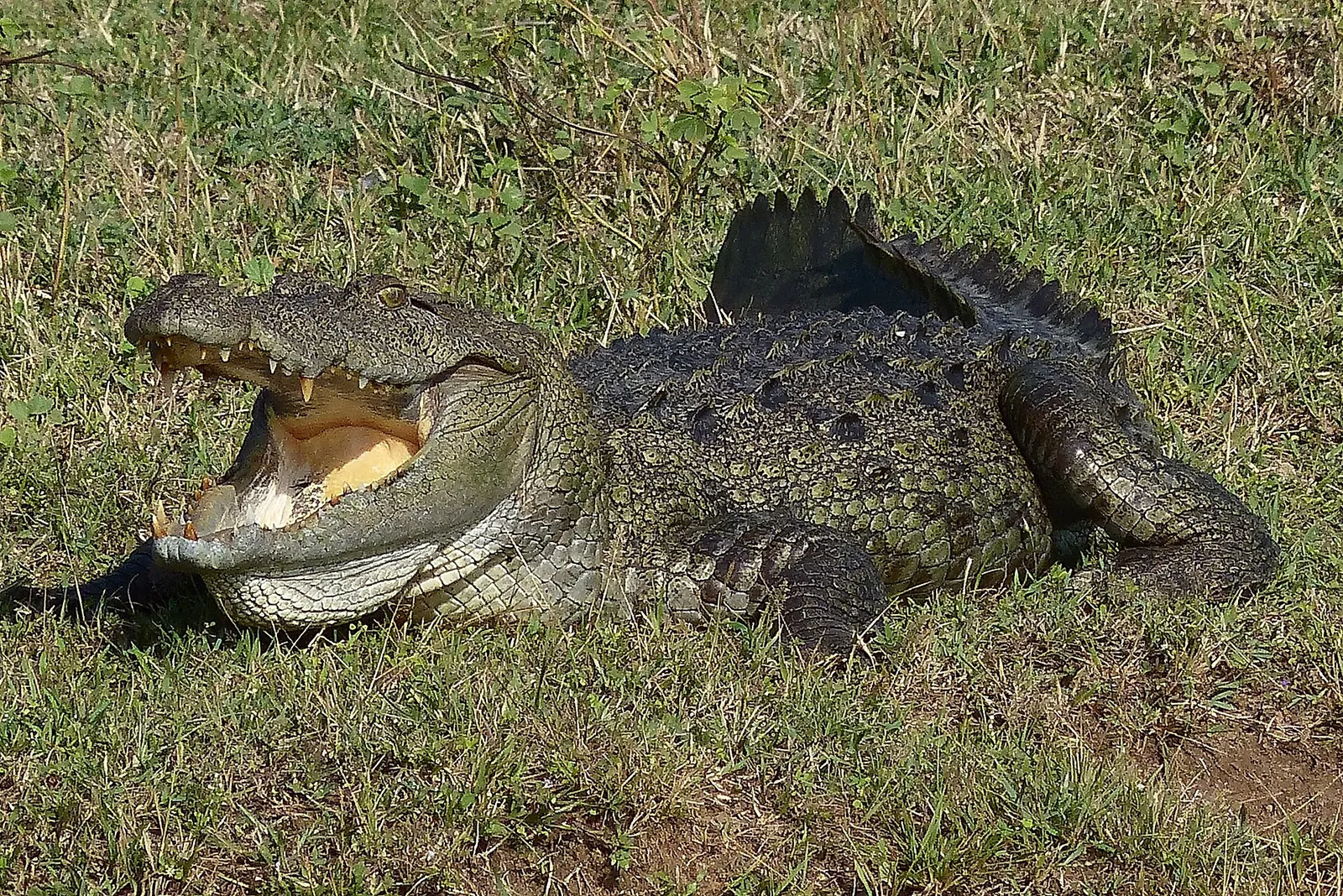
On the safari itself, the UK Foreign Office (checked 16 October 2026) says that wild elephants and crocodiles will attack humans on occasion and advises following authorised guides. France Diplomatie (checked 16 October 2026) calls crocodile attacks rare and places them at lagoon edges and river mouths, and says never to give animals food in parks, because monkeys and elephants can become aggressive. Stay in the vehicle unless your guide says otherwise, and keep back from the water.
Where to sleep: Tissamaharama, Palatupana and Kirinda
Tissamaharama is the town base and the one to choose for a first visit: the Viator safari below starts there, the Tissamaharama-Kirinda Road runs from it to the coast, and Kataragama lies 19 km inland, according to Sri Lanka Tourism. The ancient sites described below fit into the afternoon after a morning drive.
Palatupana: the Authority's home page says the main road into the park from Palatupana is closed due to repairs until further notice and that visitors should use the Katagamuwa entrance, so ask your jeep operator which entrance the safari uses before you book a room here. Kirinda is the coastal village with a beach and a rock temple; Sri Lanka Tourism says you reach it from Tissamaharama on the Tissamaharama-Kirinda Road by bus or taxi, which makes it the place for a night by the sea.
For rooms in all three areas and for how these bases compare with the rest of the island, see our where-to-stay guide.
Around the park: Tissamaharama, Kataragama, Kirinda and Bundala
Tissamaharama. The Central Cultural Fund describes Tissamaharama as the capital of the ancient Ruhuna kingdom, with massive stupas, monastery ruins and ancient tanks, and dates the advanced hydraulic engineering at the site to the 2nd century BCE.
Kataragama lies 19 km inland from Tissamaharama, according to Sri Lanka Tourism, and is one of the most sacred pilgrimage sites of the island for Buddhists and Hindus. The board describes the Kataragama temple, dedicated to Skanda-Murukan, the Kiri Vehera stupa, 95 ft high and 800 m north of the temple, and the Sella Kataragama shrines. Offerings are made at 4.30 am, 10.30 am and 6.30 pm daily, and the annual procession in July or August brings fire walkers and Kawadi dancers. At a Buddhist temple such as Kiri Vehera, cover your legs and shoulders and take off shoes and hats, as the UK Foreign Office asks (page of 17 October 2026).
Kirinda has a temple on a rock with a view of the Indian Ocean, and legend, as the tourism board tells it, makes the beach the place where Princess Vihara Maha Devi drifted ashore.
Bundala National Park is a bird park, 245 km south-east of Colombo by the tourism board's figure, with 197 recorded bird species, the greater flamingo as its highlight, and migrants arriving from September to March. It became Sri Lanka's first Ramsar wetland in 1991 and a UNESCO biosphere reserve in 2005.
Getting to Yala
By road, Sri Lanka Tourism's figures all start in Colombo: about 300 km to the park and 4 hours to Kirinda. No official page gives the road distance or time from Ella, Mirissa, Matara or Beliatta to Tissamaharama.
By public transport, the National Transport Commission's list effective 6 July 2026 gives LKR 1,170 as the full fare on the Southern Expressway bus from Makumbura to Matara (route EX 1-1), as we checked on 16 October 2026. The railway's January 2024 leaflet shows reserved seats only in air-conditioned first class on the coast trains; the booking site lists first, second and third class. The leaflet names four coast trains, two leaving Matara at 06.05 and Beliatta at 05.25 for Maradana in the morning and two leaving Maradana for Matara and Beliatta in the afternoon, 3 hours 12 minutes to 4 hours 22 minutes end to end. In the railway's 2022 seat table the reserved air-conditioned first-class seat from Colombo Fort is LKR 1,400 to Matara and LKR 1,600 to Beliatta, and the online booking site adds a 5% service charge. The ordinary second-class fares are LKR 600 to Matara and LKR 650 to Beliatta.
From either town, take a driver for the road to Tissamaharama; our transport guide explains how to find an authorised tourist driver.
A flight is the other option only in part: Sri Lanka Tourism's airports page names Mattala Rajapaksa International Airport as the country's second international airport, in the deep south close to the coastal town of Hambantota. No official page gives its flights or the road time from it to Tissamaharama; ask your lodge.
Udawalawe is the other safari park of the south, and the beaches lie back along the coast through Matara.
What to eat and where to look
Rice and curry
The island's main meal: boiled rice with curries of vegetables, meat and fish, pickles, sambol and papadum, which Sri Lanka Tourism says most Sri Lankans eat at breakfast, lunch and dinner.
- Where to look
- Any rice-and-curry shop in Tissamaharama or Kirinda; no official page names a restaurant near Yala.
- Fit it into your day
- Lunch in Tissamaharama on the day you visit Kataragama or Kirinda.
Curries can be hot; ask which are mild.
Hoppers
Bowl-shaped pancakes of fermented rice flour and coconut milk, crisp at the edges, with egg hoppers served for breakfast and dinner, according to Sri Lanka Tourism.
- Where to look
- Breakfast at your lodge in Tissamaharama, or a hopper shop in town.
- Fit it into your day
- Breakfast before the morning drive.
Hoppers come with a spicy curry or lunumiris; ask for them on the side.
Buffalo curd with treacle
Thick curd made from boiled buffalo milk and served in clay pots, usually eaten with treacle or sugar, according to Sri Lanka Tourism.
- Where to look
- Order it as a dessert in Tissamaharama; the tourism board says it can be found across the country.
- Fit it into your day
- Dessert after dinner.
It is sweet; ask for the treacle on the side.
Kottu roti
Godamba roti chopped on a griddle with vegetables, egg or meat and spices, a dinner dish and a popular street food, according to Sri Lanka Tourism.
- Where to look
- A kottu stall or shop in Tissamaharama in the evening.
- Fit it into your day
- Dinner after the afternoon drive.
Kottu can contain egg, meat or seafood; ask for the vegetable version.
Practical questions
How many nights do I need for Yala?
Two nights near the park is the length this guide recommends. The park is about 300 km from Colombo by Sri Lanka Tourism's figure, so a single night would put the safari between a long arrival and a long departure.
How do I book a Yala permit?
The Department of Wildlife Conservation's Day Visitor ePermit page describes the online route: choose the date and the park, enter the details of every person in the group including the driver and guide, enter the vehicle's details, pay, and keep the receipt to show at the entrance.
How much is the Yala entrance fee?
Under Gazette 2292/11, a foreign adult pays US$25 for a daytime visit in the tourist season and US$20 in the rest of the year, a child aged 6 to 12 US$15 or US$10, plus US$10 per vehicle and government taxes. The jeep is paid separately to its operator.
What time can I enter Yala?
Under the Department of Wildlife Conservation's permit conditions for national parks, you may enter between 05:00 and 18:00 and must leave by 18:30; nobody may travel in a park between 18:30 and 05:00.
Who may drive me into Yala?
A notice on the Sri Lanka Tourism Development Authority's website says that from 1 January 2024 only guests with Department-licensed jeep drivers may enter Yala, and that a jeep without the park's registration sticker, or a driver without the training ID, needs a Department guide on board.
Are elephants and crocodiles at Yala dangerous, and may I feed animals?
Yes, they can be, and animals must not be fed; the UK Foreign Office and France Diplomatie cautions, both checked on 16 October 2026, are in the section on jeeps, entrances and closures above.
Can I reach Yala without a car?
Not all the way. The Southern Expressway bus runs from Makumbura to Matara, and the railway's coast-line trains end at Matara and Beliatta, so plan the last stretch to Tissamaharama with a driver. Sri Lanka Tourism names Mattala Rajapaksa International Airport, close to Hambantota, as the second international airport.
What else is near Yala?
Sri Lanka Tourism places Kataragama 19 km inland from Tissamaharama, lists Kirinda with its rock temple and beach, and describes Bundala National Park as a bird park 245 km from Colombo.
Keep planning your trip
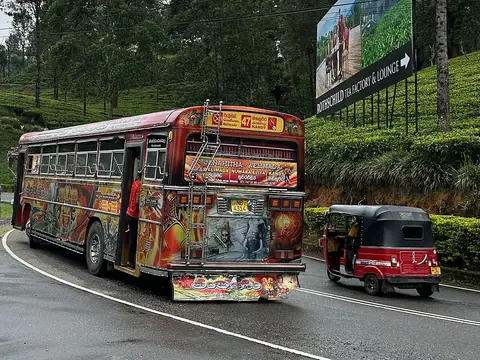
First trip to Sri Lanka
Nine nights through the ancient cities, Kandy, Ella and Galle: all-in costs for two, the ETA, trains, monsoons, dengue, the sea and the roads.
Read the guide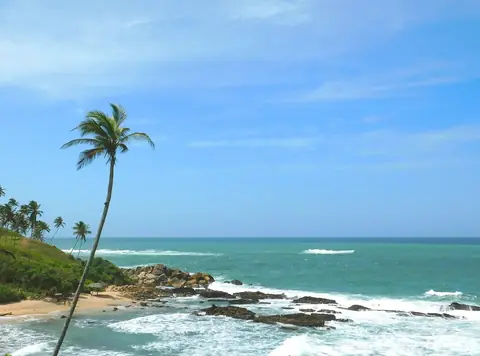
Best time to visit Sri Lanka
Choose Sri Lanka dates from the two monsoons, the beach and hill seasons, the Cultural Triangle, the Esala Perahera and Poya days, with the loop set for January.
Read the guide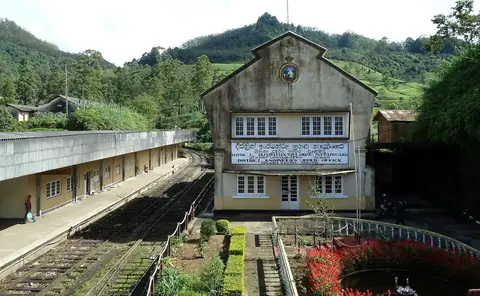
Transport in Sri Lanka
Kandy to Ella while the hill line is partly closed, the Nanu Oya to Ella train, expressway buses, a car with a driver and the airport transfer.
Read the guide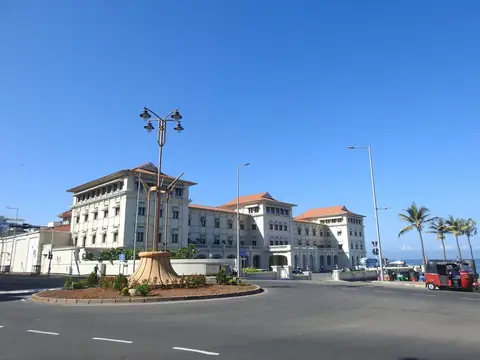
Where to stay in Sri Lanka
Choose a base for each stop of the Sri Lanka loop, with a named hotel and its dated nightly rate, plus Mirissa, Nuwara Eliya and the safari lodges.
Read the guide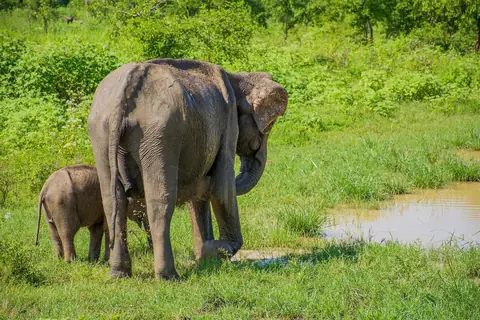
Udawalawe
Udawalawe for elephants in open country: the Day Visitor ePermit, the officer in your vehicle, the Elephant Transit Home and the road in by car with a driver.
Read the guide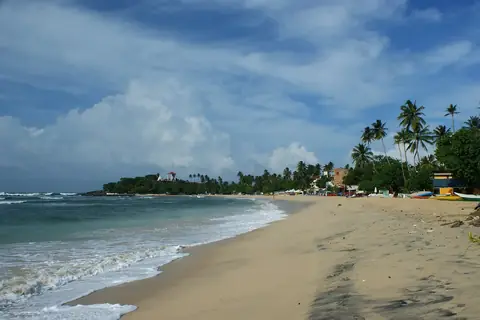
Mirissa, Weligama and Unawatuna
How to split a few nights between Mirissa, Weligama and Unawatuna: the whale boats and their season, a surf lesson, what they cost and the coast train.
Read the guideSources and checks before you travel
(23)
- Department of Wildlife Conservation: revision of fees ↗ — opens in a new tab
- Gazette Extraordinary No. 2292/11 of 8 August 2022: national park fees (PDF) ↗ — opens in a new tab
- Department of Wildlife Conservation: Day Visitor ePermit reservation how-to ↗ — opens in a new tab
- Department of Wildlife Conservation: Protected Areas ↗ — opens in a new tab
- Department of Wildlife Conservation: Day Visitor ePermit ↗ — opens in a new tab
- Department of Wildlife Conservation: ePermit booking help and terms ↗ — opens in a new tab
- Sri Lanka Tourism Development Authority: important notices ↗ — opens in a new tab
- Sri Lanka Tourism Development Authority: home page ↗ — opens in a new tab
- UK Foreign Office: Sri Lanka safety and security ↗ — opens in a new tab
- France Diplomatie: Sri Lanka, safety ↗ — opens in a new tab
- Auswärtiges Amt: Sri Lanka, travel and security advice ↗ — opens in a new tab
- Sri Lanka Railways: train services with reserved seats (PDF) ↗ — opens in a new tab
- Sri Lanka Railways: revision of charges for seat reservation, 1 August 2022 ↗ — opens in a new tab
- Sri Lanka Railways: ticket rates from Colombo Fort ↗ — opens in a new tab
- Sri Lanka Railways: online seat booking FAQ ↗ — opens in a new tab
- National Transport Commission: expressway bus fares ↗ — opens in a new tab
- Sri Lanka Tourism: Yala National Park ↗ — opens in a new tab
- Sri Lanka Tourism: Kataragama ↗ — opens in a new tab
- Sri Lanka Tourism: Kirinda ↗ — opens in a new tab
- Sri Lanka Tourism: Bundala National Park ↗ — opens in a new tab
- Central Cultural Fund: Visit Sri Lanka, heritage sites ↗ — opens in a new tab
- Sri Lanka Tourism: Culinary Tourism, food range ↗ — opens in a new tab
- Sri Lanka Tourism: airports ↗ — opens in a new tab
Reference sources for the version dated 1 November 2026. Confirm opening times, access, transport and conditions for your travel dates.
Photo credits
(5)
A wild elephant walks along the edge of a lagoon in Yala National Park
Photograph: Richard Mortel — opens in a new tab · CC BY 4.0 — opens in a new tab
Changes: Resized and converted to WebP; displayed with responsive crops. · Original photograph and licence details ↗ — opens in a new tab
Safari jeeps on a dirt track in Yala National Park
Photograph: Dan arndt — opens in a new tab · CC BY-SA 4.0 — opens in a new tab
Changes: Resized and converted to WebP; displayed with responsive crops. · Original photograph and licence details ↗ — opens in a new tab
A crocodile resting with its mouth open on a grassy bank in Yala National Park
Photograph: Schnobby — opens in a new tab · CC BY-SA 3.0 — opens in a new tab
Changes: Resized and converted to WebP; displayed with responsive crops. · Original photograph and licence details ↗ — opens in a new tab
A peacock displays its tail in Yala National Park
Photograph: Manelka Jayasundara — opens in a new tab · CC BY-SA 4.0 — opens in a new tab
Changes: Resized and converted to WebP; displayed with responsive crops. · Original photograph and licence details ↗ — opens in a new tab
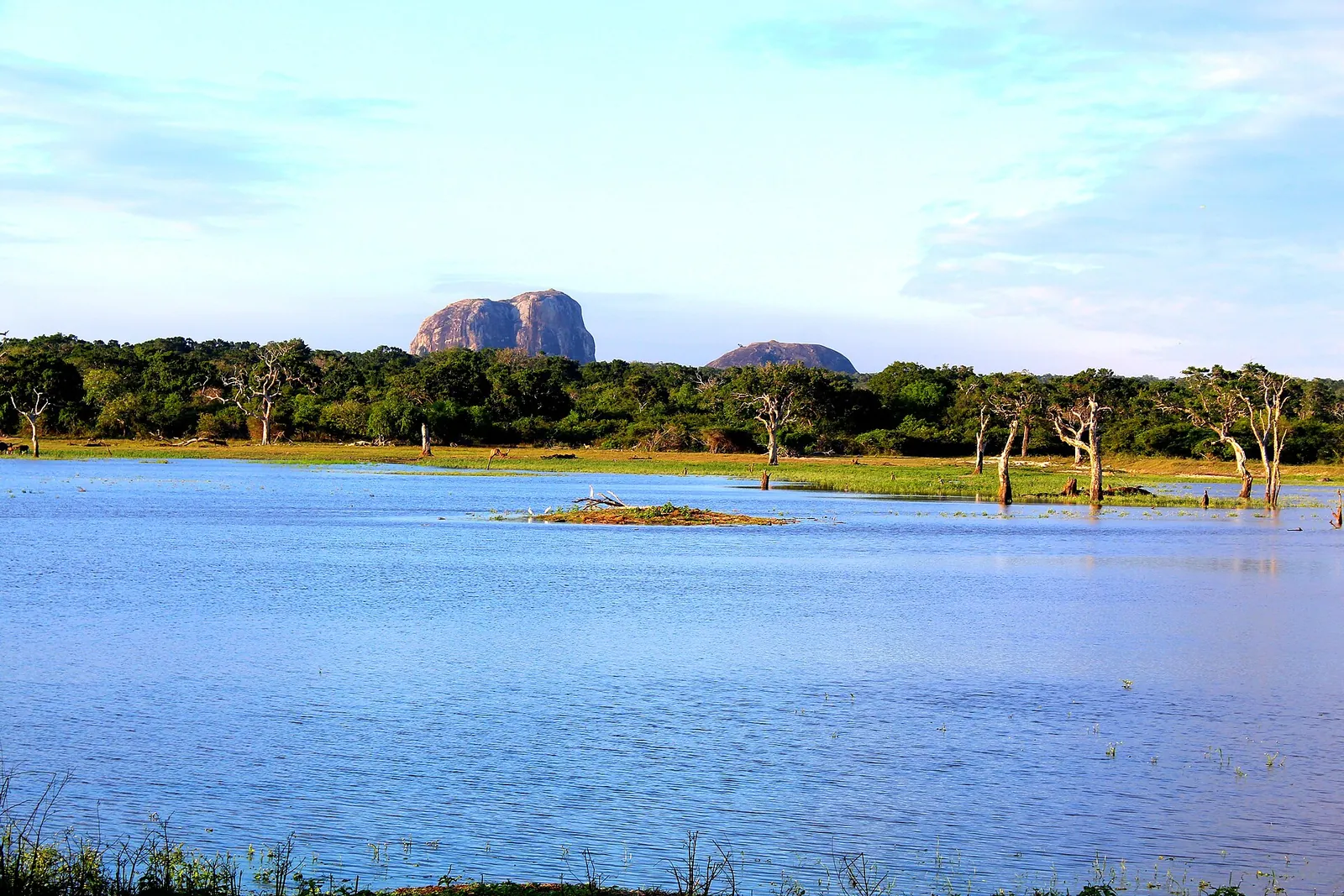
The lagoon and the rock called Elephant Rock in Yala National Park
Photograph: Nimesha Patabendige — opens in a new tab · CC BY-SA 4.0 — opens in a new tab
Changes: Resized and converted to WebP; displayed with responsive crops. · Original photograph and licence details ↗ — opens in a new tab