Plan your trip
Kazakhstan food: beshbarmak, kazy, baursak, lagman and kumis
Kazakh cooking grew out of life on the move: meat from the herds, milk that keeps without a fridge, and dough that turns both into a meal. Beshbarmak sits at the centre of the table, horse-meat sausages and fried baursak around it, with fermented mare’s and camel’s milk to drink, while plov and lagman from the Silk Road cities are everyday food too. Below, each dish comes with a place to eat it in Almaty or Astana and what it costs there.
In this guide
Find the location ↗ — opens in a new tabThe short answer
Give Almaty two days of eating: the Green Bazaar for kazy, kurt and kumis, beshbarmak and plov at Kishlak, and lagman, manty and baursak with tea at the Navat chaikhana on Dostyk Avenue. Book a table first at Kishlak on Dostyk Avenue for the beshbarmak dinner. At Navat a bowl of gyuru lagman costs KZT 3,100 and 100 g of baursak KZT 570, with 10% service added to the bill; allow about KZT 16,100 a day each at sit-down places. In Astana, Visit Astana lists Qazaq Gourmet’s average bill at about KZT 20,000, rather than a price for its tasting set.
- Key point
- Two days in Almaty, with Astana’s restaurants if your trip continues there
- Where it applies
- Almaty for the Green Bazaar and its Kazakh restaurants; Astana for high Kazakh cuisine
- Timing
- The Green Bazaar opens every day from 09:00 to 19:00, so shop there in the morning; during Ramadan cafés may change their menus and fill up around the evening meal.
Beshbarmak and the horse-meat sausages
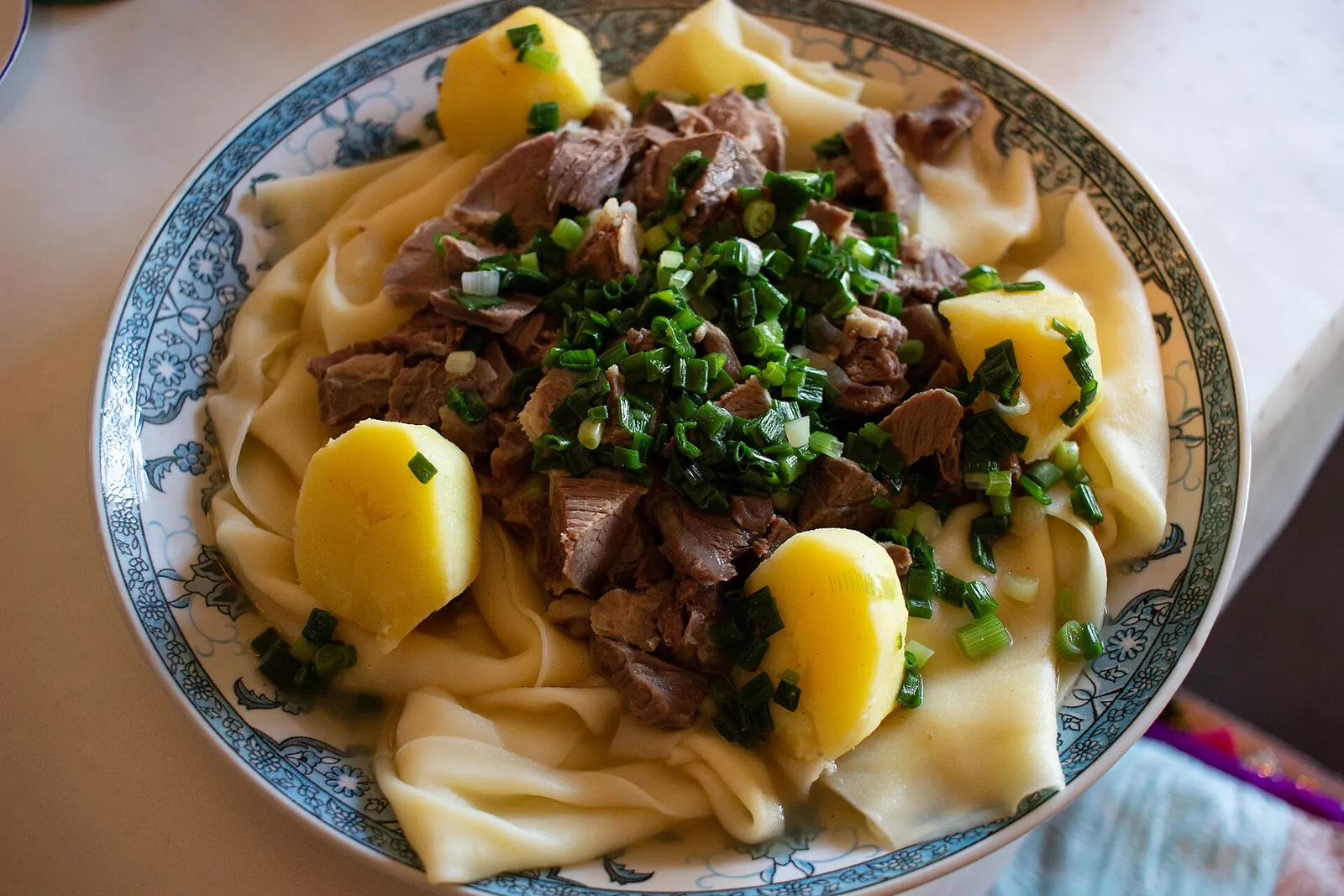
Beshbarmak is the main symbol of Kazakh cuisine. The name means “five fingers”, because nomads ate it with their hands. Boiled meat, horse, lamb or beef, is cut into large pieces and laid over thin sheets of dough cooked in the broth, then finished with tuzdyk, a sauce of onions and spices. It is the dish of hospitality, served to guests and on feast days, and the Kazakh government’s own guide to the national cuisine notes that cutting and sharing the meat at a festive table is raised to a ritual. In Almaty, Kishlak makes its beshbarmak with kazy, zhaya and lamb.
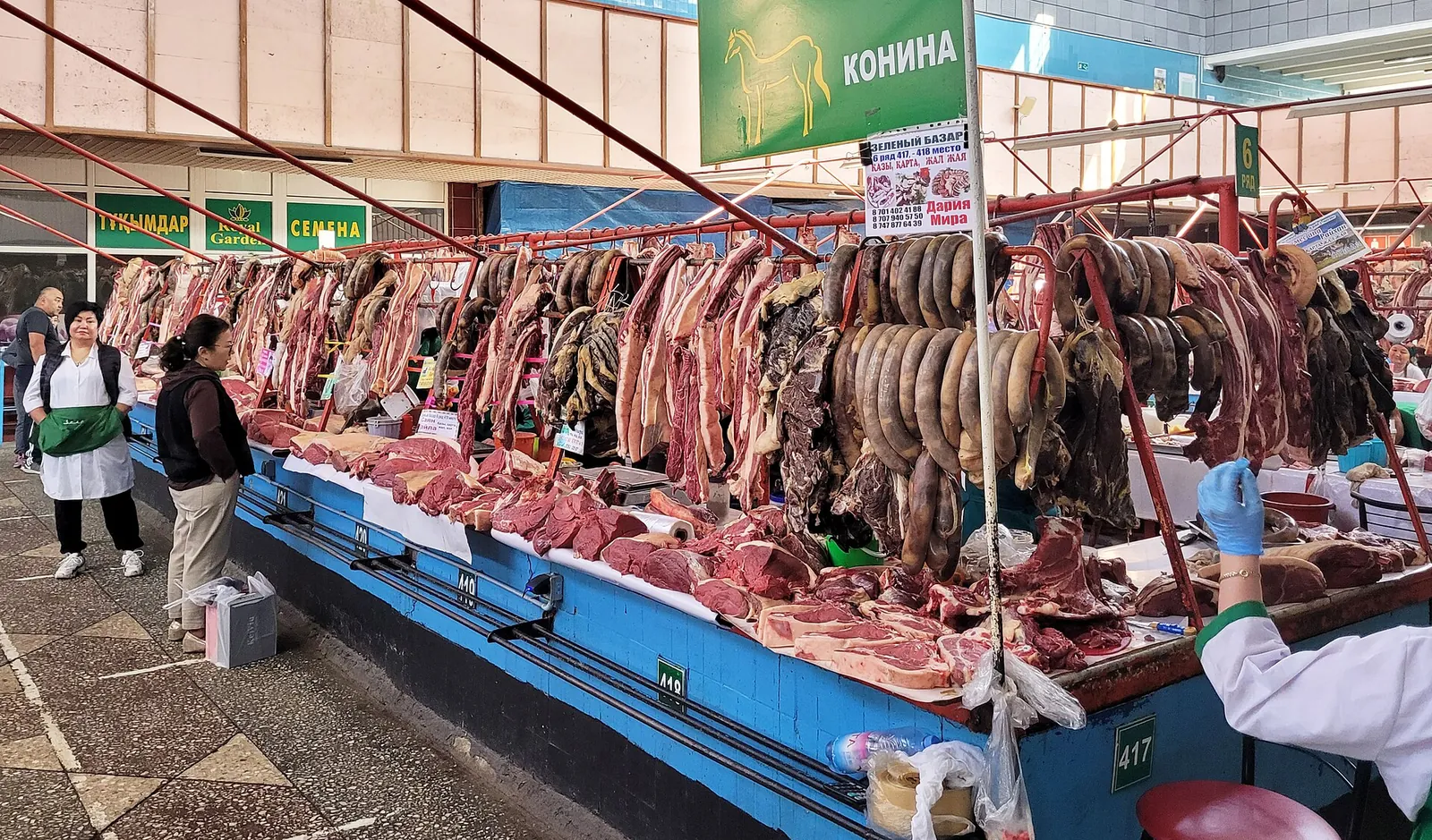
Kazy is a traditional sausage of horse meat, eaten only boiled. Shuzhuk is similar, but made from other cuts rather than rib meat, and zhaya is salted, boiled meat from the horse’s hip, sliced thin as a cold starter. All three appear on any table of national cuisine, and in Almaty Orta, an eatery styled as a village (aul), is known for its shuzhuk. Horse meat is the prized meat of a festive table; if you would rather not eat it, ask for beshbarmak with lamb or beef.
Baursak, kurt and the milk of the steppe
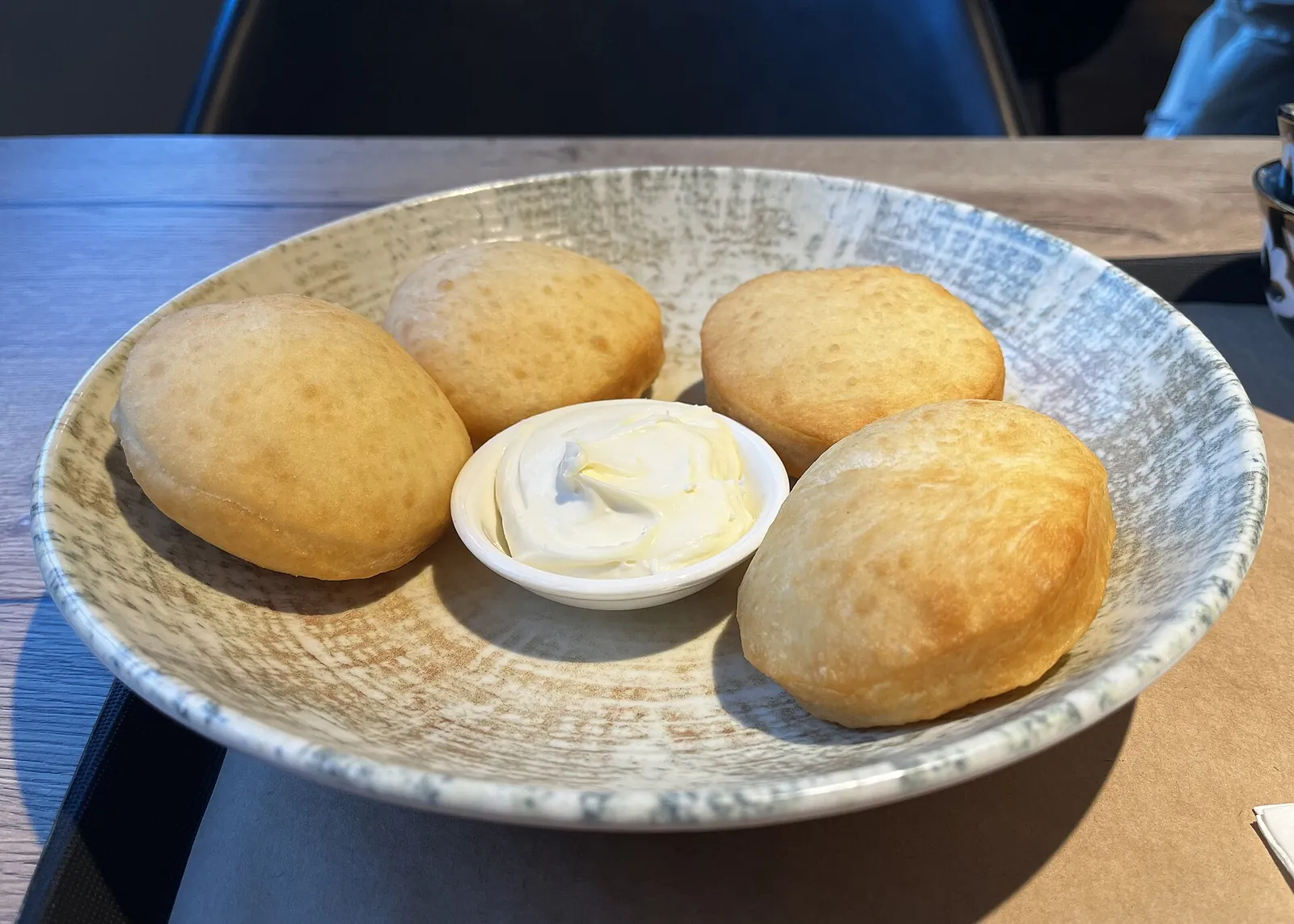
Baursak are pieces of yeast dough fried in hot fat, round, square or triangular, and no Kazakh table, everyday or festive, is without them. They come with tea and with kaimak (cream), jam or honey, and newer kitchens serve them with mousses or caviar; at Navat, 100 grams for the table cost KZT 570 before its 10% service charge. Bauyrdaq, a Kazakh fast-food chain, slices a large baursak in two and fills it with kazy in place of a burger bun; its Almaty branch is in the Palladium residential complex on Adi Sharipov Street.
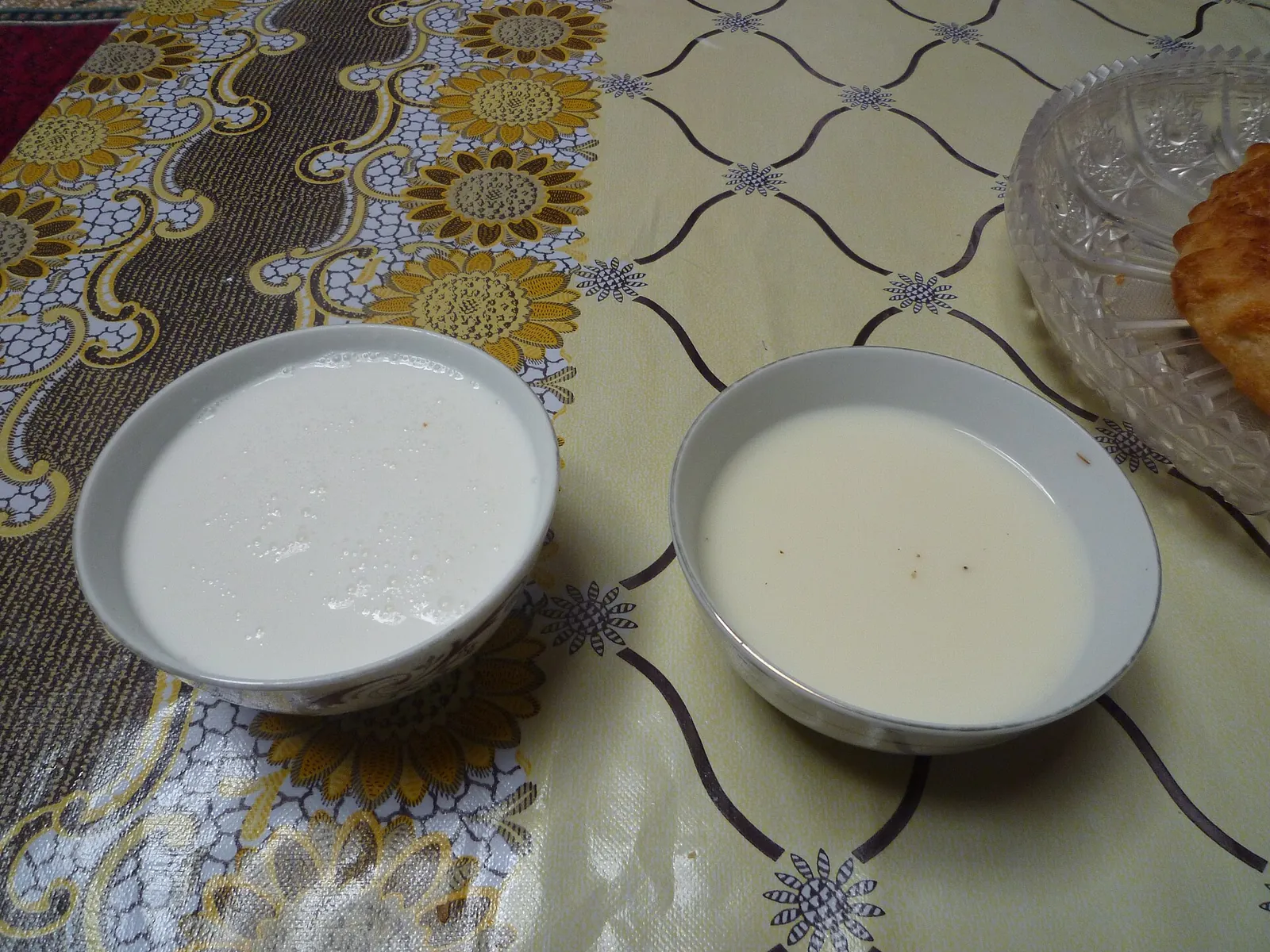
Milk is the other pillar of the kitchen. Kumis is mare’s milk fermented to between 1.5 and 3 per cent alcohol, once in leather skins and now also bottled; shubat is a sour drink of fermented camel’s milk, and ayran is fermented milk. Kurt, small balls of dried salty cheese, once kept for years on the road, now comes soft, hard, smoked or sweet. In Almaty, the Green Bazaar’s dairy stalls sell them alongside meat, dried fruit and spices; in Astana, Visit Astana sends visitors to the farmers’ markets and supermarkets, where kumis stands in the chilled cabinets.
Plov, lagman and the Silk Road table
Kazakhstan shares plov and lagman with its Central Asian neighbours, and Almaty’s restaurants cook both every day. Kishlak, a restaurant of Central Asian cooking on Dostyk Avenue and Seifullin Avenue, seats you under aivan canopies or on low sufa platforms with green tea; its Khan’s plov is cooked with lamb, Lazer rice from Uzbekistan and yellow Uzbek carrots and served with kazy. Navat, a chaikhana chain with a central branch at Dostyk Avenue 48, open 10:00–00:00, is best known for gyuru lagman, noodles stretched by hand and served separately from a sauce of veal and fresh vegetables, at KZT 3,100 for a 350 g portion; kovurma lagman is the fried version, and the bill adds 10% service. One shared lunch for two—two 500 g lagmans at KZT 3,400 each, a salad at 1,750, bread at 590 and a teapot at 1,900—costs KZT 12,144 including service, or 6,072 per person.
The same kitchens serve the dishes Kazakhs eat any day of the week. Kishlak steams small manty filled with meat and juisai, a garlic chive, ten to a portion in a bamboo steamer; at Navat five meat manty cost KZT 3,550. Kuyrdak is chopped lamb, liver, heart and kidneys fried with potatoes, a rich and filling plate: Navat’s 530 g Kazakh-style kuyrdak, with lamb, heart and liver, is KZT 4,700. These Navat menu prices have 10% service added to the bill. Samsa, baked pastries filled with meat, is the snack to take away; Navat’s 100 g meat samsa cost KZT 1,020 each before service, and in Astana Aula, at 56 Kabanbai Batyr Avenue, bakes them in a tandoor and serves its horse-meat beshbarmak in a wooden astau.
Our Uzbekistan food guide explains how plov changes from city to city across the border, which is worth reading if your trip continues to Tashkent.
Apples of Almaty
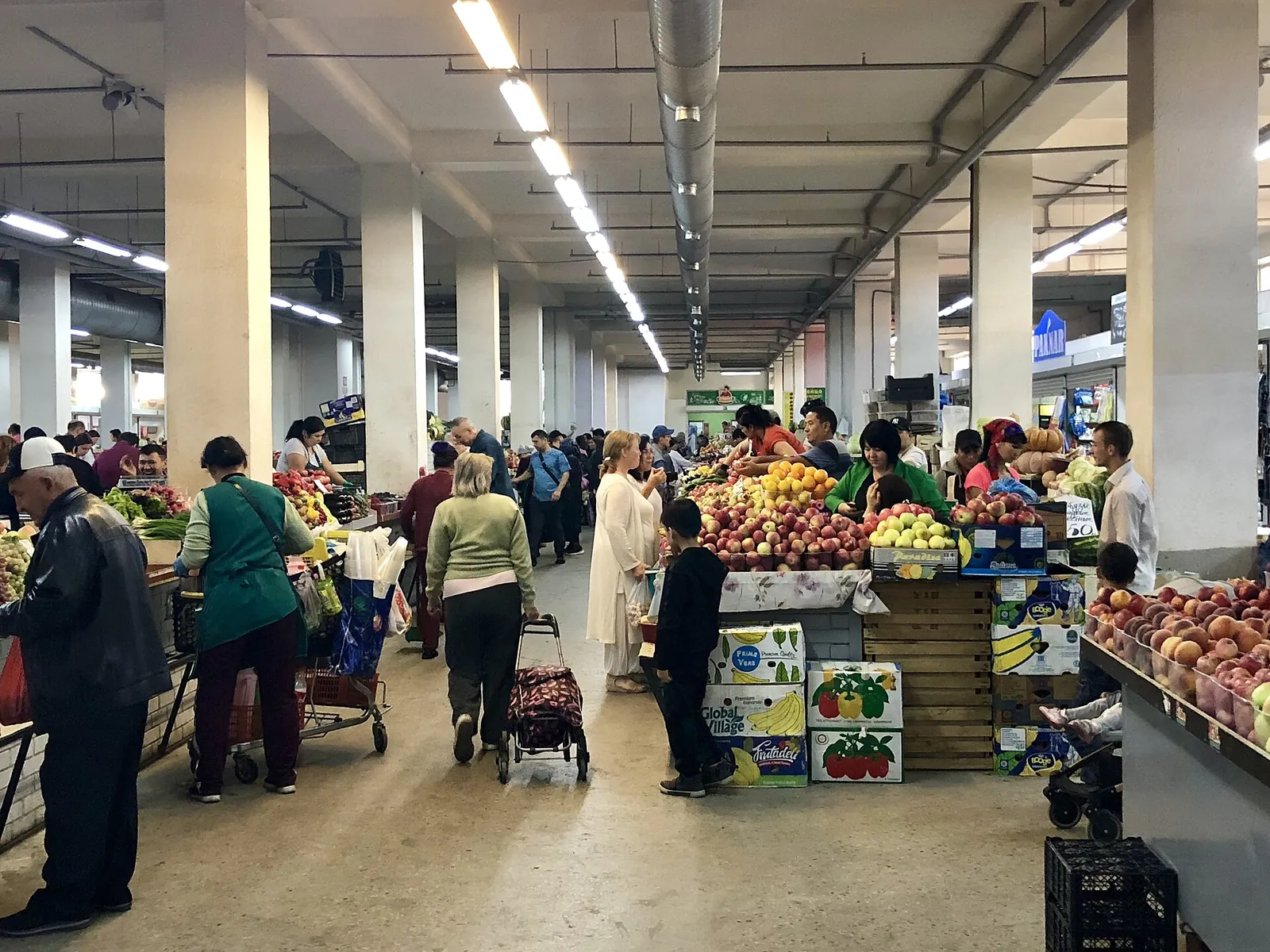
Almaty’s name is tied to apples, and the city’s own apple is the aport: a large red apple whose trees were brought to Vernyi from Russia in 1865, according to Kazinform’s 14 December 2024 report. Almaty’s modern history began with the founding of the Vernyi fort in 1854. Tengrinews’s 18 September 2015 report gave an average fruit weight of 300 to 400 grams and a record of 1.9 kg. Look for aport and other local apples at the Green Bazaar’s fruit stalls, with the dried fruit and nuts sold beside them. Our Almaty guide covers the city around the bazaar.
Where to eat in Almaty and Astana
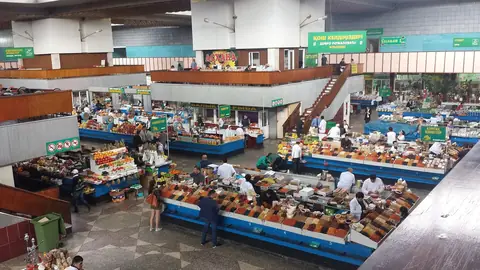
In Almaty, start at the Green Bazaar (Kok Bazar) at 53 Zhibek Zholy Street, open daily from 09:00 to 19:00. Kazakh Tourism describes fresh fruit and vegetables, spices, dried fruit, meat, dairy and traditional Kazakh products under one roof; go in the morning, when the stalls are full, and keep small notes for the dairy and fruit sellers. Then choose a restaurant by budget: Bauyrdaq for a quick lunch at a KZT 2,200 average bill reported by Digital Business on 22 September 2025, Navat for the KZT 6,072 service-inclusive lunch case above, Orta at 5/5 Abylai Khan Avenue for shuzhuk, plov and sweet baursaks at a KZT 7,500 average bill in the same dated report, and Kishlak for beshbarmak, which it also serves on large platters for ten.
In Astana, Visit Astana, the city’s tourism portal, recommends restaurants of high Kazakh cuisine. Qazaq Gourmet, listed with an average bill of KZT 20,000, serves an 11-course tasting menu called Omir alongside beshbarmak, horse meat, lamb and camel. Daididau at 14 Dinmukhamed Konaev Street, about KZT 15,000, cooks meat over an open fire and horse-meat dishes with live Kazakh music, and Arnau at 30 Turan Avenue, also about KZT 15,000, serves home-style national dishes. Sandyq at 34/3 Sarayshyk Street, about KZT 10,000, is a restaurant-museum serving kumis, baursak and meat platters, and QonaQ at 54 Tole Bi Street is an ethno-café with home-made beshbarmak. Saksaul and Arnau also cook fishbarmak, the fish beshbarmak of western Kazakhstan.
Cards are accepted widely in Almaty and Astana, but carry tenge for market stalls.
What to eat and where to look
Beshbarmak
Boiled meat in large pieces over thin sheets of dough cooked in the broth, finished with tuzdyk onion sauce; Kishlak’s version adds kazy and zhaya to the lamb.
- Where to look
- Kishlak, 36 Dostyk Avenue, Almaty (also at 540a Seifullin Avenue).
- Fit it into your day
- Dinner on the first Almaty evening; book a table, and order a platter if you are a group.
Kazy and shuzhuk
Horse-meat sausages, eaten boiled: kazy from rib meat, shuzhuk from other cuts, often served sliced with zhaya.
- Where to look
- Orta, 5/5 Abylai Khan Avenue, Almaty, known for its shuzhuk.
- Fit it into your day
- Lunch or dinner on the second day; an average bill is KZT 7,500 in Digital Business’s 22 September 2025 report.
Baursak
Fried pieces of yeast dough served with tea, cream, jam or honey at every Kazakh table.
- Where to look
- Navat chaikhana, 48 Dostyk Avenue, Almaty, where 100 g cost KZT 570 before 10% service; Bauyrdaq, 100 Adi Sharipov Street, fills a large one with kazy as a burger.
- Fit it into your day
- With a pot of tea after the Green Bazaar.
Lagman
Hand-stretched noodles with meat and vegetables; gyuru lagman comes with a hot sauce, kovurma lagman is fried.
- Where to look
- Navat chaikhana, 48 Dostyk Avenue, Almaty (open 10:00–00:00).
- Fit it into your day
- Lunch: gyuru lagman is KZT 3,100 for a 350 g bowl before 10% service.
Kumis and shubat
Fermented mare’s milk, lightly alcoholic at 1.5 to 3 per cent, and sour fermented camel’s milk.
- Where to look
- Sandyq, 34/3 Sarayshyk Street, Astana; in Almaty, the dairy stalls of the Green Bazaar, 53 Zhibek Zholy Street.
- Fit it into your day
- A small glass with baursak first, before a full bowl: the taste is sharp.
What a day of meals costs
These figures are per person per day and are estimates built on Digital Business’s dated Almaty bills, Navat’s primary menu with its 10% service charge and Visit Astana’s price categories; pound figures use the National Bank rate of 27 October 2026, GBP 1 = KZT 603. Uyut’s Standard room includes breakfast, which lowers the middle food allowance by KZT 2,500 to KZT 13,572; other room rates that include it also lower the food bill, and the Kazakhstan trip cost guide sets food inside a whole-week budget.
- Budget, about KZT 8,000 (about £13): breakfast at a bakery or café (about KZT 1,500), a Bauyrdaq lunch (KZT 2,200), a simple dinner of about KZT 3,000 and tea and water.
- Mid-range, about KZT 16,100 (about £27): breakfast estimated at KZT 2,500, the Navat lunch case at KZT 6,072 including service, and dinner estimated at Orta’s reported KZT 7,500 bill: KZT 16,072 in all; with Uyut breakfast included, the separately paid meals total KZT 13,572.
- Comfort, about KZT 25,100 (about £42) in Almaty: breakfast estimated at KZT 4,000, the KZT 6,072 Navat lunch including service, dinner estimated at KZT 10,000 within Tal’s reported KZT 5,000–10,000 range, and KZT 5,000 for drinks: KZT 25,072 in all. Visit Astana lists Qazaq Gourmet’s average bill alone at KZT 20,000.
Practical questions
Which dish should I try first in Kazakhstan?
Beshbarmak, the national dish of boiled meat over thin dough with an onion sauce. Order it at a restaurant of national cuisine such as Kishlak in Almaty.
Is horse meat common in Kazakhstan?
Yes. Kazy and shuzhuk are horse-meat sausages and zhaya is salted horse meat, and all three appear at festive tables. Beshbarmak can also be made with lamb or beef.
What are kumis and shubat?
Kumis is fermented mare’s milk, with 1.5 to 3 per cent alcohol; shubat is fermented camel’s milk. Both are sold in national restaurants, markets and supermarket chillers.
How much does a day of meals cost in Almaty?
About KZT 8,000 per person on a budget (about £13), KZT 16,100 at sit-down Kazakh restaurants (about £27) and about KZT 25,100 with a smart dinner (about £42).
Keep planning your trip
Almaty
Plan three nights in Almaty: Panfilov Park, the Green Bazaar, Kok-Tobe, Medeu and Shymbulak, the museum and the metro, with fares, hotels and the airport.
Read the guide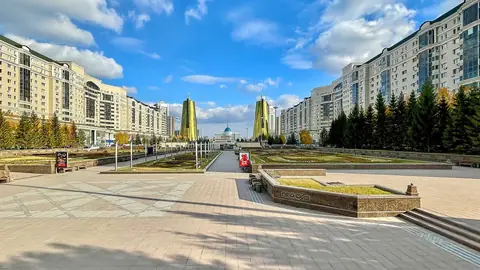
Astana
Plan two nights in Astana: Baiterek, Khan Shatyr, the Palace of Peace, the mosques, the National Museum and Nur Alem, with tickets, hotels, the LRT and costs.
Read the guide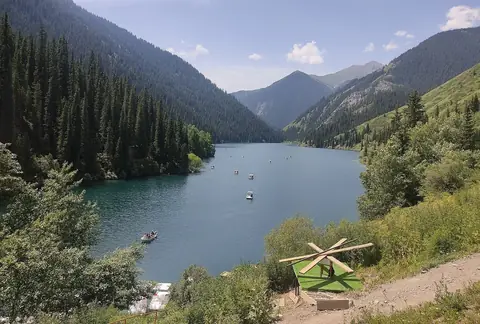
First trip to Kazakhstan
A first week in Kazakhstan from Almaty: Big Almaty Lake, Shymbulak, Charyn and the Kolsai lakes, with entry, money, SIM rules and a daily budget plus one extra lunch.
Read the guide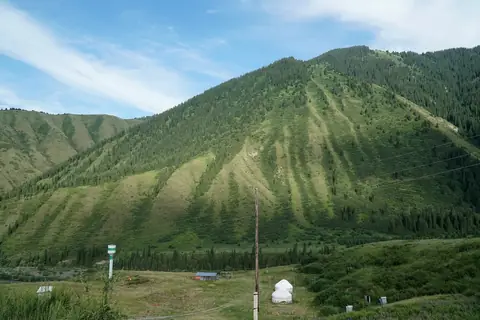
Kazakhstan trip cost
A week from Almaty with Big Almaty Lake, Shymbulak and the Kolsai lakes: about KZT 224,000, 316,000 or 479,000 each, plus one unpriced lunch at Charyn.
Read the guide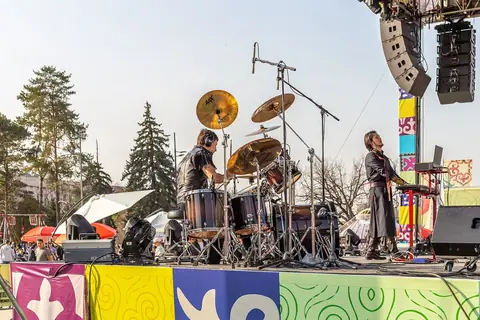
Festivals and events in Kazakhstan
Kazakhstan’s 2027 calendar by month: Nauryz in March, the May holidays, Kurban ait, Astana’s Capital Day, Dombra Day and The Spirit of Tengri in Almaty.
Read the guide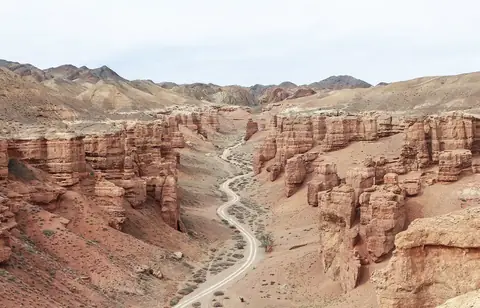
Day trips from Almaty
Big Almaty Lake, Charyn Canyon, the Kolsai lakes and Kaindy from Almaty: access rules, park fees, tour or driver, a night in Saty and journey times.
Read the guideSources and checks before you travel
(21)
- Government of Kazakhstan (Qazalem): national cuisine ↗ — opens in a new tab
- Visit Astana: Astana gastro guide (PDF) ↗ — opens in a new tab
- Visit Astana: Qazaq Gourmet ↗ — opens in a new tab
- Visit Astana: Daididau ↗ — opens in a new tab
- Visit Astana: Arnau ↗ — opens in a new tab
- Visit Astana: Sandyq ↗ — opens in a new tab
- Kazakh Tourism: Green Bazaar ↗ — opens in a new tab
- Kishlak restaurant, Almaty ↗ — opens in a new tab
- Digital Business: where to eat Kazakh food in Astana and Almaty (Russian, 22 September 2025) ↗ — opens in a new tab
- Tengrinews: Almaty aport (18 September 2015) ↗ — opens in a new tab
- UK FCDO: Kazakhstan safety and security ↗ — opens in a new tab
- German Federal Foreign Office: Kazakhstan travel and safety advice ↗ — opens in a new tab
- Almaty Airport: bus services ↗ — opens in a new tab
- National Bank of Kazakhstan: official exchange rates ↗ — opens in a new tab
- Navat: Almaty branches and chaikhana menu ↗ — opens in a new tab
- Visit Astana: Astana gastro guide (PDF), Aula ↗ — opens in a new tab
- Navat Almaty official public menu PDF ↗ — opens in a new tab
- Uyut: Standard room tariff and inclusions ↗ — opens in a new tab
- Almaty akimat: city history ↗ — opens in a new tab
- Kazinform: Almaty aport, 14 December 2024 ↗ — opens in a new tab
- Almaty Airport: official taxi service ↗ — opens in a new tab
Reference sources for the version dated 1 November 2026. Confirm opening times, access, transport and conditions for your travel dates.
Photo credits
(5)
Beshbarmak: boiled meat over sheets of dough, here with potatoes and spring onion
Photograph: NataAllice — opens in a new tab · CC BY-SA 4.0 — opens in a new tab
Changes: Resized and converted to WebP; displayed with responsive crops. · Original photograph and licence details ↗ — opens in a new tab
Baursak, fried dough, served with cream
Photograph: Kurmanbek — opens in a new tab · CC BY-SA 4.0 — opens in a new tab
Changes: Resized and converted to WebP; displayed with responsive crops. · Original photograph and licence details ↗ — opens in a new tab
Shubat, fermented camel's milk (left), and kumis, fermented mare's milk
Photograph: Upyernoz on Flickr — opens in a new tab · CC BY 2.0 — opens in a new tab
Changes: Resized and converted to WebP; displayed with responsive crops. · Original photograph and licence details ↗ — opens in a new tab
The meat hall of the Green Bazaar in Almaty
Photograph: Bgag — opens in a new tab · CC0 — opens in a new tab
Changes: Resized and converted to WebP; displayed with responsive crops. · Original photograph and licence details ↗ — opens in a new tab
Fruit and vegetable stalls at the Green Bazaar
Photograph: Davide Mauro — opens in a new tab · CC BY-SA 4.0 — opens in a new tab
Changes: Resized and converted to WebP; displayed with responsive crops. · Original photograph and licence details ↗ — opens in a new tab