Plan your trip
Kazakhstan entry: visa-free stays, QazETA, registration and customs
Kazakhstan is one of the easier countries in Central Asia to enter: UK and EU citizens need no visa for up to 30 days, and the hotel does the registration. What catches travellers out is the clock, which runs separately for each entry and for any 180 days, the phone rules after 30 days, and a strip along the borders where a permit is needed. This guide takes them in the order you meet them, from booking the flight to crossing overland to Kyrgyzstan or Uzbekistan.
In this guide
Find the location ↗ — opens in a new tabThe short answer
UK and EU passport holders can stay in Kazakhstan without a visa for up to 30 days per entry, and no more than 90 days in any 180; check your nationality and passport type in the official QazETA app. Apply for QazETA, the free electronic travel authorisation, at qazeta.kz at least 72 hours before you enter: it reaches Almaty and Astana airports on 1 January 2027 and every other crossing on 1 March 2027, is voluntary until 30 June 2027 and is mandatory from 1 July 2027. Your hotel registers you within three working days. Six months’ passport validity meets every rule below. Declare cash worth more than USD 10,000 when arriving from outside the Eurasian Economic Union.
- Key point
- Entry planning before you book; up to 30 days per visit without a visa
- Where it applies
- Arrive at Almaty or Astana and let your first hotel register you
- Timing
- The rules apply all year; count the 30 days from the day you arrive, which counts as a full day
Compare all 24 countries: Asia entry requirements at a glance →
Who can enter without a visa, and for how long
The official QazETA app lets you select your nationality and passport type to check the entry rules. Visit Astana, the city tourism authority, lists UK and EU citizens among visitors who can enter without a visa for up to 30 days. Norwegian and Swiss ordinary passports also have visa-free visits of up to 30 days. You may make as many visa-free visits as you like, but you must not spend more than 90 days in Kazakhstan without a visa in any 180-day period.
The day you arrive and the day you leave both count as full days, whatever the time of your flight. For a stay of 31 to 90 days you need a short-stay visa from a Kazakh embassy before you travel, and a visa-free visit never allows paid work. An extension can be requested from the migration police at least a week before the 30 days run out, but it is far simpler to plan the trip to fit the 30 days.
QazETA: the electronic travel authorisation
QazETA is Kazakhstan’s electronic travel authorisation for visa-free visitors, applied for at qazeta.kz or in the QazETA app at least 72 hours before you enter. It is free, valid for 180 calendar days and does not lengthen the 30-day stay or replace a visa. Kazakhstan is introducing it one entry point at a time: from 1 November 2026 at Aktau International Airport and the Urlyutobe, Aukhatty, Atameken and Nurly Zhol road crossings; from 1 January 2027 at Almaty and Astana International Airports; and from 1 March 2027 at all remaining border crossings, Korday and Zhibek Zholy among them.
Until 30 June 2027 it is voluntary but recommended, and nobody is refused entry only for not having one; border officers tell you about it instead. From 1 July 2027 it is mandatory, and arriving without one is grounds for refusal of entry. Apply anyway, whatever your dates: it costs nothing. Use the same passport at the border as in the application. Children under 16, travellers over 65, passengers who stay in the transit area of an international airport, holders of diplomatic or service passports and holders of a Kazakh visa or residence permit are exempt; the full list is on the QazETA portal.
Passport validity depends on your nationality
The minimum depends on your nationality. A British passport must be valid for at least 30 days from the day you arrive and have at least one blank page. German citizens are asked for six months’ validity at entry, and passports that have been extended, or are damaged with a frayed cover or loose pages, can be refused. Six months’ validity in an undamaged passport meets both rules; other nationalities should check their own government’s advice.
Kazakhstan does not recognise dual nationality. Travellers who also hold, or once held, Kazakh citizenship should read their government’s advice before travelling, because entering on a Kazakh passport can bring a fine or the loss of that passport.
Registration: your hotel does it
Every foreign visitor must be registered with the migration police, visa-free visitors included, whatever the length of the stay. The hotel or the person hosting you does it, within three working days of your arrival, and each change of address is registered again. When you check in to a hotel, give it your passport and the registration is done for you. In a private flat or homestay, confirm with the host before you arrive that they will register you, because the fines for missing it fall on them and the trouble falls on you.
Keep the 30 days in view. Overstaying can lead to fines or prison and a court process lasting several weeks, during which you cannot leave, even if a cancelled or delayed flight caused the late departure. Book your departure a day or two inside the limit.
Customs: cash, medicines and electronics
Declare cash worth more than USD 10,000 (about £7,500 at the National Bank rate of 27 October 2026) when you arrive; undeclared money can be confiscated and you can be fined. The declaration covers all currencies and travellers’ cheques, on entry from or exit to a country outside the Eurasian Economic Union. Kyrgyzstan is a member of that union; Uzbekistan is not. You may not take more than USD 10,000 in foreign cash out of the country; a larger declared sum can leave only in tenge.
If you carry a large quantity of medicine, or any medicine classed as a narcotic, check the rules with a Kazakh embassy or the customs service before you travel, and carry your doctor’s letter translated into Russian or Kazakh. Customs can ask for a written declaration when you bring in more than one electronic device, or antiques. On departure, security staff regularly ask travellers to switch on their laptops and other devices, and occasionally to unlock them.
If you fly to Kazakhstan from a country with a risk of yellow fever, you need a certificate of vaccination.
Phones: the 30-day IMEI rule
A local SIM card can work for up to 30 days without IMEI verification. After that the SIM is blocked unless the phone’s IMEI number has been registered on the imei.kz portal, which needs a border-crossing certificate from the QazETA app and a Kazakh individual identification number (IIN), and you cannot then activate another SIM. For a longer trip, use a global eSIM instead. Operators and coverage are in our first-trip guide.
Arriving by air: Almaty and Astana
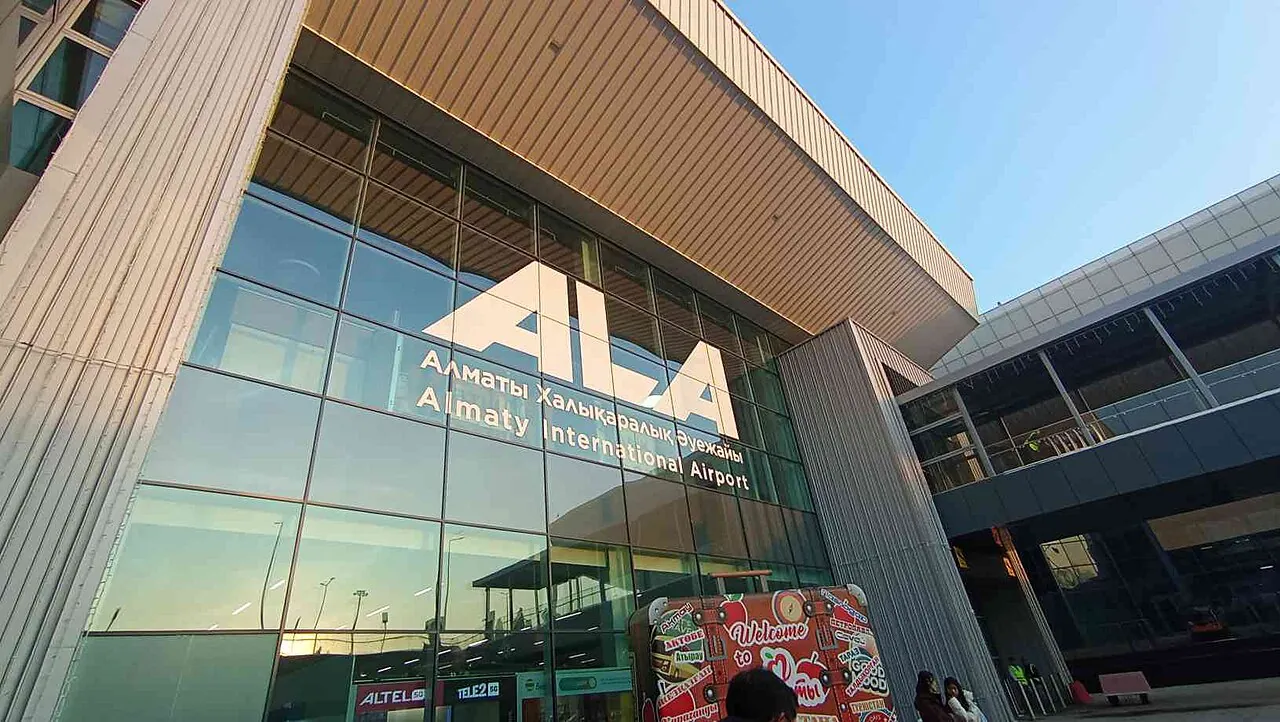
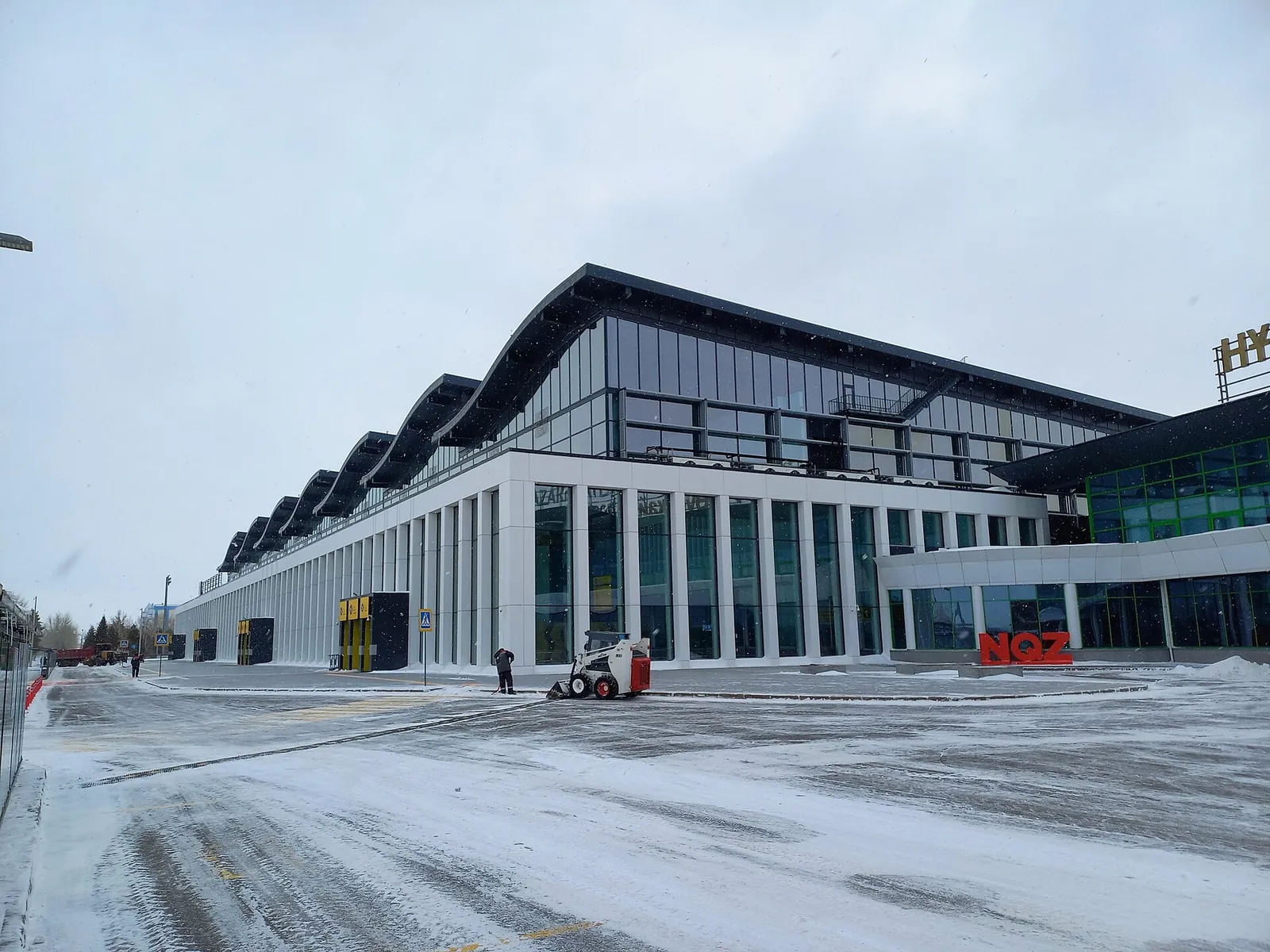
Almaty International Airport (ALA) and Nursultan Nazarbayev International Airport (NQZ) in Astana are the gateways for this route. Your first hotel registers your arrival.
At Almaty, daytime bus No. 92 runs from Terminals 1 and 2 into the city from 06:00 to 23:00 and night bus No. 3 from 23:00 to 06:00, both for KZT 120, paid with an ONAY transport card sold on the first floor of the international arrivals area. Taxi Point, the official taxi service, works around the clock with fixed fares by car category. At Astana, the Tarlan Astana light rail runs into the city; Astana Times reported a KZT 200 launch fare in May 2026, and city buses No. 10 and No. 12 take about 40 minutes to the centre and the railway stations. Our transport guide covers both airports in detail.
Arriving overland from Kyrgyzstan or Uzbekistan
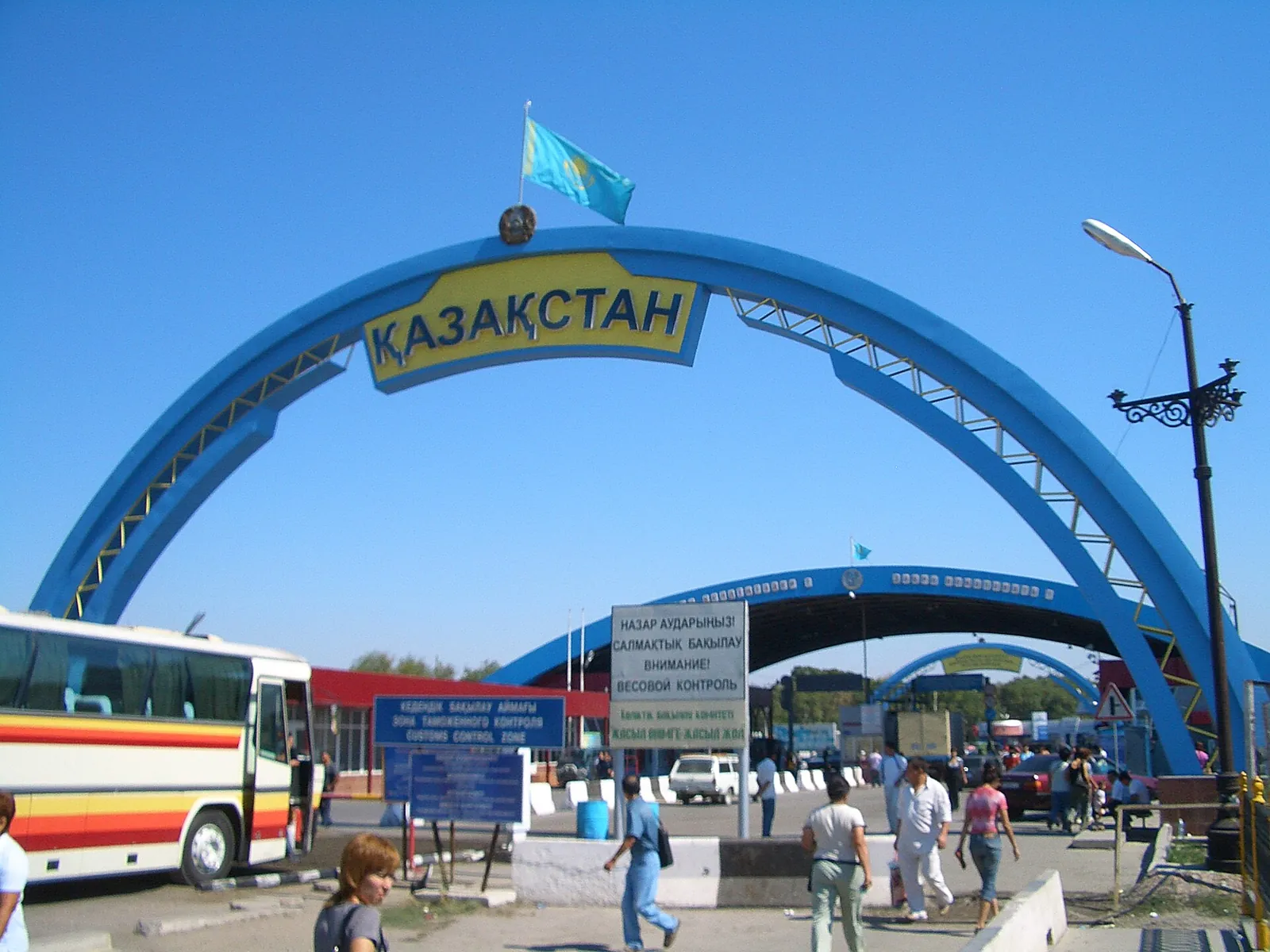
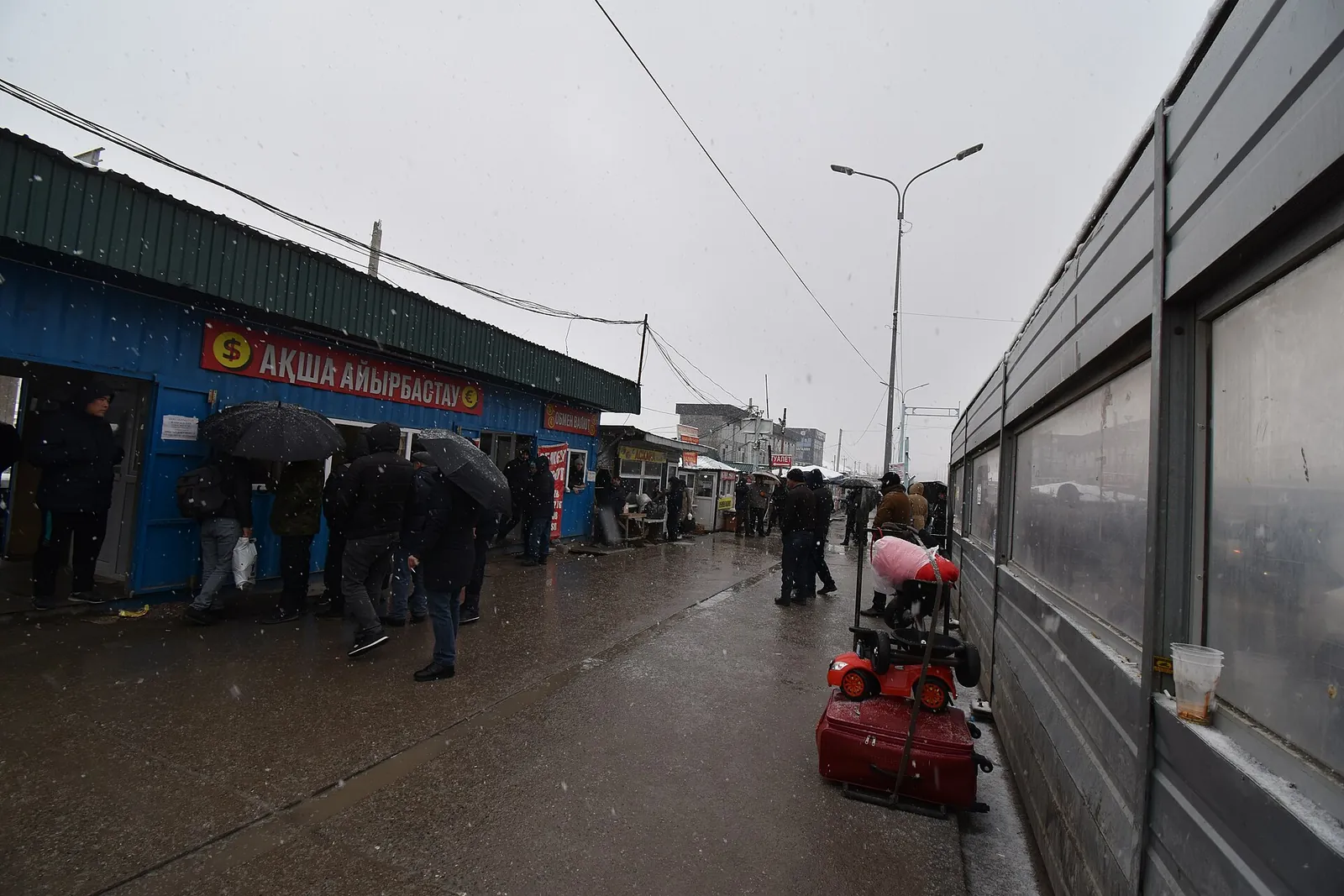
At a land border, the 30 days start on the day you cross and your first hotel registers you. The cash-declaration rule applies when entering from outside the Eurasian Economic Union, including from Uzbekistan; Kyrgyzstan is inside that union. Kazakhstan’s list of international road checkpoints includes Korday, on the road between Bishkek and Almaty, and Karasu, both in the Zhambyl region, on the Kyrgyz border; on the Uzbek border it includes Zhibek Zholy in the Turkestan region, the crossing on the road from Tashkent. Our Bishkek guide and the Central Asia itinerary build these crossings into a route.
Officials in Kazakhstan or the neighbouring countries may close crossing points at short notice, so watch for announcements before an overland day. Travellers driving their own vehicle should know that Kazakhstan, Kyrgyzstan, Russia and Belarus form a single customs union: the customs declaration and temporary import licence must cover the whole stay in all four countries. On entering Uzbekistan, its own rules apply; see our Uzbekistan entry guide.
Border zones, closed areas and photography
Foreigners need a permit (propusk) from the migration police, usually issued in about ten days, for a strip 25 km deep along all of Kazakhstan’s external borders, especially the Chinese border, and for several other listed zones, among them Baikonur, Priozersk and parts of the West Kazakhstan, Karaganda, Kyzylorda and Zhambyl regions. Most of the Almaty region’s sights lie inside the strip, including Big Almaty Lake, the Kolsai Lakes, Charyn Canyon, Lake Alakol, the Medeu rink and the Shymbulak ski resort, but the Kazakh authorities have announced that these sites and their access roads stay open to foreign tourists without a permit. A detour or trek off those routes inside the zone still needs one, so arrange it ahead through your tour operator; the Almaty day-trips guide covers the sites.
Gvardeyskiy village in the Almaty region, the Baikonur cosmodrome and the Karmakchi and Kazalinsk districts of Kyzylorda are closed without prior permission. France formally advises against the areas south of Kurchatov and Semipalatinsk because of radioactivity from Soviet nuclear tests; none of our Kazakhstan routes go near them, and other governments may draw their lines differently, so check your own government’s advice before you book.
Do not photograph military buildings, civil airports, police or soldiers, and take care around government buildings and railway stations; the restrictions apply even where there are no signs, and equipment can be confiscated. Bringing a drone is allowed, but flying one without a licence from the Civil Aviation Committee risks a fine, detention and the loss of the drone. Carry your original passport at all times: the police may ask for it, and copies are not accepted.
Practical questions
Do I need a visa for Kazakhstan as a British or EU citizen?
No, not for up to 30 days per visit, and no more than 90 days in any 180-day period; a longer single stay needs a visa from a Kazakh embassy. Check your nationality and passport type in the official QazETA app.
Is QazETA compulsory?
Not yet. It reaches Almaty and Astana airports on 1 January 2027 and every other crossing on 1 March 2027, is voluntary until 30 June 2027 and becomes mandatory on 1 July 2027, when arriving without one is grounds for refusal of entry. It is free; apply at qazeta.kz at least 72 hours before you enter.
Who registers me in Kazakhstan?
Your hotel or host, within three working days of your arrival. You do not visit the migration police yourself when you stay in a hotel.
How much passport validity do I need?
It depends on your passport: a British passport needs 30 days from arrival and a blank page, a German one six months at entry. Six months in an undamaged passport meets both.
How much cash can I bring without declaring it?
When arriving from outside the Eurasian Economic Union, up to the equivalent of USD 10,000. Declare anything above that, or the money can be confiscated.
Can I use a local SIM card?
Yes, for up to 30 days. After that the SIM is blocked unless the phone’s IMEI is registered on imei.kz, which needs a QazETA border-crossing certificate and a Kazakh IIN; for a longer stay use an eSIM.
Do I need a permit for Charyn Canyon, the Kolsai Lakes or Big Almaty Lake?
No. The Kazakh authorities have announced that these sites and their access roads stay open to foreign tourists without a permit, although they lie in the 25 km border zone; leaving those routes inside the zone needs a propusk arranged ahead.
Can I cross overland from Bishkek or Tashkent?
Yes. Korday is the international checkpoint on the Bishkek–Almaty road and Zhibek Zholy the one on the road from Tashkent. Crossings can close at short notice.
Keep planning your trip
First trip to Kazakhstan
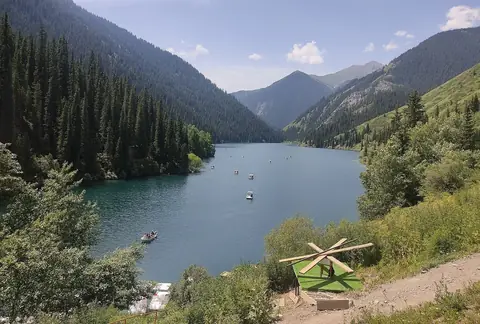
A first week in Kazakhstan from Almaty: Big Almaty Lake, Shymbulak, Charyn and the Kolsai lakes, with entry, money, SIM rules and a daily budget plus one extra lunch.
Read the guide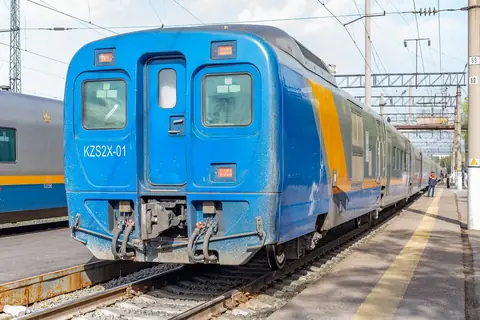
Getting around Kazakhstan
How to get from Almaty and Astana airports into town, ride the Talgo to Astana or Tashkent, use the Almaty metro and taxi apps, and reach Bishkek, Charyn and Kolsai.
Read the guide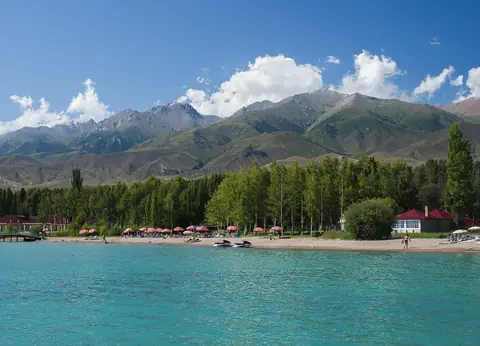
Central Asia in fourteen days
Fourteen days and thirteen nights from Tashkent to Bishkek: Samarkand, Bukhara, Almaty and Issyk-Kul, with trains, hotels and an all-in budget.
Read the guide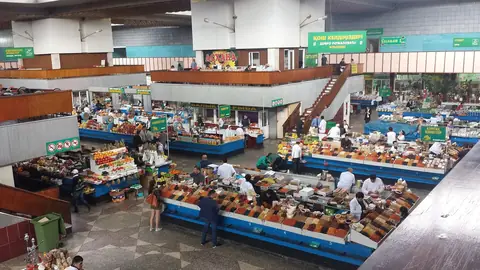
Almaty
Plan three nights in Almaty: Panfilov Park, the Green Bazaar, Kok-Tobe, Medeu and Shymbulak, the museum and the metro, with fares, hotels and the airport.
Read the guide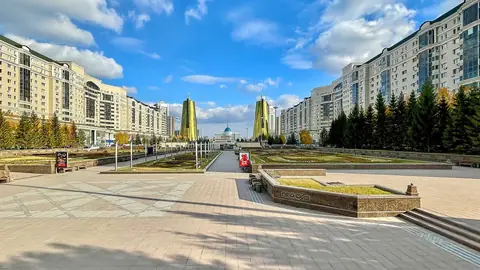
Astana
Plan two nights in Astana: Baiterek, Khan Shatyr, the Palace of Peace, the mosques, the National Museum and Nur Alem, with tickets, hotels, the LRT and costs.
Read the guide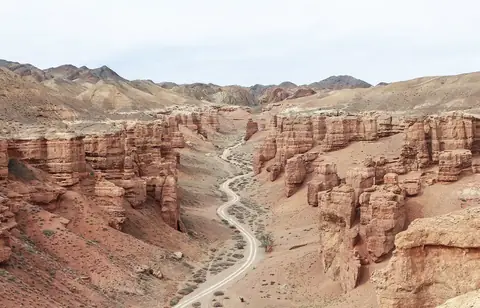
Day trips from Almaty
Big Almaty Lake, Charyn Canyon, the Kolsai lakes and Kaindy from Almaty: access rules, park fees, tour or driver, a night in Saty and journey times.
Read the guideSources and checks before you travel
(15)
- Embassy of Kazakhstan in Finland (MFA): introduction of QazETA (28 October 2026) ↗ — opens in a new tab
- UK FCDO: Kazakhstan entry requirements ↗ — opens in a new tab
- UK FCDO: Kazakhstan safety and security ↗ — opens in a new tab
- German Federal Foreign Office: Kazakhstan travel and safety advice ↗ — opens in a new tab
- France Diplomatie: Kazakhstan entry and stay ↗ — opens in a new tab
- France Diplomatie: Kazakhstan security ↗ — opens in a new tab
- Prime Minister of Kazakhstan: list of border checkpoints (Decree No. 299, Russian) ↗ — opens in a new tab
- Almaty International Airport: bus and taxi ↗ — opens in a new tab
- Visit Astana: information for tourists ↗ — opens in a new tab
- National Bank of Kazakhstan: official exchange rates ↗ — opens in a new tab
- Visit Astana: airport ↗ — opens in a new tab
- Astana Times: LRT launch and fare (12 May 2026) ↗ — opens in a new tab
- France Diplomatie: Kazakhstan travel advice (country page, updated 22 October 2026) ↗ — opens in a new tab
- QazETA: frequently asked questions ↗ — opens in a new tab
- eGov Kazakhstan: visa regime for foreigners ↗ — opens in a new tab
Reference sources for the version dated 1 November 2026. Confirm opening times, access, transport and conditions for your travel dates.
Photo credits
(5)
Terminal 2 at Almaty International Airport, where most international flights arrive
Photograph: YangApinat — opens in a new tab · CC BY-SA 4.0 — opens in a new tab
Changes: Resized and converted to WebP; displayed with responsive crops. · Original photograph and licence details ↗ — opens in a new tab
Kazakhstan's gate at the Korday crossing on the road between Bishkek and Almaty
Photograph: Vmenkov — opens in a new tab · CC BY-SA 3.0 — opens in a new tab
Changes: Resized and converted to WebP; displayed with responsive crops. · Original photograph and licence details ↗ — opens in a new tab
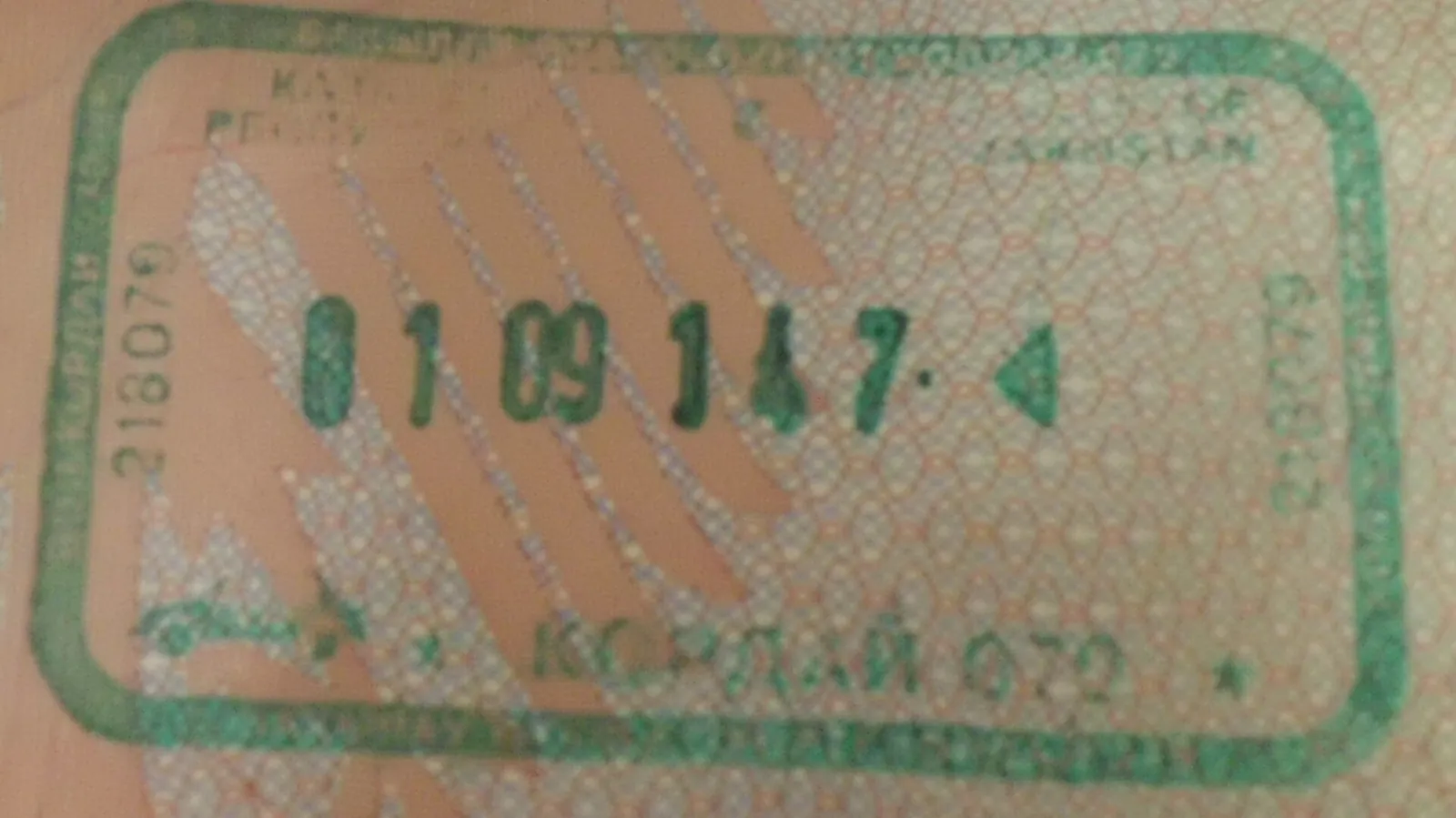
A Kazakh entry stamp from the Korday crossing
Photograph: Hansi91 — opens in a new tab · CC BY-SA 4.0 — opens in a new tab
Changes: Resized and converted to WebP; displayed with responsive crops. · Original photograph and licence details ↗ — opens in a new tab
The international terminal at Nursultan Nazarbayev International Airport, Astana, in March
Photograph: DS28 — opens in a new tab · CC BY-SA 4.0 — opens in a new tab
Changes: Resized and converted to WebP; displayed with responsive crops. · Original photograph and licence details ↗ — opens in a new tab
Exchange booths and taxis at Zhibek Zholy, the Kazakh side of the crossing to Tashkent
Photograph: Fred Cherrygarden — opens in a new tab · CC BY-SA 4.0 — opens in a new tab
Changes: Resized and converted to WebP; displayed with responsive crops. · Original photograph and licence details ↗ — opens in a new tab