Plan your trip
Is Kazakhstan safe? Ticks, taxis, insurance, clinics and the law
Kazakhstan rarely goes wrong for visitors in dramatic ways. What spoils a trip is usually ordinary: a tick picked up on a spring walk above Almaty, a phone lifted in a crowded market, an unlicensed taxi late at night, a sudden change of weather in the mountains, a long drive that runs into the dark. Outside a few private clinics in Almaty and Astana, medical care is below European level, so insurance matters more than usual. So start with the insurance and a travel-clinic appointment, then save the emergency numbers.
In this guide
Find the location ↗ — opens in a new tabThe short answer
Buy insurance that covers all medical costs, air-ambulance evacuation and repatriation before anything else; none of the three governments gives a price for treatment or an evacuation. Save 103 for an ambulance, 102 for the police and 112 for the emergency and rescue service; in Almaty and its mountains the numbers are 109 and 112. Check vaccine advice at least 8 weeks before you fly, and ask about the tick-borne encephalitis vaccine if you will walk in forests, parks or the hills between spring and autumn. Book licensed taxis in advance whenever possible, in Almaty for example through the Yandex Go app. Carry your original passport, do not smoke or vape in public places (a fine of around £90), and refuse to pay if police try to fine you for being in the border zone at Big Almaty Lake, Kolsai or Charyn: these sites are open to all. None of the UK, German or French governments advises against Kazakhstan as a whole; the strictest line is France's, against the areas south of Kurchatov and Semipalatinsk, which no route in these guides goes near.
- Key point
- Start at least 8 weeks before you fly: travel clinic, insurance and saved numbers
- Where it applies
- No base is needed; the advice applies in Almaty, Astana, the mountains and on the road
- Timing
- Ticks are active from early spring to late autumn, around Almaty most of all from April to June; heavy snow can block mountain roads, particularly in autumn and winter, and winter temperatures can fall below -25 °C
Travel advice, and the area these guides leave out
None of the UK, German or French governments advises against travel to Kazakhstan as a whole. The UK Foreign Office names no area to avoid, and Germany's Federal Foreign Office (Auswärtiges Amt) describes the security situation as stable across the country. France places the country in a zone of enhanced vigilance, with one exception: it formally advises against going to the areas south of Kurchatov and Semipalatinsk because radioactivity there from Soviet nuclear tests is particularly high. No route in these guides goes near them, nor near the Baikonur cosmodrome, which Germany advises against entering. Other governments may draw their lines differently, so read your own government's advice before you book.
Some areas, the town of Baikonur among them, are closed to foreigners without prior permission, and a strip along the external borders needs a permit, although the Kazakh authorities have announced that the main sights around Almaty and their access roads stay open without one; our entry guide has the list and the permit rules.
Terrorist attacks cannot be ruled out and could be indiscriminate, including in places visited by foreigners, although Germany rates the risk as low. Be alert in busy places. Demonstrations are allowed only with prior authorisation. Small unauthorised protests happen occasionally, and attending one may put you at risk of arrest. Large demonstrations are rare and closely watched, but France warns that violence, sometimes deadly, can break out, so keep away from any crowd gathering for a protest.
Prices and times checked 8 November 2026
Insurance, clinics and pharmacies
Medical facilities are not as advanced as in the UK, and medical staff do not typically speak English, the UK Foreign Office says. Germany puts medical and dental care below European level: minor illnesses can be treated in the larger cities, and there are now isolated smaller clinics of international standard, mainly in Almaty and Astana, but a serious or long illness is better treated at home. France calls insurance that covers all medical costs, surgery and hospital stays included, plus medical repatriation, imperative; without it you risk having no access to care, even in a life-threatening emergency, and the embassy will not pay. Buy a policy that covers treatment, air-ambulance evacuation and repatriation, and any high-altitude walking you plan, before you book the trip. None of the three governments gives a price for treatment or an evacuation, and American Medical Centres, which sends English-speaking doctors to hotels day or night, publishes no prices on its site.
Pharmacies are not at European standard, Germany says, but as a rule they have enough medicines for uncomplicated illnesses, and basic medicines such as aspirin are sold without a prescription. Bring enough of your own medicines with you, in their original packaging with a prescription that uses the generic names. To buy a prescription medicine in Kazakhstan you need a prescription from a local doctor, or your own prescription translated into Kazakh or Russian. Never take medicines bought in the street, which may be counterfeit. If you travel with prescription medicines, Germany advises carrying a doctor's certificate in English that you need them when you enter; our entry guide has the customs rules for large quantities and narcotic medicines.
The British Embassy's list of medical facilities names private clinics with English-speaking staff. It is for information only, is not exhaustive and does not endorse any provider; these are three in each city:
- Almaty: International SOS Almaty, 11 Luganskogo Street, +7 727 258 1911; International Clinic Interteach Almaty, 275E Nazarbayev Street, +7 727 320 0200; American Medical Centres, 102 Kurmangazy Street, +7 727 983 3000.
- Astana: International SOS Astana, 5th floor, 62A Kosmonavtov Street, +7 7172 476 911; International Clinic Interteach Astana, 1 Kenessary Street, +7 7172 515 300; American Medical Centres, 14th floor, 62A Kosmonavtov Street, +7 7172 919 777.
Prices and times checked 8 November 2026
Emergency numbers to save before you land
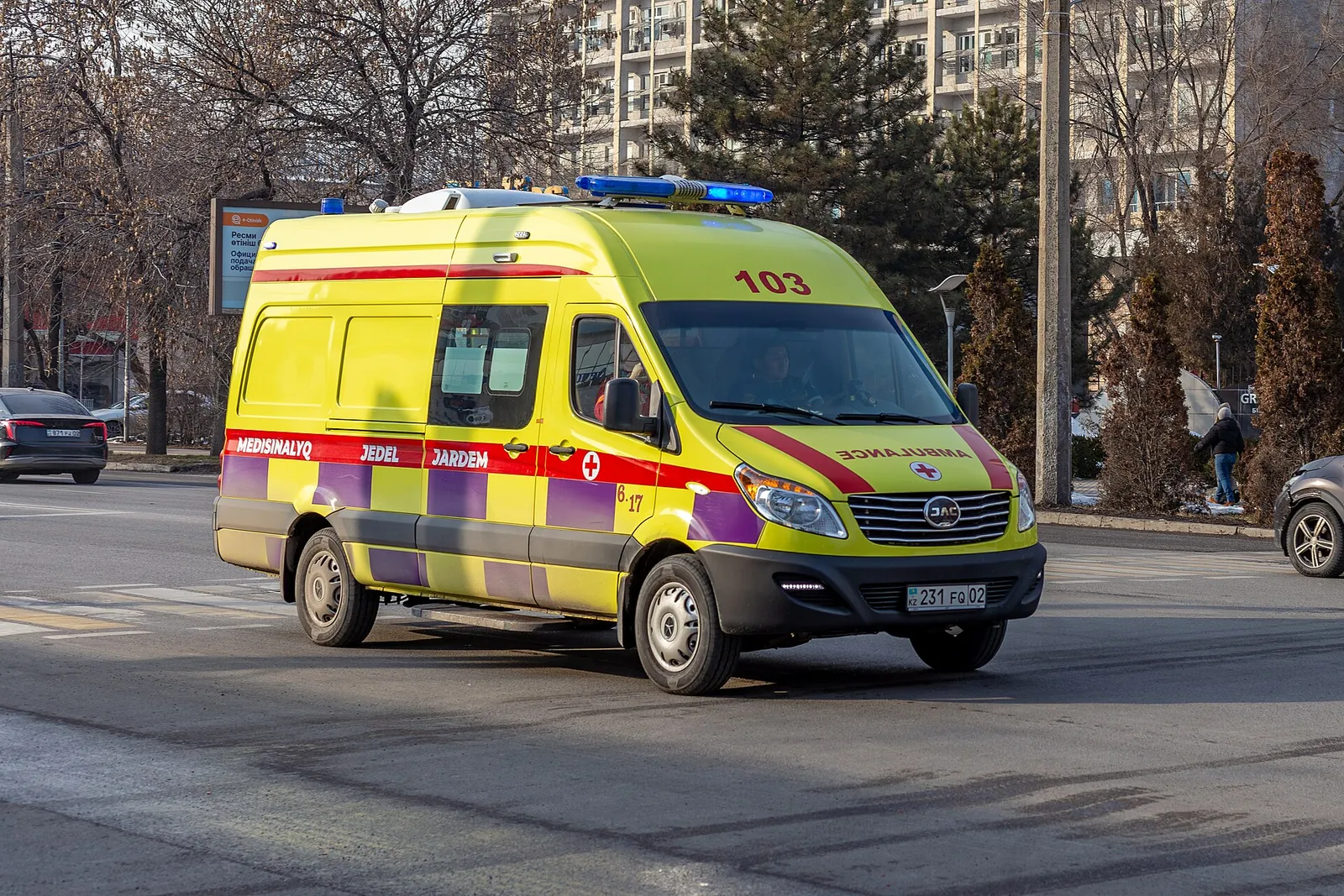
The UK Foreign Office lists these national numbers. When you call 103, ask for an ambulance; the operator may not speak English, and if you are referred to a clinic or hospital, contact your insurer quickly.
- 103: ambulance.
- 102: police.
- 101: fire.
- 112: emergency and rescue service. A local SIM card also receives updates from 112, road closures among them, in Kazakh and Russian; the QazAvtoJol website gives road alerts in English.
- 109 and 112 in Almaty: the city's emergency numbers. Its 24-hour rescue services are based in the Shymbulak gorge and by Big Almaty Lake, patrol the mountain routes, search for missing people and give first aid.
- 020 7008 5000: the Foreign Office in London, around the clock, for friends or relatives in the UK when something has happened to you.
Prices and times checked 8 November 2026
Vaccines, ticks and rabies
Book the travel clinic as early as you can; if time is short, TravelHealthPro, the UK's travel health service, says a later appointment is still worthwhile. It recommends tetanus for most travellers and lists hepatitis A, hepatitis B, measles, rabies, tick-borne encephalitis, tuberculosis and typhoid for some, depending on the trip. Germany recommends hepatitis A, and the US CDC recommends it for unvaccinated travellers aged one or over and hepatitis B for unvaccinated travellers under 60. Make sure your measles, mumps and rubella vaccinations are up to date. There is no yellow fever in Kazakhstan, but you need a vaccination certificate if you arrive from, or transit an airport in, a country with yellow fever risk.
Ticks matter on any walk in forests, parks or open country from spring to autumn. Tick-borne encephalitis occurs in some areas, among them the Almaty, East Kazakhstan, Akmola, Kostanai, Karaganda and North Kazakhstan regions; ticks are most active from early spring to late autumn, and Germany says recent infections were mainly in the north and east. In the Almaty region France finds them particularly numerous from April to June inclusive. TravelHealthPro recommends the vaccine for visitors to those areas whose plans raise the risk, such as walking in forests and urban parks, camping or hiking. Ticks also carry Crimean-Congo haemorrhagic fever, which, like leishmaniasis, occurs in some areas of Central Asia and has no vaccine or medicine to prevent it. Wear light-coloured clothes that cover you and close at the neck, wrists and ankles, put repellent on exposed skin, and check your body after every walk in the countryside or forest. If a tick bites you in the Almaty region, France advises going to an emergency medical centre within 3 days for a preventive immunoglobulin injection, which is free, and then seeing a neurologist.
Rabies is a risk, and dogs infected with rabies are commonly found. Avoid contact with all animals. After a bite or scratch, clean the wound and see a doctor immediately for an urgent assessment. If you will stay in rural or remote areas or travel with young children, ask about the rabies vaccine before you go; France says it may be needed for these trips, and Germany warns that rabies vaccine and immunoglobulin may be unavailable in the country or available only in very limited amounts. Tuberculosis is a risk, and Germany says resistance to the usual tuberculosis drugs is relatively high. TravelHealthPro rates the prevalence of hepatitis B as intermediate or high, so avoid tattoos, piercings and acupuncture unless the equipment is sterile.
Prices and times checked 8 November 2026
Water, food, air, sun and the winter cold
Drink only bottled or sealed drinks, or water you have made safe by filtering or boiling, and take enough water with you on any trip to a remote area. Peel or wash fruit, and avoid raw or undercooked food and cold buffets: poor drinking water, food and hand hygiene cause illness, often with diarrhoea, and hepatitis A and E and typhoid also occur in travellers, although TravelHealthPro rates typhoid as likely low risk where safe food and water are available. Do not eat or drink unpasteurised milk products, and avoid raw dairy and meat of unknown origin: Germany counts about 2,000 to 3,000 brucellosis cases a year in recent years, caught from sick animals or undercooked animal products, and anthrax is passed on by sick hoofed animals.
Air pollution can cause health problems, especially in the large cities. If you have asthma or a heart or lung condition, check the World Air Quality Index before long days outdoors. The sun is intense, and strong sunshine can damage skin and eyes, so protect both, above all in the mountains.
Winters are extreme. Temperatures can fall below -25 °C, often with strong wind that makes it feel colder, and main roads can close in extreme cold, wind and snow. Outside the cities, France advises carrying a spare can of fuel, especially in winter, when temperatures can approach -40 °C: towns are far apart, and filling stations in the countryside are rare.
Mountains, altitude, earthquakes and floods
Altitude sickness can start from 2,500 m, and the classic trips above Almaty reach it: Big Almaty Lake lies at over 2,500 m, and the Shymbulak ski resort lies at 2,200 m to 3,200 m, so its top is above 3,000 m. The lower Kolsai lake, at 1,818 m, stays below the threshold. On a trek, TravelHealthPro advises gaining no more than 500 m of sleeping height a day above 3,000 m, with a rest day every three or four days, and avoiding going from below 1,200 m to above 3,500 m in a single day. Headache, fatigue, loss of appetite, nausea and disturbed sleep are signs of acute mountain sickness: stop climbing, and descend if the symptoms do not improve. Germany adds breathlessness to the warning signs and advises descending at once.
The UK Foreign Office warns of a high risk of avalanches, landslides and rockfalls in the mountains. The weather changes very quickly, heavy snowfall can block roads and routes, particularly in autumn and winter, and snow is possible at altitude even in summer, with a risk of sunstroke and serious sunburn. Mudslides and landslides can occur in the mountains of south-east Kazakhstan. Get insurance that covers high-altitude activity, use a reputable trekking agency, tell someone when you plan to be back, and do not trek alone. In remote areas phone and even satellite coverage can be extremely limited, medical facilities are basic, and in some circumstances the terrain can make it impossible for the emergency services to reach you. Almaty's city authorities have installed 18 refuges in remote mountain areas with first-aid kits and SOS buttons. Our Almaty day-trips guide covers the lakes and canyons.
Several areas are at high risk of earthquakes, and Almaty is in an active seismic zone. France says the risk is mainly in the south, that light and moderate tremors are frequent across the region, and that Almaty, razed twice in the last century, is particularly exposed. The UK also records floods in the north and west in April 2024 and forest fires in the east and grass fires on the steppe in 2023; follow local advice if fire or flood warnings are issued.
Roads, taxis, trains and flights
Road accidents are frequent and deadly: France counts 2,279 people killed on Kazakh roads in 2024, and in remote areas help after an accident can take a long time to arrive. Driving standards are erratic, many cars are not safely maintained and do not have rear seatbelts, and stray animals wander the roads in remote rural areas; in winter, snow, ice and low visibility add to the risk. Germany advises against overland journeys after dark, and France against driving at night, so plan long road trips to end in daylight. Pedestrians need care too, even on zebra crossings. If you drive yourself, British drivers need a 1968 international driving permit, bought before travel, as well as their UK licence, and France warns that any trace of alcohol in the blood can lead to the car being confiscated.
Do not flag down a taxi in the street, and never take an unofficial taxi, by day or night, or one that already has a passenger: use a licensed taxi booked in advance whenever possible. In Astana, official taxis can be called through the Taxi Point service, and Yandex Go, Bolt and inDriver take bookings by app; in Almaty you can order a Yandex Go car from its website or app. France goes further and advises against collective public transport, which it describes as often old and unsafe, and recommends official taxis instead; the UK and German warnings about public transport concern pickpockets in crowds. Our transport guide covers the trains, buses and airport links.
Trains are slow but in good condition, and thieves may target luggage on them, so always lock your compartment on an overnight train; France also advises choosing a compartment that locks for a night journey. No Kazakh airline is on the EU's list of banned airlines, and France advises choosing national airlines with recent fleets for domestic flights. Officials in Kazakhstan or the neighbouring countries may close border crossings at short notice, so watch for announcements if you travel overland.
Prices and times checked 8 November 2026
Crime, scams, nightlife and the laws that catch visitors out
Crime in the centres of Astana, Almaty and Shymkent is low, France says, with many CCTV cameras and a strong police presence. Robberies are uncommon in the cities and the countryside, but they do happen. The UK reports violent thefts in Atyrau and Aktau and in Astana and Almaty, mainly at night in and around nightclubs and bars or when people arrive home late, and France asks for extra care in nightlife areas because of drunk people. Avoid walking alone at night, especially in unfamiliar, deserted or outlying areas, and arrange your transport home in advance. Pickpocketing is very common in crowded places such as markets and on public transport, and foreigners may be targeted. Do not carry all your money and documents in one bag, keep valuables in the hotel-room safe and save photos of your documents, so that they are easier to replace.
Drink spiking is a risk in nightclubs and bars and can lead to sexual assault: never leave a drink unattended, stay with your friends and do not leave with strangers. In Astana, Almaty and other large cities, Germany warns of confidence tricks and fake police checks, and outside the cities there have been isolated reports of police checks with unjustified payment demands; refuse a demand that may be unjustified. France reports that in some cases local police try to fine travellers at Big Almaty Lake, the Kolsai lakes, Charyn, Lake Alakol, Medeu or Shymbulak for being in the border zone: refuse to pay, and point out that these sites are open to all. Be wary of an online contact who asks for money before you meet: Germany warns of romance scams run through social networks and dating sites, also with fake Kazakh identities, where victims are pushed to send money, for example "for a visa". Use cash machines inside banks if possible, check street machines for signs of tampering, and keep your card in sight.
Carry your original passport or driving licence at all times: police checks are frequent and copies are not accepted. Drinking in the street or appearing drunk can get you taken to a police station and fined, or held in a cell overnight. Selling, distributing, importing or producing e-cigarettes, vapes or their liquids is illegal and can bring a fine or up to 2 years in prison, and smoking or vaping is banned in and near public places, including public transport, nightclubs, airports, railway stations and underpasses, with a fine of around £90, more for a repeat offence. Drug penalties are severe: even a small amount, cannabis included, can bring a long prison sentence and heavy fines, also when you only transit the airport. Since July 2025, covering the face in public places such as streets and parks has been punishable, with exceptions in individual cases for health or weather reasons. Overstaying your permitted stay is a criminal offence whatever the reason, a cancelled or delayed flight included, and the case can take weeks, during which you may not leave. Photography near military sites, border areas, airports and some official buildings is restricted even without warning signs, and flying a drone needs a licence from the Civil Aviation Committee.
Same-sex activity is not illegal, but public acceptance of LGBT+ people is limited, especially outside the major cities. A law of 30 December 2025 bans the "promotion" of non-traditional sexual orientation, and Germany says that since March 2026 any public statement, including a post on social media, can be treated as a breach; fines, detention and deportation may follow. Germany adds that attacks, for example on couples showing affection in public, cannot be ruled out.
Prices and times checked 8 November 2026
Practical questions
Is Kazakhstan safe for tourists?
For most visitors, yes, with care. None of the UK, German or French governments advises against travel to the country as a whole, and France describes crime in the centres of Astana, Almaty and Shymkent as low. The common risks are pickpockets in crowds, theft and drink spiking around bars at night, unofficial taxis, fast-changing mountain weather and the roads.
What is the emergency number in Kazakhstan?
Call 103 for an ambulance, 102 for the police, 101 for the fire service and 112 for the emergency and rescue service. In Almaty and its mountains, the city's emergency numbers are 109 and 112. Operators may not speak English.
Which vaccinations do I need for Kazakhstan?
None is required unless you arrive from a yellow fever risk country. TravelHealthPro recommends tetanus for most travellers, Germany and the US CDC recommend hepatitis A, and hepatitis B, rabies, tick-borne encephalitis and typhoid depend on the trip; keep measles vaccination up to date.
Are ticks a problem in Kazakhstan?
From spring to autumn, yes, in forests, parks and open country. Tick-borne encephalitis occurs in the Almaty region and the north and east, and ticks are particularly numerous around Almaty from April to June. After a bite there, France advises a free preventive injection at an emergency medical centre within 3 days.
Can I drink the tap water in Kazakhstan?
Drink bottled or sealed drinks, or water you have filtered or boiled, as France advises, and avoid unpasteurised milk products, which can carry brucellosis.
Are taxis safe in Kazakhstan?
Licensed taxis booked in advance are the safe choice; never take an unofficial taxi or flag one down in the street.
Are there English-speaking hospitals in Kazakhstan?
A few private clinics in Almaty and Astana have English-speaking staff, among them International SOS, International Clinic Interteach and American Medical Centres; elsewhere, staff do not typically speak English. Insurance with medical evacuation is essential, because medical care outside them is below European level, Germany says.
Keep planning your trip
First trip to Kazakhstan
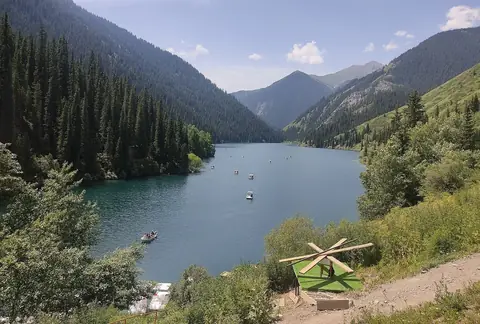
A first week in Kazakhstan from Almaty: Big Almaty Lake, Shymbulak, Charyn and the Kolsai lakes, with entry, money, SIM rules and a daily budget plus one extra lunch.
Read the guide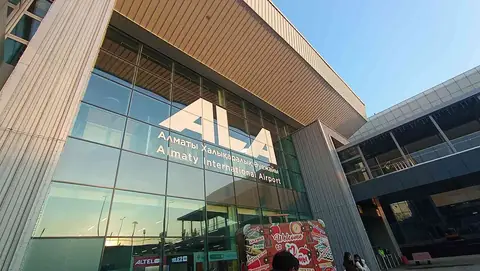
Entering Kazakhstan
How long UK and EU passports can stay in Kazakhstan without a visa, what QazETA is, who registers you, what to declare and which border zones need a permit.
Read the guide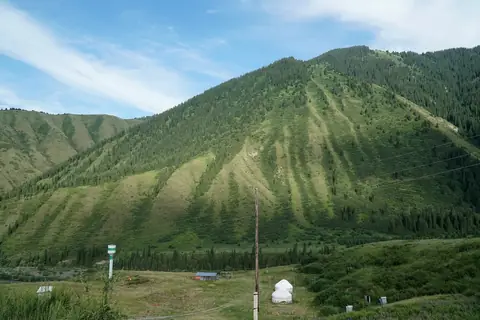
Kazakhstan trip cost
A week from Almaty with Big Almaty Lake, Shymbulak and the Kolsai lakes: about KZT 224,000, 316,000 or 479,000 each, plus one unpriced lunch at Charyn.
Read the guide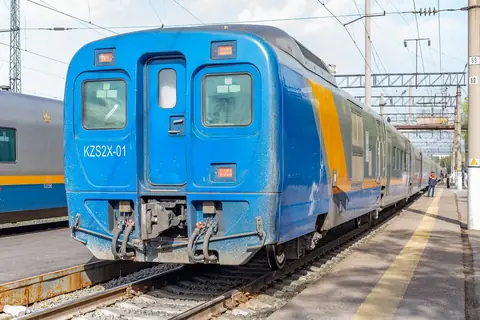
Getting around Kazakhstan
How to get from Almaty and Astana airports into town, ride the Talgo to Astana or Tashkent, use the Almaty metro and taxi apps, and reach Bishkek, Charyn and Kolsai.
Read the guide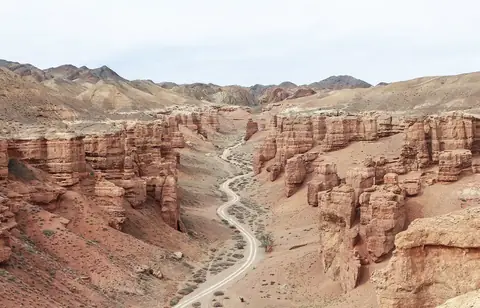
Day trips from Almaty
Big Almaty Lake, Charyn Canyon, the Kolsai lakes and Kaindy from Almaty: access rules, park fees, tour or driver, a night in Saty and journey times.
Read the guide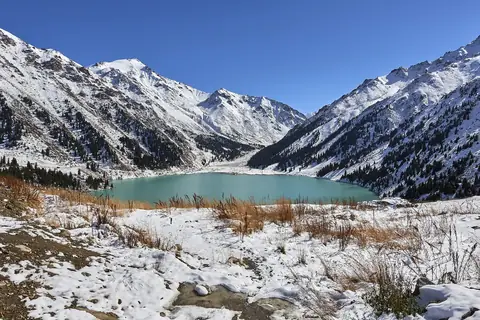
Best time to visit Kazakhstan
When to go to Kazakhstan: Almaty’s mild seasons, the summer window for the Kolsai Lakes, Shymbulak’s ski months, Astana’s hard winter and the holidays that fill trains.
Read the guideSources and checks before you travel
(18)
- UK Foreign Office (GOV.UK): Kazakhstan travel advice ↗ — opens in a new tab
- UK Foreign Office (GOV.UK): Kazakhstan safety and security ↗ — opens in a new tab
- UK Foreign Office (GOV.UK): Kazakhstan health ↗ — opens in a new tab
- UK Foreign Office (GOV.UK): Kazakhstan getting help ↗ — opens in a new tab
- British Embassy (GOV.UK): list of medical facilities in Kazakhstan ↗ — opens in a new tab
- GOV.UK: Kazakhstan list of medical facilities (publication page) ↗ — opens in a new tab
- Germany's Federal Foreign Office (Auswärtiges Amt): Kasachstan, Reise- und Sicherheitshinweise ↗ — opens in a new tab
- French foreign ministry (France Diplomatie): Kazakhstan, sécurité ↗ — opens in a new tab
- French foreign ministry (France Diplomatie): Kazakhstan, santé ↗ — opens in a new tab
- French foreign ministry (France Diplomatie): Kazakhstan, informations utiles ↗ — opens in a new tab
- Visit Astana: information for tourists ↗ — opens in a new tab
- Yandex Go: Almaty taxi tariffs (Russian) ↗ — opens in a new tab
- TravelHealthPro (NaTHNaC): Kazakhstan ↗ — opens in a new tab
- US CDC Travelers' Health: Kazakhstan ↗ — opens in a new tab
- Kazakh Tourism (gov.kz): Kazakhstan's Top 10 Destinations (PDF) ↗ — opens in a new tab
- Kazakh Tourism (kazakhstan.travel): Shymbulak Ski Resort ↗ — opens in a new tab
- e-history.kz: Kolsay Lakes ↗ — opens in a new tab
- American Medical Centers (AMC): home page ↗ — opens in a new tab
Reference sources for the version dated 8 November 2026. Confirm opening times, access, transport and conditions for your travel dates.
Photo credits
(5)
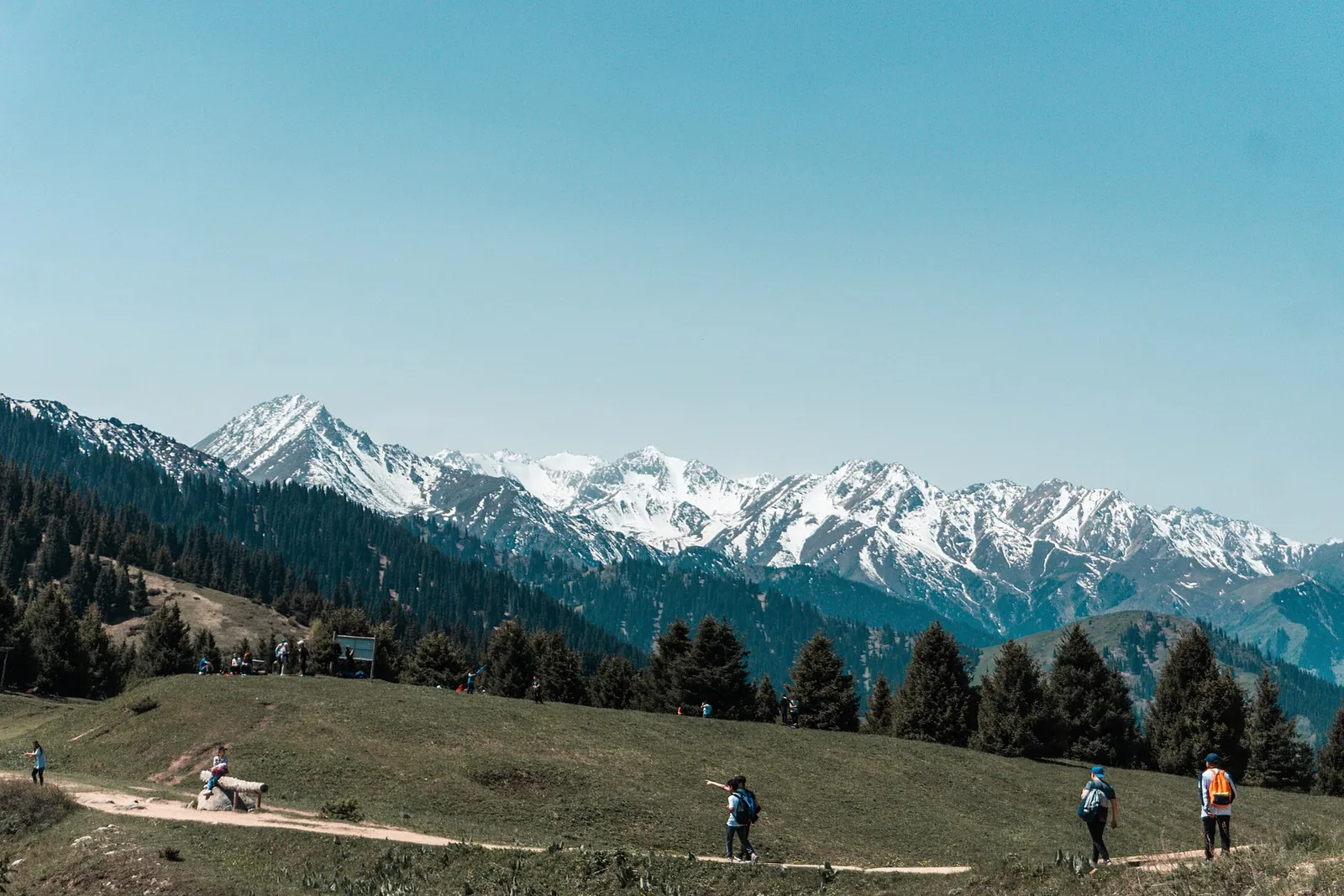
Walkers on the Kok-Zhailau plateau in Ile-Alatau National Park above Almaty in summer, with snow still on the peaks
Photograph: YermuratD — opens in a new tab · CC BY-SA 4.0 — opens in a new tab
Changes: Resized and converted to WebP; displayed with responsive crops. · Original photograph and licence details ↗ — opens in a new tab
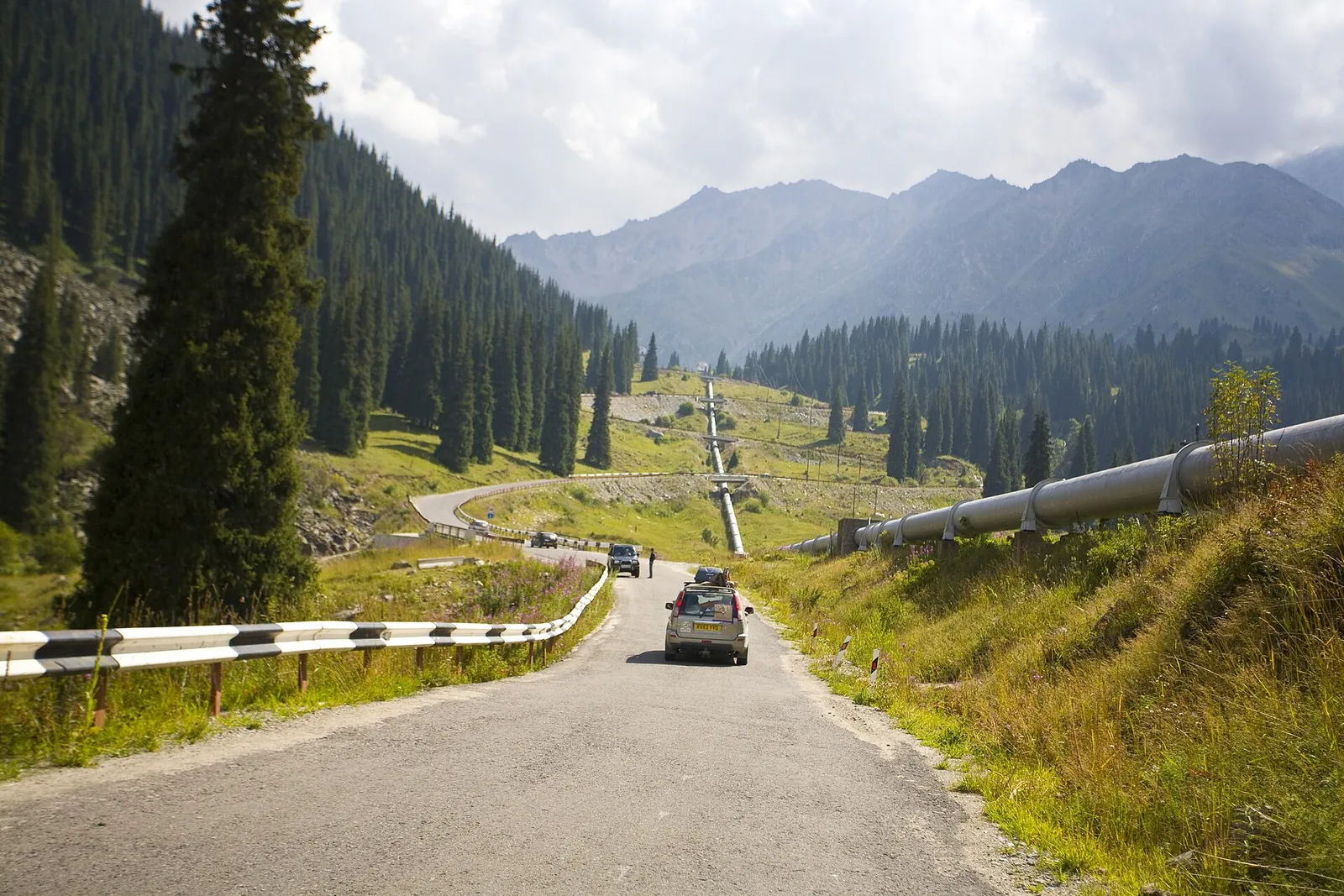
A mountain road climbing through spruce forest in Ile-Alatau National Park, south of Almaty
Photograph: miketnorton — opens in a new tab · CC BY 2.0 — opens in a new tab
Changes: Resized and converted to WebP; displayed with responsive crops. · Original photograph and licence details ↗ — opens in a new tab
An ambulance marked with the 103 emergency number on Tole Bi Street in Almaty
Photograph: Nikolai Bulykin — opens in a new tab · CC BY-SA 4.0 — opens in a new tab
Changes: Resized and converted to WebP; displayed with responsive crops. · Original photograph and licence details ↗ — opens in a new tab
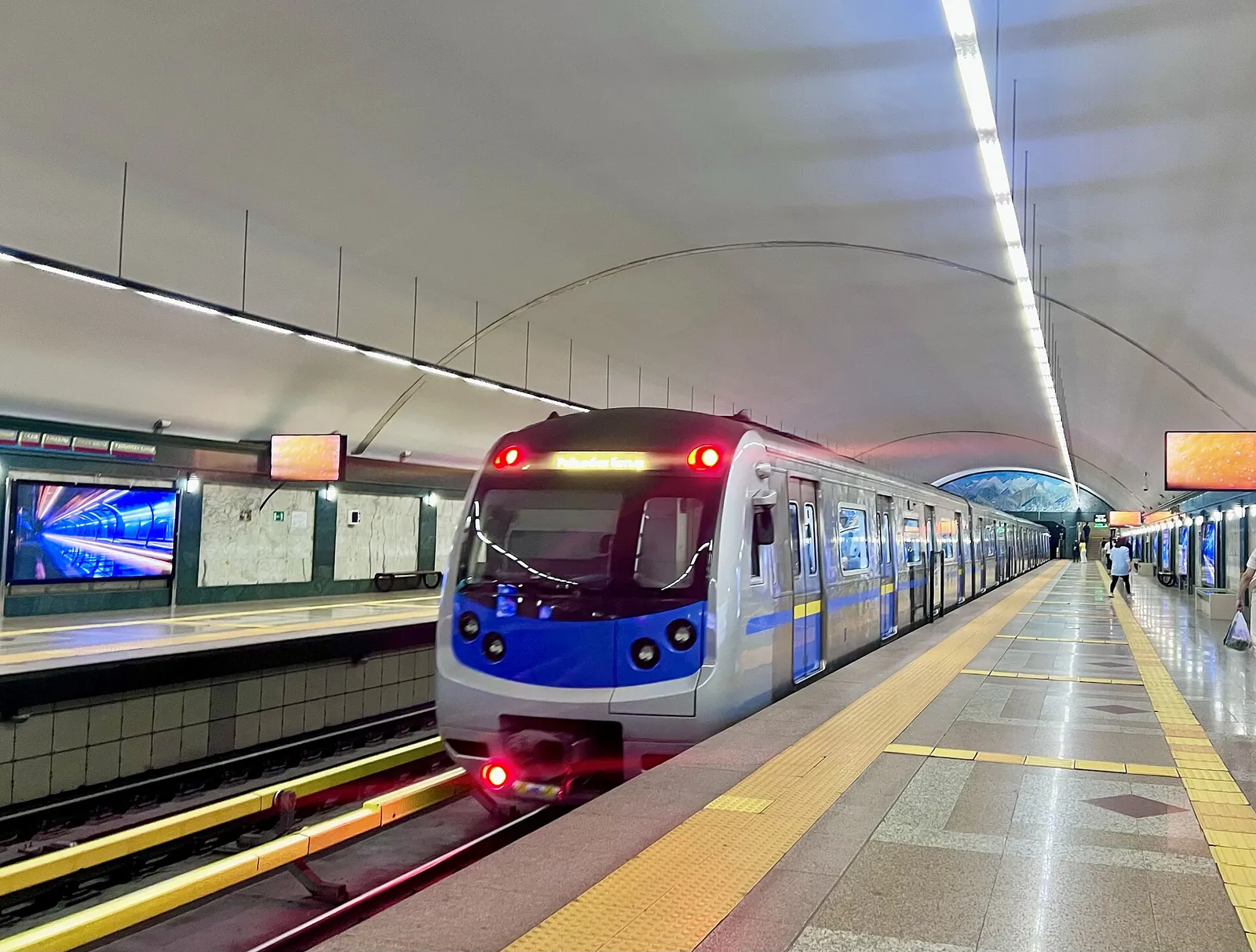
A train at Alatau station on the Almaty metro
Photograph: Sharon Hahn Darlin — opens in a new tab · CC BY 4.0 — opens in a new tab
Changes: Resized and converted to WebP; displayed with responsive crops. · Original photograph and licence details ↗ — opens in a new tab
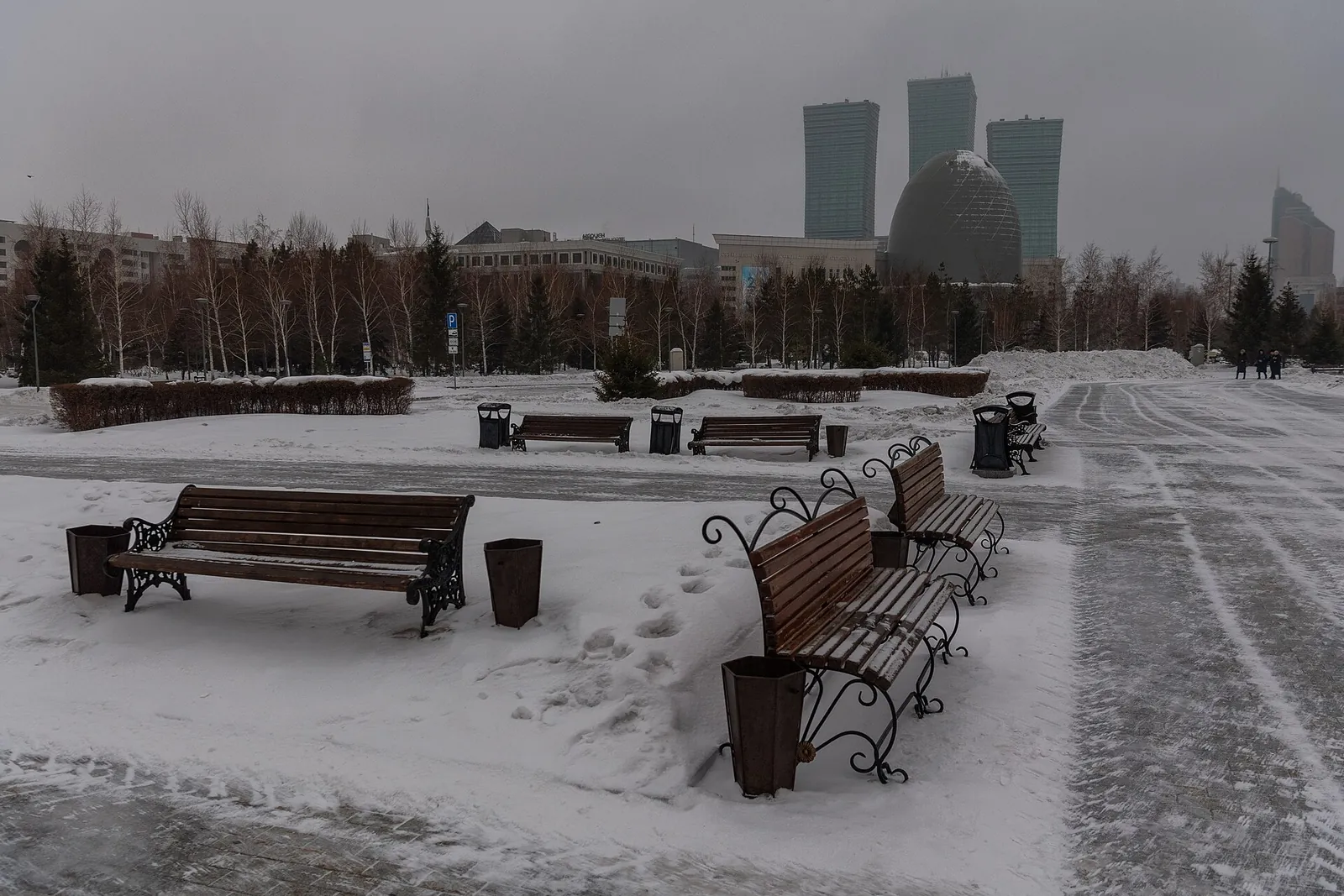
Snow on the benches and paths of a central Astana park in winter
Photograph: Ilya Varlamov — opens in a new tab · CC BY-SA 4.0 — opens in a new tab
Changes: Resized and converted to WebP; displayed with responsive crops. · Original photograph and licence details ↗ — opens in a new tab