Plan your trip
Card or cash in Kazakhstan? Tenge, ATMs, Tax Free and scams
In Astana and Almaty you can pay for almost everything with a card or a phone, from the shopping mall to the light rail from the airport. Cash still has its place: the bazaar stall, the small purchase, the trip into the steppe or the mountains, and the exchange office that wants clean notes and your passport. This guide sets out what the tenge looks like now that new notes are replacing the old ones, where a foreign card works, how to withdraw and change money safely, what the metro and a taxi cost, how the new Tax Free refund works when you fly out, and which payment demands to refuse.
In this guide
Find the location ↗ — opens in a new tabThe short answer
Bring a contactless Visa or Mastercard and some tenge in cash: in Astana and Almaty you can pay by card or phone almost everywhere, while markets, bazaars and small purchases are easier with notes, and remote regions need cash brought as euros or dollars. Kazakhstan's currency is the tenge (KZT). Withdraw from ATMs inside banks if possible, choose to be charged in tenge rather than your home currency, and change money only at banks or authorised exchange offices, with your passport. Two prices: a ride on the Almaty Metro costs KZT 120, and the Tax Free VAT refund starts at a receipt of at least KZT 43,250. Do not plan on paying by Kaspi QR code with a foreign card. No official guidance sets a tipping rate; read the restaurant bill first, as some add a service charge. Declare cash worth more than USD 10,000 when you cross the outer border of the Eurasian Economic Union (EAEU).
- Key point
- Set up before you fly: a contactless card, a second card as back-up, and a check of your bank's fees abroad
- Where it applies
- Applies everywhere in Kazakhstan; cards work best in Astana and Almaty, cash matters most at bazaars and in remote regions
- Timing
- The same all year; the old 10,000-tenge note stays legal tender until June 2027
The tenge: old notes, new notes and the rate
Kazakhstan's currency is the tenge (KZT, written ₸). Notes of 500, 1,000, 2,000, 5,000, 10,000 and 20,000 tenge are in circulation, with coins of 1, 2, 5, 10, 20, 50, 100 and 200 tenge.
The notes are changing. The National Bank is replacing them with a new series in the Saka style: the 5,000-tenge note came out in December 2023, the 10,000 in June 2024, the 2,000 in December 2024, the 1,000 in March 2025 and the 500 in December 2025, and the new 20,000 is due at the end of 2026 or the beginning of 2027. Each new value is 70 mm high and 5 mm longer than the one below it, from 125 mm for the 500 to 150 mm for the 20,000, so you can sort them by length. While the two series circulate together, old and new notes are both legal tender and accepted for all payments.
For the old 10,000-tenge note, that period has been extended to June 2027. When a note's period ends, all banks and Kazpost exchange old notes for new ones for another three years, and the National Bank's branches do so indefinitely, so an old note left over from an earlier trip is not lost.
For a sense of scale, the National Bank's official rate of 8 November 2026 was KZT 598.9 to the pound, KZT 499.54 to the euro and KZT 447.14 to the US dollar, so a 10,000-tenge note is worth about GBP 17. Our Kazakhstan trip-cost guide turns rooms, meals and transport into a daily budget.
Prices and times checked 8 November 2026
Card, cash and tips: what to use where
In the two big cities, a card does most of the work. International bank cards are accepted in Astana, where you can pay by card or phone almost everywhere; in Almaty, too, ATM withdrawals and payment by credit card are possible in many places.
Keep some tenge in notes all the same. For small purchases, and at markets and bazaars, it is better to have some cash.
Away from the cities, cash takes over. For trips to more remote regions, take cash in euros or US dollars and change it into tenge, preferably at a bank. Our first-trip guide to Kazakhstan helps you decide which regions fit into your trip.
No official guidance sets a tipping rate in Kazakhstan, so read the restaurant bill before you tip: some menus already include a service charge. The central Almaty restaurant priced in our trip-cost guide adds 10% for service, and that guide keeps a 10% buffer in its daily budget for snacks, tips and small extras.
Paying by phone and QR codes
In Astana you can pay by phone almost everywhere: Apple Pay, Google Pay and Samsung Pay are accepted alongside contactless cards.
Kaspi, the local banking app, has its own QR codes for paying at the till. No official or bank page we found says whether a foreign card or phone wallet can pay one, or whether a visitor can open a Kaspi account, so pay by card, phone or cash instead.
Prices and times checked 8 November 2026
ATMs: where to withdraw
Visa, Mastercard and UnionPay cards are accepted in Astana, and its ATMs stand in all districts, in shopping malls, in hotels and on the street; in Almaty, too, cash withdrawals are possible in many places. Whether you can withdraw tenge with a foreign debit or credit card depends on your bank, and availability and fees may vary. No Kazakh bank tariff we found gives a fee or limit for cards issued abroad, so check with your own bank before you fly.
When an ATM or a card terminal offers to charge you in your home currency, decline and choose tenge. That offer, dynamic currency conversion, includes an exchange rate and additional fees; the ATM or shop should give you the choice and must not make it for you, and declining does not stop the payment or the withdrawal.
Choose the machine with care: use ATMs inside banks if possible, check machines on the street for signs of tampering, and keep your card in sight when you pay in shops and restaurants.
Withdraw in Almaty or Astana before you head for the mountains or the steppe. For scale, our Kazakhstan trip-cost guide budgets about KZT 32,000 to 68,000 a person a day for a week based in Almaty, with rooms, a lakes tour, meals and transport included; take tenge for the days you will spend away from card terminals, and carry a second card in a different pocket in case the first is refused.
Changing money: banks, exchange offices and old dollars
Change money only at banks or officially authorised currency exchanges, and bring your passport: you will be asked for it. Dollars, euros and other currencies can be changed at banks, exchange offices and at the airport. In Astana the rate is usually roughly the same everywhere, but in the city centre it may be a little more favourable; there is a currency exchange in Astana airport if you need cash on arrival.
Bring clean, recent notes. Official exchange booths may not accept damaged or marked notes, or US dollars issued before 2013, so leave the older dollar notes at home. Count the tenge at the counter before you leave it.
Metro, buses and taxis: fares and how to pay
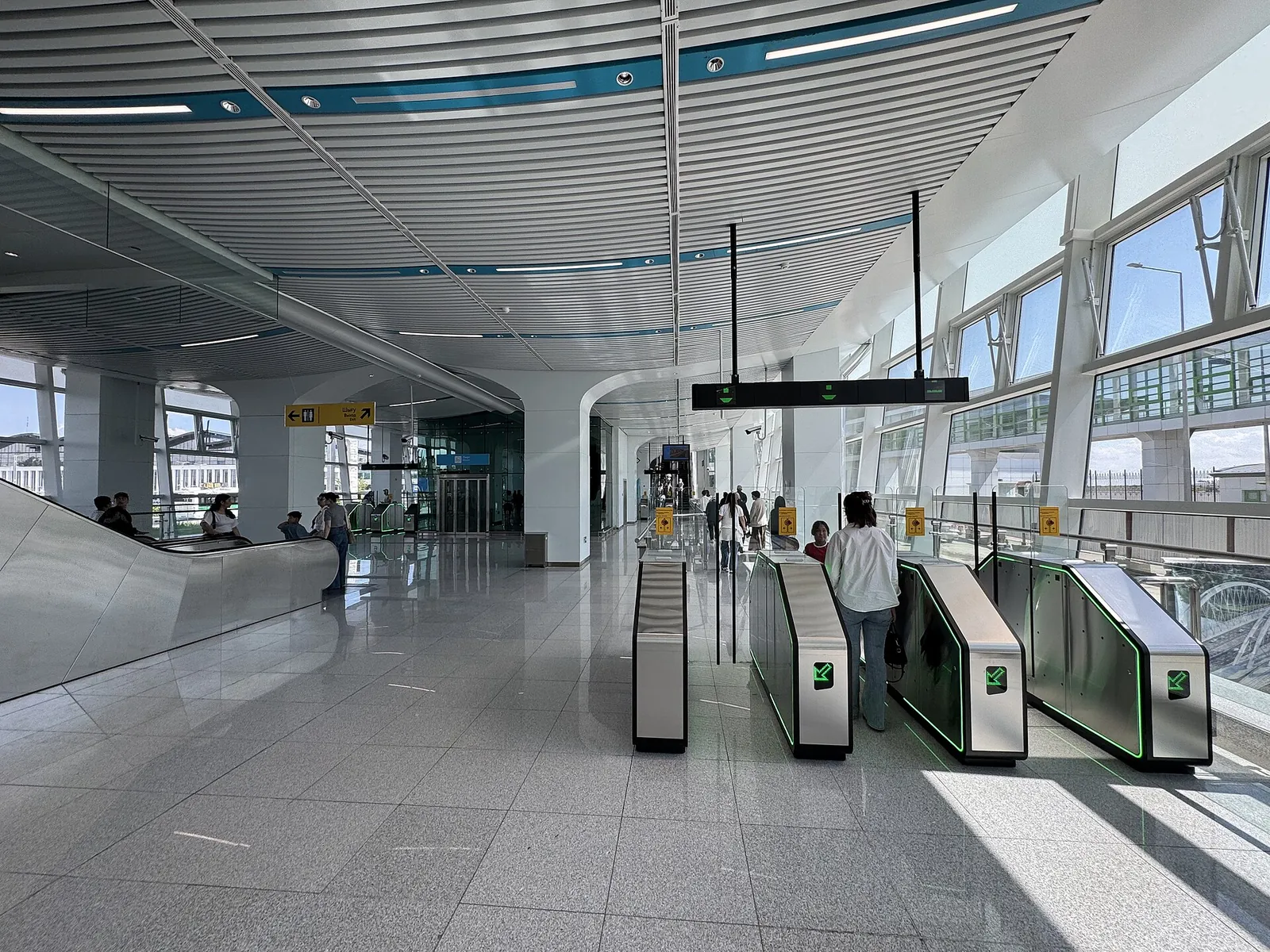
Astana's city buses take an Astra Plat transport card or a contactless bank card. The same two work on the Tarlan Astana light rail from the airport, which runs every 5 to 7 minutes; Astra Plat cards are sold at the airport. A taxi from the airport, ordered through Yandex Go, Bolt or inDriver, takes 20 to 25 minutes to the centre and costs from KZT 2,000.
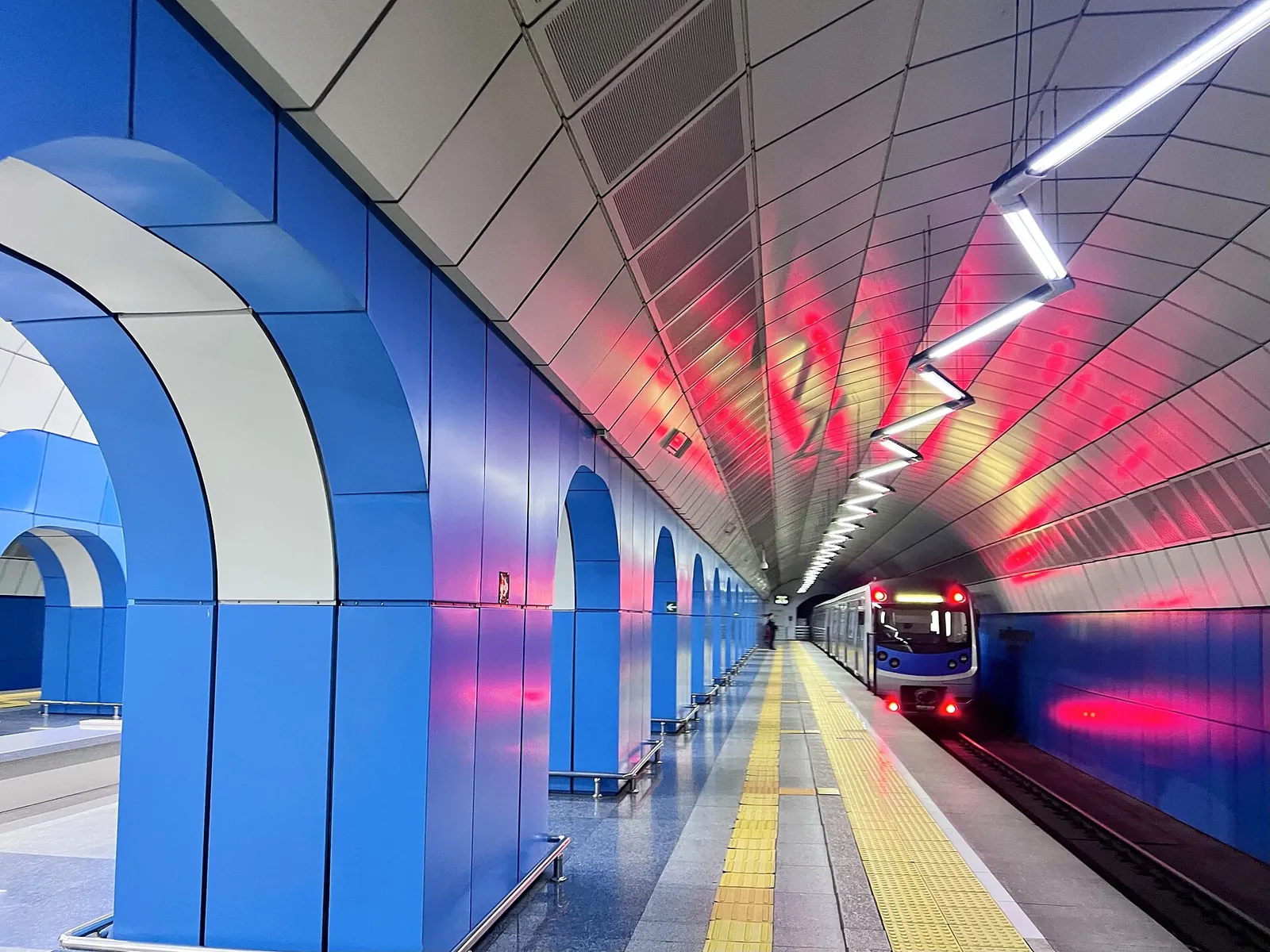
On the Almaty Metro, a ride costs KZT 120. The ticket offices take both cash and cards, and bank cards are read at a POS terminal; Onay transport cards work too. A smart token costs KZT 120 and is valid for one day; a reusable smart card costs KZT 180, and each trip on it costs KZT 120. Almaty's city buses and trolleybuses charge the same KZT 120 and have taken no cash since 3 August 2024: pay with an ONAY card, by text message or in the transport app. Our Kazakhstan transport guide covers the routes and the airport buses.
For taxis, do not flag a car down in the street: order a licensed taxi in advance, whenever possible, to avoid an unlicensed car or an inflated fare, and avoid unofficial taxis, day or night, because of the risk of assault or swindling. The transport guide lists the taxi apps and the official airport taxis.
Prices and times checked 8 November 2026
Fake police checks, false fines and pickpockets
Some payment demands are not real. Pickpocketing, robbery, trickery and fake police checks can occur in Astana, Almaty and other large cities, and outside the cities there have been isolated reports of police checks with unjustified demands for payment. Turn down any demand that may be unjustified.
One case is specific to the area around Almaty. Big Almaty Lake, Kolsai, Charyn, Alakol, Medeu and Shymbulak stay open to foreign tourists without a permit, yet in some cases local police have tried to fine travellers there. If that happens, refuse to pay the fine and point out that these sites are open to all. The permit zones elsewhere are covered in our Kazakhstan entry guide.
Pickpocketing is very common in crowded places such as markets and public transport. Pay by card where you can and go out with only the day's cash, split from your papers rather than in one bag, and without eye-catching jewellery; leave the rest in a safe place such as the safe in your room, and keep your phone and wallet out of view at the bazaar and on a full bus.
Tax Free refunds and cash at the border
Foreign tourists can get part of the VAT back on shopping. Under a pilot scheme set up in June 2026, visitors who are not citizens of an EAEU member state can claim a partial VAT refund on goods they take out of the EAEU when they leave. It applies in stationary shops in 16 cities, including Almaty, Astana and Shymkent, and in the village of Burabay, to non-food goods on a receipt of at least 10 MCI, the monthly calculation index, which is KZT 43,250 in 2026 (about GBP 72).
Show your passport when you buy, and ask for the Tax Free document on the same day: the seller generates it from a till receipt that shows the VAT separately, on paper or electronically. Food and drinks, medicines, used goods and goods for commercial use are excluded. The accredited operator, IT Analytics (taxfree.kz), gives up to 16% of the purchase price as the most you can get back. Its commission, including the bank's, is counted on the VAT, not on the price: no more than 20% of the VAT confirmed for refund, so of KZT 10,000 of VAT confirmed, at most KZT 2,000 goes to the operator.
The goods must leave through an international airport of Kazakhstan, in their original packaging. Arrive early, and before departure show the inspector the goods, your passport, your boarding pass and the Tax Free QR code. If you fly home through another EAEU country such as Russia, Belarus, Armenia or Kyrgyzstan, your final destination must be outside the EAEU. The refund goes to a Visa or Mastercard card from 14 days after the export is confirmed, with 30 to 45 days as the standard period.
Declare cash or traveller's cheques worth more than USD 10,000, in any currency, when you enter from or leave for a country outside the EAEU; undeclared money may be confiscated and you may be fined. You may not take out more than USD 10,000 in foreign cash; a larger declared sum may only leave in tenge. Our entry guide has the other customs rules.
Prices and times checked 8 November 2026
Practical questions
Can I pay by card everywhere in Kazakhstan?
In Astana and Almaty, almost: international cards are accepted, and you can pay by card or phone, including Apple Pay, Google Pay and Samsung Pay, almost everywhere in Astana. For remote regions, bring euros or US dollars in cash.
Are the old tenge notes still valid?
Yes, while they circulate alongside the new Saka-style notes: both are legal tender for all payments. The old 10,000-tenge note stays in circulation until June 2027; after a note's period ends, banks and Kazpost exchange it for three more years and the National Bank's branches indefinitely.
Can I withdraw tenge with a foreign card?
Depending on your bank, yes: Visa, Mastercard and UnionPay are accepted in Astana, which has ATMs in all districts, and cash withdrawals are possible in many places in Almaty. Availability and fees may vary, so check with your bank before you travel. Use ATMs inside banks if possible, and when the machine offers to charge you in your home currency, choose tenge.
Should I tip in Kazakhstan?
No official guidance sets a tipping rate. Read the restaurant bill first: some menus already add a service charge, such as the 10% at the central Almaty restaurant priced in our trip-cost guide.
Where can I exchange money in Kazakhstan?
At banks or officially authorised exchange offices, including the one at Astana airport, with your passport. Exchange booths may not accept damaged or marked notes, or US dollars issued before 2013.
How does the Tax Free refund work in Kazakhstan?
If you are not a citizen of an EAEU country, buy non-food goods worth at least KZT 43,250 on one receipt in a participating shop, show your passport and get the Tax Free document the same day. Before your flight out of a Kazakh international airport, show the goods, passport, boarding pass and Tax Free QR code to the inspector. The refund, at most 16% of the price by the operator's own figure, goes to your Visa or Mastercard card, usually within 30 to 45 days; the operator keeps a commission of no more than 20% of the VAT.
What should I do if police ask me to pay a fine?
Turn down any payment demand that may be unjustified: fake police checks can occur in Astana, Almaty and other large cities. At Big Almaty Lake, Kolsai, Charyn, Alakol, Medeu and Shymbulak, which are open to foreign tourists without a permit, refuse to pay such a fine and point out that the sites are open to all.
Keep planning your trip
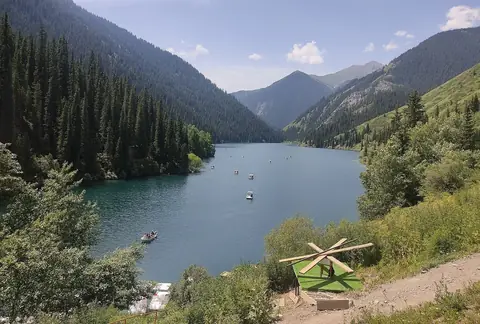
First trip to Kazakhstan
A first week in Kazakhstan from Almaty: Big Almaty Lake, Shymbulak, Charyn and the Kolsai lakes, with entry, money, SIM rules and a daily budget plus one extra lunch.
Read the guide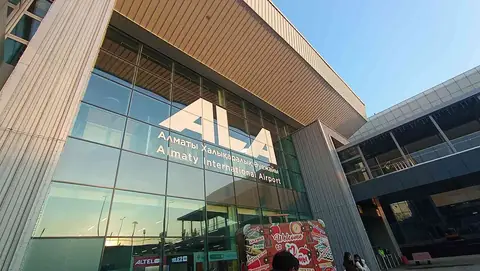
Entering Kazakhstan
How long UK and EU passports can stay in Kazakhstan without a visa, what QazETA is, who registers you, what to declare and which border zones need a permit.
Read the guide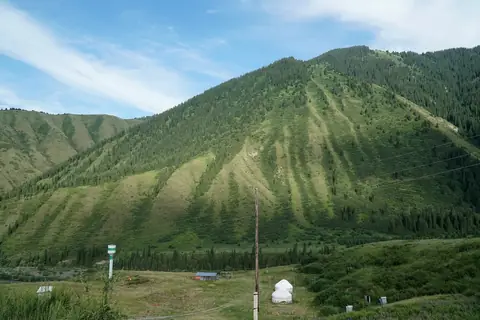
Kazakhstan trip cost
A week from Almaty with Big Almaty Lake, Shymbulak and the Kolsai lakes: about KZT 224,000, 316,000 or 479,000 each, plus one unpriced lunch at Charyn.
Read the guide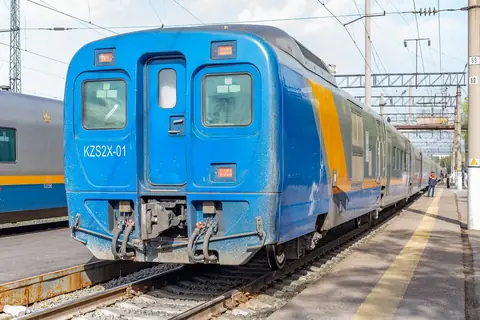
Getting around Kazakhstan
How to get from Almaty and Astana airports into town, ride the Talgo to Astana or Tashkent, use the Almaty metro and taxi apps, and reach Bishkek, Charyn and Kolsai.
Read the guide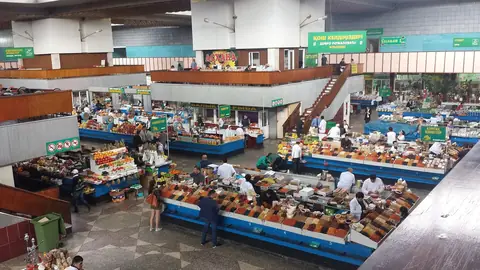
Almaty
Plan three nights in Almaty: Panfilov Park, the Green Bazaar, Kok-Tobe, Medeu and Shymbulak, the museum and the metro, with fares, hotels and the airport.
Read the guide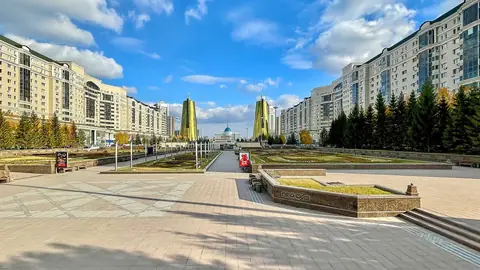
Astana
Plan two nights in Astana: Baiterek, Khan Shatyr, the Palace of Peace, the mosques, the National Museum and Nur Alem, with tickets, hotels, the LRT and costs.
Read the guideSources and checks before you travel
(16)
- National Bank of Kazakhstan: banknotes of the Saka style series ↗ — opens in a new tab
- National Bank of Kazakhstan: information message on the 10,000-tenge banknotes (26 March 2026) ↗ — opens in a new tab
- National Bank of Kazakhstan: official exchange rates (8 November 2026) ↗ — opens in a new tab
- Visit Astana (Astana city tourism portal): money ↗ — opens in a new tab
- Visit Astana (Astana city tourism portal): airport ↗ — opens in a new tab
- Visit Astana (Astana city tourism portal): transport ↗ — opens in a new tab
- Visit Astana (Astana city tourism portal): information for tourists ↗ — opens in a new tab
- Almaty Metro: payment for travel (in Russian) ↗ — opens in a new tab
- Tengrinews: Almaty fare of 120 tenge from 3 August 2024, akimat statement (in Russian, 1 August 2024) ↗ — opens in a new tab
- UK Foreign Office (GOV.UK): Kazakhstan safety and security ↗ — opens in a new tab
- UK Foreign Office (GOV.UK): Kazakhstan entry requirements ↗ — opens in a new tab
- German Foreign Office (Auswärtiges Amt): Kazakhstan travel and safety advice (in German) ↗ — opens in a new tab
- France Diplomatie: Kazakhstan travel advice, security (in French) ↗ — opens in a new tab
- State Revenue Department of Shymkent (gov.kz): Tax Free for foreign tourists (14 September 2026) ↗ — opens in a new tab
- Tax Free Kazakhstan (IT Analytics, accredited operator): how it works (in Russian) ↗ — opens in a new tab
- Visa: what you should know about dynamic currency conversion ↗ — opens in a new tab
Reference sources for the version dated 8 November 2026. Confirm opening times, access, transport and conditions for your travel dates.
Photo credits
(4)
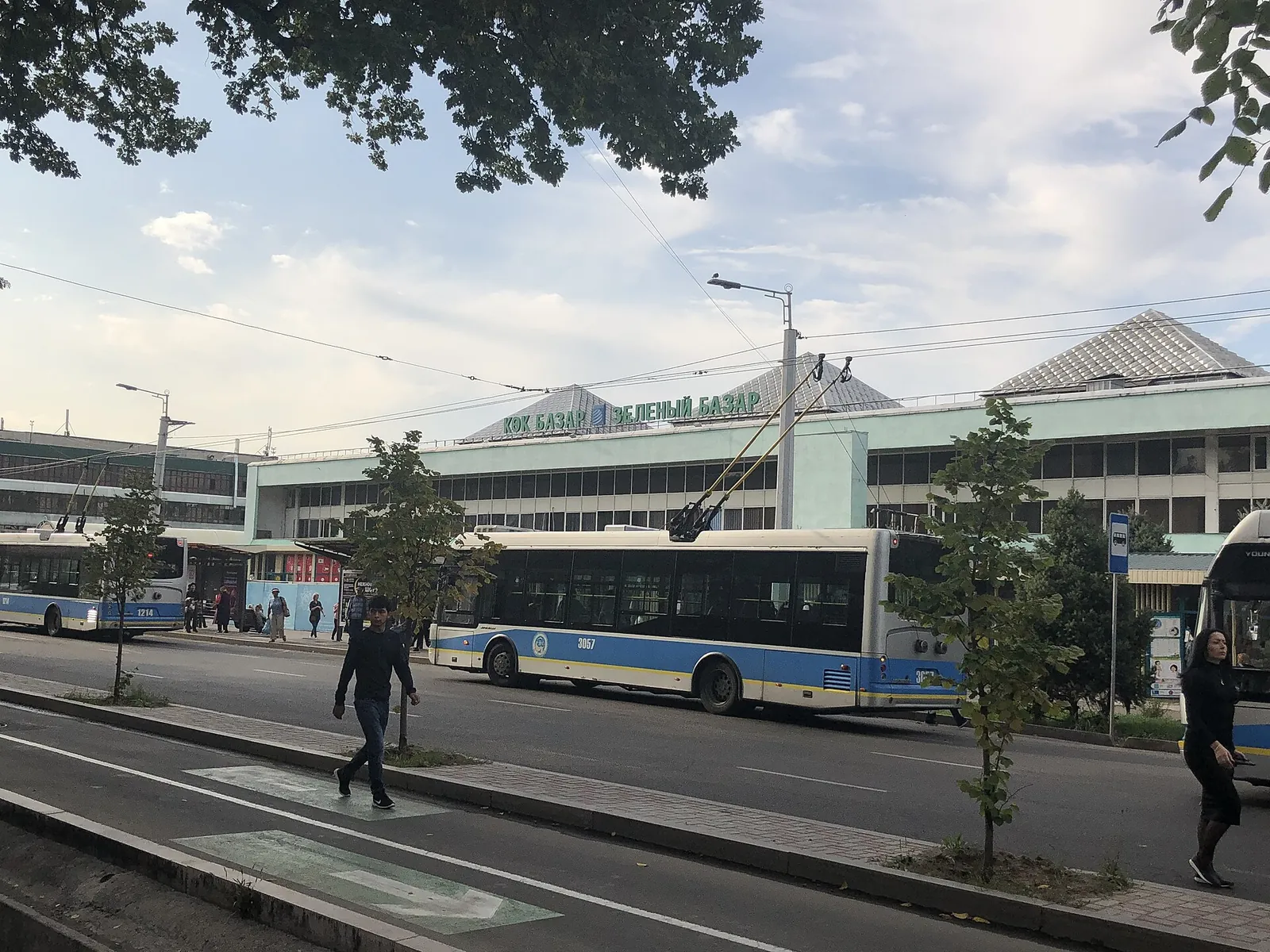
The Green Bazaar in Almaty, where some tenge in cash makes small purchases easier
Photograph: Davide Mauro — opens in a new tab · CC BY-SA 4.0 — opens in a new tab
Changes: Resized and converted to WebP; displayed with responsive crops. · Original photograph and licence details ↗ — opens in a new tab
Baikonur station on the Almaty Metro, where a smart token costs KZT 120
Photograph: Sharon Hahn Darlin — opens in a new tab · CC BY 4.0 — opens in a new tab
Changes: Resized and converted to WebP; displayed with responsive crops. · Original photograph and licence details ↗ — opens in a new tab
The light rail station at Astana airport, where an Astra Plat card or a contactless bank card opens the gates
Photograph: Kristianmusic — opens in a new tab · CC0 — opens in a new tab
Changes: Resized and converted to WebP; displayed with responsive crops. · Original photograph and licence details ↗ — opens in a new tab
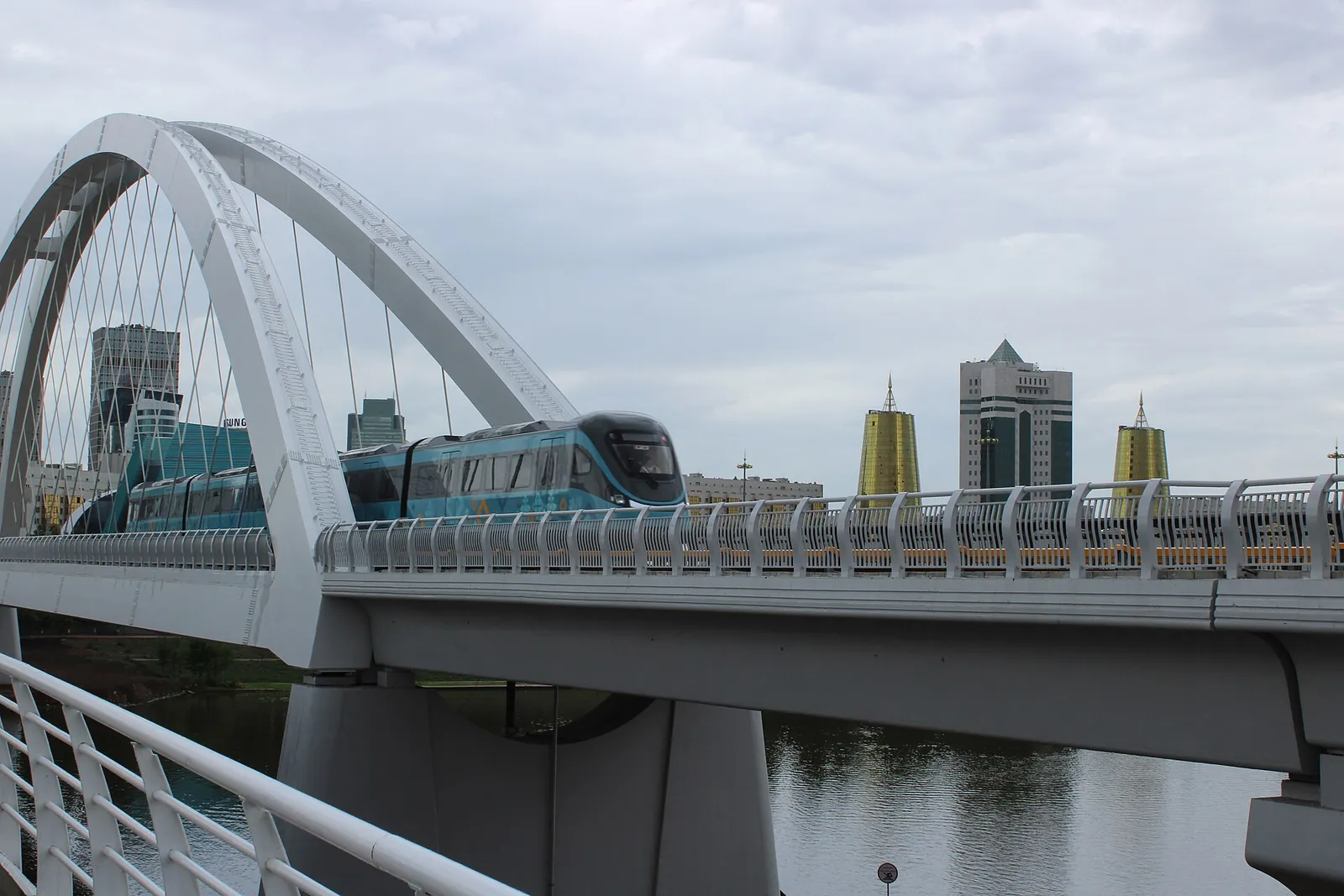
An Astana light rail train on the Syghanaq bridge
Photograph: Dauren Nabijan — opens in a new tab · CC0 — opens in a new tab
Changes: Resized and converted to WebP; displayed with responsive crops. · Original photograph and licence details ↗ — opens in a new tab