Plan your trip · Indonesia
Ramadan in Indonesia 2027: food, opening hours, Lebaran and mudik
Ramadan does not close Indonesia, but it changes its rhythm. In most of the country the day runs quieter and the evening louder: lunch becomes harder to find, the hour before sunset fills the streets with snack stalls, mosques stay busy late into the night and the call to sahur can come through the loudspeakers before dawn. The month ends with Idul Fitri, which Indonesians call Lebaran, and the mass journey home around it, the mudik, is what really reshapes a trip. Plan the fasting weeks as an experience and the Lebaran week as a logistics problem.
- Suggested time
- Ramadan lasts 29 or 30 days; keep the week before Idul Fitri and the days after it free of long journeys
- Where to stay
- One city for the Lebaran week; Jakarta, Yogyakarta or Banda Aceh for Ramadan evenings
- Season and timing
- Ramadan 1448 is expected to start around 8 February 2027; Idul Fitri is a national holiday on 10–11 March 2027, subject to the Ministry of Religious Affairs' decision.
The short answer
Travelling during the fasting month itself is easy and often rewarding: base yourself in a city with a lively Ramadan evening scene, such as Jakarta, Yogyakarta or Banda Aceh, eat discreetly by day and make the hour before iftar the highlight. The difficult part is Lebaran. In 2027 the government holiday is set for 10–11 March, with collective leave on 9, 12 and 15 March, and the official calendar allows a ten-day break from 6 to 15 March. Do not plan long train, ferry or road journeys on Java and Sumatra in the week before Idul Fitri or the days after it; stay put in one place, or spend those days somewhere less affected and book any unavoidable travel early.
When Ramadan and Lebaran fall in 2027
Ramadan follows the Islamic lunar calendar, so it moves about eleven days earlier each year. For reference, the UK government's travel advice gave 19 February to 20 March 2026 for Ramadan in Indonesia. In 2027 it falls in February and March.
The government's joint ministerial decree on holidays for 2027, signed on 15 September 2026, sets Idul Fitri 1448 on Wednesday 10 and Thursday 11 March 2027 as national holidays, with collective leave (cuti bersama) on 9, 12 and 15 March. Nyepi, the Balinese Day of Silence, is a national holiday on 8 March, so with the weekends the official calendar allows a break from 6 to 15 March 2027. Private employers decide for themselves how they apply collective leave, so not everyone is off for all ten days.
The exact start of the fast is not fixed in advance for everyone. The Muhammadiyah organisation, which uses a pre-calculated global calendar, has set 1 Ramadan 1448 on Monday 8 February 2027 and Idul Fitri on 9 March. The government announces its own dates through the Ministry of Religious Affairs after its isbat session, and Indonesian news reports noted when we checked on 2026-10-03 that the decree's holiday dates remain subject to that decision. Treat the first and last days as moveable by a day, and confirm nearer the time.
What changes on an ordinary fasting day
Muslims fast from dawn to dusk, and the Ministry of Tourism warns visitors that during Ramadan many restaurants and food stalls close in the daytime, open late, or stay open with their curtains drawn or windows covered out of respect for those fasting. Fast-food and franchise restaurants usually keep normal hours, larger restaurants often stay open behind curtains, and the ministry suggests delivery apps as another way to eat during the day. In hotels and restaurants serving food in fasting hours, you may be seated apart from Muslim guests, sometimes behind screens.
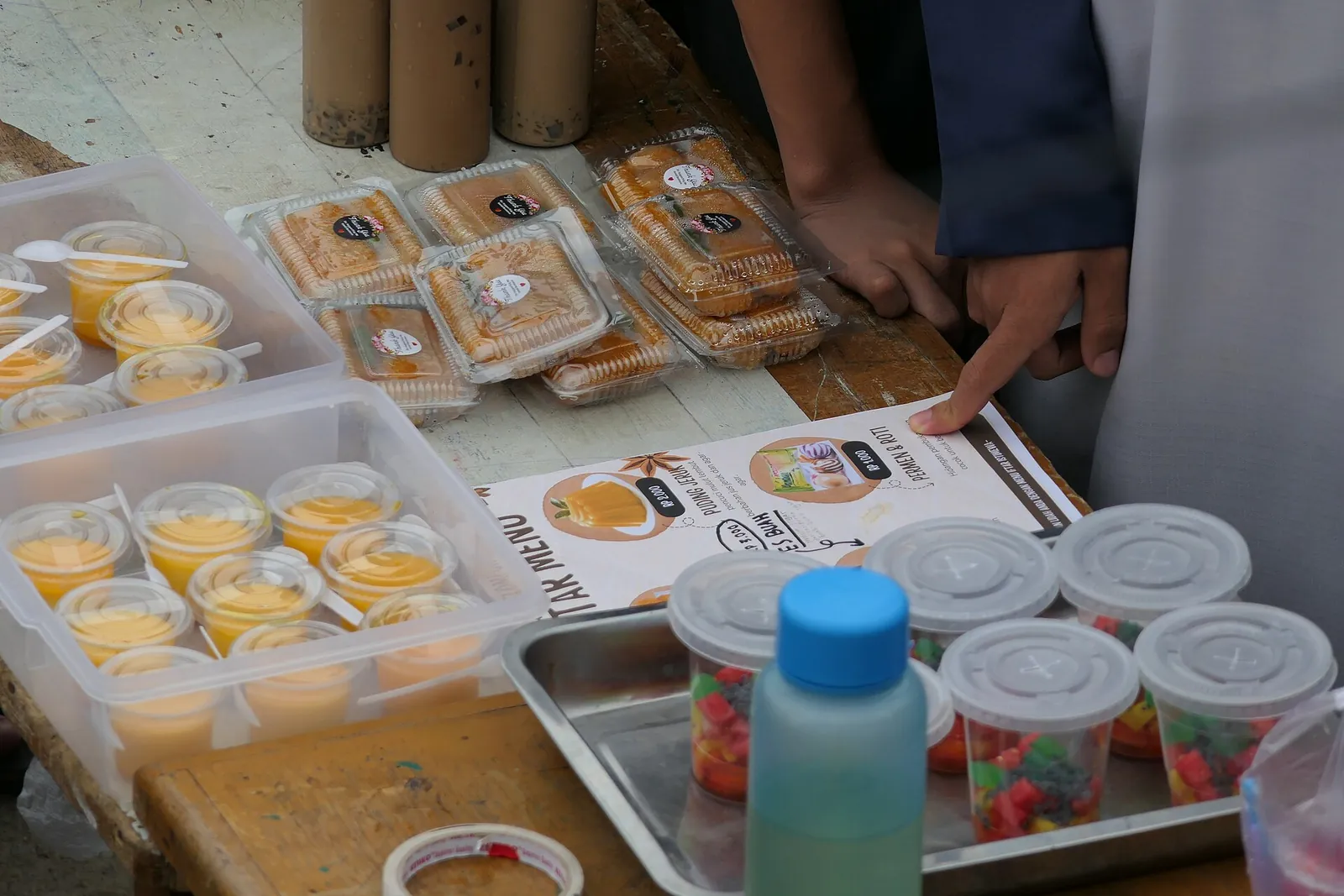
The fast is broken at the call to the maghrib prayer. The ministry describes the usual sequence: first a drink and something sweet, then prayers, and only afterwards the proper evening meal. That is why the late afternoon is the liveliest time of day: stalls selling takjil, the sweet snacks and drinks for breaking the fast, set up near well-known markets and large mosques, and people go out to wait for sunset, a habit known as ngabuburit.
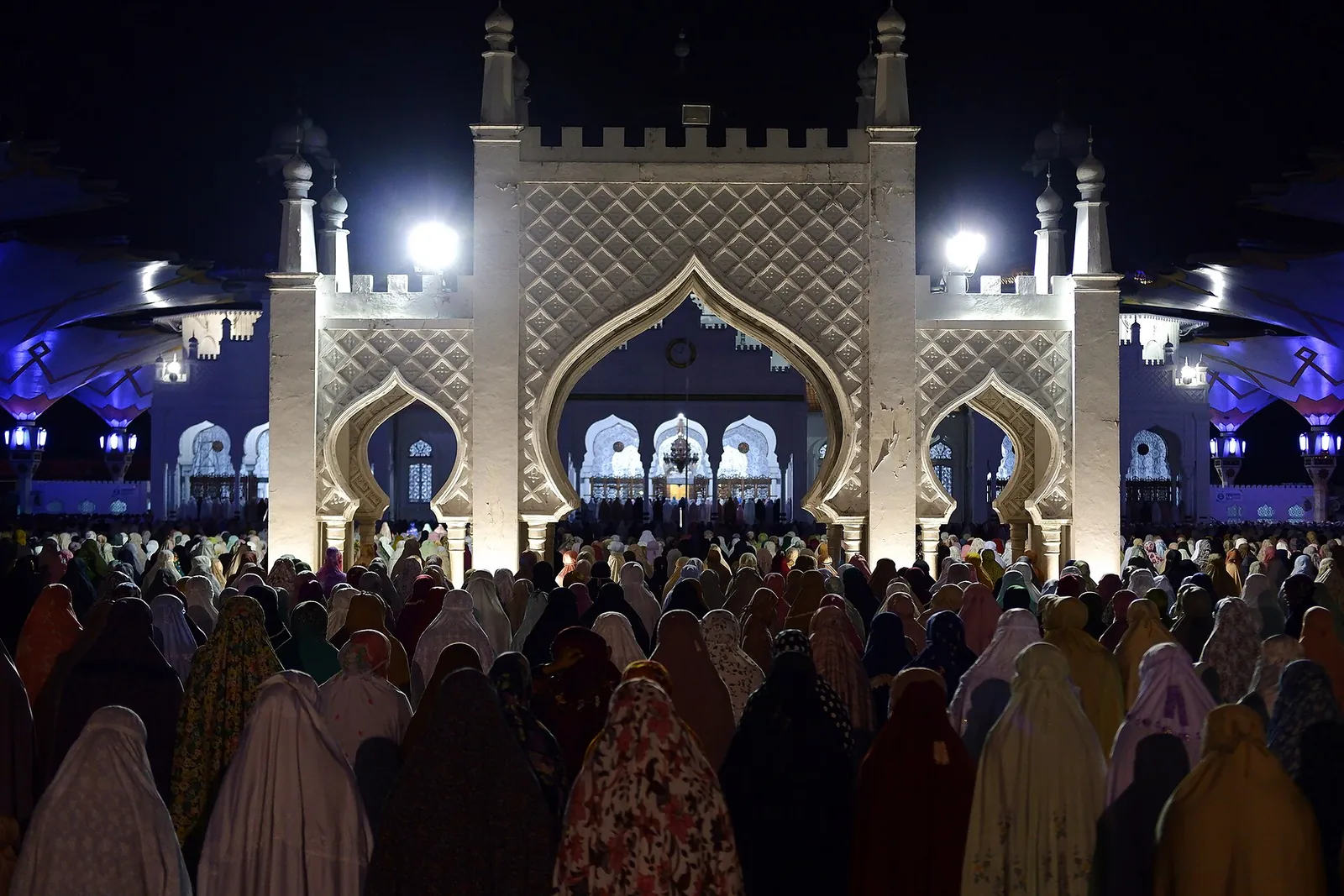
Nights are long. Mosques are full for the evening tarawih prayers, and in the small hours people eat sahur, the pre-dawn meal. The ministry notes that mosques often remind people of sahur time over their loudspeakers early in the morning, and suggests that light sleepers choose a hotel away from a mosque. The UK advice is to check the opening hours of shops and restaurants locally, and to expect erratic driving around dusk, when people are trying to get home to break the fast.
Make time for the local food
What to eat and where to look
Kolak
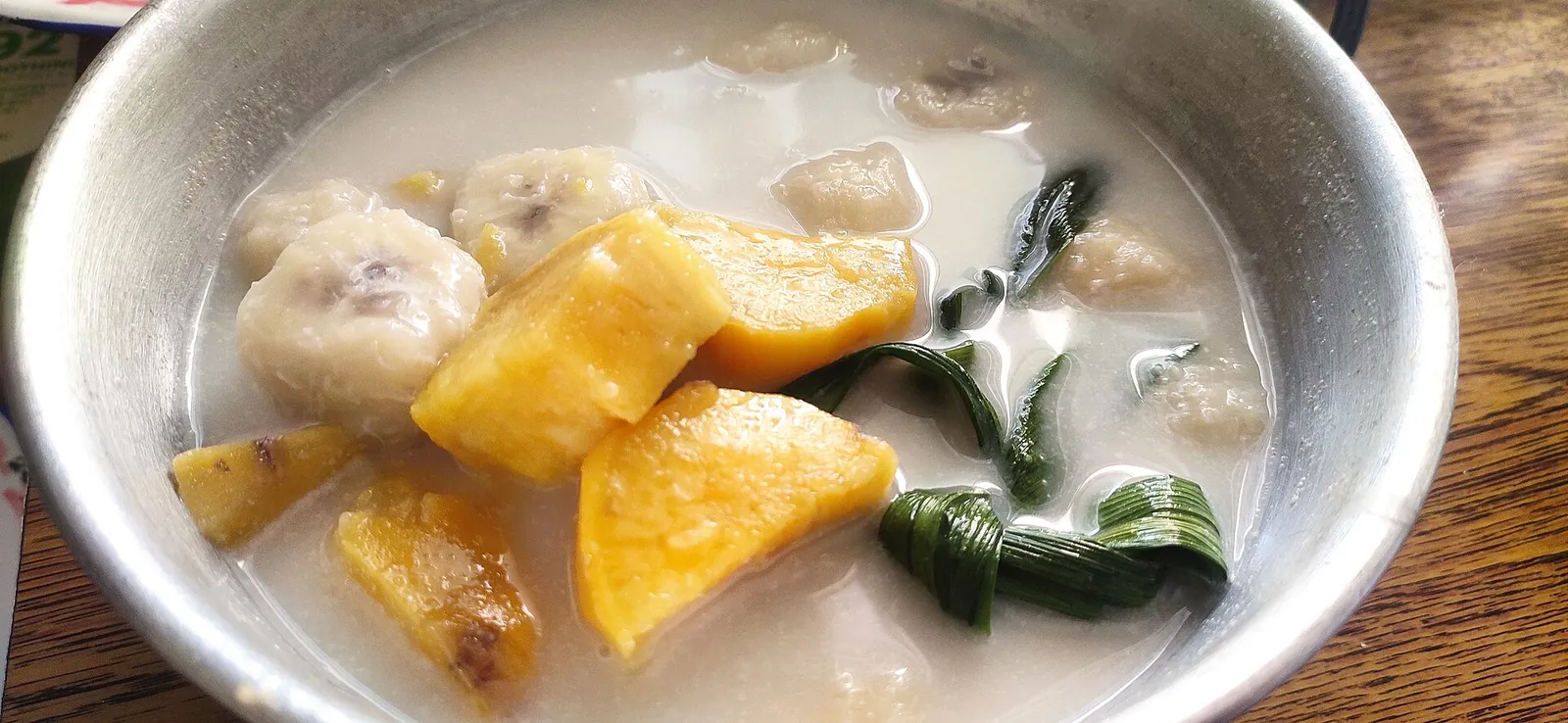
The classic Ramadan sweet: a warm brew of coconut milk and palm sugar with pandan, filled with banana, sweet potato and sometimes pumpkin. The Ministry of Tourism calls it a very popular dish for breaking the fast and says restaurants often serve it free during Ramadan.
- Where to look
- Takjil stalls near markets and large mosques in the late afternoon, traditional food shops, and the first course of restaurant iftar menus.
- Fit it into your day
- The first thing to eat at maghrib, before a later dinner.
Very sweet and rich in coconut milk.
Es pisang ijo
Banana wrapped in a green-coloured dough, served with coconut milk, syrup and shaved ice; a Makassar speciality that has become a Ramadan favourite well beyond South Sulawesi.
- Where to look
- Along Losari Beach in Makassar; the ministry also points to Jalan Ternate and Jalan Dipati Ukur in Bandung and Jalan Pemuda in Jakarta.
- Fit it into your day
- A cold drink for breaking the fast on a hot afternoon.
Shaved ice from street stalls is a risk for sensitive stomachs; buy from busy stalls.
Bubur kanji rumbi
A brownish, strongly spiced rice porridge from Aceh, shaped by Indian cooking, that the ministry says is cooked in mosque courtyards and served at communal iftar.
- Where to look
- Mosques in Banda Aceh during Ramadan; when it is offered to visitors at a communal iftar, follow your hosts.
- Fit it into your day
- Iftar in Banda Aceh, after the first sweet drink.
Strongly spiced; ask about the ingredients if you have allergies or avoid meat.
Kicak
Mashed sticky rice with grated coconut and jackfruit, sweet and fragrant, wrapped in banana leaf. The ministry describes it as unique to Yogyakarta and sold only during Ramadan.
- Where to look
- The Ramadan market in Kauman, Yogyakarta, where it originated.
- Fit it into your day
- A takjil snack bought before sunset on a Ramadan evening in Yogyakarta.
Contains coconut and jackfruit.
Ketupat and opor ayam
The Lebaran table: rice cooked in woven palm-leaf packets, served with chicken braised in coconut milk, often alongside rendang. The ministry names rendang, opor ayam and ketupat as the must-have dishes in Indonesian homes at Idul Fitri.
- Where to look
- Family tables at Lebaran, and restaurant menus in the days around Idul Fitri.
- Fit it into your day
- Lunch on Idul Fitri or the days after, especially if you are invited to a family home.
Rich in coconut milk; rendang and some side dishes are spicy.
Lebaran and the mudik: the week not to move
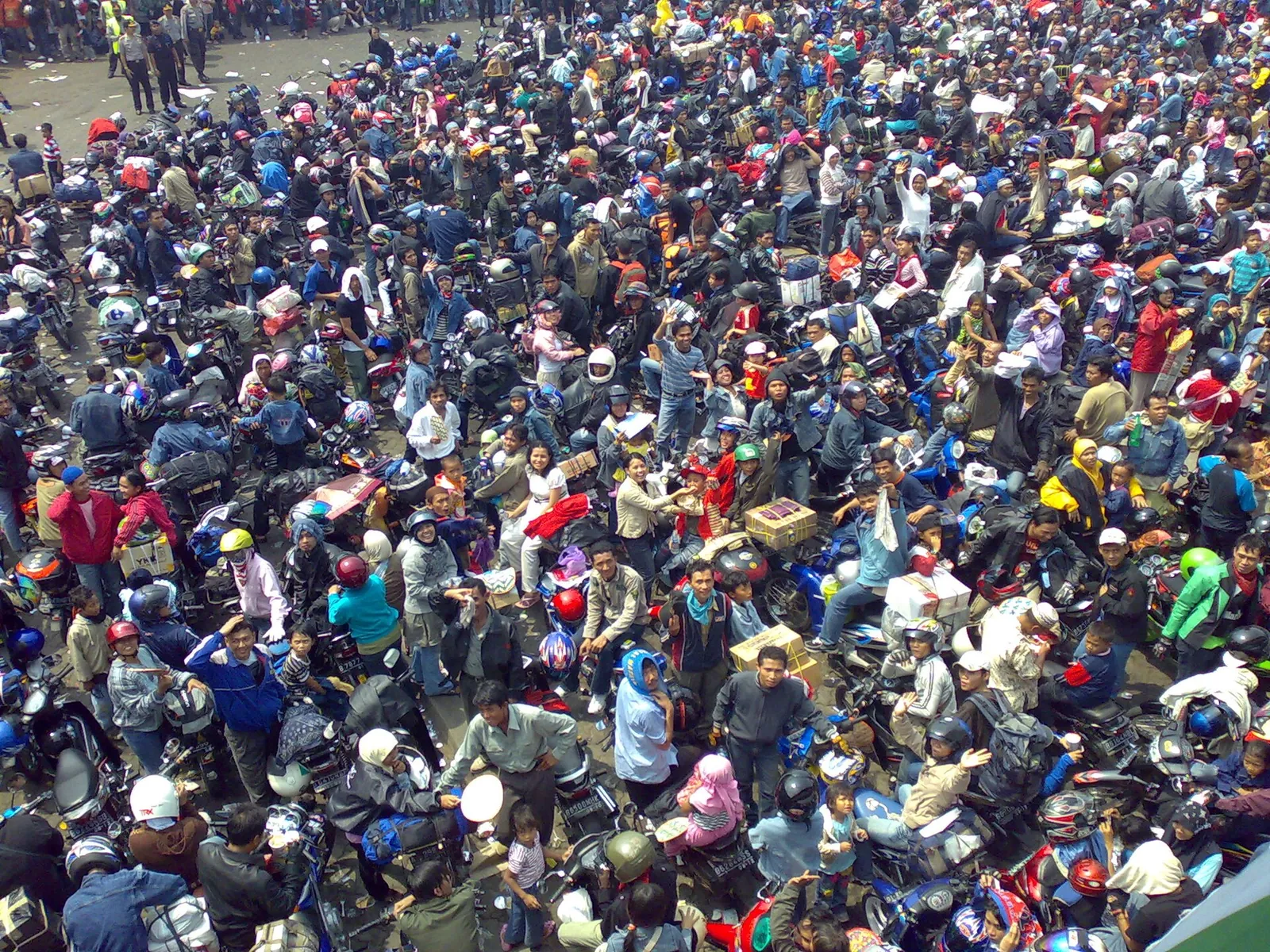
Idul Fitri is the biggest holiday of the year. The Ministry of Tourism explains that it is normally extended by about 7 to 10 days of collective leave because families gather in their home towns; this homeward journey is the mudik. Trains, flights, ferries and toll roads carry their heaviest loads of the year, and after the holiday comes the return wave, the arus balik.
The 2026 figures show how concentrated the rush is. KAI's Jakarta division ran a 22-day Lebaran transport period from 11 March to 1 April 2026, adding extra long-distance trains from Gambir and Pasar Senen stations. The busiest departure days were 16 to 20 March, the last days before Idul Fitri, with 18 March the peak, and the favourite destinations were Yogyakarta, Surabaya, Semarang, Purwokerto, Bandung and Jember. For travellers without a ticket on those dates, KAI suggested travelling after 23 March, when many more seats were left.
Ferries are just as busy. The state ferry operator ASDP named Merak and Bakauheni, on the Java–Sumatra crossing, and Ketapang and Gilimanuk, between Java and Bali, as its four main pressure points over Lebaran 2026, and it used its Ferizy online booking platform to manage the queues. It reported more than 4.7 million passengers on the 15 nationally monitored crossings in the eight days either side of the holiday.
For a 2027 trip, that means: be where you want to spend Lebaran by about 5 March, and do not plan to move again on Java or Sumatra until the return wave has passed, after about 15 March. If you must travel, book through the operators' own channels as early as their sales allow, and keep a spare day before any international flight.
Where to see Ramadan at its most atmospheric
Choose a base for its evenings. The Ministry of Tourism's own Ramadan suggestions point to cities with big mosques and seasonal markets, where you can buy takjil in the late afternoon, see the mosques fill for prayers and walk the streets after iftar. Visit mosques outside prayer times unless you are invited, dress modestly, and follow the caretakers' instructions.
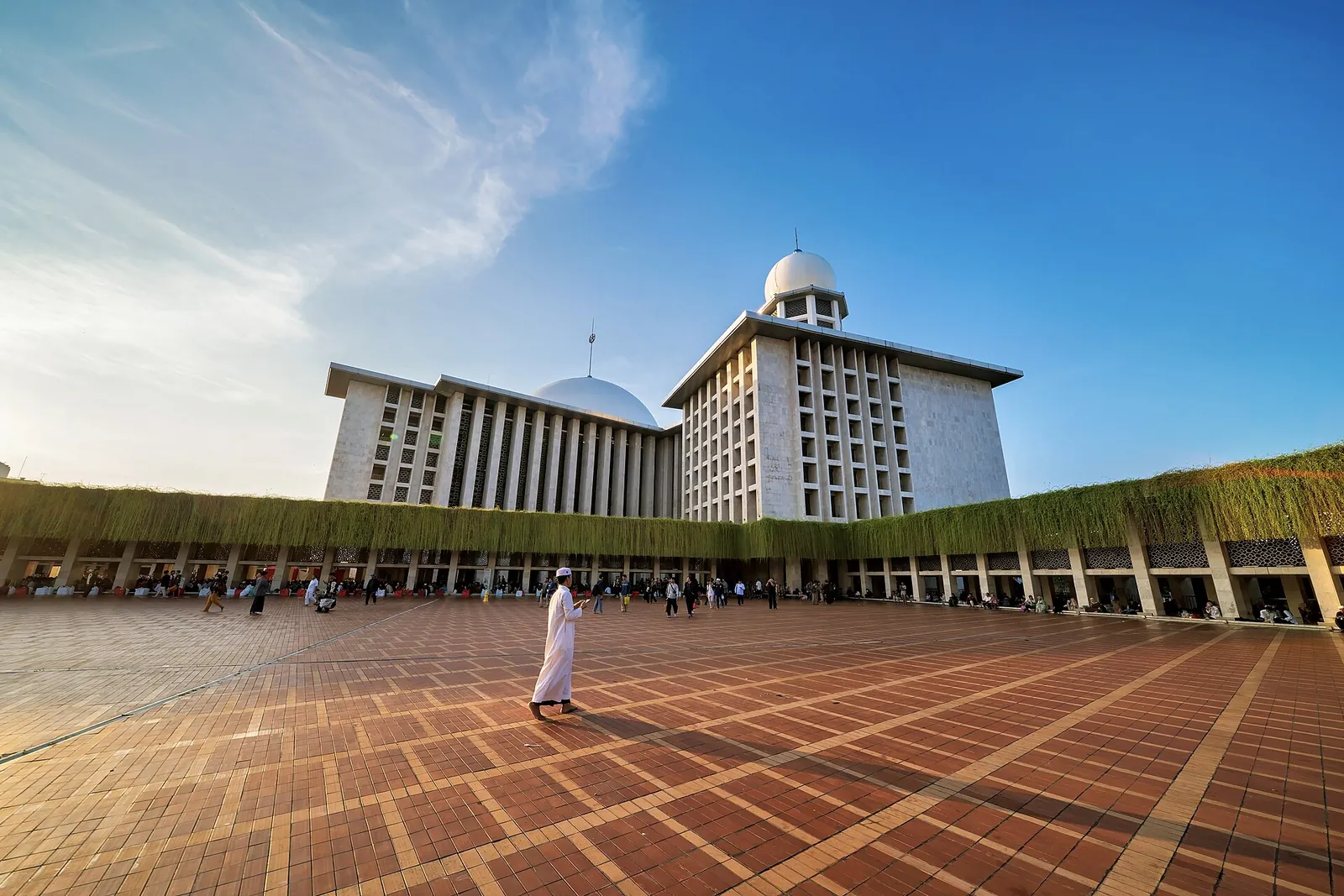
- Jakarta: the ministry's Jakarta guide recommends the seasonal takjil market on Bendungan Hilir (Benhil) street around sunset, and Istiqlal Mosque, where the caretakers hand out free takjil at iftar during Ramadan. Sunda Kelapa Mosque in Menteng and Cut Meutia Mosque, a former Dutch office building, are smaller alternatives for the evening.
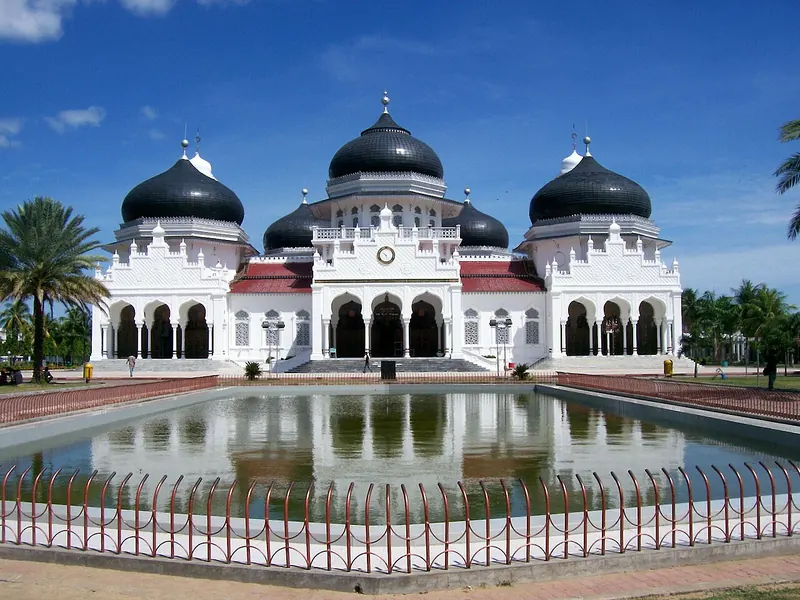
- Banda Aceh: the ministry describes kanji rumbi, a spiced porridge, being cooked in mosque courtyards and solemn tarawih prayers at Baiturrahman Grand Mosque. The province's Aceh Ramadhan Festival was held around the mosque from 1 to 7 March 2026 with bazaars and communal iftar; check whether it returns in 2027.
- Yogyakarta: the ministry describes a Ramadan market that opens every year in Kauman village, and it is where the ministry sends you for kicak, a Ramadan-only sticky-rice and jackfruit sweet.
- Surabaya, Makassar, Palembang and Pontianak: the ministry highlights the night market around the Sunan Ampel religious area in Surabaya, Ramadan food along Losari Beach in Makassar, the Great Mosque of Palembang at night, with the Ampera Bridge nearby, and the carbide cannons (meriam karbit) fired on the banks of the Kapuas River in Pontianak to welcome Ramadan and Lebaran.
- Bali: most Balinese are Hindu, so daily life changes little, but the island has Muslim villages with their own customs. The ministry describes a Ramadan market on Jalan A. Yani in Wanasari, Denpasar, communal iftar meals (megibung) in Kepaon, and ngejot in Pegayaman, where Muslim families share food with their neighbours of all faiths at Lebaran.
Bali, Nyepi and Lebaran in the same week of 2027
In 2027 Nyepi falls on 8 March, two days before Idul Fitri. The Ministry of Tourism notes that on Nyepi Bali's airport and the whole island close for 24 hours and people stay indoors. That makes Bali a quieter place to sit out Lebaran than Java, but not a place to arrive or leave on 8 March.
The crossing between Java and Bali at Ketapang and Gilimanuk was one of the ferry operator's four main Lebaran pressure points in 2026, and in 2027 Nyepi and Idul Fitri fall in the same week. If you are flying, check that your dates avoid 8 March in Bali, and allow extra time at airports across the country from about 5 March.
Travelling considerately during the fast
The UK government's travel advice asks visitors during Ramadan not to eat, drink, smoke or chew gum in public in the daytime, including in a car, not to play loud music or dance, and not to swear in public; it also notes that clothing that does not meet local dress codes may cause more offence at this time. In practice, eat inside restaurants or your hotel, carry water but drink it out of sight, and dress more conservatively than you would on a beach island.
Aceh is a special case. It is the only province that enforces Sharia law, and the UK advice notes that it applies to non-Muslims as well: alcohol is illegal, and there have been reports of Sharia police harassing foreigners. Take extra care with dress and daytime eating there during Ramadan.
Elsewhere, patience is the main courtesy. Drivers, guides and hotel staff may be fasting through a long, hot day; plan strenuous excursions for the morning, do not book a driver for a long journey that ends after sunset without asking about iftar, and accept that service slows around maghrib. If someone invites you to break the fast with their family, which the ministry mentions as part of the Ramadan experience, accept; it is the warmest way to see the month.
Practical questions
When is Ramadan in Indonesia in 2027?
Muhammadiyah has set 1 Ramadan 1448 on 8 February 2027. The government confirms its own start date through the Ministry of Religious Affairs, and its 2027 holiday decree lists Idul Fitri on 10–11 March 2027, subject to that decision.
Can tourists eat during the day in Indonesia during Ramadan?
Yes. Fast-food and franchise restaurants usually keep normal hours, many larger restaurants stay open with curtains drawn, and hotels serve meals. The UK government's advice is not to eat, drink or smoke in public in the daytime, so eat indoors.
Is it a bad idea to visit Indonesia during Ramadan?
No. The fasting weeks are a rewarding time to visit if you accept slower days and livelier evenings. The difficult period is the Lebaran holiday at the end, when transport is at its busiest of the year and many small businesses close.
When is the mudik rush in 2027?
Around Idul Fitri on 10–11 March 2027. The official calendar allows a break from 6 to 15 March. In 2026 the busiest train departures from Jakarta were in the five days before Idul Fitri, and the return wave followed after the holiday.
Is Bali affected by Ramadan?
Much less than Java or Sumatra, because most Balinese are Hindu, though Bali has Muslim villages and a Ramadan market in Denpasar. In 2027 Nyepi falls on 8 March, when the island and its airport close for 24 hours, two days before Idul Fitri.
Are the rules stricter in Aceh during Ramadan?
Aceh is the only province that enforces Sharia law, and it applies to non-Muslims too; alcohol is illegal there. Dress conservatively and do not eat or drink in public in the daytime during Ramadan.
Sources and checks before you travel
Reference sources for the version dated 3 October 2026. Confirm opening times, access, transport and conditions for your travel dates.
- Ministry of Tourism (Indonesia Travel): 5 ideas on how to enjoy your holiday during Ramadan in Indonesia ↗ — opens in a new tab
- Ministry of Tourism (Indonesia Travel): Business hours and holiday ↗ — opens in a new tab
- Ministry of Tourism (Indonesia Travel): A guide for having an enjoyable Ramadan day in Jakarta ↗ — opens in a new tab
- Ministry of Tourism (Indonesia Travel): Reasons why Indonesia is the best place to go during Ramadan and Eid ↗ — opens in a new tab
- Ministry of Tourism (Indonesia Travel): The bliss of Ramadan tradition in Bali ↗ — opens in a new tab
- Ministry of Tourism (Indonesia Travel): 8 special Indonesian snacks and drinks to break the fast ↗ — opens in a new tab
- Ministry of Tourism (Indonesia Travel): 9 iconic Ramadan dishes from various regions ↗ — opens in a new tab
- Ministry of Tourism (Indonesia Travel): Aceh Ramadhan Festival 2026 ↗ — opens in a new tab
- Ministry of Tourism (Indonesia Travel): DKI Jakarta ↗ — opens in a new tab
- KAI (Kereta Api Indonesia) ↗ — opens in a new tab
- UK FCDO travel advice: Indonesia safety and security ↗ — opens in a new tab
- UK FCDO travel advice: Indonesia regional risks ↗ — opens in a new tab
- Antara: Daftar libur nasional 2027 dan cuti bersama, total 26 hari ↗ — opens in a new tab
- Antara: Jadwal libur Lebaran 2027, ada potensi libur panjang 10 hari ↗ — opens in a new tab
- Antara: Muhammadiyah tetapkan 1 Ramadan 1448 H pada 8 Februari 2027 ↗ — opens in a new tab
- Antara: KAI sebut 16-20 Maret jadi tanggal favorit mudik Lebaran dari Jakarta ↗ — opens in a new tab
- Antara: Lebaran 2026, KAI sediakan lebih satu juta tiket perjalanan jarak jauh ↗ — opens in a new tab
- Antara: Dirut ASDP: kolaborasi sukseskan pengelolaan angkutan Lebaran 2026 ↗ — opens in a new tab
Does this experience fit your route?
Spending Ramadan or Lebaran in Indonesia? Compare morning tours in Jakarta, Yogyakarta and Bali, and check each operator's hours and holiday dates before you book.
Browse relevant experiences on Viator ↗ — opens in a new tabAffiliate link · Book with ViatorPhoto credits
Istiqlal Mosque in Central Jakarta during Ramadan 2026, when it is a favourite place to wait for iftar
Photograph: Arifmuttaqin — opens in a new tab · CC BY-SA 4.0 — opens in a new tab
Changes: Resized and converted to WebP; displayed with responsive crops. · Original photograph and licence details ↗ — opens in a new tab
Takjil, the snacks and drinks for breaking the fast, at a Ramadan bazaar in Jambi, Sumatra
Photograph: Muhamad Izzul Fiqih — opens in a new tab · CC BY-SA 4.0 — opens in a new tab
Changes: Resized and converted to WebP; displayed with responsive crops. · Original photograph and licence details ↗ — opens in a new tab
Tarawih prayers at Baiturrahman Grand Mosque in Banda Aceh on the first night of Ramadan 2023
Photograph: Muhammad Iqbal — opens in a new tab · CC BY-SA 4.0 — opens in a new tab
Changes: Resized and converted to WebP; displayed with responsive crops. · Original photograph and licence details ↗ — opens in a new tab
Mudik: motorcycle riders waiting for the ferry at the Port of Merak, Banten, on the Java–Sumatra crossing
Photograph: Coris at Indonesian Wikipedia — opens in a new tab · CC BY-SA 3.0 — opens in a new tab
Changes: Resized and converted to WebP; displayed with responsive crops. · Original photograph and licence details ↗ — opens in a new tab
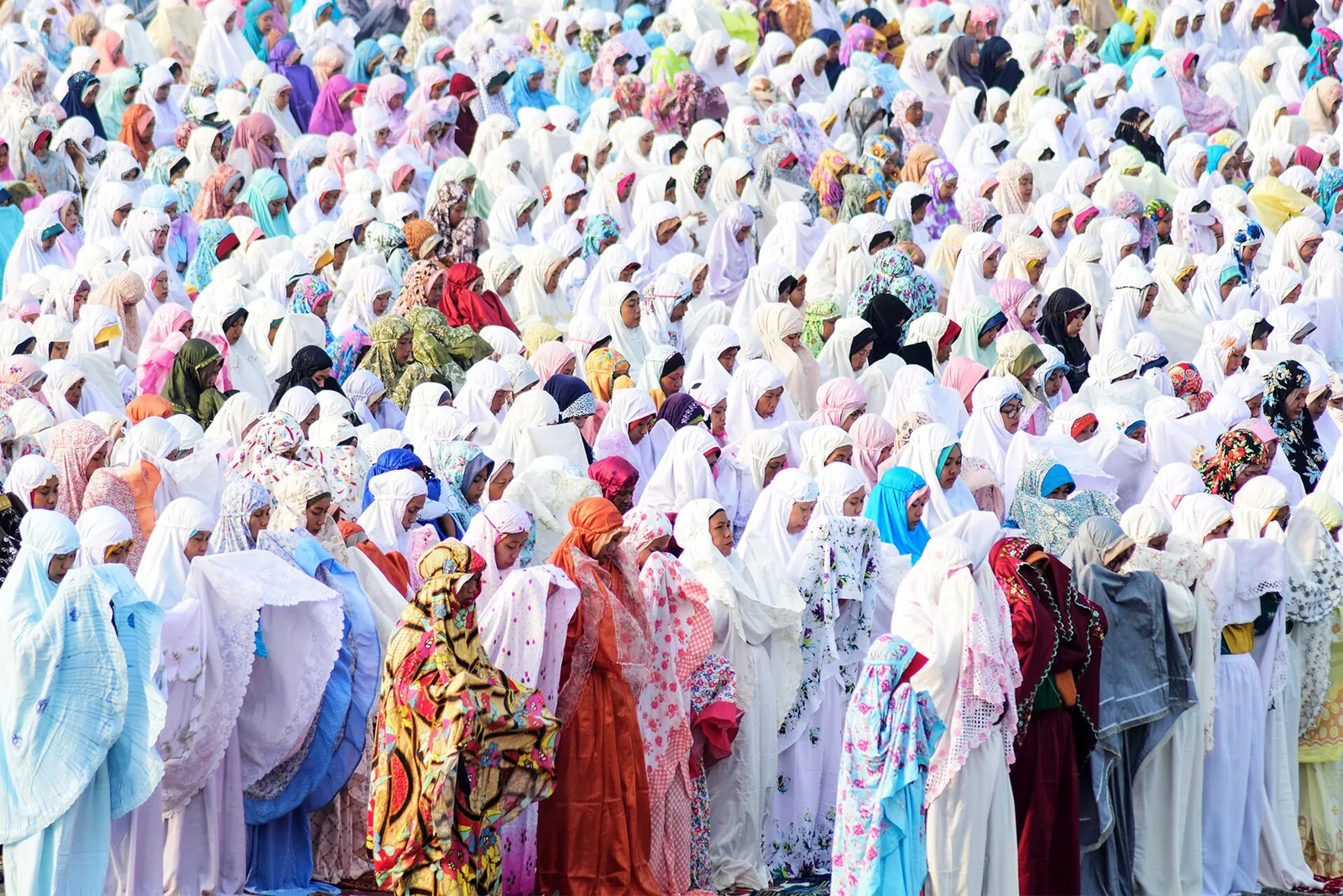
Idul Fitri prayers on the sands of Parangkusumo beach near Yogyakarta
Photograph: Patrik Cahyo — opens in a new tab · CC BY-SA 4.0 — opens in a new tab
Changes: Resized and converted to WebP; displayed with responsive crops. · Original photograph and licence details ↗ — opens in a new tab
Kolak pisang dan ubi, banana and sweet potato in coconut milk and palm sugar, a classic dish for breaking the fast
Photograph: Fhikri Latifi — opens in a new tab · CC0 — opens in a new tab
Changes: Resized and converted to WebP; displayed with responsive crops. · Original photograph and licence details ↗ — opens in a new tab