Karakalpakstan
Nukus and Moynaq: Savitsky art, stranded ships and desert forts
The far west of Uzbekistan offers two things the Silk Road cities cannot: a museum of Russian avant-garde art assembled by a single artist, and a former harbour town whose fishing fleet is rusting on dry ground. They suit travellers with three days to spare and a taste for long road days. The sights are far apart, so each gets a day of its own, and the last one ends in Khiva.
In this guide
Find the location ↗ — opens in a new tabThe short answer
Book two nights in Nukus: the Savitsky Museum on day 1, a private road day to Moynaq on day 2 and a fortress drive to Khiva on day 3. The Moynaq day costs USD 95 per person for two travellers with CAJ, and AyimTour’s fortress transfer USD 60 each; book those two first, then the flights. All in, with the flight from Tashkent and the way back from Khiva, the three days come to about UZS 5,450,000 per person, UZS 10,900,000 for two. Moynaq’s ships stand on the old harbour floor, far from today’s Aral shore.
- Suggested time
- 3 days / 2 nights in Nukus, finishing in Khiva
- Where to stay
- Nukus for both nights, Moynaq as a day trip, Khiva on the evening of day 3
- Season and timing
- The national tourism board calls spring and autumn the “velvet season” for travel in Uzbekistan and advises against walking about at midday during the summer heat, which it places from after 20 June to early August. Nukus and Moynaq are desert country, so keep the ship graveyard and the fortresses for the cooler hours and use the museum for the hottest part of the day.
Two nights in Nukus, close to the museum
Nukus is the capital of Karakalpakstan, and the national tourism site lists the Savitsky Museum and the Berdakh National Museum as its places to visit. Your two nights here are a base for three very different days, so choose the hotel for its walk to the museum and an early breakfast.
Jipek Joli Art, at 47A Zholmurza Aimurzayeva Street, is a step from the Savitsky Museum. It serves a buffet breakfast from 07:00 to 09:00, early enough for the 08:30 pickups on days 2 and 3, and its early-booking rate includes breakfast, the tourist fee and VAT.
Jipek Joli Inn, on Jipek Joli Street, is the alternative. It is in the centre, a 10-minute walk from the State Historical Museum and the Central Market, and its restaurant serves European and Karakalpak dishes.
The Savitsky Museum: Russian avant-garde in Nukus
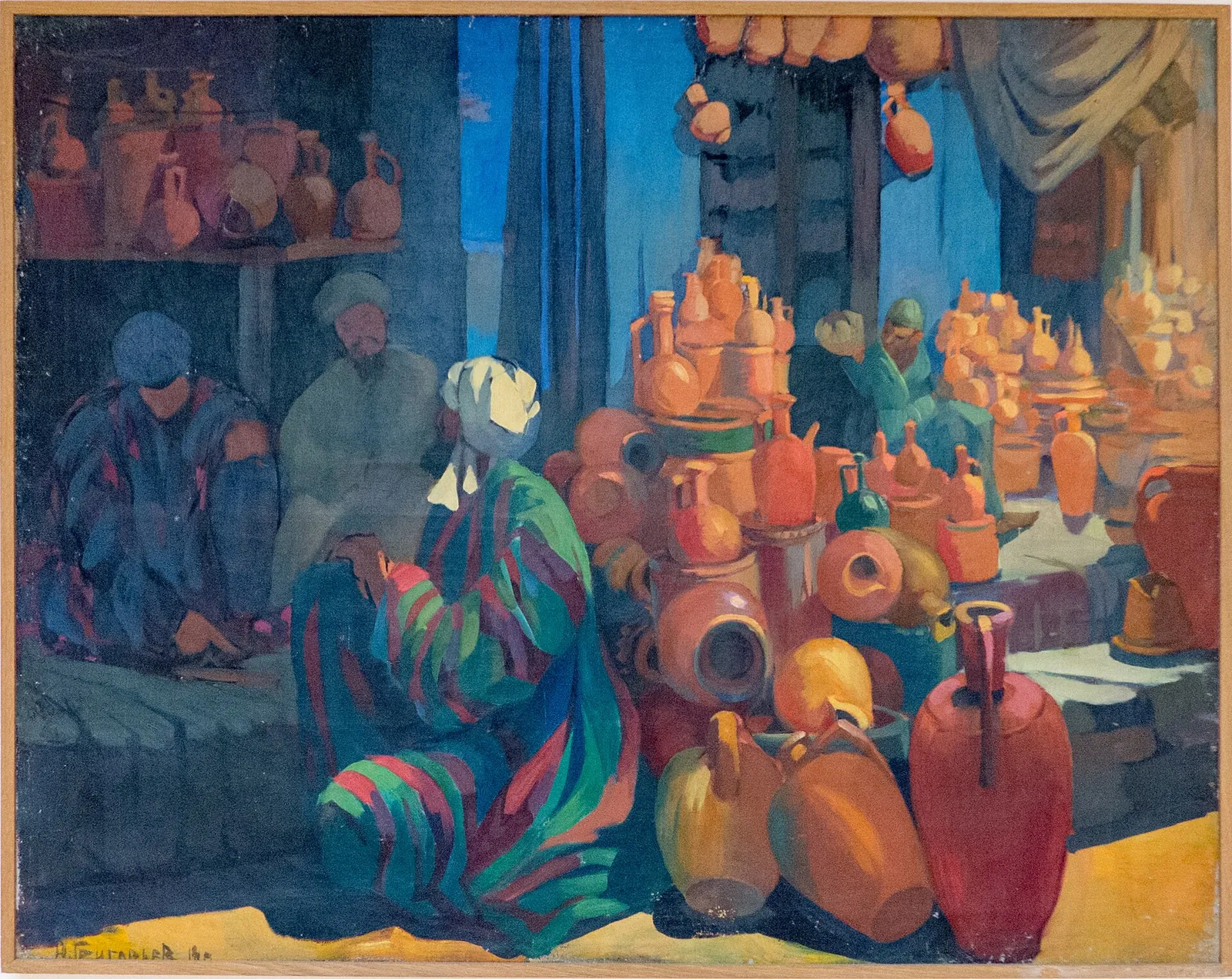
The artist I. V. Savitsky first saw Karakalpakstan in the 1950s as a member of the Khorezm archaeological and ethnographic expedition. He began collecting Karakalpak folk art, founded a museum of art in Nukus in 1966 and kept finding new works for it until his death in 1984. Today the collection runs to about 100,000 exhibits in three main sections: visual art, Karakalpak folk arts and crafts, and ancient Khorezm art.
The paintings are the surprise: Russian and Turkestan avant-garde work by Popova, Shevchenko, Usto Mumin (A. Nikolaev), Falk and others, with Karakalpak painters and Savitsky himself alongside. The craft rooms hold about 10,000 pieces of folk art from the late 19th and 20th centuries, among them the tobelik and saukele headdresses, and the archaeological collection of more than 15,000 items runs from the Bronze Age to the 14th century.
The museum is open Tuesday to Sunday from 09:00 to 18:00 and closed on Mondays. It publishes no ticket price; plan on about UZS 100,000 a person in cash, what Tashkent’s State Museum of History charges foreign visitors. Give the galleries an afternoon rather than an hour: to see them on day 1, land in Nukus by early afternoon, and with a later flight add a third night and move the museum to day 2. The Berdakh Museum, near the Karakalpak State University, adds the history of Karakalpak literature, a hall of manuscripts in Arabic, Persian and Turkish, and national jewellery and clothing.
With a morning flight, start with Mizdakhan, on the hills at the western edge of Khodjeyli along the road to Kunya-Urgench. The settlement was founded in the 4th–3rd centuries BC on the western hill, whose ruins are now called Khodjeyli Gyaur Kala, “the fortress of infidels”, after its Zoroastrian residents; the city lived until the 14th century. The eastern hill is a necropolis with the semi-underground Mazlumkhan-sulu mausoleum of the 12th–14th centuries, the ruins of the Khalifa-Yerejep mausoleum and the seven-domed Shamun-nabi mausoleum. Go by taxi, or with OrexCA’s Nukus car at USD 110 for a day within 70 km.
Moynaq: ships on the old harbour floor
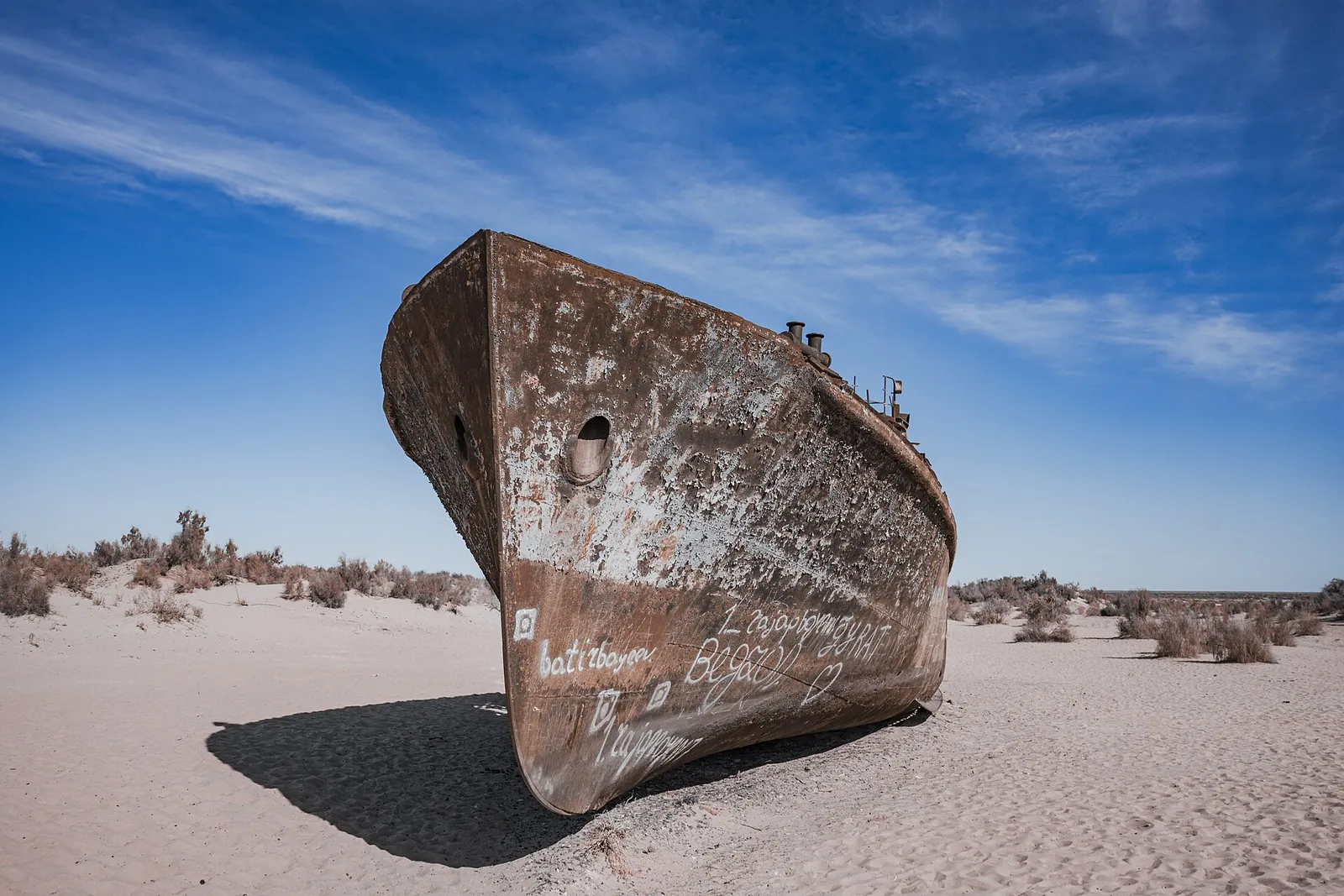
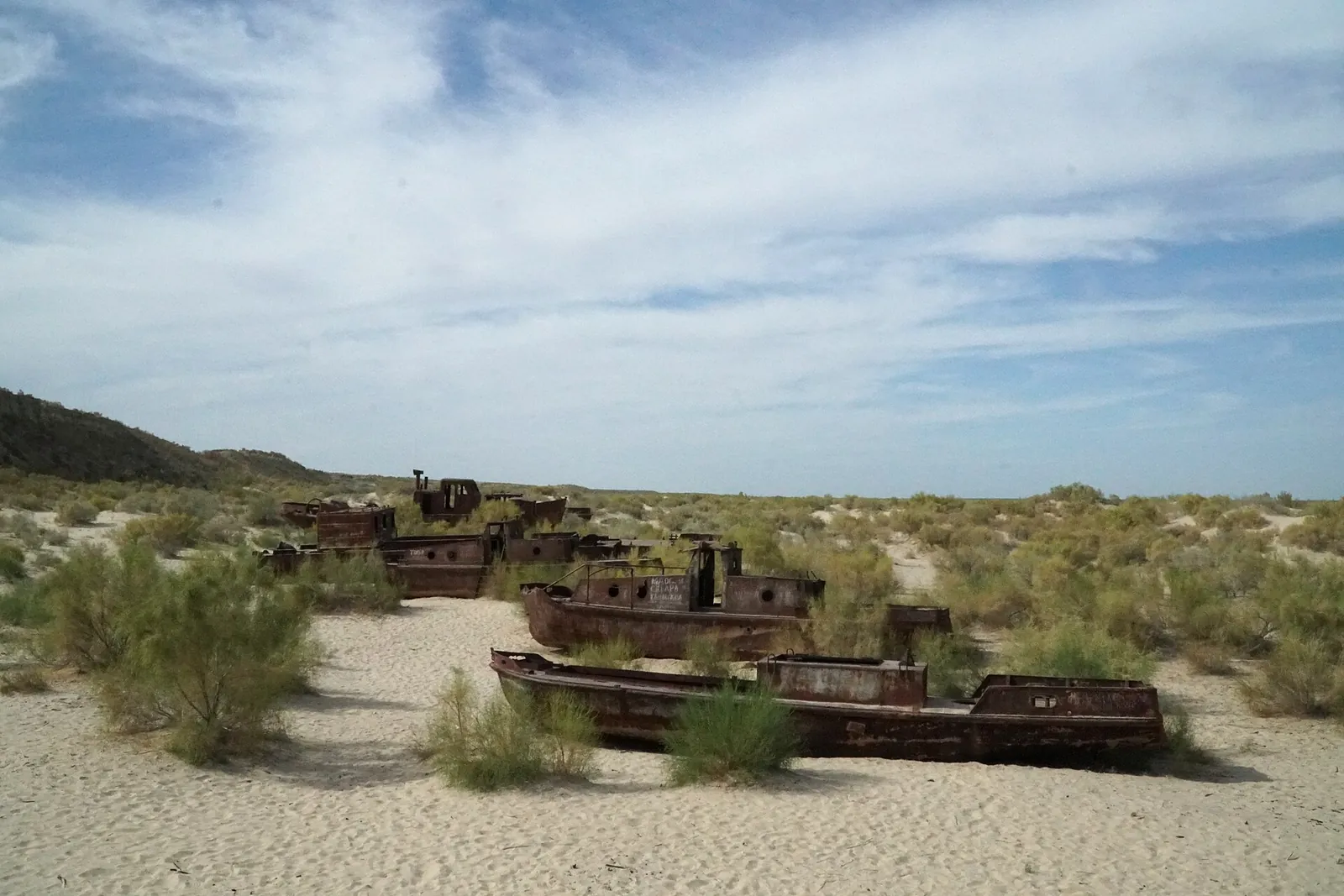
Moynaq (written Muynak on many signs and operator pages) was founded in the 1930s and became famous as the largest fishery in Central Asia; today it is hundreds of kilometres from the sea. The open-air museum on the site of the old port holds hardly more than 10 ships, where there used to be more than 100. You walk down a high slope to the hulls, with fishermen’s huts of reed and clay nearby.
The ships mark where the harbour was, not where the water is. Before the 1960s the Aral Sea was the fourth-largest lake in the world, at 64,500 km². By 2009 its central part had dried up and the sea held about a tenth of its 1960 volume; what remains is the North Aral Sea and the western and eastern basins of the South Aral Sea. The present shore is a separate trip: CAJ runs a two-day 4×4 expedition from Nukus with a night in a yurt camp, USD 490 each for two or three.
Moynaq’s Ecological Museum was set up in 1984 and moved to the district community centre in 1998. It tells the story of the sea through costumes, jewellery, boats, fishing gear and old photographs, together with paintings from the 1960s and 1970s by Rafael Matevosyan and Faim Madgazin that follow the blue sea turning to desert.
The town is about 200 km from Nukus. CAJ runs a private day with a guide and an air-conditioned car: pickup at your hotel at 08:30, a route via Kungrad to the ship graveyard, the museum and the former seabed, then back to Nukus, with about three hours’ driving each way. The price covers guide, entrance ticket and transport and is USD 165 for one traveller or USD 95 each for two or three (a car for two, a minibus from three); lunch is extra. The price is valid to 31 December 2026, and the day is available daily by advance booking. For less, AyimTour’s car with driver costs USD 110 for one to four people, transport only, so the guide, the museum ticket and lunch are extra; its day covers about 500 km with detours. Silk Avia also lists Nukus–Moynaq (it writes Muynak) from UZS 125,236 one way from 1 February 2026. It publishes no timetable outside its booking search, so the road day stays the plan, and the flight helps only if both legs run on your date. No official page lists a shared taxi or bus to Moynaq or a place to stay there, so this guide plans it as a day by car from Nukus.
Toprak Kala and Ayaz Kala on the way to Khiva
Day 3 is a long drive that doubles as sightseeing. AyimTour’s one-day Fortresses of Ancient Khorezm tour runs from Nukus to Khiva (or the other way round) and costs USD 60 per person for two travellers, USD 120 for the car, for transport only. This plan goes without a guide, who would add USD 70 for the day (about UZS 833,000); lunch, drinks and the entrance fees to the fortresses are extra. The tour leaves at 08:30 and reaches Khiva at about 19:00, 8 to 10 hours depending on how long you stay at each site, with the Baday Tugai and Sultan Vays Baba stops included.
German advice is to avoid overland drives at night, so from September to March start at 07:30 and drop Baday Tugai, which brings the arrival to about 17:30, around sunset in midwinter.
The stops are the Zoroastrian dakhma at Chilpik (a tower of silence, 30 to 60 minutes), the Baday Tugai nature reserve (30 to 40 minutes), the mausoleum of Sultan Vays Baba (about 20 minutes), Toprak Kala (about an hour) and Ayaz Kala (one to two hours). Lunch is at a restaurant near Akshakol lake, or at the yurt camp near Ayaz Kala, 30 minutes from Toprak Kala.
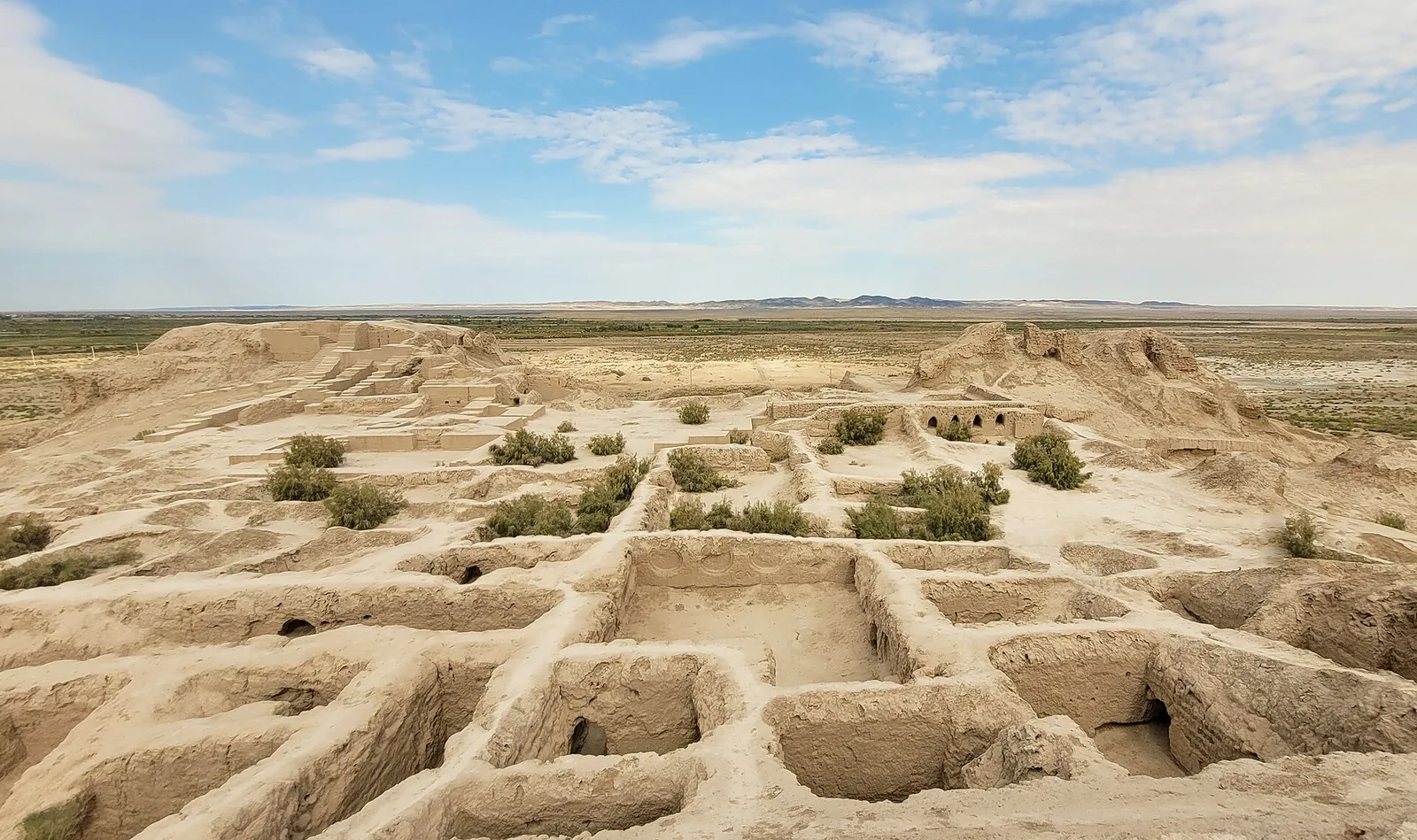
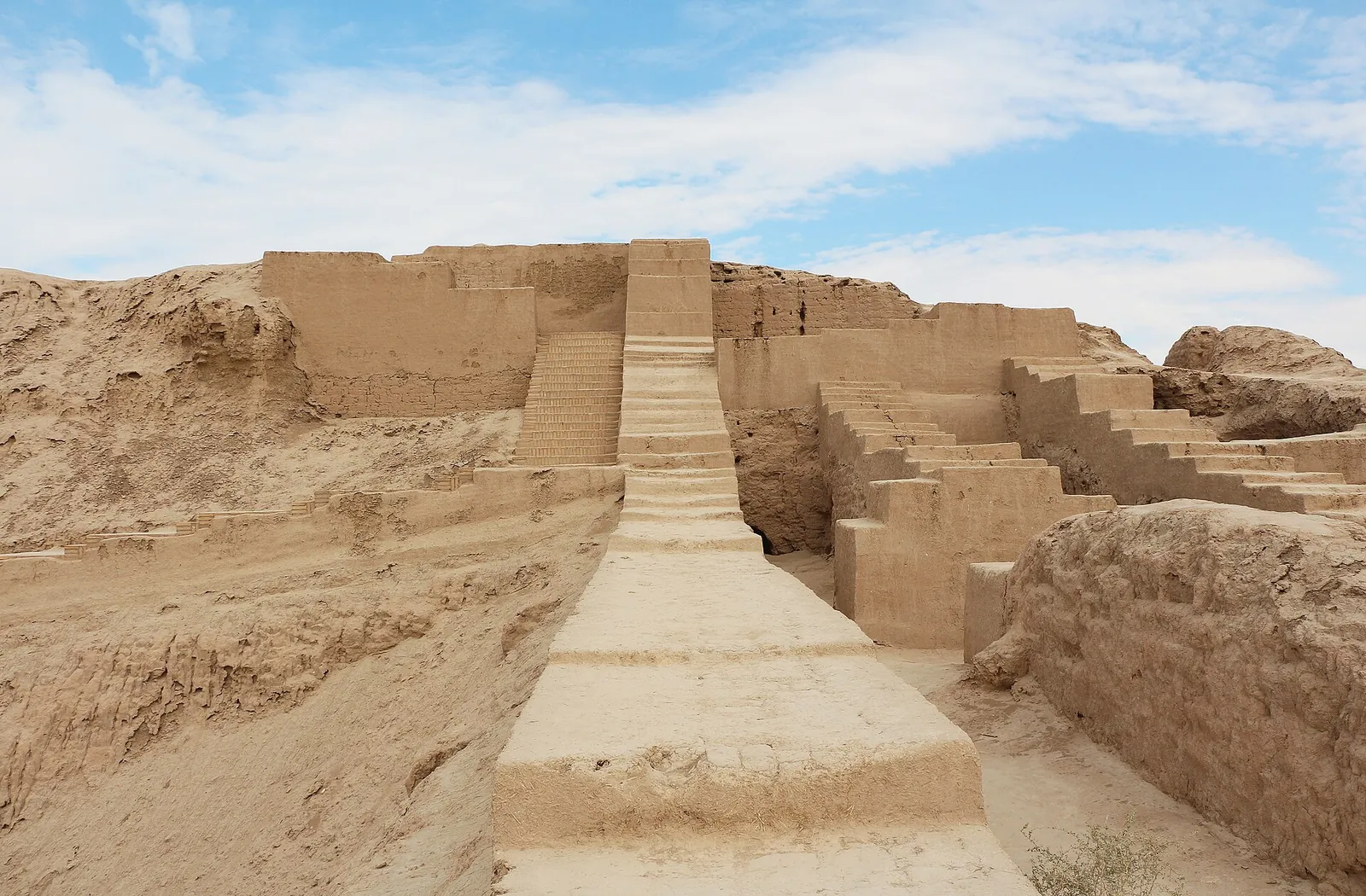
Toprak Kala (“Earth City”) is the larger of the two: a walled settlement of 120 hectares, home of the Khorezm kings in the 2nd and 3rd centuries AD, whose square towers and ten quarters can still be traced. The archaeologist Sergei Tolstov found it in 1938. You walk between excavated room walls and climb the raised palace area, which stood three storeys high, to read the layout from above.
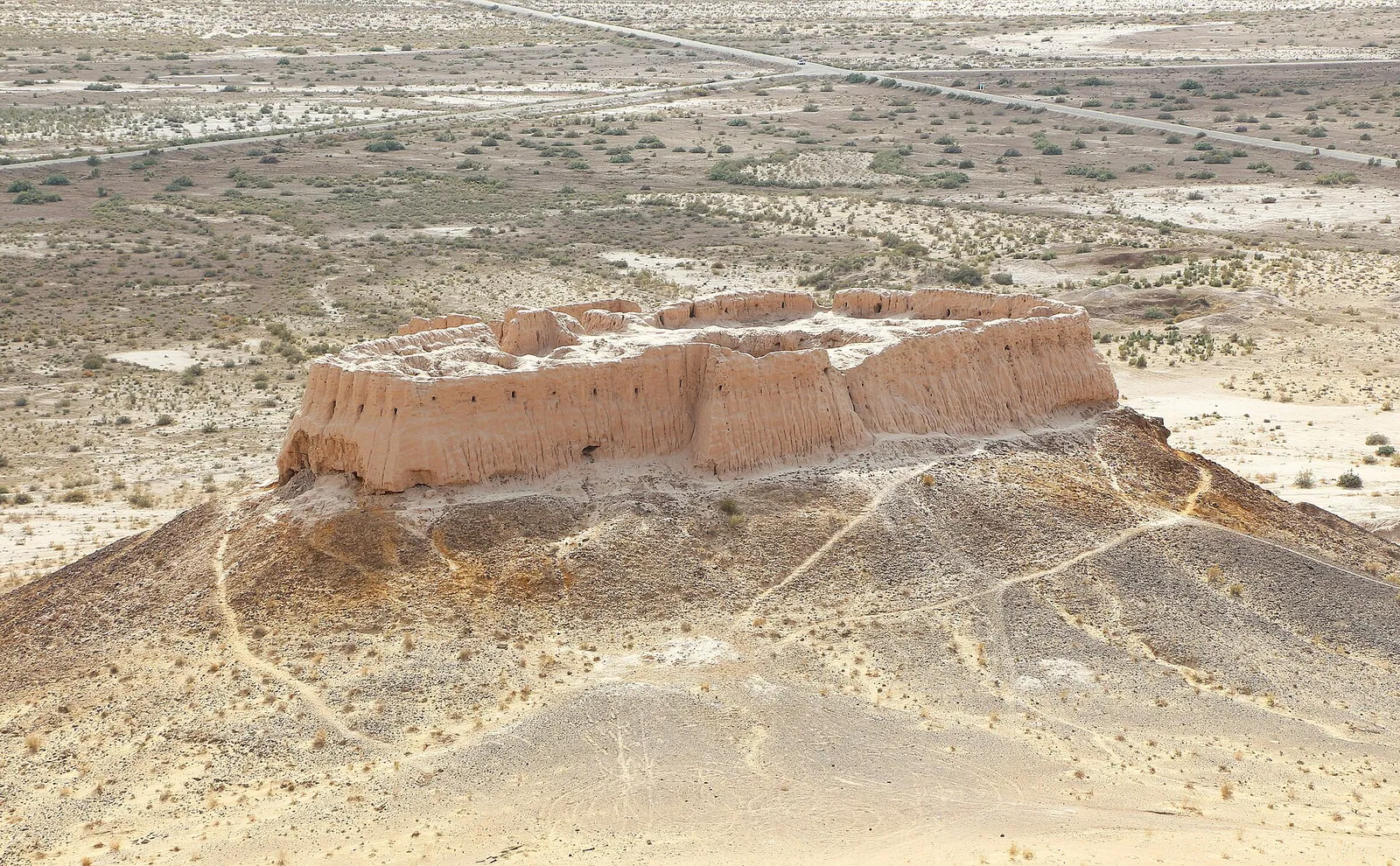
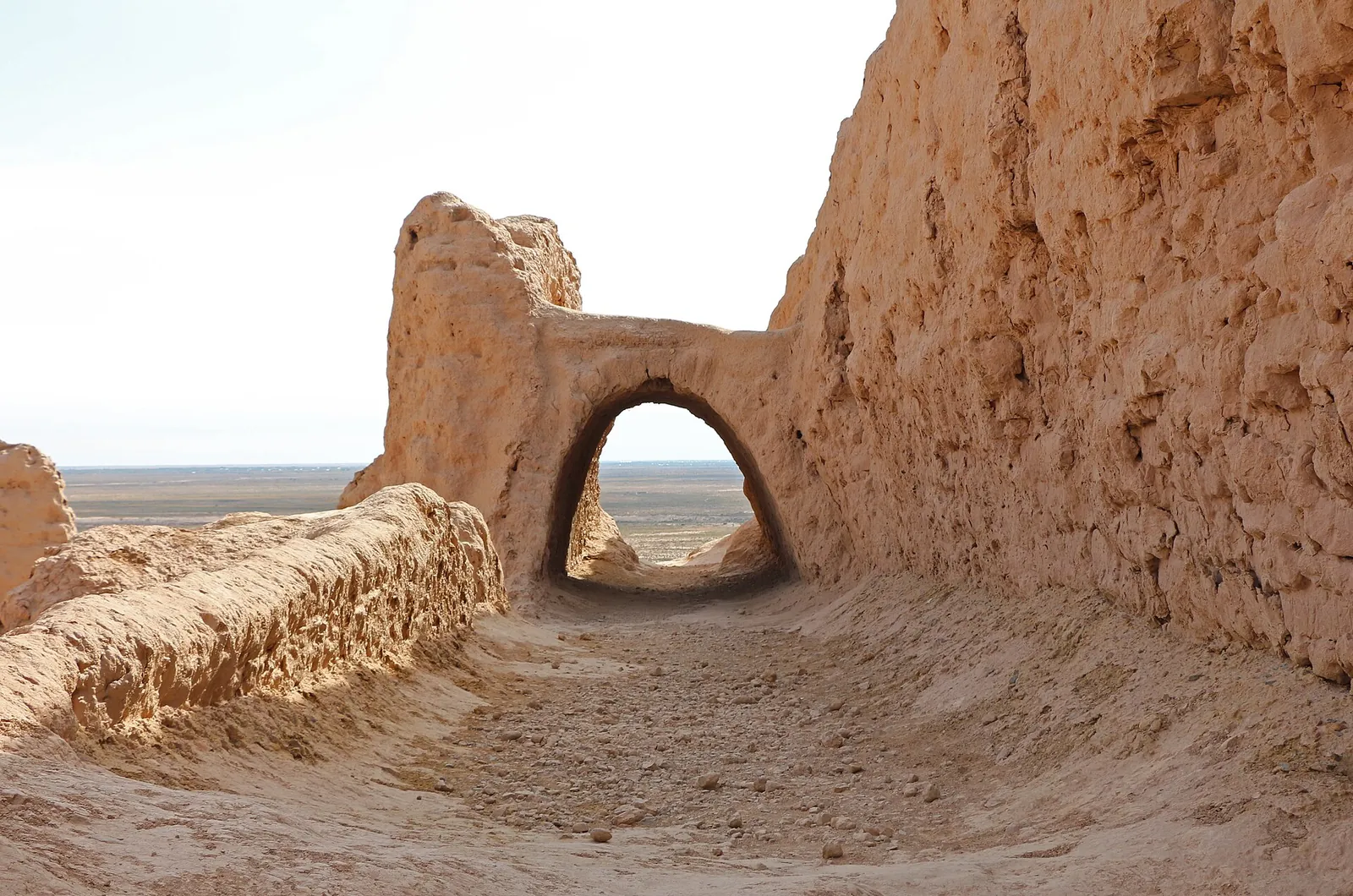
Ayaz Kala, 20 km north-east of Buston, means “fortress in the wind”, and the wind is the first thing you notice. Three fortresses stand on hills above the desert plain, the earliest from the 3rd–4th centuries BC. The third is ringed by a powerful wall that still frames the ruins of a palace, minarets and passages. Take the short climb to the fortress for the panorama, or stay on the lower ground if the wind, heat or footing argue against it.
CAJ sells a shorter version of the route at USD 65 each for two or three, driver only, valid to 31 December 2026: 7 to 9 hours and 270–280 km via Chilpik, Toprak Kala and Ayaz Kala, with arrival in Khiva planned for 16:45–17:30. A direct run is about 200 km and 3 to 4 hours by private car, from USD 150 for a sedan with Advantour and 190 km with OrexCA. The Khiva guide takes the trip on from there.
Based in Khiva instead? AyimTour runs the same fortress day from Khiva towards Nukus, and OrexCA lists Khiva–Nukus as a private transfer of about 190 km and three hours, so the Savitsky Museum is a long day out from Khiva, with about six hours on the road; check that it is not a Monday.
What to eat and where to look
Besh-barmak
Karakalpak national cooking leans on flour and grain, and this is its best-known dish: oblong dumplings of white durra flour with fingerprint ornaments, cooked in a meat broth and served with meat and an onion sauce.
- Where to look
- Beshbarmak House, a cafe in Nukus named for the dish.
- Fit it into your day
- Dinner on day 1, after the museum.
Fish soup
Fish soup with durra or millet dumplings is the coastal classic, alongside fried and dried fish. Fish is still caught near Moynaq and is the town’s main dish.
- Where to look
- A family lunch in Moynaq, which AyimTour adds on request, or the lunch stop CAJ arranges there.
- Fit it into your day
- Lunch on day 2, between the ships and the museum.
Kespas and kaysas noodles
Karakalpak noodles are made from very thin flat bread rolled into a tube and chopped. Kespas is dressed with milk and sour milk, kaysas with oil.
- Where to look
- Karakalpak restaurants in central Nukus; Jipek Joli Inn’s restaurant serves Karakalpak dishes alongside European ones.
- Fit it into your day
- Dinner on day 2, back in Nukus.
Mayek borek
Squares of rolled dough are folded into envelopes, filled with whipped eggs and melted butter, and cooked in boiling water with fried onion in a large cauldron.
- Where to look
- Karakalpak restaurants in central Nukus, among them Jipek Joli Inn’s.
- Fit it into your day
- Lunch on day 1, before the museum.
The filling is whipped egg and butter, so skip it with an egg or dairy allergy.
Bauirsak and sozban
Karakalpak breads come from one wheat dough: bauirsak are thinly rolled rectangles fried in oil, and sozban are large flat cakes stretched by hand and fried.
- Where to look
- Bread stalls at Nukus’s Central Market, a 10-minute walk from Jipek Joli Inn.
- Fit it into your day
- Breakfast or a snack for the road on day 3.
From Tashkent to Nukus, and the three days in order
Uzbekistan Airways lists Tashkent–Nukus one way from UZS 442,336 in its fare notice of 2 October 2026, effective 16 October 2026; the budget uses about UZS 500,000 per person. The notice has no timetable, so pick a flight that lands by about 13:00 for the museum on day 1 when you search the airline’s site for your date. Nukus Airport is 4 km from the centre, and OrexCA’s sedan transfer costs USD 25. By rail, the railway’s timetable lists a daily overnight train No. 054 from Tashkent to Kungrad, 13:15 to 08:22 (19 h 07), and back from Kungrad at 11:04 (19 h 47); Nukus station is 5 km from the centre, and the booking search shows whether your train calls there and the fare. The transport guide covers how domestic flights and trains fit together.
Carry about UZS 200,000 per person in cash for gate fees at the museum and the fortresses, plus soums for Moynaq lunches and tips, because very few ATMs take international cards outside the main cities, according to the UK advice. The plan below ends in Khiva without a night there; add Khiva nights from the Khiva guide. To get back to Tashkent from Khiva, take a car to Urgench airport, 30 km and about 40 minutes (OrexCA charges USD 30 for a sedan), and fly Uzbekistan Airways to Tashkent; no fare is published in that direction, so the budget uses about UZS 500,000 per person, an estimate from the Tashkent–Urgench fare of UZS 442,336. The Jaloliddin Manguberdi train is the alternative: it leaves Khiva at 07:20 on Wednesday, Friday and Sunday and reaches Tashkent at 14:51.
- Day 1: Tashkent to Nukus. Fly in, check in and walk to the Savitsky Museum; with a morning flight, see Mizdakhan first. Night: Nukus.
- Day 2: Moynaq. Leave at 08:30 for the three-hour drive, spend the middle of the day at the ship graveyard and the Ecological Museum, and return to Nukus. Night: Nukus.
- Day 3: the fortresses to Khiva. Leave at 08:30 (07:30 from September to March), stop at Chilpik, Baday Tugai, Sultan Vays Baba, Toprak Kala and Ayaz Kala, and arrive in Khiva in the evening.
Karakalpakstan is open: what to carry and what not to photograph
Karakalpakstan is open to visitors: Germany says the security situation across the country has stabilised since the unrest of 2022, and France lists Nukus among the secured major tourist sites. The Afghan border, Termez and the Tajik and Kyrgyz frontier areas that the official advice singles out are far away, and the entry guide gives that advice in full. Germany also advises against non-essential travel near any border except at official crossings, so keep to the operators’ routes and do not head off-road towards the Turkmen or Kazakh frontier. Other governments may draw the line differently, so read your own government’s advice before booking. Carry your passport and keep the registration record your hotel gives you, because the UK advice says the authorities ask for a full record of where you have been when you leave. Ask before photographing bridges, rail installations or government and military buildings, since German advice says some bans are not signposted.
What three days in Nukus and Moynaq cost, all in
About UZS 5,450,000 per person, UZS 10,900,000 for two (about EUR 410 each, EUR 820 for two), for three days and two nights from Tashkent to Khiva and the way back to Tashkent, without the international flight. The Tashkent–Nukus and Urgench–Tashkent flights, the airport cars, the room, every meal and ordinary drinks, both tours, the admissions, two SIMs and a 10% buffer are included; the Khiva nights in between are priced in the Khiva guide.
| Trip | Per person | For two |
|---|---|---|
| Nukus and Moynaq, three days, mid-range | UZS 5,450,000 | UZS 10,900,000 |
These figures are for two adults sharing one double in Nukus for two nights in spring or autumn, outside the hotel’s summer discount, with CAJ’s Moynaq day and AyimTour’s fortress transfer to Khiva. Tour prices were checked on 25 October 2026 and are in US dollars, converted at USD 1 = UZS 11,903.15, the central-bank reference rate of 23 October 2026 as shown on Ipoteka Bank’s page (EUR 1 = UZS 13,329.15).
No Nukus hotel rate is published, so the room is an estimate of about UZS 850,000 a night for two, with VAT and tourist tax, and admissions are an estimate of about UZS 200,000 per person, because neither the museum nor the fortresses publish a fee. Food is UZS 225,000 per person a day for breakfast, lunch, dinner and drinks, based on a Tashkent restaurant chain’s online prices (plov at UZS 52,000 for 450 g). Getting around is the Tashkent–Nukus flight at about UZS 500,000 per person, from the airline’s starting fare, the Urgench–Tashkent flight at about UZS 500,000 per person, an estimate from the opposite-direction fare, and OrexCA’s sedans from Nukus Airport (USD 25) and from Khiva to Urgench airport (USD 30).
Sights and tours are CAJ’s Moynaq day at USD 190 for two (UZS 2,261,600), which includes guide and ticket, and AyimTour’s fortress transfer at USD 120 for two (UZS 1,428,400), transport only and without a guide. SIMs are two Beeline Hello 1 plans at UZS 60,000 each, activated as new eSIMs with no activation fee; the plan price dates from 3 October 2025. The 10% buffer is the only extra cushion.
Flights: about GBP 550–1,200 per person for a London–Tashkent return in economy, from Turkish Airlines’ displayed sample fares for October and November 2026; fares and availability vary. With that flight, about UZS 14,200,000–24,600,000 per person, UZS 28,400,000–49,100,000 for two, at the central-bank reference rate of GBP 1 = UZS 15,916.89.
- Rooms: UZS 1,700,000 for two.
- Food and drinks: UZS 1,400,000 for two.
- Getting around: UZS 2,700,000 for two.
- Sights and tours: UZS 4,100,000 for two.
- SIM and extras: UZS 100,000 for two.
- 10% buffer: UZS 1,000,000 for two.
Practical questions
How many nights should I spend in Nukus?
Two nights give you the Savitsky Museum on day 1, Moynaq on day 2 and a morning departure for the fortresses and Khiva on day 3. With a flight that lands after about 13:00, add a third night.
Can I see the Aral Sea itself from Moynaq?
Not on the day trip: the ships stand on the old harbour floor, far from the water, and the present shore is a separate two-day expedition.
When is the Savitsky Museum open?
Tuesday to Sunday from 09:00 to 18:00, and closed on Mondays. Carry cash for the ticket.
How long is the drive to Moynaq?
About three hours each way from Nukus on CAJ’s route via Kungrad; the tourism site puts the town about 200 km away.
Can I do the fortresses as a round trip from Nukus?
No, both operators sell a one-way transfer between Nukus and Khiva, and AyimTour also runs it from Khiva to Nukus. A return to Nukus would need a separate quotation.
How much do three days in Nukus and Moynaq cost?
About UZS 5,450,000 per person, UZS 10,900,000 for two, without the London flight, including the flight from Tashkent and the car and flight back from Khiva; the last section itemises it.
Keep planning your trip
First trip to Uzbekistan
Choose seven days or ten for Tashkent, Samarkand, Bukhara and Khiva: nights, trains, season, registration, money, a SIM and an all-in budget.
Read the guide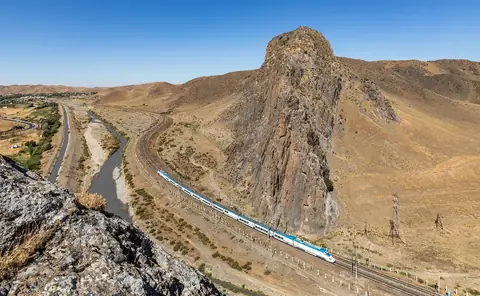
Transport in Uzbekistan
Book Uzbekistan’s trains and flights: the Afrosiyob to Samarkand and Bukhara, the 2026 Khiva trains, domestic fares, airport links and the Tashkent metro.
Read the guide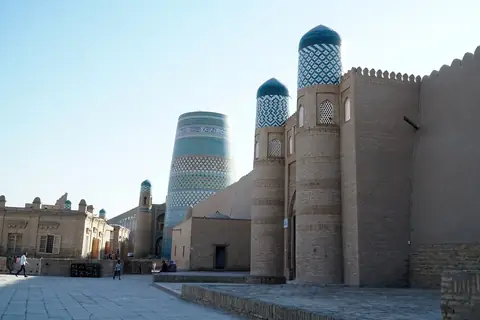
Khiva
Plan two nights inside Khiva’s walled Itchan Kala: where to sleep, the combined ticket, the main monuments, trains from Bukhara and Urgench, and what it costs.
Read the guide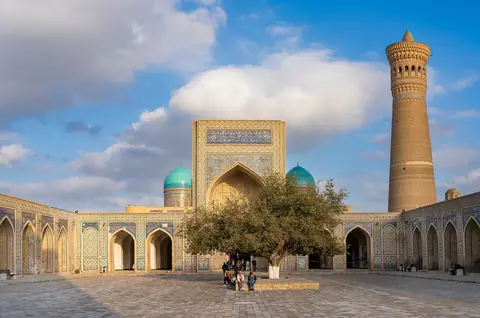
Bukhara
Plan two nights in Bukhara: Lyabi-Hauz, the trading domes, Poi-Kalon, the Ark and small museums, with 2025 ticket prices, rooms, trains and costs.
Read the guide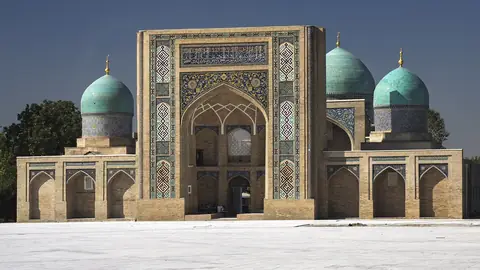
Entering Uzbekistan
Which passports enter Uzbekistan without a visa for 30 days, how hotel registration works, what to declare at customs, and the border and photography advice to follow.
Read the guide
Best time to visit Uzbekistan
Choose your Uzbekistan dates by season: spring and autumn for walking, the summer chillya, winter air, Ramadan, Navruz and the school holidays, month by month.
Read the guideSources and checks before you travel
(40)
- Savitsky Museum: visitor information ↗ — opens in a new tab
- Karakalpakstan tourism site: Savitsky Museum ↗ — opens in a new tab
- Karakalpakstan tourism site: Ship Graveyard ↗ — opens in a new tab
- Karakalpakstan tourism site: Ecological Museum of Muynak region ↗ — opens in a new tab
- Karakalpakstan tourism site: The Aral Sea ↗ — opens in a new tab
- Karakalpakstan tourism site: cuisine ↗ — opens in a new tab
- Karakalpakstan tourism site: cafes and restaurants ↗ — opens in a new tab
- Uzbekistan Tourism: Muynak ↗ — opens in a new tab
- Uzbekistan Tourism: Nukus ↗ — opens in a new tab
- Uzbekistan Tourism: Ayaz-Kala Fortress ↗ — opens in a new tab
- Uzbekistan Tourism: Toprak-Kala ↗ — opens in a new tab
- Uzbekistan Tourism: travel tips ↗ — opens in a new tab
- CAJ.UZ: Muynak day trip from Nukus ↗ — opens in a new tab
- CAJ.UZ: Aral Sea tour from Nukus ↗ — opens in a new tab
- CAJ.UZ: Nukus to Khiva transfer via ancient fortresses ↗ — opens in a new tab
- Advantour: Nukus to Khiva transfers ↗ — opens in a new tab
- OrexCA: Nukus city transfers ↗ — opens in a new tab
- AyimTour: Muynak, the city of ships in the desert ↗ — opens in a new tab
- AyimTour: Fortresses of Ancient Khorezm ↗ — opens in a new tab
- Uzbekistan Airways: domestic fare notice ↗ — opens in a new tab
- Jipek Joli Art, Nukus ↗ — opens in a new tab
- Jipek Joli Inn, Nukus ↗ — opens in a new tab
- Beshqozon: menu ↗ — opens in a new tab
- Beeline: Hello 1 price notice ↗ — opens in a new tab
- Beeline: eSIM ↗ — opens in a new tab
- Ipoteka Bank: exchange rates ↗ — opens in a new tab
- Turkish Airlines: London to Tashkent flights ↗ — opens in a new tab
- Auswaertiges Amt: Usbekistan Sicherheit ↗ — opens in a new tab
- France Diplomatie: Ouzbékistan, sécurité ↗ — opens in a new tab
- UK FCDO: Uzbekistan safety and security ↗ — opens in a new tab
- UK FCDO: Uzbekistan entry requirements ↗ — opens in a new tab
- Karakalpakstan tourism site: Mizdahkan ↗ — opens in a new tab
- Karakalpakstan tourism site: Mazlumkhan-sulu mausoleum ↗ — opens in a new tab
- Karakalpakstan tourism site: Berdakh Museum ↗ — opens in a new tab
- OrexCA: Nukus airport and station transfers ↗ — opens in a new tab
- OrexCA: Khiva and Urgench airport transfers ↗ — opens in a new tab
- Uzbekistan Railways: train timetable table ↗ — opens in a new tab
- Silk Avia: domestic fare levels ↗ — opens in a new tab
- Uzbekistan Railways: Jaloliddin Manguberdi launch ↗ — opens in a new tab
- State Museum of History of Uzbekistan: about the museum ↗ — opens in a new tab
Reference sources for the version dated 26 October 2026. Confirm opening times, access, transport and conditions for your travel dates.
Photo credits
(7)
A rusted fishing vessel on the former seabed at the Moynaq ship graveyard.
Photograph: Koshkinhome — opens in a new tab · CC BY-SA 4.0 — opens in a new tab
Changes: Resized and converted to WebP; displayed with responsive crops. · Original photograph and licence details ↗ — opens in a new tab
Nikolay Grigoriev’s 1918 painting Samarkand Mills, in the collection of the Savitsky Museum in Nukus.
Photograph: Fabienkhan — opens in a new tab · Public domain — opens in a new tab
Changes: Resized and converted to WebP; displayed with responsive crops. · Original photograph and licence details ↗ — opens in a new tab
The excavated rooms of Toprak Kala, the royal residence of the Khorezm kings in the 2nd and 3rd centuries AD.
Photograph: Bernard Gagnon — opens in a new tab · CC0 — opens in a new tab
Changes: Resized and converted to WebP; displayed with responsive crops. · Original photograph and licence details ↗ — opens in a new tab
Ayaz Kala 2, one of the three fortresses of the Ayaz Kala complex, on its hilltop.
Photograph: Bernard Gagnon — opens in a new tab · CC0 — opens in a new tab
Changes: Resized and converted to WebP; displayed with responsive crops. · Original photograph and licence details ↗ — opens in a new tab
The earthen walls and an arched passage at Ayaz Kala 1.
Photograph: Bgag — opens in a new tab · CC0 — opens in a new tab
Changes: Resized and converted to WebP; displayed with responsive crops. · Original photograph and licence details ↗ — opens in a new tab
Ships among the dunes of the Moynaq ship graveyard.
Photograph: Adam Harangozó — opens in a new tab · CC BY-SA 4.0 — opens in a new tab
Changes: Resized and converted to WebP; displayed with responsive crops. · Original photograph and licence details ↗ — opens in a new tab
A stepped ramp between the earthen walls at Toprak Kala.
Photograph: Bgag — opens in a new tab · CC0 — opens in a new tab
Changes: Resized and converted to WebP; displayed with responsive crops. · Original photograph and licence details ↗ — opens in a new tab