Northern Thailand · Chiang Rai
Chiang Rai travel guide: the White and Blue Temples and the mountains
Most visitors see Chiang Rai on a long day trip from Chiang Mai: three photogenic temples and back. Stay a few nights and the province opens up — a calm town with a night market, tea plantations settled by former Chinese soldiers, mountain viewpoints on the Lao border and the Mekong at the Golden Triangle. UNESCO named Chiang Rai a Creative City of Design in 2023.
- Suggested time
- 2–3 days
- Where to stay
- Chiang Rai town, near the clock tower and night market
- Season and timing
- The cool season (November to February) brings clear mountain mornings; late in the dry season, smoke can reduce visibility.
The short answer
Stay two or three nights in Chiang Rai town. Visit Wat Rong Khun (the White Temple) early on the first morning and Wat Rong Suea Ten (the Blue Temple) in the afternoon; spend a day in the hills at Doi Mae Salong; and if you can, drive out for sunrise at Phu Chi Fa. Fly into Mae Fah Luang–Chiang Rai International Airport (CEI), or continue to Chiang Saen and the Golden Triangle.
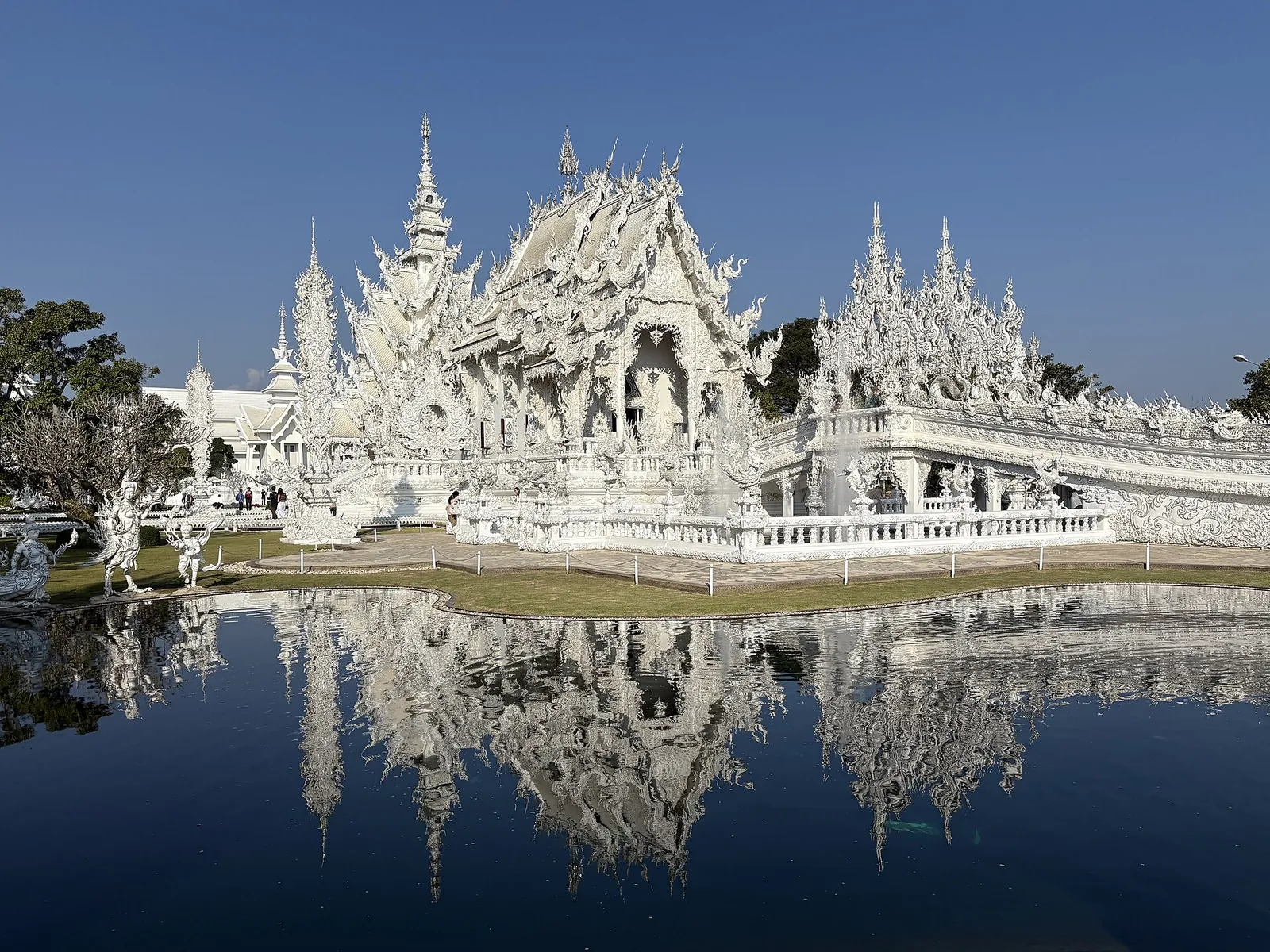
Wat Rong Khun: the White Temple
Wat Rong Khun is the creation of the Chiang Rai artist Chalermchai Kositpipat, who designed and built it as a unique work of Buddhist art combining Lanna culture with mirror-studded white stucco and large murals, as the Ministry of Tourism and Sports' directory describes. It lies just south of town on the road to Phan.
The directory lists opening from 8:00 to 17:00 on weekdays and to 17:30 at weekends. Arrive at opening time: by mid-morning the tour buses from Chiang Mai arrive. Dress modestly; parts of the complex have their own rules on photography.
Wat Rong Suea Ten and the Black House
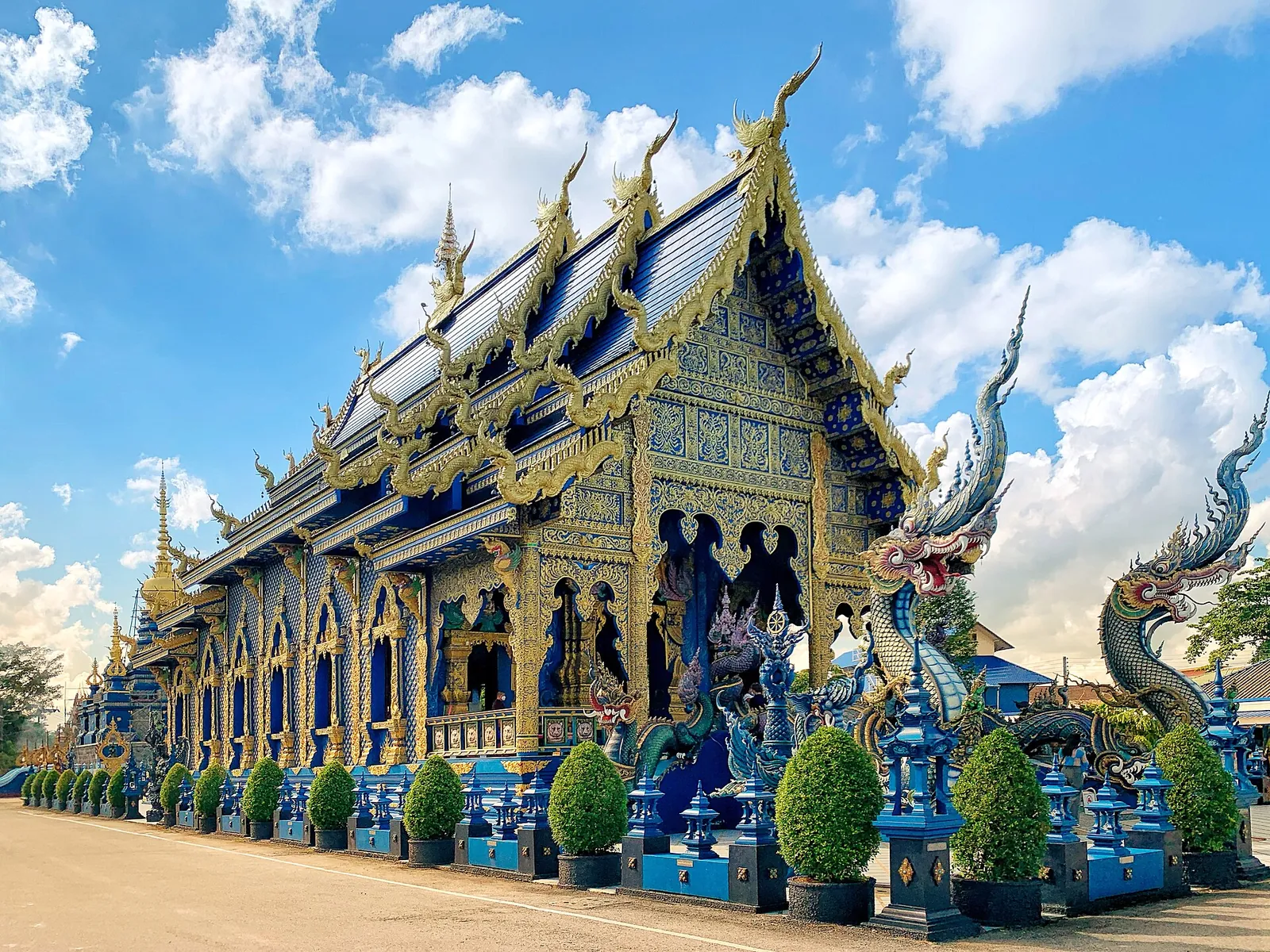
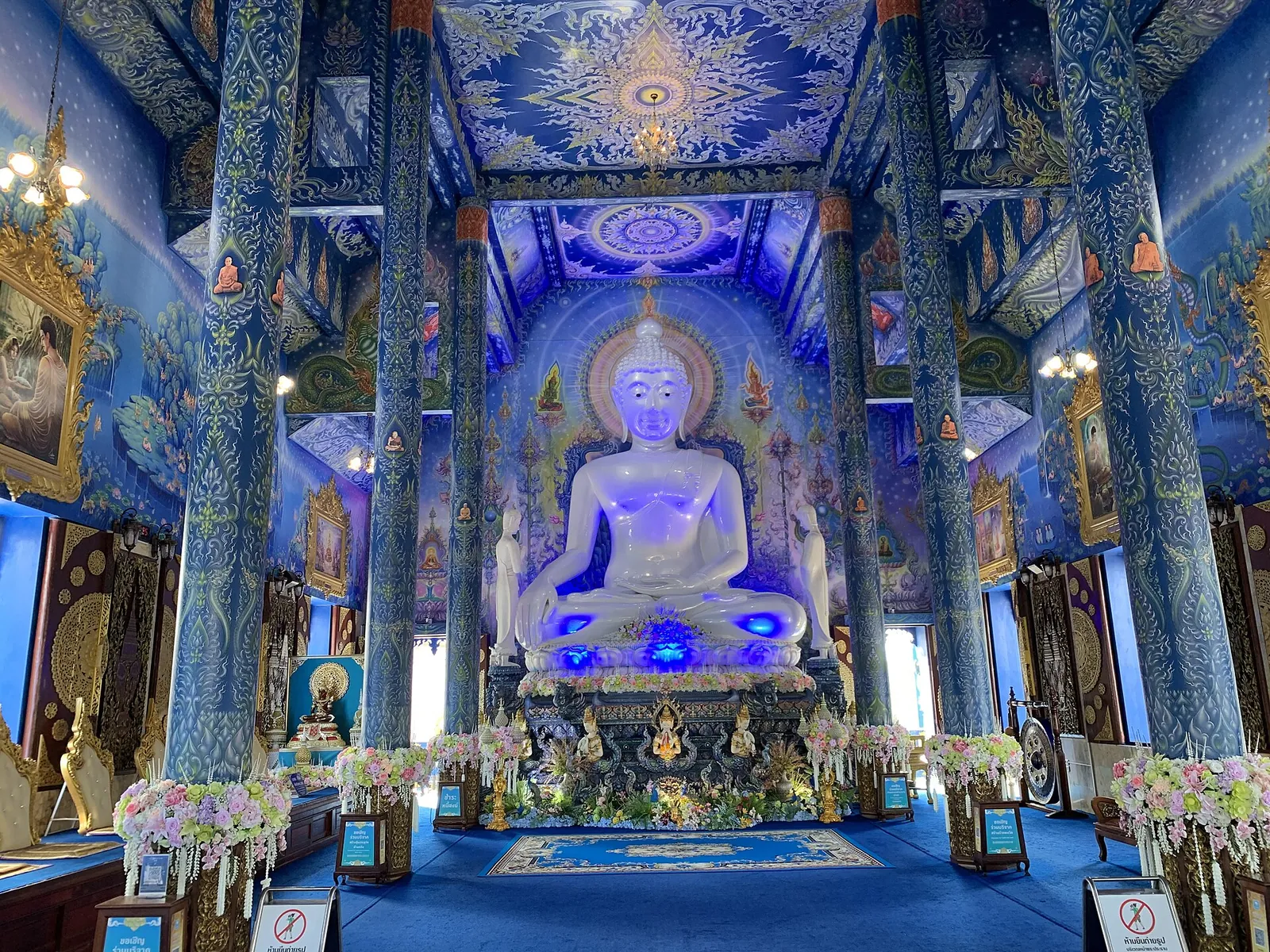
Wat Rong Suea Ten, the Blue Temple, stands on the Kok River just outside town. Its vihara, begun in 2005 on the site of an abandoned temple, is decorated in deep blues and gold in a style the directory compares with the work of Chalermchai Kositpipat and Thawan Duchanee.
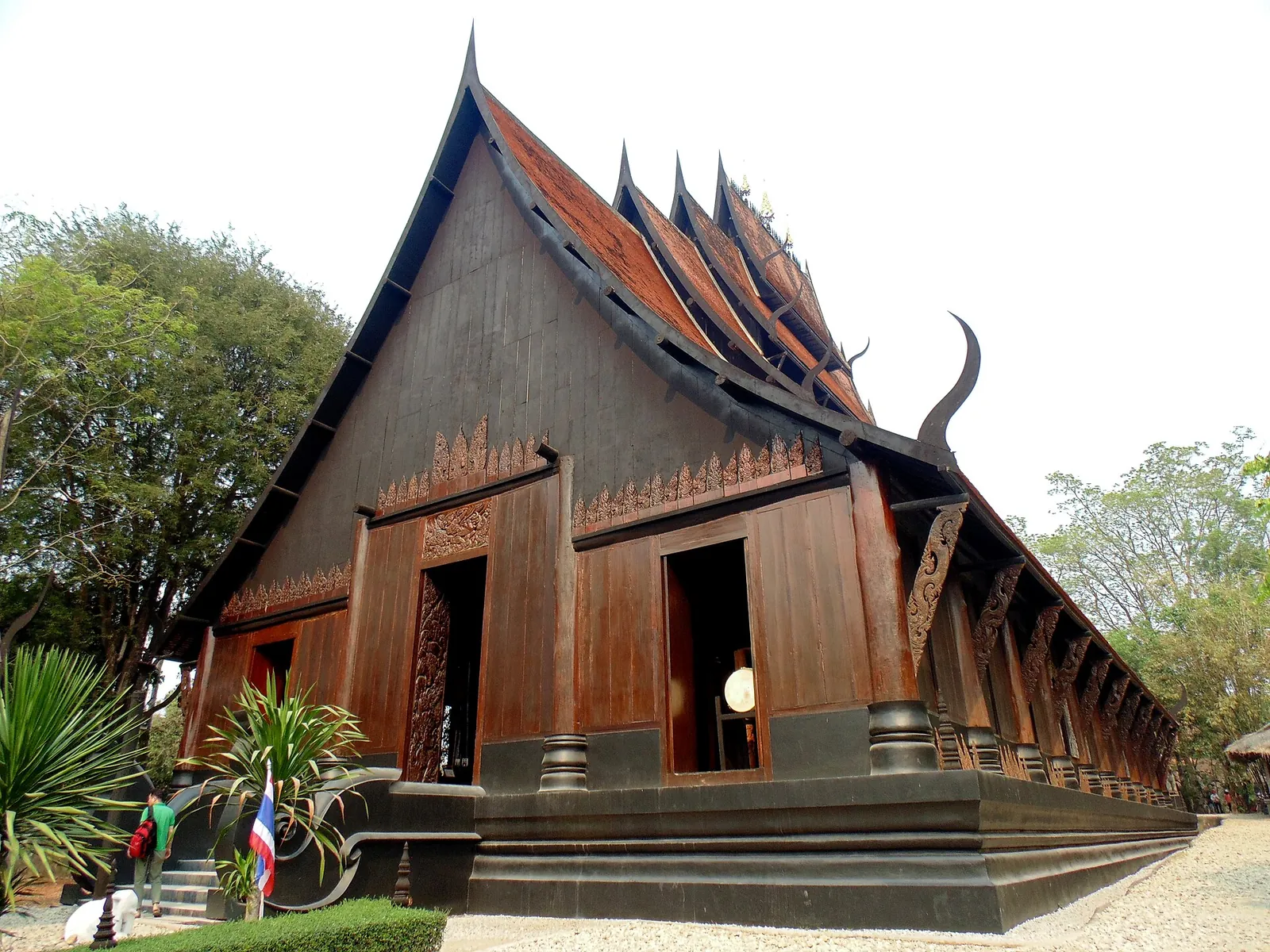
Baan Dam, the Black House museum north of town, displays the dark, powerful work of Thawan Duchanee in a collection of buildings. Visit it on the same day as the Blue Temple; both are a short drive from the centre.
Make time for the local food
What to eat and where to look
Khanom jeen nam ngiao
Rice noodles in a tangy tomato and pork-rib broth with dried flowers and fermented soybean — a northern classic.
- Where to look
- Morning noodle shops and markets in town.
- Fit it into your day
- Breakfast or an early lunch.
Contains pork and pork blood in many versions.
Khao soi
Egg noodles in coconut curry broth, served across the north and well made in Chiang Rai's noodle shops.
- Where to look
- Noodle shops in town.
- Fit it into your day
- Lunch after the temples.
Contains coconut and wheat noodles.
Yunnanese food at Doi Mae Salong
Hand-pulled noodles, steamed buns, braised pork leg and other dishes from the Kuomintang settlers' Yunnanese heritage, with local oolong tea.
- Where to look
- Restaurants and tea houses in Mae Salong village.
- Fit it into your day
- Lunch and a tea tasting on the hill.
Pork-based dishes are common.
Night bazaar snacks
Grilled skewers, sai ua sausage, sticky rice and sweets at the night bazaar food court.
- Where to look
- The night bazaar near the bus station in town.
- Fit it into your day
- A relaxed dinner on your first evening.
Busy at weekends.
Doi Mae Salong: tea hills and a Yunnanese town
Doi Mae Salong, at about 1,200 metres, was settled by former Chinese Kuomintang soldiers of the 93rd Division; the directory notes that General Duan Si Wen and his followers were allowed to live here from 1961. Today it is known for its tea and coffee plantations, Yunnanese food and cool air.
It is a winding drive of a couple of hours from town. Stay overnight to see the plantations in the morning mist, taste oolong tea and eat Yunnanese noodles and steamed buns.
Phu Chi Fa sunrise
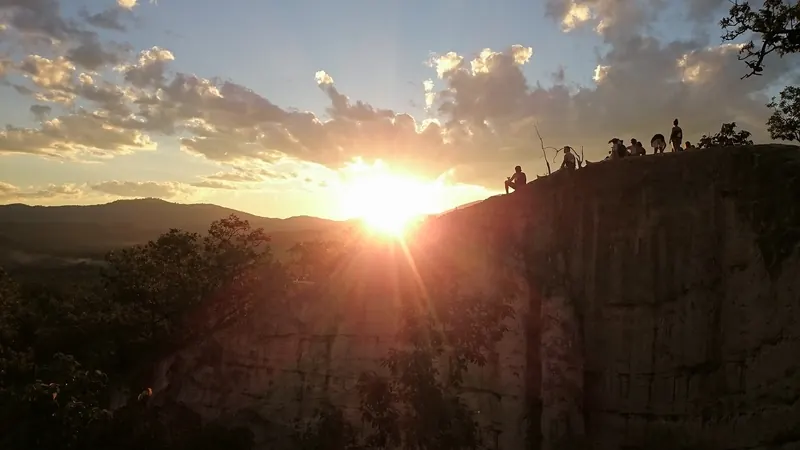
Phu Chi Fa, a 1,628-metre peak on the border with Laos, is famous for its sunrise over a sea of mist, especially in the cool season. The directory gives the distance from Chiang Rai as about 108 kilometres via Thoeng.
Seeing sunrise means staying nearby the night before and walking up in the dark; bring a torch and warm clothes. It is a long excursion from town and best done with a car.
Chiang Rai town and getting around
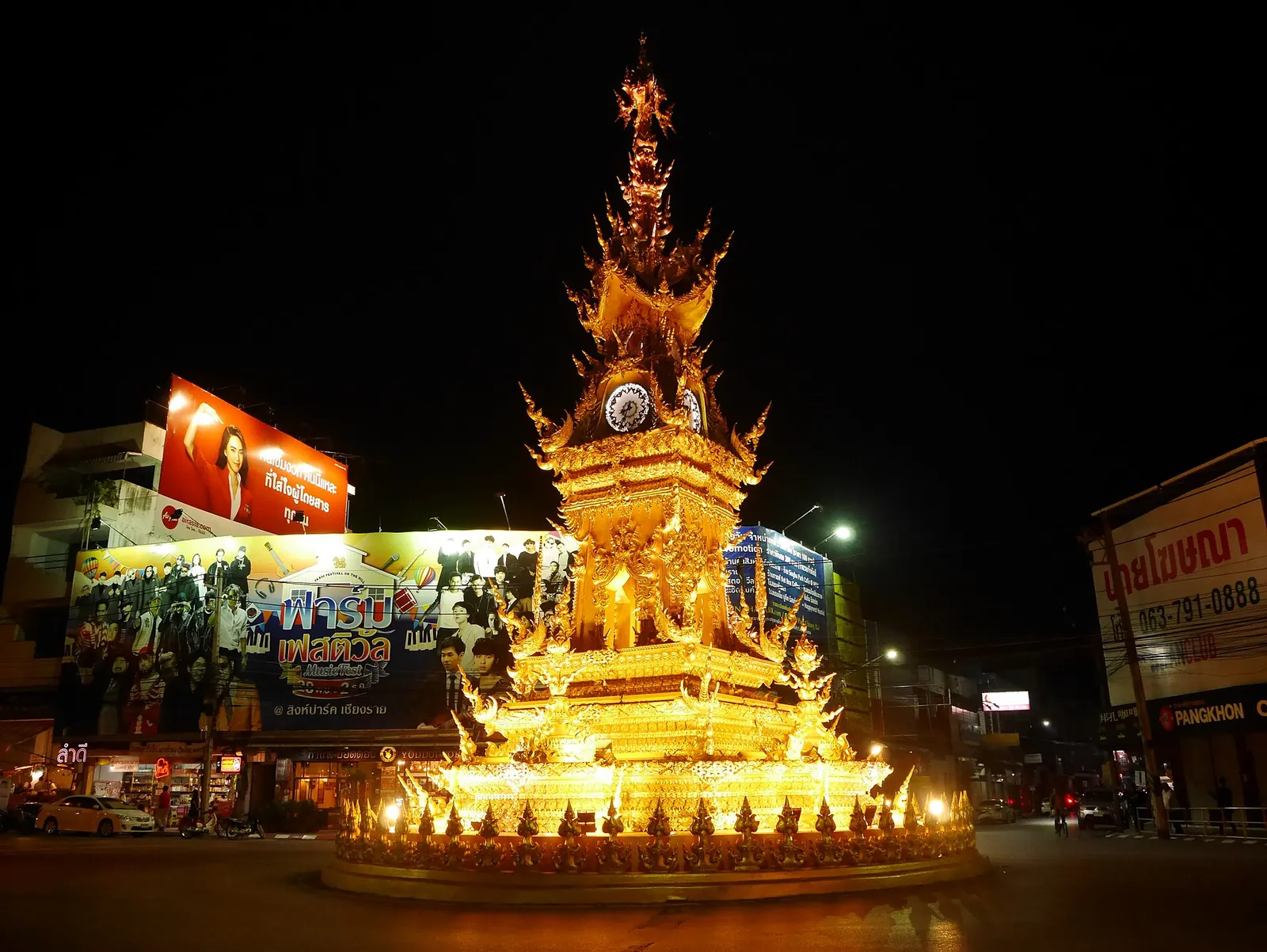
The town itself is small and easy-going: a gilded clock tower that lights up in the evening, a night bazaar with food stalls and the riverside along the Kok. It makes a comfortable base between excursions.
Mae Fah Luang–Chiang Rai International Airport (CEI) has flights from Bangkok and, since January 2026, a direct Scoot service from Singapore, according to TAT. Buses connect with Chiang Mai, Chiang Saen and the border towns. For the mountains, hire a car or driver.
Practical questions
Is Chiang Rai worth staying in, or just a day trip?
Stay two or three nights if you can. The temples fit in a day, but the mountains, tea hills and the Golden Triangle need more time.
What time does the White Temple open?
The directory lists 8:00–17:00 on weekdays and 8:00–17:30 at weekends. Arrive at opening time to beat the tours.
How do I get to Chiang Rai?
Fly into Mae Fah Luang–Chiang Rai International Airport (CEI), or take the bus from Chiang Mai.
When is the best time for Phu Chi Fa?
Cool-season mornings, roughly November to February, for the best chance of a sea of mist.
What is Doi Mae Salong known for?
Tea and coffee plantations, cool air and the Yunnanese culture of former Kuomintang soldiers who settled there.
Sources and checks before you travel
Reference sources for the version dated 1 October 2026. Confirm opening times, access, transport and conditions for your travel dates.
- Thailand Tourism Directory: Wat Rong Khun ↗ — opens in a new tab
- Thailand Tourism Directory: Wat Rong Suea Ten ↗ — opens in a new tab
- Thailand Tourism Directory: Doi Mae Salong ↗ — opens in a new tab
- Thailand Tourism Directory: Phu Chi Fa ↗ — opens in a new tab
- TAT Newsroom: Chiang Rai joins the UNESCO Creative Cities list ↗ — opens in a new tab
- TAT Newsroom: inaugural Singapore–Chiang Rai flight ↗ — opens in a new tab
Does this experience fit your route?
Compare the programme, departure point and practical requirements with your travel plans.
Check dates and details on Viator ↗ — opens in a new tabAffiliate link · Book with ViatorPhoto credits
Wat Rong Khun, the White Temple, south of Chiang Rai.
Photograph: Chainwit. — opens in a new tab · CC BY 4.0 — opens in a new tab
Changes: Resized and converted to WebP; displayed with responsive crops. · Original photograph and licence details ↗ — opens in a new tab
Wat Rong Suea Ten, the Blue Temple.
Photograph: Chainwit. — opens in a new tab · CC BY-SA 4.0 — opens in a new tab
Changes: Resized and converted to WebP; displayed with responsive crops. · Original photograph and licence details ↗ — opens in a new tab
Inside the Blue Temple.
Photograph: Chainwit. — opens in a new tab · CC BY-SA 4.0 — opens in a new tab
Changes: Resized and converted to WebP; displayed with responsive crops. · Original photograph and licence details ↗ — opens in a new tab
Baan Dam, the Black House museum.
Photograph: Szwendam się — opens in a new tab · CC BY-SA 4.0 — opens in a new tab
Changes: Resized and converted to WebP; displayed with responsive crops. · Original photograph and licence details ↗ — opens in a new tab
The clock tower in Chiang Rai town at night.
Photograph: กสิณธร ราชโอรส — opens in a new tab · CC BY-SA 4.0 — opens in a new tab
Changes: Resized and converted to WebP; displayed with responsive crops. · Original photograph and licence details ↗ — opens in a new tab