Itineraries · Northern Thailand
Chiang Mai and Chiang Rai in 7 days: two northern bases
The north deserves more than a long day in a minibus. Give Chiang Mai four nights for its temple lanes, market kitchens and one day outside the city, then move to Chiang Rai for two nights among a different generation of temples. The change of base is the point: there is no need to drive back to Chiang Mai after seeing the White Temple, and no need to fit the Golden Triangle into an already full afternoon. This week has two hotels, one road transfer and enough blank space to sit down for a second bowl of noodles.
- Suggested time
- 7 days (6 nights)
- Where to stay
- Chiang Mai Old Town or Warorot area (4 nights); Chiang Rai town (2 nights)
- Season and timing
- TAT describes November to February as northern Thailand's cooler season and recommends layers for mountain visits. The trip also works outside that window if you adapt the outdoor day to weather and air quality; no mountain sunrise or clear view is guaranteed.
The short answer
Arrive in Chiang Mai and spend four nights inside or beside the Old Town, or near Warorot Market if food is your first priority. Use the first full day for Old Town temples and the market, the second for one countryside outing or a cooking class, and the third for Lamphun or an unscheduled city day. On day five, take a booked bus or a car with a driver to Chiang Rai and leave the arrival afternoon free. Stay two nights in Chiang Rai town, visit the White and Blue temples on day six, then depart through Chiang Rai or allow a separate return journey. November to February is the cool-weather window highlighted by TAT; check air quality as well as the forecast before choosing outdoor days.
Four nights here, two nights there
The two cities are worth treating as separate bases. Chiang Mai gives you the longer stay: a day for temples and markets, one for the countryside and another that does not have to be booked. Chiang Rai gets a full sightseeing day between two nights, so the contemporary temples are not squeezed between the outward and return halves of a day trip.
In Chiang Mai, choose the Old Town for walks between temples and cafés, or the Warorot Market area for an early market visit and easy meals. Those choices suit this route better than a remote resort that needs a car every time you want dinner. Ask how much street noise reaches the room and where your transfer can collect you.
In Chiang Rai town, stay near the central market and clock-tower area if you want to walk out for dinner. The temple day still needs transport: the White Temple is a separate outing, not something to assume is outside your hotel door. Arrange that day's stops locally rather than keeping the Chiang Mai driver for the whole week.
Days 1–2: Chiang Mai, temple lanes and market meals
Day one is arrival. Settle into your room, take a short walk and eat nearby; a late flight should not cost you an attraction booking. Keep the first evening simple enough that the next morning can start without an alarm.
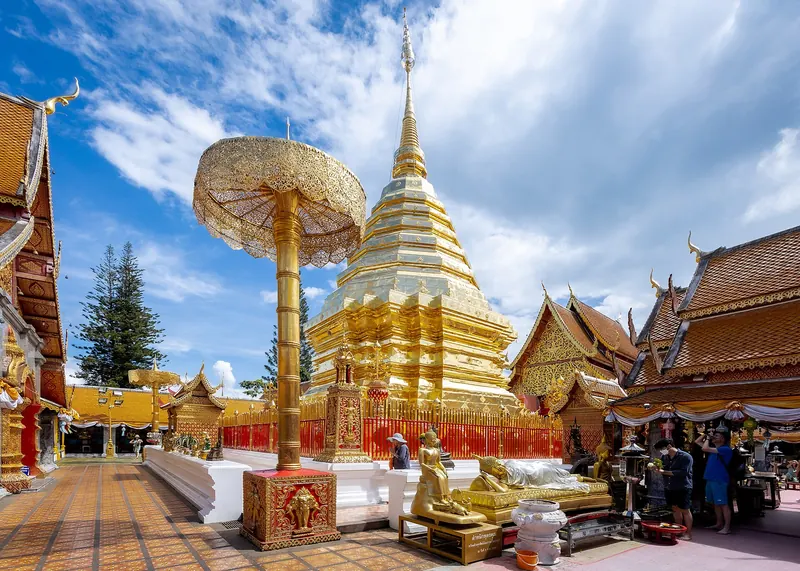
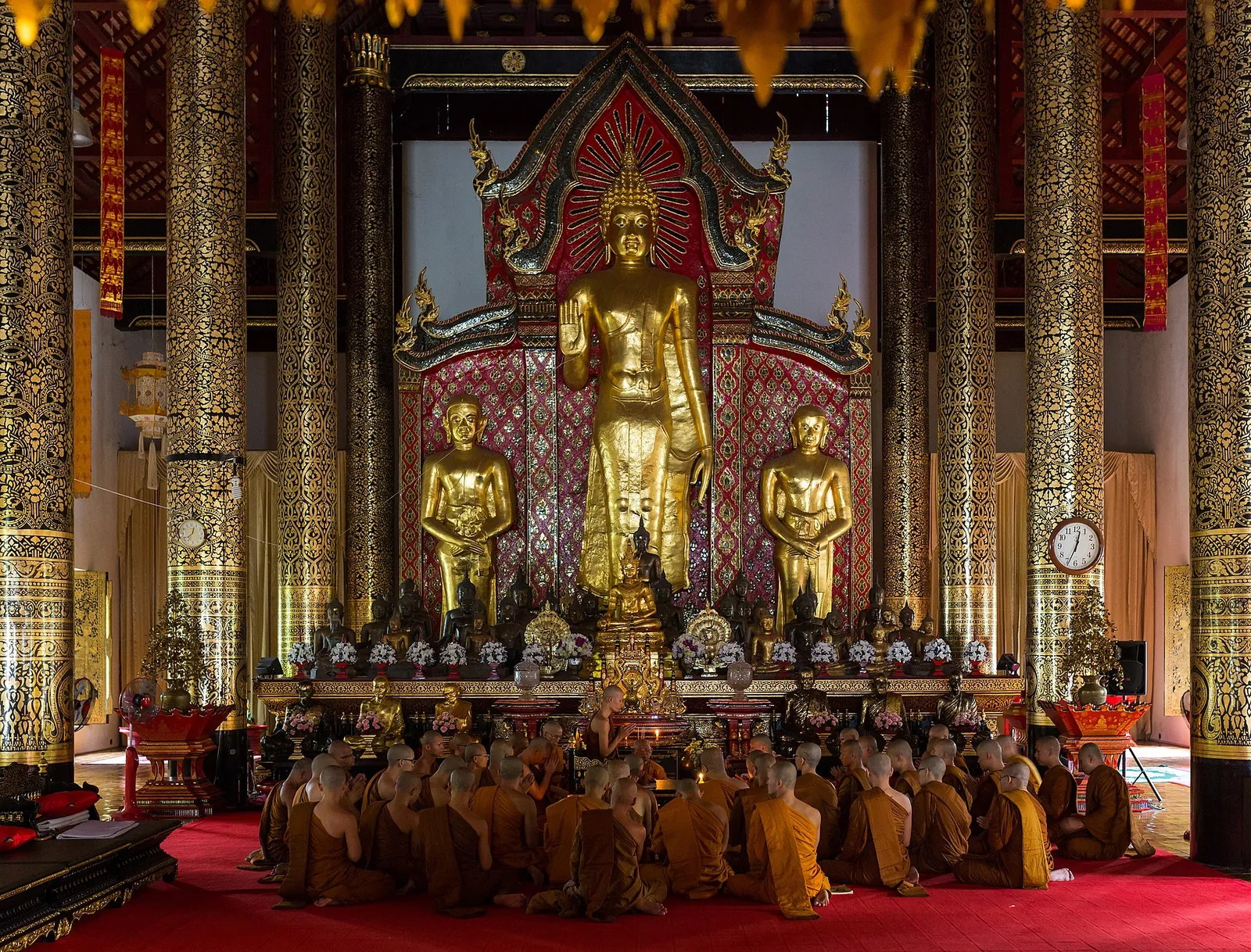
Begin day two with Wat Chedi Luang in the Old Town. The Thailand Tourism Directory places it in the heart of Chiang Mai and describes its great, partly collapsed chedi as an expression of Lanna identity. Let that be an introduction to the city rather than the first stop in a temple-counting contest. Leave time for the surrounding lanes, a café and a midday rest.
Make Warorot Market the food stop, not an afterthought. TAT includes it in its Chiang Mai itinerary for local shopping and handicrafts; the directory describes the market's northern food. Browse first, then choose a busy food counter and eat something that is being prepared in front of you. Keep dinner open for khao soi or another northern dish rather than booking a second long activity.
Make time for the local food
What to eat and where to look
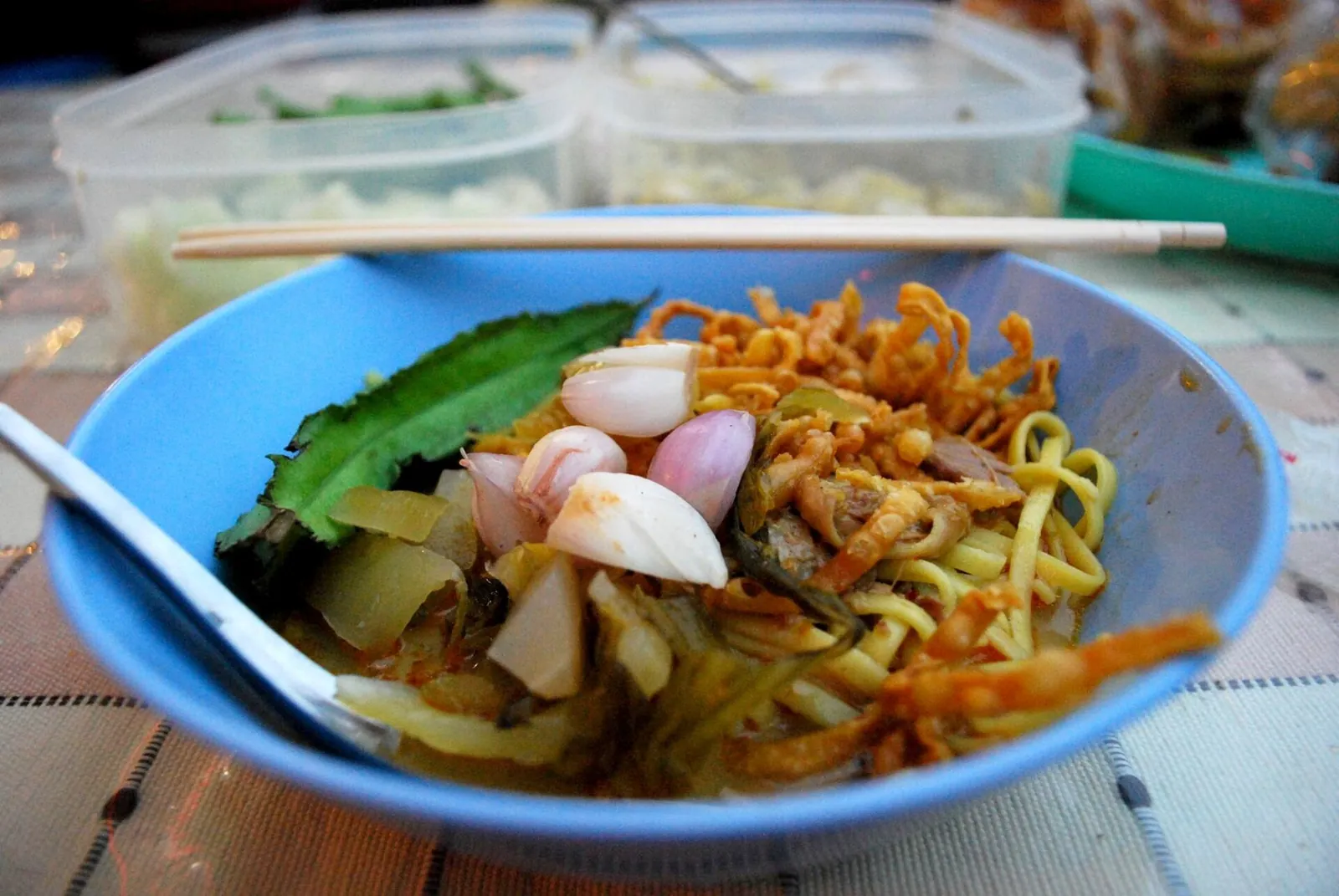
Khao soi
Northern coconut-curry noodles, the bowl highlighted in TAT’s northern winter feature.
- Where to look
- Noodle shops in Chiang Mai and Chiang Rai; choose a busy specialist rather than a long sightseeing menu.
- Fit it into your day
- Lunch on the Old Town day or dinner after the Chiang Rai transfer.
Usually contains meat and an animal-based broth; ask about ingredients and add chilli to taste.
Sai ua and sticky rice
Northern herb sausage with sticky rice, a practical market meal rather than another formal restaurant booking.
- Where to look
- Northern-food counters at Warorot and town markets; check what has just been cooked.
- Fit it into your day
- A market lunch on day two, with small dishes to share.
The sausage is usually pork and can be spicy; it is not a vegetarian option.
Khanom jeen nam ngiao
Rice noodles with a tangy northern broth, commonly made with tomatoes and pork; a different bowl from coconut-rich khao soi.
- Where to look
- Northern noodle counters and small restaurants in the two cities.
- Fit it into your day
- One Chiang Rai lunch, leaving the evening free to try other market dishes.
Ask about pork, blood products and other animal ingredients if you avoid them.
Days 3–4: choose one outing, keep one day loose
On day three, choose between a countryside or mountain outing and a cooking class. Doi Inthanon is an option for a day outside town; a class is the easier choice if the weather is poor or you would rather work through ingredients than road bends. Do not combine them. Check the actual pickup area, walking demands, food restrictions and cancellation terms before choosing.
TAT's northern winter feature makes the practical point that mountain conditions can be much cooler than the city. Bring a layer even if Chiang Mai feels warm when you leave, and choose the outing using the current weather and air-quality forecast. A tour description is not a promise of a clear summit view.
Day four can be Lamphun, with transport arranged for the temple visit and lunch, or a free Chiang Mai day. The latter is no lesser option: revisit a market, take a second look at a temple or spend the afternoon reading. If you choose Lamphun, use our destination guide for the local context and confirm access to the sites before setting out. Lampang is a different extension, not another stop to attach to this day.
Day 5: move to Chiang Rai, without a sightseeing deadline
TAT's published Chiang Mai–Chiang Rai itinerary explicitly joins the cities by road. Its article is from 2017, so it supports the route, not a current bus departure or a drive-time guarantee. Reserve the service for your travel date, check the departure terminal and arrival point, and make sure the luggage allowance suits you.
A bus is the straightforward public-transport choice when the dated service works for you; a car with a driver gives more control over collection and drop-off. Neither turns this into a day for distant temple detours. Bring water and a snack, check into Chiang Rai, and let the afternoon be whatever the journey leaves you.
Spend the evening around town. A market dinner and a walk near the clock tower are enough. Do not book around old light-show times: we have not reconfirmed the programme, and this itinerary does not depend on it.
Day 6: Chiang Rai’s White and Blue temples
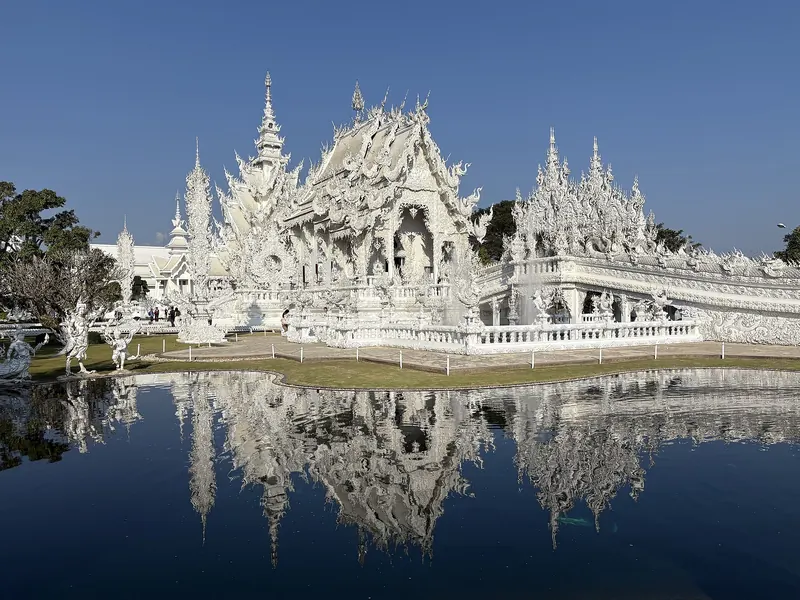
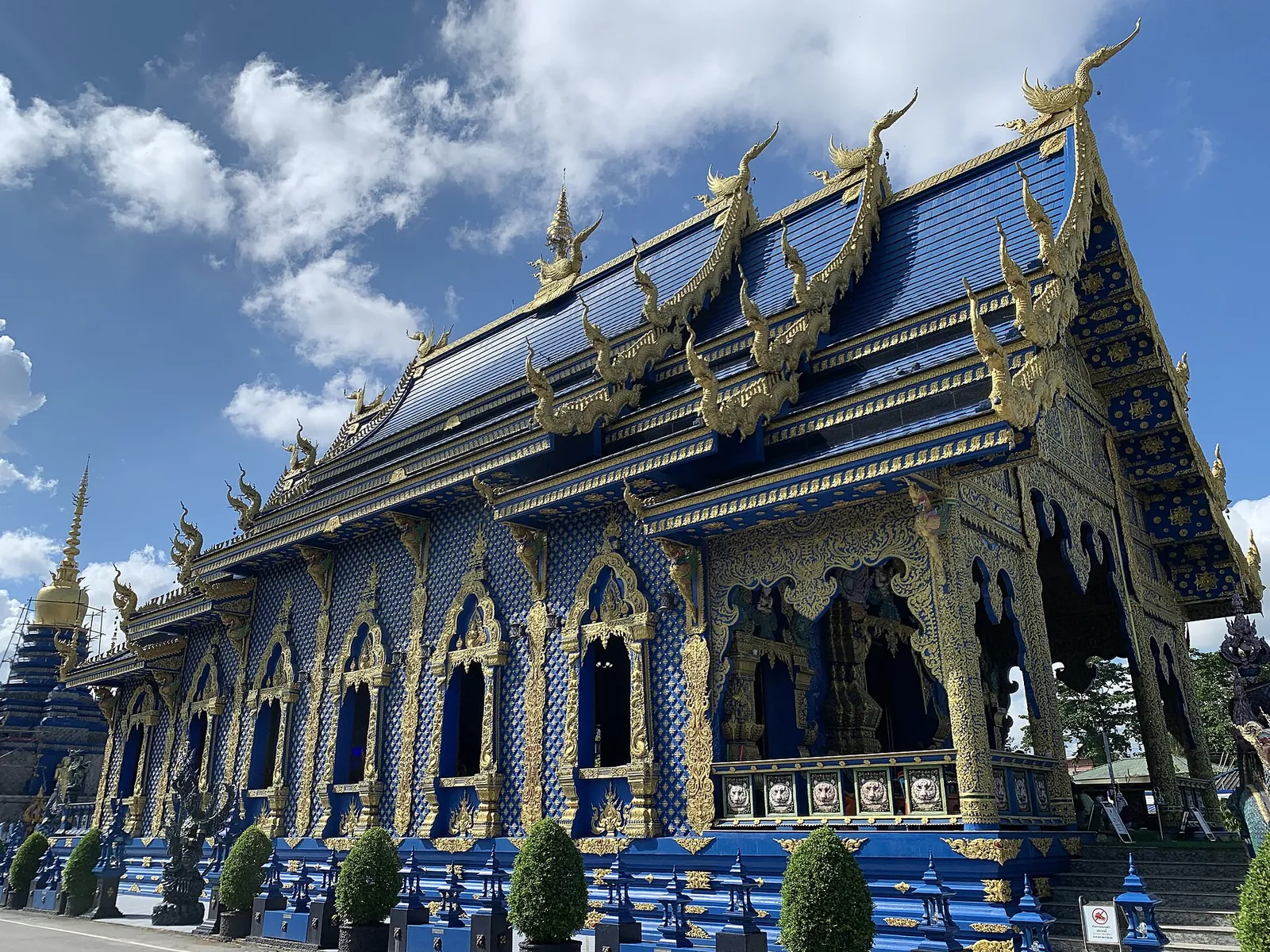
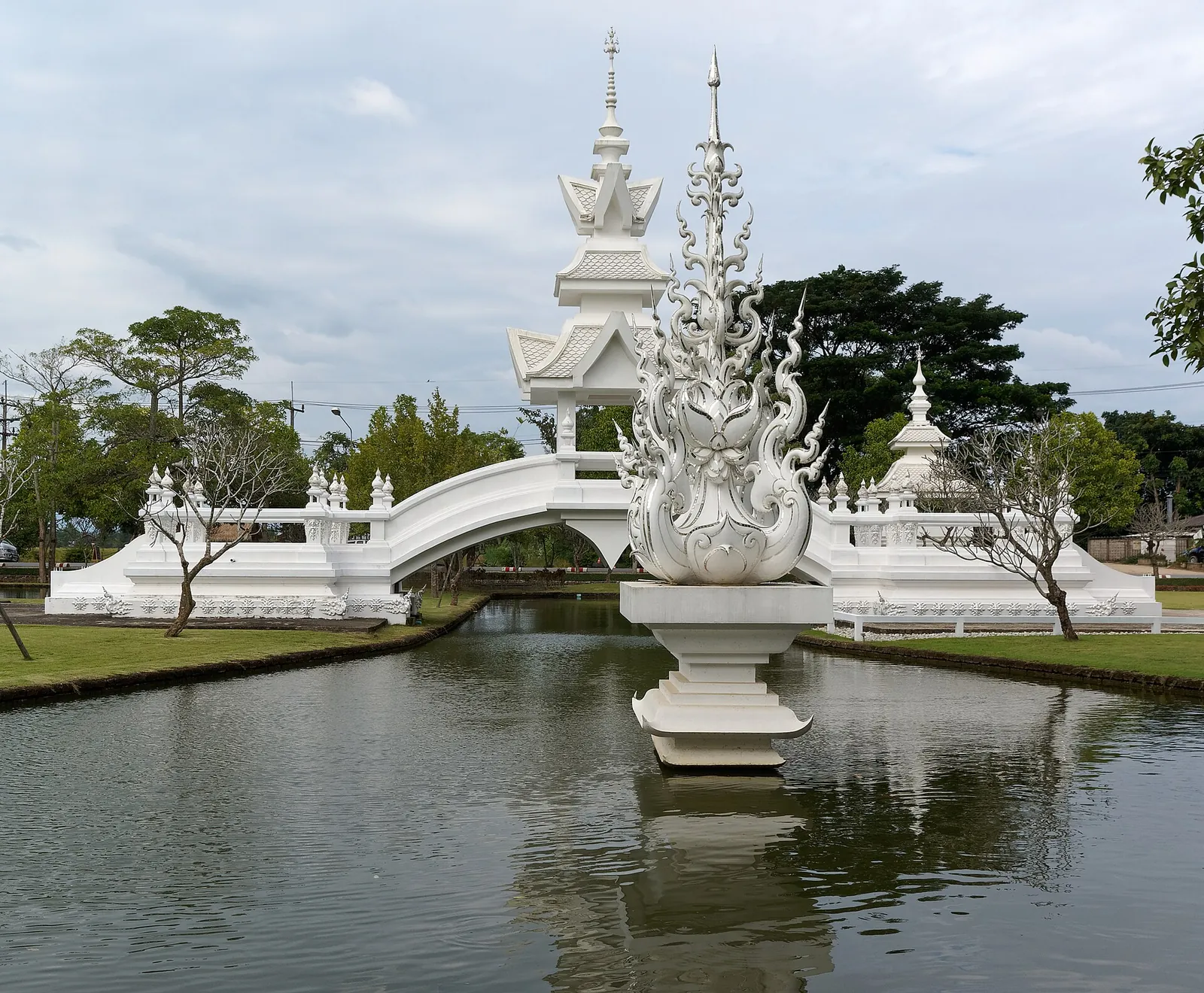
Build the day around Wat Rong Khun, the White Temple, and Wat Rong Suea Ten, the Blue Temple. TAT describes the first as Chalermchai Kositpipat's contemporary art project, with Buddhist and mythical imagery, and presents the Blue Temple as its vivid contrast. Give each time for looking rather than a photo stop on a checklist.
Arrange a local driver or a dated tour that actually starts in Chiang Rai. Agree the collection point, which entrances are included, time at each site and the return to your hotel. Dress for places of worship and follow the on-site photography rules; opening times and fees have not been reconfirmed for this article.
Keep the late afternoon in town and make dinner a leisurely one. The Golden Triangle is a worthwhile extra day from Chiang Rai, with Chiang Saen as a separate destination, but it is not part of this two-night stay. Add a night if that is important, rather than taking the time from both temples and finishing on the road.
The week at a glance
This is an editorial plan, not a timetable. Swap the cooking and countryside days to suit weather, and confirm every departure and attraction opening for your dates.
- Day 1 — Chiang Mai: arrive, settle in, a short walk and local dinner. Night: Chiang Mai.
- Day 2 — Old Town and market: Wat Chedi Luang, nearby lanes, Warorot food stop, midday rest. Night: Chiang Mai.
- Day 3 — One booked activity: countryside or mountain outing, or a cooking class. Night: Chiang Mai.
- Day 4 — Room to breathe: Lamphun with arranged transport, or a free city day. Night: Chiang Mai.
- Day 5 — Chiang Rai transfer: bus or driver, check in, town dinner; no fixed sightseeing deadline. Night: Chiang Rai.
- Day 6 — Temple day: White Temple and Blue Temple with local transport, last evening in town. Night: Chiang Rai.
- Day 7 — Departure: Chiang Rai airport or a separately planned onward journey.
Leaving from the other end
Book the trip as Chiang Mai in, Chiang Rai out if an actual flight itinerary suits your dates. The airport codes are CNX and CEI; check both the airport and any connection before paying. This article does not promise a particular nonstop international route.
If your international flight is from Bangkok, price the onward flight from Chiang Rai as part of the whole booking, with enough time for a connection or an overnight in Bangkok. If you need to return to Chiang Mai, make that a separate travel day: it is not an extra sightseeing stop before a same-day early flight.
Practical questions
Is seven days enough for both cities?
Yes, with four nights in Chiang Mai and two in Chiang Rai. That allows two full Chiang Mai activity days, a flexible day, one road-transfer day and one full Chiang Rai day. The Golden Triangle needs extra time.
Should I visit Chiang Rai as a day trip from Chiang Mai?
For this week, sleep there instead. A return day trip spends time on the same road twice and restricts the temples to a packed schedule. Two nights give you a town evening and a full local sightseeing day.
Can I use a Chiang Mai tour for the Chiang Rai temple day?
Only if it actually fits your starting point. The existing Chiang Rai temples product in our Chiang Rai guide departs from Chiang Mai; it is not a local pickup for someone already sleeping in Chiang Rai. Arrange transport from your own base.
Should I add Pai or the Golden Triangle?
Add days for either. Pai is a different mountain-road itinerary; the Golden Triangle is an extra Chiang Rai outing. Neither belongs on the Chiang Mai–Chiang Rai transfer day.
When is the best season?
TAT highlights November to February for cooler northern weather. Mountain layers still matter, and you should check current air quality and weather before outdoor trips rather than relying on a season alone.
Sources and checks before you travel
Reference sources for the version dated 7 October 2026. Confirm opening times, access, transport and conditions for your travel dates.
- TAT: Chiang Mai and Chiang Rai route ↗ — opens in a new tab
- TAT: northern winter ↗ — opens in a new tab
- Thailand Tourism Directory: Wat Chedi Luang ↗ — opens in a new tab
- Thailand Tourism Directory: Warorot Market ↗ — opens in a new tab
- Thailand Tourism Directory: Wat Rong Khun ↗ — opens in a new tab
- Thailand Tourism Directory: Wat Rong Suea Ten ↗ — opens in a new tab
- Thailand Tourism Directory: Wat Phra That Hariphunchai ↗ — opens in a new tab
Does this experience fit your route?
A cooking class or a single countryside day can give the Chiang Mai stay a shape without filling the whole week. Check pickup, walking demands and dietary options before you book.
Check dates and details on Viator ↗ — opens in a new tabAffiliate link · Book with ViatorPhoto credits
Wat Rong Suea Ten, Chiang Rai’s Blue Temple, on the final full day
Photograph: Chainwit. — opens in a new tab · CC BY-SA 4.0 — opens in a new tab
Changes: Resized and converted to WebP; displayed with responsive crops. · Original photograph and licence details ↗ — opens in a new tab
The assembly hall at Wat Chedi Luang in Chiang Mai’s Old Town
Photograph: Diliff — opens in a new tab · CC BY-SA 3.0 — opens in a new tab
Changes: Resized and converted to WebP; displayed with responsive crops. · Original photograph and licence details ↗ — opens in a new tab
The bridge and sculpted details at Wat Rong Khun, the White Temple
Photograph: Jakub Hałun — opens in a new tab · CC BY-SA 4.0 — opens in a new tab
Changes: Resized and converted to WebP; displayed with responsive crops. · Original photograph and licence details ↗ — opens in a new tab
A khao soi meal at a Chiang Mai night market
Photograph: Alpha from Melbourne, Australia — opens in a new tab · CC BY-SA 2.0 — opens in a new tab
Changes: Resized and converted to WebP; displayed with responsive crops. · Original photograph and licence details ↗ — opens in a new tab