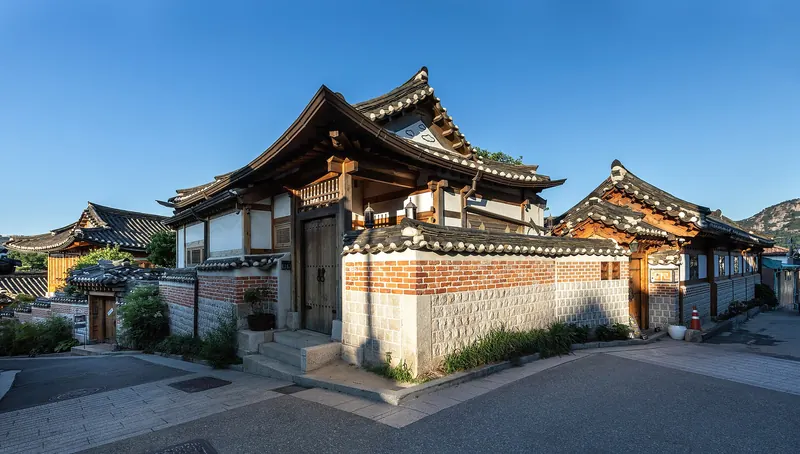
Busan and South Gyeongsang · Busan
Haeundae and Gwangalli, Busan: beaches, Blueline Park, bridge nights
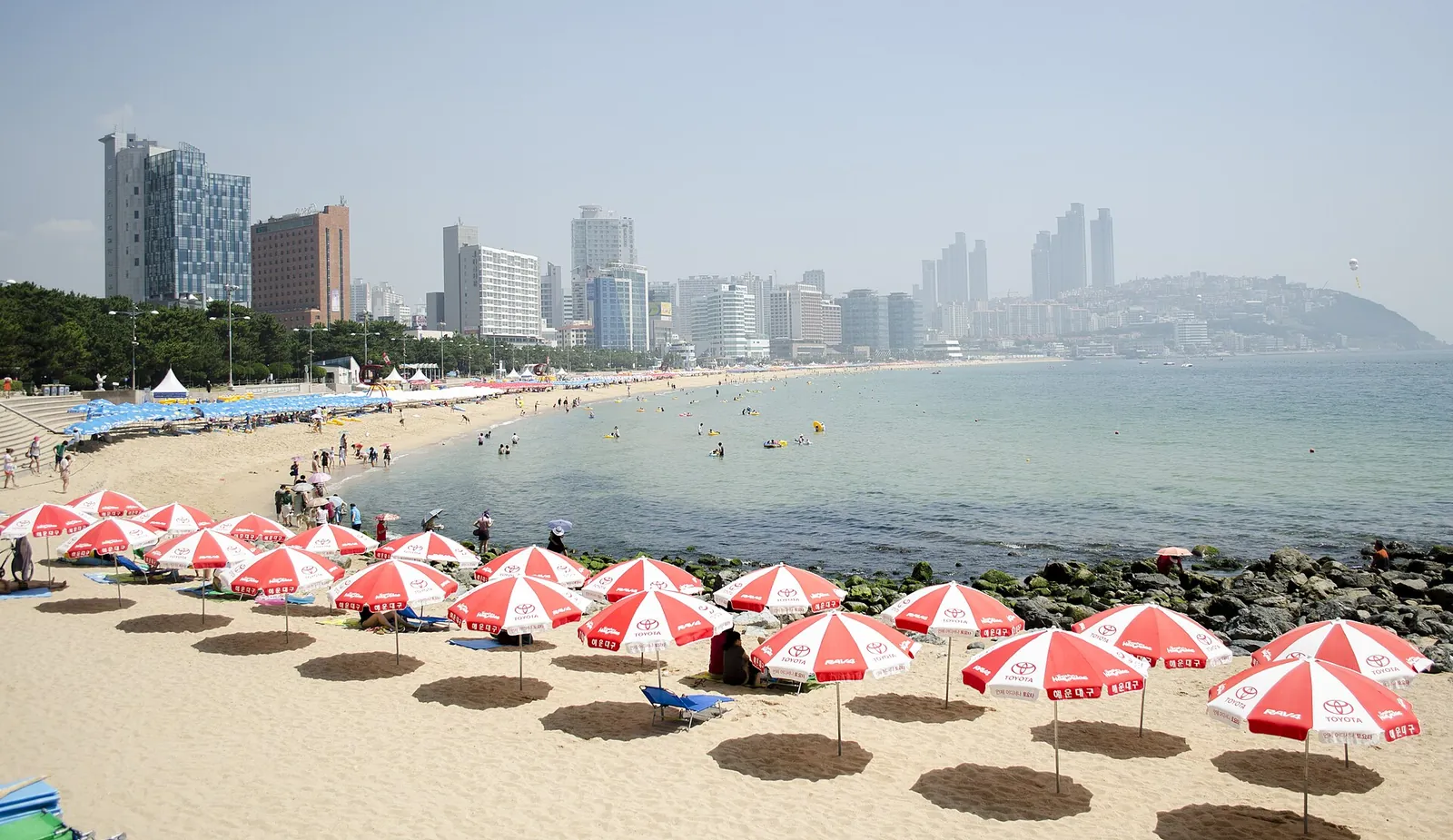
Haeundae and Gwangalli are the two beaches most visitors mean when they say they want the seaside part of Busan, and both are on Busan Metro Line 2. Haeundae is the big one: a long city beach backed by high-rise hotels, with the camellia-covered headland of Dongbaekseom at one end and the old coastal railway, now Haeundae Blueline Park, running east from the other towards Cheongsapo and Songjeong. Gwangalli, a short way west, is smaller and livelier after dark, because it faces Gwangandaegyo, the 7.4-kilometre bridge that is lit up every night and is the backdrop for a drone show every Saturday and the city's fireworks festival each autumn. Further up the coast, Haedong Yonggungsa sits on the rocks above the sea, one of the few Korean temples built on the shore rather than in the mountains.
- Suggested time
- 2–3 nights
- Where to stay
- Haeundae Beach for the coastal railway, Dongbaekseom and the temple; Gwangalli Beach for bridge views and nightlife; both are on Busan Metro Line 2
- Season and timing
- The official swimming season, when lifeguards are on duty, is short: for 2026 VisitKorea listed 26 June to 15 September at Haeundae and 1 July to 31 August at Gwangalli, and swimming is not allowed outside those dates or at night. Summer is also when both beaches are most crowded. Autumn is the best time for everything except swimming: the Busan International Film Festival is held every October with the Busan Cinema Center as its main venue, and the 21st Busan Fireworks Festival is on Saturday 7 November 2026 at Gwangalli. In winter the Haeundae Light Festival fills the beach with light installations (the 2025–26 edition ran from 29 November to 18 January) and the camellias on Dongbaekseom begin to bloom; in May the Haeundae Sand Festival brings large sand sculptures to the beach.
The short answer
Stay two or three nights. Sleep by Haeundae Beach if you want the Blueline Park trains, Dongbaekseom and a shorter trip to Haedong Yonggungsa; sleep by Gwangalli Beach if your evenings matter more than your mornings and you want the lit-up bridge from your window or the beach. Give one day to the Haeundae side: Dongbaekseom and The Bay 101 in the morning, then the Sky Capsule or the Beach Train from Mipo to Cheongsapo and on to Songjeong. Give a second morning to Haedong Yonggungsa (Donghae Line to OSIRIA Station, then a short bus ride and a walk), and spend that evening at Gwangalli, ideally a Saturday for the drone show. From Gimhae International Airport, allow about 50 minutes to Gwangalli and 70 minutes to Haeundae by light rail and metro.
Haeundae or Gwangalli: choosing your base
The two beaches are close but feel different, and the right base depends on what you want to do each day. Haeundae Beach is about 1.5 kilometres of white sand in a shallow bay, according to VisitKorea, and accommodation behind it runs from luxury hotels to guesthouses. It is the practical choice if you plan to ride the Blueline Park trains, which start at Mipo at the beach's eastern end, walk Dongbaekseom at the western end, and head up the coast to Haedong Yonggungsa. Haeundae Station on Line 2 is about five minutes' walk from the sand (exits 3 or 5), and Haeridan-gil, the café and restaurant lanes opposite the old Haeundae Station, is where many visitors eat away from the beachfront.
Gwangalli Beach is 1.4 kilometres long and between 25 and 110 metres wide, and its appeal is the view: Gwangandaegyo crosses the bay directly in front of it, and VisitKorea notes that most people come in the evening to see the bridge lit up. The beachfront is lined with restaurants, cafés and bars, the Millak raw-fish centre is at its eastern end, and the Saturday drone show takes place over the water here. Gwangan Station on Line 2 is about ten minutes' walk (exits 3 or 5). Choose Gwangalli if your trip is about evenings; Haeundae is on the same metro line.
If you want something quieter, Songjeong Beach at the far end of the Blueline Park line is 1.2 kilometres of shallow water that VisitKorea recommends for families with small children, with raw-fish restaurants around it and the lighthouses of Jukdo Park at its northern end. It is also the closest of the three to Haedong Yonggungsa, but further from the metro and from Busan's other districts.
Haeundae Beach, Dongbaekseom and Marine City
Start at the western end of the beach, where Dongbaekseom, the 'island of camellias', was once an island and is now joined to the mainland by sedimentation. A walking path loops around it through camellia and pine trees, passing the monument to the Silla-era scholar Choe Chi-won, who VisitKorea credits with giving Haeundae its name, and a mermaid statue based on the legend of Princess Hwagok. VisitKorea lists the island as open all day and free; the camellias bloom from winter into spring.
On the island stands Nurimaru APEC House, built for the 2005 APEC Summit as a modern take on a traditional Korean pavilion, with a terrace looking towards the Oryukdo Islets, Gwangandaegyo and Dalmaji Hill. When we checked on 2026-10-03, VisitKorea listed it as free, open 09:00–18:00 (last admission 17:00) and closed on the first Monday of every month.
Just past the island, The Bay 101 is the departure point for many of Haeundae's yacht tours and one of the city's best night-view spots, looking across the water at the towers of Marine City; a promenade along the Marine City breakwater includes Haeundae Cinema Street, with film-themed sculptures and handprints of film stars. A VisitKorea feature last updated in April 2025 described public yacht tours of around an hour for up to 20 passengers at 20,000–40,000 won per person, cruising past Gwangalli and back, with evening sailings for the night view.
At the other end of the beach, Busan X the SKY occupies the 98th to 100th floors of the 411.6-metre Haeundae LCT Landmark Tower, with views over Haeundae Beach, Gwangandaegyo and Dongbaekseom, a glass-floored walkway and what VisitKorea calls the world's highest Starbucks. The same April 2025 feature listed hours of 10:00–21:00 (last tickets 20:30) and an adult ticket of 27,000 won; check the operator's site before you go, as these may have changed.
Make time for the local food
What to eat and where to look
Hoe (sliced raw fish) at the Millak Hoe Center
Raw fish such as sea bream, flatfish, rockfish and flounder, sliced to order, with spicy fish stews also on the menu. VisitKorea notes that the restaurants on the upper floors of the Millak Hoe Center look over Gwangalli Beach.
- Where to look
- The Millak Hoe Center at the eastern end of Gwangalli Beach, by Millak Waterfront Park; on the Haeundae side, the restaurants at Cheongsapo and Songjeong.
- Fit it into your day
- An early dinner with a view of the bridge before the lights and the Saturday drone show.
Ask the price before the fish is cut, and avoid raw seafood if you are pregnant or immunocompromised.
Dwaeji gukbap (pork and rice soup)
Busan's pork soup, which VisitKorea describes as a rich but clean-tasting stock boiled for hours with plenty of meat, seasoned at the table with salted shrimp and eaten with rice.
- Where to look
- Around Haeundae Station and the road down to the beach; VisitKorea features Hyeongje Jeontong Dwaeji Gukbap on that street, which it listed as opening at 06:00 when we checked.
- Fit it into your day
- Breakfast before the Blueline Park trains or an early start for Haedong Yonggungsa.
Pork-based; the same restaurant also serves versions with offal (naejang) and blood sausage (sundae).
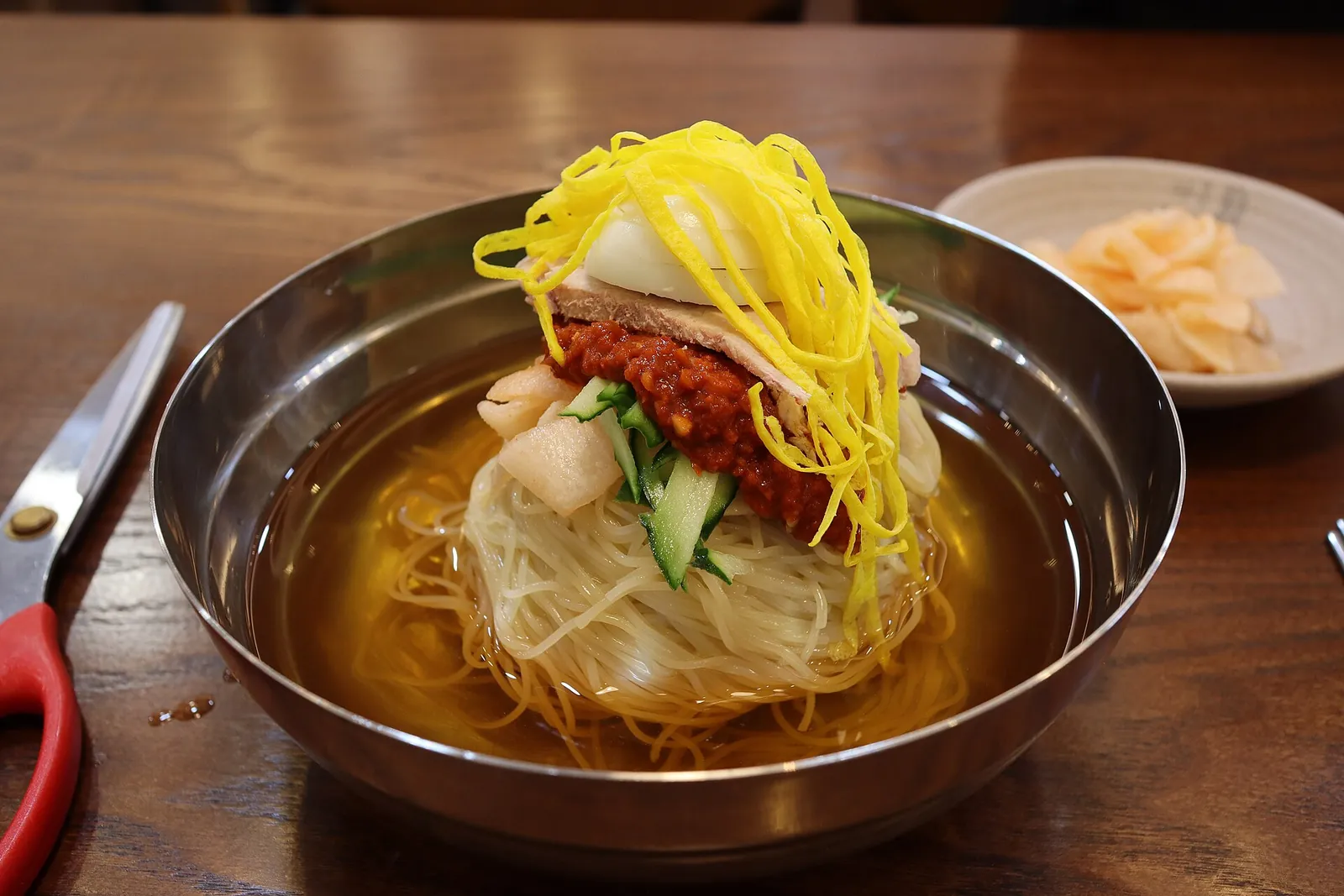
Milmyeon (Busan wheat noodles)
Cold, chewy noodles of wheat flour and starch in an icy meat broth, or a spicy version without broth. VisitKorea traces the dish to the Korean War, when it was made with wheat flour supplied through US aid.
- Where to look
- Haeundae Gaya Milmyeon in Jwa-dong, away from the beach, which VisitKorea says was founded in 1998 and sells only milmyeon, bibim-myeon and dumplings; it listed hours of 10:00–20:40 when we checked.
- Fit it into your day
- A quick lunch on a hot day, especially in summer when locals eat it most.
The spicy bibim version is properly hot; ask for the broth version if you prefer mild.
Bokguk (pufferfish soup)
A soup made with pufferfish. VisitKorea features Geumsubokguk's Haeundae main branch, founded in 1970 and listed as a Michelin Selected restaurant in the Michelin Guide Seoul and Busan 2024, which offers four kinds of pufferfish.
- Where to look
- Geumsubokguk on Jungdong 1-ro in Haeundae's Jung-dong; when we checked, VisitKorea listed its ground floor as open 24 hours.
- Fit it into your day
- Breakfast, or a late-night bowl after Gwangalli.
Pufferfish is toxic if badly prepared; eat it only at established specialist restaurants.
Grilled sea eel at Haeundae Market
VisitKorea notes that Haeundae Market is often called 'Sea Eel Alley' for the grilled eel restaurants that fill it with smoke, alongside stalls of dried seafood, fish, fruit and rice cakes.
- Where to look
- Haeundae Market, a short walk from the beach; VisitKorea listed hours of 09:00–22:00, varying by shop.
- Fit it into your day
- A casual dinner after a day on the beach.
Busy and smoky in the evening; prices are per portion, so check before ordering.
Blueline Park: the Beach Train and Sky Capsule
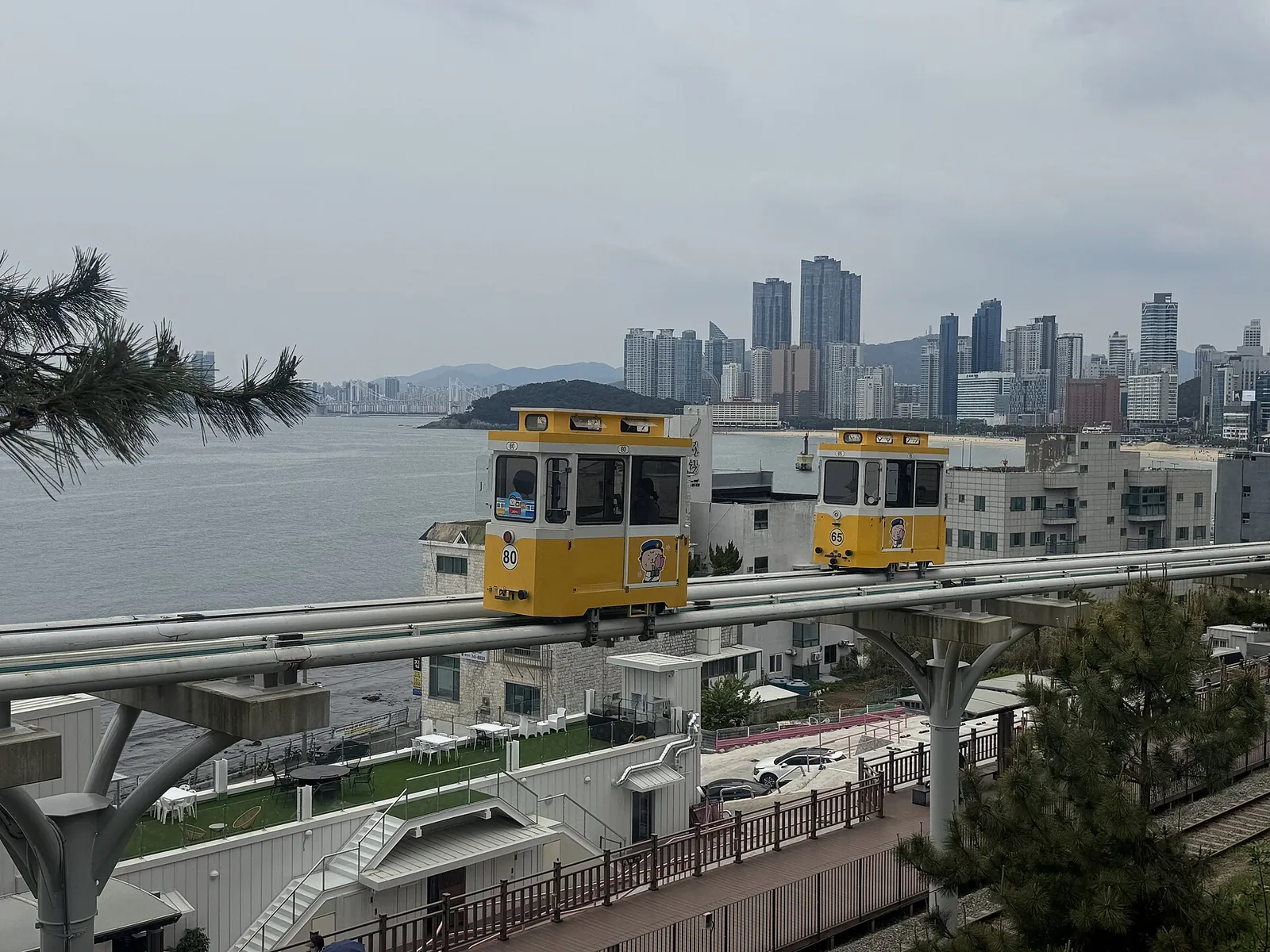
Haeundae Blueline Park reuses 4.8 kilometres of the old Donghae Nambu Line railway, which ran right along the shore from Mipo, at the eastern end of Haeundae Beach, past Cheongsapo to Songjeong. Two separate rides share the route. The Haeundae Beach Train is a slow sightseeing train between Mipo and Songjeong with stops including Dalmaji Tunnel, Cheongsapo, the Daritdol Skywalk and Gudeokpo; the operator gives an average speed of 15 km/h and about 25 minutes one way. The Haeundae Sky Capsule is a small automatic pod for two to four people on an elevated track 7 to 10 metres above sea level, covering the 2 kilometres between Mipo and Cheongsapo in about 30 minutes.
When we checked the operator's site on 2026-10-03, a single Beach Train ride cost 8,000 won, a two-ride ticket 12,000 won and an all-stations ticket 16,000 won per person. Mipo and Songjeong are terminals where everyone has to get off, so a return trip needs the two-ride or all-stations ticket. The Sky Capsule is priced per capsule: 40,000 won for two, 45,000 for three and 50,000 for four one way, with return tickets that are not sold at weekends and on public holidays. A package of a one-way Sky Capsule ride plus an all-stations Beach Train ticket cost 65,000 won for two, 78,000 for three and 94,000 for four.
The operator's timetable has four seasons. In October, as in March and April, the Beach Train runs 09:00–19:30 from both ends and the Sky Capsule 08:30–18:30; hours are longer in summer and shorter from November to February, and both run in rain but may stop in storms or typhoons. The simplest plan, which VisitKorea also suggests, is the Sky Capsule one way from Mipo to Cheongsapo, a look at the Daritdol Observatory, and the Beach Train back or on to Songjeong. Tickets can be booked on the operator's website.
The same old line is also a walking path, the Haeundae Green Railway, and you can walk the 4.8 kilometres in either direction instead of riding. Along the way, the Cheongsapo Daritdol Observatory, opened in 2017, juts 72.5 metres out to sea 20 metres above the water and ends in a half-moon glass floor; when we checked, VisitKorea listed it as free and open 09:00–21:00 from March to May and September to November. Cheongsapo itself is a small fishing port known for sunrises and seafood restaurants. Above the line, Dalmaji-gil climbs over Wausan between Haeundae and Songjeong through cherry and pine trees, and the Moontan Road walking trails along it take one to two hours.
Haedong Yonggungsa, the temple by the sea
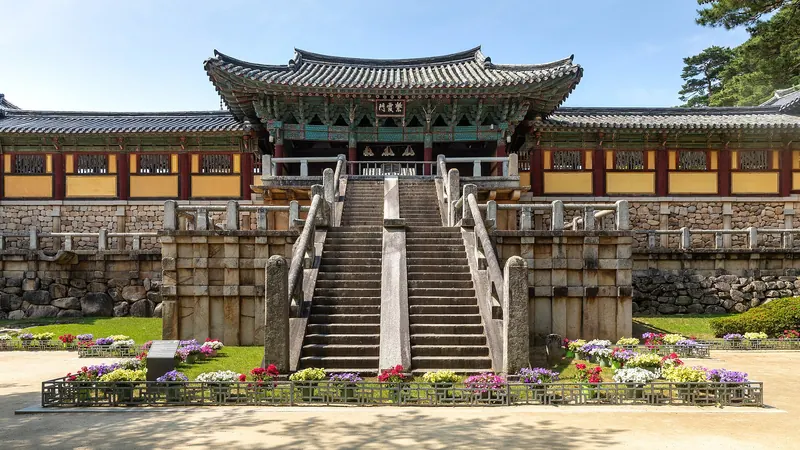
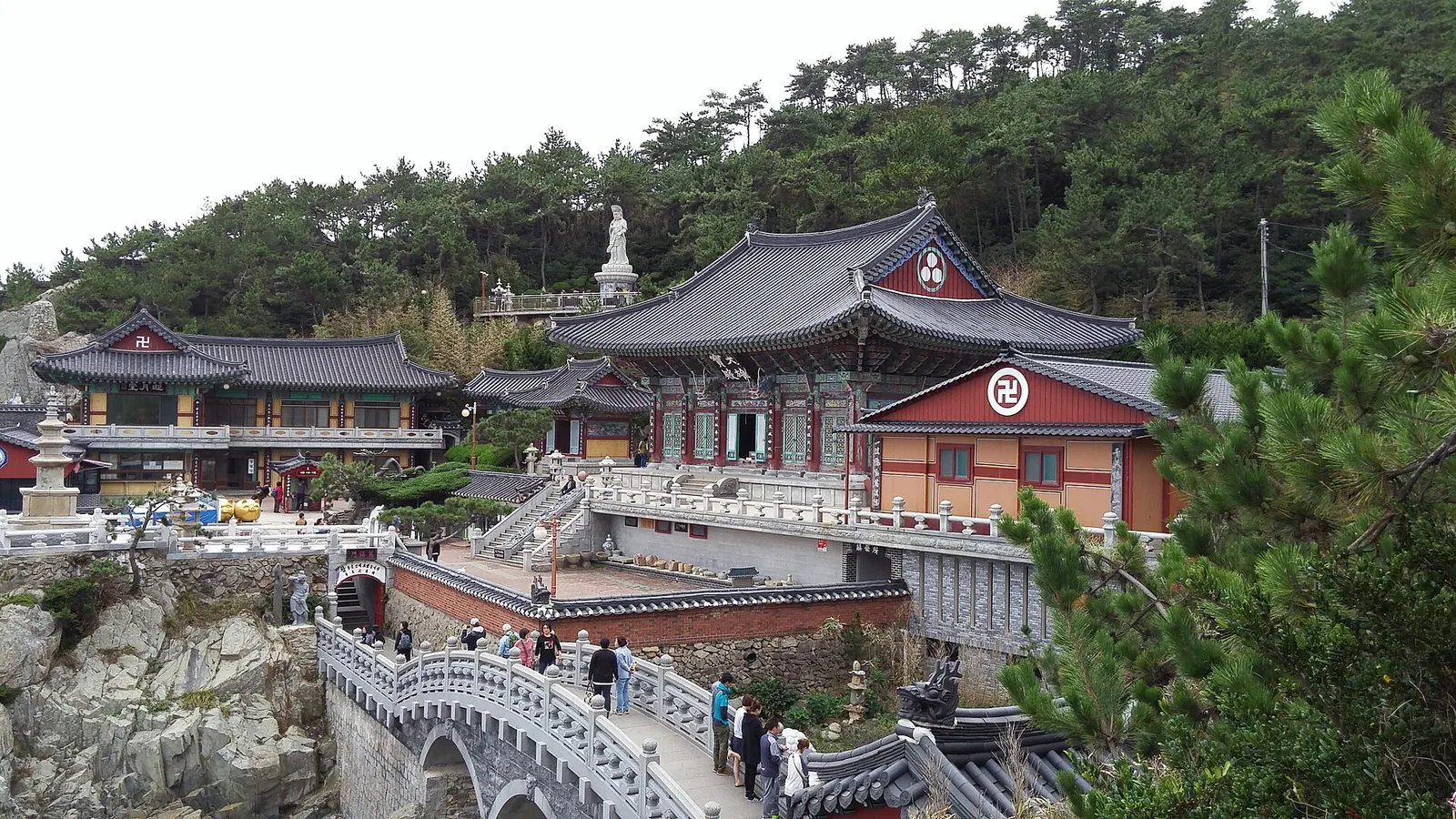
Most Korean temples are in the mountains; Haedong Yonggungsa is built on the rocky shore in Busan's north-east, in Gijang-gun. VisitKorea dates its founding to 1376, under the Goryeo-dynasty teacher Naong; it was destroyed during the Imjin War and rebuilt in the early 1930s, and its name comes from a dream the abbot Jeongam had in 1974 of the bodhisattva Avalokitesvara rising to the sky on a dragon.
The approach is part of the experience: a lane lined with statues of the 12 zodiac animals, then the 108 steps down towards the sea, which are said to bring health and long life. VisitKorea also describes the Yongmungyo bridge, where visitors throw a coin and make a wish. When we checked on 2026-10-03, VisitKorea listed it as free, open every day 04:30–19:20 with last admission at 18:50. Come early: it is a popular stop, and the staircase is narrow.
To get there by public transport, VisitKorea's directions are to take the Donghae Line to OSIRIA Station, then blue bus 139 or red bus 1001 from Exit 1 to the Yonggungsa Temple & National Institute of Fisheries Science stop, and walk about 15 minutes. Busan's on-demand minibus service TABARA also includes the temple on its Gijang route, booked through the TABARA app. The Osiria Coastal Walk nearby, a family-friendly path through pine forest with sea views, is an easy addition.
Gwangalli at night: the bridge, the drones and the fireworks
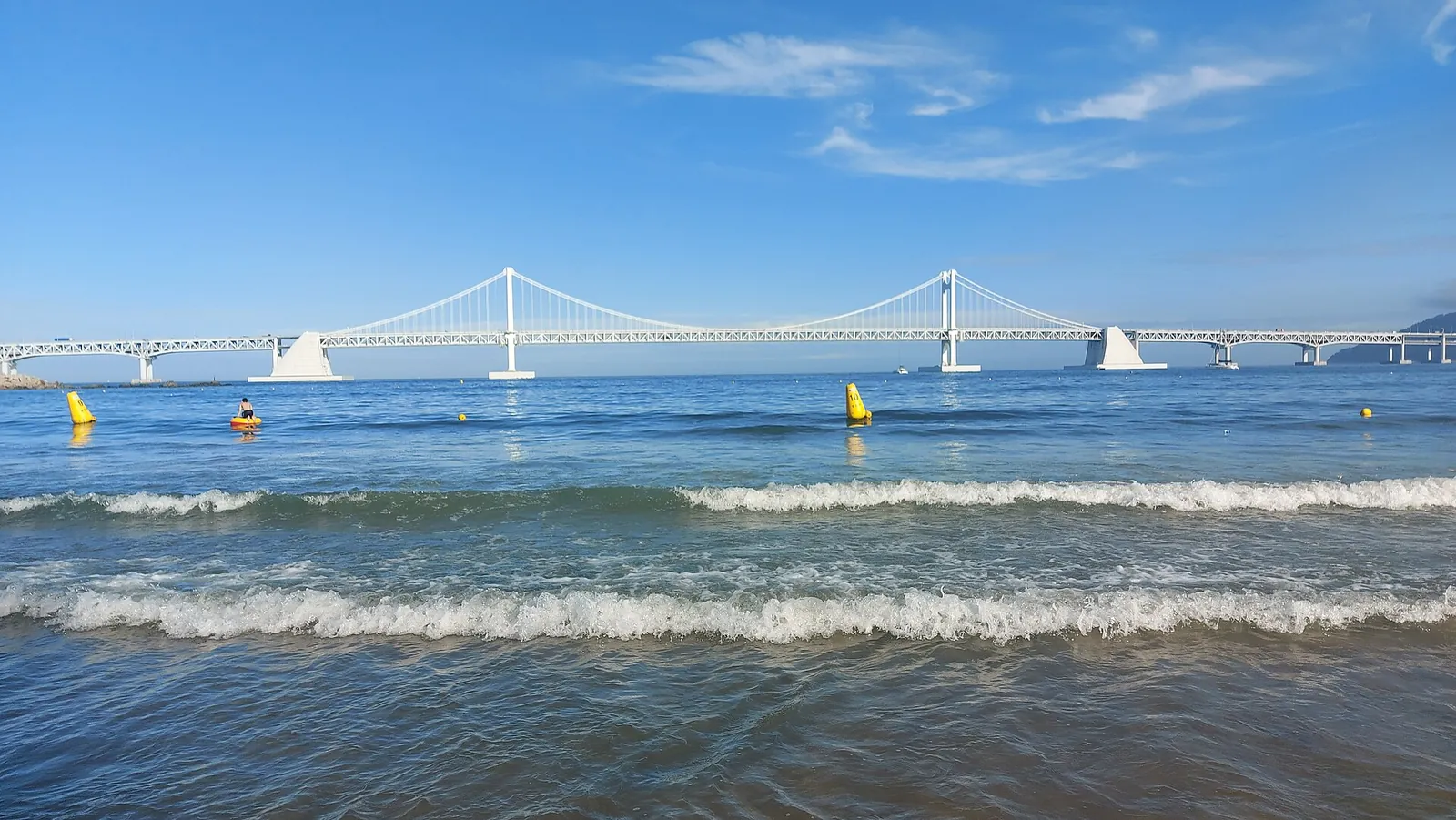
Gwangandaegyo (Gwangan Bridge) runs more than 7.4 kilometres from Namcheon-dong in Suyeong-gu to Centum City in Haeundae-gu, and VisitKorea describes it as the longest two-level bridge over the sea in Korea. Thousands of LED lights put on a display every night that changes with the seasons. The beach in front of it is the obvious place to watch; Millak Waterfront Park, a 543-metre seafront park between Gwangalli and Haeundae, is a quieter angle on the same view.
On Saturdays the Gwangalli M Drone Light Show flies over the bay. When we checked the official site on 2026-10-03, it listed two shows every Saturday, each lasting about 12 minutes, at 19:00 and 21:00 from October to February and 20:00 and 22:00 from March to September, with drones and lasers combined on the first and third Saturdays of the month. It is free and can be seen from anywhere on the beach, but VisitKorea notes that shows can be delayed or cancelled in bad weather and that competition for the best spots is intense.
Once a year the beach hosts the Busan Fireworks Festival, which VisitKorea says draws more than a million people. When we checked, the official site gave the date of the 21st festival as Saturday 7 November 2026, at Gwangalli Beach, Igidae and Dongbaekseom, and had paid seat tickets on sale through NOL Ticket until 6 November. If you are in Busan that weekend, book your room early, and consider watching from Dongbaekseom, Igidae or Hwangnyeongsan, which VisitKorea suggests as alternatives to the crowded beach.
Practical questions
Should I stay in Haeundae or Gwangalli?
Haeundae if you want the Blueline Park trains, Dongbaekseom and the easiest trip to Haedong Yonggungsa; Gwangalli if you want the lit-up bridge and a livelier evening scene. Both are on Metro Line 2, so it is easy to visit the other.
How much is the Haeundae Beach Train and Sky Capsule?
When we checked the operator's site on 2026-10-03, the Beach Train cost 8,000 won for one ride, 12,000 won for two and 16,000 won for all stations per person. The Sky Capsule cost 40,000 to 50,000 won per capsule one way, for two to four people, and a capsule-plus-train package 65,000 to 94,000 won. Check bluelinepark.com before you go.
When is the Gwangalli drone show?
Every Saturday. When we checked the official site, the shows were at 19:00 and 21:00 from October to February and at 20:00 and 22:00 from March to September, each about 12 minutes. They are free and can be cancelled in bad weather.
How do I get to Haedong Yonggungsa from Haeundae?
VisitKorea's directions are the Donghae Line to OSIRIA Station, then blue bus 139 or red bus 1001 from Exit 1 to the Yonggungsa Temple & National Institute of Fisheries Science stop, and a walk of about 15 minutes. When we checked, VisitKorea listed the temple as free and open 04:30–19:20, with last admission at 18:50.
Can I swim at Haeundae in October?
No. Swimming is allowed only during the official season, when lifeguards are on duty; for 2026 VisitKorea gave 26 June to 15 September at Haeundae and 1 July to 31 August at Gwangalli, and swimming at night is always prohibited.
How do I get from Gimhae Airport to Haeundae?
Take the Busan–Gimhae Light Rail to Sasang and change to Metro Line 2, about 70 minutes to Haeundae and 50 minutes to Gwangalli according to VisitKorea, or the airport limousine bus on the Haeundae–Gijang route. A taxi takes about 70 minutes.
Sources and checks before you travel
Reference sources for the version dated 3 October 2026. Confirm opening times, access, transport and conditions for your travel dates.
- VisitKorea: Haeundae Beach ↗ — opens in a new tab
- VisitKorea: Gwangalli Beach ↗ — opens in a new tab
- VisitKorea: Busan Gwangandaegyo Bridge ↗ — opens in a new tab
- VisitKorea: Haeundae Blueline Park ↗ — opens in a new tab
- VisitKorea: Haeundae Blueline Park (Cruise feature) ↗ — opens in a new tab
- Haeundae Blueline Park: Beach Train fares ↗ — opens in a new tab
- Haeundae Blueline Park: Sky Capsule fares ↗ — opens in a new tab
- Haeundae Blueline Park: Beach Train hours ↗ — opens in a new tab
- Haeundae Blueline Park: Sky Capsule hours ↗ — opens in a new tab
- VisitKorea: Haeundae Green Railway (Mipo–Songjeong) ↗ — opens in a new tab
- VisitKorea: Cheongsapo Daritdol Observatory ↗ — opens in a new tab
- VisitKorea: Cheongsapo Port ↗ — opens in a new tab
- VisitKorea: Dalmaji Road ↗ — opens in a new tab
- VisitKorea: Moontan Road ↗ — opens in a new tab
- VisitKorea: Songjeong Beach ↗ — opens in a new tab
- VisitKorea: Haeundae Dongbaekseom Island ↗ — opens in a new tab
- VisitKorea: Dongbaekseom Island (Cruise feature) ↗ — opens in a new tab
- VisitKorea: Nurimaru APEC House ↗ — opens in a new tab
- VisitKorea: Experience the Dazzling Nights of Busan with the Gwangalli M Drone Light Show ↗ — opens in a new tab
- VisitKorea: Busan X the SKY ↗ — opens in a new tab
- Gwangalli M Drone Light Show: overview (Suyeong-gu) ↗ — opens in a new tab
- Busan Fireworks Festival (official site) ↗ — opens in a new tab
- VisitKorea: Busan Fireworks Festival ↗ — opens in a new tab
- VisitKorea: Millak Waterfront Park ↗ — opens in a new tab
- VisitKorea: Millak Hoe Center ↗ — opens in a new tab
- VisitKorea: Haedong Yonggungsa Temple ↗ — opens in a new tab
- VisitKorea: Haedong Yonggungsa Temple (Cruise feature) ↗ — opens in a new tab
- VisitKorea: K-Temple Tours ↗ — opens in a new tab
- VisitKorea: Unique Transportation (TABARA) ↗ — opens in a new tab
- VisitKorea: Osiria Coastal Walk ↗ — opens in a new tab
- VisitKorea: Haeridan Street ↗ — opens in a new tab
- VisitKorea: Busan Haeundae Market ↗ — opens in a new tab
- VisitKorea: Hyeongje Jeontong Dwaeji Gukbap ↗ — opens in a new tab
- VisitKorea: Haeundae Gaya Milmyeon ↗ — opens in a new tab
- VisitKorea: Wheat noodles (milmyeon) ↗ — opens in a new tab
- VisitKorea: Geumsubokguk Haeundae Main Branch ↗ — opens in a new tab
- VisitKorea: [Korea Beyond Seoul ④] Fly to Gimhae International Airport ↗ — opens in a new tab
- VisitKorea: Airport Transportation Guide ↗ — opens in a new tab
- VisitKorea: East Coast Train Trip (KTX-Eum) ↗ — opens in a new tab
- VisitKorea: Best Summer Beach Destinations ↗ — opens in a new tab
- VisitKorea: Haeundae Light Festival ↗ — opens in a new tab
- VisitKorea: Haeundae Sand Festival ↗ — opens in a new tab
- VisitKorea: Long-lasting Restaurants to Visit in Winter ↗ — opens in a new tab
- VisitKorea: Ferry ↗ — opens in a new tab
Does this experience fit your route?
Haeundae and Gwangalli are easy to explore on your own by metro and bus. A tour mainly saves time if you have a single day in Busan; check exactly which stops it makes and how long you spend at each.
Check dates and details on Viator ↗ — opens in a new tabAffiliate link · Book with ViatorPhoto credits
Haeundae Beach on a summer day, with beach parasols on the sand and the hotels and towers of Haeundae behind
Photograph: StephNurnberg — opens in a new tab · CC BY 2.0 — opens in a new tab
Changes: Resized and converted to WebP; displayed with responsive crops. · Original photograph and licence details ↗ — opens in a new tab
Haedong Yonggungsa, built on the rocky shore of Gijang in north-eastern Busan
Photograph: Christian Bolz — opens in a new tab · CC BY-SA 4.0 — opens in a new tab
Changes: Resized and converted to WebP; displayed with responsive crops. · Original photograph and licence details ↗ — opens in a new tab
The Haeundae Sky Capsule on its elevated track above the coast between Mipo and Cheongsapo
Photograph: VN.NguyenDucDuy — opens in a new tab · CC BY-SA 4.0 — opens in a new tab
Changes: Resized and converted to WebP; displayed with responsive crops. · Original photograph and licence details ↗ — opens in a new tab
Gwangalli Beach and Gwangandaegyo in daylight
Photograph: Masterhatch — opens in a new tab · CC BY-SA 4.0 — opens in a new tab
Changes: Resized and converted to WebP; displayed with responsive crops. · Original photograph and licence details ↗ — opens in a new tab
Milmyeon, Busan's cold wheat noodles, served with pickled radish
Photograph: Mobius6 — opens in a new tab · CC BY-SA 4.0 — opens in a new tab
Changes: Resized and converted to WebP; displayed with responsive crops. · Original photograph and licence details ↗ — opens in a new tab