Federal Territory of Kuala Lumpur
Kuala Lumpur travel guide: three nights, Batu Caves and the old city
Kuala Lumpur grew up where the Klang and Gombak rivers meet, and the old city still sits around that confluence: Masjid Jamek on its point, Merdeka Square and the Sultan Abdul Samad Building across the road, Central Market and Petaling Street a few minutes away. The towers rose later, a short LRT ride from there, and Batu Caves lies just north of the city on the suburban line. Three nights give one day to the old city and the Lake Gardens, one to Batu Caves and KLCC, and the evenings to Jalan Alor, Thean Hou Temple and the city's food. KL Sentral, the station for the airport train and the ETS to Penang, Ipoh and Johor Bahru, makes the city the middle stop of a rail trip down the west coast.
In this guide
Find the location ↗ — opens in a new tabThe short answer
Book three nights near KL Sentral in Brickfields, where YMCA KL listed a double room at RM98 a night on 14 October 2026, or in Chinatown or Bukit Bintang for evenings on foot. Book the room, your Petronas Towers time slot and your onward train first: the KLIA Ekspres from the airport costs RM55 per adult each way, and the ETS from KL Sentral to Butterworth for Penang started at RM82 for a Wednesday in November 2026. Give one day to Merdeka Square, Masjid Jamek, Chinatown and the Islamic Arts Museum, one to Batu Caves by KTM Komuter and the Petronas Towers, and the evenings to Jalan Alor and Thean Hou Temple. The all-in stay comes to about MYR 1,020 per person, or MYR 2,040 for two, before international flights.
- Suggested time
- 3 nights
- Where to stay
- Brickfields and KL Sentral for the airport train and the ETS; Chinatown for the old city on foot; Bukit Bintang or KLCC for evenings
- Season and timing
- Kuala Lumpur is hot and humid all year. METMalaysia says the west-coast states get their heaviest rain in the two inter-monsoon periods between the monsoons, when clear mornings build into afternoon thunderstorms, so walk the old city early and keep a museum for the afternoon.
Where to sleep: Brickfields, Chinatown, Bukit Bintang or KLCC
Kuala Lumpur's sights sit along several rail lines, so pick the station first and the hotel second. Brickfields and KL Sentral suit a rail trip: KL Sentral is the stop for the KLIA Ekspres, KTM Komuter to Batu Caves, the ETS to Penang, Ipoh and Johor Bahru, and the city's LRT, MRT and monorail lines. YMCA KL, on Jalan Padang Belia in Brickfields and, in its own words, steps away from KL Sentral, listed a 19 m² double room with one double bed and attached bathroom at RM98 a night when we checked on 14 October 2026 (twin rooms also RM98). Brickfields is the city's Little India, so banana-leaf rice is on the doorstep.
Chinatown and Pasar Seni put Central Market, Petaling Street, Kwai Chai Hong and Merdeka Square on foot, with LRT and MRT at Pasar Seni and Masjid Jamek. Bukit Bintang is the shopping and late-dinner district, with Jalan Alor and the malls of Pavilion and Lot 10; KLCC puts the Petronas Towers, KLCC Park and Suria KLCC outside the door and is quieter at night. For a three-night stay with an early train or flight at the end, Brickfields saves the most time; for evenings out, Bukit Bintang wins.
Foreign tourists pay a tourism tax of RM10 per room per night at hotels and other paid accommodation in Malaysia; it is charged per room, not per person, and the hotel collects it from you, usually at check-in, or it is added when you book through an online platform. Malaysian citizens and permanent residents are exempt.
The old city: Merdeka Square, the Sultan Abdul Samad Building and Masjid Jamek
Merdeka Square (Dataran Merdeka), the former Selangor Club padang, is where the Union Jack was lowered and the flag of the Federation of Malaya raised on the eve of 31 August 1957. Warisan KL, the national programme restoring the old city, puts its flagpole at 95 m; around the lawn stand the Tudor-style Royal Selangor Club, St Mary's Cathedral, the City Library and the Victoria Fountain, presented for Queen Victoria's Diamond Jubilee in 1897. The National Day parade still marches here.
Facing the square, the Sultan Abdul Samad Building was finished in 1897 as the colonial government offices: copper domes, horseshoe arches and a 41 m clock tower in a mix of Mughal, Moorish and Gothic styles, later home to the Federal Court and the High Court. After 11 months of restoration by Khazanah Nasional, its Block 1 reopened on 2 February 2026. Entry to the grounds and buildings is free; the Royal Selangor pewter gallery is free too, and the Kuala Lumpur City Gallery inside traces the city from the 1820s to today. When we checked on 14 October 2026, its ticket was RM40 for a non-Malaysian adult and RM22 for a child aged 6-12, sold by QR code or at the Visitor Centre on the ground floor; the galleries open 09:00-18:00 daily, with last admission at 17:00.
A short walk away, Masjid Jamek (Sultan Abdul Samad Jamek Mosque) has stood on the point where the Klang and Gombak rivers meet since 1909. Arthur Benison Hubback designed it in Mughal and Neo-Moorish style, and it was the city's main mosque for more than half a century. Warisan KL lists tourist visits at 10:00-12:30 and 14:30-16:00, closed on Fridays. It is still a working mosque, so dress modestly. The riverside walk around the confluence is the River of Life project, which turned the muddy landing where Kuala Lumpur began into a waterfront. Masjid Jamek station, on the Kelana Jaya and Ampang/Sri Petaling LRT lines, is a short walk from the square.
Chinatown: Central Market, Petaling Street and Kwai Chai Hong
Central Market (Pasar Seni) started in 1888 as a wet market set up by Yap Ah Loy, the Kapitan Cina of the tin-mining town, near the river confluence. It was saved from demolition in the 1980s and reopened in 1986 as a craft and culture centre: more than 300 stalls of batik, songket, wood carving and souvenirs, an Art Lane where you can watch artists work, and an upstairs food court with satay and laksa. It is open daily 10:00-22:00.
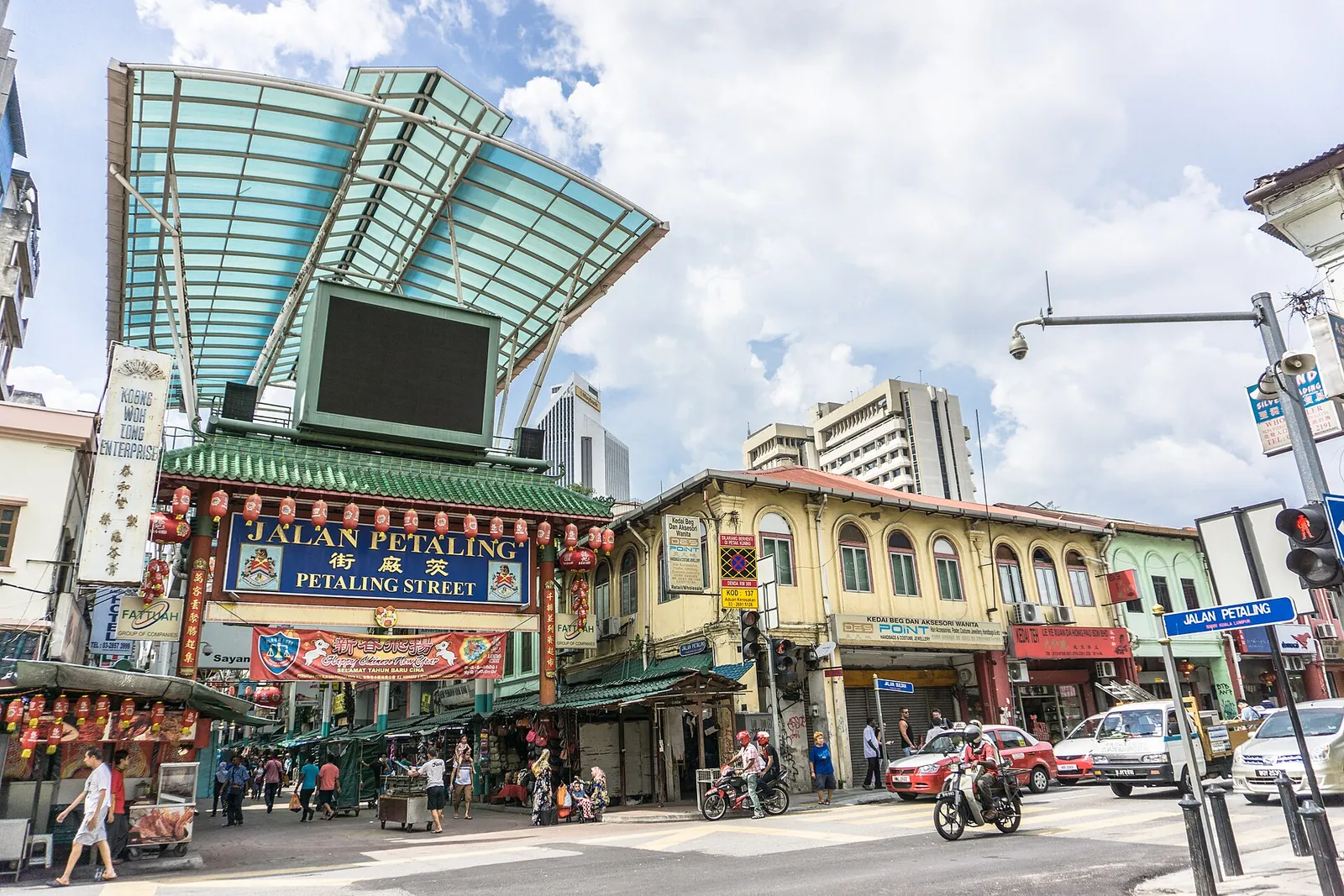
Petaling Street, a short walk away, was the commercial heart of Kuala Lumpur's Chinese community from the late 19th century. Look past the covered market stalls to the shophouses around them: Straits Eclectic plasterwork and timber shutters, 1930s Art Deco fronts, and lanes such as Jalan Sang Guna, reopened as a pedestrian link with paving that recalls the old Madras Theatre. Kwai Chai Hong, a restored back lane of shophouses, has murals of 1960s Chinatown life; Tourism Malaysia notes that the paintings carry QR codes with sound and music. On Jalan Tun H.S. Lee stand Kwan Tee Temple, honouring Guan Di, and the Sri Maha Mariamman Temple, which Warisan KL calls the oldest Hindu temple in Kuala Lumpur, with its carved tower.
The Lake Gardens: Islamic Arts Museum, National Mosque and Perdana Botanical Gardens
The Islamic Arts Museum Malaysia holds what Warisan KL calls one of Southeast Asia's finest collections of Islamic art, in 12 permanent galleries on two floors, with an Inverted Dome Pavilion and a fountain garden. On 14 October 2026 its site listed 09:30-18:00 daily (09:30-17:00 during Ramadan), closed only on Hari Raya Aidilfitri and Hari Raya Aidiladha, and admission of RM20 for adults (students RM10, children under 6 free), paid in cash or by card at the counter. Give it two hours. It is a 10-minute walk from Pasar Seni station and a 5-minute walk from the old Kuala Lumpur station, both past the National Mosque.
Next door, the National Mosque (Masjid Negara) opened on 27 August 1965: an umbrella-shaped roof, a 73 m minaret, and a prayer hall for more than 15,000 people. Warisan KL lists visiting sessions of 09:00-12:30 and 15:00-16:00 from Saturday to Thursday, and 15:00-16:00 and 17:30-18:30 on Fridays; it closes to visitors at prayer times and asks for modest dress.
Behind both lies Perdana Botanical Gardens, Kuala Lumpur's oldest public park, which Tourism Malaysia describes as more than 200 acres around two lakes, with walking trails; KL Bird Park sits inside the same Lake Gardens. Walk it early in the morning or late in the afternoon, out of the midday heat. The National Museum (Muzium Negara) on Jalan Damansara, near KL Sentral, is open daily 09:00-17:00 with last entry at 16:30; tickets for non-citizens are RM5 for adults and RM2 for children aged 6-12 (Malaysian adults RM2). It closes on the first two days of Aidilfitri and the first day of Aidiladha.
Batu Caves by KTM Komuter
Batu Caves is a limestone hill just north of Kuala Lumpur with three main caves holding Hindu temples and shrines. A giant golden statue of Lord Murugan stands at the foot of 272 colourfully painted steps that climb to the Sri Subramaniar Swamy Temple in the Temple Cave, the largest of the hill's 20 or so caves, and from the top you look back over the city. The Ramayana Cave is painted with scenes of the Hindu gods, and monkeys live all over the site, so keep food packed away. Batu Caves is a working temple, so we advise covering your shoulders and knees.
KTM Komuter's Batu Caves-Pulau Sebang line runs from KL Sentral to the Batu Caves stop, and Tourism Selangor says to walk from there to the main entrance. On KTMB's timetable published through the government's open-data portal, Komuter trains take 29-30 minutes from KL Sentral to Batu Caves, with 24 departures on weekdays (first 07:12, last 23:22) and 18 at weekends, mostly about an hour apart. These were the figures in KTMB's published timetable when we checked on 10 November 2026; check KTMB's current timetable before travelling. KTMB's upgrade works on the line run from 18 April to 31 December 2026, and, during the works, outside peak hours its trains run only from Batu Caves to Mid Valley and from Salak Selatan to Batu Caves. You can tap in and out with a Visa, Mastercard or MyDebit card, Apple Pay, Samsung Pay or Google Pay, a Touch 'n Go card or a QR ticket from the machine, but you must tap out with the same card or phone you tapped in with. Tourism Selangor also lists bus No. 11 from Bangkok Bank near Central Market.
Take an early train so you climb before the heat and the crowds; parking is short and the site gets busiest on public holidays. Batu Caves draws thousands of worshippers for Thaipusam, the annual Hindu festival, which falls on Friday 22 January 2027; plan your visit for another morning unless the festival is the reason you came.
KLCC and Bukit Nanas: the Petronas Towers, KL Tower and the forest park
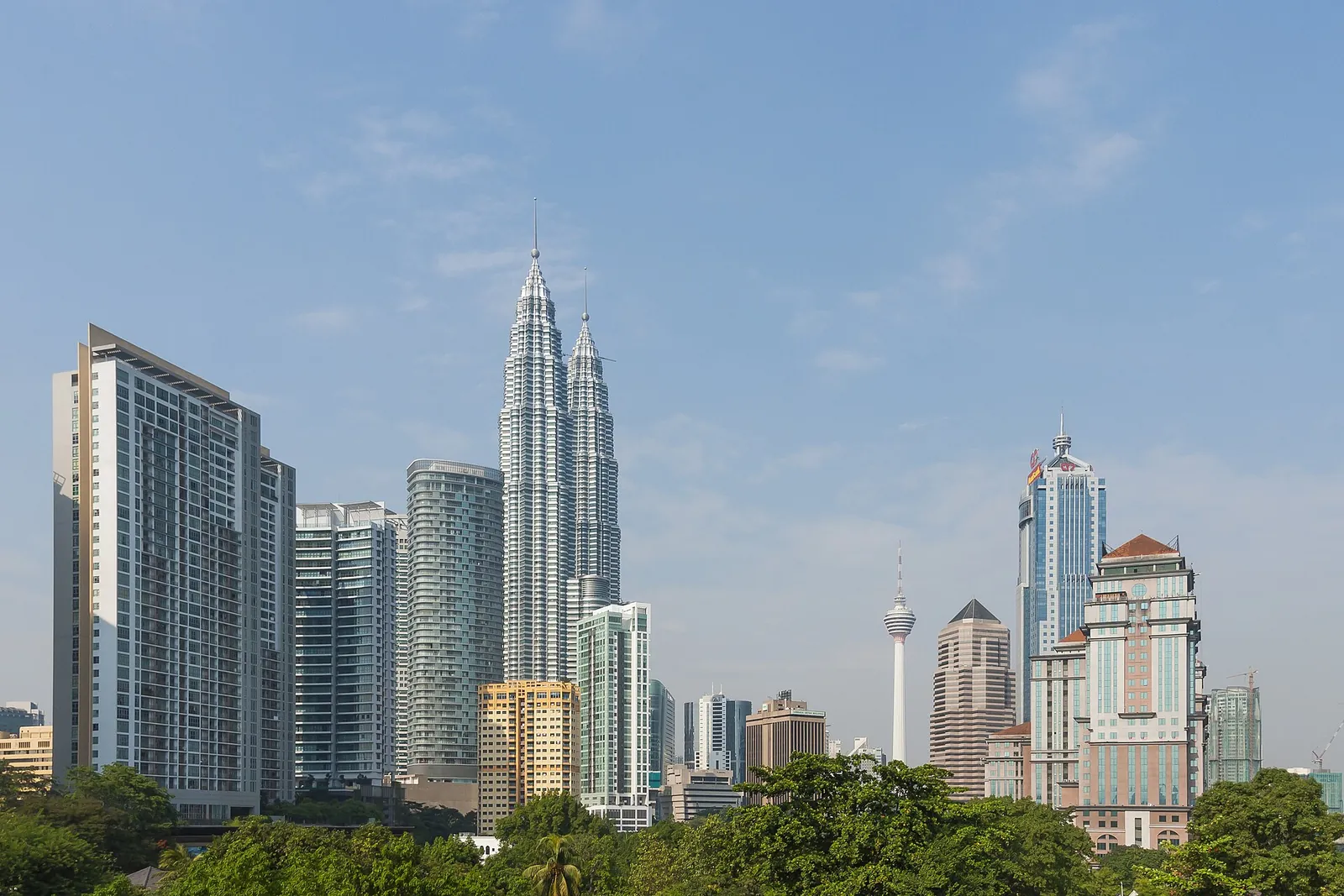
The Petronas Twin Towers stand 451.9 m tall. A visit takes you to the Skybridge between the towers on the 41st floor and the observation deck on the 86th; Tourism Malaysia lists visits from Tuesday to Sunday, with only some Mondays open. Buy your ticket on the official PETRONAS Twin Towers website before you travel: it sells timed slots, tickets are limited and first come, first served, and you must be at the check-in area 15 minutes before your slot or you are not admitted. Tickets are non-refundable and valid only for the date and time stated. The all-in budget below includes a weekday visit and KL Forest Eco Park. Below the towers, KLCC Park has paths and a lake, and Suria KLCC mall fills the podium. The dress code depends on the ticket: when checked on 19 October 2026, the official ticketing site set a formal or smart-casual rule (no Bermuda shorts, torn jeans, T-shirts, sleeveless tops or open-toe shoes) for Priority Access and the dining packages, and listed none for the standard Sky Bridge and Observation Deck ticket.
KL Tower (Menara Kuala Lumpur) on Bukit Nanas is a 421 m telecommunications tower; Tourism Malaysia lists an observation deck at 276 m and the Sky Box at 300 m. At its foot lies KL Forest Eco Park, gazetted in 1906 as the Bukit Nanas Forest Reserve and one of the oldest forest reserves in Malaysia: rainforest with trails, a herb garden and a 200 m canopy walk, entered from the tower or from Jalan Raja Chulan. Tourism Malaysia's Kuala Lumpur guide lists it as open daily 08:00-17:00, so walk it in the morning or early afternoon.
Evenings: Jalan Alor and Thean Hou Temple
Jalan Alor in Bukit Bintang is the street Tourism Malaysia sends visitors to for Chinese food; after dark it fills with food stalls and tables. Kampung Baru is its pick for Malay food and Little India in Brickfields for Indian food. In Kampung Baru, where the city's last rows of wooden Malay houses on stilts still stand, Tourism Malaysia points weekend visitors to the night market on Saturday evening for nasi lemak, rojak, grilled fish, satay, kuih and nasi campur. On the evening you spend in Bukit Bintang, Lot 10 Hutong, a heritage food village in Lot 10 mall on Jalan Sultan Ismail, gathers stalls such as Kim Lian Kee and Ho Weng Kee and is open daily 10:00-22:00.
Thean Hou Temple on Robson Heights is a six-tiered temple to Mazu, the Chinese sea goddess, completed in 1987 and opened in 1989 by the Selangor and Federal Territory Hainan Association, which still owns it. It covers 6,758 m² and is the biggest of 150 Mazu temples in Malaysia: yellow glazed roof tiles from Taiwan, 470 painted bracket sets, dragon columns, and a caisson ceiling with 120 Mazu figurines in the main hall. The shrine is open 08:00-20:00 every day, including public holidays, so go in the late afternoon. It is at 65 Persiaran Endah, off Jalan Syed Putra, on a hill south of the centre; take a Grab car.
Three nights, day by day
This plan suits a stay near KL Sentral and an arrival by the KLIA Ekspres; move the days around the weather and the Petronas Towers slot you book.
- Day 1: take the KLIA Ekspres to KL Sentral and check in. Spend the afternoon at the National Museum, then eat banana-leaf rice in Brickfields, or ride to Bukit Bintang for Jalan Alor.
- Day 2, the old city: Merdeka Square and the Kuala Lumpur City Gallery at 09:00, Masjid Jamek in its 10:00-12:30 session (not on a Friday), then Central Market, Petaling Street and Kwai Chai Hong for lunch. In the afternoon walk to the Islamic Arts Museum and the National Mosque, and on into Perdana Botanical Gardens. End at Thean Hou Temple before 20:00.
- Day 3, Batu Caves and KLCC: a morning Komuter from KL Sentral to Batu Caves, back by lunch. Walk KL Forest Eco Park in the early afternoon, go up the Petronas Towers at your booked time, and eat at Suria KLCC or in Bukit Bintang.
- Day 4: the KLIA Ekspres to the airport, or the ETS from KL Sentral to Penang, Ipoh or Johor Bahru.
What to eat and where to look
Nasi lemak
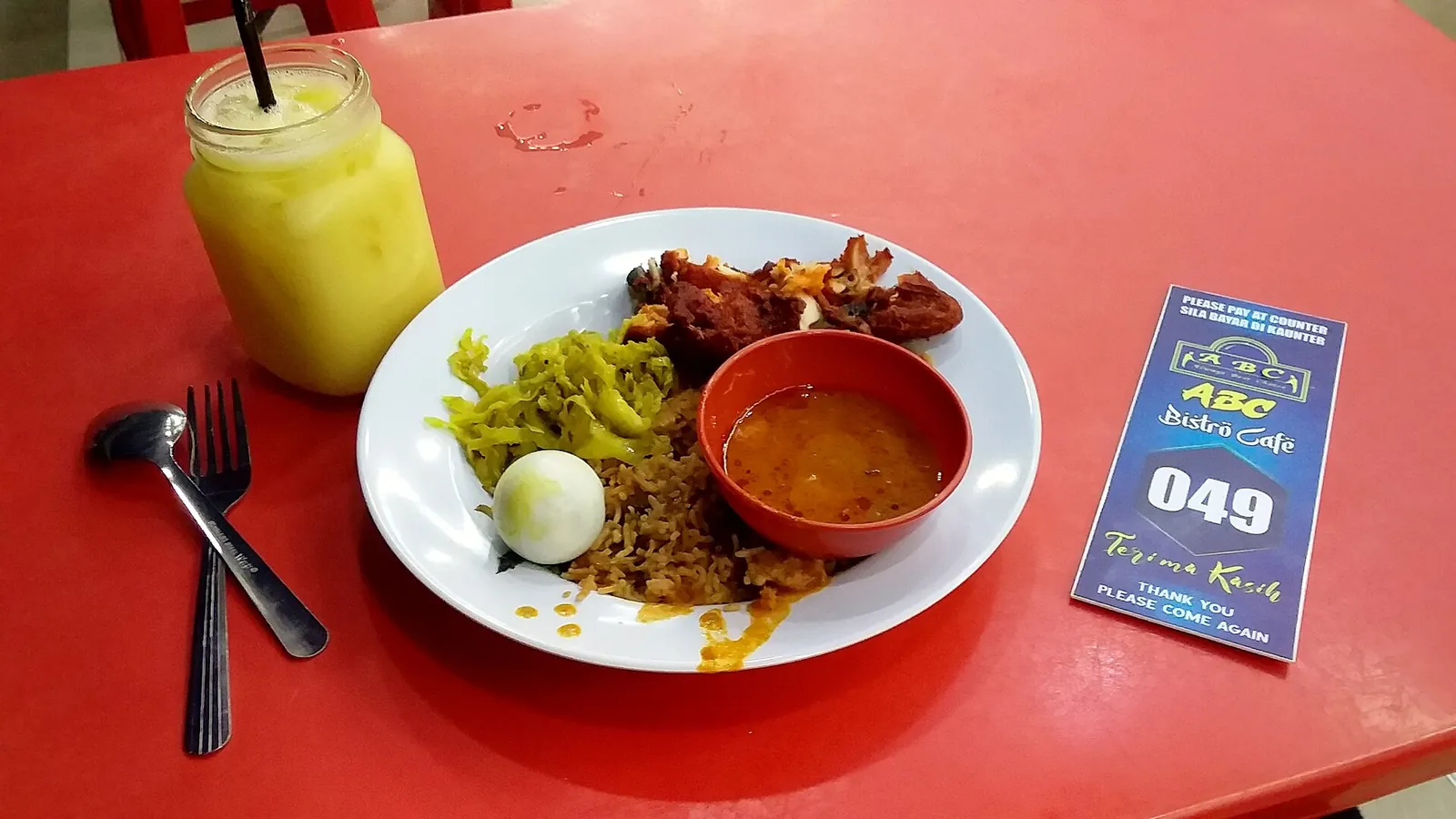
Rice cooked in coconut milk, served with sambal ikan bilis (spicy anchovies), a hard-boiled egg, cucumber and a curry or rendang. Madam Kwan's menu of August 2025 lists it with two pieces of curry chicken at RM23.90, or with beef rendang at RM25.90, before service charge and SST.
- Where to look
- Madam Kwan's, Level 4, Suria KLCC, below the Petronas Towers.
- Fit it into your day
- Dinner on the KLCC day, after the towers.
The sambal is made with anchovies and is spicy.
Hokkien mee (Kuala Lumpur style)
Thick yellow noodles stir-fried Hokkien style in dark soy sauce, glossy and smoky; the Kuala Lumpur version is quite different from Penang's prawn-noodle soup of the same name. Madam Kwan's lists it at RM25.90 before charges. Order a teh tarik (RM6.50 on the same menu) to go with it.
- Where to look
- Madam Kwan's at Pavilion Kuala Lumpur, Level 1, 168 Jalan Bukit Bintang.
- Fit it into your day
- A late dinner on the Bukit Bintang evening, before a walk along Jalan Alor.
The dish comes with chicken, prawns and squid; Madam Kwan's menu also lists a vegetarian Hokkien noodles at RM22.90. Prices are before a 10% service charge and 6% SST.
Nasi campur and grilled fish (Malay night market)
Nasi campur is rice with a choice of Malay side dishes, here eaten with grilled fish, satay, rojak or sweet kuih from the stalls of the night market. Tourism Malaysia lists nasi lemak, rojak, grilled fish, satay, kuih and nasi campur among its Malay favourites.
- Where to look
- The Kampung Baru Night Market, Kampung Baru, on Saturday evening.
- Fit it into your day
- A Saturday evening instead of Jalan Alor, if your stay includes one.
Tourism Malaysia lists the night market for Saturday evening.
Banana-leaf rice
Rice served on a banana leaf with vegetable sides, pickles and poppadoms, with curries ladled on top and meat or fish ordered separately. It is a full meal, usually eaten at lunch.
- Where to look
- The South Indian restaurants of Little India in Brickfields, along Jalan Tun Sambanthan, a few minutes' walk from KL Sentral.
- Fit it into your day
- The arrival evening if you stay in Brickfields, or lunch before the train on day 4.
Curries range from mild to very hot; try a little of each before pouring it over the rice.
Loh shu fun (rat-tail noodles)
Short, thick rice-flour noodles stir-fried in a claypot or wok with dark soy, a Kuala Lumpur Cantonese hawker classic. Kim Lian Kee serves a spicy stir-fried version.
- Where to look
- Kim Lian Kee's stall at Lot 10 Hutong, Lot 10 Shopping Centre, 50 Jalan Sultan Ismail, open daily 10:00-22:00.
- Fit it into your day
- Lunch or an early dinner on the Bukit Bintang evening.
Lot 10 Hutong's stalls are Chinese hawker businesses; many dishes contain pork.
What four days in Kuala Lumpur cost, all in
About MYR 1,020 per person, or MYR 2,040 for two, before international flights.
| Level | Per person, about MYR | For two, about MYR |
|---|---|---|
| YMCA private room | 1,020 | 2,040 |
This budget is for two adults sharing a YMCA KL double with attached bathroom for three nights, arriving in the afternoon and leaving in the morning on an ordinary January or February trip; price comparisons checked on 21 October 2026. Room taxes are included. Food covers three breakfasts, two lunches and three dinners each, plus drinks and snacks, based on local menus such as Moghul Mahal and Madam Kwan’s. It keeps the nasi lemak, satay and teh tarik dinner at Suria KLCC and the Hokkien mee dinner at Pavilion. The total includes both airport trains, city rides and Thean Hou Temple access, the Batu Caves train, museums, Petronas, KL Forest Eco Park, a SIM each and a 10% buffer. This assumes a short visa-free visit on an eligible ordinary passport.
- MYR 2,040 for two. Rooms 350, food 500, getting around 450, sights and tours 500, SIM 50, buffer 190.
- Flights: An Etihad economy return from London to Kuala Lumpur is about GBP 650–800 per person on selected dates; fares vary. With it, the trip comes to MYR 4,560–5,380 per person.
Arriving and leaving: KLIA Ekspres, the ETS and the way to Singapore
From KLIA Terminal 1 and KLIA Terminal 2, the ways into the city compare like this:
| Option | Journey time | Adult fare, one way | Hours and frequency | Best for |
|---|---|---|---|---|
| KLIA Ekspres, non-stop | 28 minutes from Terminal 1 to KL Sentral, 3 minutes more from Terminal 2 | RM55, or 10% less in its app or on its website | Every 20 minutes; Terminal 1 05:00-00:05, Terminal 2 04:55-00:00; from 23:00 every train stops at all stations | Most arrivals, and hotels near KL Sentral |
| KLIA Transit, three stops on the way | 39 minutes from Terminal 2 to KL Sentral | RM55 | Every 15 minutes at weekday peaks, every 30 minutes at other times and at weekends | Bandar Tasik Selatan for the TBS coach terminal, and Putrajaya |
| Grab car or taxi | Depends on traffic and your address | Shown in the app for the whole car before you book, excluding tolls and surcharges | At any hour | Late landings, groups, heavy bags and hotels far from a station |
A KLIA Ekspres return costs RM100 for adults; children aged 6-15 pay RM25 one way or RM45 return, and under-6s ride free, up to three per adult ticket. Towards the airport, the first KLIA Ekspres leaves KL Sentral at 05:00 and the last at 00:00. KLIA Transit stops at Bandar Tasik Selatan, Putrajaya & Cyberjaya and Salak Tinggi, and children pay RM25 on it too. The two trains' tickets are not interchangeable, so buy the ticket for the train you board.
Every foreign visitor fills in the Malaysia Digital Arrival Card (MDAC) online within 3 days before arrival, counting the day you submit it, on Immigration Malaysia's portal https://imigresen-online.imi.gov.my/mdac/main or in its MyNIISe app, and shows the registration with the passport at the immigration counter. The official form takes no payment; use only the official portal or app. Singapore citizens and a few other groups are exempt.
From Thailand, AirAsia (AK) and Thai AirAsia fly Bangkok Don Mueang to Kuala Lumpur (KLIA Terminal 2) daily, scheduled at 2 h 10 min-2 h 20 min, and Malaysia Airlines flies Kuala Lumpur-Bangkok direct.
The ETS from KL Sentral. KTMB's timetable effective 1 June 2026 has 7 ETS trains a day each way between Butterworth and KL Sentral; from KL Sentral the first leaves at 08:05 and the last at 20:15 (arriving 00:20). The Express takes 3 h 35 min, Platinum trains 4 h 5 min and the Gold train 4 h 20 min.
Between Ipoh and KL Sentral, 18 ETS trains a day run each way; from KL Sentral the first leaves at 07:20 and the last at 22:50 (arriving 01:12). Express trains take 2 h to 2 h 3 min, Platinum trains about 2 h 22 min to 2 h 25 min and Gold trains up to 2 h 34 min.
Between KL Sentral and JB Sentral, 7 ETS trains a day run each way. From KL Sentral the first leaves at 07:55 and the last at 20:00 (arriving 00:20). Platinum trains take 4 h 10 min to 4 h 20 min, and the Gold train up to 4 h 40 min. On Fridays, Saturdays and Sundays from 11 September to 27 December 2026, KTMB adds two Express trains each way (KL Sentral 09:05 and 11:55; JB Sentral 07:00 and 17:30), taking 4 h 10 min to 4 h 15 min.
ETS fares are flexible, not fixed: the price depends on the route, the day and time of travel, the train type, the seat type and how early you buy. On 14 October 2026, KTMB's ticketing site showed these lowest one-way adult fares for a midweek train about four weeks ahead: from KL Sentral to Butterworth RM82 (Gold) and RM101-107 (Platinum and Express), up to RM110 in the other direction; KL Sentral-Ipoh RM48-54; from KL Sentral to JB Sentral RM78 (Gold) and RM101-104 (Platinum), RM105 from JB Sentral. Book ETS tickets on KTMB's website (online.ktmb.com.my) or in the KTMB Mobile app, after registering a KITS account; ticket machines and station counters also sell them. Foreign visitors enter their passport number when booking and must show the passport with the ticket at inspection. Names, dates and trains cannot be changed after purchase.
On to Singapore. Shuttle Tebrau takes 5 minutes between JB Sentral and Woodlands Train Checkpoint. When we checked on 14 October 2026, KTMB listed a one-way fare of RM5 from JB Sentral to Woodlands for everyone. From Woodlands to JB Sentral, Malaysian citizens pay RM5 and everyone else pays S$5, charged in ringgit. Southbound, you clear Malaysian immigration at JB Sentral before boarding and Singapore immigration at Woodlands Train Checkpoint after you get off. The RTS Link from Johor Bahru to Singapore is not open yet; the official target is February 2027 (statement of 2 October 2026). The Penang-to-Singapore rail guide covers every leg.
- KLIA Ekspres — Train
- KLIA Transit — Train
Getting around the city
For Kuala Lumpur's LRT, MRT and monorail lines and its buses, carry a Touch 'n Go card: it pays train and bus fares, highway tolls and parking, and you reload it in the Touch 'n Go eWallet app. Mind the names: KL Sentral, Kuala Lumpur (the old station by the National Mosque) and Masjid Jamek are different stations. The GOKL City Bus Red Route stops by the National Mosque and Dayabumi; DBKL charges foreign visitors RM1 a ride by Touch 'n Go or bank card, while Malaysian citizens and children aged 12 and under ride free (checked on 19 October 2026). RapidKL buses 420 and 590 serve Merdeka Square.
For Thean Hou Temple, a late arrival or bags, book a car in the Grab app, which shows the fare before you book, excluding tolls and surcharges. Walking works inside each district, but crossings between them are wide and hot; plan one district per half-day and ride between them.
Practical questions
How many nights do I need in Kuala Lumpur?
Three nights: an arrival afternoon, a day for Merdeka Square, Masjid Jamek, Chinatown and the Lake Gardens museums, a day for Batu Caves and the Petronas Towers, and a departure morning. Add a fourth for Putrajaya or a slower food day.
Where should I stay in Kuala Lumpur?
Near KL Sentral in Brickfields if you arrive by the KLIA Ekspres or leave by ETS; Chinatown for the old city on foot; Bukit Bintang for evenings and Jalan Alor; KLCC for the towers and a quieter night. Foreign guests pay RM10 tourism tax per room per night.
How do I get from KLIA to the city?
The KLIA Ekspres runs non-stop from both terminals to KL Sentral in 28 minutes from Terminal 1, every 20 minutes, for RM55 per adult one way (10% less in its app or on its website), as checked on 14 October 2026. KLIA Transit costs the same and stops on the way.
How do I get to Batu Caves by train?
Take KTM Komuter from KL Sentral to the Batu Caves stop, 29-30 minutes, and walk to the entrance. KTMB's timetable data showed 24 trains on weekdays and 18 at weekends when we checked on 10 November 2026 (check KTMB's current timetable); tap in and out with the same bank card, phone or Touch 'n Go card. Go early, and cover your shoulders and knees for the temple.
Do I need to book the Petronas Towers in advance?
Yes, book ahead: buy your ticket on the official PETRONAS Twin Towers website before you travel. Tourism Malaysia lists visits from Tuesday to Sunday, with only some Mondays open.
How do I take the train from Kuala Lumpur to Penang or Singapore?
Take the ETS from KL Sentral: to Butterworth for Penang in 3 h 35 min to 4 h 20 min, from RM82 for a midweek train about four weeks ahead, or to JB Sentral in 4 h 10 min to 4 h 40 min, from RM78, then Shuttle Tebrau to Woodlands. Book on online.ktmb.com.my or in the KTMB Mobile app.
Keep planning your trip
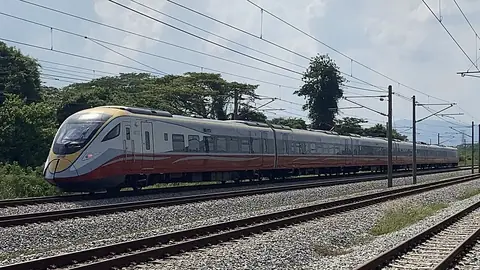
Penang to Singapore by train
Penang to Singapore by ETS train in five days: George Town, Kuala Lumpur and an optional Ipoh night, fares, Shuttle Tebrau, both border checks, a budget for two.
Read the guide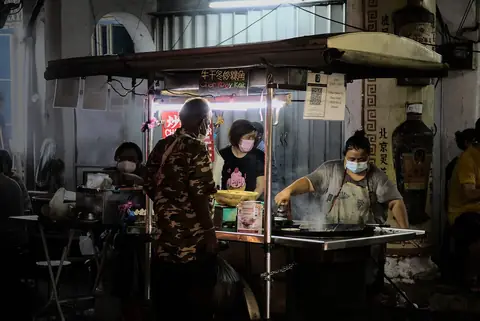
George Town and Penang
Three nights in Penang: where to sleep in George Town, mansion tours and fees, Penang Hill fares, the national park, the ferry, the airport bus and a priced stay for two.
Read the guide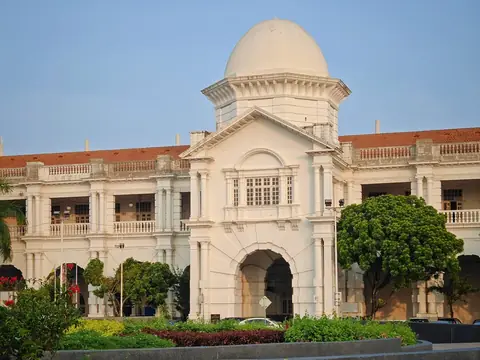
Ipoh
Two nights in Ipoh by ETS: the Old Town heritage trail, Han Chin Pet Soo, cave temples, Tasik Cermin, Kellie's Castle, local food and a budget for two.
Read the guide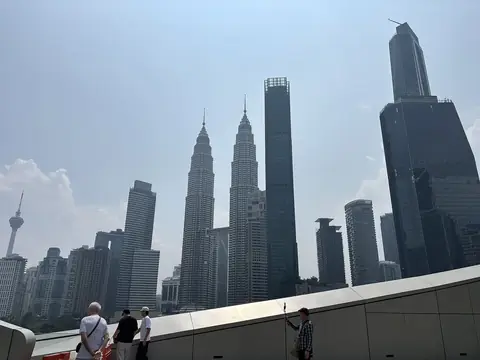
Where to stay in Kuala Lumpur
Choose between KLCC, Bukit Bintang, Chinatown and KL Sentral with an honest comparison of hotel style, food, airport access, noise and rail convenience.
Read the guide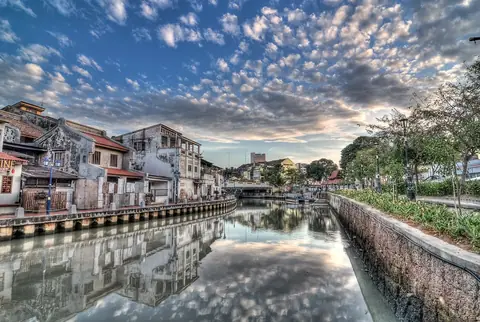
Melaka
Plan one night in UNESCO-listed Melaka for an early heritage walk, Jonker's weekend market, the river after dark, Peranakan food and an easy arrival.
Read the guide
Singapore to Bangkok
Nine days from Singapore to Bangkok: the Shuttle Tebrau and ETS trains to Kuala Lumpur and Penang, the ferry, a flight to Bangkok and the estimated cost.
Read the guideSources and checks before you travel
(54)
- Warisan KL: Sultan Abdul Samad Building and Merdeka Square ↗ — opens in a new tab
- Warisan KL: Sultan Abdul Samad Jamek Mosque ↗ — opens in a new tab
- Warisan KL: National Mosque ↗ — opens in a new tab
- Warisan KL: Petaling Street ↗ — opens in a new tab
- Warisan KL: Central Market ↗ — opens in a new tab
- Warisan KL: landmarks ↗ — opens in a new tab
- Khazanah Nasional: Sultan Abdul Samad Building restoration completed (31 January 2026) ↗ — opens in a new tab
- Bangunan Sultan Abdul Samad: official site ↗ — opens in a new tab
- Bangunan Sultan Abdul Samad: getting here ↗ — opens in a new tab
- Kuala Lumpur City Gallery: ticket price ↗ — opens in a new tab
- Kuala Lumpur City Gallery: FAQs ↗ — opens in a new tab
- Central Market Kuala Lumpur: official site ↗ — opens in a new tab
- Islamic Arts Museum Malaysia: visit us ↗ — opens in a new tab
- Muzium Negara: official site ↗ — opens in a new tab
- Muzium Negara: tickets (Malay) ↗ — opens in a new tab
- Selangor and Federal Territory Hainan Association: Thean Hou Temple ↗ — opens in a new tab
- Selangor and Federal Territory Hainan Association: Thean Hou Temple architecture ↗ — opens in a new tab
- Tourism Malaysia: Kuala Lumpur map and guide (December 2024, PDF) ↗ — opens in a new tab
- Tourism Malaysia: KL Map & Guide (November 2023, PDF) ↗ — opens in a new tab
- Tourism Malaysia: top places to visit in Kuala Lumpur ↗ — opens in a new tab
- Tourism Selangor: Batu Caves ↗ — opens in a new tab
- Malaysian government open-data portal: KTMB timetable data (GTFS) ↗ — opens in a new tab
- KTMB: Komuter terms and conditions (June 2026, Malay) ↗ — opens in a new tab
- Prime Minister's Department (Cabinet Division): public holidays 2027 (Malay, PDF) ↗ — opens in a new tab
- KTMB: ETS timetable effective 1 June 2026 ↗ — opens in a new tab
- KTMB: KITS online ticketing (public trip search) ↗ — opens in a new tab
- KTMB media statement: extra weekend ETS trains KL Sentral-JB Sentral (24 September 2026, Malay) ↗ — opens in a new tab
- KTMB: Terms and Conditions for ETS, KTM Intercity and Shuttle Tebrau tickets (January 2026) ↗ — opens in a new tab
- KTMB: Intercity timetable effective 1 August 2026 (Shuttle Tebrau page) ↗ — opens in a new tab
- ICA: co-located CIQ facility at Woodlands Train Checkpoint (14 July 2011) ↗ — opens in a new tab
- LTA and Ministry of Transport Malaysia: RTS Link service targeted for February 2027 (2 October 2026) ↗ — opens in a new tab
- KLIA Ekspres: KLIA Ekspres service and fares ↗ — opens in a new tab
- KLIA Ekspres: KLIA Transit service and fares ↗ — opens in a new tab
- Immigration Department of Malaysia: MDAC portal ↗ — opens in a new tab
- Royal Malaysian Customs Department: MyTTx tourism tax ↗ — opens in a new tab
- AirAsia: Bangkok (DMK) to Kuala Lumpur ↗ — opens in a new tab
- YMCA KL: hostel ↗ — opens in a new tab
- Madam Kwan's: Klang Valley menu (August 2025, PDF) ↗ — opens in a new tab
- Madam Kwan's: outlets ↗ — opens in a new tab
- Lot 10 Hutong: official site ↗ — opens in a new tab
- Starhill Global REIT: Lot 10 ↗ — opens in a new tab
- Touch 'n Go: enhanced card ↗ — opens in a new tab
- Grab Malaysia: transport ↗ — opens in a new tab
- METMalaysia: weather phenomena ↗ — opens in a new tab
- Rapid KL: Rapid Kembara Pass FAQ (updated 30 December 2025) ↗ — opens in a new tab
- KTMB: FAQ on the KVDT2 upgrade and the Batu Caves-Pulau Sebang timetable ↗ — opens in a new tab
- PETRONAS Twin Towers: admission and ticketing ↗ — opens in a new tab
- Tourism Malaysia: Discover Kuala Lumpur from the heart of Chow Kit ↗ — opens in a new tab
- KTMB online ticketing: Shuttle Tebrau FAQ ↗ — opens in a new tab
- DBKL: GoKL City Bus ↗ — opens in a new tab
- PETRONAS Twin Towers: ticket types and dress code ↗ — opens in a new tab
- Moghul Mahal: meal-price comparisons ↗ — opens in a new tab
- Hotlink: seven-day Travel Pass ↗ — opens in a new tab
- Etihad: London–Kuala Lumpur economy returns ↗ — opens in a new tab
Reference sources for the version dated 10 November 2026. Confirm opening times, access, transport and conditions for your travel dates.
Photo credits
(5)
The 272 steps at Batu Caves lead to an active Hindu temple complex north of central Kuala Lumpur.
Photograph: Bernard Spragg. NZ from Christchurch, New Zealand — opens in a new tab · CC0 — opens in a new tab
Changes: Resized and converted to WebP; displayed with responsive crops. · Original photograph and licence details ↗ — opens in a new tab
Kuala Lumpur’s modern centre, with the Petronas Twin Towers as its defining landmark.
Photograph: James Kerwin from Tbilisi — opens in a new tab · CC BY 2.0 — opens in a new tab
Changes: Resized and converted to WebP; displayed with responsive crops. · Original photograph and licence details ↗ — opens in a new tab
Merdeka Square anchors a walk through Kuala Lumpur’s old civic quarter.
Photograph: Shesmax — opens in a new tab · CC BY-SA 4.0 — opens in a new tab
Changes: Resized and converted to WebP; displayed with responsive crops. · Original photograph and licence details ↗ — opens in a new tab
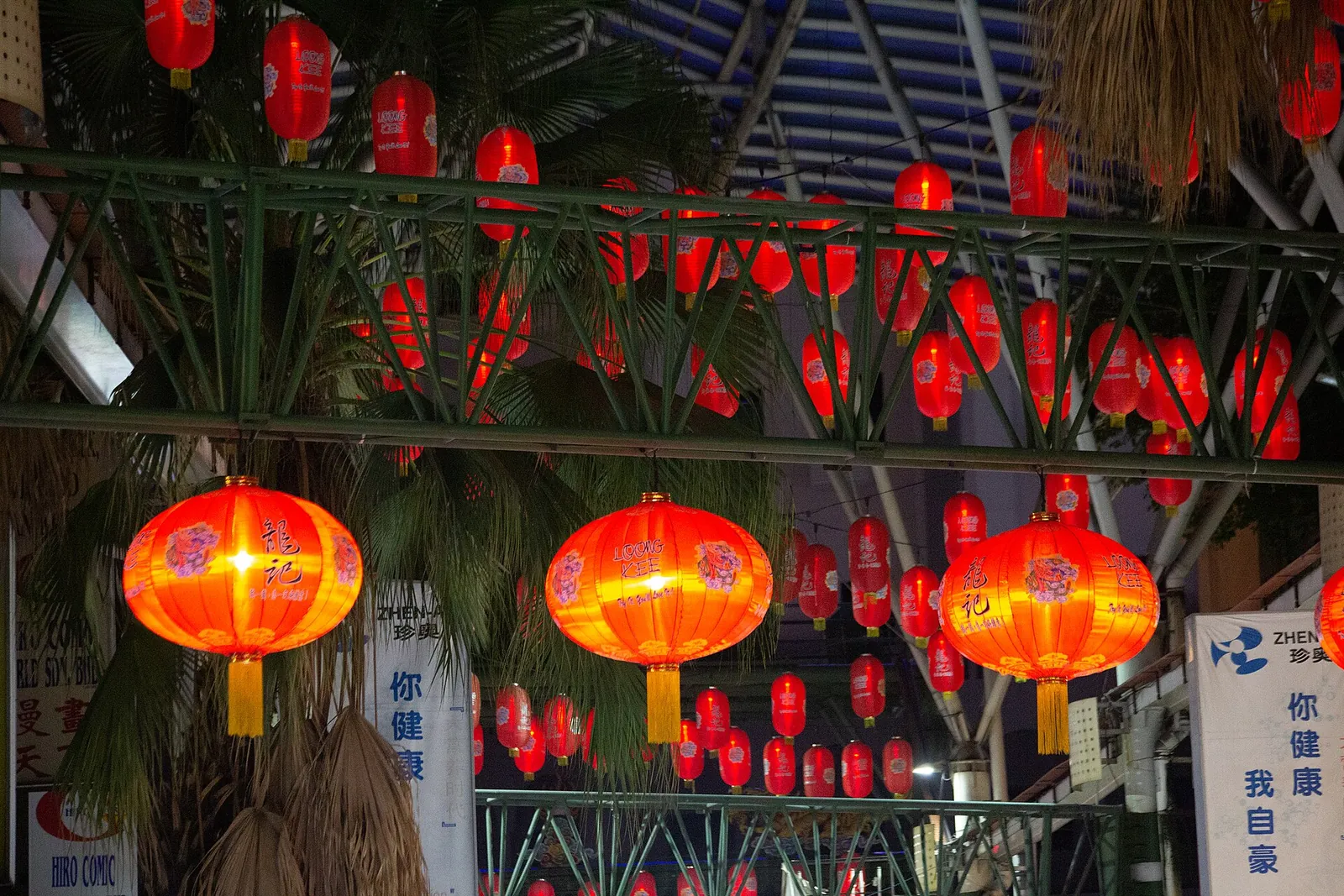
Jalan Alor fills with food stalls after dark in the Bukit Bintang district.
Photograph: *angys* — opens in a new tab · CC BY-SA 4.0 — opens in a new tab
Changes: Resized and converted to WebP; displayed with responsive crops. · Original photograph and licence details ↗ — opens in a new tab
Food stalls and red lanterns along Jalan Alor in Bukit Bintang, Kuala Lumpur, in the early evening
Photo: Koutaro Furuno