Bali · Bali
Amed guide: East Bali shore snorkelling, Tulamben wreck and where to stay
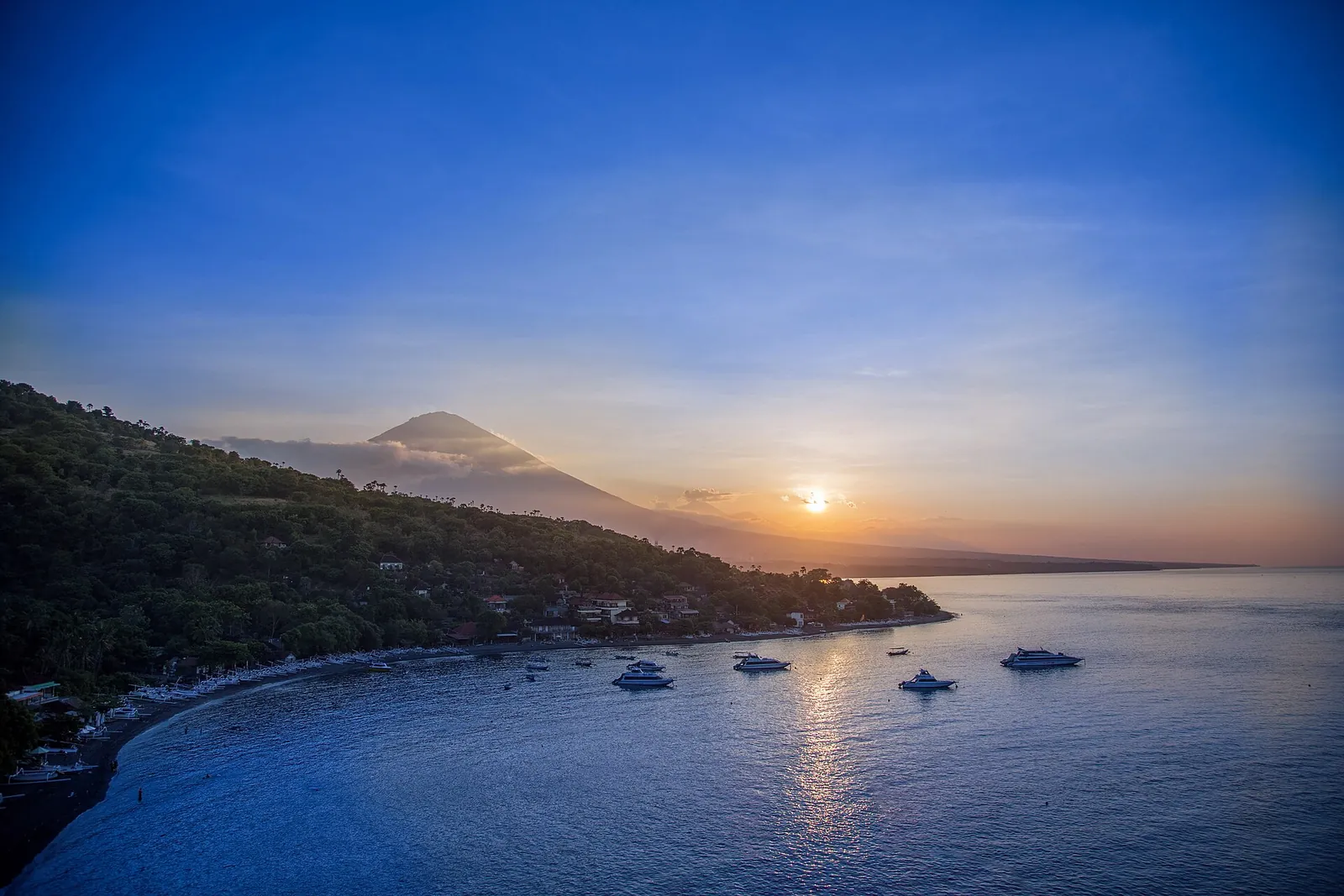
Amed is not one village but a strip of fishing villages along the north coast of Bali's eastern tip, under the cone of Mount Agung. Outrigger jukung boats are pulled up on black and grey sand, salt is still dried in pans by the road, and coral reefs start a few strokes from the beach. It is the quiet, slow end of Bali, a long drive from the airport, and the most common base for diving the wreck of the USAT Liberty at Tulamben, a short drive up the coast.
- Suggested time
- 3–5 nights (three for snorkelling, four or five for diving)
- Where to stay
- Jemeluk Bay or Lipah for shore snorkelling; Tulamben for the Liberty wreck
- Season and timing
- When we checked, the Ministry of Tourism recommended the dry months between April and October for clearer water and better conditions. Heavy rain washes run-off into the sea and cuts visibility, so after a wet night snorkel later in the day or try a different bay. The coast faces east, which makes sunrise, not sunset, its best hour.
The short answer
Give Amed at least three nights; the drive from the south is long enough that one night is rarely worth it. Divers aiming for Tulamben and several Amed sites should plan four or five. Sleep around Jemeluk Bay or Lipah for snorkelling from the beach, or in Tulamben itself if the Liberty wreck is your main reason for coming. Snorkel in the mornings, keep one day for Lempuyang temple and Tirta Gangga, and arrive by private driver or the Perama shuttle via Padang Bai and Candidasa. The airport is about 95 kilometres away.
What 'Amed' means, and which village to sleep in
Strictly, Amed is a single village in Abang district, Karangasem Regency. In tourism use the name covers a stretch of coast of about 14 kilometres that starts at the turn-off at Culik on the main east-coast road and runs east through Amed, Jemeluk, Bunutan, Lipah, Lehan, Selang, Banyuning and Aas, as Wikipedia and Wikivoyage describe. The road climbs over headlands between small bays, so where you sleep decides which reef is on your doorstep and how often you need transport.
Jemeluk Bay is the obvious first choice for snorkellers: the Ministry of Tourism names it, with Lipah, as the best spot for clear water and coral just a short swim from shore, and dive centres cluster around it. Lipah and Bunutan, a little further east, have a small wooden wreck off the beach and several warung, and are equally good for beach entries. Banyuning and Aas, towards the end of the road, are quieter and close to the so-called Japanese wreck. Tulamben is a separate village about 12 kilometres north-west of Amed village; stay there only if the Liberty wreck is the focus, because there is little else to do.
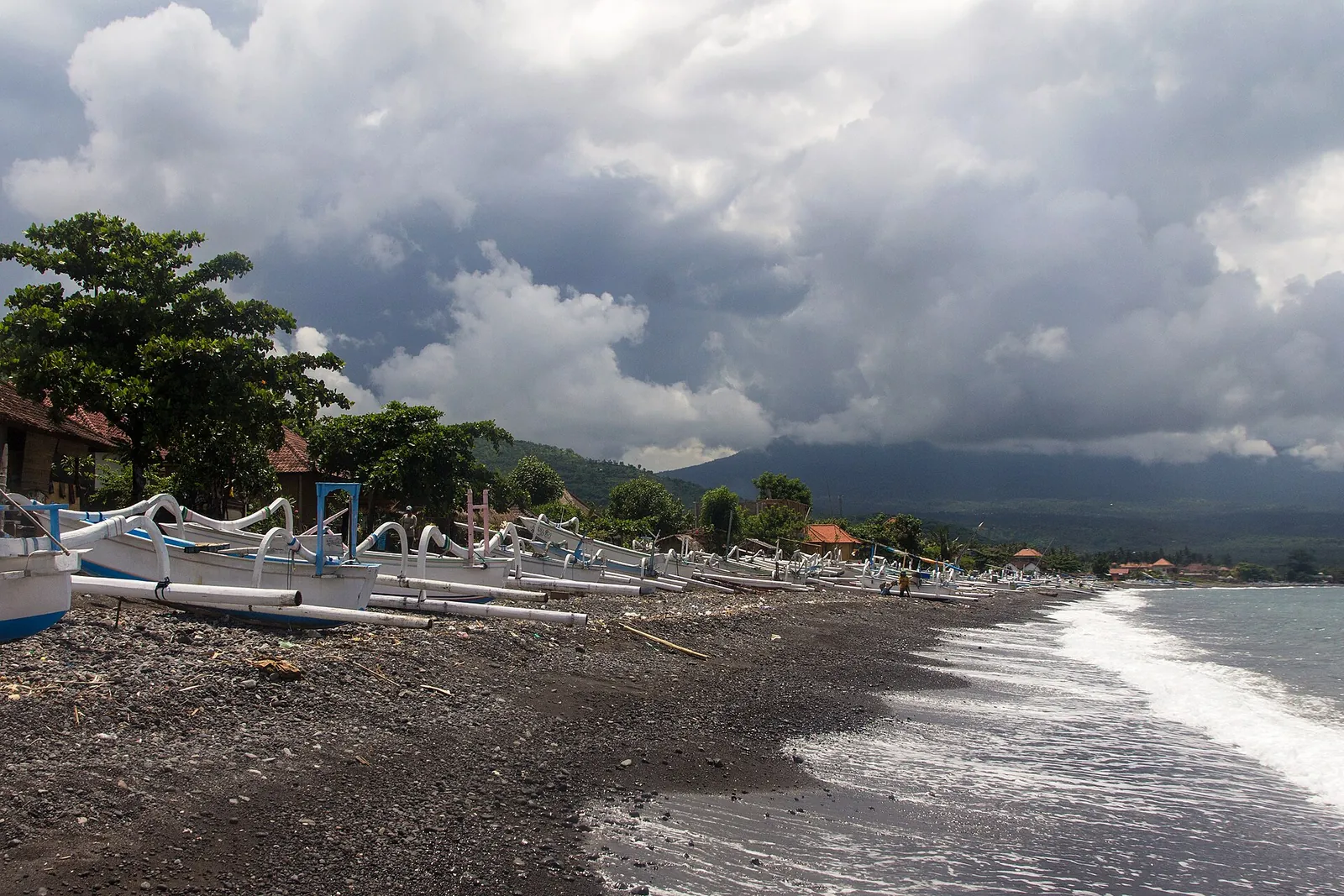
Plan your transport before you book. Wikivoyage notes that bemos run from Culik towards Aas mainly in the mornings and that public transport is otherwise rare, so most visitors rent a scooter, use a local driver or pick a hotel within walking distance of the reef they want. Beaches are black volcanic sand and pebbles closest to Mount Agung, turning greyer and sandier further east, and fishing boats occupy much of the shore.
Snorkelling and diving along the Amed coast
The reason to come is that the reef starts at the beach. Bali lies inside the Coral Triangle, and the Indonesian Throughflow current running through the Lombok Strait brings nutrients up along this coast, as Wikipedia explains; part of the coast east of Amed has been a marine protected area since 2017. The Ministry of Tourism highlights snorkelling and diving at Jemeluk Bay and Lipah Beach, the artificial reef structures known as the Amed Pyramids, where turtles are often seen, and the Japanese shipwreck at Banyuning, a small sunken vessel close to shore that Wikivoyage describes as signposted, with parking and snorkel rental on site.
Some sites are better from a boat. The ministry's dive page lists Amed Wall about 5 minutes by boat from Amed Beach and Bunutan Point about 10 minutes away. Wikivoyage notes that the wall at Jemeluk drops to around 40 metres after a gentle slope from shore, and that drift dives off Selang and Bunutan generally suit experienced divers only. A jukung trip at dawn combines a snorkel with the sunrise.
Practical points: the ministry advises booking a local guide for deeper sites and using reef-friendly sunscreen. Enter and exit over sand or rubble rather than standing on coral, wear fins rather than walking on the reef, and ask your dive centre or guesthouse about currents on the day, especially at the exposed eastern points.
Make time for the local food
What to eat and where to look
Grilled fish and seafood
The day's catch from the jukung fleet, grilled and served with rice and sambal. The Ministry of Tourism points visitors to local seafood and Balinese dishes at Amed's beachside warung.
- Where to look
- Family-run warung along the beach road in Jemeluk, Bunutan and Lipah.
- Fit it into your day
- Dinner after an afternoon in the water.
Ask what the fish is and confirm the price per portion or by weight before it is cooked.
Fish sate lilit
Balinese 'wrapped' satay: minced meat or fish mixed with bumbu Bali spice paste and coconut, moulded around a bamboo stick or lemongrass stalk and grilled over charcoal. The ministry notes that fish versions are typical of coastal areas.
- Where to look
- Balinese warung menus in the Amed villages; often part of a nasi campur plate.
- Fit it into your day
- A few skewers with rice and sambal matah for lunch.
Other versions use pork or chicken, so ask if you avoid either.
Nasi campur Bali
Rice surrounded by small portions such as sate lilit, spiced chicken, lawar and sambal matah, the raw shallot and chilli relish; the ministry calls it the dish to order if you cannot decide.
- Where to look
- Local warung in the villages and in Culik, the junction town on the main road.
- Fit it into your day
- A filling lunch on a day trip to Lempuyang or Tirta Gangga.
Usually spicy; lawar and other side dishes may contain pork, so ask.
Amed sea salt
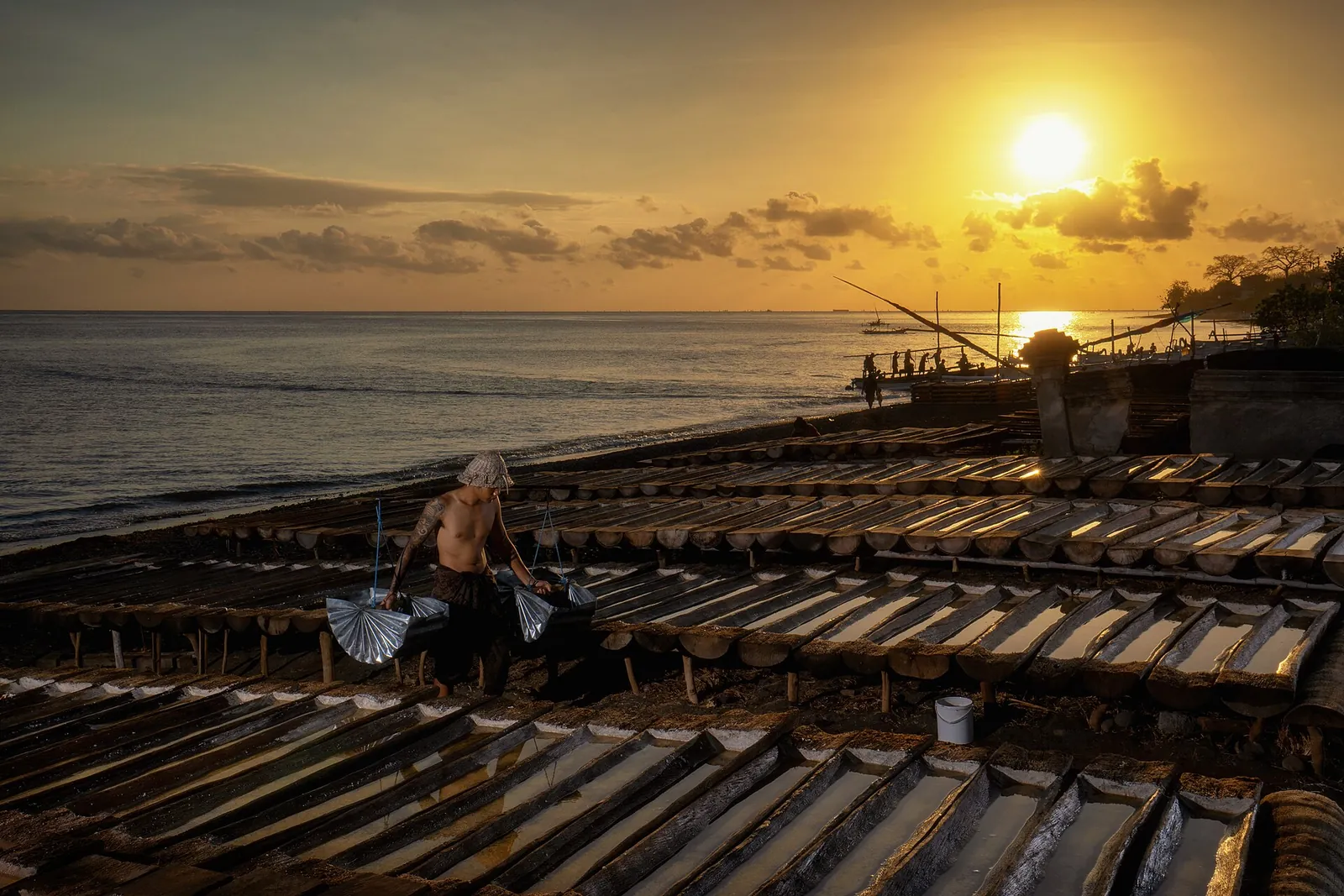
Hand-made salt dried in troughs on the beach, listed as Indonesian intangible cultural heritage (Uyah Amed). It is not a dish but the local product to take home.
- Where to look
- Salt-makers' huts along the coast road and small shops in the villages.
- Fit it into your day
- Buy a bag on a morning walk or drive along the coast.
Production is small and seasonal; it may not be on sale every day.
Tulamben and the USAT Liberty wreck
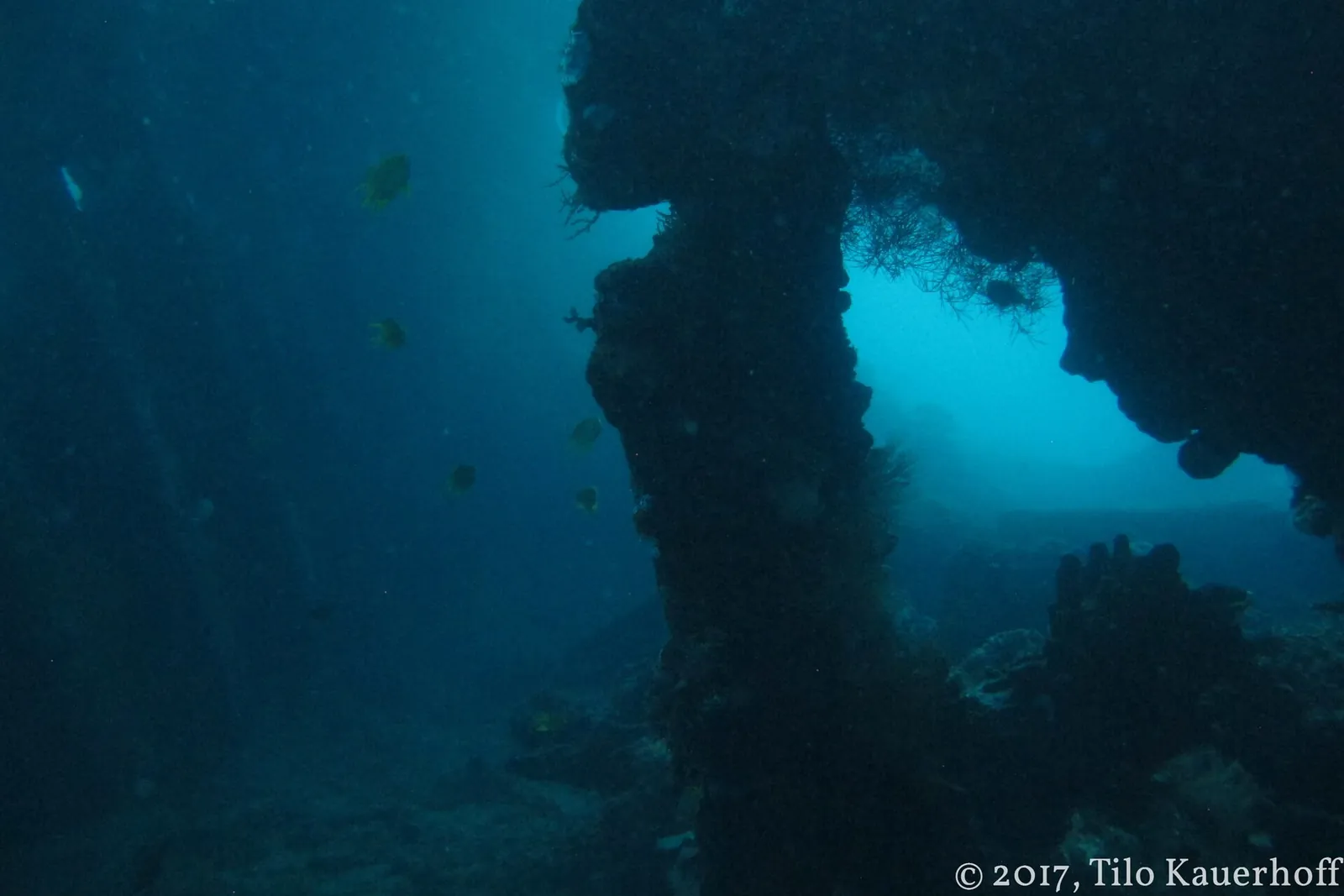
The USAT Liberty was a United States Army cargo ship torpedoed by the Japanese submarine I-66 south-west of the Lombok Strait on 11 January 1942. Destroyers tried to tow her to Singaraja, but she was taking on too much water and was beached at Tulamben so her cargo could be salvaged. In 1963 the eruption of Mount Agung pushed the hull off the beach and into the sea, where it is now covered in coral, as Wikipedia records.
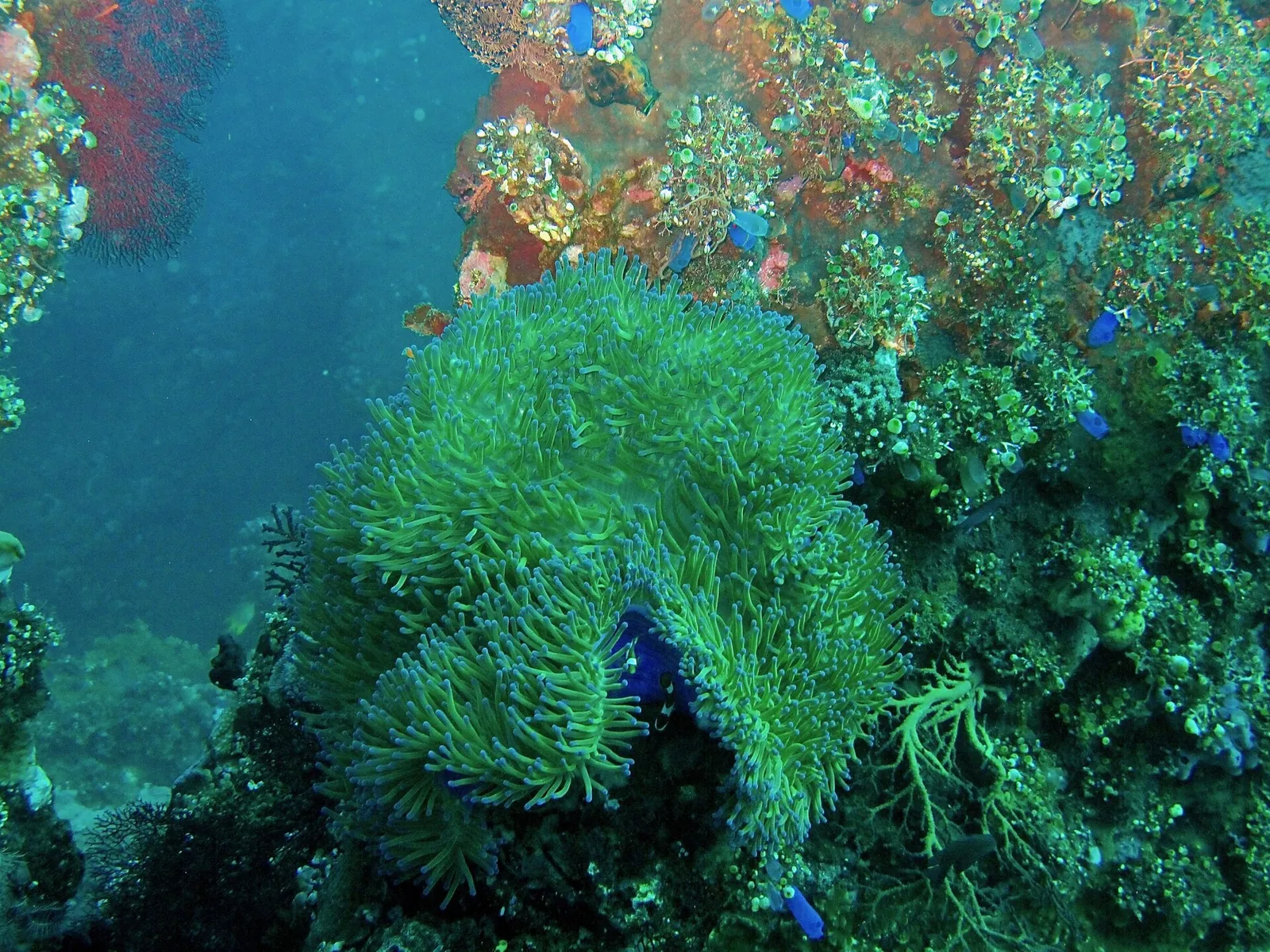
That history explains why the site is so accessible. The wreck lies on a sand slope a short swim from Tulamben's stony beach, with its highest point at about 5 metres and its deepest at about 30 metres. Snorkellers can see the shallow parts on a calm morning, and the Ministry of Tourism also lists the Coral Garden and the Noisy Reefs, with schooling fish and pelagic species, as Tulamben dive and snorkel sites. Wikipedia notes that up to 100 divers a day may visit the wreck in high season, so start early.
Tulamben's name is usually traced to *batulambih*, 'many stones', a reference to Agung's eruptions, and the beach is large smooth boulders rather than sand: bring reef shoes. Bali's official 2026 calendar of events lists the Tulamben Ocean Harmony Festival in October.
Sunrise, salt pans and village life
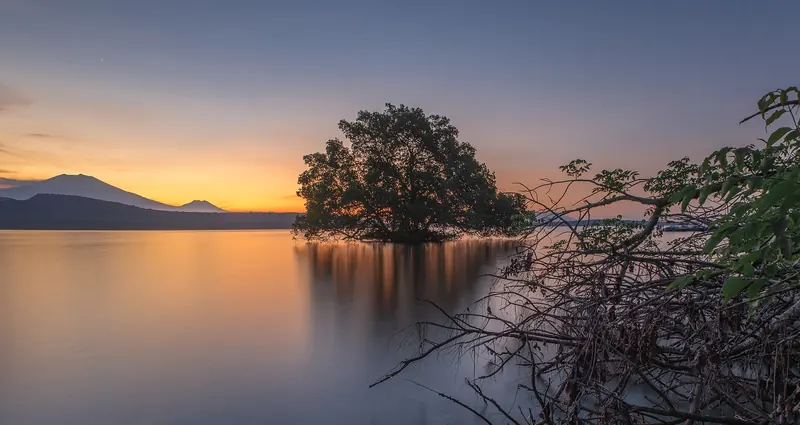
Because the bays face east, the Ministry of Tourism recommends Amed for sunrise, with Mount Agung behind you and the sea in front.
Amed is also one of the last places in Bali where sea salt is made by hand. Look for long, shallow wooden troughs on the beach where seawater is left to evaporate in the sun; the ministry lists traditional salt farming among the area's cultural sights. *Uyah Amed* (Amed salt) was added to Indonesia's national list of intangible cultural heritage in 2022. Wikipedia records that salt fields have shrunk as beaches eroded and land went to tourism, so buy a bag directly from a producer if you see one selling by the road.
Walking through the villages, the ministry suggests, is the way to see traditional fishing and the colourful jukung boats up close. Dress modestly in villages and temples; the Bali provincial government also asks visitors not to step on offerings.
Day trips, getting there and how many nights
Two classic East Bali sights are within easy reach. Pura Lempuyang, one of Bali's six Sad Kahyangan Jagad temples, is known for its split gate framing Mount Agung. When we checked on 2026-10-03, the Ministry of Tourism's guide listed visiting hours of 07:00–17:00 WITA, an entrance fee of IDR 100,000 for foreign visitors including a sarong and sash, and an optional shuttle from the car park at IDR 50,000 per person; it advises arriving before 07:00 to avoid the queue for the gate photo, and notes over 1,700 steps if you continue to the upper temples. Tirta Gangga, a royal water garden built in 1948 by the king of Karangasem, Anak Agung Anglurah Ketut Karangasem,, has pools fed by a sacred spring where visitors may swim, according to the ministry. Together they make an easy morning by car.
Mount Agung dominates every view. It is an active volcano that last erupted in 2017–2019; when we checked on 2026-10-03, Indonesia's volcano monitoring agency (MAGMA) listed it at Level I (Normal). The ministry describes three climbing routes, the shortest from Pura Pasar Agung taking about 3–4 hours to the southern crater rim. Climb only with a licensed local guide and check the alert level just before you go. Nearby Seraya village's Gebug Seraya Festival is listed for October in Bali's 2026 calendar.
Getting there: the Ministry of Tourism's listing for a Jemeluk hotel puts Amed about 95 kilometres from Bali's airport, and Wikivoyage calls it a little more than two hours' drive; traffic in the south can add a lot more. When we checked on 2026-10-03, Perama listed a shared shuttle from Kuta, Sanur and Ubud via Padang Bai and Candidasa to Amed (stop at Amed Café Hotel) and Tulamben (Wayan Restaurant). A private car and driver is simpler with luggage and lets you stop at Tirta Gangga on the way. Foreign visitors must pay Bali's tourist levy, IDR 150,000 per person when we checked, through the official Love Bali website.
This is an editorial suggestion, not a timetable:
- Day 1 — Arrive: drive in from the south, a late-afternoon snorkel at Jemeluk or Lipah, and an early dinner at a beach warung.
- Day 2 — Reefs: sunrise from the beach or a jukung, a morning snorkel over the Pyramids or the Japanese wreck, and a slow afternoon.
- Day 3 — Tulamben: an early start at the Liberty wreck before the crowds, then the Coral Garden; back to Amed for the evening.
- Day 4 (optional) — East Bali temples: Lempuyang at opening time and Tirta Gangga on the way back, or onwards to Sidemen.
Practical questions
How many nights should I spend in Amed?
At least three. The drive from the south takes more than two hours, so one night leaves almost no time in the water. Divers usually want four or five nights to cover Tulamben and the Amed sites.
Can you snorkel from the beach in Amed?
Yes. The Ministry of Tourism highlights Jemeluk Bay and Lipah Beach, where coral starts a short swim from shore, as well as the Amed Pyramids and the Japanese wreck at Banyuning.
Can you snorkel the Liberty wreck at Tulamben?
Yes, in calm conditions. The highest part of the wreck lies at about 5 metres, a short swim from the beach. The deeper parts, down to about 30 metres, are for divers.
Should I stay in Amed or Tulamben?
Stay in Amed (Jemeluk or Lipah) for variety: shore snorkelling, warung and the sunrise bays, with Tulamben a short drive away. Stay in Tulamben if you plan to dive the Liberty wreck several times, ideally before the crowds arrive.
When is the best time to visit Amed?
The Ministry of Tourism recommends the dry months between April and October for clearer water. Visibility drops after heavy rain at any time of year.
How do I get to Amed from the airport?
By private car and driver, about 95 kilometres, or by the Perama shared shuttle from Kuta, Sanur or Ubud via Padang Bai and Candidasa, which when we checked on 2026-10-03 also stopped at Tulamben.
Sources and checks before you travel
Reference sources for the version dated 3 October 2026. Confirm opening times, access, transport and conditions for your travel dates.
- Indonesia Travel (Ministry of Tourism): 5 activities at Amed Beach ↗ — opens in a new tab
- Indonesia Travel (Ministry of Tourism): Diving Amed ↗ — opens in a new tab
- Indonesia Travel (Ministry of Tourism): Snorkeling Tulamben ↗ — opens in a new tab
- Indonesia Travel (Ministry of Tourism): Amed Lodge by Sudamala Resorts ↗ — opens in a new tab
- Indonesia Travel (Ministry of Tourism): Pura Lempuyang ↗ — opens in a new tab
- Indonesia Travel (Ministry of Tourism): Tirta Gangga ↗ — opens in a new tab
- Indonesia Travel (Ministry of Tourism): Gunung Agung ↗ — opens in a new tab
- Indonesia Travel (Ministry of Tourism): Sate lilit ↗ — opens in a new tab
- Indonesia Travel (Ministry of Tourism): 13 iconic Balinese dishes ↗ — opens in a new tab
- MAGMA Indonesia (Centre for Volcanology and Geological Hazard Mitigation): volcano activity levels ↗ — opens in a new tab
- Perama Tour: shuttle bus ↗ — opens in a new tab
- Love Bali (Bali Provincial Government): Bali Calendar of Events 2026 ↗ — opens in a new tab
- Love Bali: travel guidelines in Bali ↗ — opens in a new tab
- Wikipedia: Amed (Bali) ↗ — opens in a new tab
- Wikipedia: USAT Liberty ↗ — opens in a new tab
- Wikipedia: Tulamben ↗ — opens in a new tab
- Wikipedia: Mount Agung ↗ — opens in a new tab
- Wikipedia (Indonesian): list of Indonesian intangible cultural heritage ↗ — opens in a new tab
- Wikivoyage: Amed ↗ — opens in a new tab
Does this experience fit your route?
If you are not driving yourself, a guided East Bali day can combine Lempuyang, Tirta Gangga and a snorkel stop. Check the pick-up time, the route and what is included before you book.
Browse relevant experiences on Viator ↗ — opens in a new tabAffiliate link · Book with ViatorPhoto credits
Golden hour over the Amed coast, with Mount Agung behind the bay
Photograph: Wawansatriawan bali — opens in a new tab · CC BY-SA 4.0 — opens in a new tab
Changes: Resized and converted to WebP; displayed with responsive crops. · Original photograph and licence details ↗ — opens in a new tab
Jukung fishing boats drawn up on Amed's black-sand beach
Photograph: Ch cat — opens in a new tab · CC BY-SA 4.0 — opens in a new tab
Changes: Resized and converted to WebP; displayed with responsive crops. · Original photograph and licence details ↗ — opens in a new tab
A salt maker at work among the drying troughs on Amed beach
Photograph: Surya Edy Gautama — opens in a new tab · CC BY-SA 4.0 — opens in a new tab
Changes: Resized and converted to WebP; displayed with responsive crops. · Original photograph and licence details ↗ — opens in a new tab
Inside the USAT Liberty wreck off Tulamben
Photograph: Tilonaut — opens in a new tab · CC BY 3.0 — opens in a new tab
Changes: Resized and converted to WebP; displayed with responsive crops. · Original photograph and licence details ↗ — opens in a new tab
Corals and a sea anemone on the Liberty wreck at Tulamben
Photograph: (c) Bernard DUPONT, some rights reserved (CC BY-SA) — opens in a new tab · CC BY-SA 4.0 — opens in a new tab
Changes: Resized and converted to WebP; displayed with responsive crops. · Original photograph and licence details ↗ — opens in a new tab