Plan your trip
Luggage in Japan: forwarding, hands-free travel and the shinkansen
Japan's trains are fast, but its stations are deep, its stairs are many and its trains are full at rush hour, which is why so many visitors travel with a day bag and let a courier carry the suitcase. The system is cheap and reliable once you know its rhythm: a bag sent from one hotel usually reaches the next a day later, an airport bag has to leave two days before your flight (three in some areas), and a few services now deliver the same day. This guide covers forwarding, airport delivery, same-day services, lockers and the size rule for carrying a large case on the shinkansen.
In this guide
Find the location ↗ — opens in a new tabThe short answer
Send the big suitcase ahead and travel with an overnight bag. Hotel front desks and designated convenience stores ship bags with Yamato's TA-Q-BIN; Yamato's rate table lists ¥3,160 for a size-160 case (up to 160 cm in length, width and height combined, and up to 25 kg) from the Kanto region, Tokyo included, to the Kansai region, Kyoto and Osaka included, cash rate checked on 1 November 2026. Yamato asks that a bag reach the next hotel at least one day before your stay, and that a bag for your flight be dropped off two days before departure (three in some areas). If you carry the case on the Tokaido, Sanyo or Kyushu shinkansen and it measures 161–250 cm, reserve a seat with an oversized-baggage area; boarding without that reservation incurs a ¥1,000 fee and the conductor assigns the storage space. Same-day delivery exists on a few routes: Hakone-Yumoto Station to partner hotels from ¥1,500 a bag, and Tokyo to Kyoto for ¥13,200 a bag.
- Key point
- Plan it before you book the hotels; a forwarded bag usually needs a day
- Where it applies
- Your hotel's front desk, a convenience store or a station counter
- Timing
- All year; allow extra time around the New Year, Golden Week and Obon, and in heavy rain
Four ways to handle a big suitcase
These four options can be combined on one trip. Forwarding sends the case by courier from one hotel, store or airport to the next, usually arriving a day later; it costs less than the Tokyo–Kyoto same-day service. Same-day delivery moves a bag across a city or along one route while you sightsee, within the operator’s service area and drop-off hours. Storage holds the bag for a few hours at a station locker or a counter while you see a town on the way. And carrying it works on most trains, with one rule to know on the main shinkansen lines.
Yamato Transport, together with the Japan Tourism Agency, recommends what both call hands-free travel: parcel delivery and temporary luggage storage at counters certified by the agency, which display its hands-free travel logo. Yamato's own reasons are the ones you feel on the first day: crowded stations, stairs and transfers with a suitcase, and the risk of losing track of a bag, or of a child, when both hands are full.
The trick is to plan around the delivery day before you book. A bag sent on the morning you leave Tokyo will not be in Kyoto that evening by the normal service, so the classic route works well: send the case before leaving Tokyo, spend a night in Hakone or at a ryokan with a small bag, and collect the case at the Kyoto hotel. Our first-trip guide builds the first week around this pattern.
Luggage forwarding in Japan: TA-Q-BIN hotel to hotel, how it works and what it costs
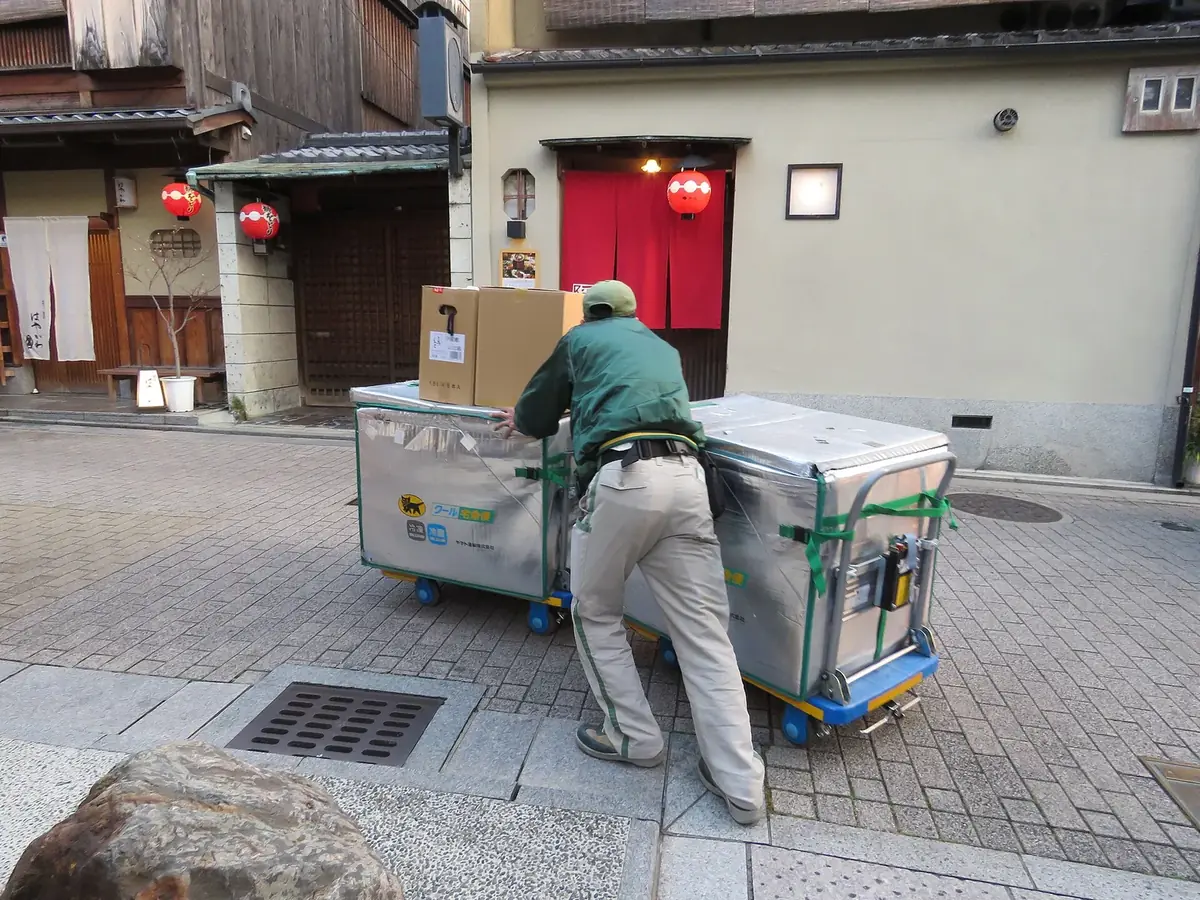
Ask at the front desk the day before you leave. Yamato says a bag can go from one hotel to another if the sending hotel's reception works with Yamato and the receiving accommodation can accept luggage at its front desk, and it asks you to check both points with each hotel in advance. Have the next hotel’s address, your booking name and check-in date ready for the waybill. If you are leaving a holiday rental with no desk, Yamato suggests taking the bag to a 7-Eleven or FamilyMart or to a Yamato sales office instead.
Time it by the arrival date, not the sending date. Yamato's advice is that the bag should arrive at the destination accommodation at least one day before your stay: for a stay from 1 February, it should arrive by 31 January. Choose the sending date from Yamato’s delivery estimate for your route, allowing for arrival before your hotel stay. Keep medicines, chargers, passports and a change of clothes in your day bag.
The price depends on the size and the two regions. Yamato measures a parcel by adding its length, width and height, in sizes from 60 to 200, and takes parcels of up to 200 cm and 30 kg, insured up to ¥300,000 each. The longest side may be no more than 170 cm, or 100 cm for a parcel that must stay upright. The charge uses the higher of the size and weight categories: size 120 allows 15 kg, size 140 allows 20 kg and size 160 allows 25 kg. Measure and weigh the case before choosing a price category; airline baggage allowances vary. Yamato's rate table, checked on 1 November 2026, gives these tax-inclusive one-way cash prices from the Kanto region:
| From Kanto (Tokyo) to | Size 120 | Size 140 | Size 160 |
|---|---|---|---|
| Kanto (Hakone, Yokohama) or Chubu (Nagoya, Takayama) | ¥2,040 | ¥2,630 | ¥3,020 |
| Kansai (Kyoto, Osaka, Nara) | ¥2,170 | ¥2,780 | ¥3,160 |
| Chugoku (Hiroshima) | ¥2,310 | ¥2,930 | ¥3,320 |
| Kyushu (Fukuoka) or Hokkaido (Sapporo) | ¥2,610 | ¥3,250 | ¥3,630 |
Yamato takes ¥100 off per parcel when you drop it off yourself at a convenience store, a sales office or an agency, and the multiple-parcel discount excludes suitcases of size 160 or more. Check the total before you send the bag. Yamato lists cash, electronic money, code payments and credit cards; available methods depend on where you send the bag, and cashless rates can differ.
Arriving and leaving: luggage at the airport
On arrival, send big suitcases on rather than hauling them through Tokyo. The luggage counters at Haneda and Narita deliver to your hotel, generally the next day, so keep the first night's things in your hand luggage; later, hotel front desks and designated convenience stores can send bags onwards. GO TOKYO adds that same-day delivery is sometimes available, so ask at the counter if you land early. For Yamato shipments from Haneda, Narita or Kansai Airport, a ¥660 counter usage fee is added to the shipping fare.
On departure, send the bag to the airport with Airport TA-Q-BIN. Drop it off two days before your departure date, three in some areas, and by the counter's own sending deadline; Yamato delivers it to all major Japanese airports by the day before your flight, and you collect it at the airport counter on the day in exchange for the sender's receipt from the waybill, so keep that slip with your passport. The airport rates include a ¥660 airport handling fee, and Yamato will not take parcels over 30 kg. A time-slot delivery is not available to an airport.
Two more airport options help on a round trip. Round Trip TA-Q-BIN works in one direction only: you send the bag to the airport from a counter, a hotel or a convenience store, and the airport counter sends it back on your return, within a month, with no waybill to write and ¥200 off per parcel. Yamato does not offer it when the airport is the starting point, so on arrival send the bag to your hotel as an ordinary one-way shipment, and send it back to the airport as a second one-way shipment at the end of the trip. At Kansai International Airport, round trips shipped from 1 November 2026 pay the ¥660 handling fee on the outbound leg only, against ¥1,320 for both legs before. Our Japan transport guide covers the airport trains themselves.
Same-day delivery: Hakone, Kyoto and the Tokyo–Kyoto run
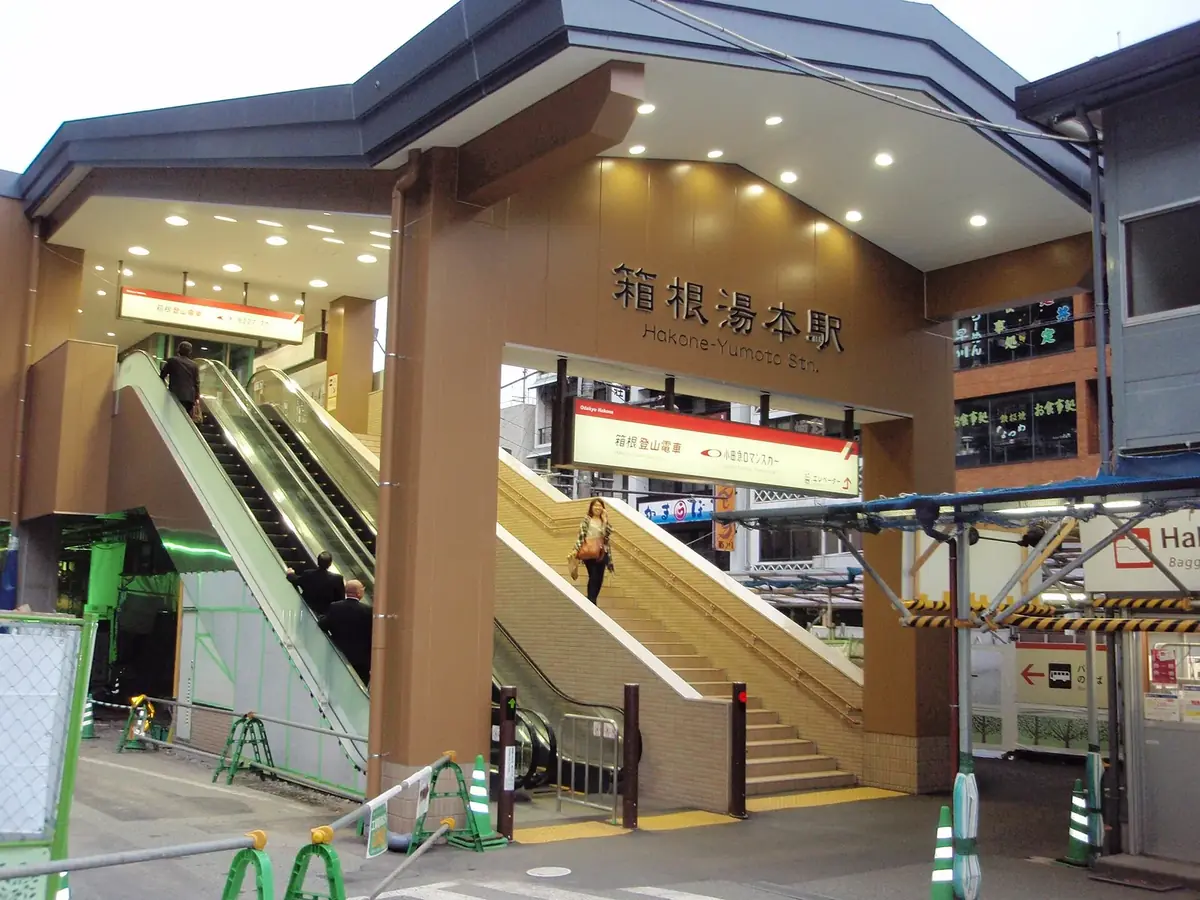
Hakone has the simplest same-day service, run by Odakyu. Leave the bag at the Hakone-Yumoto Station counter by 12:00 and it is delivered to your hotel the same day, waiting for you at check-in; after check-out, Odakyu takes it back to the station and you pick it up at the station between 13:30 and 18:30. It costs ¥1,500 a bag one way for a regular size (up to 140 cm and 15 kg) and ¥2,500 for a large one (up to 200 cm and 30 kg), and only for hotels affiliated with Odakyu, which the service lists. It does not carry valuables, umbrellas, strollers, bottles, cans, laptops and other precision equipment, breakables or food that spoils, so keep those with you. Two regular bags cost ¥3,000 each way. Odakyu also offers online reservations for this service. Our Hakone guide plans the loop around the bags.
Kyoto runs its own hands-free programme. HANDS FREE KYOTO, the city's official site, lists delivery counters at and around Kyoto Station, among them Crosta Kyoto and the JR Kyoto Station Hachijo Gate delivery service (10:00–18:00), and storage counters for bags that do not fit a locker. Crosta Kyoto, on the first basement floor of JR Kyoto Station, is open 08:00–20:00 for storage (¥1,000 a bag a day), but its same-day delivery from the station to a partner hotel in Kyoto has an earlier deadline: drop the bag off by 14:00 and it reaches the hotel after 17:00, for ¥1,500 a bag. Each counter sets its own price and cut-off. It is the way to arrive by shinkansen, drop the case and go straight to the temples.
Between Tokyo and Kyoto, JTB and JR Central run LUGGAGE EXPRESS, launched on 1 November 2025, which carries bags on the Tokaido Shinkansen. Its current Tokyo–Kyoto and Tokyo–Osaka services take bags dropped off by 10:00 at eligible hotels or designated station counters; collect them at the destination hotel from 20:00 for ¥13,200 a bag, or from 18:00 for ¥16,500. A noon drop-off plan costs ¥16,500, with collection from 20:00. These tax-inclusive prices were checked on 1 November 2026. Hotel drop-off and collection are for guests booked at the participating hotels; station counters accept drop-offs only. Bags must close securely, measure no more than 200 cm across their three sides and weigh under 30 kg. Keep valuables, passports, electronics, power banks, fragile items, liquids and perishables with you. Book and pay by credit card on its website, then show the e-ticket at drop-off and collection. Book by the drop-off deadline; late bags are refused, and cancellation within one hour of that deadline costs the full fee. The regular Tokyo–Kyoto service is about four times the next-day courier price, so it suits a tight schedule more than a budget.
Carrying a big case on the shinkansen
Measure the case before you book the seat. On the Tokaido shinkansen, JR Central requires a reserved seat with an oversized-baggage area for any case whose length, width and height add up to 161–250 cm, charges ¥1,000 if you board with one and no reservation, and does not allow bags over 250 cm on board at all. The same reservation rule applies on the Sanyo, Kyushu and Nishi Kyushu shinkansen, but not on conventional trains.
Cases of 160 cm or less go on the overhead rack or at your feet. On some Nozomi, Hikari and Kodama cars, deck storage is also available without reservation on a trial basis; it has a cable you lock with an IC card. Oversized seats are the last row of certain cars, and the space behind them is shared by the five people who booked that row. Reserving one costs nothing beyond the normal seat price: ask at the ticket office, choose 'seat with an oversized baggage area' at a ticket machine or online, or ask the staff when you reserve with a Japan Rail Pass.
Strollers, musical instruments and sports equipment are exempt from the oversized rule, though you still need the reservation to use the space behind the last row. Each passenger may carry two pieces weighing 30 kg or less, with total dimensions of up to 250 cm and no side longer than 200 cm. A Nozomi has 57 seats with an oversized-baggage area, a Hikari 42 and a Kodama 17 when ordinary reserved seats are in cars 7, 11 and 12, so book them early at busy times. Our Japan Rail Pass guide covers seat reservations with the pass.
Lockers and luggage storage for a few hours
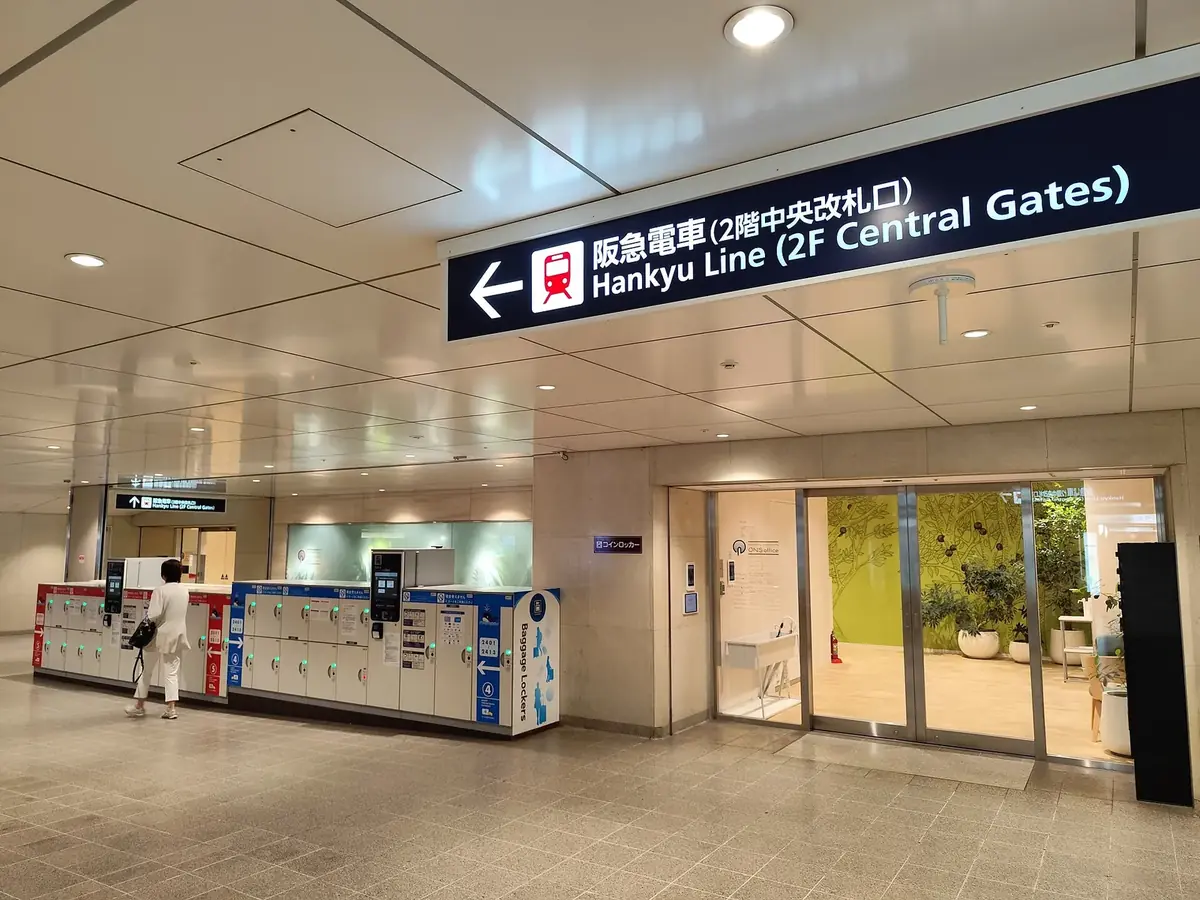
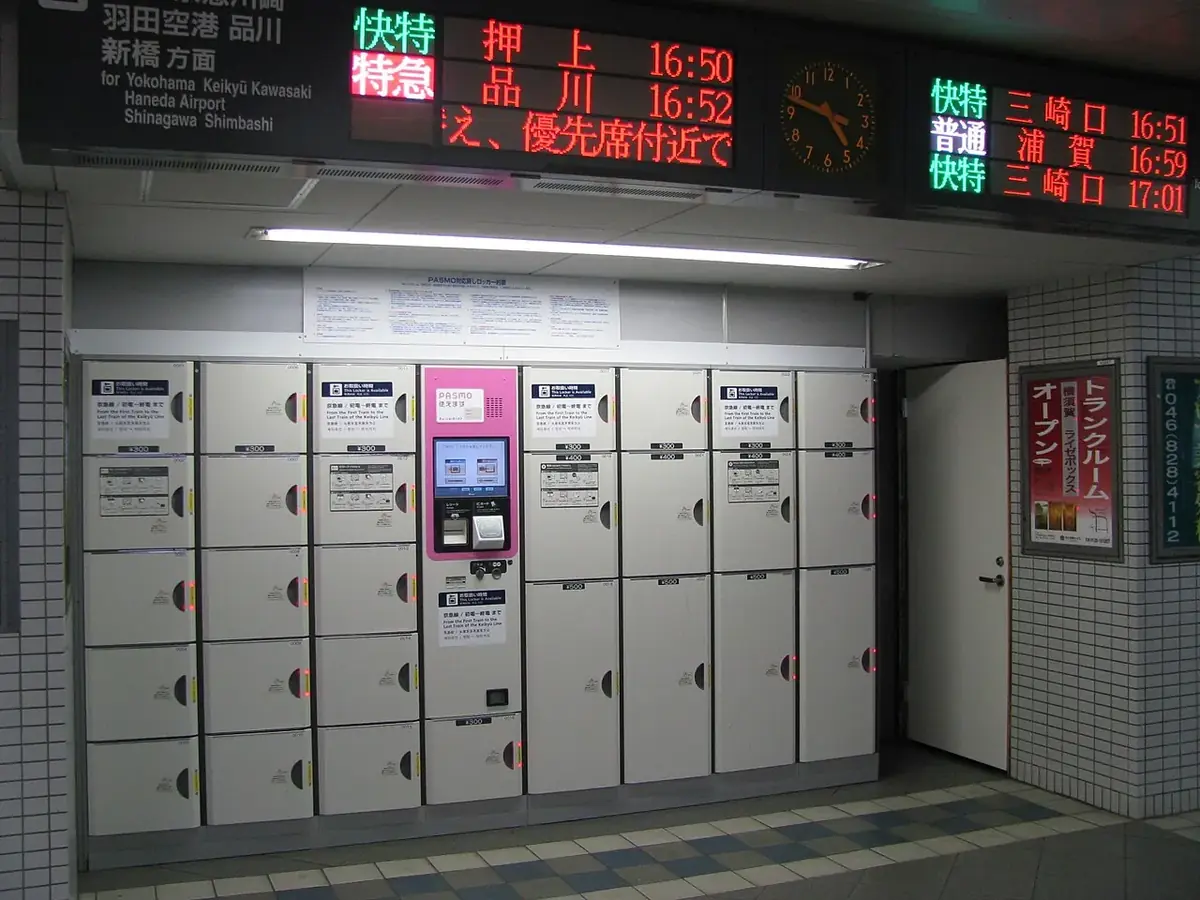
For a stopover on the way, a station locker is the quickest answer. GO TOKYO gives typical prices of about ¥400–500 for a small locker, ¥500–600 for a medium one, ¥700–800 for a large one and about ¥1,200 for an extra-large one, and many lockers open with an IC card. Yamato quotes a traveller who found the large station lockers full, so arrive early or use a staffed counter.
Staffed counters take what a locker will not. Odakyu's sightseeing service centres store bags of up to 160 cm and 25 kg for the day, at prices that vary by centre, and charge for each extra day, with a maximum stay of three days. Kyoto's hands-free site lists storage counters around Kyoto Station, and in the onsen town of Kinosaki a service centre in front of the station forwards bags to your inn for a fee, as our onsen etiquette guide explains.
A week's luggage plan for two: Tokyo, Hakone, Kyoto and Kansai Airport
Here is how the services fit a common first week for two people with one size-160 case of up to 25 kg each, using the cash prices above before discounts (checked on 1 November 2026). Send both cases from your Tokyo hotel two days before you check into Kyoto, with delivery scheduled before your stay: 2 × ¥3,160 = ¥6,320. Take overnight bags to a Hakone ryokan; neither is oversized, so no special seat is needed on the shinkansen to Kyoto.
In Kyoto, collect the cases at your hotel. Two days before the flight, and by the desk’s sending deadline, send them to Kansai International Airport with Airport TA-Q-BIN: ¥3,680 a size-160 case at the cash rate, or ¥7,360 for two. Yamato’s airport calculator already includes the ¥660 handling fee; do not add it again. Over the week that is about ¥13,700 for both cases, close to the price of one bag on a single same-day Tokyo–Kyoto delivery.
If you would rather keep the cases with you, no oversized-baggage reservation is needed for cases of exactly 160 cm; use Hakone's station service for the night in the hills: 2 × ¥2,500 in and 2 × ¥2,500 out for two large cases, ¥10,000 in all.
Practical questions
How long does luggage forwarding take in Japan?
Usually a day. GO TOKYO says bags sent from the airport generally arrive a day later, and Yamato asks that a bag sent between hotels reach the next one at least one day before your stay. Choose the sending date from the route’s delivery estimate, and keep the first night's things with you.
How much does it cost to send a suitcase from Tokyo to Kyoto?
Yamato's rate table lists ¥2,780 for a size-140 parcel and ¥3,160 for a size-160 parcel from the Kanto region to the Kansai region, tax included, for cash payment, checked on 1 November 2026. Size is length, width and height added together; those price categories allow up to 20 kg and 25 kg respectively. Dropping the bag off yourself at a convenience store or sales office takes ¥100 off.
When do I have to send luggage to the airport?
Two days before your departure date, or three in some areas, and by the drop-off counter's own deadline. Yamato delivers to all major airports by the day before your flight, and you collect the bag at the airport counter with the sender's receipt.
Do I need a reservation for my suitcase on the shinkansen?
Only if its length, width and height add up to 161–250 cm and you ride the Tokaido, Sanyo, Kyushu or Nishi Kyushu shinkansen. Then reserve a seat with an oversized-baggage area at no extra cost; boarding without one incurs a ¥1,000 fee and the conductor assigns the storage space, and bags over 250 cm are not allowed at all.
Can my luggage be delivered the same day?
On some routes. Hakone-Yumoto Station delivers to partner hotels the same day if you drop the bag by 12:00 (¥1,500 or ¥2,500 a bag), counters around Kyoto Station deliver to city hotels, and LUGGAGE EXPRESS carries bags between Tokyo and Kyoto for ¥13,200 or ¥16,500 a bag for drop-off by 10:00, with collection at the partner hotel from 20:00 or 18:00 respectively.
Can I send luggage from an Airbnb or holiday rental?
If the flat has no staffed reception, use a participating drop-off point. Yamato suggests taking the bag to a 7-Eleven or FamilyMart or to a Yamato sales office, and the receiving accommodation must be able to accept it at a front desk.
Keep planning your trip
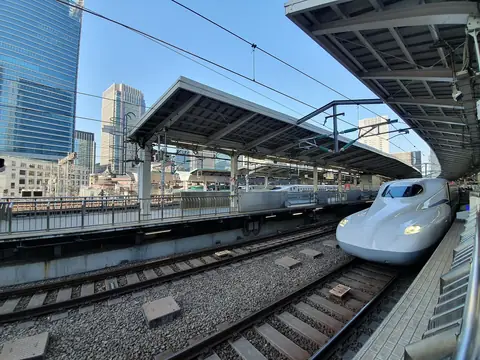
First trip to Japan
How to shape two weeks in Japan, what to settle before you fly (entry, Visit Japan Web, cash, data, insurance) and which trains, tickets and rooms to book.
Read the guide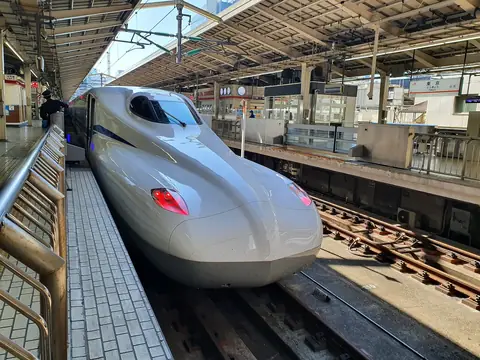
Getting around Japan
How to get around Japan: booking the shinkansen and its big-suitcase rule, IC cards, highway buses, sending luggage ahead, domestic flights and driving.
Read the guide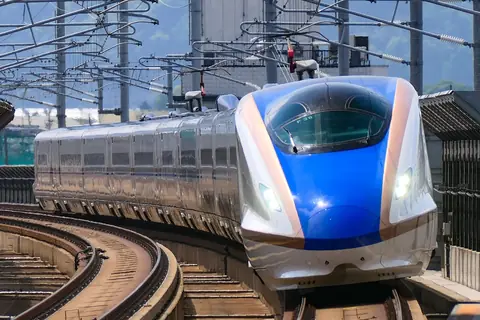
Japan Rail Pass
Whether the 7-day Japan Rail Pass pays for your route, worked out with official fares, plus Nozomi rules, regional JR passes, smartEX and how to use the pass.
Read the guide
Hakone
How many nights Hakone needs, which area to stay in, which way to ride the Hakone loop, whether the Freepass pays, ropeway closures and onsen manners.
Read the guide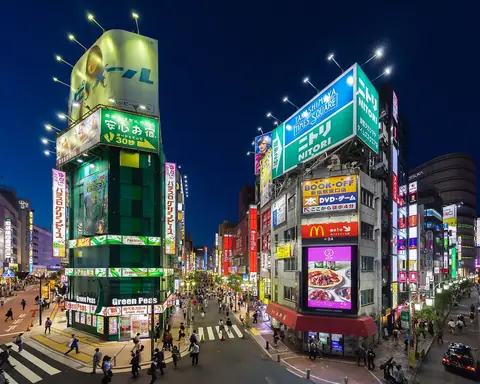
Japan in 7 days
A first-trip week in Japan: three nights in Tokyo, a ryokan in Hakone and two in Kyoto with Nara, plus the trains, the tickets and where to sleep.
Read the guide
Kyoto
How many nights Kyoto needs, where to base yourself, how to group the sights into east, west and south days, and how to beat the crowds and the buses.
Read the guideSources and checks before you travel
(22)
- JR Central: luggage information and oversized baggage ↗ — opens in a new tab
- JR Central and JTB: LUGGAGE EXPRESS launch, 30 October 2025 (PDF) ↗ — opens in a new tab
- HANDS FREE KYOTO (Kyoto City): LUGGAGE EXPRESS notice ↗ — opens in a new tab
- HANDS FREE KYOTO (Kyoto City): hands-free travel in Kyoto ↗ — opens in a new tab
- Crosta Kyoto: baggage storage and hotel delivery ↗ — opens in a new tab
- Yamato Transport FAQ: sending luggage from one hotel to another ↗ — opens in a new tab
- Yamato Transport: TA-Q-BIN sizes and discounts ↗ — opens in a new tab
- Yamato Transport: TA-Q-BIN rate table (Japanese) ↗ — opens in a new tab
- Yamato Transport: Airport TA-Q-BIN ↗ — opens in a new tab
- Yamato Transport FAQ: what is the Airport TA-Q-BIN service? ↗ — opens in a new tab
- Yamato Transport Global: hands-free travel ↗ — opens in a new tab
- Odakyu: baggage services and Hakone baggage delivery ↗ — opens in a new tab
- GO TOKYO: luggage and storage ↗ — opens in a new tab
- Visit Kinosaki: FAQ ↗ — opens in a new tab
- LUGGAGE EXPRESS: current plans, prices and booking ↗ — opens in a new tab
- LUGGAGE EXPRESS: FAQ ↗ — opens in a new tab
- LUGGAGE EXPRESS: locations and eligible hotels ↗ — opens in a new tab
- Yamato Transport FAQ: airport handling and counter fees ↗ — opens in a new tab
- Yamato Transport: how to send a parcel with TA-Q-BIN ↗ — opens in a new tab
- GO TOKYO: Haneda Airport access ↗ — opens in a new tab
- Yamato Transport: sending and payment methods ↗ — opens in a new tab
- Yamato Transport: domestic services ↗ — opens in a new tab
Reference sources for the version dated 1 November 2026. Confirm opening times, access, transport and conditions for your travel dates.
Photo credits
(4)
Hakone-Yumoto Station, where the same-day bag service to Hakone hotels starts
Photograph: ja:User:お口チャック — opens in a new tab · CC BY 3.0 — opens in a new tab
Changes: Resized and converted to WebP; displayed with responsive crops. · Original photograph and licence details ↗ — opens in a new tab
A TA-Q-BIN delivery cart on a Kyoto lane
Photograph: Chuck Moravec — opens in a new tab · CC BY 2.0 — opens in a new tab
Changes: Resized and converted to WebP; displayed with responsive crops. · Original photograph and licence details ↗ — opens in a new tab
Baggage coin lockers in Osaka
Photograph: TKdows 2026 — opens in a new tab · CC0 — opens in a new tab
Changes: Resized and converted to WebP; displayed with responsive crops. · Original photograph and licence details ↗ — opens in a new tab
Coin lockers in several sizes at Yokosuka-chuo Station
Photograph: Uploader; Vantey — opens in a new tab · Public domain — opens in a new tab
Changes: Resized and converted to WebP; displayed with responsive crops. · Original photograph and licence details ↗ — opens in a new tab