Shikoku · Tokushima
Iya Valley travel guide: vine bridges, villages and mountain transport
In Iya, a bridge is only one part of the landscape. Houses spread across slopes, mountain roads connect small settlements and a simple soba lunch can be as memorable as the view. Choose a manageable part of the valley, then leave time to notice the place between the famous stops.
- Suggested time
- A focused day or a slower 1–2-night stay
- Where to stay
- Oboke or an accommodation with confirmed valley access
- Season and timing
- Choose around current roads, transport and local conditions
The short answer
For a first Iya visit, build a focused route around Iya-no-Kazurabashi and another compatible stop or meal. Treat the more remote Oku-Iya bridges as a separate journey. Check the final transport from Oboke, accommodation meals and the actual return; short distances on a mountain map can require a substantial part of the day.
Start with the part of Iya you can reach comfortably
Iya-no-Kazurabashi and the more remote Oku-Iya bridges are different places. For a short first visit, investigate the former with a compatible meal or viewpoint. A deeper-valley route deserves its own transport and time assessment rather than becoming an extra stop when half an hour remains.
An overnight can make a mountain visit less hurried, provided you can actually reach the accommodation and eat there or nearby. Choose the base around your route, not solely the room photograph. One well-planned valley area often gives a more satisfying visit than a sequence of distant place names.
The bridge and the village landscape
A vine-bridge crossing can be an interesting part of the visit if its surface and height suit your group. Assess the current rules and your own comfort; the surrounding landscape still has value if someone chooses not to cross.
For a village or hillside view, look at how the houses relate to the terrain. Ochiai is a place to investigate for this perspective, while respecting homes and private land. Do not leave a permitted route or enter a property to improve a photograph. The landscape includes a community, not only a visitor viewpoint.
Make time for the local food
What to eat and where to look
Iya soba
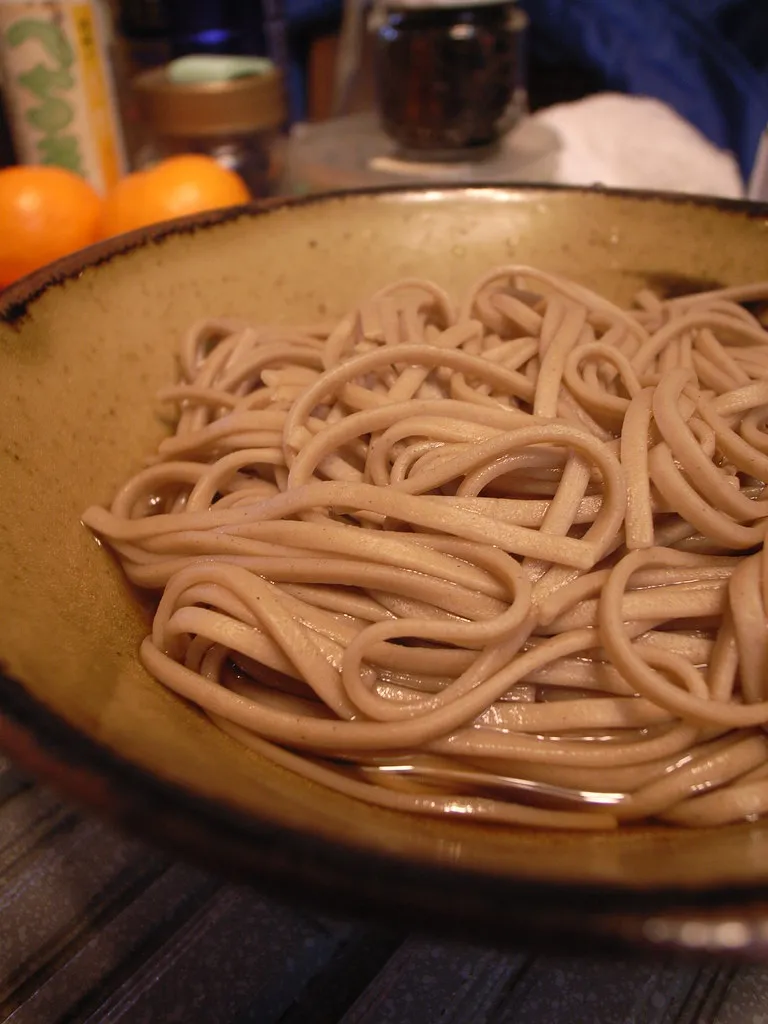
Miyoshi’s food guide describes thick, short buckwheat noodles, reflecting the valley’s mountain food traditions. The preparation and broth vary by establishment, so ask about the actual ingredients when needed.
- Where to look
- Restaurants around your chosen Oboke or Iya route and accommodation meal plans.
- Fit it into your day
- A main lunch before a more remote outing or after the visit you have chosen.
Dekomawashi
Potato, firm tofu and konnyaku are among the local ingredients skewered and grilled with a miso coating. The preparation connects a simple hot food stop with the valley’s regional cuisine.
- Where to look
- Restaurants that explicitly list dekomawashi, using Miyoshi’s food guide as a starting point.
- Fit it into your day
- An accompaniment or extra taste alongside a meal; check the actual portion rather than assuming one skewer is a full lunch.
Iya’s firm tofu
The local firm tofu is suitable for preparations such as skewers and gives another way to explore the mountain pantry. Confirm the complete dish, including sauces and accompaniments.
- Where to look
- Regional menus at valley restaurants and accommodations.
- Fit it into your day
- Look for it as part of lunch or the accommodation dinner you have arranged.
Grilled river fish
The official local food guide describes grilled ayu and amego. They are food traditions to investigate, without promising one species or preparation at every restaurant on every date.
- Where to look
- Current restaurant and inn menus that identify the fish and serving style.
- Fit it into your day
- A cooked main dish or part of an arranged regional dinner, with arrival time confirmed.
Oboke is the gateway, not the whole journey
JR Oboke Station is a useful point to investigate for access, but it does not place every valley stop within an easy walk. Check the bus or booked transport to the actual destination, where you get off and how you return. Do this before making a distant accommodation or an activity the fixed point of the day.
A booked driver or guided route can be worth comparing when it solves the connections you need. Read the actual departure point and time at the stops. The value is a route you can enjoy and understand, rather than simply replacing a bus timetable with a longer attraction list.
Taste the mountain ingredients
Miyoshi’s official food guide describes thick, short Iya soba noodles, grilled river fish and dekomawashi skewers. These give lunch a local focus. Choose a restaurant that fits the part of the valley you are visiting rather than adding another long transfer for a meal.
Dekomawashi combines local ingredients such as potato, firm tofu and konnyaku with a miso coating. MAFF’s regional-cuisine information connects the preparation with the area’s food traditions. Ask about the actual recipe where ingredients matter; a vegetable-looking skewer does not establish every component of its sauce.
If staying overnight, confirm dinner before arrival and give its time a place in the programme. An accommodation meal can be a useful way to enjoy the evening without another journey along mountain roads.
Choose an experience for explanation and workable transport
An Iya outing can benefit from a guide who explains the settlements and food traditions, or a route that coordinates the scattered stops. Compare what is included: a vehicle, walking time, a bridge visit, meals and the return. A regional listing is not evidence that all these elements belong to one product.
For independent travel, make the same decisions yourself and choose fewer stops when that makes the return more reliable. If an activity is sold as a walking experience, read the terrain and effort instead of assuming a mountain sightseeing label means a vehicle carries you throughout.
Give the valley a simpler alternative
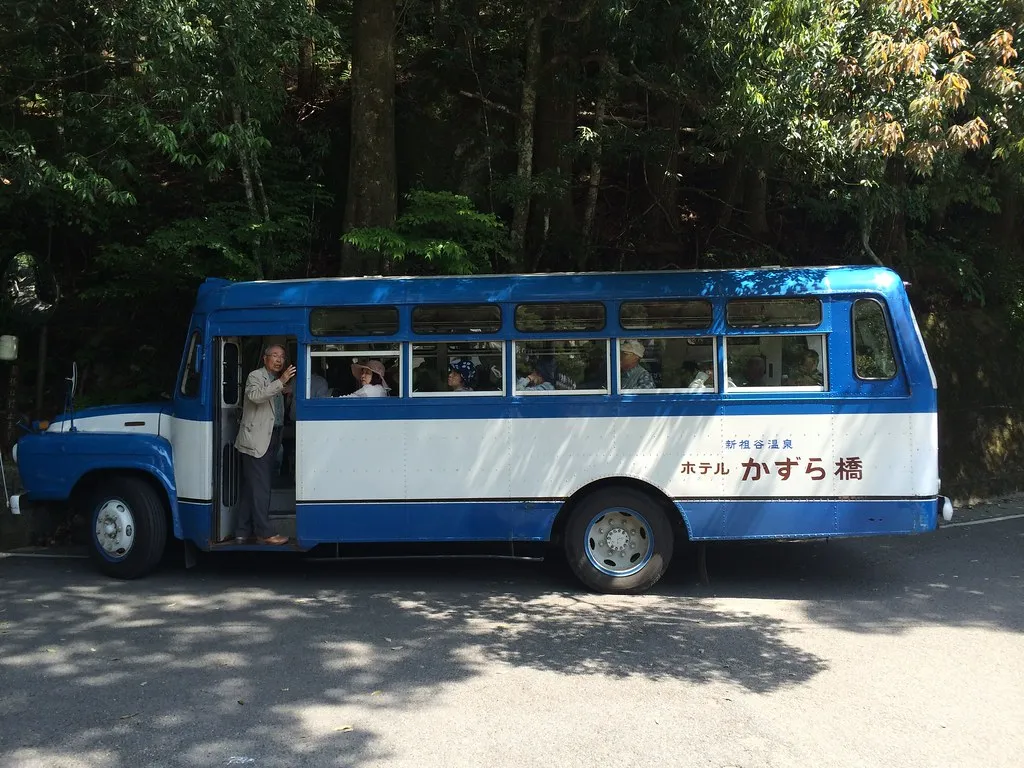
Keep an appropriate option near the base if roads, weather or an agreed connection change. Consult current local information and the accommodation rather than improvising a remote detour. A meal and a shorter landscape visit can preserve the character of the day when a more ambitious route no longer works.
Leave time before the next long rail journey. A valley stay is most enjoyable when the final bus, dinner and departure have already been considered, so the bridge and the food can be what you remember rather than the race to a connection.
Practical questions
Can you visit Iya without a car?
Investigate the actual buses or a booked transport service for your chosen stops. A focused route can work differently from a deep-valley itinerary; establish both outbound and return connections.
Are all Iya vine bridges close together?
No. Iya-no-Kazurabashi and the Oku-Iya bridges belong to different route choices. Do not treat them as interchangeable stops.
Is an overnight worth considering?
It can give the valley a slower pace, provided that access, check-in and dinner work. Confirm those practical arrangements before choosing an isolated accommodation.
What should you eat in Iya?
Look for Iya soba, dekomawashi, firm tofu preparations and grilled river fish through current local menus. Choose a meal close to the route you can actually complete.
Sources and checks before you travel
Reference sources for the version dated 30 September 2026. Confirm opening times, access, transport and conditions for your travel dates.
- Miyoshi Tourism: Iya-no-Kazurabashi access ↗ — opens in a new tab
- Miyoshi Tourism: cultural and village visits ↗ — opens in a new tab
- Miyoshi Tourism: local food traditions ↗ — opens in a new tab
- MAFF: Iya dekomawashi regional cuisine ↗ — opens in a new tab
- Miyoshi Tourism: practical visitor questions ↗ — opens in a new tab
Does this experience fit your route?
Explore related tours and experiences
Check dates and details on Viator ↗ — opens in a new tabAffiliate link · Book with ViatorPhoto credits
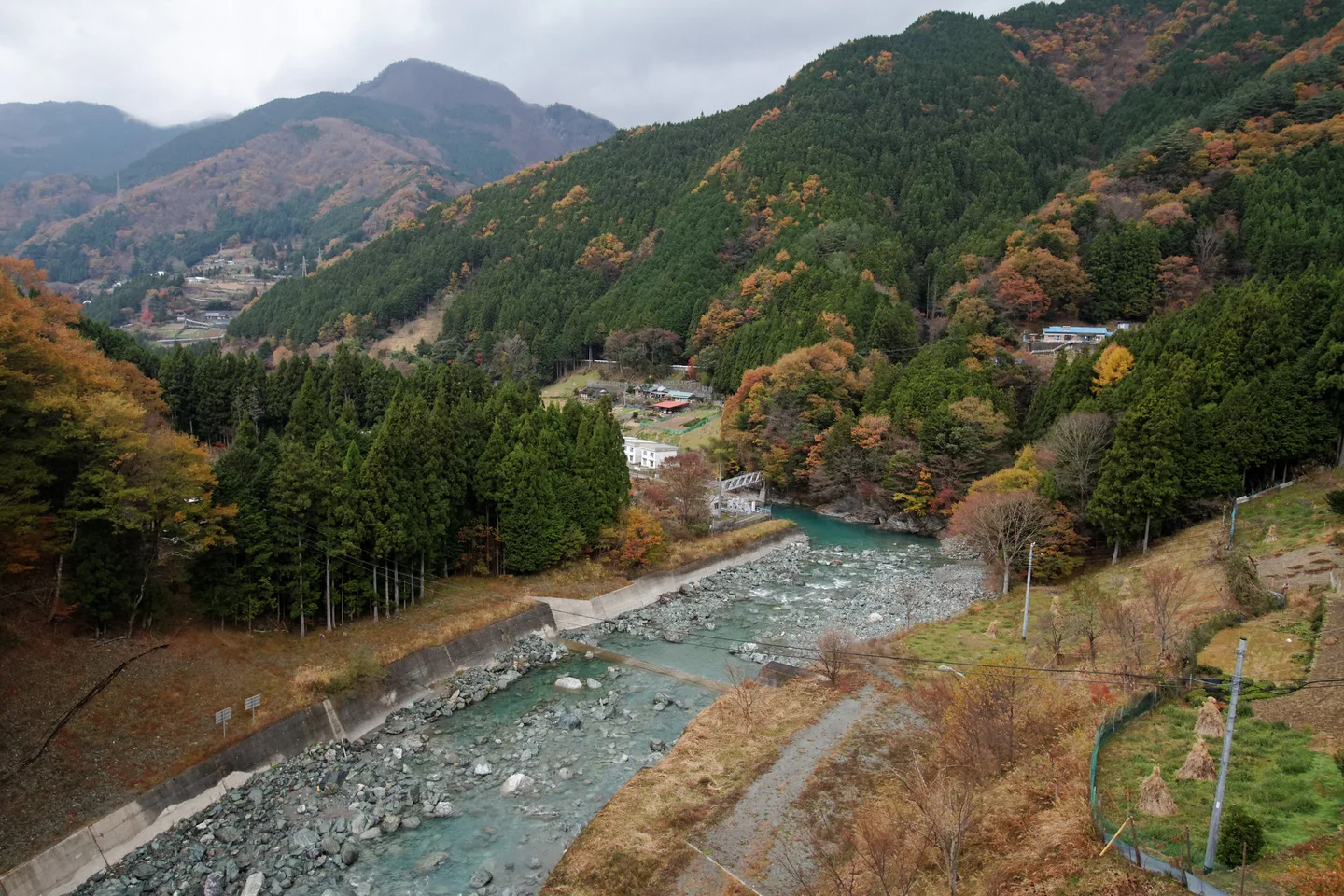
The blue river and forested mountain slopes of Iya Valley in Tokushima.
Photograph: Kimon Berlin — opens in a new tab · CC BY-SA 2.0 — opens in a new tab
Changes: Resized and converted to WebP; displayed with responsive crops. · Original photograph and licence details ↗ — opens in a new tab
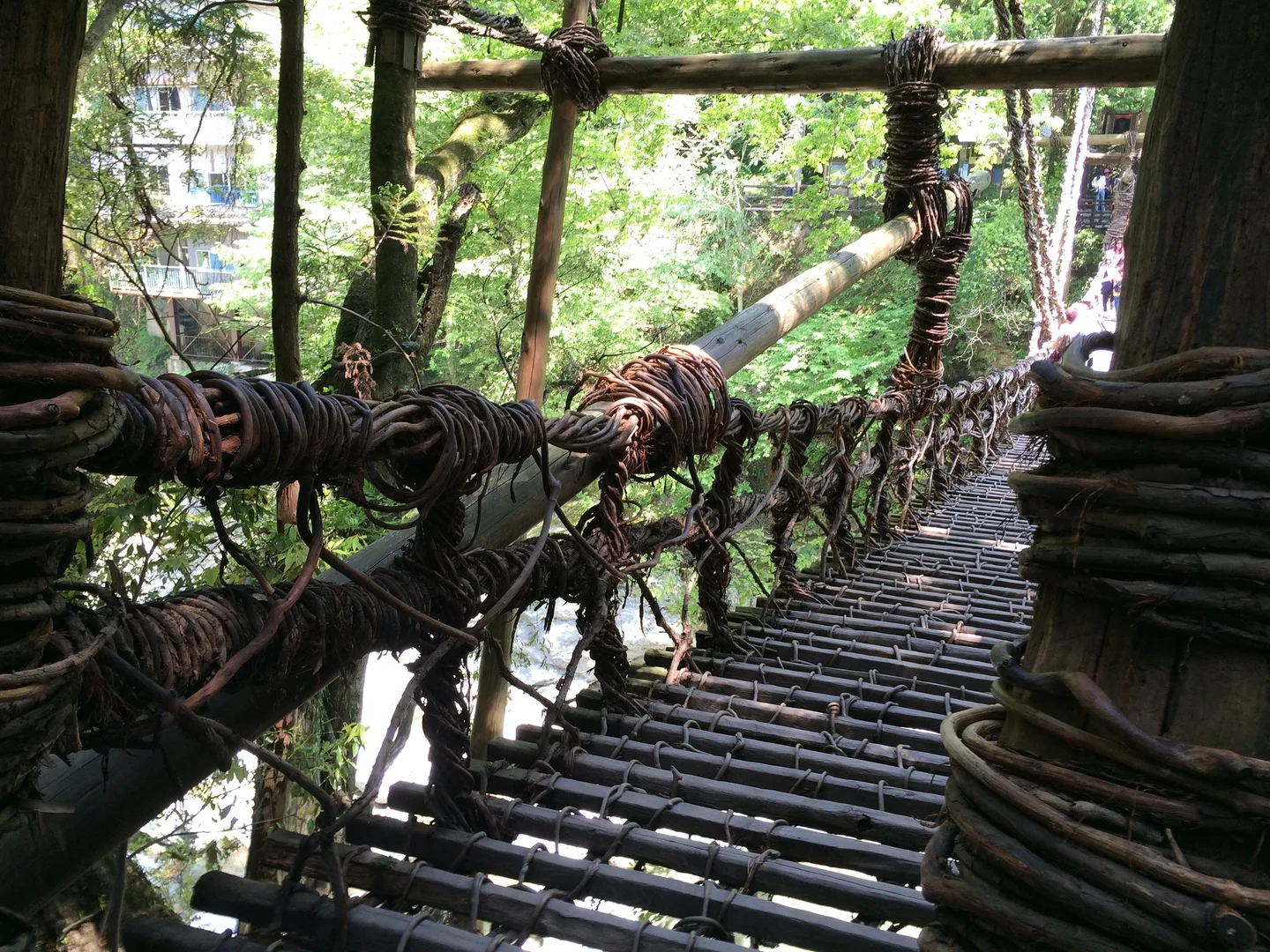
The wooden walkway and woven vines of a bridge in Iya Valley.
Photograph: Karl Baron — opens in a new tab · CC BY 2.0 — opens in a new tab
Changes: Resized and converted to WebP; displayed with responsive crops. · Original photograph and licence details ↗ — opens in a new tab
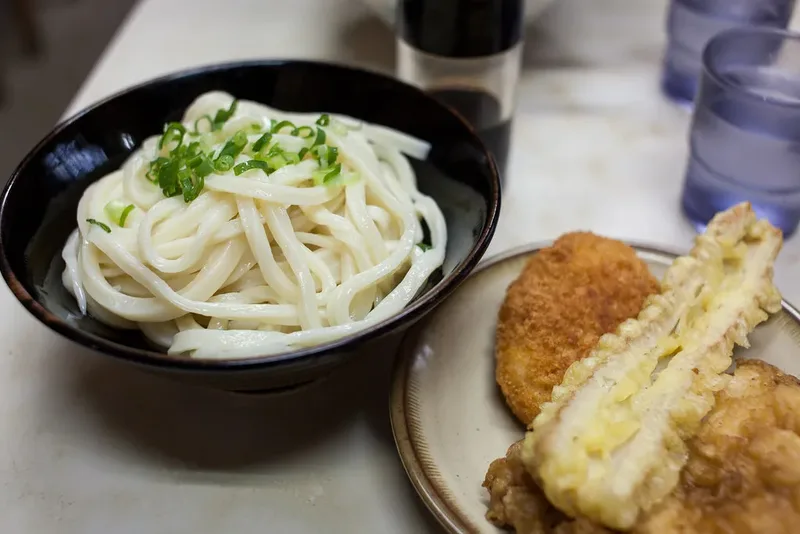
Soba noodles with dipping sauce; an illustrative food photograph.
Photograph: Toshiyuki IMAI — opens in a new tab · CC BY-SA 2.0 — opens in a new tab
Changes: Resized and converted to WebP; displayed with responsive crops. · Original photograph and licence details ↗ — opens in a new tab
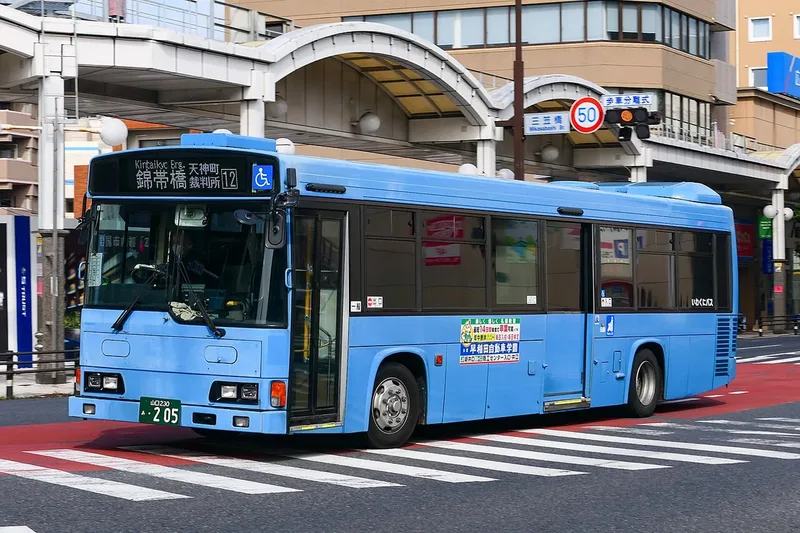
A small blue-and-white bus on a road in the Iya Valley.
Photograph: Karl Baron — opens in a new tab · CC BY 2.0 — opens in a new tab
Changes: Resized and converted to WebP; displayed with responsive crops. · Original photograph and licence details ↗ — opens in a new tab