Lombok and Nusa Tenggara · West Nusa Tenggara
Gili Islands guide: Trawangan, Meno or Air, turtles and boats
The three Gili Islands, Gili Trawangan, Gili Meno and Gili Air, lie just off the north-west tip of Lombok in a protected marine park. None of them allows cars or motorbikes: you walk, cycle or take a cidomo, the local horse-drawn cart, and you can walk around any of them in a few hours or less. The islands look alike from a boat, but they suit different trips. Trawangan is the biggest and busiest, with most of the bars and dive schools; Meno is the smallest and quietest; Air, closest to Lombok, is a lived-in village island between the two. Choosing the right one matters more than anything else you book.
- Suggested time
- 3–4 nights
- Where to stay
- Gili Trawangan for nightlife and diving; Gili Air for a village feel; Gili Meno for quiet
- Season and timing
- Wikivoyage describes the islands as drier than Lombok, with a rainy season roughly from November to April. July–August and December–January are the peak seasons, when rooms should be booked ahead; in July and August southerly winds can make the crossings rough.
The short answer
Give the Gilis three to four nights, on one island or split between two. Sleep on Gili Trawangan if you want restaurants, nightlife and the widest choice of dive schools; on Gili Meno for empty beaches and early nights; on Gili Air for a quieter village atmosphere that still has plenty of cafés. Arrive by fast boat from Serangan, Padang Bai or Amed on Bali, or fly to Lombok and cross from Bangsal or Teluk Nare harbour. Spend one day on a shared or private snorkelling trip around all three islands for the turtles, one sunset on a west coast, and use the inter-island boats to day-trip to the other islands. Plan crossings for the morning, when the sea is calmest, and do not try to fit the Gilis into a day trip from Bali.
Which Gili? Trawangan, Meno or Air
Indonesia's Ministry of Tourism sums up the three clearly. Gili Trawangan is the largest and most popular, with a vibrant nightlife and a wide choice of restaurants and bars; most of its accommodation and facilities are on the east side. Gili Air is the closest to Lombok and the most populated, and Gili Meno, the smallest, has only a few hundred permanent residents and the most remote feel. For a quiet getaway, the ministry points you to Meno or Air.
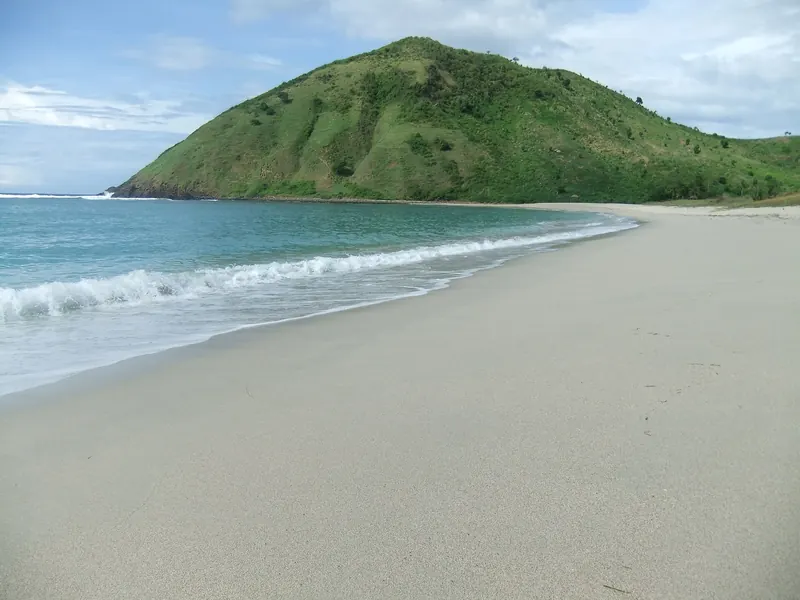
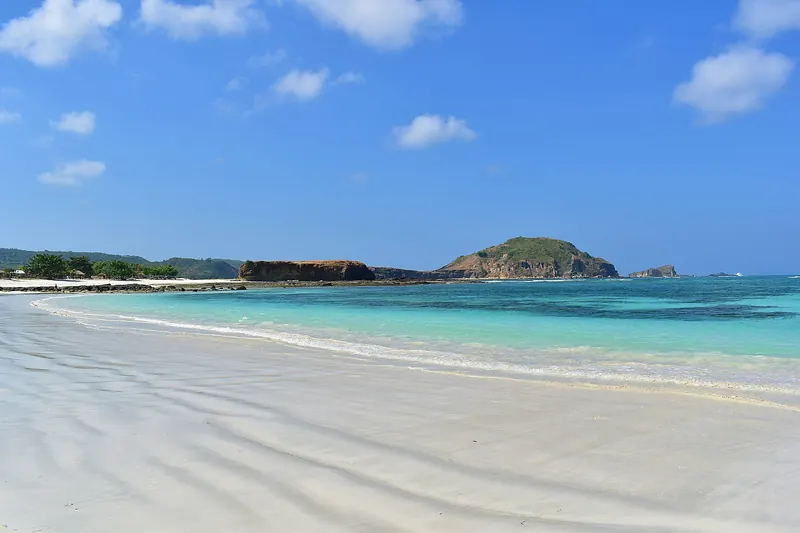
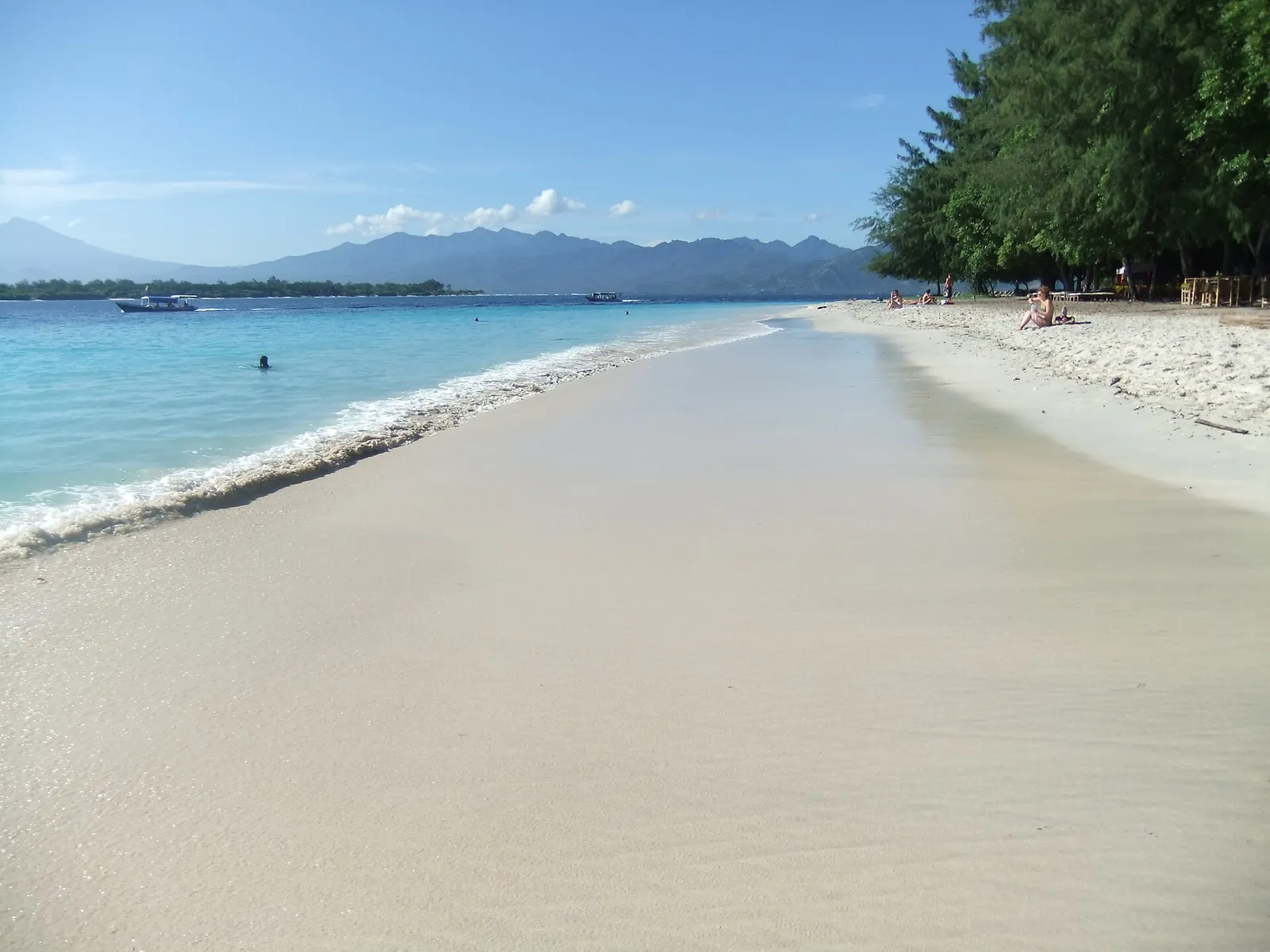
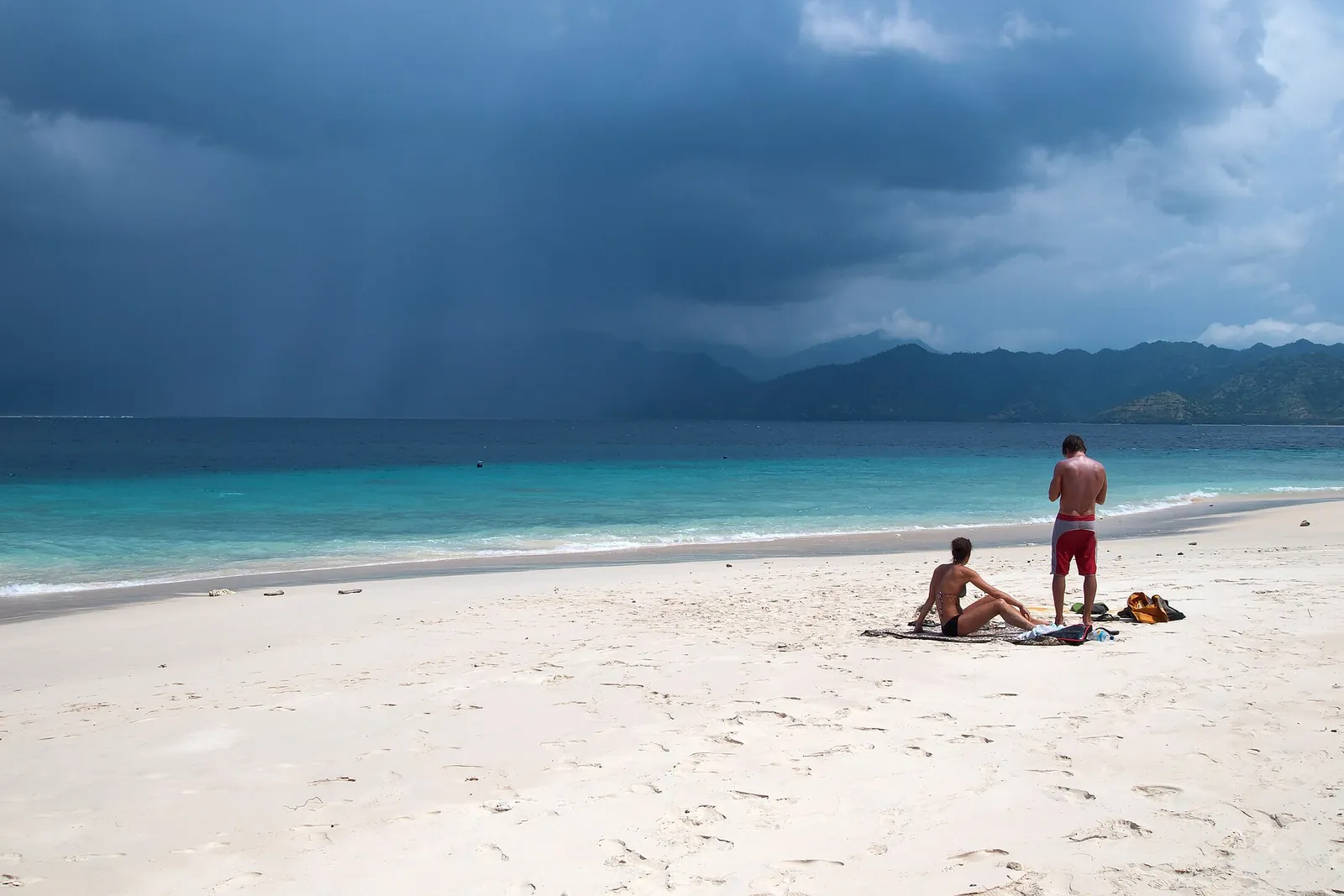
In practice that gives three different holidays. Trawangan, about 3 kilometres long and the only island that rises noticeably above sea level, is the one for a busy beach strip, dive courses and late nights. Meno, sandwiched between the other two, has beaches all round, a salty lake on its west side and not much else, which is exactly why couples choose it. Air has the largest local settlement, a village of warungs and small shops inland from the harbour, and a more rural, established feel than Trawangan; Wikivoyage notes that more backpackers now choose it as Trawangan moves upmarket.
If you cannot decide, split your stay: two nights on Trawangan or Air for food and activity, then one or two on Meno. The islands are close together, and the inter-island boats make changing easy in the morning.
- Gili Trawangan: nightlife, the most restaurants and dive schools, sunset over Bali from the west coast.
- Gili Air: a village island with cafés and beach bars, quieter than Trawangan, closest to Lombok.
- Gili Meno: the smallest and quietest, for beaches, snorkelling and early nights.
Snorkelling with turtles and diving
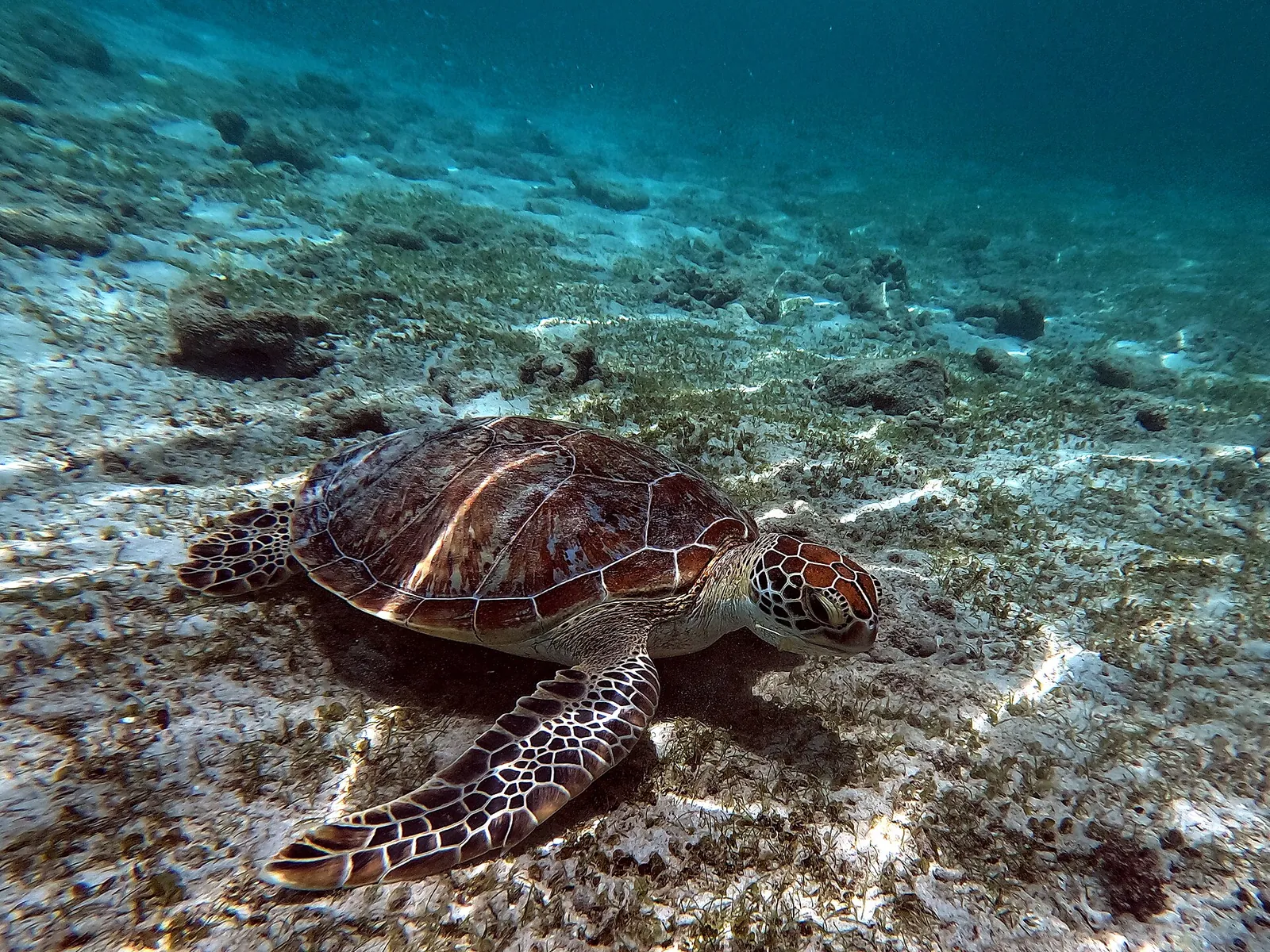
The Gilis sit inside the Gili Matra marine tourism park (Taman Wisata Perairan Gili Matra, for Meno, Air and Trawangan), a protected area of 2,954 hectares that has been protected since 1993 and was designated a marine tourism park in 2009 by the Ministry of Marine Affairs and Fisheries. Green turtles are the main attraction for snorkellers: the Ministry of Tourism says they can be seen at depths of 10 to 20 metres, and on Trawangan some snorkel spots, such as Turtle Point, Coral Garden and Shark Point, can be reached by swimming from the shore. Wikipedia notes that turtles can be seen along the reef off Gili Air's east coast too.
The easiest way to see the best sites is a snorkelling trip around all three islands. The ministry describes these trips as typically including Coral Garden, Turtle Point and the Bounty wreck, with mask, snorkel and buoys provided; when we checked on 2026-10-03, its Gili Trawangan guide listed shared trips of three to four hours at around IDR 100,000–150,000 per person and private boats at about IDR 700,000–1,200,000 per boat. Many trips also stop at the underwater statues off Gili Meno, a circle of 48 human figures.
Gili Trawangan is the hub for diving, with the most dive schools, from first-time try dives to full courses; the ministry lists Turtle Heaven, Shark Point, the Bounty Wreck and the Biorock artificial reefs among the sites, and Meno Wall off Gili Meno. Currents around the islands can be strong, even close to shore, so wear fins, stay with your group and never try to swim between the islands: Wikivoyage warns that several visitors have died attempting it. Do not touch or stand on coral, and keep your distance from turtles.
Make time for the local food
What to eat and where to look
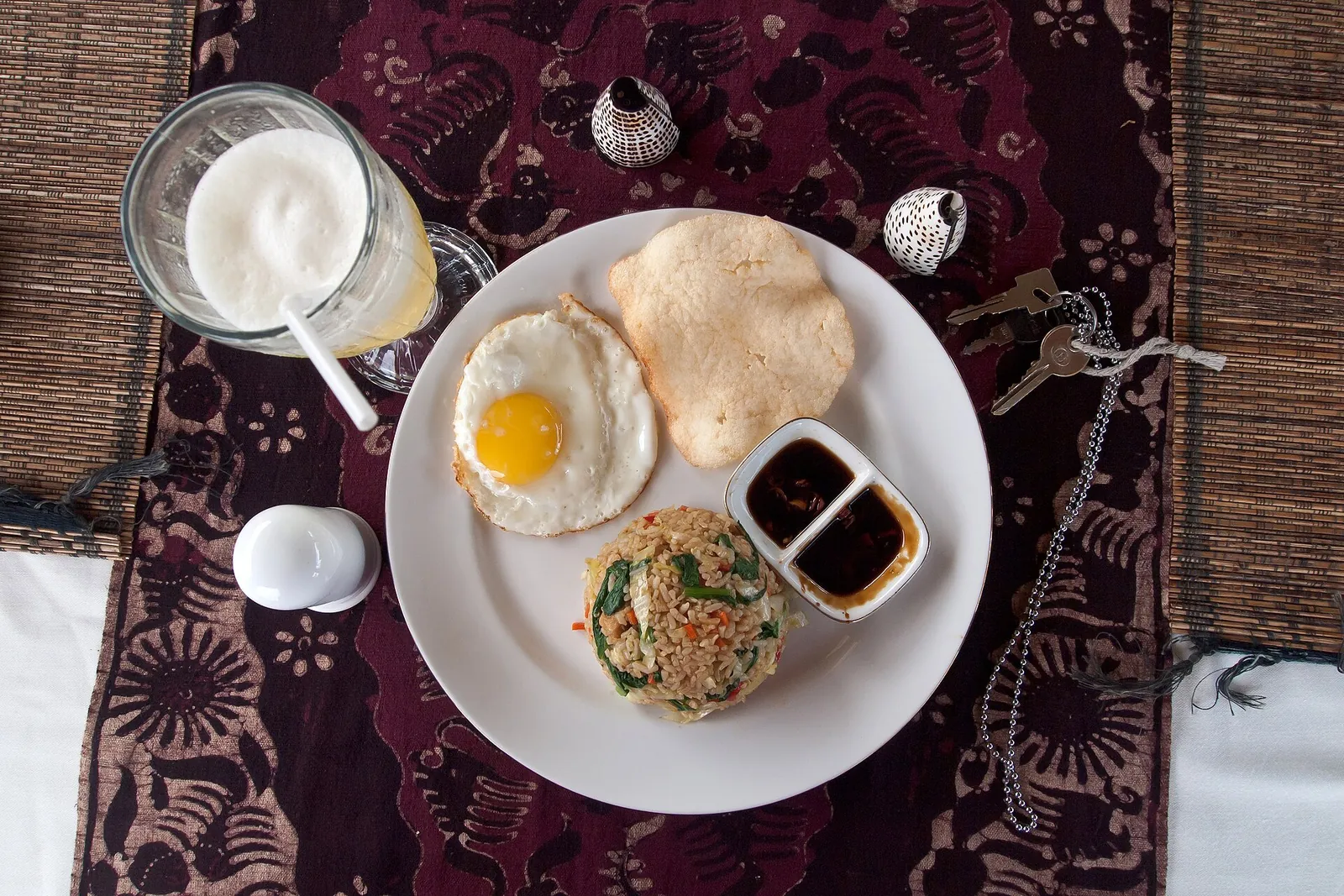
Night market grills and nasi campur
Satay, grilled fish with Indonesian spices and mixed rice plates, which the Ministry of Tourism lists at the night market near Gili Trawangan's main harbour.
- Where to look
- The Gili Trawangan night market by the harbour, and warungs in the villages behind the beach strips on all three islands.
- Fit it into your day
- Dinner after sunset on Trawangan, when the market is busiest.
Ask the price of fish sold by weight before it is grilled.
Ayam taliwang
Lombok's best-known dish: free-range chicken grilled with a hot paste of chilli, garlic and shrimp paste, which the ministry calls a culinary icon of the island, from the Karang Taliwang area.
- Where to look
- Restaurants and warungs that serve Lombok (Sasak) food, on the islands or on the mainland around Bangsal and Senggigi.
- Fit it into your day
- Lunch or dinner with rice and plecing kangkung.
Very spicy; it contains shrimp paste.
Plecing kangkung
Blanched water spinach under a raw sambal of chilli, tomato and shrimp paste, often with bean sprouts, fried peanuts or grated coconut — the ministry's example of Lombok's love of sambal.
- Where to look
- Warungs serving Lombok food; it is a standard side dish.
- Fit it into your day
- A fresh side to grilled fish or ayam taliwang.
Ask for it without terasi (shrimp paste) if you are vegetarian or allergic to shellfish.
Beachfront dinners
The east coasts of all three islands are lined with restaurants and cafés serving seafood, Indonesian and Western food, many with tables on the sand.
- Where to look
- The east-coast beach strips near each harbour; on Air and Meno the west coast for sunset.
- Fit it into your day
- An early dinner timed for sunset on the west coast.
Wikivoyage warns that tax and service charges, often around 21 per cent in upmarket places, may be in small print on the menu.
Getting there from Bali or Lombok
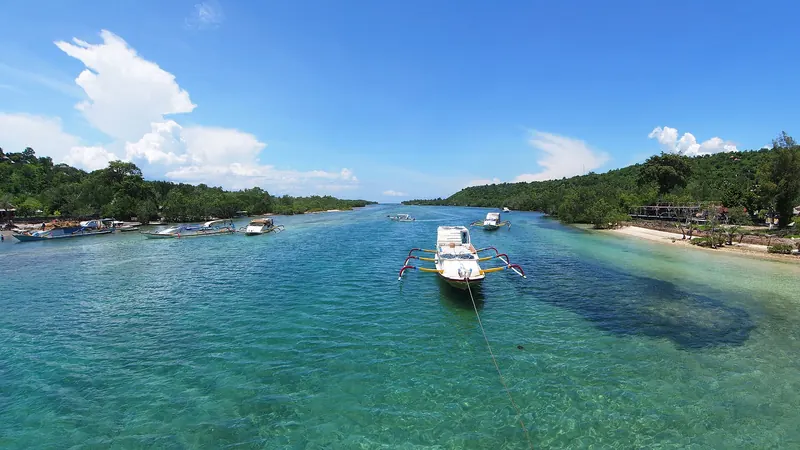
There is no airport on the islands. From Bali, fast boats run directly to the Gilis from Serangan in the south and Padang Bai in the east, as the Ministry of Tourism describes, and also from Amed on the east coast. Wikivoyage puts the crossing from Serangan at about two and a half hours, while Padang Bai and Amed are shorter on the water but further by road, so the total journey is similar. When we checked on 2026-10-03, the ministry's Gili Trawangan guide listed Bali fast-boat fares at roughly IDR 350,000–600,000 depending on operator and season. Standards vary between operators, so choose by vessel, safety equipment and track record rather than price alone, and do not board an overloaded boat in bad weather.
From Lombok, the crossing is short. Public boats leave from Bangsal harbour in North Lombok, and private speedboats from Teluk Nare just to the south. When we checked on 2026-10-03, the ministry listed public boats from Bangsal at IDR 20,000–30,000 and speedboats at IDR 85,000–150,000; Wikivoyage notes that public boats leave when they are full and take about 15, 30 and 45 minutes to Air, Meno and Trawangan. Expect to wade ashore at the islands, so keep shoes and bags ready.
The sea is calmest in the morning, and Wikivoyage advises reaching Bangsal or Teluk Nare by 16:00, since boats stop running well before dark. Put phones and cameras in a waterproof bag. Between the islands, use the public island-hopping boats, which you book at the ticket office on each island, or charter a boat.
Car-free days: bikes, cidomos and sunsets
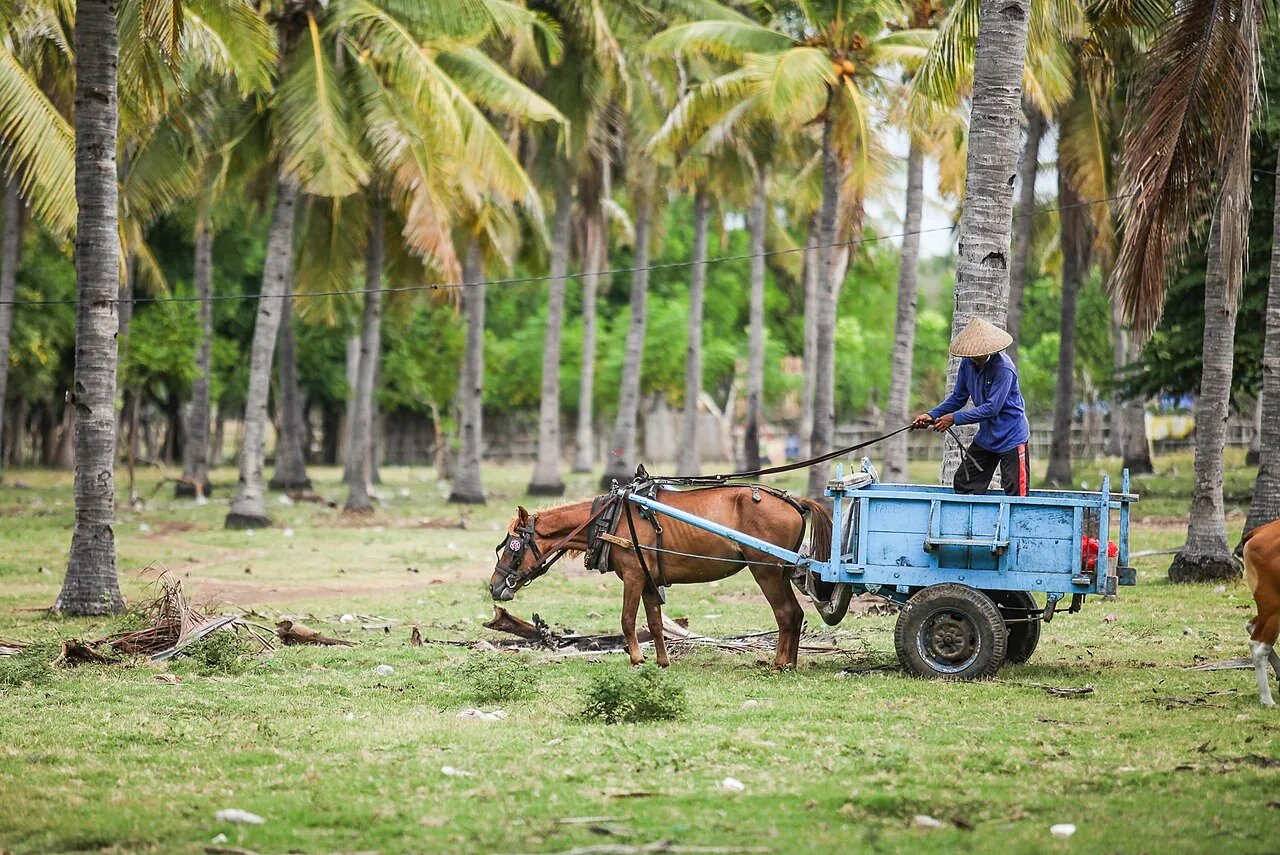
Cars and motorbikes are banned on all three islands. The ministry recommends renting a bicycle as the best way to explore; a ride around Gili Trawangan takes about an hour. Cidomos, the horse-drawn carts, carry locals, luggage and visitors, and Wikivoyage reports that you can walk around an island in about 90 minutes. Walking or cycling is easy and kinder to the horses; the Gili Eco Trust supports a stable on Trawangan that cares for rescued and retired horses. Lock your bike when you leave it.
Sunsets are the daily event. On Trawangan, the ministry recommends the west coast, where the sun sets behind Mount Agung on Bali, or the hill at the southern end, the island's highest point, with views over the three Gilis, Bali and Lombok; Wikivoyage notes the remains of a Second World War Japanese gun bunker at the top. For sunrise, go to the east side, which faces Lombok and Mount Rinjani. On Air and Meno the west and north coasts look across to the other islands and Bali.
Meno also suits a slow walk around the coastal path in the late afternoon. Ask locally about the island's turtle hatchery: Wikivoyage lists a turtle sanctuary on Meno, and on Trawangan the Gili Eco Trust's Proyek Penyu project monitors and protects turtle nests on the beaches during the nesting season.
Nightlife, water and island etiquette
Trawangan lives up to its party reputation: the ministry notes that party nights rotate between the bars, which usually stay open late, and the night market near the harbour is the island's main public dining spot. Wikivoyage warns about drinks made with locally distilled spirits, which have caused methanol poisoning, and about drugs, which are openly offered: Indonesian drug penalties are extremely harsh. Stick to beer or drinks from reputable bars and never leave a drink unattended.
Most islanders are Muslim. Wikivoyage advises covering up away from the beach and not sunbathing topless, and you will hear the call to prayer; if you are a light sleeper, check how close your room is to a mosque. During Ramadan, eat and drink discreetly near local people.
Tap water on the islands is salty and not drinkable, and some cheaper rooms have salt-water showers, so ask before you book. To avoid plastic bottles, the Gili Eco Trust says it has set up more than 100 drinking-water refill stations across the islands. There are small clinics on each island, but the nearest hospital is in Mataram on Lombok, so travel insurance that covers evacuation is worth having.
Practical questions
Which Gili island is best?
Gili Trawangan for nightlife, restaurants and diving; Gili Air for a village island with cafés but a calmer pace; Gili Meno for the quietest beaches. Many travellers split a stay between two.
How do I get from Bali to the Gili Islands?
By fast boat from Serangan, Padang Bai or Amed. Wikivoyage gives about two and a half hours from Serangan; the eastern ports are shorter on the water but further by road. Choose an operator with a good safety record, and travel in the morning when the sea is calmest.
How do I get from Lombok airport to the Gilis?
Travel by road to Bangsal or Teluk Nare harbour on Lombok's north-west coast (Wikivoyage estimates 1 hour 40 minutes to 2 hours by taxi), then take a public boat or speedboat. Aim to be at the harbour by 16:00.
Can I see turtles while snorkelling?
Very often. Green turtles live around all three islands, and on Gili Trawangan some spots, such as Turtle Point, are reachable from the shore. A snorkelling trip around the three islands visits the best-known sites, but sightings are never guaranteed.
Are there cars or scooters on the Gilis?
No cars or motorbikes are allowed. People get around on foot, by bicycle or by cidomo, a horse-drawn cart; you may also meet electric scooters on the main paths.
Is a day trip to the Gilis from Bali worth it?
Rarely. The crossing and transfers take most of the day, and the islands are best at sunset and in the calm morning. Stay at least two or three nights.
Sources and checks before you travel
Reference sources for the version dated 3 October 2026. Confirm opening times, access, transport and conditions for your travel dates.
- Indonesia Travel (Ministry of Tourism): Gili Trawangan and the Gilis ↗ — opens in a new tab
- Indonesia Travel (Ministry of Tourism): Gili Trawangan tours, snorkelling and how to get there ↗ — opens in a new tab
- Indonesia Travel (Ministry of Tourism): Follow the action on Gili Trawangan ↗ — opens in a new tab
- Indonesia Travel (Ministry of Tourism): Gili Meno ↗ — opens in a new tab
- Indonesia Travel (Ministry of Tourism): Lombok's halal cuisine ↗ — opens in a new tab
- Indonesia Travel (Ministry of Tourism): Plecing kangkung ↗ — opens in a new tab
- Wikipedia (Indonesian): Taman Wisata Perairan Gili Matra ↗ — opens in a new tab
- Wikipedia: Gili Islands ↗ — opens in a new tab
- Wikivoyage: Gili Islands ↗ — opens in a new tab
- Wikivoyage: Gili Meno and Gili Trawangan ↗ — opens in a new tab
- Gili Eco Trust ↗ — opens in a new tab
Does this experience fit your route?
Staying a few nights? Book your snorkelling trip for an early calm morning, and keep a second day free in case the sea is rough.
Check dates and details on Viator ↗ — opens in a new tabAffiliate link · Book with ViatorPhoto credits
A beach on Gili Trawangan, the largest of the three Gili Islands
Photograph: Midori — opens in a new tab · CC BY 3.0 — opens in a new tab
Changes: Resized and converted to WebP; displayed with responsive crops. · Original photograph and licence details ↗ — opens in a new tab
A quiet beach on Gili Meno, the smallest of the three islands
Photograph: Vyacheslav Argenberg — opens in a new tab · CC BY 4.0 — opens in a new tab
Changes: Resized and converted to WebP; displayed with responsive crops. · Original photograph and licence details ↗ — opens in a new tab
A green turtle in the waters off Gili Trawangan
Photograph: orbis imaginibus — opens in a new tab · CC BY-SA 2.0 — opens in a new tab
Changes: Resized and converted to WebP; displayed with responsive crops. · Original photograph and licence details ↗ — opens in a new tab
A horse and cart on Gili Trawangan, where cars and motorbikes are banned
Photograph: Wokshots — opens in a new tab · CC BY-SA 4.0 — opens in a new tab
Changes: Resized and converted to WebP; displayed with responsive crops. · Original photograph and licence details ↗ — opens in a new tab
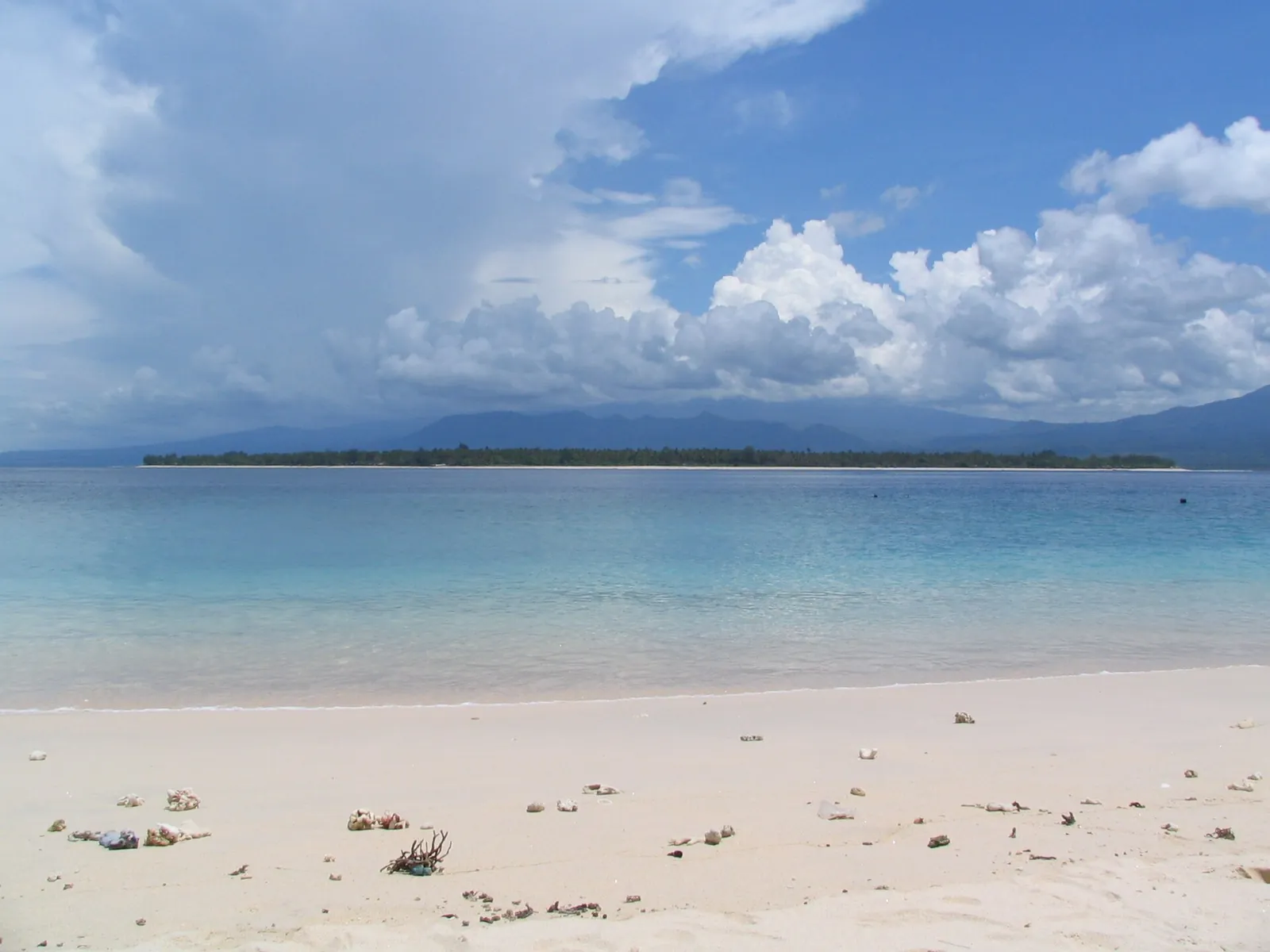
Gili Air, closest to Lombok, seen from Gili Meno
Photograph: MisterGrigri — opens in a new tab · CC BY-SA 3.0 — opens in a new tab
Changes: Resized and converted to WebP; displayed with responsive crops. · Original photograph and licence details ↗ — opens in a new tab
Nasi goreng, Indonesian fried rice, served on Gili Trawangan
Photograph: Vyacheslav Argenberg — opens in a new tab · CC BY 4.0 — opens in a new tab
Changes: Resized and converted to WebP; displayed with responsive crops. · Original photograph and licence details ↗ — opens in a new tab