Plan your trip
Maldives food: mas huni, garudhiya, hedhikaa and where to eat them
Maldivian food is built on fish and coconut. Breakfast starts with mas huni, tuna mixed with grated coconut and eaten with flatbread; garudhiya is fish soup with rice; evening tea brings fish cakes and small pastries. You can try these dishes in Malé and Hulhumalé, in guesthouse kitchens on the inhabited islands and at resorts. Here are the dishes to order, places that serve them, the rules on alcohol and Ramadan, and worked examples of what meals cost.
In this guide
Find the location ↗ — opens in a new tabThe short answer
Start in Malé or Hulhumalé with mas huni and roshi for breakfast and hedhikaa with black tea in the afternoon, then let your island guesthouse cook: on a small island with few cafés, book the room with its meals first. On Maafushi, Kaani Palm Beach, the restaurant for guests of Kaani's hotels, lists a Maldivian-style tuna noodle soup at USD 6 and a whole grilled reef fish at USD 10 before service charge and T-GST, and lunch, dinner and drinks there come to about USD 33 a person; a café day in Malé comes to about USD 30 with GST, and a resort day about USD 110.
- Key point
- A day of meals in Malé or Hulhumalé, then the guesthouse kitchens and cafés of a local island
- Where it applies
- Malé for the tea shops, Hulhumalé for a first breakfast, and an inhabited island such as Maafushi, Thoddoo or Dhigurah for home-style Maldivian meals
- Timing
- These dishes are part of everyday Maldivian cooking. During Ramadan, expect daytime restaurant closures outside hotels on the inhabited islands; bon'di baiy, sweet rice, is associated with festivals and the birth of a child.
Fish and coconut: mas huni and roshi
Visit Maldives, the national tourism board, describes a cuisine based on fish and coconut, with breadfruit and influences from neighbouring countries. Tuna and grated coconut come together in breakfast, while fish soup, rice and small savoury pastries take you through lunch and evening tea.
Mas huni is where to start. Visit Maldives describes this breakfast staple as fresh tuna mixed with grated coconut, onion, chilli and lime, served with roshi, a round flatbread. In Hulhumalé, it recommends The Chef Mode Badhige and The Maldive Kitchen for traditional Maldivian food. Hermit's, the restaurant at Bliss on Dhigurah, serves mashuni with wraps. Avi Guesthouse on Thoddoo lists its Maldivian tuna and coconut salad with tortilla bread and a drink for USD 6, taxes included.
Garudhiya, rice and tuna curry
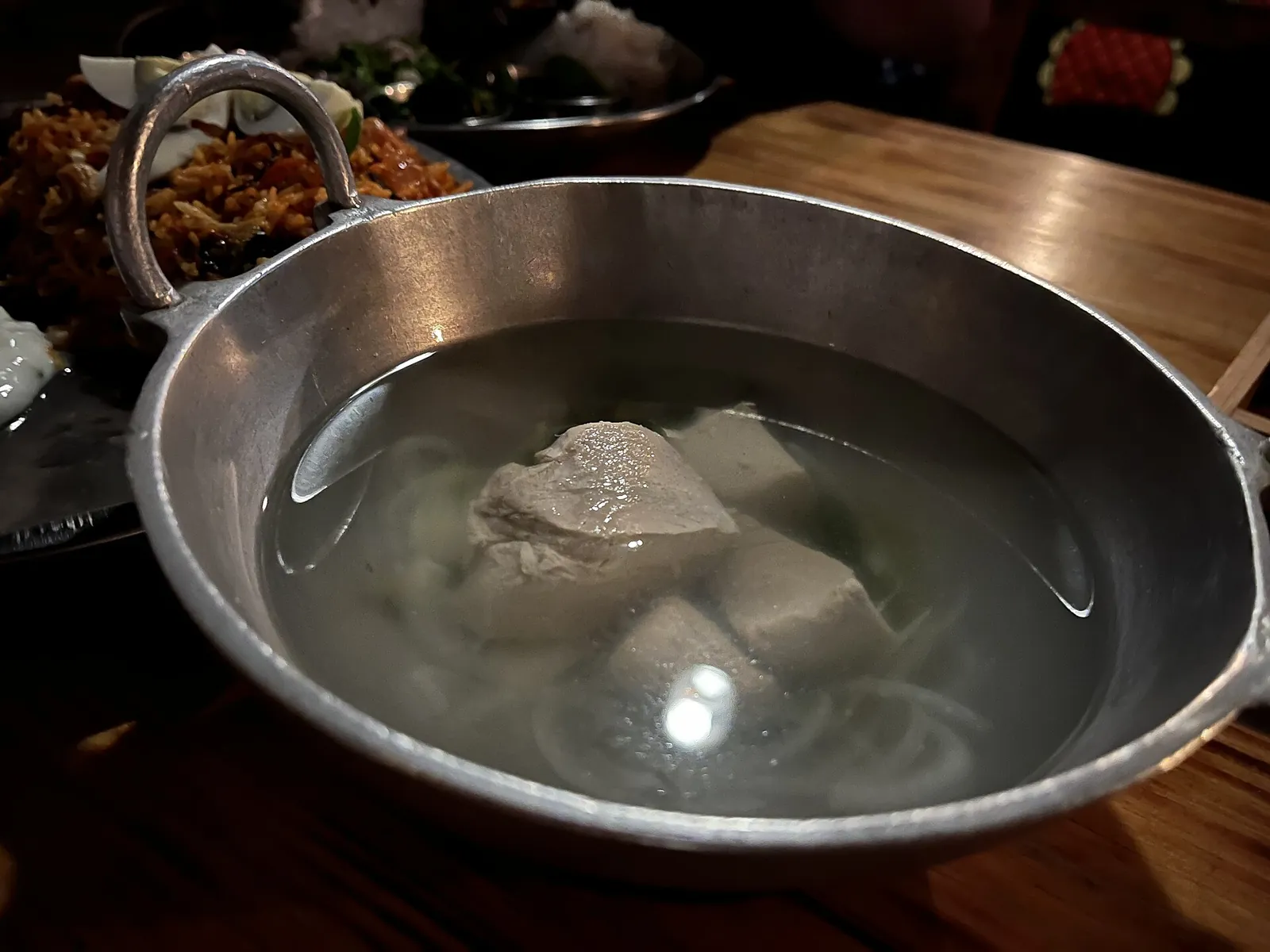
Garudhiya and baiy, fish soup and rice, are eaten through the week, with lime and chilli at the table. Sometimes fried fish, boiled yam, sweet potato or theluli faiy, fried moringa leaves, come on the side, and often rihaakuru, the thick tuna paste that Maldivians also eat with young green mango. It is a simple meal to order after a day in the water. On Dhigurah, Hermit's puts garudhiya under "Go Local" on its dinner menu, with white rice, freshly cooked fish, onion, lemon, fresh chillies and mirus, a chilli paste.
Fihunu mas is fish rubbed with spices and chilli, then grilled or pan-fried: the simplest way to eat the day's catch. Visit Maldives serves it as part of a lunch spread with masbaiy, rice cooked with turmeric and fresh tuna, and rihaakuru, eaten by hand. On Maafushi, Palm Café near the harbour is one of the local cafés that cook fish and curries.
For a richer fish dish, look for mas buri riha, a spicy curry of thick tuna chunks. The Maldivian newspaper The Edition, in its round-up of Malé tea shops, singled out Faseyha Point on Majeedhee Magu, locally called Aiy Balhey Kada, for this curry with fresh chilli, onion, lime and poppadum.
Hedhikaa: the short eats of evening tea
Evening tea means hedhikaa, the small savoury and sweet snacks of Maldivian tea shops, or sai hotaa. Visit Maldives names the favourites: gulha, little balls of dough filled with tuna, coconut, onion, chilli and lime; kulhi boakibaa, fish cake or pie; bajiyaa, pastries like a small samosa; and mas roshi, tuna and grated coconut cakes. Have a selection with hot black tea.
Almost every island has a restaurant and several small tea shops, so you rarely have to look far. In Malé, make tea a stop on a walking day; on Maafushi, Summer Kitchen & Bakery near the harbour is a place for an afternoon plate before the sunset.
Malé's fish market, tea and toddy
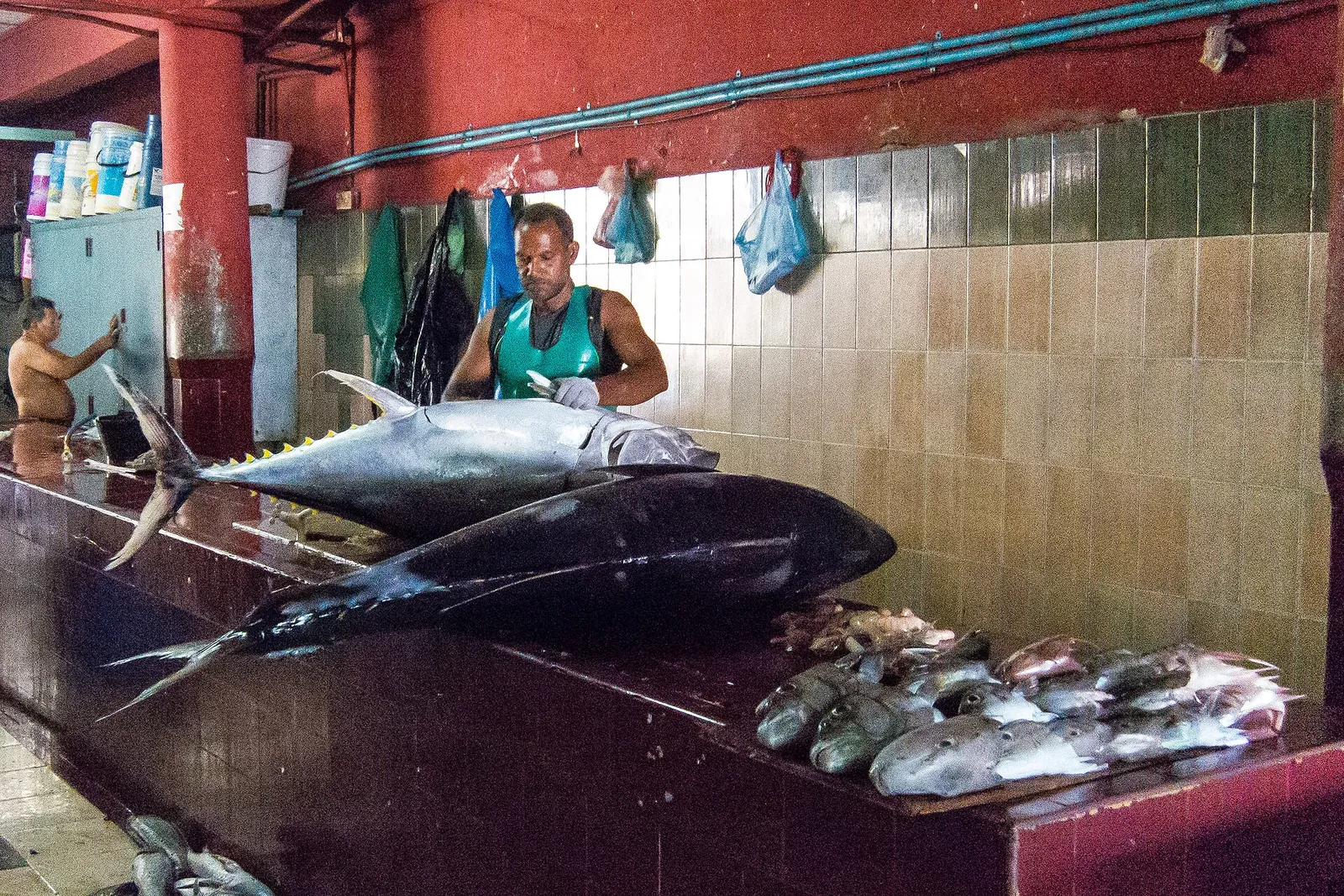
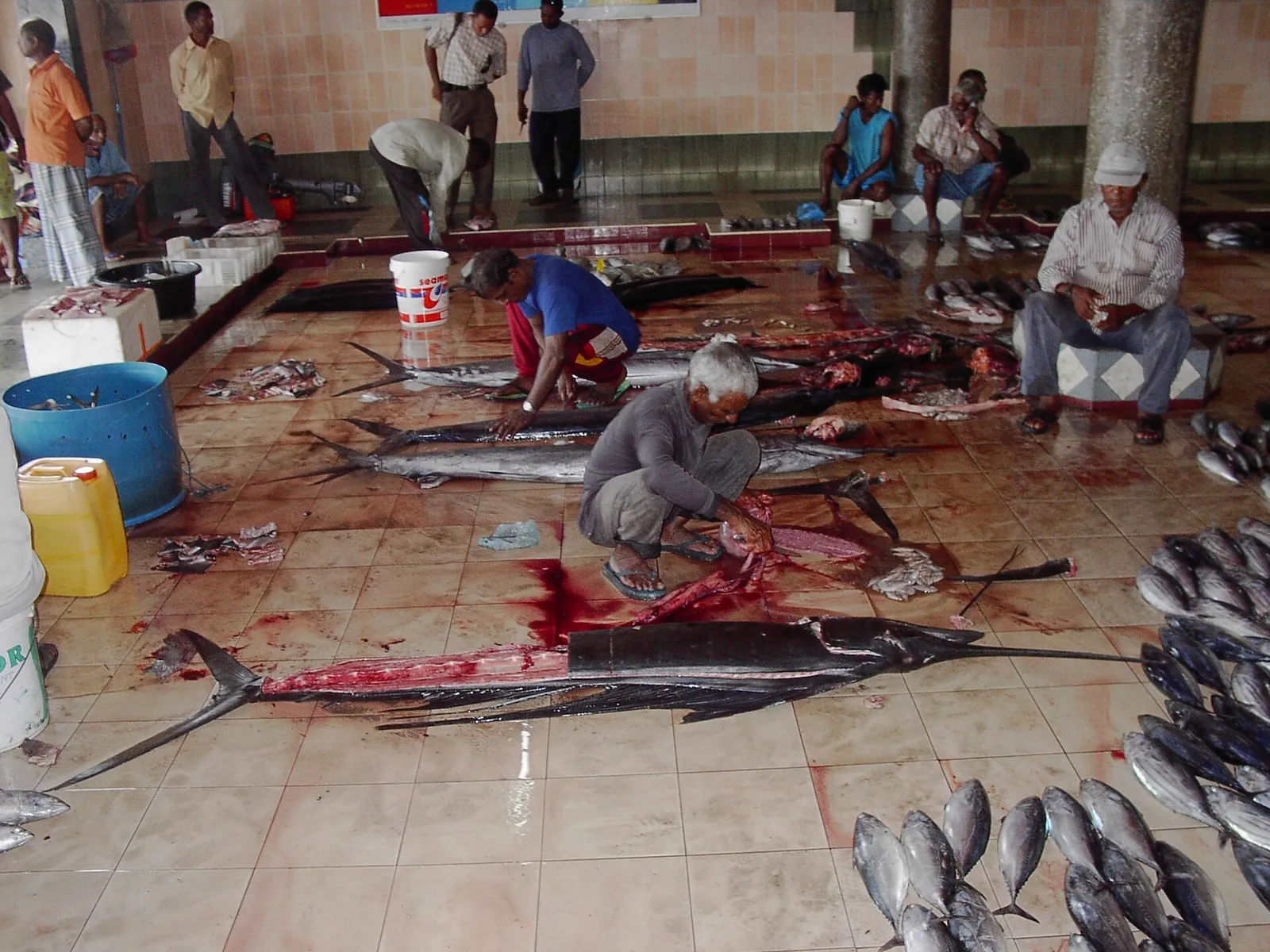
The fish market on Malé's northern waterfront is the oldest in the city, busy with fishers, butchers and customers, and when the fishing is good its counters are stacked with skipjack and yellowfin tuna, the fish behind nearly every dish in this guide. A block away on the same waterfront, the local market is a hall of small stalls with vegetables, fruit and yams from across the atolls, packets of sweets and nuts, breadfruit chips, bottles of home-made sweets and pickles, and bunches of bananas hung from coir ropes across the ceiling; the building next door sells smoked and dried fish. Both fit a morning walk with the Friday Mosque and the National Museum; our Malé and Hulhumalé guide has the route.
Two drinks belong with the food. Sai, tea, is black and usually taken with hedhikaa. Raa, toddy, is the sap tapped from the flower of the coconut palm: fresh ruku raa is sweet and non-alcoholic, but it starts to ferment as soon as it is collected, and boiled down it becomes dhiyaa hakuru, a liquid palm sugar eaten with rice or roshi. Visit Maldives also suggests sour-mango and bilimbi juice.
Bon'di baiy and the festival table
Bon'di baiy, sweetened sticky rice, is a dessert associated with festivals and the birth of a child. It is shared with neighbours, friends and family alongside kulhi mas, chilli fish. Eid also brings household feasts: Visit Maldives describes a morning meal of kulhi boakibaa after prayers, followed by tables of rice, curries and side dishes.
During Ramadan, iftar, the evening meal that breaks the fast, is a chance to share local food and traditions. Visit Maldives describes local-island communities welcoming travellers to iftar and suhoor, the meal before the fast begins. Eating, drinking and smoking in public between sunrise and sunset is forbidden outside resorts, also for non-Muslims; expect daytime restaurant closures outside hotels. Our festivals guide explains the holiday and the expected 2027 dates.
Where to eat: Malé, local islands and resorts
In Malé and Hulhumalé, you can mix Maldivian food with other Asian cuisines. Island Choice, on Ameer Ahmed Magu in Malé with a second branch on Chanbeylee Magu in Hulhumalé, lists a continental breakfast at MVR 60, a chicken thali at MVR 120, a vegetable thali at MVR 95 and a banana lassi at MVR 50. As an independent café, it charges the general 8% GST.
On the local islands, a guesthouse kitchen can make meals part of the stay. Avi Guesthouse on Thoddoo includes breakfast in its room rate and cooks other meals to order: fried rice or noodles with tuna or chicken cost USD 6, grilled chicken with rice USD 10, and coffee, tea or bottled water USD 2, all including applicable taxes. On Maafushi, Kaani Palm Beach, the beachfront restaurant where guests of Kaani's hotels take their half- or full-board meals, lists a Maldivian-style noodle soup with tuna, vegetables and egg at USD 6 and a whole reef fish from the grill, with fries, salad and lemon butter sauce, at USD 10, plus 10% service charge and T-GST; the cafés around the harbour also cook fish and curries. Hermit's on Dhigurah serves local dishes alongside international food. Our local islands guide compares the islands themselves.
At a resort, the board basis shapes the food bill. Grand Park Kodhipparu, about 20 minutes from the airport by the resort's speedboat, offers half board, full board and all-inclusive. Half board covers breakfast and dinner; full board adds lunch. On both, every drink, water included, is charged by consumption. All-inclusive drinks come from a dedicated menu from 11:00 to 23:00, within each outlet's operating hours; items outside that menu are charged in full. Our where-to-stay guide explains the meal plans and the choice between a resort and a local island.
What to eat and where to look
Mas huni with roshi
Fresh tuna mixed with grated coconut, onion, chilli and lime, served with roshi, a round flatbread.
- Where to look
- The Chef Mode Badhige or The Maldive Kitchen in Hulhumalé, both named by Visit Maldives for traditional Maldivian food.
- Fit it into your day
- Breakfast after an airport night in Hulhumalé.
Garudhiya with rice
Fish soup with rice, eaten through the week with lime, chilli and side dishes; rihaakuru, a thick tuna paste, is a common one.
- Where to look
- Hermit's, the restaurant at Bliss on Dhigurah, under "Go Local" on its dinner menu.
- Fit it into your day
- Dinner after a day on the reef.
Mas buri riha
A spicy curry of thick tuna chunks, eaten with fresh chilli, onion, lime and poppadum.
- Where to look
- Faseyha Point on Majeedhee Magu, Malé, locally called Aiy Balhey Kada, which The Edition singled out for this curry.
- Fit it into your day
- Lunch on a walking day in Malé.
Gulha, kulhi boakibaa and bajiyaa
Three hedhikaa, the short eats of evening tea: dough balls filled with tuna, coconut, onion, chilli and lime; fish cake or pie; and small samosa-like pastries, taken with hot black tea.
- Where to look
- Summer Kitchen & Bakery near the harbour on Maafushi, or any tea shop in Malé in the late afternoon.
- Fit it into your day
- Late afternoon, between the beach and the sunset.
Fihunu mas
Reef fish or tuna rubbed with spices and chilli, then grilled or pan-fried, often eaten with rice and rihaakuru.
- Where to look
- Palm Café near the harbour on Maafushi, one of the island's local cafés for fish and curries.
- Fit it into your day
- Dinner after a day on the reef.
Alcohol, pork, allergies and the bill
Alcohol is sold at resorts and on liveaboard boats; you cannot buy it on, or bring it to, Malé and the inhabited islands. Do not take alcohol out of a resort. Bliss also tells guests that pork and alcoholic drinks cannot be consumed on a non-resort island.
Fish and coconut are central ingredients, and chilli appears in many of the dishes above. If you avoid an ingredient, ask before you order. Avi asks guests to tell the kitchen about allergies, and Hermit's asks for special dietary requirements in advance so that it can prepare an alternative meal.
Under the GST Act, everything a registered resort, hotel or tourist guesthouse sells, its restaurant's meals included, carries the 17% tourism GST (T-GST), on top of a service charge of at least 10%; an independent café or restaurant outside a tourist establishment charges the general 8% GST. A price marked tax-inclusive already has the tax in it; otherwise add it. Some guesthouse menus, Hermit's at Bliss among them, still print 8%; budget them at 17%.
What a day of meals costs
A day of meals for one adult, all in: tax and service are added where a menu leaves them out, and every meal comes with a drink. Menus were read on 1 November 2026, Kaani's on 3 November; rufiyaa prices are converted at the Maldives Monetary Authority's reference rate that day, USD 1 = MVR 15.42. On Maafushi, on Thoddoo and at the resort, breakfast comes with the room.
| Day | Meals and drinks | Per person | For two |
|---|---|---|---|
| Malé or Hulhumalé café | Island Choice: continental breakfast with tea or coffee MVR 60, chicken thali MVR 120, vegetable thali MVR 95, banana lassi MVR 50 and mango juice MVR 70, plus 8% GST | about USD 30 | about USD 60 |
| Maafushi guesthouse | Kaani Palm Beach: Maldivian-style tuna noodle soup USD 6 and fresh lime juice USD 4 for lunch, whole grilled reef fish USD 10, watermelon juice USD 4 and a soft drink USD 2 for dinner, plus 10% service charge and 17% T-GST | about USD 33 | about USD 67 |
| Thoddoo guesthouse, a quieter island | Avi: fried rice USD 6, grilled chicken with rice USD 10, two bottled waters USD 4 and tea USD 2, taxes included | USD 22 | USD 44 |
| Resort, Grand Park Kodhipparu | Breeze: Indian fish masala with rice and paratha USD 27 and seared tuna USD 39, about USD 20 for water and soft drinks, plus 10% service charge and 17% T-GST | about USD 110 | about USD 220 |
On Grand Park's half board, dinner comes with the plan and only lunch and drinks are paid. Our Maldives trip cost guide adds the rooms, boats and activities.
Practical questions
What is the national dish of the Maldives?
Mas huni and garudhiya are two everyday dishes to try: mas huni is fresh tuna with grated coconut, onion, chilli and lime, served with roshi flatbread for breakfast; garudhiya is fish soup eaten with rice. Visit Maldives describes both as staples of local cooking.
Can you get Maldivian food at a resort?
Yes. Visit Maldives says Maldivian food is available on local islands and at resorts. Resort menus also span international cuisines: Grand Park Kodhipparu, for example, serves Asian and international food at The Edge.
How much does food cost in the Maldives?
On Maafushi, lunch, dinner and drinks at Kaani Palm Beach come to about USD 33 a person with service charge and T-GST, with breakfast in the room rate; a day of meals at Avi Guesthouse on Thoddoo costs USD 22, taxes included. A café day at Island Choice in Malé comes to about USD 30 with 8% GST. At Grand Park Kodhipparu, lunch, dinner and drinks at Breeze come to about USD 110 a person with service charge and T-GST.
Is alcohol served with meals in the Maldives?
At resorts and on liveaboard boats. You cannot buy alcohol on, or bring it to, Malé and the inhabited islands, and you must not take it out of a resort.
Can I eat during the day in Ramadan?
At a resort, yes. Outside resorts, eating, drinking and smoking in public between sunrise and sunset is forbidden, also for non-Muslims. Expect daytime restaurant closures outside hotels; arrange your daytime meals with your accommodation.
Keep planning your trip
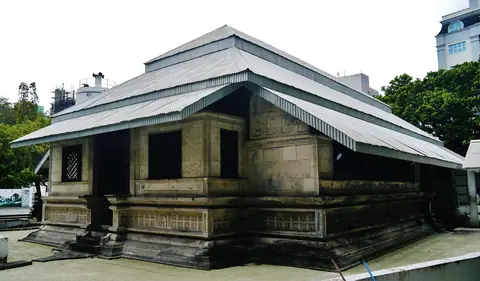
Malé and Hulhumalé
Malé or Hulhumalé for a night: the coral-stone Friday Mosque, museum, fish market and Hulhumalé beach, with the airport ferry, hotels and costs.
Read the guide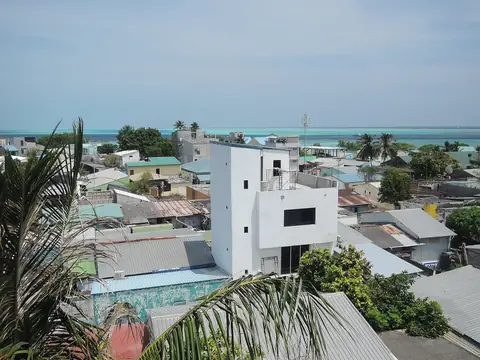
Local islands of the Maldives
Compare seven Maldives guesthouse islands, from Maafushi and Thulusdhoo to Fulidhoo, Thoddoo and Dhigurah: boats from the airport, fares, rules and three-night costs.
Read the guide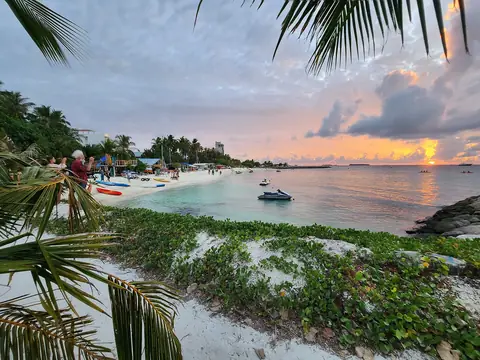
Maafushi
How many nights on Maafushi, which boat from the airport, the bikini beach and island rules, snorkelling and resort day trips, guesthouses and a three-night budget.
Read the guide
Maldives trip cost
A Maldives week for two, all in: about USD 1,260 per person on a guesthouse island, USD 1,910 with two resort nights, or USD 3,230 for a resort week.
Read the guide
Where to stay in the Maldives
Resort or local island: where to stay in the Maldives, from an airport night in Malé or Hulhumalé to Maafushi, Thoddoo, Dhigurah and resorts, with transfers and taxes.
Read the guide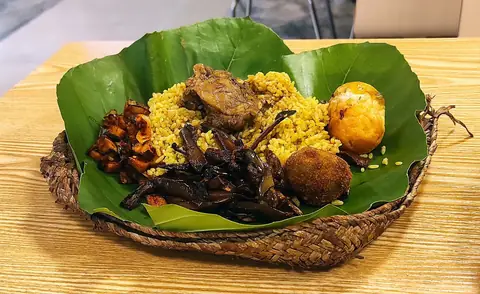
Food in Sri Lanka
Sri Lanka's rice and curry, hoppers, kottu and short eats, the Tamil cooking of Jaffna, where to taste each on the loop, how to ask for less spice and what meals cost.
Read the guideSources and checks before you travel
(29)
- Visit Maldives: Maldivian cuisine ↗ — opens in a new tab
- Visit Maldives: a culinary journey in Hulhumalé ↗ — opens in a new tab
- Visit Maldives: 50 ultimate experiences ↗ — opens in a new tab
- The Edition: 7 tea shops in Male' (24 June 2018) ↗ — opens in a new tab
- Bliss Dhigurah: Hermit's dinner menu ↗ — opens in a new tab
- Bliss Dhigurah: Hermit's restaurant ↗ — opens in a new tab
- Avi Guesthouse, Thoddoo: rooms and menu ↗ — opens in a new tab
- Island Choice: menu ↗ — opens in a new tab
- Grand Park Kodhipparu: FAQ ↗ — opens in a new tab
- Grand Park Kodhipparu: Breeze menu ↗ — opens in a new tab
- Maldives Monetary Authority: reference rates ↗ — opens in a new tab
- UK FCDO: Maldives safety and security ↗ — opens in a new tab
- MIRA: GST overview ↗ — opens in a new tab
- Labour Relations Authority: service charge regulation ↗ — opens in a new tab
- German Federal Foreign Office: Maldives travel advice ↗ — opens in a new tab
- Visit Maldives: business trip and local-island advice ↗ — opens in a new tab
- Visit Maldives: Bodu Eid ↗ — opens in a new tab
- Visit Maldives: Ramadan travel ↗ — opens in a new tab
- Grand Park Kodhipparu: Breeze beverage PDF ↗ — opens in a new tab
- MIRA: Goods and Services Tax Act (consolidated) ↗ — opens in a new tab
- Visit Maldives: eating for vegans, vegetarians and pescatarians ↗ — opens in a new tab
- Visit Maldives: must-try Maldivian cuisine ↗ — opens in a new tab
- Visit Maldives: eat like a local ↗ — opens in a new tab
- The Edition: fishing improves (5 August 2024) ↗ — opens in a new tab
- OpenStreetMap: Palm Cafe, Maafushi ↗ — opens in a new tab
- OpenStreetMap: Summer Kitchen & Bakery, Maafushi ↗ — opens in a new tab
- Kaani Hotels: dining on Maafushi ↗ — opens in a new tab
- Kaani Palm Beach Restaurant: menu (PDF) ↗ — opens in a new tab
- Maldivian (national airline): shopping in Malé ↗ — opens in a new tab
Reference sources for the version dated 3 November 2026. Confirm opening times, access, transport and conditions for your travel dates.
Photo credits
(4)
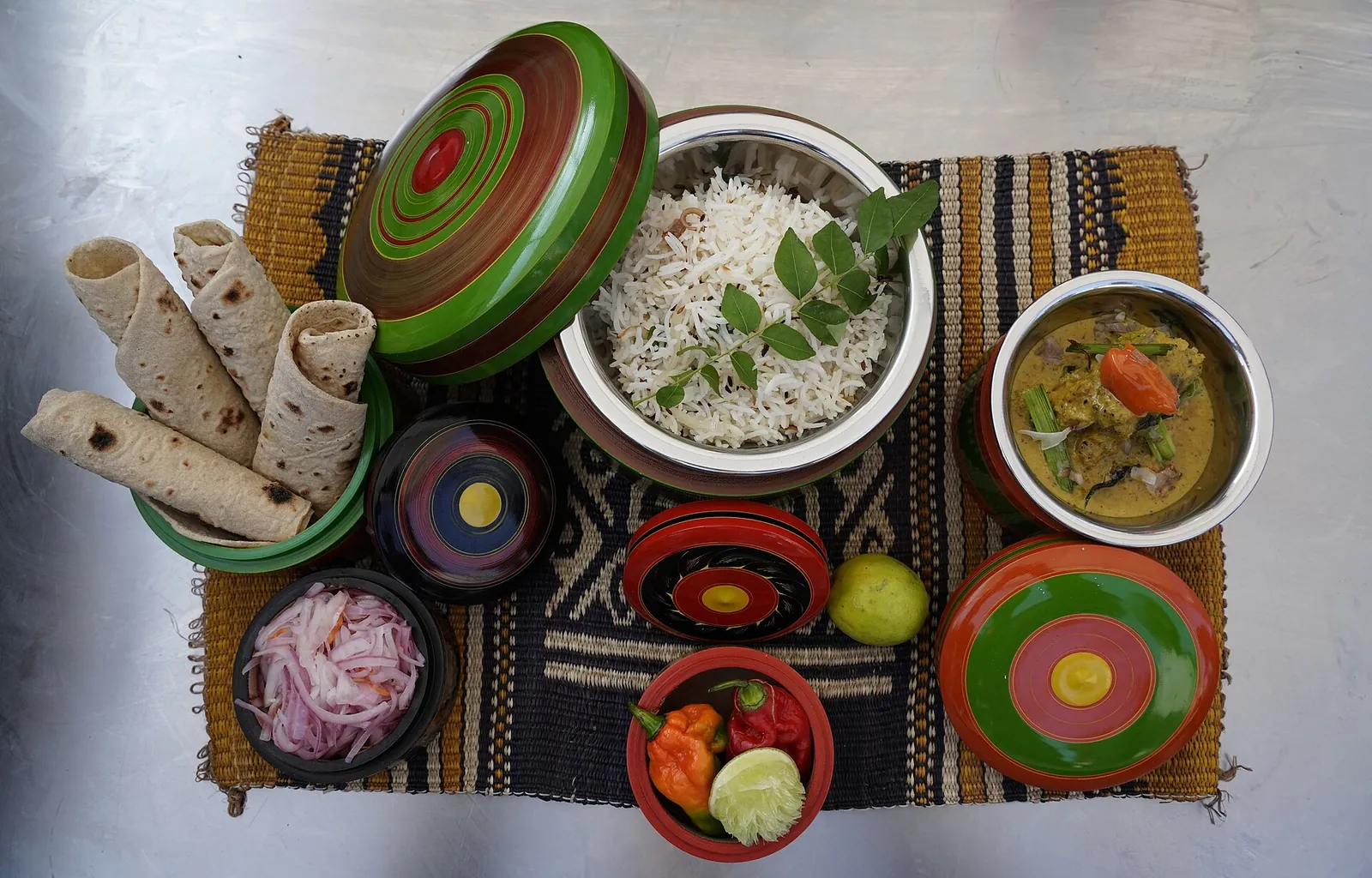
A Maldivian lunch of rice, roshi and fish curry, made by Maldivian chefs at a food festival
Photograph: Satdeep Gill — opens in a new tab · CC BY-SA 4.0 — opens in a new tab
Changes: Resized and converted to WebP; displayed with responsive crops. · Original photograph and licence details ↗ — opens in a new tab
Yellowfin tuna waiting to be cut at the fish market in Malé
Photograph: Mark Fischer — opens in a new tab · CC BY-SA 2.0 — opens in a new tab
Changes: Resized and converted to WebP; displayed with responsive crops. · Original photograph and licence details ↗ — opens in a new tab
Garudhiya, the clear tuna broth eaten with rice
Photograph: LittleT889 — opens in a new tab · CC BY 4.0 — opens in a new tab
Changes: Resized and converted to WebP; displayed with responsive crops. · Original photograph and licence details ↗ — opens in a new tab
Cutting the day's catch at the Malé fish market
Photograph: Hadden Catalyst — opens in a new tab · CC BY 2.0 — opens in a new tab
Changes: Resized and converted to WebP; displayed with responsive crops. · Original photograph and licence details ↗ — opens in a new tab