Plan your trip
First trip to the Maldives: resort or local island, costs
The Maldives of the brochures is one island, one resort. The other Maldives is an inhabited island with a harbour, a mosque and a few sandy streets, where guesthouses take visitors for far less and the snorkelling boats leave from the quay. A first trip can combine the two, and that choice decides almost everything else: what you can drink, what you wear on the beach, how you pay and what a day costs.
In this guide
Find the location ↗ — opens in a new tabThe short answer
Split a first trip between a guesthouse island and a resort: one night in Malé, three on Maafushi and two at a resort near the airport, seven days and six nights in all. Book the resort first, one within a speedboat ride of the airport (about USD 140 per adult return), then a three-night Maafushi guesthouse package with its USD 25 boat included. A split stay like this averages about USD 260 per person a day on the ground, USD 520 for two, all in.
- Key point
- 7 days / 6 nights (Malé 1, Maafushi 3, a resort 2), or 10 days / 9 nights with three nights on Thulusdhoo
- Where it applies
- Malé for the arrival night, a guesthouse on Maafushi, then a resort near the airport
- Timing
- January to March is the dry north-east monsoon; the wetter south-west monsoon normally runs from mid-May to November, with December and April as transition months
Resort or local island: two kinds of holiday
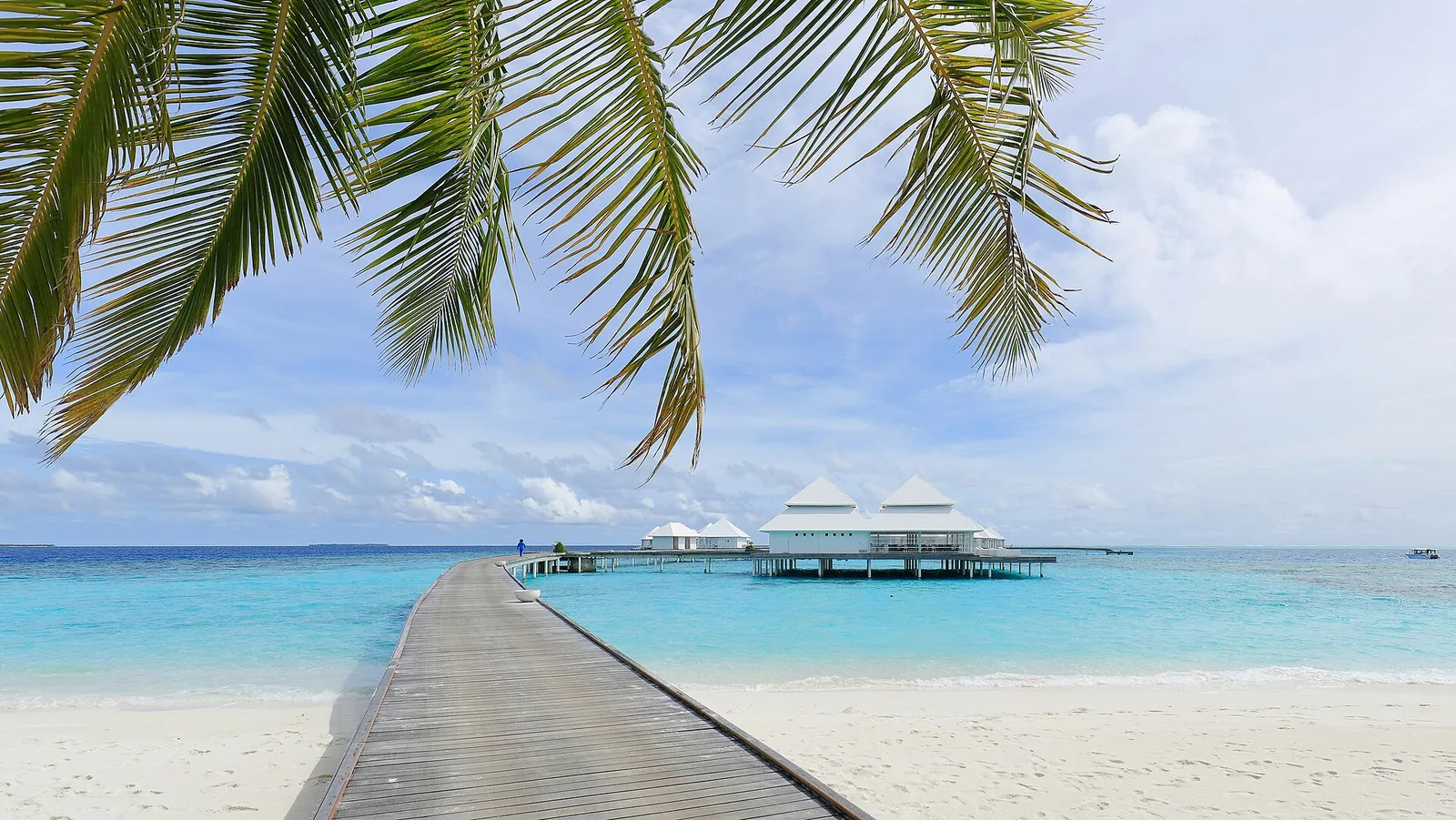
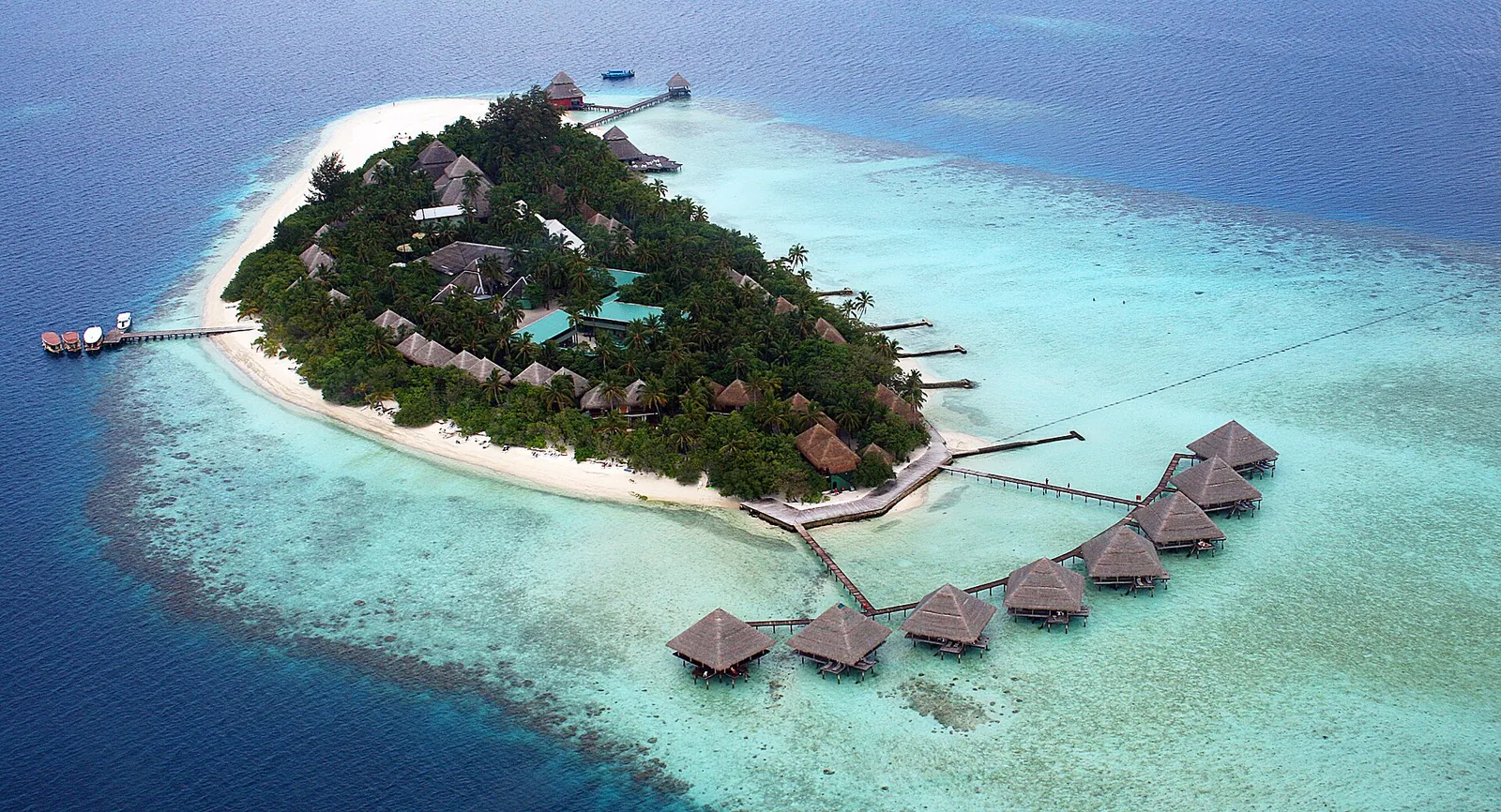
A resort in the Maldives is a whole island given over to one hotel: villas on the beach or on stilts over the lagoon, its own restaurants, bar, dive centre and house reef, and a speedboat or seaplane that meets you at the airport. A local island is an inhabited island with a harbour, a mosque, a school and streets of white sand, where guesthouses take visitors. Rooms there cost far less, and snorkelling trips, sandbank picnics and dolphin cruises leave from the harbour; the local islands guide compares the best-known islands.
What most visitors come for is under water. A resort's house reef can put turtles and reef fish a few strokes from the beach, and from Maafushi shared and private boats go out to turtle reefs, sandbanks and dolphin waters. Two sights need a trip of their own: from about May or June to November, plankton draws manta rays into Hanifaru Bay in Baa Atoll, sometimes hundreds at once, and in the South Ari Marine Protected Area whale sharks can be seen throughout the year, along with turtles and manta rays. Sightings are never certain; our snorkelling and diving guide explains the seasons, the rules in the water and the packages.
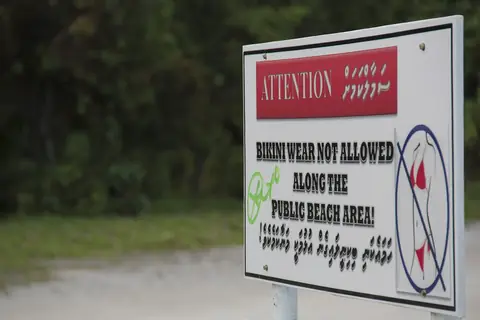
The rules are what set them apart. Alcohol is sold only at resorts and on liveaboard boats; you cannot buy it on, or bring it to, Malé and the inhabited islands, and it must not leave the resort. On inhabited islands, cover shoulders and knees in the streets and on the public beach; swimwear is fine on the island's designated bikini beach, which most guesthouse islands have, while signs on other beaches, in Malé among them, say bikinis are not allowed. Friday is the weekly day of prayer, and public ferry services change or stop on Fridays on some routes. During Ramadan, eating, drinking and smoking in public between sunrise and sunset is forbidden outside resorts, also for non-Muslims, and cafés outside hotels close by day; the festivals guide has the expected dates. Nudity and topless sunbathing are banned everywhere, resorts included.
Doing both is the easiest first trip: local-island nights for the reefs and everyday Maldivian life, then a resort at the end, close to the airport, for the beach bar, a swim straight from the beach and a short hop to the flight home.
A first route: Malé, Maafushi and two resort nights
Every move between islands goes back through Malé or the airport, so a first trip works best as a line out and back from Velana International Airport (MLE). The airport is on Hulhulé island; Malé, the capital, is the island next to it to the south-west, joined by the Sinamalé Bridge, and Hulhumalé is the newer reclaimed island to the north, joined to the airport by road. The route map shows the week; the 7-day itinerary has the day plan and the hotels, and the 10-day itinerary adds three nights on Thulusdhoo.
When to go: the Maldives Meteorological Service puts the dry north-east monsoon from January to March and the wetter south-west monsoon normally from mid-May to November, with December and April as transition months; even in the wet season, rain normally comes in showers with sunny spells. The best-time guide goes month by month.
Choosing the resort: the board basis matters more than on a local island, because the resort is the only place to eat and the only place on the route that sells alcohol; half board, full board and all-inclusive plans move meals, and on all-inclusive the drinks too, into the villa rate. Resorts near the airport send a speedboat; farther out, Trans Maldivian Airways' seaplanes fly only between sunrise and sunset and are booked through the resort. Some resorts have a house reef you can snorkel straight from the beach or from an over-water villa; at others the reef is a boat ride away.
- Day 1: land at Velana and cross to Malé on the airport ferry, which the Malé Airports Company runs from 05:30 to 00:00 every 15 minutes for MVR 15 per person, cash or card, or on your hotel's transfer. Malé is small enough to walk: the fish market, where fishers, butchers and customers trade the day's catch, and Hukuru Miskiy, the Friday Mosque of 1658 built of carved coral blocks, are a short walk apart near the north waterfront, with Sultan Park and the Artificial Beach close by. If you land late and want a beach rather than the old town, sleep in Hulhumalé instead, joined to the airport by road and lined with long beaches. Our Malé and Hulhumalé guide covers both.
- Day 2: the shared speedboat to Maafushi: Kaani Hotels' boat leaves the airport and Malé at 09:15, 11:00, 13:30, 15:00 and 18:00 and takes 35 minutes; meet 30 minutes before at counter E12 in Terminal 2, or at Jetty No. 6 in Malé. It costs USD 25 per person each way and some Maafushi guesthouse packages include it; the slower public ferry is in the transport guide.
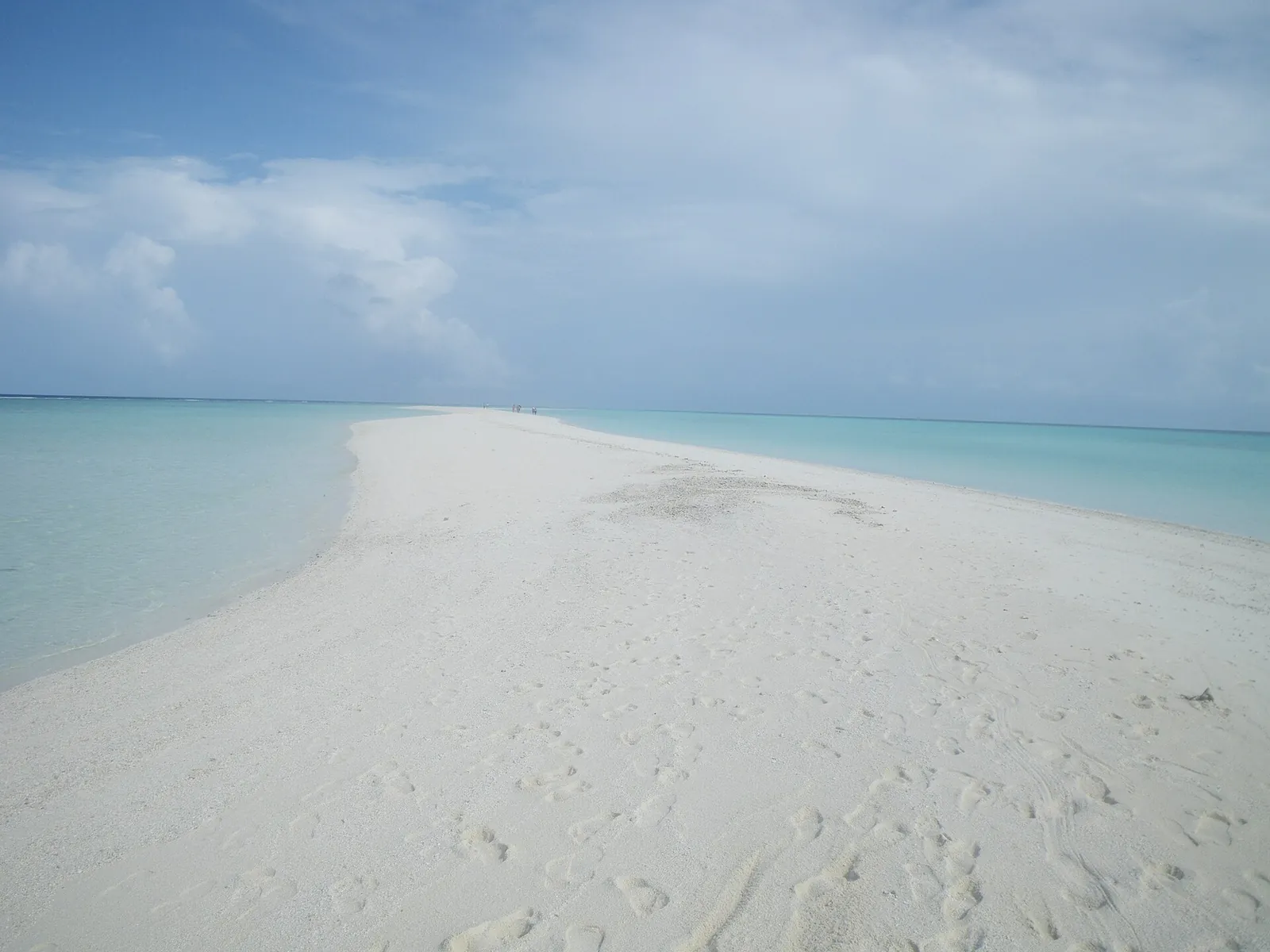
- Days 3 and 4: Maafushi. Kaani's shared Full Day Trip, from 08:30 to 14:00 at USD 40 per person before tax, snorkels Biyadhoo Reef, Coral Garden and Turtle Reef, where turtles and reef fish swim close to the surface, stops to watch dolphins and ends with a picnic lunch on a sandbank. The next day is for the bikini beach, and the evening for the night-fishing trip that is part of the package; the Maafushi guide has the other trips and their prices.
- Day 5: the shared speedboat back to the airport, leaving Maafushi at 08:00, 10:00, 12:30, 14:15 or 17:00 (35 minutes), then the resort's own boat. The resort the 7-day itinerary prices is about 20 minutes from the airport by speedboat and accepts only its own speedboat: USD 140 per adult return plus service charge and T-GST, about USD 360 for two, with your flight details sent 48 hours ahead. Resorts farther out are reached by seaplane or by domestic flight and boat, booked through the resort, and cost more to reach: one South Ari resort lists its 30-minute return seaplane at USD 700 per adult, and seaplanes fly only in daylight, so a same-day transfer needs a landing by 15:30.
- Day 6: a full day at the resort: snorkelling on the house reef, a swim from an over-water villa or the beach, and a drink at sunset at the resort's bar.
- Day 7: the resort's boat back to the airport and the flight home. Boats can be cancelled in rough seas, so ending at a resort near the airport leaves slack before the international flight.
What a first trip costs per day, all in
What a day costs depends on where you sleep. The trip cost guide prices three eight-day stays for two adults sharing a double room, all in on the ground: rooms with their taxes, every meal and drink, the boats, the trips, a tourist SIM each and a 10% buffer, at prices checked on 28 October 2026.
| Trip cost guide, 8-day averages | Per person, per day | For two, per day |
|---|---|---|
| Budget: Malé and six nights on Maafushi | USD 160 | USD 320 |
| Mid-range: two of those nights at a resort | USD 240 | USD 480 |
| Comfort: a resort throughout | USD 400 | USD 800 |
The week above costs about USD 260 per person per day, USD 520 for two. It has three Maafushi nights rather than the four in the eight-day mid-range example; the 7-day itinerary prices the route night by night, with its hotels and boats.
Economy returns from London to Malé cost about GBP 600–1,800 per person, about USD 800–2,390 at the Maldives Monetary Authority's rate on 28 October 2026 (GBP 1 = USD 1.3305), on top of the daily figures; the date you fly decides where in that range you land.
Entry and the arrival declaration
UK and EU passport holders need no visa in advance: you get a free visa on arrival for up to 30 days. Entry requires a passport with a machine-readable zone and at least one month's validity, as Maldives Immigration requires (six months avoids trouble with airlines; passports with extended validity are refused), a confirmed return ticket, a prepaid booking at a registered hotel or guesthouse and enough money for the stay. Every traveller, children included, must submit the free IMUGA Traveller Declaration online within 96 hours before arrival. Cash and other monetary instruments worth USD 10,000 or more, in any currency, must be declared to Customs on arrival and again on departure; the declaration can be made online on the Maldives Customs Service website. The entry guide has the customs allowances and departure taxes.
Money: US dollars, rufiyaa and the taxes on tourist bills
The currency is the Maldivian rufiyaa (MVR), but most tourist prices, from rooms to boats and dives, are quoted in US dollars. On 28 October 2026 the Maldives Monetary Authority's reference rate was USD 1 = MVR 15.42. Rufiyaa are handy in local cafés and shops.
Major international cards are accepted at nearly all resorts, and there are cash machines at the airport, according to the German Foreign Office. Bring a card with a PIN and some US dollars in cash as well, because getting money on the smaller islands can be difficult. Customs rules, including what to declare, are in the entry guide.
Hotel, guesthouse and resort bills add a service charge of at least 10% (by law; most places charge exactly 10%) and the 17% tourism goods and services tax (T-GST), and then the green tax: USD 6 per person per taxable day at guesthouses and hotels with 50 or fewer rooms on an inhabited island, USD 12 at resorts, liveaboards and other hotels. No GST is charged on the green tax. Ordinary shops and cafés outside the tourism sector charge the general 8% GST. A package that says it includes taxes and service has them already; a rate quoted 'subject to' them does not. The service charge is shared among the staff under the Labour Relations Authority's rules, so a tip on top is your own choice.
SIM cards and data
Dhiraagu and Ooredoo both sell tourist SIMs and eSIMs, and Visit Maldives notes that prepaid SIM cards from the two companies are on sale at the airport. Dhiraagu's Traveler Premium is USD 50 for 100 GB of data over 30 days.
Safety, swimming and the law
Two points change how you plan the days. At sea, swim only where it is supervised, designated safe or has a lifeguard, and never alone, even at a resort: France counts several deaths at sea every year from strong currents, so choose excursion boats that carry life jackets. In Malé, political protests take place from time to time; keep away from demonstrations, large crowds and political or religious gatherings. France keeps the whole country under increased vigilance (vigilance renforcée), a call for alertness rather than advice against travel. Other governments may draw a wider line, so check your own government's advice too.
The law follows Islam: publicly practising another religion is illegal, and so are same-sex relations, with fines or long prison sentences. Dress correctly to visit a mosque and do not film or photograph around one.
Practical questions
Is a local island or a resort better for a first trip to the Maldives?
Both, if you can: three or four nights on a guesthouse island such as Maafushi for the reefs and everyday life, then two nights at a resort near the airport for alcohol, swimwear anywhere and a short transfer to the flight home.
Can I drink alcohol on a local island?
No. Alcohol is sold only at resorts and on liveaboard boats; you cannot buy it on, or bring it to, Malé and the inhabited islands, and it must not leave the resort.
Can I wear a bikini on a local island?
Only on the island's designated bikini beach, which most guesthouse islands have. In the streets and on the public beach, cover shoulders and knees.
How much does a first trip to the Maldives cost per day?
About USD 260 per person a day on a split stay like the recommended week, USD 520 for two sharing a room, all in on the ground. The trip cost guide gives about USD 160 per person a day on a local island and USD 400 at a resort.
Do I need a visa for the Maldives?
Not in advance: you get a free visa on arrival for up to 30 days. The entry guide has the passport, ticket and declaration rules.
Should I bring US dollars?
Yes. Resorts take international cards and there are cash machines at the airport, but cash in US dollars helps on the smaller islands, where getting money can be difficult.
Keep planning your trip
Maldives in seven days
Six nights: Malé for one, the guesthouse island of Maafushi for three and a resort about 20 minutes from the airport for two, with boats, hotels and an all-in budget.
Read the guide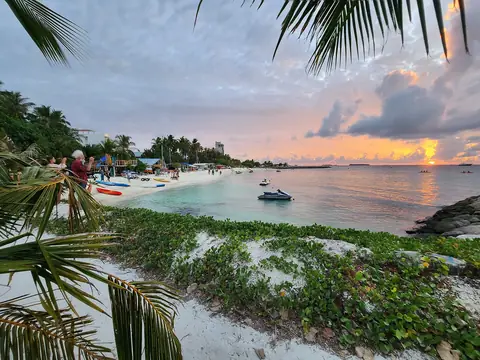
Maafushi
How many nights on Maafushi, which boat from the airport, the bikini beach and island rules, snorkelling and resort day trips, guesthouses and a three-night budget.
Read the guide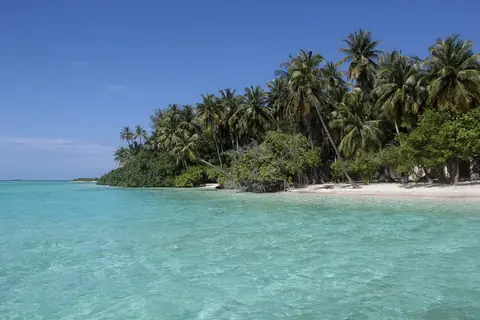
Maldives trip cost
A Maldives week for two, all in: about USD 1,260 per person on a guesthouse island, USD 1,910 with two resort nights, or USD 3,230 for a resort week.
Read the guide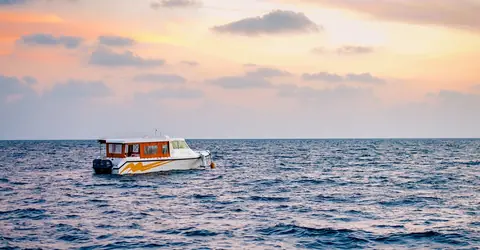
Health and safety in the Maldives
Currents and dive safety, how far resorts are from a hospital, evacuation cover, dengue, emergency numbers and the drug, vape and alcohol laws in the Maldives.
Read the guide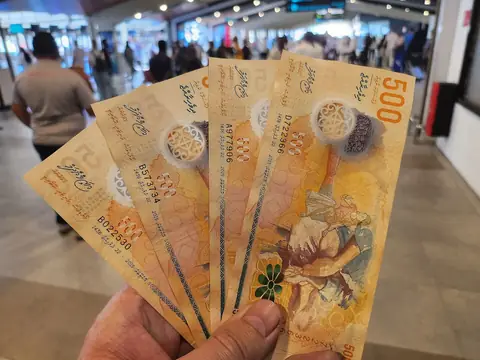
Money and payments in the Maldives
US dollars or rufiyaa in the Maldives: where a foreign card works, ATMs, where to change money, the airport ferry fare, service charge, taxes and tipping.
Read the guide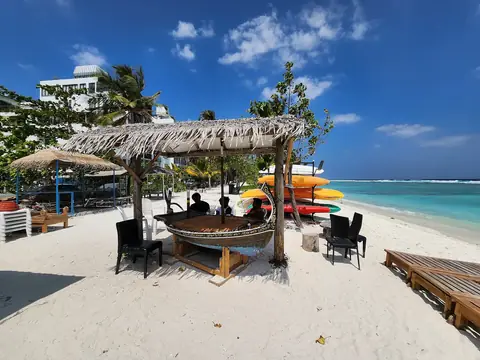
Solo female travel in the Maldives
Travelling alone as a woman in the Maldives: the UK, German and French advice, Velana at night, Malé after dark, bikini beaches, swimming alone and 1478.
Read the guideSources and checks before you travel
(39)
- Maldives Immigration: tourist visa on arrival ↗ — opens in a new tab
- Maldives Immigration: IMUGA Traveller Declaration ↗ — opens in a new tab
- UK FCDO: Maldives entry requirements ↗ — opens in a new tab
- UK FCDO: Maldives safety and security ↗ — opens in a new tab
- German Federal Foreign Office: Maldives travel and safety advice (German) ↗ — opens in a new tab
- France Diplomatie: Maldives security (French) ↗ — opens in a new tab
- France Diplomatie: Maldives useful information (French) ↗ — opens in a new tab
- Visit Maldives: business trip to bleisure (17 August 2022) ↗ — opens in a new tab
- Visit Maldives: travel information ↗ — opens in a new tab
- Maldives Monetary Authority: reference rates ↗ — opens in a new tab
- Maldives Inland Revenue Authority: GST rates ↗ — opens in a new tab
- Maldives Inland Revenue Authority: green tax ↗ — opens in a new tab
- Maldives Inland Revenue Authority: green tax FAQ ↗ — opens in a new tab
- Labour Relations Authority: service charge regulation ↗ — opens in a new tab
- Dhiraagu: tourist SIM ↗ — opens in a new tab
- Ooredoo Maldives: online shop ↗ — opens in a new tab
- Malé Airports Company: Velana transport ↗ — opens in a new tab
- Kaani Hotels: transfers ↗ — opens in a new tab
- Maafushi Dive: getting to Maafushi ↗ — opens in a new tab
- Maldives Meteorological Service: climate ↗ — opens in a new tab
- Grand Park Kodhipparu: advance purchase offer ↗ — opens in a new tab
- Grand Park Kodhipparu: FAQ ↗ — opens in a new tab
- Kaani Hotels: Full Day Trip ↗ — opens in a new tab
- Kaani Hotels: booking terms ↗ — opens in a new tab
- Kaani Village & Spa, Maafushi: three-night package ↗ — opens in a new tab
- Visit Maldives: Hukuru Miskiiy ↗ — opens in a new tab
- Visit Maldives: 50 ultimate experiences ↗ — opens in a new tab
- France Diplomatie: Maldives entry and stay (French) ↗ — opens in a new tab
- Trans Maldivian Airways: FAQ ↗ — opens in a new tab
- Maldives Protected Areas portal: South Ari Marine Protected Area (SAMPA) ↗ — opens in a new tab
- Maldives Manta Conservation Programme: protected areas ↗ — opens in a new tab
- Aveyla Manta Village: Hanifaru Bay ↗ — opens in a new tab
- The Edition: government sets new taxi fares for the Malé region (15 May 2024) ↗ — opens in a new tab
- The Standard: MTCC's Malé Taxi Line introduces fares (19 April 2026) ↗ — opens in a new tab
- MV+: MTCC 24-hour bus between Malé and Hulhumalé (30 August 2023) ↗ — opens in a new tab
- Maldives Monetary Authority: dated cross-currency rates ↗ — opens in a new tab
- Turkish Airlines: London–Malé return economy fare examples ↗ — opens in a new tab
- Maldives Civil Aviation Authority: Air Transport Circular AT 01/2024, customs requirements for passengers (15 December 2024) ↗ — opens in a new tab
- Conrad Maldives Rangali Island: getting here ↗ — opens in a new tab
Reference sources for the version dated 3 November 2026. Confirm opening times, access, transport and conditions for your travel dates.
Photo credits
(5)
A resort island: the jetty and water villas at Thudufushi, Ari Atoll.
Photograph: Martin Falbisoner — opens in a new tab · CC BY-SA 4.0 — opens in a new tab
Changes: Resized and converted to WebP; displayed with responsive crops. · Original photograph and licence details ↗ — opens in a new tab
From the air, a resort is one island and one hotel, with villas over the lagoon.
Photograph: Dr. Ondřej Havelka (cestovatel) — opens in a new tab · CC BY-SA 4.0 — opens in a new tab
Changes: Resized and converted to WebP; displayed with responsive crops. · Original photograph and licence details ↗ — opens in a new tab
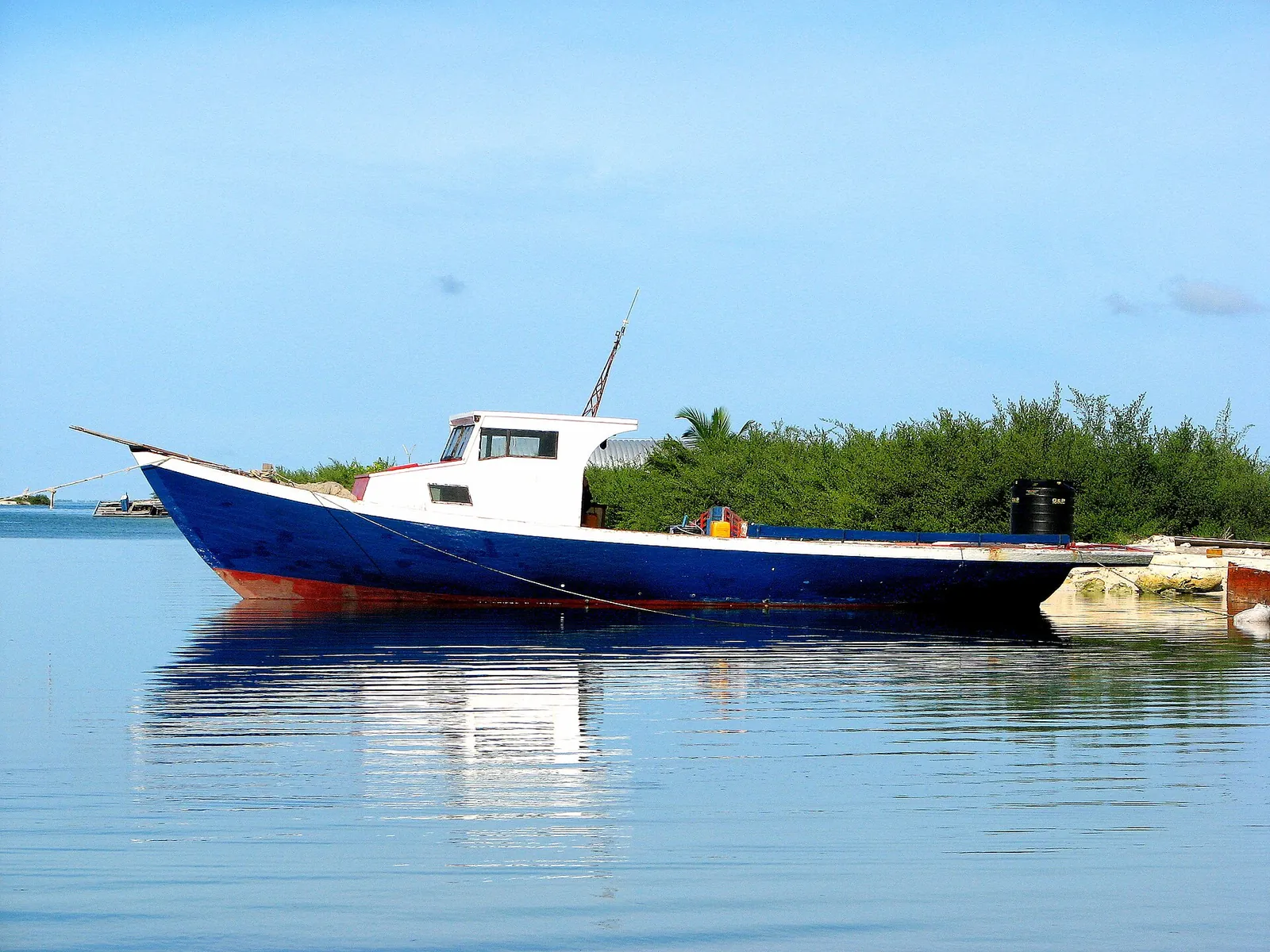
Inhabited islands are working places: a fishing boat in the harbour of Hithadhoo, Addu Atoll.
Photograph: ╚ DD╔ from Male, Maldives — opens in a new tab · CC BY-SA 2.0 — opens in a new tab
Changes: Resized and converted to WebP; displayed with responsive crops. · Original photograph and licence details ↗ — opens in a new tab
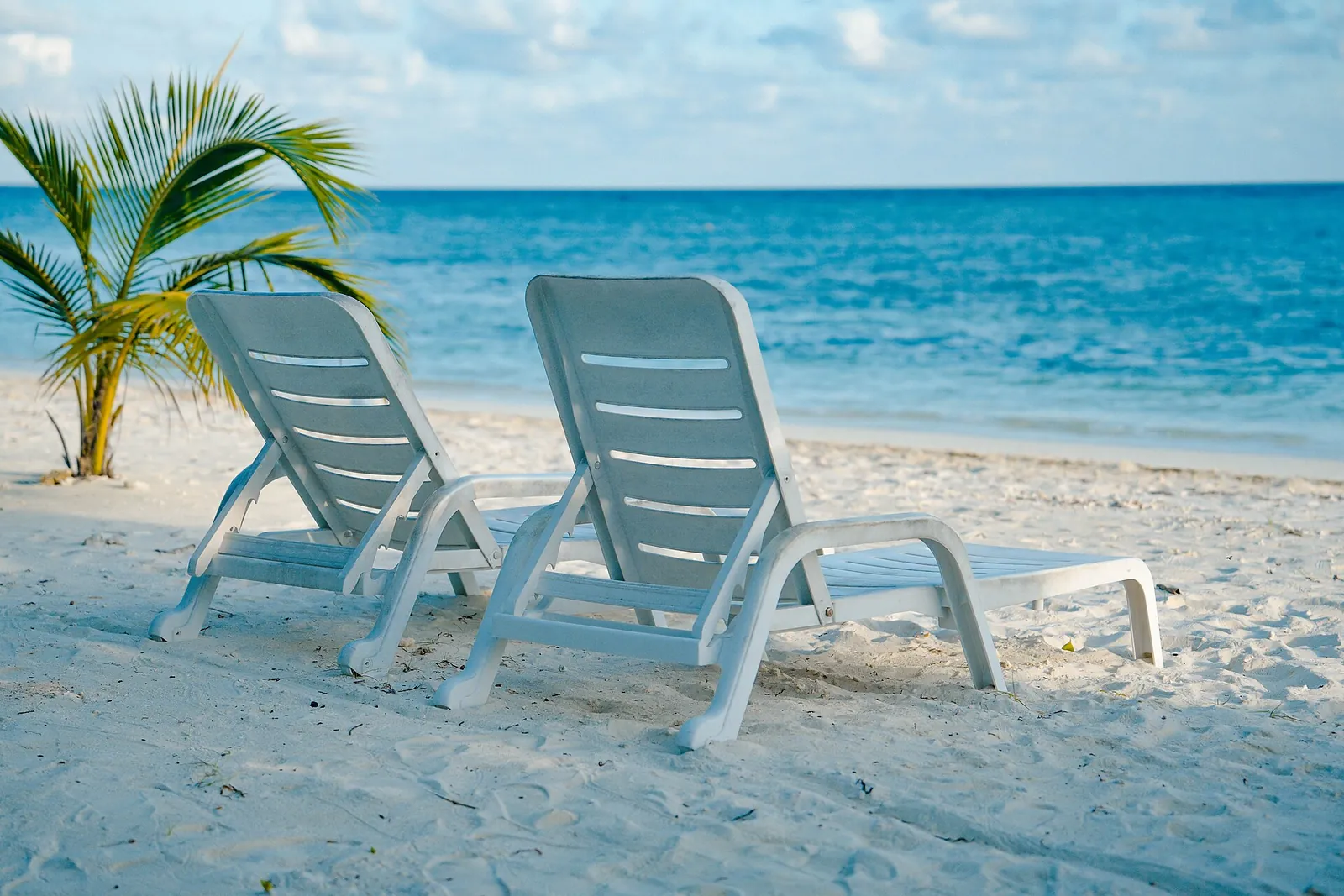
The designated bikini beach on Himmafushi, an inhabited island where guesthouses take visitors.
Photograph: Awshan — opens in a new tab · CC BY-SA 4.0 — opens in a new tab
Changes: Resized and converted to WebP; displayed with responsive crops. · Original photograph and licence details ↗ — opens in a new tab
A tidal sandbank at Kuramathi: sandbank picnics are a standard boat trip from guesthouse islands and resorts alike.
Photograph: MBraun Germany — opens in a new tab · CC BY-SA 3.0 — opens in a new tab
Changes: Resized and converted to WebP; displayed with responsive crops. · Original photograph and licence details ↗ — opens in a new tab