Plan your trip
Dollars or rufiyaa in the Maldives? Cards, cash, ATMs and tipping
Money in the Maldives runs on two currencies. Room rates and boat transfers are often priced in US dollars, and nearly all resorts take a card for the bill; the rufiyaa is the country's own money and the one a small café, a shop or a ferry counter in Malé expects. The law makes rufiyaa the currency of payment but lets tourist businesses take dollars from visitors, so most trips use both: dollars and a card for the room and the boat, and a few rufiyaa notes for a coffee or a bus ticket.
In this guide
Find the location ↗ — opens in a new tabThe short answer
Bring a credit or debit card with a PIN and some US dollars in cash. Cards are accepted at nearly all resorts, and there are ATMs at the airport. Cash matters on local islands: Thulusdhoo's speedboat is USD 25 per person each way, cash on board, and two people staying three nights there need about USD 350 in cash for the boat and meals, not counting the room. Keep some rufiyaa (MVR) for small cafés; the airport ferry to Malé costs MVR 15, cash or card. Decline any offer to charge you in your home currency. Tourist bills add a service charge of at least 10% and 17% T-GST; a tip on top is your own choice. Cash of USD 10,000 or more must be declared on arrival and departure.
- Key point
- Set up before you fly: two cards, some US dollar notes and a check of your bank's foreign fees
- Where it applies
- Applies everywhere in the Maldives; cash matters most on local islands and in Malé's small shops
- Timing
- The same all year
The rufiyaa: notes, coins and the rate
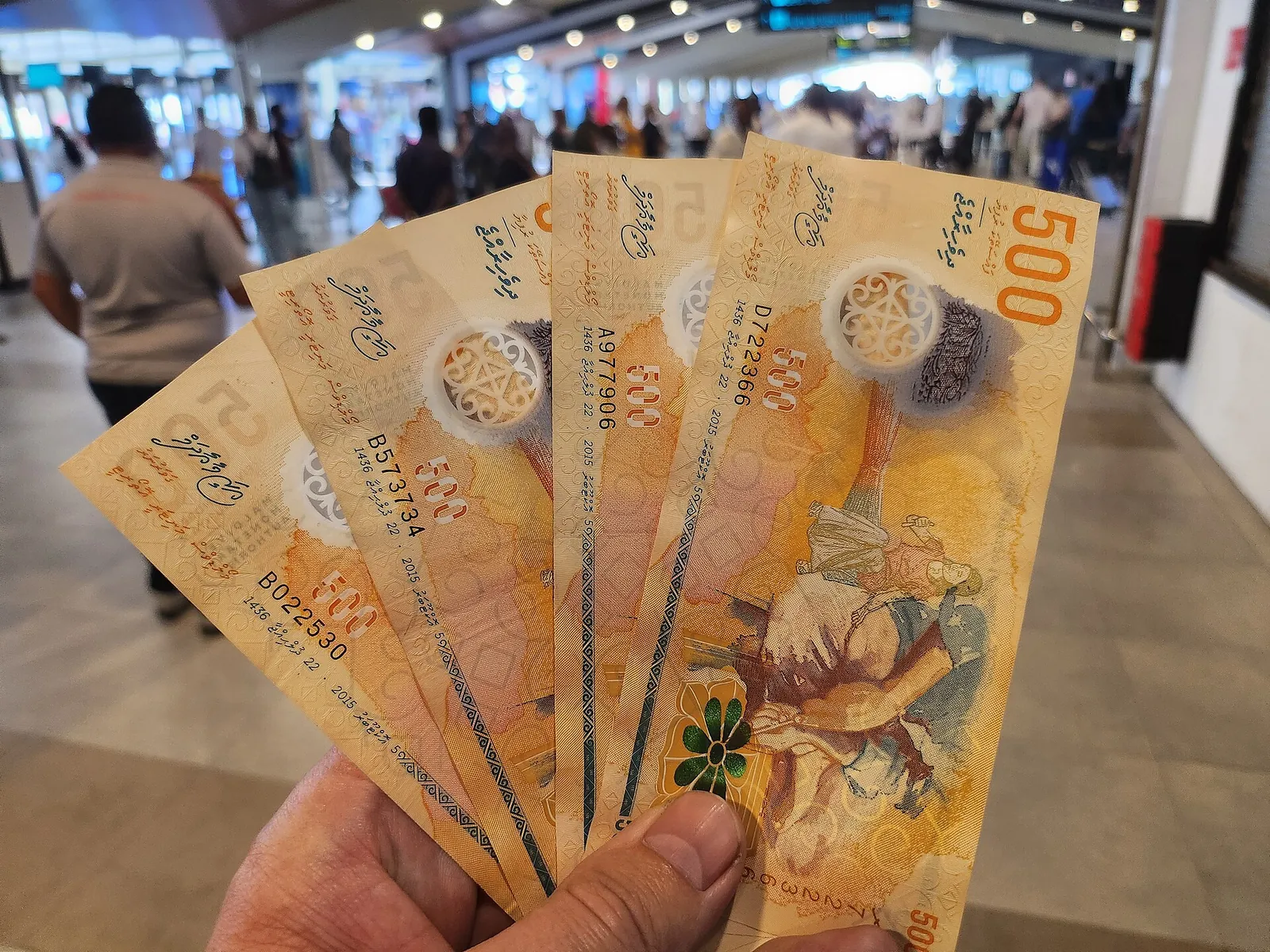
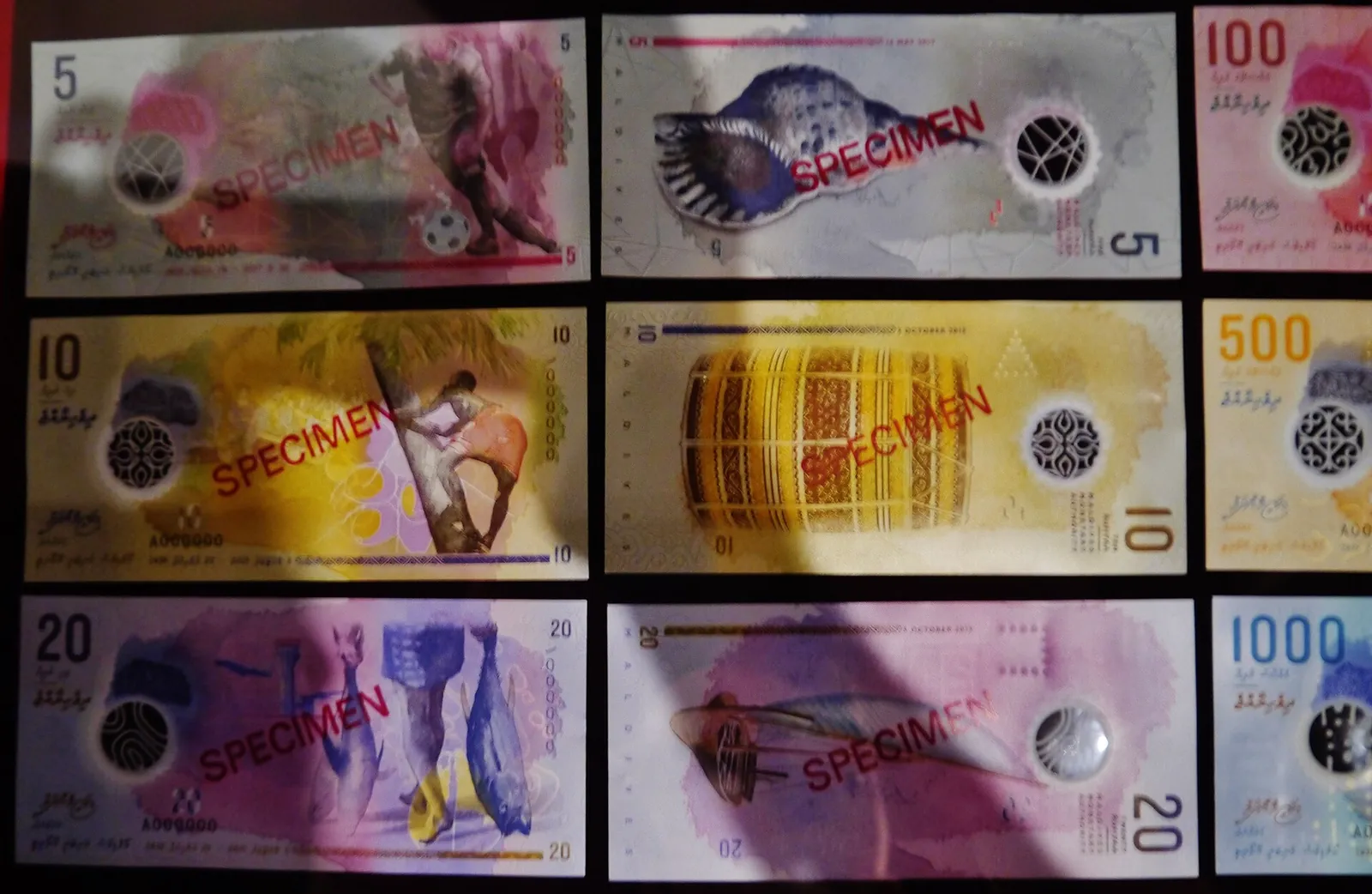
The Maldivian rufiyaa (MVR) is divided into 100 laari. The current banknote series, Ran Dhihafaheh, went into circulation in 2016 and has notes of MVR 5, 10, 20, 50, 100, 500 and 1,000; the MVR 5 note was added in 2017. Coins run from 1 laari to MVR 2. The old paper notes of the 1983 series are no longer legal tender, apart from the MVR 2 note, which is no longer issued.
The Maldives Monetary Authority (MMA), the central bank, sets the rate for the US dollar. Its reference rate is USD 1 = MVR 15.42, the top of the band of MVR 10.28 to 15.42 in which the rate is allowed to move. It is a reference rate, not the rate a money changer or your card will give you. For scale, the MMA's cross rates put EUR 1 at about MVR 17.2 (about USD 1.11) and GBP 1 at about MVR 20.6 (about USD 1.34).
At that rate the airport ferry's MVR 15 fare is just under USD 1. For what rooms, meals and boats cost over a whole trip, see our Maldives trip-cost guide.
Prices and times checked 8 November 2026
Dollars or rufiyaa: what the currency law allows
Tourist prices, from rooms to transfers and excursions, are often quoted in US dollars, and that is legal. Under the Foreign Currency Act (Law No. 32/2024, amended in 2026), monetary transactions in the Maldives are offered and settled in rufiyaa unless the Act or another law allows otherwise, and one of its exemptions lets businesses accept foreign currency for goods and services sold to tourists, meaning foreigners who enter on a tourist visa. Duty-free shops may take it too.
The exemption allows a business to take your dollars; it does not oblige it to, and a small café, a grocery or a counter used mostly by Maldivians may want rufiyaa. Of foreign currencies, US dollars are the one to bring, for the reason in the section on changing money below.
Card or cash: resort islands and local islands
At a resort, a card does nearly everything: internationally common credit cards are accepted at nearly all resorts. Even on a package trip, carry a valid credit card with enough credit limit and its PIN, or a debit card. Visit Maldives says all major credit cards are accepted in the country.
On local islands a card is less certain. Bring US dollars in cash, because getting money on the smaller islands can be difficult. A guesthouse may prefer cash and add a fee for cards, and some island boats take nothing but cash; the section on a local-island stay below gives the figures.
ATMs: use the airport before the boat
There are ATMs at Velana International Airport, so take out what a local-island stay needs there, before you board the boat, and keep your US dollar notes as the reserve. Your own bank's fees for a withdrawal or a card payment abroad apply on top of anything the machine charges; check them, and your daily limit, before you fly, and keep a second card in a different bag in case a machine refuses the first.
If a card terminal or ATM offers to charge you in your home currency, decline and pay in the currency on the bill, rufiyaa or dollars. Visa explains that this offer, dynamic currency conversion, includes an exchange rate and additional fees, that merchants and ATMs should give you the choice and must not make it for you, and that declining does not stop the payment or withdrawal.
Changing money: bring US dollars
Bring US dollar notes rather than euros or pounds. At one bank, Maldives Islamic Bank, US dollars were bought at MVR 15.37 and sold at MVR 15.42, a difference of about 0.3%. The same bank bought euros at MVR 16.67 and pounds at MVR 19.97, about 3% under the MMA's cross rates on the same day. Tourist prices are often quoted in dollars, so dollars also save a conversion when you pay a guesthouse or a boat.
Banks do not change every currency as cash. MCB Maldives, for example, buys and sells foreign cash only in US dollars, Australian dollars, euros, Singapore dollars, pounds sterling and Swiss francs. Leave other currencies at home, or change them before you fly.
Change money at a bank, at your resort or with a licensed money changer. Changing money is a licensed business in the Maldives (resorts may change money for their tourist guests without a licence), and the MMA publishes a list of authorised money changers; it includes Maldives Airports Company Ltd and the Airport Post Shop. Count the notes at the counter, change only what you need for the next few days, and spend leftover rufiyaa before you head to the airport.
Prices and times checked 8 November 2026
Paying a resort or a guesthouse bill
A resort may take much of the bill by card before you arrive. At Grand Park Kodhipparu, for example, half the stay is charged to your credit card as a deposit when you book, and the resort's mandatory speedboat is billed separately: USD 140 per adult return for the shared transfer. The resort says any payment request comes directly from it, so check an unexpected one with the resort before you pay.
Read what a rate leaves out. Grand Park's is subject to a 10% service charge, 17% GST and green tax of USD 12 per person per night. GST is charged on the service charge as well, but not on the green tax, so every USD 100 of room charges for two becomes USD 100 + USD 10 service + USD 18.70 GST + USD 24 green tax, USD 152.70 a night. That line leaves out the speedboat; our trip-cost guide adds service charge and T-GST to the resort's boat as well.
A guesthouse often takes cash as well as cards. Kaani Hotels on Maafushi quotes its charges in US dollars and takes cash in US dollars or euros, or Visa, Mastercard, American Express, UnionPay and Alipay cards. At Kaani Beach Hotel and Kaani Village the green tax of USD 6 per person per night is paid at reception at check-in, unless the invoice already includes it.
Prices and times checked 8 November 2026
Cash for a local-island stay
Some local-island costs can only be paid in cash. Kudhi Boli Beach House, a guesthouse on Thulusdhoo, lists three operators' scheduled speedboats between Malé, the airport and Thulusdhoo at USD 25 per person each way (EUR 25 or MVR 385), paid in cash directly to the boat in US dollars, euros or rufiyaa; children under 4 ride free on a parent's lap. The boats start in Malé City and call at the airport, where they dock at the Smoking Area jetty.
For two people staying three nights on Thulusdhoo, the cash side looks like this. The boat there and back is USD 100, four fares of USD 25. Meals priced from the menu of Twin Palms Surfhouse's café, a USD 12 poke bowl for lunch, a USD 15 tuna poke or burrito for dinner and about USD 5 of water and coffee per person a day, come to USD 192 for three days, about USD 247 once 10% service and 17% T-GST are allowed for. That makes about USD 350 in cash for two, not counting the room.
The room may need cash as well. Twin Palms' own terms name cash on arrival as its preferred payment, add a 3.5% fee to credit-card payments and say its rates already include the 17% GST and the USD 6 green tax per person per night, so the balance of the room there is either more cash or a card fee. Our local islands guide compares the islands and their boats.
Prices and times checked 8 November 2026
Paying for the airport ferry, taxis and ride apps
The airport ferry to Malé is the cheapest way into the capital: it runs from 05:30 to 00:00, every 15 minutes, from the ticket counter near Terminal 2, costs MVR 15 and takes cash or card. It docks at the Hulhumalé Ferry Terminal, which despite its name is in Malé: this ferry does not go to Hulhumalé.
Taxis run around the clock on the Malé-Hulhumalé bridge link, and standard bridge fares apply to airport journeys: about MVR 70 per car from the airport to Malé and MVR 80-85 to Hulhumalé, the fares in our Maldives transport guide, which also covers the buses and the speedboats to the atolls. Three ride apps serve Malé and Hulhumalé: Avas Ride, the one listed with cashless payment, Nala, and Malé Taxi Line, which works with flat rates. For any other taxi, have rufiyaa ready for the fare.
Prices and times checked 8 November 2026
Service charge, taxes and tipping
Resorts, tourist hotels, guesthouses, tourist vessels and similar tourist businesses must add a service charge of no less than 10% to the bill; shops inside them that only sell goods are exempt. The 17% tourism goods and services tax (T-GST) applies to tourist bills, while ordinary shops and cafés outside the tourism sector charge the general 8% GST.
On top comes the green tax, per person per day: USD 6 at hotels and guesthouses with 50 or fewer rooms on an inhabited island, and USD 12 at resorts, tourist vessels and other hotels. Children under two are exempt, and no GST is charged on the green tax. A rate that says it includes taxes and service already has them; a rate quoted before them does not, and our trip-cost guide shows what they add to a real stay.
The service charge is shared among the staff under rules set by the Labour Relations Authority, so a tip on top is your own choice. No official amount is set.
Prices and times checked 28 October 2026
Keeping cash safe, and what to declare
Crime levels are low on the resort islands, but petty crime does happen. Do not leave valuables unattended on the beach or in an unlocked hotel room. Pay by card where you can, carry only the cash you need for the day, and do not keep all your money and cards in one bag; leave your passport in the hotel safe when you go to the beach. Take particular care in crowds, such as at the airport, at markets, on boats and on beaches.
Be wary of unexpected emails, calls, prize notices, offers and requests for help from supposed acquaintances, and do not share your personal details in reply. France keeps the whole country under increased vigilance (vigilance renforcée), a call for alertness rather than advice against travel.
Anyone entering or leaving the Maldives with cash of USD 10,000 or more, or the same value in rufiyaa or another currency, must declare it to the Maldives Customs Service. The Airport Development Fee and departure tax, USD 50 each for foreign passengers in economy, are usually included in the air ticket, because scheduled airlines collect them, so you do not pay them in cash at the airport. Our Maldives entry guide covers the visa on arrival and the other customs rules, and our first-trip guide covers dress, alcohol and the law on local islands.
Practical questions
Should I bring US dollars or rufiyaa to the Maldives?
Bring US dollars in cash and get some rufiyaa there. Tourist prices are often quoted in dollars and businesses may accept them from tourists, but rufiyaa is the legal currency of payment, so small cafés and shops may want it. At one bank, dollars were bought at about 0.3% under the selling rate, while euros and pounds lost about 3% against the central bank's cross rates.
Can I pay by card in the Maldives?
At resorts, almost always: internationally common credit cards are accepted at nearly all resorts. On local islands a card is less certain, and some island boats and guesthouses want cash, so bring US dollars as well.
Are there ATMs at Malé airport?
Yes, there are ATMs at Velana International Airport. Getting money on the smaller islands can be difficult, so if you are going to a local island, take out what you need at the airport, before the boat.
Where can I change money in the Maldives?
At a bank, at your resort or with a money changer on the Maldives Monetary Authority's list of authorised money changers, which includes Maldives Airports Company Ltd and the Airport Post Shop. Banks change only some currencies as cash; US dollars are the easiest.
Do you tip in the Maldives?
Tipping is optional. Resorts, hotels, guesthouses and tourist vessels must add a service charge of at least 10%, which is shared among the staff, so a tip on top is your own choice. No official amount is set.
How much cash do I need for a local island?
Enough for anything that takes only cash. For two people staying three nights on Thulusdhoo, the speedboat there and back is USD 100, paid in cash on board, and meals at an island café about USD 247 with service and T-GST, so about USD 350 in cash, plus the room if your guesthouse prefers cash on arrival.
Do I need to declare cash when I enter the Maldives?
Only a larger amount. Cash of USD 10,000 or more, or the same value in rufiyaa or another currency, must be declared to the Maldives Customs Service on arrival and on departure.
Keep planning your trip
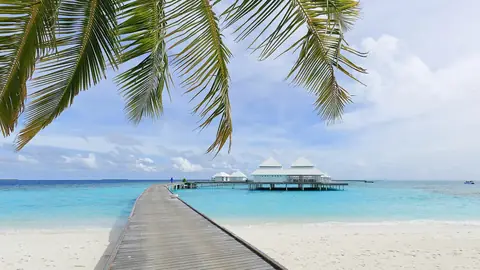
First trip to the Maldives
Resort or guesthouse island for a first Maldives trip: the rules on alcohol and dress, money, SIM cards, entry, safety and what a day costs at three levels.
Read the guide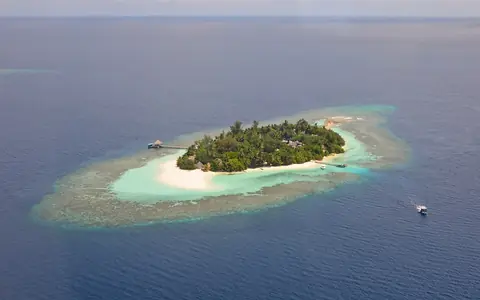
Entering the Maldives
The free Maldives visa on arrival, passport rules, the IMUGA declaration's 96-hour window, what customs confiscates, and the taxes on rooms and tickets.
Read the guide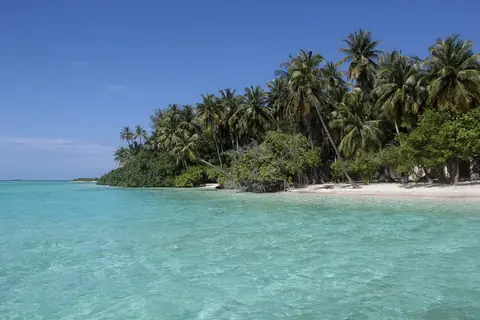
Maldives trip cost
A Maldives week for two, all in: about USD 1,260 per person on a guesthouse island, USD 1,910 with two resort nights, or USD 3,230 for a resort week.
Read the guide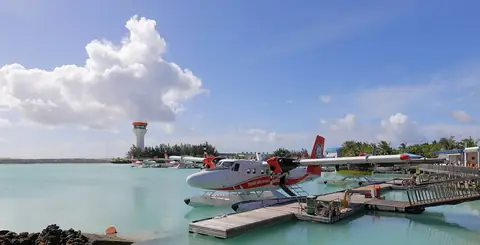
Getting around the Maldives
From Velana airport to Malé, Hulhumalé and the guesthouse islands: the MVR 15 ferry, shared speedboat fares and times, MTCC ferries, seaplanes and domestic flights.
Read the guide
Maafushi
How many nights on Maafushi, which boat from the airport, the bikini beach and island rules, snorkelling and resort day trips, guesthouses and a three-night budget.
Read the guide
Where to stay in the Maldives
Resort or local island: where to stay in the Maldives, from an airport night in Malé or Hulhumalé to Maafushi, Thoddoo, Dhigurah and resorts, with transfers and taxes.
Read the guideSources and checks before you travel
(32)
- Maldives Monetary Authority: banknotes ↗ — opens in a new tab
- Maldives Monetary Authority: currency in circulation ↗ — opens in a new tab
- Maldives Monetary Authority: Ran Dhihafaheh banknote series ↗ — opens in a new tab
- Maldives Monetary Authority: withdrawn banknotes ↗ — opens in a new tab
- Maldives Monetary Authority: coins in circulation ↗ — opens in a new tab
- Maldives Monetary Authority: reference rates ↗ — opens in a new tab
- Maldives Monetary Authority: exchange rates ↗ — opens in a new tab
- Maldives Monetary Authority: exchange rates for 8 November 2026 ↗ — opens in a new tab
- Maldives Monetary Authority: Foreign Currency Act, Law No. 32/2024 (unofficial English translation, with the First Amendment, Law No. 13/2026) ↗ — opens in a new tab
- Maldives Monetary Authority: foreign currency FAQ (April 2025) ↗ — opens in a new tab
- Maldives Monetary Authority: list of authorised money changers (as at 26 February 2026) ↗ — opens in a new tab
- Maldives Monetary Authority: money changer licence FAQ ↗ — opens in a new tab
- Maldives Monetary Authority: Regulation on Cross Border Currency Declaration Amount (English) ↗ — opens in a new tab
- Visit Maldives: travel information ↗ — opens in a new tab
- German Foreign Office (Auswärtiges Amt): Maldives travel and safety advice (in German) ↗ — opens in a new tab
- Visa: what you should know about dynamic currency conversion ↗ — opens in a new tab
- Maldives Islamic Bank: exchange rates ↗ — opens in a new tab
- MCB Maldives: home page (foreign currency notice) ↗ — opens in a new tab
- Kaani Hotels: booking terms ↗ — opens in a new tab
- Kudhi Boli Beach House: How to get to Thulusdhoo Island (17 June 2025) ↗ — opens in a new tab
- Twin Palms Surfhouse: menu, Thulusdhoo ↗ — opens in a new tab
- Twin Palms Surfhouse: terms and conditions ↗ — opens in a new tab
- Grand Park Kodhipparu: advance purchase offer ↗ — opens in a new tab
- Maldives Airports Company: Velana International Airport transport ↗ — opens in a new tab
- Labour Relations Authority: service charge regulation gazetted ↗ — opens in a new tab
- Maldives Inland Revenue Authority: GST ↗ — opens in a new tab
- Maldives Inland Revenue Authority: GST Regulation (consolidated) ↗ — opens in a new tab
- Maldives Inland Revenue Authority: green tax ↗ — opens in a new tab
- Maldives Inland Revenue Authority: green tax FAQ ↗ — opens in a new tab
- Maldives Inland Revenue Authority: airport taxes and fees ↗ — opens in a new tab
- UK Foreign Office: Maldives safety and security ↗ — opens in a new tab
- France Diplomatie: Maldives travel advice, security (in French) ↗ — opens in a new tab
Reference sources for the version dated 8 November 2026. Confirm opening times, access, transport and conditions for your travel dates.
Photo credits
(4)
A fan of MVR 500 rufiyaa notes
Photograph: Saaremees — opens in a new tab · CC BY-SA 4.0 — opens in a new tab
Changes: Resized and converted to WebP; displayed with responsive crops. · Original photograph and licence details ↗ — opens in a new tab
The current rufiyaa notes on display at the National Museum, Malé
Photograph: Zairon — opens in a new tab · CC BY-SA 4.0 — opens in a new tab
Changes: Resized and converted to WebP; displayed with responsive crops. · Original photograph and licence details ↗ — opens in a new tab
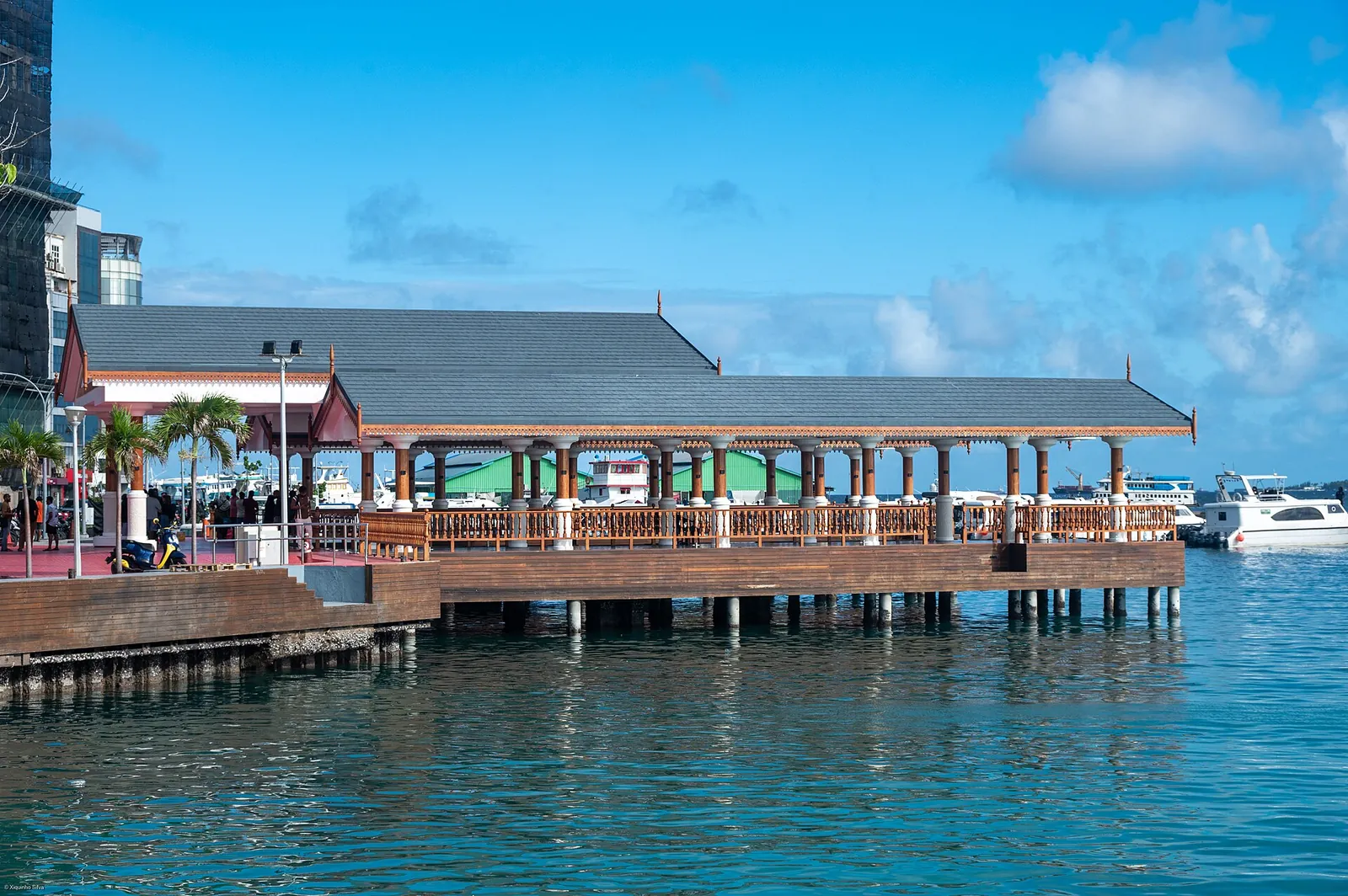
A jetty on the Malé waterfront
Photograph: xiquinhosilva — opens in a new tab · CC BY 4.0 — opens in a new tab
Changes: Resized and converted to WebP; displayed with responsive crops. · Original photograph and licence details ↗ — opens in a new tab
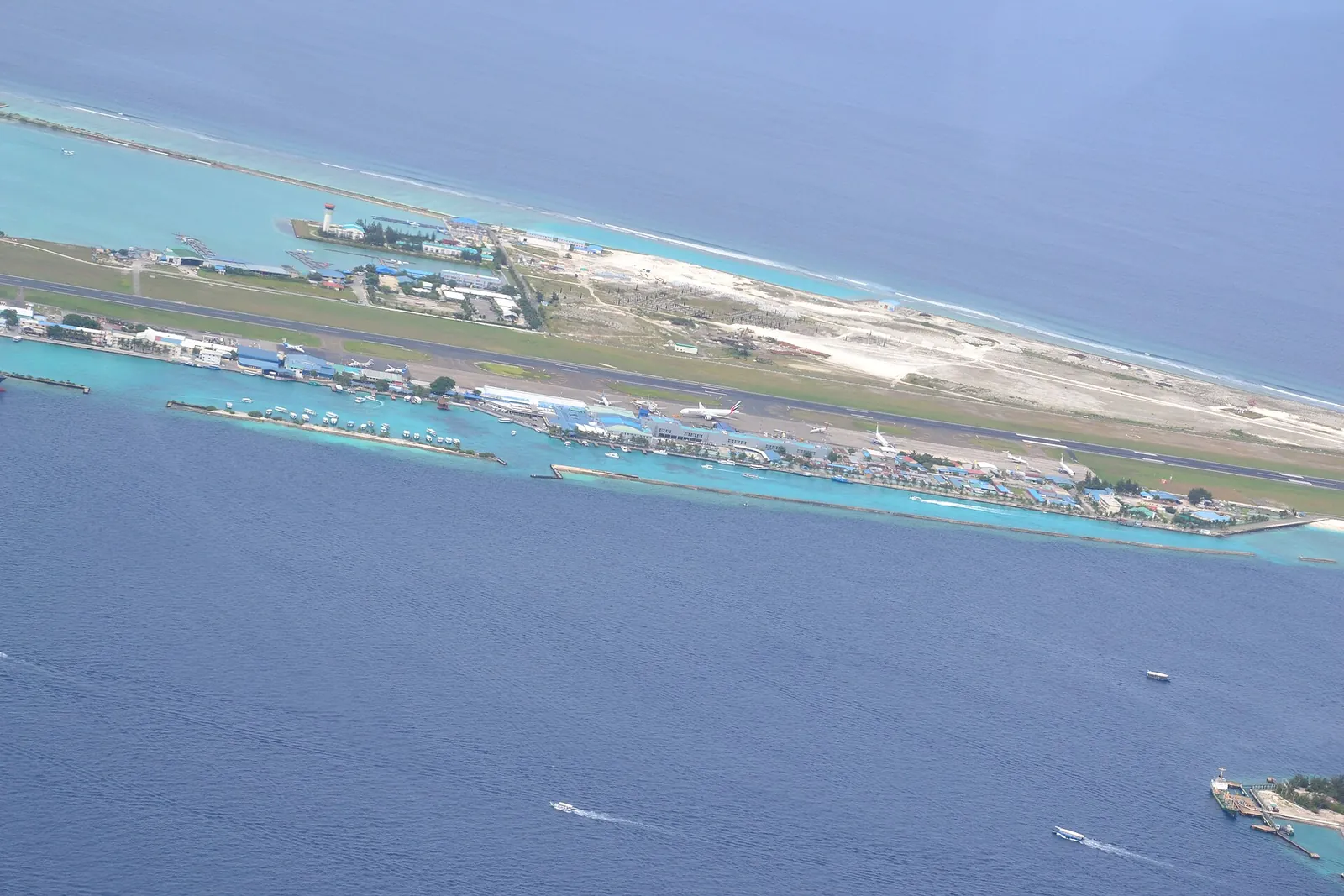
Velana International Airport from the air
Photograph: Simon_sees — opens in a new tab · CC BY 2.0 — opens in a new tab
Changes: Resized and converted to WebP; displayed with responsive crops. · Original photograph and licence details ↗ — opens in a new tab