Plan your trip
Maldives entry: visa on arrival, IMUGA, customs and departure taxes
Nobody needs to apply for a Maldives tourist visa in advance: it is stamped into your passport at Velana International Airport (MLE). What the immigration officer does check is the paperwork behind it, a return ticket, a prepaid room at a registered guesthouse, hotel or resort, enough money for the stay, and an online Traveller Declaration filed in the four days before you land. This guide takes those steps in the order you meet them, then covers what customs will not let you bring in and the taxes you pay on rooms and on the way out.
In this guide
Find the location ↗ — opens in a new tabThe short answer
Tourists get a free visa on arrival for up to 30 days. Bring a passport with at least one month's validity, a return ticket, a prepaid booking and enough money, and file a free IMUGA declaration for each traveller within 96 hours before arrival. Green tax is USD 6 per person per taxable day at local-island hotels and guesthouses with 50 or fewer rooms, USD 12 at resorts and larger properties. Foreign economy passengers leaving Velana pay an Airport Development Fee and departure tax of USD 50 each, usually in the air ticket.
- Key point
- Entry planning before you book; a free visa on arrival for up to 30 days
- Where it applies
- Arrive at Velana International Airport (MLE) on Hulhulé, with your first night already booked and paid
- Timing
- The rules apply all year; the IMUGA declaration window opens 96 hours before your arrival
Compare all 24 countries: Asia entry requirements at a glance →
The tourist visa on arrival and how long it lasts
Tourists get the visa at the airport: Maldives Immigration grants it on arrival, with no approval needed before you travel, once the officer is satisfied you meet the entry requirements below. Since 15 April 2025, entry is not granted on Israeli passports.
German travel advice says the visa is free and lasts up to 30 days; UK advice states 30 days for British tourists. Other governments' advice can differ, so check your own before you travel. Other nationalities will find the entry conditions on Maldives Immigration's tourist-visa page.
If you need longer, apply for an extension through the IMUGA portal, with a passport photograph taken within the last 12 months. Extensions are charged and allow at most 90 days in all, according to France, and Germany adds that your hotel island must recommend the application. Overstaying without an approved extension can bring heavy fines and an entry ban.
Passport, return ticket and a paid booking
Maldives Immigration asks for a passport with a machine-readable zone and at least one month's validity, and turns away passports whose validity has been extended. France advises its citizens to travel with six months left after the stay, which also meets the one-month rule. A damaged passport can get you stopped, the UK warns. Children need their own passport.
You also need a complete itinerary: confirmed return tickets, a prepaid, confirmed booking at a registered facility, and enough money to cover the stay, or a sponsorship approved by Maldives Immigration. France accepts a hotel confirmation or funds of USD 100 plus USD 50 a day. If you fly on to a third country rather than home, its passport and visa rules apply too.
The IMUGA Traveller Declaration
Every foreigner arriving in the Maldives must complete the Traveller Declaration on the IMUGA portal (imuga.immigration.gov.mv) within 96 hours (four days) before your flight lands. It is a self-declaration: open the Traveller Declaration on the portal, fill in your details and submit it yourself, with no agent needed. The portal also lets you edit a declaration after submitting it and verify it by its QR code. File it before you board, and present the completed declaration at immigration when you arrive.
Submitting it is free. Maldives Immigration warns of websites and individuals that charge a fee to file the form, so use the official portal only. Each traveller, including children and minors, needs an individual declaration, so a family of four files four forms.
Customs: what to leave at home
The Maldives is an Islamic country, and its import rules follow from that. Leave at home alcohol, pork and pork products, idols for worship such as Buddha statues, religious material offensive to Islam, pornography, narcotics and e-cigarettes. Alcohol bought on the plane or in a duty-free shop on the way is confiscated on arrival; resorts and liveaboard boats sell it. Since 15 January 2026, meat, poultry, fish and egg products need an import health certificate. Idols and these food products can be left at an airport counter against a receipt and collected when you leave.
Tobacco products are banned for anyone born on or after 1 January 2007, visitors included; e-cigarettes and vaping devices are banned for everyone. German travel advice lists an allowance for tourist-visa holders aged 18 and over of up to 200 cigarettes, 25 cigars or 250 g of tobacco, subject to the birth-date ban. Declare anything that may be prohibited or taxable. Cash and other monetary instruments worth USD 10,000 or more, in any currency, must be declared to Customs on arrival and again on departure; the declaration can be made online on the Maldives Customs Service website.
Drug penalties are severe, even for small amounts of cannabis, and airport scanners check transit passengers' bags too. Carry prescription medicines with a doctor's certificate in English naming you, the medicine and the daily dose. When you leave, do not pack coral or tortoiseshell jewellery or ornaments: taking them out is illegal.
Yellow fever, insurance and medical care
You need a yellow fever certificate only if you arrive from, or have passed through, a country with a risk of yellow fever transmission (Germany counts a transit of more than 12 hours), so a direct trip from Europe needs none. On such a route, carry one for everyone aged nine months or more, the age Germany gives.
The UK recommends travel insurance that covers local treatment and medical evacuation: the only fully equipped hospitals are in Malé and Hulhumalé, and many resort islands are several hours from emergency treatment.
Taxes on rooms and on the way out
Two charges are tied to leaving the country: the Airport Development Fee and departure tax, USD 50 each for foreign economy passengers departing Velana, usually included in the air ticket. Scheduled airlines collect both, so look for them in the fare breakdown rather than at a desk in the airport. Children under two are exempt from the departure tax.
On the islands, bills at resorts, hotels and guesthouses carry the 17% tourism goods and services tax (T-GST) and a service charge of at least 10% (by law; most places charge exactly 10%), while ordinary shops and cafés outside the tourism sector charge the general 8% GST. The green tax is USD 6 per person per taxable day at guesthouses and hotels with 50 or fewer rooms on an inhabited island, USD 12 at resorts, liveaboards and other hotels; children under two at check-in are exempt, and no GST is charged on it. A taxable day is a 24-hour block from check-in; the final block is charged only if it lasts at least 12 hours. Our trip cost guide adds these taxes to a whole stay.
Landing at Velana and clearing immigration
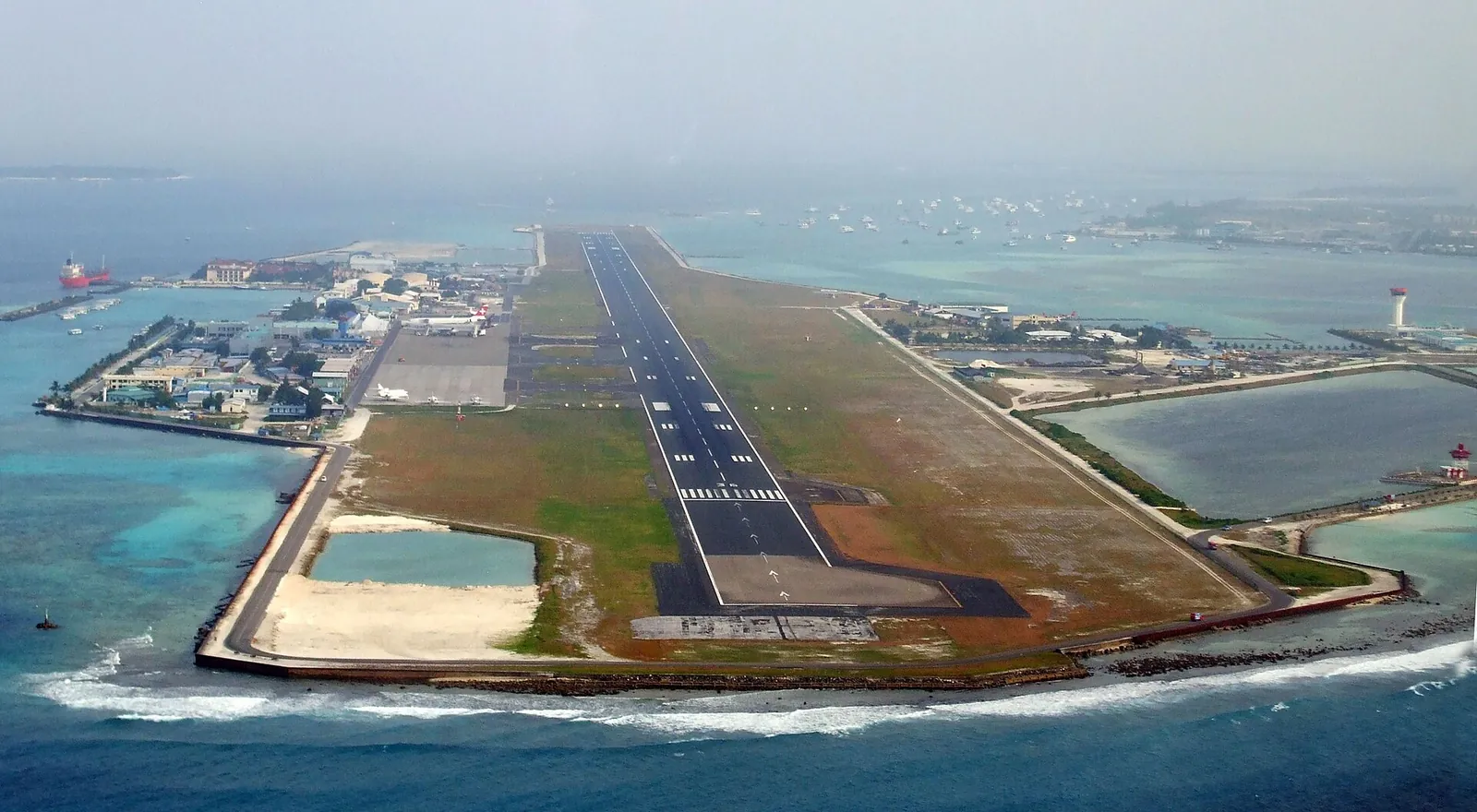
Velana International Airport (MLE) is on Hulhulé island. After landing, walk to the Arrival Immigration Halls on the ground floor, where the officer checks your passport, your IMUGA declaration and your booking. Bags are screened before they reach baggage claim, and customs may ask you to declare anything restricted. In the arrivals hall you meet your guesthouse or resort host; the airport's information counters and help desks are staffed 24/7 and can contact your host for you.
Onward to Malé, and the safety advice to read
Malé, the capital, is the island next to the airport to the south-west, joined by the Sinamalé Bridge; Hulhumalé is the newer reclaimed island to the north, joined to the airport by road. The airport ferry to Malé, the buses and the boats, seaplanes and flights on to the islands are in our transport guide.
France keeps the whole of the Maldives under increased vigilance (vigilance renforcée) because of the risk of terrorism, and asks travellers to stay alert to their surroundings; it does not advise against travel. Check your own government's travel advice too. Outside the resorts no alcohol is sold, shoulders and knees stay covered, and during Ramadan nobody eats, drinks or smokes in public by day; our first-trip guide sets out the rules.
Practical questions
Do I need a visa for the Maldives as a British or EU citizen?
Not in advance. Tourists get a free visa on arrival for up to 30 days.
When do I fill in the IMUGA Traveller Declaration?
Within 96 hours (four days) before your flight lands, and before you board. It is free.
Do children need their own Traveller Declaration and passport?
Yes. Each traveller, including children and minors, files an individual declaration, and children need their own passport to enter.
How long must my passport be valid?
At least one month, with a machine-readable zone, says Maldives Immigration, which refuses passports with extended validity. France advises six months after your stay, which meets the one-month rule too.
Do I need a hotel booking to enter?
Yes: immigration asks for a prepaid, confirmed booking at a registered facility, a confirmed return ticket and enough money for the stay, or an approved sponsorship.
Can I bring duty-free alcohol?
No. Alcohol cannot be imported without prior approval, and bottles bought on the way are confiscated on arrival. Resorts and liveaboard boats sell it.
Is the departure tax paid at the airport?
Usually not. The Airport Development Fee and departure tax, USD 50 each for foreign economy passengers departing Velana, are collected by scheduled airlines and are usually included in the air ticket.
Can I extend my tourist visa?
Yes, through the IMUGA portal. Extensions are charged and allow at most 90 days in all (France); overstaying can bring heavy fines and an entry ban.
Keep planning your trip
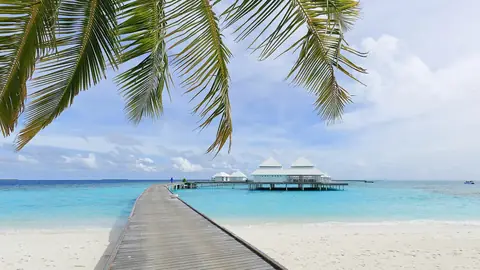
First trip to the Maldives
Resort or guesthouse island for a first Maldives trip: the rules on alcohol and dress, money, SIM cards, entry, safety and what a day costs at three levels.
Read the guide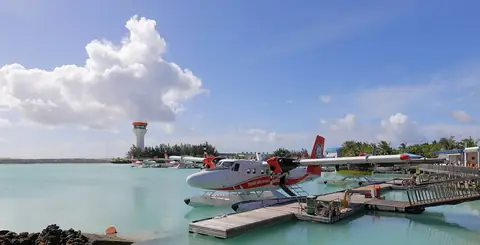
Getting around the Maldives
From Velana airport to Malé, Hulhumalé and the guesthouse islands: the MVR 15 ferry, shared speedboat fares and times, MTCC ferries, seaplanes and domestic flights.
Read the guide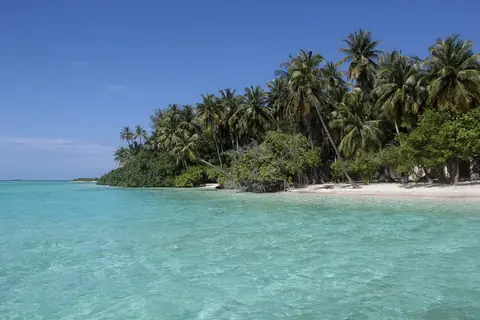
Maldives trip cost
A Maldives week for two, all in: about USD 1,260 per person on a guesthouse island, USD 1,910 with two resort nights, or USD 3,230 for a resort week.
Read the guide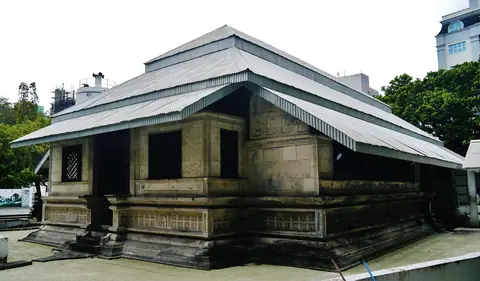
Malé and Hulhumalé
Malé or Hulhumalé for a night: the coral-stone Friday Mosque, museum, fish market and Hulhumalé beach, with the airport ferry, hotels and costs.
Read the guide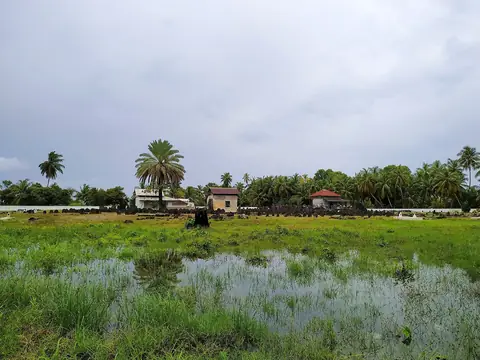
Best time to visit the Maldives
When to go to the Maldives: calm seas from January to March, the wetter south-west monsoon, Hanifaru Bay's manta season, South Ari's whale sharks and Ramadan 2027.
Read the guide
Festivals and holidays in the Maldives
Which 2027 dates change a Maldives trip: Ramadan and the two Eids on the Islamic calendar, Independence Day on 26 July, Victory and Republic days in November.
Read the guideSources and checks before you travel
(19)
- Maldives Immigration: Tourist visa on arrival ↗ — opens in a new tab
- IMUGA: Traveller Declaration ↗ — opens in a new tab
- Maldives Immigration: Traveller Declaration is free ↗ — opens in a new tab
- Maldives Immigration: tourist visa extension process (news) ↗ — opens in a new tab
- UK FCDO: Maldives entry requirements ↗ — opens in a new tab
- UK FCDO: Maldives safety and security ↗ — opens in a new tab
- UK FCDO: Maldives health ↗ — opens in a new tab
- German Federal Foreign Office: Maldives travel and safety advice ↗ — opens in a new tab
- France Diplomatie: Maldives entry and stay ↗ — opens in a new tab
- France Diplomatie: Maldives security ↗ — opens in a new tab
- Velana International Airport: arriving at VIA ↗ — opens in a new tab
- Velana International Airport: transport ↗ — opens in a new tab
- MIRA: airport taxes and fees ↗ — opens in a new tab
- MIRA: green tax ↗ — opens in a new tab
- MIRA: green tax FAQ ↗ — opens in a new tab
- MIRA: GST rates ↗ — opens in a new tab
- Labour Relations Authority: service charge regulation ↗ — opens in a new tab
- Maldives Civil Aviation Authority: Air Transport Circular AT 01/2024, customs requirements for passengers (15 December 2024) ↗ — opens in a new tab
- Visit Maldives: local-island and liveaboard distinctions ↗ — opens in a new tab
Reference sources for the version dated 1 November 2026. Confirm opening times, access, transport and conditions for your travel dates.
Photo credits
(4)
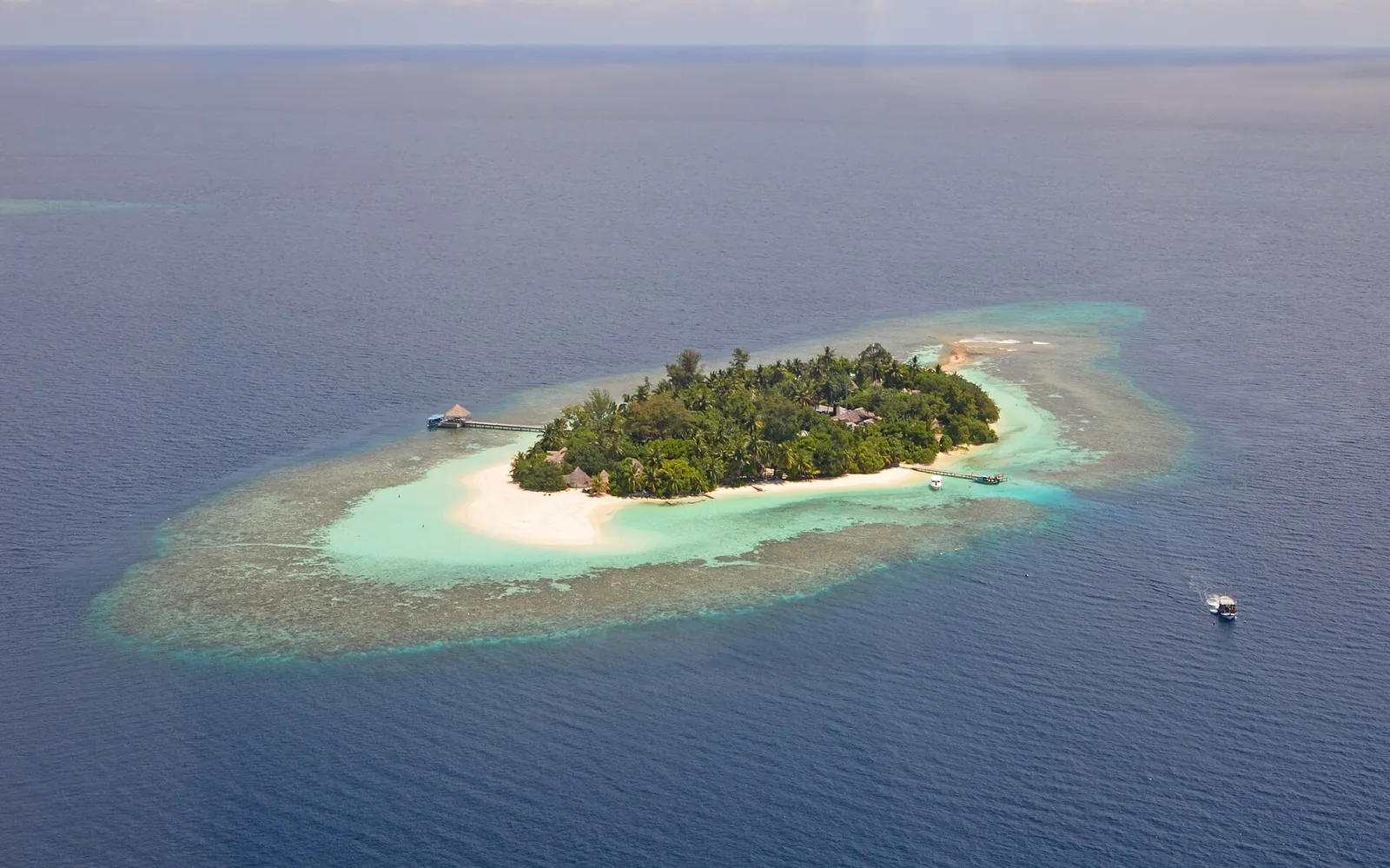
Bathala island in the Maldives, seen from the air from the south-west, with its reef around it
Photograph: Gzzz — opens in a new tab · CC BY-SA 4.0 — opens in a new tab
Changes: Resized and converted to WebP; displayed with responsive crops. · Original photograph and licence details ↗ — opens in a new tab
Velana International Airport on Hulhulé, seen from a plane on the approach
Photograph: StromBer — opens in a new tab · CC BY-SA 3.0 — opens in a new tab
Changes: Resized and converted to WebP; displayed with responsive crops. · Original photograph and licence details ↗ — opens in a new tab
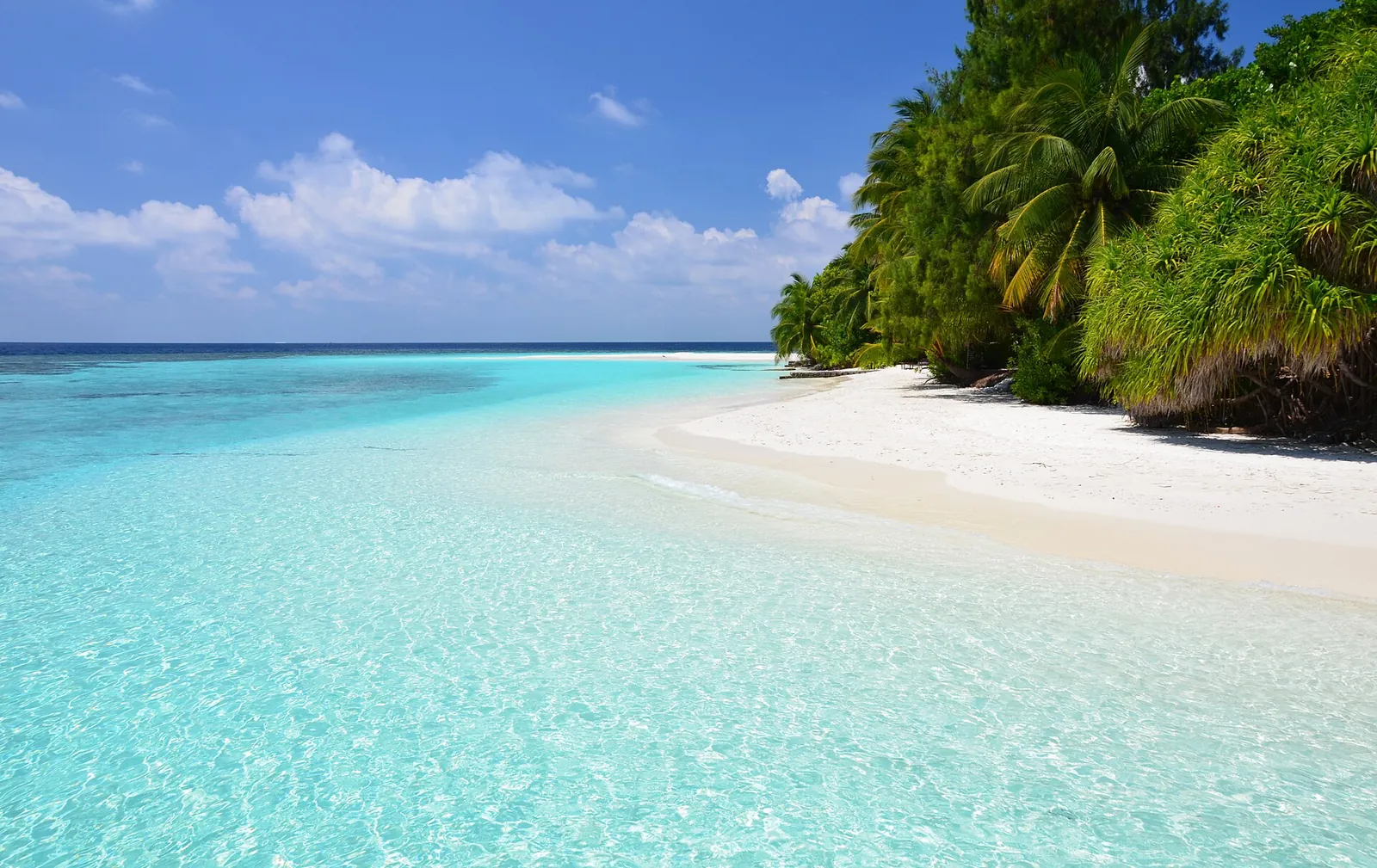
A beach on Bathala, a resort island in the Maldives
Photograph: Gzzz — opens in a new tab · CC BY-SA 4.0 — opens in a new tab
Changes: Resized and converted to WebP; displayed with responsive crops. · Original photograph and licence details ↗ — opens in a new tab
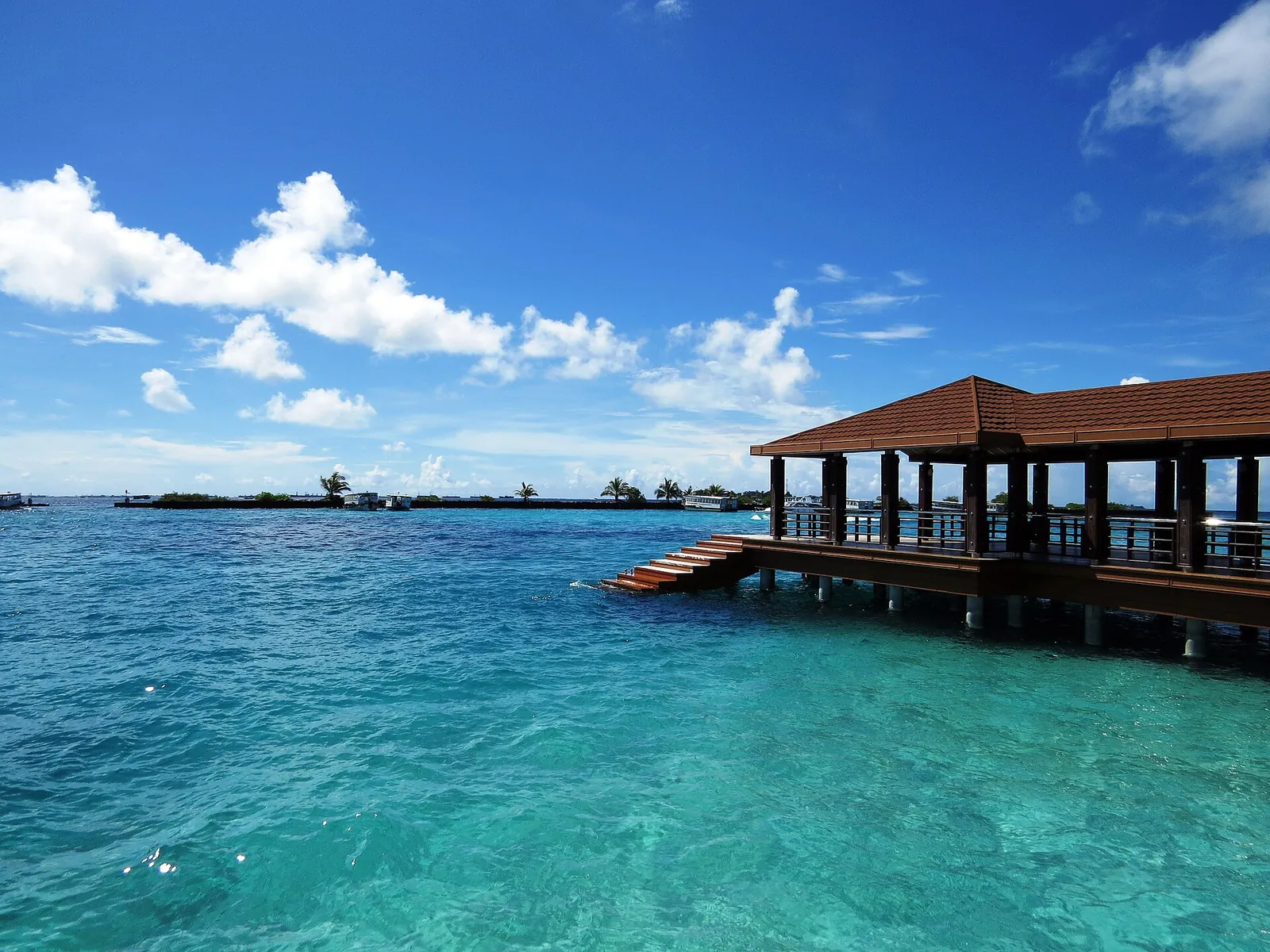
A jetty on the shore of Hulhulé, the airport island
Photograph: vivali — opens in a new tab · CC BY 3.0 — opens in a new tab
Changes: Resized and converted to WebP; displayed with responsive crops. · Original photograph and licence details ↗ — opens in a new tab