Plan your trip
Best time to visit the Maldives: monsoons, mantas and Ramadan 2027
The Maldives is warm in every month, so choosing when to go is about the sea, the sky and the animals you hope to swim with. The sunny north-east monsoon brings usually calm water from January to March; the south-west monsoon, from mid-May to November, brings more wind, cloud and showers, and with them the manta gatherings of Hanifaru Bay. Below are the months one by one, then the boat crossings, the manta and whale-shark seasons and Ramadan in 2027.
In this guide
Find the location ↗ — opens in a new tabThe short answer
Go from January to March for calm seas and the most sun, the dry north-east monsoon; about May or June to November for Hanifaru Bay's mantas; any month for whale sharks in South Ari. December, January and February drew the most visitors in 2025, so book those months first, and note that Ramadan, expected from about 8 February to 9 March 2027, closes cafés outside hotels by day on the local islands. Two fares to plan with: Kaani's shared speedboat to Maafushi is USD 25 per person each way, and Bliss Dhigurah's to the whale-shark island USD 66.
- Key point
- Any month suits a week; allow three nights in Baa for Hanifaru trips that depend on manta sightings
- Where it applies
- Kaafu Atoll's guesthouse islands or a resort near the airport, Dharavandhoo (Baa Atoll) for Hanifaru Bay, Dhigurah (South Ari Atoll) for whale sharks
- Timing
- January to March is the calm, sunny north-east monsoon; mid-May to November is the wetter south-west monsoon, when Hanifaru Bay's mantas gather
Two monsoons and two months in between
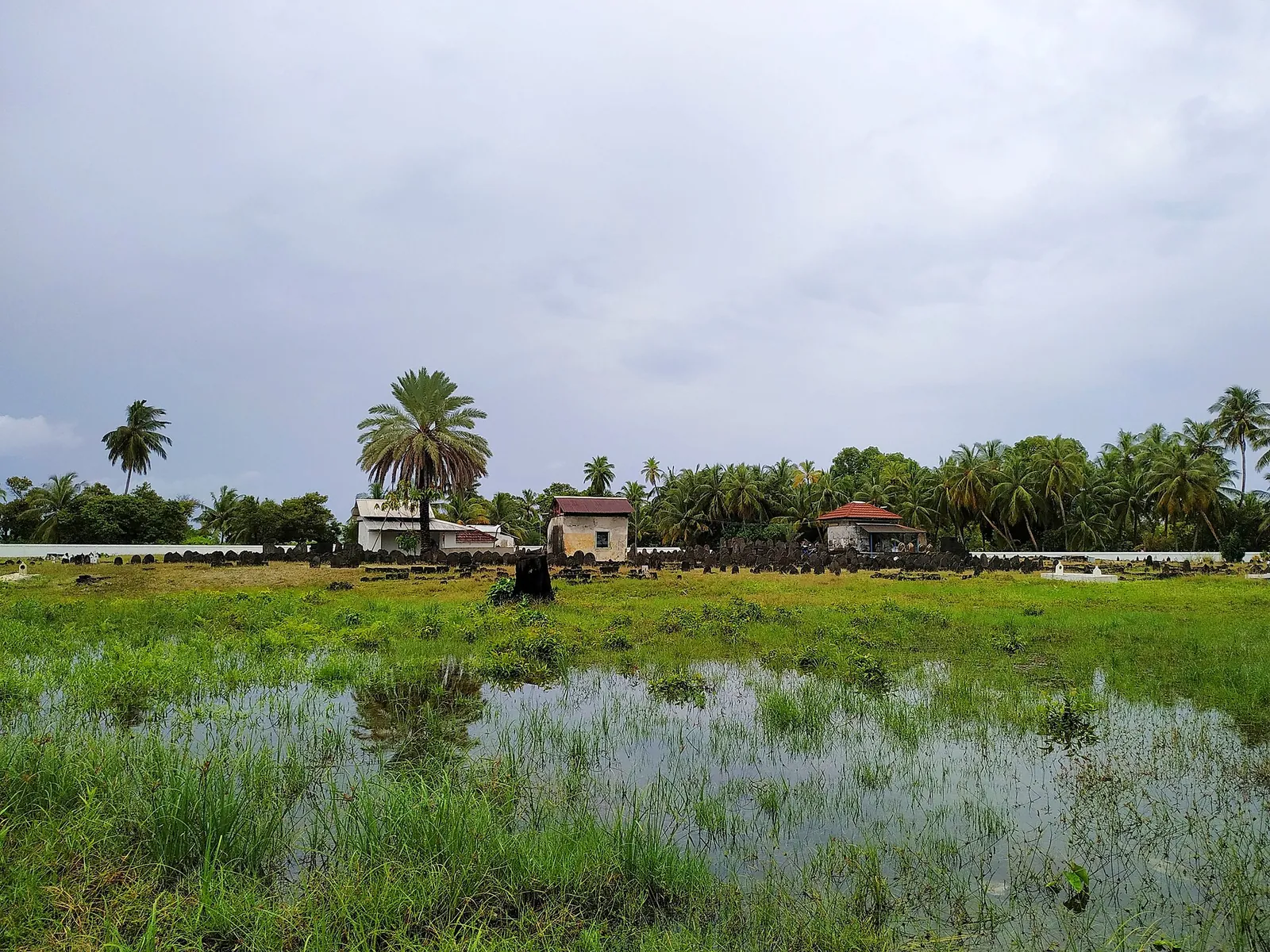
The Maldives Meteorological Service (Met Service) divides the year into two seasons. The north-east monsoon, the dry season, runs from January to March. The south-west monsoon, the wet season, normally lasts from mid-May to November. December and April are the transition months between the two, so November still belongs to the wet season and December is a changeover rather than the start of the dry months.
It is warm all year, with an average temperature range of 25°C to 32°C; the warmest weeks fall in March and April and last until the south-west monsoon arrives in mid-May. Sunshine is the bigger difference. From January to March the islands average 10 to 11 hours of sunshine a day, against 7 to 9 hours in the other months. Rain normally falls as showers that do not last long, with sunny spells in between, though individual wet-season days can be much wetter.
The south is wetter than the north: on annual averages the southern atolls receive about 2,218 mm of rain a year, the central atolls 1,966 mm and the northern atolls 1,779 mm. The table sums up each month: the season, what it usually means for the weather and the water, and what is happening under it.
| Month | Season | Weather and sea | Wildlife and calendar |
|---|---|---|---|
| January | North-east monsoon (dry) | Usually clear skies and calm water; 10-11 hours of sun a day | Adult mantas at the Rangali Madivaru (Ari) and Rasfari (North Malé) cleaning stations, December to April |
| February | North-east monsoon (dry) | As in January | Ramadan starts (2027); the surf season opens in mid-month |
| March | North-east monsoon (dry) | The warmest weeks begin | Eid al-Fitr (2027) closes the fasting month; oceanic mantas peak at Fuvahmulah in March and April; best surf, March to May |
| April | Transition | Among the warmest weeks of the year; the monsoon is changing | Last month for mantas at Rangali Madivaru and Rasfari |
| May | South-west monsoon from about mid-month | Hot until the monsoon arrives, then more wind, cloud and rain | Some dive centres open the Hanifaru season; juvenile mantas in the Guraidhoo lagoon, May to November |
| June-October | South-west monsoon (wet) | Stronger winds, more cloud and more rain than in the dry months; 7-9 hours of sun a day | Main Hanifaru season (to November), with the most boats in the bay in August; cleaning stations at Dhigu Thila (Baa) and Fushi Kandu (Laamu) during the south-west monsoon; feeding at Fushifaru (Lhaviyani) towards its end |
| November | South-west monsoon (wet) | The last month of the south-west monsoon, not yet the dry season | The dive centres' Hanifaru season ends, as does the juvenile manta season at Guraidhoo; best surf, September to November |
| December | Transition | The monsoon is changing towards the north-east | Rangali Madivaru and Rasfari mantas return; one of the busiest months for arrivals |
Manta sites through the year
Hanifaru is the famous one, but mantas use other sites through the year. Adult reef mantas visit the Rangali Madivaru cleaning station in Ari Atoll, a coral-rich channel site popular with divers, from December to April, when surface feeding is also seen there now and then; Rasfari in North Malé Atoll has a shallow cleaning station used in the same months. Juvenile mantas feed in the sheltered lagoon off Guraidhoo, one of Kaafu Atoll's guesthouse islands, known to divers as Sand Dunes, from May to November. Oceanic mantas pass the Farikede reef plateau off Fuvahmulah for a few weeks, with sightings peaking in March and April. At Mudakan Manta Point in Addu Atoll, adult and juvenile reef mantas use the cleaning station all year and often hover over divers' bubbles.
The side of the atoll matters as much as the month: Ari's mantas gather more on the western side of the atoll in the north-east monsoon and move to the eastern side in the south-west monsoon.
Sea temperature, surf and boat crossings
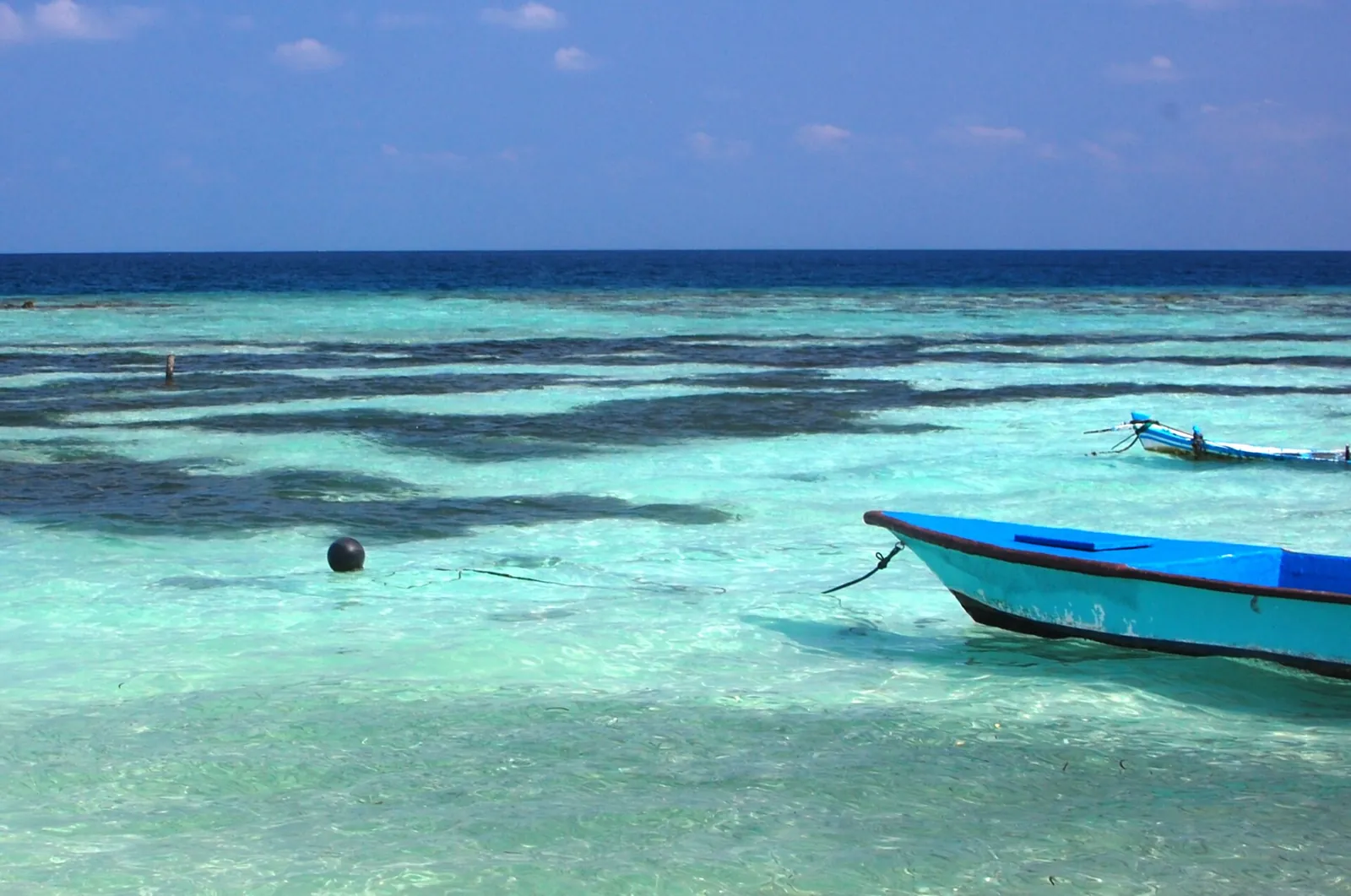
Long speedboat crossings and snorkelling straight from the beach are easiest from January to March, when the north-east monsoon usually brings clear skies and calm water. The sea itself barely changes: Visit Maldives, the national tourism board, gives an average water temperature of around 28°C. For the dive months, see our snorkelling and diving guide.
Surf runs against the beach calendar. The outer reefs face the southern swells, and the tourism board gives a surf season from mid-February to November, with the best conditions from March to May and from September to the end of November. North Malé Atoll, closest to the airport, has the most-visited breaks along its eastern rim, among them Cokes at Thulusdhoo and Sultans; Huvadhoo Atoll in the far south has breaks such as Beacons and Tiger Stripes. Our local islands guide covers Thulusdhoo.
The Met Service's forecast gives the sea state for the next day. Speedboats and public ferries can be cancelled in rough seas, so leave a night of slack before an international flight, and heavy rain can flood low-lying islands. Trans Maldivian Airways' seaplanes, booked through the resort, fly only from sunrise to sunset in any season, so a flight that lands after dark means a night near Velana International Airport (MLE) first; our transport guide covers the main ways out to the islands.
Mantas at Hanifaru Bay
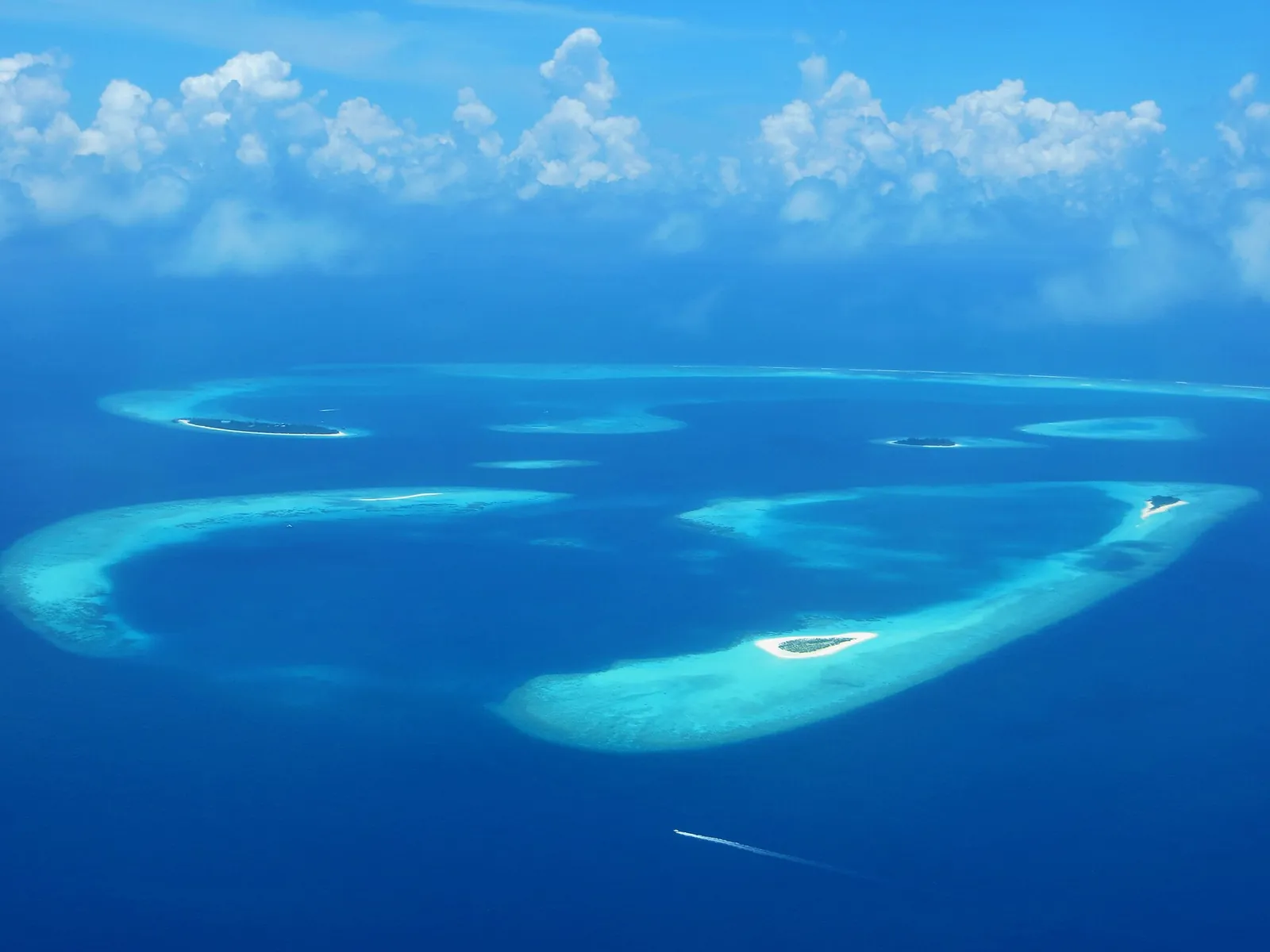
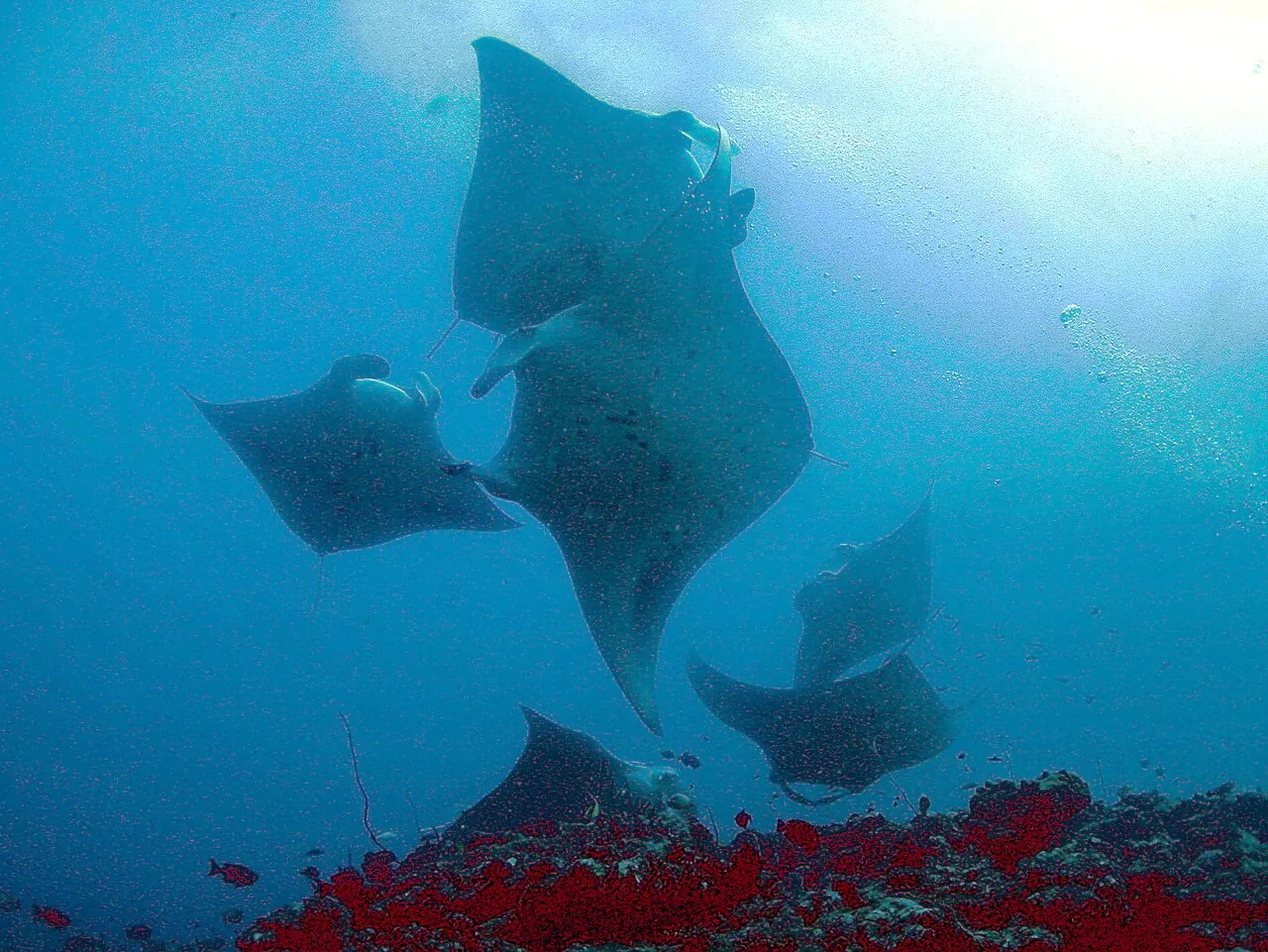
Hanifaru Bay, a small protected bay on the eastern edge of Baa Atoll, is famous for its mass gatherings of reef manta rays. In the south-west monsoon, strong lunar tides pull plankton-rich water into the shallow bay and mass feeding gatherings form inside it: more than 1,800 individual mantas have been identified here and up to 247 counted in a single feeding event, and whale sharks sometimes feed in the bay too.
The dive centres on Dharavandhoo, the inhabited island next to the bay, sell the season about May or June to November (gatherings recorded May to December), so May and December are a chance rather than the main season. Dharavandhoo Divers runs Hanifaru trips when sightings come in rather than to an advance schedule, so plan three nights in Baa. Dharavandhoo has its own domestic airport, served by Maldivian from Velana, and the dive centres sell stays and manta trips as packages with the return flight included; our snorkelling and diving guide prices them.
Visits are managed closely. Under the government's conservation action plan for the bay, Hanifaru is for snorkelling only, with at most 80 snorkellers in the water; the bay is closed on Fridays from 12:00 to 14:00, on Hajj Day and on the first day of Ramadan, and there is no entry from 18:00 to 06:00. For resort guests, the protected-areas portal lists MVR 310 (about USD 20) per person for visits from 1 May to 1 December 2026; no separate guesthouse rate is published.
The action plan also records the most tourist activity from July to September, with the largest number of boats in August, and the busiest days around flood and high tides and around full and new moons, when the mantas also feed most. Go in June or October-November for a quieter bay, accepting that big gatherings are less certain at the edges of the season.
Whale sharks in South Ari: any month
For whale sharks, go to the South Ari Marine Protected Area (SAMPA), where they can be seen throughout the year. Dhigurah, an inhabited island in South Ari, is a base: its guesthouses and dive centres run whale-shark snorkelling trips. Research has found no seasonal pattern in their numbers, and the same sharks return for years. Only about 16% of encounters in SAMPA are with sharks feeding at the surface: they are likely feeding at depth and use the surface waters to warm up.
To get there, the shared speedboat to Dhigurah, arranged by Bliss Dhigurah, leaves the airport at 11:00 and 16:00 (Fridays 10:00 and about 16:30) and takes about 2 hours in good weather, at USD 66 per person each way. It is for guests whose flights land before 15:00 or leave after 11:30.
Choose the boat with care. The UK reports fatal accidents involving boat propellers in SAMPA and at nearby whale-shark sites, and says rules requiring propeller guards are not yet fully enforced; take extra care in the water near boats, follow the crew's instructions and make sure life jackets are on board, especially on smaller excursion boats. Other governments may draw a wider line, so check your own government's advice too.
Ramadan in 2027
Ramadan follows the Islamic lunar calendar, so its dates change every year. Turkey's calculated religious calendar puts Ramadan's start on 8 February 2027 and Eid al-Fitr on 9 March; these are expected dates, pending the Maldivian announcement.
During Ramadan, eating, drinking and smoking in public between sunrise and sunset is forbidden outside resorts, also for non-Muslims, and cafés outside hotels close by day. The rule also covers vehicles and even chewing gum, and government offices work shorter hours. A resort stay is outside these rules; on a guesthouse island, plan daytime meals with your guesthouse.
The other public holidays, including Eid al-Adha and the national days, are dated in our festivals and events guide.
Crowds and prices by season
Arrivals follow the dry season. In 2025 the Maldives counted about 2,247,000 tourist arrivals; the busiest months were December (about 224,000), January (215,000) and February (214,000), and the quietest May (136,000), June (142,000) and September (150,000). In 2026 February was busier still, with about 248,000.
Prices follow the crowds, but each hotel sets its own seasons rather than one national tariff. Liquid Salt on Dharavandhoo sells its Hanifaru packages only for June to November, and over Christmas and New Year some hotels add compulsory gala dinners, Kaani on Maafushi at USD 80 per adult on 24 December and USD 100 on 31 December. Book Christmas, New Year and February furthest ahead; for room rates, see what a week costs.
Which month for which trip
- Beach weather and calm crossings: January to March; Ramadan 2027 falls in this window, when cafés outside hotels on Maafushi close by day.
- Hanifaru Bay mantas: about May or June to November; most boats July to September, quieter in June and October-November.
- Whale sharks: any month in South Ari.
- Surf: mid-February to November; best March to May and September to November.
- Fewest visitors: May, June and September, the quietest months of 2025.
- Ramadan 2027: expected from about 8 February until Eid al-Fitr on about 9 March; no eating, drinking or smoking in public by day outside resorts.
Practical questions
What is the best month to visit the Maldives?
February or March for calm water and sunshine: both fall in the north-east monsoon, which runs from January to March and averages 10 to 11 hours of sun a day. For Hanifaru Bay's mantas, go in the south-west monsoon instead.
Is November part of the dry season?
No. The Met Service counts November as part of the south-west monsoon, which normally lasts from mid-May to November; the dry north-east monsoon runs from January to March.
Does it rain all day in the wet season?
Usually not. The Met Service says rain normally comes as showers with sunny spells in between, and the months outside January to March still average 7 to 9 hours of sunshine a day.
How warm is the sea, and when is the surf season?
Visit Maldives gives an average water temperature of around 28°C. Surfers come from mid-February to November, with the best waves from March to May and from September to the end of November.
Which months are quietest?
May, June and September: in 2025 they had the fewest tourist arrivals of the year.
When can I see mantas at Hanifaru Bay?
About May or June to November, in the south-west monsoon; boats go out when sightings are reported, so stay on Dharavandhoo, next to the bay.
Can I see whale sharks all year?
Yes, in the South Ari Marine Protected Area, where the government says they can be seen throughout the year and research has found no seasonal pattern in their numbers. No single trip is certain to find one.
When is Ramadan in 2027, and does it affect a resort holiday?
Turkey's calculated calendar puts Ramadan's start on 8 February 2027 and Eid al-Fitr on 9 March; the Maldivian dates await a local announcement. A stay inside a resort is outside the daytime rules; days in Malé or on inhabited islands are not.
Keep planning your trip
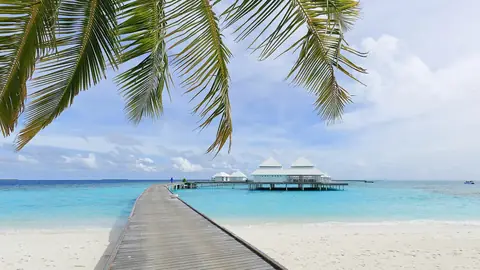
First trip to the Maldives
Resort or guesthouse island for a first Maldives trip: the rules on alcohol and dress, money, SIM cards, entry, safety and what a day costs at three levels.
Read the guide
Festivals and holidays in the Maldives
Which 2027 dates change a Maldives trip: Ramadan and the two Eids on the Islamic calendar, Independence Day on 26 July, Victory and Republic days in November.
Read the guide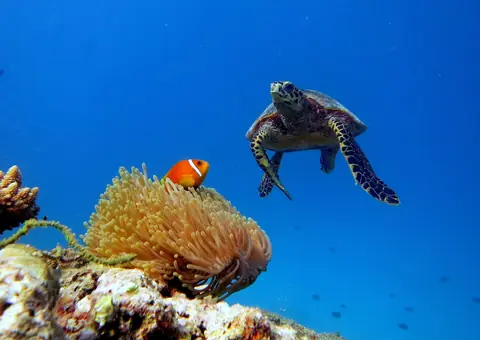
Snorkelling and diving in the Maldives
Mantas at Hanifaru Bay or whale sharks off Dhigurah: seasons, the rules in the water, dive centres and packages, boats and flights, and what three nights cost.
Read the guide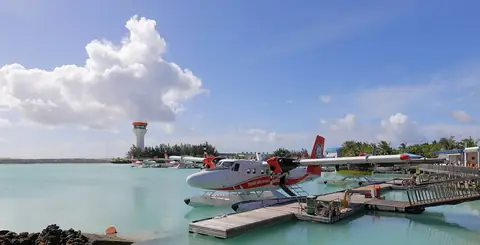
Getting around the Maldives
From Velana airport to Malé, Hulhumalé and the guesthouse islands: the MVR 15 ferry, shared speedboat fares and times, MTCC ferries, seaplanes and domestic flights.
Read the guide
Where to go in Asia in January
January is dry season across much of tropical Asia. Six trips with daily costs and the month's festivals, plus the rainy and frozen places to skip.
Read the guide
Where to go in Asia in March
March brings early cherry blossom, Holi and spring in the Himalaya. Six Asia trips with daily costs, the festivals to plan around, and the places to skip.
Read the guideSources and checks before you travel
(25)
- Maldives Meteorological Service (Met Service): climate of the Maldives ↗ — opens in a new tab
- Maldives Meteorological Service (Met Service): forecast ↗ — opens in a new tab
- Maldives Manta Conservation Programme: natural history of the Maldives ↗ — opens in a new tab
- Maldives Manta Conservation Programme: protected areas ↗ — opens in a new tab
- Environmental Protection Agency protected areas portal: Hanifaru ↗ — opens in a new tab
- Environmental Protection Agency protected areas portal: South Ari Marine Protected Area ↗ — opens in a new tab
- Maldives Whale Shark Research: research ↗ — opens in a new tab
- Dharavandhoo Divers: FAQ ↗ — opens in a new tab
- Trans Maldivian Airways: FAQ ↗ — opens in a new tab
- Maldives Airports Company (Velana): transport ↗ — opens in a new tab
- UK FCDO: Maldives safety and security ↗ — opens in a new tab
- German Federal Foreign Office: Maldives travel and safety advice (German) ↗ — opens in a new tab
- Presidency of Religious Affairs (Turkey): religious days of 2027 (Turkish) ↗ — opens in a new tab
- Visit Maldives: swimming with mantas ↗ — opens in a new tab
- Ministry of Tourism and Environment: Hanifaru Marine Protected Area Conservation Action Plan 2025-2030 (PDF on the protected-areas portal) ↗ — opens in a new tab
- Fari Dive Center Dhigurah: excursions ↗ — opens in a new tab
- Bliss Dhigurah ↗ — opens in a new tab
- Bliss Dhigurah: transport ↗ — opens in a new tab
- Kaani Hotels: transfers ↗ — opens in a new tab
- Maldives Monetary Authority: reference rate ↗ — opens in a new tab
- Visit Maldives: surfing in the Maldives ↗ — opens in a new tab
- Maldivian: destinations ↗ — opens in a new tab
- Liquid Salt Divers: Manta Madness package ↗ — opens in a new tab
- Kaani Hotels: booking terms ↗ — opens in a new tab
- Maldives Monetary Authority: Table 3.1, tourism indicators, 2020-2026 ↗ — opens in a new tab
Reference sources for the version dated 1 November 2026. Confirm opening times, access, transport and conditions for your travel dates.
Photo credits
(5)
Calm, clear water in a Kaafu Atoll lagoon
Photograph: goldpicasa — opens in a new tab · CC BY 3.0 — opens in a new tab
Changes: Resized and converted to WebP; displayed with responsive crops. · Original photograph and licence details ↗ — opens in a new tab
Southwest monsoon: Hulhumeedhoo in Addu Atoll after rain, June 2019
Photograph: RAAISn — opens in a new tab · CC BY-SA 4.0 — opens in a new tab
Changes: Resized and converted to WebP; displayed with responsive crops. · Original photograph and licence details ↗ — opens in a new tab
Reefs and islands of Baa Atoll from the air
Photograph: Frédéric Ducarme — opens in a new tab · CC BY-SA 4.0 — opens in a new tab
Changes: Resized and converted to WebP; displayed with responsive crops. · Original photograph and licence details ↗ — opens in a new tab
Reef manta rays in the Maldives
Photograph: TANAKA Juuyoh (%u7530%u4E2D%u5341%u6D0B) — opens in a new tab · CC BY 2.0 — opens in a new tab
Changes: Resized and converted to WebP; displayed with responsive crops. · Original photograph and licence details ↗ — opens in a new tab
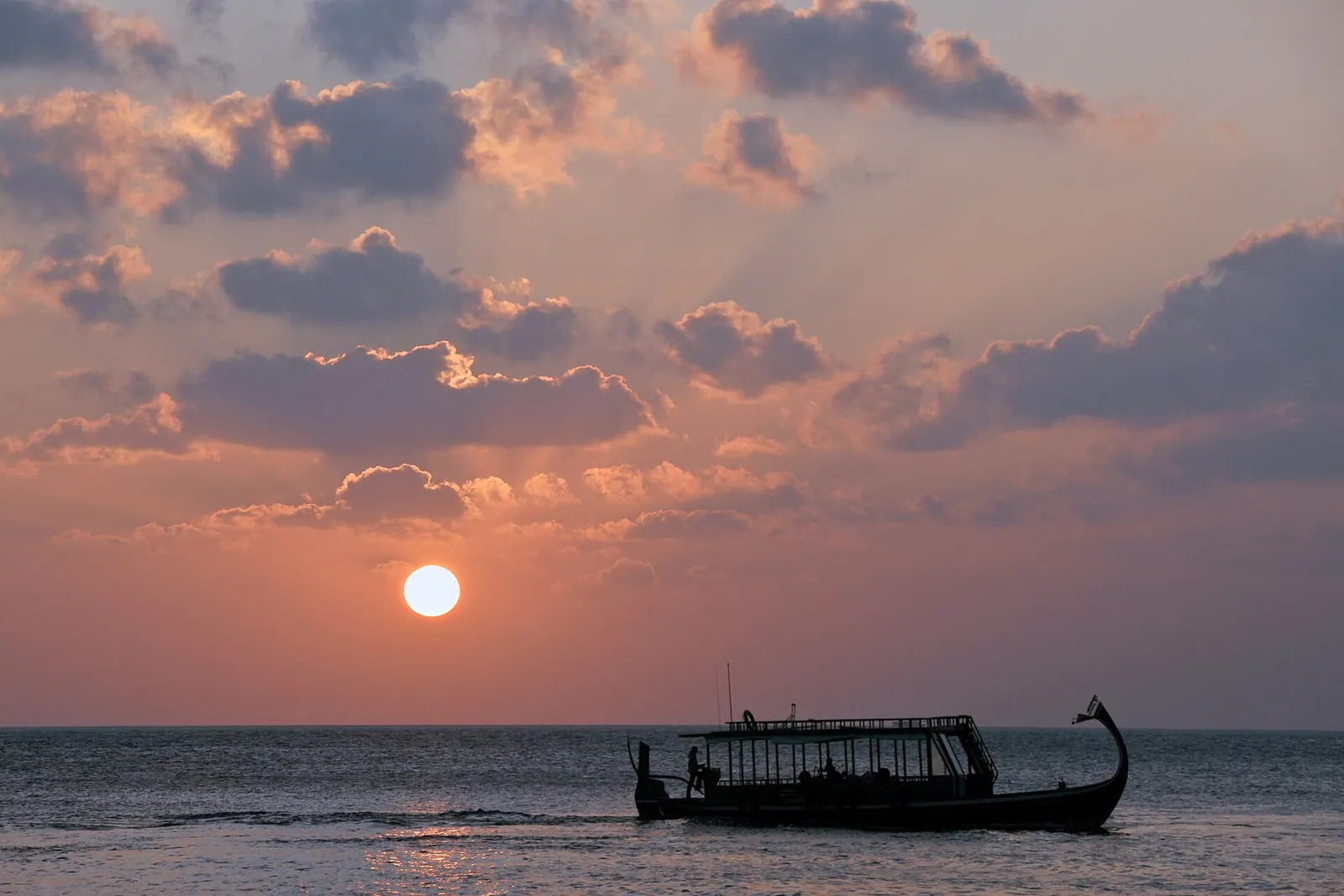
A dhoni at sunset in Kaafu Atoll
Photograph: Rainer Strehl — opens in a new tab · CC BY-SA 3.0 — opens in a new tab
Changes: Resized and converted to WebP; displayed with responsive crops. · Original photograph and licence details ↗ — opens in a new tab