Mumbai and Goa · Maharashtra
Mumbai travel guide: 3 nights for Elephanta, CSMT and Marine Drive
Mumbai began as seven islands, and the sea still frames the city. At the Gateway of India, launches leave across the harbour for Elephanta, where Shiva's three faces were carved into a basalt hill in about the 6th and 7th centuries. Behind the waterfront, Fort keeps the Gothic railway terminus and courts of the Victorian city, with Art Deco apartment blocks facing them across the Oval Maidan, and Marine Drive curves 3.6 km round Back Bay to the snack stalls of Girgaum Chowpatty. Three nights in Colaba or Fort give you one day for the island, one for Fort and the museums, and one for the sea front and Haji Ali before you take the coast train to Goa.
- Suggested time
- 3 nights (4 days)
- Where to stay
- Colaba or Fort, near the Gateway of India and Chhatrapati Shivaji Maharaj Terminus; Churchgate and Marine Drive for the sea front
- Season and timing
- Maharashtra Tourism recommends October to February, when the weather is pleasant and cool; June to September brings heavy monsoon rain, and March to May is hot and humid. In the monsoon the launch to Elephanta can be rough, and the island's steps are wet and slippery.
The short answer
Book three nights (four days) in Colaba or Fort, a walk from the Gateway of India, where the Elephanta launches leave. Book the room first, then keep Elephanta off a Monday, when the Archaeological Survey of India (ASI) closes the caves. Two key prices, checked on 17 October 2026: Elephanta costs foreign visitors INR 600 in cash or INR 550 online, and the Chhatrapati Shivaji Maharaj Vastu Sangrahalaya, the city's great museum, charges foreign adults INR 700 with the audio guide. The model stay below, with a double room in Colaba, the sights and one dinner, comes to INR 19,939 for two, before the launch fare, the airport transfer, other meals and local transport.
Where to sleep: Colaba, Fort or the Marine Drive end
Sleep in the south of the city, close to the harbour. Colaba, the tip of the peninsula, puts the Gateway of India and the Elephanta launches a short walk away, with Colaba Causeway's shops at the door. Bentley's Hotel, a family-friendly hotel in a 1920s colonial building in a side lane off the Causeway, lists its double room with bath from INR 5,250 a night with breakfast, plus 5% government tax; it is the room priced in this guide's budget.
Fort, just north, is the Victorian business district around Chhatrapati Shivaji Maharaj Terminus (CSMT), the Oval Maidan and the galleries of Kala Ghoda. It is the base for early trains, including the morning Vande Bharat to Goa.
Churchgate and Marine Drive, on the west side, face the sea across Back Bay, with the evening promenade at the door. The where-to-stay guide for India explains how foreign guests are registered at check-in.
The Gateway of India and the launch to Elephanta
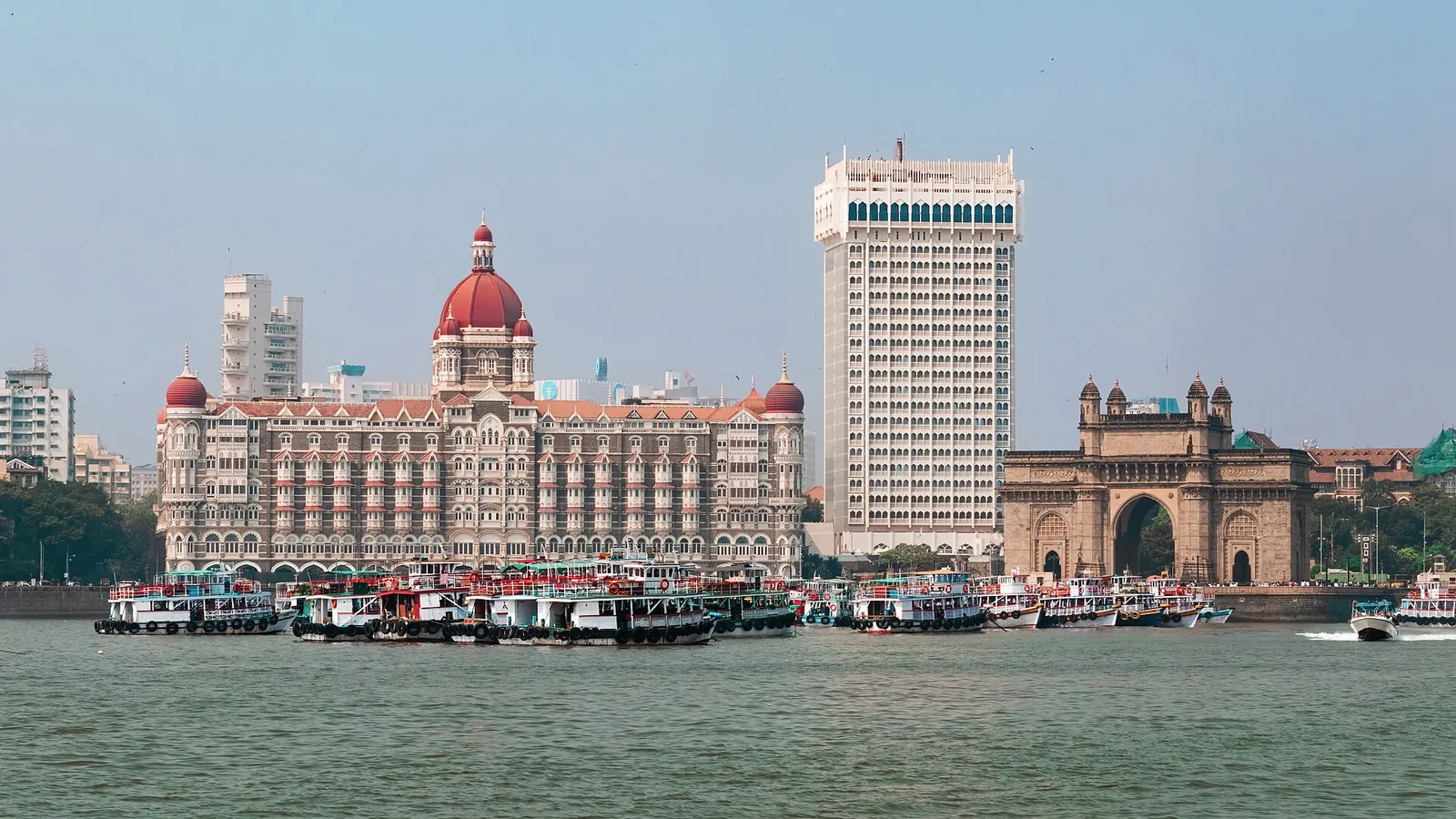
The Gateway of India is the yellow basalt arch on the Apollo Bandar waterfront, 26 m high, that the architect George Wittet designed to mark the visit of King George V and Queen Mary in 1911. Its foundations were laid that year, and the Viceroy, the Earl of Reading, unveiled it on 4 December 1924; the Ministry of Tourism's Incredible India page describes Hindu and Muslim motifs on the stone and a central dome 48 feet across. When colonial rule ended, the last British ship sailed from here. Come early in the morning, or after dark, when the arch is lit above the water.
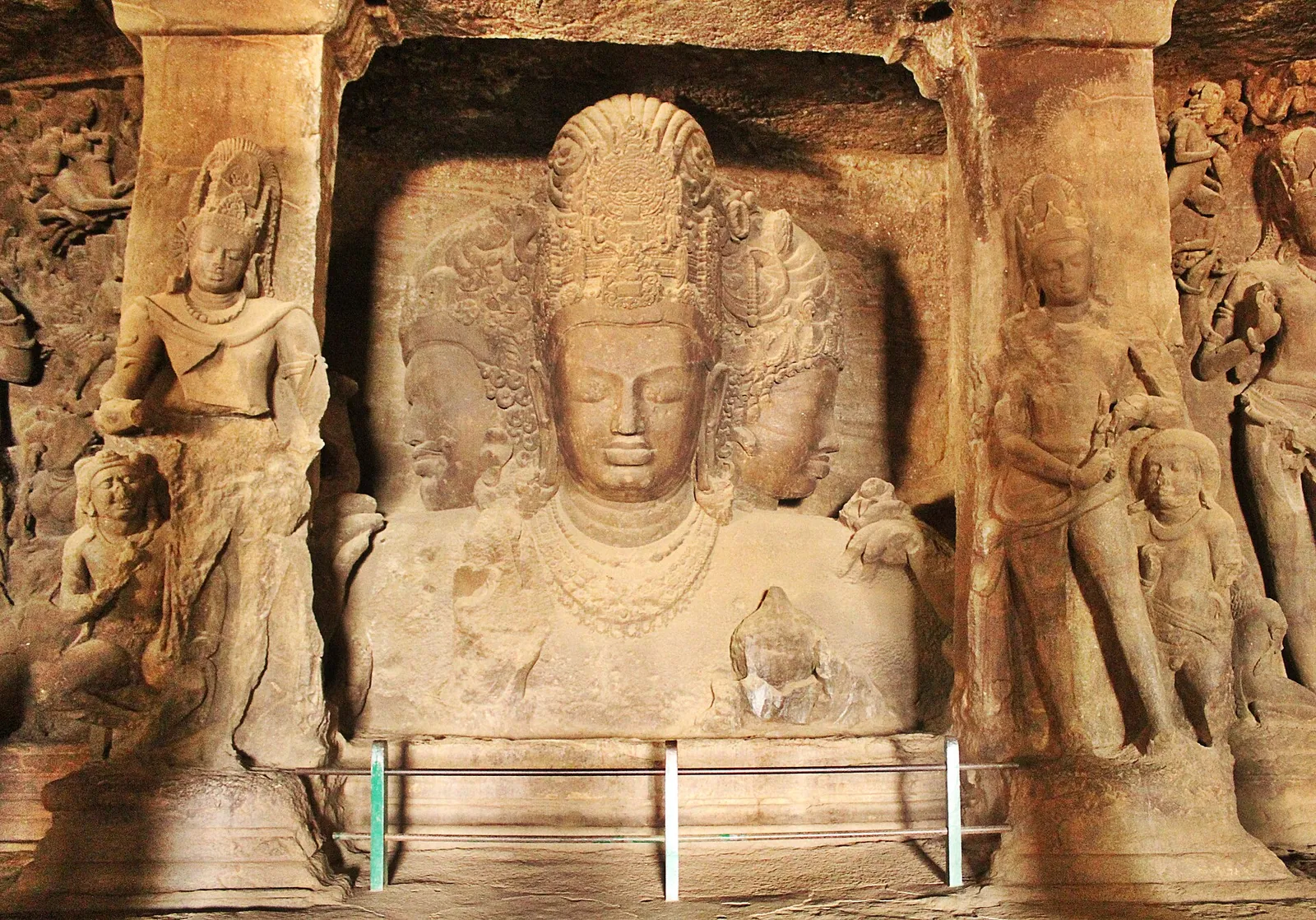
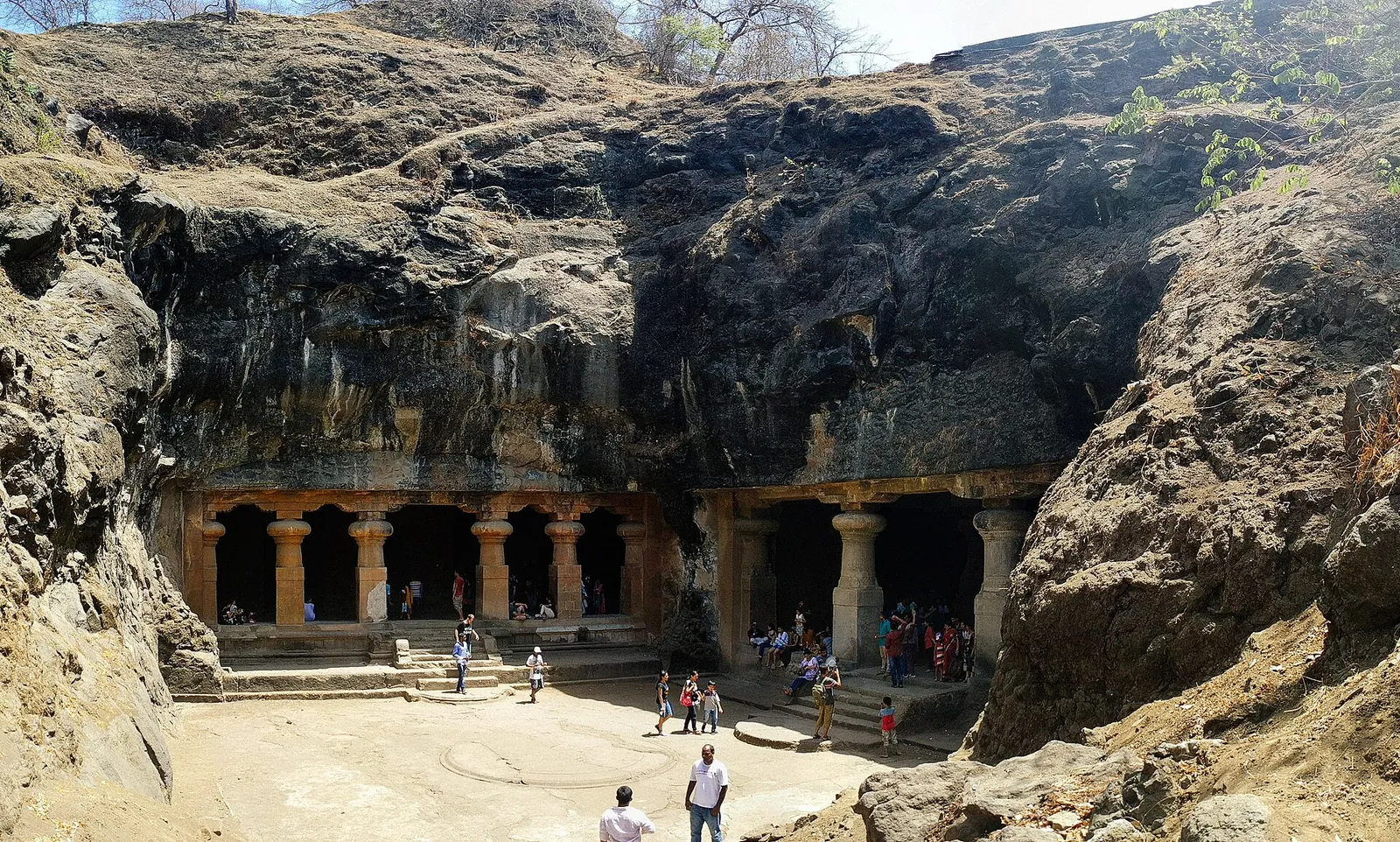
Elephanta Caves, a UNESCO World Heritage Site, lie on a wooded island that the ASI places about 11 km north-east of Apollo Bandar. Seven caves were cut into the hill in about the 6th and 7th centuries; Cave 1, the great hall of Shiva, has six rows of columns and, in its central recess, the Mahesamurti, a colossal bust of Shiva's three faces: fierce Aghora, calm Tatpurusha and gentle Vamadeva. Panels around it show Ardhanarishvara, the half-male, half-female form, Shiva and Parvati playing chausar, a board game, Nataraja's cosmic dance, and Ravana shaking Mount Kailasa. The island takes its name from a colossal stone elephant the Portuguese found there; it now stands in Jijamata Garden in Mumbai.
ASI lists the caves as open from 9 am to 5 pm and closed on Monday, at INR 600 in cash or INR 550 online for foreign visitors, INR 40 (INR 35 online) for SAARC and BIMSTEC visitors, and free for children below 15. Maharashtra Tourism says the launch from the Gateway of India takes about an hour; on the island you climb a flight of steps to the caves, or take the small toy train for part of the way. Maharashtra Tourism names no launch operator and publishes no launch fare or timetable, so ask at the Gateway of India for the operator, the fare and the times, and for the island's landing charge and the toy-train fare; carry cash for the ticket and the charges. Tourist boats and other small craft rarely carry life-saving equipment. Maharashtra Tourism warns that the crossing gets rough in the monsoon, from June to September, and that the steps are wet and slippery then. Take an early launch and allow most of the day.
Fort and Kala Ghoda: CSMT, the Oval Maidan and the museums
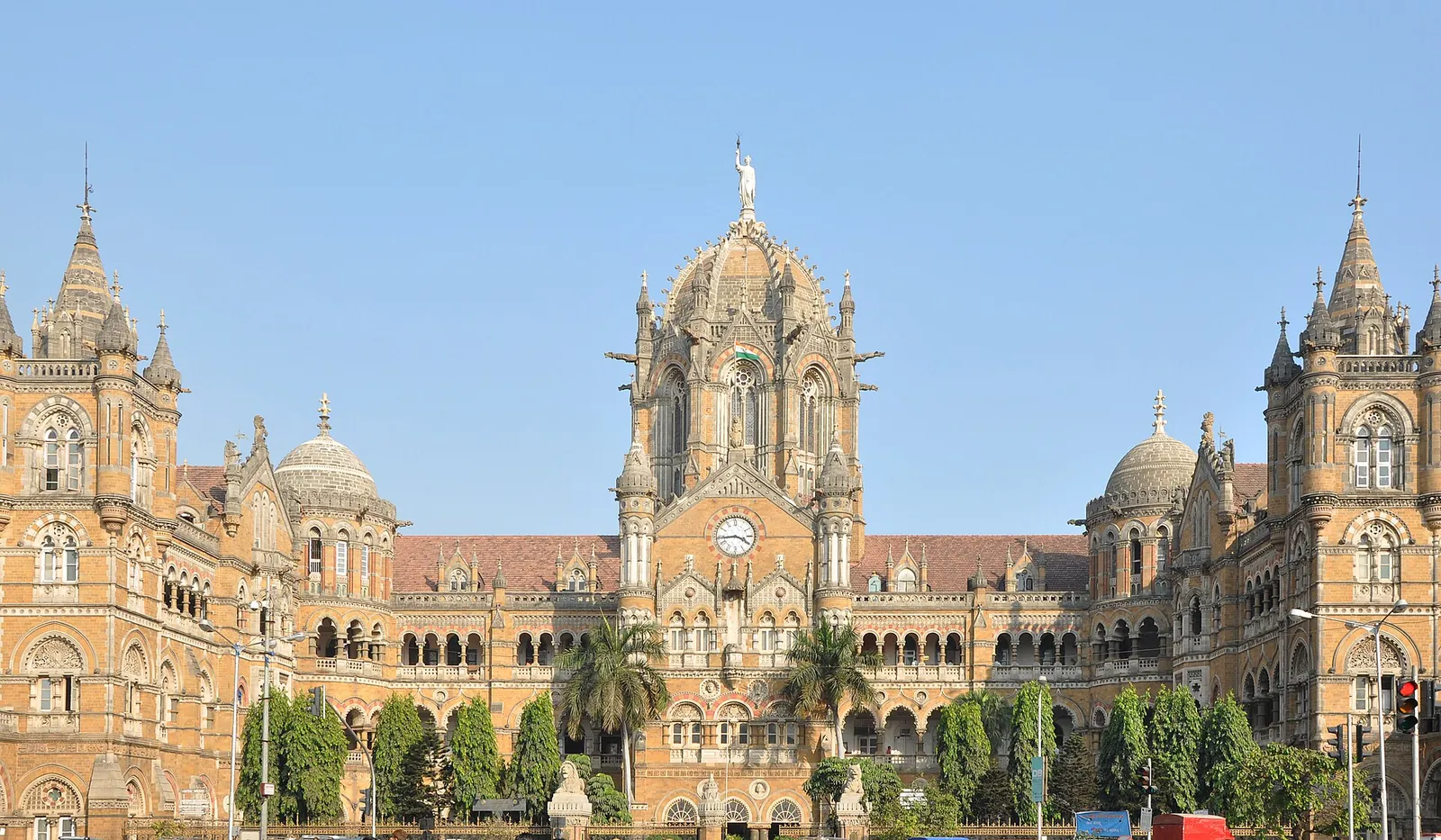
Chhatrapati Shivaji Maharaj Terminus (CSMT), a UNESCO World Heritage Site, is still the working headquarters of the city's Central Railway. Frederick William Stevens designed it, and it was built in 1887 to mark Queen Victoria's Golden Jubilee: a C-shaped building of sandstone and limestone with two wings around a central dome topped by a statue of a woman holding a torch, a lion and a tiger at the gate, and stained glass, spires and carved animals on the pillars. The Ministry of Tourism describes it as a blend of Victorian Italianate Gothic Revival and Indian palace architecture. See it from the street in the morning, then walk inside to the concourse among the commuters.
The Victorian Gothic and Art Deco Ensemble, inscribed by UNESCO in 2018, is the city's best walk. On the east side of the Oval Maidan, once the Esplanade, stand the Bombay High Court, the University of Mumbai's Fort campus with the Rajabai Clock Tower, and the City Civil and Sessions Court; across the grass, stand the 20th-century Art Deco apartment blocks and the Eros Cinema.
The Chhatrapati Shivaji Maharaj Vastu Sangrahalaya (CSMVS, formerly the Prince of Wales Museum), also by George Wittet, was finished in 1914 and opened in 1922, with a dome modelled on Bijapur's Gol Gumbaz. It holds about 70,000 objects: sculpture, Indus Valley finds, Indian miniature paintings, decorative arts, Chinese and Japanese porcelain and ivories, and a natural history section. The museum lists foreign adults at INR 700 including the audio guide and foreign children at INR 200, hours from 10:15 to 18:00 every day with the ticket counter closing at 17:45, and closures on 26 January, 1 May, 15 August and 2 October. Its visit page also notes that a few galleries are closed for work.
Around it lies Kala Ghoda, the arts district, with the Jehangir Art Gallery, whose four halls host over 300 shows a year, the National Gallery of Modern Art and streets of murals; the week-long Kala Ghoda Arts Festival is usually held in February. Near CSMT, the historic Crawford Market sells fresh food, spices and household goods. The Dr. Bhau Daji Lad Mumbai City Museum, founded in 1872 as the Victoria and Albert Museum and the city's oldest, tells Mumbai's story through clay models, dioramas, maps and photographs; Incredible India lists it as open from 10:00 to 17:30 and closed on Mondays, but the museum's own website could not be read, so check its hours before you go.
Marine Drive, Chowpatty and Haji Ali
Marine Drive is the 3.6 km C-shaped promenade around Back Bay, built on reclaimed land and lined with palms and Art Deco buildings. Concrete tetrapods break the waves on the shore, joggers take it over in the morning, and after dark its curve of street lights gives it the name the Queen's Necklace. Walk it at sunset from Nariman Point north to Girgaum Chowpatty, the city beach at the far end, where Incredible India points to the bhel puri, pani puri and pav bhaji stalls. Above it, the Hanging Gardens on Malabar Hill look out over the Arabian Sea.
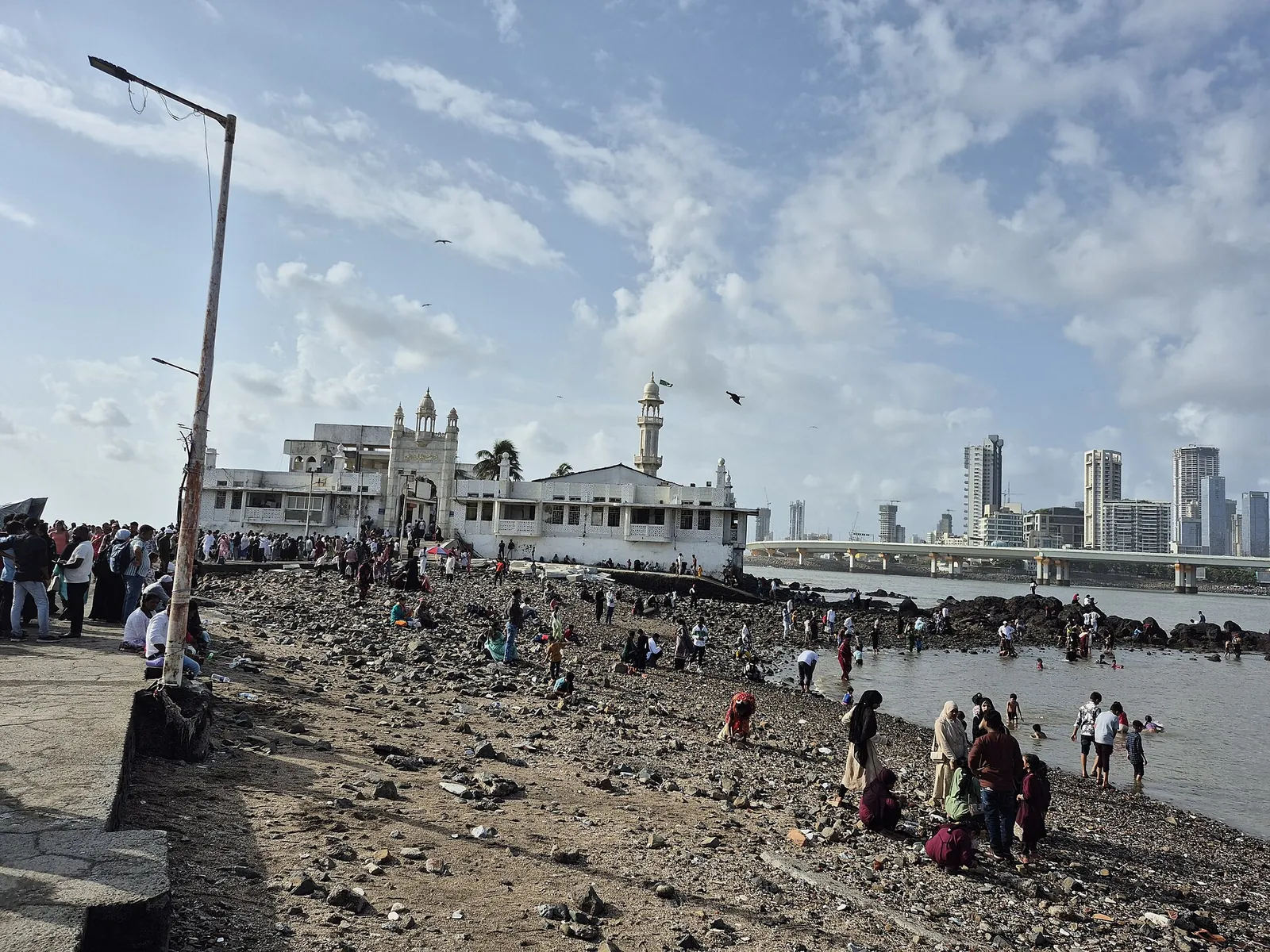
Haji Ali Dargah, the tomb of the saint Pir Haji Ali Shah Bukhari, stands on rocks in the sea about 457 m (500 yards) off Lala Lajpatrai Marg, its white domes and minarets reached along a 640 m (700-yard) pathway built in 1944. The Haji Ali Dargah Trust says people of every religion visit, about 10,000 to 15,000 a day and 20,000 to 30,000 on Thursdays, Fridays and Sundays; ziyarat timings are from 5:30 am to 10:00 pm. The pathway has no railings, and in July and August the trust closes its gates for a few hours when high seas wash over it.
Mani Bhavan, a modest two-storey house on Laburnum Road in Gamdevi, was Gandhi's base in Bombay from 1917 to 1934, and he was arrested on its terrace in 1932. It is now a memorial museum: on the second floor you see the room where he lived and worked, with an exhibition of his life in miniature figures beside it, and the ground floor holds a library of over 40,000 books on Gandhi. The museum is open from 09:30 to 18:00 on all days, at INR 20 per person.
On Bhulabhai Desai Road, the Mahalaxmi Temple, built in 1831 by the merchant Dhakji Dadaji, is dedicated to the goddess Mahalakshmi. Incredible India's four-day Mumbai itinerary lists the temple and Dhobi Ghat, where large-scale laundromats can be explored, in the same day. North in Prabhadevi, the Siddhivinayak Temple to Ganesha dates from 1801 and was expanded in 1993. The eight-lane Bandra-Worli Sea Link, opened in 2009, carries the road across the open sea to the western suburbs.
Further out: Kanheri, Juhu and a word on Dharavi
The Kanheri Caves, inside Sanjay Gandhi National Park in the northern suburb of Borivali, are a Buddhist monastery cut into the rock: Maharashtra Tourism counts 109 caves, used by monks between the 1st century BCE and the 10th century CE, with stone beds in the viharas, prayer halls with tall standing Buddhas, water cisterns and inscriptions in Brahmi. The caves are protected by the ASI. Incredible India lists them as open from 07:30 to 17:00 and closed on Mondays. From Borivali station, an auto-rickshaw or a short taxi ride takes you to the park gate, and Maharashtra Tourism gives the trip from the station to the caves as about 15-20 minutes. The national park and cave entry fees are not published officially; carry cash for both, and go early on a weekday, with water, for a half-day.
Bandra, north across the Sea Link, is the western suburbs' evening quarter. At Land's End, the Portuguese built Bandra Fort in 1640 as a watchtower over the harbour; from its terraces, 24 m above the water, a palm-lined walkway looks over the Arabian Sea, and it is open from 06:00 to 18:30, a good place for the late afternoon.
Juhu Beach, in the western suburbs, runs about 6 km up to Versova; it is the place for an evening walk, kites, snack stalls and, during Ganesh Chaturthi, the immersion of large Ganesha idols in the sea; the best-time guide explains how the festival dates move.
Dharavi, between the old city and the suburbs, is a crowded neighbourhood of homes and small workshops, not a sight; if you pass through, treat it as you would any residential district and do not photograph people without asking.
Arriving and getting around: two airports, the Aqua Line and local trains
Two airports in Mumbai. Mumbai is served by Chhatrapati Shivaji Maharaj International Airport (BOM) and Navi Mumbai International Airport (NMI), inaugurated in October 2025; Akasa Air announced in November 2025 that it would fly from there. The UK Foreign Office warns that the two are a considerable distance apart, so check which one your ticket names, and allow time to move from the international to the domestic terminal. The Airports Authority's aeronautical publication places BOM 14 km from Mumbai Central railway station, and Colaba lies further south at the tip of the peninsula, so the ride to a Colaba hotel crosses the length of the city: keep the first evening free.
App-based taxis such as Uber and Ola are available in all airport terminal buildings, the UK Foreign Office says, and prepaid taxis and hotel transfers are offered too; avoid hailing a taxi in the street, especially at night. The app shows its fare before you book.
Metro Line 3 (the Aqua Line), the city's first fully underground metro, runs 33.5 km from Cuffe Parade to Aarey JVLR with 27 stations, serving Fort, Kala Ghoda, Marine Drive and Nariman Point in the south; the Press Information Bureau describes it as designed to connect with the railways and the airports. The Mumbai One app sells a single ticket across Metro Line 3, the other metro lines and monorail, the Mumbai Suburban Railway and BEST buses, and shows the stations near you.
The Mumbai Suburban Railway, the local trains from CSMT and Churchgate, reaches Dadar and Borivali, the station for Kanheri; avoid the morning and evening rush if you carry luggage.
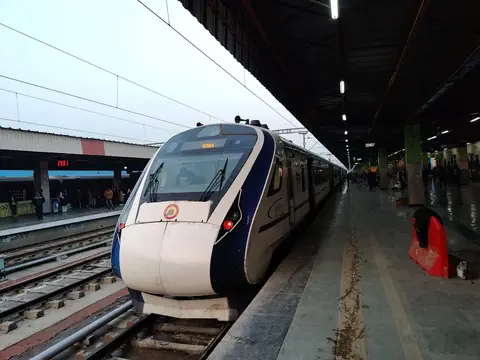
On to Goa. The Konkan Railway is the scenic way to Goa. The Chhatrapati Shivaji Maharaj Terminus-Madgaon Vande Bharat Express (22229/22230) stops at Dadar, Thane, Panvel, Khed, Ratnagiri, Kankavali and Thivim. Outside the monsoon it is timetabled to leave CSMT at 05:25 and reach Madgaon at 13:10, every day except Friday, and to return from Madgaon at 14:40, reaching CSMT at 22:25; these are the timings published at its launch. Konkan Railway runs a monsoon timetable with sectional speed restrictions along the route; its 2026 monsoon timetable runs from 15 June to 20 October; after that date the non-monsoon timings above should apply, but check IRCTC for your date. The transport guide explains how foreign visitors book on IRCTC under the foreign tourist quota, and the Goa guide picks up from Madgaon and Thivim.
A three-night plan
This plan keeps Elephanta off a Monday, puts the outdoor sights in the morning and at dusk, and ends near CSMT for an early train south. The Mumbai, Goa and Hampi itinerary continues the trip down the coast.
- Day 1: arrive and check in in Colaba. In the late afternoon walk to the Gateway of India, along Colaba Causeway, and on to Marine Drive for the sunset and a pav bhaji at Girgaum Chowpatty or Swati Snacks.
- Day 2 (not a Monday): an early launch from the Gateway to Elephanta; Cave 1 and the Mahesamurti before the midday heat, then back across the harbour in the afternoon and dinner in Colaba.
- Day 3: CSMT in the morning, the Oval Maidan and the High Court, then the CSMVS and the galleries of Kala Ghoda; Crawford Market for a late vada pav. In the late afternoon take a taxi to Mani Bhavan in Gamdevi (open until 18:00), then on to Haji Ali, outside the July and August high tides, the Mahalaxmi Temple and Dhobi Ghat.
- Day 4: the Vande Bharat to Goa from CSMT, or, if the day is not a Monday, a morning at the Kanheri Caves: the suburban train to Borivali, with a stop at Dadar for misal pav, then an auto-rickshaw or taxi to the park gate, before a later flight.
Make time for the local food
What to eat and where to look
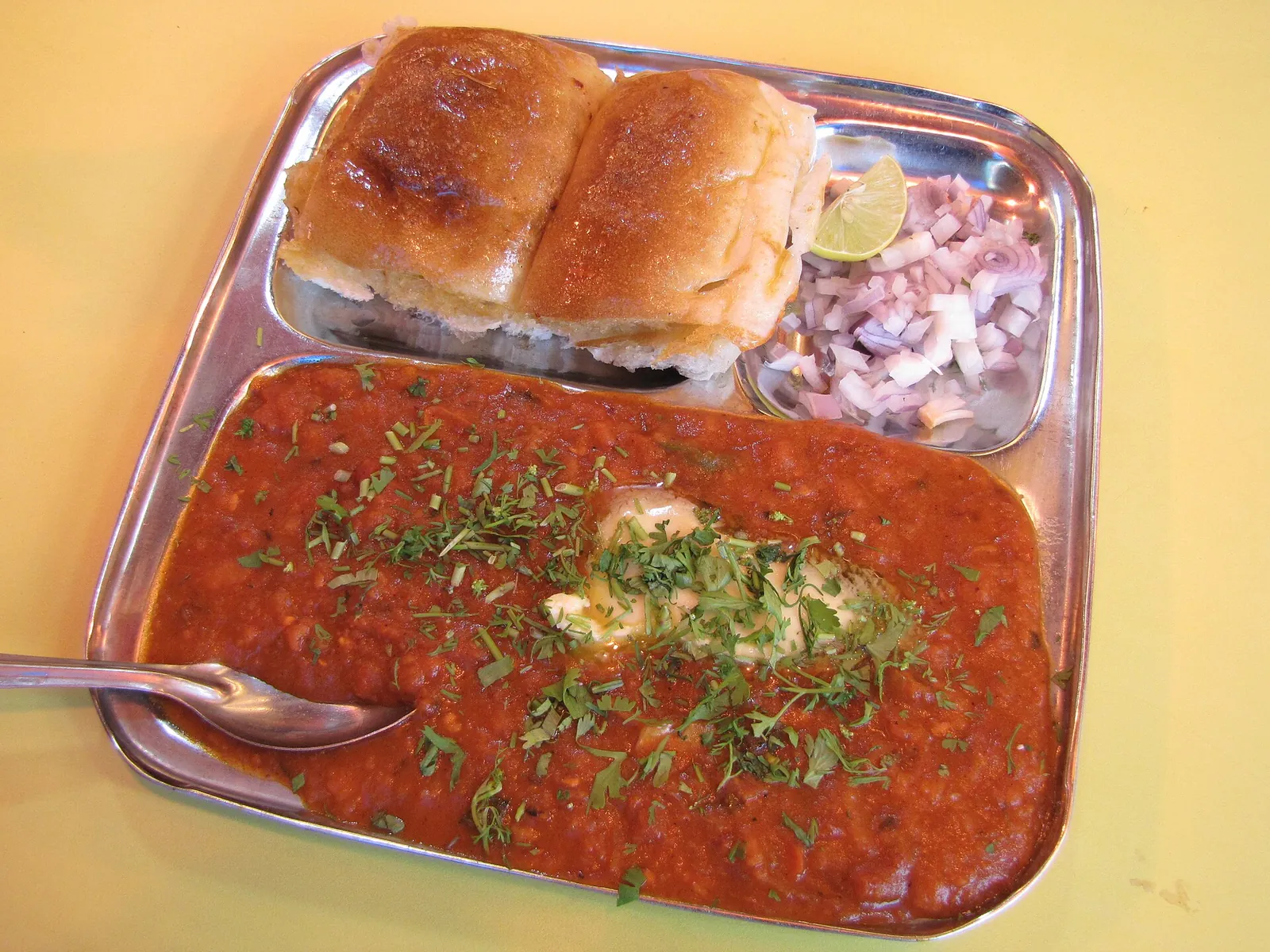
Pav bhaji
A spiced mash of vegetables cooked on a griddle and served with soft bread rolls fried in butter, Mumbai's best-loved street supper. Swati Snacks, a vegetarian restaurant that opened in Tardeo in 1963, lists it at INR 410.
- Where to look
- Swati Snacks, Tardeo or Nariman Point (11:45-22:30, last order 22:15, the restaurant lists); GST of 5% is added and an 8% service charge is optional.
- Fit it into your day
- Dinner on the day you arrive, after the Marine Drive walk.
Bhel puri and sev puri
Puffed rice tossed with sev, peanuts, fresh vegetables and chutneys, and crisp flat puris loaded with potato and sev: the beach snacks of Mumbai.
- Where to look
- The stalls at Girgaum Chowpatty, at the north end of Marine Drive, which Incredible India names for them.
- Fit it into your day
- A snack at sunset on the sea front.
Vada pav
A spiced potato fritter in a soft bun with chutneys and a fried green chilli, the city's everyday fast food.
- Where to look
- The street-food stalls around Crawford Market, north of CSMT; no official page names a single stall, so pick a busy one where the vadas are fried to order.
- Fit it into your day
- A late-afternoon bite on the Fort day.
Bun maska and Irani chai
A soft bun split and spread thickly with butter, eaten with sweet, milky tea. Jimmy Boy, a Parsi restaurant in Fort run by the same Irani family since 1925, counts brun maska and Irani chai among the Parsi staples it serves, and its breakfast menu lists bun maska at INR 65 and tea at INR 50.
- Where to look
- Jimmy Boy, Vikas Building, 11 Bank Street, off Horniman Circle, Fort; its menu gives tea timings of 08:00 to 11:00 and 16:00 to 19:00.
- Fit it into your day
- Breakfast on day 3, before CSMT.
Koli seafood
Fresh fish cooked in the traditional style of the Koli fisherfolk, Mumbai's original fishing community, in the koliwada (fishing village) of Khar Danda near Bandra.
- Where to look
- Khar Danda, near Bandra, which Maharashtra Tourism lists for its Koli seafood; no official page names a restaurant there, so ask your hotel which one it trusts.
- Fit it into your day
- Dinner on a free evening, after the late afternoon at Bandra Fort.
Misal pav
A fiery curry of sprouted lentils topped with crunchy farsan, onion and coriander, eaten with pav and a squeeze of lemon; a Maharashtrian breakfast.
- Where to look
- The Maharashtrian restaurants of Dadar, which Incredible India names for misal pav and thalipeeth; Dadar is a stop on the suburban line north to Borivali.
- Fit it into your day
- Breakfast at Dadar on the Kanheri morning of day 4.
Mumbai's street food is fried and often hot with chilli; eat where the turnover is high and food is cooked in front of you, and say so if you avoid nuts, dairy or gluten.
A priced three-night stay for two
This model follows the plan above for two adults sharing a room, with prices checked on 17 October 2026.
- Room, Bentley's Hotel, Colaba, double room with bath, 3 nights from INR 5,250 a night with breakfast (INR 15,750), plus the 5% government tax the hotel adds: INR 16,538.
- Sights, for two foreign adults: Elephanta Caves bought online, INR 1,100 (INR 550 each), and the CSMVS with audio guide, INR 1,400 (INR 700 each); the Gateway of India, CSMT from the outside, the Oval Maidan, Marine Drive and Haji Ali are free: INR 2,500.
- Mani Bhavan, for two: INR 40 (INR 20 each).
- Dinner on day 1, Swati Snacks: two pav bhaji at INR 410 each (INR 820) plus 5% GST, without the optional service charge: INR 861.
- Total: INR 19,939 for two.
- Not included: the Elephanta launch fare and the airport transfers, whose fares are not published officially; breakfast is in the room rate, but the other lunches, dinners and snacks are extra; metro, suburban train and taxi fares; the Kanheri and national park entry fees; the train to Goa.
Practical questions
How many nights do I need in Mumbai?
Three nights: one day for Elephanta, one for CSMT, Fort, Kala Ghoda and the CSMVS, and one for Marine Drive, Chowpatty and Haji Ali. With two nights, keep Elephanta and Fort, and walk Marine Drive on the evening you arrive.
Are the Elephanta Caves open on Mondays?
No. ASI lists Elephanta as closed on Monday and open from 9 am to 5 pm on the other days, at INR 600 in cash or INR 550 online for foreign visitors and free for children below 15.
How do I get to Elephanta?
Take a launch from the Gateway of India; Maharashtra Tourism gives the crossing as about an hour. The cave ticket is ASI's (INR 550 online), the launch fare is paid separately, and a flight of steps leads up to the caves. Allow most of a day.
Can I visit Haji Ali Dargah if I am not Muslim?
Yes. The Haji Ali Dargah Trust says people of all religions visit; ziyarat timings are from 5:30 am to 10:00 pm. In July and August the gates on the pathway are closed for a few hours when the sea is rough.
Which Mumbai airport will I land at?
Mumbai has two: Chhatrapati Shivaji Maharaj International Airport (BOM) and Navi Mumbai International Airport (NMI), inaugurated in October 2025. Check your ticket, as the two are a considerable distance apart. App taxis wait in every terminal building.
How do I get from Mumbai to Goa?
By the Konkan Railway: outside the monsoon, the Vande Bharat Express is timetabled to leave CSMT at 05:25 and reach Madgaon at 13:10, every day except Friday; these are the timings published at its launch. The Mumbai, Goa and Hampi itinerary gives the full route.
Sources and checks before you travel
Reference sources for the version dated 17 October 2026. Confirm opening times, access, transport and conditions for your travel dates.
- Archaeological Survey of India: Elephanta Caves ↗ — opens in a new tab
- Maharashtra Tourism: Elephanta Caves ↗ — opens in a new tab
- Ministry of Tourism (Incredible India): The Gateway of India ↗ — opens in a new tab
- Maharashtra Tourism: Mumbai City district ↗ — opens in a new tab
- Ministry of Tourism (Incredible India): Chhatrapati Shivaji Maharaj Terminus ↗ — opens in a new tab
- Ministry of Tourism (Incredible India): The Victorian and Art Deco Ensemble of Mumbai ↗ — opens in a new tab
- Ministry of Tourism (Incredible India): Elephanta Caves ↗ — opens in a new tab
- Ministry of Tourism (Incredible India): Mumbai ↗ — opens in a new tab
- Ministry of Tourism (Incredible India): Marine Drive ↗ — opens in a new tab
- Ministry of Tourism (Incredible India): Mumbai's Culinary Tapestry ↗ — opens in a new tab
- Ministry of Tourism (Incredible India): A Culinary Journey Through Mumbai's Local Delights ↗ — opens in a new tab
- Ministry of Tourism (Incredible India): Dr. Bhau Daji Lad Museum ↗ — opens in a new tab
- Ministry of Tourism (Incredible India): Kanheri Caves ↗ — opens in a new tab
- Maharashtra Tourism: Kanheri Caves ↗ — opens in a new tab
- Ministry of Tourism (Incredible India): Juhu Beach ↗ — opens in a new tab
- Chhatrapati Shivaji Maharaj Vastu Sangrahalaya: Visit us ↗ — opens in a new tab
- Chhatrapati Shivaji Maharaj Vastu Sangrahalaya: History ↗ — opens in a new tab
- Haji Ali Dargah Trust: home ↗ — opens in a new tab
- Haji Ali Dargah Trust: pathway ↗ — opens in a new tab
- Press Information Bureau (PIB): Navi Mumbai International Airport and Metro Line 3, 8 October 2025 ↗ — opens in a new tab
- UK Foreign Office (FCDO): India safety and security ↗ — opens in a new tab
- PIB Goa: Madgaon-Mumbai Vande Bharat flagged off, 27 June 2023 ↗ — opens in a new tab
- Bentley's Hotel: home and tariff ↗ — opens in a new tab
- Swati Snacks: Mumbai menu ↗ — opens in a new tab
- Swati Snacks: Tardeo ↗ — opens in a new tab
- Airports Authority of India: eAIP, AD 2.1 Mumbai (VABB) ↗ — opens in a new tab
- Incredible India: Bandra Fort ↗ — opens in a new tab
- Incredible India: Mani Bhavan ↗ — opens in a new tab
- Mani Bhavan Gandhi Sangrahalaya: reach us ↗ — opens in a new tab
- Maharashtra Tourism: Sanjay Gandhi National Park ↗ — opens in a new tab
- Konkan Railway: Konkan Railway gears up for monsoon 2026, 12 June 2026 ↗ — opens in a new tab
- Incredible India: four days in Mumbai (trip listing) ↗ — opens in a new tab
- Jimmy Boy: restaurant home page (Fort) ↗ — opens in a new tab
- Jimmy Boy: Fort breakfast menu (PDF) ↗ — opens in a new tab
- Akasa Air: Navi Mumbai operations press release, 14 November 2025 ↗ — opens in a new tab
- Maharashtra Tourism: Mumbai Suburban ↗ — opens in a new tab
Does this experience fit your route?
Book a room in Colaba or Fort first, keep Elephanta off a Monday, and add a guided heritage walk if you want Fort's buildings explained.
Check dates and details on Viator ↗ — opens in a new tabAffiliate link · Book with ViatorPhoto credits
Chhatrapati Shivaji Maharaj Terminus (CSMT), the Gothic railway terminus of 1887 and a UNESCO World Heritage Site
Photograph: Joe Ravi — opens in a new tab · CC BY-SA 3.0 — opens in a new tab
Changes: Resized and converted to WebP; displayed with responsive crops. · Original photograph and licence details ↗ — opens in a new tab
The Gateway of India on the Apollo Bandar waterfront, seen from the harbour where the Elephanta launches leave
Photograph: iMahesh — opens in a new tab · CC BY-SA 4.0 — opens in a new tab
Changes: Resized and converted to WebP; displayed with responsive crops. · Original photograph and licence details ↗ — opens in a new tab
The Mahesamurti, the colossal three-faced bust of Shiva in Cave 1 of the Elephanta Caves
Photograph: Ronakshah1990 — opens in a new tab · CC BY-SA 4.0 — opens in a new tab
Changes: Resized and converted to WebP; displayed with responsive crops. · Original photograph and licence details ↗ — opens in a new tab
The pillared entrance of a rock-cut cave on Elephanta Island
Photograph: Ashwin Kumar from Bangalore, India — opens in a new tab · CC BY-SA 2.0 — opens in a new tab
Changes: Resized and converted to WebP; displayed with responsive crops. · Original photograph and licence details ↗ — opens in a new tab
Haji Ali Dargah on its rocks in the sea, reached along a pathway from Lala Lajpatrai Marg
Photograph: Suraj Digrase — opens in a new tab · CC0 — opens in a new tab
Changes: Resized and converted to WebP; displayed with responsive crops. · Original photograph and licence details ↗ — opens in a new tab
Pav bhaji, the spiced vegetable mash eaten with buttered bread rolls, Mumbai's favourite street supper
Photograph: SwingingUvula — opens in a new tab · CC BY-SA 4.0 — opens in a new tab
Changes: Resized and converted to WebP; displayed with responsive crops. · Original photograph and licence details ↗ — opens in a new tab