Rajasthan · Rajasthan
Jodhpur travel guide: two nights below Mehrangarh Fort
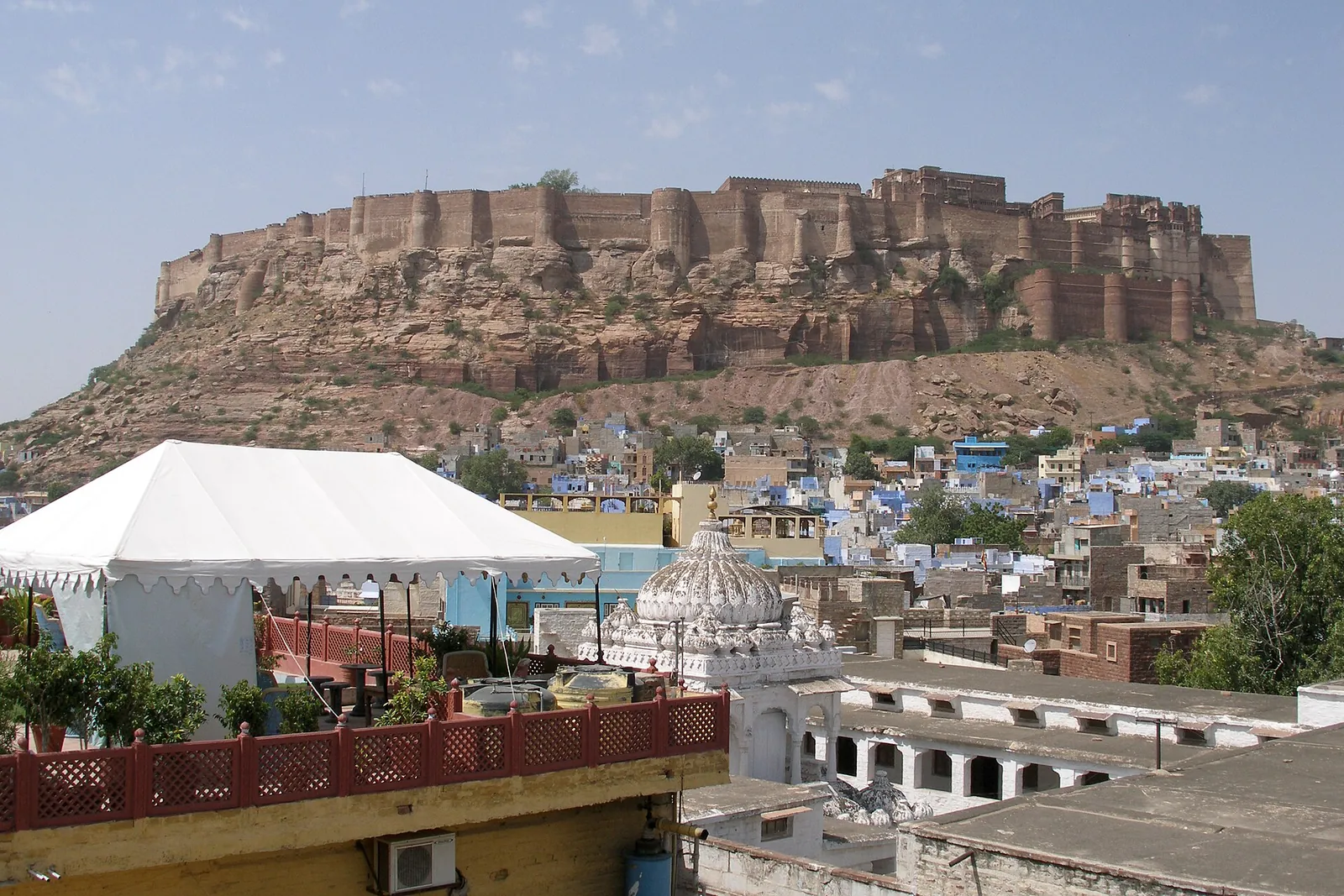
Jodhpur is the city Rao Jodha founded in 1459 below a sheer rock on the edge of the Thar Desert, and the fort he began on top of it, Mehrangarh, still decides the shape of every day you spend here. Its walls rise straight out of the cliff above a tangle of blue-washed lanes, the clock tower market hums at its foot, and across the city an Art Deco palace finished in the 1940s faces it from another hill. Two nights give you one unhurried day inside the fort and its gardens and another for the old town, Umaid Bhawan and, if you like, the old Marwar capital at Mandore.
- Suggested time
- 2 nights (3 days)
- Where to stay
- The old city around the clock tower, Sardar Market and Gulab Sagar, below Mehrangarh Fort; Ratanada and the Circuit House Road area near Umaid Bhawan for larger hotels with gardens
- Season and timing
- Incredible India's climate table for Jodhpur gives daily temperatures of 5.0-30.2 °C in January and 22.4-45.0 °C in May, so October to March is the comfortable time for long days on the ramparts. Jodhpur RIFF, the folk and roots music festival in and around Mehrangarh, is timed to the Sharad Purnima full moon, so its dates move each year; the festival's website gives the current dates, so book rooms early for the festival nights. The World Sacred Spirit Festival is also held at the fort; dates change each year, and Mehrangarh Museum Trust announces them.
The short answer
Book two nights in the old city near the clock tower and Gulab Sagar, below Mehrangarh: one full day goes to the fort, Jaswant Thada and the rock park, the other to the lanes, the bazaars and Umaid Bhawan. Book the trains in and out on IRCTC first (or the car with driver for the Ranakpur drive to Udaipur), then the room, and buy the Mehrangarh ticket online through the trust's booking site or at the Jai Pol counter. Two key prices, checked on 17 October 2026: Mehrangarh Museum costs an international visitor INR 800, with the audio guide included, and Jaswant Thada costs INR 100. The model stay below comes to about INR 17,750 for two, before trains and most meals.
Where to sleep: the old city by the clock tower, or Ratanada
Sleep in the old city. The lanes around the clock tower, Sardar Market and the Gulab Sagar tank lie at the foot of the fort rock, so you can walk up to Mehrangarh for the 09:00 opening, come down for the evening market and eat on a roof with the fort walls above you. Many of the guesthouses here are old havelis, town houses built around a courtyard.
Haveli Inn Pal, opposite Gulab Sagar by the clock tower, lists its Heritage Non View Room at INR 7,500 a night for one or two people and its Heritage View Room, on the upper floors with windows towards the city, at INR 9,500, on its tariff valid from 1 August 2026 to 31 March 2027. Both include breakfast at its Panorama 360 roof terrace and an arrival transfer from the airport or railway station; taxes are added. Check-in is at 12:00 and check-out at 10:00, and the haveli stores luggage for guests leaving later in the day. It has 17 rooms on three floors and no lift, and its terms charge 100 percent of the stay for any cancellation, so book only once your dates are fixed.
Ratanada and Circuit House Road, south-east of the old city towards Umaid Bhawan and the airport, are where Jodhpur's garden hotels and larger heritage properties are, a taxi or auto-rickshaw ride from the fort. For how Jodhpur's old city compares with Jaipur and Udaipur as a base, see our where-to-stay guide for India.
Mehrangarh: the fort on the rock and the palaces inside
Mehrangarh crowns a rocky hill that rises 400 feet above the plain, and Mehrangarh Museum Trust calls it one of the largest forts in Rajasthan. Rao Jodha moved the Rathore capital here from Mandore, the older capital to the north, and began building in 1459; the name means 'fort of the sun', after the clan's descent from the sun god Surya. The wall runs for more than 500 yards, rises in places to 120 feet and is 70 feet thick. The trust says the fort and its palaces were built over 500 years: Rao Maldeo strengthened the gates and walls after Sher Shah Sur's forces held the fort for a year from 1544, and Maharaja Ajit Singh started a second great phase of building in the early 18th century.
You climb to the palaces through a sequence of gates. Fateh Pol, the outermost, was built by Ajit Singh in the early 18th century; at Dedh Kangra Pol, Incredible India points out the marks of cannonballs, and at Loha Pol the handprints of royal women who committed sati. The museum is the palace itself: seven period rooms, among them the Sheesh Mahal, the Phool Mahal, the Takhat Vilas and the Moti Mahal, and six galleries of howdahs, palanquins, paintings, textiles and arms from the 17th to the 19th centuries. Incredible India describes the Phool Mahal as the gilded hall where Maharaja Abhay Singh watched dance, and the Sheesh Mahal's mirrored walls.
Leave time for the ramparts. On the gun terrace, the trust's own trail notes, most of the cannon date from after the mid-19th century and were never fired in anger, and the view runs over the clock tower, Sardar Market and Gulab Sagar to Umaid Bhawan on its hill. A narrow passage at the southern end leads to the Chamunda Mata temple, a 16th-century shrine that Takhat Singh rebuilt in 1857 after lightning struck the fort's magazine; it is still an active place of worship. No dress or footwear rule is published for the temple or for Jaswant Thada.
Hours and tickets. The trust lists Mehrangarh Museum as open every day from 09:00 to 17:00. The counter sells tickets until 17:00, the hour the museum closes, so arrive by early afternoon to leave time for the palace rooms and the ramparts. On 17 October 2026, its ticket table listed INR 800 for an international visitor (INR 500 for international students), INR 200 for a domestic visitor and INR 50 one way for the lift. The audio guide is included in the international visitor's ticket; a guide costs INR 500 for one to four people, paid directly to the guide. Buy at the Jai Pol ticket counter or online on the trust's booking site, mehrangarh.getepay.in. On Jodhpur Foundation Day, 12 May, entry is free for all and only the lift is charged. Café Mehran, in the inner courtyard, is open 09:00 to 18:00; Mehran Terrace, the evening restaurant, opens for sundowners at 18:00 and serves dinner from 19:00.
For a different view of the walls, Flying Fox runs a zipline tour inside the fort: a practice line in Chokhelao Bagh, then six lines of up to 300 m, 1.2 km in all, over the battlements and two lakes, from INR 1,699 a person. Its terms set a minimum height of 1.4 m and a maximum weight of 115 kg.
Jaswant Thada, the rock park and Chokhelao Bagh
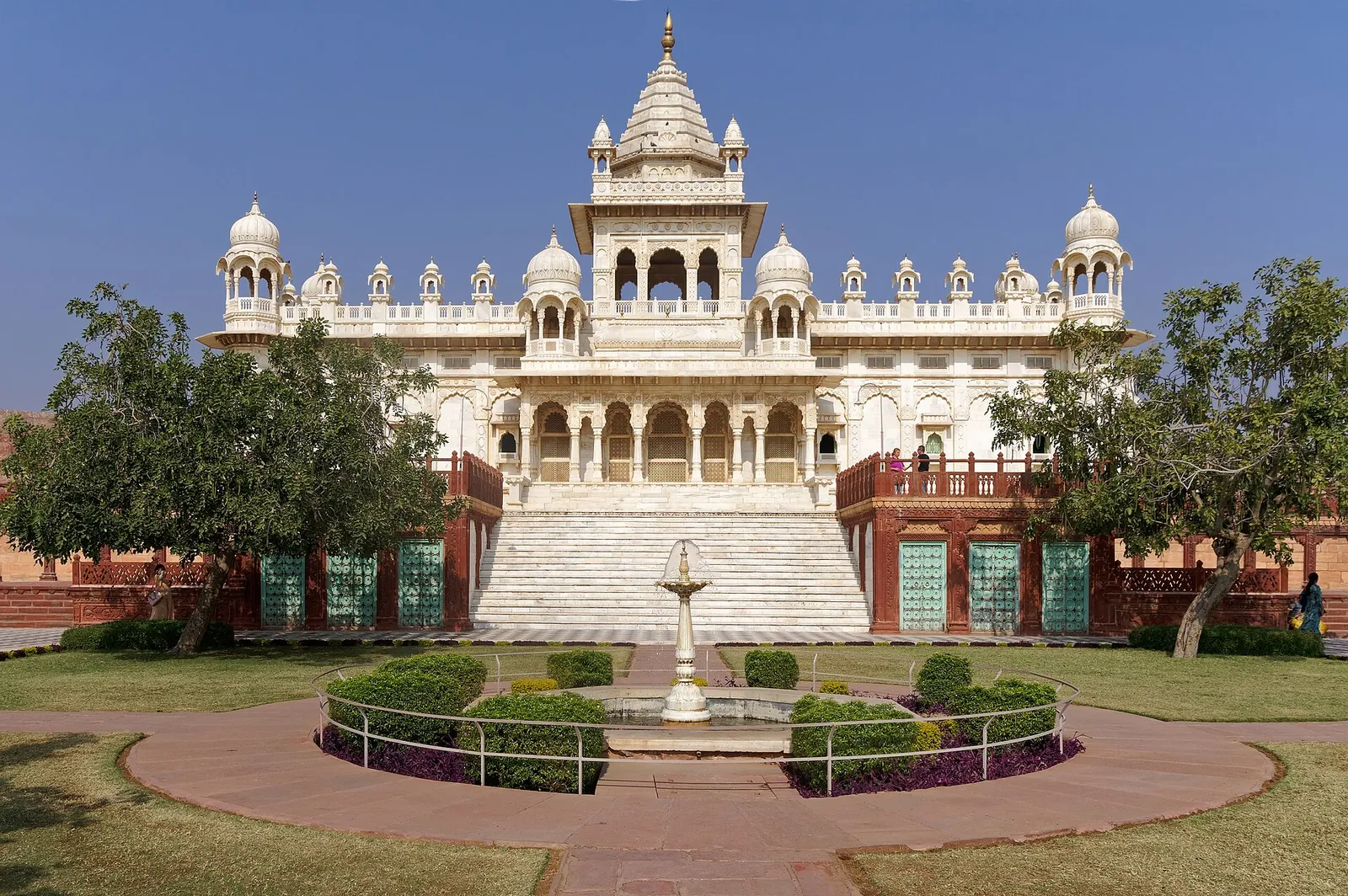
Jaswant Thada, near the fort, is the white marble memorial that Maharaja Sardar Singh completed in 1906 for his father, Maharaja Jaswant Singh II, and that the trust calls the 'Taj Mahal of Marwar'. Its main hall is built like a temple and puja is still performed there; a small museum hangs portraits of the Marwar rulers, and the royal funerary grounds sit beside the Devkund lake. The trust lists it as open every day from 09:00 to 17:00, at INR 100 for an international visitor and INR 50 for a domestic visitor.
Rao Jodha Desert Rock Park was created in 2006 to bring back the native plants of the rocky ground around the fort, and now covers 70 hectares, about 170 acres. The trust runs naturalist-led trails through the plants and the historic water systems below the walls; the visitor centre is 800 m from the main fort gate. It opens every day, from 08:00 to 17:30 between October and March and from 07:00 to 18:30 between April and September. A ticket costs INR 100, and a naturalist for a guided walk costs INR 200.
Chokhelao Bagh, at the foot of the fort beside the ascent ramp, is an 18th-century garden that the trust has replanted with the historic plants of Marwar, with a small painted zenana palace built for Takhat Singh. It is open from 09:00 to 17:00, and the walk down to it and on to Fateh Pol is included in the standard museum ticket. From Fateh Pol a road leads to the embankment of Rani Sagar, an old artificial lake in the rocks below the western wall.
The blue old town: the clock tower, the bazaars and a stepwell
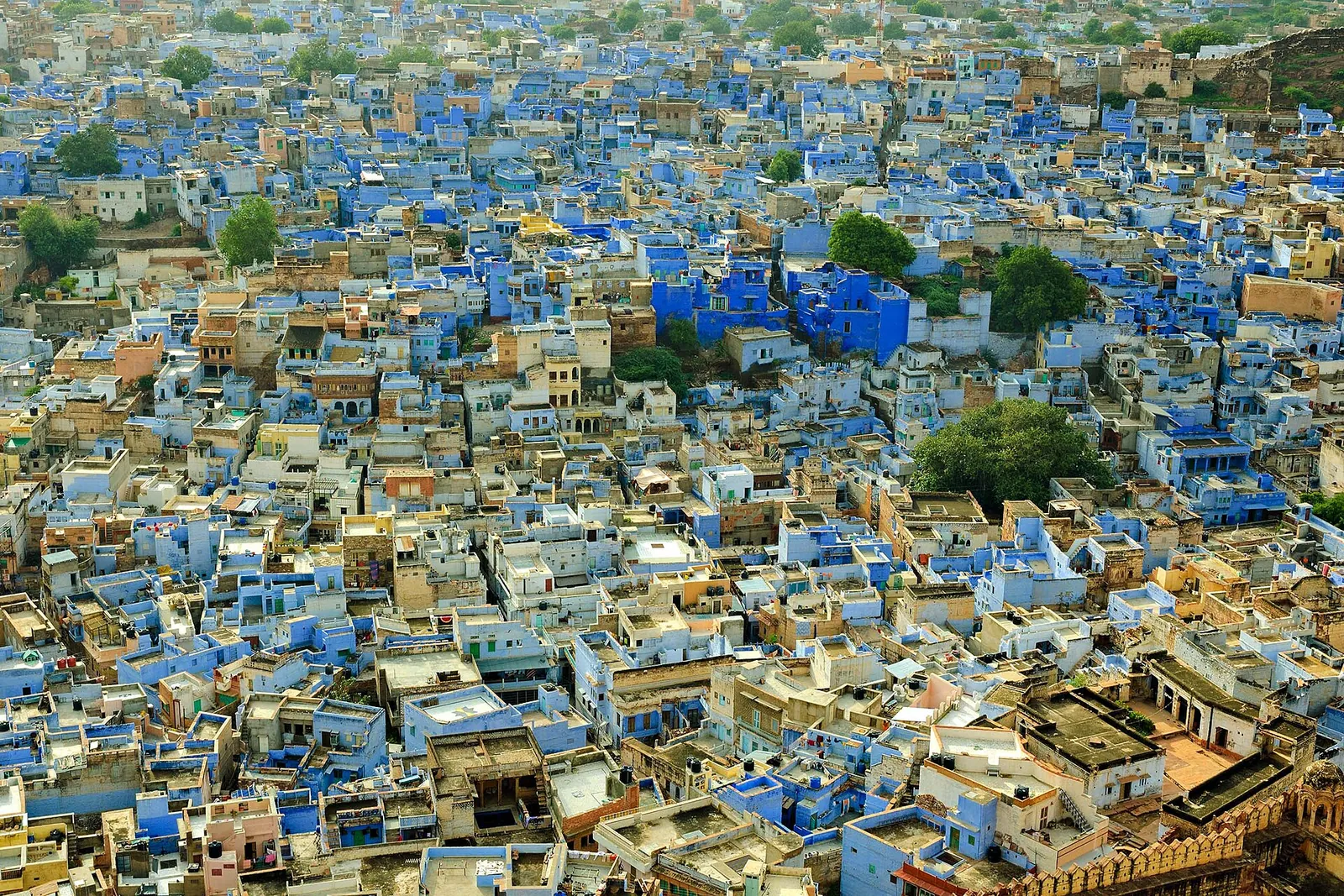
Against the western side of the fort rock, the old city is a maze of lanes and small squares, and many of its houses are washed in shades of blue. Incredible India repeats the local story that Brahmin families first painted their houses blue to mark their caste and to keep them cool. The best views of the blue roofs are from the fort ramparts and from the rooftop terraces of the havelis below.
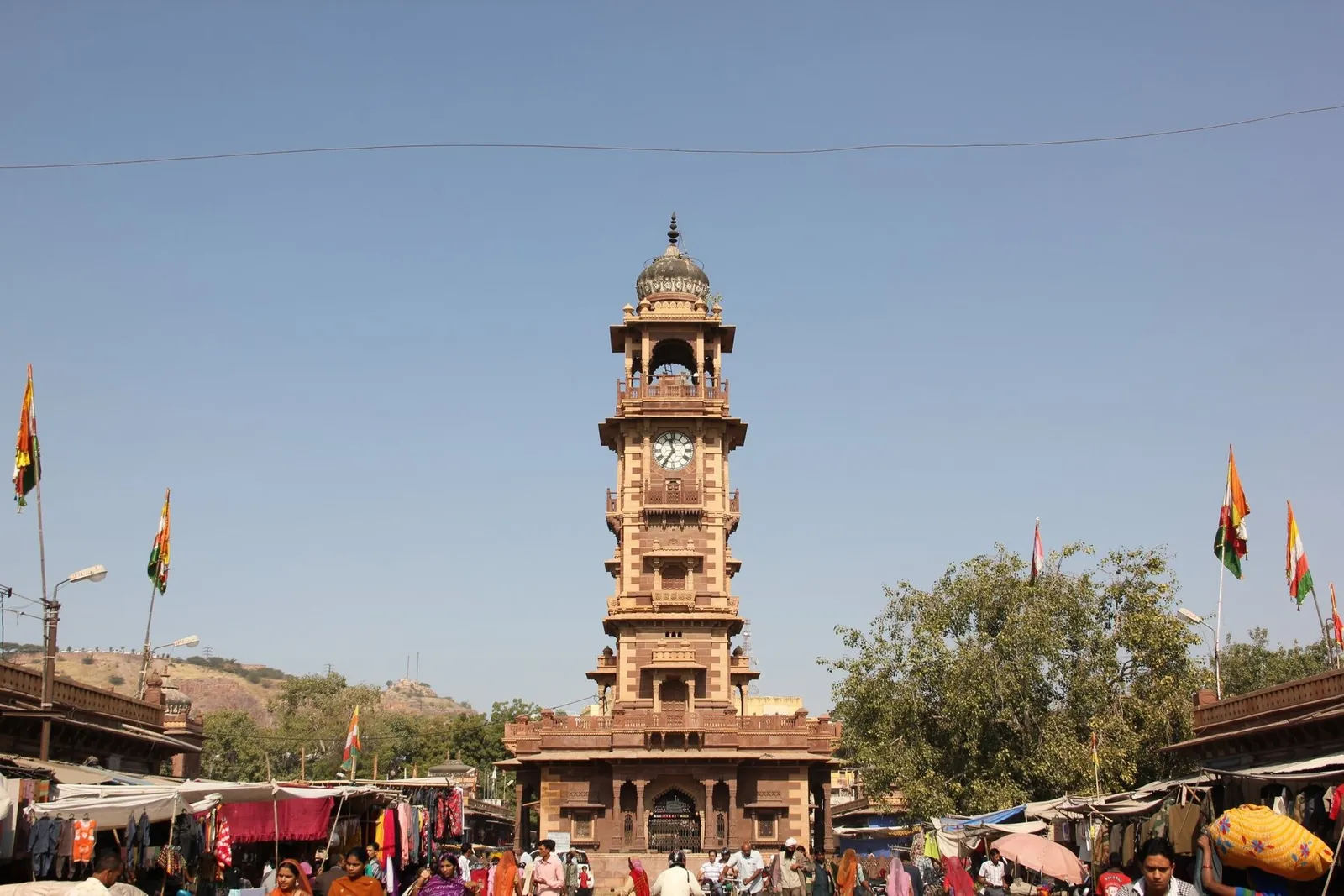
The Ghanta Ghar, or clock tower, stands at the heart of it. Incredible India dates it to between 1880 and 1911 under Maharaja Sardar Singh, and the square around it became Sardar Market, named after him, where stalls sell spices, textiles and handicrafts. Nearby, Gulab Sagar is a tank that Gulab Rai, a concubine of Maharaja Vijay Singh, paid for in the late 18th century for public use. For shopping, Incredible India sends readers to Nai Sarak for bandhej tie-dye and leather, Mochi Bazaar for Jodhpuri juttis, the embroidered leather shoes, and Sarafa Bazaar for silver jewellery.
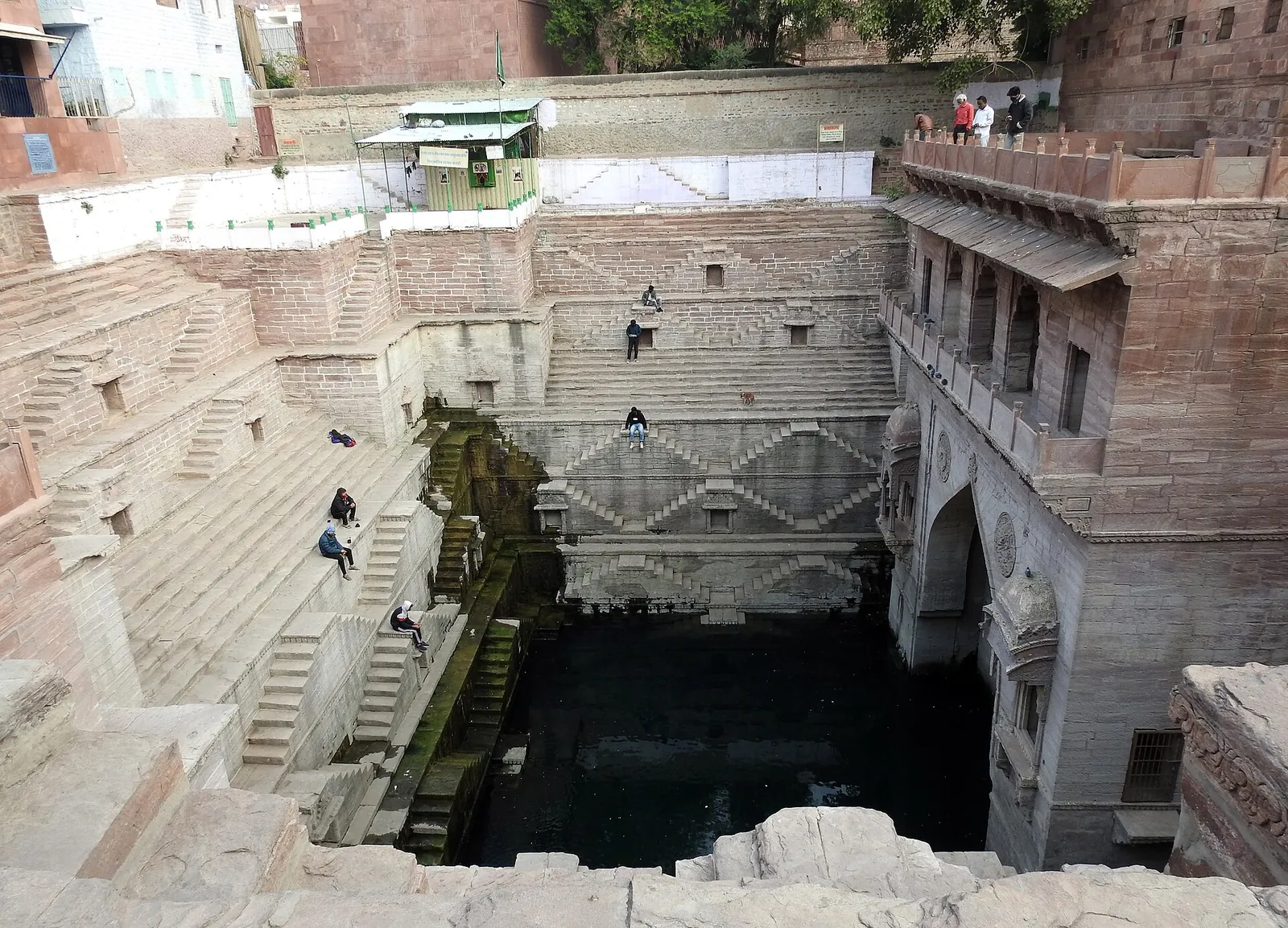
Toorji ka Jhalra is a few minutes' walk away: a stepwell of carved, symmetrical stairs, which Incredible India says was believed to have been built in the 1740s, during the reign of Maharaja Abhay Singh, as a water source for the city. Incredible India lists it as open 24 hours.
Umaid Bhawan Palace and the old capital at Mandore
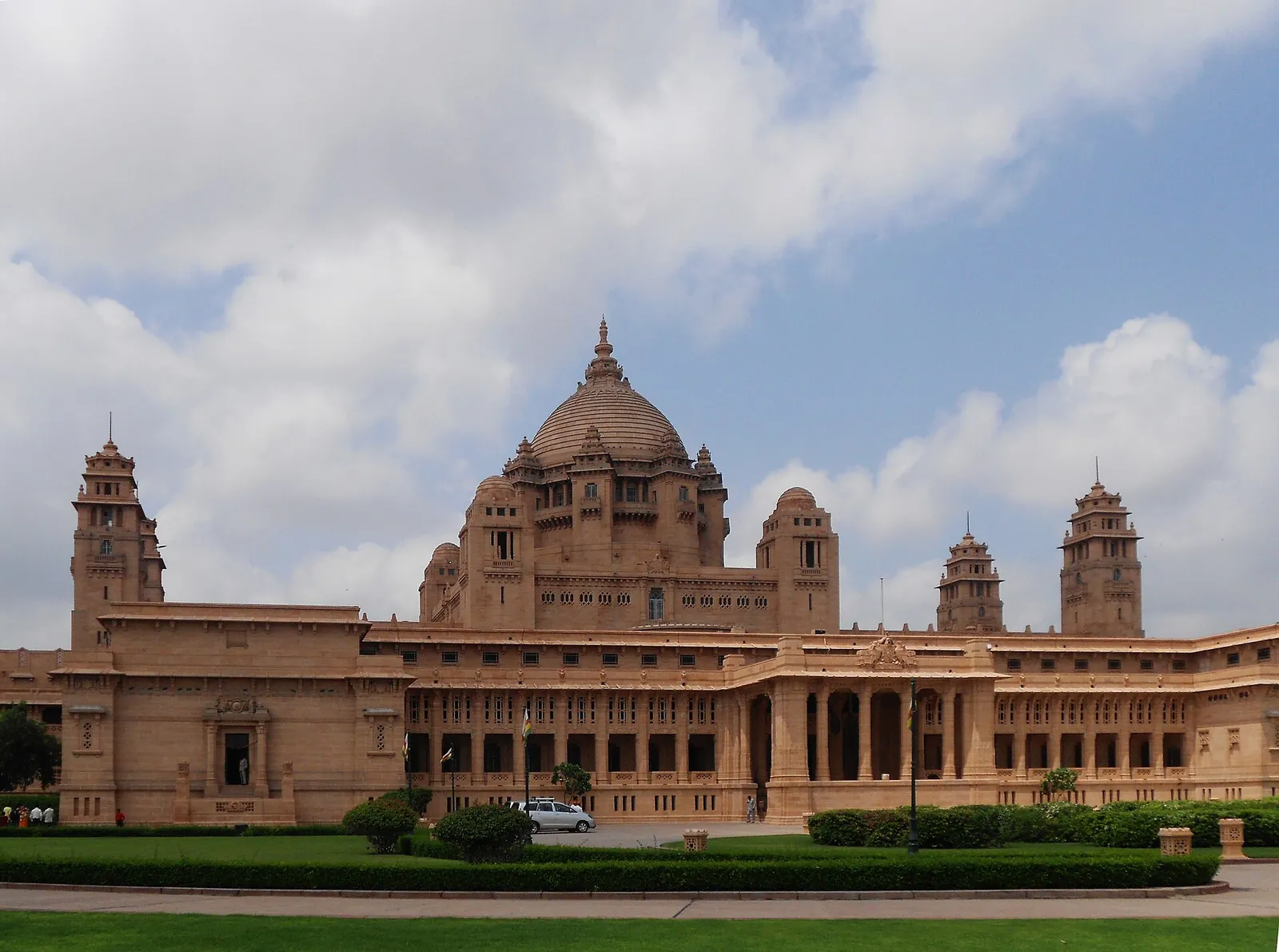
Umaid Bhawan Palace, on a hill in view from the Mehrangarh gun terrace, was begun in 1928 and completed in 1943 for Maharaja Umaid Singh, by Incredible India's count; Mehrangarh Museum Trust's trail gives 1929 to 1944, so treat the years as approximate. Incredible India says the work gave employment to thousands of people during a severe famine, and that the building, designed by the British architect Henry Vaughan Lanchester, is still the residence of the former royal family, a luxury hotel and a museum. Its museum shows the family's artefacts and memorabilia and a collection of vintage cars, and Incredible India lists it as open from 09:00 to 17:00. Its ticket price is not published online, so carry cash for the counter.
Mandore, around 15 km from the city, to the north, was the Marwar capital before Rao Jodha moved to Mehrangarh. Its gardens hold cenotaphs of the Rajput kings and nobles: four-storey red sandstone memorials with pyramidal roofs like temple spires, rather than the usual domed chhatris. Nearby are the Hall of Heroes, with sixteen statues each carved from a single rock, a shrine crowded with painted deities, and the Mandore Garden Government Museum. Incredible India lists the site as open from 09:00 to 17:00.
Kaylana Lake is a reservoir created in 1872 under Pratap Singh to supply the city; its shores and wetlands draw migratory and resident birds. Ask your hotel about the distance and the taxi or auto-rickshaw price.
Getting to Jodhpur: trains, the airport and the road on
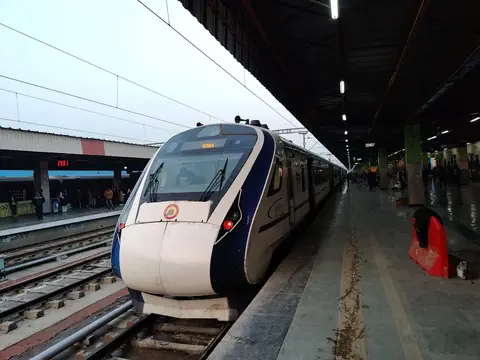
By train. Jodhpur Railway Station (JU) is the city's main station, a short auto-rickshaw ride from the clock tower. Indian Railways publishes current departure times and fares only in its journey search, so check IRCTC for your date. Foreign visitors can book under the Foreign Tourist quota with an IRCTC account; our transport guide explains the classes, the quota and the payment rules.
By air. Jodhpur Airport (JDH) uses an aerodrome operated by the Indian Air Force, which the Airports Authority of India's aeronautical publication places 5 km south-east of Jodhpur railway junction; Rajasthan Tourism puts it about 5 kilometres from the city centre. It is not on the e-Visa site's list of designated arrival airports, so international travellers enter India at Delhi, Jaipur or another listed airport and fly or take the train on; see our India entry guide. The airlines' own booking sites show the domestic flights for your date. Haveli Inn Pal includes the arrival transfer in its room rate; otherwise take a taxi or auto-rickshaw into town.
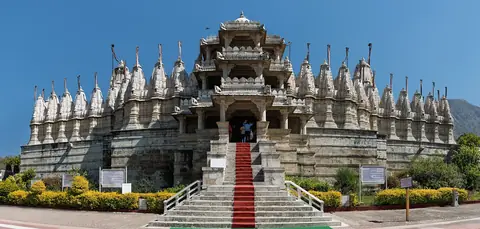
Onward. Jodhpur sits between Jaipur and Udaipur on the usual Rajasthan route, and our Rajasthan itinerary puts the three cities together. Rajasthan Tourism puts Udaipur 257 km from Jodhpur, and the Ranakpur Jain temple almost 90 km from Udaipur, in the forested Aravalli hills, so the drive with the temple stop fills the day. Hire a car with driver for the whole day and leave Jodhpur right after breakfast; after the visit, the last stretch of hill road to Udaipur still lies ahead. No car fare is published; the price is agreed with the driver, together with the stop at Ranakpur and the drop-off at your Udaipur address. Incredible India's account of Ranakpur says you will find only one or two places to eat on the way from Kumbhalgarh and suggests carrying food on a day excursion, so take water and a packed lunch.
This guide stays east of Jaisalmer, Barmer and the desert beyond Jodhpur. This edition keeps its guides at least 50 km from the India-Pakistan border, a wider margin than the FCDO's warning against all travel within 10 km. Jaisalmer and Barmer lie further west, towards the border, and this edition does not cover them. Other governments may draw a wider line than the UK Foreign, Commonwealth & Development Office (FCDO), so check your own government's advice. Our health and safety guide sets out the UK, German and French advisories for India.
In town. The old city lanes are best walked. For Umaid Bhawan, Mandore and the station, take an auto-rickshaw or taxi; no official fare table is published, so agree the fare before you get in.
Two nights in Jodhpur, day by day
The plan keeps Mehrangarh for the morning of day 2, when you are rested and the fort opens at 09:00. With only one night, keep day 2 and the evening walk of day 1, and leave Umaid Bhawan and Mandore for another trip. In the hot months (Incredible India's table gives highs above 43 °C from April to June), move the rock park to its 07:00 opening and spend the middle of the day indoors.
- Day 1: arrive by train or plane and take the hotel's transfer to the old city. Late afternoon, walk the lanes to Toorji ka Jhalra, then the clock tower and Sardar Market as the evening market fills; a makhaniya lassi by the market gate, and dinner on a rooftop facing the fort.
- Day 2: walk or ride up to the Jai Pol ticket counter for 09:00 and spend the morning in Mehrangarh Museum with the audio guide, then the ramparts and the Chamunda Mata temple. Lunch at Café Mehran in the inner courtyard. Afternoon at Jaswant Thada, then the rock park trails until it closes at 17:30 (October to March). Sundowners and a thali at Mehran Terrace, inside the fort.
- Day 3: if you drive on to Udaipur, leave right after breakfast for the Ranakpur stop described above, and keep Umaid Bhawan and Mandore for another trip. If you go on by train, check out by 10:00, leave your bags at the haveli and take a taxi to Umaid Bhawan's museum, which opens at 09:00, then spend an hour or two at the Mandore gardens; collect your bags for your onward train or car.
Make time for the local food
What to eat and where to look
Makhaniya lassi
Jodhpur's thick lassi, made from buttermilk with saffron, cardamom and rose water and topped with hung curd and cream; Incredible India suggests it after a round of mirchi vada and kachori.
- Where to look
- Shri Mishrilal Hotel, inside the southern gate of Sardar Market, the place Incredible India names for it.
- Fit it into your day
- An evening stop at the clock tower market on day 1.
Rich and filling; one glass is a snack in itself.
Dal baati churma
The Marwar staple: hard-baked wheat rolls (baati) broken into dal and eaten with churma, sweetened crumbled wheat fried in ghee.
- Where to look
- Indique, the rooftop restaurant facing the clock tower, which Incredible India lists for it.
- Fit it into your day
- Dinner on day 1, with the clock tower below you.
Rich with ghee; one portion feeds two with a curry.
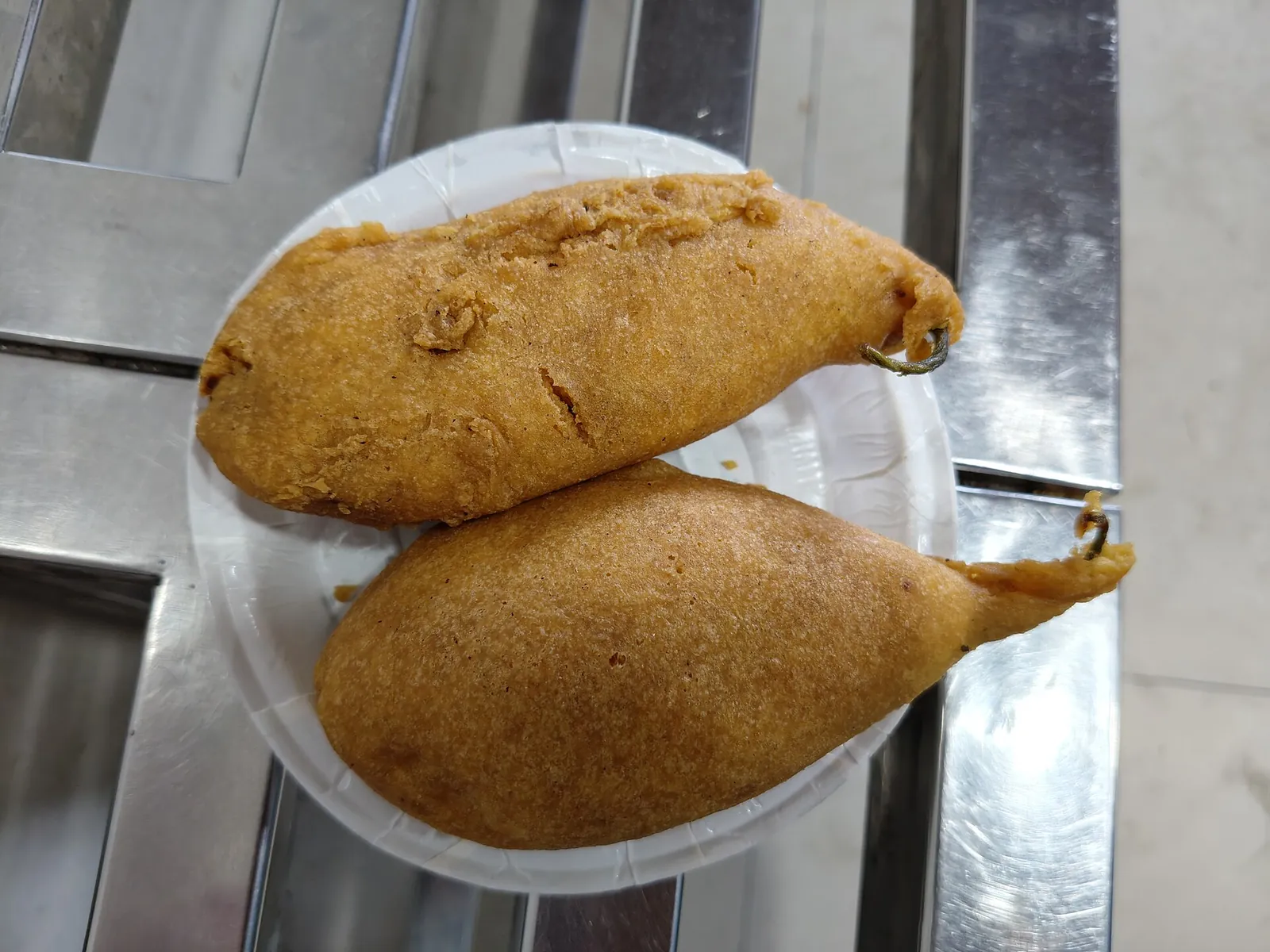
Mirchi vada
Jodhpur's street snack: a large green chilli stuffed with spiced potato, dipped in gram-flour batter and fried.
- Where to look
- The stalls of Ghantaghar Market on Clock Tower Road and Tripolia Bazaar, the city's two street-food streets.
- Fit it into your day
- A late-afternoon snack on day 1 or before the train on day 3.
The chilli is hot; choose a busy stall frying to order.
Laal maas
Rajasthan's red mutton curry, coloured and heated by dried red chillies.
- Where to look
- Indique, a candlelit rooftop restaurant facing the clock tower and Umaid Bhawan.
- Fit it into your day
- With the dal baati at Indique on day 1, if you eat meat.
Very hot; ask for it milder if you are not used to chilli.
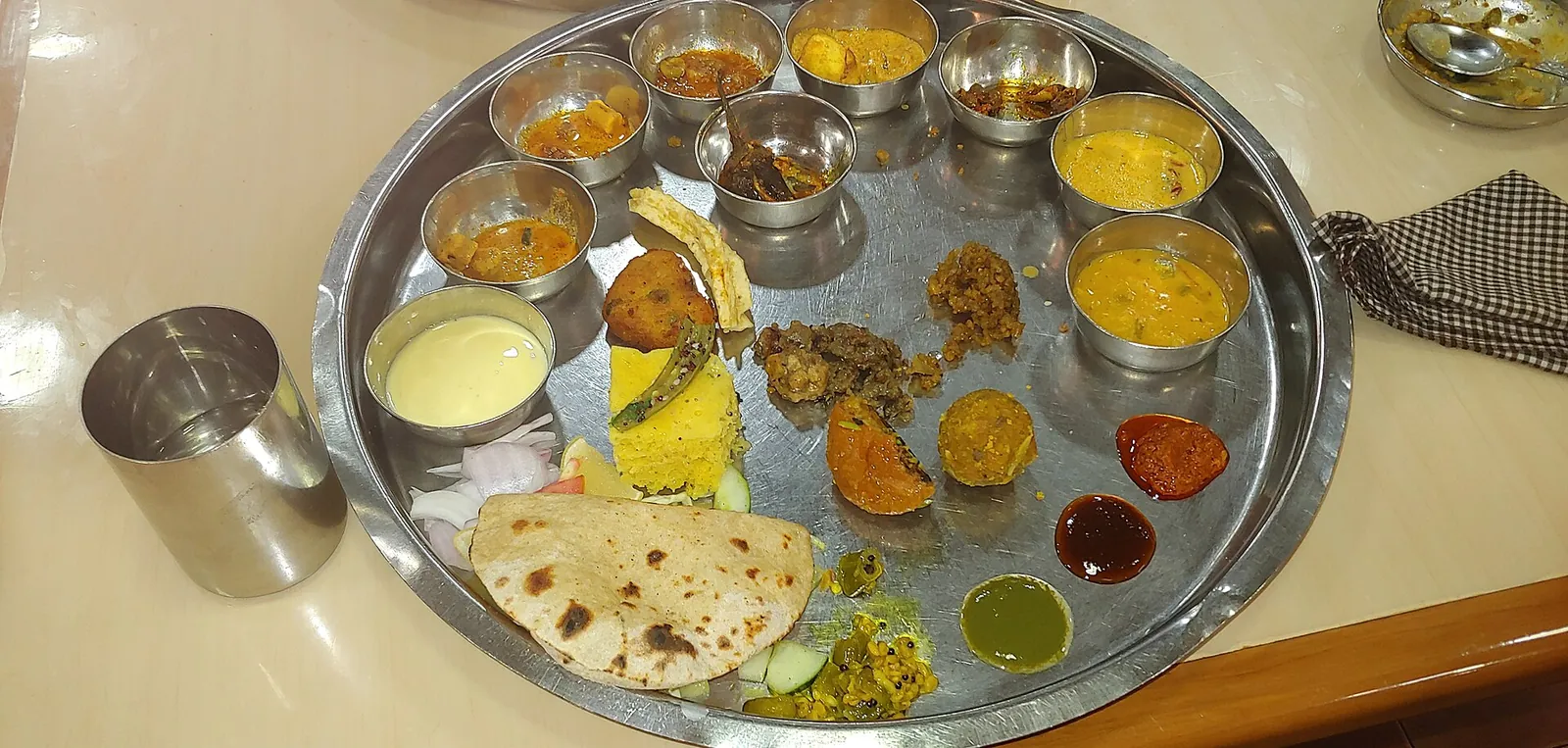
Rajasthani thali with gatte ki sabzi
A round tray of the region's vegetarian dishes, usually with gatte ki sabzi, gram-flour dumplings in a spiced yoghurt curry, dal, breads and a sweet.
- Where to look
- Mehran Terrace inside Mehrangarh, which the trust says serves Rajasthani food in thalis, or Gypsy Dining Hall, a vegetarian restaurant.
- Fit it into your day
- Dinner on day 2 after the fort.
Refills keep coming; say when you have had enough.
A priced two-night stay for two
This model prices the rooms and tickets of the plan above for two adults sharing a room, with prices checked on 17 October 2026 on the hotel's tariff page and Mehrangarh Museum Trust's ticket tables.
- Room: Haveli Inn Pal, Heritage Non View Room with breakfast and the arrival transfer, 2 nights at INR 7,500 (INR 15,000), plus 5% GST (INR 750): INR 15,750. The hotel lists taxes of "5% and 18%" without saying which applies to this room; we use 5%, the GST Council rate for rooms priced at INR 7,500 or less a night, so ask the hotel which it charges.
- Mehrangarh Museum for two (international visitor, audio guide included): INR 1,600.
- Jaswant Thada and Rao Jodha Desert Rock Park for two (INR 100 each): INR 400.
- Total: about INR 17,750 for two.
- Not included: the trains to and from Jodhpur or the car to Udaipur; the departure transfer (INR 800 on the hotel's terms) and auto-rickshaws or a taxi to Umaid Bhawan and Mandore; lunch at Café Mehran, the thali at Mehran Terrace and other meals, for which the restaurants publish no prices online; the Umaid Bhawan museum ticket, also not published online; the lift at Mehrangarh (INR 50 one way) and a guide (from INR 500); the upgrade to a view room (INR 9,500 a night plus tax).
Practical questions
How many days do you need in Jodhpur?
Two nights. Mehrangarh, Jaswant Thada and the rock park fill one full day, and the old town, the clock tower market, Umaid Bhawan and Mandore fill another. With one night you can see the fort and the evening market, but not much more.
How much is the Mehrangarh Fort ticket for foreigners?
Mehrangarh Museum Trust's table lists INR 800 for an international visitor, INR 500 for international students, and INR 50 one way for the lift. The audio guide is included for international visitors. Buy at the Jai Pol counter or on the trust's booking site, mehrangarh.getepay.in.
What are Mehrangarh's opening hours?
The trust lists the museum as open every day from 09:00 to 17:00, and the counter sells tickets until 17:00. Jaswant Thada keeps the same hours, and Rao Jodha Desert Rock Park opens from 08:00 to 17:30 between October and March.
Why is Jodhpur called the Blue City?
Many houses in the old city below Mehrangarh are washed in shades of blue. Incredible India repeats the local story that Brahmin families began painting their houses blue to mark their caste and to keep them cool; the best views of the blue roofs are from the fort ramparts.
Can you visit Umaid Bhawan Palace?
Its museum, yes: Incredible India lists it as open from 09:00 to 17:00, with family memorabilia and vintage cars. The rest of the palace is the former royal family's home and a luxury hotel.
How do you get from Jodhpur to Udaipur?
Most travellers go by road, with a car and driver for a full day through the Aravalli hills and a stop at the Ranakpur Jain temple, which Rajasthan Tourism places almost 90 km from Udaipur; leave Jodhpur right after breakfast. Rajasthan Tourism puts Udaipur 257 km from Jodhpur. No car fare is published; the price is agreed with the driver, together with the stop at Ranakpur and the drop-off at your Udaipur address. For a train between the two cities, search IRCTC for your date.
Sources and checks before you travel
Reference sources for the version dated 17 October 2026. Confirm opening times, access, transport and conditions for your travel dates.
- Mehrangarh Museum Trust: Mehrangarh Museum, tickets and timings ↗ — opens in a new tab
- Mehrangarh Museum Trust: visit overview ↗ — opens in a new tab
- Mehrangarh Museum Trust: history of Mehrangarh ↗ — opens in a new tab
- Mehrangarh Museum Trust: architecture ↗ — opens in a new tab
- Mehrangarh Museum Trust: museum trails ↗ — opens in a new tab
- Mehrangarh Museum Trust: Jaswant Thada ↗ — opens in a new tab
- Mehrangarh Museum Trust: Rao Jodha Desert Rock Park ↗ — opens in a new tab
- Mehrangarh Museum Trust: Chokhelao Garden ↗ — opens in a new tab
- Mehrangarh Museum Trust: Café Mehran ↗ — opens in a new tab
- Mehrangarh Museum Trust: Mehran Terrace ↗ — opens in a new tab
- Mehrangarh Museum Trust: festivals ↗ — opens in a new tab
- Incredible India (Ministry of Tourism): Jodhpur ↗ — opens in a new tab
- Incredible India: Mehrangarh Fort ↗ — opens in a new tab
- Incredible India: Umaid Bhawan Palace ↗ — opens in a new tab
- Incredible India: Ghanta Ghar ↗ — opens in a new tab
- Incredible India: Mandore ↗ — opens in a new tab
- Incredible India: Toorji ka Jhalra ↗ — opens in a new tab
- Incredible India: a colourful shopping experience in Jodhpur ↗ — opens in a new tab
- Incredible India: a culinary journey of Jodhpur ↗ — opens in a new tab
- Incredible India: 10 restaurants to bookmark in Jodhpur ↗ — opens in a new tab
- Airports Authority of India: eAIP, AD 2.1 Jodhpur (VIJO) ↗ — opens in a new tab
- Bureau of Immigration, Indian e-Visa site: e-Tourist Visa ↗ — opens in a new tab
- IRCTC: Foreign Tourist quota booking ↗ — opens in a new tab
- Haveli Inn Pal: tariff ↗ — opens in a new tab
- Haveli Inn Pal: rooms ↗ — opens in a new tab
- Haveli Inn Pal: terms and conditions ↗ — opens in a new tab
- GST Council: recommendations of the 56th meeting (PIB release of 3 September 2025) ↗ — opens in a new tab
- Jodhpur RIFF (Mehrangarh Museum Trust): festival home page ↗ — opens in a new tab
- Flying Fox: Jodhpur zip line tour ↗ — opens in a new tab
- Haveli Inn Pal: home page ↗ — opens in a new tab
- IATA: airport code search ↗ — opens in a new tab
- Rajasthan Tourism: Ranakpur Temple ↗ — opens in a new tab
- Rajasthan Tourism: Jodhpur ↗ — opens in a new tab
- Incredible India: must-visit Ranakpur Jain temple (travel account) ↗ — opens in a new tab
- Incredible India: Kaylana Lake ↗ — opens in a new tab
- UK Foreign Office (FCDO): India warnings and insurance ↗ — opens in a new tab
Does this experience fit your route?
Book your trains on IRCTC first, or the car for the Ranakpur drive, then a haveli in the old city; add a guided walk if you want the blue lanes explained on the spot.
Check dates and details on Viator ↗ — opens in a new tabAffiliate link · Book with ViatorPhoto credits
Mehrangarh Fort's walls and palaces rise from the rock above the rooftops of Jodhpur.
Photograph: Vyacheslav Argenberg — opens in a new tab · CC BY 4.0 — opens in a new tab
Changes: Resized and converted to WebP; displayed with responsive crops. · Original photograph and licence details ↗ — opens in a new tab
The blue-washed houses of the old city, seen from the heights around Mehrangarh.
Photograph: Everhard van Eimeren — opens in a new tab · CC BY-SA 4.0 — opens in a new tab
Changes: Resized and converted to WebP; displayed with responsive crops. · Original photograph and licence details ↗ — opens in a new tab
Jaswant Thada, the marble memorial to Maharaja Jaswant Singh II, behind its garden and fountain.
Photograph: Jakub Hałun — opens in a new tab · CC BY-SA 4.0 — opens in a new tab
Changes: Resized and converted to WebP; displayed with responsive crops. · Original photograph and licence details ↗ — opens in a new tab
Umaid Bhawan Palace, completed in the 1940s, on its hill south-east of the old city.
Photograph: Yann ( talk ) — opens in a new tab · CC BY-SA 4.0 — opens in a new tab
Changes: Resized and converted to WebP; displayed with responsive crops. · Original photograph and licence details ↗ — opens in a new tab
The Ghanta Ghar clock tower above the stalls of Sardar Market.
Photograph: Nishant.chawla123 — opens in a new tab · CC BY-SA 4.0 — opens in a new tab
Changes: Resized and converted to WebP; displayed with responsive crops. · Original photograph and licence details ↗ — opens in a new tab
Toorji ka Jhalra, the 18th-century stepwell a few minutes from the clock tower.
Photograph: Dr. Raju Kasambe — opens in a new tab · CC BY-SA 4.0 — opens in a new tab
Changes: Resized and converted to WebP; displayed with responsive crops. · Original photograph and licence details ↗ — opens in a new tab
A Marwari thali at Gypsy restaurant in Jodhpur, with dal, vegetable curries, breads and a sweet lassi.
Photograph: Atcelsius — opens in a new tab · CC BY-SA 4.0 — opens in a new tab
Changes: Resized and converted to WebP; displayed with responsive crops. · Original photograph and licence details ↗ — opens in a new tab
Mirchi bada, chillies stuffed with spiced potato and fried in gram-flour batter, from a Jodhpur snack shop.
Photograph: Pyaaz Kachori — opens in a new tab · CC0 — opens in a new tab
Changes: Resized and converted to WebP; displayed with responsive crops. · Original photograph and licence details ↗ — opens in a new tab