Kerala and the south · Kerala
Kochi travel guide: 3 nights for Fort Kochi, Jew Town and Kathakali
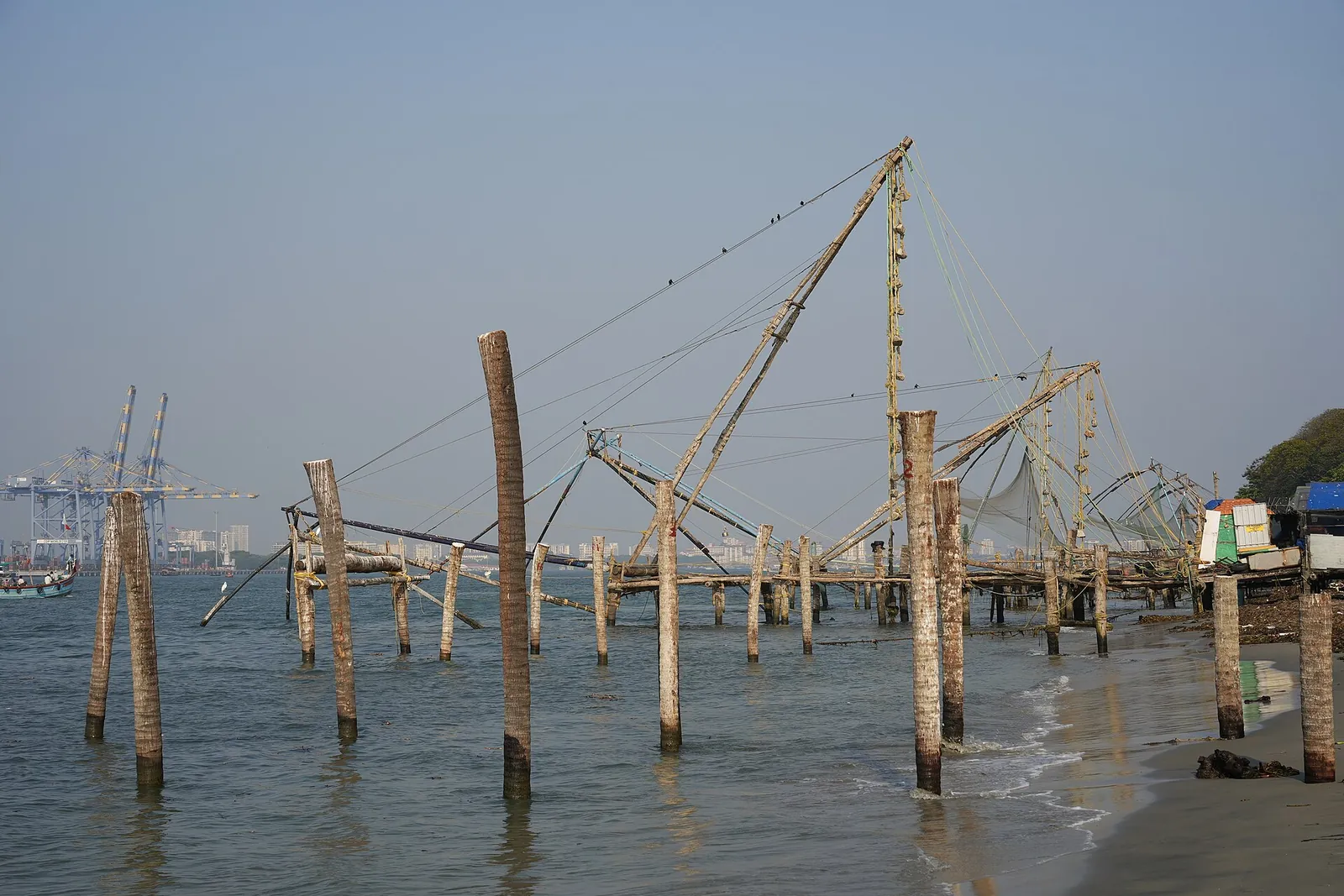
Kochi has been a port for centuries, and the old town on its western islands still shows who came by sea. On the beach at Fort Kochi, Chinese fishing nets of teak and bamboo dip into the harbour mouth beside the church where Vasco da Gama was first buried; a short way south, in Mattancherry, the palace the Portuguese built for the Kochi kings keeps its Ramayana murals, and the Paradesi Synagogue stands at the end of Jew Town's lane of spice and curio shops. Across the water lies Ernakulam, the modern city, with Marine Drive, the main railway junction and the road to the hills. Three nights give you a day for Fort Kochi and a Kathakali evening, a day for Mattancherry and Jew Town, and a last morning at the Hill Palace in Thripunithura before you head for the backwaters or Munnar.
- Suggested time
- 3 nights (4 days)
- Where to stay
- Bolgatty Island, off Marine Drive in Ernakulam, two Water Metro hops from Fort Kochi; or Fort Kochi itself, to walk the old town
- Season and timing
- Incredible India, the Ministry of Tourism's site, calls the months from October to March the most pleasant for Kochi, although October to December still bring the northeast monsoon, Kerala's second rains. January and February fall between the southwest monsoon (June to September) and the northeast monsoon (October to December), so they miss both rainy seasons.
The short answer
Book three nights (four days) on Bolgatty Island, between Ernakulam's Marine Drive and the harbour, where the Kerala Tourism Development Corporation (KTDC) runs Bolgatty Palace, a Dutch mansion of 1744, as a hotel. It is the base here because it is a heritage palace on an island just off Marine Drive, about 6 km from Ernakulam Junction by KTDC's figure, and still only two Water Metro hops from Fort Kochi. Book the room first, then plan Mattancherry for a day from Sunday to Thursday, because the palace is closed on Fridays and the Paradesi Synagogue on Fridays, Saturdays and Jewish holidays. Two key prices, checked on 17 October 2026: a Golf view double room at Bolgatty Palace costs INR 4,500 a night with breakfast, plus GST, and the Kochi Water Metro charges INR 40 from High Court to Fort Kochi. The model stay below comes to about INR 14,915 for two, before meals, Kathakali and the Mattancherry tickets.
Where to sleep: Bolgatty Island, Fort Kochi or Ernakulam
Kochi spreads over the mainland and a group of islands, so choose your side of the water first. Bolgatty Island lies just off Marine Drive in Ernakulam, and KTDC, the state tourism corporation, runs its old palace as a hotel: Bolgatty Palace and Island Resort, built by Dutch traders in 1744 and, KTDC says, the oldest of its kind outside Holland, with four palace rooms, lake-view cottages and a 9-hole golf course laid out in 1925 around it. Its tariff for 1 April 2026 to 31 March 2027 lists a Golf view double room at INR 4,500 a night and a Lake Front Cottage at INR 5,500, both with breakfast and with GST extra; since 22 September 2025, rooms priced at INR 7,500 or less a night carry 5% GST. Check-in is at 13:00 and check-out at 11:00. This is the room priced in this guide's budget.
From the island, Ernakulam Junction, the main railway station, is about 6 km away. The Kochi Water Metro's route planner lists Bolgatty to High Court as a 2-minute crossing at INR 20; when no boat is waiting, take a taxi or an auto-rickshaw from the High Court jetty over the Goshree bridge, the road link to the island. KTDC says the drive from the High Court jetty takes 5 minutes but gives no distance or fare, so agree the fare with the driver before you set off.
Fort Kochi is the place to sleep if you want the old town on foot: its streets of Portuguese, Dutch and British buildings have cafes and shops between them, and many of the old properties are now hotels and homestays. Ernakulam, the commercial city around Marine Drive, suits an early train. The where-to-stay guide for India explains how foreign guests are registered at check-in.
Fort Kochi: the fishing nets, St Francis Church and Santa Cruz
The Chinese fishing nets (cheenavala in Malayalam) are the picture of Kochi. Kerala Tourism says they were introduced by the Chinese explorer Zheng He and took hold on this shore between 1350 and 1450. Each is a cantilever of teak and bamboo about 10 m high, fixed on the beach, with a net spread over about 20 m and stones about 30 cm across hung on ropes as counterweights; a team of more than four fishermen works each one, and the weight of a man walking along the main plank is enough to tip the net into the sea. They fish mostly in the morning and early evening, lowering the net for a short time and raising it slowly by the ropes. Watch from Vasco da Gama Square, the narrow walkway along the Fort Kochi beach, and come back at sunset, when the nets stand in silhouette.
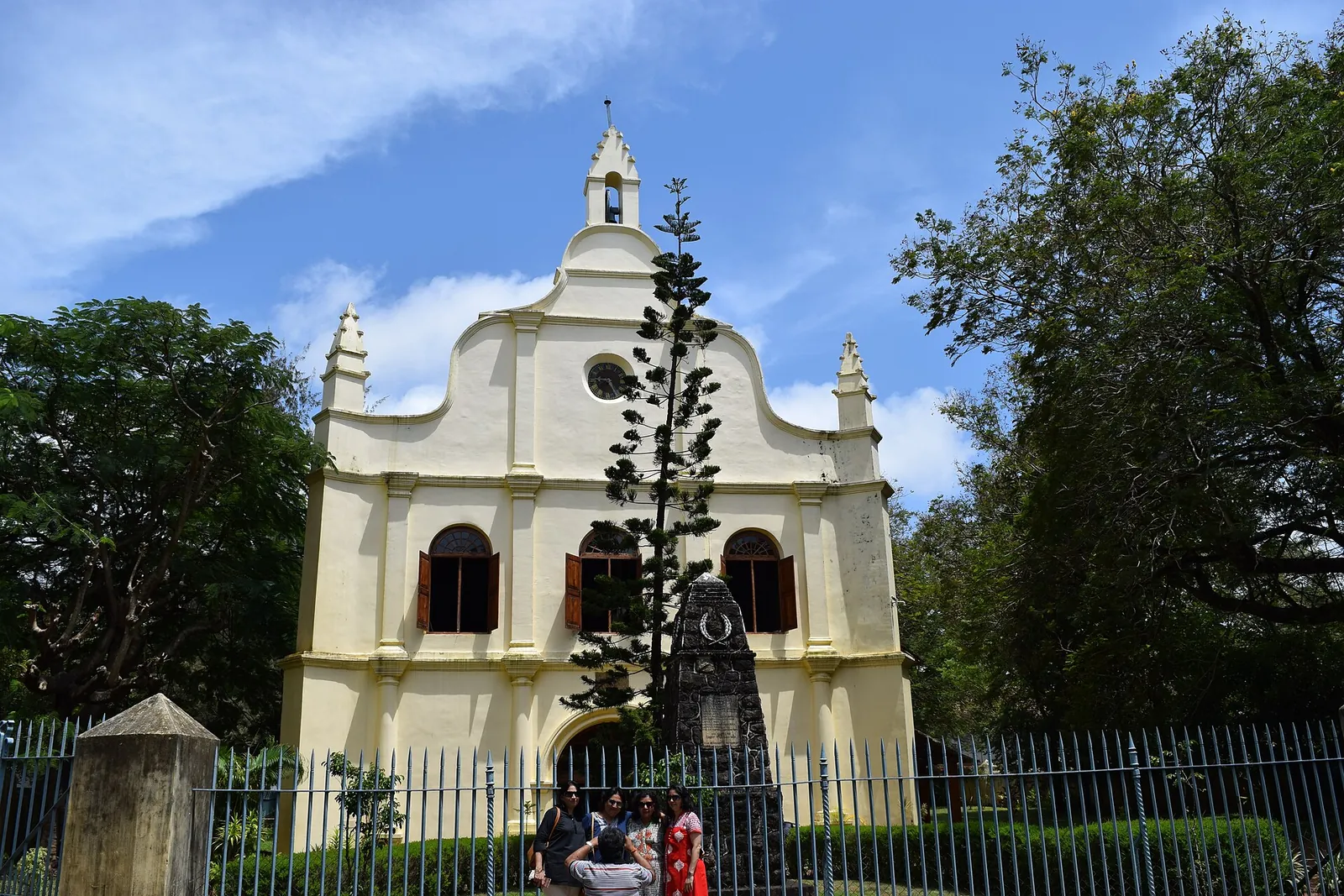
St Francis Church, which Kerala Tourism calls India's oldest European church, was first built of timber and later rebuilt in stone. The Protestant Dutch restored it in 1779; it became an Anglican church under the British in 1795 and now belongs to the Church of South India. Vasco da Gama was buried here in 1524 before his remains were taken to Lisbon, and his tombstone is still inside. Look for the old cloth fan that still works, and the tombstones set into the walls, Portuguese on the north side and Dutch on the south. It is open from 09:00 to 17:00 from Monday to Friday, 09:00 to 13:00 on Saturday and 13:00 to 17:00 on Sunday.
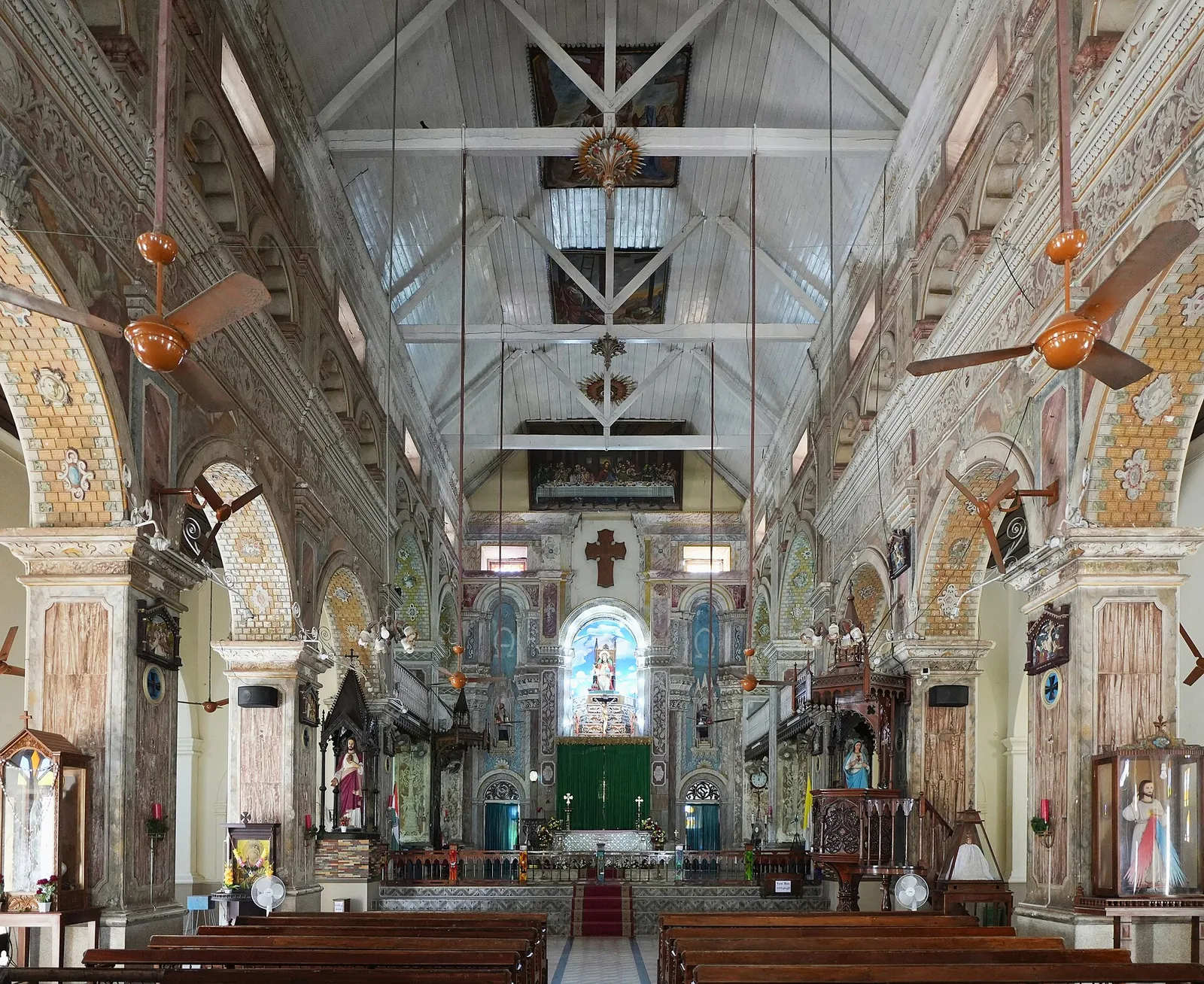
Santa Cruz Basilica stands a few streets south. Kerala Tourism traces it to 1505, when the first Portuguese viceroy, Dom Francisco de Almeida, was allowed to build a church here; the Dutch spared it as an armoury, the British destroyed it in 1795, and one granite pillar of the old church is kept as a relic. The present building was begun under Bishop Dom Joao Gomes Ferreira, who reached Kochi in 1887, consecrated in 1905 and made a basilica by Pope John Paul II in 1984. Two bright, lofty spires rise over a pastel interior with stained glass, ceiling frescoes on the life of Christ and paintings by the Italian Brother Antonio Moscheni, among them a version of the Last Supper.
In the grounds of the Bishop's House, the Indo-Portuguese Museum shows what the Portuguese left in the churches of the Kochi area, in five sections called Altar, Treasure, Procession, Civil Life and Cathedral: a piece of a 16th-century teak altar, a 17th-century processional cross of silver and wood, a 19th-century chasuble and a finely worked monstrance. The Calouste Gulbenkian Foundation of Lisbon helped choose the pieces and plan the rooms. The museum is open from 09:00 to 18:00 and closed on Mondays; entry costs INR 40 for adults and INR 25 for children.
Close by are the Dutch Cemetery and the Mahatma Gandhi beach, the place for an evening walk. The old town's streets of colourful houses also hold art galleries, cafes and spice shops, and Incredible India calls Fort Kochi a hub for art and culture; it names no gallery or street, so ask your hotel which exhibitions are on. In December, Fort Kochi holds the Cochin Carnival, which Incredible India describes as a ten-day festival of music and dance.
Mattancherry and Jew Town: the palace and the synagogue
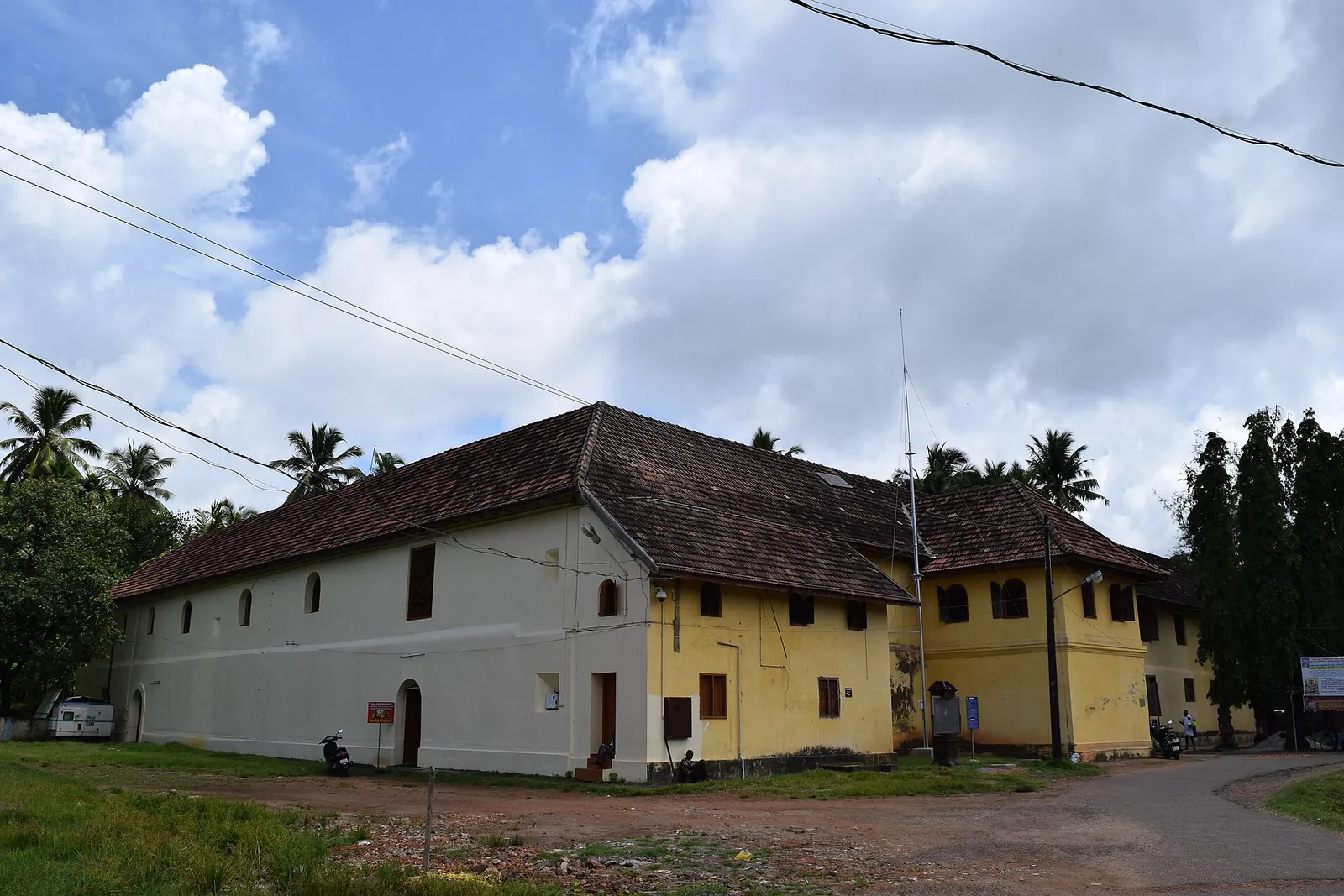
Mattancherry Palace, also called the Dutch Palace, was built by the Portuguese in the mid-16th century as a gift to the Kochi king Veera Kerala Varma, and takes its second name from the Dutch, who renovated it later. It is a two-storey naalukettu, the traditional Kerala house of four wings around a courtyard, where the royal deity Pazhayannur Bhagavathi has her temple and the kings held their coronations. The ceilings are carved with floral designs, an inverted lotus among them, and the black floor, which looks like marble, was made of lime, plant juices, burnt coconut shells and egg whites. The coronation hall keeps life-size portraits of the kings who ruled from 1864, with royal palanquins, silk and brass parasols, the ceremonial sword and Dutch maps of old Kochi.
The murals are the reason to come. In the royal bed chamber, about 100 square metres of wall paintings from the 17th and 18th centuries tell the whole Ramayana; more panels show Hindu gods on the staircase walls and scenes from Kalidasa's Kumarasambhavam in the ladies' room. The palace is a museum of the Archaeological Survey of India (ASI), which sells its tickets through its online booking app. It is open from 10:00 to 17:00 on all days except Fridays.
Jew Town, the street between Mattancherry Palace and the Paradesi Synagogue, grew on land beside the palace that the king of Kochi is said to have granted to the Jews in 1524. It is still known for the spice trade, and the only international pepper stock exchange in the world still works here. Its antique shops sell jewellery, wooden carvings, oil lamps, spice boxes, old photographs, Chinese urns and door frames; look for the vaarpu, a bronze vessel about 3 m across. About 150 m south of the Paradesi Synagogue stands the synagogue of the Malabari Jews, once called the Kadavumbhagam Mattancherry Synagogue.
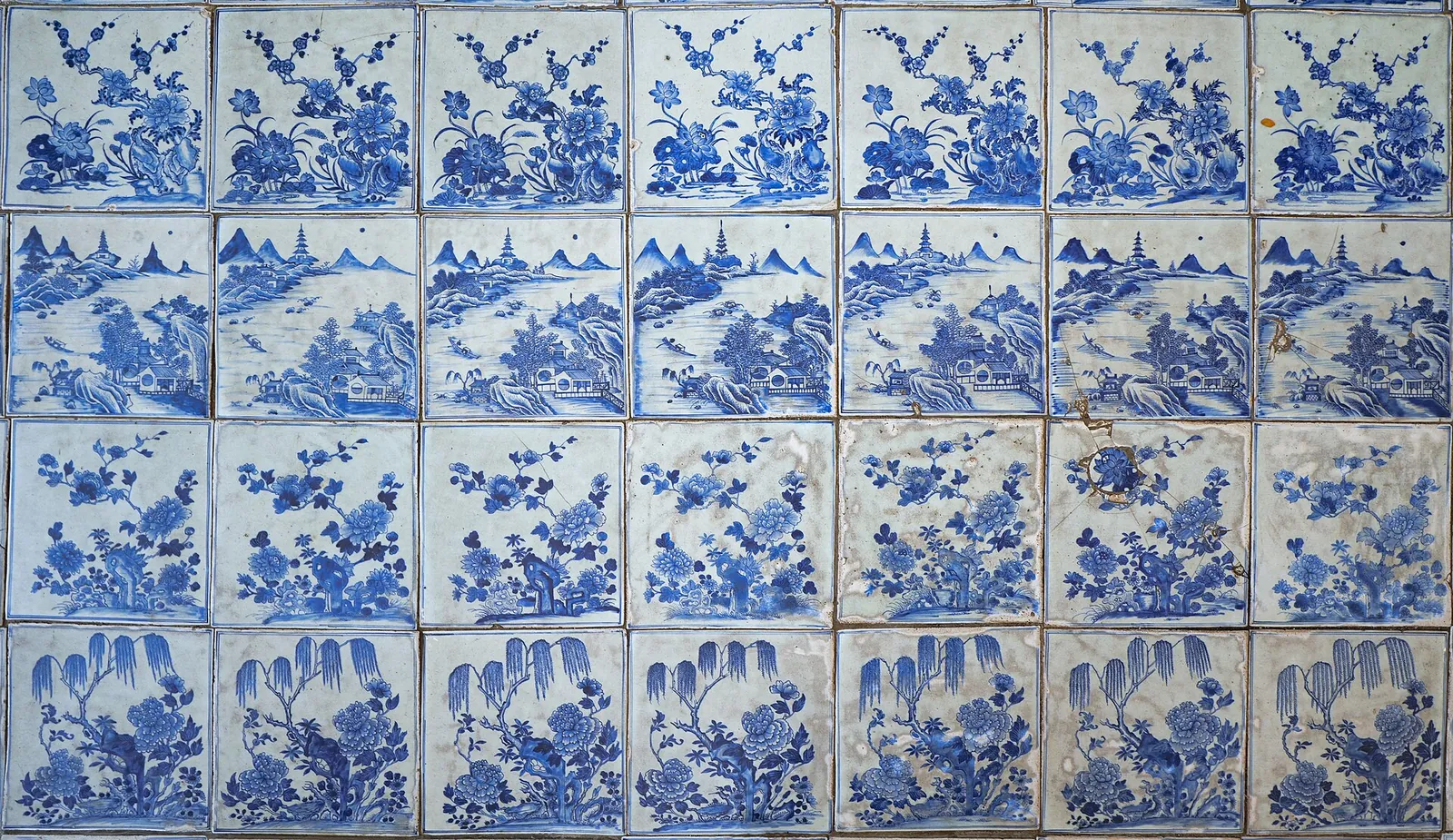
The Paradesi Synagogue was built in 1568 on land beside the palace given by the king of Cochin; Kerala Tourism calls it the oldest synagogue in the Commonwealth. The Portuguese destroyed it in 1662 and the Dutch rebuilt it two years later. Inside, the floor is paved with hand-painted blue willow tiles that the merchant Ezekiel Rahabi brought from Canton in the 18th century, no two alike, under Belgian glass chandeliers of the 19th century; there is a brass-railed pulpit in the centre, a gallery for women and a carved teak ark with Torah scrolls in silver and gold, beside two gold crowns given by the kings of Kochi and Travancore.
The synagogue is open from 10:00 to 12:00 and from 15:00 to 17:00, and closed on Fridays, Saturdays and Jewish holidays, whose dates change each year, so with the palace keep this half of the old town for a Sunday to Thursday. Visitors enter barefoot.
Kathakali: an evening of Kerala's dance-drama
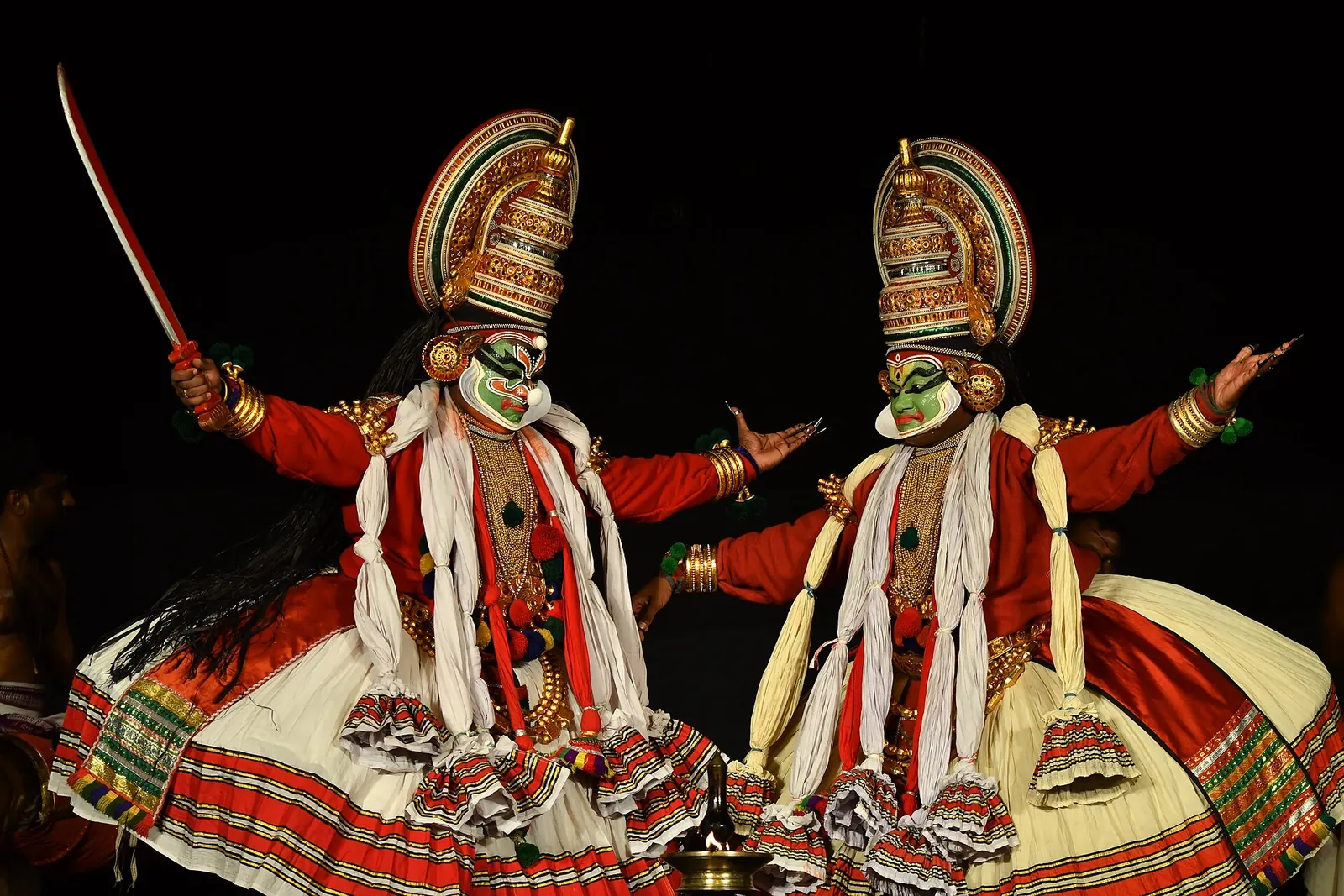
Kathakali, literally a story play, is the classical dance-drama of Kerala, telling episodes from the Ramayana, the Mahabharata and the Puranas through gesture, music and painted faces. Kerala Tourism describes four kinds of make-up and costume: pacha, green, for gods and heroes; kathi, the knife, for the villainous; tadi, the beard, for superhuman characters; and minukku, plain and shining, for women and sages. Headdresses are set with red and green stones, wide white skirts give the actors their size on stage, and two drums, the maddalam and the chenda, a gong and cymbals carry the music.
In Fort Kochi, both Kerala Tourism and Incredible India send visitors to the Kerala Kathakali Centre for a performance, but neither page gives a show time, price or booking step, so ask the centre or your hotel before you go. The Cochin Cultural Centre, which runs Kathakali theatres in Ernakulam and Fort Kochi, gives a daily show at 18:30 on its site, with the make-up from 16:30 and the performance an hour long, in three parts: a prayer, a demonstration with English narration, and the play. A show at that hour ends well before the last Water Metro boat from Fort Kochi to High Court, at 20:55; from High Court, take an auto-rickshaw or taxi to Bolgatty if no boat is waiting. Kerala Tourism's and Incredible India's Kochi pages name no Kalaripayattu school or show, so ask your hotel if you want to see the martial art.
Kochi is also home to the Kochi-Muziris Biennale, the large contemporary art exhibition held in the city every two years. Its seventh edition is planned for 2027-2028; the Kochi Biennale Foundation announces the dates.
Ernakulam, the Hill Palace and Vypin
Ernakulam, the mainland city, is where you arrive by train and set off by road. Marine Drive is a promenade of about 3 km facing the backwaters, with the harbour in the distance, malls and eateries along it and the arched Rainbow Bridge lit up at night.
In the middle of the city, Durbar Hall, a hall about a hundred years old where the kings once held their conferences, is now the Durbar Hall Art Gallery. Behind its Dutch facade and deep verandah hang paintings by Raja Ravi Varma, Manu Parekh, Souza and Padmini, and the first floor is the Kerala Lalitha Kala Akademi's Gallery of Contemporary Art, opened in 1991, with changing exhibitions. Check its opening hours locally, and keep it as an extra rather than a fixed stop.
The Hill Palace Museum at Thripunithura, around 10 km from Kochi, was built in 1865 as the residence of the Kochi kings; Parikshith Thampuran, the last of them, ruled for a year before Cochin and Travancore merged in 1949. Its 49 buildings in the Kerala style stand on more than 52 acres of terraced land, and Kerala Tourism calls it the state's first heritage museum. Inside are the kings' crown, which weighs 1.75 kg and is set with emeralds, diamonds and rubies, portraits of the kings beside Tanjore paintings, works by Raja Ravi Varma, more than 150 pieces of Chinese and other porcelain, inscriptions on copper plates and palm leaves, old weapons and stone sculptures from the 10th century; outside are a deer park and a botanical garden. It is open from 09:00 to 12:30 and from 14:00 to 16:30, closed on Mondays, and entry costs INR 50 for adults and INR 10 for children aged 5 to 12.
Vypin, six minutes by Water Metro from Fort Kochi, is one of the largest of Kochi's islands, about 27 km long. The lighthouse at Puthuvype opens from 15:00 to 17:00 daily, and Pallipuram Fort, built by the Portuguese in the 16th century, stands at the island's northern end. Cherai Beach, about 26 km from the city in the north of Vypin, has calm water for swimming, palm-fringed backwaters on the way and dolphins often seen offshore; it is busy with visitors and vendors now, with hotels and restaurants near the sand.
Getting around and moving on: boats, the metro, the airport and the road east
The Kochi Water Metro's battery-powered electric boats link terminals including Fort Kochi, the High Court and Vypin on 15 routes.
The Water Metro's boat schedule lists 37 departures a day from High Court to Fort Kochi, from 08:00 to 20:30, taking 20 to 23 minutes, and 37 back from 08:25 to 20:55; the route planner gives the fare as INR 40. Boats from High Court to Mattancherry leave from 07:55 to 19:15 and take 28 minutes, also at INR 40, with the last boat back from Mattancherry at 19:30, and the crossing from Fort Kochi to Vypin takes 6 minutes for INR 20. Ordinary ferries also run from the Fort Kochi boat jetty to other parts of the city, Kerala Tourism says, but it publishes no fare or timetable for them, so ask at the jetty.
On the mainland, Kochi Metro Rail runs one line of 25 stations from Aluva in the north through Edapally, M.G. Road, Ernakulam South and Vyttila to Tripunithura, the town of the Hill Palace. Trains run from 06:00 to 23:00, every 5 to 7 minutes in the peak hours (07:00 to 10:00 and 17:00 to 20:00) and every 10 minutes at other times and on Sundays and holidays. Fares go by distance, from INR 10 for up to 2 km to INR 60 for more than 20 km; buy a ticket at a station counter or through WhatsApp and scan its QR code at the gate. The line does not reach Fort Kochi, Mattancherry or Bolgatty, so use the boats for the old town.
Cochin International Airport (COK) is one of the e-Visa airports and the gateway for Kochi, the backwaters and Munnar. It was the first airport in the world to run entirely on solar energy. Kerala Tourism and KTDC put it about 40 km from Mattancherry and from Bolgatty, so keep the arrival day free of fixed times. App-based taxis such as Uber and Ola are available in all airport terminal buildings, the UK Foreign Office says, and prepaid taxis and hotel transfers are offered too; the Kochi Metro line does not reach the airport. The app shows its fare before you book. The India entry guide explains the e-Visa and the arrival card.
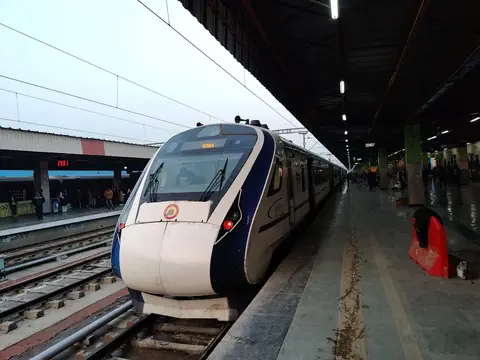
By rail, Kochi's station is Ernakulam Junction, on Kerala's main line; the Ernakulam-Bengaluru Vande Bharat Express, launched in November 2025, covers its run in 8 hours 40 minutes. The transport guide explains how foreign visitors book on IRCTC under the foreign tourist quota.
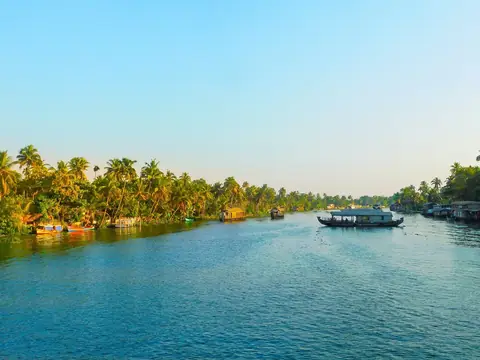
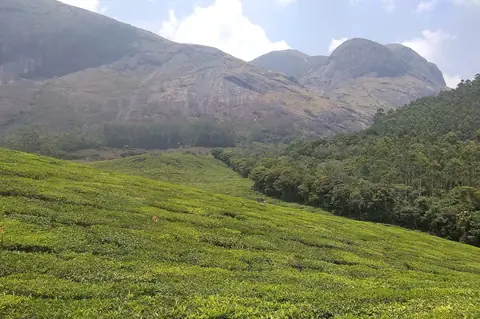
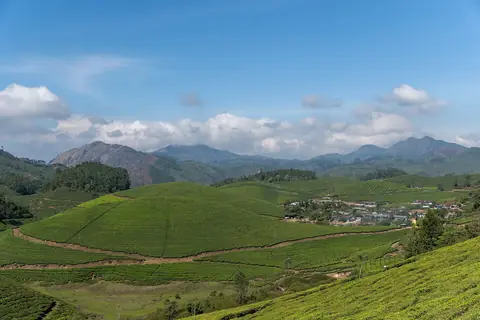
On to the backwaters and the hills. Alappuzha, the backwater town, lies 62 km south of Kochi, about an hour on NH 66 by the district administration's figure, which puts Cochin International Airport 82.8 km from Alappuzha, 2 hours by NH 66. Indian Railways publishes Ernakulam-Alappuzha departure times and fares only in its journey search, so check IRCTC for your date. The Kerala backwaters guide covers houseboats and ferries. Munnar is reached by road: Kerala Tourism gives about 119 km from Cochin International Airport and about 120 km from Ernakulam Junction, the nearest railhead, suggests Ernakulam town as the starting point, and says public buses run to Munnar from almost all major bus stations in the state. Our Munnar guide covers the tea estates.
A three-night plan
This plan puts Fort Kochi on the first full day and Mattancherry on the second, and stops at the Hill Palace on the way out. The South India itinerary continues the trip to the backwaters and Munnar.
- Day 1: arrive at Cochin airport and check in on Bolgatty Island. If you land early, see the Durbar Hall Art Gallery; in the evening take the boat to High Court and walk Marine Drive along the backwater.
- Day 2: Water Metro from High Court to Fort Kochi in the morning, when the fishing nets are working; St Francis Church, Santa Cruz Basilica, the Indo-Portuguese Museum (closed on Mondays) and the Dutch Cemetery, then lunch near the beach. Back to the nets at Vasco da Gama Square for sunset, and Kathakali in the evening, before the last boat at 20:55.
- Day 3: an early Water Metro from High Court to Mattancherry; the palace and its Ramayana murals from 10:00, the Paradesi Synagogue before its midday break at 12:00, and the spice and antique shops of Jew Town in the afternoon. Walk north to Fort Kochi for the boat back to High Court.
- Day 4: check out and take a taxi with your bags to the Hill Palace Museum at Thripunithura, open from 09:00 except on Mondays, then go on to Ernakulam Junction for the train to Alappuzha, or east by road to Munnar.
Make time for the local food
What to eat and where to look
Karimeen pollichathu
Pearl spot fish, gashed, rubbed with spices and lime, sealed in a banana leaf with curry leaves and grilled on a hot griddle; Kerala Tourism serves it with lime and salad.
- Where to look
- Nadan Food, a home kitchen on K.P. Vallon Road in Kadavanthra, Ernakulam, listed on Kerala Tourism's Responsible Tourism ethnic-cuisine site, which serves a whole karimeen at lunch.
- Fit it into your day
- Lunch in Ernakulam on day 1 or day 4.
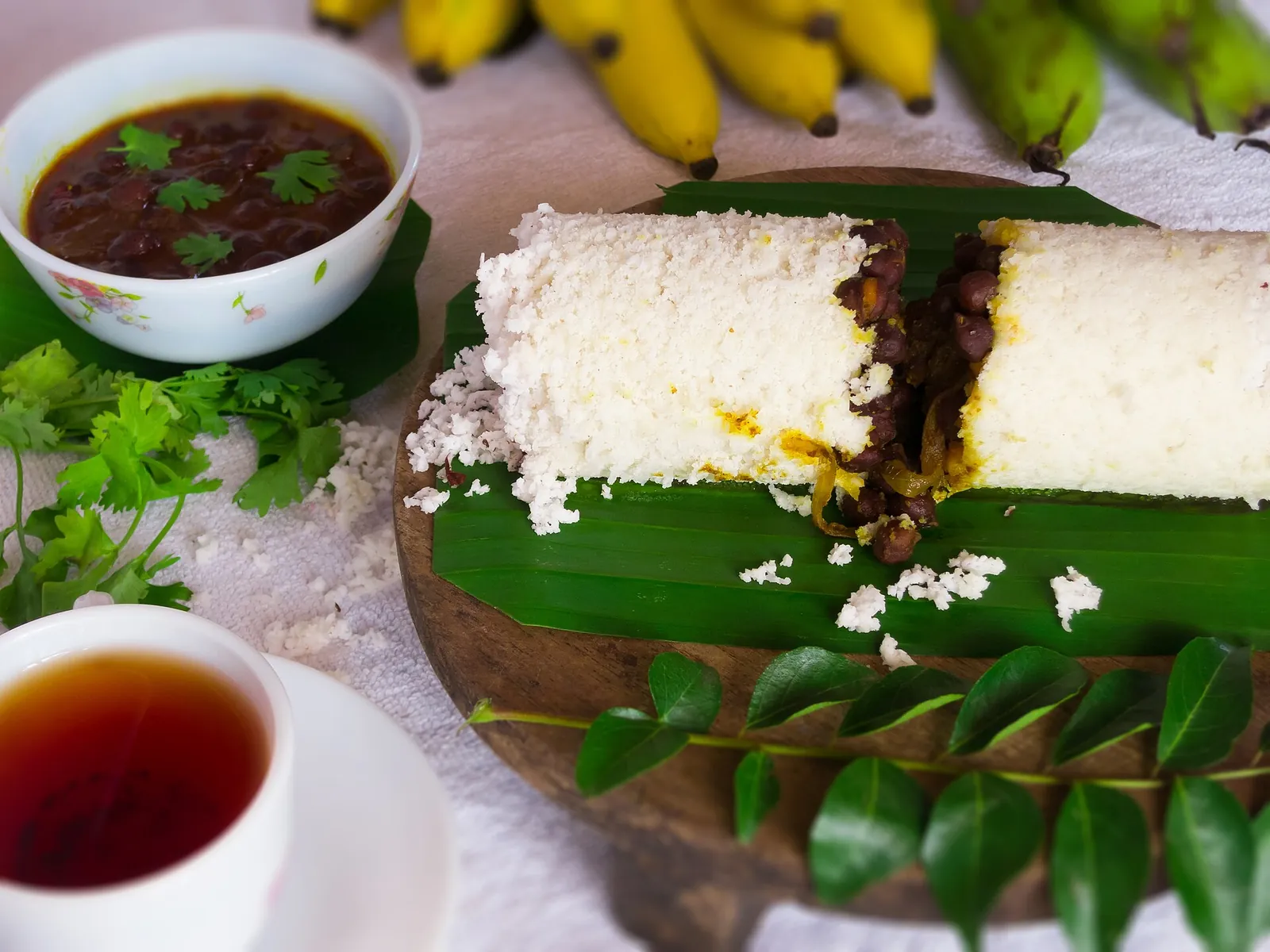
Puttu and kadala curry
Rice flour and grated coconut steamed in layers in a puttu maker, with a spicy curry of black chickpeas: the breakfast Kerala Tourism says most Keralites start the day with.
- Where to look
- Nadan Food in Kadavanthra, Ernakulam, which lists puttu with black channa curry for breakfast.
- Fit it into your day
- Breakfast in Ernakulam on day 4, on the way to the Hill Palace, in place of the hotel's.
Beef kurumulakittathu with parotta
Beef cooked dry with crushed black pepper, a Malabar dish eaten with rice, chapati or the flaky layered flatbread Kerala calls parotta.
- Where to look
- Dhiloos Food Unit, a home kitchen on Earaveli Canal Road in Fort Kochi, listed on Kerala Tourism's Responsible Tourism ethnic-cuisine site, which serves it at lunch and dinner; use the enquiry button on its listing before you go.
- Fit it into your day
- Dinner in Fort Kochi after the Mattancherry day.
Chemmeen kari
Kerala prawn curry, the prawns cooked in a sauce of rustic spices, eaten with rice.
- Where to look
- Dhiloos Food Unit on Earaveli Canal Road in Fort Kochi, which lists it at lunch.
- Fit it into your day
- Lunch on the Fort Kochi day, after the churches.
Say so when you order if you avoid shellfish, nuts or coconut, which go into many Kerala dishes.
A priced three-night stay for two
This model follows the plan above for two adults sharing a room, with prices checked on 17 October 2026.
- Room, Bolgatty Palace and Island Resort, Golf view double room with breakfast, 3 nights at INR 4,500 (INR 13,500), plus 5% GST (INR 675): INR 14,175.
- Water Metro, for two, on days 2 and 3: each day Bolgatty to High Court (INR 20), High Court to Fort Kochi or Mattancherry (INR 40), Fort Kochi to High Court (INR 40) and High Court to Bolgatty (INR 20), INR 120 a person a day: INR 480.
- Boat on day 1, Bolgatty to High Court and back for Marine Drive, for two (INR 20 each way): INR 80.
- Museums, for two: the Indo-Portuguese Museum (INR 40 each) and the Hill Palace Museum (INR 50 each): INR 180.
- Total: about INR 14,915 for two.
- Not included: lunches and dinners; the tickets for Mattancherry Palace and the synagogue and the Kathakali seats, none of which publishes a price, so carry small notes; the airport taxi, the taxi on day 4 and the train or road onward.
Practical questions
How many nights do I need in Kochi?
Three nights: one day for Fort Kochi and a Kathakali evening, one for Mattancherry Palace and Jew Town, and a last morning for the Hill Palace before you move on to the backwaters or Munnar. With two nights, put Mattancherry on the full day and see the fishing nets at sunset on the evening you arrive.
When are Mattancherry Palace and the Paradesi Synagogue closed?
Mattancherry Palace is open from 10:00 to 17:00 on all days except Fridays, and the Paradesi Synagogue is open from 10:00 to 12:00 and 15:00 to 17:00, closed on Fridays, Saturdays and Jewish holidays. Visit both from Sunday to Thursday, and take your shoes off at the synagogue.
How do I get from Ernakulam to Fort Kochi?
Take the Kochi Water Metro from the High Court terminal: the boats run from 08:00 to 20:30, take 20 to 23 minutes and cost INR 40, according to the operator's schedule and route planner. A separate route runs from High Court to Mattancherry.
Where can I see Kathakali in Kochi?
Kerala Tourism and Incredible India both point to the Kerala Kathakali Centre in Fort Kochi, though neither gives a show time, price or booking step, so ask the centre or your hotel. The Cochin Cultural Centre, with theatres in Fort Kochi and Ernakulam, gives a daily show at 18:30, an hour long, with the make-up from 16:30.
How far is Cochin airport from Fort Kochi?
About 40 km to Mattancherry, next to Fort Kochi, as Kerala Tourism gives it. App taxis such as Uber and Ola work in every terminal building, and prepaid taxis are offered too.
When is the best time to visit Kochi?
October to March are the most pleasant months, as Incredible India gives them, although October to December still bring the northeast monsoon. January and February miss both of Kerala's rainy seasons, the southwest monsoon from June to September and the northeast monsoon from October to December.
Sources and checks before you travel
Reference sources for the version dated 17 October 2026. Confirm opening times, access, transport and conditions for your travel dates.
- Kerala Tourism: Chinese fishing nets ↗ — opens in a new tab
- Kerala Tourism: St. Francis Church ↗ — opens in a new tab
- Kerala Tourism: St. Francis CSI Church (Christianity in Kerala) ↗ — opens in a new tab
- Kerala Tourism: Fort Kochi ↗ — opens in a new tab
- Kerala Tourism: Santa Cruz Basilica, Fort Kochi ↗ — opens in a new tab
- Kerala Tourism: Mattancherry Dutch Palace ↗ — opens in a new tab
- Kerala Tourism newsletter: Mattancherry Palace (April 2022) ↗ — opens in a new tab
- Archaeological Survey of India: museums ↗ — opens in a new tab
- Kerala Tourism: Paradesi Synagogue ↗ — opens in a new tab
- Kerala Tourism: Kathakali (newsletter article) ↗ — opens in a new tab
- Ministry of Tourism (Incredible India): Kochi ↗ — opens in a new tab
- Ministry of Tourism (Incredible India): Fort Kochi ↗ — opens in a new tab
- Kochi Biennale Foundation: Kochi-Muziris Biennale ↗ — opens in a new tab
- Kochi Water Metro: home page ↗ — opens in a new tab
- Kochi Water Metro: boat schedule and route planner ↗ — opens in a new tab
- KTDC: Bolgatty Palace and Island Resort ↗ — opens in a new tab
- KTDC: Bolgatty Palace tariff, 1 April 2026 to 31 March 2027 ↗ — opens in a new tab
- KTDC: Bolgatty Palace, how to reach ↗ — opens in a new tab
- GST Council: recommendations of the 56th meeting (PIB release of 3 September 2025) ↗ — opens in a new tab
- UK Foreign Office (FCDO): India safety and security ↗ — opens in a new tab
- Official e-Visa site: e-Tourist visa and entry points ↗ — opens in a new tab
- PIB: four new Vande Bharat trains, 6 November 2025 ↗ — opens in a new tab
- Kerala Tourism: Munnar ↗ — opens in a new tab
- India Meteorological Department: Statement on the climate of India during 2025 (1 January 2026) ↗ — opens in a new tab
- India Meteorological Department: Northeast Monsoon 2024 report ↗ — opens in a new tab
- Kerala Tourism: Karimeen pollichathu recipe ↗ — opens in a new tab
- Kerala Tourism: Puttu and kadala curry recipe ↗ — opens in a new tab
- Cochin Cultural Centre: Kathakali theatres ↗ — opens in a new tab
- District Alappuzha: How to reach ↗ — opens in a new tab
- Kerala Tourism Responsible Tourism: Dhiloos Food Unit, Fort Kochi ↗ — opens in a new tab
- Kochi Metro Rail Ltd: plan your journey, fares and stations ↗ — opens in a new tab
- Kerala Tourism: Hill Palace Museum, Thripunithura ↗ — opens in a new tab
- Incredible India: Indo-Portuguese Museum, Kochi ↗ — opens in a new tab
- Kerala Tourism: Indo-Portuguese Museum, Bishop's House ↗ — opens in a new tab
- Kerala Tourism: Antique sellers of Jew Street ↗ — opens in a new tab
- Kerala Tourism: Vypeen Island ↗ — opens in a new tab
- Kerala Tourism: Cherai Beach ↗ — opens in a new tab
- Incredible India: Durbar Hall, Kochi ↗ — opens in a new tab
- Incredible India: Marine Drive, Kochi ↗ — opens in a new tab
- Kerala Tourism Responsible Tourism: Nadan Food, Kadavanthra ↗ — opens in a new tab
Does this experience fit your route?
Book the room first, then a Kathakali seat for the Fort Kochi evening, and keep the last morning for the Hill Palace.
Check dates and details on Viator ↗ — opens in a new tabAffiliate link · Book with ViatorPhoto credits
Chinese fishing nets on the beach at Fort Kochi, with the harbour behind
Photograph: Ingo Mehling — opens in a new tab · CC BY-SA 4.0 — opens in a new tab
Changes: Resized and converted to WebP; displayed with responsive crops. · Original photograph and licence details ↗ — opens in a new tab
St Francis Church in Fort Kochi, where Vasco da Gama was first buried
Photograph: Ranjith Siji — opens in a new tab · CC BY-SA 4.0 — opens in a new tab
Changes: Resized and converted to WebP; displayed with responsive crops. · Original photograph and licence details ↗ — opens in a new tab
Mattancherry Palace, the Dutch Palace, seen from its grounds
Photograph: Ranjith Siji — opens in a new tab · CC BY-SA 4.0 — opens in a new tab
Changes: Resized and converted to WebP; displayed with responsive crops. · Original photograph and licence details ↗ — opens in a new tab
Blue and white tiles from Canton in the Paradesi Synagogue
Photograph: Ingo Mehling — opens in a new tab · CC BY-SA 4.0 — opens in a new tab
Changes: Resized and converted to WebP; displayed with responsive crops. · Original photograph and licence details ↗ — opens in a new tab
The painted nave of Santa Cruz Basilica in Fort Kochi
Photograph: Ingo Mehling — opens in a new tab · CC BY-SA 4.0 — opens in a new tab
Changes: Resized and converted to WebP; displayed with responsive crops. · Original photograph and licence details ↗ — opens in a new tab
Kathakali performers in pacha make-up at a dance festival in Kerala
Photograph: Shagil Kannur — opens in a new tab · CC BY-SA 3.0 — opens in a new tab
Changes: Resized and converted to WebP; displayed with responsive crops. · Original photograph and licence details ↗ — opens in a new tab
Puttu with kadala curry, the classic Kerala breakfast
Photograph: Anto Paul — opens in a new tab · CC BY-SA 4.0 — opens in a new tab
Changes: Resized and converted to WebP; displayed with responsive crops. · Original photograph and licence details ↗ — opens in a new tab