Plan your trip · Regional comparison
Southeast Asia border crossings: land, rail, sea and air choices
A border can have an international checkpoint, a running train and a visa rule that still does not fit your passport. Start with the country pair, then the exact checkpoint. The most straightforward overland choices here are Malaysia–Singapore and Vietnam–Cambodia; Thailand–Laos needs particular care over the bridge number and railway station. Other pairs call for flights, or a conditional land option that needs more planning. This hub compares the choices across AsiaVela’s covered countries and points to the full route guides for the nights, sights and bookings.
- Suggested time
- Choose the route guide’s nights; example: 5 days and 4 nights from Penang to Singapore
- Where to stay
- No universal base; the priced example uses George Town (2 nights) and KL Sentral/Brickfields (2 nights)
- Season and timing
- Match the dates to the chosen operator’s current timetable. A listed seasonal ferry is not a year-round connection, and a border arrival should not be tied to a same-day flight home.
The short answer
Choose the crossing before booking rooms, then check both countries’ entry rules and buy the dated international service. There is no single night count for this comparison: the Penang–Singapore example is five days and four nights, two in George Town and two near KL Sentral, ending at Woodlands on day 5. Two useful rail prices, checked on 2026-10-14, are RM107 per adult on the 13:05 Butterworth–KL Sentral Express for 11 November 2026 and RM5 southbound on Shuttle Tebrau. Malaysia–Singapore offers rail, road and scheduled sea choices; Vietnam–Cambodia has the Moc Bai–Bavet bus. Use air for the excluded country pairs described below.
Choose a country pair, then a checkpoint
Three questions come before a ticket: does an international passenger service run, does the named checkpoint accept your passport and visa, and does the route fit the travel advice? A visa accepted at an airport may not work at a land gate. An arrival card records the journey; it does not replace entry permission. Use the country checklists at the end for nationality-specific rules, passport validity and onward-ticket requirements.
This comparison covers eight land-adjacent pairs between countries on this site. Singapore–Indonesia is a separate sea pair; Japan–South Korea is a Northeast Asian extension. Thailand and Vietnam do not share a land border. A railway journey from Thailand to Singapore is several services and countries, with no through train offered here.
- Malaysia–Singapore: rail and road are the detailed options below; scheduled sea links and flights are alternatives.
- Vietnam–Cambodia: the direct Moc Bai–Bavet bus or air; the Chau Doc boat needs its own checkpoint and pier arrangements.
- Thailand–Laos: Friendship Bridge I road and Khamsavath rail are distinct options; air also works. Match the visa to the actual entry checkpoint.
- Vietnam–Laos: fly for the route described here. Tourist land gates exist, but they are not interchangeable with Lao eVisa airports.
- Cambodia–Laos, Thailand–Cambodia and Thailand–Malaysia: use air in these guides; the advisory boundaries below explain the omitted surface routes.
- Malaysia–Indonesia: air is the default. Kalimantan has conditional land-entry ports; this is not a geographically air-only pair.
- Singapore–Indonesia: ferry services operate, but the sea route is held under the advisory policy below.
The surface routes we leave out
Government warnings differ, so on 2026-10-16 the UK FCDO, Germany’s Auswärtiges Amt and France Diplomatie were compared. AsiaVela follows the strictest advice and keeps these exclusions: no journeys in Songkhla, including Hat Yai, mainland Satun, Phatthalung, Pattani, Yala or Narathiwat; no Myanmar-border route; and no itinerary within 50 km of the Thailand–Cambodia border. There is no Thailand–Malaysia or Thailand–Cambodia land itinerary here. France’s Thailand advice directs Koh Lipe arrivals by sea from Koh Lanta or Krabi, so the Langkawi–Koh Lipe international ferry is not offered either.
In Laos, the routes avoid Xaisomboun, Bokeo and Sainyabuli/Xayabouly, the Myanmar border and the area near Cambodia’s border. That removes the Huay Xai slow boat, Friendship Bridge IV and the Cambodia–Laos road crossing from these plans. Cambodia itineraries also remain at least 50 km from Thailand’s border. Stay on established paths around Cambodia’s and Laos’s historic sites because of mines and unexploded ordnance.
France’s Indonesia advice says to avoid, except for compelling reasons, piracy-risk maritime zones including border waters with Singapore, Malaysia and the Philippines. The running Batam and Bintan ferries do not provide an exemption from that advice: Singapore–Indonesia and Malaysia–Indonesia sea travel are not recommended here. No Sabah–Philippines or Sabah–Indonesia sea alternative is offered; France also excludes the northern/eastern Sabah islands, surrounding waters and affected coast. Check your own government’s advice before buying.
Malaysia–Singapore: a five-minute train, buses and coastal ferries
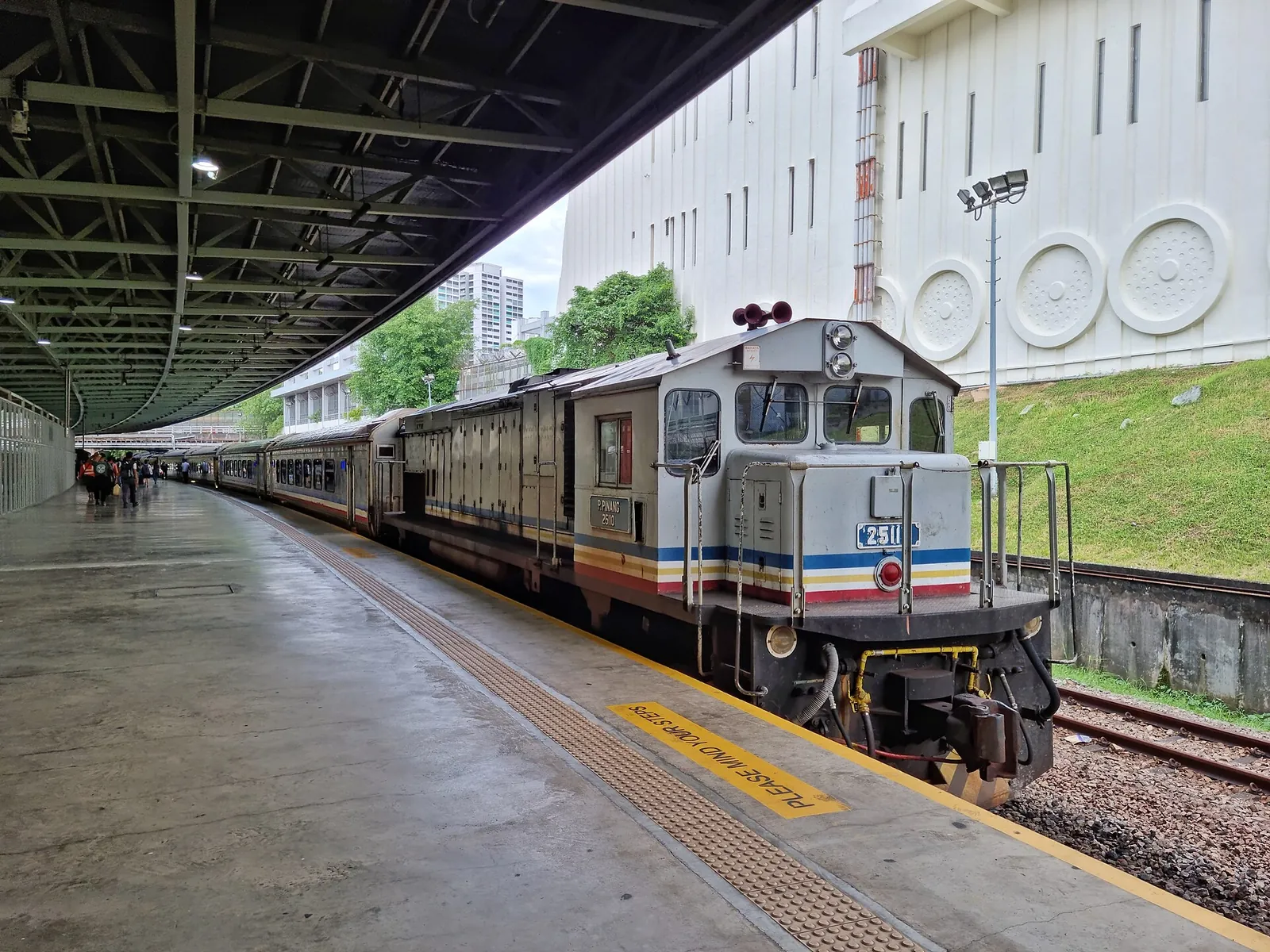
Southbound, you clear Malaysian immigration at JB Sentral before boarding and Singapore immigration at Woodlands Train Checkpoint after you get off. Shuttle Tebrau takes 5 minutes between JB Sentral and Woodlands Train Checkpoint in both directions. When we checked on 2026-10-14, KTMB’s timetable listed 18 trips a day from JB Sentral to Woodlands, first 05:00, last 22:45. KTMB listed a one-way fare of RM5 from JB Sentral to Woodlands for everyone. From Woodlands to JB Sentral, Malaysian citizens pay RM5 and everyone else pays S$5, charged in ringgit.
Buy Shuttle Tebrau tickets on the KTMB website (online.ktmb.com.my), in the KTMB Mobile (KITS) app, or at the JB Sentral and Woodlands ticket counters. You enter your passport number and expiry date when you buy, because the passport is the boarding pass. At JB Sentral the gate opens 30 minutes and closes 10 minutes before departure. KTMB’s 30-day passport condition is a ticket rule; it does not replace either country’s immigration requirements.
If the shuttle is full, Causeway Link’s named routes include CW1 to Kranji MRT, CW2 to Queen Street Terminal and CW5 to Newton Circus from the Johor Bahru BSI checkpoint beside JB Sentral. Take all your bags through each country’s controls and board the next bus of the same route. Buy the operator’s ticket for the chosen route; queues and road traffic make this a less predictable connection than the scheduled rail crossing.
By sea, BatamFast’s timetable effective 17 September 2026 lists Tanah Merah Ferry Terminal–Desaru Coast at 10:10, returning at 17:30, Thursday–Sunday only, and Tanah Merah–Tanjung Pengelih at 08:30, returning at 16:00, Saturday–Sunday only. These are Malaysia services, distinct from its Indonesian ferries; both directions use the same local clock. Book directly with BatamFast; use its booking quote for the fare and sailing duration.
Every visitor submits the SG Arrival Card (SGAC), with its health declaration, within 3 days before arrival, counting the arrival day (arriving on 30 June, you can submit from 28 June). It is free and is done only on ICA’s SGAC e-Service (https://eservices.ica.gov.sg/sgarrivalcard/) or the free MyICA Mobile app; paid “arrival card” websites are not ICA’s. For northbound entry, Malaysia’s MDAC has its own exemptions, including Singapore citizens, rather than all Singapore residents. Both countries’ visa rules apply independently.
The RTS Link from Johor Bahru to Singapore is not open yet; the official target is February 2027 (statement of 2 October 2026). For the complete railway journey, read Penang to Singapore by train: ETS, Shuttle Tebrau and four nights.
Vietnam–Cambodia: the Moc Bai–Bavet bus
Giant Ibis’s dated 17 November 2026 service leaves 303 Phan Ngu Lao, Ho Chi Minh City, at 06:00 and reaches Road 106, Sangkat Doun Penh, Khan Doun Penh, Phnom Penh, at 13:00, with a seat at US$28, checked on 2026-10-16. Its direct online charge adds US$1 per passenger per leg. Book the service and seats on giantibis.com, and arrive 35 minutes before departure. The journey uses Moc Bai on the Vietnamese side and Bavet in Cambodia; follow the attendant through Vietnamese exit, Cambodian passport processing and the baggage scan.
Vietnam’s national tourism authority lists Moc Bai for foreign eVisa entry and exit and says there is no visa on arrival at a Vietnamese land crossing. Cambodia’s e-visa is accepted for entry at Bavet; apply on the official portal, evisa.gov.kh, and check its eligibility list for your nationality. Cambodia does not publish Bavet’s counter hours; ask Giant Ibis when booking. No separate universal border-processing fee is included here.
Ho Chi Minh City to Siem Reap: 7 days via Phnom Penh supplies the terminals, Cambodian entry arrangements and the onward days. Phnom Penh’s palace and riverside make a natural break before Siem Reap’s Angkor temples; the route leaves Cambodia by air. Use Techo International Airport (KTI) for current major-airline Phnom Penh planning, or Siem Reap Angkor International Airport (SAI) for Angkor. The Chau Doc–Phnom Penh boat is not offered as a complete alternative here; its pier and checkpoint details are not published.
Thailand–Laos and Vietnam–Laos: bridge numbers matter
Choose an entry point that accepts your visa: the official eVisa list includes Wattay, Luang Prabang and Pakse international airports, Friendship Bridges I and II, Boten road checkpoint, Boten railway station and Khamsavath railway station. Friendship Bridge III is not on the eVisa list. Friendship Bridge IV is listed but lies in the excluded Bokeo area described above.
For Vientiane–Nong Khai, Friendship Bridge I is the road crossing. Khamsavath is the separate Thailand-facing railway terminal; the Laos–China Railway’s Vientiane Station in Xaythany district serves the domestic rail journey from Luang Prabang. Search State Railway of Thailand’s D-Ticket for Vientiane (Khamsavath) when choosing the rail alternative. No official bus or shuttle service over Friendship Bridge I is documented, so this guide offers no booking channel for the road leg. The verified crossing is SRT Rapid 134 from Khamsavath to Krung Thep Aphiwat, booked through D-Ticket.
Complete the Lao Digital Immigration Form within three days before arrival and again within three days before departure when using Wattay, Luang Prabang or Pakse international airport, or Friendship Bridge I. This arrival and departure form is separate from your visa. Submit the free Thailand Digital Arrival Card at tdac.immigration.go.th within three days before arrival, including the arrival date; a new card is needed for each entry.
For Vietnam–Laos, use Hanoi–Luang Prabang by air in Hanoi to Bangkok via Laos: 10–14 days by air and rail. Luang Prabang offers temple streets and the Mekong riverfront before the railway south to Vientiane. The Lao tourism office also lists the Vietnam-facing Densavanh–Lao Bao, Nam Phao–Cau Treo and Napau–Cha Lo tourist crossings. None is on the Lao eVisa list, so an eVisa alone cannot be used there; a different accepted visa or nationality-specific entitlement is needed. No current cross-border bus leg through them is recommended in this comparison.
Indonesia and the pairs that call for air planning
Malaysia–Indonesia land: Indonesia’s e-VOA port list includes Entikong, Aruk, Jagoi Babang and Nanga Badau in Kalimantan. Those are conditional entry choices for eligible e-VOA holders, not a timetable for a Kuching–Pontianak bus. Malaysia’s exit/entry rules and Sarawak’s separate immigration controls also apply. Use the two country checklists below; the land option needs a separate transport booking.
Singapore–Indonesia sea: Singapore Cruise Centre lists Batam and Bintan operators, including BatamFast, Bintan Resort Ferries, Majestic and Sindo, serving different ports. Indonesia’s e-VOA list includes Batam Centre and Bandar Bintan Telani Lagoi, but port acceptance and nationality eligibility remain separate. The advisory decision is in the exclusion section; this guide does not route or recommend the crossing.
Cambodia–Laos, Thailand–Cambodia and Thailand–Malaysia: build the permitted journeys around flights between the destinations you actually want to visit. Some journeys need a change; do not buy a “border transfer” merely because the countries touch. The Cambodia airport choice is KTI for Phnom Penh and SAI for Siem Reap.
Taiwan and the Philippines: use air planning with the entry and transport guides below, choosing the actual arrival airport. This is not a promise of a direct flight between every country pair. The Philippines’ and Indonesia’s maritime borders, and northern/eastern Sabah waters, are not substitutes for the excluded routes.
A four-night example: George Town, Kuala Lumpur, then Woodlands
To see how a border crossing fits a holiday, use the five-day Penang–Singapore example: two nights in George Town and two near KL Sentral, then Singapore on day 5. It ends at Woodlands; any Singapore stay is additional. Fix the KL Sentral–JB Sentral train and Shuttle Tebrau first, then the Butterworth–KL Sentral train, rooms and Blue Mansion tour. This is one route to choose, rather than a night count for all Southeast Asia.
George Town’s shophouses, Street of Harmony and lived-in wooden Clan Jetties reward time on foot. Give Air Itam an afternoon for Kek Lok Si’s temple halls and the Penang Hill funicular. Kuala Lumpur then changes the scale: Merdeka Square’s civic buildings, Central Market’s crafts and upstairs food court, and the Islamic Arts Museum’s galleries. These stops give the rail journey a reason to take five days.
- Days 1–2: George Town heritage streets, Blue Mansion, Air Itam and Penang Hill. Sleep twice in George Town.
- Day 3: Penang Port ferry from Pangkalan Raja Tun Uda in George Town to Pangkalan Sultan Abdul Halim in Butterworth, then KTMB’s 13:05 Express to KL Sentral, arriving 16:40. Night: Kuala Lumpur.
- Day 4: Kuala Lumpur’s old centre and museums, returning to the same KL Sentral/Brickfields room.
- Day 5: KTMB’s 07:55 Platinum from KL Sentral to JB Sentral, arriving 12:15; the 14:00 Shuttle Tebrau reaches Woodlands at 14:05 before Singapore immigration. Keep the border day clear of a flight home.
Published-price example for two adults
This five-day, four-night Penang–Kuala Lumpur–Woodlands example uses prices checked on 2026-10-14: about RM1,317 for the listed transport, four room nights and three paid sights. Meals are additional. The four-night route subtotal uses two hotel tiers. The ETS examples are for Wednesday 11 November 2026; rail fares vary by service and booking date.
- Transport, RM436. The ferry to Butterworth, RM2 each: RM4. Butterworth-KL Sentral on the 13:05 Express, RM107 each: RM214. KL Sentral-JB Sentral on the 07:55 Platinum, RM104 each: RM208. Both ETS fares are those listed for Wednesday 11 November 2026. Shuttle Tebrau to Woodlands, RM5 each: RM10.
- Rooms, about RM711. Two nights in George Town at Sunway Hotel Georgetown, a 4-star hotel on New Lane off Macalister Road, whose own site showed its 28 m² Superior King room at RM198.75 a night; its policy adds a 10% service charge, 8% SST, a RM3 local government fee and the RM10 tourism tax per room per night: about RM495, assuming the 8% SST applies to the room rate only. Two nights at YMCA KL in Brickfields, beside KL Sentral, a simpler hostel whose site lists a 19 m² Double Room with attached bathroom at RM98 a night, plus the RM10 tourism tax: RM216.
- Sights, RM170. The Blue Mansion guided tour, RM25 each: RM50. The Penang Hill funicular, standard adult return in the normal lane, RM40 each: RM80. The Islamic Arts Museum Malaysia, RM20 each: RM40.
- Not included: meals and drinks; getting to George Town and the airport bus; KTM Komuter to Batu Caves, taxis and e-hailing; the Business Class supplement; the optional Ipoh night; buses, the MRT and hotels in Singapore; travel insurance.
Make time for the local food
What to eat and where to look
Char koay teow on New Lane
Flat rice noodles fried over high heat, usually with prawns, cockles, egg, bean sprouts and chives; one of the signature Penang dishes Penang Global Tourism names.
- Where to look
- New Lane (Lorong Baru), George Town, one of the hawker streets Penang Global Tourism lists alongside Chulia Street and Gurney Drive.
- Fit it into your day
- For the five-day Penang–Kuala Lumpur–Woodlands example: dinner on day 1.
Contains shellfish and egg, and many stalls use pork fat or Chinese sausage; tell the cook about any allergy before ordering, because the sauces and fats are shared between plates.
Penang assam laksa in Air Itam
Rice noodles in a sour, spicy fish broth sharpened with tamarind, topped with herbs, cucumber, onion and pineapple.
- Where to look
- Air Itam, at the foot of Kek Lok Si and the Penang Hill road, another of the food areas named by Penang Global Tourism.
- Fit it into your day
- For the five-day Penang–Kuala Lumpur–Woodlands example: a late lunch on day 2 between the temple and the funicular.
Curry kapitan at Jawi House
A rich chicken curry from Penang's Jawi Peranakan kitchen, which Penang Global Tourism describes as a blend of Malay, Indian Muslim and Peranakan cooking.
- Where to look
- Jawi House in George Town, one of the restaurants the tourism bureau names for Jawi Peranakan food and for halal dining.
- Fit it into your day
- For the five-day Penang–Kuala Lumpur–Woodlands example: dinner on day 2, back in town after Penang Hill.
Satay at Central Market
Skewers of marinated chicken or beef grilled over charcoal and served with a spicy peanut sauce, cucumber and onion.
- Where to look
- The upstairs food court of Central Market (Pasar Seni) in Kuala Lumpur, which Warisan KL names for satay and laksa.
- Fit it into your day
- For the five-day Penang–Kuala Lumpur–Woodlands example: lunch on day 4, between Merdeka Square and Petaling Street.
Entry and transport checklists for each country
Open both countries’ checklists before buying an international ticket, including the country you return to. A previous entry stamp does not grant a new stay. Use each government’s nationality list and the exact checkpoint, and keep visa fees separate from train, bus or ferry fares. An operator’s departure time is not an immigration office’s opening time.
- Thailand: Thailand entry requirements: visa exemption, TDAC and customs; Getting around Thailand: trains, flights, buses and ferries.
- Laos: Laos entry: eVisa, arrival forms and the right checkpoint; Laos transport: railway, stations, flights and border crossings.
- Cambodia: Cambodia entry: visas, e-Arrival and airport choices; Cambodia transport: airports, buses, island boats and Vietnam.
- Vietnam: Vietnam entry rules: 45 days visa-free, e-visa, passport, arrival card; Getting around Vietnam: flights, the north–south train, buses and Grab.
- Malaysia: First trip to Malaysia: a week in Kuala Lumpur and Penang, entry and costs; Getting around Malaysia: ETS trains, Singapore links, ferries and flights.
- Singapore: First trip to Singapore: how many nights, entry, money and a budget for two; Singapore transport: Changi, MRT, fares, Sentosa, ferries and Johor Bahru.
- Indonesia: Indonesia visa on arrival for Europeans: e-VOA, arrival card, levy; Getting around Indonesia: flights, trains, ferries and scooters.
- Japan: First trip to Japan: route, entry, money, manners and what to book; Getting around Japan: trains, IC cards, buses, luggage and driving.
- South Korea: South Korea entry rules: visa-free stays, K-ETA and arrival card; Getting around South Korea: KTX, express buses, flights and ferries.
- Taiwan: Taiwan entry requirements: visas, arrival card and customs; Getting around Taiwan: THSR, TRA, metros, buses, passes and flights.
- Philippines: Philippines entry requirements: visas, eTravel and customs; Philippines transport: flights, Manila airport and ferries.
A separate Northeast Asian extension: Hakata–Busan
Japan–South Korea is outside the Southeast Asian overland chain. Camellia Line connects Hakata International Passenger Terminal in Fukuoka with Busan International Passenger Terminal. Its fare table effective 1 October 2026 lists adult second class at ¥15,000, with departure taxes, terminal and fuel charges additional. Use Fukuoka to Busan by ferry: fares, ports and seven days for the sailing calendar, both ports’ fees, cabin and check-in arrangements.
Queen Beetle is not a current high-speed alternative: JR Kyushu announced its withdrawal from vessel operation on 23 December 2024. Flights offer a separate way to join the two cities. Japan’s and South Korea’s entry and authorisation rules still apply to a ferry passenger; neither a ferry reservation nor a previous visa exemption settles the other country’s admission.
Practical questions
Are all these crossings open to every foreign tourist?
No. International passenger service, checkpoint acceptance of a visa and your passport’s eligibility are separate decisions. Use the exact entry gate and the two countries’ official nationality rules.
How many nights should I book for this hub’s routes?
Choose a full route guide first. The priced example is five days with four nights: two in George Town and two in Kuala Lumpur, then Woodlands on day 5. There is no universal night count for the country comparison.
Does a Lao eVisa work at every Friendship Bridge?
No. Bridges I and II and Khamsavath railway station are on the eVisa list; Bridge III is not. Bridge IV is in Bokeo, outside these routes. The road crossing and the railway station use different arrangements.
Can I travel directly from Thailand to Vietnam overland?
The countries do not share a land border. The Hanoi–Bangkok route here flies between Hanoi and Luang Prabang, then travels south through Laos before entering Thailand.
Can an operating ferry still be outside the recommended routes?
Yes. The exclusion section explains the Singapore–Indonesia and Malaysia–Indonesia maritime advisory hold. A timetable establishes the service, not permission to recommend it.
Sources and checks before you travel
Reference sources for the version dated 16 October 2026. Confirm opening times, access, transport and conditions for your travel dates.
- KTMB: ETS timetable effective 1 June 2026 (PDF) ↗ — opens in a new tab
- KTMB: online ticketing (KITS) trip search ↗ — opens in a new tab
- KTMB: Intercity timetable effective 1 August 2026, Shuttle Tebrau page (PDF) ↗ — opens in a new tab
- KTMB: Shuttle Tebrau FAQ ↗ — opens in a new tab
- Causeway Link: Singapore cross-border bus routes ↗ — opens in a new tab
- LTA and Malaysia's Ministry of Transport: RTS Link joint news release (2 October 2026) ↗ — opens in a new tab
- Penang Port: ferry e-ticketing and fares ↗ — opens in a new tab
- Penang Global Tourism: George Town UNESCO World Heritage Site ↗ — opens in a new tab
- Penang Global Tourism: Penang street food ↗ — opens in a new tab
- Cheong Fatt Tze - The Blue Mansion: daily tours ↗ — opens in a new tab
- Penang Hill Corporation: tickets and operating hours ↗ — opens in a new tab
- Islamic Arts Museum Malaysia: visit us ↗ — opens in a new tab
- Sunway Hotel Georgetown: Superior King room ↗ — opens in a new tab
- YMCA KL: hostel rooms ↗ — opens in a new tab
- Sunway Hotel Georgetown: hotel policies and house rules ↗ — opens in a new tab
- Warisan KL: Central Market ↗ — opens in a new tab
- Lao Ministry of Foreign Affairs eVisa portal ↗ — opens in a new tab
- Tourism Marketing & Promotion Department, Ministry of Culture and Tourism ↗ — opens in a new tab
- Thailand Immigration Bureau: TDAC FAQ ↗ — opens in a new tab
- UK FCDO entry requirements ↗ — opens in a new tab
- Vietnam National Authority of Tourism: Vietnam visa requirements ↗ — opens in a new tab
- Vietnam National Authority of Tourism: Getting to Vietnam ↗ — opens in a new tab
- Giant Ibis: Ho Chi Minh City–Phnom Penh, 17 November 2026 ↗ — opens in a new tab
- Giant Ibis: Ho Chi Minh City to Phnom Penh ↗ — opens in a new tab
- Giant Ibis: terms and conditions ↗ — opens in a new tab
- Giant Ibis: online booking service charge ↗ — opens in a new tab
- Directorate General of Immigration: entry points for e-VOA holders ↗ — opens in a new tab
- BatamFast: timetable effective 17 September 2026 ↗ — opens in a new tab
- France Diplomatie: Thailand travel advice ↗ — opens in a new tab
- Auswärtiges Amt: Laos travel advice ↗ — opens in a new tab
- UK FCDO: Laos travel advice ↗ — opens in a new tab
- France Diplomatie: Indonesia travel advice ↗ — opens in a new tab
- France Diplomatie: Malaysia travel advice ↗ — opens in a new tab
- ICA: SG Arrival Card ↗ — opens in a new tab
- Immigration Department of Malaysia: MDAC portal ↗ — opens in a new tab
- Thai Airways: Bangkok–Techo flights ↗ — opens in a new tab
- Immigration Department of Malaysia: domestic travel (Sabah and Sarawak) ↗ — opens in a new tab
- Camellia Line: fares effective 1 October 2026 ↗ — opens in a new tab
- JR Kyushu: withdrawal from vessel operation, 23 December 2024 ↗ — opens in a new tab
- Singapore Cruise Centre: ferry operators ↗ — opens in a new tab
- Royal Embassy of Cambodia in Berlin: border crossings accepting the e-Visa ↗ — opens in a new tab
Photo credits
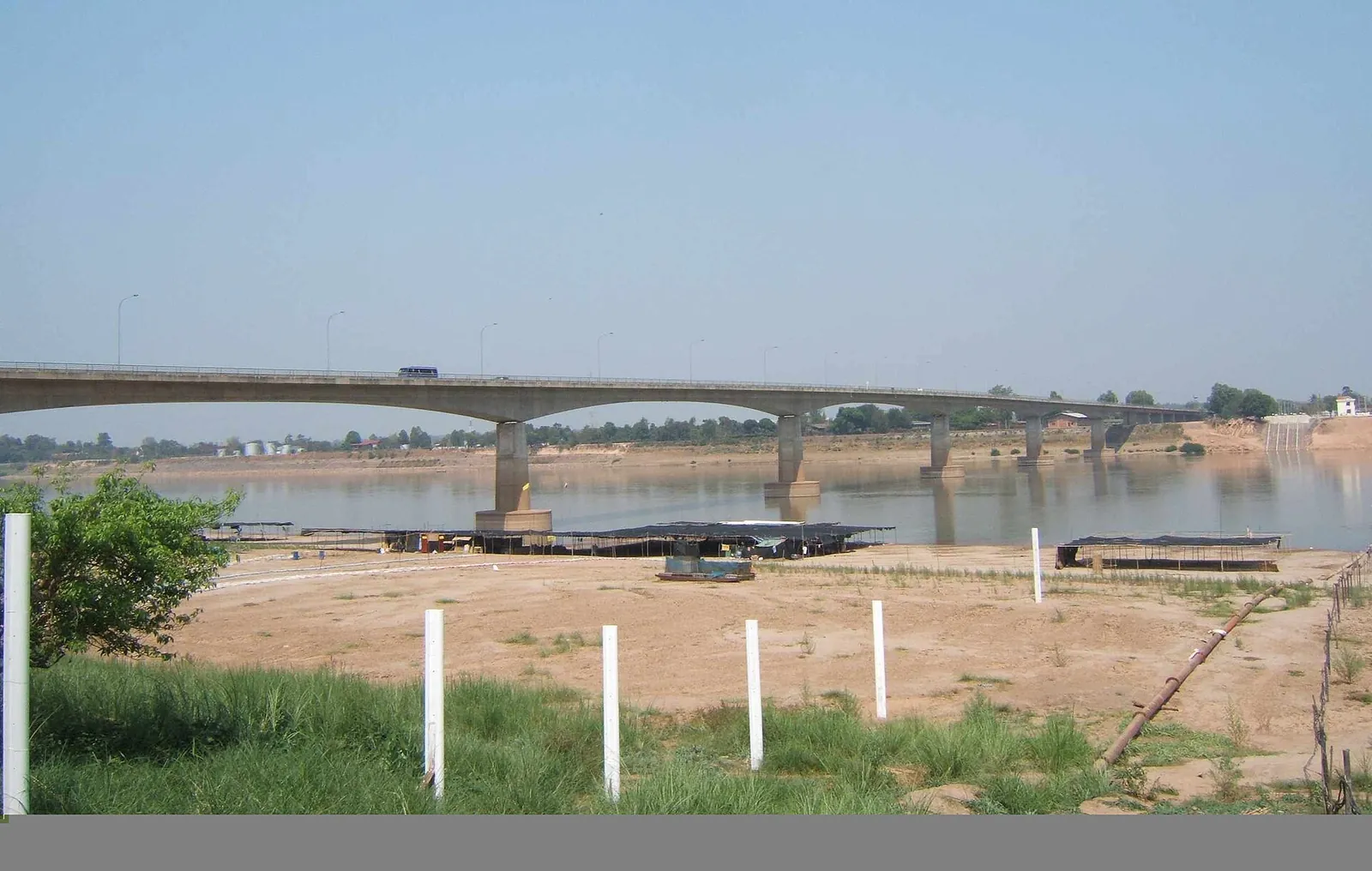
Friendship Bridge I crosses the Mekong between Nong Khai and the Vientiane area; road and rail arrangements differ.
Photograph: Media lib — opens in a new tab · CC BY-SA 3.0 — opens in a new tab
Changes: Resized and converted to WebP; displayed with responsive crops. · Original photograph and licence details ↗ — opens in a new tab
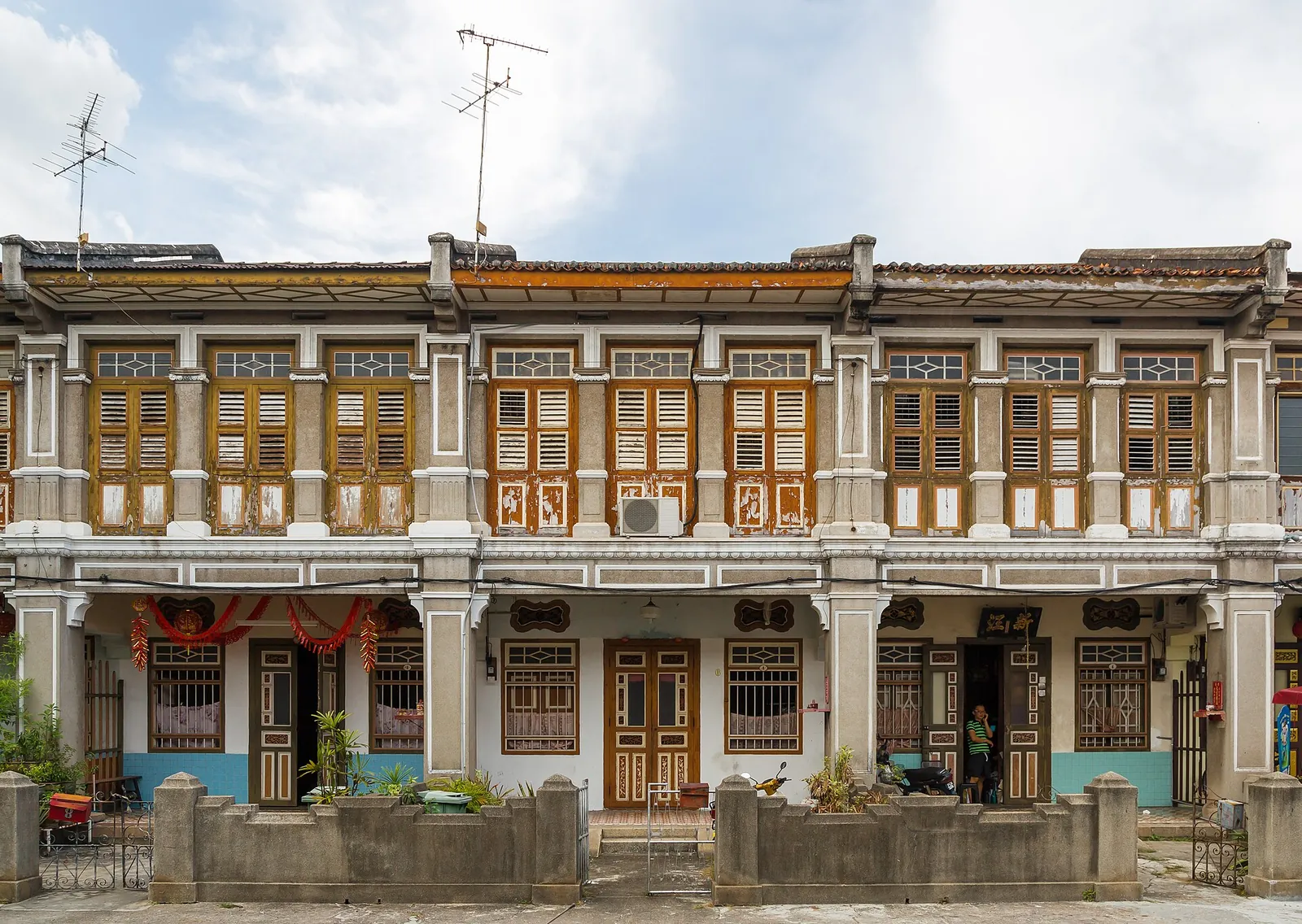
George Town’s shophouses are part of the two-night Penang stay in the railway example.
Photograph: CEphoto, Uwe Aranas — opens in a new tab · CC BY-SA 3.0 — opens in a new tab
Changes: Resized and converted to WebP; displayed with responsive crops. · Original photograph and licence details ↗ — opens in a new tab
A KTM locomotive at Woodlands Train Checkpoint, the Singapore endpoint of Shuttle Tebrau.
Photograph: YJJcoolcool — opens in a new tab · CC BY 4.0 — opens in a new tab
Changes: Resized and converted to WebP; displayed with responsive crops. · Original photograph and licence details ↗ — opens in a new tab
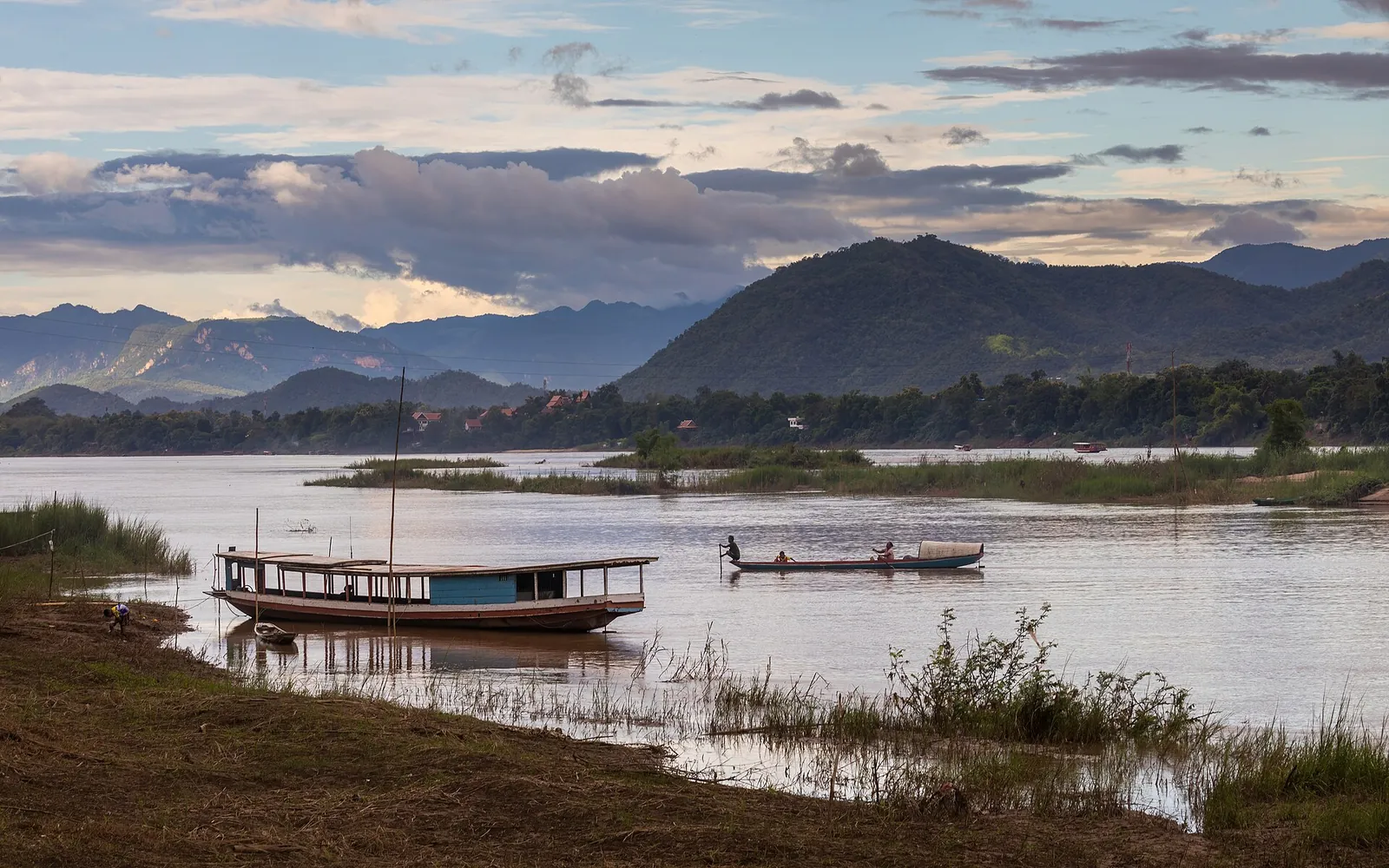
Boats rest beside the Mekong in Luang Prabang, a heritage-town stop on the air-and-rail route through Laos.
Photograph: Basile Morin — opens in a new tab · CC BY-SA 4.0 — opens in a new tab
Changes: Resized and converted to WebP; displayed with responsive crops. · Original photograph and licence details ↗ — opens in a new tab