Surat Thani
Koh Tao: where to stay, diving, ferries and Nang Yuan
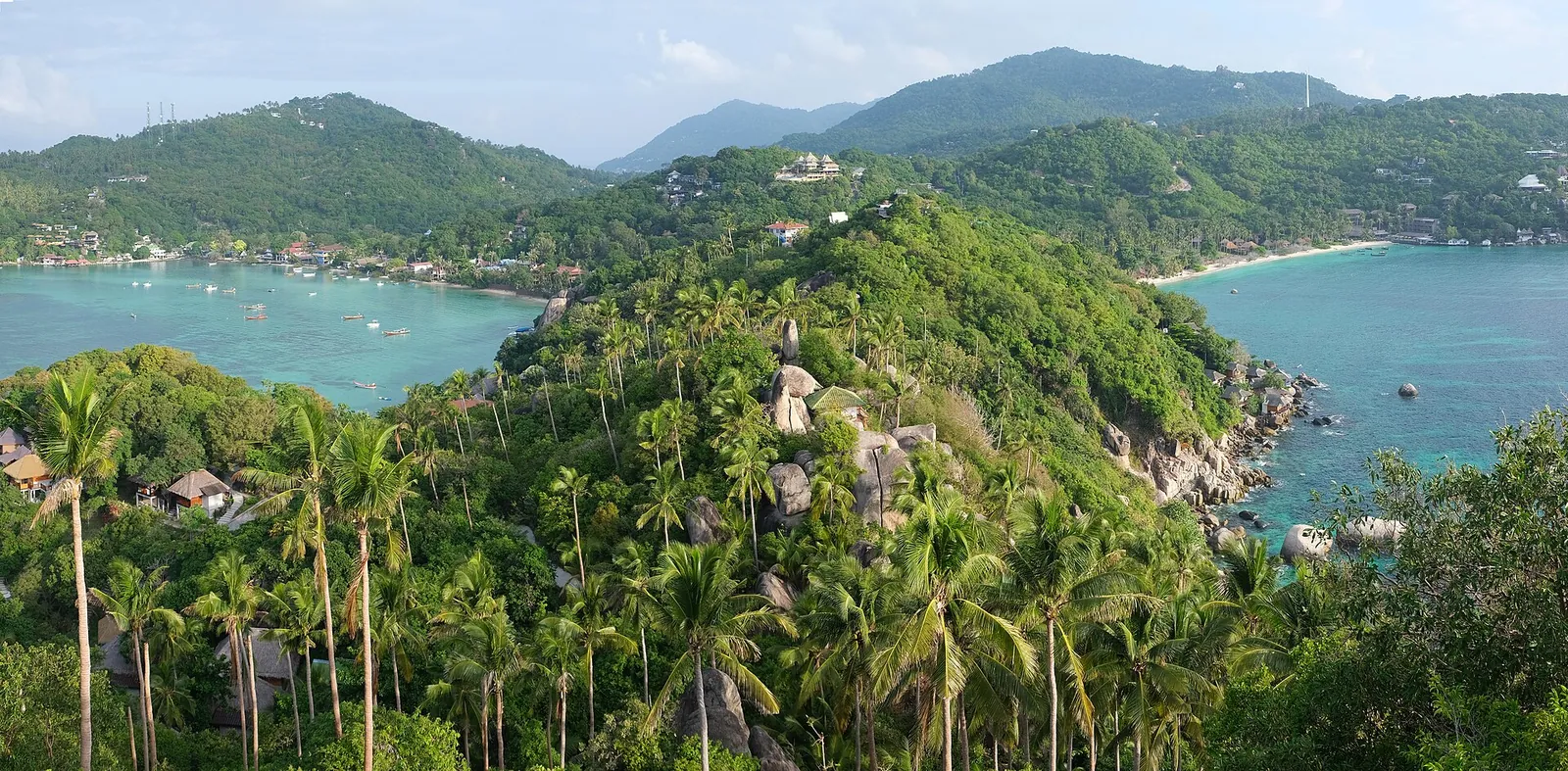
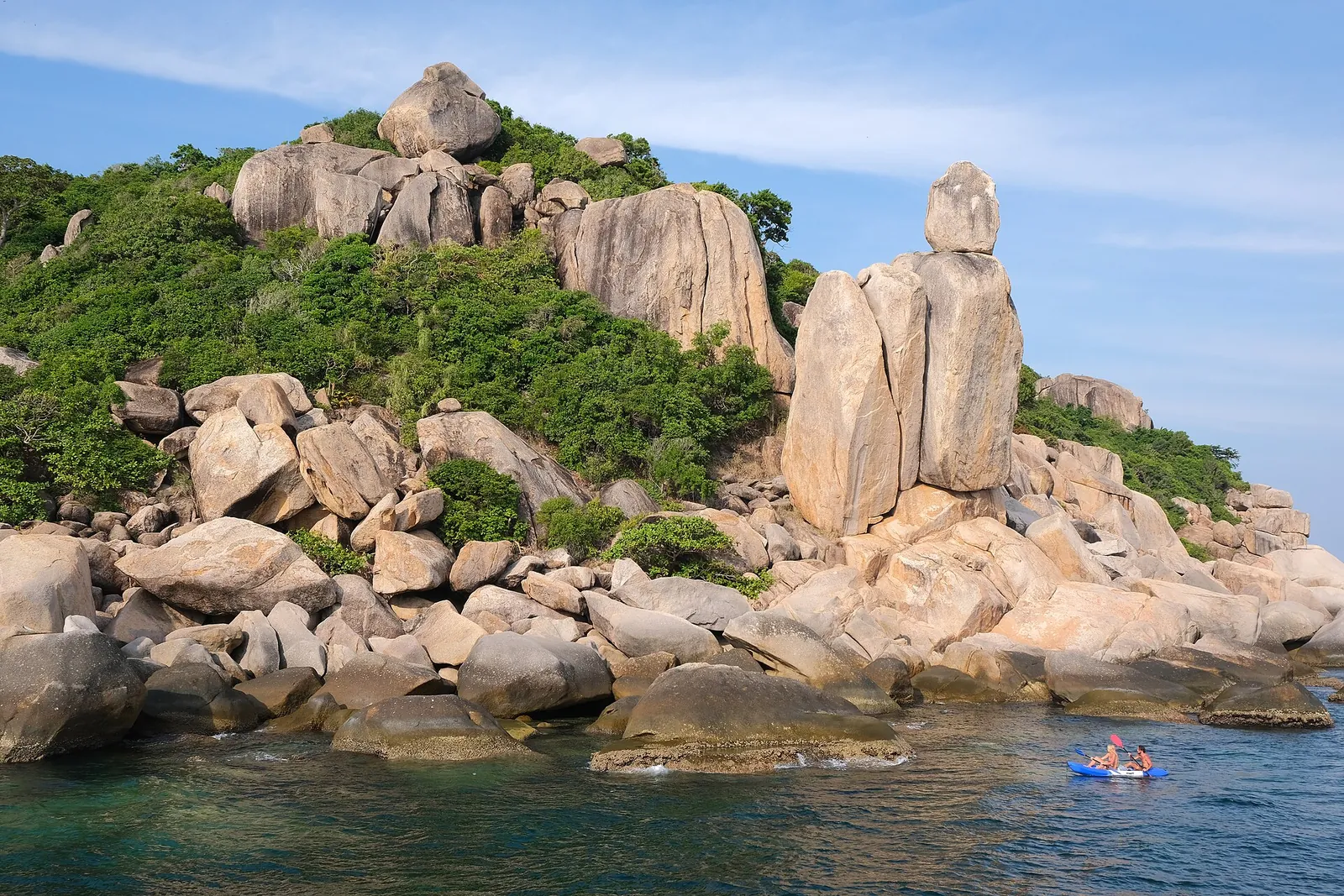
Koh Tao is a small, mountainous island in the Gulf of Thailand, with 11 bays and 10 capes along a 28.6-kilometre shoreline and coral reefs in both shallow and deep water. TAT calls it Thailand's most popular scuba-diving destination, and it is a place to learn to dive. Beyond the dive boats there is Koh Nang Yuan, three islets joined by a white sandbar, and Sairee, the island's longest beach. This guide turns the island's bookable pieces into one five-night stay.
In this guide
Find the location ↗ — opens in a new tabThe short answer
Book five nights in one Koh Tao base and reserve the ferry and the dive school first. Stay at Sairee for the most accommodation and evenings on foot, at Mae Haad beside the ferry harbour, or around Chalok Baan Kao for a quieter south coast. Lomprayah's 2026 timetable lists Chumphon railway station to Koh Tao at 900 baht per person, a road-and-boat journey of 2 hours 30 minutes to 3 hours; from Samui's Pralarn Pier the boat takes 1 hour 30 minutes to 2 hours 30 minutes. Dive or take the course on days 2 and 3, visit Koh Nang Yuan (250 baht admission, open to day visitors 10:00–15:00) on day 4 and keep day 5 dry before the ferry out on day 6. When checked on 14 October 2026, two guided dives with Big Blue cost 2,000 baht per certified diver.
- Suggested time
- Five nights; add a sixth if a full beginner course and a weather buffer both matter. The all-in budget assumes flights from London and includes two overnight Bangkok–Chumphon rail journeys.
- Where to stay
- Sairee for dive schools and evenings; Mae Haad for the ferry; Chalok Baan Kao for a quieter southern stay.
- Season and timing
- The Gulf's wettest stretch is late in the year: TMD's 1991–2020 east-coast normals rise from 147 mm in September to 253.6 mm in October and 361.4 mm in November, and Thailand's tourism directory gives the north-east monsoon wind as November to March. Big Blue rates January and February as dry, calm and clear, and says whale sharks are most commonly seen from March to May. In those wet months Lomprayah's terms say its route and timetable can change without notice because of weather, so keep the day-6 crossing flexible; no official source gives a dive-visibility forecast.
Choose one base for five nights
Five nights give Koh Tao a useful shape: an arrival afternoon, two days for diving or a course, a Nang Yuan day and a dry final day before the boat out. A beginner course takes parts of three calendar days, so beginners finish on the morning of day 4 and move Nang Yuan to day 5. Add a sixth night if the course and a weather buffer both matter. Keep one room: moving luggage between beaches costs the daylight.
Sairee is the practical first choice for a dive-led stay. Thailand's Tourism Directory calls it the longest beach on Tao, almost 2 kilometres long, with the most accommodation on the island and shops all over the beach, and says it takes only 10 minutes to reach from Mae Haad Bay. Big Blue's shuttle boats to its dive boats leave from Sairee Beach.
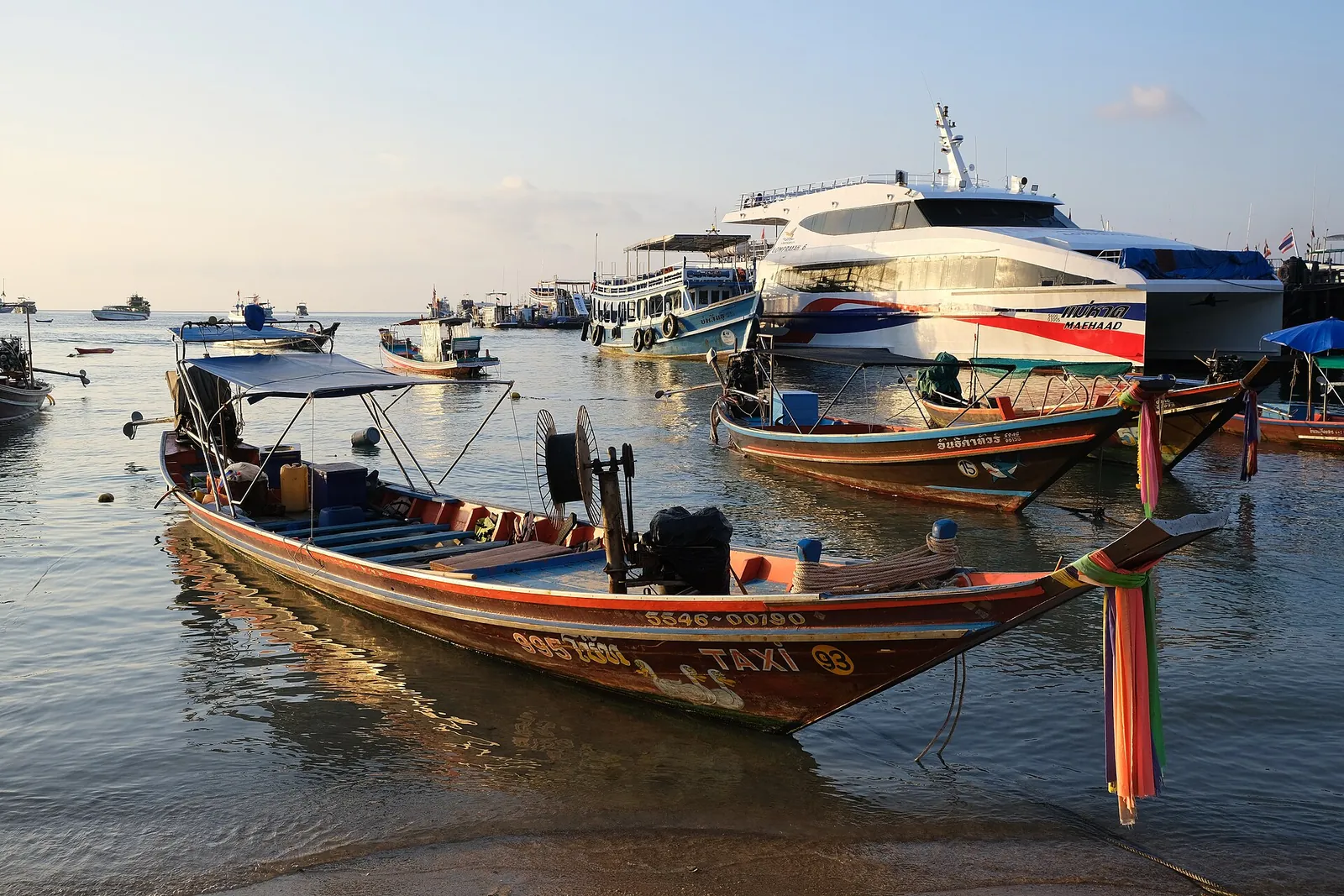
Mae Haad is the harbour village and suits an arrival night, an early departure or a short stay. Nang Yuan's taxi boats leave from its Maehaad Pier, and boat movements make it busier than a smaller bay.
Chalok Baan Kao and the south coast suit travellers who would rather wake near the southern bays than finish every evening in Sairee. No official source publishes the Mae Haad to Chalok distance or a taxi fare, so book a dive school that states its pickup on that side and settle the ride when you book.
Ferries to Tao and back
Koh Tao has no airport and every normal arrival is by boat. Chumphon on the mainland gives the shortest sea approach; Samui suits a route that already uses a Gulf island or Samui Airport.
From Chumphon railway station, Lomprayah's 2026 timetable, checked on 14 October 2026, lists road-and-boat journeys to Koh Tao at 06:00 (arriving 08:30) and 12:00 (arriving 15:00) for 900 baht per person, 2 hours 30 minutes to 3 hours. From Chumphon's Thung Makham Noi Pier it lists a 05:45 ferry arriving 08:15 for 450 baht, a 07:00 catamaran arriving 08:45 for 750 baht and a 13:15 catamaran arriving 15:00 for 750 baht. A station-to-pier transfer is 150 baht per person; Chumphon Airport (CJM) to the pier is 250–300 baht per person, and a 09:00 airport journey reaches Tao at 15:00 for 1,000 baht.
The way back runs on the same timetable. From Tao to the Chumphon railway station: 10:15 arriving 12:45 for 900 baht, 12:30 arriving 16:00 for 600 baht and 15:00 arriving 17:30 for 900 baht, so day 6 can leave at 10:15 or 12:30. To Chumphon Pier: a 10:15 catamaran arriving 11:45 (750 baht), a 12:30 ferry arriving 15:00 (450 baht) and a 15:00 catamaran arriving 16:45 (750 baht). To Chumphon Airport: 10:15 arriving 13:00 (1,000 baht), 12:30 arriving 17:00 (700 baht) and 15:00 arriving 18:00 (1,000 baht).
Lomprayah also runs from Bangkok: from Pinklao a 21:00 bus-and-ferry reaches Tao at 08:15 for 850 baht, and a 21:30 bus-and-catamaran reaches it at 08:30 for 1,250 baht (1,550 baht VIP). Going back, the 10:15 departure from Tao reaches Suvarnabhumi Airport at 23:00 for 1,750 baht (2,050 baht VIP) and Pinklao or Khaosan at 20:30 for 1,250 baht (1,550 baht VIP).
From Samui's Pralarn Pier, the timetable lists an 08:00 catamaran arriving 09:30 for 700 baht, an 11:00 ferry arriving 13:30 for 550 baht and a 12:30 catamaran arriving 14:15 for 700 baht. Back to Pralarn from Tao: a 07:05 speedboat arriving 08:30 (800 baht), 09:30 and 15:30 catamarans arriving 11:30 and 17:30 (700 baht each) and a 16:30 ferry arriving 19:30 (550 baht). Other Samui departures use Bangrak or Nathon, and some marked journeys change vessel at Koh Phangan, so buy by the pier printed on the sailing.
Lomprayah's terms require passengers at its office 60 minutes before departure, allow a large bag up to 20 kg and charge 200 baht above that weight. Tickets cannot be refunded, and weather can change the route or timetable without notice; the company is not liable for a missed onward flight or train. Sleep on the flight-departure island or mainland the night before, and keep documents and medicine in hand luggage.
Sairee is about 10 minutes from Mae Haad Bay, so the first afternoon can go on checking in and fitting dive equipment. Save your accommodation address offline.
Choose a dive school by the training day
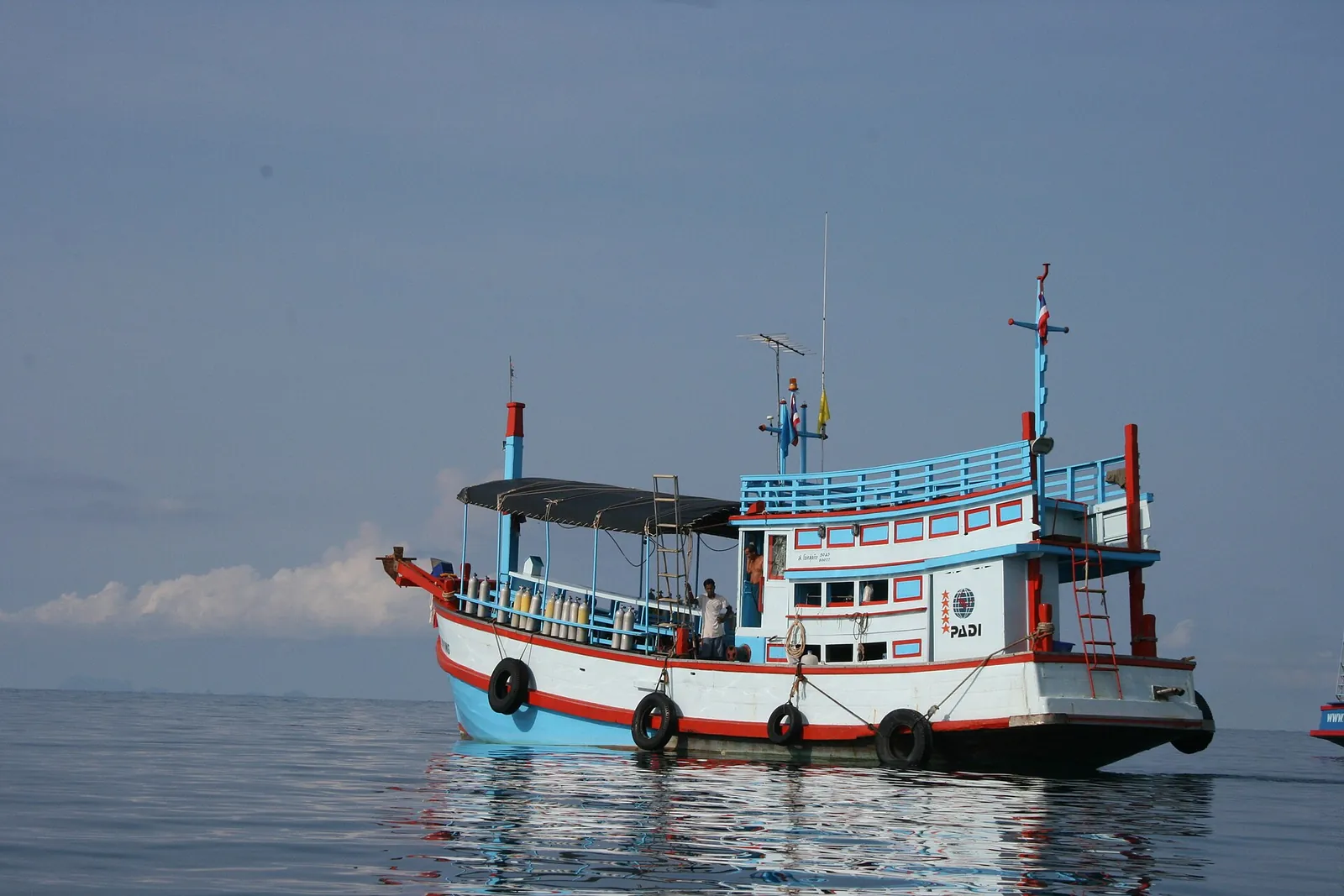
TAT calls Koh Tao Thailand's most popular scuba-diving destination and reports community recognition for reef conservation and the adoption of Green Fins practices. In 2026 TAT's partnership with PADI sent its creators to Ko Tao, which TAT calls a long-established global centre for diver training and ocean advocacy.
PADI says an Open Water course can be completed in 2–4 days. When checked on 14 October 2026, Black Turtle Dive listed its PADI Open Water course (3 or 4 days) at 12,950 baht, including PADI certification fees, digital materials and full equipment rental, with a maximum of 4 students per instructor. Duck n Dive on Koh Nang Yuan listed a three-day PADI Open Water course at 11,000 baht, certifying to 18 metres. Big Blue describes its SSI course as about 2.5 days over parts of three calendar days: pool work and theory, then four open-water dives, the first pair on the afternoon of day two and the last pair on the morning of day three. Its course includes materials, equipment, boat dives and insurance during the course, with a maximum of four students per instructor. Book the ferry out for after the last morning dive.
The dives themselves are what you come for. TAT lists rays, sharks, sea-snakes and turtles around Tao, and the whale shark as an occasional visitor. From mid-August to late November, Big Blue rotates its main morning dives every three days between Sail Rock, Chumphon Pinnacle and Southwest Pinnacle, and runs shallower afternoon dives at Twins, Japanese Gardens, Mango Bay and Junkyard Reef. Duck n Dive describes Japanese Gardens as a shallow reef of 5–14 metres with hard and soft coral, anemonefish, parrotfish, moray eels and the occasional turtle. The site follows weather and conditions, not the booking.
The UK FCDO advises divers in Thailand to check the conditions of their insurance policy, because some policies require instructors with certain qualifications, to make sure oxygen is available on the boat, and to ask about the ability to transfer divers to a hyperbaric chamber. Diving schools may have limited resources and do not always observe safety and maintenance standards. Koh Tao has its own recompression chamber: the SSS Recompression Chamber Network lists the Koh Tao chamber, operated by Hyperbaric Services of Thailand, with a medical team on site and 24/7 cover. Carry insurance that covers your depth and course, and answer the medical questionnaire honestly.
TAT's conservation features describe coral surveying, mooring-buoy repair, marine-debris collection and dive-centre clean-ups on Tao. Choose a Green Fins operator where possible, keep fins and equipment off coral, avoid contact with marine life and take every loose item back to land.
Plan certified dives
Certified divers choose between relaxed local reefs and the deeper offshore pinnacles. Big Blue's guided fun dives require an Open Water certificate refreshed within the last 12 months; its morning boat suits refreshed and experienced divers and its afternoon boat suits check-out divers, beginners, courses and refreshers.
When checked on 14 October 2026, Big Blue published 2,000 baht for two guided dives, 9,000 baht for ten, 16,000 baht for twenty and 1,400 baht for a night dive including a torch. Ordinary dive equipment was supplied free, and a torch, computer or compass cost 200 baht each per trip. Its morning boat departs at 07:30 and returns at about 12:00, the afternoon boat departs at 12:30 and returns at about 16:00, and an offshore day of three dives departs at 07:30, returns at 16:00 and costs 4,000 baht. Its afternoon fun dives run at a maximum 4:1 diver-to-guide ratio.
Alternate a demanding morning with an easier afternoon ashore, drink water and decline a site that is beyond your training or comfort.
Give Koh Nang Yuan its own morning
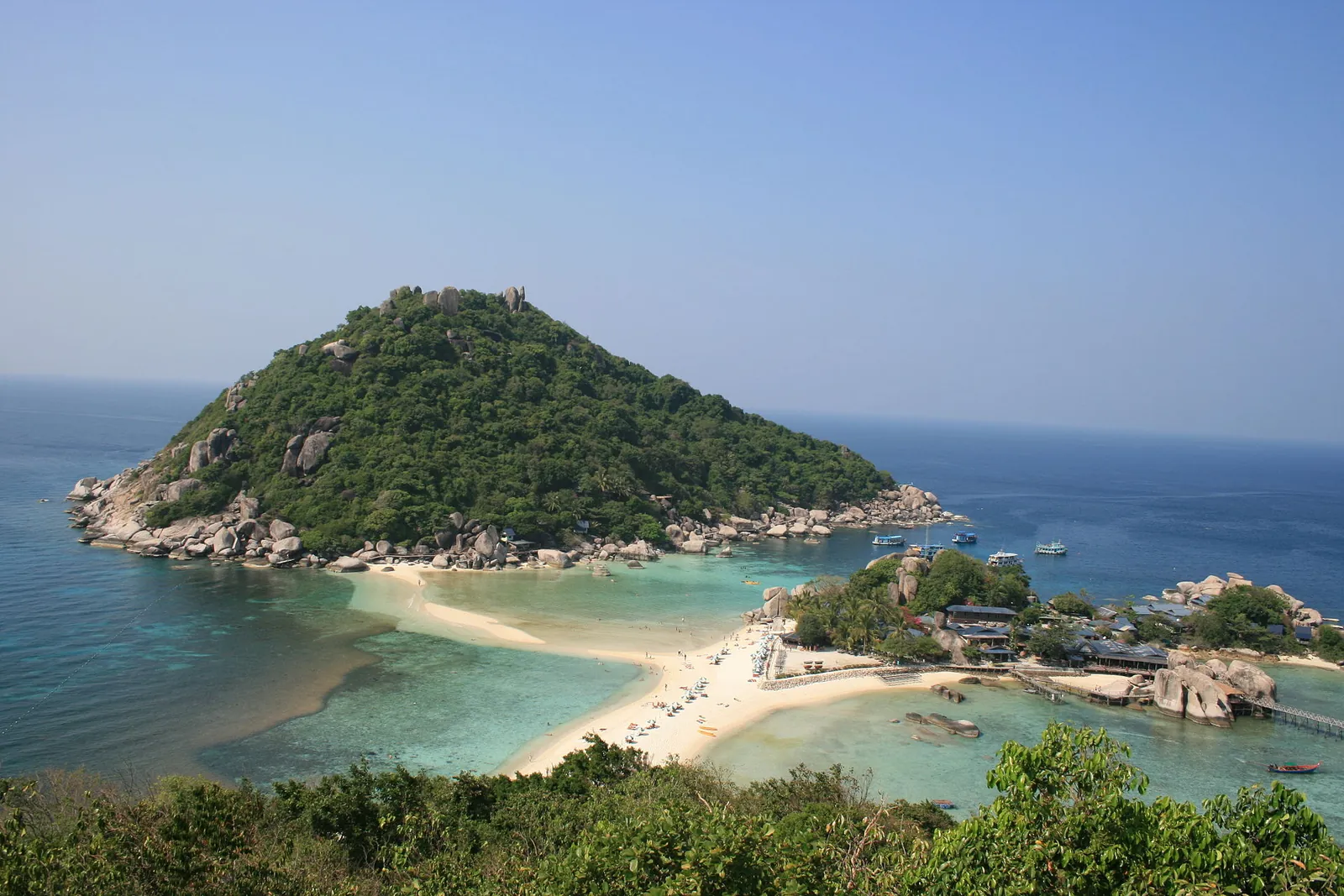
Koh Nang Yuan is three small islands linked by sandy beaches, with coral reefs, shallow water and lodges on the hillside; TAT adds a climb to a lookout that it says offers one of the best views in Thailand. The island operator's visitor guide, checked on 14 October 2026, admits day visitors 10:00–15:00 and charges 250 baht per person, paid on arrival; only hotel guests may enter outside those hours.
Taxi boats leave from Maehaad Pier or Sairee Beach, take about 20 minutes and usually cost 300–600 baht per person return, separate from the admission. There are no ATMs on the island, so carry Thai baht for the fee, food and the boat; withdraw it before you go at one of the ATMs on Koh Tao itself, around Mae Haad, Sairee and Chalok. Nangyuan Beach Bar serves Thai food from 10:00 to 20:00 and Pier Cafe serves drinks and baked goods from 10:00 to 15:00.
The rules shape the bag: no single-use plastic bottles, no fins while snorkelling, no drones, no loud music, no smoking on the beach, and reef-safe sunscreen only. Do not touch marine life or step on coral. The viewpoint climb is short and steep, so wear shoes with grip and go early.
Snorkellers can start at Japanese Gardens and add Twins Bay. The island's guide says blacktip reef sharks may be seen near the beaches around 07:00 and 17:30, usually before the first ferries arrive. Duck n Dive, the island's PADI centre, offers beach dives at Japanese Gardens, and publishes a 20,500-baht Open Water package and a 20,000-baht Advanced package, each with three nights in rooms D1–D4 for up to two people, subject to availability.
Two or three hours is enough for the standard visit; return to Tao for lunch.
Use the dry days for Sairee, climbing and a snorkel
A non-diver, or a diver on a dry day, has Sairee Beach: the Tourism Directory lists it for strolling, coral viewing and snorkelling, with hotels and shops along its length. TAT names rock climbing and bouldering as popular on Tao, and Nang Yuan fills a snorkelling half-day. The island is mountainous with 11 bays, so Sairee and the Japanese Gardens snorkel at Nang Yuan are the easiest places to spend a dry morning.
Snorkel only where the way out is obvious, keep clear of coral and boats, and stay ashore when waves or current make the return uncertain. Nang Yuan bans fins while snorkelling under its own rules.
The FCDO notes that Thailand has a high number of motorcycle accidents. British riders must carry both the 1968 international driving permit and their UK licence; scooters for hire in tourist areas are often unregistered and cannot legally be used on public roads, and insurance may not cover you without the correct licence for the vehicle. By law you must wear a helmet. Riders from other countries should check their own licence and insurer; the FCDO also advises against handing your passport to a rental business.
Eat southern dishes between the boats
TAT describes southern Thai cooking as sharp and spicy, built around seafood, tamarind, lemongrass and kaffir lime leaf, with kaeng som pla and khua kling among its staples.
Order to the table when travelling with friends. TAT's guide to Thai dining explains that rice is the base while curries, soup and grilled dishes are shared in small portions, so one hot curry and one milder dish give more range than each person ordering a chilli-heavy curry.
Fish sauce, shrimp paste and shellfish are common in these dishes; tell the kitchen about any allergy before ordering.
No official listing names a kitchen for each of these dishes on Koh Tao, so choose a Thai restaurant in Sairee or Mae Haad by what is cooking when you arrive; on Nang Yuan, Nangyuan Beach Bar serves Thai food.
What to eat and where to look
Kaeng som pla
A hot and sour southern fish curry or soup. TAT lists kaeng som pla among the South's staple dishes.
- Where to look
- Thai kitchens in Sairee and Mae Haad.
- Fit it into your day
- Share it at dinner with rice and a milder dish.
Khua kling
A dry southern curry of minced meat fried with a strong spice paste, described by TAT as a staple of the South.
- Where to look
- Curry-rice counters in Mae Haad and the lanes behind Sairee.
- Fit it into your day
- Take a small portion with steamed rice at lunch.
Khao yam pak tai
A tart and salty southern rice salad with carrot, long beans, sour mango, pomelo, dried shrimp or fish, roasted coconut, lime leaf and chilli, dressed with nam budu. TAT says few dishes say southern Thai cuisine more.
- Where to look
- Southern Thai restaurants in Sairee and Mae Haad.
- Fit it into your day
- A cool lunch between dives.
Pla thot kamin
Turmeric fried fish, a popular southern dish. TAT says it is usually made with threadfin bream and cooked slightly crispy with garlic and turmeric.
- Where to look
- Seafood and Thai restaurants in Sairee and Mae Haad; on Nang Yuan, Nangyuan Beach Bar serves Thai food.
- Fit it into your day
- A dry-day dinner with rice.
Follow a five-night order that protects the boat home
This order gives the booked activities the first days and keeps the dry day at the end.
Day 1: arrive by ferry, transfer once to the chosen base and fit dive equipment before dinner; Day 2: begin Open Water training or take a two-dive morning as a certified diver; Day 3: continue training or dive again; Day 4: visit Nang Yuan from opening time (beginners finish the course this morning and go to Nang Yuan on day 5); Day 5: stay dry, walk or snorkel Sairee and pack; Day 6: take the ferry to Chumphon or Samui at the time you booked (Chumphon-station departures are 10:15, 12:30 and 15:00).
Divers Alert Network's consensus guidance is a minimum 12-hour surface interval after one no-decompression dive and 18 hours after multi-day repetitive no-decompression diving, with substantially longer after dives requiring decompression or using heliox or trimix. Big Blue applies a simpler 24-hour rule on its guided-diving page. The dry day 5 puts you past all of these before a day 6 flight.
- Book first: the Lomprayah crossing, the room and the dive school or course.
- Keep offline: ferry reference, hotel address, dive-school meeting point, travel-insurance details and the onward flight booking.
What eight days with five Koh Tao nights cost, all in
About THB 26,600 per person, THB 53,200 for two, for five Koh Tao nights and two overnight train journeys, without flights. The room with breakfast, every meal and ordinary drinks, both sleeping berths each, airport and island cars, both station-and-ferry journeys, the diving, Nang Yuan boat and entry, selected equipment hire, two SIMs and a 10% buffer are in.
| Stay | Per person | For two |
|---|---|---|
| Five Sairee private-double nights + two overnight rail journeys | THB 26,600 | THB 53,200 |
This budget is for two already certified adult divers sharing a private double in Sairee for five nights, with individual second-class sleeping berths on overnight Bangkok–Chumphon trains before and after the island stay. The six island days below sit between these rail nights, making eight days and seven nights for the whole ground journey. Arrive at BKK after lunch on the first day and leave after lunch on the eighth, on ordinary late-January dates outside holidays. Choose actual trains that fit the 12:00 Chumphon-station departure to Tao and the return to Bangkok before the flight, including office arrival, airport transfer and check-in. Prices date from 13 October to 2 November 2026. Per-person and two-person totals are rounded separately.
For two: rooms THB 17,500; food and drinks 10,400; getting around 9,900; sights, dives and equipment hire 9,500; SIMs 1,100; 10% buffer 4,800.
The room is a Superior at Ban’s Diving Resort in Sairee: when we checked its own page on 26 October 2026, it listed THB 3,500 a night with breakfast in the high season (1 December–30 April) for guests who are not diving with Ban’s, which is the case here because the dives are with Big Blue. Ask whether tax is added when you book. Each adult has seven breakfasts, five of them at the hotel and counted once, seven lunches and seven dinners, from the first Bangkok dinner to the final Bangkok lunch. Ordinary meals use about THB 80 for breakfast from TAT’s noodle band, 250 for lunch and 350 for dinner from Baan Thai Lanta’s menu. On each of the six island days, drinks are a still water at THB 40 and a one-fruit shake at THB 100 per adult, THB 140 a day, from the menu of Oasis Restaurant in Sairee Village; drinks on the two Bangkok travel days come out of the 10% buffer. The train and airport meals are inside this ground route.
Each overnight berth is estimated at about THB 900 each way using TAT’s published second-class sleeper range from 2016 as a dated comparison, not a current SRT Chumphon quote. Confirm the actual full sleeper fare and connections. The Chumphon-station ferry tickets already include the station–pier road leg. Bangkok airport–station cars use about THB 600 each from the published city-car comparison; Mae Haad–Sairee taxis use THB 300 each: Thailand Magazine’s Mae Haad page, read on 26 October 2026, gives THB 100 per person with a three-person minimum. The Nang Yuan return boat uses about THB 900 for two, from the midpoint of the operator’s dated usual return-price range; confirm the actual whole price and return time.
Two morning two-dive sessions per person use Big Blue’s THB 2,000 session price. Its ordinary diving equipment is free; selected dive-computer hire uses THB 200 per person per trip and counts once for each of the two boat mornings. Nang Yuan entry is THB 250 each. Mask-and-snorkel hire for its snorkelling day is estimated at about THB 100 each from the higher-priced Phi Phi Pirate Boat package comparison, not a local rental quote; confirm actual hire and follow Nang Yuan’s no-fins rule. An extra dive, course or offshore day would replace the chosen activities and needs its own price. Keep the final island day dry.
Two eight-day AIS plans include 7% VAT. The budget assumes eligible ordinary passports on one short visa-free tourist visit; check your nationality and the Thailand Digital Arrival Card in the entry guide.
Flights: about GBP 850–1,000 per person for London–Bangkok return economy with Thai Airways, from selected advertised examples read on 23 October 2026, with taxes and surcharges included. Fares and availability change. Both overnight trains are already in the table. With flights, about THB 64,600–71,400 per person.
Practical questions
How many nights should I book on Koh Tao?
Book five nights for an arrival afternoon, two sea days, a Nang Yuan day and a dry final day before the ferry out. Add a sixth if you take a complete beginner course and want a weather buffer.
Is Sairee or Mae Haad better for a first stay?
Sairee is better for dive schools and evenings on foot; Mae Haad is better for a short stay beside the ferry harbour. Chalok Baan Kao suits a quieter southern stay.
How do I get from Chumphon to Koh Tao and back?
Lomprayah's 2026 timetable lists journeys from Chumphon railway station at 06:00 (arriving 08:30) and 12:00 (arriving 15:00) for 900 baht per person. Back to the station it lists 10:15, 12:30 and 15:00 departures for 900, 600 and 900 baht. The Chumphon pier is Thung Makham Noi; arrive at the office 60 minutes before departure.
How much does a Koh Nang Yuan day visit cost?
The island operator listed 250 baht per person, paid on arrival, when checked on 14 October 2026. Taxi boats from Mae Haad or Sairee usually cost 300–600 baht per person return, so the self-arranged total is the boat plus the separate admission.
How much is an Open Water course on Koh Tao?
When checked on 14 October 2026, Black Turtle Dive listed 12,950 baht for a 3 or 4 day PADI Open Water course and Duck n Dive on Koh Nang Yuan listed 11,000 baht for three days. PADI says the course can be completed in 2–4 days.
How long should I wait before flying after diving?
DAN recommends at least 12 hours after one no-decompression dive and 18 hours after multi-day repetitive no-decompression diving, with longer after compulsory decompression or helium mixes. Big Blue applies a 24-hour rule. This plan leaves day 5 dry.
Keep planning your trip
Koh Samui
Book five nights on Koh Samui: choose the right beach, arrive through USM or Donsak, tour the island and reserve an Ang Thong day in season.
Read the guide
Koh Phangan
Book four nights on Koh Phangan, choose the right coast, compare boats from Samui or Donsak, and plan beaches, Than Sadet and Haad Rin.
Read the guide
Getting around Thailand
Choose trains or flights between regions, the right Bangkok airport and station, and named ferry piers, with published fares and room for connections.
Read the guide
Thailand islands
Choose the right Thai island by season, beach style and ferry route, with a seven-night plan, current fares and closure dates.
Read the guide
Gulf islands in 7 days: Samui, Phangan and Tao
Plan six nights across Samui, Phangan and Tao: three beach bases, the public ferries with their fares, and a priced budget for two.
Read the guide
First trip to Thailand
Plan six nights or two weeks in Thailand, choosing Bangkok, the north and one coast, with entry steps, SIMs and booking priorities.
Read the guideSources and checks before you travel
(39)
- TAT Newsroom: Ko Tao coral-reef conservation ↗ — opens in a new tab
- TAT Newsroom: Ko Phangan, Ko Tao and Ko Nang Yuan ↗ — opens in a new tab
- TAT Newsroom: Spotlight Ko Tao responsible tourism ↗ — opens in a new tab
- TAT Newsroom: TAT and PADI dive partnership ↗ — opens in a new tab
- Thailand Tourism Directory: Koh Tao ↗ — opens in a new tab
- Thailand Tourism Directory: Sairee Beach ↗ — opens in a new tab
- Thailand Tourism Directory: Nang Yuan Island ↗ — opens in a new tab
- Koh Nangyuan Resort: day-visitor guide ↗ — opens in a new tab
- Koh Nangyuan Resort: route guide ↗ — opens in a new tab
- Duck n Dive Nangyuan: courses and packages ↗ — opens in a new tab
- Lomprayah: 2026 timetable publication ↗ — opens in a new tab
- Lomprayah: official 2026 timetable PDF ↗ — opens in a new tab
- Lomprayah: offices and piers ↗ — opens in a new tab
- Lomprayah: passenger terms ↗ — opens in a new tab
- Big Blue Diving: guided fun dives ↗ — opens in a new tab
- Big Blue Diving: SSI Open Water course ↗ — opens in a new tab
- Black Turtle Dive: course prices ↗ — opens in a new tab
- SSS Recompression Chamber Network: Koh Tao ↗ — opens in a new tab
- Big Blue Diving: Koh Tao weather ↗ — opens in a new tab
- PADI: Open Water Diver course ↗ — opens in a new tab
- Divers Alert Network: flying after diving ↗ — opens in a new tab
- Thai Meteorological Department: September–November 2026 outlook ↗ — opens in a new tab
- UK FCDO: Thailand safety and security ↗ — opens in a new tab
- TAT Newsroom: Southern Thai regional cuisine ↗ — opens in a new tab
- TAT Newsroom: Thai shared dining ↗ — opens in a new tab
- TAT Newsroom: must-eat dishes from different regions ↗ — opens in a new tab
- Oasis Restaurant Koh Tao: own drinks menu ↗ — opens in a new tab
- AIS: tourist SIM plans and VAT ↗ — opens in a new tab
- Bank of Thailand: dated exchange-rate comparison ↗ — opens in a new tab
- TAT Japan: Khao Soi Mae Manee prices ↗ — opens in a new tab
- Thailand Taxis: route fares ↗ — opens in a new tab
- Phi Phi Pirate Boat: official shared programme ↗ — opens in a new tab
- Baan Thai Lanta: own restaurant menu ↗ — opens in a new tab
- Thai Airways: London–Bangkok return economy examples ↗ — opens in a new tab
- TAT Newsroom: dated second-class sleeper comparison ↗ — opens in a new tab
- SRT: southern-line timetable ↗ — opens in a new tab
- Royal Thai Embassy Helsinki: nationality-specific entry schemes ↗ — opens in a new tab
- Ban's Diving Resort: Superior room rates ↗ — opens in a new tab
- Thailand Magazine: Mae Haad, Koh Tao ↗ — opens in a new tab
Reference sources for the version dated 2 November 2026. Confirm opening times, access, transport and conditions for your travel dates.
Photo credits
(5)
Koh Nang Yuan's sandbars.
Photograph: User: (WT-shared) Whatsinaname at wts wikivoyage — opens in a new tab · Public domain — opens in a new tab
Changes: Resized and converted to WebP; displayed with responsive crops. · Original photograph and licence details ↗ — opens in a new tab
Koh Tao from the John-Suwan viewpoint.
Photograph: kallerna — opens in a new tab · CC BY-SA 4.0 — opens in a new tab
Changes: Resized and converted to WebP; displayed with responsive crops. · Original photograph and licence details ↗ — opens in a new tab
Boats at Mae Haad, Koh Tao's main pier.
Photograph: kallerna — opens in a new tab · CC BY-SA 4.0 — opens in a new tab
Changes: Resized and converted to WebP; displayed with responsive crops. · Original photograph and licence details ↗ — opens in a new tab
A dive boat at Koh Tao.
Photograph: Eli Duke — opens in a new tab · CC BY-SA 2.0 — opens in a new tab
Changes: Resized and converted to WebP; displayed with responsive crops. · Original photograph and licence details ↗ — opens in a new tab
Hin Tha Toh, the southern tip of Koh Tao.
Photograph: kallerna — opens in a new tab · CC BY-SA 4.0 — opens in a new tab
Changes: Resized and converted to WebP; displayed with responsive crops. · Original photograph and licence details ↗ — opens in a new tab