Plan your trip · Thailand
Best Thai islands: Andaman or Gulf and how to choose
Thailand's islands are not one interchangeable string of beaches. Krabi's limestone walls, Lanta's long west coast, the Trang islands' seagrass and caves, Samui's broad resort choice and Tao's dive schools answer different holidays. The useful first decision is the coast, because the Andaman and Gulf rain patterns do not peak together. The second is whether you want one deep stay or a ferry route. This guide makes those choices concrete, names the piers and shared boats, and prices a seven-night Andaman journey without turning every day into a transfer.
- Suggested time
- Seven nights for one coast; four nights for one island; ten nights or more for three islands without rushing.
- Where to stay
- Phi Phi Don, Koh Lanta and Ao Nang for the recommended Andaman route; one base on Samui, Phangan or Tao for a Gulf-led stay.
- Season and timing
- The Andaman south-west monsoon runs broadly from May to October and is usually wettest in September; the heavier Gulf rain around Samui, Phangan and Tao generally arrives from October to December and peaks in November.
The short answer
Book seven nights on one coast: two on Phi Phi Don, three on Koh Lanta and the last two in Ao Nang, so the final boat is two days before your flight, best between 1 November and 4 May, outside the May–October Andaman monsoon. Reserve the Phi Phi and Lanta rooms first, then the Bundhaya speedboats: Ao Nang (Nopparat Thara)–Tonsai is from 1,000 baht per person and Tonsai–Sala Dan from 700. The Phi Phi national-park fee is 400 baht per foreign adult and is included in the 1,800-baht Phi Phi Pirate Boat day to Maya Bay. A model for two adults, with the Ao Nang and Phi Phi Don rooms, the Krabi Airport taxis, the three Bundhaya speedboat legs, the Railay longtail and that tour, comes to 32,600 baht; the three Lanta nights, all meals and the hotel-to-pier transfers on Phi Phi and Lanta come on top. If your dates fall in the Andaman's wetter months, choose one Gulf stay instead: Samui for its wide hotel choice, Phangan for beaches and retreats, or Tao for diving.
Start with seven nights on one coast
A good island holiday begins with a limit. With seven nights, choose one coast and no more than three bases. The recommended Andaman shape is Phi Phi Don nights 1–2, Koh Lanta nights 3–5 and Ao Nang nights 6–7. Day 1 is the taxi from Krabi Airport (KBV) to Nopparat Thara Pier and the speedboat to Tonsai; check Bundhaya's sailing for your date before you book the flight, and move that boat to day 2 if your flight lands late. Phi Phi Don deserves two sunsets because the village, viewpoints and Phi Phi Leh are different experiences. Lanta then supplies three slower nights for its beaches, Old Town and national-park end of the island. The last boat, Sala Dan–Ao Nang on day 6, leaves you two nights in Ao Nang for Railay and a day in hand before the day-8 flight from KBV, so no boat arrival is joined to a flight. The route runs best from 1 November to 4 May: that is the window in which every Bundhaya row it uses sails, and it lies outside TAT's May–October Andaman monsoon.
This route is not a race through every famous photograph. Railay is a limestone peninsula reached by boat, with Phra Nang Cave Beach and cliff faces that make the journey worthwhile beyond a quick swim. Phi Phi Leh is the dramatic uninhabited island of vertical rock, Maya Bay and Loh Samah access; Phi Phi Don is where you sleep, eat and walk above the twin bays. Lanta's west-coast beaches stretch the day out, while its east side adds mangroves and an old trading settlement. Each base changes the texture of the trip instead of repeating another beach transfer.
For four nights, pick one island and settle. Lanta works for beach days plus a land day; Tao works when diving is the purpose; Samui is easiest when the group wants a wide range of rooms, restaurants and non-boat activities. For ten nights or more, the Gulf chain or the longer Andaman chain becomes comfortable because every ferry can have its own morning and you can keep one day movable. Adding both coasts to a short holiday loses more time to airports, road transfers and check-ins than the extra island adds.
- Seven-night Andaman route: Phi Phi Don 2, Koh Lanta 3, Ao Nang 2.
- Four-night single stay: Lanta for range, Samui for choice, Tao for diving, or Phangan for a retreat-led holiday.
- First reservations: the island rooms, the named shared ferries, then one weather-dependent sea day.
Choose the month before the beach
The useful weather choice is Andaman or Gulf, not a promise of a nationwide dry season. TAT's monsoon guidance places the south-west monsoon on the Andaman side from May to October, with September normally taking the strongest rain. Phuket, Krabi, Phi Phi, Lanta, Khao Lak and the Trang islands face that sea. TAT notes that monsoon rain typically falls for 1–2 hours in the afternoon or early evening rather than all day.
Samui, Phangan and Tao follow a later pattern. The same TAT guidance places their heavier rain from October to December, peaking in November and tailing off in January. That makes the Gulf a useful alternative for some summer dates, not an all-weather guarantee. The Thai Meteorological Department's daily forecast is the working source once the holiday begins; it gives wave heights separately for the southern east coast and west coast and flags higher waves in thundershowers.
National-park calendars make the choice more precise. In the Department of National Parks' closure sheet (data as of 7 January 2026), Maya Bay, Loh Samah Bay and Lo Ko close from 1 August to 30 September; all tourism and accommodation in the Similan and Surin parks close from 16 May to 14 October; Ko Rok, its accommodation zone 2 and the Ko Rok campsite close from 1 June to 30 September, while Ko Ha, Hin Daeng and Hin Muang close from 1 August to 30 September. Mu Ko Ang Thong closes from 1 November to 15 December. These are attraction closures, not a declaration that every hotel on the coast shuts.
The Trang calendar is site-specific: Ko Cheuk and Ko Wan close from 1 June to 30 September, Ko Muk and Ko Kradan from 1 August to 30 September, and Emerald Cave from 1 to 30 September in the same DNP sheet. A room may still be open while the outing you wanted is not. Pick the defining experience first—Maya Bay, Similan snorkelling, Emerald Cave, Ang Thong or a Tao dive course—then place the holiday inside its operating window.
For foreign adults the Department of National Parks sets 500 baht for Mu Ko Similan (children 250), 400 baht for Ko Rok, Ko Ngai, Ko Ha and the Hin Daeng–Hin Muang rocks (children 200), 300 baht at the Ko Wua Talap and Ko Mae Ko areas of Mu Ko Ang Thong (children 150) and 200 baht for Mu Ko Lanta National Park (children 100).
Wind and waves can delay or cancel ferries and park boats at the last minute, even when the rain comes only in the afternoon, and that can remove the boat day that justified the room. Put the signature outing early, keep the following day flexible, and do not join a ferry arrival directly to a flight on a separate ticket. Red flags on a beach mean do not swim.
- Andaman: broadly easier outside the May–October south-west monsoon; park dates still control individual islands.
- Gulf: heavier rain generally comes later, especially October–December and around November.
- On the trip: use the TMD marine forecast and obey beach flags and operator decisions.
Use Phuket, Krabi or Khao Lak when land choices matter
Phuket is the broadest all-round island and behaves almost like a coastal region. Patong suits nightlife; Kata and Karon balance beach time with restaurants; Kamala, Bang Tao and the north are calmer; Old Phuket Town gives Sino-Portuguese streets, markets and a strong local food culture. The island also has HKT airport and road access, so it is the easiest choice for a mixed group that wants beaches without making every member take a ferry. Its scale is the trade-off: a hotel on the wrong coast can turn dinner or the pier into a long road journey.
Krabi is the better answer when limestone is the picture in your head. Ao Nang is the practical room base, Railay is the boat-reached peninsula of pale cliffs and small beaches, and Krabi Town gives markets and a river edge. TAT's Krabi guide describes Hong Island trips, Railay's climbing landscape and the mangrove-backed river beneath the twin Khao Khanap Nam peaks. Ao Nang lets you choose Railay, a near-island day or an inland day after seeing the water that morning.
Khao Lak is mainland coast, not an island, and that is exactly its advantage. Nang Thong and Bang Niang have the easiest spread of restaurants and services; Khuk Khak, Pakarang and Bang Sak make a quieter beach stay. TAT describes Thap Lamu as the departure harbour for many Similan day and liveaboard boats. A shared Similan day on Love Andaman's own programme leaves Thap Lamu at about 09:00, takes about 1 hour 15 minutes by speedboat to the first island and is back at the pier around 17:30; the Thailand Tourism Directory calls Donald Duck Bay a shallow, easy dive site and a good spot for snorkelling. When the Similans are closed, Khao Lak still has long beaches, waterfalls, memorial sites and Takua Pa; the room does not depend on a ferry running.
- Phuket: strongest range of rooms, nightlife, food and direct air access.
- Krabi: limestone, Railay and flexible day boats from an Ao Nang base.
- Khao Lak: quieter mainland beaches and the usual base for Similan trips when the park is open.
Pick one Andaman island for the stay you want
Phi Phi Don suits travellers who want the limestone seascape to continue after the day boats leave. The Thailand Tourism Directory describes Ton Sai and Loh Dalum as twin bays separated by a small shady plain with coconut trees, and TAT tells visitors not to miss the island's three viewpoints; ask your guesthouse for the climb time before you set out. Stay around Tonsai and Loh Dalum for the ferry pier and the evening entertainment; choose Long Beach if sand matters more than the village; use Laem Tong only with a transfer that actually lands there, because it is a separate boat-only arrival. Two nights let you see Phi Phi Leh early and give Phi Phi Don a separate afternoon. The national-park fee for foreigners is 400 baht per adult and 200 per child and covers Phi Phi Don, Phi Phi Leh and Bamboo Island.
Phi Phi Leh is the uninhabited island south of Phi Phi Don. The Directory describes Maya Bay as a crescent of fine white sand and emerald water enclosed by cliffs, and Pileh Bay as a narrow bay with a single entrance, steep cliffs on almost every side and calm water like a private lake. Boats land at a visitor jetty at Loh Samah on the far side, and swimming at Maya Bay is prohibited. The day on this route is the Phi Phi Pirate Boat, which starts on Phi Phi Don: it runs daily from 11:30 until sunset for 1,800 baht per person (a 300-baht deposit and 1,500 baht aboard), and the operator says the price includes the 400-baht park fee, kayaking, snorkelling, free water, tea and coffee and a fried-rice dinner cooked on board. It is a party-style boat with a top-deck bar, its routes change with the season, and the operator lists Maya Bay as closed in August and September.
Koh Lanta is the easiest place on the route to stop moving. Long Beach gives the broadest first-time mix of sand and restaurants; Klong Khong is slower; Kantiang Bay is quiet and far south. The west coast carries the sunsets, while Lanta Old Town, mangroves and Mu Ko Lanta National Park make a real land day. Five nights work well for a stand-alone stay, and three make a calm stay after Phi Phi. Ko Rok and Ko Ha are separate seasonal boat days, not sights to squeeze into the road-transfer afternoon.
The Trang islands reward a more deliberate trip. Koh Mook combines village life and the sea passage into Emerald Cave; Koh Kradan puts clear shallows and reef close to the beach; Koh Ngai is a resort-led strip without a town; Koh Libong is the thoughtful choice for villages, seagrass habitat and a slower coast. Tourism Thailand describes Libong as Trang's largest island and Mook's emerald-water cave as the province's signature attraction.
Koh Lipe is small enough to walk between its main beaches and attractive for clear-water days. France Diplomatie advises against Satun and Phatthalung except for imperative reasons and says Koh Lipe and Tarutao should be reached by sea from Koh Lanta or Krabi. This guide therefore uses only the sea rows from Sala Dan and Ao Nang and no mainland Satun, Songkhla or Pak Bara gateway; other governments draw different lines, so check your own government's advice.
Lipe belongs at the end of a longer route, not as a two-night detour. Bundhaya's table lists Sala Dan–Lipe at 3 hours from 1,700 baht per person, with windows of 1 November–4 May and 15 October–20 May, and Ao Nang–Lipe at 5 hours 20 minutes from 2,400 baht, 1 November–4 May only. It lists no row between 21 May and 14 October, so Lipe is out of reach in the Andaman wet months. Tarutao National Park admission is 200 baht per foreign adult and 100 per child. Give the island at least four nights and add a coastal night before the flight.
- Phi Phi Don: two or three nights for Phi Phi Leh plus the inhabited island itself.
- Koh Lanta: four or five nights for the most balanced slow stay.
- Trang islands: choose Mook for cave and village, Kradan for beach and reef, or Libong for community and seagrass.
- Koh Lipe: reach it only by sea from Koh Lanta or Krabi, between 1 November and 4 May.
Choose Samui, Phangan or Tao by the main purpose
Koh Samui has a wide choice of hotels and restaurants, from five-star resorts to boutique hotels, and its own airport. TAT describes it as Thailand's second-largest island, roughly 25 km from top to bottom, with busy Chaweng and Lamai balanced by calmer Bophut, Mae Nam and Choeng Mon. That scale supports a week in one room: alternate the chosen beach with temples, the interior and one Ang Thong day when the park is open. It also means the ferry pier matters; Nathon, Lipa Noi, Pralarn and Bangrak are not interchangeable pickup points.
Koh Phangan is the choice for a beach base with more retreat time. Haad Yao and the west coast suit an easy first stay, Chaloklum and Mae Haad are quieter in the north, Thong Nai Pan is secluded and Thong Sala is practical for an early boat. TAT describes a forested interior, quiet beaches, Mae Haad's sandbar and a strong yoga and meditation scene. The island is much more than Haad Rin; choose the nightlife area only when the event is the reason for the room.
Koh Tao is for diving first. Sairee gives the greatest choice of dive schools and walkable evenings, Mae Haad is beside the ferry harbour, and Chalok Baan Kao is a quieter southern base. TAT describes reef-conservation work and an established dive community for beginners and experienced divers. Five nights allow course or guided-dive mornings, one dry day before flying and a separate Koh Nang Yuan visit instead of treating every day as a boat timetable.
Koh Nang Yuan explains why Tao also works for a non-diving day. Three small islands are joined by a white sandbar, and the short climb looks back across all three. The island's own visitor page lists day entry from 10:00 to 15:00 and an admission of 250 baht per person, paid on arrival. Go near opening, then keep the return time agreed with the boat before walking up to the viewpoint.
For a short beach break from Bangkok, Koh Samet is a separate eastern choice reached through Ban Phe rather than part of the southern chains. The national-park fee for foreigners is 200 baht per adult and 100 per child. No official page publishes the Ban Phe ferry fare; the Koh Samet guide covers the crossing. Three nights are enough for one self-contained road-and-boat stay.
- Samui: its own airport, a wide room range and a mixed-interest base.
- Phangan: beaches, retreats and a quieter island rhythm when the room matches the coast.
- Tao: five nights for diving, Nang Yuan and a protected pre-flight dry day.
- Samet: a three-night Bangkok-side island, not a link in the southern ferry chain.
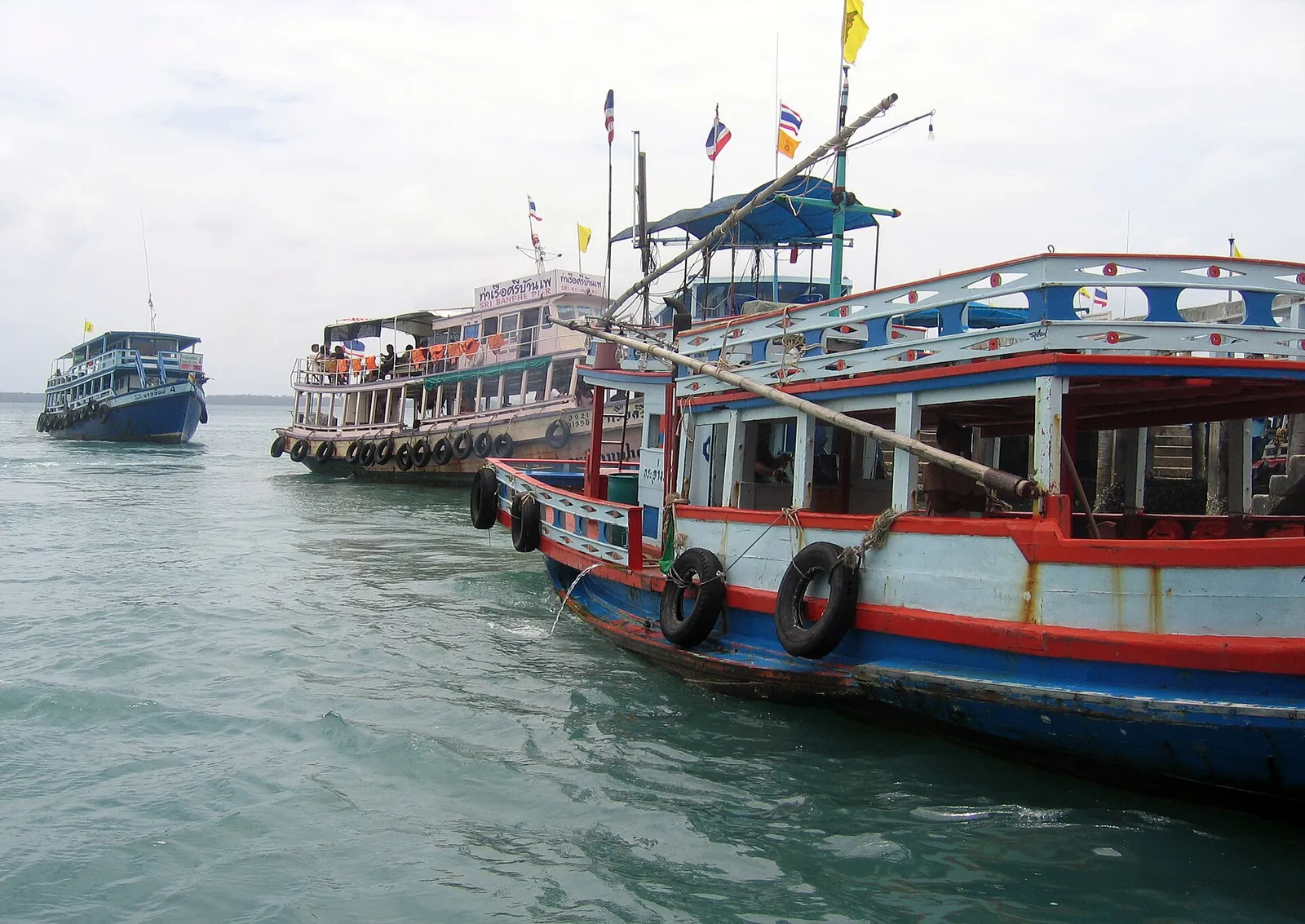
Buy the named pier and the complete ferry chain
On the Andaman coast, use one wording across the Thailand guides. Mainland boats start at Rassada in Phuket, Klong Jilad in Krabi, and Nopparat Thara at Ao Nang. Tonsai serves Phi Phi Don town; Laem Tong is a separate northern-beach arrival; Sala Dan serves northern Koh Lanta. Choose both piers with the room and road transfer in mind.
The plan's boat legs are on Bundhaya Speed Boat, checked on 2026-10-13: Ao Nang (Nopparat Thara Pier)–Tonsai in 50 minutes from 1,000 baht per person (40 minutes in the reverse direction) and Tonsai–Sala Dan in 30 minutes from 700 baht (40 minutes the other way), both all year. For day 6 it lists Sala Dan–Ao Nang in 1 hour 30 minutes from 1,250 baht, in seasonal windows that include 1 November–4 May. Its route table gives no departure times, so check the sailing for your date before you book the rooms and the flight. A second operator on Phi Phi–Lanta is Andaman Wave Master, which lists a December–March ferry from Lanta to Tonsai at 08:00–09:00 and 13:00–14:30 and from Laem Tong to Sala Dan at 11:30–13:00 and 15:30–16:30, at 450 baht.
If you sleep in Krabi Town instead, use Klong Jilad. Andaman Wave Master lists Klong Jilad–Tonsai at 09:00–11:00 and 13:00–15:30, a scheduled 2 hours to 2 hours 30 minutes, for 450 baht per adult and 350 baht per child, ferry only, without land transfers. Its Rassada–Tonsai ferries run 08:30–10:30 and 13:45–15:45, scheduled at 2 hours, for 700 baht per adult one way in Standard Class.
Ao Nang to Railay is a shared longtail from the Ao Nang Boat Service Co-operative: 100 baht each way, daily from 08:00 to 16:00, leaving once at least ten passengers are ready; Phra Nang Cave Beach is a 15–20 minute walk from Railay.
In the Gulf, Samui's Nathon, Lipa Noi, Pralarn and Bangrak are different departure points. Phangan's main gateway is Thong Sala, and Tao's harbour is Mae Haad. Lomprayah's 2026 timetable lists the Pralarn catamaran that departs at 08:00 and arrives at Phangan at 08:30 for 350 baht, and the ferry that departs at 11:00 and arrives at 11:30 for 250 baht. Its Pralarn–Tao examples take 1 hour 30 minutes to 2 hours 30 minutes and cost 550 to 700 baht, depending on the service and vessel.
From the mainland, Lomprayah's timetable lists Surat Thani Airport–Nathon (Samui) bus-and-catamaran journeys at 09:30–11:45 and 12:30–15:45 for 850 baht per person, and a Donsak–Nathon catamaran at 11:00–11:45 and 15:00–15:45 for 450 baht. Raja Ferry's vehicle ferry from Donsak to Thong Sala takes about 2 hours 30 minutes and costs 270 baht per adult. Raja's own fare page lists the Donsak–Samui passenger fare at 200 baht. Seatran also sails to Samui and Phangan; check its fare on its booking page before you choose a pier. Samui has its own airport, and Bangkok Airways operates direct flights from Suvarnabhumi (BKK) to Samui (USM); check the airline schedule and fare for your date before you book.
Lomprayah requires passengers at its office at least 60 minutes before departure, allows a large bag up to 20 kg and charges 200 baht above that weight; its tickets are non-refundable. Andaman Wave Master asks passengers to arrive no later than 30 minutes before departure.
- Copy the operator, origin pier, arrival pier and check-in time into the hotel transfer.
- A pier-only fare excludes the road journey unless the ticket explicitly includes it.
- Keep one coast-to-airport buffer night when the international flight cannot be replaced easily.
Choose the room by beach, pier and evenings
The best island is still the wrong booking when the room is on the wrong shore. In Ao Nang, stay within an easy walk of the beach road if you want restaurants and shared day-trip pickups; use Krabi Town for markets or a Klong Jilad departure, not for daily swimming; the route here leaves from Ao Nang's Nopparat Thara Pier. At Phi Phi, Tonsai and Loh Dalum are practical and lively, Long Beach adds sand and a boat hop, and Laem Tong needs its own arrival plan. On Lanta, Long Beach is the useful first compromise, while Kantiang trades convenience for a quieter southern setting.
In the Gulf, base choice is even more important because island roads wrap around hills and bays. Bophut or Mae Nam works well for a calmer Samui stay with northern-pier access; Chaweng is for the greatest dining and nightlife choice. Haad Yao makes a straightforward Phangan beach base, while Thong Sala protects an early departure. Sairee keeps Tao's dive schools and dinners close; Mae Haad is the practical answer for a short harbour stay.
Use Stay22 after choosing the area: search the exact beach or pier district, inspect the map and compare the complete room price for two adults. The hotel box gives starting areas, not a property ranking.
- Beach first: choose the evening atmosphere and swimming style you want.
- Pier second: protect early boats with a room on the useful side of the island.
- Property third: compare the full stay for two adults, including any required transfer or meal plan.
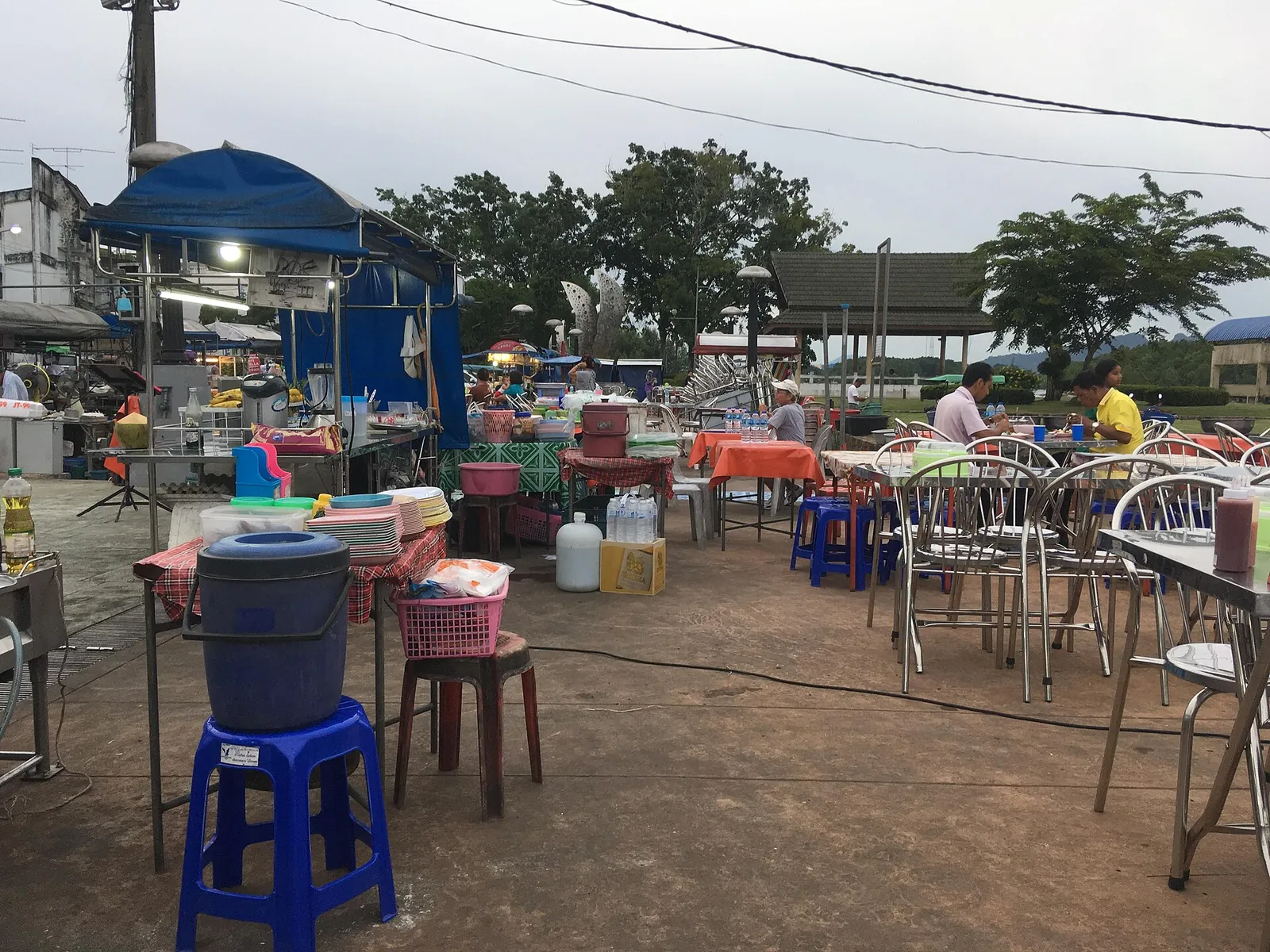
Price the seven-night route and eat the coast
Model budget for two adults sharing, eight days and seven nights, checked on 2026-10-13 and 2026-10-14: two nights in Ao Nang at Phra Nang Inn, whose own booking engine showed a Deluxe Mountain Wing room with breakfast at 18,000 baht for three nights, taxes and fees included, non-refundable (20–23 January 2027), or 6,000 baht a night and 12,000 baht for two nights; two nights on Phi Phi Don at Phi Phi Banyan Villa, whose site lists a Banyan Wing double at 4,600 baht a night, or 9,200 baht. The three Lanta nights are not priced: no Long Beach hotel published a rate that could be read, so add your own room rate times three.
The roads and boats are 7,800 baht for two: 1,500 baht for private taxis between Krabi Airport and Ao Nang at PrivateTaxiKrabi's 750 baht per vehicle, arrival and departure (the same fare is assumed for the return); 2,000 baht for Bundhaya's Ao Nang–Tonsai speedboat (day 1) at 1,000 baht each; 1,400 baht for Tonsai–Sala Dan at 700 baht each; 2,500 baht for Sala Dan–Ao Nang (day 6) at 1,250 baht each, inside the 1 November–4 May window; and 400 baht for four Railay longtail tickets at 100 baht. The Phi Phi Pirate Boat adds 3,600 baht for two, with the 400-baht park fee included.
The priced total is 32,600 baht for two (rooms 21,200, roads and boats 7,800, Phi Phi Leh day 3,600). Not included: the three Lanta nights, all meals and drinks, flights, hotel-to-pier transfers, other park fees (Mu Ko Lanta National Park is 200 baht per adult), insurance, luggage charges and diving. If breakfast is included in a room, leave it inside the room price. Khao yam and kaeng som suit Krabi, and grilled or turmeric fish suits Lanta.
Food follows the coast. Krabi and Lanta lean towards sour curries, turmeric fish and rice salads; on the Gulf side, TAT's Michelin coverage of Samui and Surat Thani points to local oysters, river prawns and salted duck eggs. Choose one local meal near each base rather than eating every dinner at an isolated resort.
- Rooms for two: 21,200 baht for two Ao Nang and two Phi Phi Don nights; Lanta's three nights are extra.
- Roads and boats for two: 7,800 baht, from the KBV taxi to the Sala Dan–Ao Nang boat.
- Phi Phi Leh day for two: 3,600 baht, park fee included.
- Priced total: 32,600 baht for two, before hotel-to-pier transfers, Lanta rooms, meals, flights and optional activities.
Make time for the local food
What to eat and where to look
Khao yam pak tai
Southern rice salad combines herbs, vegetables, sour fruit, roasted coconut and a salty budu dressing into a meal that tastes fresh, sharp and deeply coastal.
- Where to look
- Krabi Town's evening stalls around Chao Fah Pier and Walking Street, or a southern kitchen in Ao Nang.
- Fit it into your day
- An early dinner in Tonsai village after the first sailing.
Budu commonly contains fermented fish or prawns; travellers with a seafood allergy need the kitchen's ingredient advice.
Kaeng som pla
A hot and sour southern fish soup: chilli heat and tamarind sourness give it the sharpness and power that mark southern Thai curries.
- Where to look
- Local rice-and-curry shops in Krabi Town, Ao Nang or the villages behind Koh Lanta's west coast.
- Fit it into your day
- Share it with rice after a beach or mangrove day.
Order it with other dishes if you prefer to balance the heat.
Turmeric fried fish (pla thot kamin)
Fish fried with turmeric until the skin is crisp and golden, a southern dish that pairs with rice and a sour curry.
- Where to look
- Local rice-and-curry shops and seafood kitchens in Ao Nang and Lanta Old Town, where the Thailand Tourism Directory lists old buildings and restaurants.
- Fit it into your day
- Lunch or an early dinner on Lanta, shared with rice and a vegetable dish.
Ask for the fish to be cooked through and eat it hot.
Surat Thani oysters
TAT's account of Samui and Surat Thani food highlights local oysters, river prawns and salted duck eggs, so oysters suit a Gulf-led stay.
- Where to look
- Seafood kitchens in Surat Thani town and on Samui.
- Fit it into your day
- A seafood dinner on the first night of a Gulf stay.
Eat raw or lightly cooked shellfish only from a busy stall with fresh stock.
Practical questions
Should I choose the Andaman islands or the Gulf islands?
Choose by month and purpose. The Andaman south-west monsoon broadly runs from May to October and is usually strongest in September; heavier rain around Samui, Phangan and Tao generally comes from October to December and peaks in November. Then choose limestone and island-hopping in the Andaman, or Samui's hotel range, Phangan's retreats or Tao's diving in the Gulf.
How many Thai islands fit into one week?
Use one coast and no more than three bases. The guide's seven-night route is Phi Phi Don for two nights, Koh Lanta for three and Ao Nang for the last two; with four nights, stay on one island instead.
What should I book first for a Thailand island trip?
Book the Phi Phi and Lanta rooms and the speedboats that reach their exact piers first, then the weather-dependent sea day. Finish with two nights in Ao Nang so the last boat is two days before your flight from Krabi Airport.
How much are the Ao Nang–Phi Phi and Phi Phi–Lanta boats?
Bundhaya lists Ao Nang (Nopparat Thara)–Tonsai from 1,000 baht per person and Tonsai–Sala Dan from 700 baht per person, both all year. From Krabi's Klong Jilad Pier, Andaman Wave Master's ferry to Tonsai is 450 baht per adult, ferry only.
Which island is best for a first diving trip?
Koh Tao is the most focused choice because it has an established dive-school community and enough shore life for a five-night stay. Base in Sairee to compare schools, or Mae Haad for the harbour, and keep the final full day out of the water before flying.
Can I include Koh Lipe in a Thailand island route?
Yes, but only by sea from Koh Lanta or Krabi, between 1 November and 4 May, and give Lipe at least four nights. The Lipe section explains why this guide uses no mainland southern gateway.
Sources and checks before you travel
Reference sources for the version dated 15 October 2026. Confirm opening times, access, transport and conditions for your travel dates.
- TAT Newsroom: monsoon travel guidance ↗ — opens in a new tab
- TAT Newsroom: south-west monsoon marine guidance ↗ — opens in a new tab
- TAT Newsroom: national-park seasonal closures ↗ — opens in a new tab
- Department of National Parks: public 2026 attraction-status sheet ↗ — opens in a new tab
- Thai Meteorological Department: daily marine forecast ↗ — opens in a new tab
- Tourism Thailand: Phuket province ↗ — opens in a new tab
- TAT Newsroom: Phuket food culture ↗ — opens in a new tab
- TAT Newsroom: Krabi's natural sights ↗ — opens in a new tab
- TAT Newsroom: quiet beaches of Phang Nga ↗ — opens in a new tab
- TAT Newsroom: Ko Lanta island character ↗ — opens in a new tab
- TAT Newsroom: Maya Bay access and rehabilitation ↗ — opens in a new tab
- TAT Newsroom: regenerative tourism at Maya Bay ↗ — opens in a new tab
- Tourism Thailand: Trang province ↗ — opens in a new tab
- TAT Newsroom: Trang breakfast traditions ↗ — opens in a new tab
- TAT Newsroom: Ko Samui beaches and island scale ↗ — opens in a new tab
- TAT Newsroom: Ko Phangan as a Gulf getaway ↗ — opens in a new tab
- TAT Newsroom: Phangan, Tao and Nang Yuan gallery ↗ — opens in a new tab
- TAT Newsroom: Ko Tao reef conservation ↗ — opens in a new tab
- Koh Nangyuan Resort: day-visitor information ↗ — opens in a new tab
- Tourism Thailand: Ko Samet ↗ — opens in a new tab
- Andaman Wave Master: Krabi–Phi Phi ferry ↗ — opens in a new tab
- Andaman Wave Master: Phuket–Phi Phi ferry ↗ — opens in a new tab
- Andaman Wave Master: pier guide ↗ — opens in a new tab
- Andaman Wave Master: passenger terms ↗ — opens in a new tab
- Bundhaya Speed Boat: official route table ↗ — opens in a new tab
- Lomprayah: 2026 timetable publication ↗ — opens in a new tab
- Lomprayah: official 2026 timetable PDF ↗ — opens in a new tab
- Lomprayah: Gulf offices and piers ↗ — opens in a new tab
- Lomprayah: passenger terms ↗ — opens in a new tab
- Seatran Ferry: mainland and Samui connections ↗ — opens in a new tab
- Seatran Discovery: Gulf booking network ↗ — opens in a new tab
- Raja Ferry Port: sailing schedule ↗ — opens in a new tab
- TAT Newsroom: southern Thai regional dishes ↗ — opens in a new tab
- TAT Newsroom: Surat Thani food context ↗ — opens in a new tab
- France Diplomatie: Thailand security advice ↗ — opens in a new tab
- Tourism Thailand (Thai): DNP notice on special-rate attractions, 26 September 2022 ↗ — opens in a new tab
- Department of National Parks: fee regulation, Royal Gazette 9 December 2021 ↗ — opens in a new tab
- Phi Phi Pirate Boat: official shared tour ↗ — opens in a new tab
- Thailand Tourism Directory: Phi Phi Islands ↗ — opens in a new tab
- Thailand Tourism Directory: Maya Bay ↗ — opens in a new tab
- Thailand Tourism Directory: Pileh Bay ↗ — opens in a new tab
- Thailand Tourism Directory: Koh Adang ↗ — opens in a new tab
- Thailand Tourism Directory: Khao Laem Ya–Mu Ko Samet National Park ↗ — opens in a new tab
- Thailand Tourism Directory: Koh Lunta Old Town ↗ — opens in a new tab
- Thailand Tourism Directory: Koh Similan Donald Duck Bay ↗ — opens in a new tab
- Love Andaman: shared Similan Islands tour ↗ — opens in a new tab
- Ao Nang Boat Service Co-operative: Railay shared boat ↗ — opens in a new tab
- PrivateTaxiKrabi: Krabi Airport to Ao Nang ↗ — opens in a new tab
- Phra Nang Inn: own room-booking engine ↗ — opens in a new tab
- Phi Phi Banyan Villa: official site ↗ — opens in a new tab
- Raja Ferry Port: fare page ↗ — opens in a new tab
- Bangkok Airways: Bangkok to Koh Samui flights ↗ — opens in a new tab
Photo credits
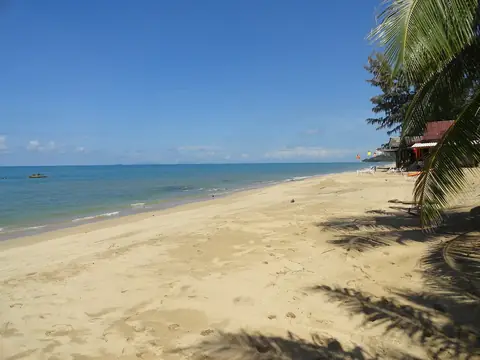
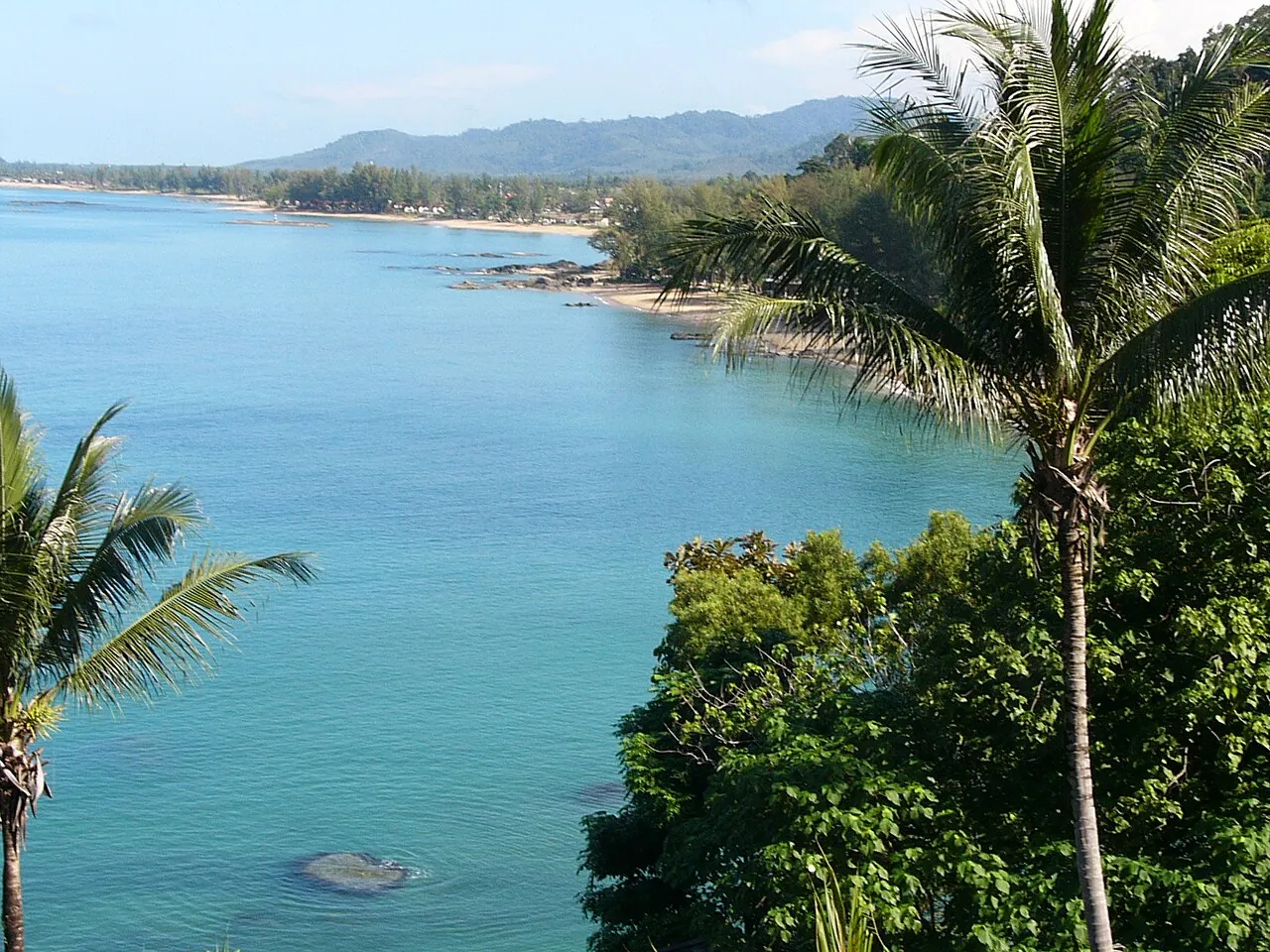
Khao Lak’s palm-fringed shoreline.
Photograph: Telgaa — opens in a new tab · CC BY 3.0 — opens in a new tab
Changes: Resized and converted to WebP; displayed with responsive crops. · Original photograph and licence details ↗ — opens in a new tab
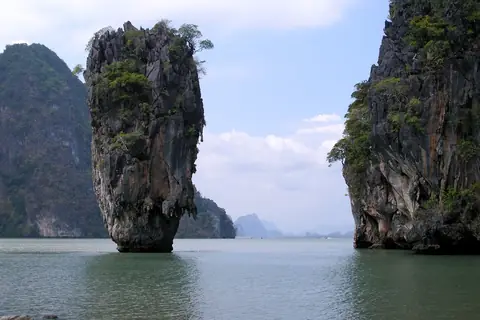
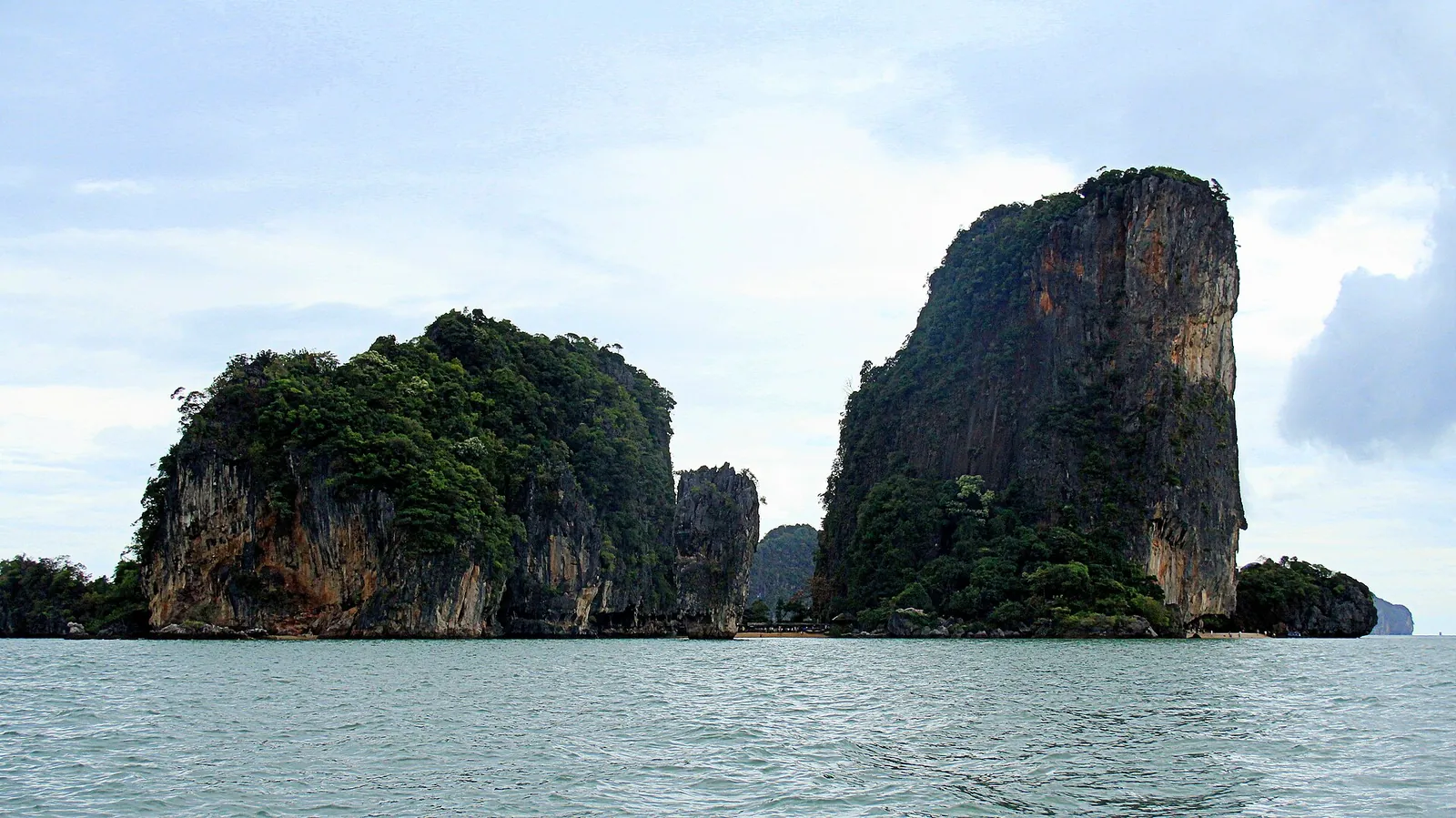
Khao Phing Kan and Koh Tapu (James Bond Island).
Photograph: Kemal Kaya (maxmajestic) - http://yoldaolmak.com/iletisim — opens in a new tab · CC BY-SA 2.5 — opens in a new tab
Changes: Resized and converted to WebP; displayed with responsive crops. · Original photograph and licence details ↗ — opens in a new tab
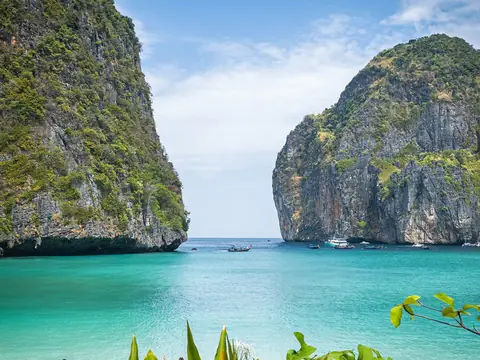
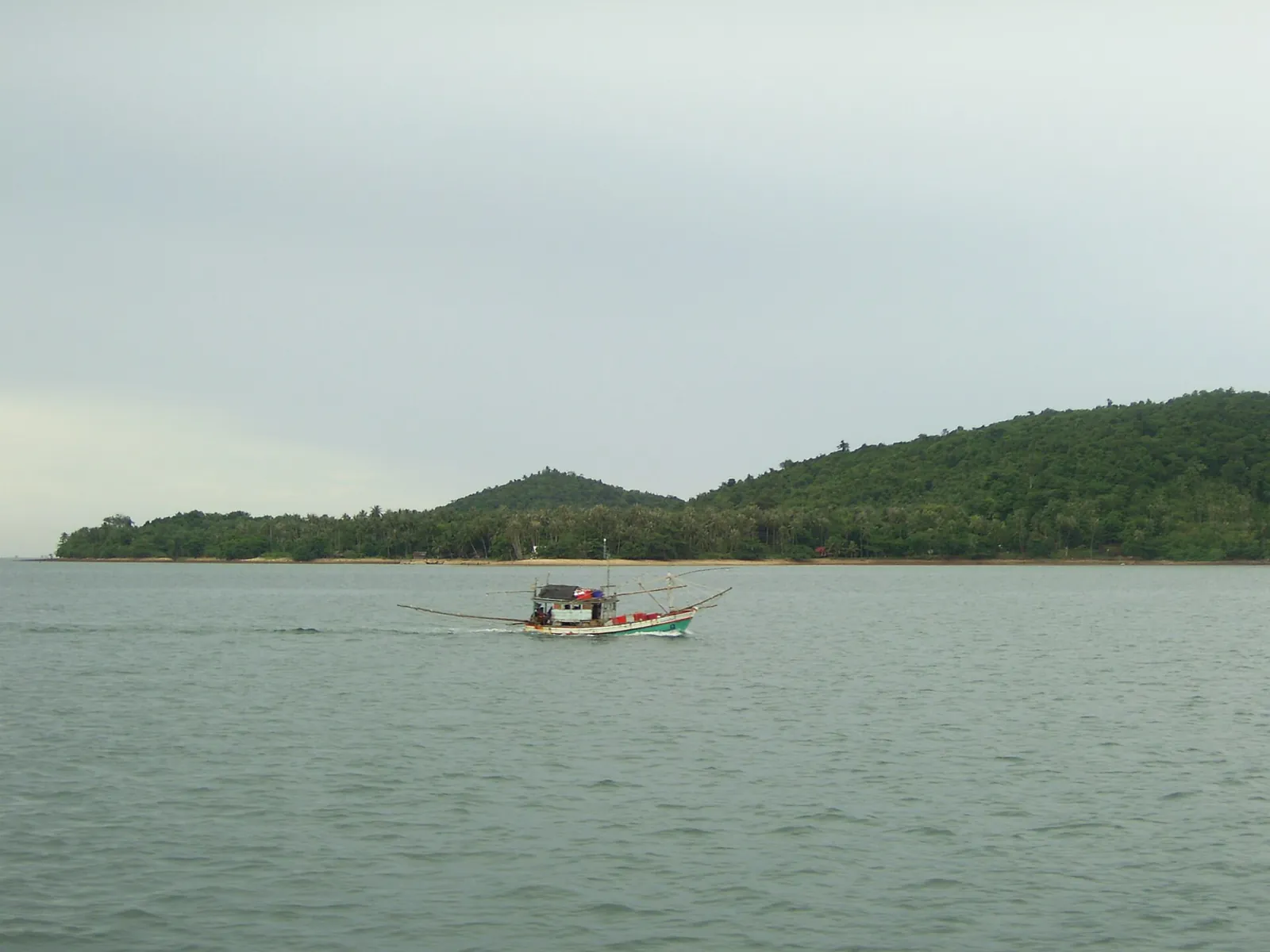
Islands off the Chumphon coast.
Photograph: diego_cue — opens in a new tab · CC BY-SA 3.0 — opens in a new tab
Changes: Resized and converted to WebP; displayed with responsive crops. · Original photograph and licence details ↗ — opens in a new tab
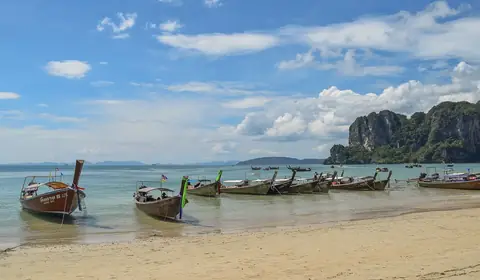
Boats to Koh Samet at Ban Phe.
Photograph: Bjørn Erik Pedersen — opens in a new tab · CC BY-SA 3.0 — opens in a new tab
Changes: Resized and converted to WebP; displayed with responsive crops. · Original photograph and licence details ↗ — opens in a new tab
Food stalls and riverside tables in Krabi Town.
Photograph: Christophe95 — opens in a new tab · CC BY-SA 4.0 — opens in a new tab
Changes: Resized and converted to WebP; displayed with responsive crops. · Original photograph and licence details ↗ — opens in a new tab