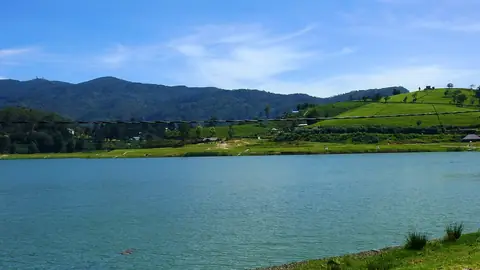
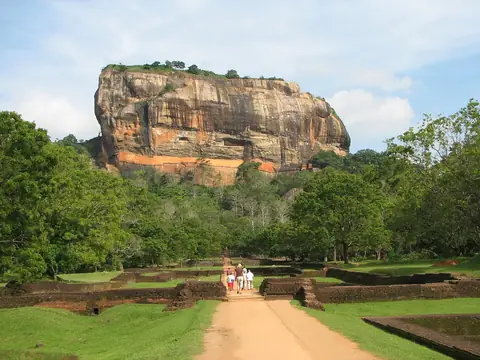
The hill country · Central Province
Kandy travel guide: Temple of the Tooth, the lake and Peradeniya
Kandy is the town where the hill country begins, and most visitors arrive with one sight in mind: the Temple of the Tooth, which holds the relic of the Buddha's left tooth. The temple is worth the stop, but it fills a morning rather than a stay. What turns Kandy into two good nights is the setting around it, a lake at the temple's feet, a botanic garden a short drive west and an hour of Kandyan dance at the end of the day, with the hill railway to Ella waiting in the morning. This guide helps you decide how long to stay, what the temple ticket covers, what to wear, and how to fit the Esala Perahera, the festival whose dates move each year, into your plans.
- Suggested time
- 2 nights in Kandy
- Where to stay
- Kandy town centre by the lake, next to the Temple of the Tooth
- Season and timing
- The temple, the gardens and the dance show run every day of the year. The Esala Perahera falls in July or August and its dates are announced by the temple each year; the hill roads and railway can be interrupted by heavy rain, and Sri Lanka Tourism describes the highlands as cool and relatively dry from January to April.
The short answer
Book two nights in Kandy, in the town centre by the lake if you want the temple close. Give the full day to the Temple of the Tooth, where a foreign visitor pays LKR 3,000 (LKR 2,500 for visitors from SAARC countries, Thailand and Myanmar), and to the Royal Botanic Gardens at Peradeniya, at LKR 3,540 for a foreign adult, and spend the early evening at a Kandyan dance show. Leave by train: a reserved second-class seat from Kandy to Ella costs LKR 1,700 per person if a through train from Kandy runs on your date, and reservations open 30 days before travel. Prices are as we checked them on 16 and 17 October 2026. If your dates fall in July or August, look up the Esala Perahera dates on the temple's website before you book rooms.
Two nights in Kandy: temple, lake, gardens and an evening show
Kandy was the last royal capital of Sri Lanka, and it still feels like a place organised around one building. The Sri Dalada Maligawa, the Temple of the Sacred Tooth Relic, stands beside the lake with the old royal palace to its north, and the town's day follows the temple's services, which begin before six in the morning. A visit to the temple takes a morning, and the lake walk, the gardens and the show fill the rest of two days without hurry.
Two nights is the right length for a first visit. Arrive in time for the lake walk and the dance show at 17.00, give the full day to the temple in the morning and Peradeniya in the afternoon, and leave on the third morning by train. One night works only if you treat Kandy as a stop between the Cultural Triangle and the hills and cut the gardens. A third night pays for the Perahera or the side trips below.
Choose the lake area if you want the temple and the evening walk close: the temple's own history page places Kandy Lake, also called Kiri Muhuda or the Sea of Milk, directly south of the temple. Peradeniya, where the gardens lie less than 5.5 km from Kandy, suits travellers who would rather sleep by the Mahaweli river, but it adds a ride to every evening plan. Rooms in both areas are on our where-to-stay guide.
The Temple of the Tooth: ticket, hours, services and dress
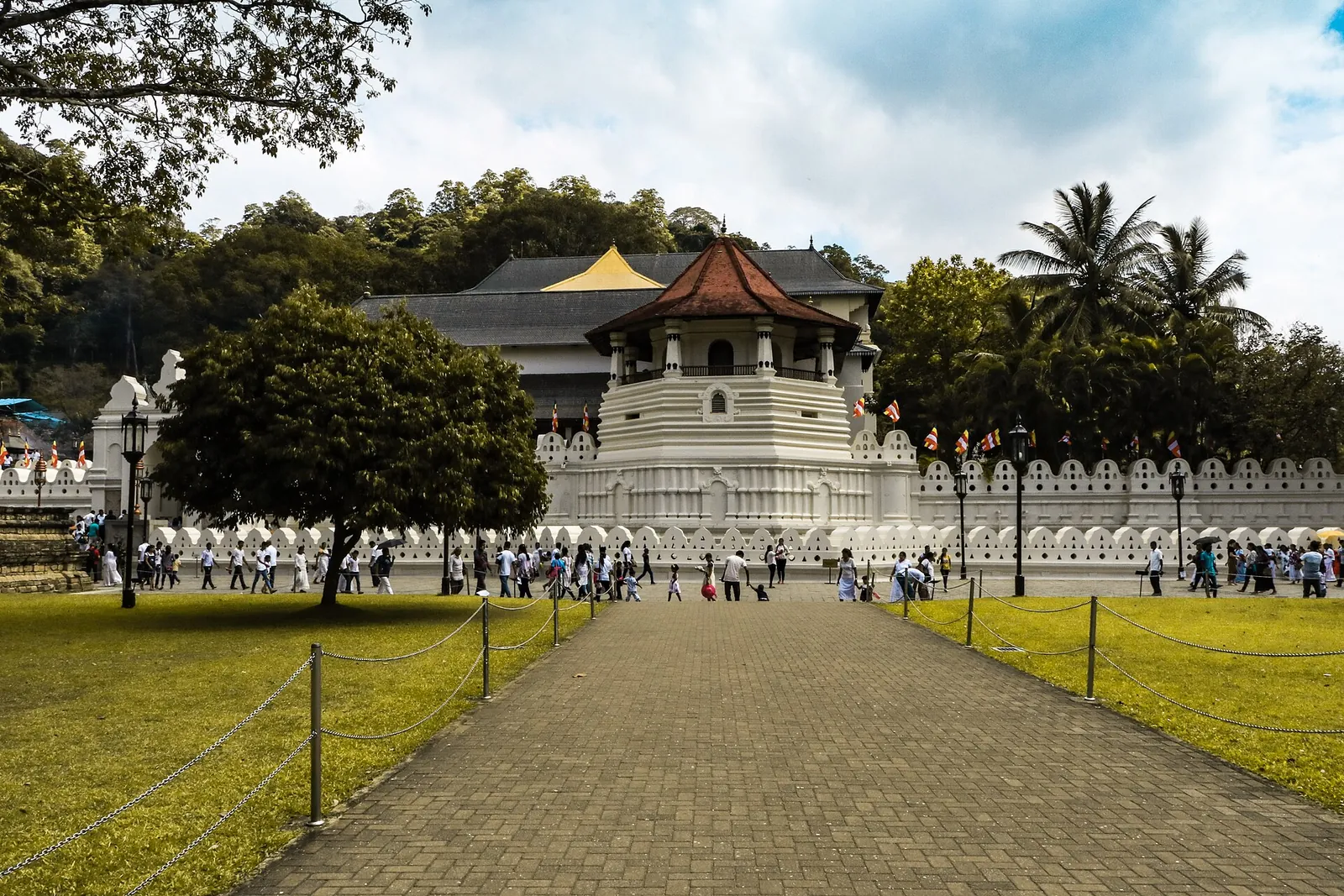
The temple is a compound rather than a single shrine. From the lawn in front, you see a white wall with a scalloped top, a dark-roofed hall behind it and, at the corner, the octagonal pavilion, the Paththirippuwa, built by King Sri Wickrama Rajasinghe, who reigned from 1798 to 1815. The temple is part of the Sacred City of Kandy, inscribed as a UNESCO World Heritage Site in 1988, and its Kandyan architecture is full of intricate carving in gold, silver, bronze and ivory. The compound also holds the museums that the ticket covers, so the visit is more than the shrine.
Visiting is easiest to plan around the services: an early morning service from 5.30 a.m. to 7.00 a.m., the Middle Morning Service from 9.30 a.m. to 11.00 a.m. and an evening service from 6.30 p.m. to 8.00 p.m. The temple is open to devotees every day, Monday to Sunday, from 5.30 a.m. until 8.00 p.m., and a weekly ceremony, the Nanumura Mangallaya, is held every Wednesday at 9.30 am. Go to a service for the atmosphere and the drumming and expect a crowd; go between services if you want room to look at the building, and arrive before the evening service.
Ticket and what it covers. When we checked on 17 October 2026, foreign visitors paid LKR 2,500 from SAARC countries, LKR 2,500 from Thailand and Myanmar, and LKR 3,000 from all other countries. One ticket covers the Temple of the Tooth Relic, the Dalada Museum, the World Buddhist Museum, the Tusker Museum and the Royal Elephant Stable. Machines at the temple issue the tickets, and tickets or fees issued by other individuals or institutions are not valid; a booking page elsewhere that offers a ticket for sale does not replace the machines.
What to wear. Shorts, sleeveless and body-revealing clothing are not admitted, and appropriate clothing can be obtained at the entrances. Footwear, bulky luggage and non-essential items go to the reception booths, where you receive a token; there are separate booths for local devotees and for foreign tourists. Everyone is screened at the entrance, and offerings are scanned. When we checked on 16 October 2026, the UK Foreign Office added the rule for Buddhist temples: cover your legs and shoulders, take off shoes and hats, and do not pose for photographs standing in front of a statue of the Buddha; the German Foreign Office put the same rule as no photograph with your back to one. A notice of 7 September 2020 on the temple's site lists audio guides in 8 languages, free of charge for foreign visitors.
Kandy Lake and the walk around the temple grounds
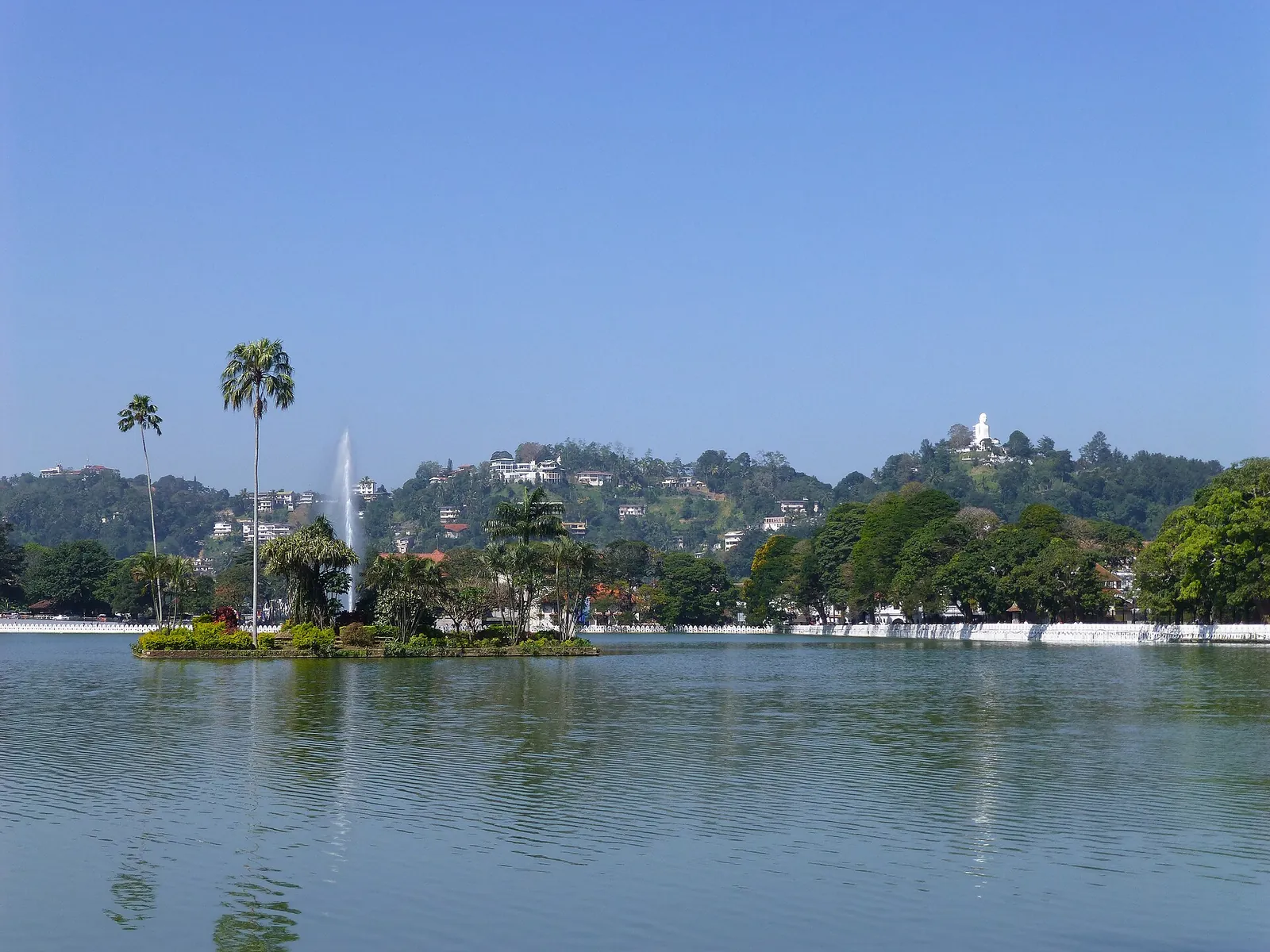
Kandy Lake is the town's living room. From the shore you see a small island planted with palms and a fountain, and behind the water the town climbing the hills among trees. Sri Lankans call the lake Kiri Muhuda, the Sea of Milk, and the temple's own history page uses the name for the water south of the temple.
The best use of an hour here is a slow walk in the late afternoon, before the evening show. The old royal palace lies to the north of the temple, the forest reserve of Udawaththa Kelaya to the east, the lake to the south and the Natha and Paththini Devala shrines to the west, so a loop from the temple lawn takes in the palace precinct, the two shrines and the shore, with the Malwatta Maha Viharaya, headquarters of the Malwatta chapter, on the southern bank of the lake. Allow the hour as a walk, not a march.
On foot, the loop above covers the lake and the temple. Peradeniya, on the Colombo Road, and the Ceylon Tea Museum, about 3 km from the Bogambara prison junction, are both a short ride away. No official page publishes current taxi or tuk-tuk fares; agree the price before you set off.
Peradeniya: the Royal Botanic Gardens
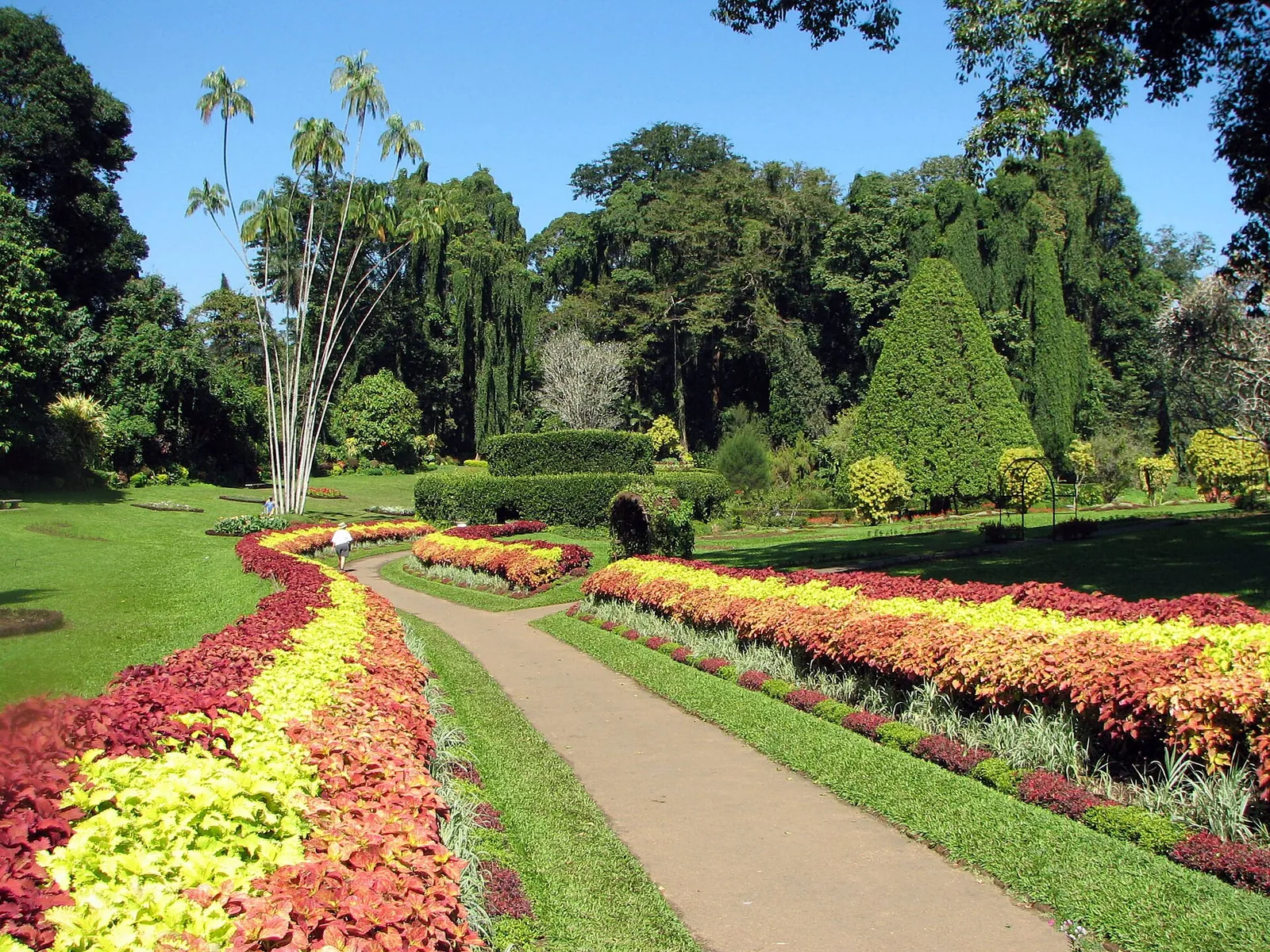
The Royal Botanic Gardens at Peradeniya are what Kandy offers when you have had enough of crowds and incense. Established in 1821, they lie less than 5.5 km from Kandy on the Colombo Road, on a loop of the Mahaweli river that surrounds them on every side except the south. They cover 147 acres and hold more than 4,000 species of plants, among them orchids, spices, medicinal plants and palms, with towering palm avenues, the Javan fig tree and a renowned orchid collection.
Start on the main lawns and flower beds, where the colour is, then look for the shade of the palm avenues and the orchid house. Give it the better part of an afternoon; the cafe and restaurant inside open from 08.00 AM to 5.00 PM.
Opening hours and ticket. The gardens open from 7.30 AM to 6.00 PM, with tickets sold from 7.30 AM to 5.00 PM, 365 days a year. When we checked on 16 October 2026, a visit cost LKR 3,540 for a foreign adult (older than 12), LKR 2,360 for a foreign student with proof and LKR 1,770 for a foreign child aged 5 to 12. The temple in the morning and the gardens in the afternoon fit into one day.
An evening of Kandyan dance
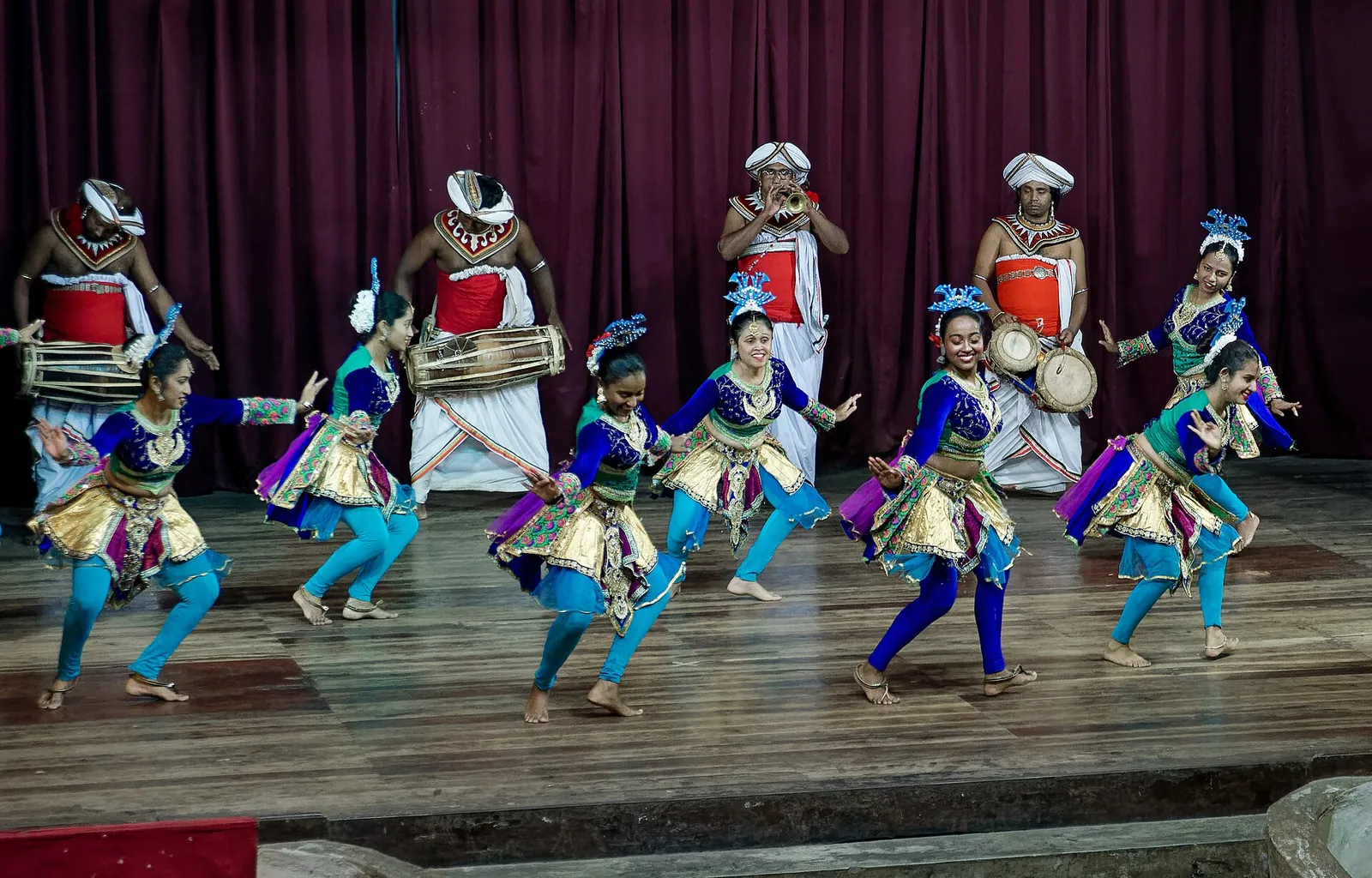
Dance is part of Kandy's identity, and an hour-long show is the easiest way to see it. The Kandy Lake Club Cultural Show, at No. 7, Sangamitta Mawatha, was established in 1982 as the first cultural dance performance of its kind in Sri Lanka, bringing the island's traditional styles onto one stage. The show runs for one hour, from 17.00 to 18.00 every day, with online booking.
The programme on the venue's page includes the Ves Natuma, the crowning Kandyan dance in the sacred Ves costume, the Raban Natuma, a folk dance with the Raban hand drum, and the Puja Natuma, in which women carry oil lamps as an offering to the guardian deities. It also lists the mask dance Raksha Natuma and the healing dance Devol Natuma, which come from the south of the island, and Gini Sisila, a fire dance that includes fire-eating, and fire walking. No official page lists the ticket price; ask when you book. The show is not in the cost list below.
Plan the show for the evening of the day you walk the lake; a 17.00 start leaves the evening free for dinner afterwards.
Make time for the local food
What to eat and where to look
Hoppers
Bowl-shaped pancakes of fermented rice flour and coconut milk, crisp at the edges and thicker at the bottom. Sri Lanka Tourism lists plain and egg hoppers as a main meal for breakfast and dinner.
- Where to look
- Balaji Dosai, 03 D.S. Senanayaka Street, a vegetarian restaurant in Kandy since 2008; its about page lists hoppers, its menu lists string hoppers in sets of ten, and its contact page lists opening from 7 AM to midnight every day.
- Fit it into your day
- Breakfast, before the temple's morning crowds.
Ask what curry comes with them if you avoid chilli.
Kottu
Shredded roti chopped with vegetables, egg or meat on a hot griddle with curry sauce. Sri Lanka Tourism calls it one of the most defining items of Sri Lankan street food.
- Where to look
- Balaji Dosai, whose own page lists dine-in and takeaway kottu.
- Fit it into your day
- Dinner after the dance show, or lunch between the temple and the gardens.
Balaji Dosai is a vegetarian restaurant, so expect a vegetarian kottu; ask for it mild if you are not used to heat.
Rice and curry
Sri Lanka Tourism calls rice and curry the main meal of Sri Lanka, served with side dishes such as dhal, papadum and mallum.
- Where to look
- The Main Restaurant at Queen's Hotel, whose own page names traditional rice and curry among its Sri Lankan specialties, with views of Kandy Lake or the town below; it serves breakfast from 7:00 to 10:00 am, lunch from 12.00 to 3.00 pm and dinner from 7.00 to 11.00 pm.
- Fit it into your day
- Lunch, between the temple and the gardens.
The menu also lists international dishes, so ask for the Sri Lankan ones.
Kiribath and kavum
Kiribath is milk rice and kavum a festive sweet. Sri Lanka Tourism names both among the Sinhalese community's festive foods, and the temple offers milk rice to the relic at its New Harvest Festival in January.
- Where to look
- No official page names a Kandy shop for either, so ask at a bakery or sweet counter in the town centre.
- Fit it into your day
- Breakfast or a tea-time snack.
Kavum is a sweet, so it suits tea time better than breakfast.
The Esala Perahera: dates that move each year
The Esala Perahera is the festival that brings Kandy's temple out into the streets: a run of nightly processions with drummers, dancers and elephants in lights, honouring the Tooth Relic. It falls in July or August, but the dates change each year and the Sri Dalada Maligawa announces them on sridaladamaligawa.lk.
The 2026 schedule shows how the festival runs. The Kumbal Perahera ran from 18 to 22 August and the Randoli Perahera from 23 to 27 August, with each evening procession starting between 6.28 PM and 7.00 PM; the water-cutting ceremony followed at 1.28 AM on 28 August and the Day Perahera at 2.18 PM the same day. The temple announced those dates at a media briefing on 8 July, about six weeks before the first procession; other years will differ. The temple streams the procession through the LIVE Stream page of its site and links to a separate official Perahera website. The Kandy Lake Club moved its show to 4:30 PM in the same period, so the town's evening shifts while the festival runs. No official page lists seating or street arrangements for the processions; ask at the temple. Our best-time guide places the Perahera within the island's July and August festival season.
Reaching Kandy and leaving for Ella
Colombo Fort to Kandy is 120.74 km by rail, 2 hours 31 minutes to 3 hours 20 minutes on the reserved-seat trains: the Intercity 1009 runs 07.00 AM to 09.38 AM, the Intercity 1019 runs 10.35 AM to 01.55 PM and the Intercity 1029 runs 03.35 PM to 06.06 PM. Colombo Fort departures toward Kandy and Badulla run from 05.30 AM to 08.30 PM, with first-class observation saloons on some of them. By road, the Road Development Authority's gazetted list gives the Colombo to Kandy road (A1) a length of 115.85 km, and Sri Lanka Tourism's journey-time chart gives about 3 hours by road from Colombo. Before you fly, read our entry guide for the ETA.
Fares. When we checked on 17 October 2026, ordinary tickets from Colombo Fort to Kandy cost LKR 950 in first class, LKR 500 in second class and LKR 240 in third class, on fares last updated in September 2022. The railway's 2022 table prints two sets of seat prices for Colombo Fort to Kandy (LKR 2,000, 1,200 and 900, and LKR 1,500, 1,000 and 600); the booking site shows the price for your train. Reservations are made on the railway's seat-reservation site, close 2 hours before departure and need every passenger's passport number; online tickets carry a 5% convenience fee. Our transport guide explains the booking steps and the refund rules.
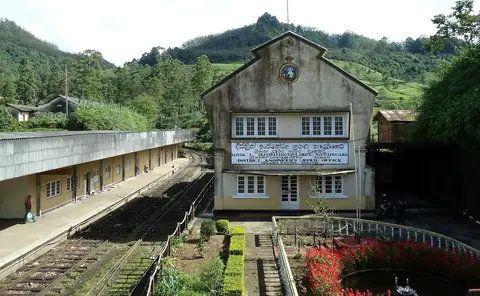
Kandy to Ella. The hill line is the reason to leave Kandy by train rather than road. The distance is 162.63 km, and a reserved seat costs the railway's 2022 table figure: LKR 2,500 in first class, LKR 1,700 in second class and LKR 1,200 in third class. The railway's reserved-seat leaflet (a file of January 2024) prints reserved second class on four trains from Colombo Fort, the Ella Odyssey, the Podi Manike, the Udarata Manike and the Intercity 1009. The railway's home page says train services from Badulla to Nanu Oya have resumed after the section damaged by Cyclone Ditwah was restored. The railway's notice for 20 June 2026 (a Sinhala and Tamil scan) schedules trains between Nanu Oya and Badulla and lists no Colombo or Kandy trains, so check the booking site's train list for your date. The notice gives the Ella Odyssey on Wednesdays only (train 1043, Nanu Oya 01.00 PM, Ella 03.21 PM). A through train from Kandy to Ella is therefore not certain: the fallback is Kandy to Nanu Oya and then Nanu Oya to Ella, a reserved second-class seat at LKR 1,200 for each leg. The daily mixed train leaves Kandy at 03.35 AM and reaches Badulla at 02.28 PM, 10 hours 53 minutes for the whole run, but it has no reserved second class: the booking site sells the observation saloon only on that train. No official page lists a Kandy departure or Ella arrival for the through trains; the booking site's train list for your date gives them. Ella lies a few stops before Badulla, so plan the leg as most of a day. Heavy rain can interrupt the hill line, and the Disaster Management Centre's website, dmc.gov.lk, carries a landslide warning page.
To Nuwara Eliya and Sigiriya. Trains for Nuwara Eliya stop at Nanu Oya, 98.1 km from Kandy, and a reserved seat costs LKR 2,000 in first class, LKR 1,200 in second class and LKR 900 in third class; second class is not reserved on the Tikiri Manike, which ends at Nanu Oya. No official page lists road times from Kandy to Sigiriya or Nuwara Eliya, so keep those days free of fixed plans; the Sigiriya area is the previous stop on the ten-day loop. A car with a driver, which the transport guide covers, is the other way to link Kandy with its neighbours.
Side trips: Udawattakele, three Kandyan temples, the tea museum and Pinnawala
A third day or a spare half-day has four good uses. Udawattakele is the forest reserve east of the temple, which the temple's history page calls Udawaththa Kelaya and the Central Province Tourism Department spells Udawattekele; that department lists bird watching and trekking in the sanctuary. No official page lists its entrance fee or hours; ask at the gate. Three Kandyan temples lie in the hills around town. Gadaladeniya, in Udunuwara in Kandy district, is reached from the Colombo to Kandy road by turning toward Daulagala at the Embilimigama junction; its image house is built in dressed stone in the Vijayanagar style, with Buddhist and Hindu influences. Lankathilaka, also in Udunuwara, goes back to the 14th century and was built by King Buvanekabahu of the Gampola kingdom (1341 to 1351); it rises three storeys today from a rock called Panhalgala, with five devalas beside it and inscriptions in Sinhala and Tamil cut into the rock. Degaldoruwa is a cave temple near Kundasale whose Kandyan-period paintings include the Vessantara Jataka, the most creative of them.
The Ceylon Tea Museum at Hantana is run jointly by the Sri Lanka Tea Board and the tea industry. It shows tea machinery more than 100 years old, and a telescope on the fourth floor looks over Kandy town and the Knuckles and Matale ranges. It lies about 3 km from the Bogambara prison junction on the Hantana road, about 1.5 hours for the round trip from any Kandy hotel, with, when we checked on 17 October 2026, Sri Lanka Tourism's undated museums page listing tickets at LKR 500 for a non-resident adult and LKR 200 for a non-resident student. The Knuckles range, in Matale and Kandy districts, is a day for walkers: about 21,000 ha of forest that forms part of the Central Highlands World Heritage site, declared in 2010, and a hike to Corbett's Gap along an abandoned jeep track.
Pinnawala Elephant Orphanage in Kegalle District was the world's first elephant orphanage, according to the Central Cultural Fund's list of destinations. The Department of National Zoological Gardens' page (nationalzoo.gov.lk/pinnawala, read 17 October 2026) lists the orphanage ticket for a foreign adult at USD 17.70, opening at 08.30 and the ticket counter closing at 17.00. No official page gives the travel time from Kandy.
What Kandy costs for two: tickets and the train
Prices checked on 16 and 17 October 2026, for two adults, with second class on the train. Rooms are not in the list; our where-to-stay guide covers them. If no through train from Kandy runs on your date, the fallback of Kandy to Nanu Oya and Nanu Oya to Ella costs LKR 1,200 a leg in second class, LKR 4,800 for two before the 5% online fee.
- Temple of the Tooth: 2 × LKR 3,000 = LKR 6,000.
- Peradeniya gardens: 2 × LKR 3,540 = LKR 7,080.
- Kandy to Ella, reserved second class: 2 × LKR 1,700 = LKR 3,400, plus the 5% online fee of LKR 170, LKR 3,570.
- Total: LKR 16,650 (LKR 6,000 + 7,080 + 3,570).
- Not included: rooms, the dance show (no official page lists its price), meals, the ride to Peradeniya, the side trips and the way into Kandy.
Practical questions
How many nights should I spend in Kandy?
Two nights for most travellers. The Temple of the Tooth fills a morning, the Peradeniya gardens an afternoon and the dance show an evening, and the third morning is for the hill train. One night works if you skip the gardens; a third night is worth adding for the Esala Perahera or the side trips.
How much is the Temple of the Tooth ticket?
LKR 3,000 for foreign visitors from most countries and LKR 2,500 for visitors from SAARC countries, Thailand and Myanmar. The ticket also covers the Dalada Museum, the World Buddhist Museum, the Tusker Museum and the Royal Elephant Stable. Machines at the temple issue the tickets, and tickets issued by other people or institutions are not valid.
What should I wear to the Temple of the Tooth?
The temple's own FAQ says shorts, sleeveless and body-revealing clothing are not admitted, and suitable clothing can be obtained at the entrances. Shoes, bulky bags and non-essential items are left at the reception booths for a token. The photograph rule is in the temple section above.
When is the Esala Perahera?
In July or August, but the dates change each year and the Sri Dalada Maligawa announces them on its website, sridaladamaligawa.lk. The 2026 festival ran from 18 to 28 August, and the temple announced those dates on 8 July.
Is the Royal Botanic Gardens at Peradeniya worth the entry fee?
Yes, if you have an afternoon to spare. The gardens cover 147 acres and hold more than 4,000 plant species, including a well-known orchid collection. A foreign adult pays LKR 3,540 and a child aged 5 to 12 LKR 1,770, with ticketing from 7.30 AM to 5.00 PM every day.
How do I get from Kandy to Ella?
By train, on the hill line, 162.63 km. A reserved seat costs the railway's 2022 table figure of LKR 1,700 in second class (LKR 2,500 in first class and LKR 1,200 in third), with a 5% fee on online tickets. The railway's January 2024 leaflet prints reserved second class on the Ella Odyssey, the Podi Manike, the Udarata Manike and the Intercity 1009, but its June 2026 notice lists no Colombo or Kandy trains, so a through train from Kandy is not certain for your date; the fallback is Kandy to Nanu Oya and Nanu Oya to Ella at LKR 1,200 each in second class. The daily 03.35 AM mixed train from Kandy sells only the observation saloon. Reserve on the railway's own seat-reservation site.
How much do the tickets and the Ella train cost for two people?
About LKR 16,650: the Temple of the Tooth and Peradeniya tickets for two (LKR 6,000 and LKR 7,080) and two reserved second-class seats to Ella with the online fee (LKR 3,570), when a through train runs. Rooms are covered in the stay guide; meals, the dance show and local rides are extra.
Sources and checks before you travel
Reference sources for the version dated 17 October 2026. Confirm opening times, access, transport and conditions for your travel dates.
- Sri Dalada Maligawa: FAQ ↗ — opens in a new tab
- Sri Dalada Maligawa: history, including its UNESCO world heritage listing ↗ — opens in a new tab
- Sri Dalada Maligawa: Daily Service ↗ — opens in a new tab
- Sri Dalada Maligawa: audio guidance for tourists ↗ — opens in a new tab
- Sri Dalada Maligawa: Four Main Festivals ↗ — opens in a new tab
- Sri Dalada Maligawa: dates announced for the Kandy Esala Perahera 2026 ↗ — opens in a new tab
- Sri Dalada Maligawa: The Kandy Esala Perahera Festival 2026 ↗ — opens in a new tab
- Department of National Botanic Gardens: Royal Botanic Gardens, Peradeniya ↗ — opens in a new tab
- Central Cultural Fund: Visit Sri Lanka destinations ↗ — opens in a new tab
- Kandy Lake Club Cultural Show ↗ — opens in a new tab
- Balaji Dosai: menu ↗ — opens in a new tab
- Balaji Dosai: about ↗ — opens in a new tab
- Balaji Dosai: contact ↗ — opens in a new tab
- Sri Lanka Tourism: Food Range ↗ — opens in a new tab
- Sri Lanka Railways: fare table, station Colombo Fort ↗ — opens in a new tab
- Sri Lanka Railways: fare table, station Kandy ↗ — opens in a new tab
- Sri Lanka Railways: revision of charges for seat reservation, 1 August 2022 ↗ — opens in a new tab
- Sri Lanka Railways: trains with reserved seats ↗ — opens in a new tab
- Sri Lanka Railways: seat reservation FAQ ↗ — opens in a new tab
- Disaster Management Centre: home page ↗ — opens in a new tab
- UK Foreign Office: Sri Lanka safety and security ↗ — opens in a new tab
- Sri Lanka Tourism: Travel Tips ↗ — opens in a new tab
- Sri Lanka Tourism: Buddhist attractions ↗ — opens in a new tab
- Sri Lanka Tourism: museums ↗ — opens in a new tab
- Central Province Tourism Department: hiking and trekking ↗ — opens in a new tab
- German Foreign Office (Auswaertiges Amt): Sri Lanka, Reise- und Sicherheitshinweise ↗ — opens in a new tab
- Central Cultural Fund: Temple of the Tooth ↗ — opens in a new tab
- Sri Lanka Tourism: Airports ↗ — opens in a new tab
- Sri Lanka Tourism: Getting Around ↗ — opens in a new tab
- Road Development Authority: gazetted list of national highways ↗ — opens in a new tab
- Queen's Hotel, Kandy: Main Restaurant ↗ — opens in a new tab
- Sri Lanka Tourism: culinary tourism ↗ — opens in a new tab
- Sri Lanka Railways: List of Ticket Fare and Charges 2022 ↗ — opens in a new tab
- Sri Lanka Railways: home page ↗ — opens in a new tab
- Sri Lanka Railways: notice on Nanu Oya to Badulla train services from 20 June 2026 (Tamil PDF) ↗ — opens in a new tab
- Department of National Zoological Gardens: Pinnawala ↗ — opens in a new tab
Does this experience fit your route?
If you have only a day in Kandy, a guided tour handles the temple, the Peradeniya gardens and a dance show in one sweep; the first listing leaves the temple ticket out.
Check dates and details on Viator ↗ — opens in a new tabAffiliate link · Book with ViatorPhoto credits
The Temple of the Sacred Tooth Relic in Kandy, seen across its lawn on a bright day
Photograph: Rashod Korala — opens in a new tab · CC BY-SA 4.0 — opens in a new tab
Changes: Resized and converted to WebP; displayed with responsive crops. · Original photograph and licence details ↗ — opens in a new tab
Kandy Lake, with the island and fountain and the town climbing the hills behind
Photograph: Ji-Elle — opens in a new tab · CC BY-SA 3.0 — opens in a new tab
Changes: Resized and converted to WebP; displayed with responsive crops. · Original photograph and licence details ↗ — opens in a new tab
A flower-bed walk in the Royal Botanic Gardens at Peradeniya
Photograph: Bernard Gagnon — opens in a new tab · CC BY-SA 3.0 — opens in a new tab
Changes: Resized and converted to WebP; displayed with responsive crops. · Original photograph and licence details ↗ — opens in a new tab
A Kandyan dance performance at the Kandyan Cultural Centre in Kandy
Photograph: Jakub Hałun — opens in a new tab · CC BY 4.0 — opens in a new tab
Changes: Resized and converted to WebP; displayed with responsive crops. · Original photograph and licence details ↗ — opens in a new tab
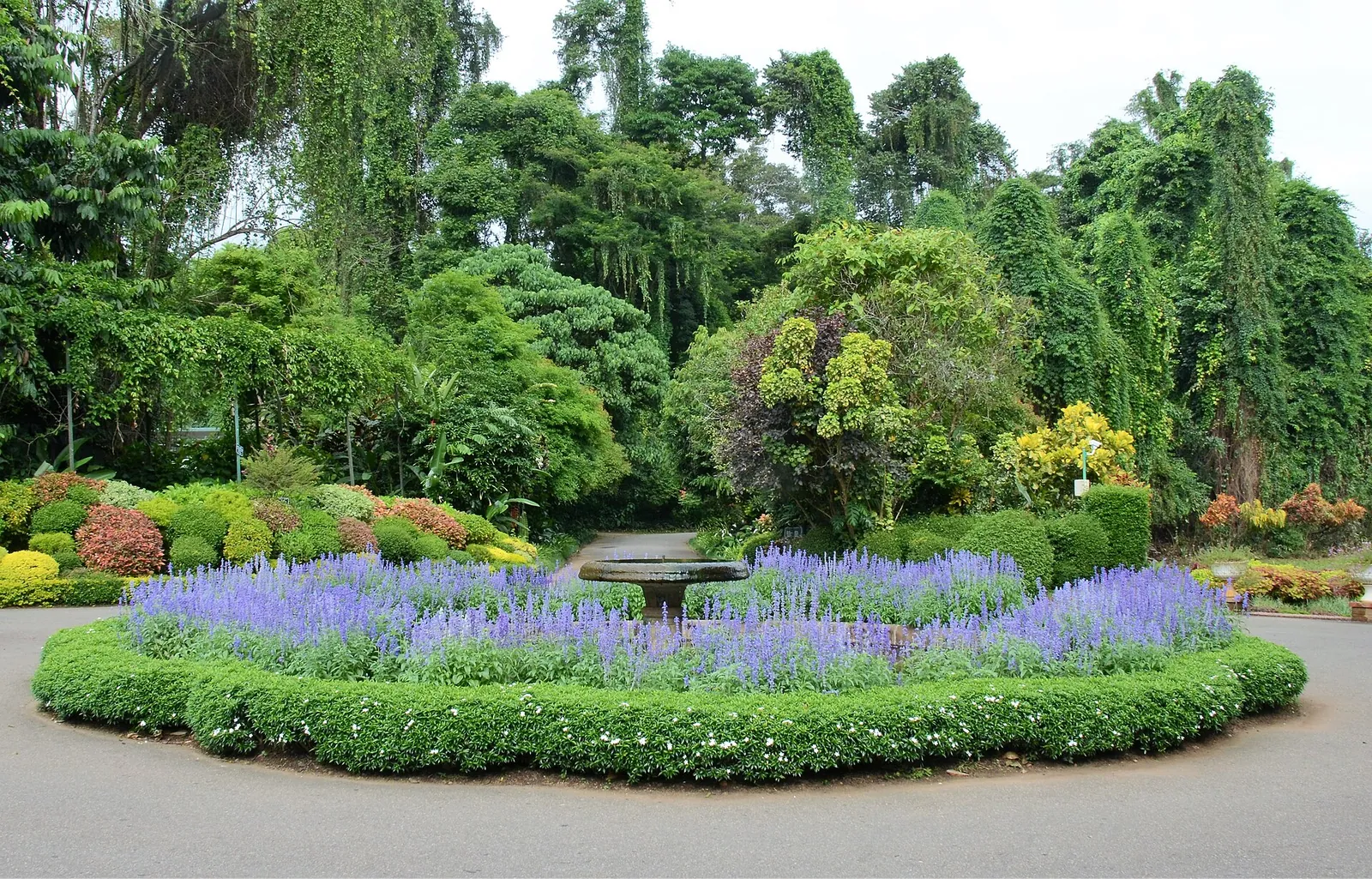
The planting in front of the orchid house at Peradeniya
Photograph: Royal Botanic Gardens, Peradeniya — opens in a new tab · CC BY-SA 4.0 — opens in a new tab
Changes: Resized and converted to WebP; displayed with responsive crops. · Original photograph and licence details ↗ — opens in a new tab