Colombo and the west coast · Western Province
Colombo travel guide: museum, Gangaramaya, Fort and Galle Face
Colombo is the city most visitors land near and few plan for. It is a port and a commercial capital, and Sri Lanka Tourism describes it as a city of contrasts, with mansions and lush gardens standing beside congested roads and street markets. That contrast is the reason to give it a proper day. The best hours are spent in a white colonial museum, in a temple that doubles as a collection and beside a lake pavilion, in an old Dutch hospital that now holds a dining courtyard, and on the sea-front lawn where the city goes at the end of the day. The museum, the temple and the Green each fill a half day, so the choice is which two you want.
- Suggested time
- 1 night at the start of the loop, or 2 nights for a full day and a half day
- Where to stay
- Colombo Fort for the railway station, the Dutch Hospital and the old market quarter; Galle Face for the Green and the sea front
- Season and timing
- Sri Lanka Tourism names November to April as the best time for sun and sea, and the German Foreign Office (page of 17 October 2026) puts the rainy season in the south-west from June to October. The museum and the temple work in the rain; Galle Face Green and the Pettah lanes do not.
The short answer
Give Colombo one night at the start of the ten-day loop (day 10 is the train back to Colombo and the flight, not a night), and two nights if you want the museum, the temple and the old Fort district on separate half-days. Spend the morning at the Colombo National Museum, which is open Tuesday to Sunday, the early afternoon at Gangaramaya and Seema Malaka on Beira Lake, and the last hours of light on Galle Face Green, with dinner in the Dutch Hospital building in Fort. Book the airport car for the first night before anything else, then your train seats on the railway's booking site. Three key prices, checked on 17 October 2026: the museum's general ticket costs USD 5 for a foreign adult (USD 8 for its combined ticket); an ordinary second-class train ticket from Colombo Fort to Galle or to Kandy costs LKR 500; and a reserved air-conditioned first-class seat on the coast train to Galle costs LKR 1,100 (the railway's 2022 seat-reservation table).
How long Colombo needs, and where to sleep
Colombo covers only 37.31 km², yet it packs in a very mixed range of things to do: a visit to the Pettah market, kottu for dinner, high tea in a colonial hotel overlooking the Indian Ocean. The sights in this guide sit in three separate pockets, the museum, the temple on Beira Lake and the Fort and Galle Face waterfront, and the roads between them are crowded, so one pocket in a morning and one in an afternoon is a comfortable pace.
On the ten-day loop in our first-trip guide, the first night is in Colombo or near the airport and the coast train from Galle brings you back to Colombo on day 10. One night is enough to see the museum and the Green. Add a second if you land late or want Gangaramaya and the Fort district without hurrying.
Fort suits an early train: Colombo Fort station is where the Main Line trains to Kandy leave, and the Dutch Hospital building is in the Fort area. Galle Face puts you on the sea front, facing the Green, for the evenings by the sea. Mount Lavinia, one of Colombo's more laid-back suburbs with seafood restaurants on a golden beach (Sri Lanka Tourism), suits a night by the sea away from the centre. Negombo, 6 km from the airport, suits a first night after a late landing. The where-to-stay guide has rooms for each area.
From the airport and by train
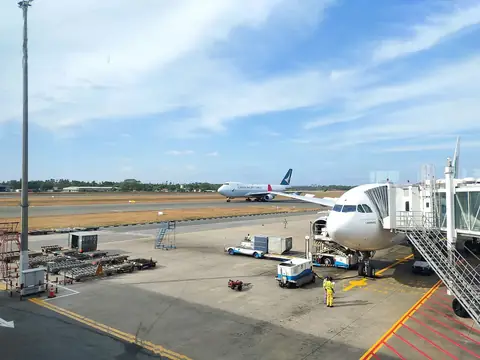
Bandaranaike International Airport (CMB) is at Katunayake, 35 km north of Colombo and 6 km from Negombo (Sri Lanka Tourism's travel-tips page); its airports page says 30 km. The Colombo-Katunayake Expressway is 25.80 km long (Road Development Authority). Sri Lanka Tourism lists authorised taxi operators that run rides from and to the airport. No official page lists the airport's taxi counters, bus services or fares; ask at the arrivals hall or have your hotel send a car.
The railway also lists a station called Airport - Katunayake, 33.44 km from Colombo Fort, at ordinary fares of LKR 350 in first class, LKR 200 in second and LKR 100 in third; no official page says how far it is from the terminal, so ask at the airport information desk. No official page gives the drive time between Colombo and the airport or says how many hours before departure to arrive; allow extra time at peak hours and follow your airline's message for your flight. Every foreign national needs an ETA before flying; the entry guide has the steps.
Colombo Fort is the station for the Main Line to Kandy, 120.74 km away. Galle on the coast line is 113.89 km from Colombo Fort. The railway's January 2024 leaflet shows reserved seats only in air-conditioned first class on the coast trains; the booking site lists first, second and third class. The reserved coast trains toward Colombo leave Matara at 06.05 AM and Beliatta at 05.25 AM and reach Maradana station; only the two afternoon trains start at Maradana, at 02.30 PM and 03.40 PM, and in the railway's booking example they call at Colombo Fort ten minutes later. When we checked on 17 October 2026, ordinary tickets to both cost LKR 950 in first class, LKR 500 in second and LKR 240 in third, on the fares last updated in September 2022. A reserved air-conditioned first-class seat from Colombo Fort to Galle is LKR 1,100; that table figure is the full seat price. An ordinary second-class ticket costs LKR 500. For Kandy the railway's 2022 table prints two sets of seat prices (LKR 2,000, 1,200 and 900, and LKR 1,500, 1,000 and 600); the booking site shows the price for your train. Online bookings add a 5% fee.
Colombo Fort to Kandy takes 2 hours 31 minutes to 3 hours 20 minutes on the reserved-seat trains, for example 07.00 AM to 09.38 AM on the daily Intercity 1009 (second class reserved), 10.35 AM to 01.55 PM on the Intercity 1019 (reserved seats in air-conditioned first class only) and 03.35 PM to 06.06 PM on the Intercity 1029 (reserved seats in air-conditioned first class and in second class), and departures from Colombo Fort toward Kandy and Badulla run from 05.30 AM to 08.30 PM. The railway's January 2024 booking example shows Colombo Fort to Galle in 2 hours 20 minutes to 2 hours 25 minutes (14:40 to 17:05 and 15:50 to 18:10); end to end, the four coast trains between Maradana and Matara or Beliatta take 3 hours 12 minutes to 4 hours 22 minutes, and the railway prints no Galle time for the trains toward Colombo. Reservations open 30 days before the date of travel and close 2 hours before departure, and the transport guide explains how to book seats.
Getting around the city
The motorised three-wheeled trishaw is the backbone of Sri Lankan transport (Sri Lanka Tourism), so a tuk-tuk ride is part of the visit. Sri Lanka Tourism says taxis in Colombo are metered but advises agreeing a rate before setting off, and that most tuk-tuks are not metered, so agree the fare beforehand. France Diplomatie (page of 27 September 2026) names PickMe and Uber as the apps most used in Colombo to order tuk-tuks or cars, and advises refusing unsolicited offers of service from tuk-tuk drivers. Sri Lanka Tourism's travel-tips page (checked 17 October 2026) names the Sri Lankan rupee as the currency and advises carrying plenty of small notes (Rs50, Rs100, Rs500), because change is hard to come by outside hotels and big shops, so carry rupees and cash.
Colombo National Museum
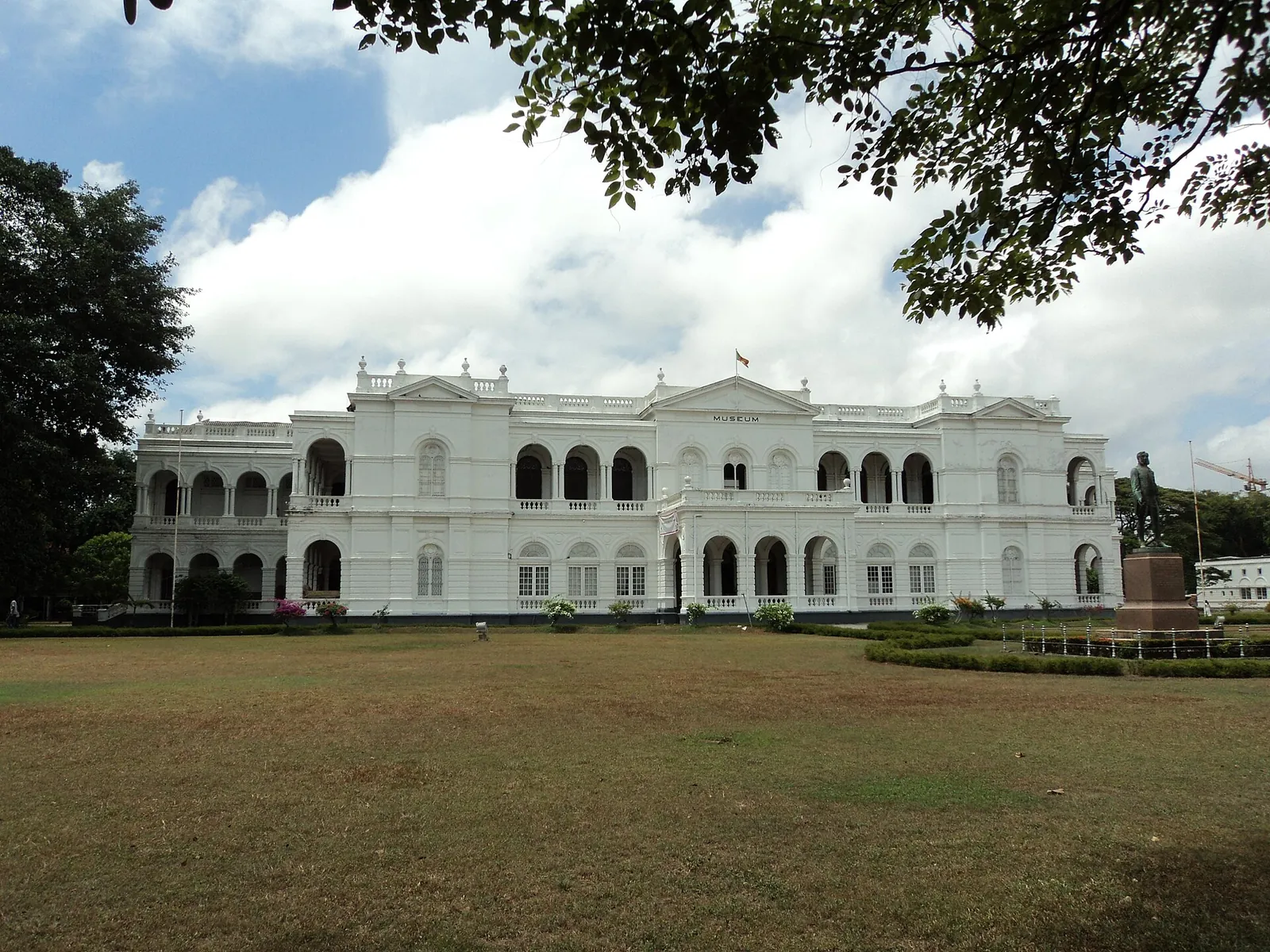
The Colombo National Museum is a white, colonnaded building standing back from its lawn, and it is the best use of a hot or wet morning. It opened in 1877 under the governor Sir William Henry Gregory, in an Italian-style building by the Public Works Department architect J.G. Smither. The ground-floor galleries follow the country's history in order and the upper galleries are arranged by theme; look for the ancient paintings, sculptures and sketches, some of them dating back to the 4th century BC. The National Museum of Natural History stands in the same grounds, with the island's endemic and threatened animals and plants; its best-known specimen is the Leopard of Punani, caught in 1924, beside the skull of an extinct giant elk gifted in 1950. Give the whole site a morning rather than an hour.
The museum is open Tuesday to Sunday, 09:00 to 18:00, and closes on public holidays, so Monday belongs to the Fort and Pettah. When we checked on 17 October 2026, foreign visitors had two tickets: a general ticket at USD 5 for adults and USD 3 for children, and a combined ticket at USD 8 for adults and USD 4 for children. The National Museum of Natural History in the same grounds has the same USD 5 general ticket, and the USD 8 combined ticket is sold at both, so the combined ticket costs less than two general tickets. Local visitors pay LKR 100 (adult) and LKR 50 (child) for the general ticket, and a video permit is LKR 2,500.
Gangaramaya and Seema Malaka
Gangaramaya, at 61 Sri Jinarathana Road, Colombo 2, is one of the oldest Buddhist temples in Colombo. The scholar monk Hikkaduwe Sri Sumangala Nayaka Thera began building on the site in 1885, around a small shrine by Beira Lake, and it grew into a place of worship, a seat of learning, with a residential hall, and a cultural centre. Its museum holds ancient artefacts, rare coins, Buddhist scriptures and carved statues.
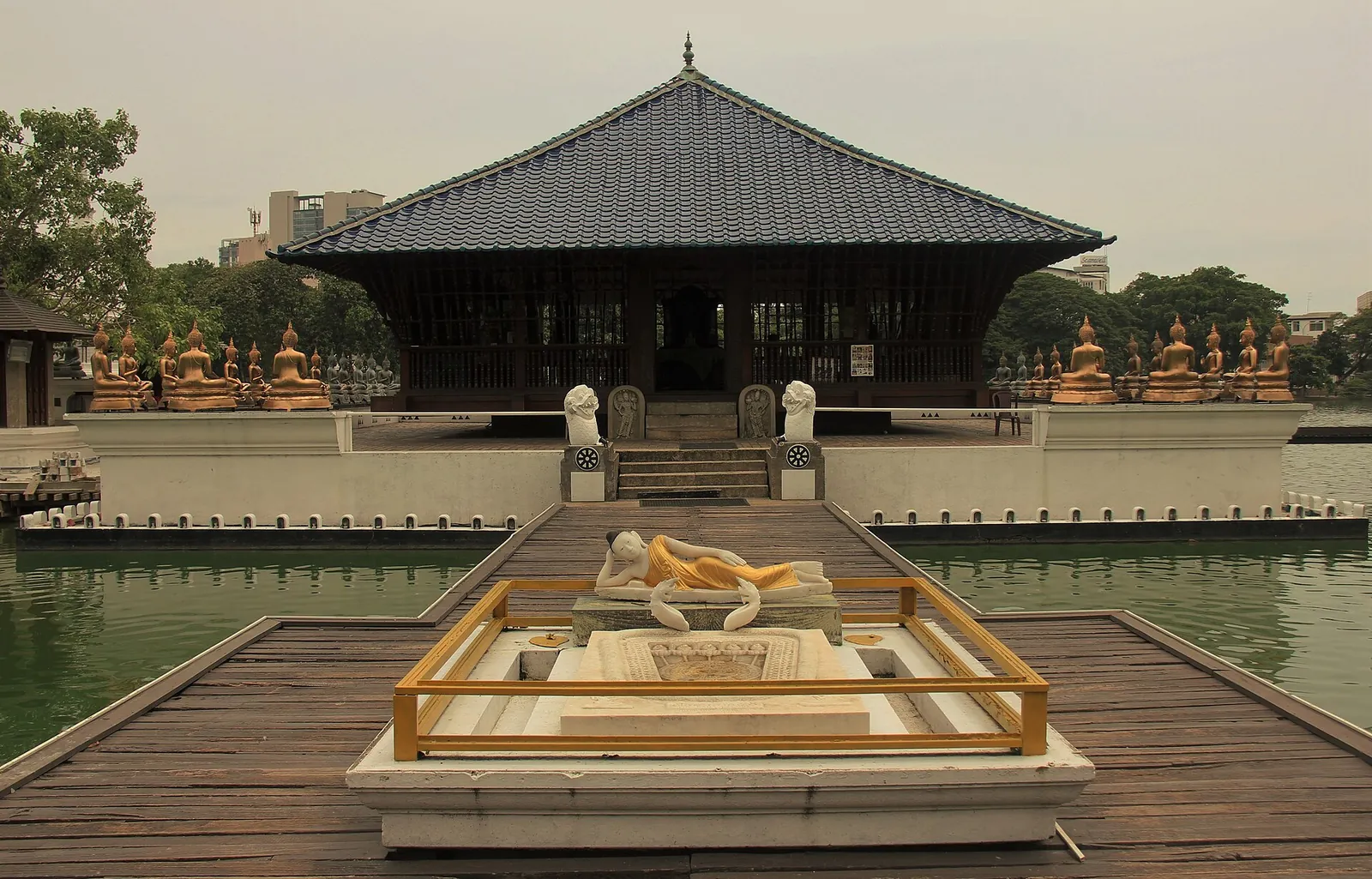
Seema Malaka is the pavilion you came for: the floating temple, designed by the architect Geoffrey Bawa, built on platforms that seem to float on Beira Lake, and used for meditation and ceremonies. The temple is open Monday to Sunday, 6:00 AM to 10:00 PM, and sells entrance tickets on its online ticket page, which lists no foreign-visitor price. The temple's Navam Maha Perahera, a pageant of caparisoned elephants, dancers and drummers around the temple and Navam Mawatha, has been held every February since 1979; the temple's site schedules the 2027 pageant for 19 and 20 February 2027.
One rule for every temple in Sri Lanka. The UK Foreign Office (page of 17 October 2026) asks visitors to cover their legs and shoulders and to take off shoes and hats, and not to pose for photographs standing in front of a statue of the Buddha; the German Foreign Office (page of 17 October 2026) puts the same rule as no photograph with your back to a Buddha statue.
Fort, the Dutch Hospital and Pettah
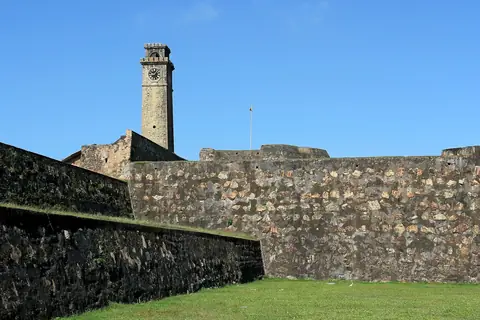
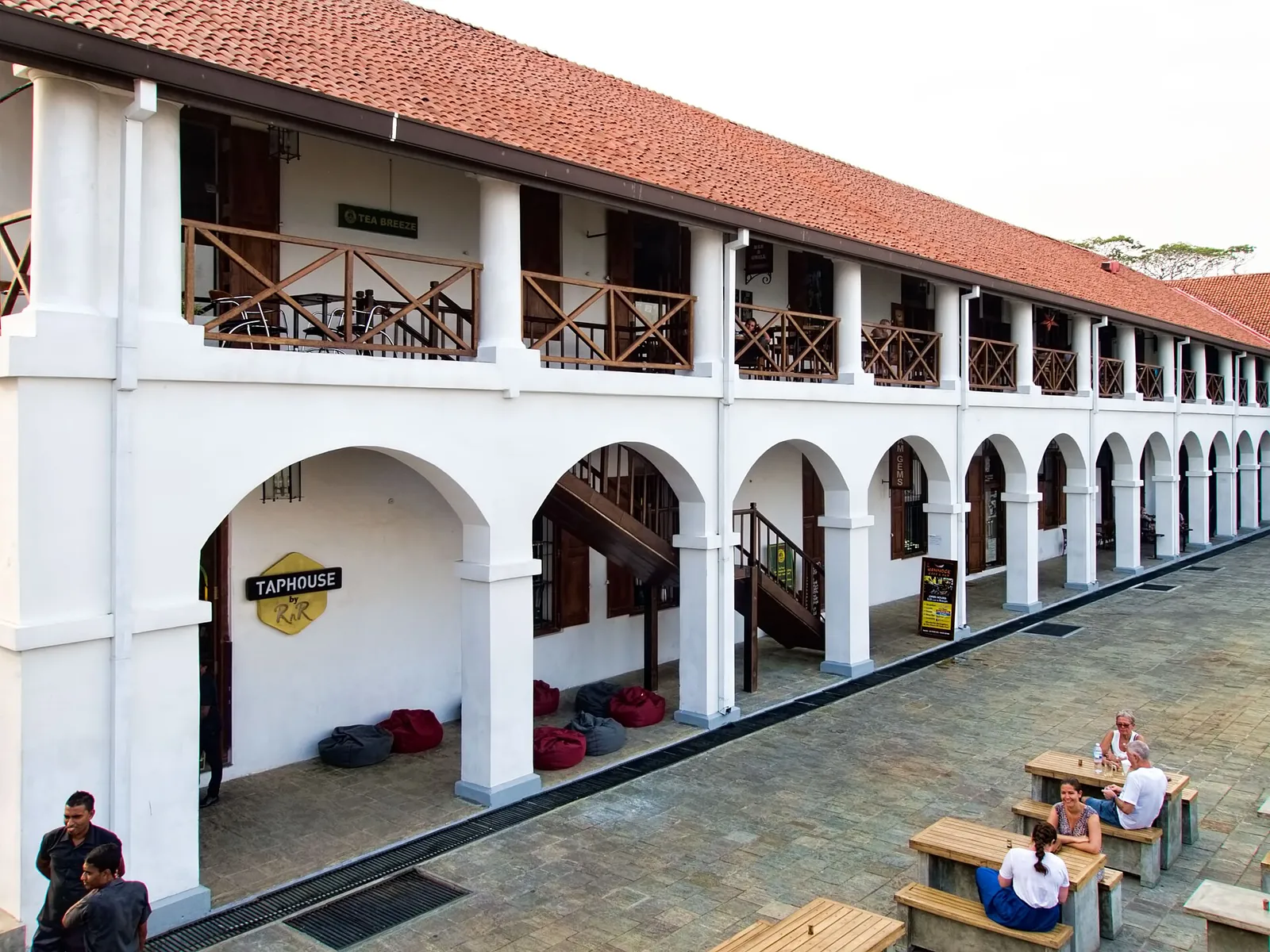
Fort is the district around Colombo Fort railway station, and its most characterful building is the Dutch Hospital, which Ministry of Crab, the restaurant inside it, calls one of the oldest buildings in the Colombo Fort area. Its arcaded two-storey courtyard, with a red-tiled roof and benches under the arches, is now a place to sit and eat, and it is the easiest dinner in Fort.
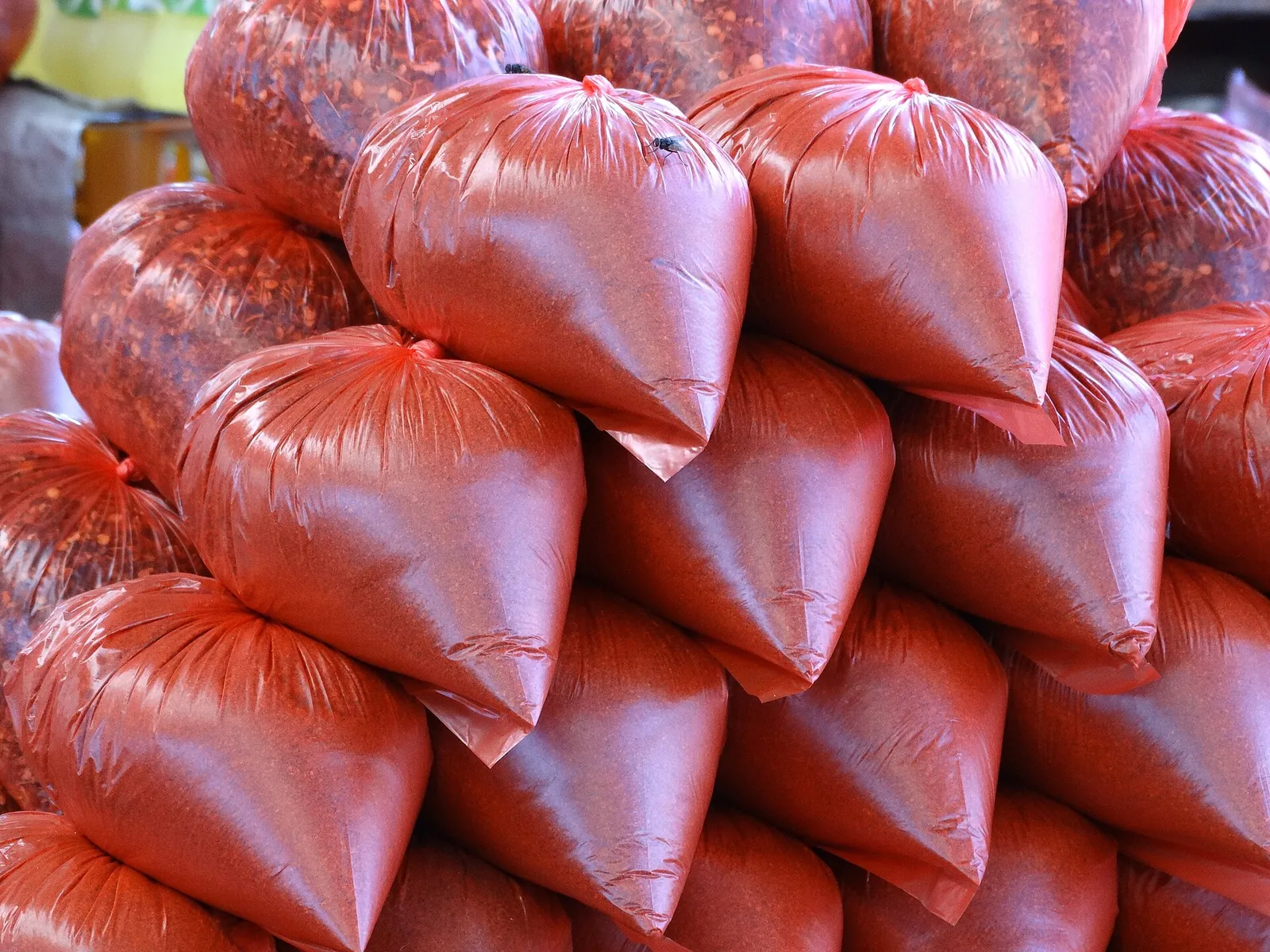
Pettah is the market district, a street-market crush of crowds and congested roads, with spices among the goods on sale. Go in the morning, carry little, and keep your phone away from the road edge: France Diplomatie (page of 27 September 2026) says that theft is rising where tourists gather, including snatch thefts by people on motorbikes, and in trains and buses. Some shops and businesses close on full-moon poya days, so choose another day for a market morning.
The Dutch Museum, with Pettah bustling outside its door, is the quieter stop: a colonial Dutch town house holding ceramics, coins, paintings and military equipment from Dutch times, with its original garden wall and a graveyard of Dutch explorers and traders. Sri Lanka Tourism's museums page (checked 16 October 2026) gives its hours as 09:00 to 17:00 except Sundays, Mondays and public holidays, and when we checked on 17 October 2026 the museum ticket page listed a general ticket of USD 5 for a foreign adult and USD 3 for a child.
Galle Face Green at the end of the day
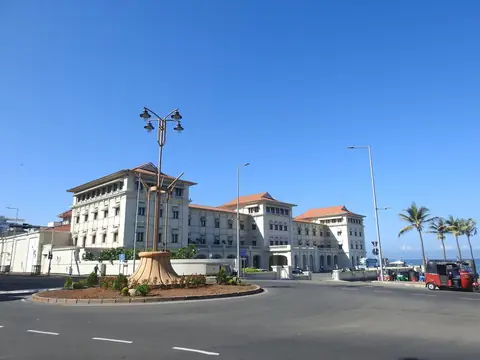
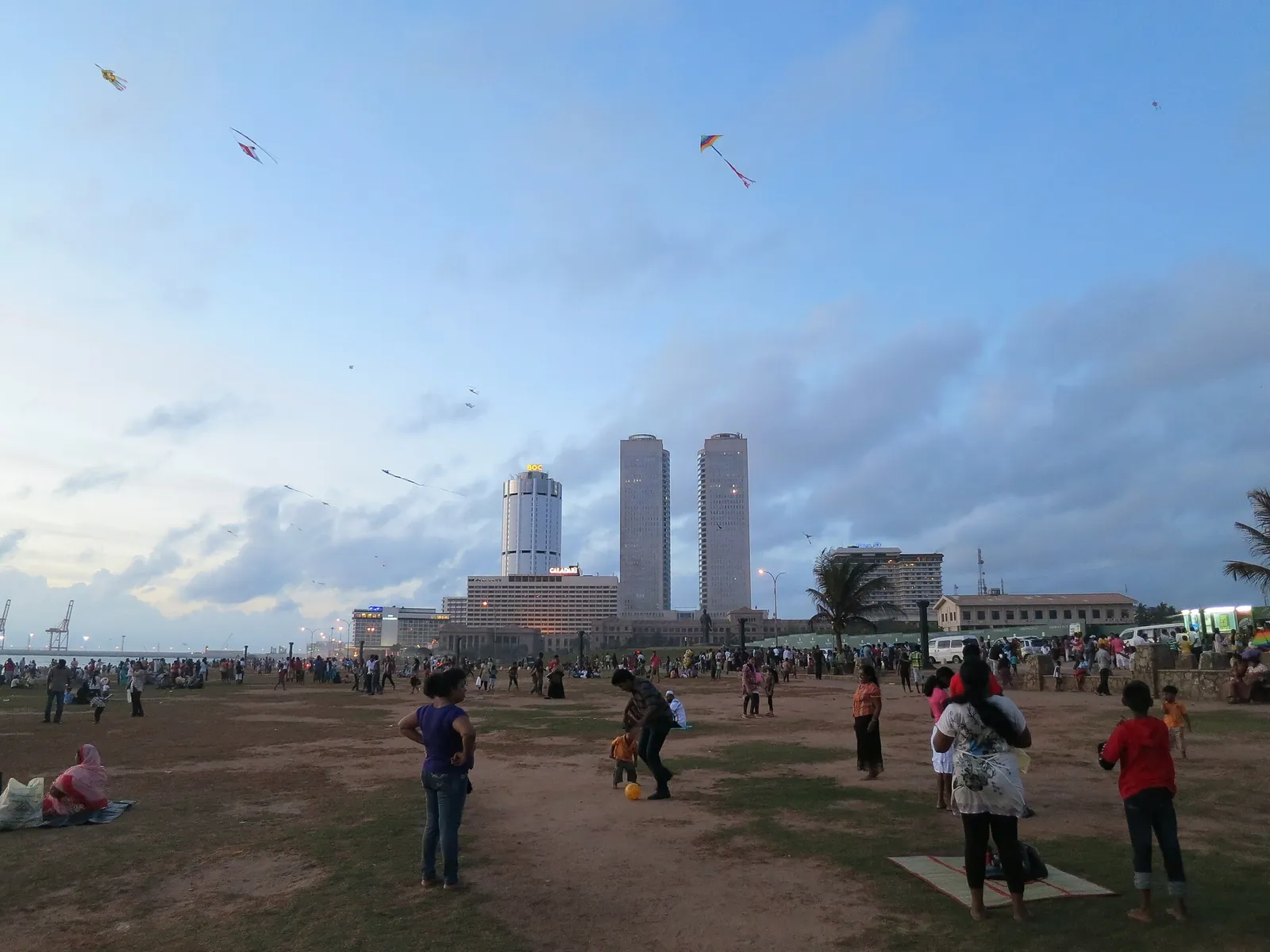
Galle Face Green is where Colombo goes at the end of the day, the city's playground for kottu or wade, with the sea to the west of the lawn. Walk the sea wall as the light goes, then take a seat at the Travellers' Bar of the Galle Face Hotel (2 Galle Road, Colombo 3, one of the oldest hotels east of the Suez), which overlooks the Indian Ocean and serves light meals, or on the Verandah, where guests have dined under the eaves for more than a century and a half. The hotel's Chequerboard lawn, laid out to mark Queen Victoria's Jubilee, is its venue for sundown events and outdoor weddings.
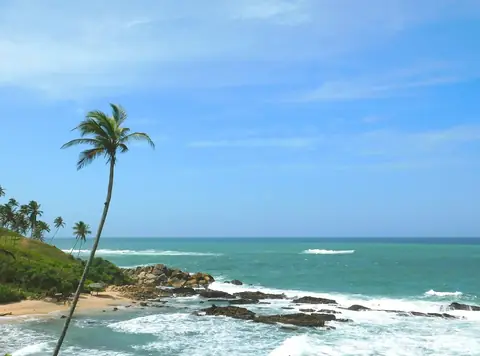
Look at the sea and stay out of it. France Diplomatie (page of 27 September 2026) strongly discourages sea swimming on the west coast from April to November, names the strength of waves and currents, and reports drownings of tourists on the west and south beaches, especially in the monsoon months; the UK Foreign Office (page of 17 October 2026) says to ask your hotel or tour operator about the sea before going in; our best-time guide has the monsoon calendar. After dark, the same French page advises women not to walk alone in quiet areas.
With more time
Mount Lavinia is one of Colombo's more laid-back suburbs, with seafood restaurants on a golden beach. Kelaniya Raja Maha Viharaya, in Gampaha District, is a temple dedicated to the Buddha's third and last visit to the island, with murals by the artist Solias Mendis and a Duruthu Perahera held every year on the January full-moon poya day. In the railway's fare table (checked 17 October 2026) Mount Lavinia station is 12.22 km and Kelaniya station 6.87 km from Colombo Fort, with ordinary second-class fares of LKR 100 and LKR 50; the table does not give the distance from Kelaniya station to the temple.
The Independence Memorial Museum is an exhibition on the people who won the country's independence, open 09:00 to 17:00 except Sundays, Mondays and public holidays.
A half day and a full day
A half day works from Fort. Walk the Dutch Hospital courtyard in the morning, browse Pettah before the crowds build, and finish at Galle Face Green for sunset, then dinner at Ministry of Crab or at Nuga Gama, the village-themed Sri Lankan restaurant in the Cinnamon Grand hotel.
A full day starts at the museum when it opens at 09:00 on any day from Tuesday to Sunday, then moves to Gangaramaya and Seema Malaka in the early afternoon, and ends on Galle Face Green for the last light. On a Monday, swap the museum for Fort and Pettah. Plan the evening round the restaurants' own hours: Nuga Gama serves daily from 7:00 PM to 11:00 PM, and Ministry of Crab's hours are in the food box below.
Make time for the local food
What to eat and where to look
Mud crab
Sri Lanka's wild-caught mud crab, sold by weight from 500 g to 2 kg and cooked in styles from a dashi-based pepper crab to garlic chilli crab.
- Where to look
- Ministry of Crab, in the Dutch Hospital building in the Fort area, open daily 12 noon to 10.30 PM, last order 9.30 PM, and closed on poya days.
- Fit it into your day
- The long dinner after Galle Face Green.
Dishes are priced in US dollars, inclusive of service charge and government taxes, and the restaurant says supply depends on the daily catch, so the size you want may not be available. Shellfish; the German Foreign Office advises against eating sea fish and seafood (ciguatera) (checked 17 October 2026).
Ceylonese crab curry
A crab curry in the Ceylonese style, served at the Galle Face Hotel with a sea view.
- Where to look
- The Verandah at the Galle Face Hotel, 2 Galle Road, Colombo 3, whose page calls it a famous Ceylonese crab curry; book a table for lunch.
- Fit it into your day
- Lunch before the walk along the sea wall.
Shellfish.
Lamprais
Rice and accompaniments baked in a plantain leaf, a legacy of the Dutch; Cinnamon Grand's version has ghee rice, meat curry, ash plantain, brinjal pahi, seeni sambol, blachan (shrimp paste), frikkadels and a deep-fried hard-boiled egg.
- Where to look
- Cinnamon Grand Colombo sells it as a delivery order on its own order page, which asks for 6 hours' advance notice.
- Fit it into your day
- Order in the morning for dinner.
Kottu roti
Shredded godhamba roti chopped on a hot griddle with vegetables, egg or meat, spices and curry sauce, to a rhythm of metal spatulas.
- Where to look
- Galle Face Green, which Sri Lanka Tourism calls the city's playground for kottu or wade; no official page names a single stall, so follow the rhythm of the spatulas.
- Fit it into your day
- A casual dinner after sunset.
Wade and short eats
Fried fritters such as isso wadei, sold from street carts, and the savoury snacks called short eats: patties, cutlets, Chinese rolls and fish buns.
- Where to look
- Galle Face Green again, where Sri Lanka Tourism puts wade next to kottu.
- Fit it into your day
- A snack while you walk the sea wall.
Practical questions
When is Gangaramaya open, and what does a ticket cost?
Every day, 6:00 AM to 10:00 PM, with entrance tickets sold online; the Gangaramaya section above covers the missing foreign-visitor price.
How long does the train take from Colombo Fort to Kandy and Galle?
2 hours 31 minutes to 3 hours 20 minutes to Kandy on the reserved-seat trains. The railway's January 2024 booking example shows Colombo Fort to Galle in 2 hours 20 minutes to 2 hours 25 minutes; the four coast trains take 3 hours 12 minutes to 4 hours 22 minutes end to end between Maradana and Matara or Beliatta.
When is the Colombo National Museum open, and what does it cost?
Tuesday to Sunday, 09:00 to 18:00. When we checked on 17 October 2026, foreign adults paid USD 5 for the general ticket and USD 8 for the combined ticket, and foreign children USD 3 and USD 4.
What should I wear to Gangaramaya?
The Gangaramaya section above gives the temple dress and photograph rules.
Can I swim at Galle Face Green?
The Green is a lawn and sea wall for walking and watching the sunset; the Galle Face section above gives France Diplomatie's advice on west-coast sea swimming.
How do I get from the airport to Colombo?
Bandaranaike International Airport is 35 km north of Colombo and 6 km from Negombo (Sri Lanka Tourism's travel-tips page); its airports page says 30 km, and the Colombo-Katunayake Expressway is 25.80 km long. The airport section above lists the transfer options and the missing fares.
Can I eat in Colombo on a poya day?
Yes, but the sale of alcohol, meat and fish is prohibited on full-moon poya days, so check a restaurant's poya hours before you go.
Sources and checks before you travel
Reference sources for the version dated 18 October 2026. Confirm opening times, access, transport and conditions for your travel dates.
- Department of National Museums: Ticket Pricing ↗ — opens in a new tab
- Department of National Museums: Colombo National Museum ↗ — opens in a new tab
- Sri Lanka Tourism: 12 Things to Do in Colombo ↗ — opens in a new tab
- Gangaramaya Temple: home page ↗ — opens in a new tab
- Gangaramaya Temple: history ↗ — opens in a new tab
- Gangaramaya Temple: Seema Malaka ↗ — opens in a new tab
- Gangaramaya Temple: museum ↗ — opens in a new tab
- Gangaramaya Temple: online tickets ↗ — opens in a new tab
- Gangaramaya Temple: Navam Maha Perahera ↗ — opens in a new tab
- Ministry of Crab, Colombo ↗ — opens in a new tab
- Cinnamon Hotels: Nuga Gama, Cinnamon Grand Colombo ↗ — opens in a new tab
- Galle Face Hotel: official site ↗ — opens in a new tab
- Sri Lanka Tourism: Culinary Tourism, food range ↗ — opens in a new tab
- Sri Lanka Tourism: Culinary Tourism ↗ — opens in a new tab
- Sri Lanka Tourism: Travel Tips ↗ — opens in a new tab
- Sri Lanka Tourism: Sri Lankan Public Holidays ↗ — opens in a new tab
- Sri Lanka Railways: passenger ticket rates, Colombo Fort ↗ — opens in a new tab
- Sri Lanka Railways: ticket fares and charges 2022 ↗ — opens in a new tab
- Sri Lanka Railways: train services with reserved seats (PDF) ↗ — opens in a new tab
- UK Foreign Office (GOV.UK): Sri Lanka, Safety and security ↗ — opens in a new tab
- German Foreign Office (Auswaertiges Amt): Sri Lanka, Reise- und Sicherheitshinweise ↗ — opens in a new tab
- France Diplomatie: Sri Lanka, Securite ↗ — opens in a new tab
- Sri Lanka Tourism: Museums ↗ — opens in a new tab
- Sri Lanka Tourism: Buddhist attractions ↗ — opens in a new tab
- Sri Lanka Railways: revision of charges for seat reservation, 1 August 2022 ↗ — opens in a new tab
- Sri Lanka Railways: seat reservation FAQ ↗ — opens in a new tab
- Gangaramaya Temple: contact ↗ — opens in a new tab
- Sri Lanka Tourism: Taxi Operators ↗ — opens in a new tab
- Sri Lanka Tourism: Getting Around ↗ — opens in a new tab
- Galle Face Hotel: The Verandah ↗ — opens in a new tab
- Cinnamon Grand Colombo: lamprais ↗ — opens in a new tab
- Sri Lanka Tourism: Food ↗ — opens in a new tab
- Road Development Authority: National Highways, gazetted list ↗ — opens in a new tab
- France Diplomatie: Sri Lanka, Informations utiles ↗ — opens in a new tab
- Sri Lanka Tourism: Airports ↗ — opens in a new tab
Photo credits
The Colombo National Museum, a white colonnaded building set back behind a lawn
Photograph: Hasindu2008 — opens in a new tab · CC BY-SA 3.0 — opens in a new tab
Changes: Resized and converted to WebP; displayed with responsive crops. · Original photograph and licence details ↗ — opens in a new tab
Seema Malaka, the lake pavilion beside Gangaramaya Temple, on Beira Lake
Photograph: AKS.9955 — opens in a new tab · CC BY-SA 4.0 — opens in a new tab
Changes: Resized and converted to WebP; displayed with responsive crops. · Original photograph and licence details ↗ — opens in a new tab
The arcaded courtyard of the former Dutch Hospital, now a dining and shopping precinct
Photograph: Dan Lundberg — opens in a new tab · CC BY-SA 2.0 — opens in a new tab
Changes: Resized and converted to WebP; displayed with responsive crops. · Original photograph and licence details ↗ — opens in a new tab
Galle Face Green on a Sunday, with kites overhead and the harbour towers behind
Photograph: Saqib Qayyum — opens in a new tab · CC BY-SA 3.0 — opens in a new tab
Changes: Resized and converted to WebP; displayed with responsive crops. · Original photograph and licence details ↗ — opens in a new tab
Bags of spices piled at a market in Pettah
Photograph: Adam Jones from Kelowna, BC, Canada — opens in a new tab · CC BY-SA 2.0 — opens in a new tab
Changes: Resized and converted to WebP; displayed with responsive crops. · Original photograph and licence details ↗ — opens in a new tab