Plan your trip
Mongolian food: buuz, khuushuur, tsuivan, khorkhog and airag
Mongolian cooking comes from the herds: mutton and beef, milk turned into tea, cream, curds and cheese, and flour that wraps the meat into dumplings or is cut into noodles. Salt is often the only seasoning, dairy fills the summer and meat carries the winter. Ulaanbaatar is where you choose what you eat, from a 24-hour dumpling house on Peace Avenue to restaurants that serve khorkhog on a platter; in the countryside, the camp's kitchen or a herding family decides. This guide names a place for each dish, with prices from the restaurants' own menus.
In this guide
Find the location ↗ — opens in a new tabThe short answer
Eat your way through the dumplings and noodles in Ulaanbaatar, then leave khorkhog, milk tea and summer dairy for the camps and herding families of the countryside. At Modern Nomads near Metro Mall, a plate of Nomads buuz costs MNT 30,900 and a bowl of salty milk tea MNT 3,500. Allow about MNT 70,000 a day each for a light day of steamed buns, a bansh soup and khuushuur, about MNT 90,000 for a sit-down day, and less when your room includes breakfast. Airag, fermented mare's milk, is a summer drink. When you book a countryside tour, tell your operator about any vegetarian needs and that you want a khorkhog dinner at a camp.
- Key point
- Two or three days of meals in Ulaanbaatar, then the camps' kitchens on a countryside trip
- Where it applies
- Ulaanbaatar for restaurants and choice; ger camps and herding families for khorkhog, milk tea and summer dairy
- Timing
- Dairy is richest in summer, when airag is made from June; winter food is heavier and meat-based.
Buuz, khuushuur and bansh: the dumpling family
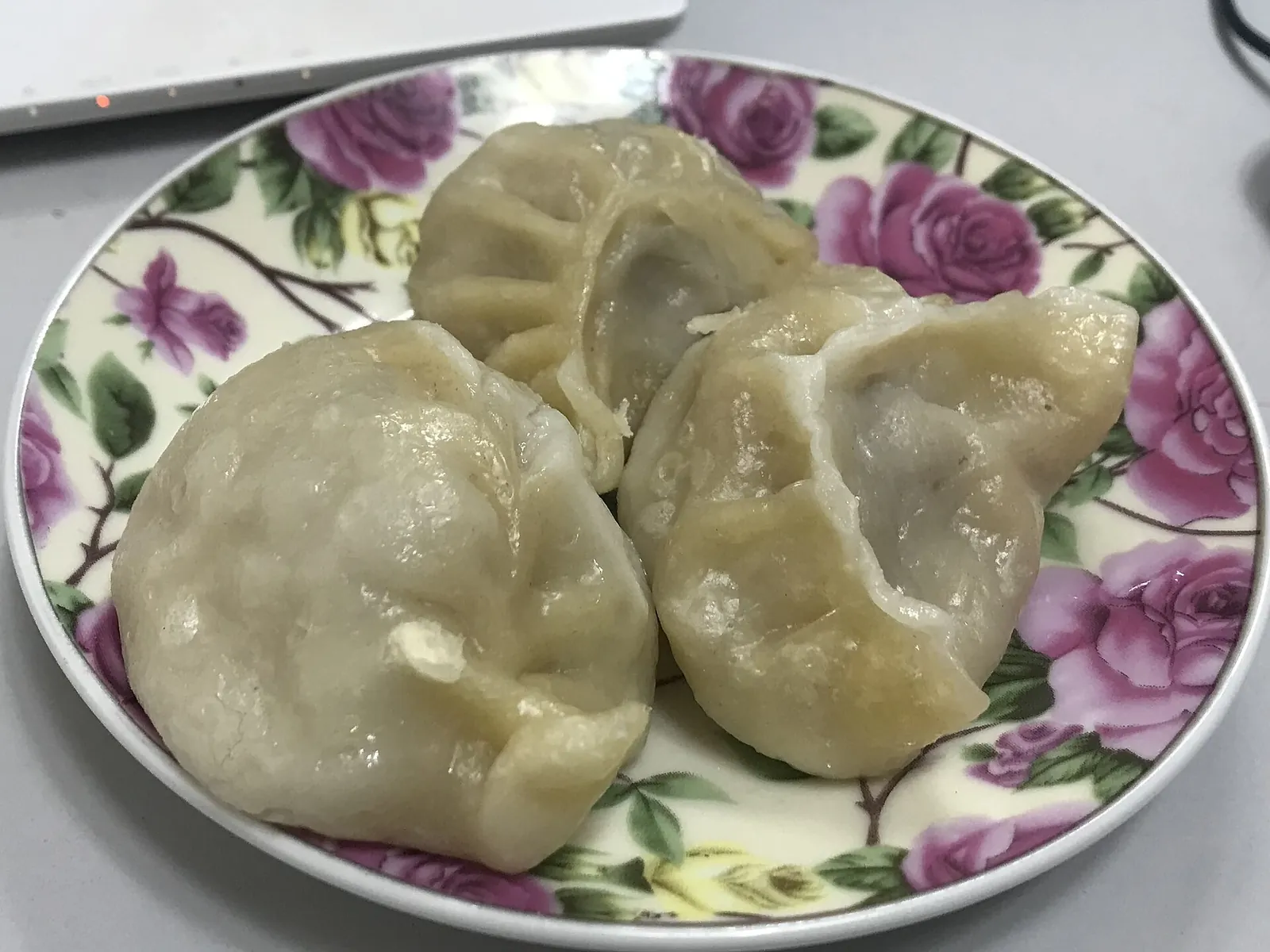
Buuz are the dish every Mongolian table comes back to: minced mutton or beef, often with onion and cabbage, wrapped in a thick wheat dough and steamed. They are about the size of a shumai and seasoned with little more than salt, and the way to eat one is to sip the hot juice before the rest. No family celebrates Tsagaan Sar, the Lunar New Year, without trays of them. Bansh are a smaller version that often goes into soup or milk tea.
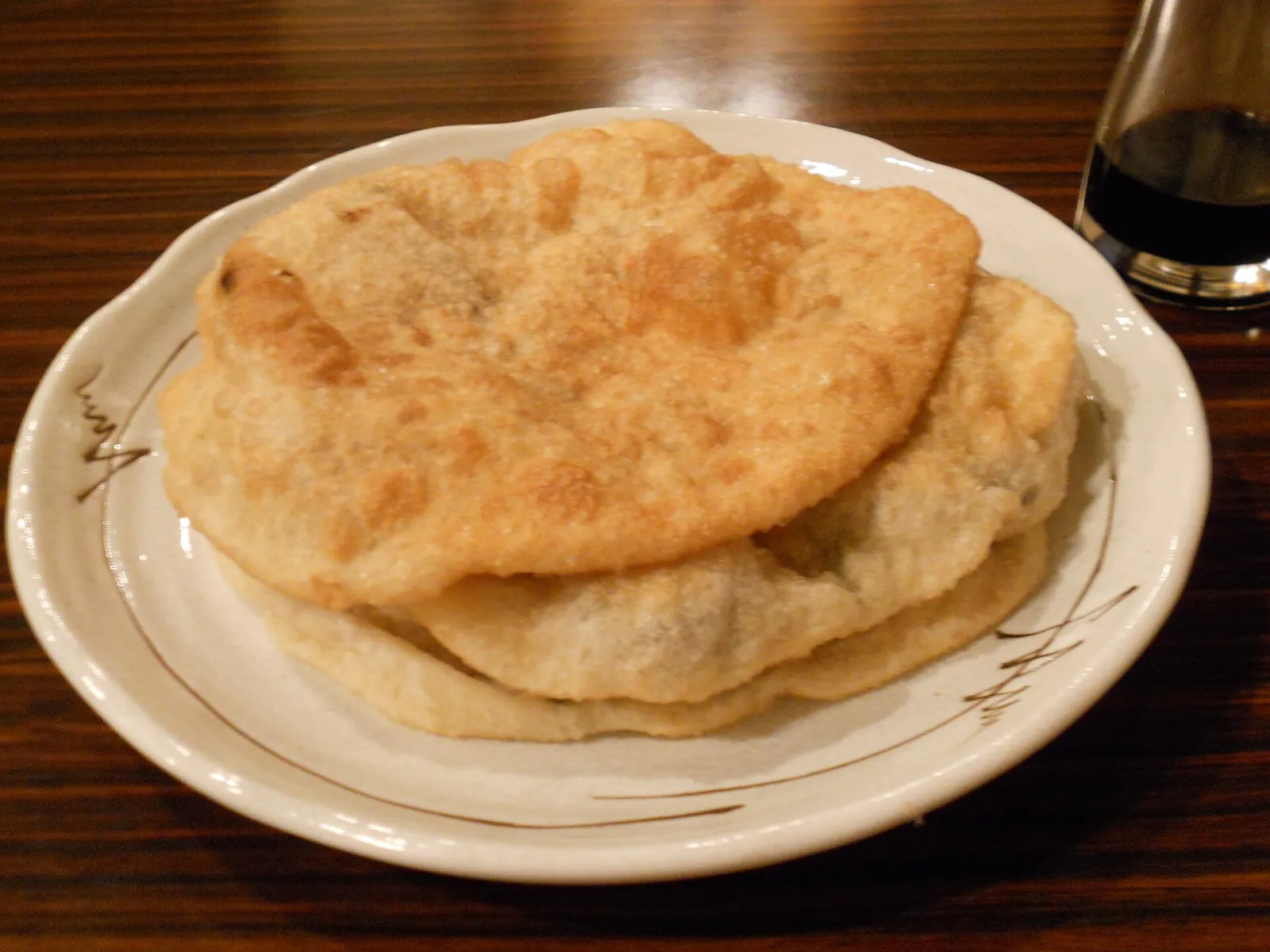
Khuushuur use the same filling in a different form: the stuffed dough is flattened by hand to about a centimetre and deep-fried, so it comes to the table as a crisp, flat pie. It is a favourite lunch, and at Naadam in July it is the festival food, fried to order in the khuushuur tents around the grounds. Both can also be stuffed with vegetables, and a few kitchens use fish.
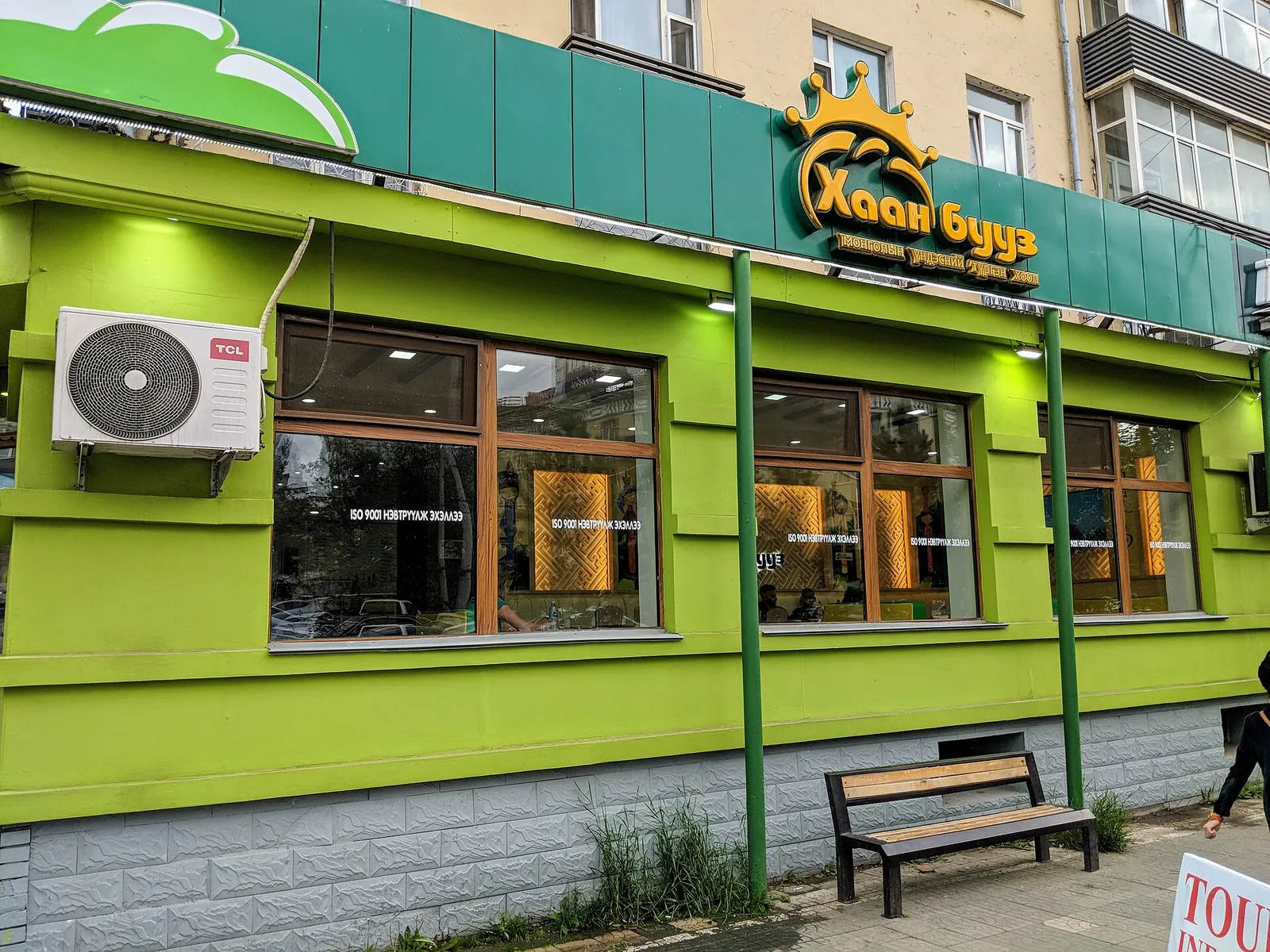
In Ulaanbaatar, Khaan Buuz, opposite the State Department Store on Peace Avenue, is the city's best-known dumpling house: open 24 hours and cheap, with an English photo menu and a buffet. Modern Nomads makes its own versions: Nomads buuz of hand-chopped mutton for MNT 30,900, Bor khaltar buuz of beef in brown flour for MNT 32,900 and Naadam khuushuur of minced beef for MNT 28,900 a plate, at the Metro Mall and Amar Street branches.
Tsuivan, noodle soups and milk tea
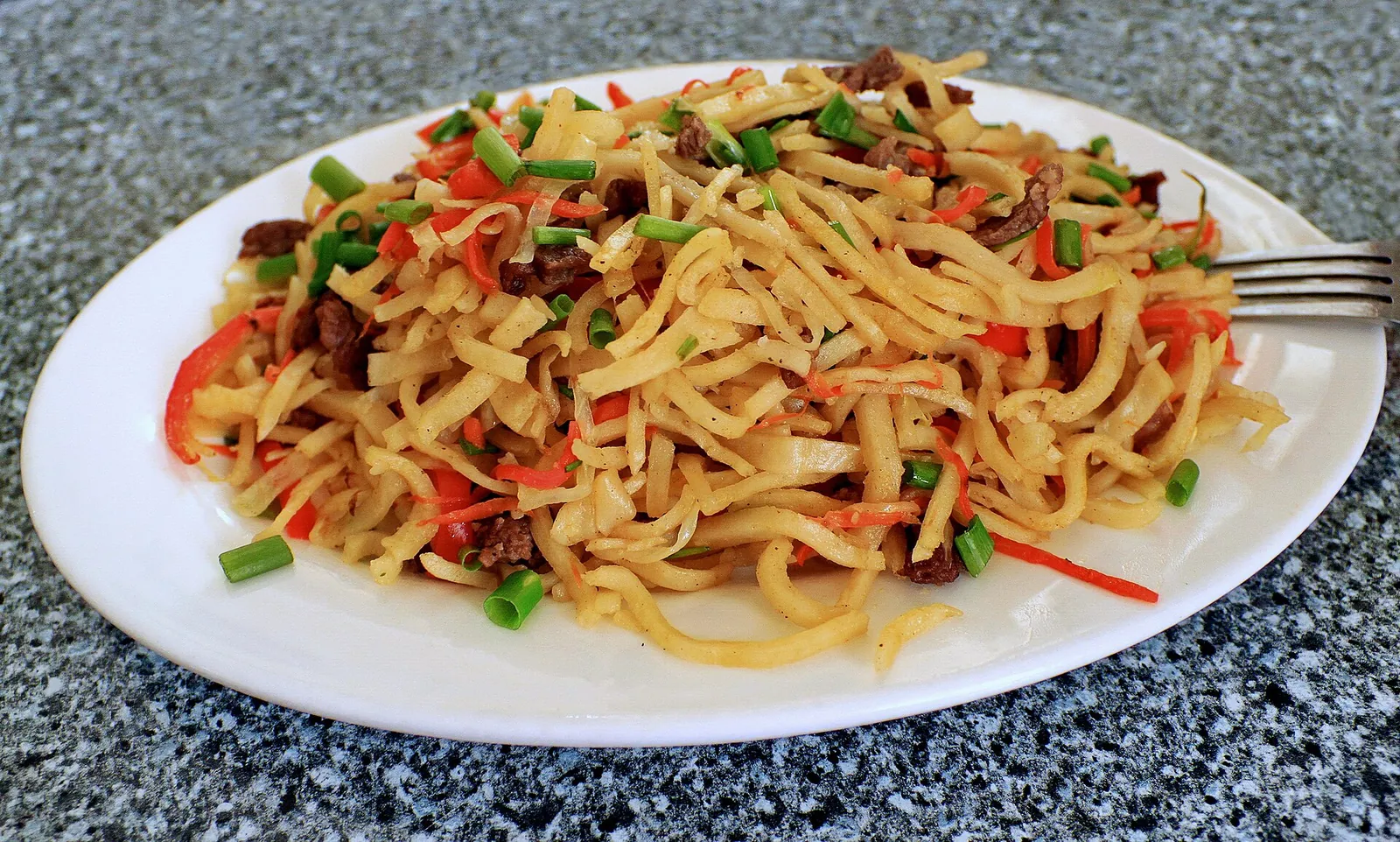
Tsuivan is the everyday meal of homes and canteens: wheat noodles fried with strips of meat and vegetables. Every cook does it differently, and a canteen full of people is a good sign that its tsuivan is worth stopping for. Khaan Buuz serves it plain, with kimchi or with egg, and at Modern Nomads it comes with beef brisket, carrot, cabbage, mutton tail and pickled radish for MNT 29,900; there is no vegetarian version, because the mutton fat is part of the taste.
Soups do the same work in winter. Guriltai shol is a noodle soup; Modern Nomads makes one with borts and wild chives for MNT 24,900. Borts is meat cut into thin strips and hung to dry in the winter air, light enough to carry for months and crushed into boiling water for a quick broth on the road. Suutei tsai, the salty milk tea, is usually the first thing a guest is offered in a ger: brick tea boiled in water with milk and salt, and in some regions rice, flour or small dumplings, which turn it into a meal. A bowl costs MNT 3,500 at the same restaurant, and its Grandma's tea with bansh and borts, MNT 23,900, is the filling version.
Khorkhog and boodog: cooking with hot stones
Khorkhog is the dish of a gathering. Mutton or goat on the bone goes into a sealed metal pot or milk churn with stones heated in an open fire and vegetables, and cooks for several hours in its own steam. It is best eaten in a ger, from a shared platter, and it is traditionally the men who cook it. In Ulaanbaatar, Modern Nomads serves khorkhog of mutton on the bone with potato, carrot, turnip, pickles and broth for MNT 99,000 a platter, for the table to share. At Terelj Lodge in Gorkhi-Terelj National Park, khorkhog costs USD 40 per person on its 2026 tariff, or USD 650 for a whole sheep for a group.
Boodog uses the stones differently: they go inside the animal itself, a young goat or a marmot emptied of its organs with the skin kept whole, which is then scorched from the outside. Tour companies prepare it on request. Choose goat: France advises against eating or handling marmot meat because of plague, which has been caught from infected marmots in Mongolia.
White food: dairy and airag
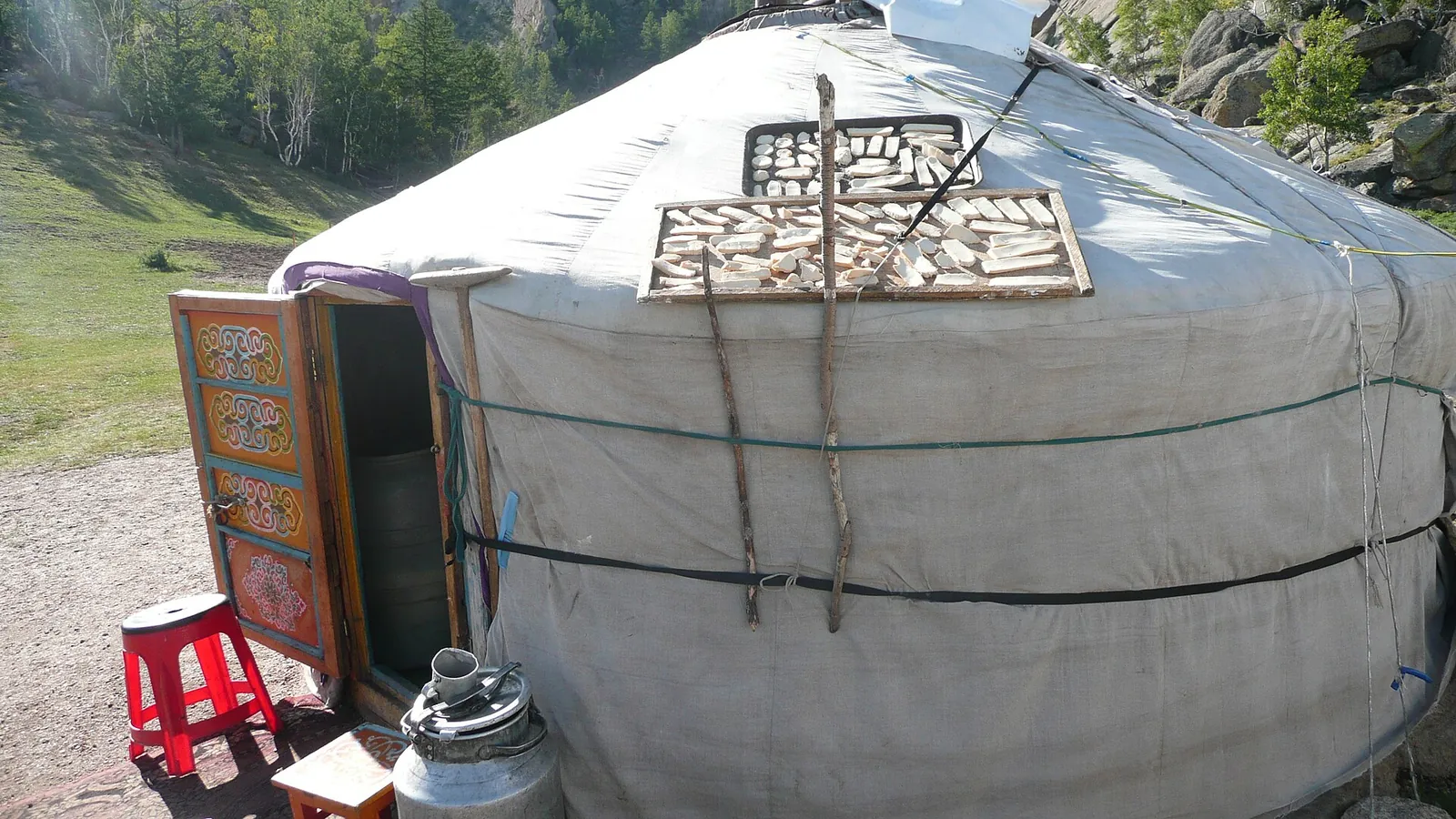
Mongolians call dairy tsagaan idee, white food, and offer it to guests as a sign of respect. Families make it from the milk of cows, yaks, sheep, goats, camels and mares, mostly in summer, when the animals give the most milk. Urum is the thick cream skimmed from boiled milk, tarag a yoghurt close to kefir, byaslag a fresh cheese and aaruul dried curd, which keeps for months without a fridge and travels well on a long drive. When a plate of dairy comes round in a ger, take at least a small piece, accepting it with the right hand or with both hands.
Airag is fermented mare's milk, churned more than 500 times in a cowhide vessel called a khokhuur until it turns slightly sour, with about 1 to 3% alcohol. UNESCO lists the way it is made, and the customs around it, as intangible cultural heritage. It is made from June and drunk through the summer, from a large bowl that may be passed around. Drinking it is your choice: France advises travellers to avoid raw or undercooked meat and unpasteurised milk, and airag is made from raw milk. If you would rather not, a polite sip is better than refusing the bowl outright.
Boortsog is wheat dough kneaded and deep-fried until it turns golden brown, the biscuit of Mongolian homes and of the Tsagaan Sar table that our festivals guide describes. To take some home, Nomin's online shop listed a 900 g bag of Ögööj sliced boortsog at MNT 7,258 when we checked on 3 November 2026; its hypermarket is in the State Department Store.
The stronger drink of the countryside is shimiin arkhi, a clear spirit distilled at home from fermented milk; a little is often poured into the fire as an offering before anyone drinks. City families usually receive theirs from relatives in the countryside, so it is something you are offered rather than buy.
Vodka is the drink of toasts, in the city and at the camps. When a glass is handed to you, dip a finger in it and flick a drop once towards the sky and once towards the ground, then touch a little to your forehead, in honour of the local spirits. If you would rather not drink, go through the same ritual, touch your finger to your forehead, say thank you and put the glass back on the table.
Vegetarians and special diets
Traditional Mongolian cooking is built on meat and milk, and fresh vegetables were scarce on the steppe, so a vegetarian trip needs planning. Ulaanbaatar is easy: Modern Nomads makes a vegetable khuushuur with steamed vegetables and cheese for MNT 26,900, and its buuz platter for the table, MNT 129,000, includes vegetable buuz alongside the beef and mutton. A vegetable filling does not promise meat-free stock or frying fat, and vegan dishes are rare: even that vegetable khuushuur contains cheese.
Outside the city, the camp kitchens cook for the group they expect. Operators such as Amicus Travel ask for vegetarian, religious or medical meal needs before the trip so that the camps can prepare, so tell your operator when you book rather than on arrival. Milk is in milk tea, the dairy snacks and many sauces, which matters for anyone with a milk allergy.
Where to eat in Ulaanbaatar
Modern Nomads and Bistro Nomads are in Sükhbaatar district, the centre of the city around Sükhbaatar Square. Khaan Buuz faces the State Department Store on Peace Avenue, whose Nomin hypermarket is in Chingeltei district. Khaan Buuz is the quick, cheap stop for buuz and khuushuur at any hour. Modern Nomads, a chain that opened its first restaurant in 2003, runs its main sit-down branch on Baga Toiruu, south of Metro Mall, and another on Amar Street; both open daily from 10:00, list the same prices and cover buuz, khuushuur, tsuivan and khorkhog. Bistro Nomads, the chain's café in the TDB bank headquarters, serves breakfasts and pastries from 08:00 to 17:00, Monday to Friday, and is closed at weekends. The city's kitchens also borrow from its neighbours: Khaan Buuz's own menu lists Korean dakgalbi and jeyuk bokkeum, a kimchi soup and a goulash next to its buuz and tsuivan.
Below all of these sits the guanz, the plain canteen of Mongolian towns, markets and roadsides, serving the staples, buuz, khuushuur and tsuivan, to people on a lunch break or a long drive. It is the cheaper, everyday alternative to the restaurants priced in this guide. On a countryside tour, a lunch stop at a roadside canteen means ordering from its menu rather than eating the camp's set meal.
For milk tea and dairy at their source, the herding families and camps of the countryside are the better table; our ger stays guide explains what a camp's meals include. In August, the Ulaanbaatar National Food Festival, held since 2013, showcases Mongolian cooking; at Naadam in July, the khuushuur tents are the place for lunch, and the festivals guide gives the dates.
What to eat and where to look
Buuz
Steamed dumplings of minced mutton or beef in a thick wheat dough, pinched closed at the top; bite a hole and drink the juice first.
- Where to look
- Khaan Buuz, Peace Avenue, opposite the State Department Store, Ulaanbaatar.
- Fit it into your day
- A quick lunch or a late meal; it is open 24 hours.
Khuushuur
The same filling in dough flattened by hand and deep-fried; the festival food of Naadam.
- Where to look
- Modern Nomads, Baga Toiruu, south of Metro Mall, Ulaanbaatar: Naadam khuushuur of minced beef, MNT 28,900 a plate.
- Fit it into your day
- Lunch, or the khuushuur tents at Naadam in July.
Tsuivan
Hand-cut wheat noodles fried with strips of meat and vegetables: the everyday lunch of homes and canteens.
- Where to look
- Khaan Buuz, Peace Avenue, opposite the State Department Store, Ulaanbaatar, which serves it plain, with kimchi or with egg, and in half portions.
- Fit it into your day
- A quick lunch between the museums of the city centre.
Khorkhog
Mutton on the bone cooked in a sealed pot with stones heated in the fire and vegetables, served from a shared platter.
- Where to look
- Modern Nomads, Metro Mall or Amar Street branch, Ulaanbaatar, year-round: a platter for the table with potato, carrot, turnip, pickles and broth, MNT 99,000.
- Fit it into your day
- A shared dinner in the city, or a camp dinner on a countryside tour.
Suutei tsai and white food
Salty milk tea with a plate of urum cream, aaruul dried curd and fresh byaslag cheese, the usual welcome in a ger.
- Where to look
- A herding family's ger on a countryside trip.
- Fit it into your day
- A stop on a countryside day; take at least a sip and a small piece.
Eating on a countryside trip
Once you leave Ulaanbaatar, the trip decides your meals. Dinner at a tourist camp, typically 30 to 40 gers around a restaurant, is a set meal of three or four courses, soup or salad, a main course and dessert, with bottled water, and on a driver-guide tour the camp restaurants serve most lunches and dinners. Travel Gobi Mongolia tells its guests to expect mainly European dishes, with Mongolian food some of the time, so for buuz, khorkhog and milk tea, ask your guide to plan a stop or a camp dinner around them. A camp that sells meals separately shows what they cost: Terelj Lodge's 2026 tariff lists USD 19 for breakfast, USD 30 for a set lunch and USD 30 for a set dinner per person. Our Gobi and Kharkhorin guides cover the drives.
Buy water and snacks in the city before a long drive; the Nomin hypermarket at the State Department Store on Peace Avenue opens from 08:30 to 22:30 Monday to Saturday and from 09:00 to 22:00 on Sunday. Nomin's online supermarket lists a 1.5-litre bottle of water at about MNT 2,000 (a sit-down restaurant charges MNT 5,500 for half a litre) and a 480 g sliced milk loaf at MNT 3,988. It also sells airag, the national drink, in 2-litre bottles at MNT 27,580: a way to taste it before the camps. Aaruul and the other dried curds are what Mongolians themselves carry as road snacks. Carry tögrög too: Germany notes that cards are taken mainly by larger hotels, restaurants and shops used to foreign visitors, and that withdrawing cash is rarely possible in the countryside.
What a day of meals costs
These are per-person day totals in Ulaanbaatar on a weekday, built from the Modern Nomads and Bistro Nomads menus read on 29 October 2026 and a supermarket bottle of water; dollar figures use the Bank of Mongolia rate of 29 October 2026, USD 1 = MNT 3,599.08. These sit-down prices are the top of everyday eating in the city; a dumpling lunch at Khaan Buuz or a guanz brings any of these totals down. A room rate with breakfast lowers each total, and the Mongolia trip cost guide sets food inside a whole trip. Tipping in restaurants is optional.
- Light day, about MNT 70,000 (about USD 20): three steamed mantuu buuz (MNT 3,000 each) and a Fuze tea for breakfast at Bistro Nomads, Grandma's tea with bansh and borts (MNT 23,900) for lunch and Naadam khuushuur (MNT 28,900) with a bowl of milk tea for dinner at Modern Nomads, and a supermarket bottle of water.
- Sit-down day, about MNT 90,000 (about USD 30): three mantuu buuz and a Fuze tea for breakfast at Bistro Nomads, Nomads buuz and milk tea for lunch, and tsuivan, half a shared cabbage salad and a restaurant bottle of water for dinner at Modern Nomads, plus a supermarket bottle of water.
- Fuller day, about MNT 140,000 (about USD 40): three of Bistro Nomads' buns and pastries (mantuu buuz, piroshki and samsa, MNT 3,000 each) and a latte for breakfast, Bor khaltar buuz with a cabbage salad and milk tea for lunch, and Nomads khuushuur (MNT 33,900), a tripe salad, the Mon khur dessert of milk curds, sour cream and lingonberry jam (MNT 13,900) and a restaurant bottle of water for dinner, plus a supermarket bottle of water.
Practical questions
Which Mongolian dish should I try first?
Buuz, the steamed mutton or beef dumplings. Try them at Khaan Buuz on Peace Avenue, or at Modern Nomads, where a plate of Nomads buuz costs MNT 30,900.
Is it safe to drink airag?
Airag is fermented raw mare's milk with about 1 to 3% alcohol, made in summer. Raw milk carries a health risk, so drinking it is your choice; a polite sip is enough when a bowl is offered.
Can vegetarians eat well in Mongolia?
In Ulaanbaatar, yes: Modern Nomads has a vegetable khuushuur with cheese for MNT 26,900 and vegetable buuz. In the countryside, the camps cook for vegetarians when your operator tells them in advance; vegan meals are rare.
How much does a day of meals cost in Ulaanbaatar?
On a weekday, about MNT 70,000 per person for a light day of Mongolian dishes (steamed mantuu buuz, a bansh soup and khuushuur), about MNT 90,000 at sit-down Mongolian restaurants and about MNT 140,000 with more courses, at Modern Nomads and Bistro Nomads menu prices; a room with breakfast lowers each.
What is khorkhog?
Mutton or goat cooked in a sealed pot with hot stones and vegetables, a dish for groups. Modern Nomads in Ulaanbaatar serves it for MNT 99,000 a platter.
Keep planning your trip
Ulaanbaatar
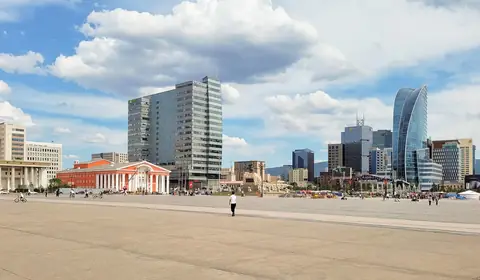
How many nights Mongolia's capital needs: Sükhbaatar Square, the Chinggis Khaan museum, Gandan and Choijin Lama temples, the Bogd Khan Palace, hotels and costs.
Read the guide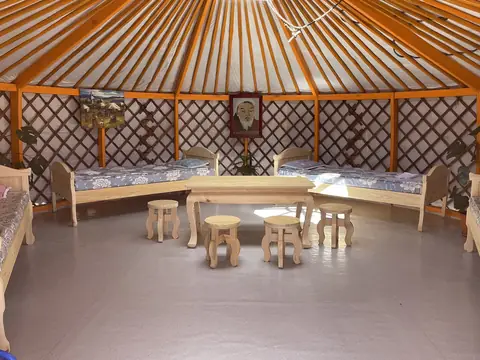
Ger stays in Mongolia
Ger camp or herding family? What a night in a ger includes, from bathrooms, stoves and meals to etiquette, with priced camps near Ulaanbaatar and on the Orkhon route.
Read the guide
Mongolia festivals and events 2027
Naadam on 11-13 July, Tsagaan Sar and the camel, ice and eagle festivals: Mongolia's 2027 dates, how firm each is and what a festival trip costs.
Read the guide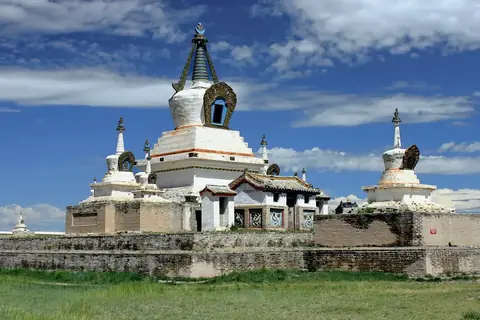
First trip to Mongolia
A first Mongolia trip: why you travel with a driver-guide, the ten-day Gobi and Kharkhorin loop, ger camps and manners, entry, cash, SIM cards and daily costs.
Read the guide
Mongolia trip cost
Ten days in Mongolia for two, all in: about MNT 6.76 million per person on a group tour, MNT 10.28 million on a private tour or MNT 12.93 million in comfort.
Read the guide
Where to stay in Ulaanbaatar
Which part of Ulaanbaatar to sleep in before and after a countryside trip: the centre, Gandan, the railway station or Khan-Uul near Zaisan, with named hotels and rates.
Read the guideSources and checks before you travel
(23)
- Modern Nomads: Metro Mall branch menu (Mongolian) ↗ — opens in a new tab
- Modern Nomads: Amar Street branch menu (Mongolian) ↗ — opens in a new tab
- Modern Nomads: Bistro Nomads TDB menu (Mongolian) ↗ — opens in a new tab
- Ulaanbaatar City Tourism Department: Ulaanbaatar guide 2025 (PDF) ↗ — opens in a new tab
- Discover Mongolia: Mongolian traditional food and beverage ↗ — opens in a new tab
- Nomad Mongolia: Mongolian foods ↗ — opens in a new tab
- UNESCO: traditional technique of making airag in khokhuur ↗ — opens in a new tab
- Go Mongolia (Ministry of Culture, Sports, Tourism and Youth): experiences ↗ — opens in a new tab
- Nomadic Journeys: do's and don'ts in Mongolia ↗ — opens in a new tab
- Terelj Lodge: 2026 tariff ↗ — opens in a new tab
- Terelj Lodge: home page ↗ — opens in a new tab
- Amicus Travel: Khövsgöl Lake tour, 3 days ↗ — opens in a new tab
- Nomin: Bonaqua water 1.5 l ↗ — opens in a new tab
- France Diplomatie: Mongolia, health advice (French) ↗ — opens in a new tab
- German Federal Foreign Office: Mongolia travel and safety advice (German) ↗ — opens in a new tab
- Bank of Mongolia: official exchange rate ↗ — opens in a new tab
- Travel Gobi Mongolia (licensed operator): All Bests of Central Mongolia ↗ — opens in a new tab
- Khaan Buuz: branches and menu (Mongolian) ↗ — opens in a new tab
- Goyo Travel (operator): Ulaanbaatar uncovered ↗ — opens in a new tab
- Guru Travel Mongolia: meals on tour ↗ — opens in a new tab
- Nomin online supermarket: food ↗ — opens in a new tab
- Nomin Holding: State Department Store ↗ — opens in a new tab
- Nomin: Ögööj sliced boortsog, 900 g ↗ — opens in a new tab
Reference sources for the version dated 3 November 2026. Confirm opening times, access, transport and conditions for your travel dates.
Photo credits
(5)
Buuz, steamed mutton or beef dumplings, served on a small plate in Ulaanbaatar.
Photograph: ノボホショコロトソ — opens in a new tab · CC BY-SA 4.0 — opens in a new tab
Changes: Resized and converted to WebP; displayed with responsive crops. · Original photograph and licence details ↗ — opens in a new tab
Khuushuur, the fried meat pies, in the round style made by cooks in Ulaanbaatar.
Photograph: Mizu_basyo — opens in a new tab · CC BY-SA 3.0 — opens in a new tab
Changes: Resized and converted to WebP; displayed with responsive crops. · Original photograph and licence details ↗ — opens in a new tab
Tsuivan: wheat noodles fried with beef, carrot and peppers.
Photograph: Marcin Konsek — opens in a new tab · CC BY-SA 4.0 — opens in a new tab
Changes: Resized and converted to WebP; displayed with responsive crops. · Original photograph and licence details ↗ — opens in a new tab
Aaruul, dried curd, laid out to dry on the roof of a ger in Gorkhi-Terelj National Park.
Photograph: MyName ( Brücke-Osteuropa ( talk )) — opens in a new tab · Public domain — opens in a new tab
Changes: Resized and converted to WebP; displayed with responsive crops. · Original photograph and licence details ↗ — opens in a new tab
A Khaan Buuz dumpling restaurant in Ulaanbaatar.
Photograph: Jpatokal — opens in a new tab · CC BY-SA 4.0 — opens in a new tab
Changes: Resized and converted to WebP; displayed with responsive crops. · Original photograph and licence details ↗ — opens in a new tab