Plan your trip
Best time to visit Mongolia: weather, camp seasons and Naadam
Mongolia has one of the most extreme climates of any country you can visit: summer days in the high 20s in the Gobi, winter nights below -25°C in the capital, and a summer short enough that most ger camps open only from mid-May in the Gobi and mid-June in the north. That short summer decides most trips, because it is when the ger camps open and the countryside is green. This guide sets out the numbers for Ulaanbaatar and the Gobi, what July, the shoulder months and winter each offer, and what each season costs.
In this guide
Find the location ↗ — opens in a new tabThe short answer
Go in June or early September for a first trip: the countryside camps are open, the steppe is green and July's crowds are gone. July is good if you want Naadam (11-13 July) and accept the busiest weeks of the year; winter suits only Tsagaan Sar and the camel and ice festivals, in deep cold. Plan 10 to 14 days from Ulaanbaatar inside the Gobi camps' full season, 15 May to 20 September. View Mongolia's nine-day Gobi tour costs USD 2,390 per person for two on a private basis, or USD 1,580 on a 2027 group departure; its 11-day Naadam tour in July costs USD 3,185 per person for two. Book the tour first, since it holds the camp beds, then any flight to Mörön or Dalanzadgad, then the Beijing train if you use it.
- Key point
- A 10- to 14-day countryside trip, timed for the camp season
- Where it applies
- Ulaanbaatar, with the Gobi, Kharkhorin and Lake Khövsgöl reached by driver-guide or domestic flight
- Timing
- June to September is the main season; May and early October are shoulder months; November to March is deep winter
Ulaanbaatar and the Gobi in numbers
Ulaanbaatar sits in a valley on the northern steppe, with a short warm summer and a winter in which the average daytime high stays below freezing from November to March. Dalanzadgad, the town that serves the southern Gobi, is several degrees warmer all year and much drier. The table gives the long-term averages that the World Meteorological Organization publishes from Mongolia's national weather agency (its 1981-2010 climate block): average daily highs and lows, and rainfall in Ulaanbaatar.
| Month | Ulaanbaatar high / low | Ulaanbaatar rain | Dalanzadgad (Gobi) high / low | Dalanzadgad rain |
|---|---|---|---|---|
| January | -15.5 / -26.1°C | 2.6 mm | -6.9 / -19.6°C | 1.7 mm |
| February | -9.6 / -22.3°C | 2.6 mm | -2.4 / -15.8°C | 1.8 mm |
| March | -0.6 / -13.6°C | 4.1 mm | 4.9 / -8.6°C | 3.8 mm |
| April | 9.7 / -4.4°C | 7.5 mm | 14.0 / 0.3°C | 4.2 mm |
| May | 17.9 / 3.2°C | 19.8 mm | 21.5 / 7.9°C | 10.2 mm |
| June | 22.7 / 9.5°C | 48.7 mm | 26.7 / 13.5°C | 15.7 mm |
| July | 24.6 / 12.7°C | 67.8 mm | 28.8 / 16.4°C | 30.8 mm |
| August | 22.4 / 10.5°C | 71.7 mm | 26.6 / 14.3°C | 29.0 mm |
| September | 16.8 / 3.5°C | 27.8 mm | 20.8 / 8.2°C | 12.7 mm |
| October | 7.7 / -4.8°C | 8.3 mm | 12.3 / -0.6°C | 6.5 mm |
| November | -4.8 / -15.7°C | 5.0 mm | 2.5 / -10.2°C | 2.8 mm |
| December | -13.5 / -23.1°C | 3.7 mm | -4.8 / -17.3°C | 2.6 mm |
These are averages, not forecasts. The weather turns quickly, and floods, dust storms, heavy snow and strong winds can come in any season. The temperature falls by 10 to 20 degrees in the evening, so pack for a cold night even in July. Guru Travel Mongolia's packing list starts with layers: base layers, a fleece and a windproof, waterproof jacket for summer showers, thermal wear for cold snaps in the north, and sturdy boots; the Gobi's summer days are hot, so bring sun protection too.
June to September: the camp season
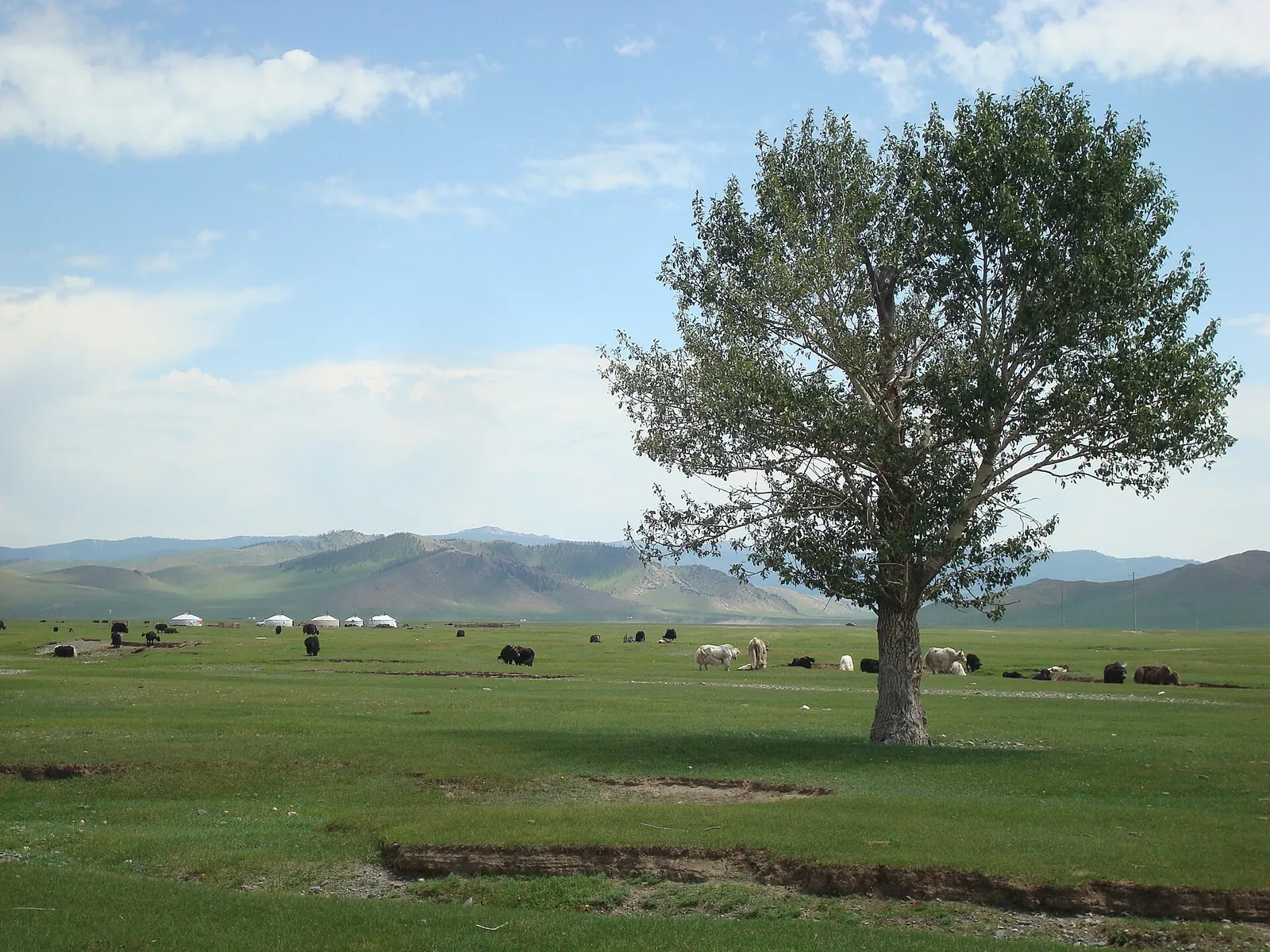
Summer is when Mongolia looks the way you imagine it: green valleys dotted with gers and herds, warm days and long evenings. This is also when most countryside camps operate: Gobi ger camps are fully open from 15 May to 20 September and partly open or closed in the other months, and Nomadic Journeys runs its trips to Jalman Meadows camp, north-east of the capital, every day from mid-May to the end of September.
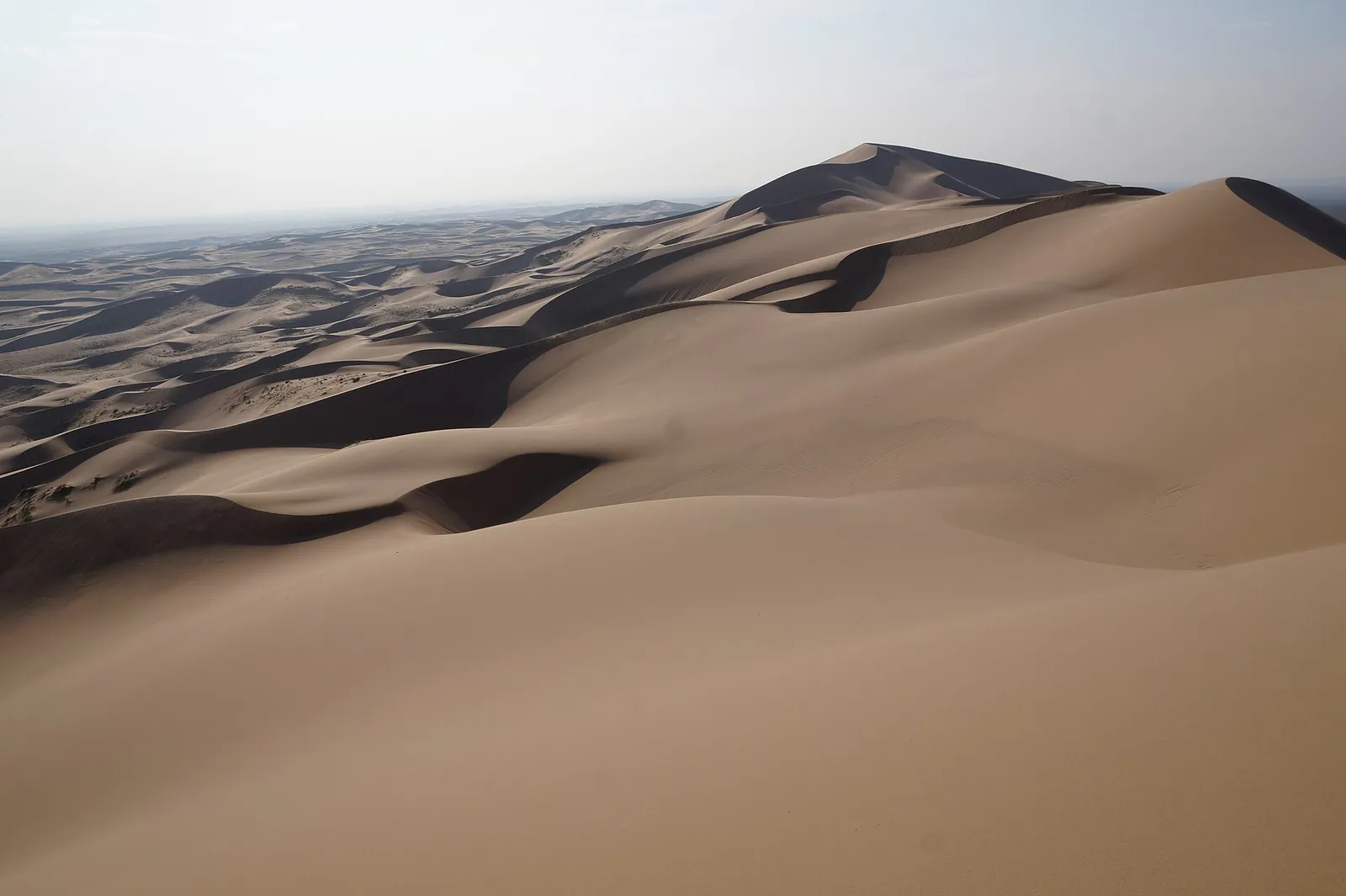
July and August bring most of the year's rain, falling on about 16 to 17 days a month in Ulaanbaatar, though even the wettest months have many sunny days. Flooding is among the weather warnings issued in any season, and on dirt tracks a wet spell slows the drive, so a July or August road trip needs a spare day. In the Gobi, July is the hottest month, which is why June or September suit the Gobi best, when the drives and the dune climbs at Khongoryn Els are cooler. Our Gobi guide covers the sites and how long to spend there.
September is the quiet favourite: the crowds of July have gone and the days are mild, but nights fall close to freezing. It is the last full month for summer camps such as Jalman Meadows.
July and Naadam
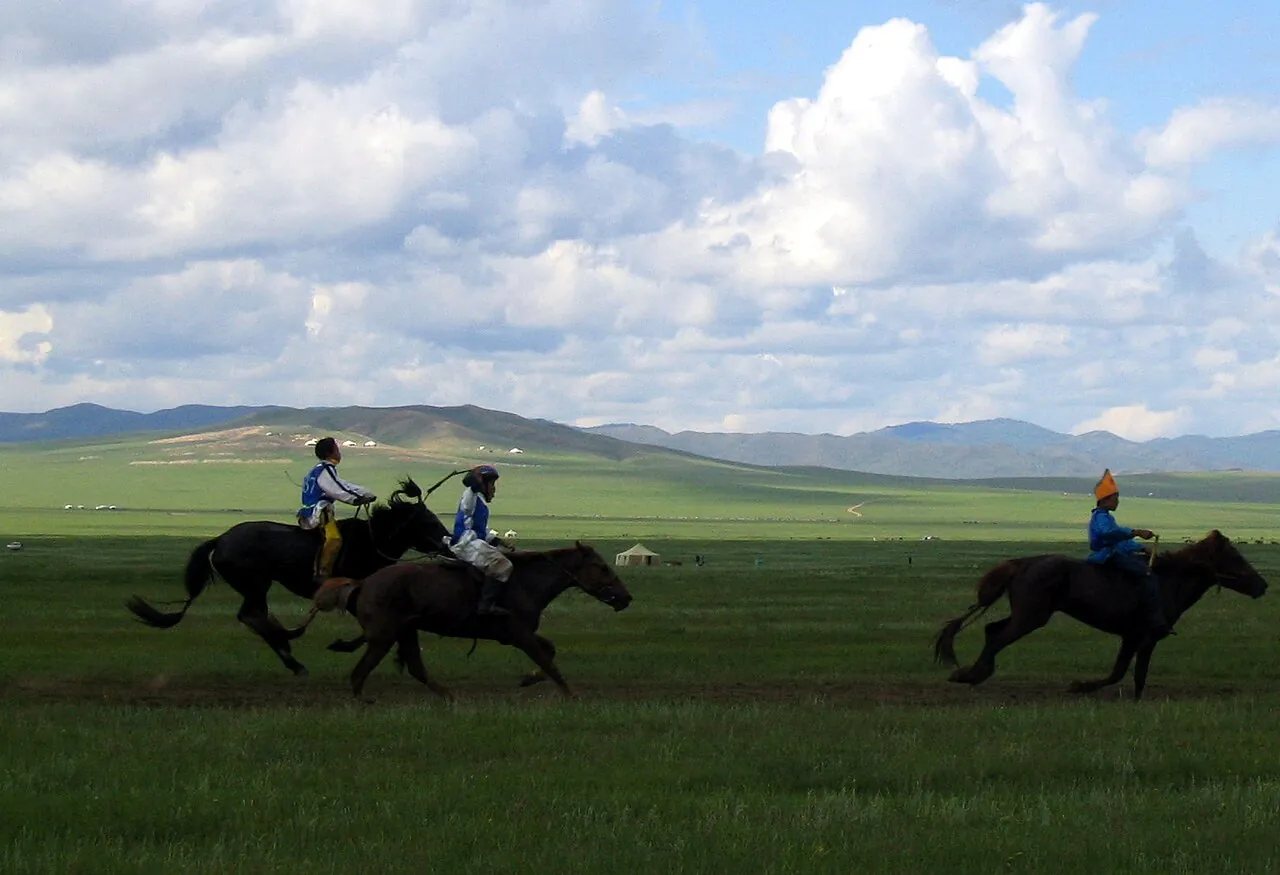
Naadam, the national festival of horse racing, wrestling and archery, is celebrated every year from 11 to 13 July across Mongolia (UNESCO), in the capital and in the towns and districts that hold their own naadams. In Ulaanbaatar the festival opens on 11 July with the nine white banners carried from Government House to the Central Stadium, a horse parade and, after the president's speech, an opening ceremony at 11:10; wrestling and archery fill the stadium, and the horse races, by age class over 15 to 35 km, are run on the open steppe about 30 km west of the city. The public holiday around it ran from 10 to 15 July in 2026, under Mongolia's law on public holidays. July is the country's busiest month, and many travellers who do not need the festival prefer June, August or September.
If you want Naadam, plan the trip around it, because it fixes the dates. View Mongolia's 11-day Gobi tour for Naadam runs on 2-12 or 11-21 July 2027 at USD 3,185 per person for two on a private basis, and the festival week is the dearest of the year (prices below). If you do not need the festival, a trip in June or late August gives you similar weather with fewer people, and in late June the Danshig Naadam is held near Ulaanbaatar. Our festivals guide gives the 2027 dates and how sure each one is.
Spring and autumn: the shoulder months
April and May are a time of change rather than comfort. In the Gobi and on the steppe, wind storms are frequent in March, April and the first half of May, with occasional snow in May, and chill winds return in September and October; dust storms are among the weather warnings the UK lists. Ulaanbaatar's nights stay below freezing on average through April, and May is the first month that feels like summer. Some camps open from late April.
Autumn is short and bright. In late September the larch forests of the north turn gold: NASA's Landsat images showed the hills around Lake Khövsgöl change from green in mid-August to gold on 26 September 2024, with the first snow on the high ridges. October is sharp, with frosty nights and camps closing for the season. Terelj Lodge, in Gorkhi-Terelj National Park, closed for the winter on 17 October 2026 and reopens on 20 April 2027; each camp sets its own dates, so the shoulder months have fewer beds to choose from.
Lake Khövsgöl, the north and the far west
The north is cooler and has an even shorter season. At Khatgal, the village at the southern end of Lake Khövsgöl, the WMO averages give a July high of 19.2°C and a low of 6.4°C, and nights stay below freezing on average from September (-2.0°C) to May (-3.1°C). July is also the wettest month there, with 92.8 mm of rain.
The lake starts to freeze at the beginning of November and begins to thaw in mid-May, with some ice lasting into early June. In the northern forests, ticks carry tick-borne encephalitis, mainly in spring and summer, so French health advice recommends protection against bites and a skin check after every walk. The northern tourist season runs mainly from mid-June to the beginning of September, so book camps there ahead, especially for July. Our Lake Khövsgöl guide covers the camps and how to get there.
The far west is a season of its own. At Ölgii, capital of Bayan-Ölgii and home of the Golden Eagle Festival, the WMO averages give a July high of 23.7°C, but October, the festival month, averages 7.9°C by day and -4.7°C at night, so eagle-festival travellers pack for winter nights.
Winter: deep cold and city smog
Winter is long and hard: the UK puts the coldest nights as low as -40°C. Germany and the UK both warn of severe air pollution in Ulaanbaatar in winter, from heating plants, traffic and the stoves of the ger districts, which may aggravate bronchial, sinus or asthma conditions, so a winter trip suits travellers in good health who spend most of their time outside the city.
Outside the city, winter means frozen lakes and snowy steppe. The ger camps are closed, so winter tours sleep in hotels or with herding families, and husky-sledding days run in Terelj National Park. In the Gobi, the Three Camel Lodge opens for organised trips around the Thousand Camel Festival. Our transport guide covers driving in winter.
Tsagaan Sar, the lunar new year, falls on the first three days of the first spring month of the Mongolian calendar, so its dates change each year: 6-8 February in 2027, a provisional date until the official holiday list, while the 2026 public holiday ran from 18 to 20 February.
Flights and trains by season
Domestic flights follow the seasons. In winter MIAT flies to Mörön and to Dalanzadgad twice a week each, on the airport timetable valid to late March 2027. Summer adds seats: Hunnu Air flew to Mörön three times a week from 15 June to 20 September 2026, and View Mongolia describes Mörön flights as daily in July and August. The Beijing train runs once a week and sells out from June to September, so book it about two months ahead. Our transport guide has the timetables and fares.
Month by month
- January (hard): the coldest month; the Thousand Camel Festival at Bulgan in the Gobi falls in late January (30-31 or 27-28 January 2027, provisional: operators give two dates, so travel on your tour's; see our festivals guide).
- February (hard): still deep winter; Tsagaan Sar on 6-8 February 2027 and the Ice Festival on frozen Lake Khövsgöl at Khatgal on 27-28 February 2027, both provisional dates.
- March (hard): the Gobi rises above freezing by day while Ulaanbaatar does not, and the spring winds begin.
- April (mixed): windy, with nights below freezing; some camps reopen late in the month.
- May (mixed): the first warm days; Gobi camps open fully from 15 May, at the season's lower prices.
- June (best): green steppe, the longest days of the year and fewer visitors than July; a good month for the Gobi; the Danshig Naadam near Ulaanbaatar falls late in the month.
- July (good for Naadam): the warmest and busiest month, with Naadam on 11-13 July, frequent showers and the year's highest tour prices.
- August (good): still warm and green, and the wettest month in Ulaanbaatar.
- September (best): clear, mild days, nights near freezing and the northern larches turning gold; Gobi camps are fully open only to 20 September, so late September is the tail of the season.
- October (mixed): frosty nights and closing camps. In the far west, the Golden Eagle Festival in Bayan-Ölgii falls on 2-3 October 2027 (provisional).
- November (hard): winter sets in, Lake Khövsgöl freezes and the city's air quality falls.
- December (hard): deep cold and the year's darkest days.
What each season costs
Season changes some prices and not others. Tour prices hardly move: View Mongolia charges the same for its private nine-day Gobi tour from 5 May to 10 October, USD 2,390 per person for two, or USD 1,580 on a 2027 group departure. Naadam tours are priced as their own departures: View's 11-day Gobi and Naadam tour in July costs USD 2,150 per person on a group departure, or USD 3,185 per person for two on a private basis, with two days of festival tickets included.
On your own, the stadium days need a ticket. In 2026 the opening and closing tickets cost MNT 150,000 each on enaadam.mn, on sale from 07:00 on 1 July, two per account, and sold out within minutes.
Rooms are where the season shows. Kayak's monthly averages for two large Ulaanbaatar hotels, read on 3 November 2026, put July and August, the dearest months, at close to twice the November and December rate; our where-to-stay guide has room rates for every budget. Our trip-cost guide prices a whole ten-day trip in the main season.
How far ahead to book
The operator holds the camp beds for you, so the tour is the first booking. For July, and for Naadam above all, book six to nine months ahead if you can, because group departures have fixed places, and operators reward it: Tour Mongolia takes 10% off its tours booked nine months ahead and 5% six months ahead. Book the Beijing train about two months ahead. Winter festival tours run in small groups on set dates. The ger stays guide explains what a night in camp includes.
Practical questions
What is the best month to visit Mongolia?
June or early September for most trips: warm days, open camps and fewer visitors than July. July is warmest and has Naadam, but it is the busiest month, and July and August are the wettest.
When is Naadam?
The national festival is celebrated every year from 11 to 13 July; in 2026 the public holiday ran from 10 to 15 July. Local naadams in towns and districts have their own dates.
Is Mongolia cheaper outside July?
Tours barely change: View Mongolia charges the same for its private nine-day Gobi tour from 5 May to 10 October. Rooms in the capital do: Kayak's monthly averages for two large Ulaanbaatar hotels put July and August at close to twice the November and December rate.
When is the best time to visit the Gobi?
June or September, when the drives and dune climbs are cooler than in July, the hottest month at Dalanzadgad.
When is the best time to visit Lake Khövsgöl?
Between mid-June and the beginning of September, the northern tourist season. The lake freezes from early November and thaws from mid-May, and nights at Khatgal stay below freezing on average from September to May.
How cold is Ulaanbaatar in winter?
Very cold: average daytime highs stay below freezing from November to March, January nights average below -25°C, and the city's air pollution is worst in winter.
Are ger camps open all year?
Each camp sets its own season. Many close in winter: Terelj Lodge, for example, closed on 17 October 2026 and reopens on 20 April 2027. A few lodges host organised winter trips.
When is Tsagaan Sar?
On 6-8 February 2027 (provisional): the first three days of the first spring month of the Mongolian lunar calendar, so the dates change each year. In 2026 the public holiday was 18 to 20 February.
Is October a good time for western Mongolia?
Only for the Golden Eagle Festival in early October (2-3 October 2027, provisional), and with warm clothes: Ölgii averages 7.9°C by day and -4.7°C at night in October.
Keep planning your trip
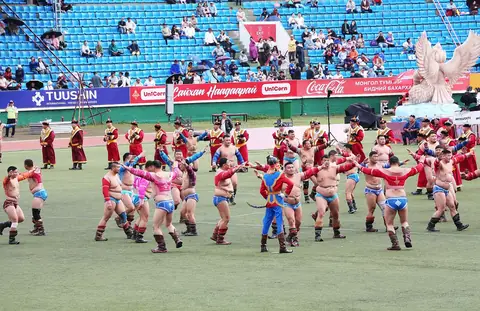
Mongolia festivals and events 2027
Naadam on 11-13 July, Tsagaan Sar and the camel, ice and eagle festivals: Mongolia's 2027 dates, how firm each is and what a festival trip costs.
Read the guide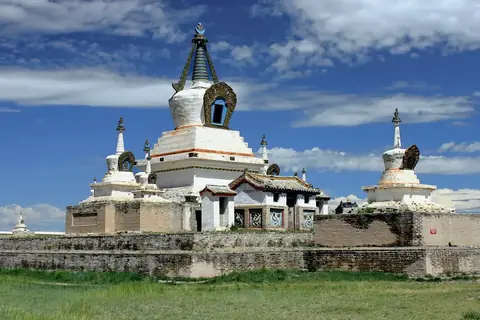
First trip to Mongolia
A first Mongolia trip: why you travel with a driver-guide, the ten-day Gobi and Kharkhorin loop, ger camps and manners, entry, cash, SIM cards and daily costs.
Read the guide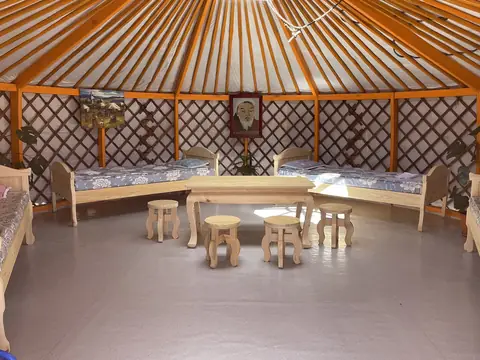
Ger stays in Mongolia
Ger camp or herding family? What a night in a ger includes, from bathrooms, stoves and meals to etiquette, with priced camps near Ulaanbaatar and on the Orkhon route.
Read the guide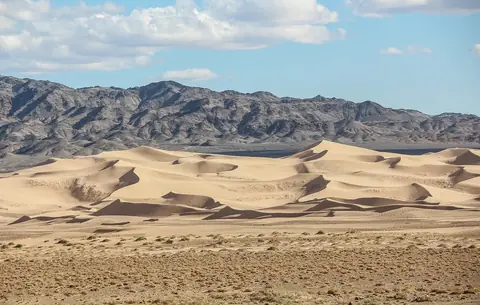
Gobi Desert
How to see the South Gobi: the six-day loop to Tsagaan Suvarga, Bayanzag, Khongoryn Els and Yolyn Am, drive times, camps, the fly-in option and what it costs.
Read the guide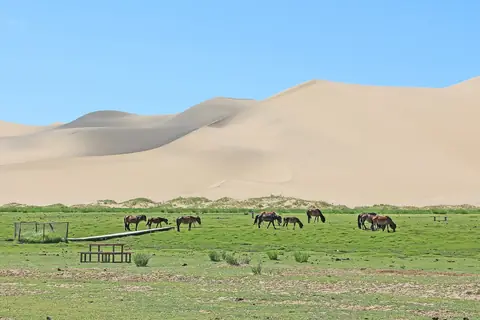
Where to go in Asia in June
June is rainy season across much of Asia. Six trips that dodge it, from Hokkaido and Mongolia to Bali and Malaysia's east coast, with costs and festivals.
Read the guide
Where to go in Asia in September
September brings autumn to Central Asia, northern China, Korea and Hanoi, and dry days to Bali. Six trips with daily costs, key holidays and places to skip.
Read the guideSources and checks before you travel
(40)
- WMO World Weather Information Service: Ulaanbaatar (climate data) ↗ — opens in a new tab
- WMO World Weather Information Service: Dalanzadgad (climate data) ↗ — opens in a new tab
- Go Mongolia (Ministry of Environment and Tourism): know before you go ↗ — opens in a new tab
- Discover Mongolia: frequently asked questions ↗ — opens in a new tab
- Three Camel Lodge: FAQ ↗ — opens in a new tab
- Terelj Lodge Resort ↗ — opens in a new tab
- Nomadic Journeys: private Jalman Meadows tour ↗ — opens in a new tab
- UNESCO Intangible Cultural Heritage: Naadam, Mongolian traditional festival ↗ — opens in a new tab
- Embassy of Mongolia in Germany: public holidays in 2026 (Mongolian) ↗ — opens in a new tab
- Embassy of Mongolia in Germany: public holidays (Mongolian) ↗ — opens in a new tab
- UK Foreign, Commonwealth & Development Office: Mongolia safety and security ↗ — opens in a new tab
- UK Foreign, Commonwealth & Development Office: Mongolia health ↗ — opens in a new tab
- German Federal Foreign Office: Mongolia travel and safety advice (Stand 02.11.2026) ↗ — opens in a new tab
- France Diplomatie: Mongolie, sécurité (updated 15 September 2026) ↗ — opens in a new tab
- WMO World Weather Information Service: Khatgal (climate data) ↗ — opens in a new tab
- View Mongolia: Gobi Desert and Orkhon Valley tour, 8 days ↗ — opens in a new tab
- View Mongolia: Gobi Desert and Naadam Festival tour ↗ — opens in a new tab
- View Mongolia: Khovsgol Lake ↗ — opens in a new tab
- View Mongolia: Thousand Camel Festival ↗ — opens in a new tab
- Dream Mongolia: Ice Festival 2027 ↗ — opens in a new tab
- Nomadic Expeditions: Golden Eagle Festival and Gobi Desert ↗ — opens in a new tab
- View Mongolia: Tsagaan Sar, Mongolian lunar new year ↗ — opens in a new tab
- View Mongolia: Gobi desert tour ↗ — opens in a new tab
- WMO World Weather Information Service: Ulgii (climate data) ↗ — opens in a new tab
- Chinggis Khaan International Airport: domestic seasonal departures ↗ — opens in a new tab
- Hunnu Air: timetable ↗ — opens in a new tab
- Discover Mongolia: train tickets to Mongolia (July 2026) ↗ — opens in a new tab
- View Mongolia: Naadam festival tours 2027 ↗ — opens in a new tab
- Nomadic Expeditions: Thousand Camel Festival group journey ↗ — opens in a new tab
- Terelj Lodge: 2026 rates ↗ — opens in a new tab
- NASA Earth Observatory: Autumn in northern Mongolia (7 October 2024) ↗ — opens in a new tab
- Guru Travel Mongolia: dog sledding in Terelj National Park day tour ↗ — opens in a new tab
- Guru Travel Mongolia: what to pack for a Mongolia tour ↗ — opens in a new tab
- Railway Traffic Coordination Centre of Mongolia (mrtd.gov.mn), Welcome to Mongolia: Naadam horse racing ↗ — opens in a new tab
- Kayak: Ramada by Wyndham Ulaanbaatar City Center ↗ — opens in a new tab
- Kayak: Shangri-La Ulaanbaatar ↗ — opens in a new tab
- ikon.mn: Naadam opening and closing tickets at MNT 150,000 (30 June 2026) ↗ — opens in a new tab
- ikon.mn: Naadam tickets sold out in 4-6 minutes (1 July 2026) ↗ — opens in a new tab
- Tour Mongolia: Mongol Nomadic Naadam tour ↗ — opens in a new tab
- France Diplomatie: Mongolia health advice ↗ — opens in a new tab
Reference sources for the version dated 3 November 2026. Confirm opening times, access, transport and conditions for your travel dates.
Photo credits
(5)
Summer steppe near Tsetserleg in Arkhangai, with herds and gers below the hills: the June-to-September season.
Photograph: Arabsalam — opens in a new tab · CC BY-SA 4.0 — opens in a new tab
Changes: Resized and converted to WebP; displayed with responsive crops. · Original photograph and licence details ↗ — opens in a new tab
A Naadam horse race on the open steppe; the national festival is held every year from 11 to 13 July.
Photograph: user:InvictaHOG — opens in a new tab · Public domain — opens in a new tab
Changes: Resized and converted to WebP; displayed with responsive crops. · Original photograph and licence details ↗ — opens in a new tab
Sand dunes in the Mongolian Gobi, where July highs average 28.8°C at Dalanzadgad.
Photograph: Niek van Son from Eindhoven, Nederland — opens in a new tab · CC BY 2.0 — opens in a new tab
Changes: Resized and converted to WebP; displayed with responsive crops. · Original photograph and licence details ↗ — opens in a new tab
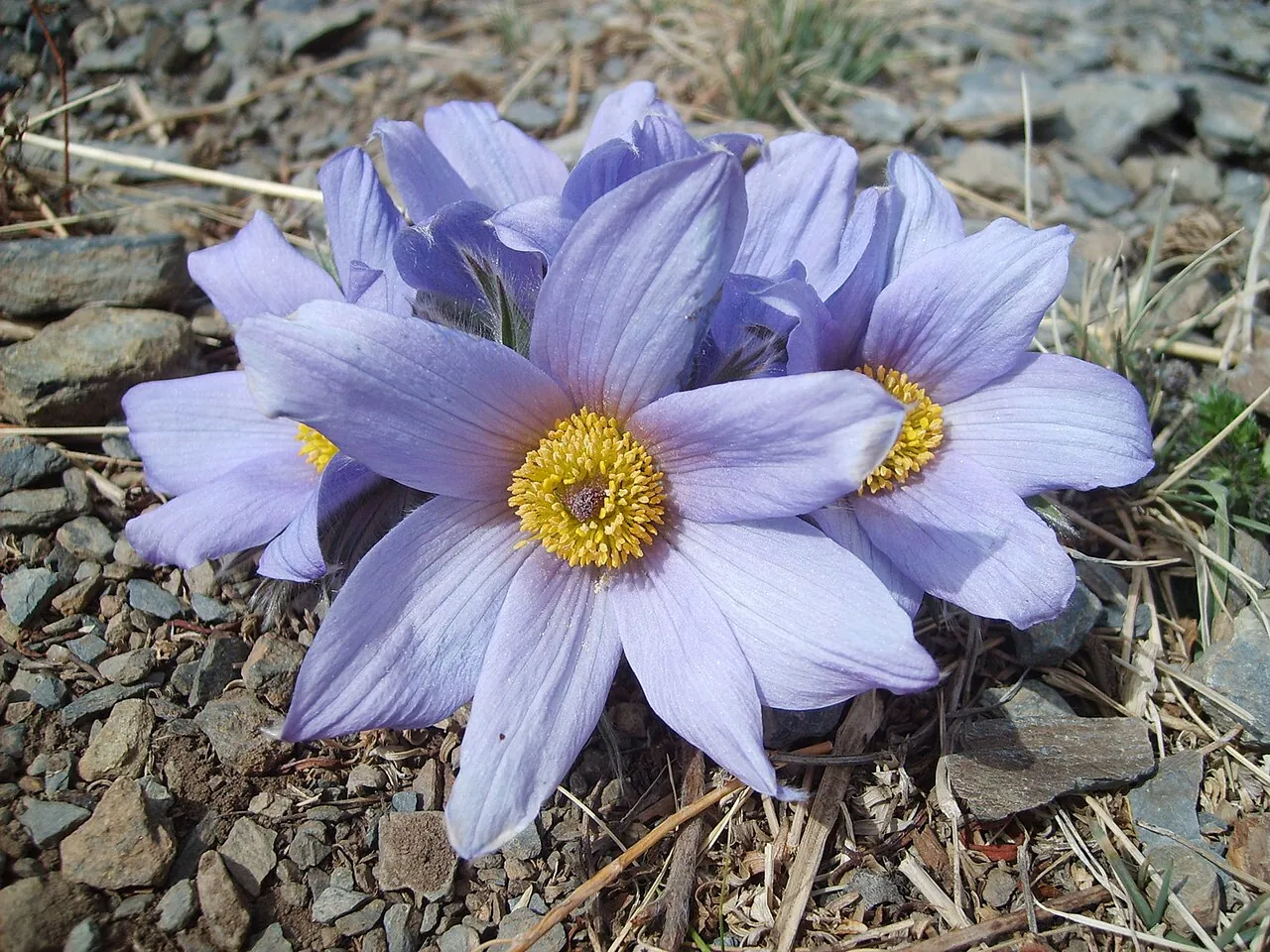
Spring flowers on the Mongolian steppe, where the growing season lasts only about four months.
Photograph: Martin Vorel — opens in a new tab · CC BY-SA 3.0 — opens in a new tab
Changes: Resized and converted to WebP; displayed with responsive crops. · Original photograph and licence details ↗ — opens in a new tab
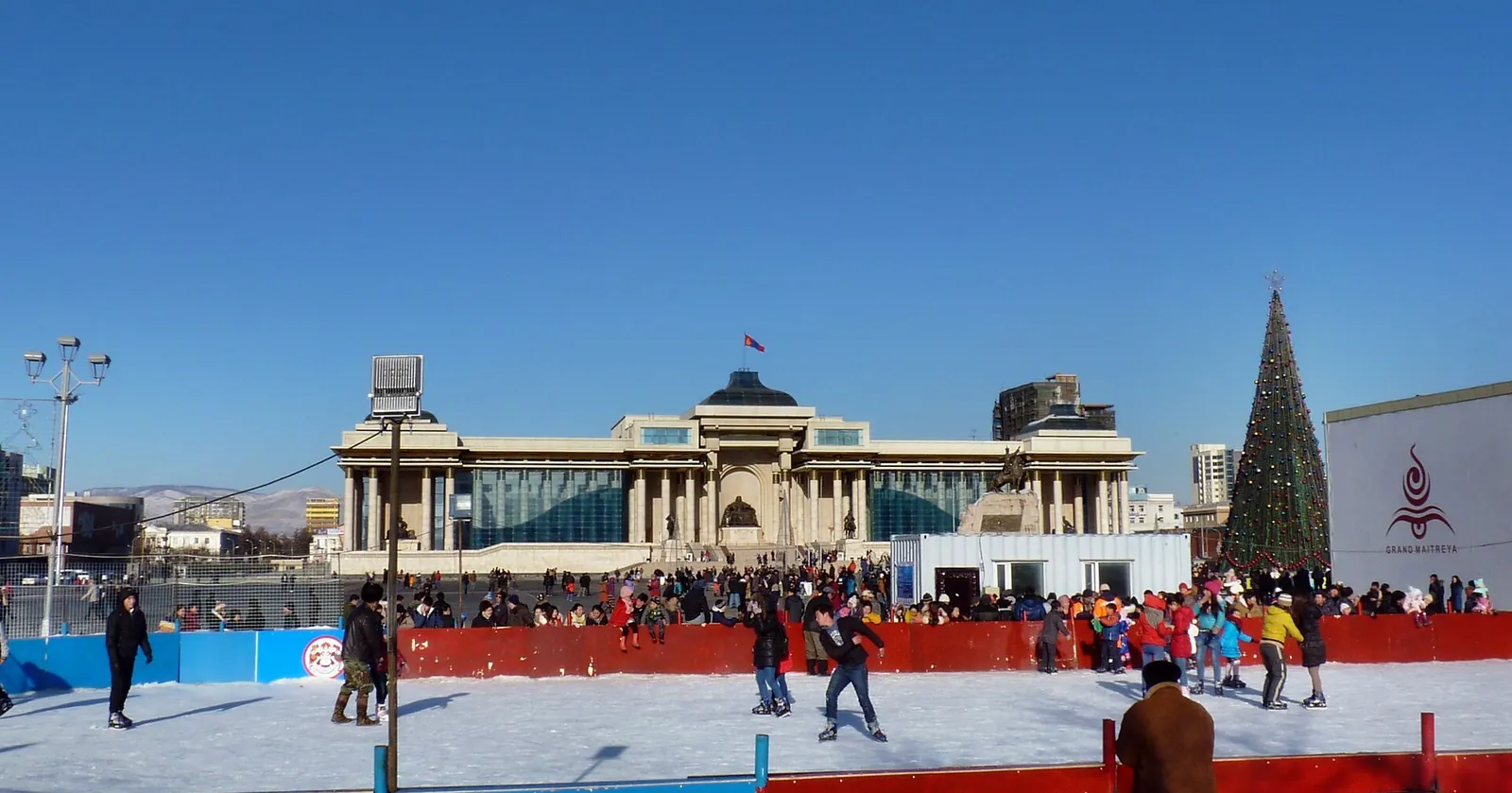
New Year's Day on the ice rink in Sükhbaatar Square, Ulaanbaatar, where January averages -15.5°C by day.
Photograph: Orgio89 — opens in a new tab · CC BY-SA 3.0 — opens in a new tab
Changes: Resized and converted to WebP; displayed with responsive crops. · Original photograph and licence details ↗ — opens in a new tab