Ömnögovi
The Gobi Desert: dunes, canyons and a six-day loop by road
The Gobi is where most first trips to Mongolia go for its biggest landscapes: the singing dunes of Khongoryn Els, the red Flaming Cliffs of Bayanzag where the first nest of dinosaur eggs was found, the ice gorge of Yolyn Am and the eroded seabed of Tsagaan Suvarga. They lie hundreds of kilometres apart, and you see them on a six-day loop by road from Ulaanbaatar with a driver and guide, sleeping in ger camps, or on a shorter fly-in stay from Dalanzadgad that leaves some of them out.
In this guide
Find the location ↗ — opens in a new tabThe short answer
Give the Gobi six days and five nights by road with a licensed operator's driver and guide: Tsagaan Suvarga, Bayanzag, two nights at Khongoryn Els, then Yolyn Am and Dalanzadgad. Travel Gobi Mongolia's private loop costs USD 1,340 per person for two in tourist ger camps, with meals and entrance fees included; all in, that is about MNT 5,390,000 per person. The comfort alternative is a four-day fly-in stay at Three Camel Lodge (USD 5,130 per person in summer 2027, plus USD 445 for the return flight), which skips Khongor. Go between 15 May and 20 September, when the camps are fully open.
- Suggested time
- 6 days and 5 nights by road from Ulaanbaatar; 4 days and 3 nights on a fly-in lodge stay
- Where to stay
- Ger camps at Tsagaan Suvarga, Bayanzag and Khongoryn Els (two nights), then a hotel in Dalanzadgad; or Three Camel Lodge on a fly-in stay
- Season and timing
- Tourist ger camps are fully open from 15 May to 20 September. View Mongolia gives 10 May to 5 October as the best window: July is the hottest month, with days up to +40°C, nights are 10–20 degrees colder than the days, and wind storms are frequent from March to mid-May.
Six days by road: the classic Gobi loop
The South Gobi is not one sight but four, hundreds of kilometres apart: the eroded cliffs of Tsagaan Suvarga, the red bluffs of Bayanzag where the first nest of dinosaur eggs was found, the dunes of Khongoryn Els and the ice gorge of Yolyn Am in the Gurvan Saikhan mountains. A loop of six days and five nights from Ulaanbaatar links them, and the order below is the one Travel Gobi Mongolia, a licensed operator founded in 2005, uses for its private six-day tour by car, some 1,700 km by the legs below.
Day 1: pick-up at your Ulaanbaatar hotel at 08:00 and 470 km south to Tsagaan Suvarga, about 6 hours on the paved road; a walk along the cliffs before dinner. Day 2: 245 km to Bayanzag, about 4 hours, mostly on dirt tracks, with the evening at the Flaming Cliffs. Day 3: 150 km and about 4 hours on dirt to Khongoryn Els. Day 4: a full day at the dunes, with a camel ride and the climb. Day 5: 190 km and about 6 hours on dirt tracks to Yolyn Am, a walk into the gorge, then 50 km and an hour on the paved road to Dalanzadgad for the night. Day 6: 600 km and about 9 hours on the paved road back to Ulaanbaatar, arriving at around 18:00.
Two nights at Khongoryn Els are what make the loop work: the dunes get a whole day without a drive, and you climb in the cool of the morning or the evening rather than at midday. The price of six days is two long drives at either end; if you cannot face 9 hours in a car on the last day, look at the flight option below or at a longer route that comes back through the Orkhon Valley, as our 14-day itinerary does.
Outside Ulaanbaatar, travel with a licensed operator's driver and guide: distances are long, many roads are unpaved tracks, and there is no mobile signal in large areas. Avoid driving after dark (Germany): leaving after breakfast on the 9-hour last day brings you into Ulaanbaatar by about 18:00, well before dark in summer. Medical care outside Ulaanbaatar is limited and hospitals may ask for most of the cost up front, so take insurance that covers evacuation and repatriation (UK). France keeps the whole of Mongolia under heightened vigilance (vigilance renforcée) because of the distances, the roads and the weak medical facilities; it is not a warning against travel.
Tsagaan Suvarga and Bayanzag: cliffs on the way south
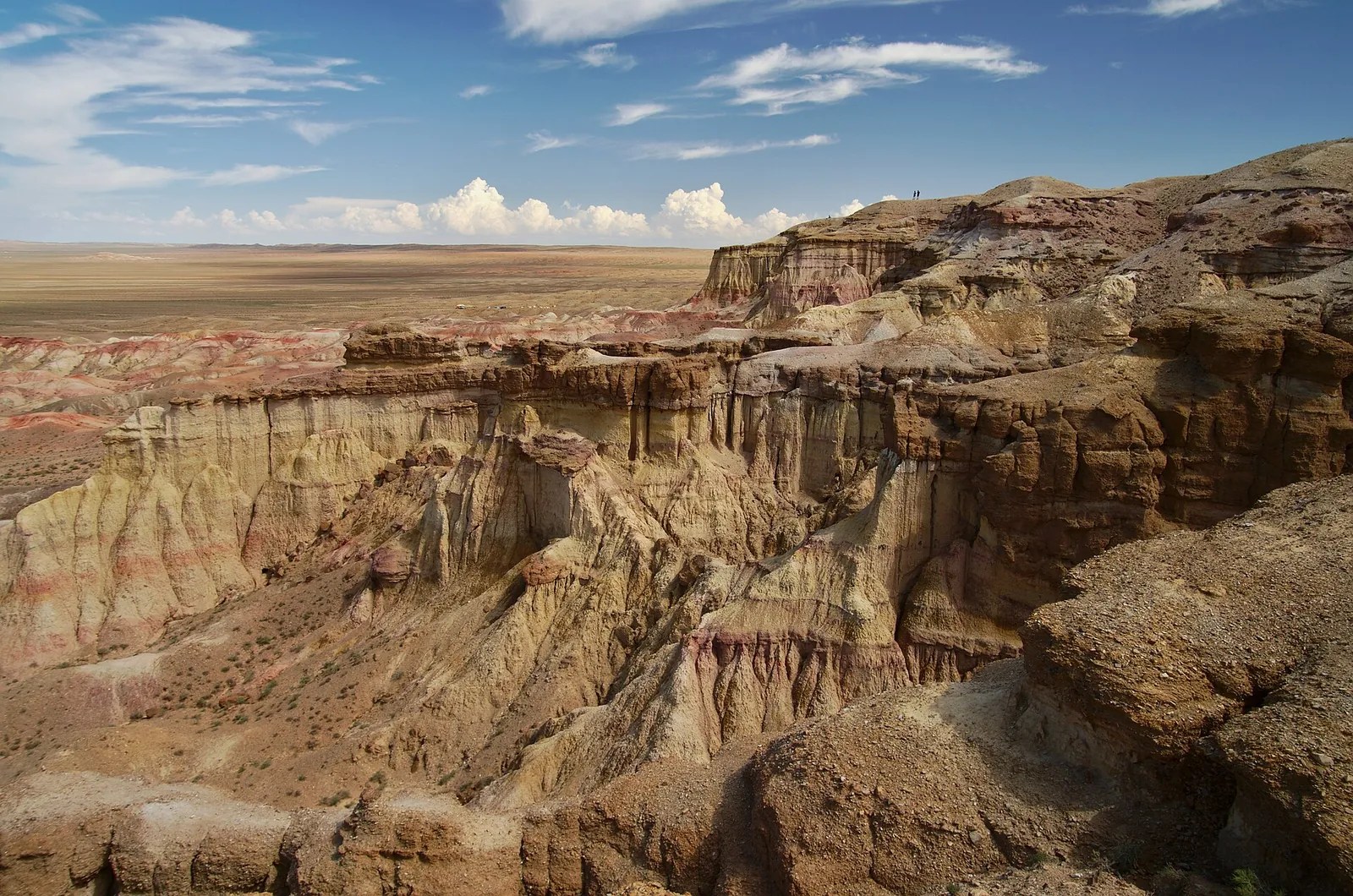
Tsagaan Suvarga is the first night's stop, in the Middle Gobi on the way to the South Gobi. It is an escarpment of old seabed that has weathered into towers and gullies; from a distance it looks like a ruined city, and close up the layers of sediment run in different colours, each a different age. Travel Gobi Mongolia describes the formation as over 50 m high at its highest point and continuing for 400 m. The evening is spent walking along and below the cliffs.
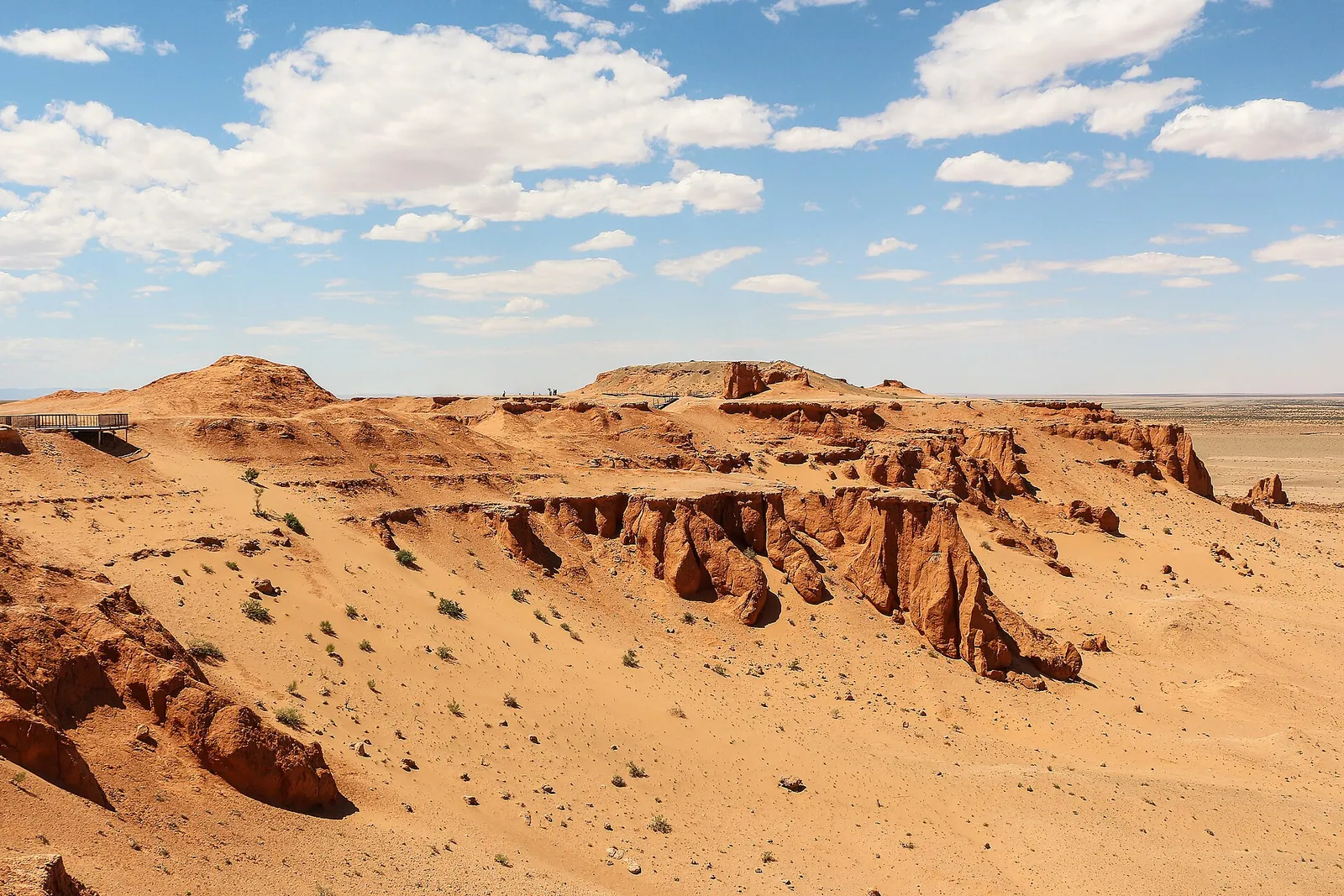
Bayanzag, the Flaming Cliffs, lies in a broad valley below the Arts Bogd mountains, as the Ömnögovi province environment department describes it. In 1923 the American Museum of Natural History expedition led by Roy Chapman Andrews found the first nest of dinosaur eggs here, and fossils of Protoceratops have been found here alongside the eggs. The cliffs glow orange at sunrise and sunset, which is why a night nearby matters: tours walk along them in the evening. The name means "rich in saxaul", the twisted desert shrub that grows in a grove near the cliffs.
Fossils stay where they lie. Mongolia's protected-areas law, which the Gurvan Saikhan park administration publishes on its site, forbids digging at natural monuments and touching, damaging or removing what they hold, and the law covers fossils of ancient plants and animals by name.
Khongoryn Els: two nights at the singing dunes
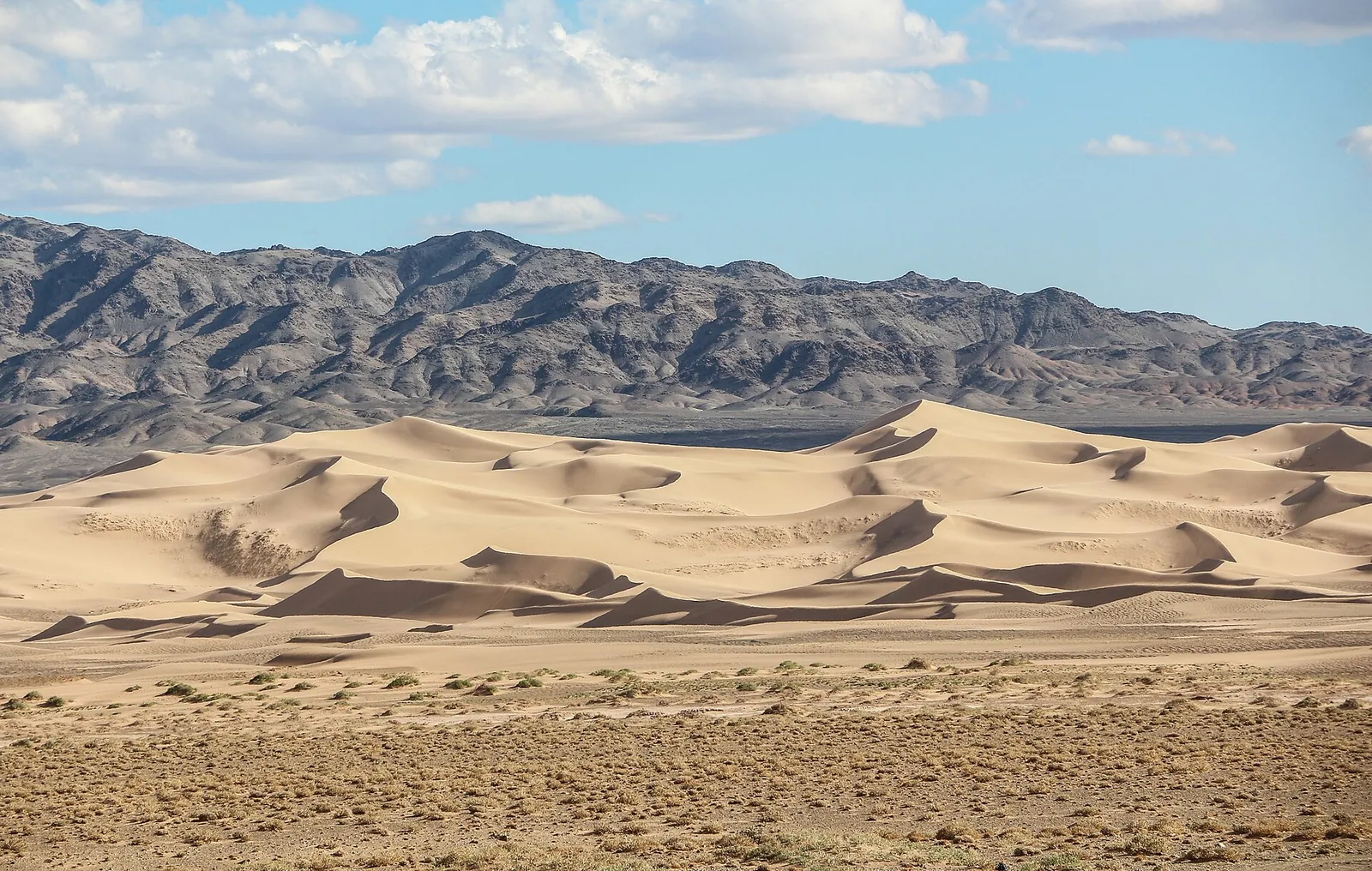
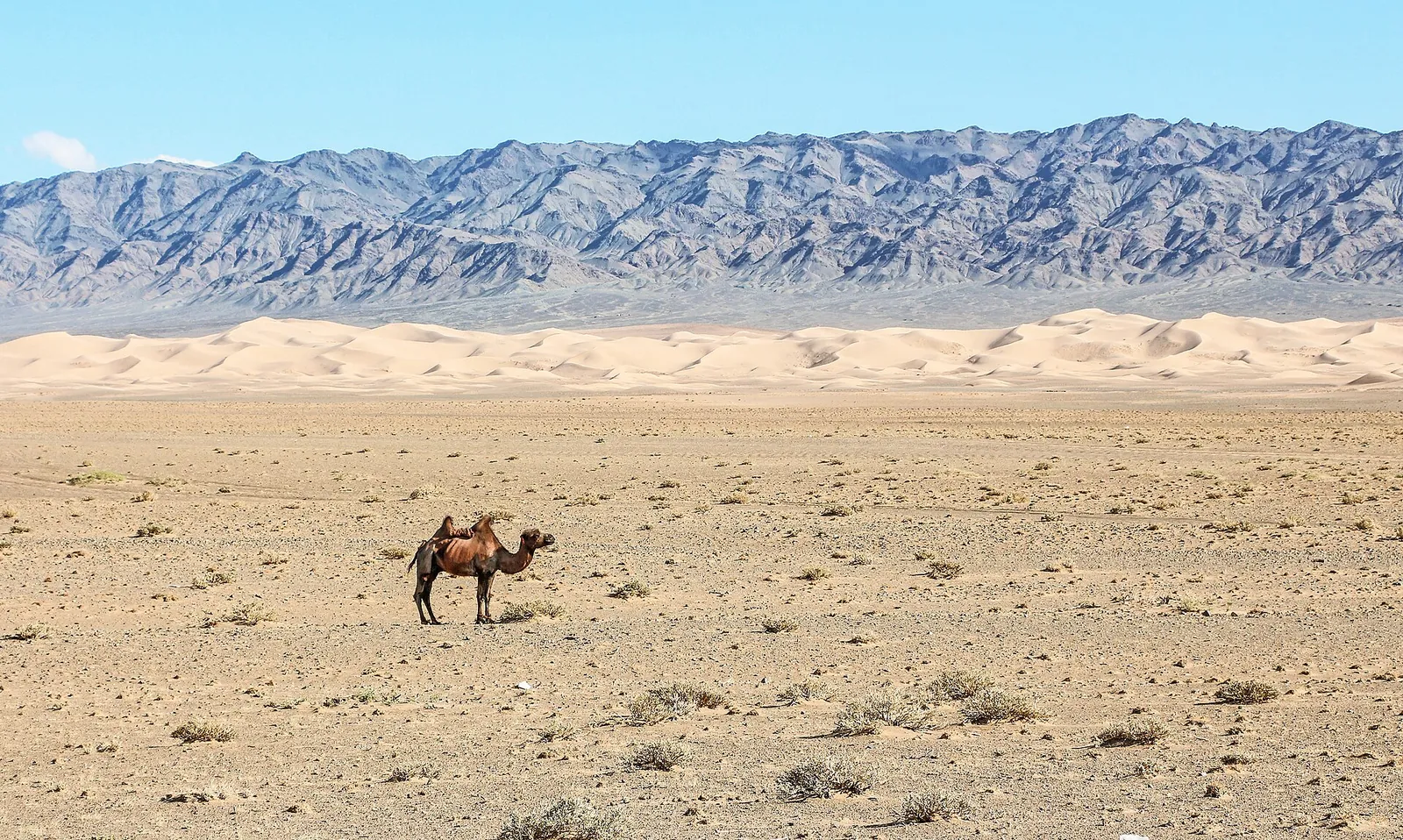
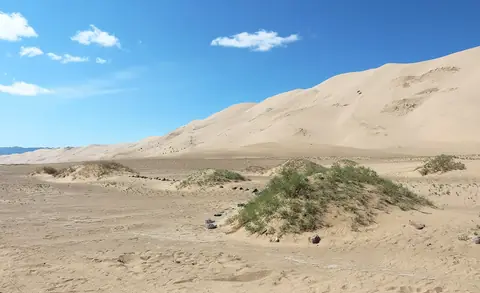
Khongoryn Els is the largest field of dunes in the Mongolian Gobi, a long wall of pale sand beneath the Sevrei and Zöölön ranges inside Gurvan Saikhan National Park; Travel Gobi Mongolia describes it as nearly 100 km long and 5 to 10 km wide, with crests rising 80 to 300 m above the plain. Along its northern edge the Khongor River feeds a green strip of oasis where herders keep their camels, so the view from a crest is sand on one side and grassland and dark mountains on the other. Locals call them the singing sands: on a windy day the sand slipping down the steepest faces makes a deep booming sound that carries a long way.
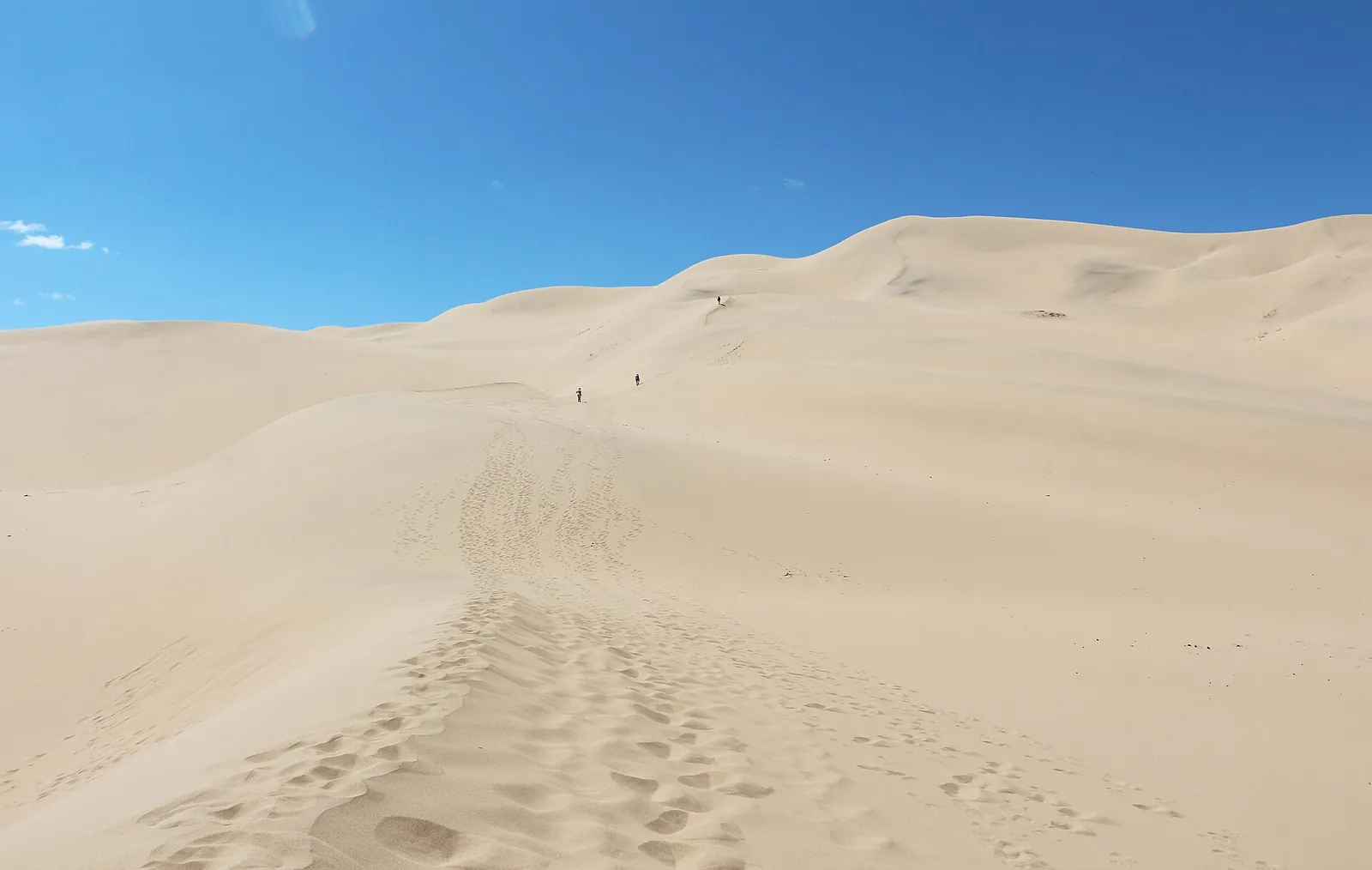
The day at the dunes usually has three parts. A camel ride of about an hour along the foot of the sand, on Bactrian camels led by a herding family; a visit to that family's ger, where milk tea is the first thing offered; and the climb. The climb to a high crest is the hardest physical effort of a Gobi trip, up soft sand where every step slides back, and it is optional: View Mongolia, which includes it, calls it the most challenging part of its tour and suggests one of the lower dunes instead if the top is too much. Climb in the morning or the evening rather than at midday, and take water and a scarf against blowing sand.
Gobi-Erdene, a camp founded in 2012 beside Khongoryn Els, is typical of the camps here: 31 gers, 24 log cabins with their own shower and toilet, a restaurant for 100 and a shower block with hot water for the ger guests.
What to eat and where to look
Suutei tsai
Salty milk tea: brick tea boiled with milk and salt, sometimes with a little rice or flour; in the Gobi the milk may come from camels. It is the first thing a herding family offers a visitor.
- Where to look
- The ger of the camel-herding family at Khongoryn Els, on the visit Gobi tours make there around the camel ride.
- Fit it into your day
- Day 4 at the dunes, with the family before the ride.
Aaruul
Dried curds, hard and sour, made in many shapes from the summer's milk; they keep for months without a fridge, which is why every family has a bowl of them.
- Where to look
- On the table of the same herding family at Khongoryn Els, alongside the milk tea.
- Fit it into your day
- With the tea on day 4.
Khorkhog
Mutton or goat cooked in a sealed metal container with stones heated in the fire and vegetables, so the meat steams in its own juices; a dish for a gathering rather than a weekday.
- Where to look
- A dish families make for gatherings rather than a restaurant menu item; the evening at Khongoryn Els, the one without a drive behind you, is the natural time for it.
- Fit it into your day
- Dinner on day 4, the evening without a drive behind you.
Buuz
Steamed dumplings of minced meat, usually mutton or beef, with onion and little more than salt; you eat them with your fingers and sip the juice from the first bite.
- Where to look
- The restaurants of the tourist camps on the loop, which serve mainly Mongolian food with some European dishes; on the fly-in stay, Three Camel Lodge teaches buuz in its cooking class.
- Fit it into your day
- Dinner at the Tsagaan Suvarga or Bayanzag camp, days 1 and 2.
Guriltai shol
Mutton soup with homemade wheat noodles and vegetables, seasoned with salt alone: the staple of nomad meals, and the kind of lunch a herding family serves.
- Where to look
- The herding families who run the ger guesthouses on the budget version of the loop, and the camp restaurants, which serve mainly Mongolian food.
- Fit it into your day
- Lunch on day 4 at the dunes, between the camel ride and the climb.
Yolyn Am and Gurvan Saikhan National Park
Gurvan Saikhan National Park (the Three Beauties) takes in the last ranges of the Gobi Altai: bare mountains, the wide valleys between them and the dunes of Khongor. Its administration in Dalanzadgad gives its area as 2,171,737 hectares, more than 450 km from west to east, with the highest point at 2,825.6 m. Bactrian camels, argali sheep, ibex, goitered gazelle, golden eagles and bearded vultures live here.
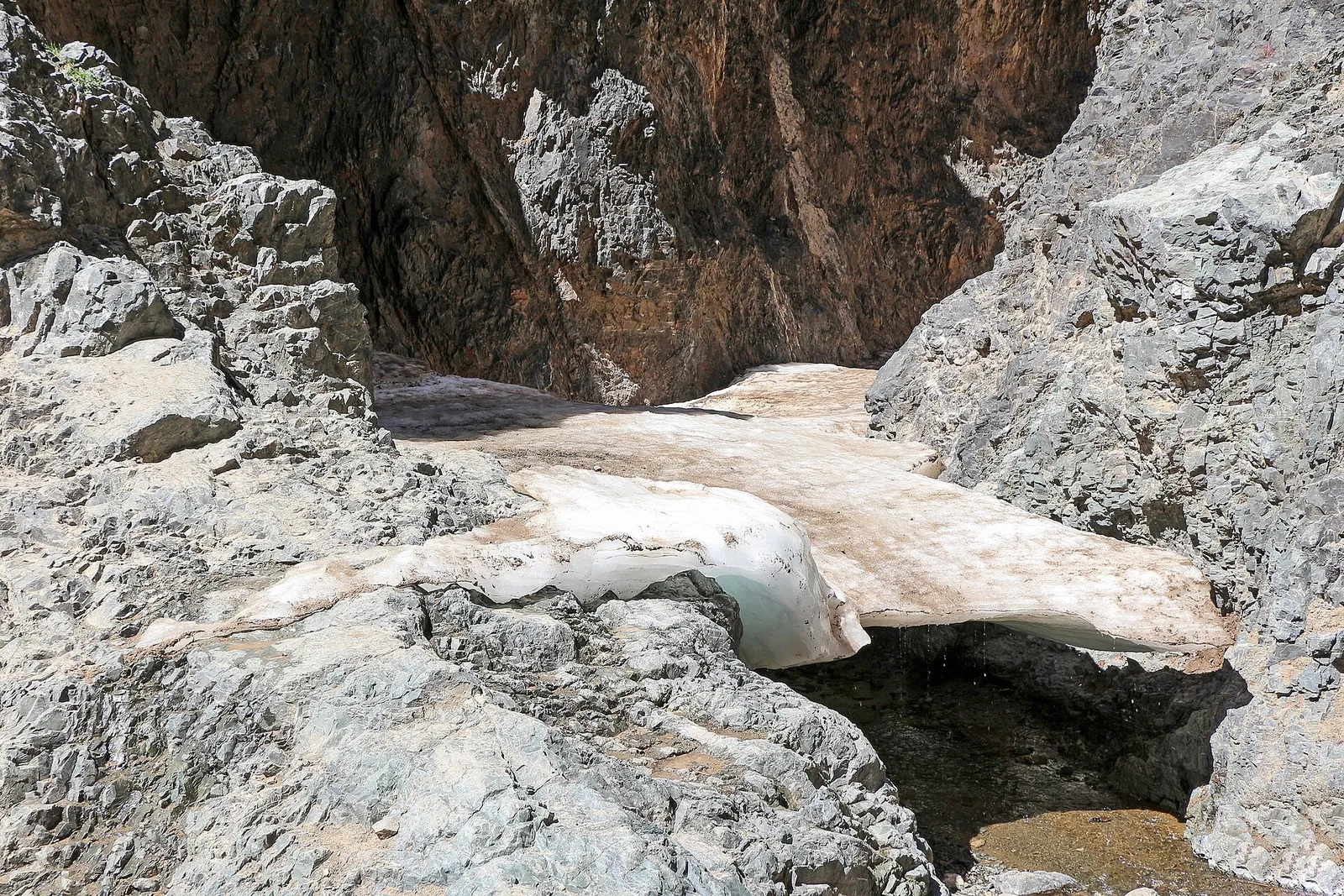
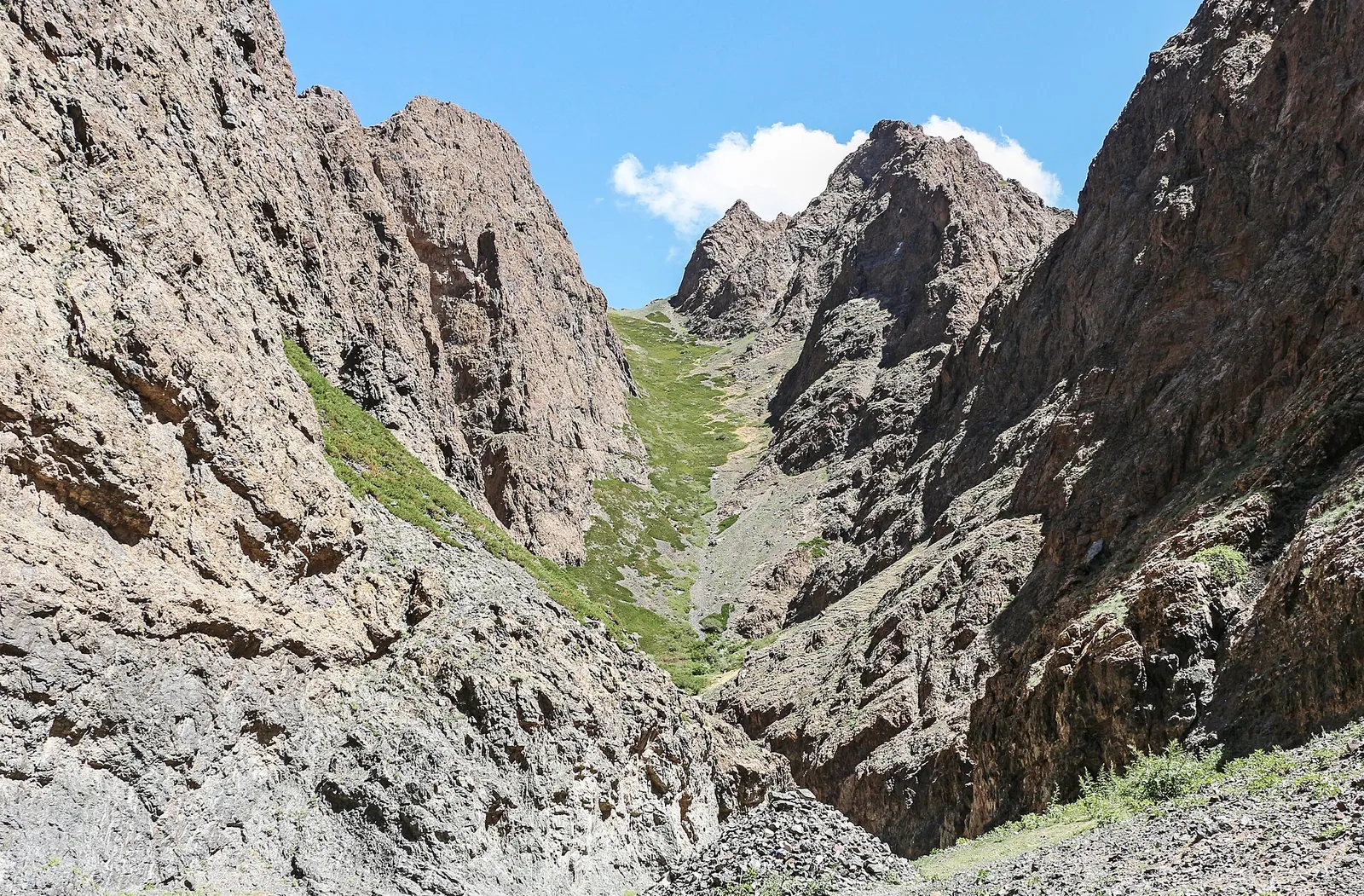
Yolyn Am was the first part to be protected, in 1965. Yol is the Mongolian name for the bearded vulture (lammergeier), and the gorge cuts through the Zuun Saikhan mountains for more than 10 km. From the car park you walk beside a small stream up a grassy valley, where pikas dart between the stones, into a canyon so narrow at its tightest point that only three or four people can walk side by side and so deep that the sun never reaches the floor. The ice that forms there in winter lasts into the summer: operators give late June to mid-July as the time it usually melts, so in August expect a dry gorge. Operators allow from an hour to three hours on foot, depending on how far in you walk, and a horse ride in the valley is possible.
Yolyn Am also has a small natural history museum. Entrance fees for the park, the museum and the other sites are included in the tour prices below. Our budgets include the national park fee at MNT 15,000 per foreign visitor. No current fee for the museum or the other sites is published.
Flying to Dalanzadgad instead
Dalanzadgad, the provincial capital of Ömnögovi, an hour by paved road from Yolyn Am, has an airport, which cuts out the long drives. In winter, Chinggis Khaan International Airport (UBN) lists MIAT flight MGL091 to Dalanzadgad at 17:40 on Fridays and Sundays from 25 October 2026 to 26 March 2027. Flights are small and not every day, so a fly-in trip is built around the flight dates rather than the other way round. Fuel shortages may affect domestic flights and road travel (UK, Germany); keep a spare day before your flight home.
The best-known fly-in stay is Three Camel Lodge, 40 gers and a main lodge built in the style of a Buddhist temple, beside a rock outcrop with ancient petroglyphs at Bulagtai mountain, on the edge of the national park. Its private four-day, three-night journey, run with Nomadic Expeditions, meets you at Dalanzadgad airport, goes to Yolyn Am on the first afternoon, spends the second day at the dunes of Moltsog Els (not Khongoryn Els) with a camel ride and a visit to a herding family, and drives out to Bayanzag on the afternoon of day 3. For 2027 it costs USD 5,130 per person for two sharing a deluxe ger from June to 11 October, USD 4,715 in May and from 12 October to 30 November, and USD 5,415 from 5 to 16 July, with ground transport, the Ulaanbaatar airport transfers, meals as listed, rides, entrance fees and an English-speaking guide. The return flight is extra: the lodge lists USD 445 per person for 2027, subject to the airline.
Flying saves two days but skips Tsagaan Suvarga and the high dunes of Khongor. If those are why you are going, drive. Public buses from Ulaanbaatar's Dragon terminal run the 600 km to Dalanzadgad for MNT 50,000 per adult plus MNT 1,600 insurance; the transport guide has the details.
Choosing an operator, a camp and a season
A private tour for two is the usual way to do the loop. Travel Gobi Mongolia's six-day tour costs USD 1,340 per person for two with four nights in tourist ger camps and one in a hotel in Dalanzadgad, or USD 1,060 per person with five nights in local ger guesthouses run by herding families. Both include the car or van with driver, an English-speaking guide, meals, all entrance fees and government charges, the camel ride, a sleeping bag and the pick-up and drop-off in Ulaanbaatar; tips, travel insurance and personal extras are not included. View Mongolia's nine-day Gobi tour, for those with more time, costs USD 2,390 per person for two on its standard level, with seven nights in ger camps.
Tourist ger camps in the Gobi are fully open from 15 May to 20 September, View Mongolia says, and partly open or closed outside those dates; Three Camel Lodge opens from May to November. Tourist camps have a restaurant and shower blocks; local ger guesthouses are run by herding families, and our ger stays guide explains the difference.
At Bayanzag, Turto, the first permanent ger camp at the Flaming Cliffs, is closed for the 2026 season while it rebuilds and plans to reopen in 2027; it has its restaurant in a turtle-shaped building, with a Mongolian-style dinner and a Western breakfast buffet. For a more comfortable night inside the national park, Gobi Nomad Lodge has 14 deluxe gers with their own bathrooms, heating and hot water around the clock, with breakfast included.
The Gobi is warmer than the rest of Mongolia, but it swings hard between day and night. View Mongolia gives 10 May to 5 October as the best window, with July days averaging about +28°C and reaching +40°C, nights falling 10–20 degrees below the daytime temperature, and wind storms frequent in March, April and the first half of May. Pack a warm layer for the evenings even in July and sun protection for the days.
Our entry guide covers visas and registration; your tour operator's camps handle the registration for you.
Gers, camels and health in the desert
When you visit a herding family, enter the ger without stepping on the threshold, move to the left (clockwise) and sit where you are shown, and accept tea or food with your right hand, supporting your right elbow with your left hand if you like. Ask before you photograph people or the family altar at the back of the ger.
France advises avoiding raw or undercooked meat and unpasteurised milk; the milk tea you are offered is boiled, but fresh camel milk and yoghurt may not be, so take them as a choice. France also urges great caution on horseback and strongly recommends a helmet and back protection, which matters for the optional ride at Yolyn Am. Check your own government's travel advice too.
What the Gobi costs
| Level | Per person | For two |
|---|---|---|
| Local ger guesthouses, 6 days by road | MNT 4,280,000 (USD 1,190) | MNT 8,560,000 (USD 2,380) |
| Tourist ger camps, 6 days by road | MNT 5,390,000 (USD 1,500) | MNT 10,780,000 (USD 3,000) |
| Three Camel Lodge, 4 days with flights | MNT 22,150,000 (USD 6,150) | MNT 44,300,000 (USD 12,310) |
| Return flight from London (example) | about GBP 800–850 | about GBP 1,600–1,700 |
| Tourist camps with the London flight | MNT 5,390,000 + about GBP 800–850 | MNT 10,780,000 + about GBP 1,600–1,700 |
The model is two adults sharing a ger or room in the summer camp season, from the 08:00 pick-up in Ulaanbaatar on day 1 to the return on day 6 (or day 4 for the fly-in), with prices checked on 29 October 2026 (per-person figures rounded to MNT 10,000 and doubled for two). The road levels use Travel Gobi Mongolia's two-person prices, which already include the car, driver and guide, the camps or guesthouses, all meals on the road, the camel ride and the entrance fees; the comfort level is Three Camel Lodge's 2027 price from June to 11 October plus its listed return flight, and it visits Moltsog Els instead of Khongoryn Els and Tsagaan Suvarga. On top comes dinner on the evening you return, priced at Modern Nomads' menu in Ulaanbaatar (breakfast on day 1 is at your Ulaanbaatar hotel, priced with your nights there), a 10-day Unitel tourist SIM each (MNT 30,000 with the card) and extra bottled water for the car bought in Ulaanbaatar at MNT 1,928 for 1.5 litres. The 10% buffer covers tips, snacks and drinks at the camps. USD prices are converted at the Bank of Mongolia's rate of USD 1 = MNT 3,599.08 for 29 October 2026; nights in Ulaanbaatar before and after are not included, and our trip cost guide prices them with the rest of a 10-day trip.
| For two, in MNT | Guesthouses | Tourist camps | Three Camel Lodge |
|---|---|---|---|
| Package with car, driver, guide, nights, meals and fees | 7,640,000 | 9,640,000 | 36,920,000 |
| Return flight to Dalanzadgad | – | – | 3,200,000 |
| Dinner in Ulaanbaatar on the way back | 60,000 | 80,000 | 80,000 |
| Two SIM cards and extra water | 80,000 | 80,000 | 80,000 |
| Subtotal | 7,780,000 | 9,800,000 | 40,280,000 |
| 10% buffer | 780,000 | 980,000 | 4,020,000 |
| Total for two (about) | 8,560,000 | 10,780,000 | 44,300,000 |
The London flight is an example, as in our trip cost guide: Turkish Airlines' economy returns via Istanbul for November and December 2026 dates were about GBP 800–850 per person; summer fares open later. With it, the tourist-camp loop comes to about MNT 5,390,000 plus GBP 800–850 per person, before your nights in Ulaanbaatar.
Practical questions
How many days do I need for the Gobi?
Six days and five nights by road from Ulaanbaatar covers Tsagaan Suvarga, Bayanzag, Khongoryn Els with two nights, and Yolyn Am. A four-day fly-in stay through Dalanzadgad sees Yolyn Am, Bayanzag and smaller dunes, but not Khongor or Tsagaan Suvarga.
How long are the drives on a Gobi tour?
Travel Gobi Mongolia's six-day loop has days of about 6, 4, 4, 6 plus 1, and 9 hours: 470 km to Tsagaan Suvarga, 245 km to Bayanzag, 150 km to Khongor, 190 km to Yolyn Am, 50 km to Dalanzadgad and 600 km back to Ulaanbaatar.
Can I fly to the Gobi?
Yes, to Dalanzadgad. In winter MIAT flies there from Ulaanbaatar at 17:40 on Fridays and Sundays, until 26 March 2027; summer flights are not daily.
Is there still ice in Yolyn Am in summer?
Often until late June and sometimes into mid-July, operators say; by August the gorge is usually dry.
When is the best time to visit the Gobi?
From 15 May to 20 September, when tourist ger camps are fully open. July is the hottest month, with days up to +40°C; spring brings frequent wind storms.
Do I need to climb the dunes at Khongoryn Els?
No. The climb is optional and hard work in soft sand; a camel ride and a walk along the foot of the dunes are enough to see them.
How much does a Gobi tour cost?
Travel Gobi Mongolia's private six-day loop costs USD 1,340 per person for two in tourist ger camps or USD 1,060 in local ger guesthouses, with meals and fees; all in, about MNT 5,390,000 per person in camps.
Keep planning your trip
Mongolia in ten days
Three nights in Ulaanbaatar, a Terelj day and a six-camp loop through the Gobi to Kharkhorin with a private driver and guide: drive times, camps and an all-in budget.
Read the guide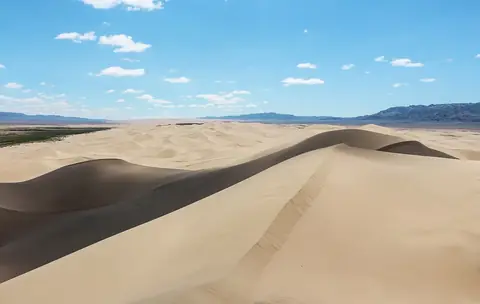
Mongolia in fourteen days
A Gobi and Orkhon Valley road loop with a private driver-guide, two nights at Lake Khövsgöl by domestic flight and a Terelj day: drive times, camps and an all-in budget.
Read the guide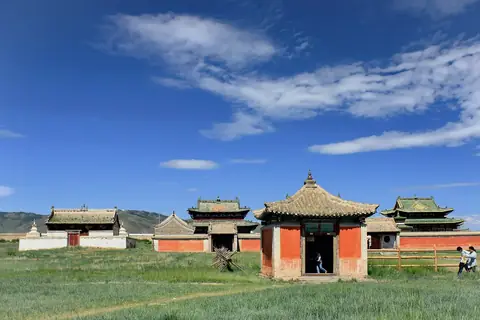
Kharkhorin and the Orkhon Valley
Four days in central Mongolia: Erdene Zuu and Kharkhorin, the Orkhon Waterfall, Tövkhön Monastery and Khustai's wild horses, with hours, drives, camps and costs.
Read the guide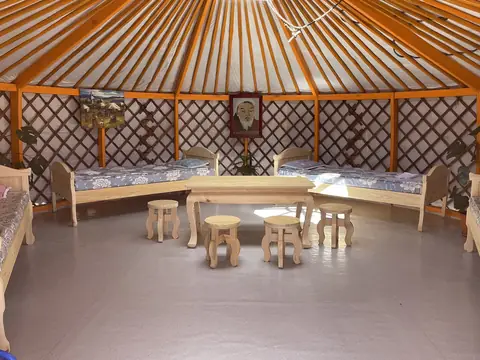
Ger stays in Mongolia
Ger camp or herding family? What a night in a ger includes, from bathrooms, stoves and meals to etiquette, with priced camps near Ulaanbaatar and on the Orkhon route.
Read the guide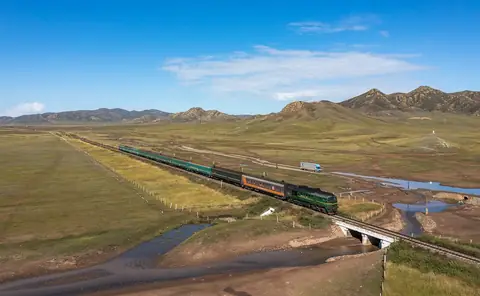
Getting around Mongolia
Chinggis Khaan airport to Ulaanbaatar, the train from Beijing, flights to the Gobi and Lake Khövsgöl, long-distance buses and hiring a driver-guide.
Read the guide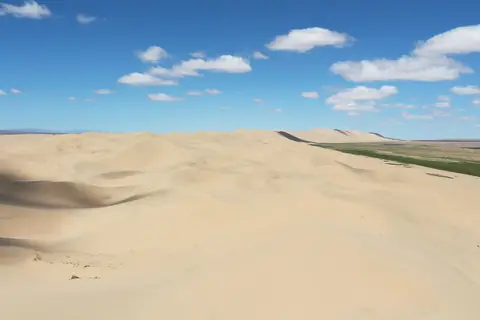
Mongolia trip cost
Ten days in Mongolia for two, all in: about MNT 6.76 million per person on a group tour, MNT 10.28 million on a private tour or MNT 12.93 million in comfort.
Read the guideSources and checks before you travel
(30)
- Travel Gobi Mongolia (licensed operator): Relaxed Gobi Tour by Car ↗ — opens in a new tab
- Travel Gobi Mongolia: Gobi and central Mongolia overland tour ↗ — opens in a new tab
- Gurvan Saikhan National Park administration: about the park ↗ — opens in a new tab
- Gurvan Saikhan National Park administration: Law on Special Protected Areas ↗ — opens in a new tab
- Ömnögovi province environment department: nine wonders ↗ — opens in a new tab
- Three Camel Lodge: 4 Days / 3 Nights journey ↗ — opens in a new tab
- Three Camel Lodge: home page ↗ — opens in a new tab
- View Mongolia (operator): Gobi desert tour ↗ — opens in a new tab
- Gobi-Erdene tourist camp ↗ — opens in a new tab
- Man of Millennium (licensed operator): Khuvsgul Lake tour ↗ — opens in a new tab
- Turto Camp ↗ — opens in a new tab
- Gobi Nomad Lodge ↗ — opens in a new tab
- Chinggis Khaan International Airport: domestic seasonal departures ↗ — opens in a new tab
- Chinggis Khaan International Airport: official taxi ↗ — opens in a new tab
- Discover Mongolia (operator): traditional food and beverage ↗ — opens in a new tab
- Nomad Mongolia (operator): Mongolian foods ↗ — opens in a new tab
- Nomadic Journeys (operator): dos and don'ts in Mongolia ↗ — opens in a new tab
- Modern Nomads: menu (Metro Mall branch) ↗ — opens in a new tab
- Nomin: Bonaqua water 1.5 l ↗ — opens in a new tab
- Unitel: tourist SIM plans ↗ — opens in a new tab
- National Road Transport Centre: Ulaanbaatar-Dalanzadgad bus tariff ↗ — opens in a new tab
- Bank of Mongolia: exchange rates ↗ — opens in a new tab
- Immigration Agency of Mongolia: 48-hour registration ↗ — opens in a new tab
- UK FCDO: Mongolia travel advice ↗ — opens in a new tab
- UK FCDO: Mongolia health ↗ — opens in a new tab
- UK FCDO: Mongolia safety and security ↗ — opens in a new tab
- German Federal Foreign Office: Mongolia travel and safety advice ↗ — opens in a new tab
- France Diplomatie: Mongolia security advice ↗ — opens in a new tab
- France Diplomatie: Mongolia health advice ↗ — opens in a new tab
- Protected areas administration: entry fee notice, January 2025 ↗ — opens in a new tab
Reference sources for the version dated 3 November 2026. Confirm opening times, access, transport and conditions for your travel dates.
Photo credits
(7)
The dunes of Khongoryn Els below the mountains of Gurvan Saikhan National Park
Photograph: Bernard Gagnon — opens in a new tab · CC0 — opens in a new tab
Changes: Resized and converted to WebP; displayed with responsive crops. · Original photograph and licence details ↗ — opens in a new tab
A Bactrian camel on the plain below Khongoryn Els
Photograph: Bernard Gagnon — opens in a new tab · CC0 — opens in a new tab
Changes: Resized and converted to WebP; displayed with responsive crops. · Original photograph and licence details ↗ — opens in a new tab
The climb up a dune at Khongoryn Els
Photograph: Bernard Gagnon — opens in a new tab · CC0 — opens in a new tab
Changes: Resized and converted to WebP; displayed with responsive crops. · Original photograph and licence details ↗ — opens in a new tab
Ice in the gorge of Yolyn Am, Gurvan Saikhan National Park
Photograph: Bernard Gagnon — opens in a new tab · CC0 — opens in a new tab
Changes: Resized and converted to WebP; displayed with responsive crops. · Original photograph and licence details ↗ — opens in a new tab
The rock walls of Yolyn Am
Photograph: Bernard Gagnon — opens in a new tab · CC0 — opens in a new tab
Changes: Resized and converted to WebP; displayed with responsive crops. · Original photograph and licence details ↗ — opens in a new tab
The Flaming Cliffs of Bayanzag
Photograph: Bernard Gagnon — opens in a new tab · CC0 — opens in a new tab
Changes: Resized and converted to WebP; displayed with responsive crops. · Original photograph and licence details ↗ — opens in a new tab
The eroded seabed cliffs of Tsagaan Suvarga
Photograph: Rob Oo from NL — opens in a new tab · CC BY 2.0 — opens in a new tab
Changes: Resized and converted to WebP; displayed with responsive crops. · Original photograph and licence details ↗ — opens in a new tab